Wender·Vista
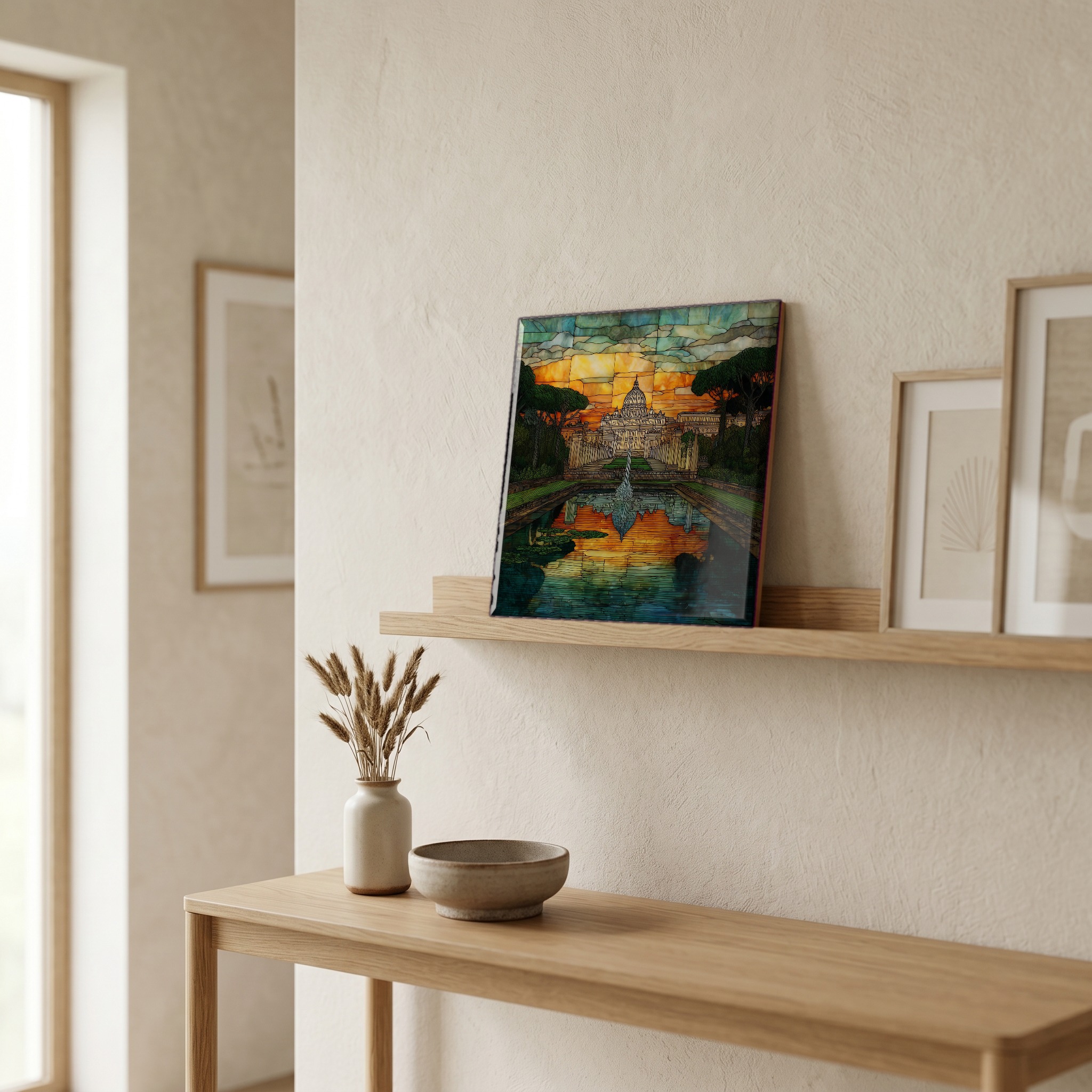
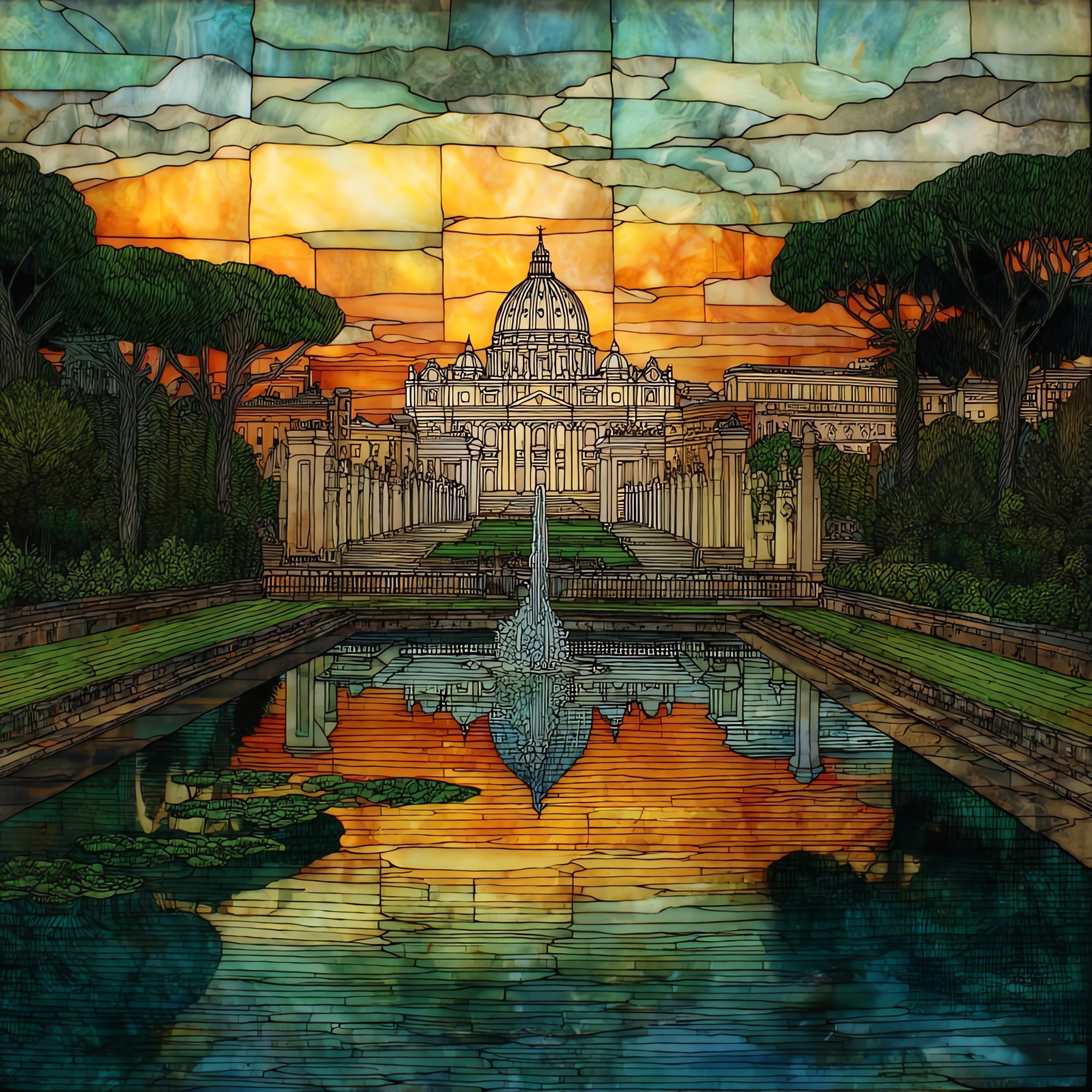
Vatican Gardens
shown on ceramic, 12-inch tileItaly
behind St. Peter's, on Vatican Hill

Vatican Gardens

half the city, kept for walking.

Where it lives

Not only on a wall.

A small tile on the nightstand catching the morning. A larger one above the fire. Yours, wherever you spend the slow hours.
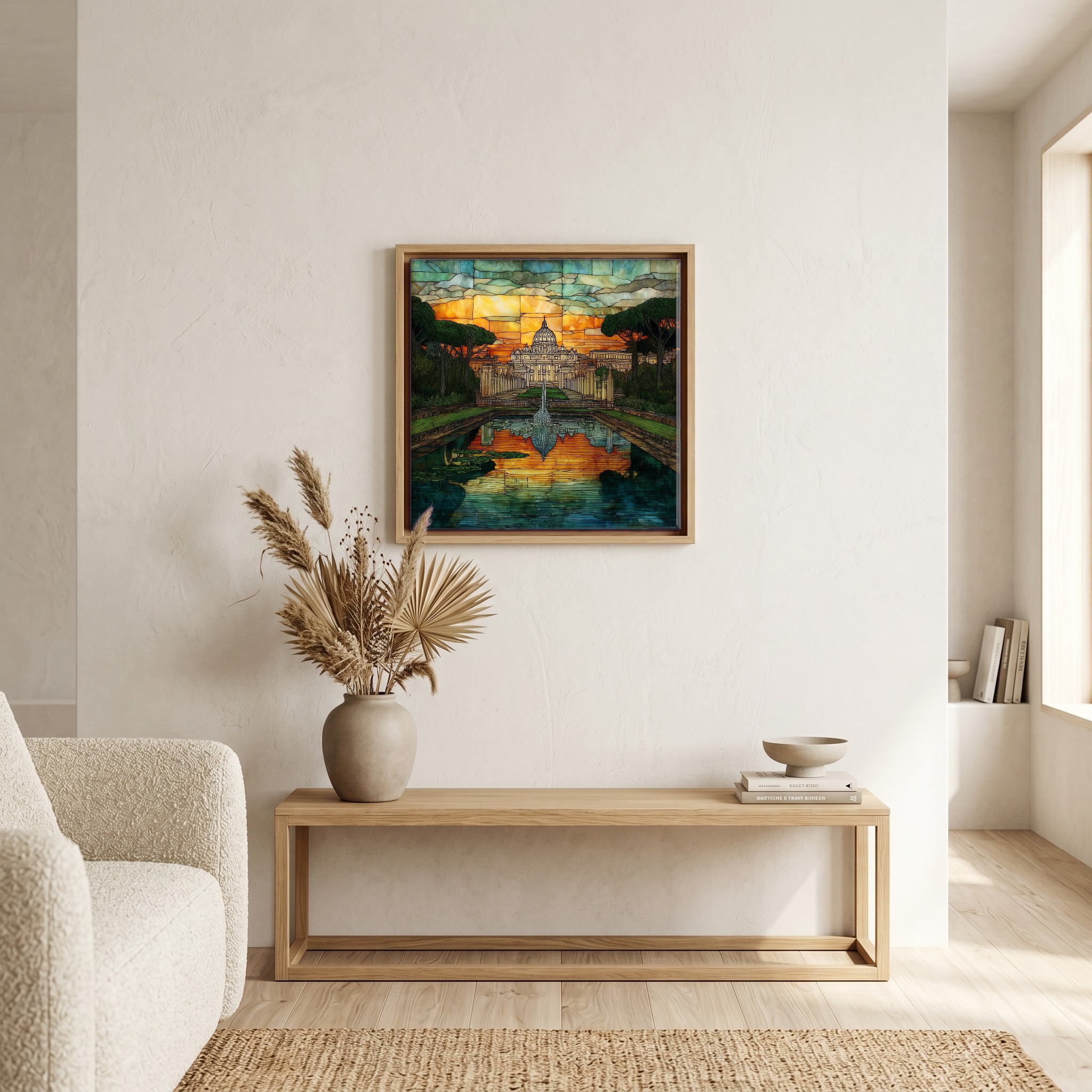
Above the bench, in a warm oak surround.
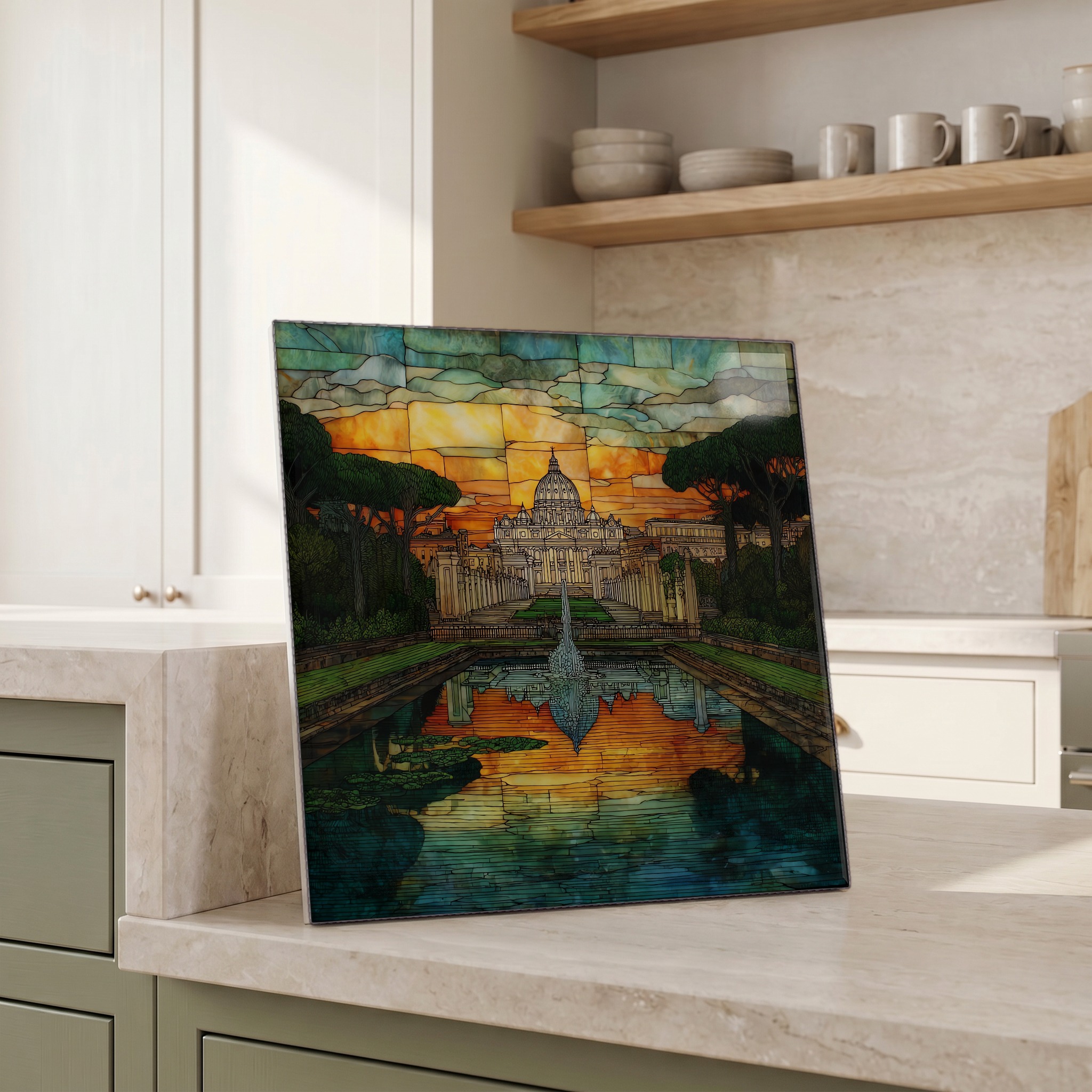
Beside the kettle, propped on the counter.
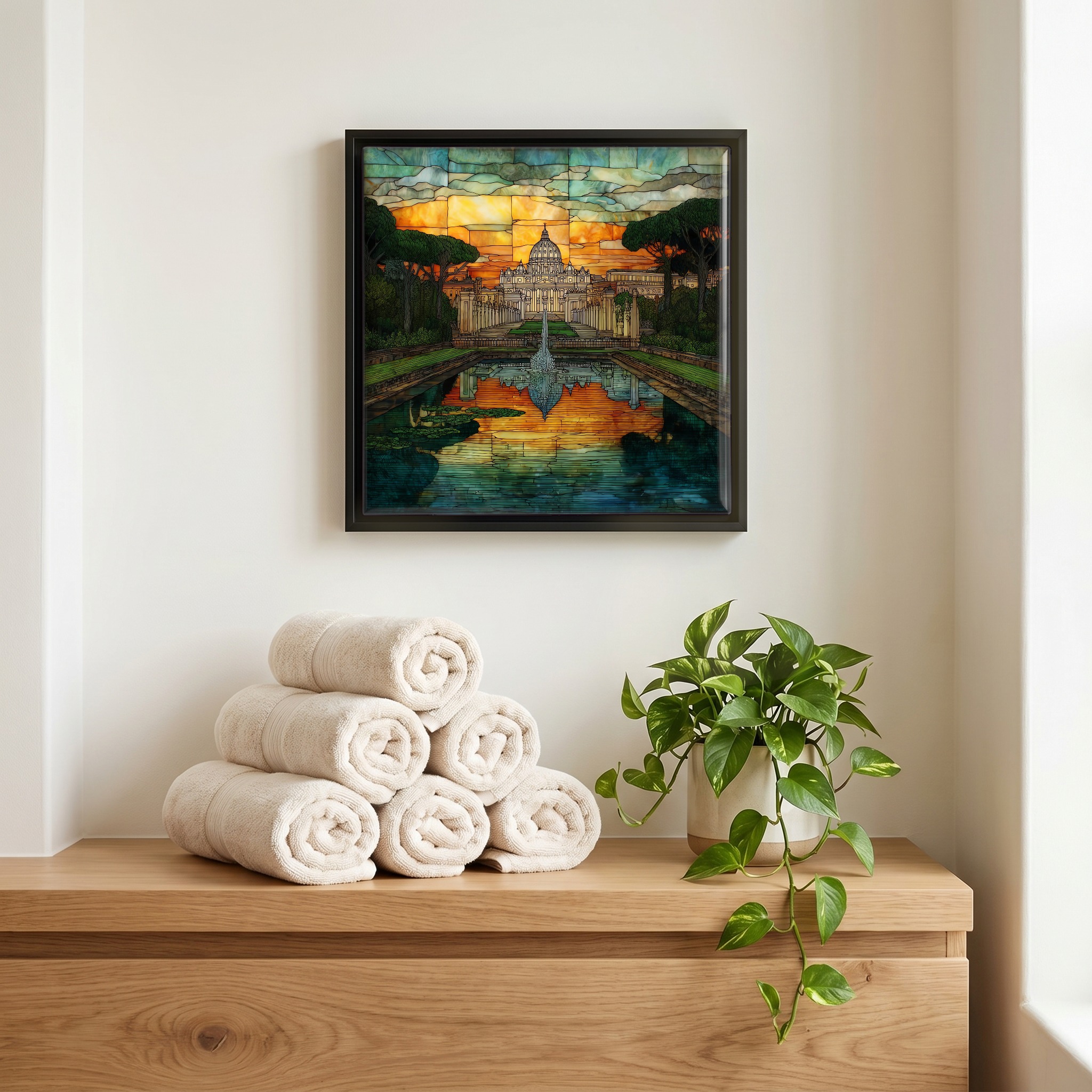
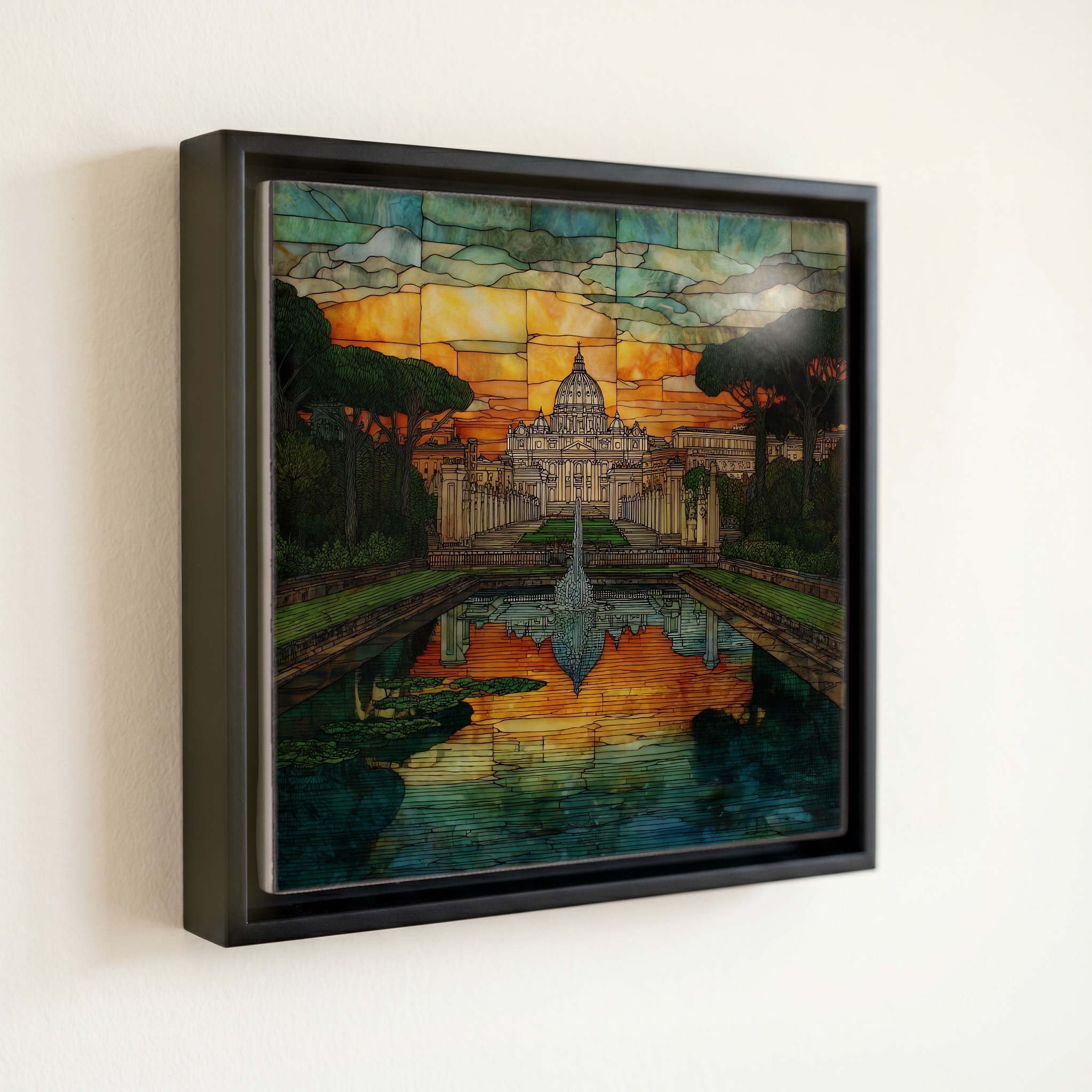
Above the linens, in a slim black surround.
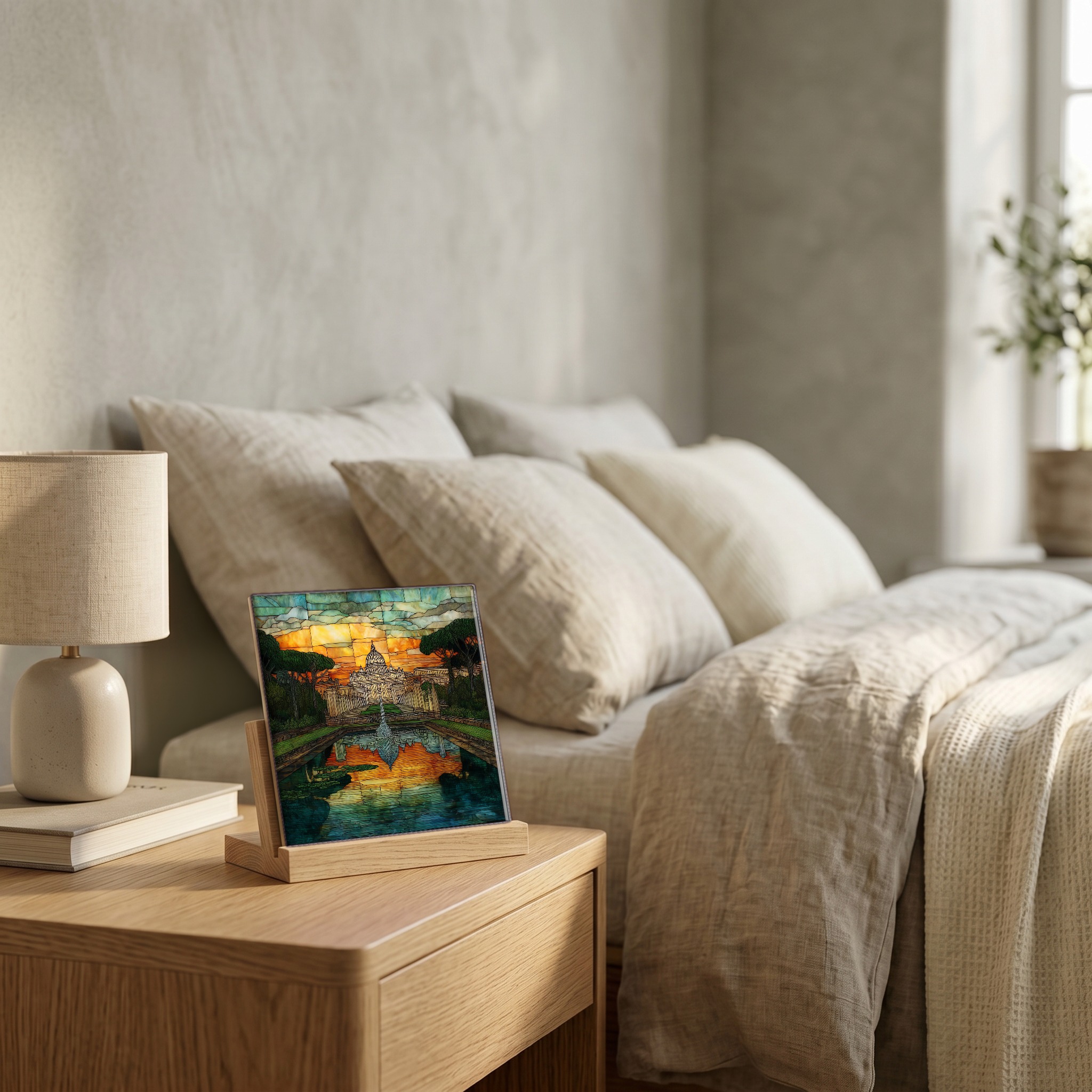
On the nightstand, on a light oak stand.
On a picture ledge, where the light comes in.
a note from the studio

Twenty-three hectares of walled garden behind St. Peter's Basilica. Most of the western half of Vatican City, almost none of it open to the public. Only a small guided tour from the museums goes in. Inside: a Renaissance casino with a frescoed loggia, a Lourdes grotto given by French pilgrims in 1902, a radio tower Marconi built in 1931. The dome catches the crowds out front. Behind the wall, the pope takes his walks.
from the studio
shown in a slim black floating frame · 6 × 6 in
— bring it home

Vatican Gardens, on ceramic.

Each tile is finished by hand in our Knoxville studio. Artwork is slowly infused into the ceramic surface under high heat and pressure, and rests beneath a thin glossy finish. The colour lives in the surface, not on top of it.

What kind of piece?
One tile — square or rectangle.
How big?
the popular one — counter, shelf, nightstand
6 × 6 in · 15 cm · 1.6 lb
Surface finish
A clear glossy finish — the artwork reads as if under resin. Ideal for show-pieces and framed wall art.
How it sits
A hidden cleat — sits ¼″ proud of the wall.
$58
Hand-finished and shipped from our studio at the foot of the Smokies. On your wall in about ten days.
size
6 × 6 in
15 cm
weighs
1.6 lb
solid in the hand
surface
ceramic, hand-finished
art rests beneath a thin glossy finish
from
Knoxville, TN
our family studio, at the foot of the Smokies
— start a Coaster Set

Pick any four 4-inch tiles — National Parks you've been to, a Smokies set, the four seasons of one place. $ for a set of , cork-backed, ready to live on the table.
comes gift-ready
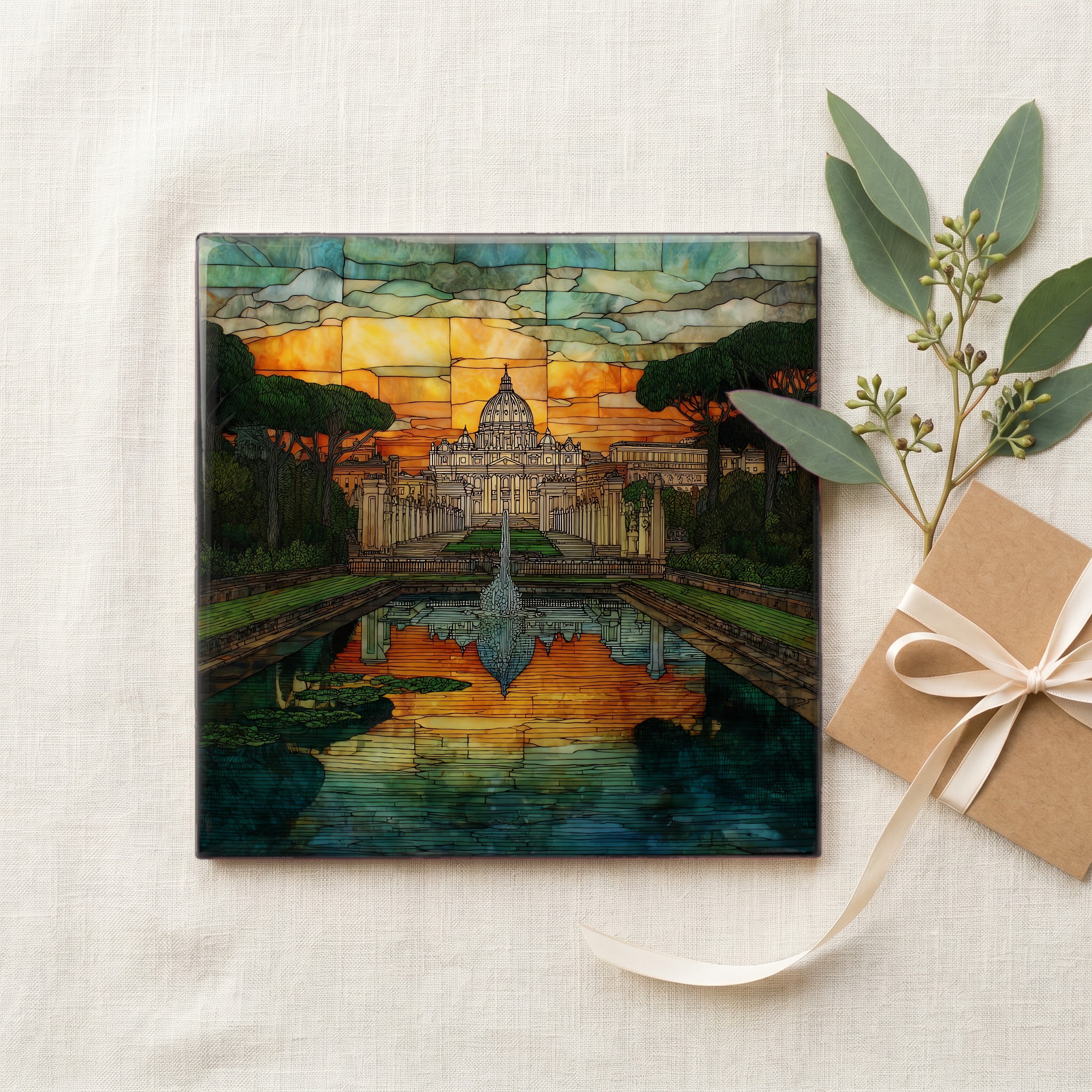
comes gift-ready

Each tile ships in a kraft box, tied with cream ribbon, with a handwritten note from the studio if you'd like to add one.
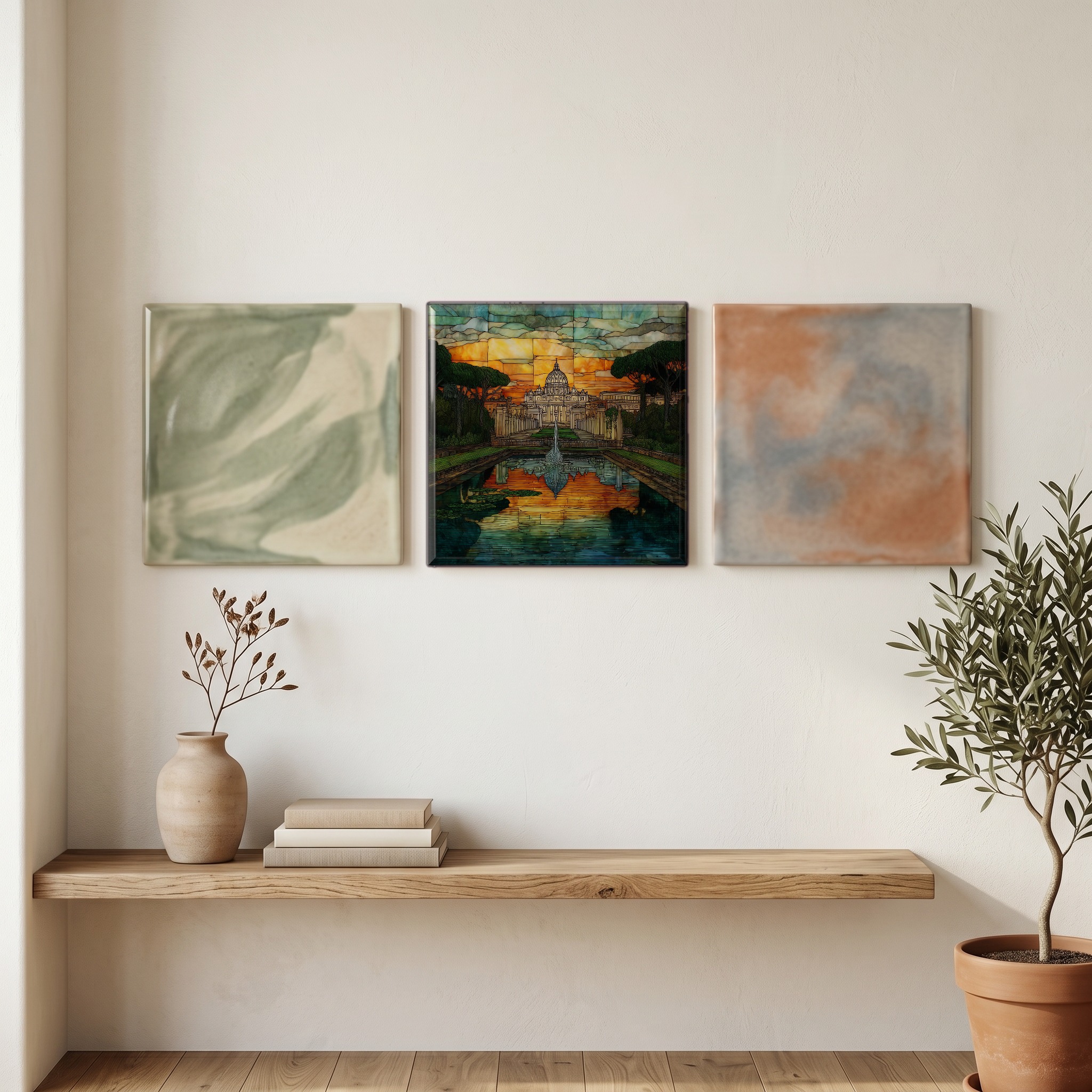
or build a grouping
or build a grouping

Three or five different vistas, hung together — a chapter of places you've been, or want to go.

about Vatican Gardens

The place, in three passes.

A little of what's known, in case you fall down the rabbit hole — or want to go see it yourself.
the place

The Vatican Gardens occupy roughly 23 hectares behind St. Peter's Basilica, covering most of the western half of Vatican City State, the world's smallest sovereign country. They sit on Vatican Hill, walled off from the surrounding city of Rome. The grounds blend three landscape traditions: a formal Italian Renaissance section closest to the Apostolic Palace, a French parterre, and an English-style landscape garden of meadows and clearings. The first papal gardens here were laid out around 1279 under Pope Nicholas III, who moved the official papal residence from the Lateran. The Pontifical Villas administration tends the grounds today; entry is by guided tour through the Vatican Museums.

the silence

Almost no one walks the gardens. While tens of thousands crowd St. Peter's Square and the Sistine Chapel each day, only a few small guided groups pass through the gates behind the basilica. The walls cut the noise of Rome down to birdsong and water. Pope Francis, in his first years after his 2013 election, took regular afternoon walks among the cedars and along the path past the Casino of Pius IV. The Casino, designed in 1561 by the Mannerist architect Pirro Ligorio for Pope Pius IV, now houses the Pontifical Academy of Sciences. The garden is the working back yard of the papacy: a place for thinking, for prayer, for the slow business of governing a global church.

the visit

The Vatican Gardens are open only by guided tour booked through the Vatican Museums. Tours run on most mornings except Wednesdays and Sundays, last about two hours, and combine the gardens with admission to the Sistine Chapel and the museum galleries. The standard tour follows a fixed path past the Fountain of the Eagle, the Casino of Pius IV, and a replica Grotto of Lourdes presented as a French gift in 1902. Photography is permitted along the route but the gardens are otherwise out of reach to the general public. Booking is recommended weeks in advance because the daily group sizes are small. A separate open-bus tour also runs for visitors with mobility limits.

where
Italy · Vatican City
elevation
75 m · 246 ft
position
41.9036° N · 12.4520° E
the neighborhood

What's nearby.

A handful of named places within an hour's walk or short drive. Some we've already painted; some we will.
at the lake
St. Peter's Basilica
papal basilica
at the lake
Sistine Chapel
papal chapel
1 km E
Castel Sant'Angelo
papal fortress
2 km E
Piazza Navona
Baroque square
2 km E
Pantheon
Roman temple
3 km E
Trevi Fountain
Baroque fountain
N
Vatican Gardens
St. Peter's Basilica
Sistine Chapel
Castel Sant'Angelo
Piazza Navona
Pantheon
Trevi Fountain
common questions

What people ask.

A few questions we get about Vatican Gardens — and about bringing the piece home.
about the place

The Vatican Gardens occupy roughly 23 hectares of Vatican City State, the small sovereign enclave within Rome. They sit on Vatican Hill, behind St. Peter's Basilica, and make up most of the western half of the country. Vatican City is bordered on every side by Italy.

Yes, but only by guided tour booked through the Vatican Museums. Tours run on most mornings except Wednesdays and Sundays, last about two hours, and combine the gardens with the Sistine Chapel. Walk-ups are not admitted, and booking is recommended weeks ahead.

The first papal gardens on Vatican Hill date to 1279, when Pope Nicholas III moved the official papal residence here from the Lateran. The Renaissance layout, the Casino of Pius IV, and the formal fountains were added between the sixteenth and seventeenth centuries.

The route passes the Fountain of the Eagle, the Casino of Pius IV designed by Pirro Ligorio, a replica Grotto of Lourdes from 1902, the medieval Tower of San Giovanni, and the Vatican Radio building completed under Guglielmo Marconi in 1931.

Yes. Successive popes have used the gardens as their private walking ground for centuries. Pope Francis took regular afternoon walks through the cedars after his 2013 election; earlier popes used the gardens for the daily breviary and the rosary.

The gardens cover roughly 23 hectares, or about 57 acres, on Vatican Hill behind St. Peter's Basilica. That is slightly more than half the land area of Vatican City State, which is the smallest sovereign country in the world.

The grounds blend a formal Italian Renaissance section closest to the Apostolic Palace, a French parterre with patterned beds, and an English landscape garden of meadows, paths, and standalone trees. Each was added by a different pope over four centuries.

about the piece in your home

It tends to land well with friends who have walked St. Peter's Square or queued for the Sistine Chapel and want a quieter piece of the same city. The gardens are the part most visitors never see, so the tile carries a kind of insider gift. A Coaster or Small with a handwritten note from the studio travels well.

It often does. The gardens are a working part of the Holy See and a place several popes have used for prayer and reflection. For confirmations, ordinations, or a jubilee year, the Medium framed glossy reads as a thoughtful piece without leaning kitsch.

The treatment of the gardens runs in deep greens, papal golds, and weathered stone-grey, and works most cleanly in Old-World Traditional, Library or Study, and warm Mediterranean Modern rooms. It pairs with leather, walnut, and aged brass rather than chrome or pale Scandinavian woods.

A single Large is the cleanest fit above a console table. Above a standard three-seat sofa, most rooms want either two Large tiles framed as a pair or the four-tile Mural in a single frame. A nine-tile Mural fills a full feature wall.

Yes, in a Dura Satin or Matte finish. The ceramic is unaffected by steam and splashes, and the colour is slowly infused into the surface under high heat and pressure so it does not fade. The glossy finish is reserved for framed wall pieces away from direct water contact.

A soft microfibre cloth and warm water is enough. Skip ammonia, bleach, and abrasive scrubs. For framed glossy pieces, dust the frame separately and wipe the tile face only when needed.

Yes. The visual language is the studio's own, developed in-house, and every WenderVista place is rendered fresh in it by Reid Wender. No licensed stock, no syndication, no second studio carries the catalog.

if this one stayed with you

A few you might also love.

Hand-picked by the eye that found Sorapis. Same air, same kind of quiet.
— a collection

The Italian Dolomites,
painted slow.

The valleys between Cortina and Val Gardena, the tarns you walk an hour to see, the towers that turn the colour of a banked fire just before dark. Wander the collection by valley, by season, or follow the path Reid walked.

Tre Cime
Braies
Misurina
Sorapis
Cinque Torri
Sassolungo
Marmolada