Wender·Vista
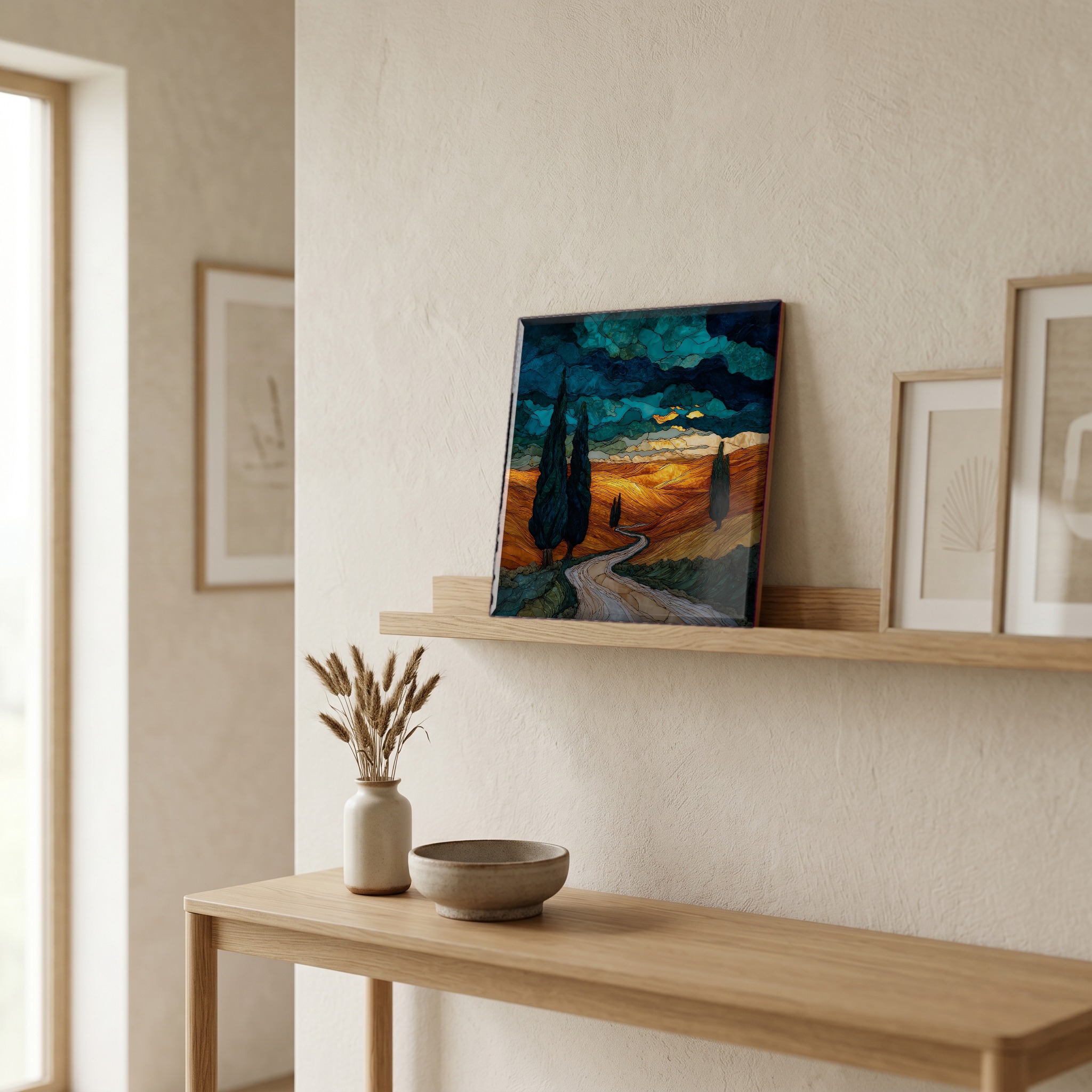
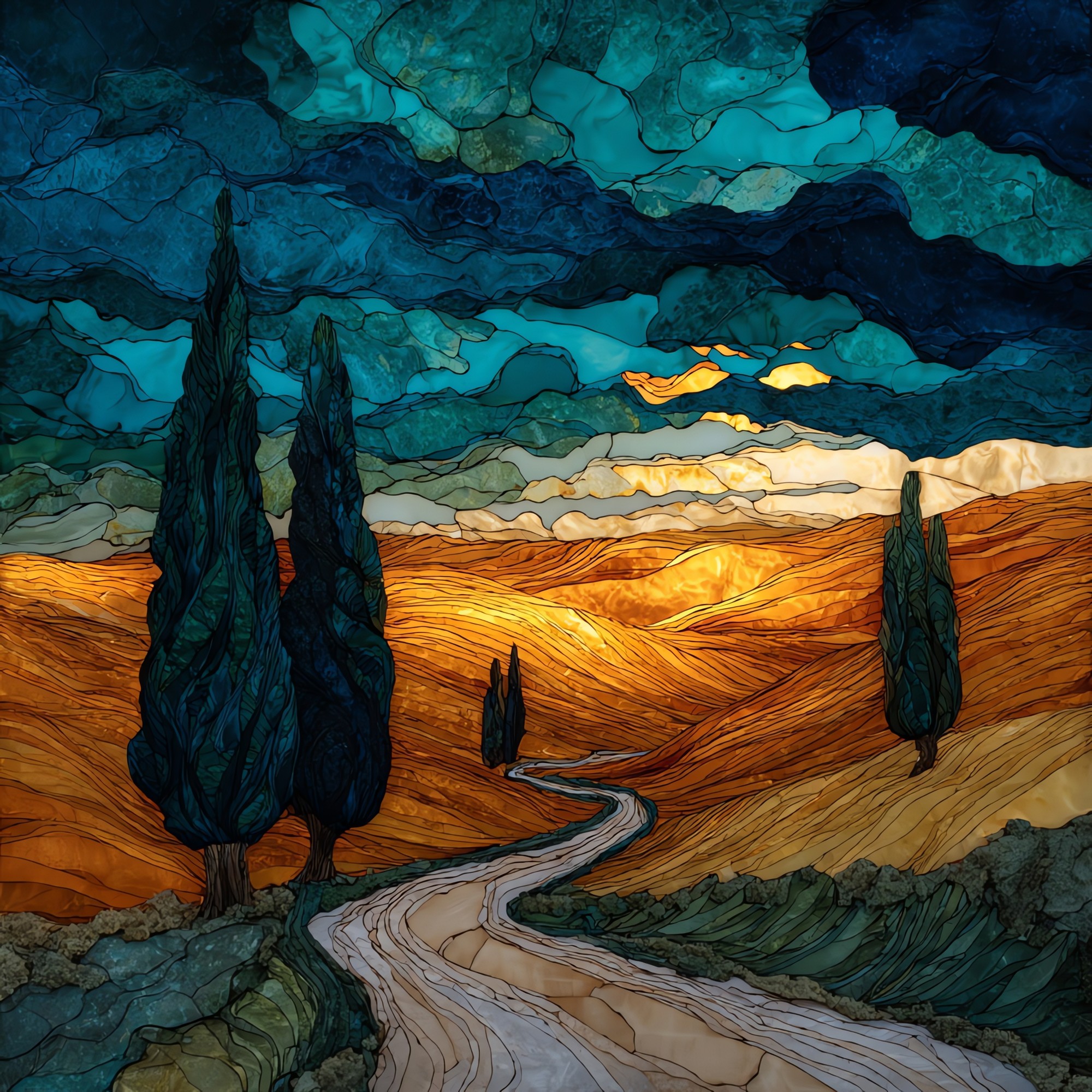
Val d'Orcia
shown on ceramic, 12-inch tileItaly
south of Siena, in southern Tuscany

Val d'Orcia

— the light the Sienese painters worked from.

Where it lives

Not only on a wall.

A small tile on the nightstand catching the morning. A larger one above the fire. Yours, wherever you spend the slow hours.
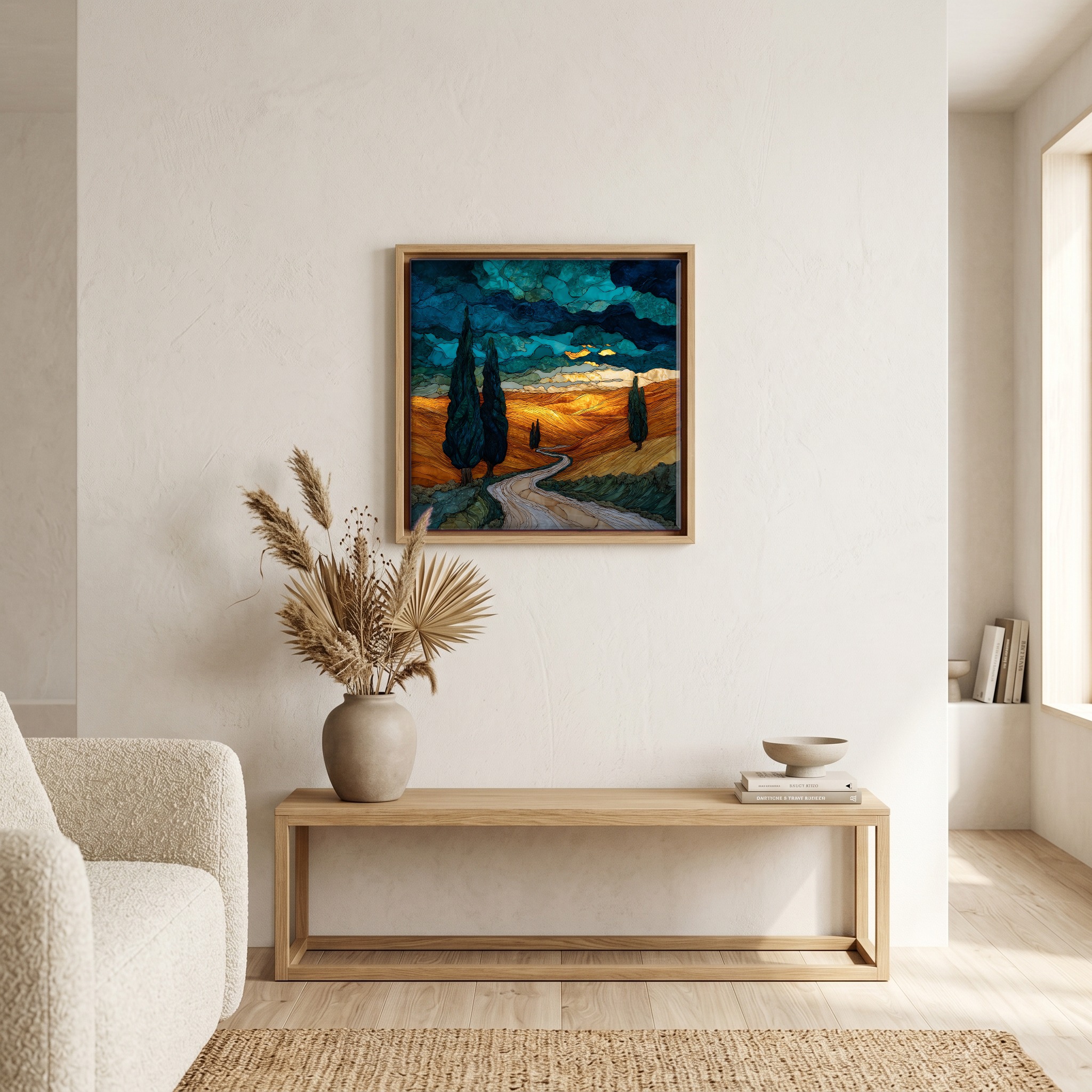
Above the bench, in a warm oak surround.
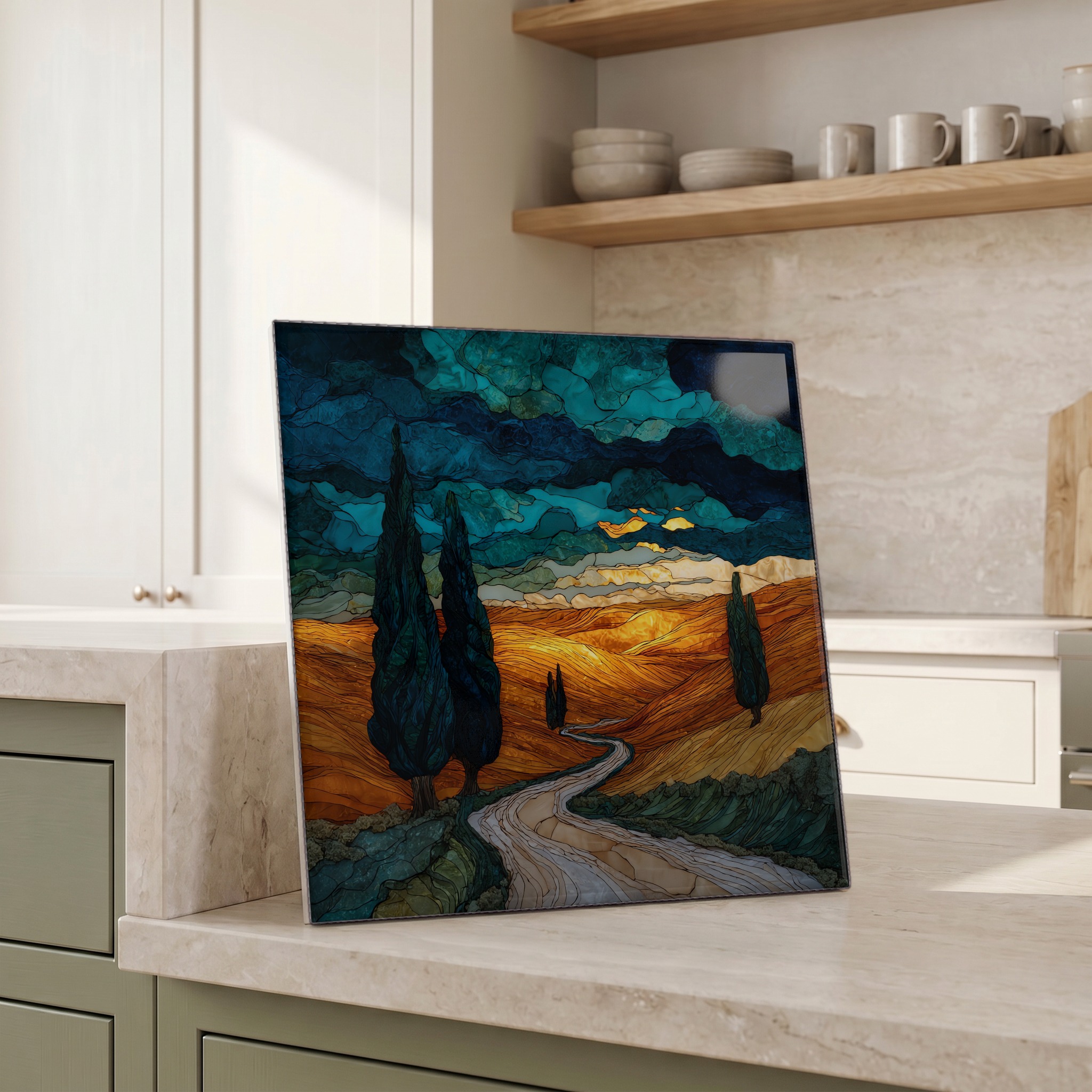
Beside the kettle, propped on the counter.
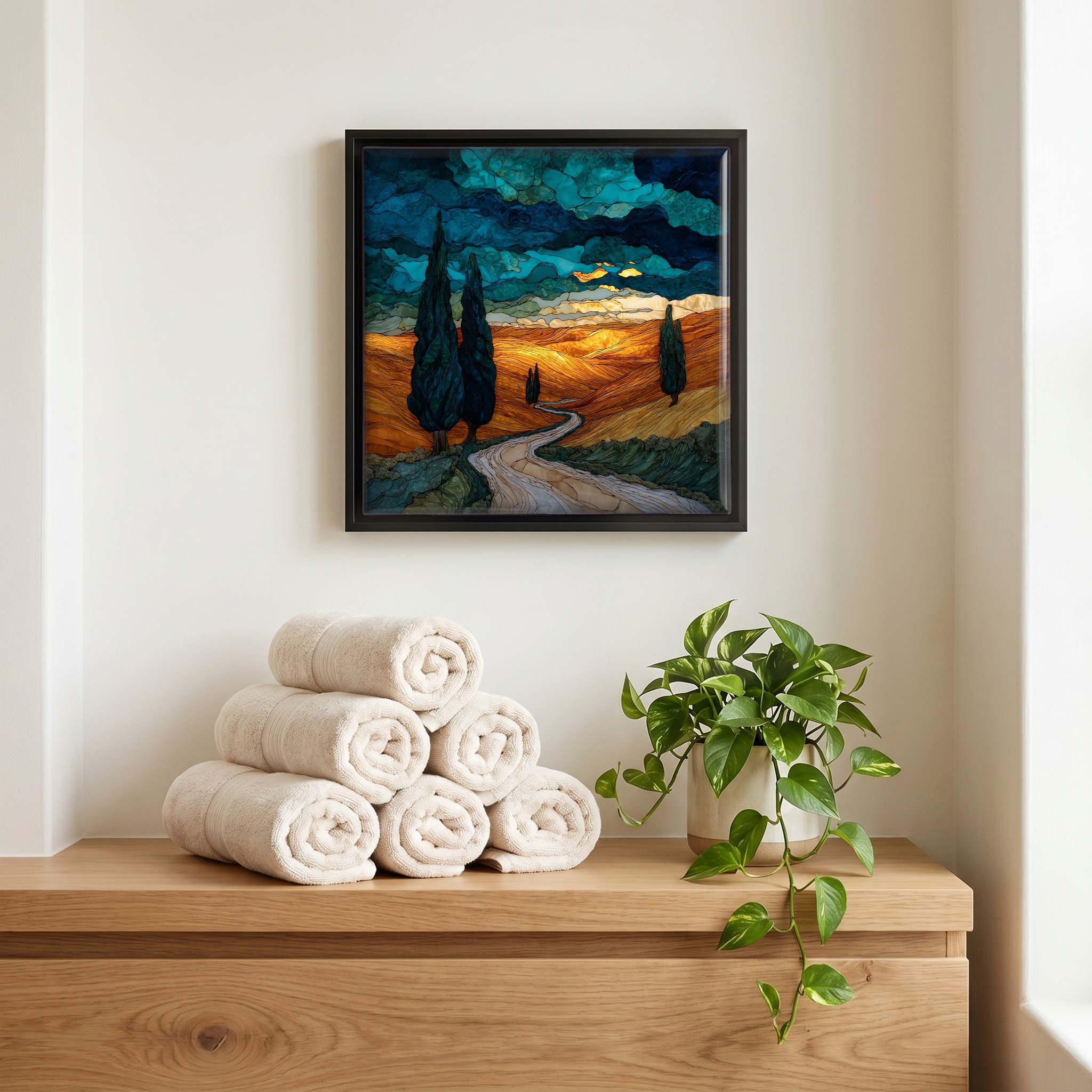
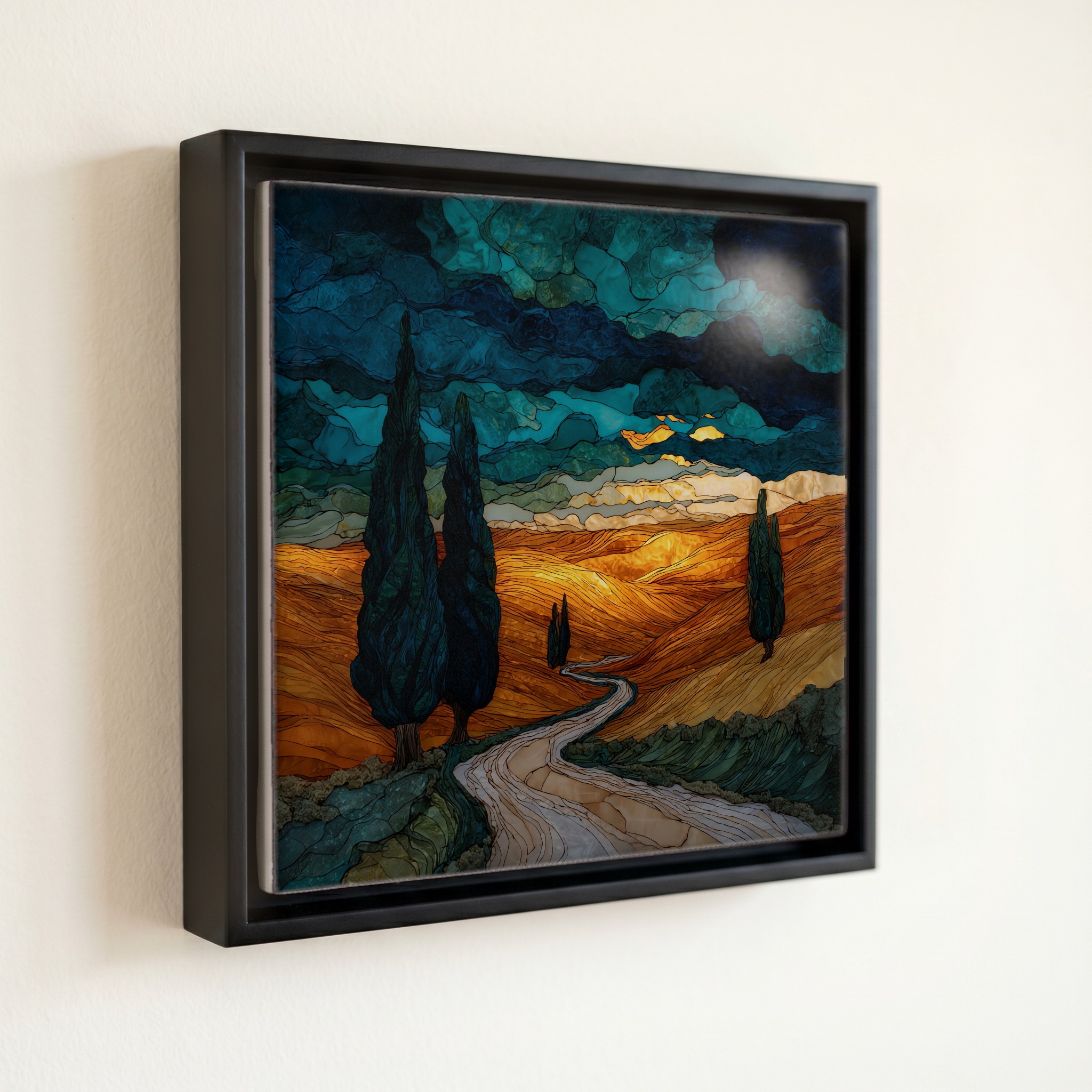
Above the linens, in a slim black surround.
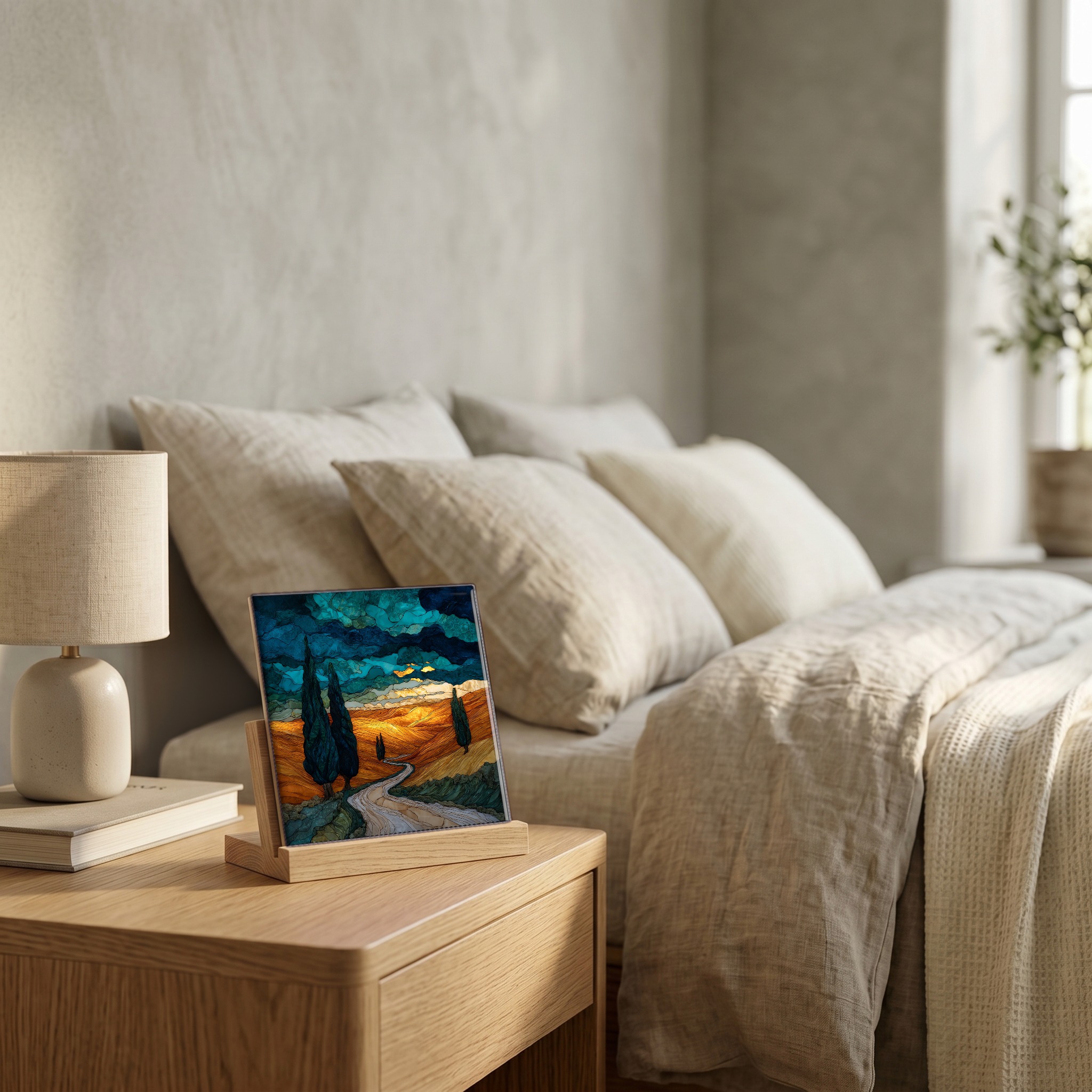
On the nightstand, on a light oak stand.
On a picture ledge, where the light comes in.
a note from the studio

The valley south of Siena that became a Renaissance painting before it became a UNESCO site. Cypresses single-file along the ridges. Small chapels at the end of long white roads. The hills go from green in May to copper in October, the same palette Ambrogio Lorenzetti laid down in his fresco of Good Government in Siena's town hall, six hundred years before any of this was protected. Five hill towns share the valley between them: Pienza, Montalcino, San Quirico d'Orcia, Castiglione, Radicofani. Nobody on the road at six in the morning except a flock of sheep and the man who minds them.
from the studio
shown in a slim black floating frame · 6 × 6 in
— bring it home

Val d'Orcia, on ceramic.

Each tile is finished by hand in our Knoxville studio. Artwork is slowly infused into the ceramic surface under high heat and pressure, and rests beneath a thin glossy finish. The colour lives in the surface, not on top of it.

What kind of piece?
One tile — square or rectangle.
How big?
the popular one — counter, shelf, nightstand
6 × 6 in · 15 cm · 1.6 lb
Surface finish
A clear glossy finish — the artwork reads as if under resin. Ideal for show-pieces and framed wall art.
How it sits
A hidden cleat — sits ¼″ proud of the wall.
$58
Hand-finished and shipped from our studio at the foot of the Smokies. On your wall in about ten days.
size
6 × 6 in
15 cm
weighs
1.6 lb
solid in the hand
surface
ceramic, hand-finished
art rests beneath a thin glossy finish
from
Knoxville, TN
our family studio, at the foot of the Smokies
— start a Coaster Set

Pick any four 4-inch tiles — National Parks you've been to, a Smokies set, the four seasons of one place. $ for a set of , cork-backed, ready to live on the table.
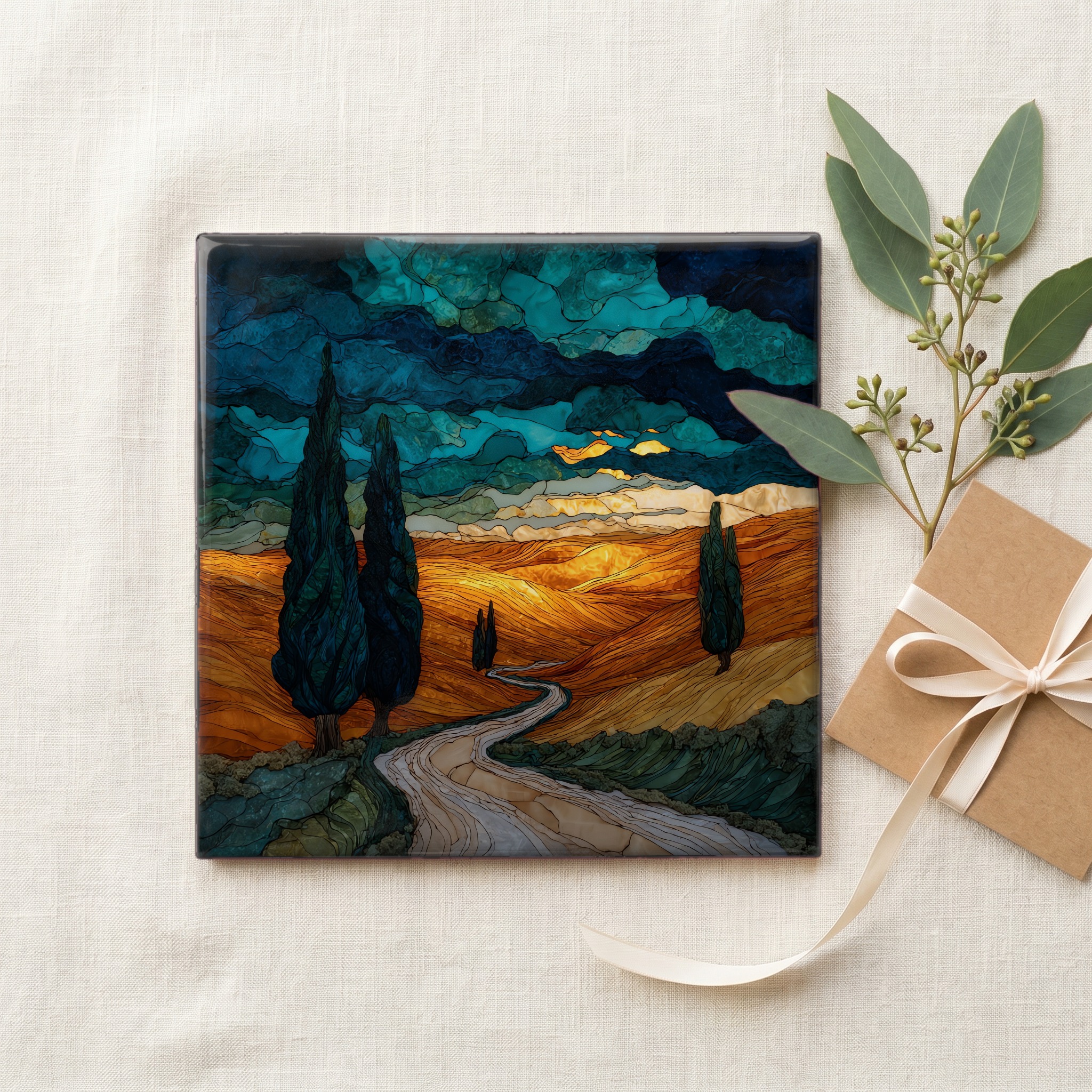
comes gift-ready
comes gift-ready

Each tile ships in a kraft box, tied with cream ribbon, with a handwritten note from the studio if you'd like to add one.
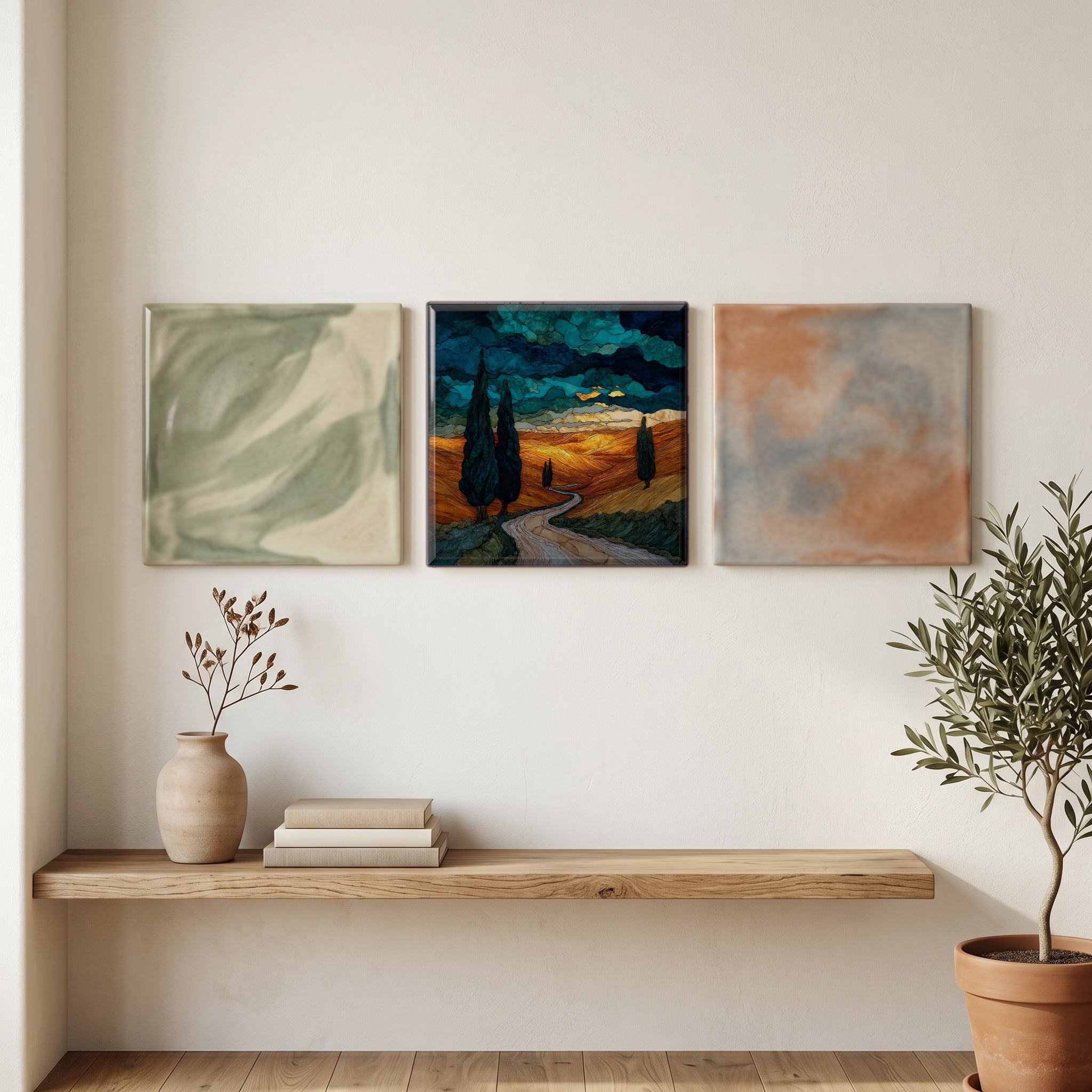
or build a grouping
or build a grouping

Three or five different vistas, hung together — a chapter of places you've been, or want to go.

about Val d'Orcia

The place, in three passes.

A little of what's known, in case you fall down the rabbit hole — or want to go see it yourself.
the place

The Val d'Orcia is a valley in southern Tuscany, in the province of Siena, named for the Orcia river that flows through it. Five comuni share the valley: Pienza, San Quirico d'Orcia, Castiglione d'Orcia, Montalcino, and Radicofani. UNESCO inscribed the cultural landscape in 2004, citing it as an outstanding example of redesigned Renaissance landscape ideals of good governance and aesthetic beauty. The valley sits between the medieval city of Siena, about 50 km north, and the conical bulk of Mount Amiata, a 1,738-metre dormant volcano to the south. The most photographed cypresses, in the countryside between San Quirico d'Orcia and Pienza, are reached by minor roads off the SS2 Cassia, the old Roman consular road that bisects the valley.

the light

The light in Val d'Orcia became a subject of painting before it became a subject of photography. Ambrogio Lorenzetti, working in Siena around 1338, painted the cultivated hills of the surrounding contado into his fresco cycle Allegory of Good and Bad Government in the Palazzo Pubblico, which is among the earliest known landscape paintings of post-classical European art to depict a real, specific place. The valley's broad east-to-west orientation gives a long, low side-light through the late afternoon, the hour landscape photographers call the second light, which separates each cypress from the hill behind it and saturates the umber and ochre tones the Sienese pigment-makers once ground from local soils.

the season

The valley has four distinct looks. From late April through early June the hills are vivid green, broken by yellow rapeseed fields and, in the second half of June, scattered patches of sunflowers; these are the months most travel photographers come. July and August are dry and hot, the wheat already cut, the hills the colour of unbleached linen. September and October turn the oaks copper and the vineyards of Montalcino gold; the Brunello harvest runs from mid-September. November through March is cold and often misty, with low cloud sitting in the river valley below San Quirico; snow on Mount Amiata, 1,738 metres to the south, is reliable in January and February. The hill-town restaurants thin out in winter; the light thins with them.

where
Italy · Province of Siena, Tuscany
position
43.0600° N · 11.6000° E
the neighborhood

What's nearby.

A handful of named places within an hour's walk or short drive. Some we've already painted; some we will.
10 km E
Pienza
Renaissance ideal city
14 km W
Montalcino
Brunello wine town
5 km S
Bagno Vignoni
Renaissance thermal village
9 km S
Castiglione d'Orcia
medieval hill town
4 km SE
Cappella della Madonna di Vitaleta
chapel in cypresses
22 km S
Mount Amiata
dormant volcano
50 km N
Siena
medieval city
N
Val d'Orcia
Pienza
Montalcino
Bagno Vignoni
Castiglione d'Orcia
Cappella della Madonna di Vitaleta
Mount Amiata
Siena
common questions

What people ask.

A few questions we get about Val d'Orcia — and about bringing the piece home.
about the place

Val d'Orcia is a valley in southern Tuscany, Italy, in the province of Siena. The river Orcia runs through it. The valley lies about 50 km south of the city of Siena and extends to the slopes of Mount Amiata, a 1,738-metre dormant volcano.

UNESCO inscribed Val d'Orcia in 2004 as a cultural landscape, citing it as an outstanding example of how the Renaissance ideal of good governance reshaped a real countryside for both productive and aesthetic ends. The valley's cypress-lined roads and isolated farmhouses were planned in the 14th and 15th centuries.

May and early June give green hills, rapeseed flowers and a short sunflower bloom; late September into October turns the oaks copper and coincides with the Brunello di Montalcino grape harvest. July and August are hot and dry. Winters are cold and often foggy in the valley.

The most-photographed grove sits on a low hill in the countryside between San Quirico d'Orcia and Pienza, reached from Strada Provinciale 146. The Cappella della Madonna di Vitaleta, a small chapel set within a cluster of cypresses on a hillside south of Pienza, is the other most-photographed view in the valley.

The Sienese painter Ambrogio Lorenzetti painted the cultivated hills of the surrounding countryside into his 1338 fresco cycle Allegory of Good and Bad Government, in the Palazzo Pubblico of Siena. It is one of the earliest depictions of a real European landscape in post-classical painting.

Five comuni share the UNESCO cultural landscape: Pienza, San Quirico d'Orcia, Castiglione d'Orcia, Montalcino and Radicofani. Pienza, designed for Pope Pius II in the 1460s, was inscribed separately by UNESCO in 1996 as the prototype of the Renaissance ideal city.

The dream sequences of Ridley Scott's Gladiator (2000), in which Maximus walks through a wheat field toward his home, were filmed on a farm called Podere Terrapille just outside Pienza. The opening of The English Patient and Bernardo Bertolucci's Stealing Beauty were also shot in the valley.

about the piece in your home

It carries well for someone whose Tuscany memory is the countryside rather than Florence. The cypress-and-ridgeline imagery is the postcard of the southern Sienese hills. A Keepsake fits a bedside table; a Small or Medium with a handwritten studio note travels well; a Coaster Set pairs naturally with a bottle of Brunello on a kitchen counter.

The umber-and-ochre palette settles into warm, earth-toned interiors: Tuscan farmhouse, Mediterranean-modern, and rustic-traditional rooms with terracotta or unfinished oak. The piece also reads against quiet, off-white plaster walls in a more minimalist Italian-modern room where one warm object holds the eye.

Both are current. Tuscan farmhouse, with its terracotta tile and rough-plaster walls, sits firmly inside the warm-earth-tone palette designers have moved toward since 2024. Italian-modern, the slimmer, lower-contrast cousin, uses one or two warm pieces against neutral plaster. The Medium reads well in either room.

Above a standard sofa, a single Large reads as a focal piece; a four-tile Mural fills the wall over a sectional; a nine-tile Mural is the choice for a long credenza or a stairwell wall. Above a console, the Medium is the most common pick.

Yes. Order the Dura Satin or Matte finish for any wet or vertical installation: a bathroom wall, a shower surround, or a kitchen backsplash. The Glossy finish is for framed wall art in dry rooms. The colour is slowly infused into the ceramic surface, so it will not fade or peel.

A soft microfibre cloth and warm water. For a kitchen or bathroom installation, mild dish soap is fine. Avoid abrasive pads, bleach and any cleaner with grit. The ceramic surface is glossy on framed pieces and dura-satin or matte on installed tiles; the colour lives in the surface, not on it.

Yes. Every piece in the WenderVista atlas is original studio art by Reid Wender. There is no licensing and no stock imagery, and no other studio carries it. The art is slowly infused into the ceramic surface under high heat and pressure, then hand-finished in our Knoxville workshop.

if this one stayed with you

A few you might also love.

Hand-picked by the eye that found Sorapis. Same air, same kind of quiet.
— a collection

The Italian Dolomites,
painted slow.

The valleys between Cortina and Val Gardena, the tarns you walk an hour to see, the towers that turn the colour of a banked fire just before dark. Wander the collection by valley, by season, or follow the path Reid walked.

Tre Cime
Braies
Misurina
Sorapis
Cinque Torri
Sassolungo
Marmolada