Wender·Vista
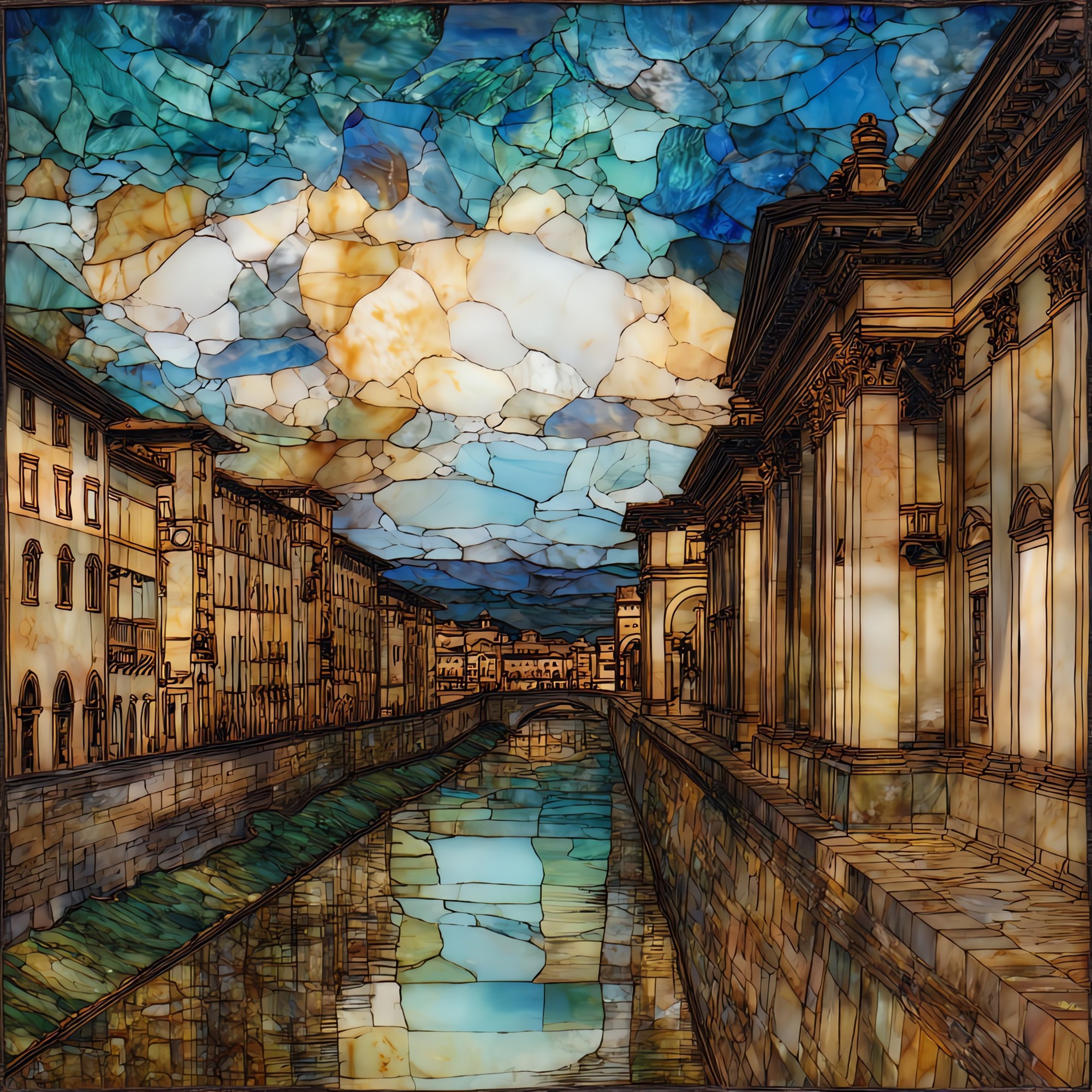
Uffizi Gallery
shown on ceramic, 12-inch tileItaly
in Florence, between the Palazzo Vecchio and the Arno

Uffizi Gallery

— the offices Florence kept for its paintings.

Where it lives

Not only on a wall.

A small tile on the nightstand catching the morning. A larger one above the fire. Yours, wherever you spend the slow hours.
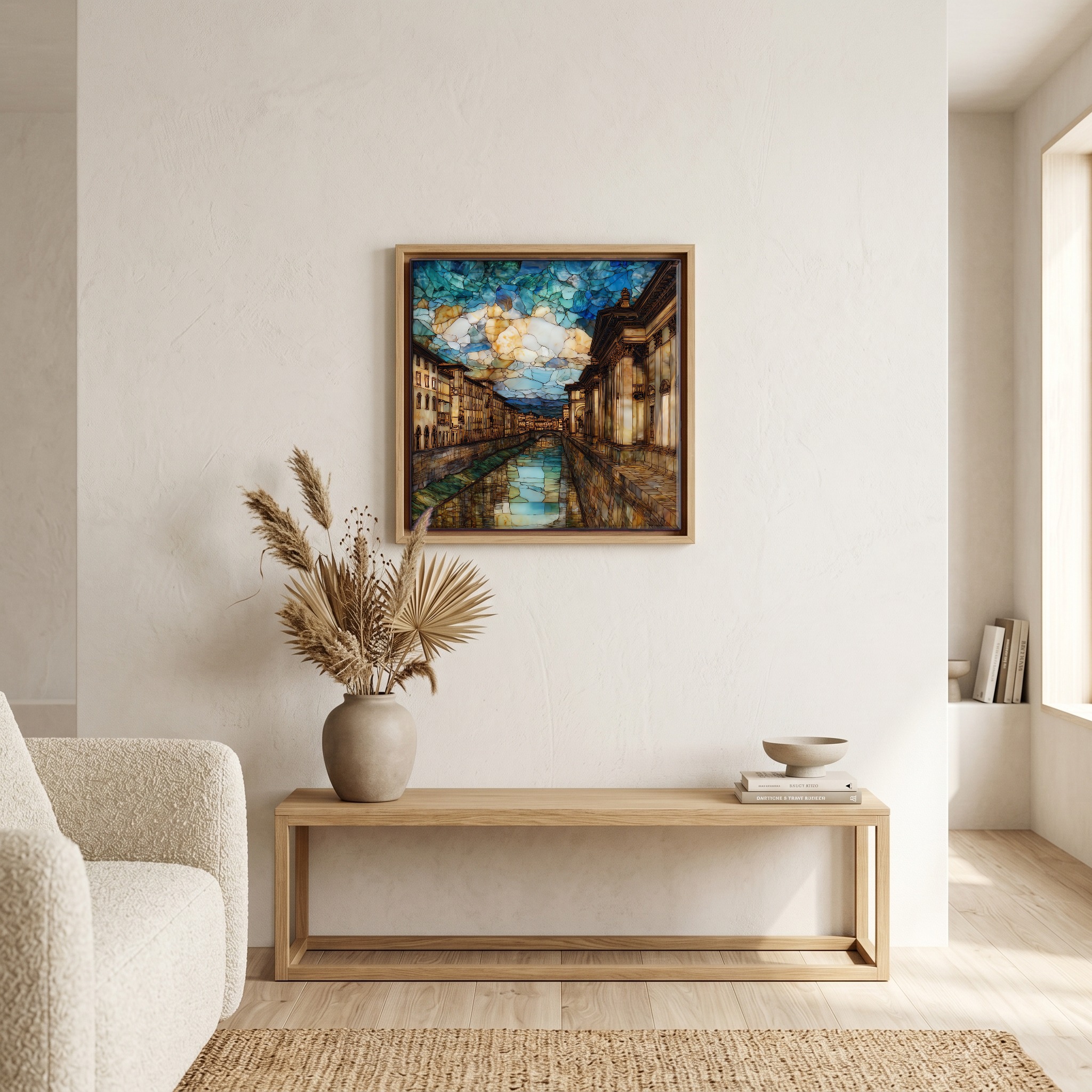
Above the bench, in a warm oak surround.
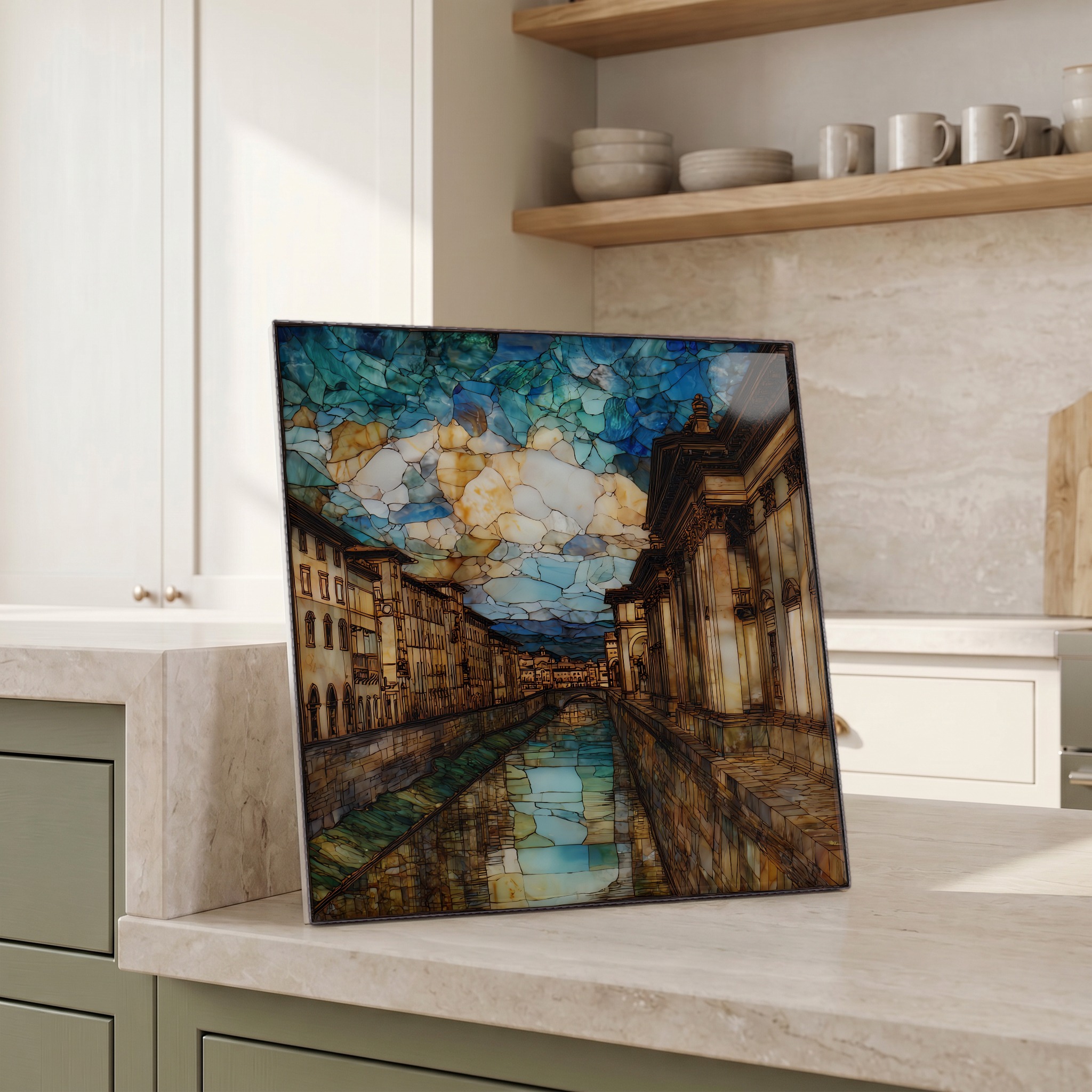
Beside the kettle, propped on the counter.
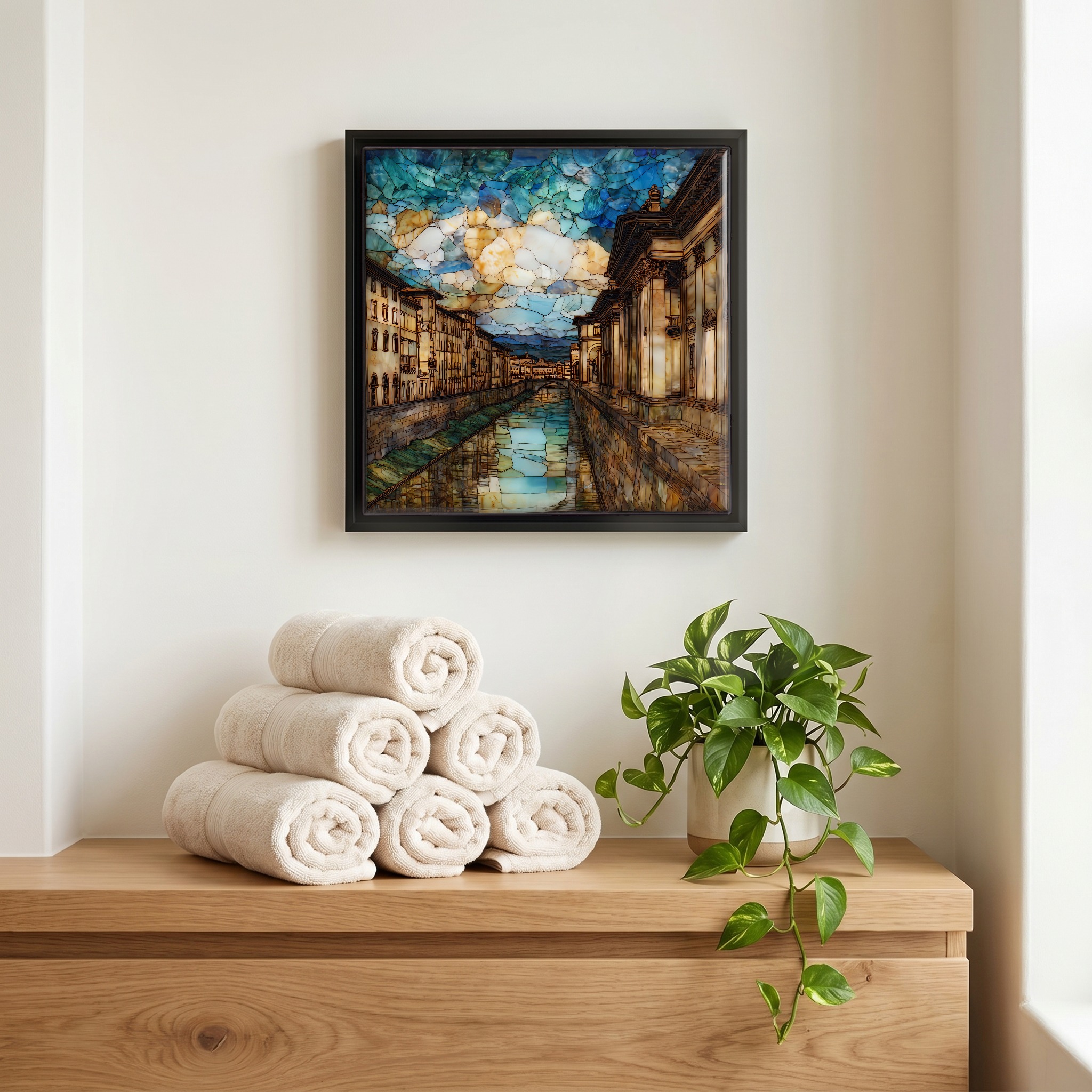
Above the linens, in a slim black surround.
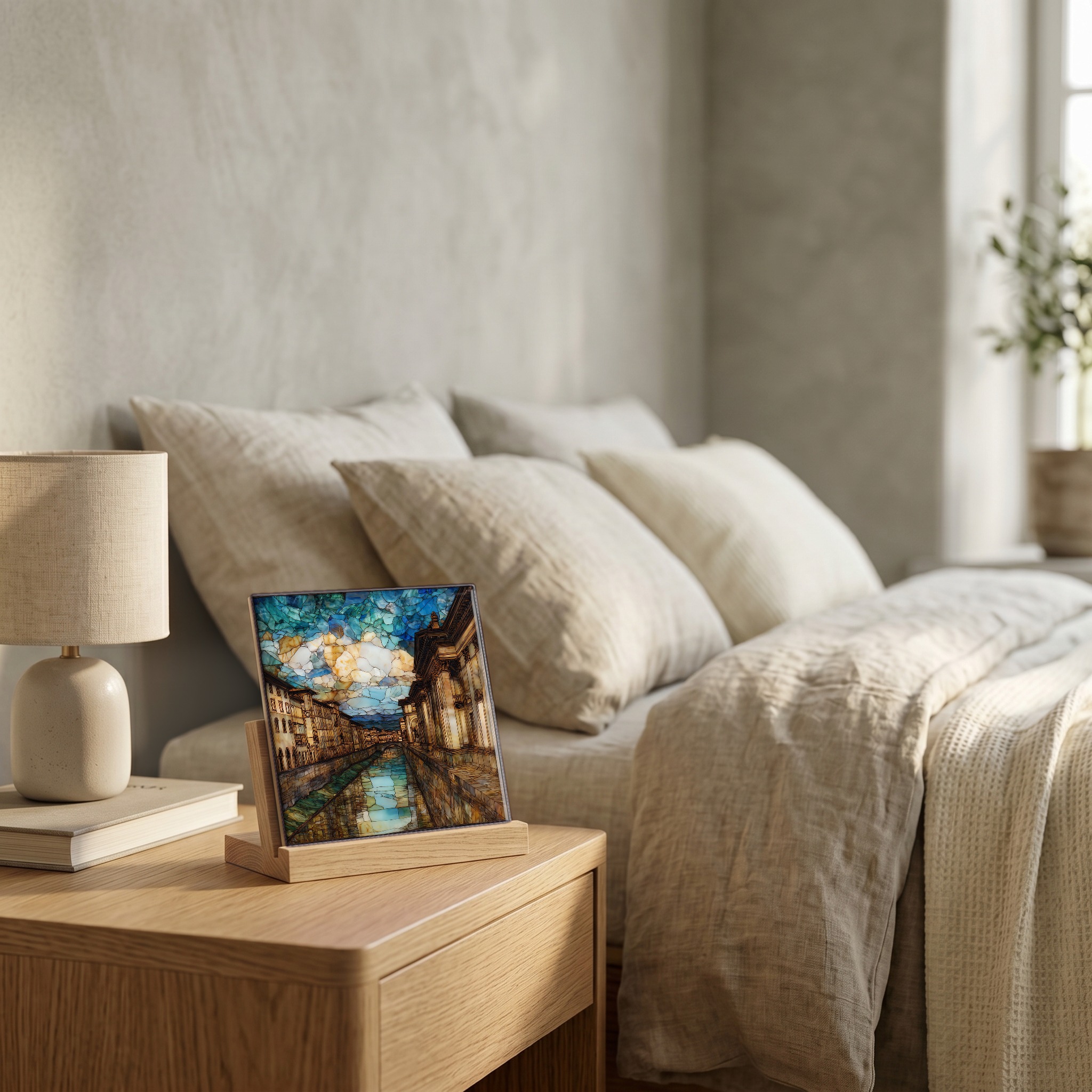
On the nightstand, on a light oak stand.
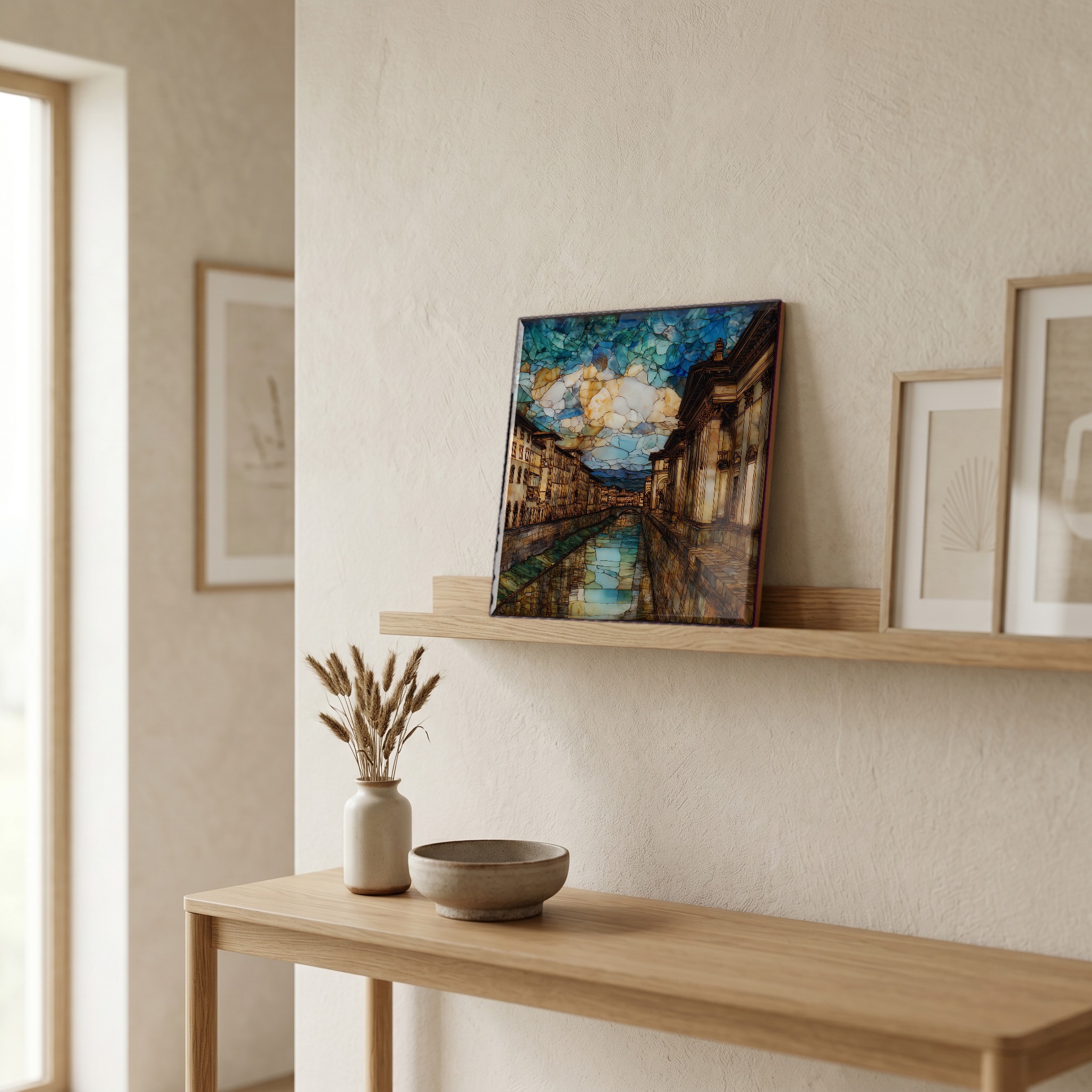
On a picture ledge, where the light comes in.
a note from the studio

The building Cosimo I de' Medici commissioned in 1560 as government offices. Vasari ran a long corridor along the river side and the family installed its pictures in the upper rooms. Almost two centuries later, the last Medici bequeathed the whole collection to Florence on the condition that it never leave the city. It hasn't. Botticelli is still upstairs. The line in the courtyard moves slowly past the statues of Dante and Galileo, who once lived a few streets away.
from the studio
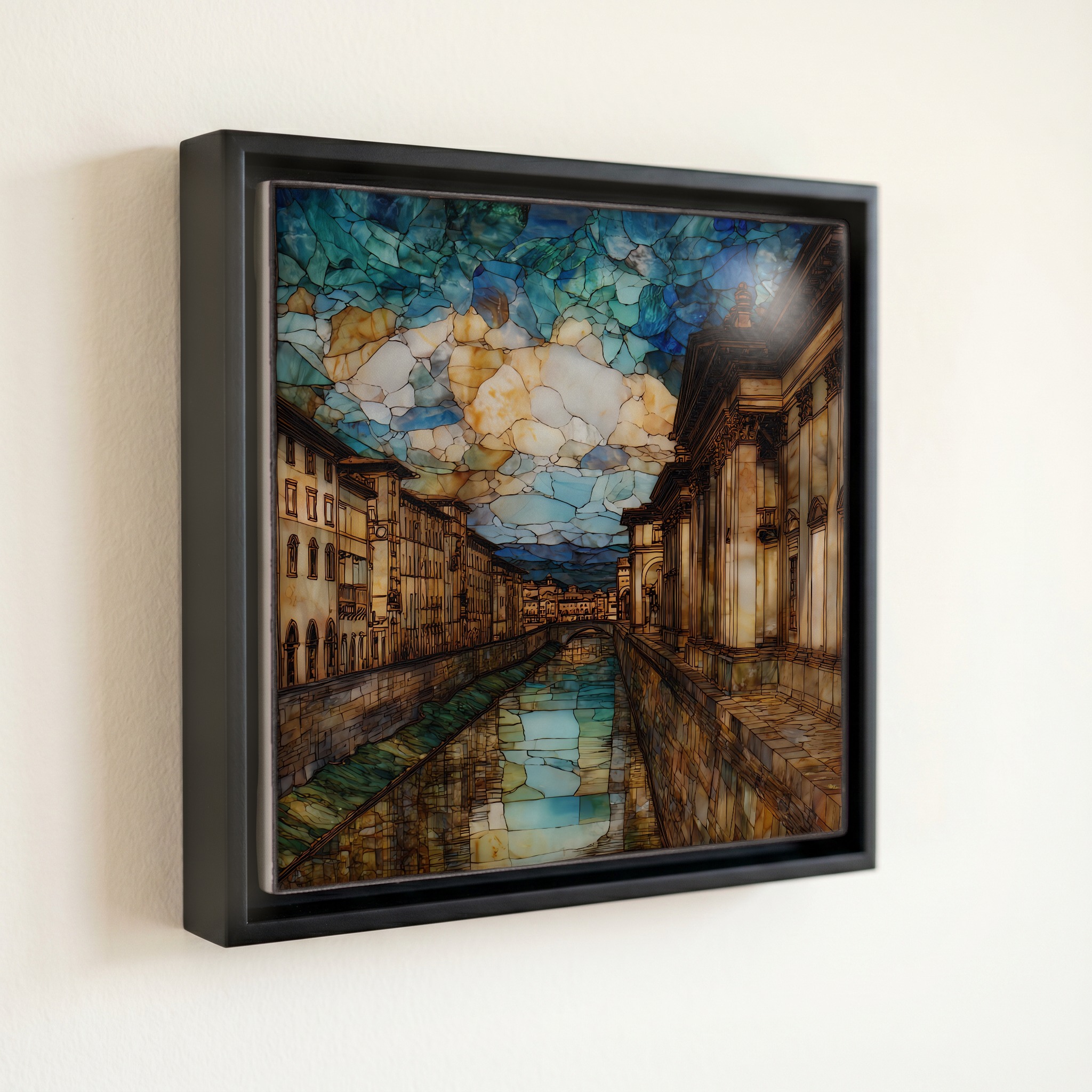
shown in a slim black floating frame · 6 × 6 in
— bring it home

Uffizi Gallery, on ceramic.

Each tile is finished by hand in our Knoxville studio. Artwork is slowly infused into the ceramic surface under high heat and pressure, and rests beneath a thin glossy finish. The colour lives in the surface, not on top of it.

What kind of piece?
One tile — square or rectangle.
How big?
the popular one — counter, shelf, nightstand
6 × 6 in · 15 cm · 1.6 lb
Surface finish
A clear glossy finish — the artwork reads as if under resin. Ideal for show-pieces and framed wall art.
How it sits
A hidden cleat — sits ¼″ proud of the wall.
$58
Hand-finished and shipped from our studio at the foot of the Smokies. On your wall in about ten days.
size
6 × 6 in
15 cm
weighs
1.6 lb
solid in the hand
surface
ceramic, hand-finished
art rests beneath a thin glossy finish
from
Knoxville, TN
our family studio, at the foot of the Smokies
— start a Coaster Set

Pick any four 4-inch tiles — National Parks you've been to, a Smokies set, the four seasons of one place. $ for a set of , cork-backed, ready to live on the table.
comes gift-ready
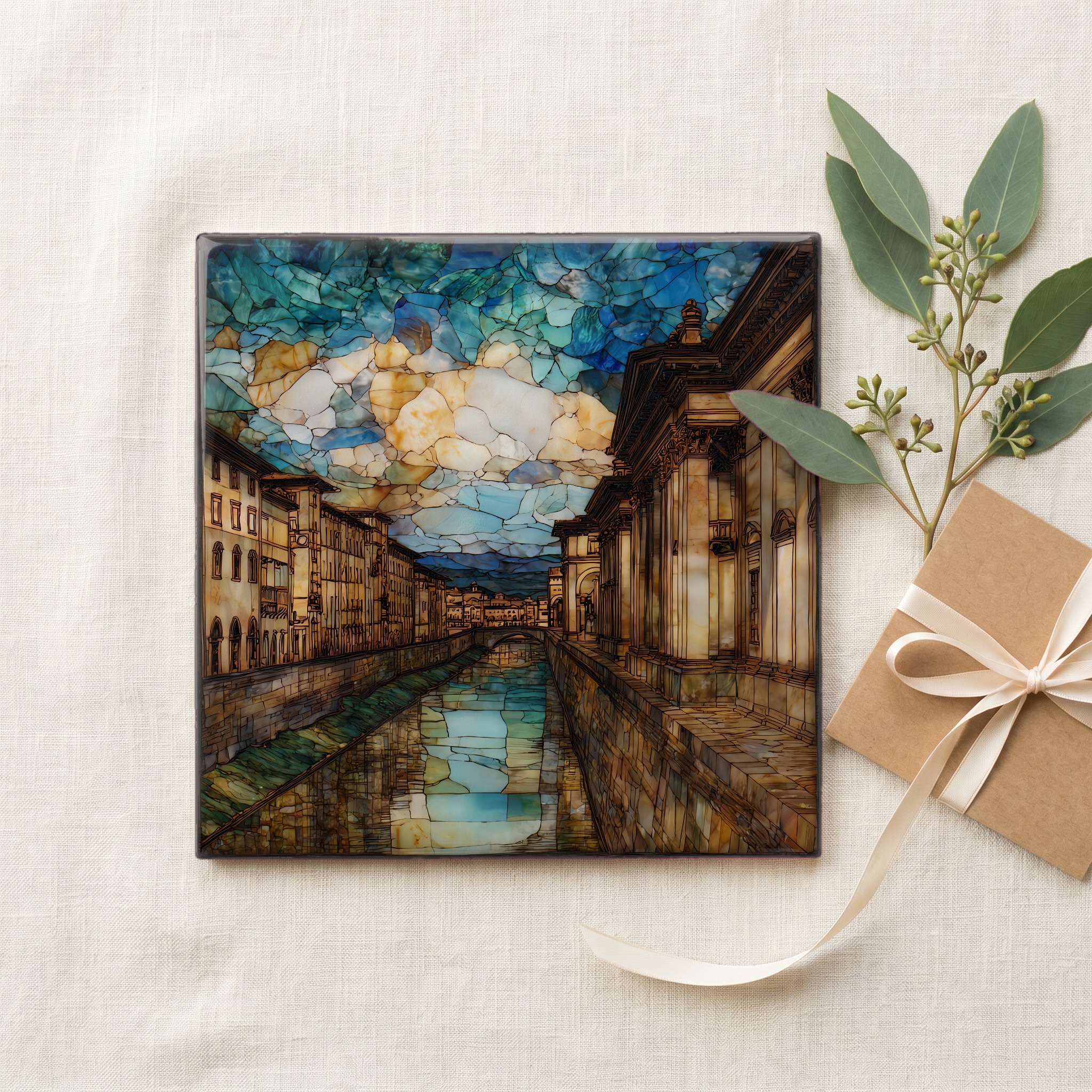
comes gift-ready

Each tile ships in a kraft box, tied with cream ribbon, with a handwritten note from the studio if you'd like to add one.
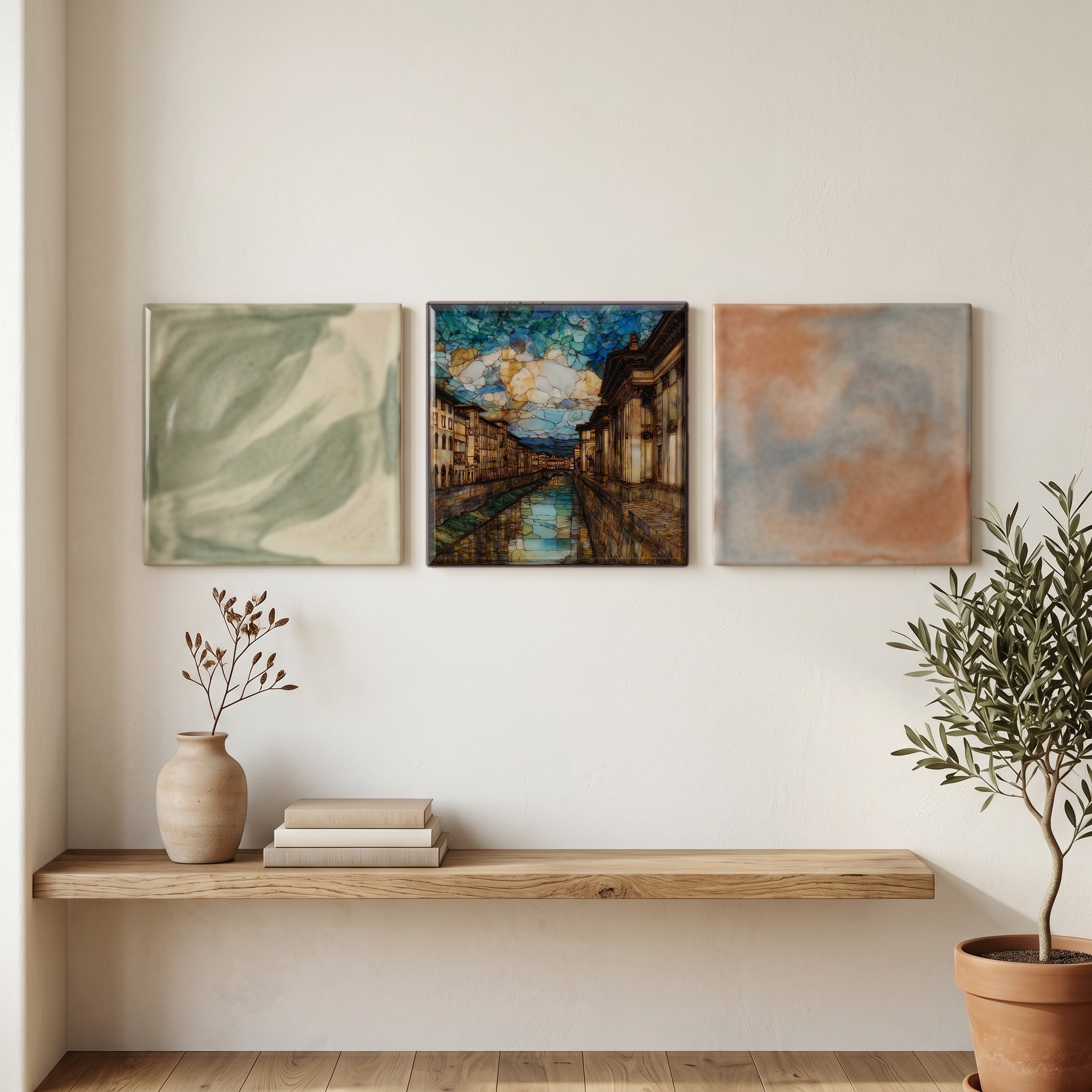
or build a grouping
or build a grouping

Three or five different vistas, hung together — a chapter of places you've been, or want to go.

about Uffizi Gallery

The place, in three passes.

A little of what's known, in case you fall down the rabbit hole — or want to go see it yourself.
the place

The Uffizi sits on the south flank of Piazza della Signoria in Florence, the U-shaped building closing the square's open end and running south to the Arno. Cosimo I de' Medici commissioned it in 1560 from Giorgio Vasari to house the offices of the Florentine magistrates. The word *uffizi* is archaic Italian for offices. The two long wings cup a narrow courtyard lined with nineteenth-century statues of Tuscan worthies: Dante, Petrarch, Boccaccio, Galileo, Leonardo, Michelangelo. The river end opens onto the Lungarno degli Archibusieri. The Vasari Corridor, built in 1565, runs from the upper floor across the Ponte Vecchio to the Palazzo Pitti on the south bank.

the stone

Vasari designed the building as a single long ground-floor loggia with two upper storeys and a row of mezzanine windows, giving Florence its first sustained piece of late-Mannerist civic architecture. He died in 1574 before the work was done; Bernardo Buontalenti finished it in 1581 and added the octagonal Tribuna on the upper floor, its dome lined with mother-of-pearl shells to hold the most prized of the Medici antiquities. The exterior is the pale grey *pietra serena* sandstone quarried from the hills above Fiesole, the same stone Brunelleschi had used a century earlier at the Pazzi Chapel. The paired Doric columns and unbroken cornice are Vasari's address to Roman civic architecture, translated for a Medici grand duke.

the visit

The gallery opens Tuesday through Sunday from 8:15 in the morning, closing at 6:30, with last entry forty-five minutes before. It is closed Mondays, on Christmas Day, and on the first of May. Standard high-season admission is around 25 euros, less in the off-months, with EU citizens under eighteen admitted free and the first Sunday of certain months open at no charge. Advance booking through the official site is effectively required from April through October; same-day queues in summer routinely run two to three hours. The collection is laid out in roughly chronological order along the upper corridor, beginning with Giotto and Cimabue and ending with Caravaggio. Plan two and a half hours minimum; a full visit takes a day.

— informed by Uffizi tickets and hours
where
Italy · Florence, Tuscany
elevation
50 m · 164 ft
position
43.7678° N · 11.2553° E
the neighborhood

What's nearby.

A handful of named places within an hour's walk or short drive. Some we've already painted; some we will.
1 km W
Ponte Vecchio
medieval bridge
1 km N
Palazzo Vecchio
civic palace
1 km N
Florence Cathedral
cathedral
1 km SW
Palazzo Pitti
Renaissance palace
1 km SW
Boboli Gardens
historic garden
1 km SE
Piazzale Michelangelo
viewpoint
1 km N
Galleria dell'Accademia
museum
N
Uffizi Gallery
Ponte Vecchio
Palazzo Vecchio
Florence Cathedral
Palazzo Pitti
Boboli Gardens
Piazzale Michelangelo
Galleria dell'Accademia
common questions

What people ask.

A few questions we get about Uffizi Gallery — and about bringing the piece home.
about the place

The Uffizi is in central Florence, Italy, on the south side of Piazza della Signoria. The building runs south to the Arno River and connects across the Ponte Vecchio, via the elevated Vasari Corridor, to the Palazzo Pitti on the opposite bank.

Cosimo I de' Medici commissioned the building in 1560 from Giorgio Vasari to house the offices of the Florentine magistrates. Vasari died in 1574 and Bernardo Buontalenti finished the work in 1581, completing the octagonal Tribuna room on the upper floor.

Uffizi is archaic Italian for offices. The building was originally constructed to house the administrative offices of the Florentine magistrates: the judicial and guild offices of the city under the rule of Cosimo I de' Medici.

Botticelli's Birth of Venus, painted around 1485, is the gallery's most-recognised work. It hangs in Room 10 to 14 on the upper floor alongside his Primavera, both originally painted for a Medici villa in the late fifteenth century.

The collection belongs to the Italian state. In 1737 Anna Maria Luisa de' Medici, the last of the Medici line, bequeathed the family's collected art to Tuscany on the condition that none of it ever leave Florence. The condition has held.

A focused visit takes two and a half to three hours; a full visit takes most of a day. The collection runs roughly chronologically from Giotto and Cimabue on the upper floor down through Botticelli, Leonardo, Michelangelo, Raphael, Titian, and Caravaggio.

From April through October, advance booking through the official site at uffizi.it is effectively required. Same-day queues in summer routinely run two to three hours. Off-season visits in January and February are considerably easier and rarely need pre-booking.

about the piece in your home

It has been a meaningful gift for many customers with Florentine ties: people who studied there on a year abroad, honeymooned along the Arno, or have family roots in Tuscany. A Keepsake or Small with a handwritten note from the studio carries well.

The deep ochres and stone tones sit naturally in Tuscan-traditional, European-Classical, and Library-Eclectic rooms. The stained-glass linework reads well against limewashed walls, plaster, and warm wood. Cold-modern minimalist palettes work less well; the piece wants warm light.

Yes. The grand-tour and library-eclectic looks have re-emerged in shelter magazines and interior-design publications over the last few years, with Florentine and Roman vistas often chosen as anchor pieces. The Uffizi's ochre palette anchors a room without dominating it.

Above a standard three-seat sofa, the single Large is the most-requested size and reads from across the room. For a longer wall or a console behind a sofa, a 4-tile Mural gives more presence; a 9-tile Mural becomes the room's anchor piece.

Yes, with the Dura Satin or Matte finish. Both are scratch-resistant and stand up to humidity and routine cleaning. The Glossy finish is best kept to framed display pieces and dry walls; backsplashes, showers, and powder rooms should specify Dura Satin or Matte at checkout.

A soft microfibre cloth with plain water handles routine dust and fingerprints. For kitchen or bathroom installations, a mild non-abrasive household cleaner is safe. Avoid steel wool, scouring pads, and acidic cleaners; the colour lives in the surface and the finish protects it.

Yes. Every WenderVista piece is original work from a single studio, painted in our signature stained-glass and alcohol-ink visual language and hand-finished on the ceramic in Knoxville, Tennessee. We do not license imagery from other artists or from stock libraries.

if this one stayed with you

A few you might also love.

Hand-picked by the eye that found Sorapis. Same air, same kind of quiet.
— a collection

The Italian Dolomites,
painted slow.

The valleys between Cortina and Val Gardena, the tarns you walk an hour to see, the towers that turn the colour of a banked fire just before dark. Wander the collection by valley, by season, or follow the path Reid walked.

Tre Cime
Braies
Misurina
Sorapis
Cinque Torri
Sassolungo
Marmolada