Wender·Vista
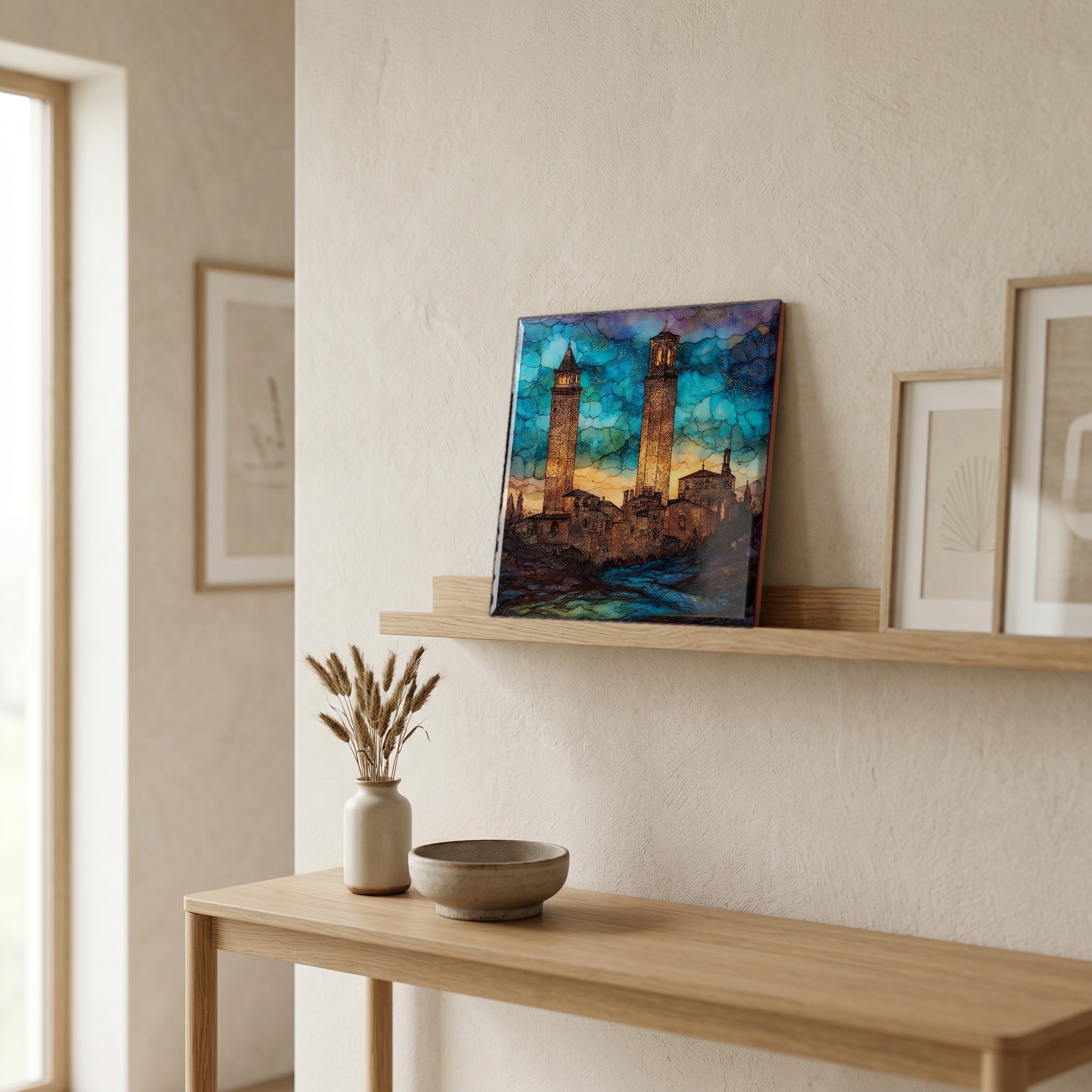
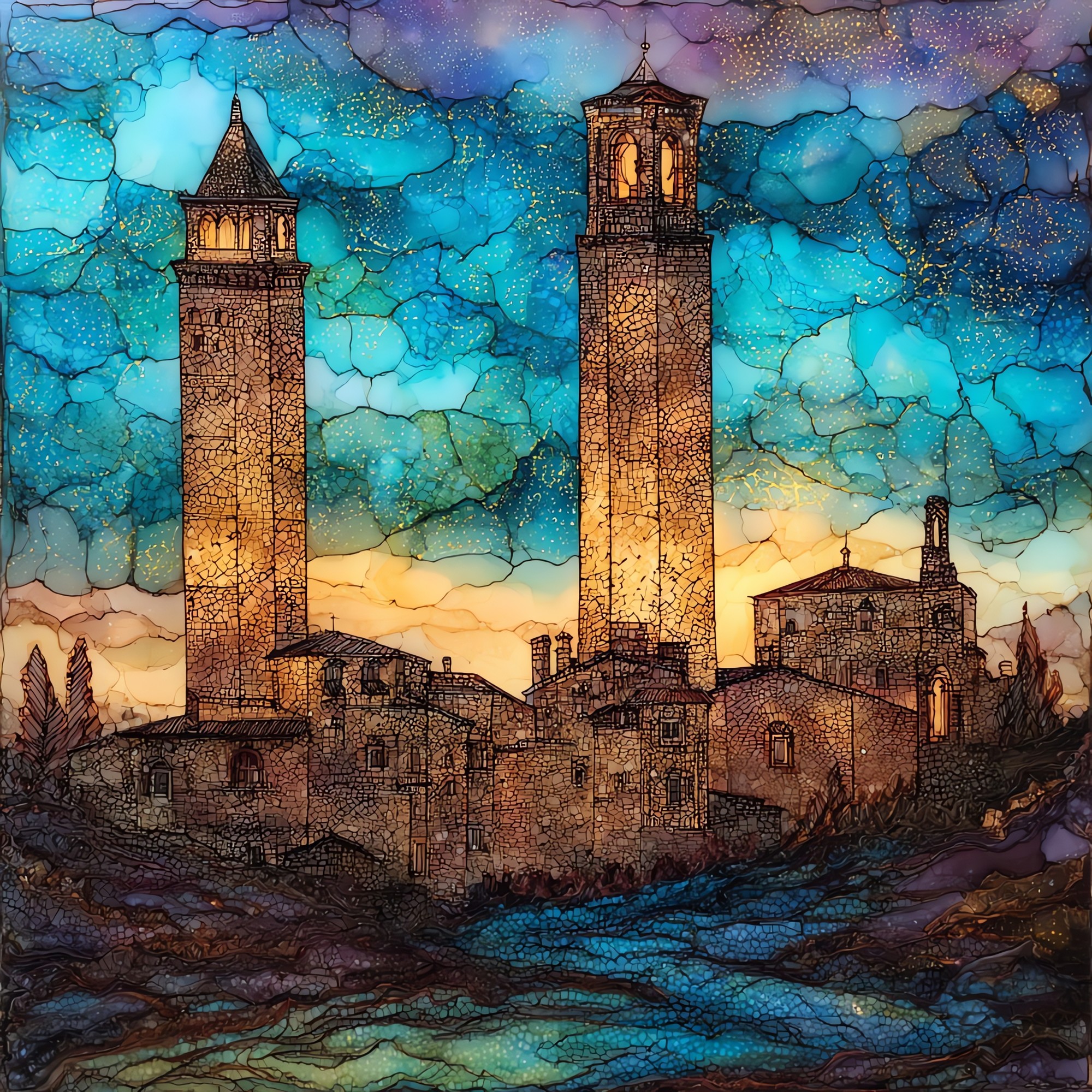
Two Towers of Bologna
shown on ceramic, 12-inch tileItaly
in the old centre of Bologna, where the porticoes start

Two Towers of Bologna

the lean the city kept upright.

Where it lives

Not only on a wall.

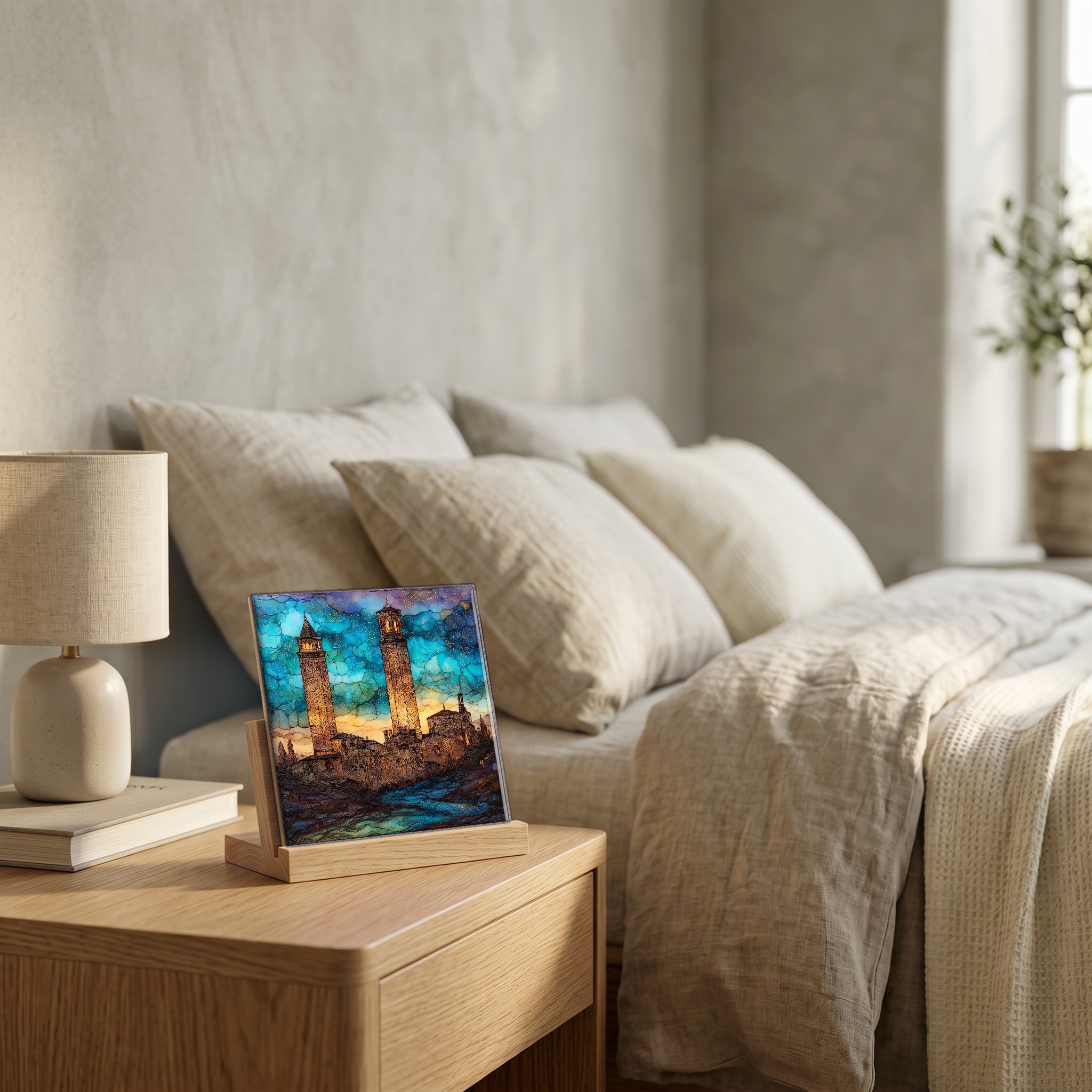
A small tile on the nightstand catching the morning. A larger one above the fire. Yours, wherever you spend the slow hours.
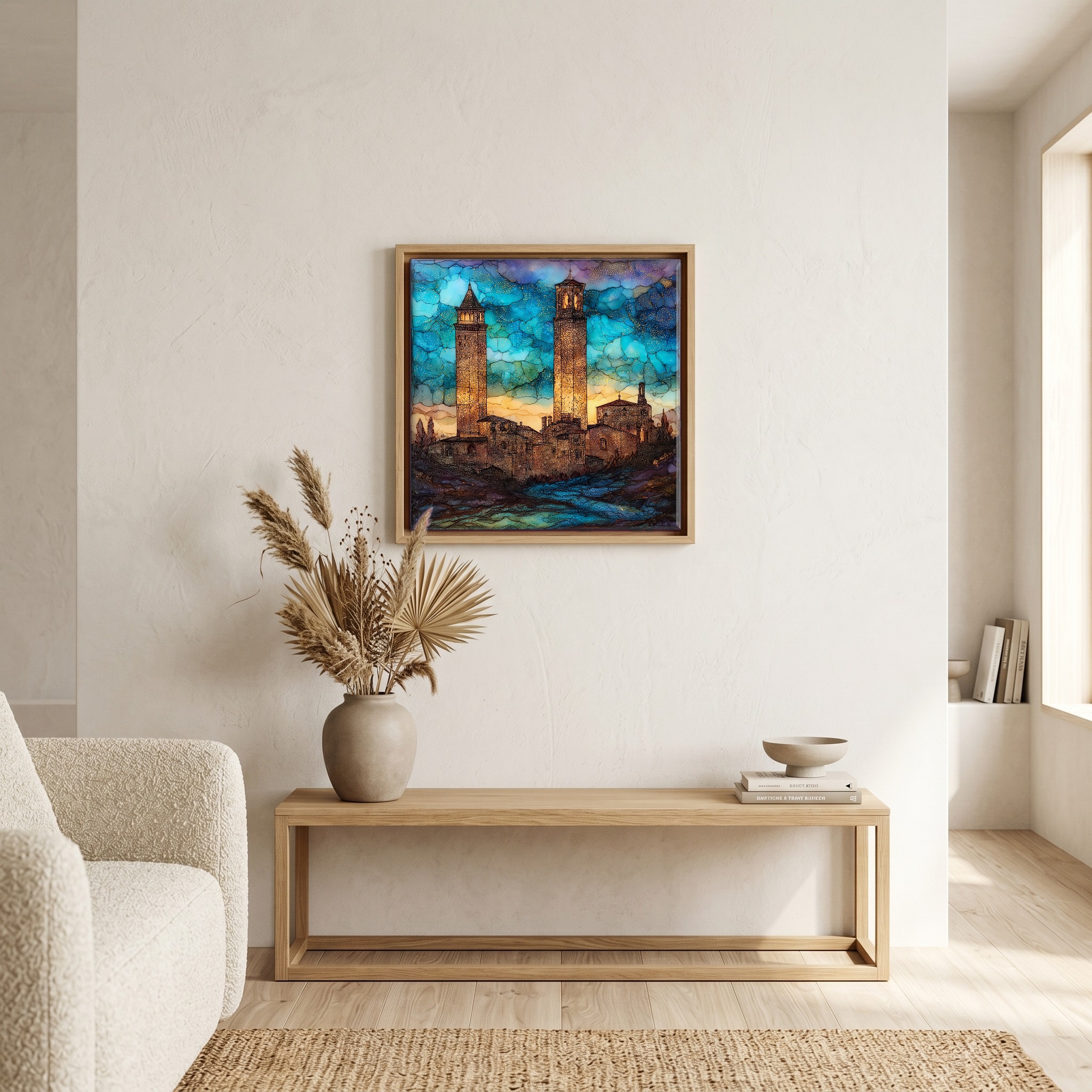
Above the bench, in a warm oak surround.
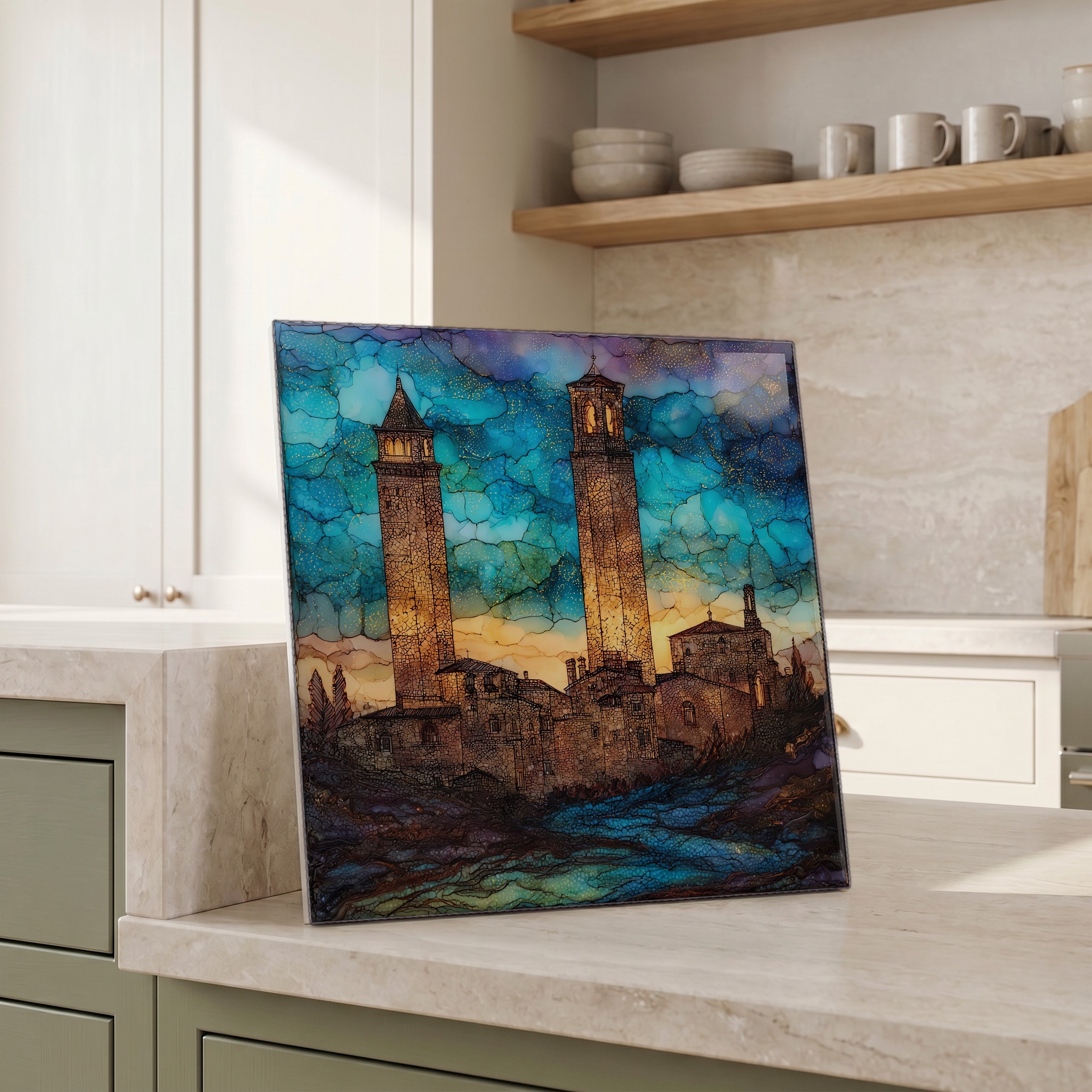
Beside the kettle, propped on the counter.
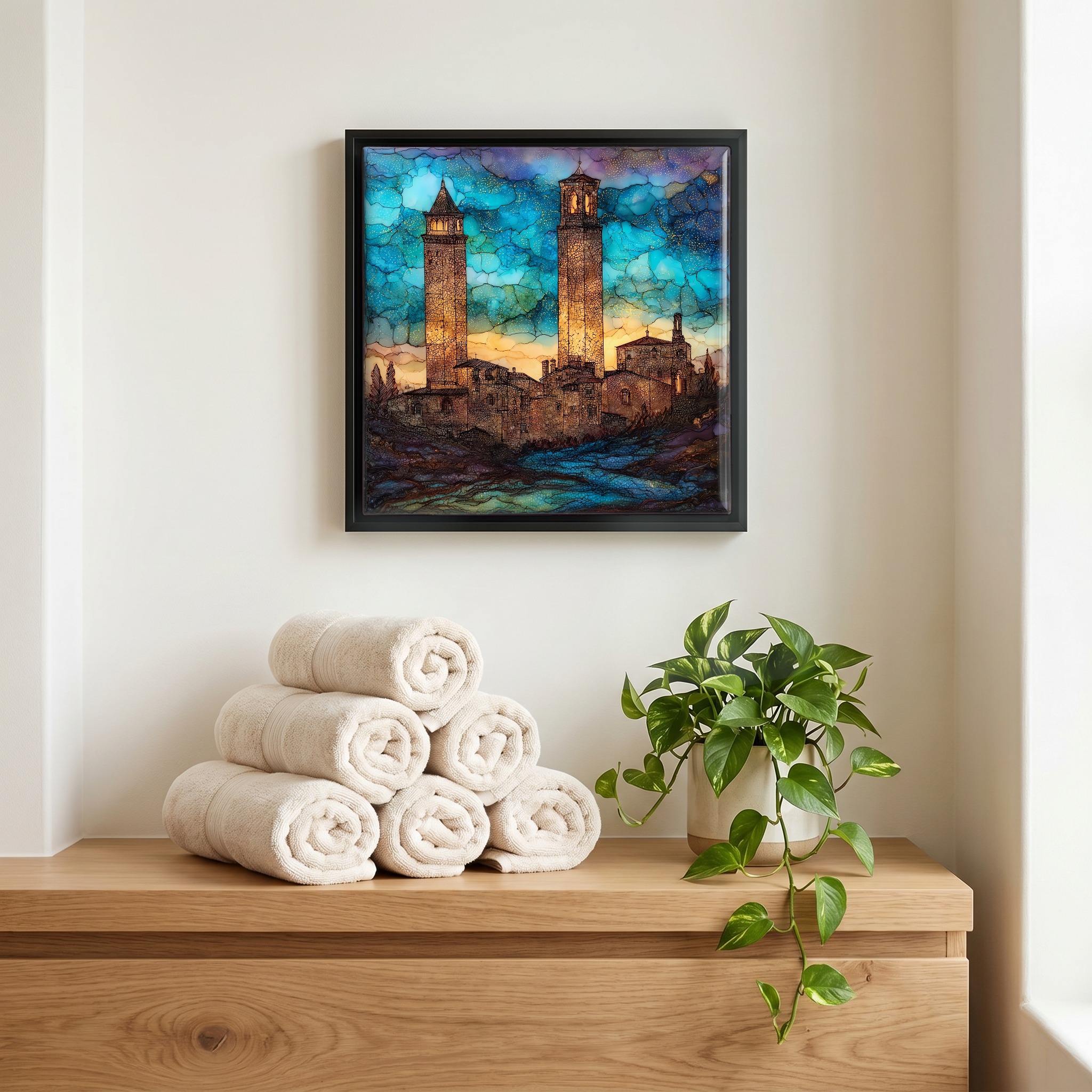
Above the linens, in a slim black surround.
On the nightstand, on a light oak stand.
On a picture ledge, where the light comes in.
a note from the studio

Two leaning brick towers in central Bologna. The Asinelli rises to 97 metres and still has a staircase up, 498 steps wound through the dark. The Garisenda is shorter, leaning harder, and Dante stopped to look up at it in the early 1300s. Bologna once had almost a hundred of these towers, neighbourhood ambition cast in brick. Most came down by the fifteenth century. These two stayed. They lean at angles that should not still be standing, and they are.
from the studio
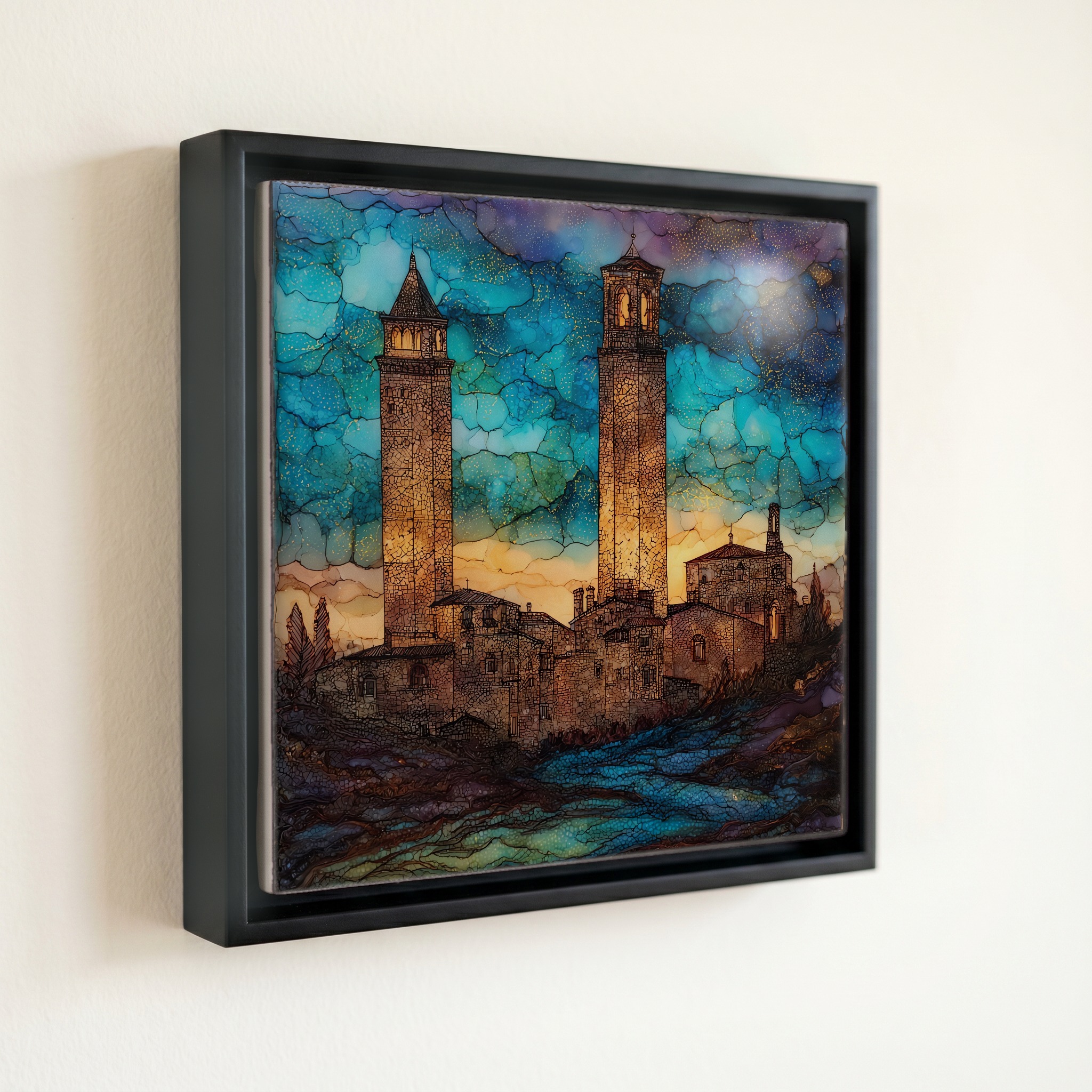
shown in a slim black floating frame · 6 × 6 in
— bring it home

Two Towers of Bologna, on ceramic.

Each tile is finished by hand in our Knoxville studio. Artwork is slowly infused into the ceramic surface under high heat and pressure, and rests beneath a thin glossy finish. The colour lives in the surface, not on top of it.

What kind of piece?
One tile — square or rectangle.
How big?
the popular one — counter, shelf, nightstand
6 × 6 in · 15 cm · 1.6 lb
Surface finish
A clear glossy finish — the artwork reads as if under resin. Ideal for show-pieces and framed wall art.
How it sits
A hidden cleat — sits ¼″ proud of the wall.
$58
Hand-finished and shipped from our studio at the foot of the Smokies. On your wall in about ten days.
size
6 × 6 in
15 cm
weighs
1.6 lb
solid in the hand
surface
ceramic, hand-finished
art rests beneath a thin glossy finish
from
Knoxville, TN
our family studio, at the foot of the Smokies
— start a Coaster Set

Pick any four 4-inch tiles — National Parks you've been to, a Smokies set, the four seasons of one place. $ for a set of , cork-backed, ready to live on the table.
comes gift-ready
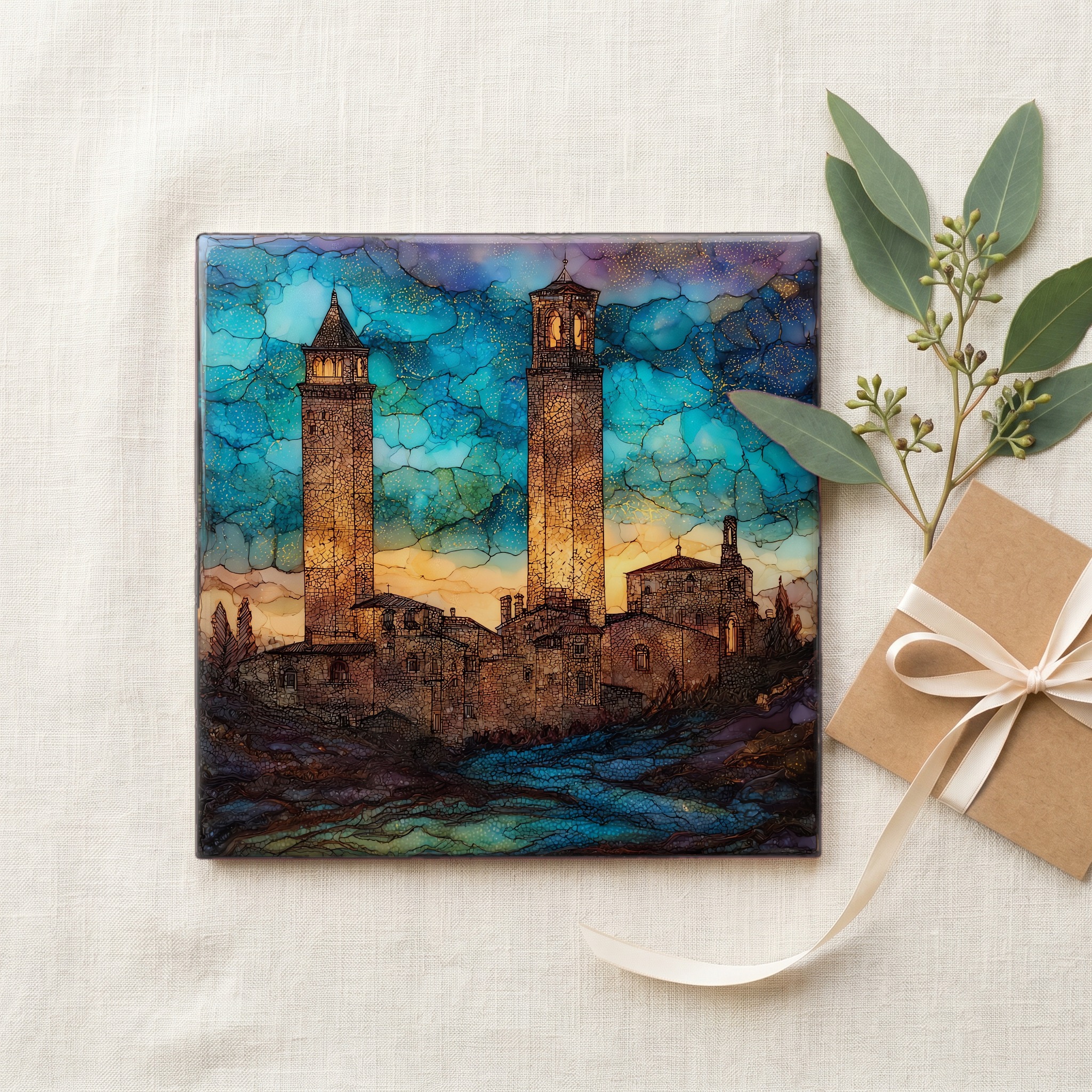
comes gift-ready

Each tile ships in a kraft box, tied with cream ribbon, with a handwritten note from the studio if you'd like to add one.
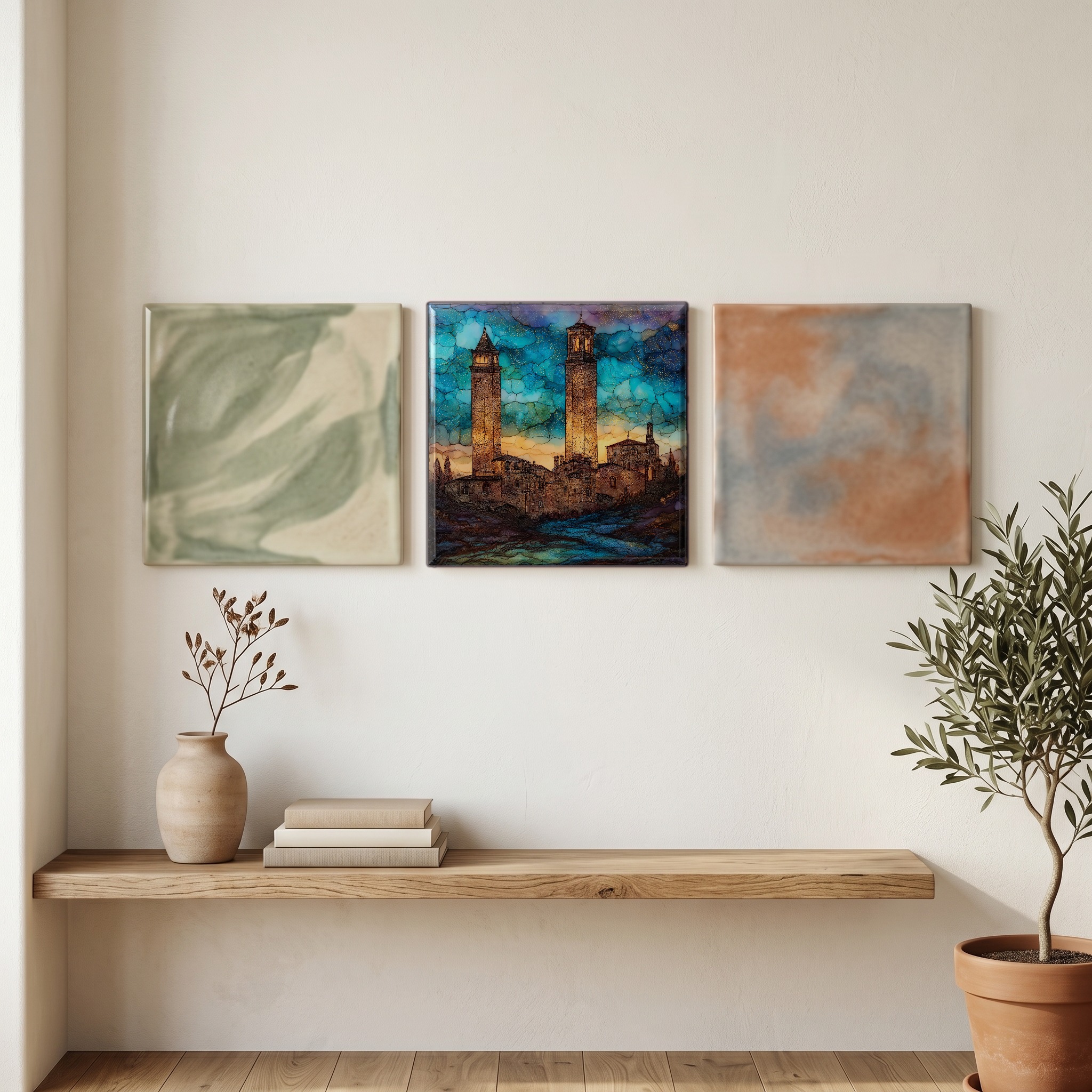
or build a grouping
or build a grouping

Three or five different vistas, hung together — a chapter of places you've been, or want to go.

about Two Towers of Bologna

The place, in three passes.

A little of what's known, in case you fall down the rabbit hole — or want to go see it yourself.
the place

The Two Towers stand at Piazza di Porta Ravegnana, the convergence point of several medieval streets in the old centre of Bologna, the capital of Italy's Emilia-Romagna region. The taller of the pair, the Torre degli Asinelli, rises 97.2 metres and was built between 1109 and 1119 by the Asinelli family during the city's tower-building boom. The shorter Torre della Garisenda stood nearby, slightly later, and was deliberately reduced in the fourteenth century after the soil under it began to give way. Bologna sits on the Po Valley alluvial plain, and at the medieval peak the city held more than a hundred private towers. Roughly twenty still stand.

— informed by Wikipedia, Bologna Welcome
the stone

Both towers are built of brick on a base of selenite stone, the standard combination for Bologna's medieval towers and part of the reason so few survived. The Asinelli leans about 2.2 metres off vertical at the top; the Garisenda, shorter at roughly 48 metres, leans nearly 3.2 metres. The Garisenda's lean grew so pronounced in the early fourteenth century that the upper courses were taken down to keep it standing. Dante had already passed beneath it and recorded the impression in the thirty-first canto of the Inferno. The Comune di Bologna has monitored both towers continuously since the 1990s, and the Garisenda was closed off again in 2023 for a long stabilisation campaign with scaffolding wrapping the base.

— informed by Wikipedia, Comune di Bologna
the visit

The Torre degli Asinelli has historically welcomed visitors up a wooden staircase of 498 steps to a panoramic platform at the top, with timed tickets sold through the Bologna Welcome tourism office. Closures for safety work have become routine, and in recent years both towers have been wrapped in scaffolding during phases of conservation. The Torre della Garisenda has not been open to the public for decades. The square below, Piazza di Porta Ravegnana, sits within the UNESCO-listed Porticoes of Bologna designation inscribed in 2021, and is reached on foot from Piazza Maggiore in under five minutes.

where
Italy · Bologna, Emilia-Romagna
elevation
54 m · 177 ft
position
44.4944° N · 11.3464° E
the neighborhood

What's nearby.

A handful of named places within an hour's walk or short drive. Some we've already painted; some we will.
0.4 km W
Piazza Maggiore
medieval square
0.5 km W
Basilica di San Petronio
Gothic basilica
0.3 km SE
Piazza Santo Stefano
church complex
0.5 km SW
Archiginnasio
historic university palace
0.5 km W
Fountain of Neptune
16th-century fountain
N
Two Towers of Bologna
Piazza Maggiore
Basilica di San Petronio
Piazza Santo Stefano
Archiginnasio
Fountain of Neptune
common questions

What people ask.

A few questions we get about Two Towers of Bologna — and about bringing the piece home.
about the place

The Two Towers, called Le Due Torri in Italian, are a pair of leaning brick towers from the early twelfth century at Piazza di Porta Ravegnana in central Bologna, Italy. The taller is the Torre degli Asinelli at 97.2 metres; the shorter is the Torre della Garisenda at about 48 metres. They are the enduring symbol of the city.

Both towers were built on the soft alluvial soil of the Po Valley plain, which compresses unevenly under heavy load. The Garisenda began leaning so severely during construction that its upper courses were taken down in the fourteenth century. The Asinelli leans more gently, about 2.2 metres off vertical at the top.

The Torre degli Asinelli was built between 1109 and 1119 by the Asinelli family. The Torre della Garisenda followed shortly after, in the same early-twelfth-century tower-building boom that filled Bologna with more than a hundred private towers, of which roughly twenty still stand today.

Dante refers to the Garisenda in Canto XXXI of the Inferno, likening the giant Antaeus leaning over the poet to the impression of standing beneath the tower on a cloudy day. The reference confirms the Garisenda's pronounced lean by the early fourteenth century.

The Torre degli Asinelli has historically been climbable via a 498-step wooden staircase to a panoramic platform, with timed tickets sold through Bologna Welcome. The Torre della Garisenda has been closed to the public for decades. Both have been periodically closed for stabilisation work, and visitors should confirm current access before travelling.

The towers stand at Piazza di Porta Ravegnana in the old centre of Bologna, the capital of Italy's Emilia-Romagna region. The square is a short walk from Piazza Maggiore and sits within the UNESCO-listed Porticoes of Bologna, inscribed in 2021.

In the twelfth and thirteenth centuries, Bologna's leading families built private towers to assert status and provide defensive positions. The city held an estimated hundred-plus towers at its height. Most were taken down by the fifteenth century for safety reasons, replaced by later building, or simply collapsed.

about the piece in your home

It has been a meaningful gift for many of our customers with Bolognese roots. The Two Towers are the city's symbol; locals associate them with returning home, with the walk past the porticoes, and with the long quiet of the old centre. A Small or Medium with a handwritten note from the studio carries well.

The artwork's rust-brick, copper, and storm-grey palette sits comfortably in Italianate, Old-World, and Library-modern interiors. It pairs with warm woods, cognac leather, and worn brass. The piece holds its own as a single Medium above a console, or as a Coaster Set on a study desk.

The towers carry medieval Italian texture without ornament-heavy traditionalism, which is the move European-eclectic and Slow-Italianate rooms are making this year. Architectural subjects with painterly surfaces, such as bridges, towers, and basilicas, are reading as quietly contemporary alongside antique furniture and natural linen.

Above a sofa, a single Large reads at the right scale and centres the room. Above a narrower console or hallway table, a Medium or a 4-tile Mural in a 2x2 grid works well. For a deeper feature wall, a 9-tile Mural in a 3x3 grid carries the room.

Yes, in the Dura Satin or Matte finish. Both are scratch-resistant and tolerate steam, splashes, and daily wiping. The Glossy finish is meant for framed wall pieces and dry rooms, beautiful but more prone to showing fingerprints in a bath.

A soft microfibre cloth and water is all the surface needs. No abrasive pads, no harsh chemicals. The colour is infused into the ceramic surface beneath a thin glossy finish, so it does not lift, fade, or scratch with ordinary handling.

Yes. Every WenderVista piece is original to the studio. Reid Wender chooses the place, paints the scene in our signature stained-glass and alcohol-ink visual language, and the work is hand-finished in-house in Knoxville, Tennessee. The artwork is not licensed, not stock, and not sold elsewhere.

if this one stayed with you

A few you might also love.

Hand-picked by the eye that found Sorapis. Same air, same kind of quiet.
— a collection

The Italian Dolomites,
painted slow.

The valleys between Cortina and Val Gardena, the tarns you walk an hour to see, the towers that turn the colour of a banked fire just before dark. Wander the collection by valley, by season, or follow the path Reid walked.

Tre Cime
Braies
Misurina
Sorapis
Cinque Torri
Sassolungo
Marmolada