Wender·Vista
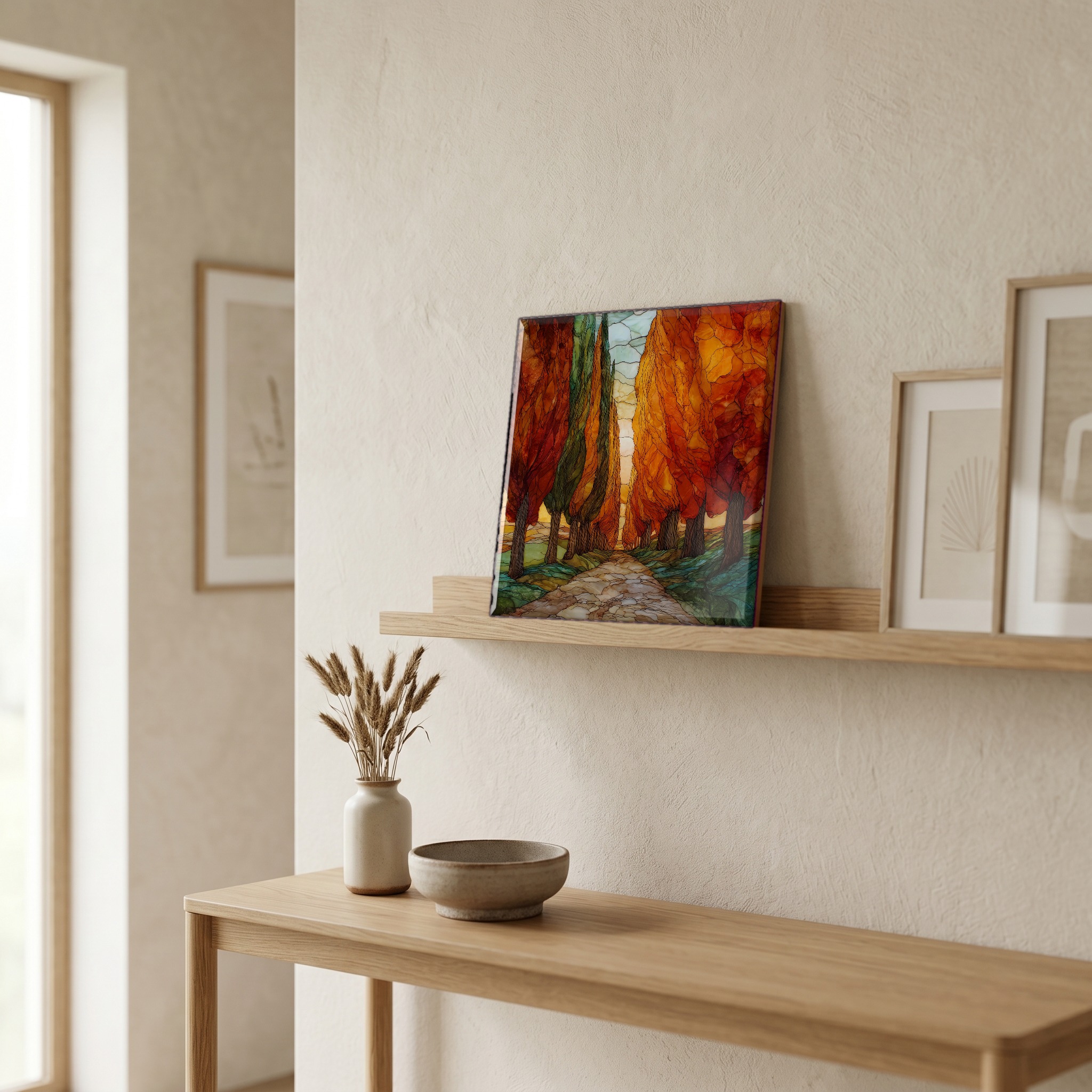
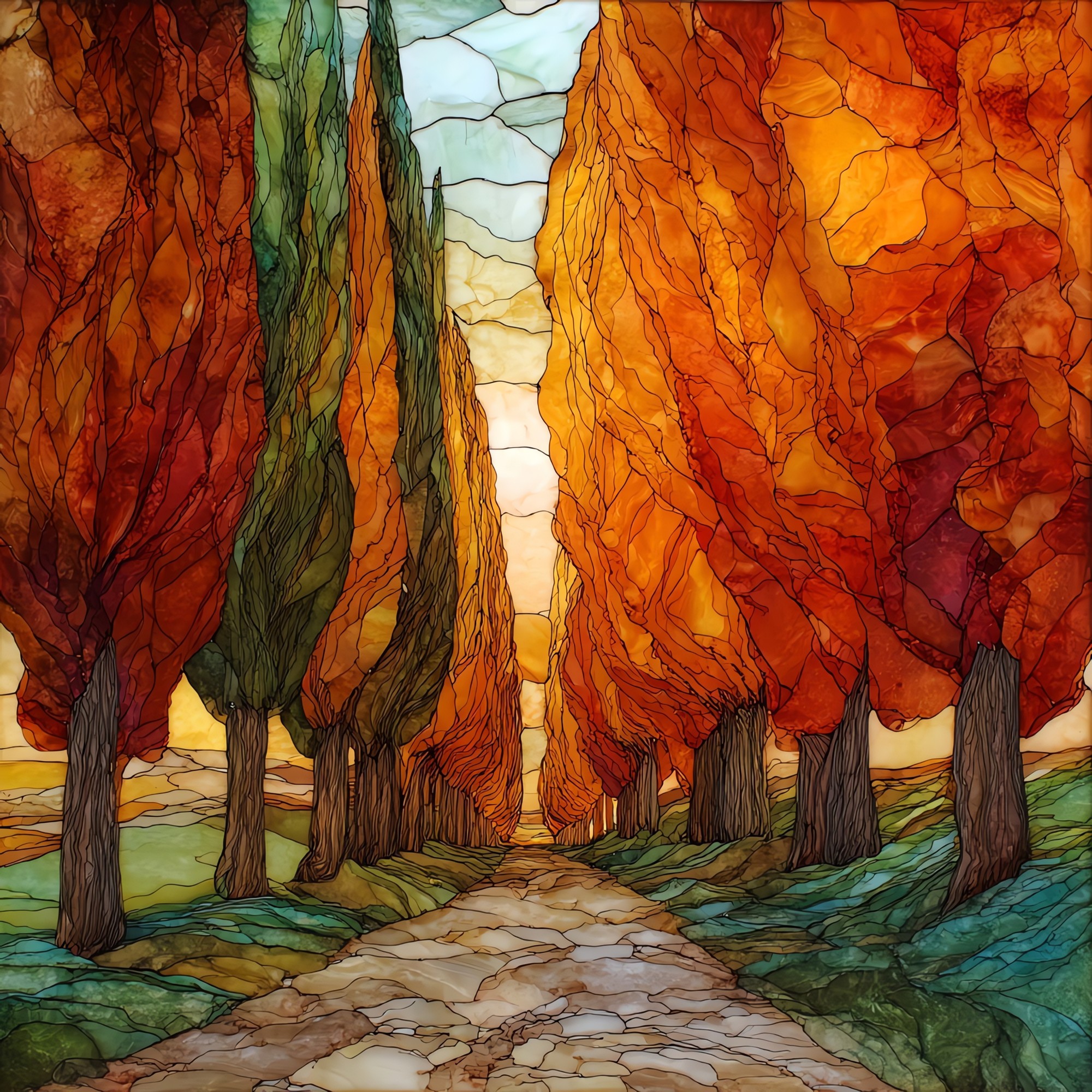
Tuscan Cypress Avenue
shown on ceramic, 12-inch tileItaly
south of Livorno, the long line to Bolgheri

Tuscan Cypress Avenue

— five kilometres of cypresses, perfectly straight.

Where it lives

Not only on a wall.

A small tile on the nightstand catching the morning. A larger one above the fire. Yours, wherever you spend the slow hours.
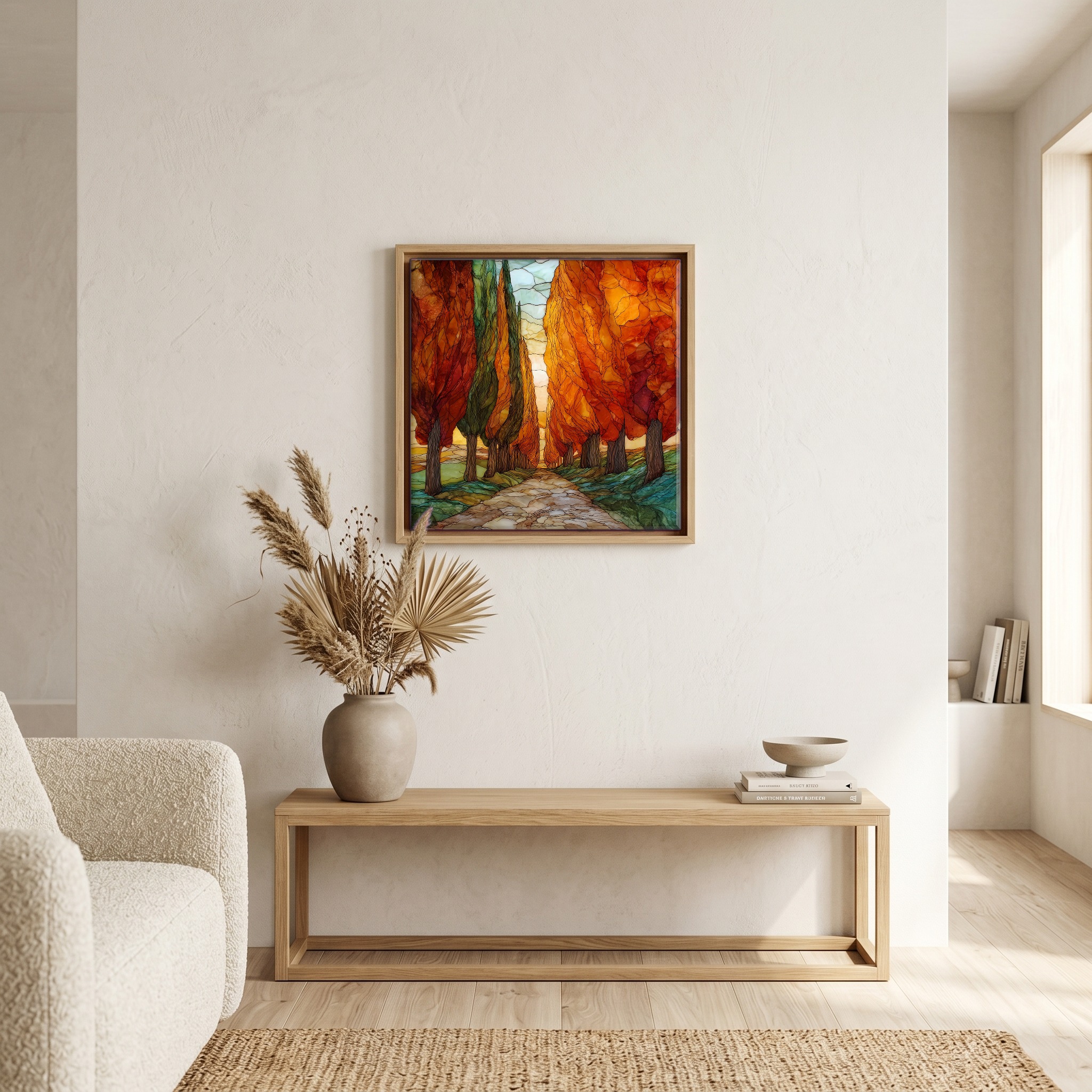
Above the bench, in a warm oak surround.
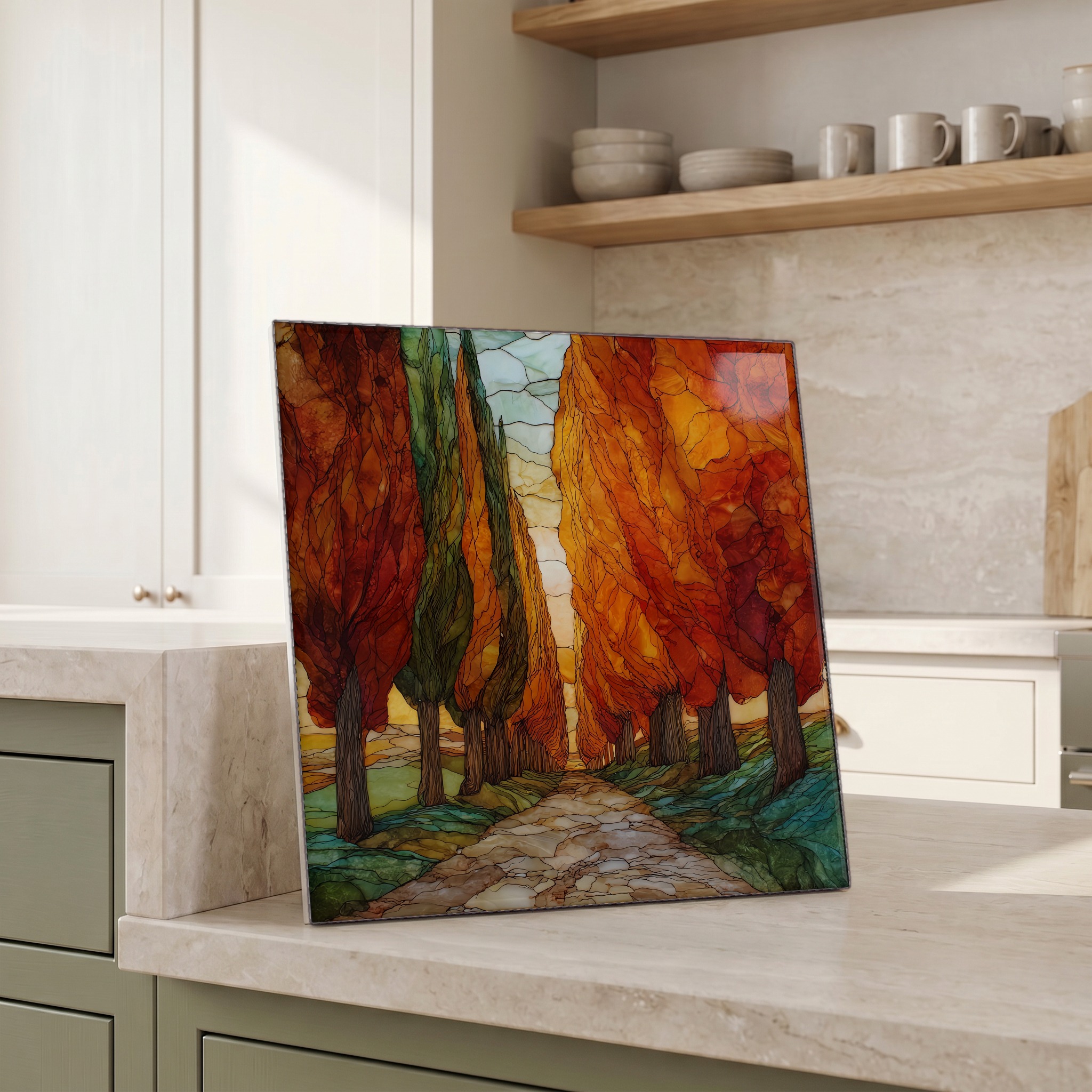
Beside the kettle, propped on the counter.
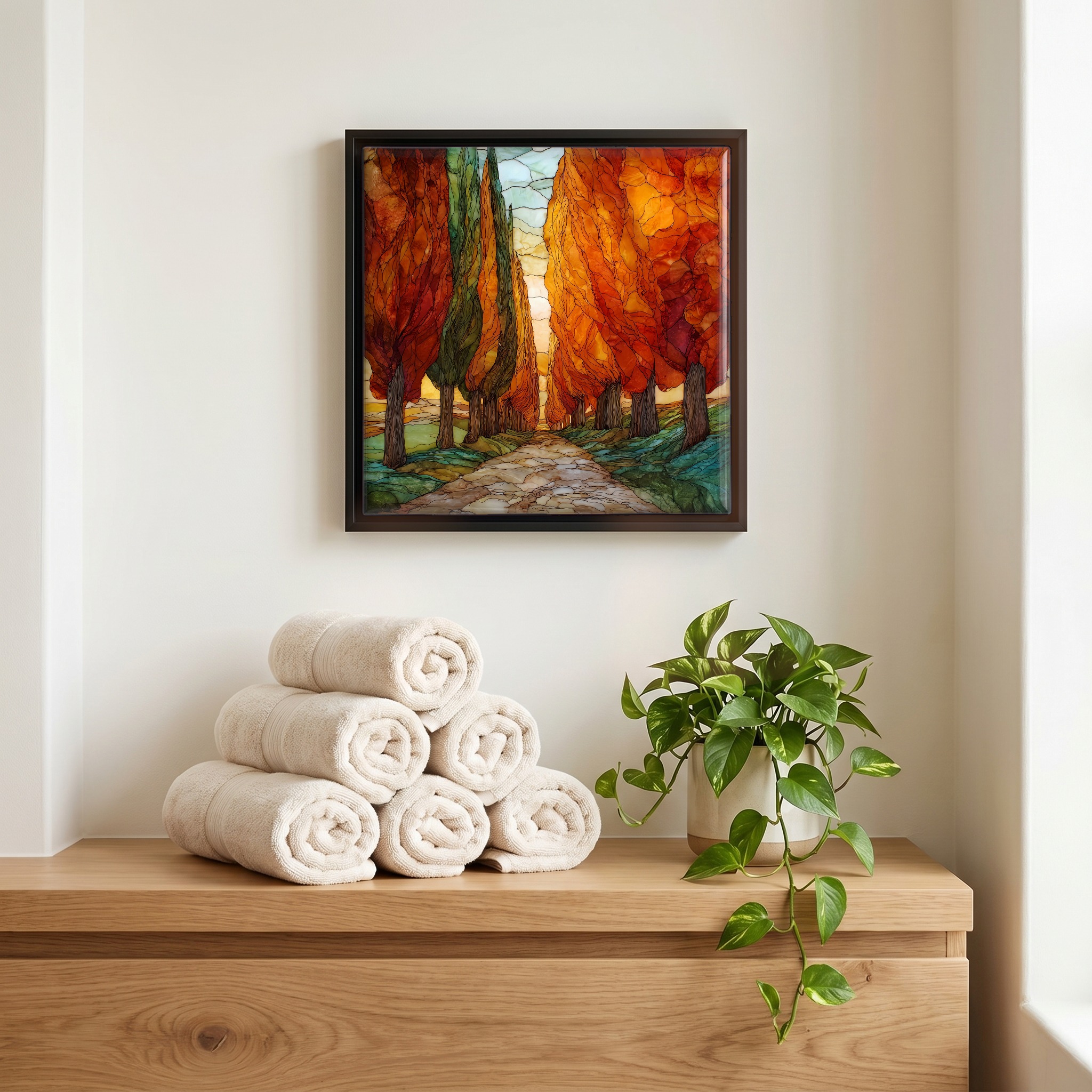
Above the linens, in a slim black surround.
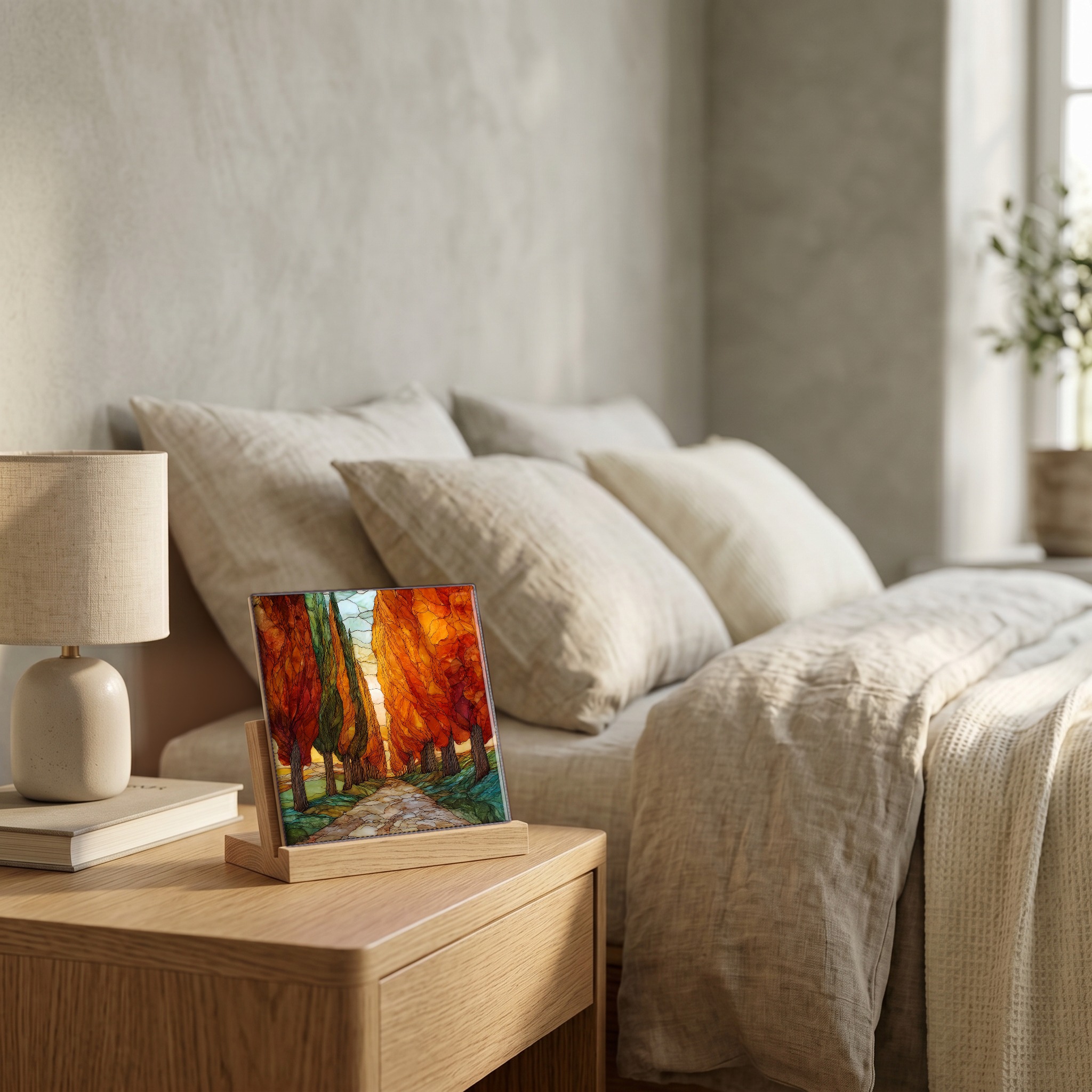
On the nightstand, on a light oak stand.
On a picture ledge, where the light comes in.
a note from the studio

A five-kilometre line of Mediterranean cypress running straight inland from the small chapel of San Guido to the medieval village of Bolgheri. Around 2,500 trees, planted in the early 1800s and protected as a monumental avenue. Giosuè Carducci spent his boyhood in the next village south and wrote the road into a poem Italian schoolchildren still know by heart. The vineyards of Sassicaia and Ornellaia begin where the cypresses end. Coaches pull off on the slip road from the Via Aurelia. Most people walk it slowly, in twos.
from the studio
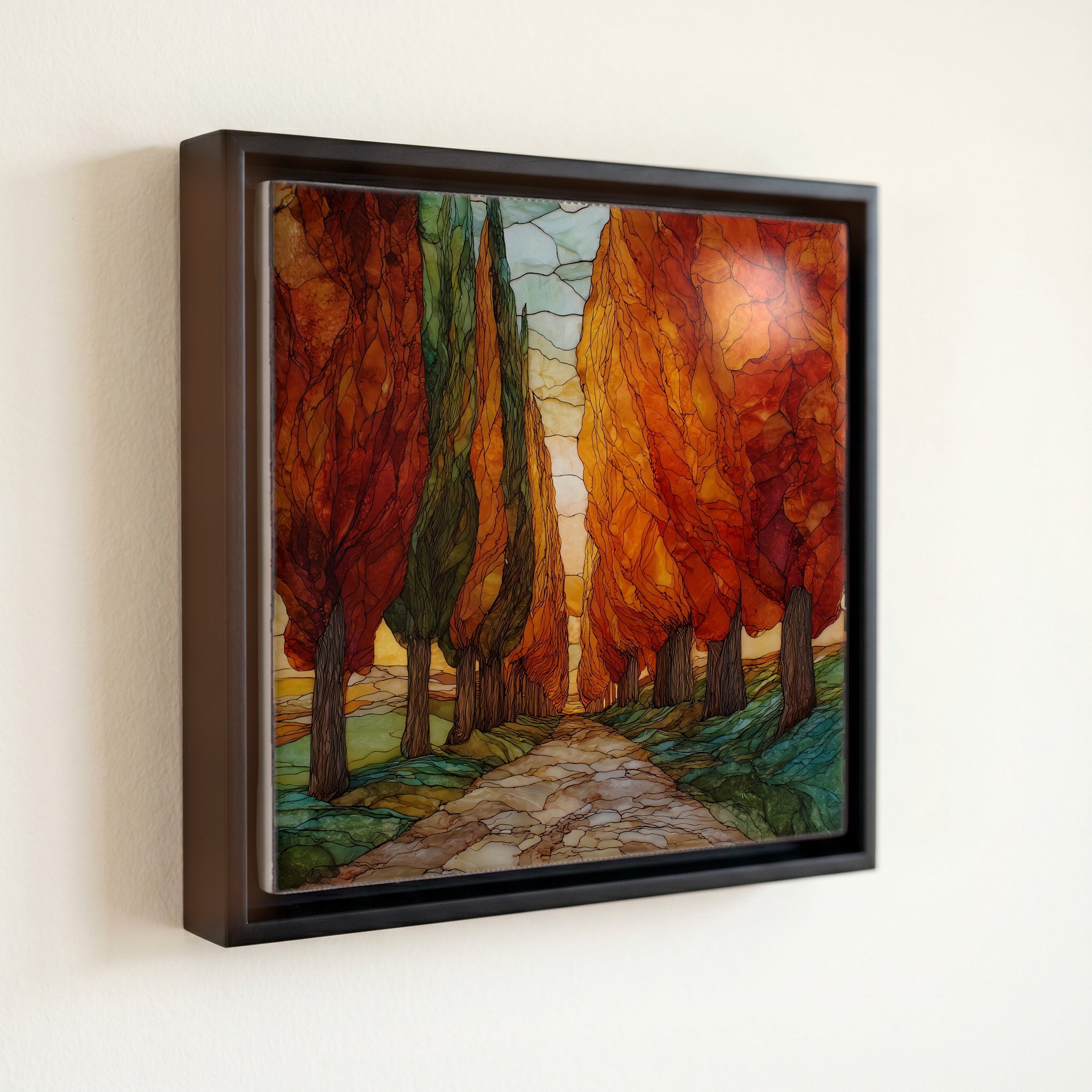
shown in a slim black floating frame · 6 × 6 in
— bring it home

Tuscan Cypress Avenue, on ceramic.

Each tile is finished by hand in our Knoxville studio. Artwork is slowly infused into the ceramic surface under high heat and pressure, and rests beneath a thin glossy finish. The colour lives in the surface, not on top of it.

What kind of piece?
One tile — square or rectangle.
How big?
the popular one — counter, shelf, nightstand
6 × 6 in · 15 cm · 1.6 lb
Surface finish
A clear glossy finish — the artwork reads as if under resin. Ideal for show-pieces and framed wall art.
How it sits
A hidden cleat — sits ¼″ proud of the wall.
$58
Hand-finished and shipped from our studio at the foot of the Smokies. On your wall in about ten days.
size
6 × 6 in
15 cm
weighs
1.6 lb
solid in the hand
surface
ceramic, hand-finished
art rests beneath a thin glossy finish
from
Knoxville, TN
our family studio, at the foot of the Smokies
— start a Coaster Set

Pick any four 4-inch tiles — National Parks you've been to, a Smokies set, the four seasons of one place. $ for a set of , cork-backed, ready to live on the table.
comes gift-ready
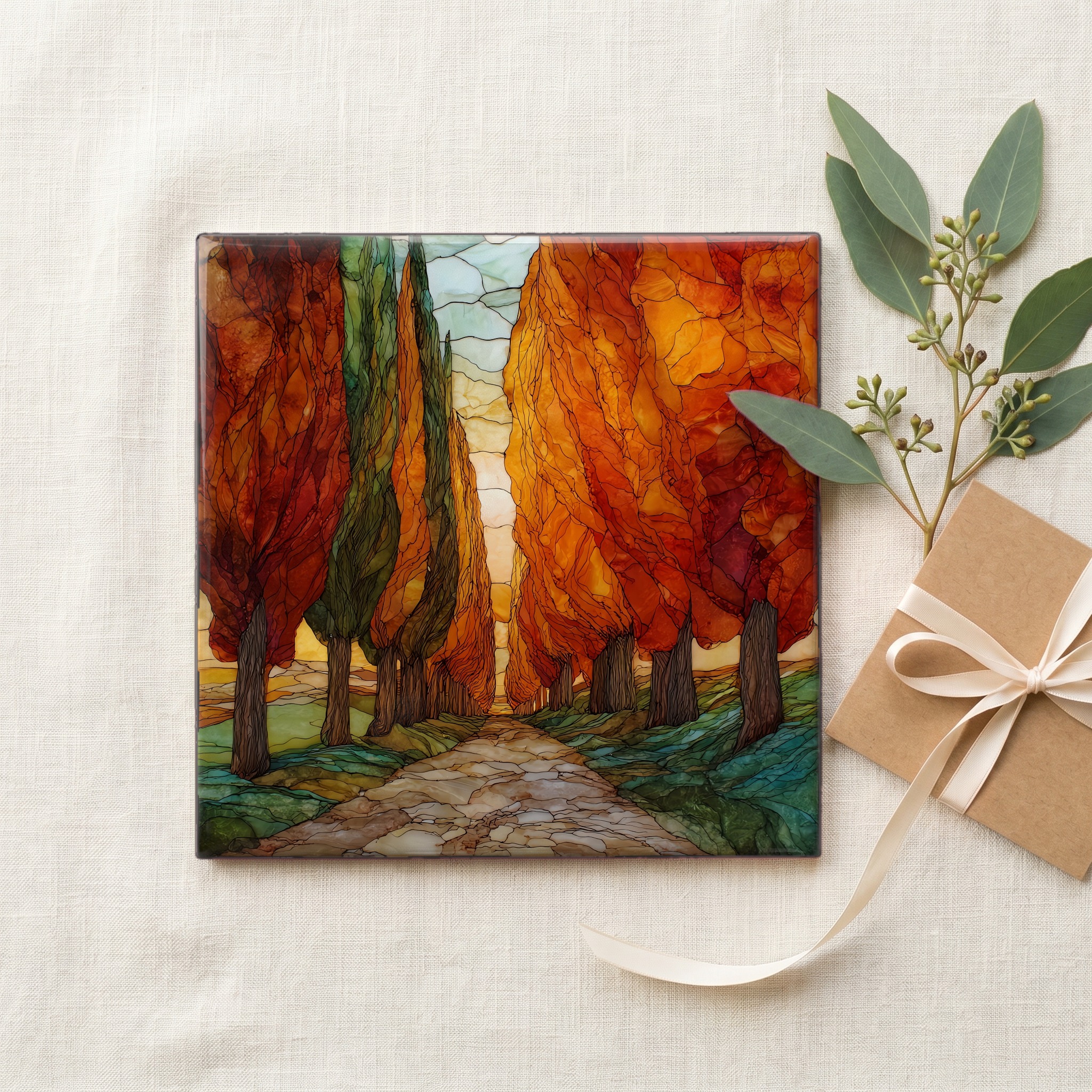
comes gift-ready

Each tile ships in a kraft box, tied with cream ribbon, with a handwritten note from the studio if you'd like to add one.
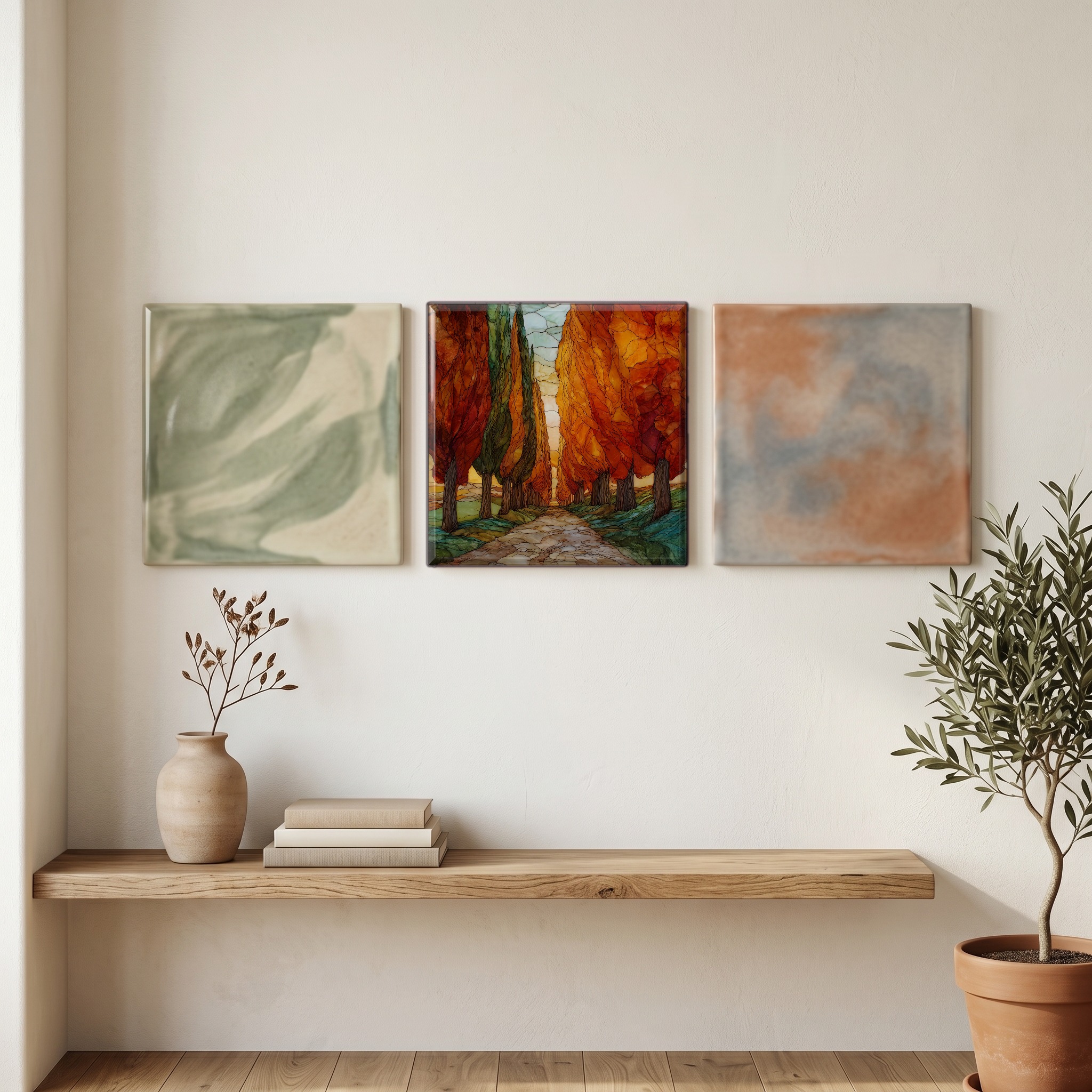
or build a grouping
or build a grouping

Three or five different vistas, hung together — a chapter of places you've been, or want to go.

about Tuscan Cypress Avenue

The place, in three passes.

A little of what's known, in case you fall down the rabbit hole — or want to go see it yourself.
the place

The Viale dei Cipressi runs roughly five kilometres straight inland from the small oratory of San Guido on the Via Aurelia (SS1) to the medieval village of Bolgheri, in the comune of Castagneto Carducci, province of Livorno. The road is a double row of Mediterranean cypress, Cupressus sempervirens, planted along both shoulders. It sits on the Costa degli Etruschi, the Tyrrhenian coast south of Livorno, and ends at the gate of Bolgheri's small castle. The countryside on either side is the Bolgheri DOC wine appellation, home to Sassicaia and Ornellaia. The avenue is protected as a viale monumentale under Italian law.

the year

The cypresses were planted in the early nineteenth century by the Della Gherardesca family, the local landowners. Giosuè Carducci spent his boyhood from about 1838 to 1849 in the next village south, later renamed Castagneto Carducci in his honour. In 1874 he wrote 'Davanti San Guido,' published in Rime Nuove in 1887. The poem opens with the cypresses speaking to him as his train passes by: 'I cipressi che a Bólgheri alti e schietti / van da San Guido in duplice filar.' In English: the cypresses of Bolgheri, tall and straight, running from San Guido in a double row. Italian schoolchildren still learn the opening lines.

the visit

The road is open and free to walk, cycle, or drive at a slow posted limit, typically about thirty kilometres per hour. Most visitors approach from the SS1 at the small chapel of San Guido and travel north toward Bolgheri. There is a free car park near the chapel. The medieval village at the inland end has a single gate, a small castle, and a handful of osterie and enotecas that draw the wine pilgrimage to Sassicaia and Ornellaia. Late afternoon in early summer is when the road reads green against late blue. The walk one-way is about five kilometres and takes a little over an hour.

where
Italy · Castagneto Carducci, Province of Livorno, Tuscany
position
43.2100° N · 10.6200° E
the neighborhood

What's nearby.

A handful of named places within an hour's walk or short drive. Some we've already painted; some we will.
at the lake
Bolgheri
medieval village
5 km W
Oratorio di San Guido
roadside chapel
5 km SE
Castagneto Carducci
medieval hill town
7 km W
Marina di Castagneto
Tyrrhenian beach town
10 km N
Bibbona
hilltop village
15 km SE
Suvereto
medieval walled town
N
Tuscan Cypress Avenue
Bolgheri
Oratorio di San Guido
Castagneto Carducci
Marina di Castagneto
Bibbona
Suvereto
common questions

What people ask.

A few questions we get about Tuscan Cypress Avenue — and about bringing the piece home.
about the place

The Viale dei Cipressi runs from the small chapel of San Guido on the Via Aurelia (SS1) inland to the medieval village of Bolgheri, in the comune of Castagneto Carducci, province of Livorno. It is about an hour and a half south of Pisa by car.

The road runs roughly five kilometres in a straight line, planted on both shoulders with Mediterranean cypress, Cupressus sempervirens. Local records put the count at around 2,500 trees, replaced one for one as the older ones reach the end of their span.

The original plantings date to the early nineteenth century, made by the Della Gherardesca family, who owned the surrounding estate. The avenue is now protected as a viale monumentale under Italian heritage law, and replacements are matched to the original species and spacing.

Carducci spent his boyhood from about 1838 to 1849 in the next village south, later renamed Castagneto Carducci in his honour. In 1874 he wrote 'Davanti San Guido,' in which the cypresses speak. The poem is part of the standard Italian school curriculum.

Yes. The road is open and free to walk, cycle, or drive at a low speed limit. Most visitors park near the chapel of San Guido and walk or cycle toward Bolgheri. The one-way walk is about five kilometres and takes a little over an hour.

The countryside on both sides is the Bolgheri DOC wine appellation, home of Sassicaia and Ornellaia. The Tyrrhenian coast lies a few kilometres west; the medieval hill town of Castagneto Carducci sits in the slopes to the southeast.

Late afternoon in early summer holds the corridor effect best: green cypress against late blue sky. July and August bring more visitors for the wine tastings. Midday light in high summer reads sharp and pale, and the colour flattens out.

about the piece in your home

It has been a meaningful gift for many of our customers with Italian ties. The Viale dei Cipressi is one of the most recognisable images in Tuscany, and the Carducci poem is part of how the region remembers itself. A Small or Medium with a handwritten note from the studio carries well.

The piece reads well in Italian-villa, Mediterranean-modern, and warm-minimalist rooms. The greens and golds in the surface sit comfortably against terracotta, travertine, and oak. It also lands in a quieter farmhouse palette of linen, ivory, and aged brass.

Mediterranean modern is a settled direction in 2025 and 2026, with strong overlap into warm minimalism and Italian-villa revival. The cypress motif is one of its anchor images. The tile sits naturally in entryways, dining rooms, and reading corners in this style.

A single Large reads strongest above a console or a narrow side table. Above a sofa, most rooms want a four-tile Mural; a wider sofa or a long wall takes a nine-tile Mural. We can quote either configuration to fit your wall measurement.

Yes, with the Dura Satin or Matte finish. Both are scratch-resistant and stand up to steam, splashes, and regular cleaning. The Glossy finish is intended for framed wall art and show pieces away from heavy moisture. The colour stays true in all three finishes.

A microfibre cloth and water is enough for routine cleaning. For a backsplash or kitchen wall that catches cooking residue, a mild dish soap on the cloth works without harming the surface. Avoid abrasive scrubbers and citrus-based cleaners.

Yes. Every piece in the WenderVista atlas is original to our studio in Knoxville, Tennessee. We do not license stock imagery. Reid Wender curates each location personally, and the tile is hand-finished before it ships.

if this one stayed with you

A few you might also love.

Hand-picked by the eye that found Sorapis. Same air, same kind of quiet.
— a collection

The Italian Dolomites,
painted slow.

The valleys between Cortina and Val Gardena, the tarns you walk an hour to see, the towers that turn the colour of a banked fire just before dark. Wander the collection by valley, by season, or follow the path Reid walked.

Tre Cime
Braies
Misurina
Sorapis
Cinque Torri
Sassolungo
Marmolada