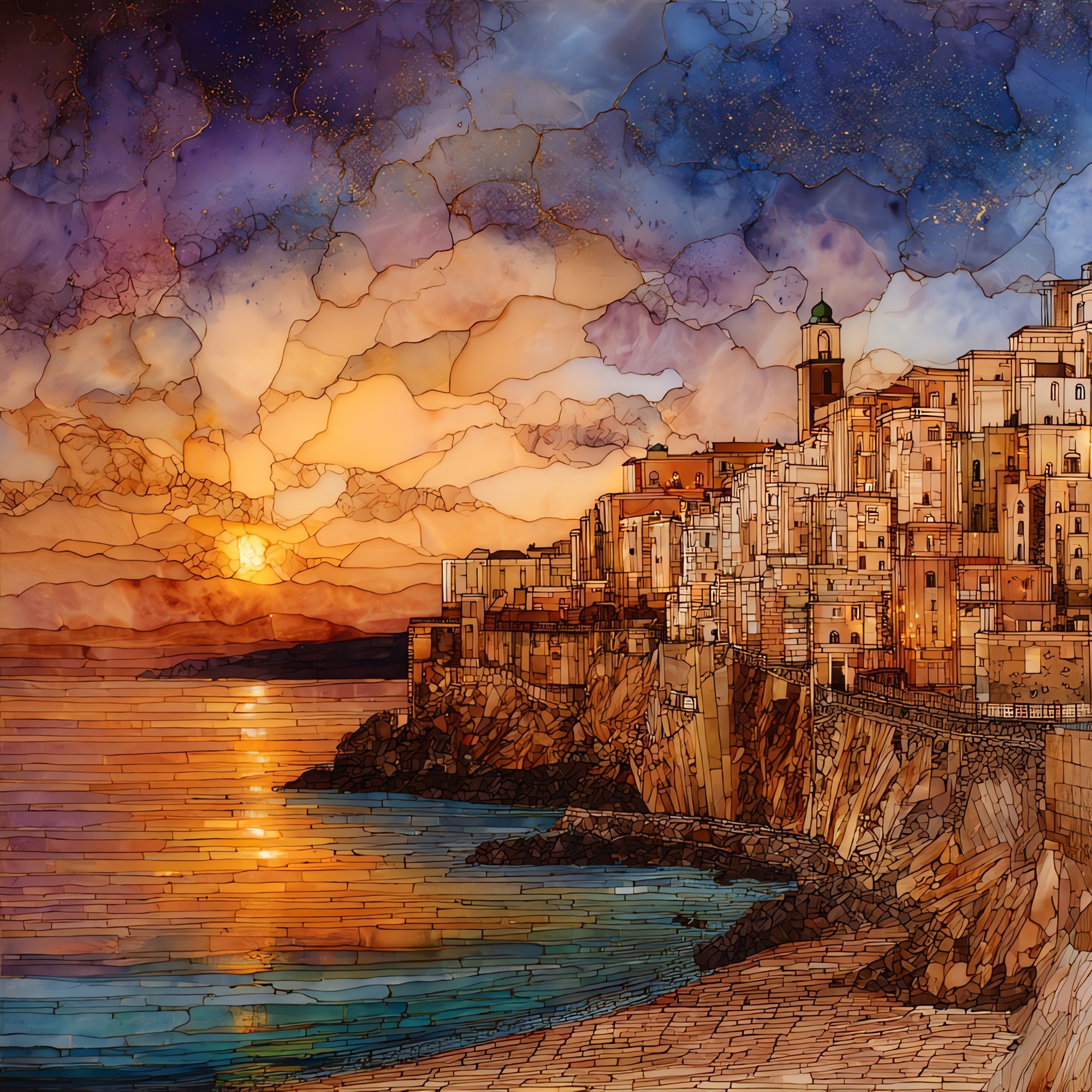
Tropea
— a church on a rock, a town on a cliff.
Not only on a wall.
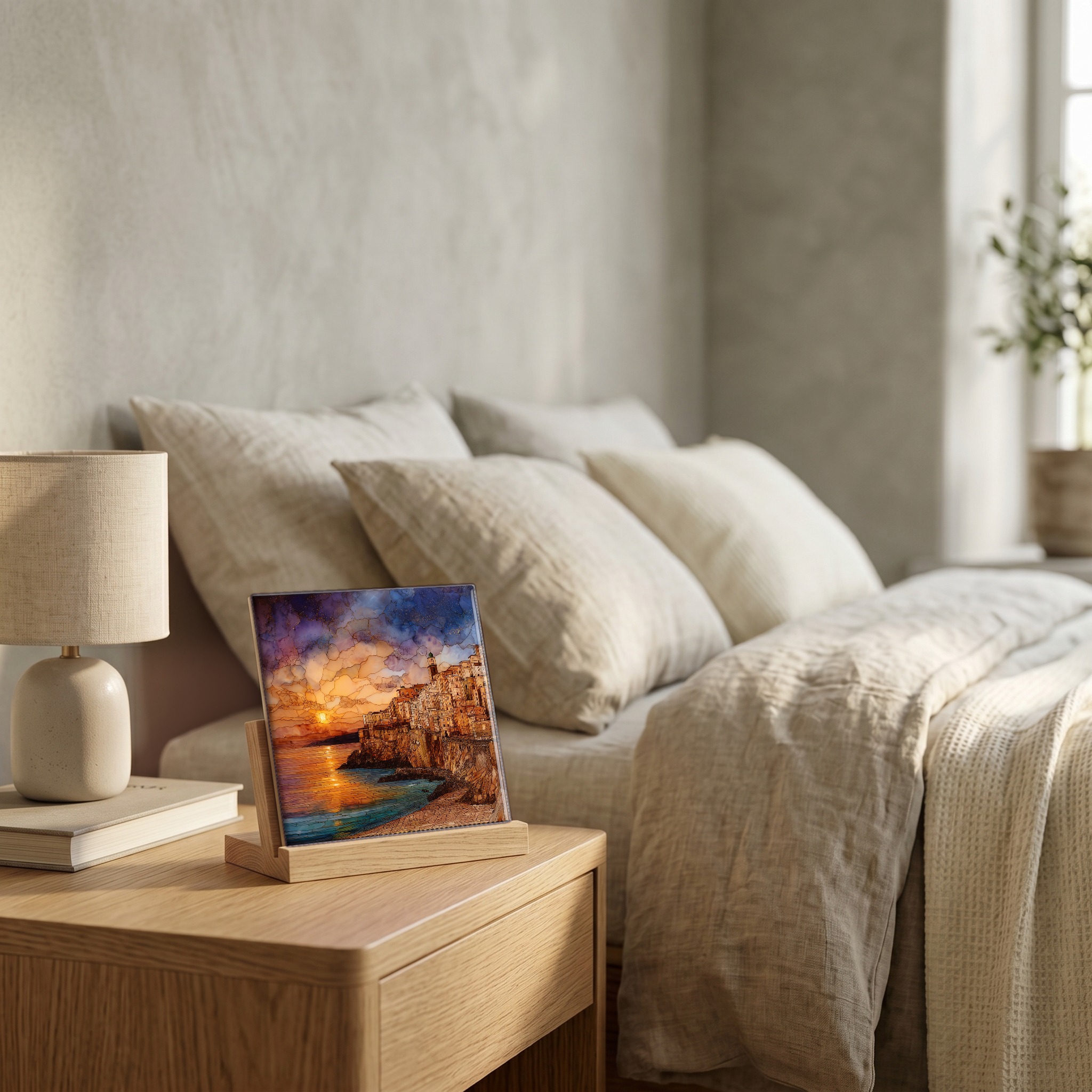
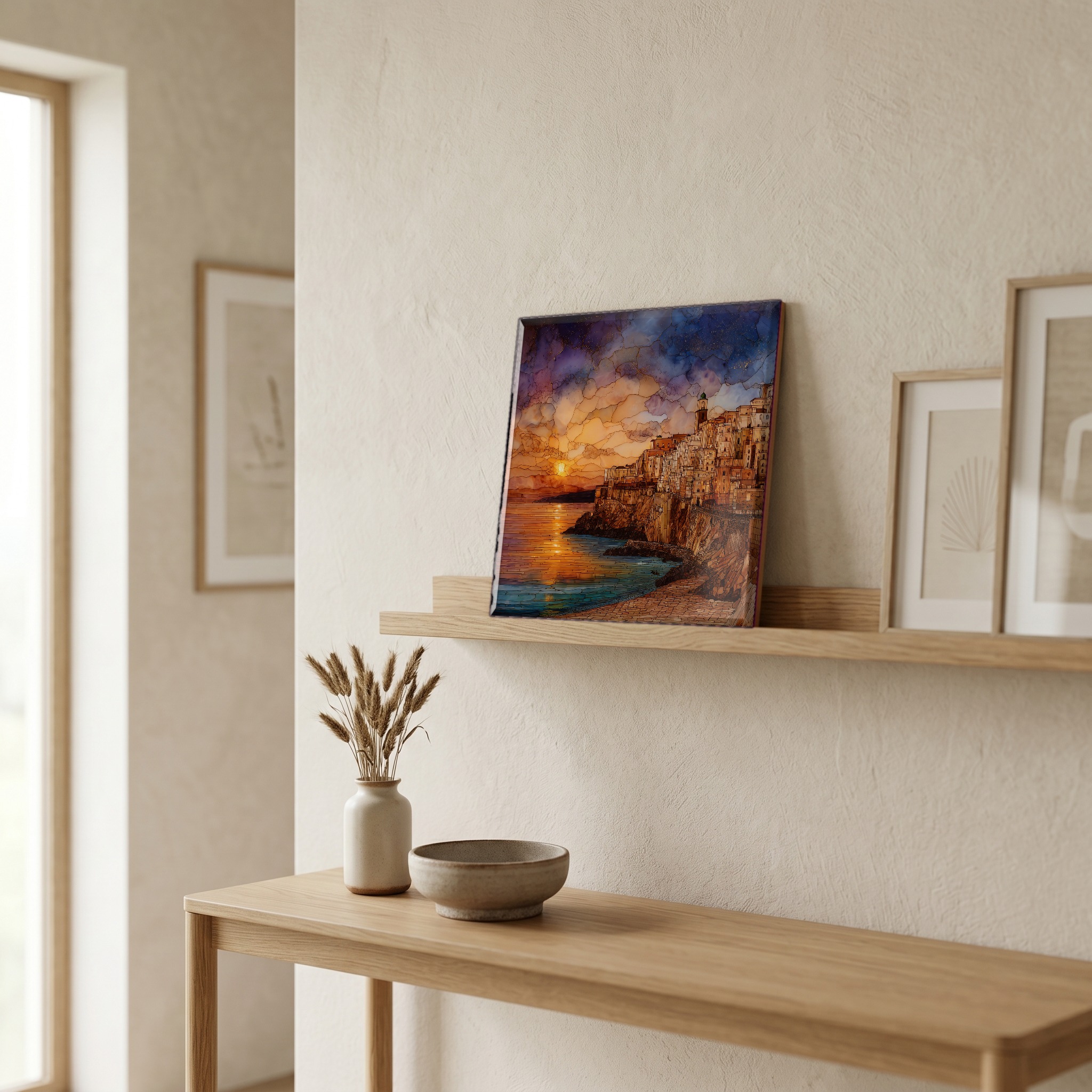
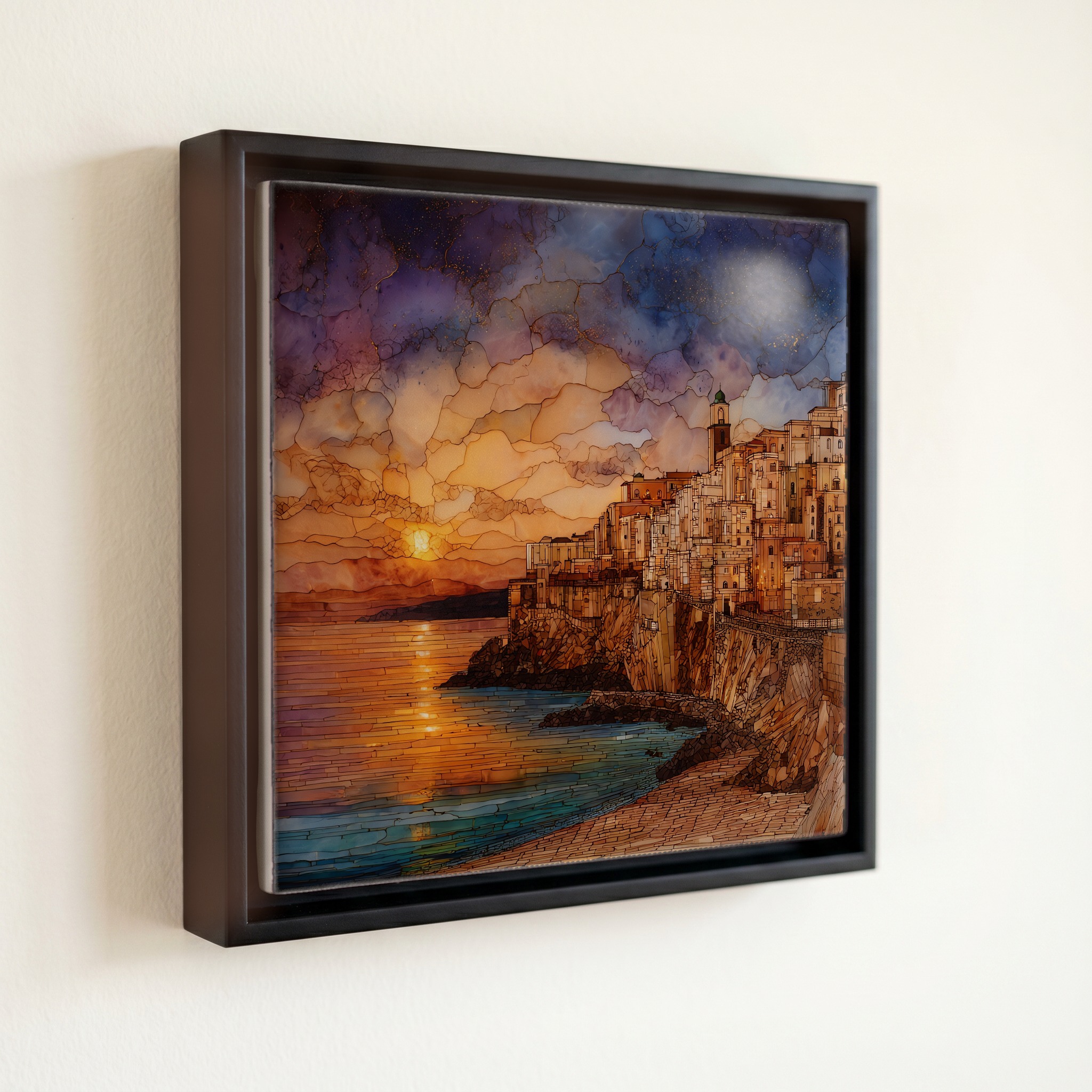
“A town on a sandstone cliff above the Tyrrhenian, on what Italians call the Costa degli Dei, the Coast of the Gods. Just off the beach sits Santa Maria dell'Isola, a small church on its own rock, joined to the shore by a thin sand isthmus. The historic centre is about fifty metres above the water. On a clear evening the Aeolian Islands are visible across the channel, and sometimes Stromboli is smoking. The sea below the cliff is the clean Tyrrhenian blue that goes shallow-green where it meets the white sand.
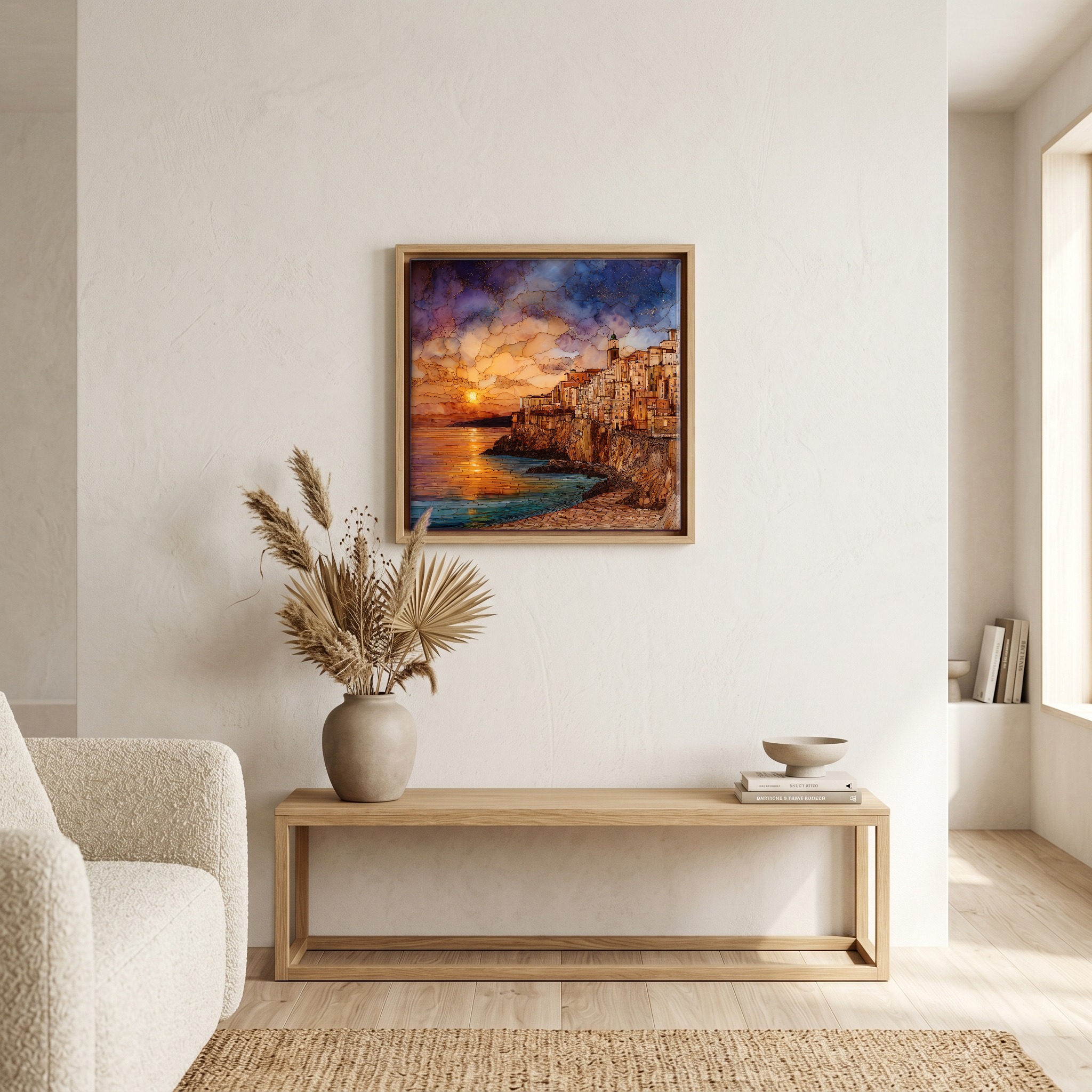
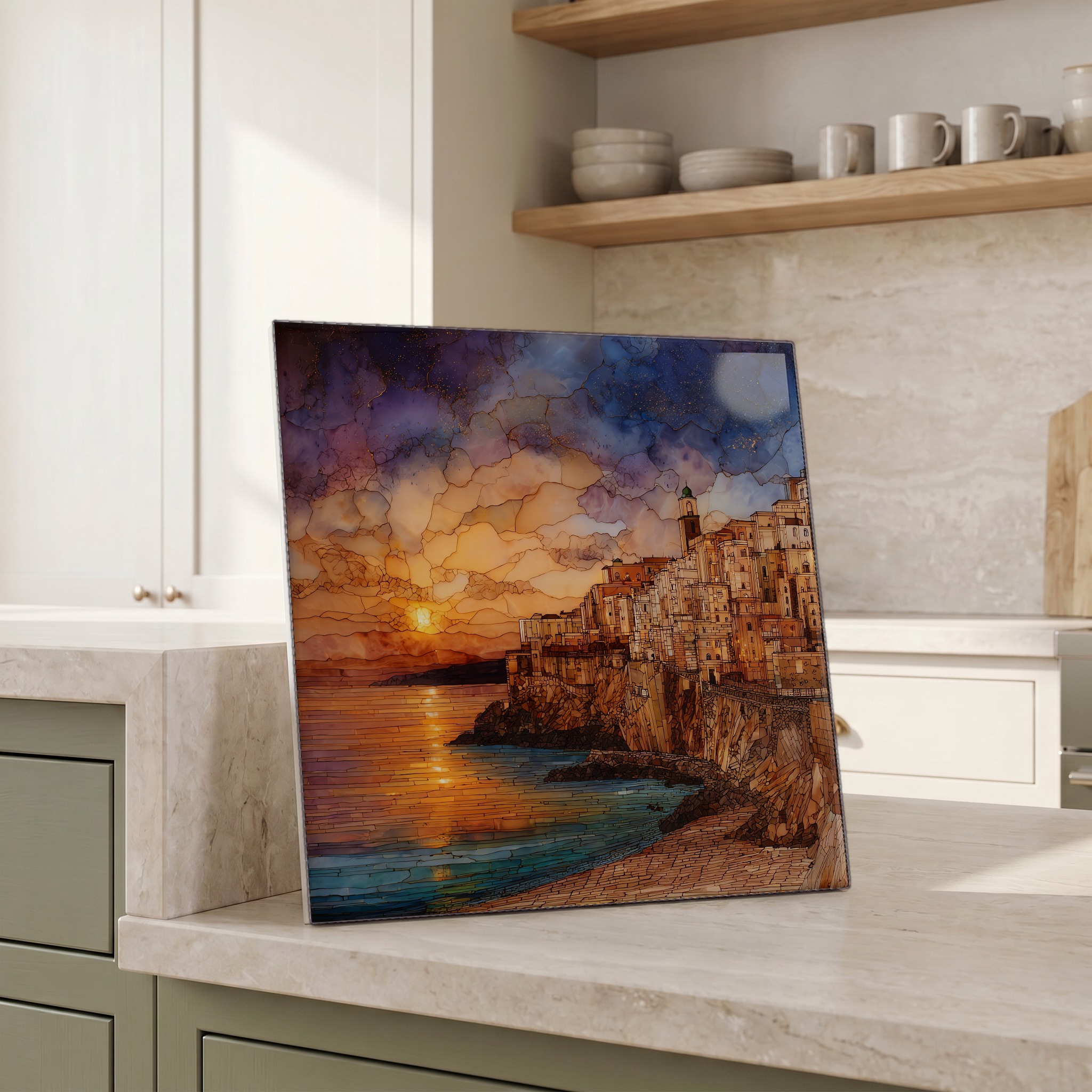
Tropea, on ceramic.
Each tile is finished by hand in our Knoxville studio. Artwork is slowly infused into the ceramic surface under high heat and pressure, and rests beneath a thin glossy finish. The colour lives in the surface, not on top of it.
Pick any four 4-inch tiles — National Parks you've been to, a Smokies set, the four seasons of one place. $ for a set of , cork-backed, ready to live on the table.
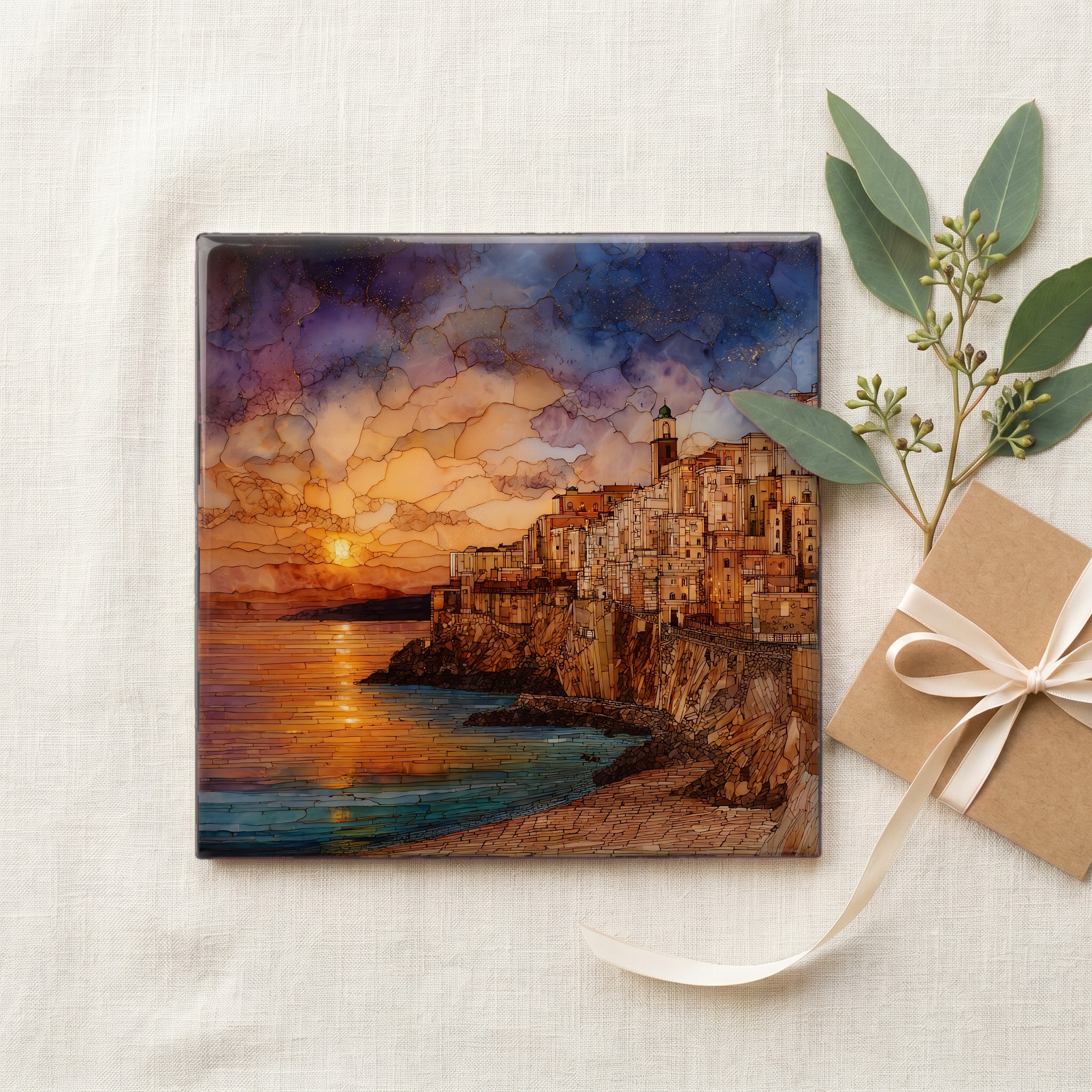
Each tile ships in a kraft box, tied with cream ribbon, with a handwritten note from the studio if you'd like to add one.
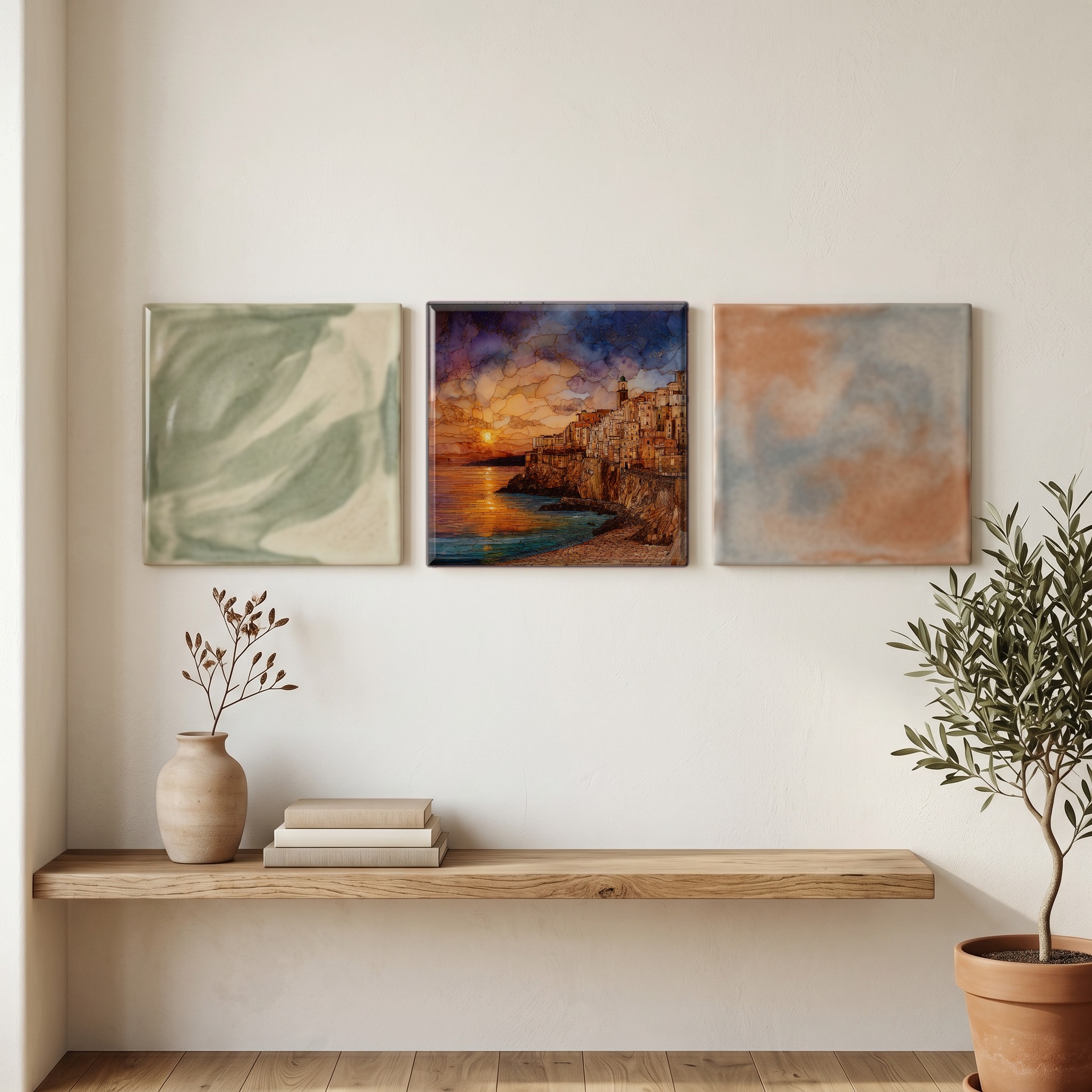
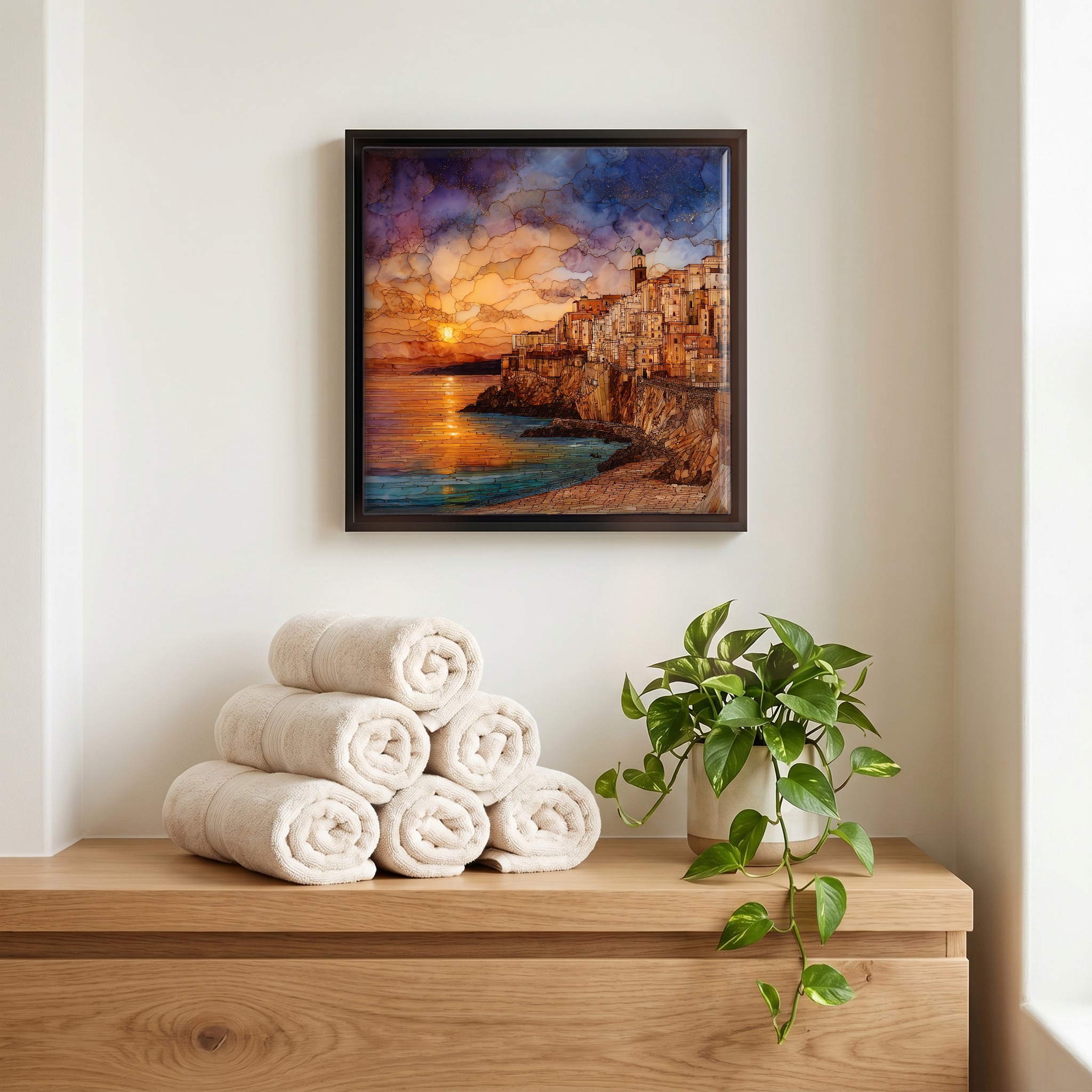
Three or five different vistas, hung together — a chapter of places you've been, or want to go.
The place, in three passes.
Tropea is a coastal town in the province of Vibo Valentia, Calabria, on the western coast of southern Italy along the Tyrrhenian Sea. The town has a population of about 6,300 and its historic centre sits on a sandstone cliff roughly fifty metres above a beach of fine white sand. Tropea is the central settlement of the Costa degli Dei, the stretch of Tyrrhenian coast running from Pizzo Calabro south toward Nicotera. The town is reached from Lamezia Terme airport about an hour to the north, and faces west across the channel toward the Aeolian Islands; on clear days the active volcano on Stromboli is visible from the cliff promenade, about fifty-five kilometres across the water. The closest large city is Reggio Calabria, about a hundred kilometres to the south.
The signature feature of Tropea is Santa Maria dell'Isola, a small Benedictine church set on a sandstone outcrop just off the beach. The rock was once a true island and is now joined to the shore by a sand isthmus that the sea has built up over centuries. The first hermitage on the rock dates from around the eleventh century; the present church was rebuilt after the 1905 Calabria earthquake. A flight of stone steps climbs to a terraced garden at the summit, about thirty metres above the beach, where the view returns to the white cliff and the cluster of medieval houses set on top of it. The Norman-era cathedral inside the town, the Cattedrale di Maria Santissima di Romania, dates from the twelfth century.
The cliff-top old town is reached on foot or by car from the upper streets, with arched stairways carved down through the sandstone to the beach. The beach itself, the Spiaggia della Rotonda, is public and free, and runs the length of the cliff below the houses. Santa Maria dell'Isola opens to visitors most days outside of weddings and mass; the climb to the church and its terraced garden takes about ten minutes from the sand. The town is busiest in July and August, when the Mediterranean swimming season is at its peak; visitors who prefer a quieter coast often come in late May or September. The closest stop on the Italian rail network is Tropea station, on the regional line between Lamezia Terme and Reggio di Calabria.