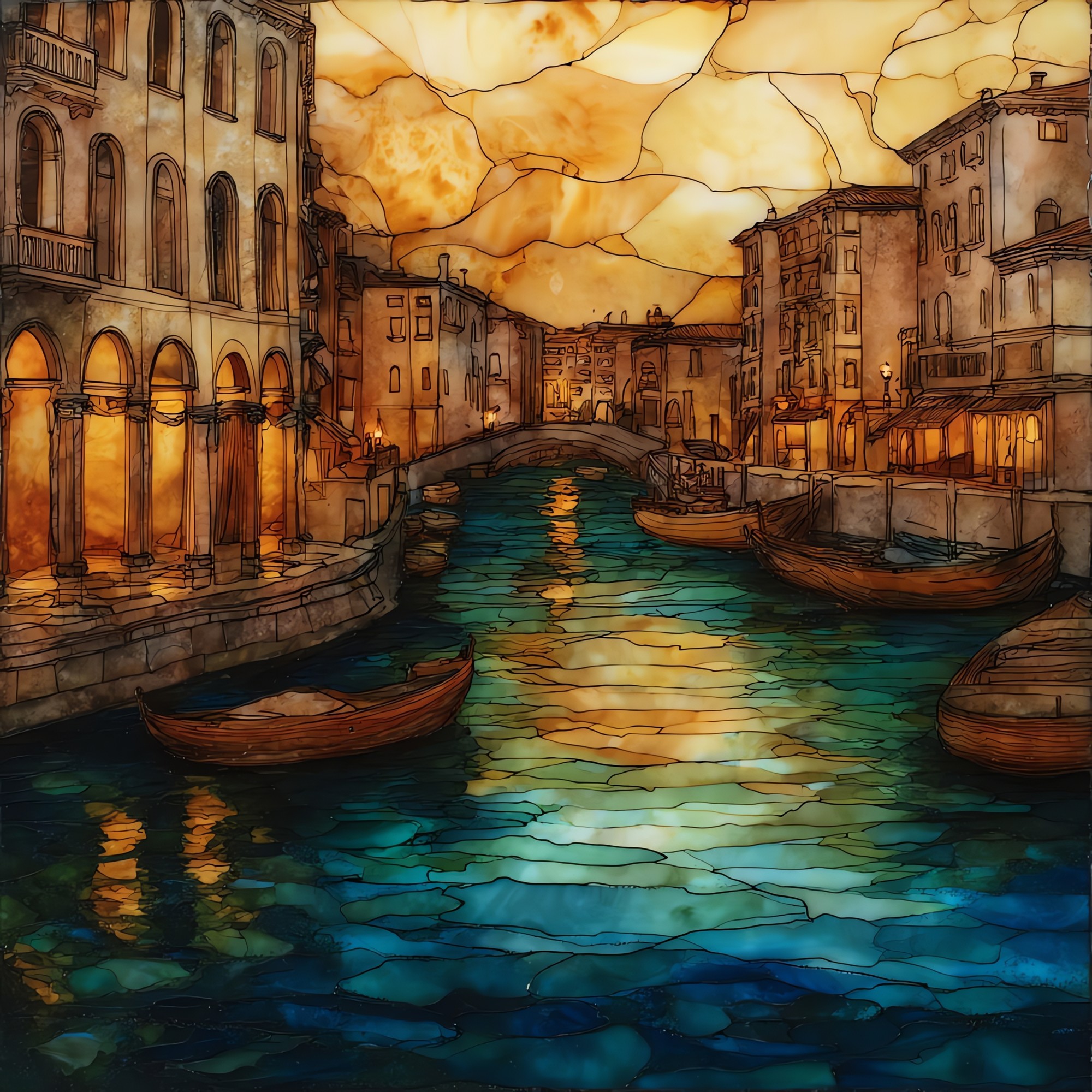
Treviso Canals
— — green water still turning the medieval wheels.
Not only on a wall.
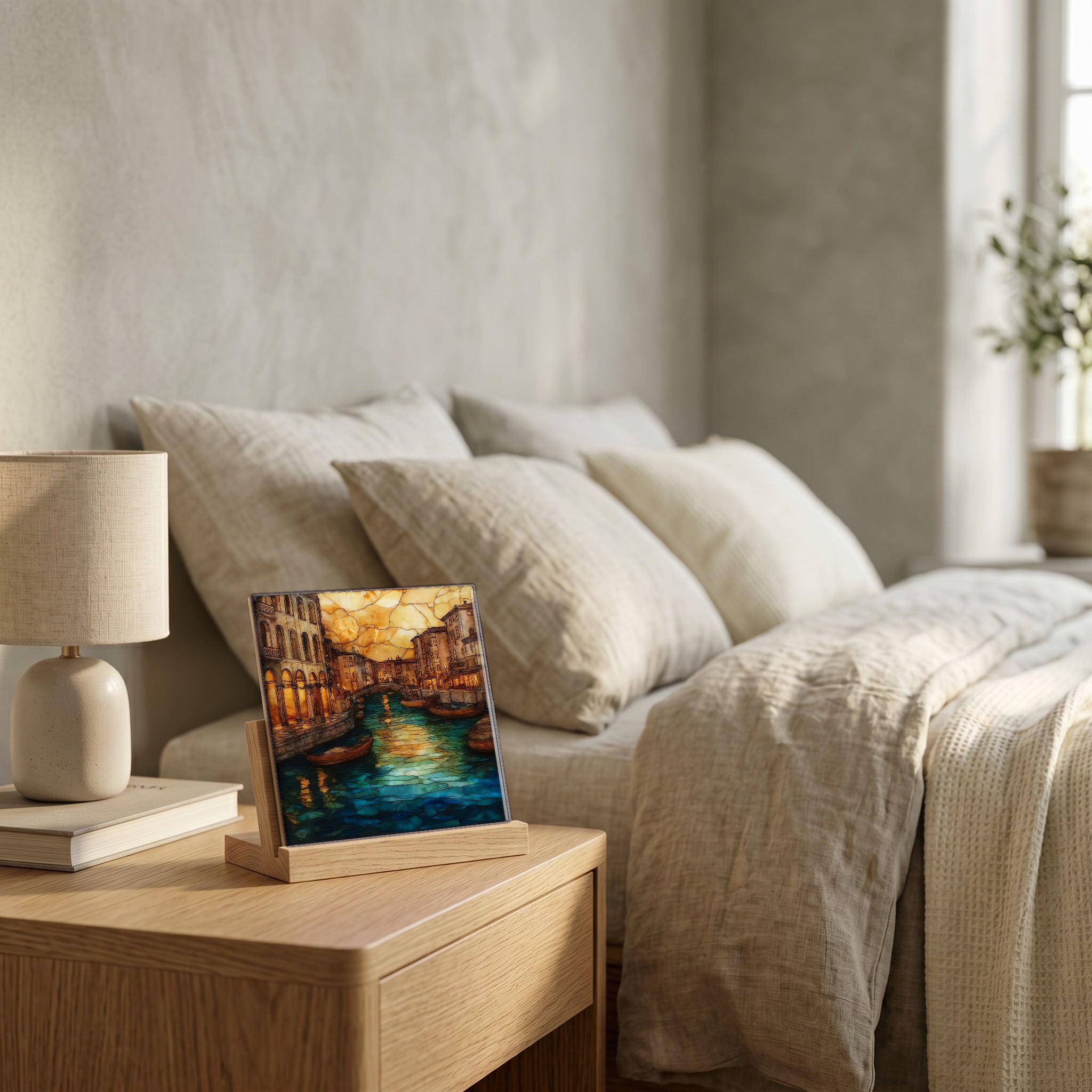
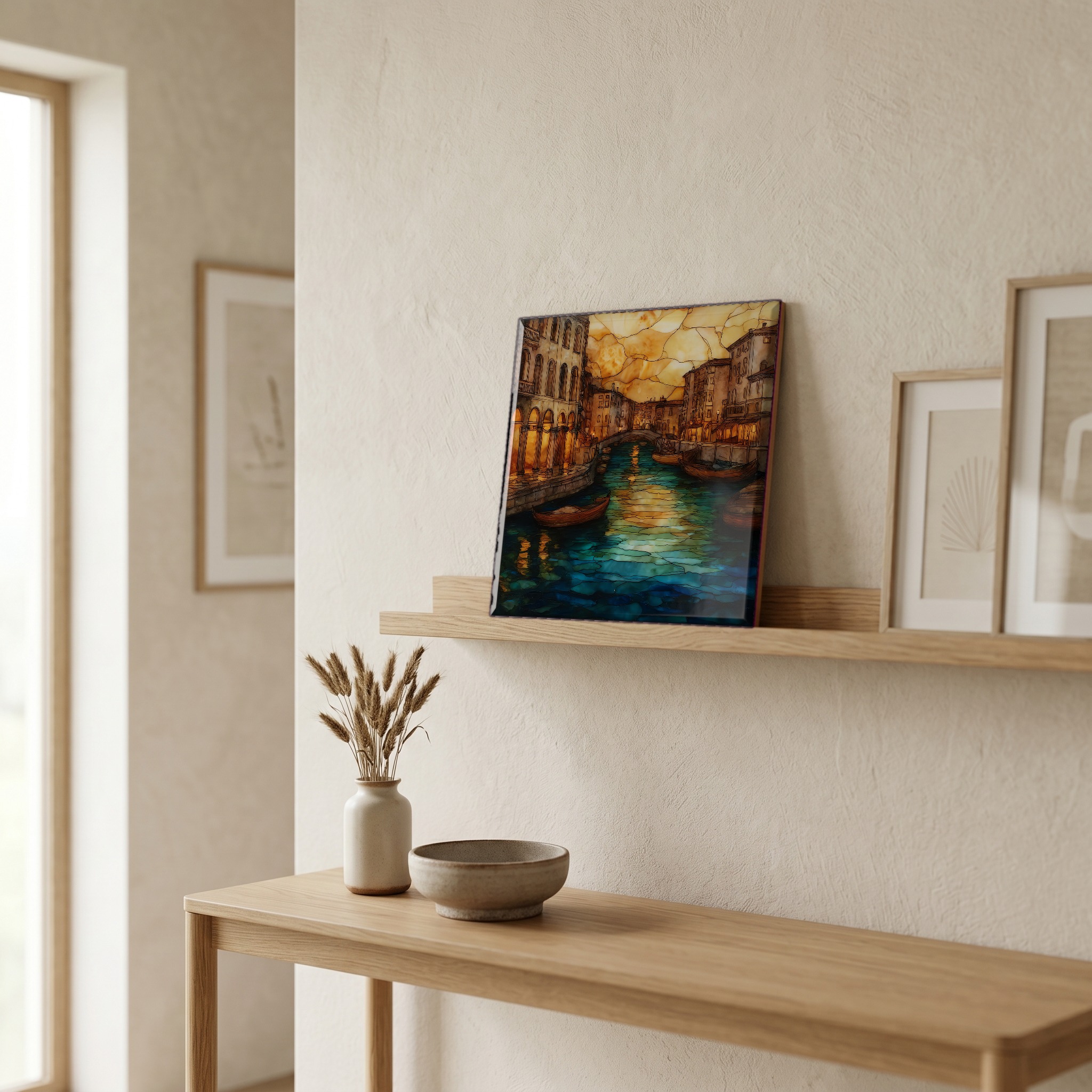
“A small Venetian city north of the lagoon, with its own canals fed by the Sile and the Cagnan. The water is clear and green, not lagoon-grey. Wooden waterwheels still turn against the walls of the old grain mills. The fish market sits on its own little island in the middle of the canal, the way it has since the 1850s. Houses lean out over the water with frescoes still showing beneath the eaves. Dante mentioned the meeting of the two rivers in the Paradiso. Locals call the city the marca gioiosa, the joyful march, and it is the kind of joyful that prefers a quiet afternoon.
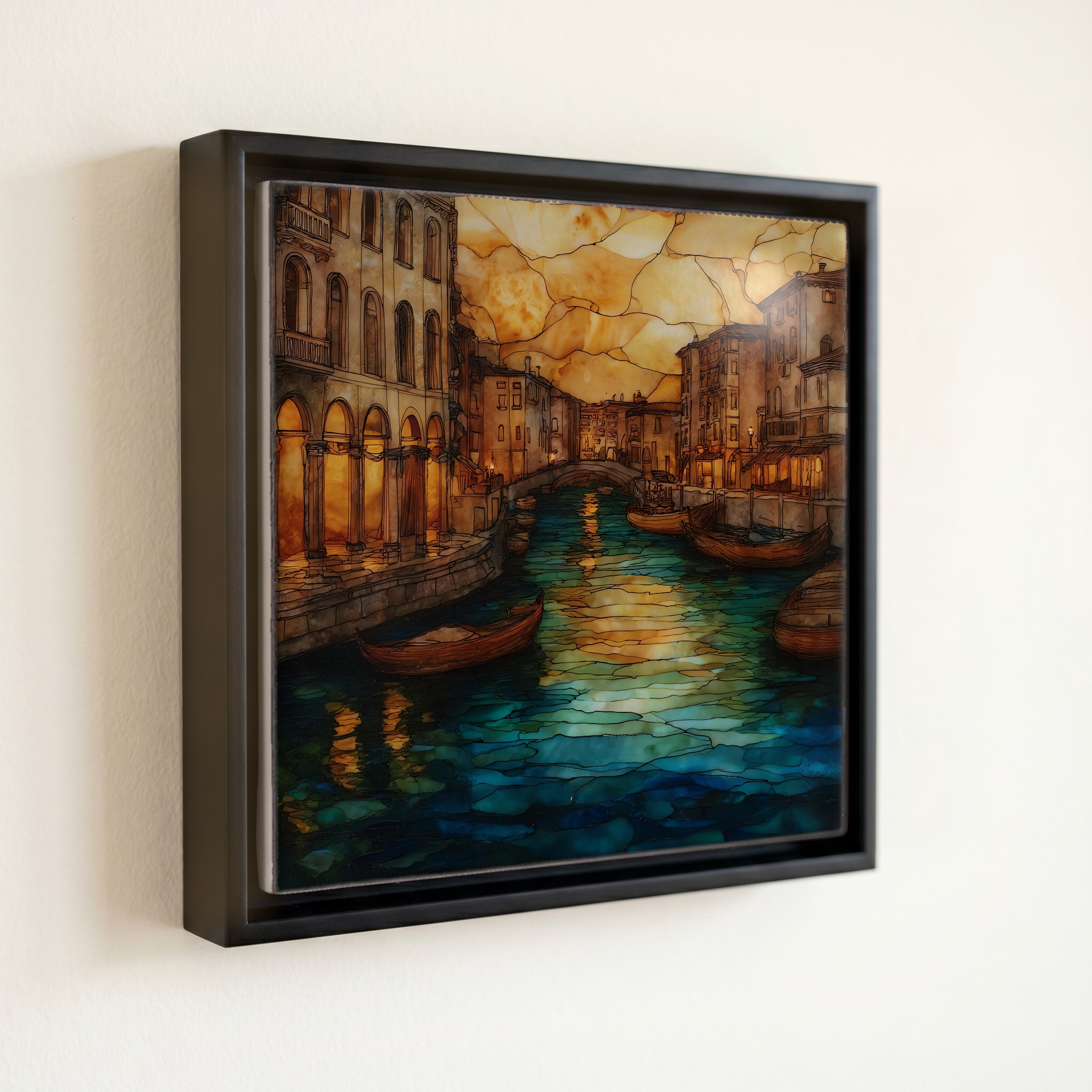
Treviso Canals, on ceramic.
Each tile is finished by hand in our Knoxville studio. Artwork is slowly infused into the ceramic surface under high heat and pressure, and rests beneath a thin glossy finish. The colour lives in the surface, not on top of it.
Pick any four 4-inch tiles — National Parks you've been to, a Smokies set, the four seasons of one place. $ for a set of , cork-backed, ready to live on the table.
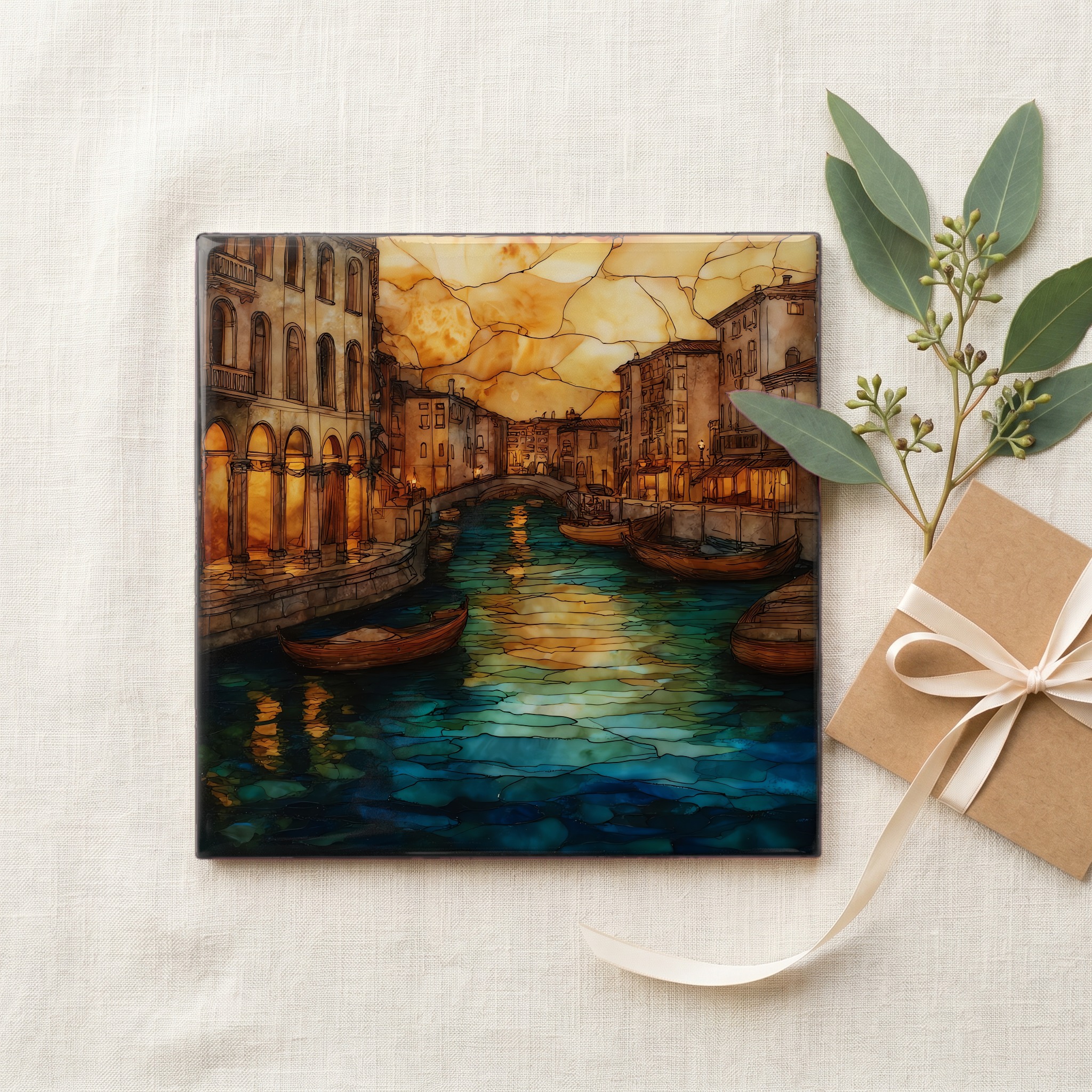
Each tile ships in a kraft box, tied with cream ribbon, with a handwritten note from the studio if you'd like to add one.
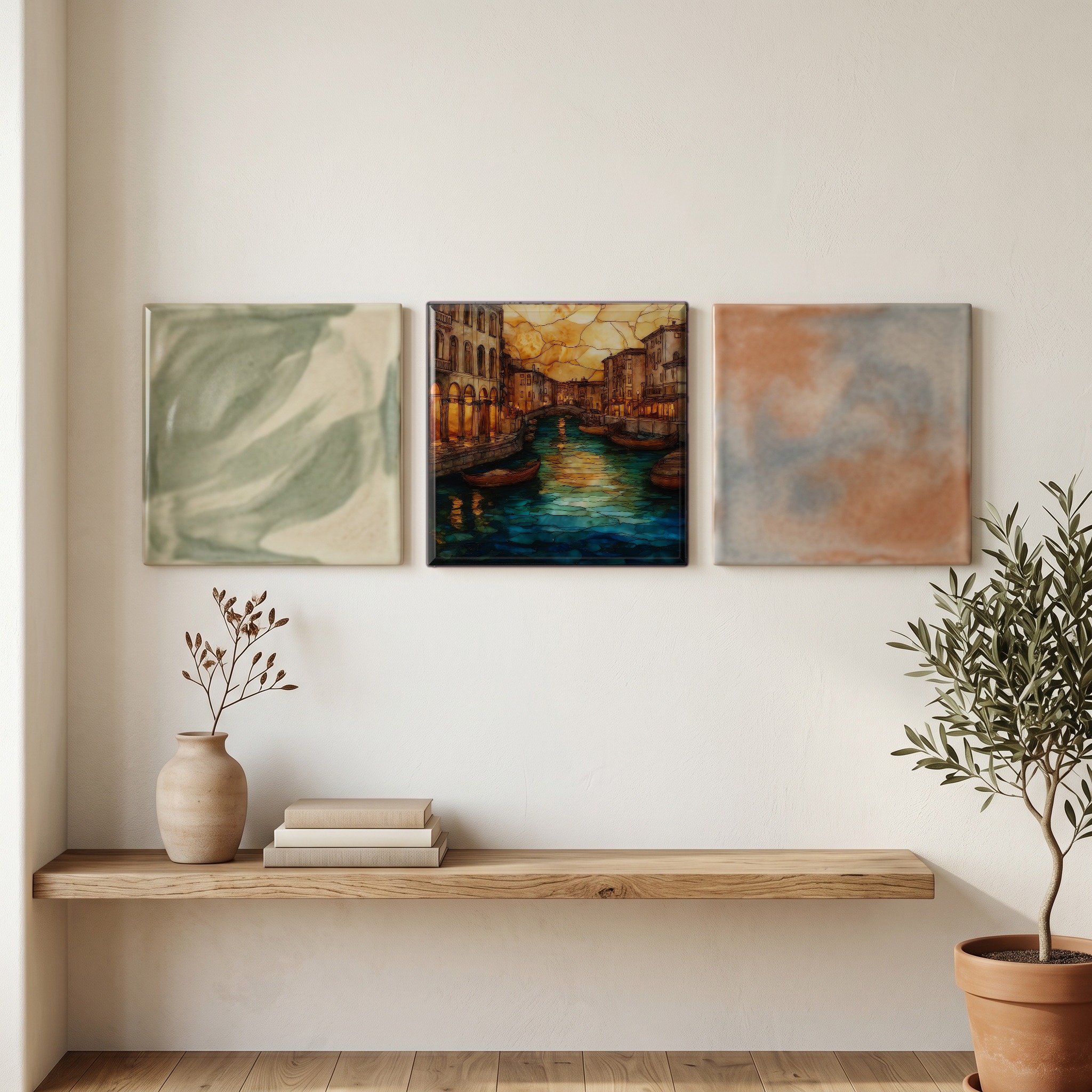
Three or five different vistas, hung together — a chapter of places you've been, or want to go.
The place, in three passes.
Treviso sits in the Veneto plain about 30 km north of Venice, the capital of the Province of Treviso, with a population of around 85,000. The historic centre is wrapped in 16th-century walls built by the Venetian Republic and threaded by canals fed by two waterways: the Sile, the longest spring-fed river in Europe, and the Cagnan, also called the Botteniga, which splits into three branches as it enters the old town. The city is the headquarters of Benetton and De'Longhi, but inside the walls it remains a quiet provincial capital. Trains from Venezia Santa Lucia reach Treviso Centrale in about 25 minutes; Treviso also has its own small international airport, hub for Ryanair.
The water in Treviso's canals is clear and green because the Sile is the longest spring-fed river in Europe, fed by groundwater rising through chalk-bottomed risorgive (the Italian word for spring resurgences) southwest of the city. Spring water runs cooler and more uniformly than rain-fed rivers; the green tint comes from suspended chalk and algae responding to that steady temperature. The Cagnan, a smaller stream descending from the Montello hills, enters the walls at the north and splits into three branches that thread the historic centre. The two rivers meet just south of the centre, a confluence Dante alludes to in Paradiso IX when describing the country between Venice and Treviso. Old wooden waterwheels still turn beside the canals.
The walls around the historic centre were rebuilt by the Venetian Republic between 1509 and 1518, after the city joined Venice's terraferma in 1339. Three Renaissance gates remain in use: Porta Santi Quaranta, Porta San Tomaso (the most ornate, dated 1518), and Porta Altinia. Inside the walls, many of the older houses still carry exterior frescoes, painted in the 14th and 15th centuries, when Treviso was called urbs picta, the painted city. Centuries of weather have washed most of them down to ghosts of colour beneath the eaves, but Piazza dei Signori, the Loggia dei Cavalieri (1276), and the lanes around the Pescheria still show the original red, ochre, and umber. The Duomo sits a short walk west of the canals.