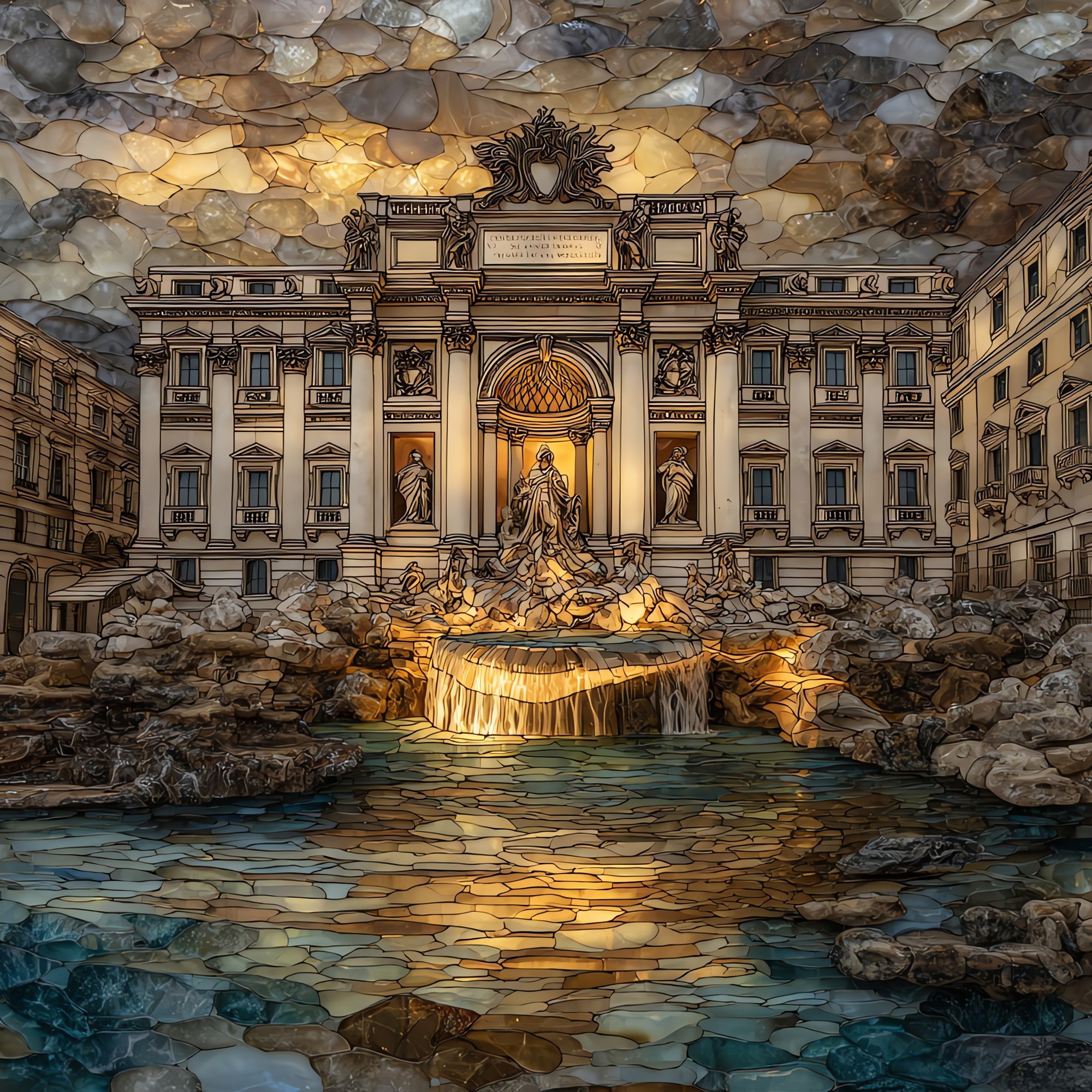
Trevi Fountain
— the corner where the city opens into water.
Not only on a wall.
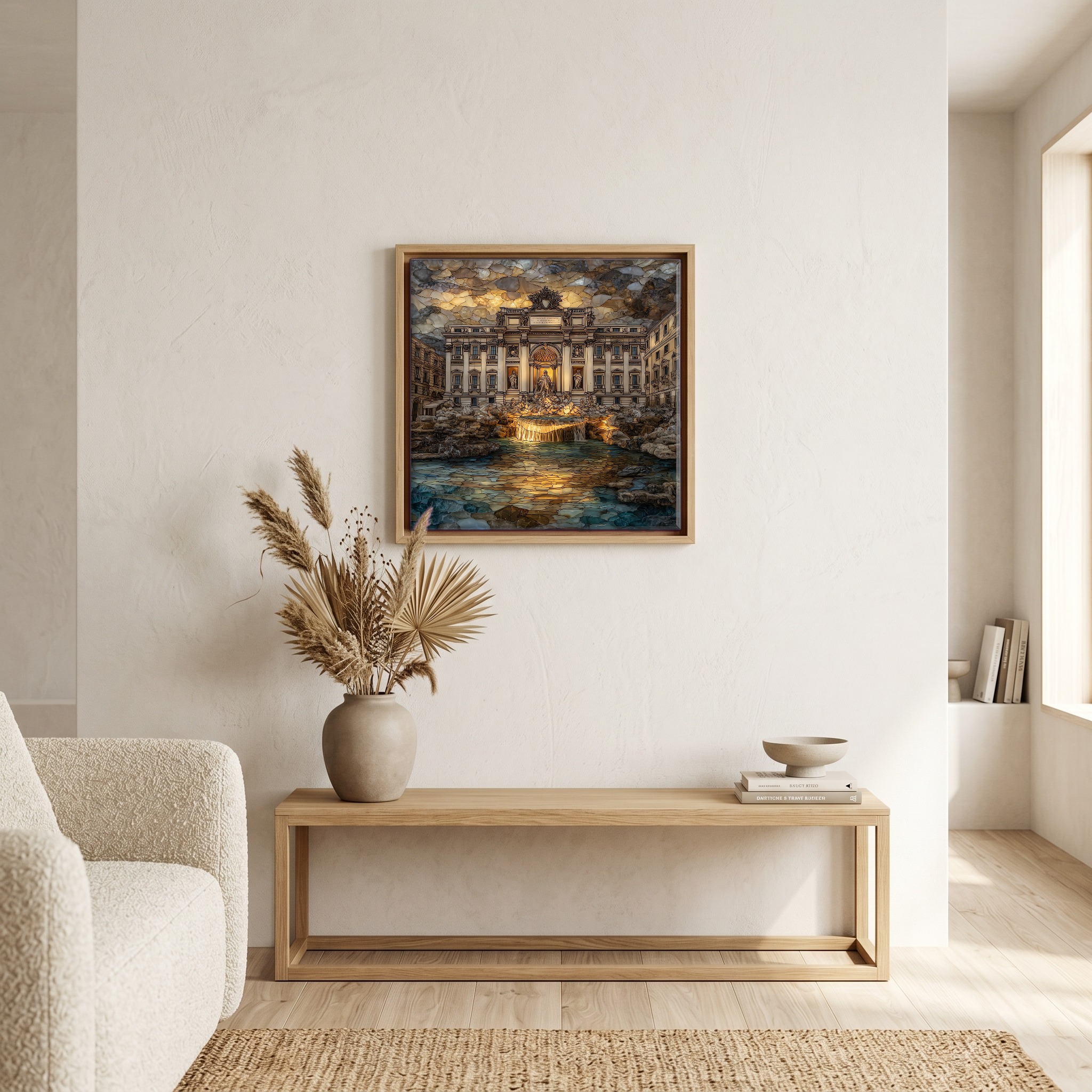
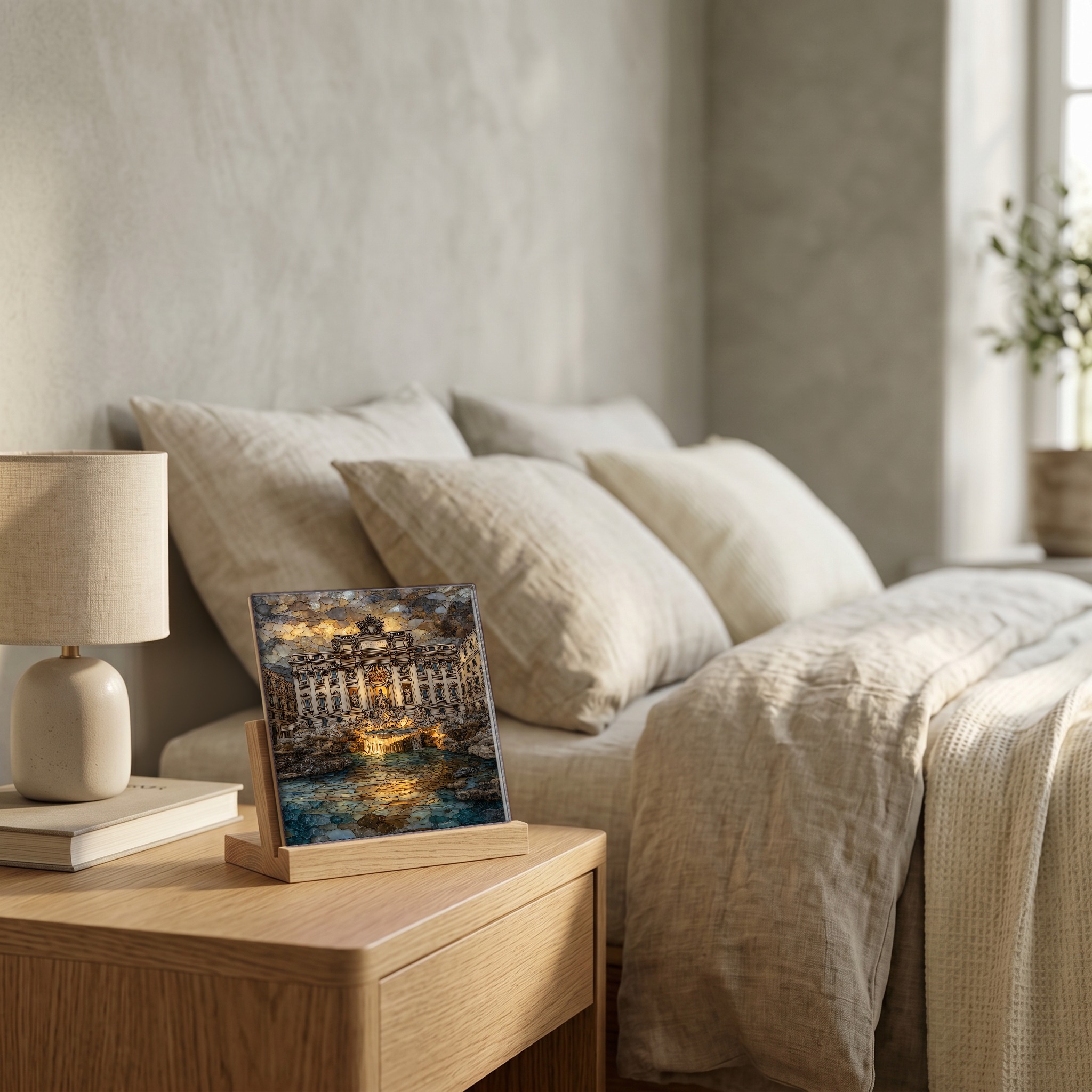
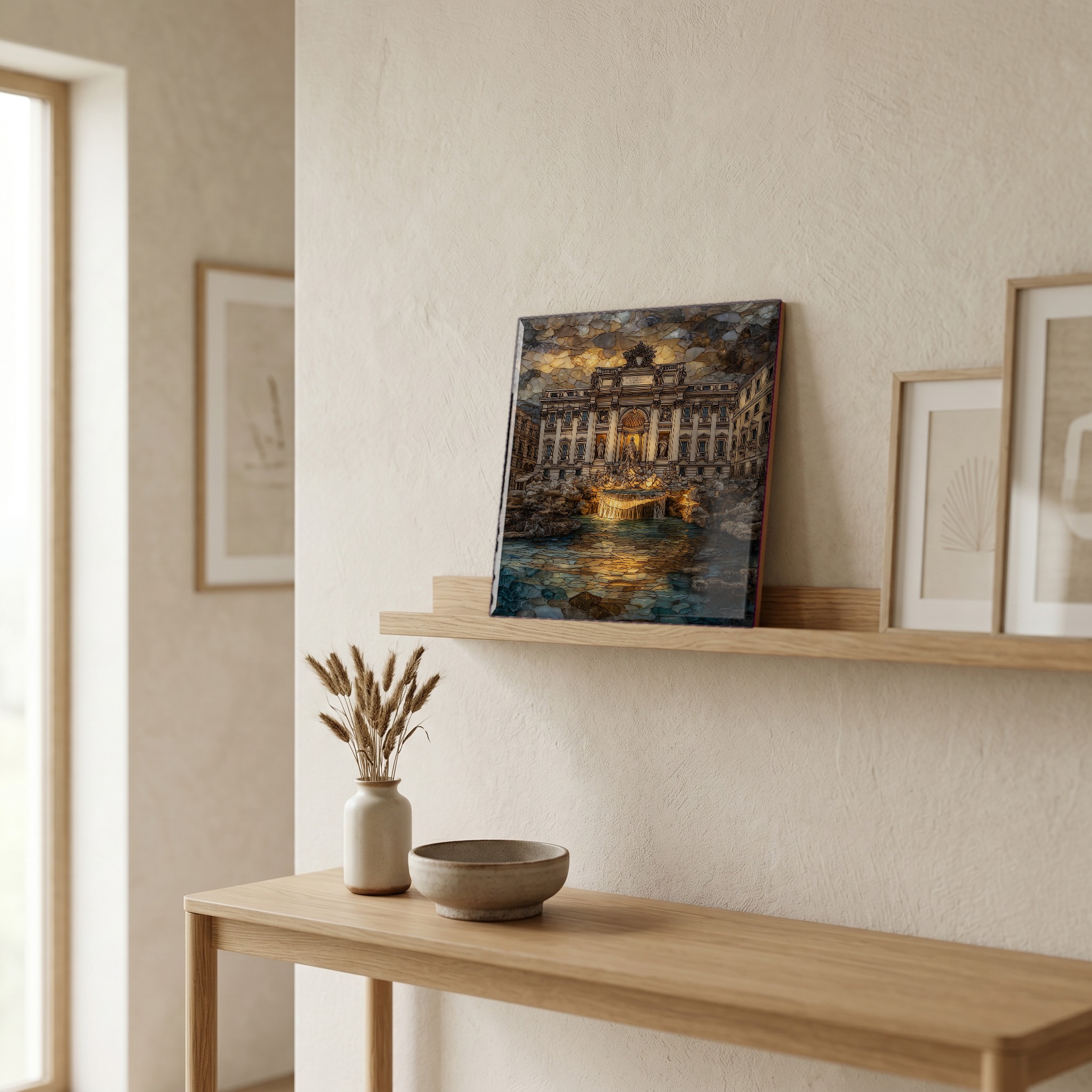
“The Trevi sits at the end of a Roman aqueduct that has been running since 19 BC. The water arrives at the back wall, a baroque cliff of travertine and Carrara marble, and falls into the basin in front of Oceanus in his shell-chariot. The piazza is small. The streets that feed it are narrow. People come around the corner, find it, and stop. Coins go in over the left shoulder; the city collects them at night for the food banks. Late afternoon the light comes off the water and the stone goes warm.
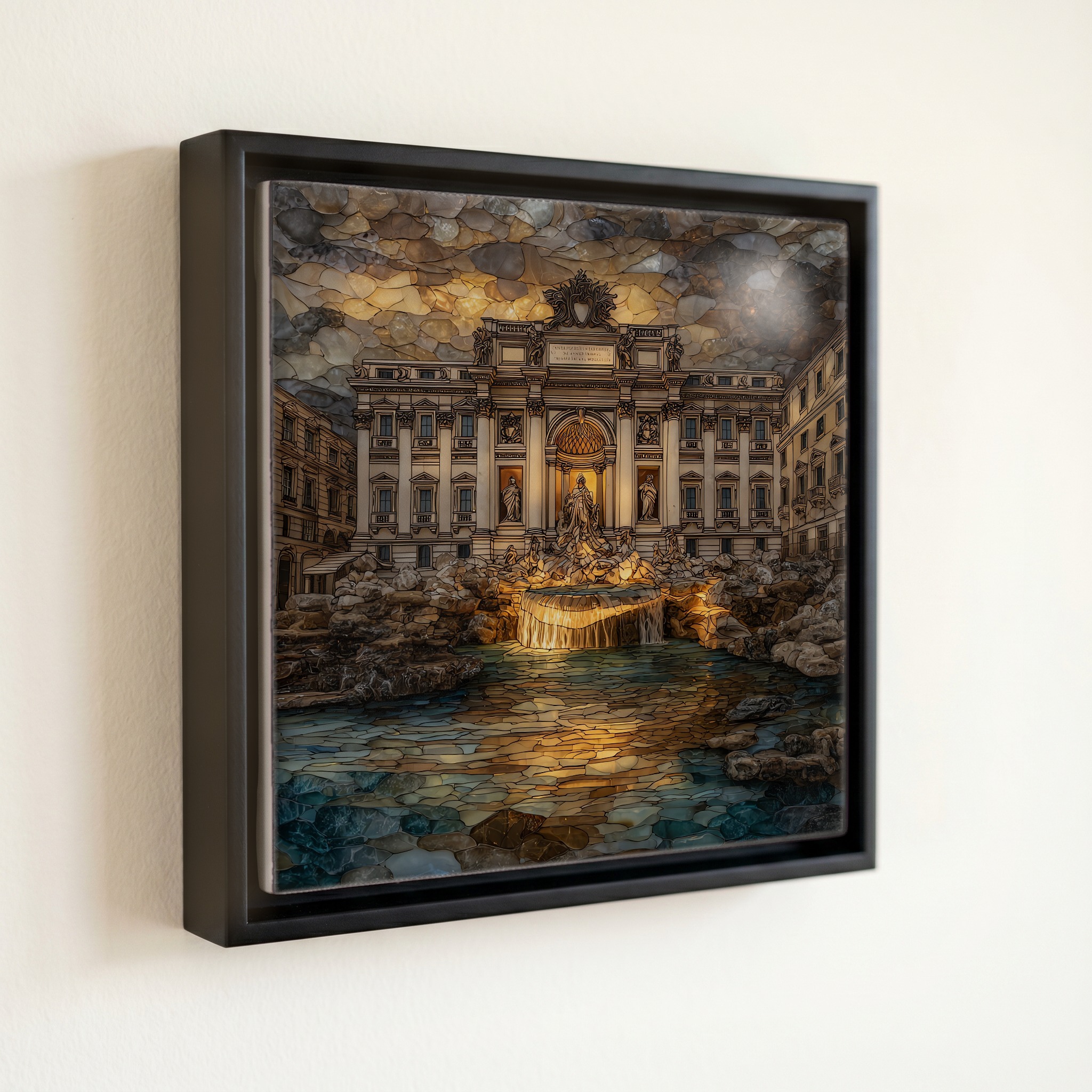
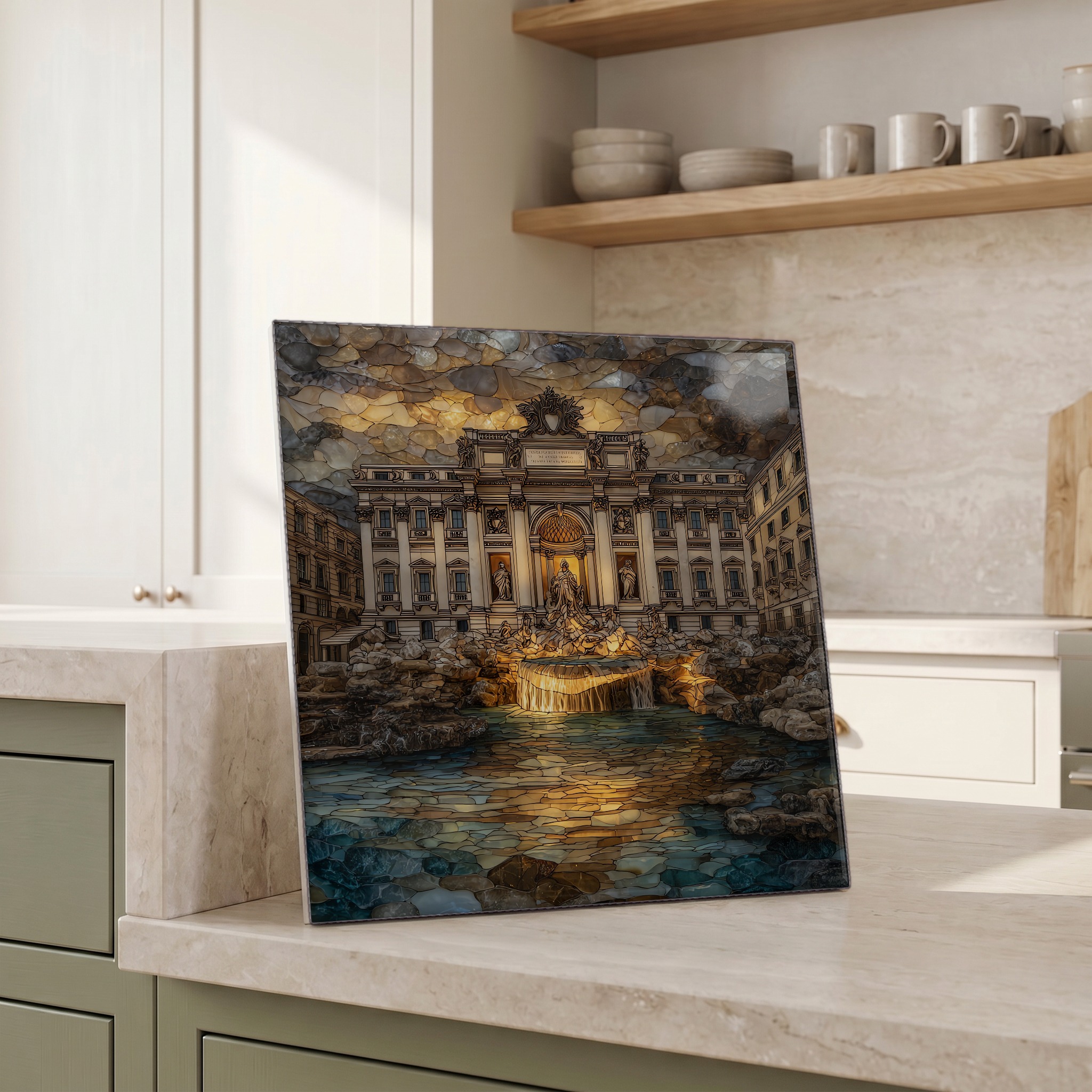
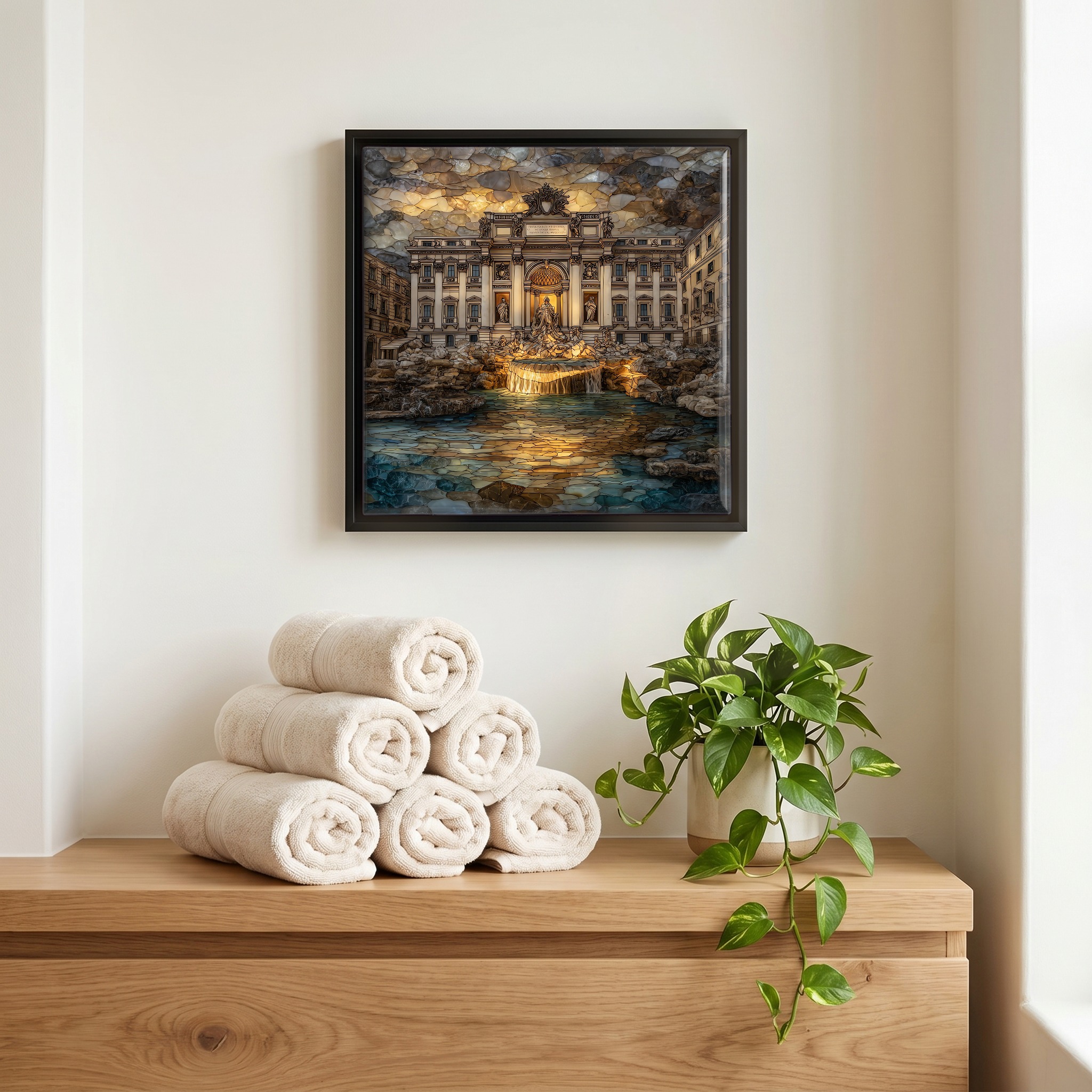
Trevi Fountain, on ceramic.
Each tile is finished by hand in our Knoxville studio. Artwork is slowly infused into the ceramic surface under high heat and pressure, and rests beneath a thin glossy finish. The colour lives in the surface, not on top of it.
Pick any four 4-inch tiles — National Parks you've been to, a Smokies set, the four seasons of one place. $ for a set of , cork-backed, ready to live on the table.
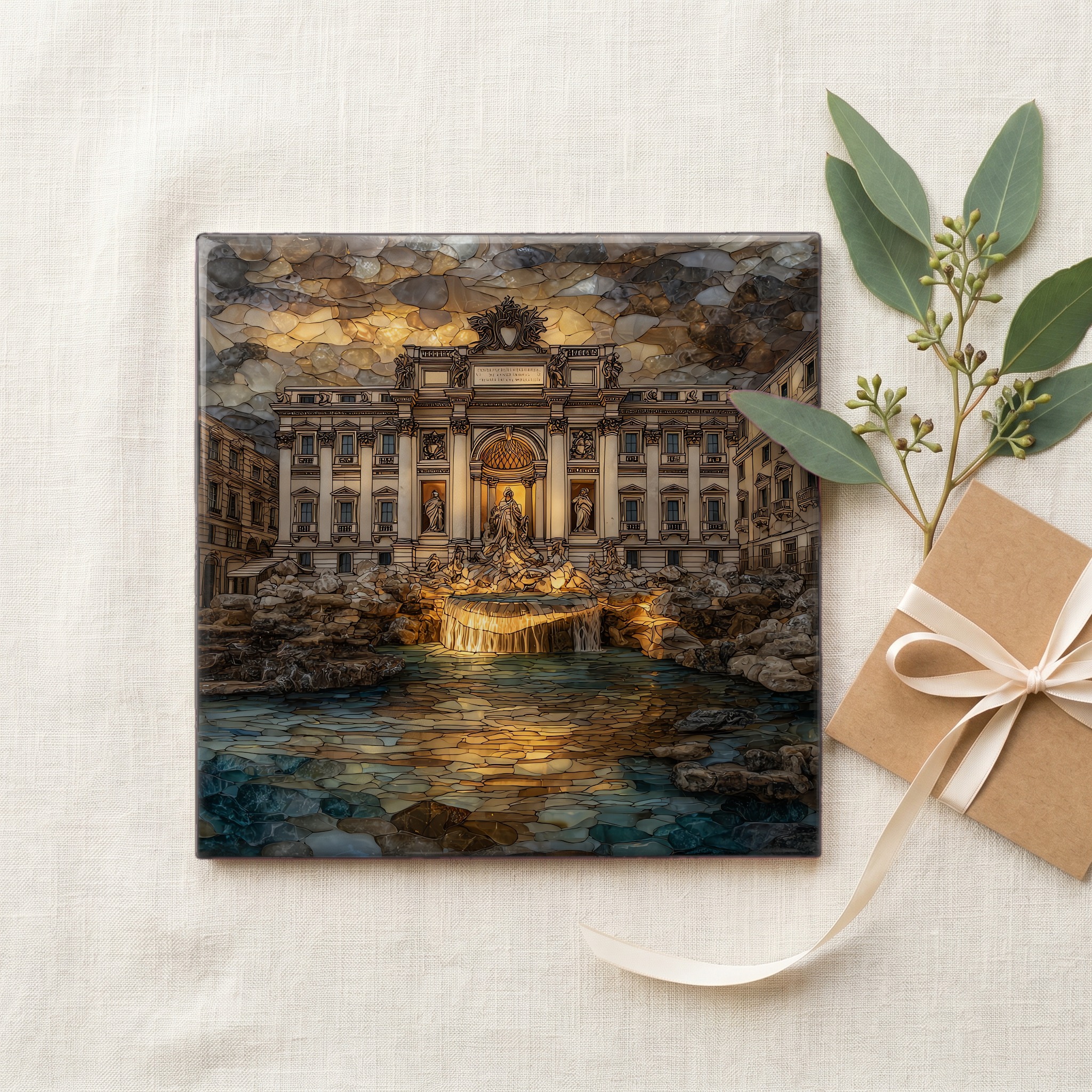
Each tile ships in a kraft box, tied with cream ribbon, with a handwritten note from the studio if you'd like to add one.
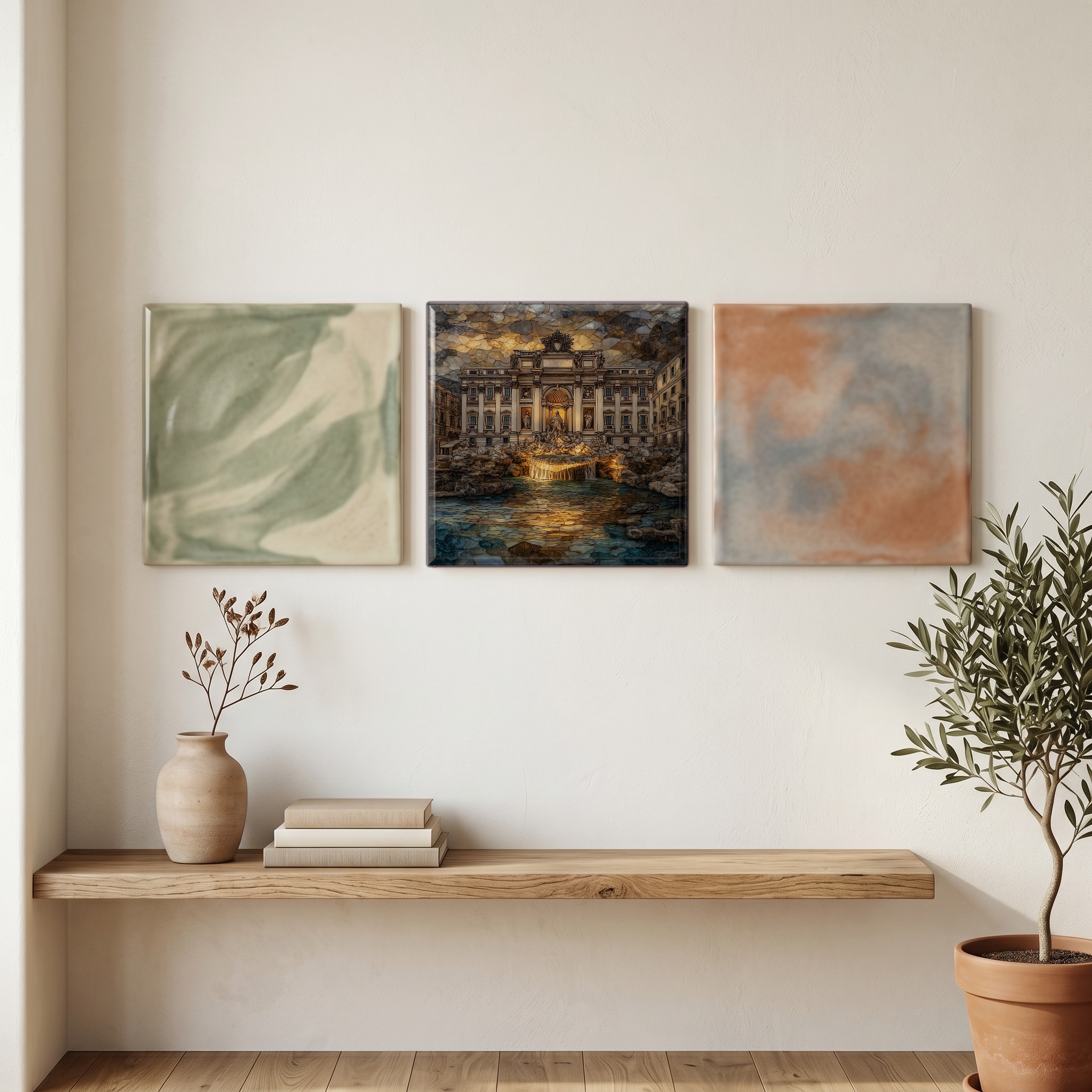
Three or five different vistas, hung together — a chapter of places you've been, or want to go.
The place, in three passes.
The Trevi Fountain stands at the junction of three streets in the rione Trevi, one of central Rome's twenty-two historical districts, about 600 metres east of the Pantheon and a similar distance north of the Quirinal Palace. It was completed in 1762 by Giuseppe Pannini, eleven years after the death of its principal architect, Nicola Salvi. At 49.15 metres wide and 26.3 metres tall, it is the largest Baroque fountain in the city. The fountain marks the terminus of the Acqua Vergine, an aqueduct first commissioned by Marcus Vipsanius Agrippa in 19 BC to supply the public baths of the Campo Marzio. The aqueduct still feeds it today.
The fountain's back wall is the south facade of Palazzo Poli; the sculptural composition is built into that wall, not freestanding. The architecture is travertine, the soft Roman limestone quarried at Tivoli twenty miles east, and the figures are Carrara marble. At the centre, Oceanus rides a shell-shaped chariot drawn by two seahorses, one calm and one restive, an allegory of the sea's two moods sculpted by Pietro Bracci to a design by Salvi. Niches on either side hold Abundance and Salubrity by Filippo della Valle. The whole composition reads as one continuous surface of stone giving way to water, which is the achievement Salvi was after.
The fountain is in a public piazza, open all hours, free to approach. The crowd is heaviest from late morning through early evening; the hour before sunrise is the only reliably quiet window. The water is not for drinking, and the basin is for coins only; wading is fined and police patrol the piazza. The custom is to throw a coin into the basin over the left shoulder with the right hand. The city collects the coins overnight and donates them to Caritas, the Catholic charity that runs food programs in Rome. A major restoration was completed in late 2024 in time for the 2025 Jubilee, with a temporary glass walkway installed over the basin during the work.