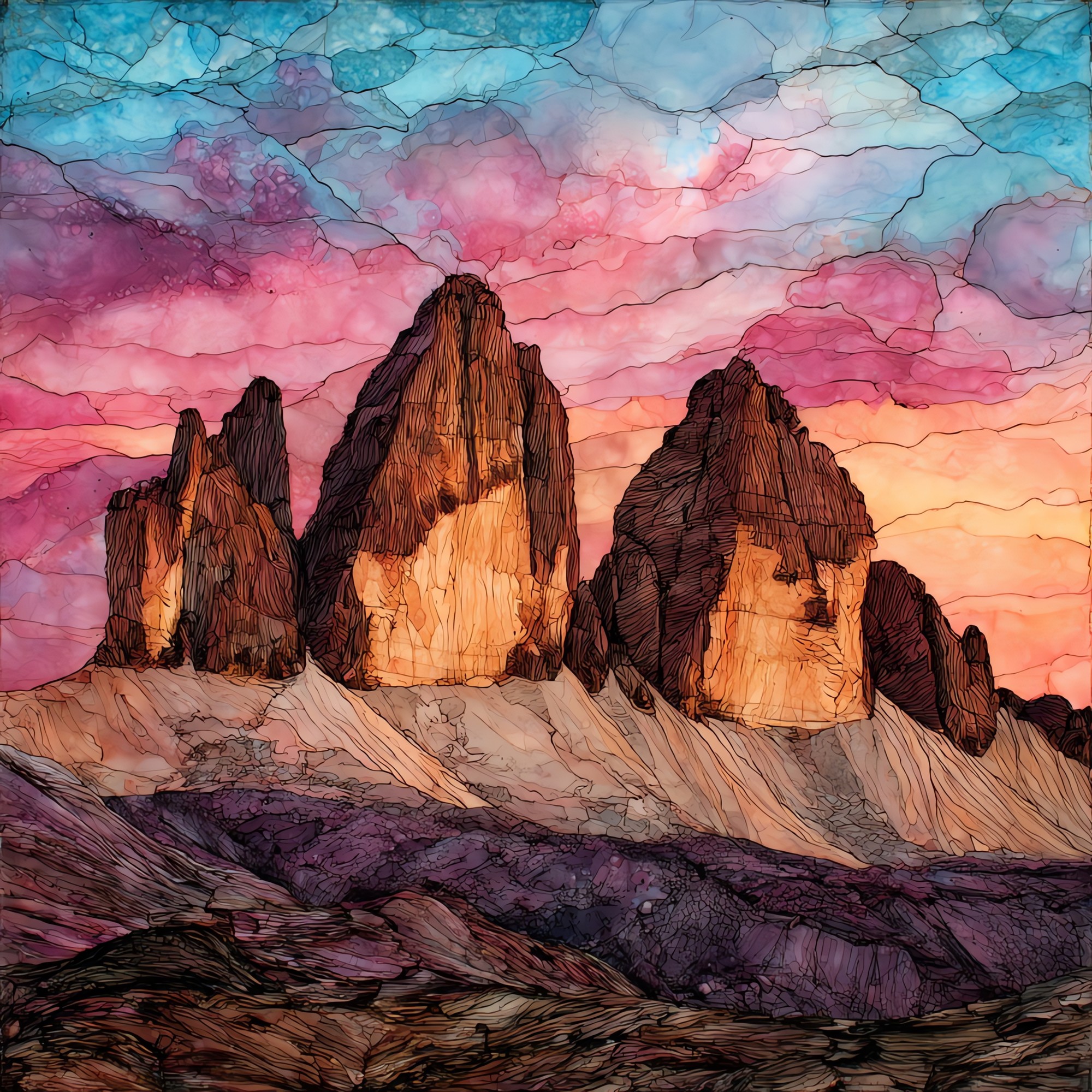
Tre Cime di Lavaredo
— three towers cut from the same sky.
Not only on a wall.




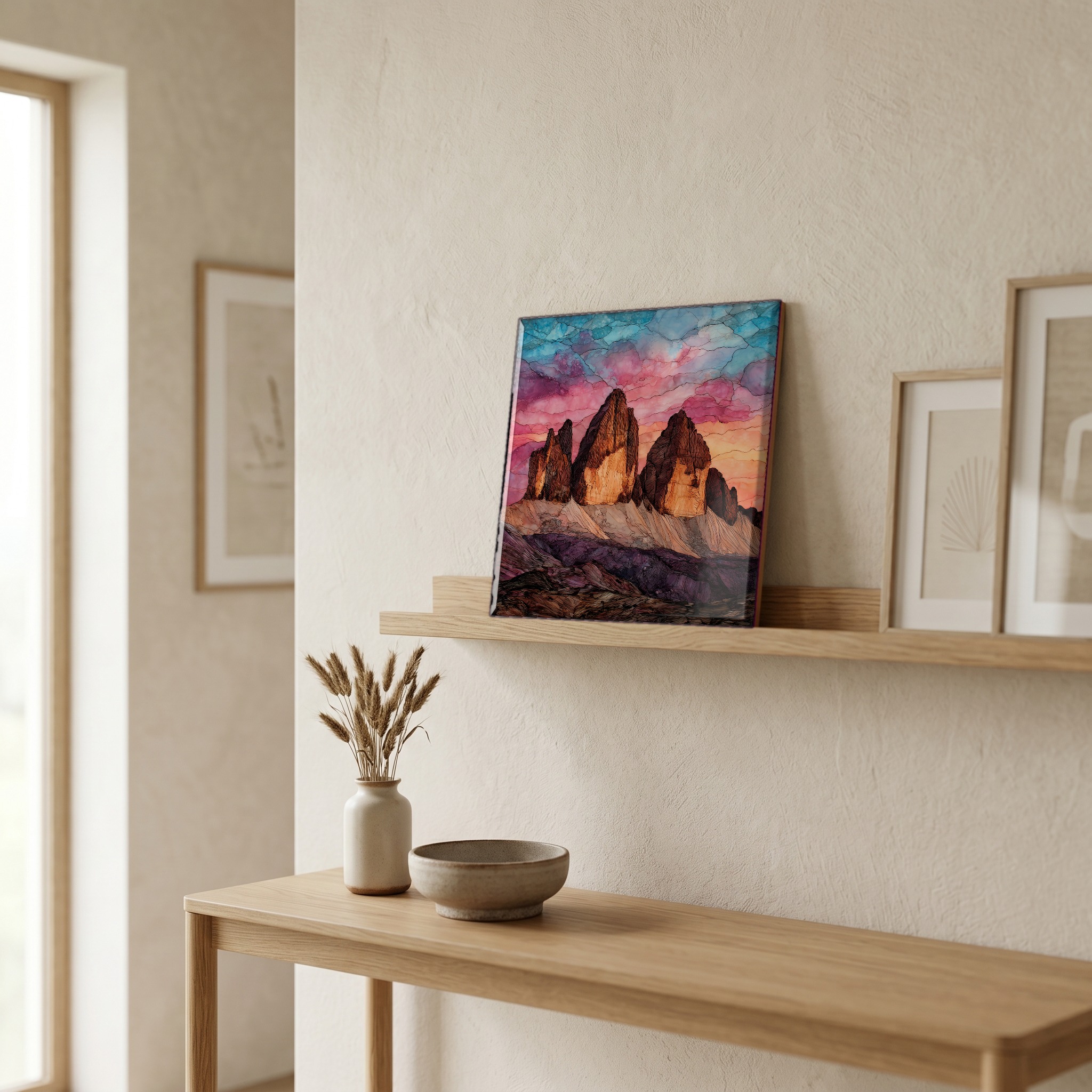
“Three limestone towers in the eastern Dolomites, reached by toll road from Misurina to Rifugio Auronzo at 2,320 metres. The loop trail circles the base in about four hours, ending at the saddle below Rifugio Locatelli, where the north faces line up the way every climbing book has them. The wall sits in shadow most of the day. Forty minutes before sunset, the low light comes in warm and the limestone briefly holds it. The road closes in winter.
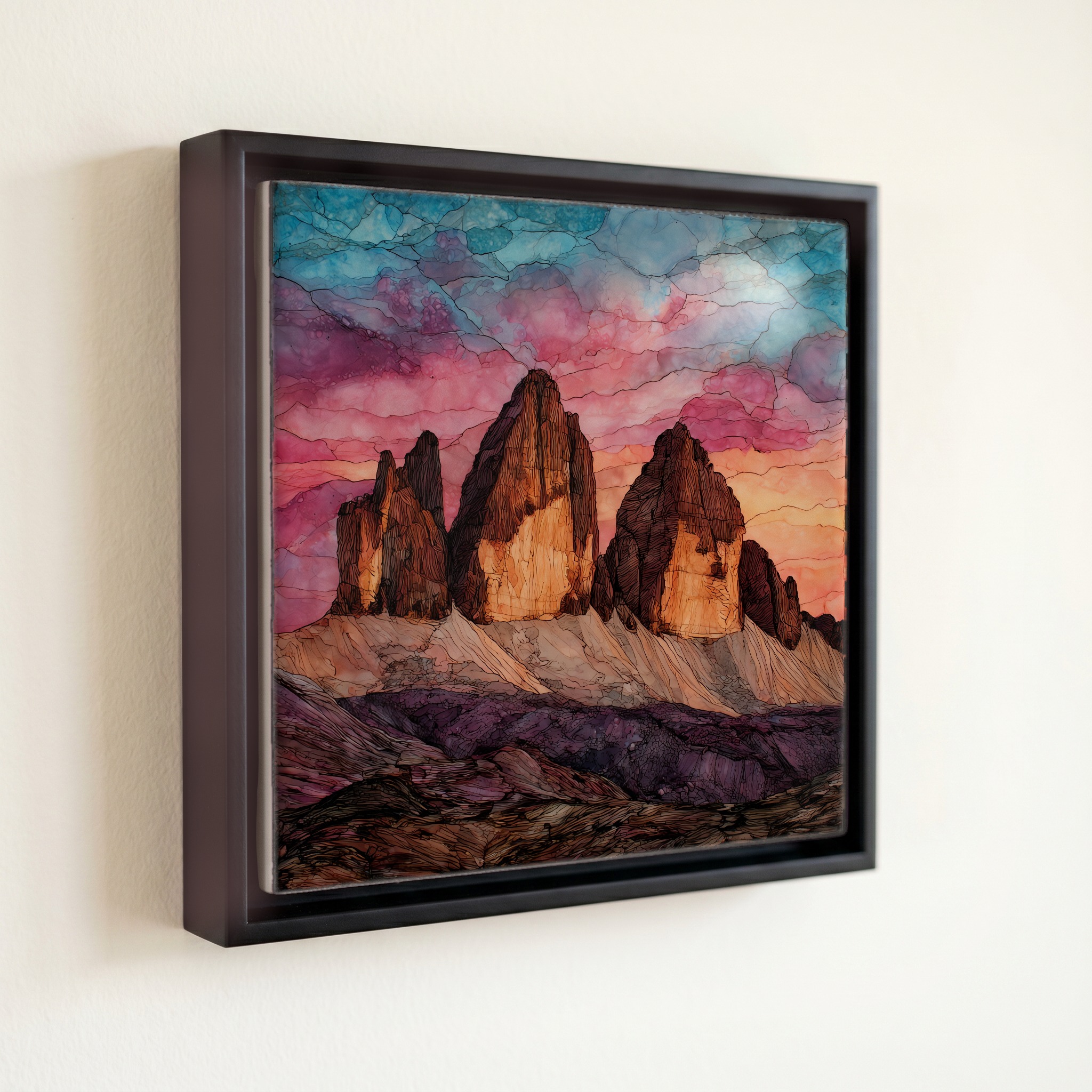
Tre Cime di Lavaredo, on ceramic.
Each tile is finished by hand in our Knoxville studio. Artwork is slowly infused into the ceramic surface under high heat and pressure, and rests beneath a thin glossy finish. The colour lives in the surface, not on top of it.
Pick any four 4-inch tiles — National Parks you've been to, a Smokies set, the four seasons of one place. $ for a set of , cork-backed, ready to live on the table.

Each tile ships in a kraft box, tied with cream ribbon, with a handwritten note from the studio if you'd like to add one.

Three or five different vistas, hung together — a chapter of places you've been, or want to go.
The place, in three passes.
The Tre Cime di Lavaredo are three sheer limestone towers in the Sexten Dolomites, on the border of the provinces of Belluno (Veneto) and Bolzano (South Tyrol) in northeastern Italy. The tallest, Cima Grande, reaches 2,999 metres; Cima Ovest stands at 2,973 metres and Cima Piccola at 2,857 metres. The massif sits within the Dolomites UNESCO World Heritage listing inscribed in 2009. Access from the south is by toll road from Misurina to Rifugio Auronzo at 2,320 metres, where the classic four-hour loop trail begins. From the north, the peaks form the southern boundary of the Naturpark Drei Zinnen in South Tyrol.
The towers are Triassic dolomite, the calcium-magnesium carbonate rock that gives the entire range its name, after the French geologist Déodat de Dolomieu who first described it in 1791. The north faces drop nearly 500 metres vertical, among the most studied walls in alpinism. Paul Grohmann led the first ascent of Cima Grande in 1869 with the local guides Franz Innerkofler and Peter Salcher. Emilio Comici opened the direct route up the north face of Cima Grande in 1933, a line that remains a benchmark for big-wall climbing in the Alps. The rock weathers pale grey by day and warms to a deep ochre when the late light catches it.
The standard access is the toll road from Misurina up to Rifugio Auronzo at 2,320 metres, open roughly from late May to mid-October depending on the snowpack. A per-car day fee covers parking at the trailhead. From the rifugio the classic loop trail is a 10-kilometre circuit gaining about 400 metres, passing Rifugio Lavaredo at the Forcella and reaching Rifugio Locatelli (Dreizinnenhütte) at 2,405 metres for the classic head-on view of the north faces. Most walkers take three to four hours. The road closes in winter; the area is then reached only by ski touring or snowshoe from Misurina.