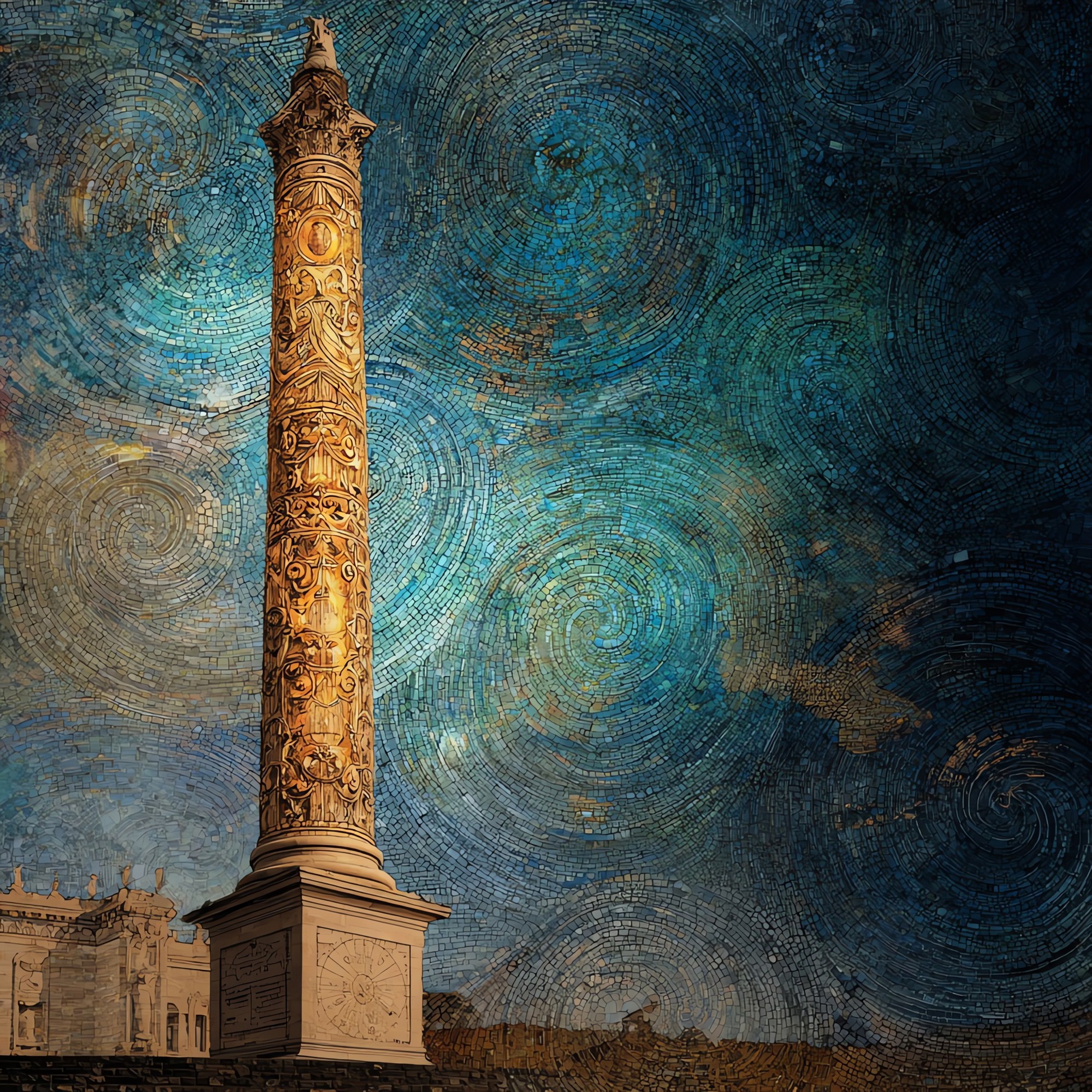
Trajan's Column
— — a story carved in marble, still climbing.
Not only on a wall.
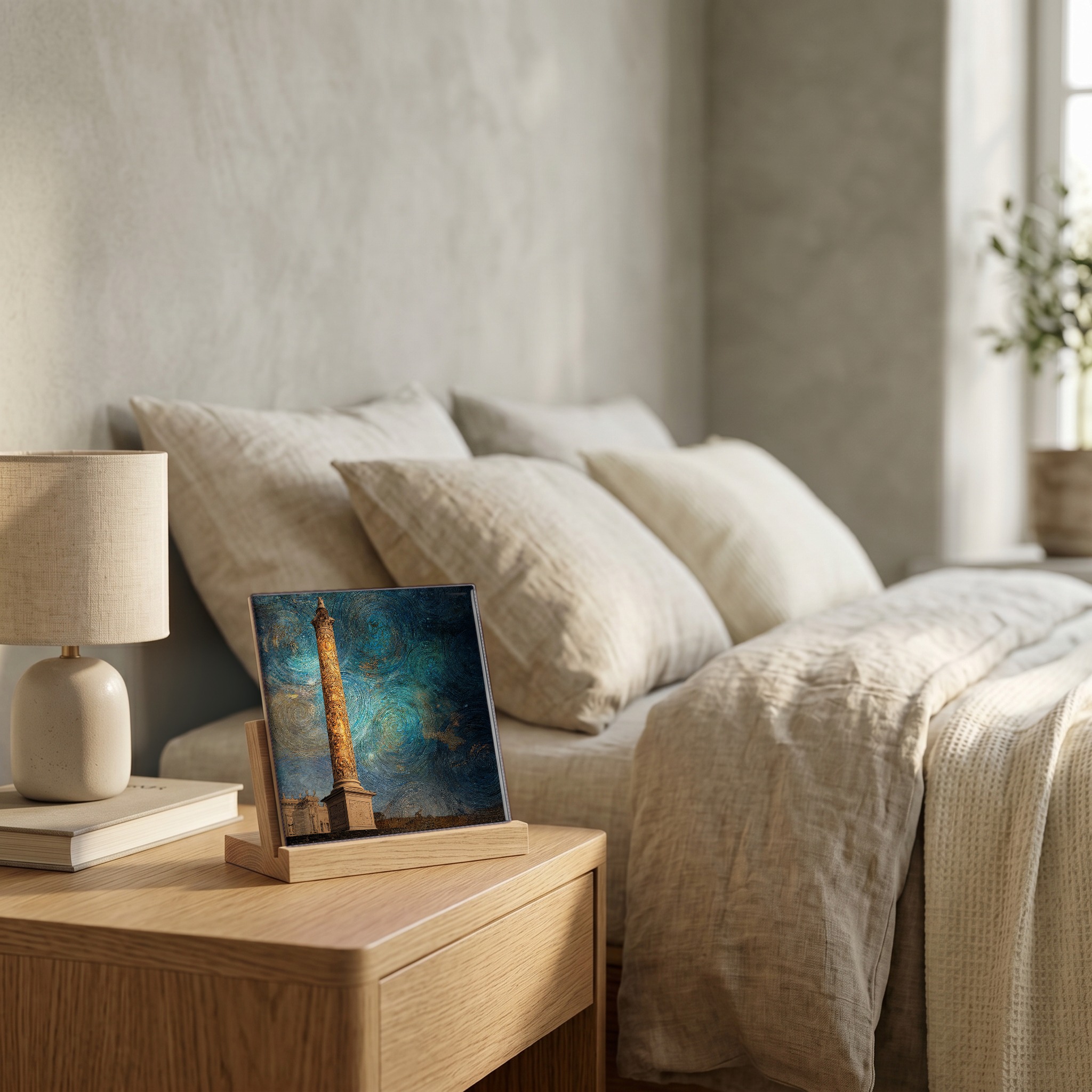
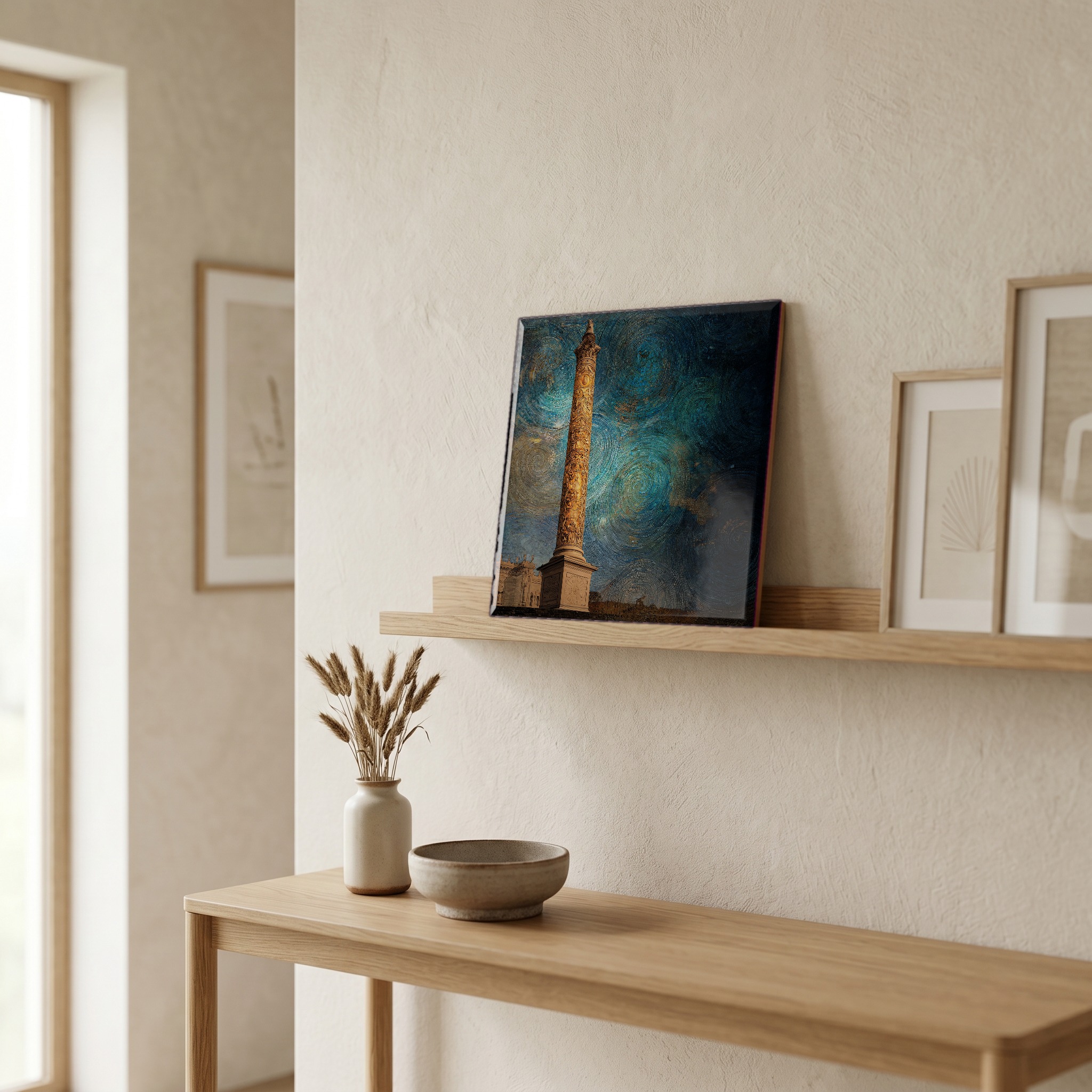
“A marble column rising thirty metres above the ruins of Trajan's Forum, a block off Piazza Venezia. Around it spirals a continuous frieze: Roman soldiers building bridges, marching, fighting; Dacian villages burning; the same scene the empire chose to remember of itself, repeated upward by hand for almost two thousand years. The bronze figure on top was replaced by Saint Peter in 1587. Apollodorus of Damascus is presumed to have designed both the architecture and the relief. From the pavement, the upper bands are unreadable. The column was built taller than its own audience. It is still there.
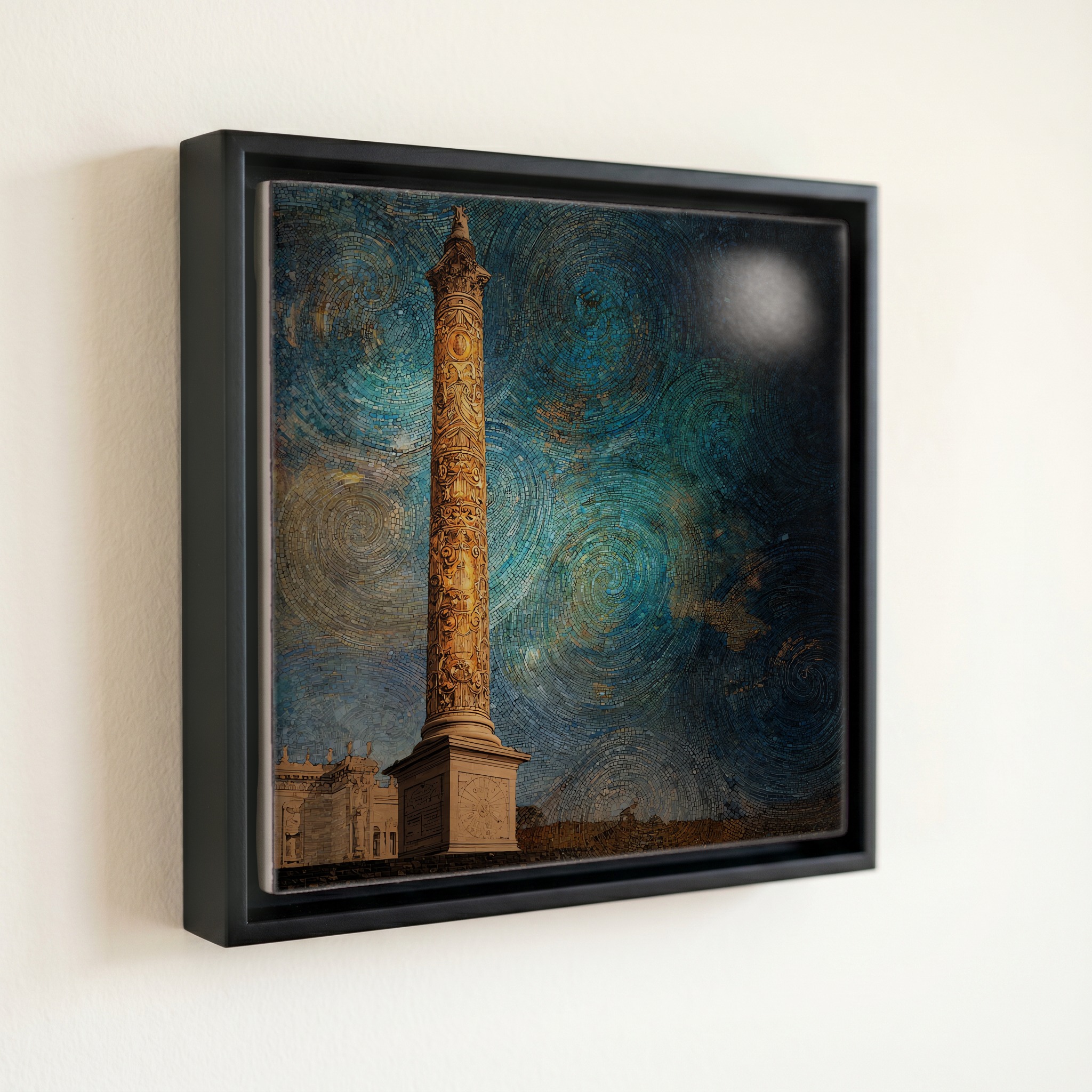
Trajan's Column, on ceramic.
Each tile is finished by hand in our Knoxville studio. Artwork is slowly infused into the ceramic surface under high heat and pressure, and rests beneath a thin glossy finish. The colour lives in the surface, not on top of it.
Pick any four 4-inch tiles — National Parks you've been to, a Smokies set, the four seasons of one place. $ for a set of , cork-backed, ready to live on the table.
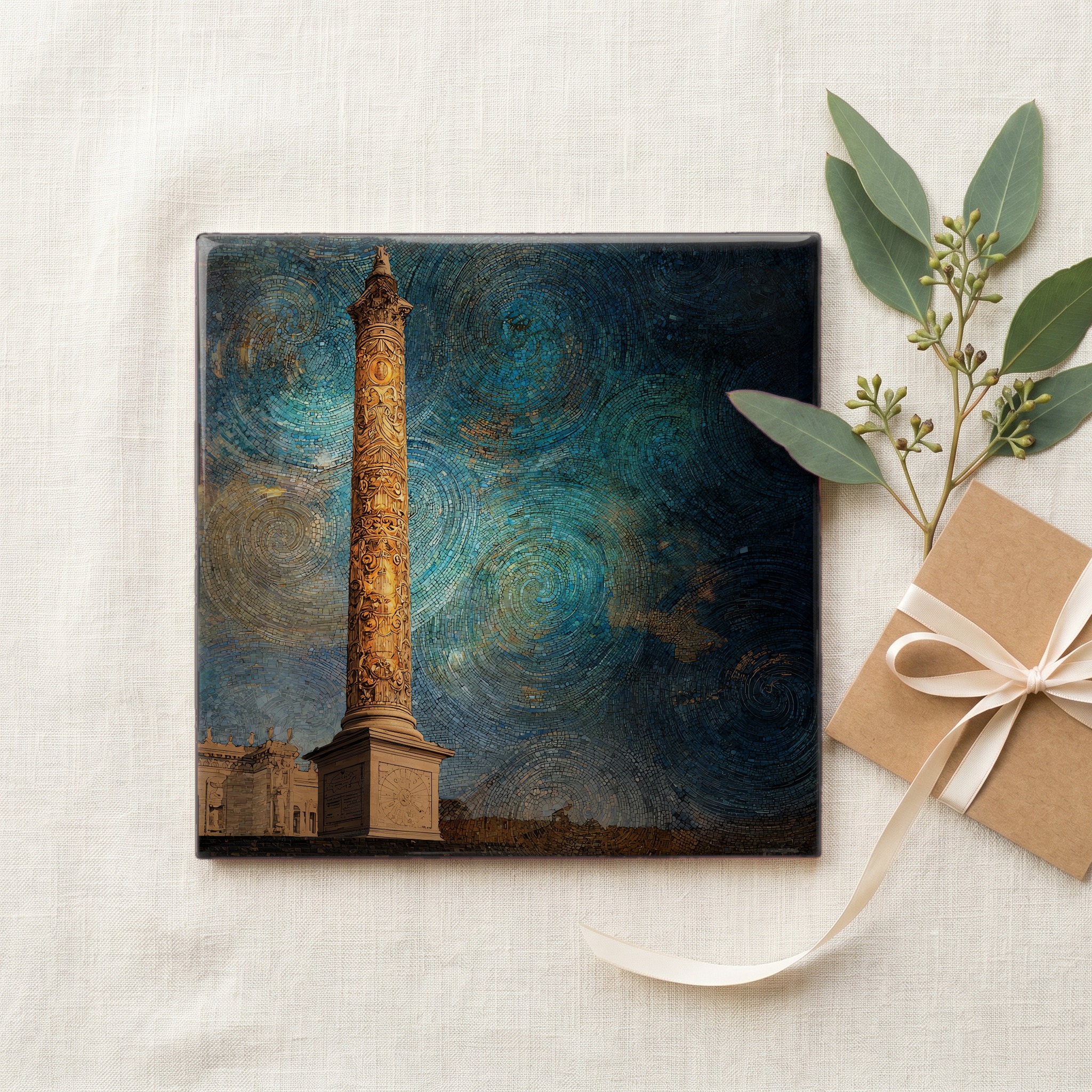
Each tile ships in a kraft box, tied with cream ribbon, with a handwritten note from the studio if you'd like to add one.
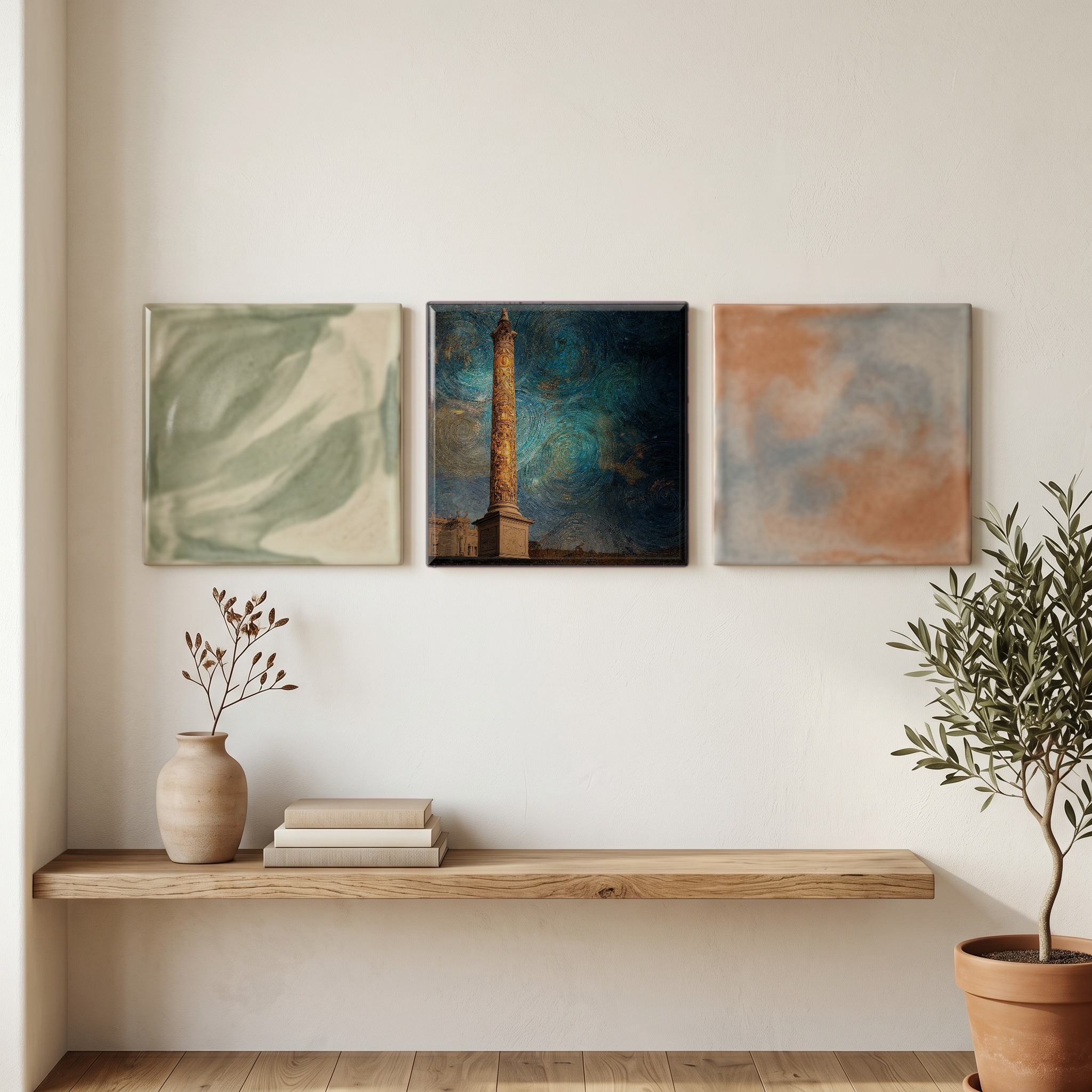
Three or five different vistas, hung together — a chapter of places you've been, or want to go.
The place, in three passes.
Trajan's Column stands at the north end of Trajan's Forum in central Rome, the last and grandest of the five Imperial Forums laid out between the Capitoline and Quirinal hills along what is now Via dei Fori Imperiali. The complex was commissioned by the emperor Trajan and designed by the architect Apollodorus of Damascus, completed in AD 113. The column itself rises about 30 metres above its pedestal (about 35 metres including the pedestal and statue on top) and is reached from Piazza Venezia in under five minutes on foot. The site is part of the unified archaeological zone administered by Roma Capitale's Sovrintendenza, with the adjacent Trajan's Markets housing the Museo dei Fori Imperiali.
The column is built from twenty drums of white Luna marble (the Carrara of antiquity), each weighing roughly thirty tonnes, set one on top of the next and bored through their centres to take a spiral staircase of 185 steps. The shaft is wrapped in a continuous helical relief about 200 metres long when unwound, carrying more than 2,500 figures across roughly 155 scenes from the two Dacian Wars of 101-102 and 105-106. The carving was almost certainly designed by Apollodorus and executed by a workshop of sculptors over several years. The stone has weathered from cool white to a warm honey tone, holding the detail of helmets, eagles, river crossings, and burning villages.
The column is freely visible at any hour from Via dei Fori Imperiali and the small piazza directly in front of it; the surrounding archaeological precinct is railed off but the monument reads cleanly from the street. The interior staircase is not open to the public. To go further, the Museo dei Fori Imperiali inside the adjacent Trajan's Markets (Mercati di Traiano) interprets the forum complex with reconstructions, fragments of the marble inscriptions, and an upper-terrace view that places the column at eye level with its mid-bands. Standard adult tickets run around €11.50. The lighting is best in the late afternoon, when the western sun catches the lower spirals.