Wender·Vista
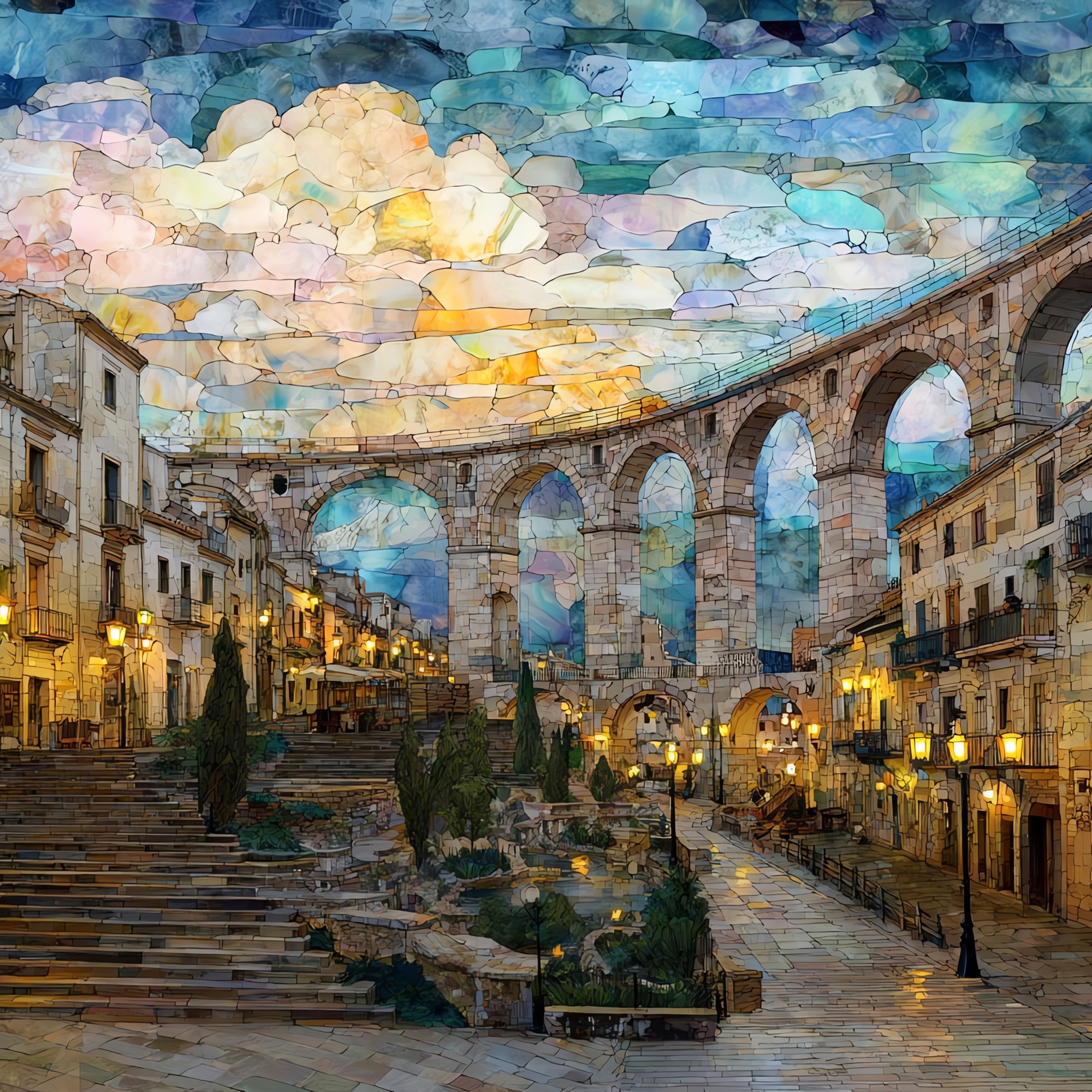
Sulmona
shown on ceramic, 12-inch tileItaly
in the Abruzzo, between the Maiella and Morrone

Sulmona

— the morning the veil falls.

Where it lives

Not only on a wall.

A small tile on the nightstand catching the morning. A larger one above the fire. Yours, wherever you spend the slow hours.
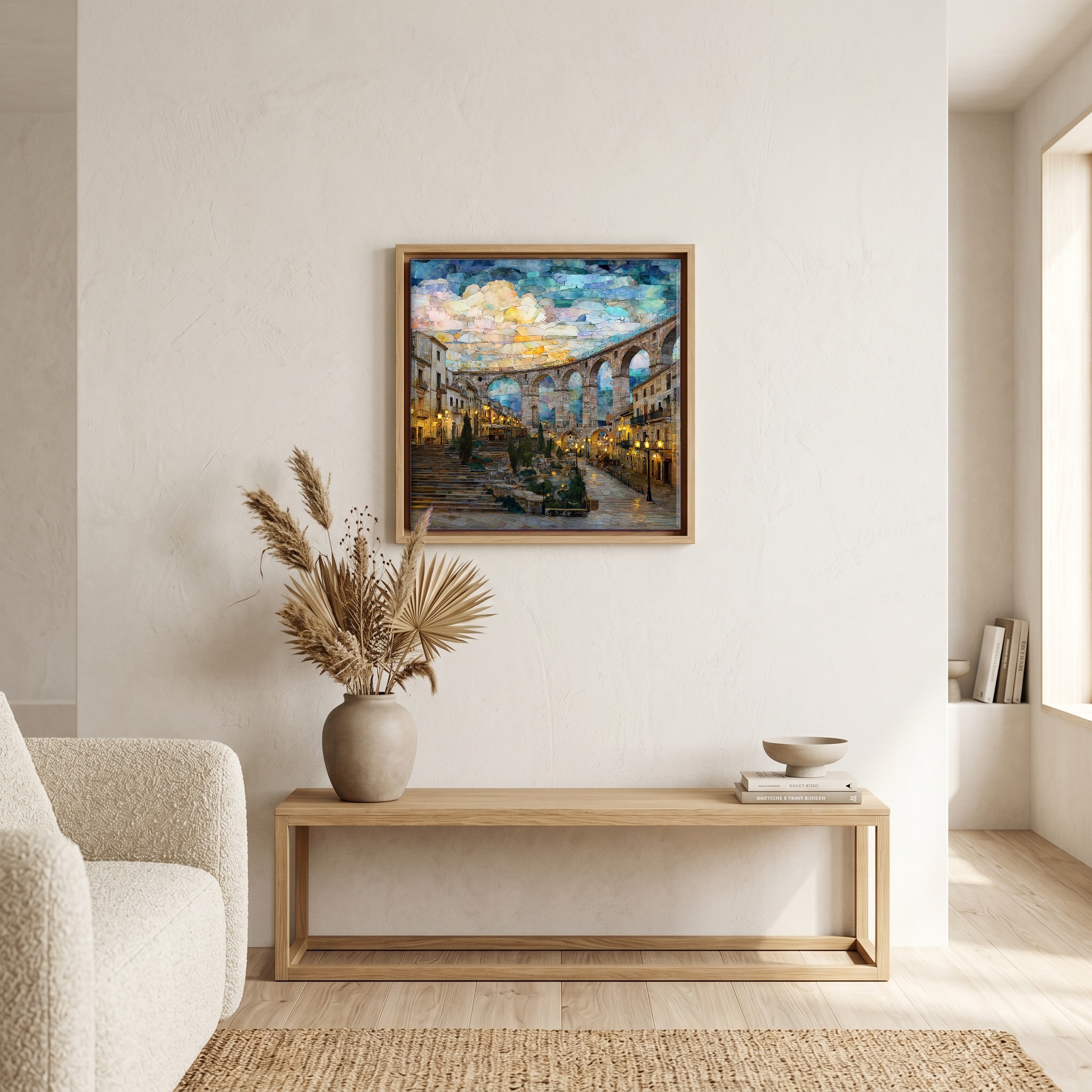
Above the bench, in a warm oak surround.
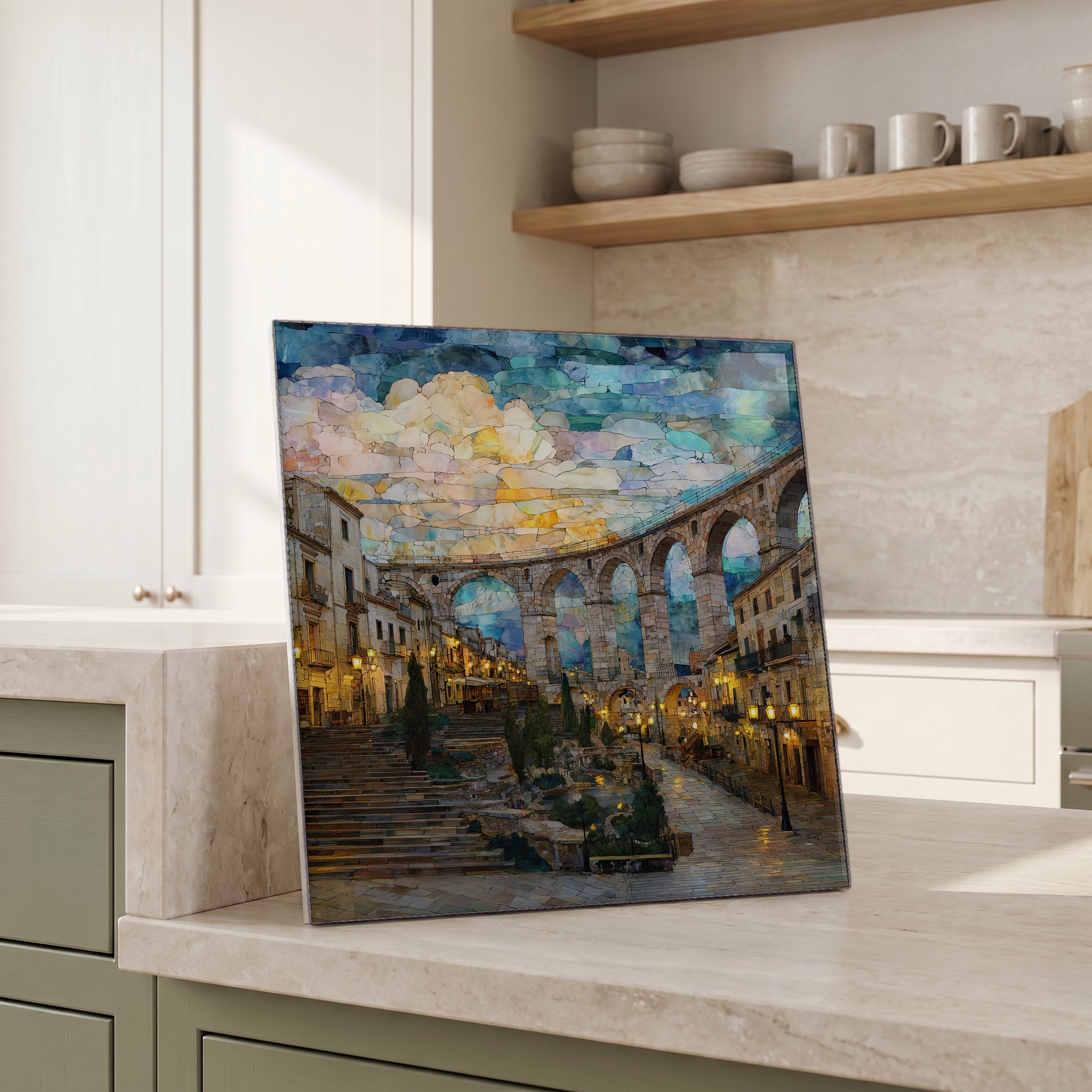
Beside the kettle, propped on the counter.
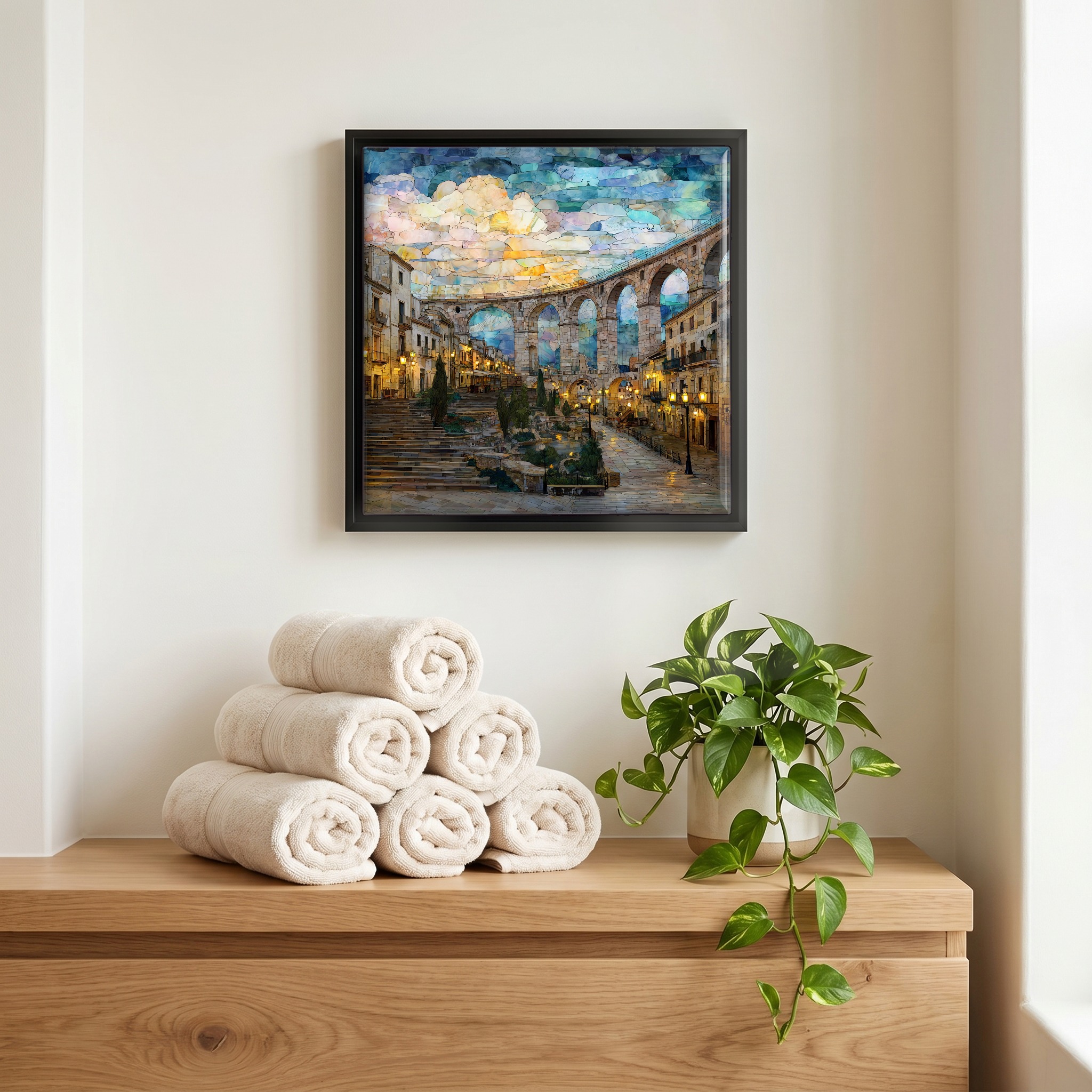
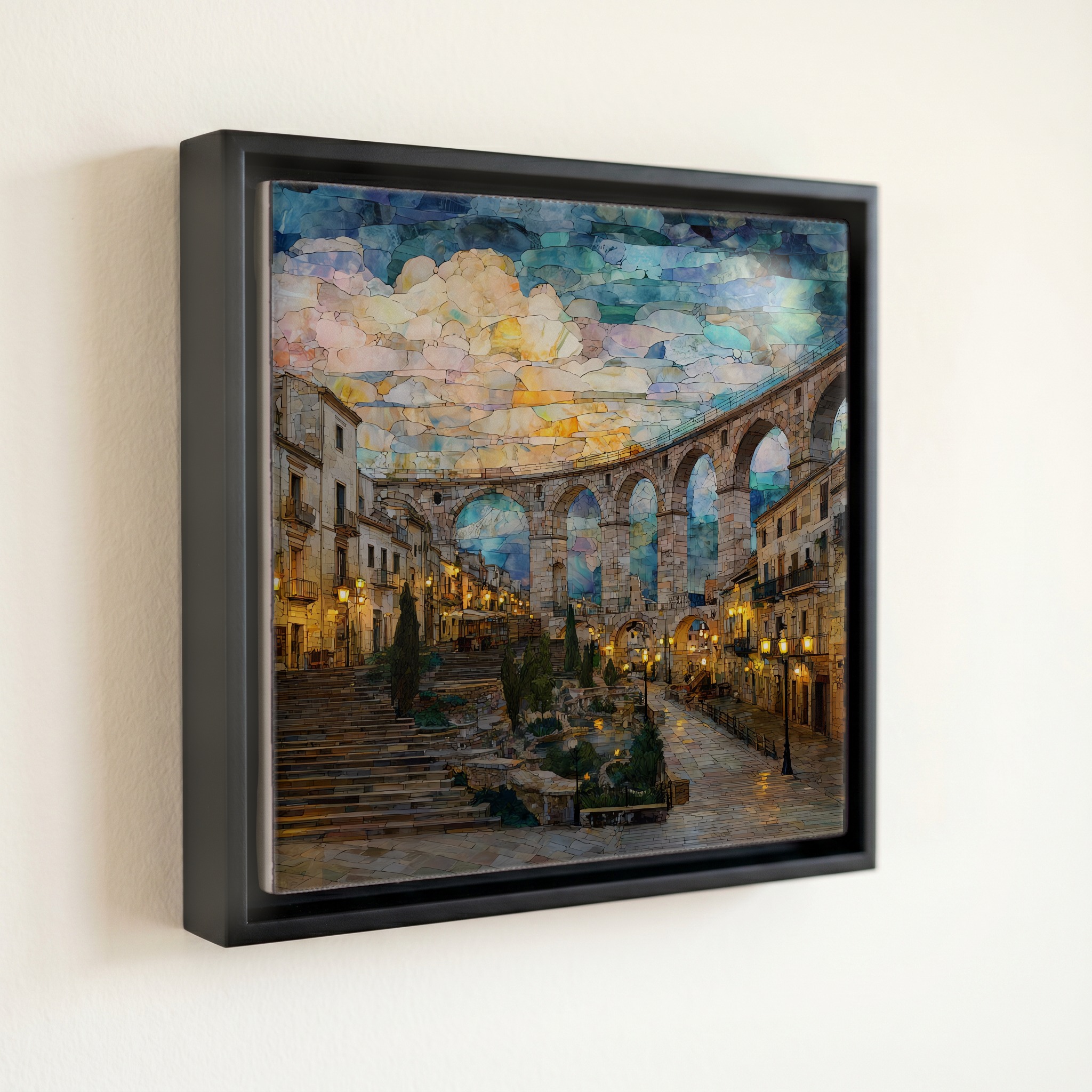
Above the linens, in a slim black surround.
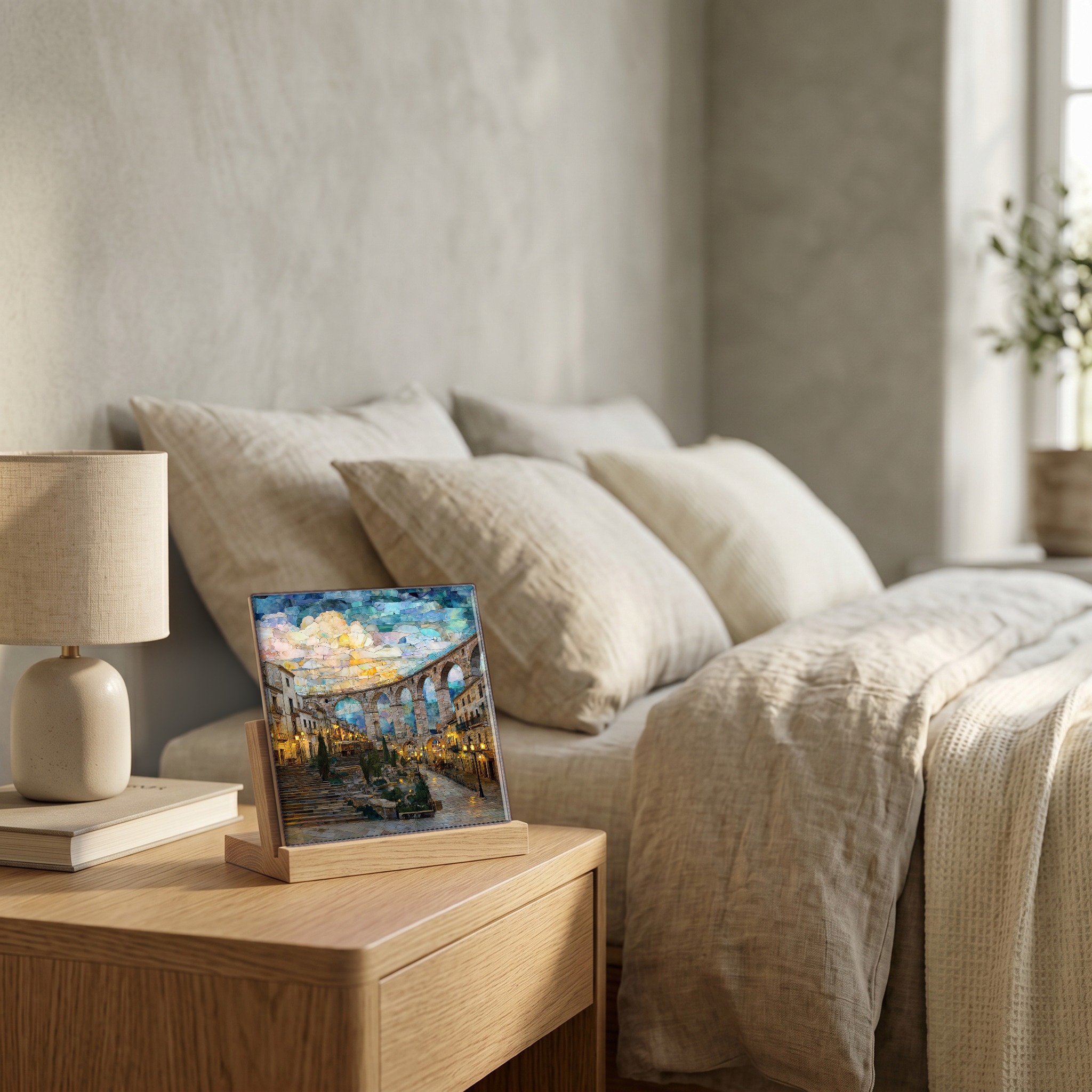
On the nightstand, on a light oak stand.
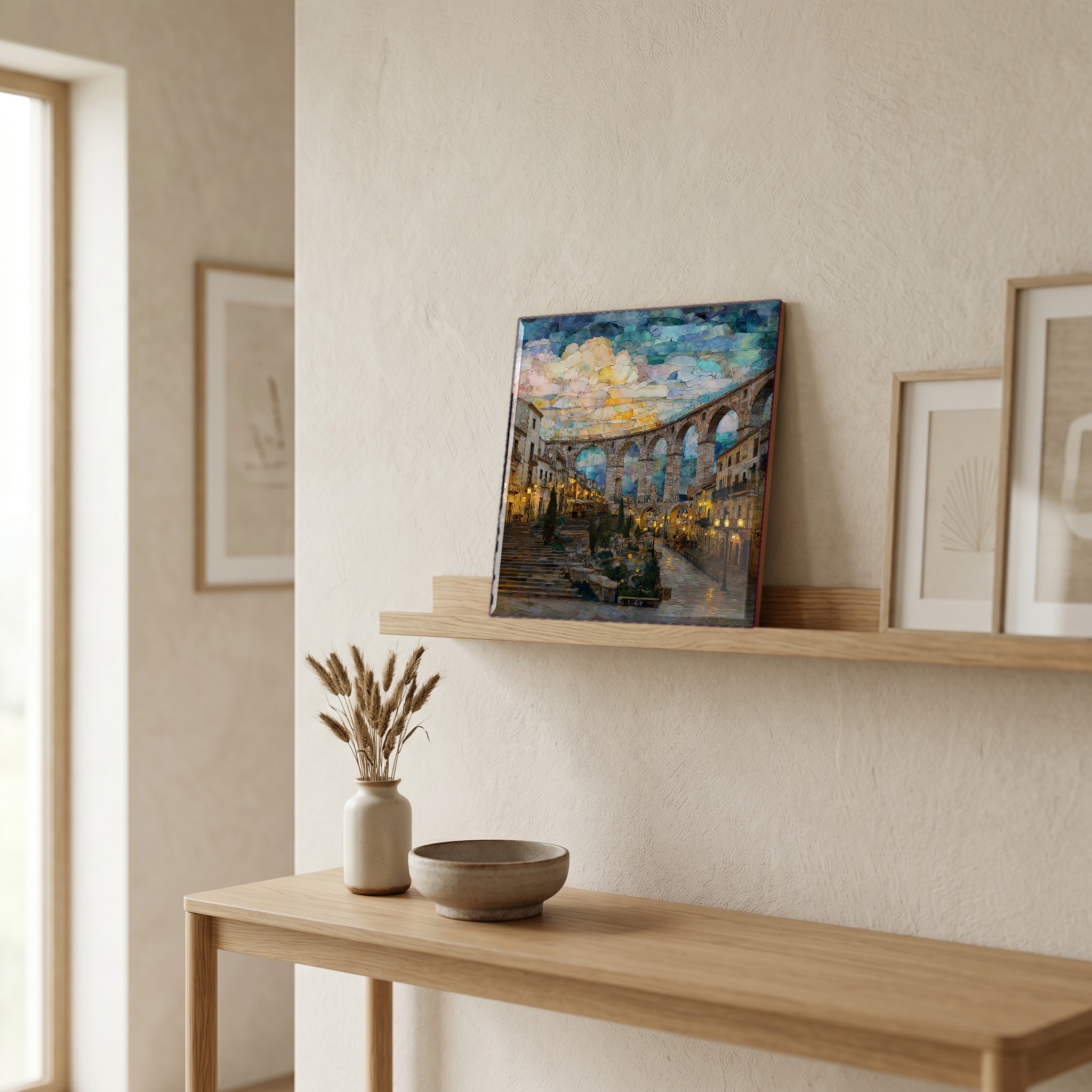
On a picture ledge, where the light comes in.
a note from the studio

A small city in the Abruzzo, between the Maiella and Morrone ranges, with a 13th-century aqueduct running the eastern edge of the main square. The Pelino family has been making sugared almonds here since 1783. Ovid was born in Sulmona in 43 BC, and his statue still stands in the square that bears his name. On Easter Sunday at noon the Madonna runs across the piazza to meet the risen Christ, and the black veil falls.
from the studio
shown in a slim black floating frame · 6 × 6 in
— bring it home

Sulmona, on ceramic.

Each tile is finished by hand in our Knoxville studio. Artwork is slowly infused into the ceramic surface under high heat and pressure, and rests beneath a thin glossy finish. The colour lives in the surface, not on top of it.

What kind of piece?
One tile — square or rectangle.
How big?
the popular one — counter, shelf, nightstand
6 × 6 in · 15 cm · 1.6 lb
Surface finish
A clear glossy finish — the artwork reads as if under resin. Ideal for show-pieces and framed wall art.
How it sits
A hidden cleat — sits ¼″ proud of the wall.
$58
Hand-finished and shipped from our studio at the foot of the Smokies. On your wall in about ten days.
size
6 × 6 in
15 cm
weighs
1.6 lb
solid in the hand
surface
ceramic, hand-finished
art rests beneath a thin glossy finish
from
Knoxville, TN
our family studio, at the foot of the Smokies
— start a Coaster Set

Pick any four 4-inch tiles — National Parks you've been to, a Smokies set, the four seasons of one place. $ for a set of , cork-backed, ready to live on the table.
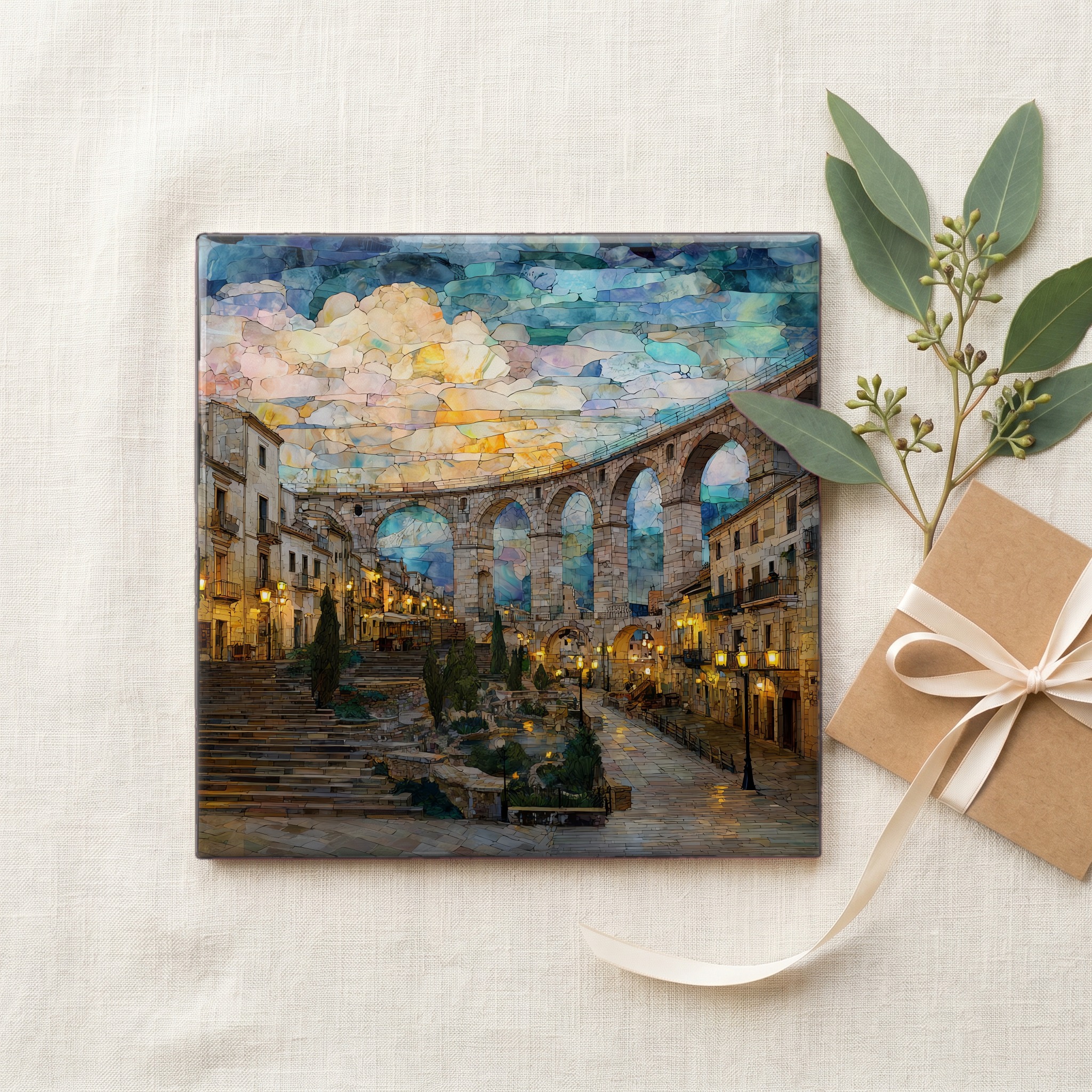
comes gift-ready
comes gift-ready

Each tile ships in a kraft box, tied with cream ribbon, with a handwritten note from the studio if you'd like to add one.
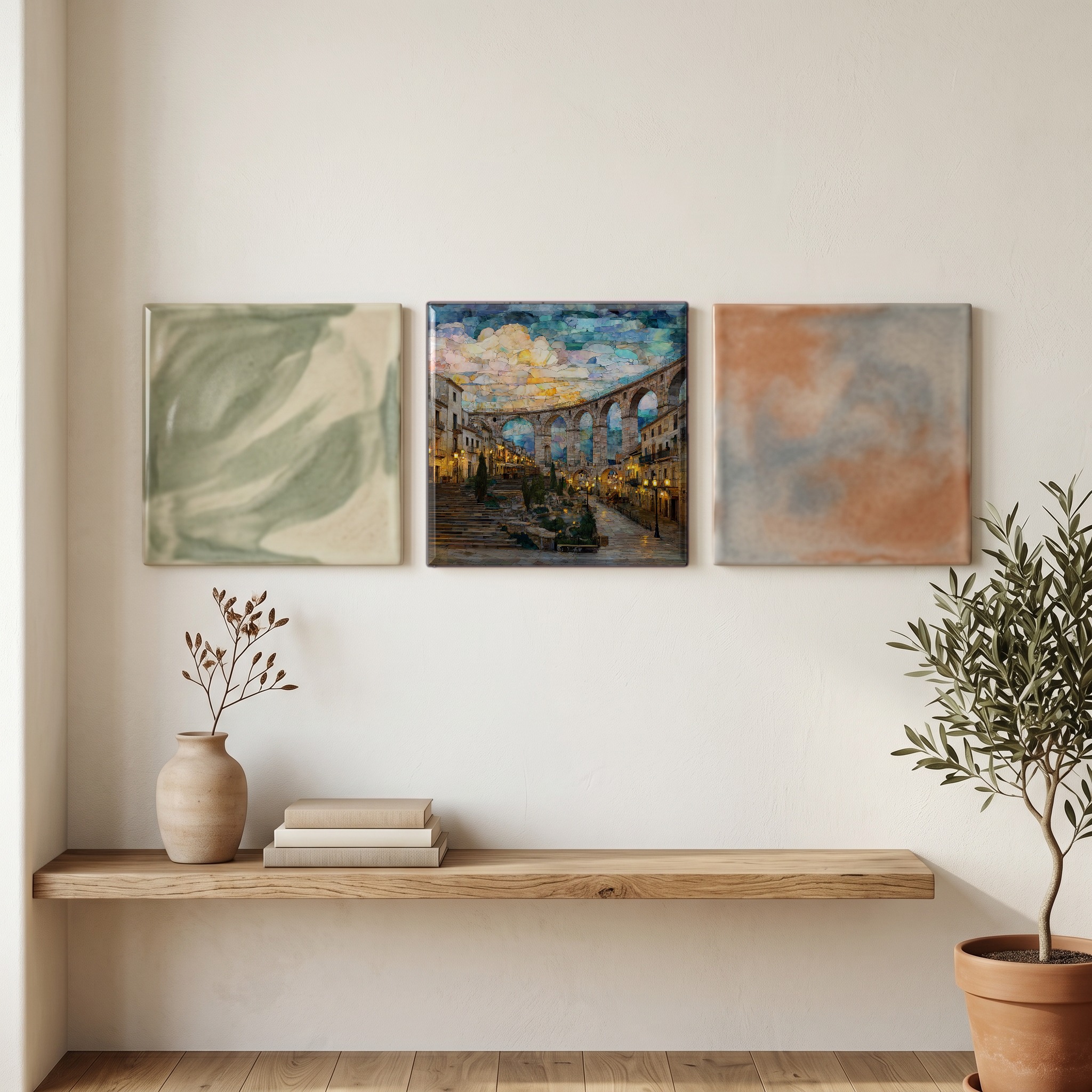
or build a grouping
or build a grouping

Three or five different vistas, hung together — a chapter of places you've been, or want to go.

about Sulmona

The place, in three passes.

A little of what's known, in case you fall down the rabbit hole — or want to go see it yourself.
the place

Sulmona sits in the Valle Peligna, a broad inland valley in the Abruzzo region of central Italy, roughly 130 kilometres east of Rome at an elevation of 405 metres. The city is held between two mountain ranges, the Maiella to the southeast and the Monte Morrone to the north, both protected within the Maiella National Park, one of the wildest in the central Apennines. The historic centre turns around Piazza Garibaldi, which the medieval aqueduct of Sulmona crosses on twenty-one pointed Gothic arches, completed in the mid-13th century under Manfred of Hohenstaufen. The city is reached by the A25 motorway from Rome, about two hours west, or by regional train from Pescara on the Adriatic, about ninety minutes east.

the year

The town's calendar turns on two long cycles. The confetti tradition (the sugared almonds Italian families distribute at weddings, christenings, and graduations) has been an industry here since the late 18th century, when Bernardino Pelino opened his confetteria in 1783. The Pelino factory still operates from the same building on Via Stazione Introdacqua, and a small museum on the second floor traces the history of the craft. The other cycle is the Madonna che Scappa in Piazza, held every Easter Sunday at noon: a statue of the Virgin in mourning is carried at a run across Piazza Garibaldi to meet the risen Christ, and as she moves her black mourning cloak falls to reveal a green dress beneath while white doves are released.

— informed by Confetti Pelino, Wikipedia
the stone

Sulmona's old centre is built largely from local limestone and a pale stone quarried from the Maiella massif. The most-photographed structure is the medieval aqueduct, but the Palazzo dell'Annunziata on Corso Ovidio is the city's masterwork, a complex begun in 1320 and built out over two centuries, its facade carrying three layers of architectural language from late Gothic through Renaissance to early Baroque. The Cattedrale di San Panfilo, on a rise at the northern edge of the old town, sits above a medieval crypt; the upper church was rebuilt after the Maiella earthquake of 1706 and stands today in essentially its 18th-century form. The pale stone reads warm against the dark green of the Morrone.

— informed by Wikipedia
where
Italy · L'Aquila, Abruzzo
elevation
405 m · 1,329 ft
position
42.0489° N · 13.9261° E
the neighborhood

What's nearby.

A handful of named places within an hour's walk or short drive. Some we've already painted; some we will.
10 km E
Pacentro
medieval village
7 km N
Pratola Peligna
town
6 km N
Hermitage of Sant'Onofrio al Morrone
hermitage
5 km SE
Introdacqua
hill village
20 km SW
Cocullo
mountain village
4 km E
Maiella National Park
national park
N
Sulmona
Pacentro
Pratola Peligna
Hermitage of Sant'Onofrio al Morrone
Introdacqua
Cocullo
Maiella National Park
common questions

What people ask.

A few questions we get about Sulmona — and about bringing the piece home.
about the place

Sulmona is a city of about 23,000 people in the Abruzzo region of central Italy, in the Province of L'Aquila. It sits in the Valle Peligna, a high inland valley about 130 kilometres east of Rome, held between the Maiella and Monte Morrone mountain ranges.

Three things. It is the birthplace of the Roman poet Ovid (43 BC), the global home of confetti, the sugared almonds Italian families give at weddings and christenings (made here continuously since 1783), and the site of the Madonna che Scappa in Piazza, the Easter Sunday procession in which a statue of Mary races across the main square.

A centuries-old Easter Sunday ritual held in Sulmona's Piazza Garibaldi at noon. A statue of the Virgin in mourning is carried at a run across the square to meet a statue of the risen Christ. As she moves, her black mourning cloak falls to reveal a green dress beneath, and white doves are released.

Sulmona. Publius Ovidius Naso was born here in 43 BC and identified with the town throughout his writing; his line Sulmo mihi patria est ('Sulmona is my homeland') is inscribed across the city as the initials SMPE. A statue of Ovid stands in the square that bears his name.

By car, take the A24 east from Rome to the A25 and exit at Sulmona, about a two-hour drive. By train, regional service from Roma Termini via Avezzano takes around three hours. From Pescara on the Adriatic, regional trains run inland through the Peligna valley in about ninety minutes.

A medieval aqueduct of twenty-one pointed Gothic arches running along the eastern edge of Piazza Garibaldi. Built in the mid-13th century under Manfred of Hohenstaufen, it carried water from the Gizio river into the centre of Sulmona and is now the city's most photographed structure.

Late spring through early autumn for warm weather and open mountain passes; Easter Sunday for the Madonna che Scappa; late July for the Giostra Cavalleresca, a costumed knights' tournament held in Piazza Garibaldi. Winters are cold and quiet, with snow on the surrounding ranges.

about the piece in your home

It often is. Sulmona carries a particular weight for Abruzzese families: the confetti, Ovid, the Easter procession. The city is rarely depicted at this scale in giftable art. A Coaster Set, Small, or Medium with a handwritten note from the studio travels well to an aunt or a grandmother.

The artwork pulls jewel-tone greens, warm golds, and stained-glass blues, with a quiet pink in the stone. It sits naturally in a warm Mediterranean room, in a Tuscan-leaning or Italian-modern interior, and in jewel-tone maximalist rooms where it can anchor a wall against deep paint.

Italian-modern in 2026 leans toward warm neutrals, terracotta, olive, and stone, a quiet break from the cooler Scandinavian look that dominated the 2010s. Sulmona's palette of pale pink limestone, dusty green, and gold light sits inside that shift and reads as serious rather than decorative.

Above a standard three-seat sofa, the Large reads at the right scale on its own; for a longer wall, a four-tile Mural or a nine-tile Mural carries more weight. Above a console table, a Medium or two Smalls flanking a lamp is the most-asked-for arrangement from the studio.

Yes, in the Dura Satin or Matte finish. Glossy is fine for a wall away from steam and splash. The colour lives inside the ceramic surface, not on top, so heat and humidity do not affect it. Backsplashes and shower walls work; a direct waterline edge does not.

A soft microfibre cloth and water. For stubborn marks, a small drop of mild dish soap on the cloth. Avoid abrasive pads and bleach-based cleaners. The finish is durable, but the colour deserves a careful hand.

Yes. Every WenderVista tile is painted in-house by Reid Wender in our Knoxville studio, in our distinctive stained-glass, alcohol-ink, and oil visual language, then slowly infused into the ceramic surface under high heat and pressure. We do not license artwork from other studios.

if this one stayed with you

A few you might also love.

Hand-picked by the eye that found Sorapis. Same air, same kind of quiet.
— a collection

The Italian Dolomites,
painted slow.

The valleys between Cortina and Val Gardena, the tarns you walk an hour to see, the towers that turn the colour of a banked fire just before dark. Wander the collection by valley, by season, or follow the path Reid walked.

Tre Cime
Braies
Misurina
Sorapis
Cinque Torri
Sassolungo
Marmolada