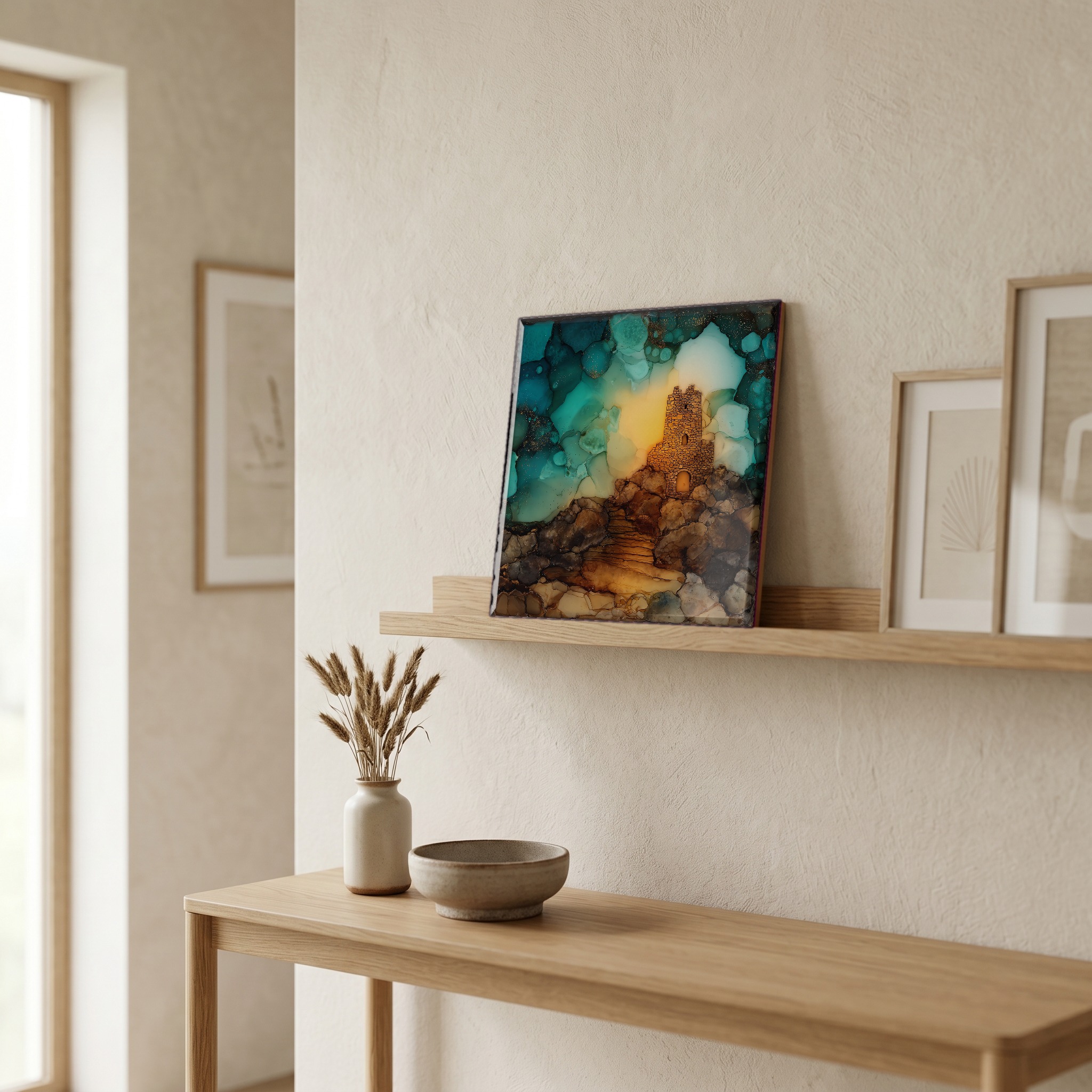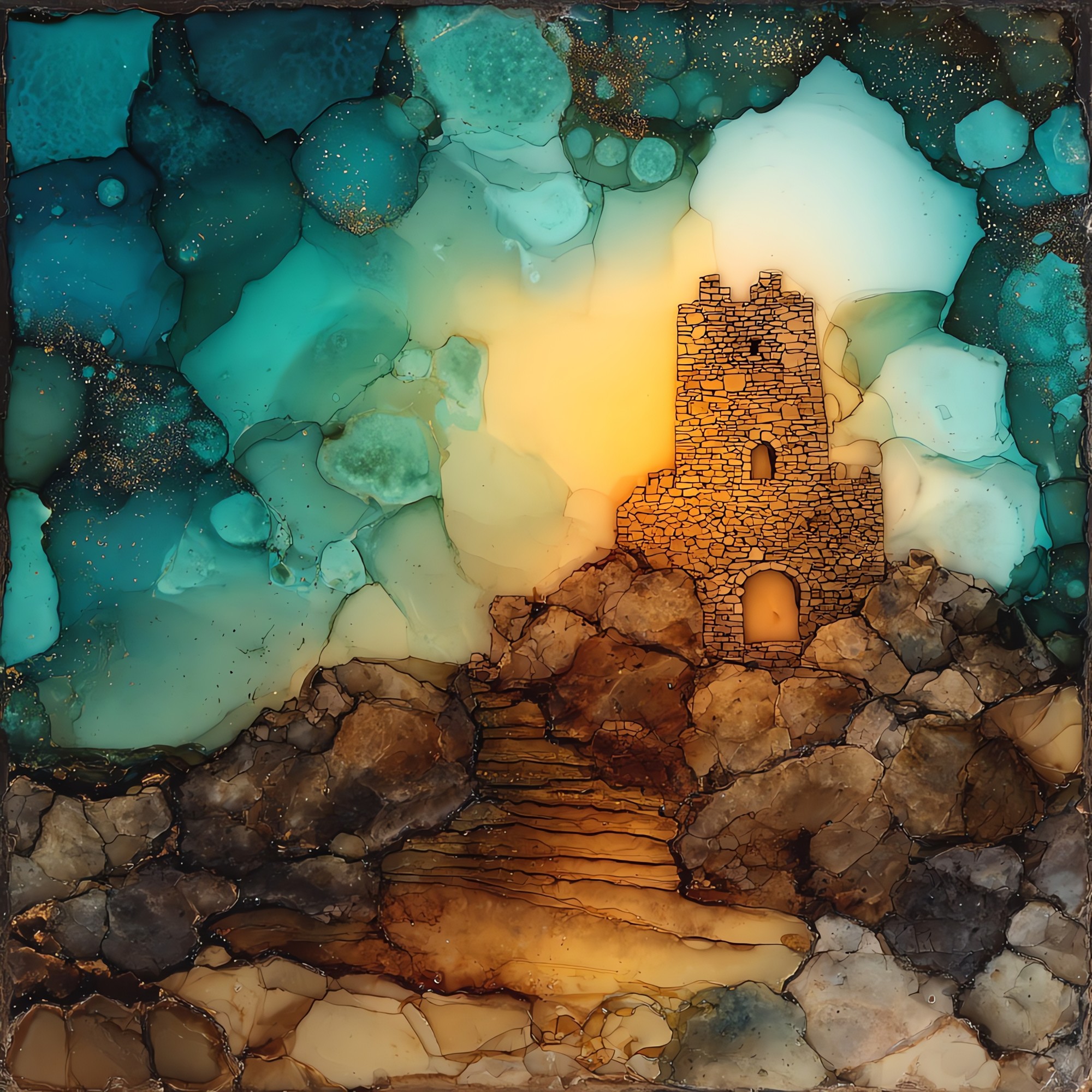
Wender·Vista
Su Nuraxi Nuraghe
shown on ceramic, 12-inch tileItaly
in the Marmilla hills of southern Sardinia

Su Nuraxi Nuraghe

— stone that stood when the world was still bronze.

Where it lives

Not only on a wall.

A small tile on the nightstand catching the morning. A larger one above the fire. Yours, wherever you spend the slow hours.
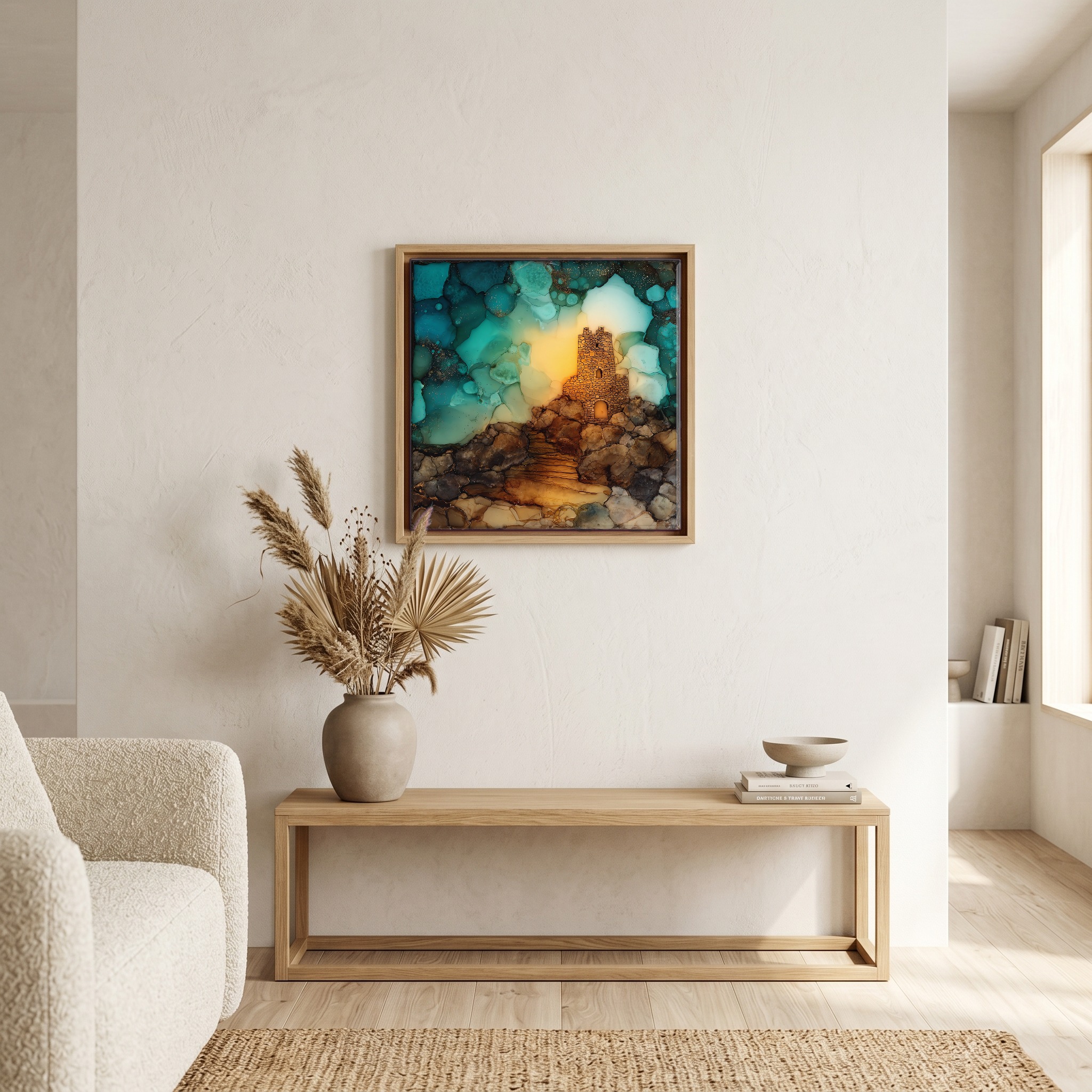
Above the bench, in a warm oak surround.
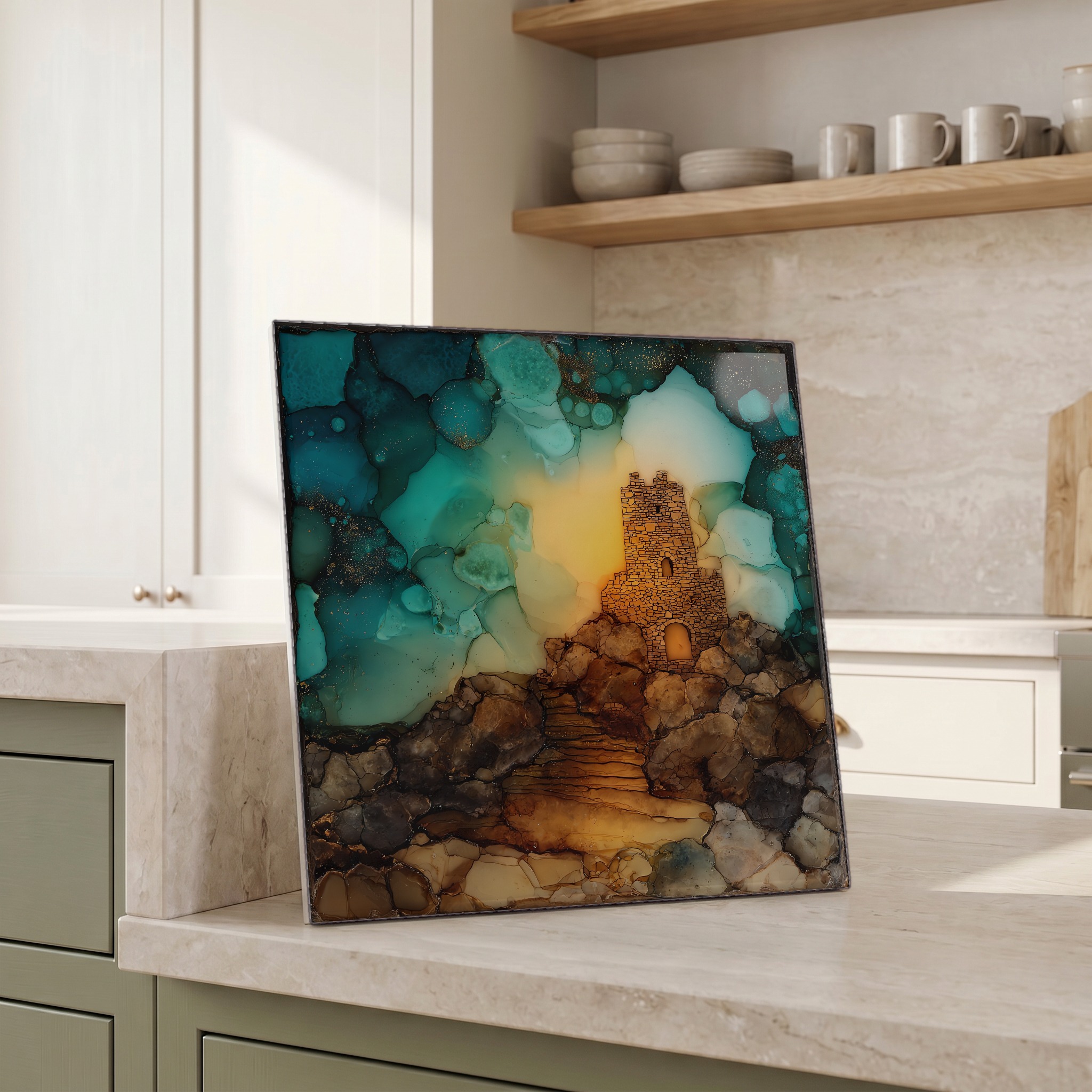
Beside the kettle, propped on the counter.
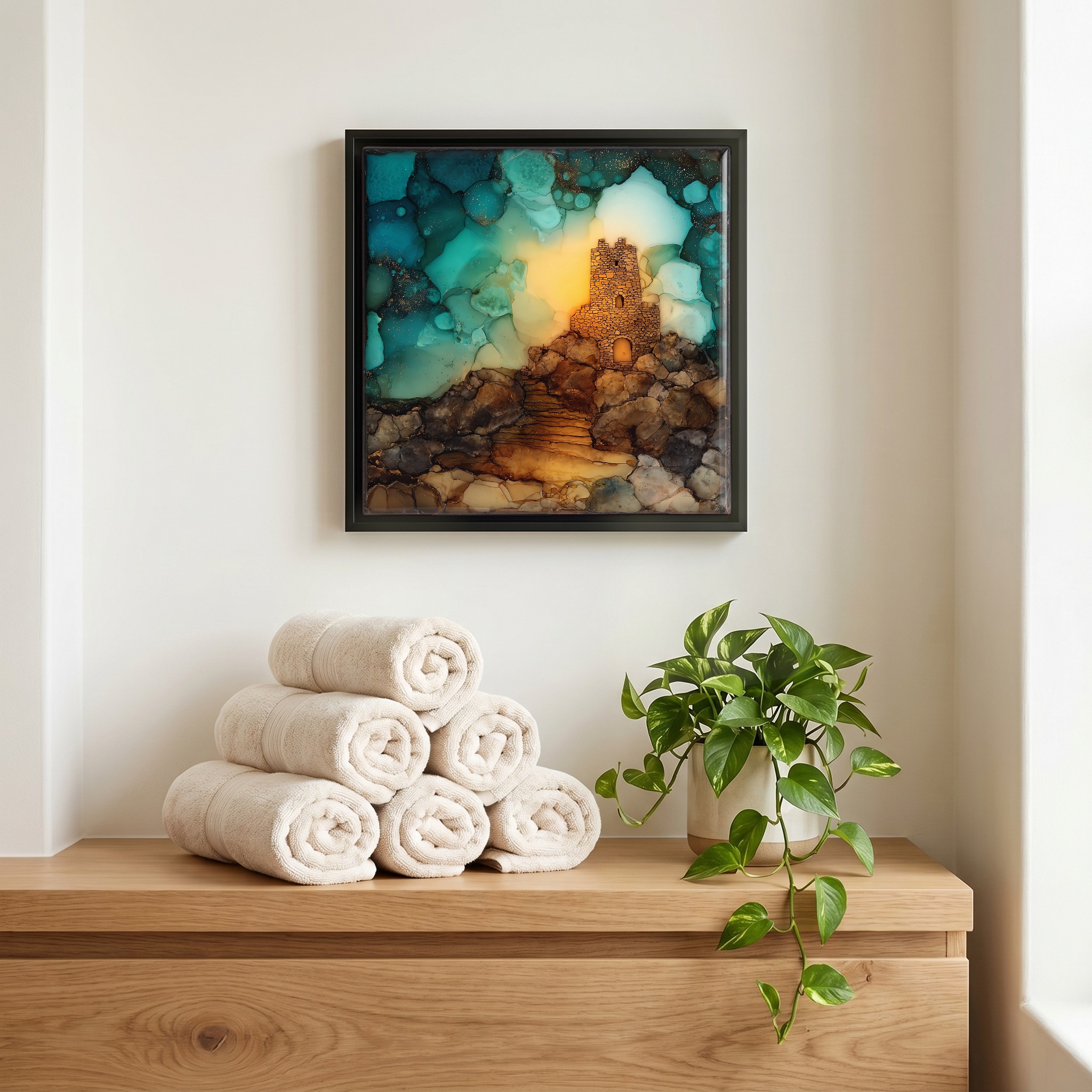
Above the linens, in a slim black surround.
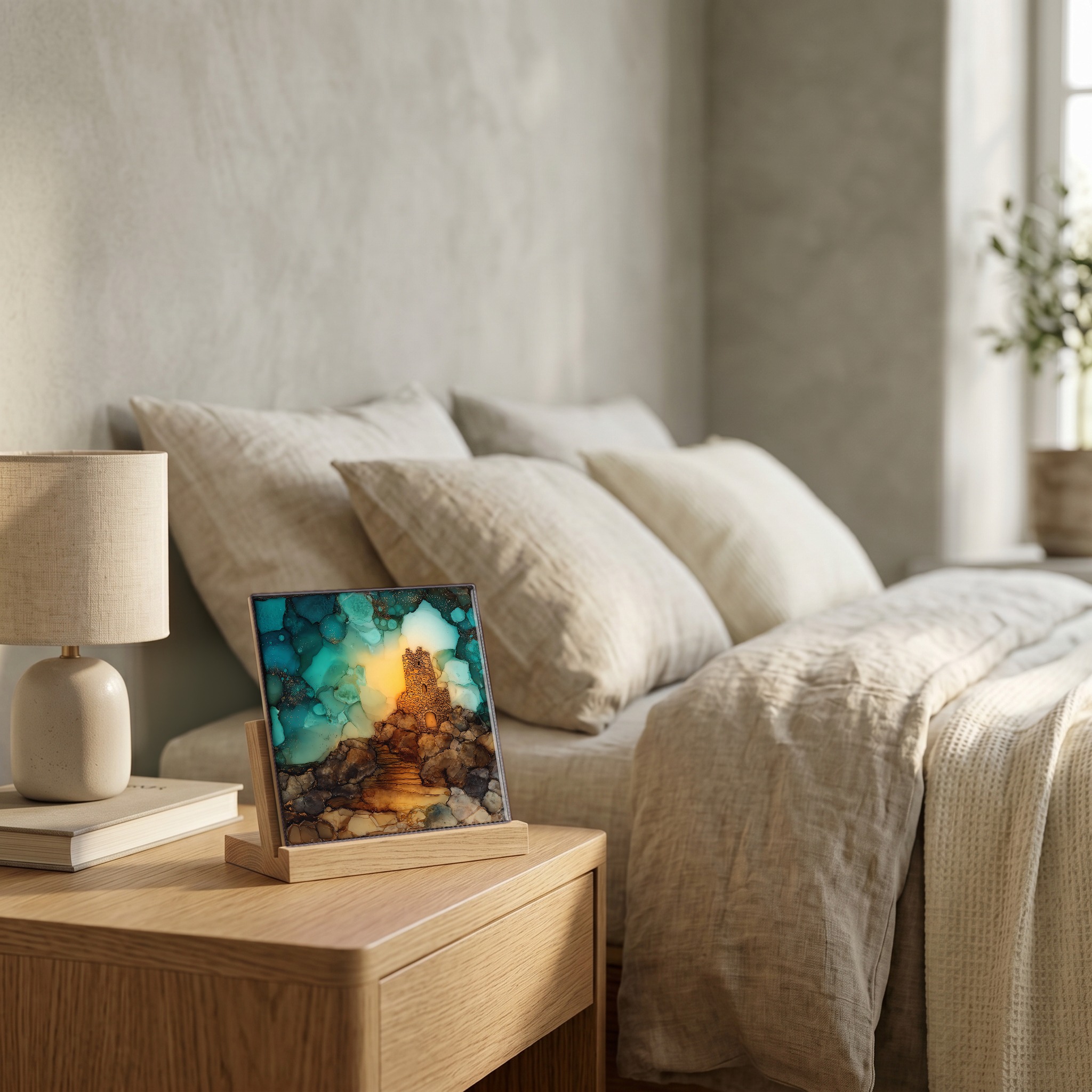
On the nightstand, on a light oak stand.
On a picture ledge, where the light comes in.
a note from the studio

A basalt keep rising from a meadow in the Marmilla, in southern Sardinia. The central tower was raised in the Middle Bronze Age, older than the Iliad, laid up in cyclopean blocks before iron was even an idea on the island. Four outer towers fold around it, and a stone village fans out from the curtain wall, hundreds of round huts where families lived alongside the keep. Giovanni Lilliu first excavated it in 1950; UNESCO listed it in 1997. The Sardinians who built it left no writing we can read, only the towers, only the doorways carved in the dark.
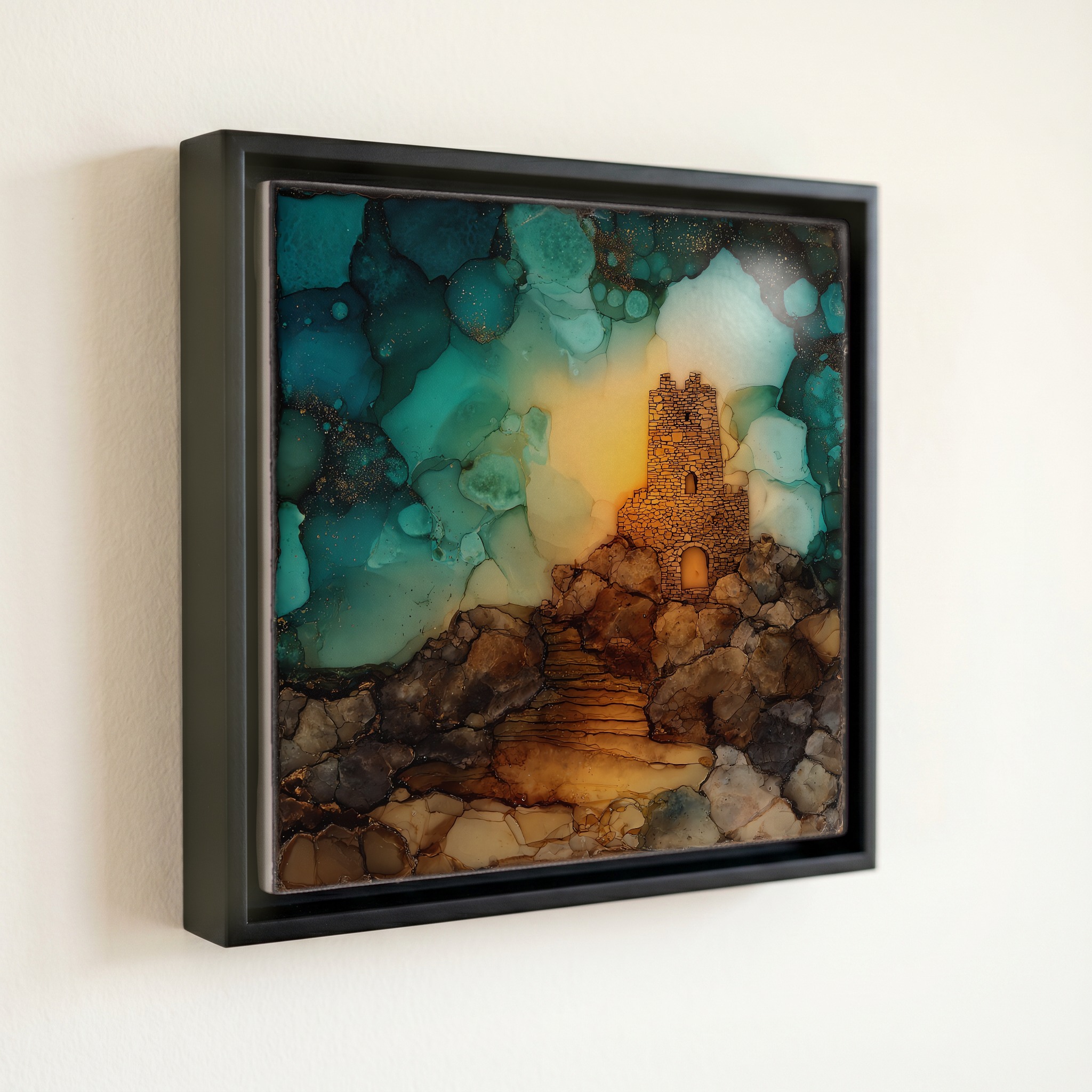
from the studio
shown in a slim black floating frame · 6 × 6 in
— bring it home

Su Nuraxi Nuraghe, on ceramic.

Each tile is finished by hand in our Knoxville studio. Artwork is slowly infused into the ceramic surface under high heat and pressure, and rests beneath a thin glossy finish. The colour lives in the surface, not on top of it.

What kind of piece?
One tile — square or rectangle.
How big?
the popular one — counter, shelf, nightstand
6 × 6 in · 15 cm · 1.6 lb
Surface finish
A clear glossy finish — the artwork reads as if under resin. Ideal for show-pieces and framed wall art.
How it sits
A hidden cleat — sits ¼″ proud of the wall.
$58
Hand-finished and shipped from our studio at the foot of the Smokies. On your wall in about ten days.
size
6 × 6 in
15 cm
weighs
1.6 lb
solid in the hand
surface
ceramic, hand-finished
art rests beneath a thin glossy finish
from
Knoxville, TN
our family studio, at the foot of the Smokies
— start a Coaster Set

Pick any four 4-inch tiles — National Parks you've been to, a Smokies set, the four seasons of one place. $ for a set of , cork-backed, ready to live on the table.
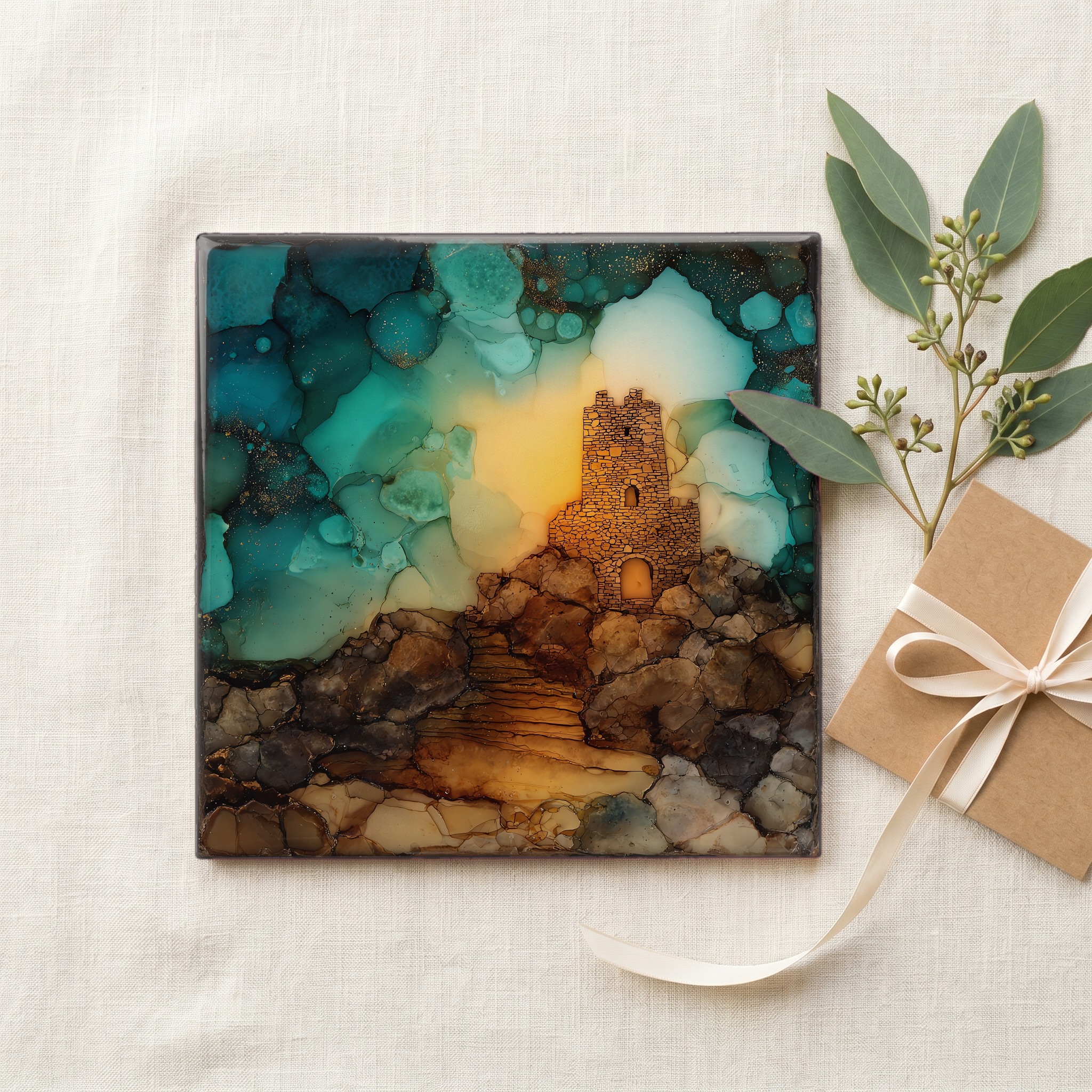
comes gift-ready
comes gift-ready

Each tile ships in a kraft box, tied with cream ribbon, with a handwritten note from the studio if you'd like to add one.
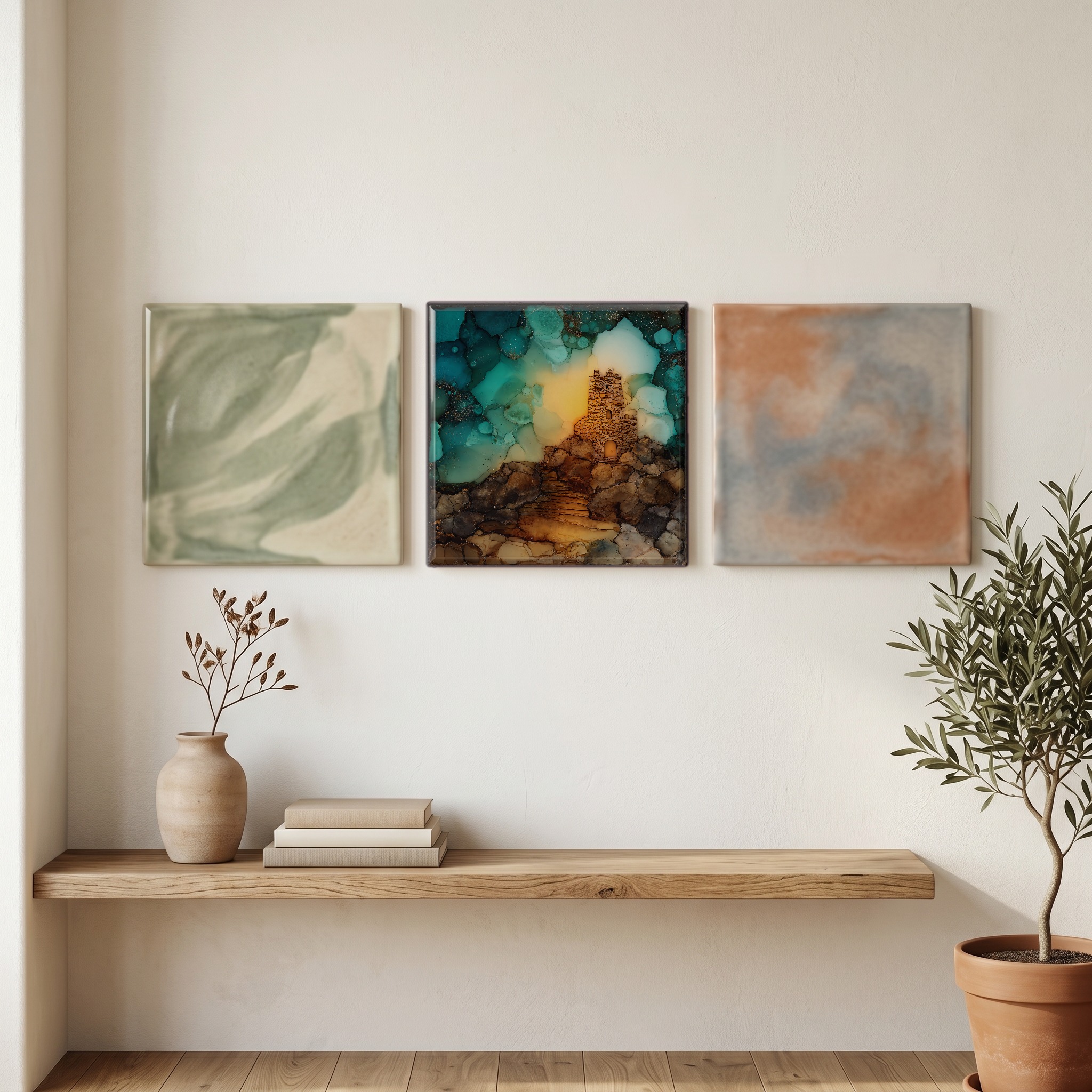
or build a grouping
or build a grouping

Three or five different vistas, hung together — a chapter of places you've been, or want to go.

about Su Nuraxi Nuraghe

The place, in three passes.

A little of what's known, in case you fall down the rabbit hole — or want to go see it yourself.
the place

Su Nuraxi di Barumini sits in the Marmilla, the small-hilled middle of southern Sardinia, in the province of South Sardinia about 60 kilometers north of Cagliari. The complex is anchored by a central nuragic tower of dark basalt blocks, dating to the Middle Bronze Age around the 16th century BCE. Around the keep a quadrilobed bastion of four outer towers was added in later phases, ringed by a curtain wall with seven more towers and surrounded by a Bronze Age village of roughly 200 round-hut foundations. UNESCO inscribed it on the World Heritage List in 1997 as the most representative of more than 7,000 nuraghi scattered across Sardinia.

the stone

The keep is built of dark basalt, quarried from the volcanic plateau of the Giara di Gesturi a few kilometers north and stacked in the dry cyclopean technique that defines Sardinian nuraghi. The central tower originally rose to roughly 18 or 19 meters in three stacked tholos chambers; its surviving courses still stand close to 15 meters. The outer bastion towers, added in later Bronze Age phases, use the same stone in smaller blocks. The whole complex was buried for centuries beneath a low artificial hill the islanders called Su Nuraxi, the nuraghe, until the archaeologist Giovanni Lilliu began removing the soil in 1950 and freed the stone again.

the visit

The site is open year-round and reached through the visitor center in Barumini, where guided tours leave roughly hourly and run about 75 minutes. Tickets have run around €15, with combined options that include the Casa Zapata museum in the village. The interior of the keep is climbed by the original Bronze Age staircase, narrow and sometimes wet, so closed shoes are advised. The site lies about an hour and fifteen minutes by car from Cagliari Elmas Airport along the SS131; public transit is sparse. Early-morning slots in spring catch the basalt before the inland heat of the Campidano plain sets in.

— informed by Fondazione Barumini
where
Italy · Barumini, South Sardinia
position
39.7057° N · 8.9908° E
the neighborhood

What's nearby.

A handful of named places within an hour's walk or short drive. Some we've already painted; some we will.
5 km N
Giara di Gesturi
basalt plateau
4 km SW
Las Plassas
medieval castle hill
1 km E
Casa Zapata
Aragonese house museum
60 km S
Cagliari
regional capital
N
Su Nuraxi Nuraghe
Giara di Gesturi
Las Plassas
Casa Zapata
Cagliari
common questions

What people ask.

A few questions we get about Su Nuraxi Nuraghe — and about bringing the piece home.
about the place

Su Nuraxi is a Bronze Age nuraghe complex in the Marmilla region of southern Sardinia, built around the 16th century BCE. The central basalt keep, four-lobed bastion, curtain wall, and surrounding village together form the most complete example of nuragic architecture on the island.

UNESCO inscribed Su Nuraxi in 1997 as the finest and most representative of more than 7,000 nuraghi in Sardinia. The complex preserves every phase of nuragic construction, from a single central tower to the late Bronze Age fortified village around it.

The Nuragic civilization, an indigenous Bronze Age people of Sardinia, raised the towers between roughly 1800 and 730 BCE. They left no decipherable writing, so what is known of them comes from the stones themselves and from later Phoenician, Punic, and Roman contact.

The site is on the edge of the village of Barumini, in the province of South Sardinia, about 60 kilometers north of Cagliari. It sits on the Marmilla plain near the basalt plateau of the Giara di Gesturi.

The keep originally rose to roughly 18 or 19 meters in three stacked tholos chambers. Its surviving stonework still stands close to 15 meters, climbed inside by the original Bronze Age staircase.

The Sardinian archaeologist Giovanni Lilliu first excavated the buried complex in 1950. His work continued through that decade and the early 1960s, and the site visible today is essentially the result of his work. Lilliu's writings remain the standard reference for nuragic archaeology.

Yes. Guided tours leave from the visitor center in Barumini and climb the original staircase into the central tower's chambers. Tours run year-round and last about 75 minutes; closed shoes are advised because some of the stairs are narrow and damp.

about the piece in your home

It's been a meaningful gift for many of our customers with ties to Sardinia. Su Nuraxi is the island's most recognized monument, a piece of identity older than Rome itself. A Coaster or Small with a handwritten note from the studio carries well on a kitchen counter or a desk.

The dark basalt tones and stone-set palette settle into Mediterranean-modern, warm minimalist, and earth-tone Maximalist rooms. The piece reads especially well against limewashed walls, terra-cotta floors, or natural linen, anywhere stone and plaster are already part of the room.

Yes. The warm-mineral trend, clay reds and basalt greys and raw plaster, pairs cleanly with the keep's stonework. The Medium or Large works as the anchor piece in a room already moving in that direction.

For a standard three-seat sofa or a 60-inch console, a single Large fills the visual weight without crowding. For wider walls, a four-tile Mural gives the keep room to breathe; a nine-tile Mural turns the whole wall into the complex seen from the plain.

Yes, with the Dura Satin or Matte finish. Both are scratch-resistant and handle moisture well, suited to backsplashes, shower surrounds, and powder-room walls. The Glossy finish is reserved for framed pieces away from steam and splash.

A microfibre cloth and water is all the surface needs. The colour lives in the ceramic, so there is no print layer to wear off. Avoid abrasive pads and ammonia cleaners; neither is necessary and both shorten the life of the glossy finish.

Yes. Every WenderVista piece is painted by Reid Wender at the studio in Knoxville, Tennessee, and hand-finished in-house. We don't license images, and the Su Nuraxi piece is not available anywhere else.

if this one stayed with you

A few you might also love.

Hand-picked by the eye that found Sorapis. Same air, same kind of quiet.
— a collection

The Italian Dolomites,
painted slow.

The valleys between Cortina and Val Gardena, the tarns you walk an hour to see, the towers that turn the colour of a banked fire just before dark. Wander the collection by valley, by season, or follow the path Reid walked.

Tre Cime
Braies
Misurina
Sorapis
Cinque Torri
Sassolungo
Marmolada