Wender·Vista
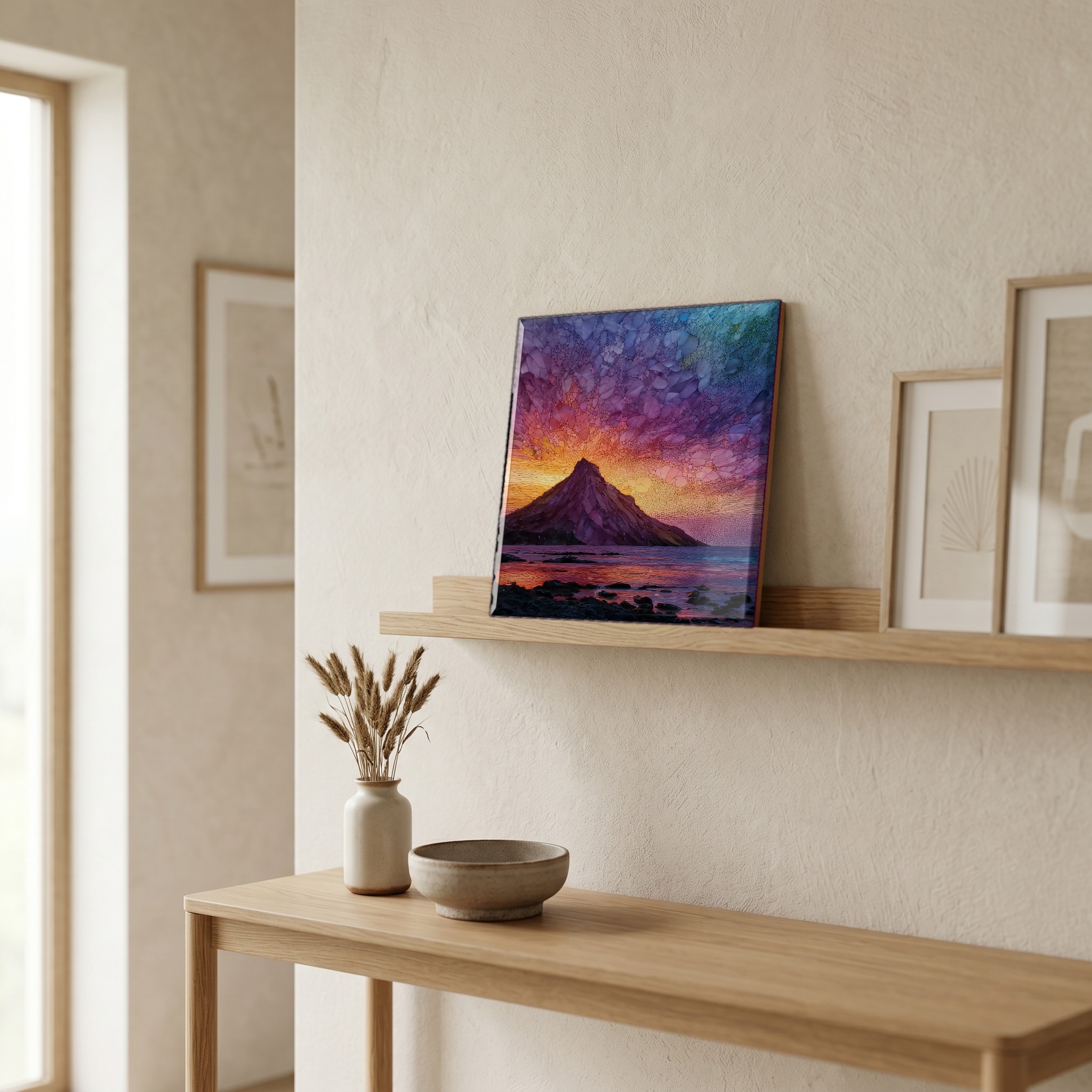
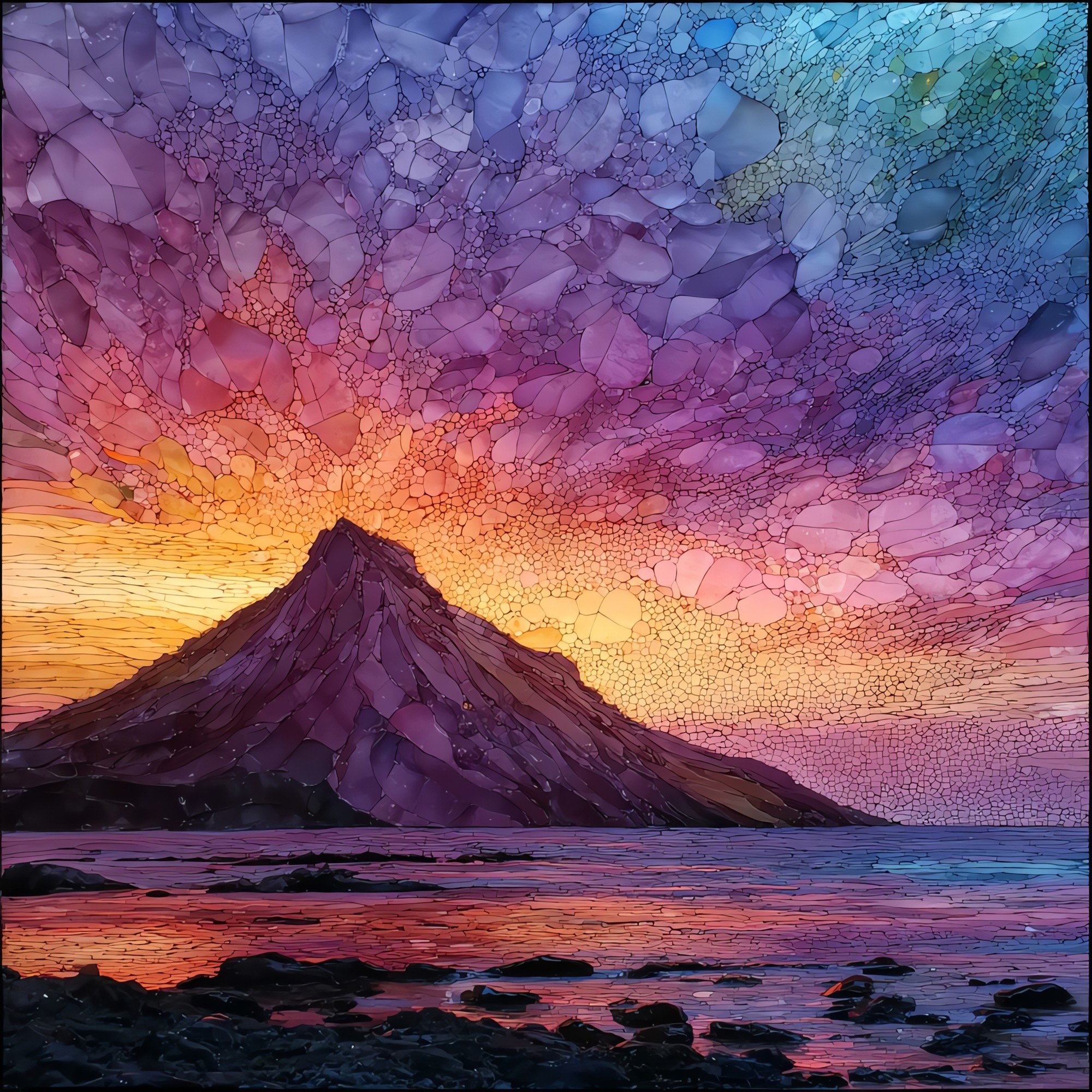
Stromboli
shown on ceramic, 12-inch tileItaly
in the Aeolians, north of Sicily

Stromboli

the fire that keeps its own time.

Where it lives

Not only on a wall.

A small tile on the nightstand catching the morning. A larger one above the fire. Yours, wherever you spend the slow hours.
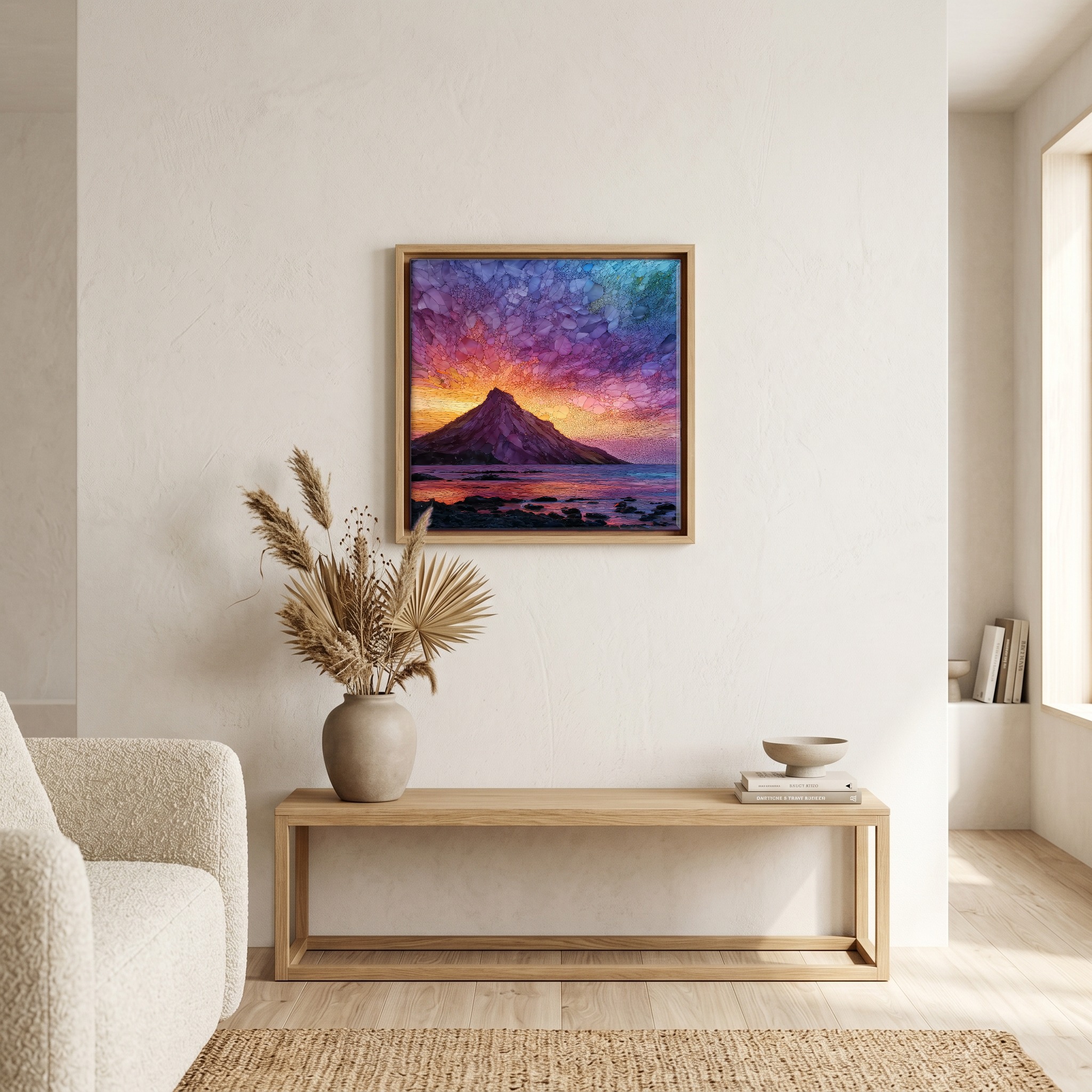
Above the bench, in a warm oak surround.
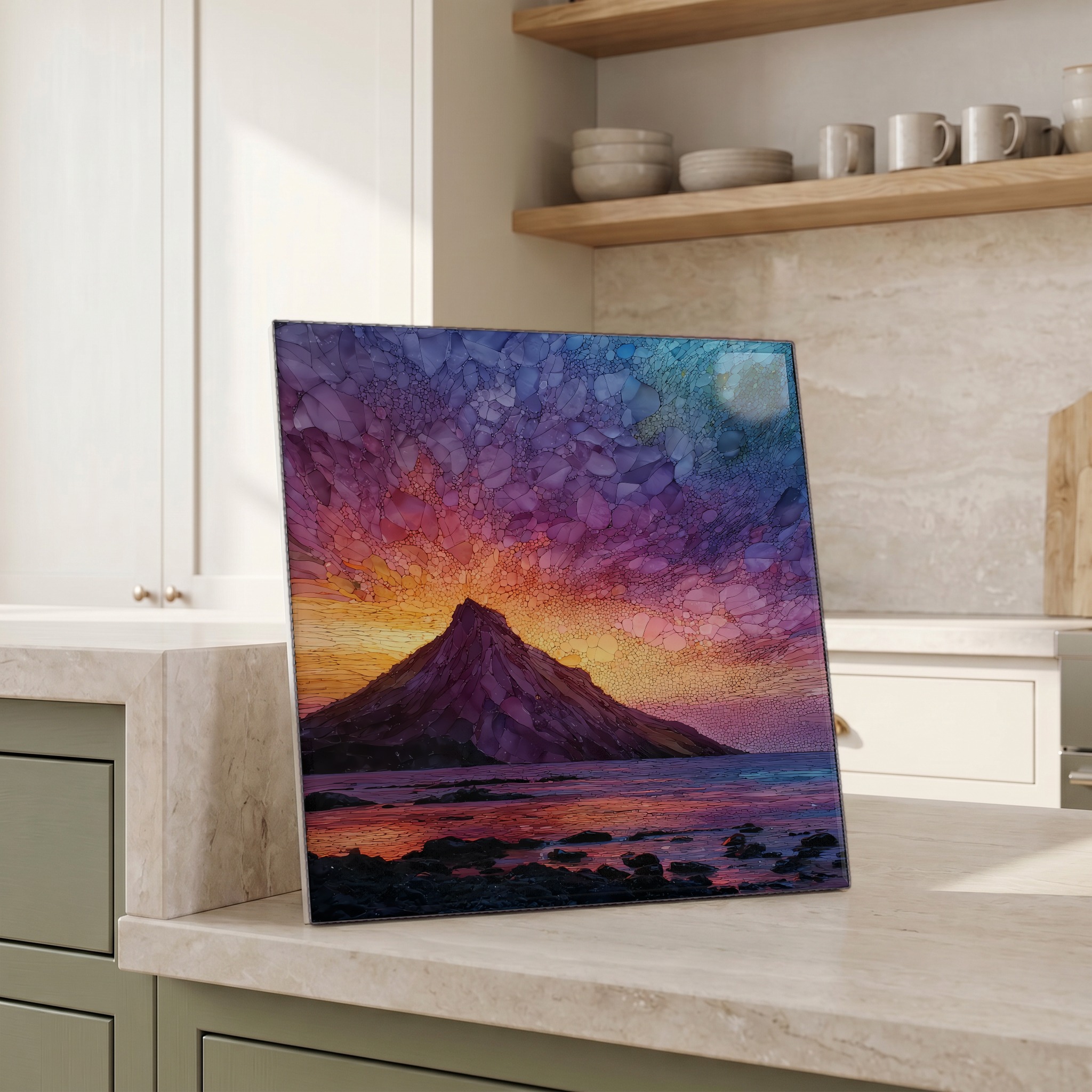
Beside the kettle, propped on the counter.
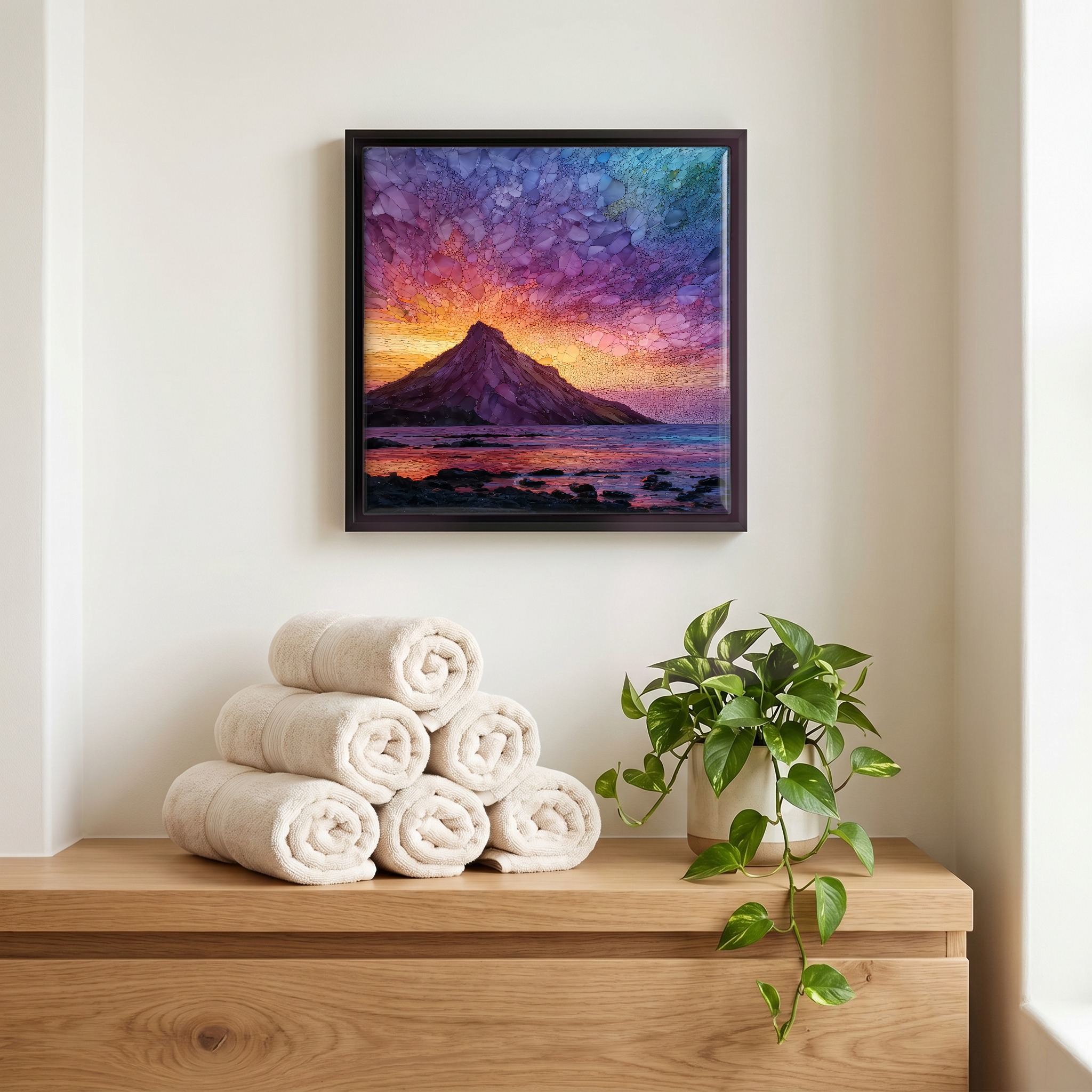
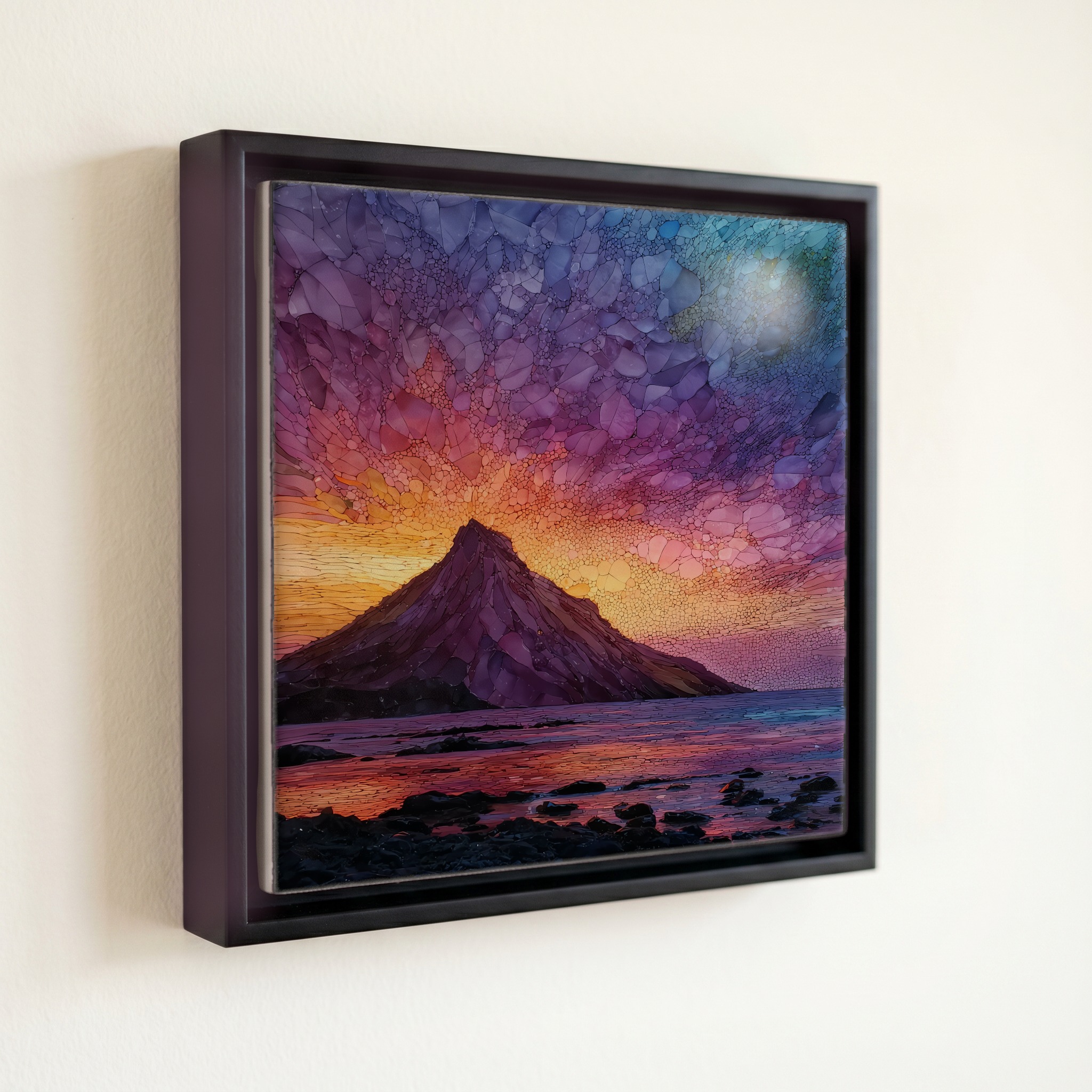
Above the linens, in a slim black surround.
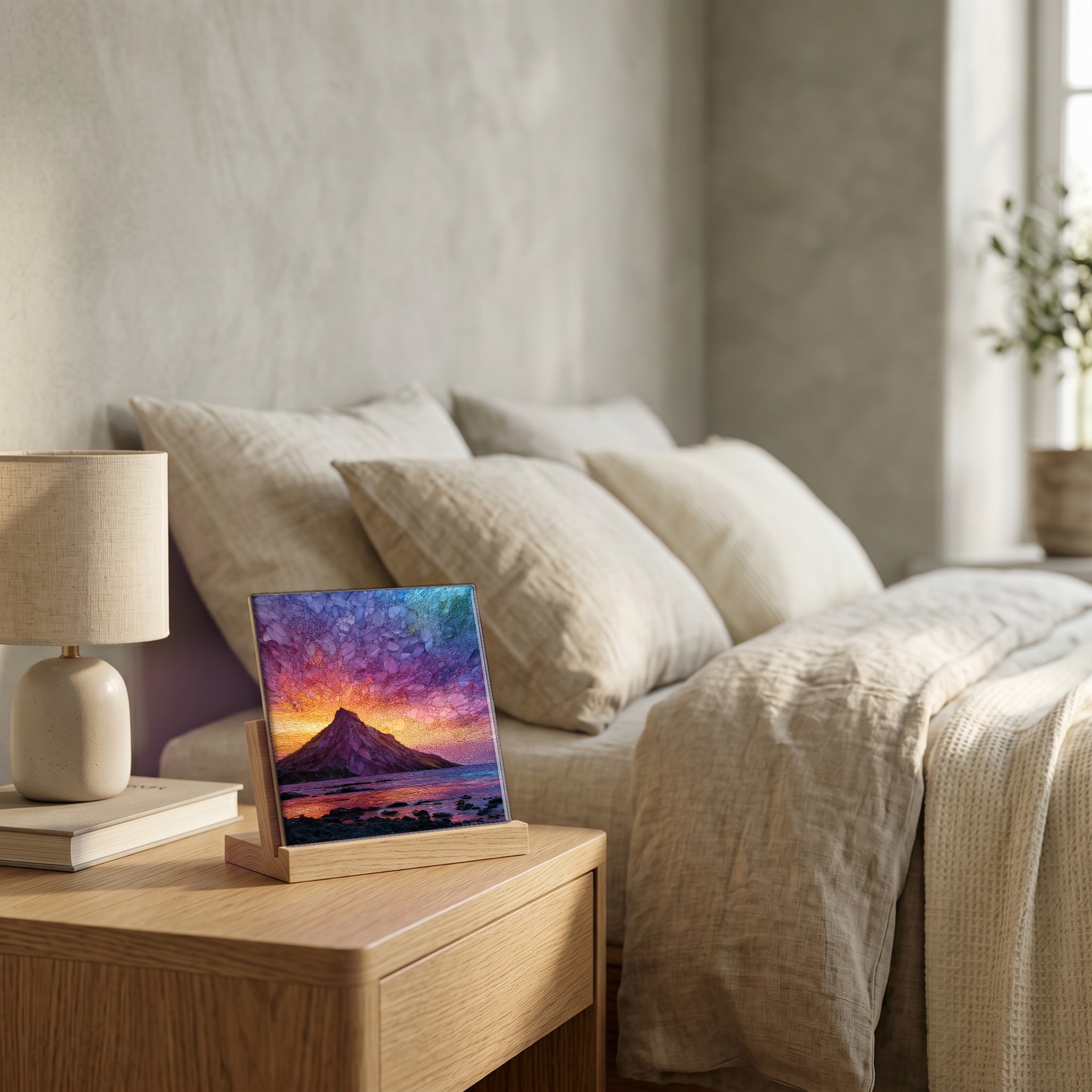
On the nightstand, on a light oak stand.
On a picture ledge, where the light comes in.
a note from the studio

An island in the Aeolians where the volcano has been working for at least three thousand years. From a boat at night you can see the glow on the Sciara del Fuoco, the slope of fire that runs down to the sea, and hear the cough of the next eruption arrive on schedule. The lighthouse of the Mediterranean, sailors called it. Two villages, black sand, no road between them. The boats from Milazzo come in the morning.
from the studio
shown in a slim black floating frame · 6 × 6 in
— bring it home

Stromboli, on ceramic.

Each tile is finished by hand in our Knoxville studio. Artwork is slowly infused into the ceramic surface under high heat and pressure, and rests beneath a thin glossy finish. The colour lives in the surface, not on top of it.

What kind of piece?
One tile — square or rectangle.
How big?
the popular one — counter, shelf, nightstand
6 × 6 in · 15 cm · 1.6 lb
Surface finish
A clear glossy finish — the artwork reads as if under resin. Ideal for show-pieces and framed wall art.
How it sits
A hidden cleat — sits ¼″ proud of the wall.
$58
Hand-finished and shipped from our studio at the foot of the Smokies. On your wall in about ten days.
size
6 × 6 in
15 cm
weighs
1.6 lb
solid in the hand
surface
ceramic, hand-finished
art rests beneath a thin glossy finish
from
Knoxville, TN
our family studio, at the foot of the Smokies
— start a Coaster Set

Pick any four 4-inch tiles — National Parks you've been to, a Smokies set, the four seasons of one place. $ for a set of , cork-backed, ready to live on the table.
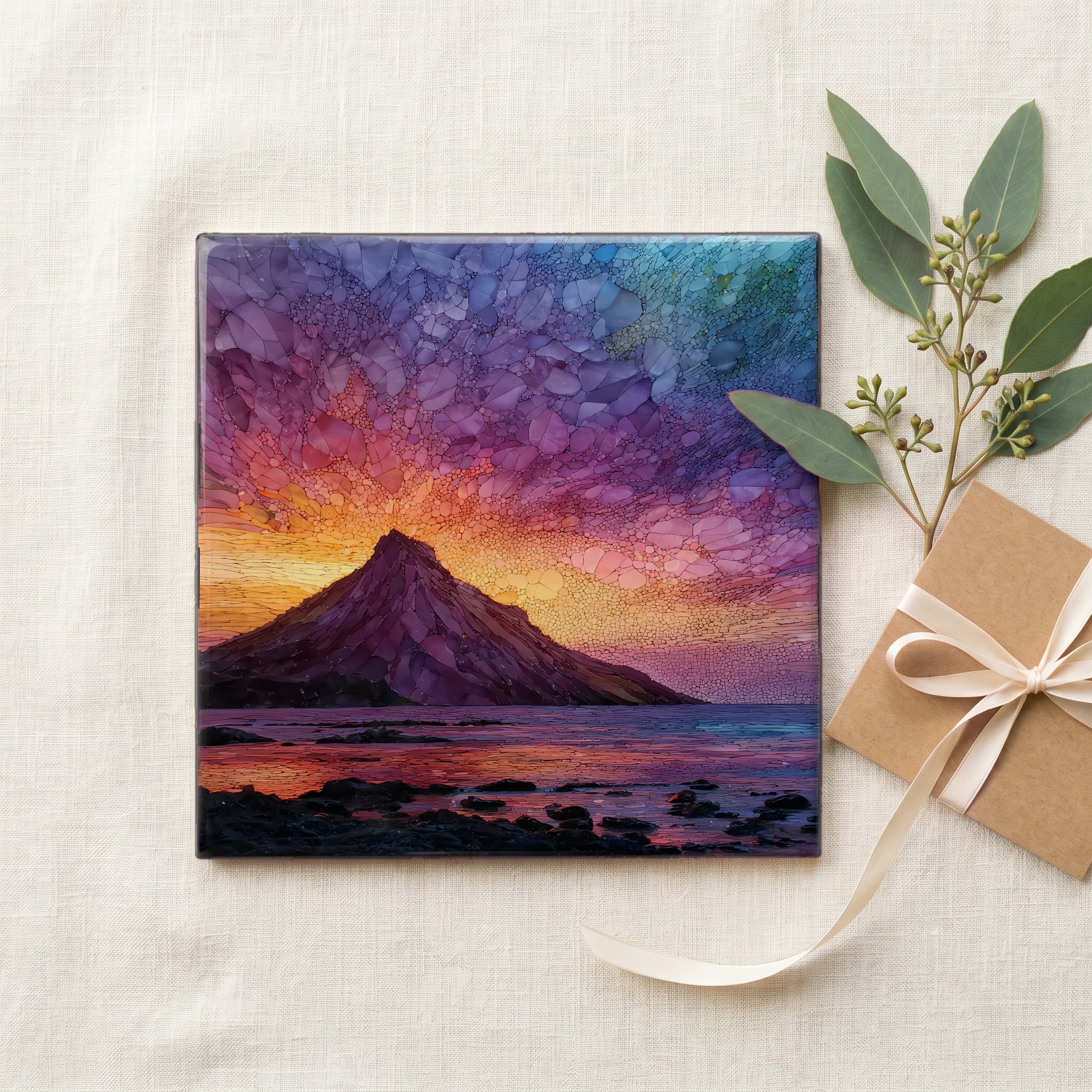
comes gift-ready
comes gift-ready

Each tile ships in a kraft box, tied with cream ribbon, with a handwritten note from the studio if you'd like to add one.
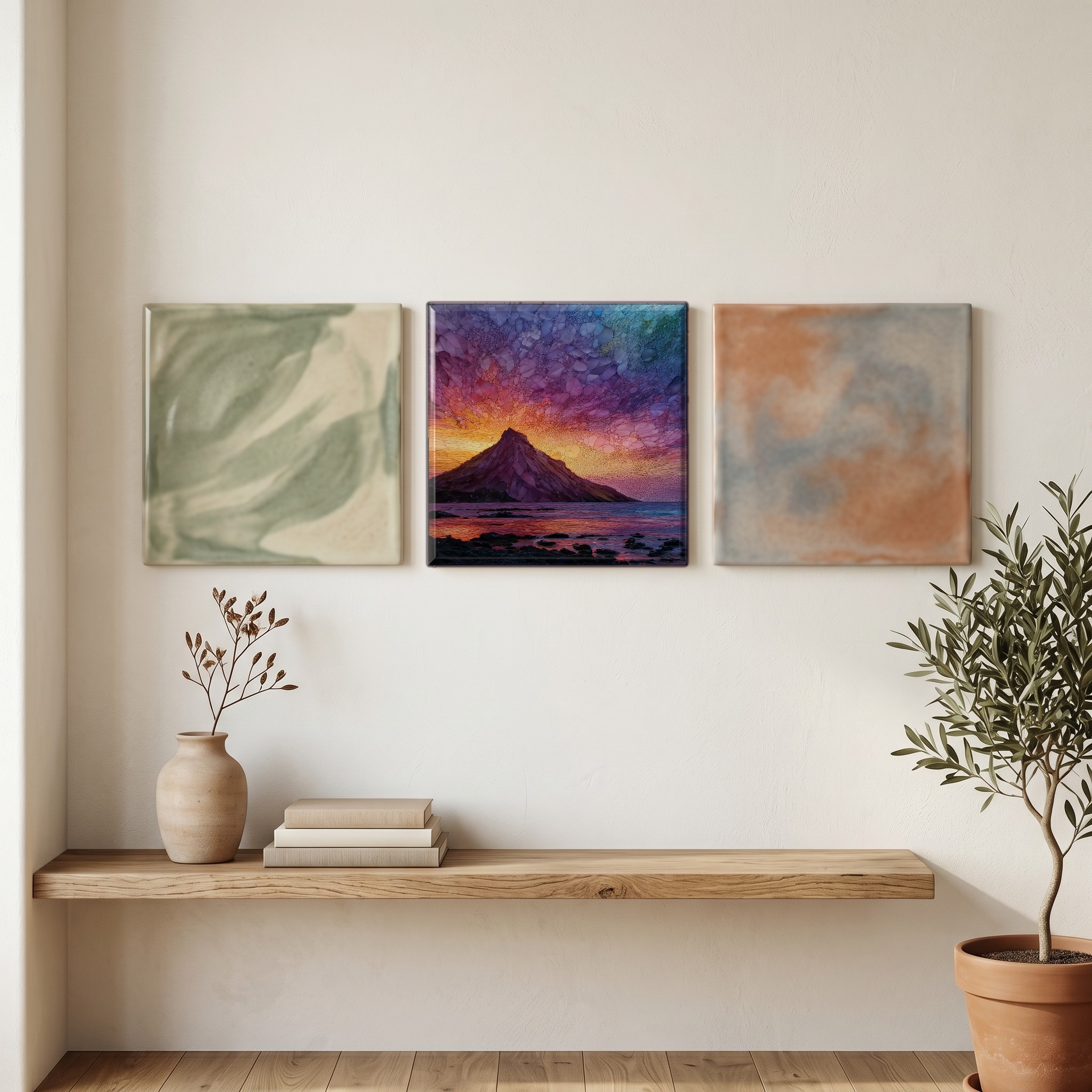
or build a grouping
or build a grouping

Three or five different vistas, hung together — a chapter of places you've been, or want to go.

about Stromboli

The place, in three passes.

A little of what's known, in case you fall down the rabbit hole — or want to go see it yourself.
the place

Stromboli is the northernmost of the seven Aeolian Islands, a UNESCO World Heritage site off the north coast of Sicily in the Tyrrhenian Sea. The volcano rises to 924 meters above sea level, and another two thousand meters from the seafloor, making it a tall mountain that happens to break the surface. The island falls under the Metropolitan City of Messina, administered with the rest of the Aeolians. Two settlements: Stromboli town (the parish of San Vincenzo) on the northeast and Ginostra, with roughly 30 winter residents, on the southwest. There is no road between them. Hydrofoils run from Milazzo, Naples, and Reggio Calabria, with the longest crossings from the mainland taking about six hours.

the light

The volcano has been in near-continuous eruption for at least two to three thousand years, the longest documented run of activity of any in the world. The pattern is its name: Strombolian eruptions are short, regular bursts of incandescent material, once every ten to twenty minutes when the volcano is on its usual cycle. Sailors in antiquity called the island the lighthouse of the Mediterranean for the glow visible from far at sea. At night, lava and pyroclastic material spill down the Sciara del Fuoco, a horseshoe-shaped scar on the northwest flank that meets the water in a steam plume. The standard photograph is from a boat positioned offshore.

the visit

Since the 2019 eruption that killed a hiker, climbing above 290 meters has required a certified mountain guide; the summit at 924 meters is closed to independent hikers and has been intermittently restricted entirely during periods of heightened activity. Guided hikes typically depart in the late afternoon so the descent crosses the upper terraces at sunset and finishes after dark. Boats run from Milazzo on the Sicilian coast in roughly two and a half hours by hydrofoil; from Naples, the crossing is closer to six hours. Most visitors stay a single night and watch from the Punta dell'Osservatorio, a viewpoint about a thirty-minute walk above the village, or from a chartered boat off the northwest shore.

— informed by Wikipedia: Stromboli
where
Italy · Aeolian Islands, Metropolitan City of Messina, Sicily
within
Aeolian Islands UNESCO World Heritage Site
elevation
924 m · 3,031 ft
position
38.7890° N · 15.2130° E
the neighborhood

What's nearby.

A handful of named places within an hour's walk or short drive. Some we've already painted; some we will.
2 km NE
Strombolicchio
basalt sea stack with lighthouse
3 km SW
Ginostra
village on the southwest of the island
20 km SW
Panarea
Aeolian island
N
Stromboli
Strombolicchio
Ginostra
Panarea
common questions

What people ask.

A few questions we get about Stromboli — and about bringing the piece home.
about the place

Stromboli is the northernmost of the Aeolian Islands, a small archipelago in the Tyrrhenian Sea off the north coast of Sicily. Administratively it belongs to the Metropolitan City of Messina. The island is reached by ferry or hydrofoil from Milazzo, Naples, or Reggio Calabria.

Stromboli has been in near-continuous low-intensity eruption for at least two to three thousand years. The volcano is fed by magma that ascends along an open conduit, releasing gas in regular small bursts every ten to twenty minutes, the behaviour that gives Strombolian eruptions their name.

Climbing above 290 meters has required a certified mountain guide since the 2019 eruption that killed a hiker. The summit at 924 meters is closed to independent climbers and is intermittently restricted to all visitors during periods of heightened volcanic activity.

The Sciara del Fuoco is a horseshoe-shaped scar on the northwest flank of the volcano where lava and pyroclastic material descend to the sea. The name means stream of fire in Italian. It is the route that nearly all eruptive material follows down the slope.

Hydrofoils run from Milazzo on the Sicilian coast in roughly two and a half hours and from Naples in about six. Reggio Calabria and the other Aeolian islands also have regular service. There is no airport on the island.

Roberto Rossellini's 1950 film Stromboli, terra di Dio starred Ingrid Bergman and was shot on the island during a period of heightened volcanic activity. The film's release scandalised Hollywood and brought the island its first wave of international visitors.

The island's beaches are black volcanic sand. Ficogrande and Piscità lie just north of the main village; both face the open Tyrrhenian Sea. The water deepens quickly off the shore, and the sand stores summer heat into the evening.

about the piece in your home

It has carried well for customers giving to family from the south of Italy. Stromboli is a place Sicilians and Aeolians treat with a particular reverence, the working mountain that has shaped their weather, their fishing, their boats. A Keepsake or a Small with a handwritten note from the studio travels well.

The colour runs warm: fire, basalt, dusk water. The tile sits comfortably with Mediterranean-modern interiors, dark-toned Maximalist rooms, and warm Industrial spaces. It is not a coastal-pastel piece. It works against plaster, terracotta, or oak in a low-light setting.

Above a standard sofa, the single Large reads well at eye height. For larger walls or a fireplace surround, the four-tile Mural carries more presence; the nine-tile Mural is sized for an entrance wall or a stairwell.

Mediterranean-modern has been one of the steadier interior directions through 2025 and 2026, favouring deep earth tones, warm metals, and place-specific art over generic coastal motifs. The Stromboli tile reads as place-rooted rather than decorative, which is what the style asks for.

Yes, with the Dura Satin or Matte finish. Both are scratch-resistant and rated for moisture-prone vertical installations: backsplashes, shower surrounds, powder-room walls. The Glossy finish is meant for framed display rather than wet rooms.

A soft microfibre cloth and warm water. No ammonia, no abrasive cleansers, no scrub pads. The colour lives in the ceramic surface itself, beneath a thin glossy finish, so it does not wear off, but the finish stays brightest when cleaned simply.

Yes. Every WenderVista piece is original to the studio. Reid Wender curates and finalises each painting in his own visual language. We do not licence other artists' work. The Stromboli tile is part of our Italy series, painted in our stained-glass and alcohol-ink visual language.

if this one stayed with you

A few you might also love.

Hand-picked by the eye that found Sorapis. Same air, same kind of quiet.
— a collection

The Italian Dolomites,
painted slow.

The valleys between Cortina and Val Gardena, the tarns you walk an hour to see, the towers that turn the colour of a banked fire just before dark. Wander the collection by valley, by season, or follow the path Reid walked.

Tre Cime
Braies
Misurina
Sorapis
Cinque Torri
Sassolungo
Marmolada