Wender·Vista
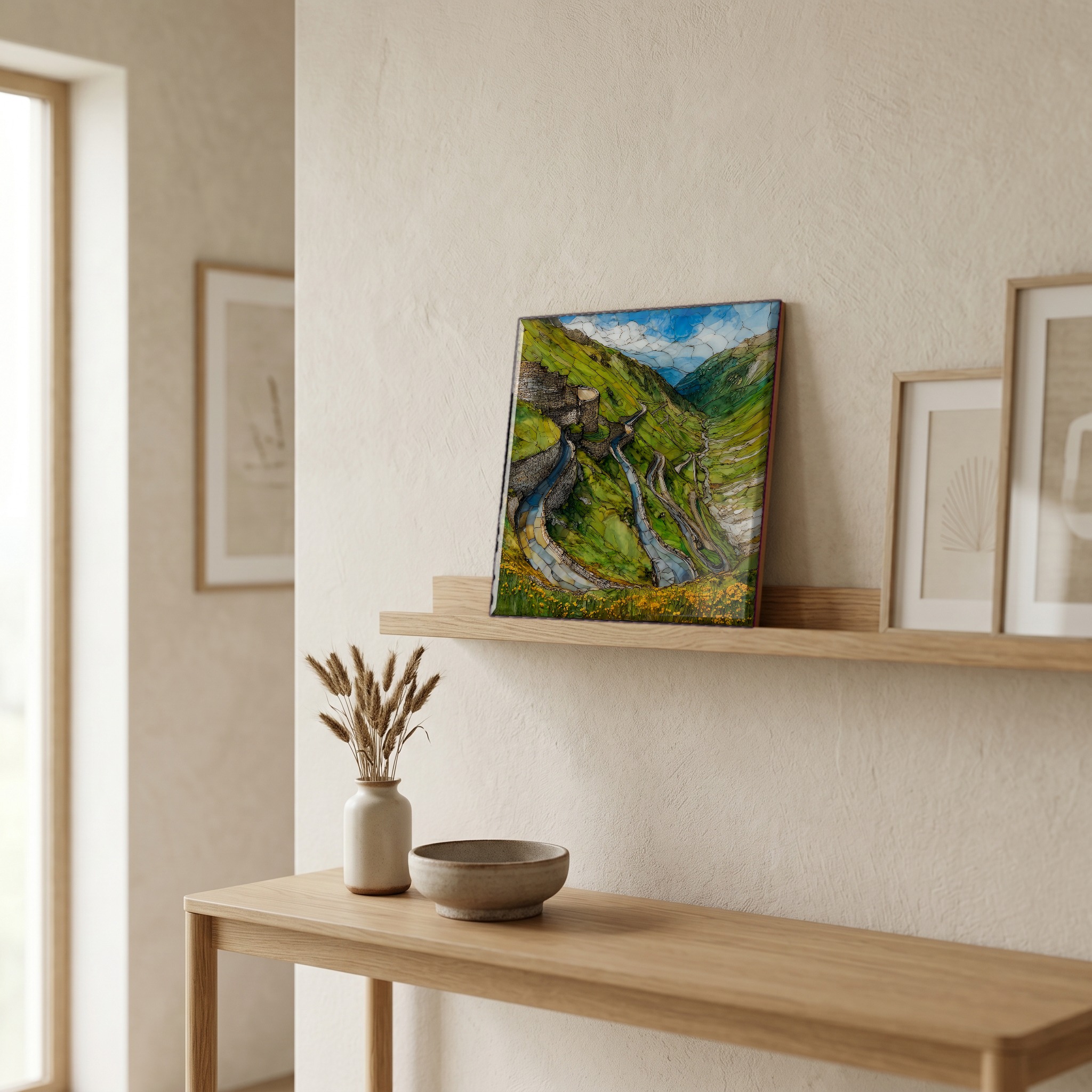
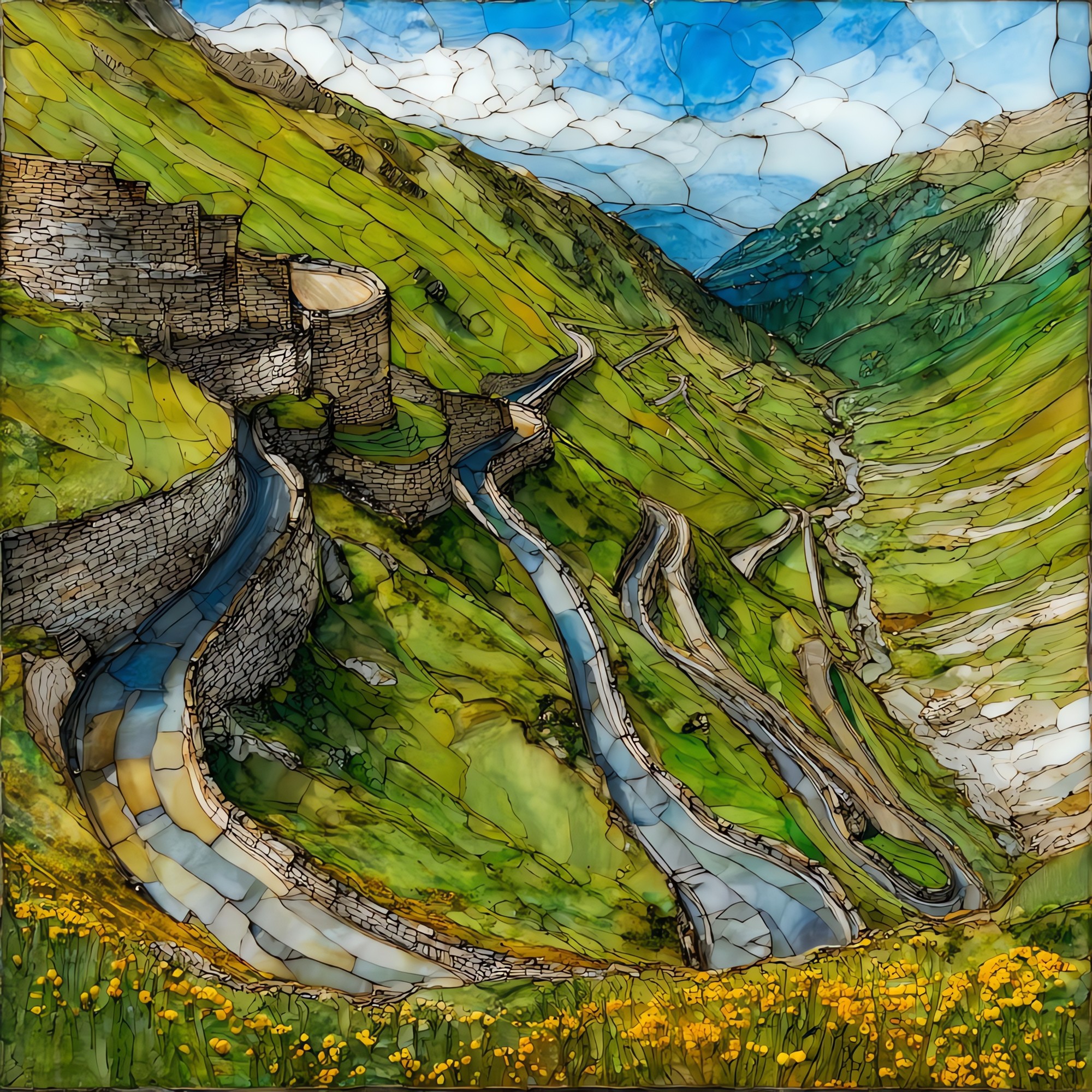
Stelvio Pass
shown on ceramic, 12-inch tileItaly
in the Ortler Alps of northern Italy, near the Swiss border

Stelvio Pass

— forty-eight turns into the thinning air.

Where it lives

Not only on a wall.

A small tile on the nightstand catching the morning. A larger one above the fire. Yours, wherever you spend the slow hours.
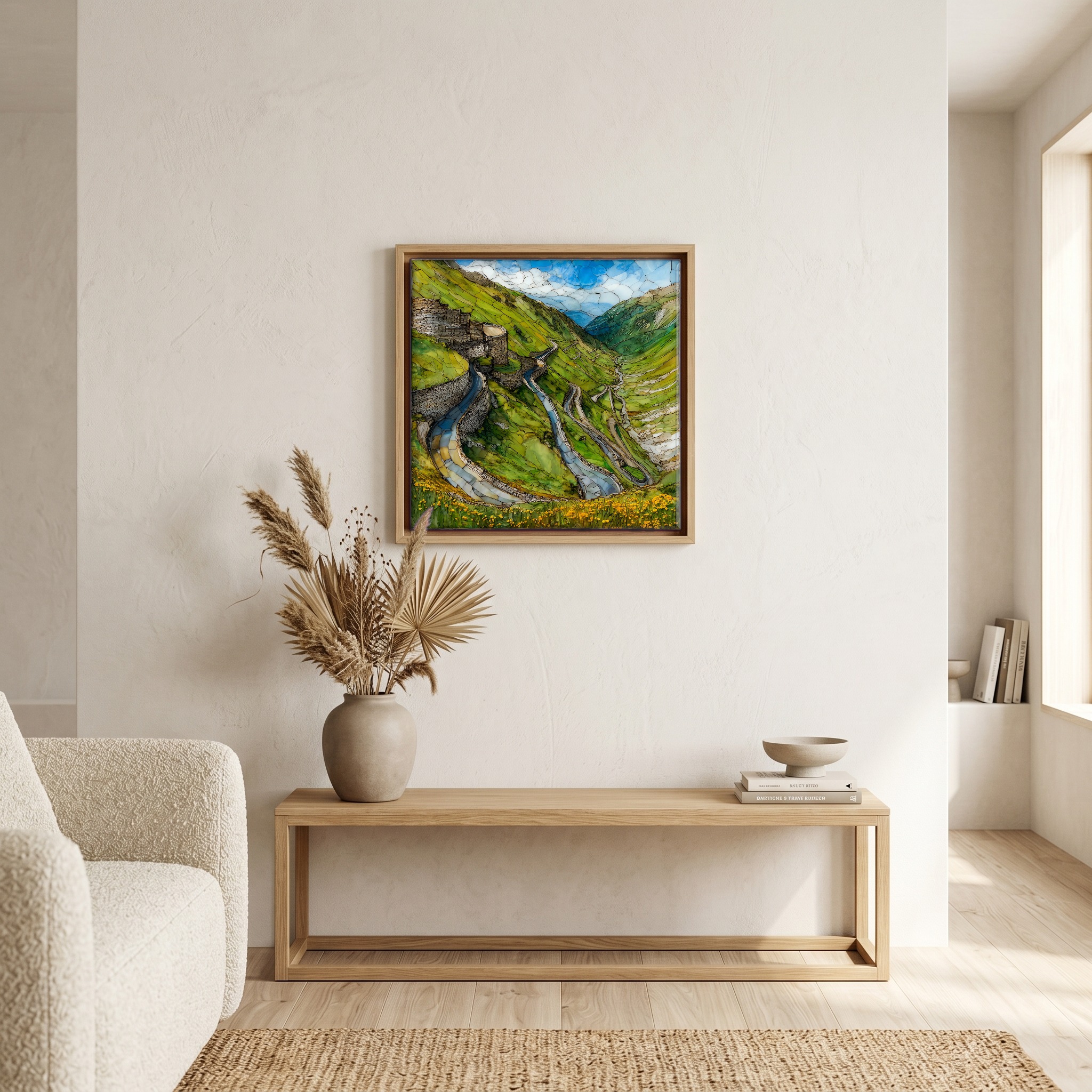
Above the bench, in a warm oak surround.
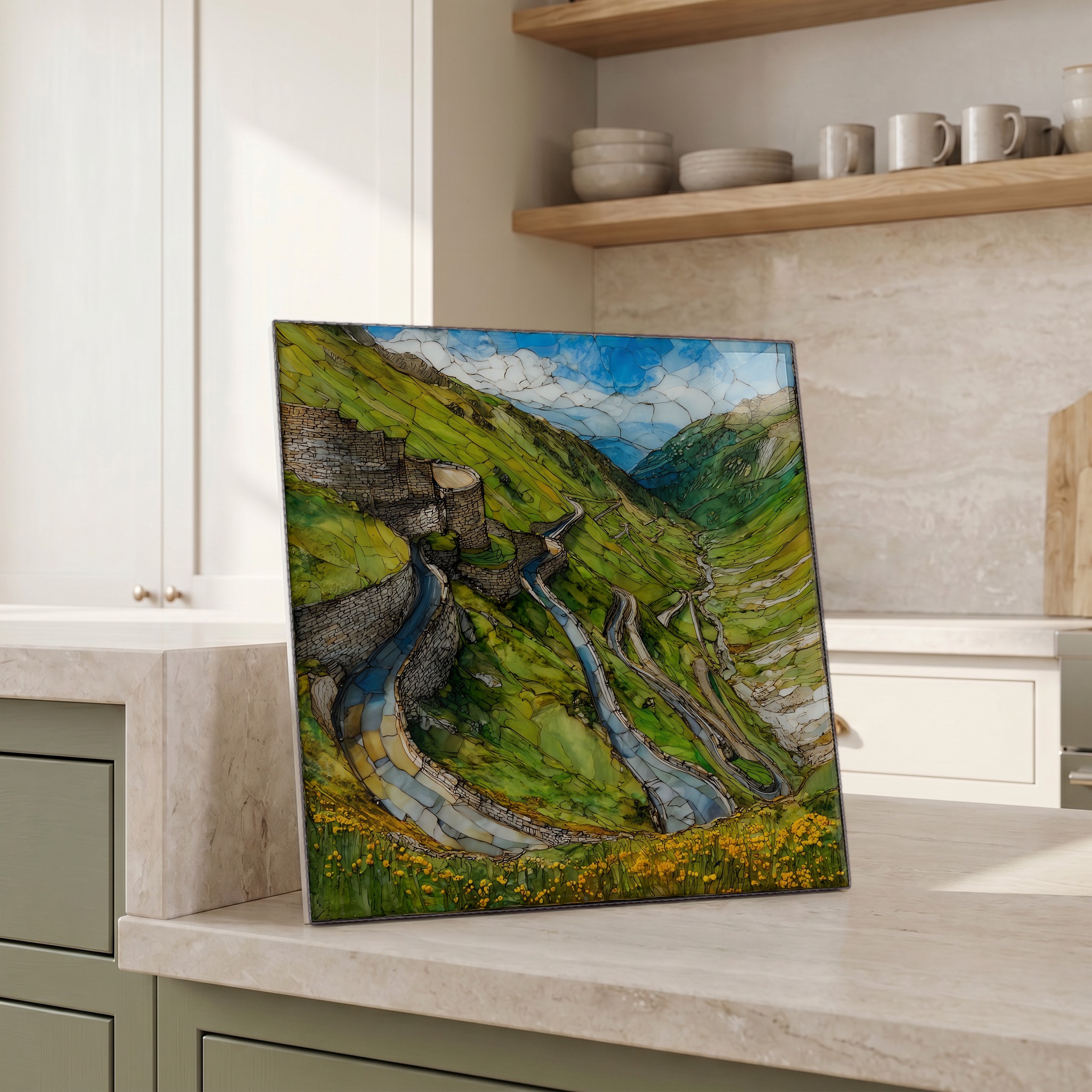
Beside the kettle, propped on the counter.
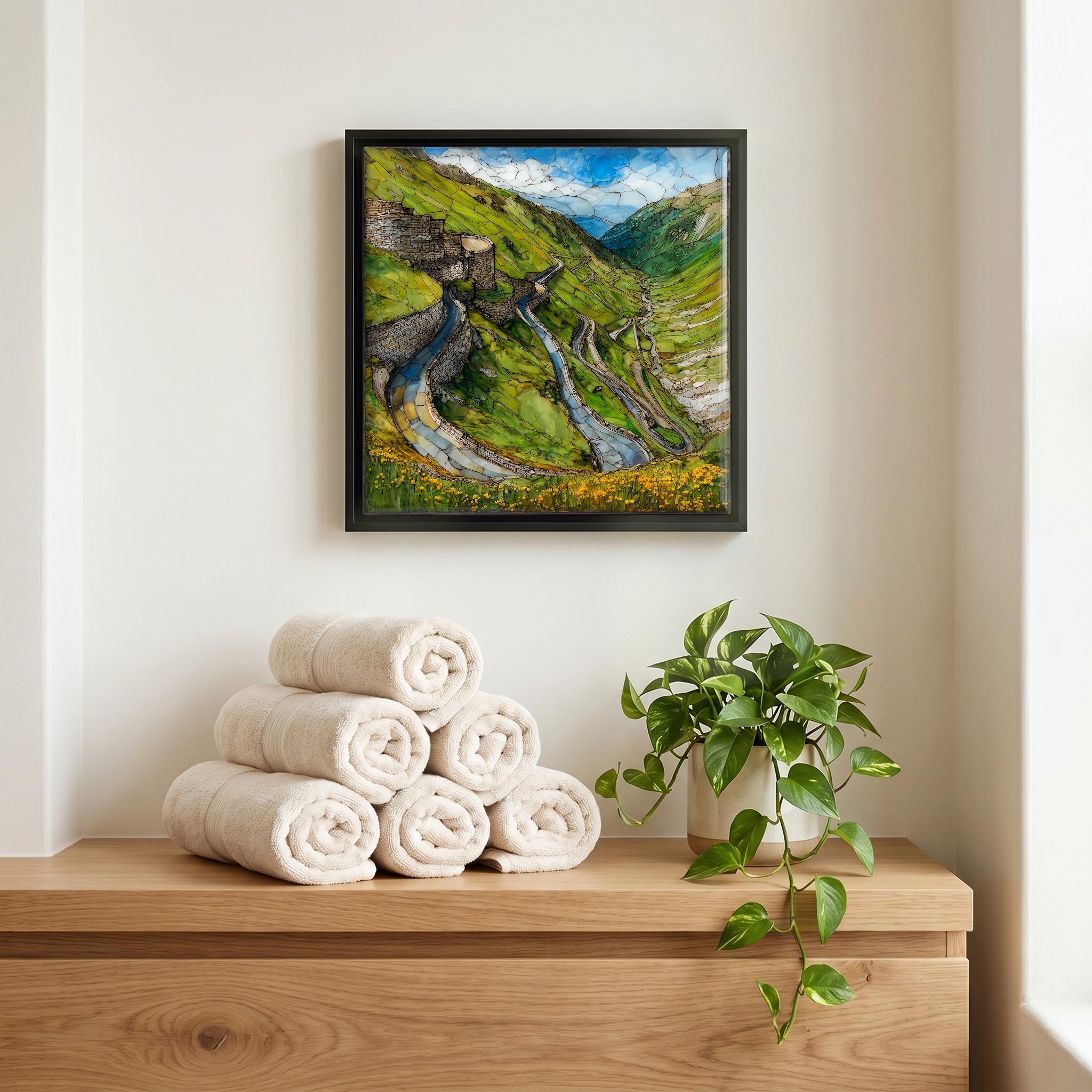
Above the linens, in a slim black surround.
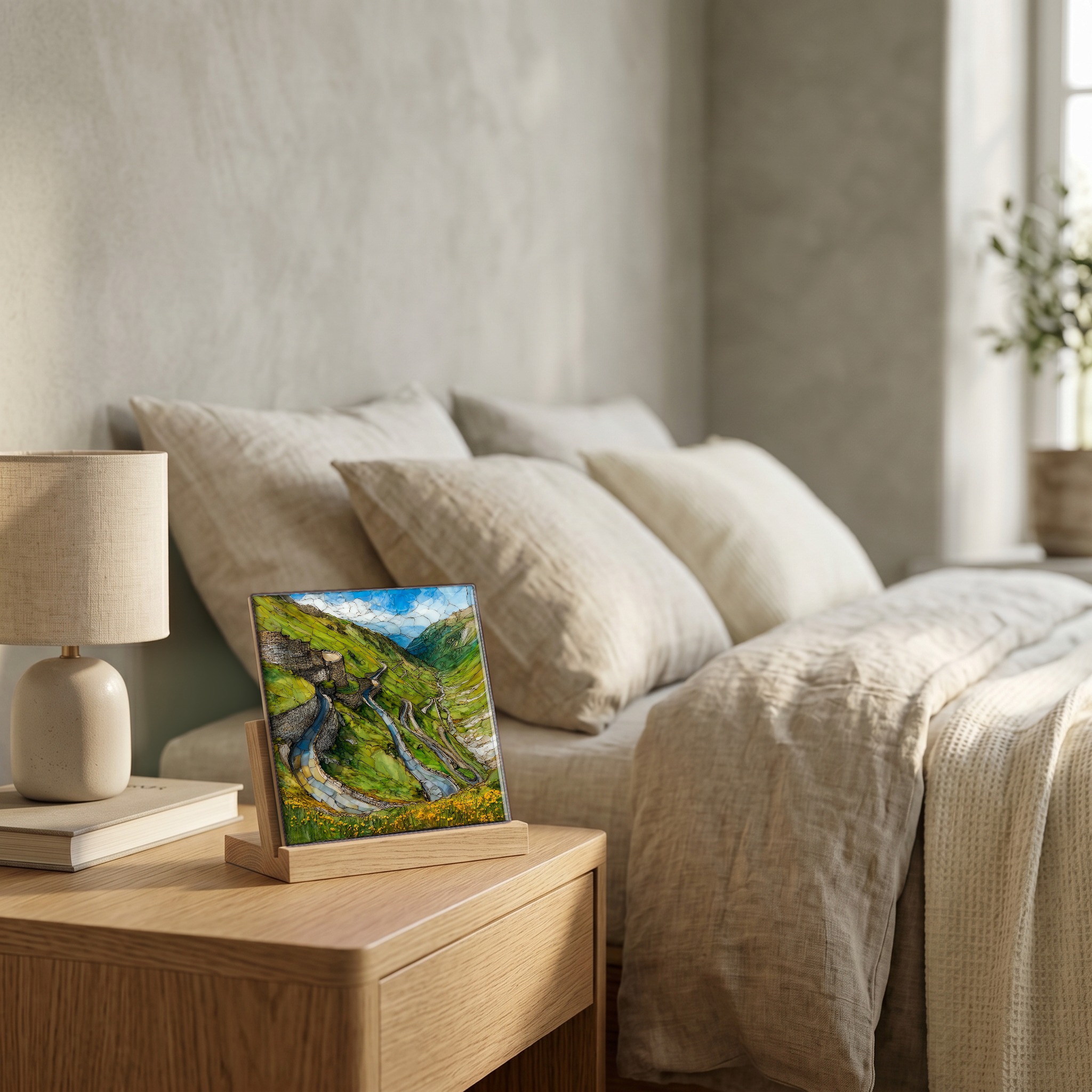
On the nightstand, on a light oak stand.
On a picture ledge, where the light comes in.
a note from the studio

Forty-eight numbered hairpins climb from Prato allo Stelvio to a saddle at 2,757 metres. From late May until late October the road belongs to cyclists, motorcyclists, and drivers who come for a single afternoon and remember it for years. The Ortler glacier holds white above the summit, the rifugi at the saddle stay open through the season, and the air at the top works on the body in the way altitude does. Top Gear once called it the greatest driving road in the world. In summer the road becomes briefly possible again.
from the studio
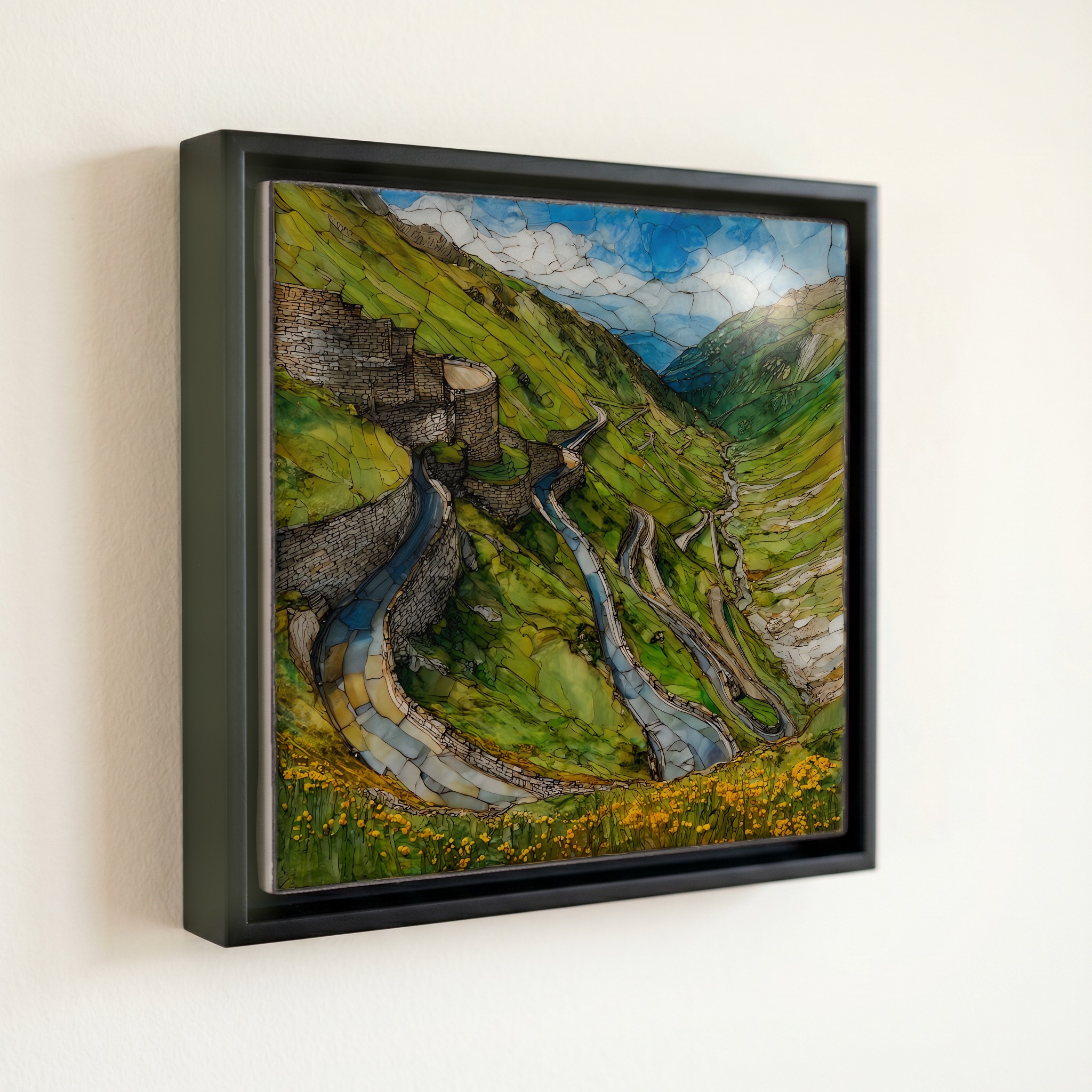
shown in a slim black floating frame · 6 × 6 in
— bring it home

Stelvio Pass, on ceramic.

Each tile is finished by hand in our Knoxville studio. Artwork is slowly infused into the ceramic surface under high heat and pressure, and rests beneath a thin glossy finish. The colour lives in the surface, not on top of it.

What kind of piece?
One tile — square or rectangle.
How big?
the popular one — counter, shelf, nightstand
6 × 6 in · 15 cm · 1.6 lb
Surface finish
A clear glossy finish — the artwork reads as if under resin. Ideal for show-pieces and framed wall art.
How it sits
A hidden cleat — sits ¼″ proud of the wall.
$58
Hand-finished and shipped from our studio at the foot of the Smokies. On your wall in about ten days.
size
6 × 6 in
15 cm
weighs
1.6 lb
solid in the hand
surface
ceramic, hand-finished
art rests beneath a thin glossy finish
from
Knoxville, TN
our family studio, at the foot of the Smokies
— start a Coaster Set

Pick any four 4-inch tiles — National Parks you've been to, a Smokies set, the four seasons of one place. $ for a set of , cork-backed, ready to live on the table.
comes gift-ready
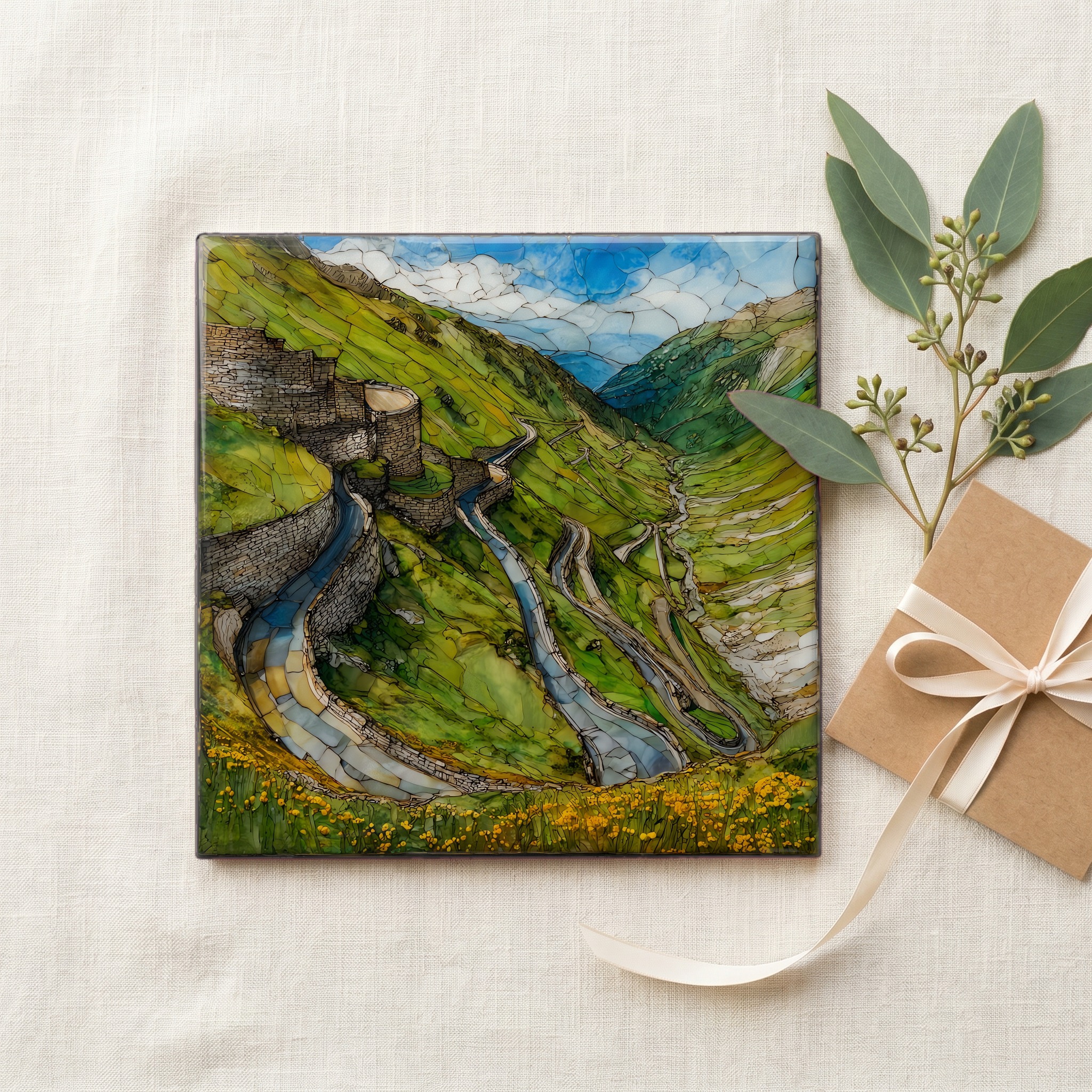
comes gift-ready

Each tile ships in a kraft box, tied with cream ribbon, with a handwritten note from the studio if you'd like to add one.
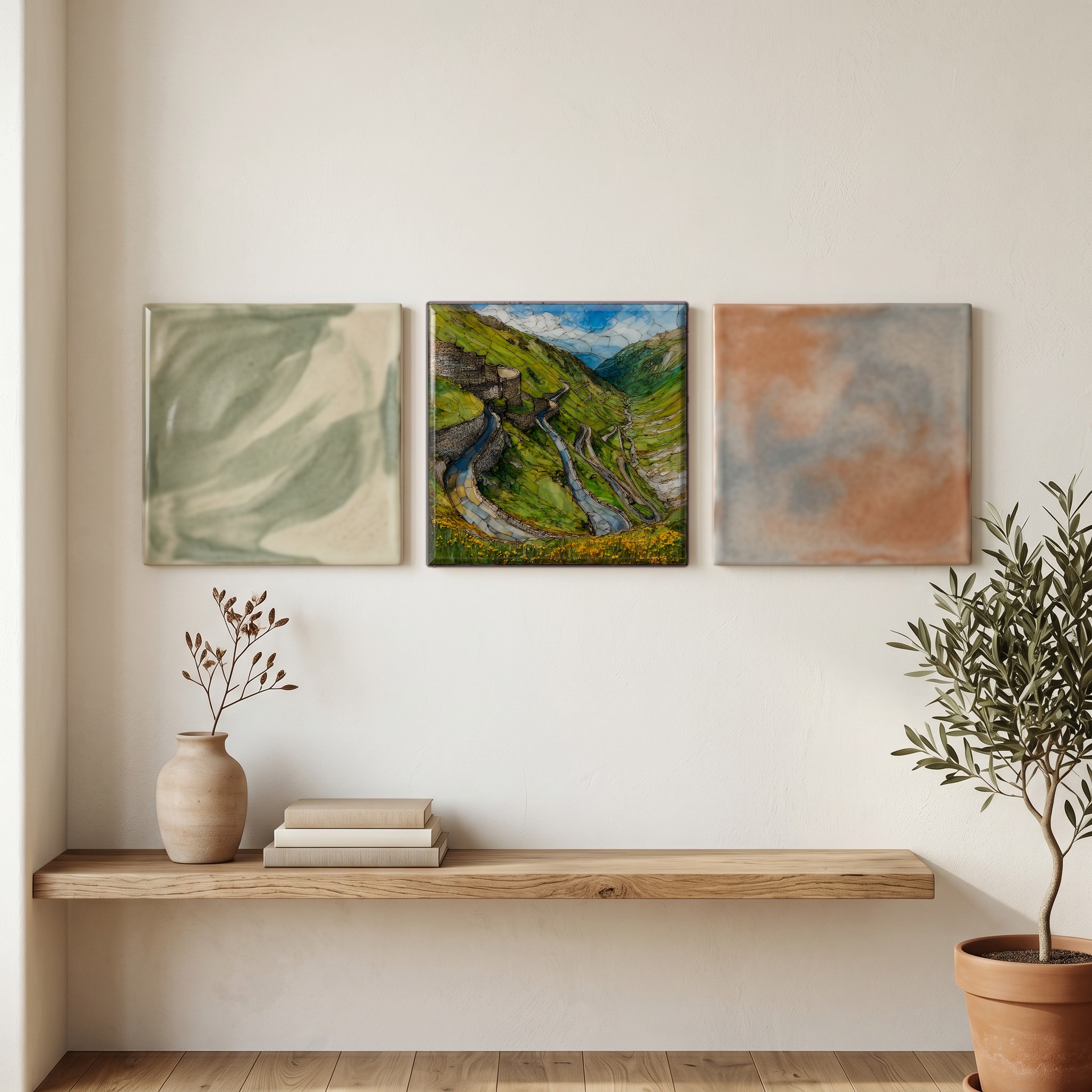
or build a grouping
or build a grouping

Three or five different vistas, hung together — a chapter of places you've been, or want to go.

about Stelvio Pass

The place, in three passes.

A little of what's known, in case you fall down the rabbit hole — or want to go see it yourself.
the place

Stelvio Pass (Passo dello Stelvio in Italian, Stilfserjoch in German) crosses the Eastern Alps at 2,757 metres on the border between Lombardy and South Tyrol, a few kilometres from the Swiss frontier at the Umbrail Pass. The northern road climbs from Prato allo Stelvio through 48 numbered hairpins; the southern road climbs from Bormio through 40. Italian engineer Carlo Donegani designed the route for the Austrian Empire between 1820 and 1825 to link the Valtellina with the upper Adige Valley after the Congress of Vienna. The pass sits inside Stelvio National Park, established April 1935, protecting roughly 1,300 square kilometres of high-alpine terrain across Lombardy and Trentino-Alto Adige.

the air

At 2,757 metres the air at the summit carries about 73 percent of the oxygen available at sea level, which is the small detail every cyclist feels in the last three switchbacks. The Stelvio has been crowned Cima Coppi, the Giro d'Italia's highest point of the year, more often than any other pass in the race's history. Wind funnels through the saddle between the Ortler massif on one side and Piz Umbrail on the other. Above the treeline the slope is alpine grass, lichen, and edelweiss. Even in late August the summit temperature can fall below freezing by mid-afternoon, with the road still open and traffic still climbing through the hairpins.

the season

The pass road opens once winter snow can be cleared, typically in late May or early June, and closes again in late October. Snow walls higher than a car often line the summit road well into June. For roughly five months the saddle belongs to cyclists, motorcyclists, drivers, and the small queue of cars waiting for a parking space at the rifugi. The Stilfserjoch glacier on the South Tyrol side has long been operated as the highest summer-skiing area in Europe, though the lift-served terrain has shrunk with the glacier in recent decades. Once each summer the Stelvio Bike Day closes the road to motor traffic for a Saturday and gives the climb back to cyclists alone.

where
Italy · Sondrio, Lombardy / Bolzano, South Tyrol
within
Stelvio National Park
elevation
2,757 m · 9,045 ft
position
46.5275° N · 10.4525° E
the neighborhood

What's nearby.

A handful of named places within an hour's walk or short drive. Some we've already painted; some we will.
5 km SE
Ortler (Ortles)
high peak
3 km W
Umbrail Pass
border pass
12 km N
Trafoi
village
15 km E
Sulden (Solda)
alpine village
20 km SW
Bormio
spa and ski town· on a tile
22 km N
Prato allo Stelvio
village
35 km W
Livigno
high valley town· on a tile
N
Stelvio Pass
Ortler (Ortles)
Umbrail Pass
Trafoi
Sulden (Solda)
Bormio
Prato allo Stelvio
Livigno
common questions

What people ask.

A few questions we get about Stelvio Pass — and about bringing the piece home.
about the place

Stelvio Pass crosses the Eastern Alps at 2,757 metres in northern Italy, on the regional boundary between Lombardy and South Tyrol. It lies inside Stelvio National Park, a few kilometres from the Swiss frontier at the Umbrail Pass, and connects the Valtellina to the upper Adige Valley.

The pass road typically reopens in late May or early June, once the SS38 state highway can be cleared of winter snow, and stays open until late October. Exact opening dates vary year to year with snowpack and the avalanche cycle, and snow walls often line the summit road well into June.

The northern road from Prato allo Stelvio climbs through 48 numbered hairpins, each marked by a small stone at the apex. The southern road from Bormio climbs through 40. The numbered stones follow the same alignment Italian engineer Carlo Donegani laid out between 1820 and 1825.

Yes. The Stelvio is one of the most ridden climbs in road cycling, with both the Bormio and Prato allo Stelvio approaches open to riders whenever the road is clear. Once each summer the Stelvio Bike Day closes the pass to motor traffic for a single Saturday.

No. At 2,757 metres it is the second-highest paved pass in the Alps, after France's Col de l'Iseran at 2,770 metres in the Savoie. It is the highest paved pass in the Eastern Alps and the highest paved pass in Italy.

Yes. The Stilfserjoch glacier on the South Tyrol side has long been operated as a summer-skiing area, traditionally the highest in Europe. Lifts run on the upper snowfield through the warm months, though the skiable terrain has shrunk with the glacier in recent decades.

The summit sits at 2,757 metres (9,045 feet). The road tops out at the saddle between the Ortler massif on one side and Piz Umbrail on the other, with the rifugi and a small museum clustered on the parking apron at the top of the climb.

about the piece in your home

The summer Stelvio is the climb every road cyclist and motorcyclist circles on a map at some point. The tile reads as a quiet marker of the day they made it to the saddle, not a trophy. A Small or Medium above a desk, or a Coaster Set near the espresso machine, both carry the reference.

The deep alpine blues, snow-white, and stone-grey palette sit naturally in alpine-modern, mountain-modern, and Japandi interiors. The piece also reads well in a maximalist room of travel mementos, where the colour holds the eye without taking the whole wall.

Yes. Alpine-modern design favours muted natural palettes, ceramic and stone surfaces, and landscape art that references a specific mountain rather than a generic ski-poster motif. The summer Stelvio reads as a real road in a real place, which is what the style is asking for.

Above a standard three-seat sofa, a single Large reads in proportion. A 4-tile Mural fills the wall and brings the hairpins in close. A 9-tile Mural turns the climb into the room. Above a console table or a credenza, a Medium or a pair of stacked Smalls work well.

Yes. For wet or splash-prone installations, choose the Dura Satin or Matte finish. Both are scratch-resistant and the colour lives in the surface rather than on top of it. The Glossy finish is for dry-wall display in framed pieces and on shelves.

A soft microfibre cloth and water is enough for ordinary dust. The colour is slowly infused into the ceramic surface under high heat and pressure, beneath a thin glossy finish, so there is nothing on top to chip or re-seal. No abrasive cleaners and no household chemicals.

Yes. The Stelvio Pass in Summer piece is part of the WenderVista atlas, painted in the studio's stained-glass and alcohol-ink visual language. Nothing is licensed from another artist. Reid Wender curates the atlas and selects each place. The work is hand-finished in Knoxville, Tennessee.

if this one stayed with you

A few you might also love.

Hand-picked by the eye that found Sorapis. Same air, same kind of quiet.
— a collection

The Italian Dolomites,
painted slow.

The valleys between Cortina and Val Gardena, the tarns you walk an hour to see, the towers that turn the colour of a banked fire just before dark. Wander the collection by valley, by season, or follow the path Reid walked.

Tre Cime
Braies
Misurina
Sorapis
Cinque Torri
Sassolungo
Marmolada