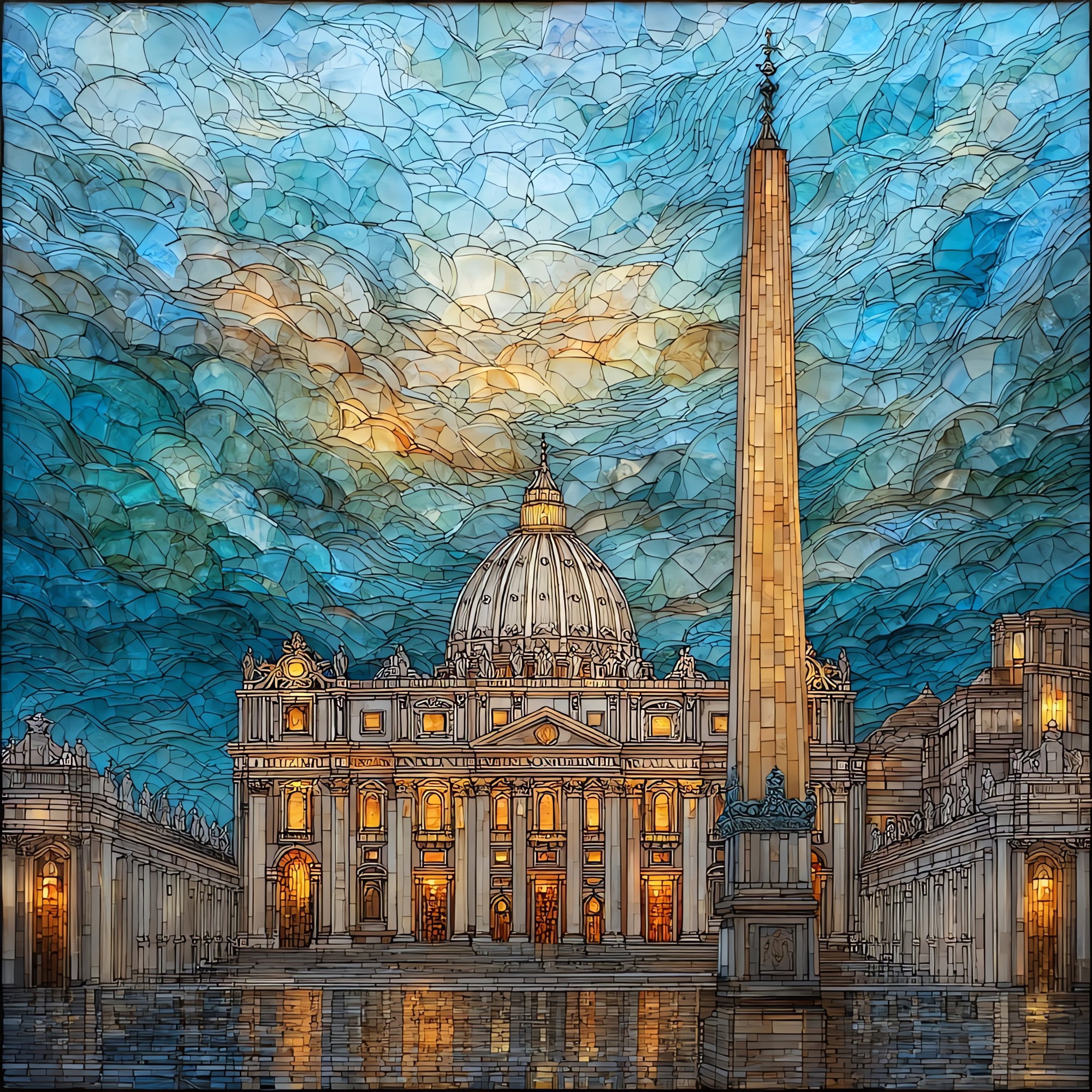
St Peter's Basilica
— — travertine holding the last of the light.
Not only on a wall.
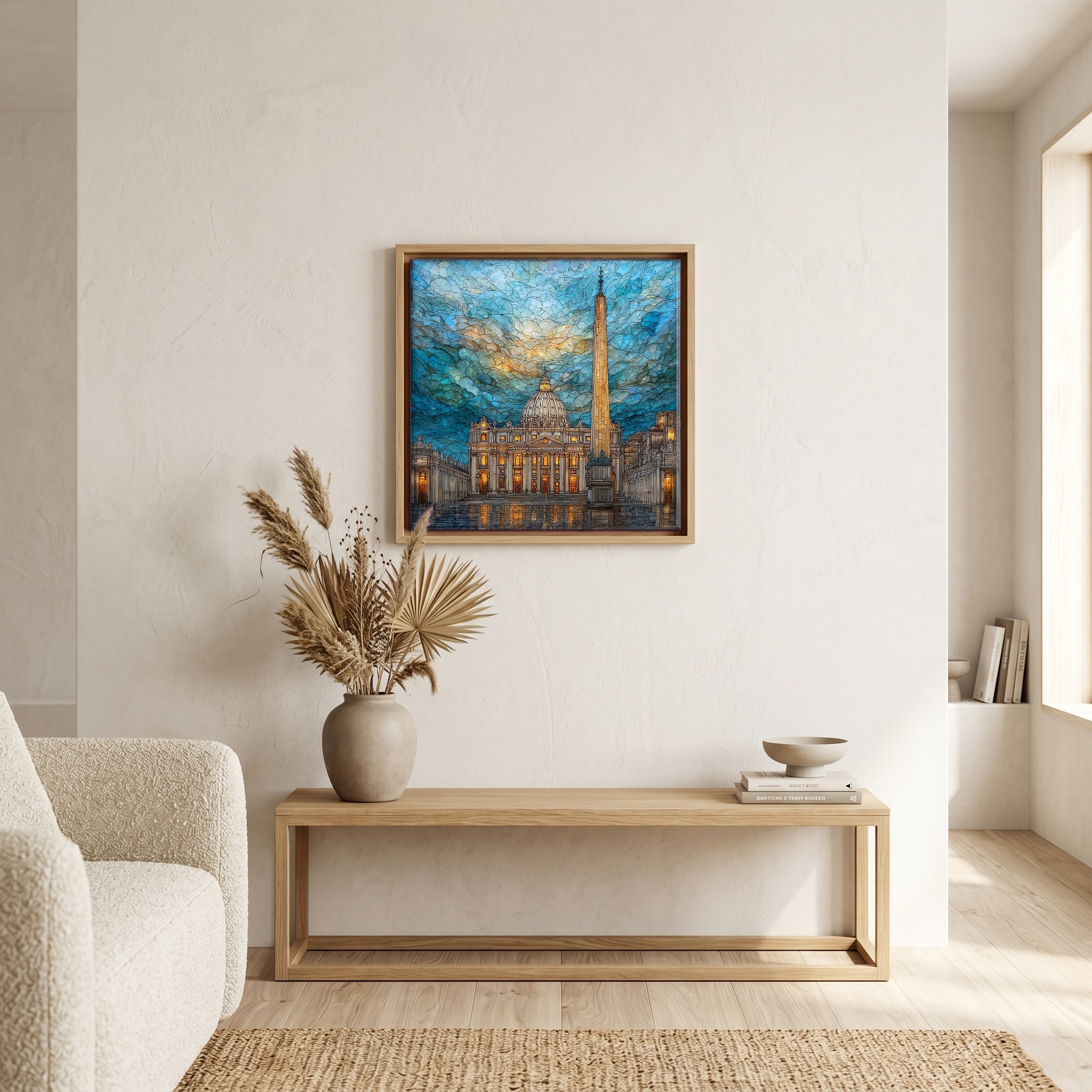
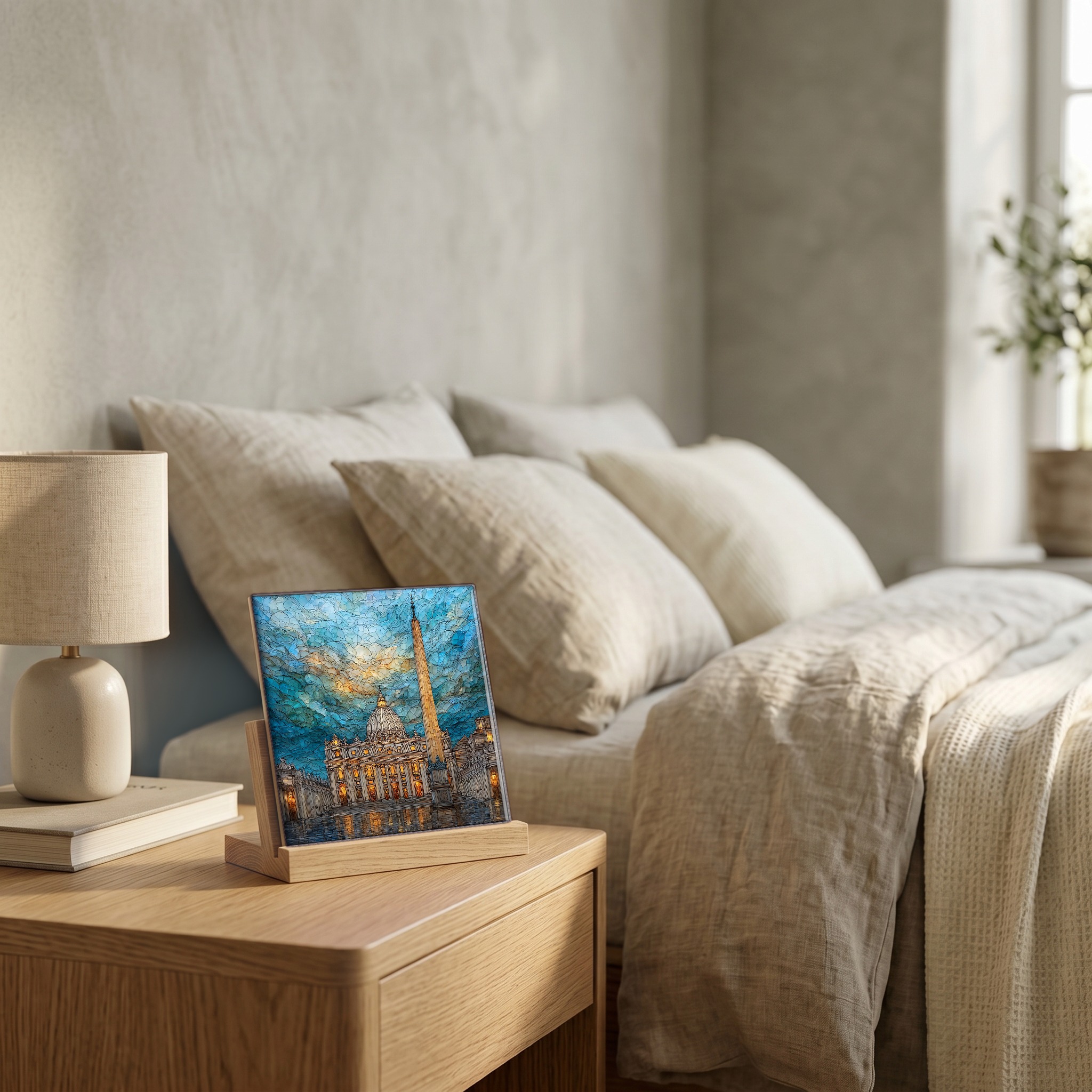
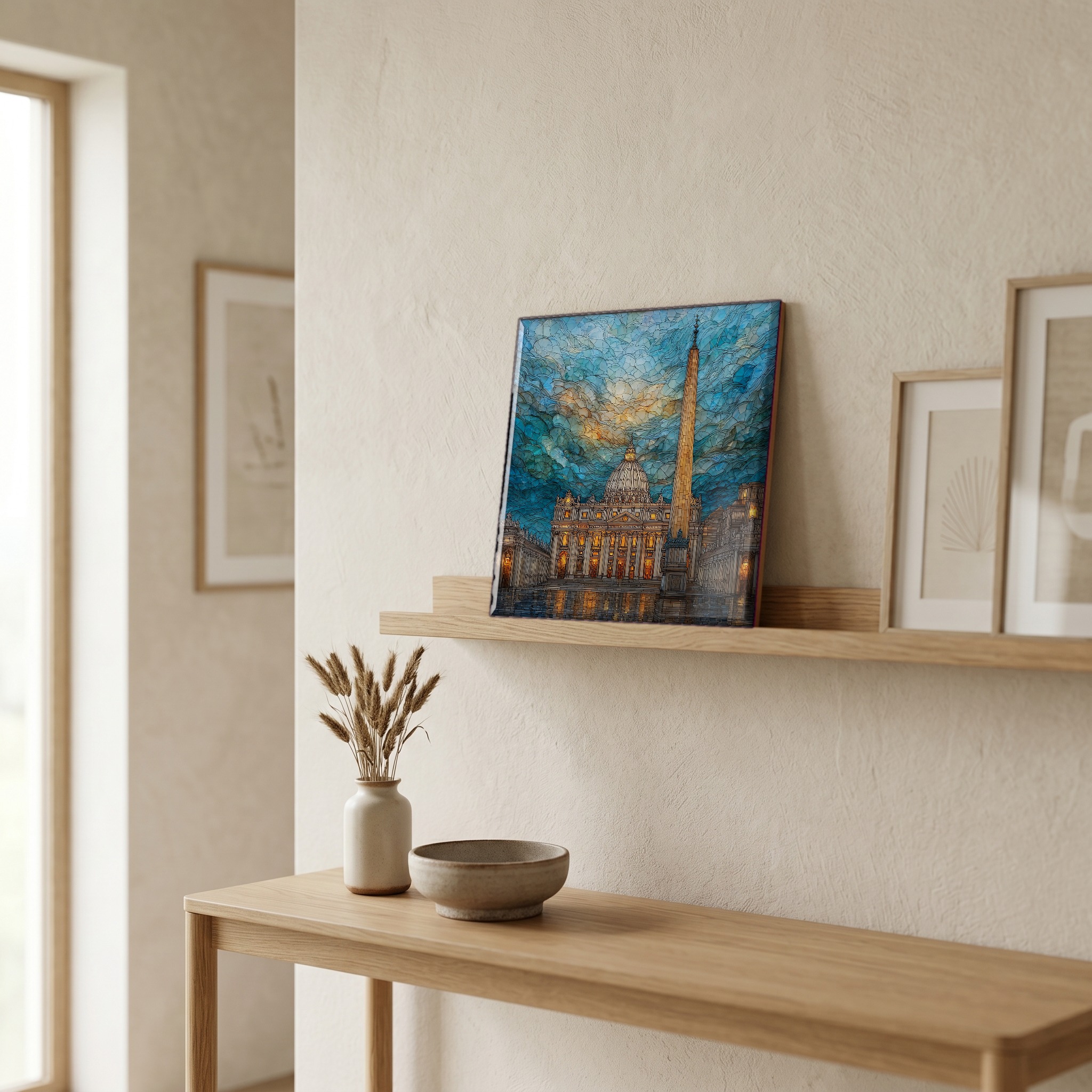
“Vatican City sits inside Rome, a sovereign enclave of about forty-nine hectares built around this basilica. The facade is travertine from the quarries at Tivoli, the same stone the Colosseum was built from. Bernini's colonnade curves around the square in two semicircular wings, what he described as the maternal arms of the church. The dome was Michelangelo's last great work; he died in 1564 before it was finished, and Giacomo della Porta completed it in 1590. Late afternoon, the travertine warms and the dome above pales. The line moves quietly through. Nobody comes here only once.
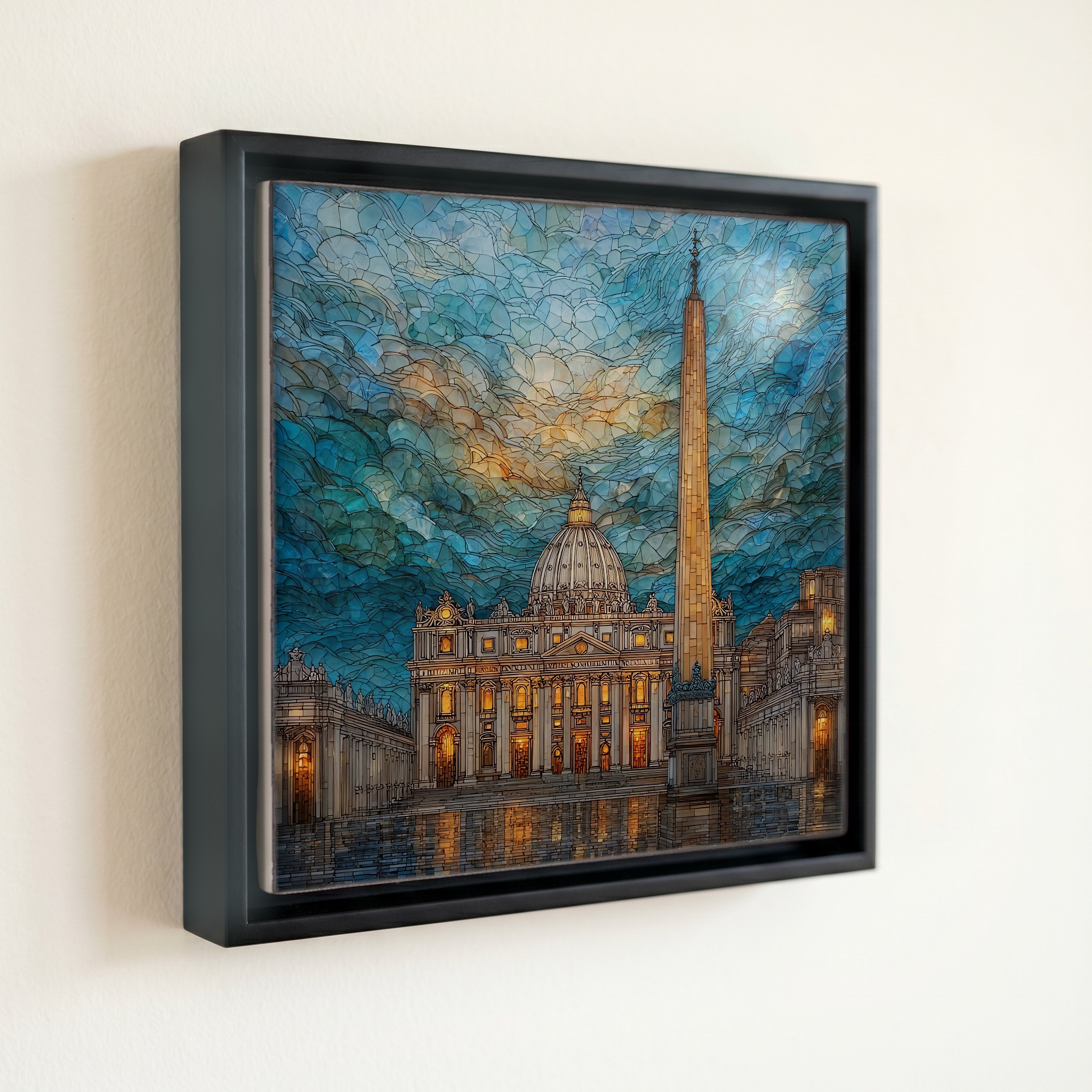
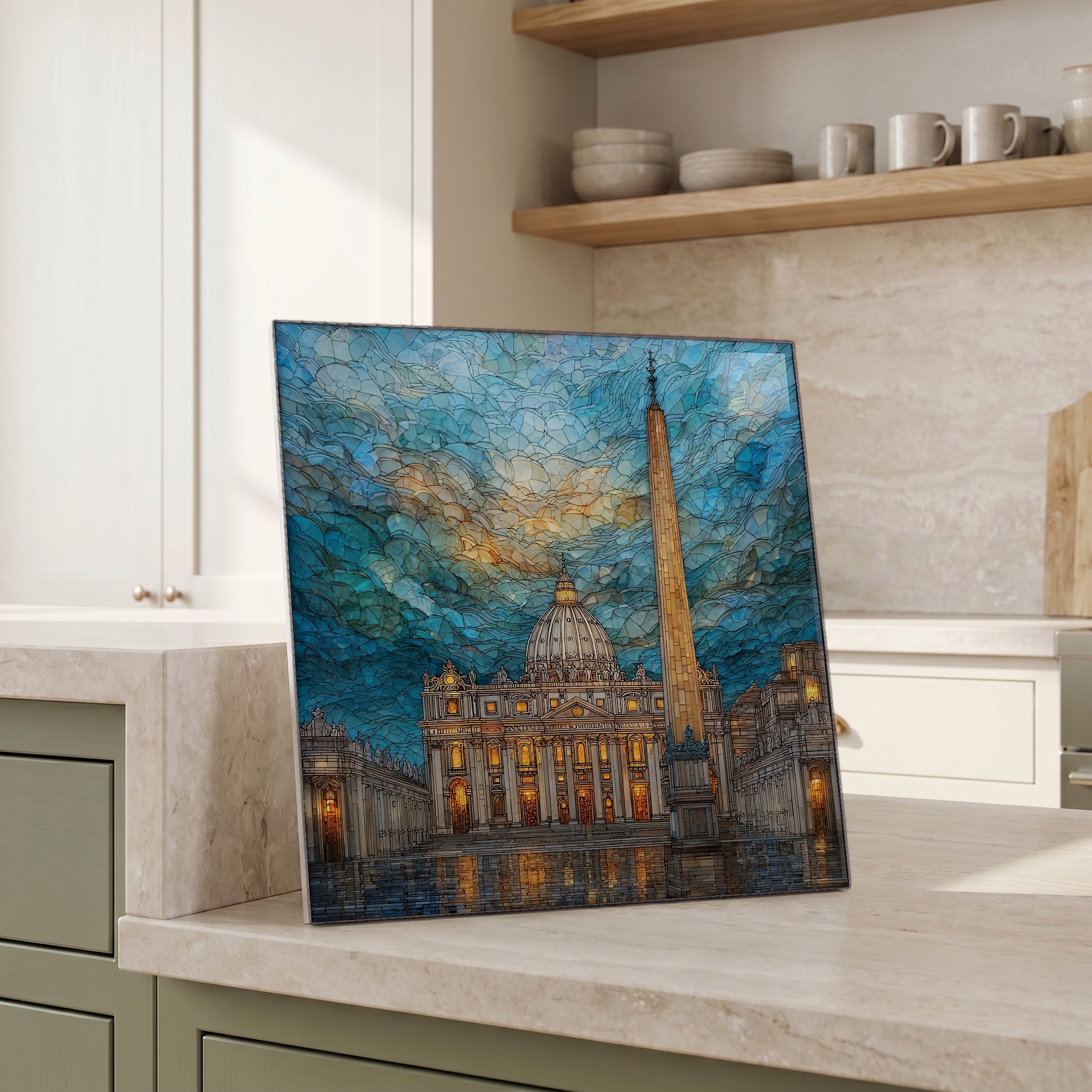
St Peter's Basilica, on ceramic.
Each tile is finished by hand in our Knoxville studio. Artwork is slowly infused into the ceramic surface under high heat and pressure, and rests beneath a thin glossy finish. The colour lives in the surface, not on top of it.
Pick any four 4-inch tiles — National Parks you've been to, a Smokies set, the four seasons of one place. $ for a set of , cork-backed, ready to live on the table.
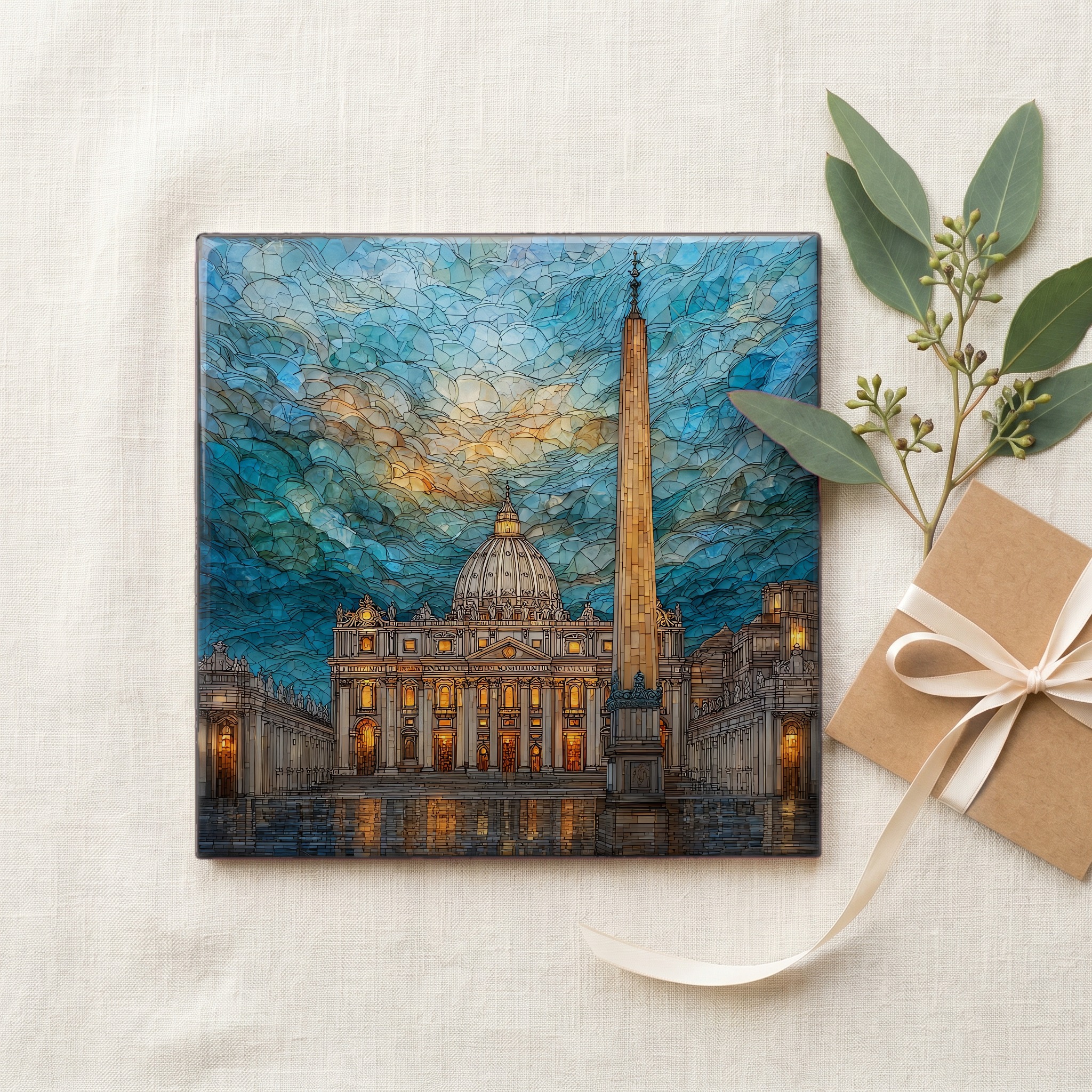
Each tile ships in a kraft box, tied with cream ribbon, with a handwritten note from the studio if you'd like to add one.
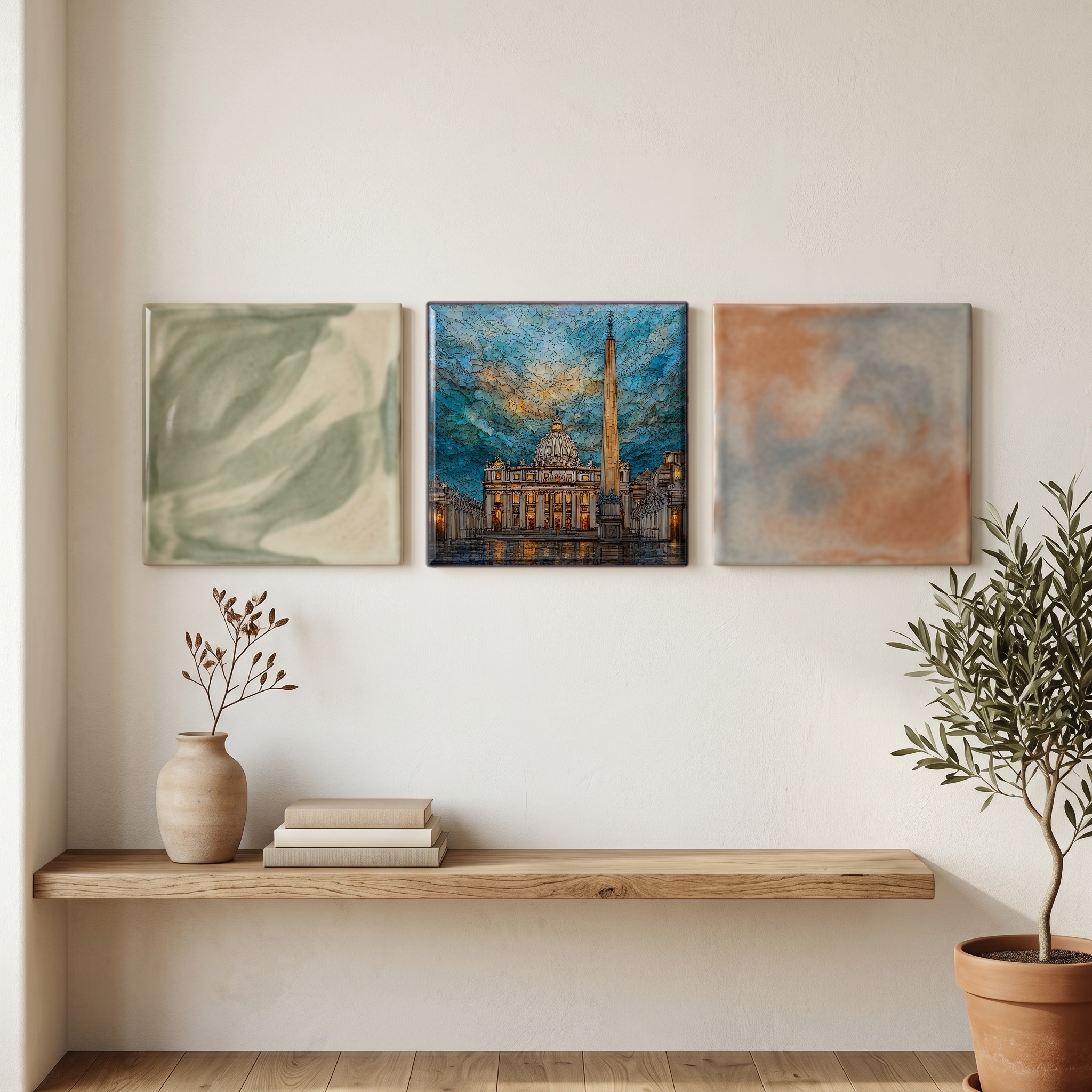
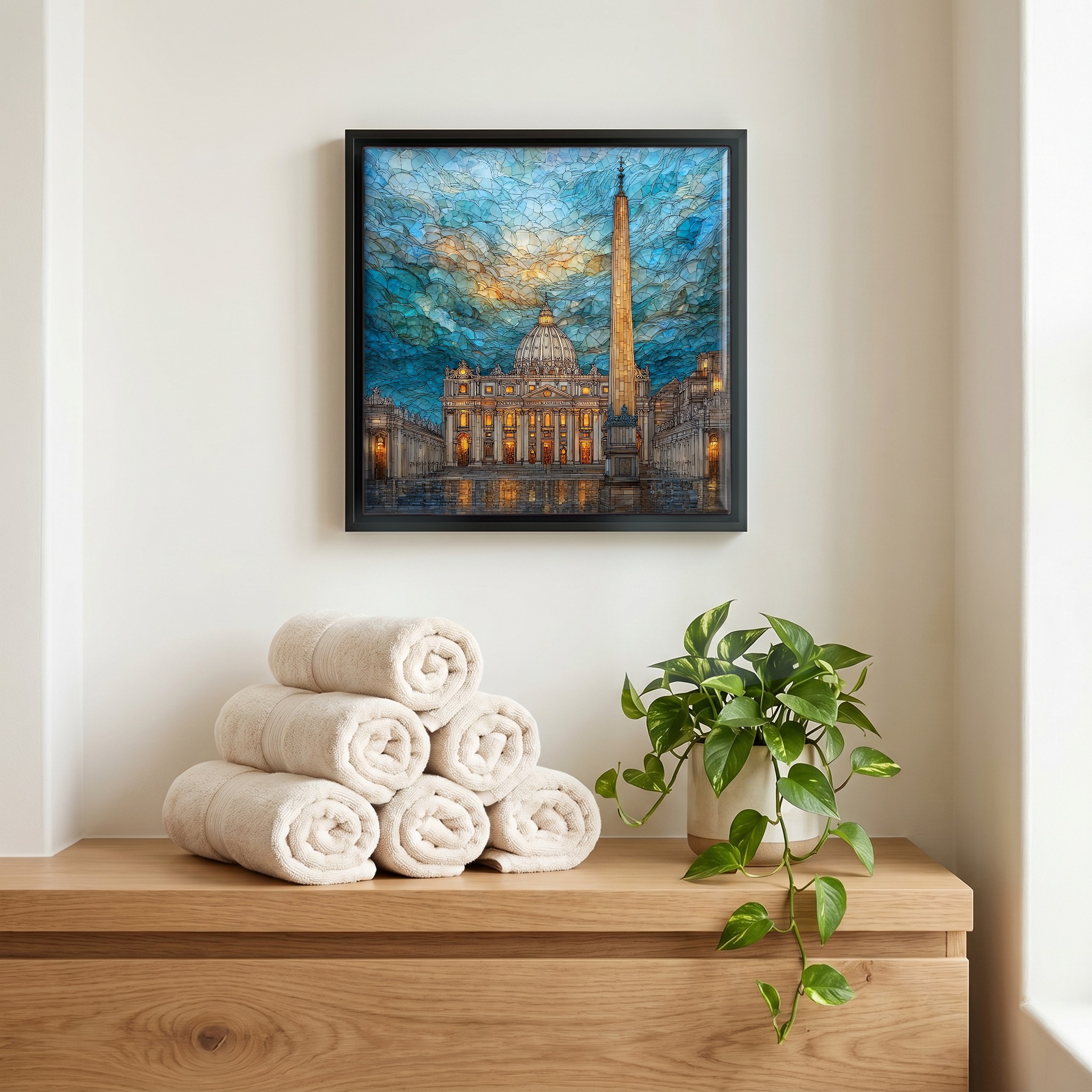
Three or five different vistas, hung together — a chapter of places you've been, or want to go.
The place, in three passes.
St. Peter's Basilica stands in Vatican City, the 49-hectare sovereign enclave within the city of Rome that has been the seat of the Catholic Church since the Lateran Treaty of 1929. The basilica was built between 1506 and 1626 on a site Christian tradition identifies as the tomb of Saint Peter, the apostle the church holds to be the first pope. Donato Bramante drew the first plan; Michelangelo took over the architectural direction in 1546 at age 72 and designed the dome; Carlo Maderno extended the nave and added the facade between 1607 and 1614. Reaching the basilica is straightforward from central Rome; the Ottaviano stop on Metro Line A is a short walk along Via Ottaviano to the colonnade.
The facade and most of the basilica's exterior surfaces are travertine, the limestone quarried at Tivoli, twenty miles east of Rome. It is the same stone the Colosseum was built from, and it takes on a warm yellow tone in late sun, which is why the basilica's evening light reads as gold. Inside, the floors and walls move through coloured marbles drawn from quarries across the former Roman empire: Numidian yellow, Phrygian purple, green serpentine. Bernini's bronze Baldachin rises 29 metres above the high altar, cast partly from bronze stripped from the portico of the Pantheon by order of Pope Urban VIII in 1633. Michelangelo's Pietà, carved in 1499 from a single block of Carrara marble, sits in the first chapel of the right aisle.
Entry to the basilica is free, but the line for security and the metal detector at the colonnade can run more than an hour in summer; arriving at the 7:00 am opening, or after 4:00 pm, usually cuts the wait substantially. A modest dress code is enforced at the door: shoulders and knees covered for everyone. The dome climb is paid and runs separately, with 320 stairs from the lift landing to the lantern or 551 from the ground; the view from the top reaches across Rome to the Janiculum and beyond. Papal audiences in St. Peter's Square run Wednesday mornings when the Pope is in residence; free tickets are requested in advance through the Prefecture of the Papal Household.