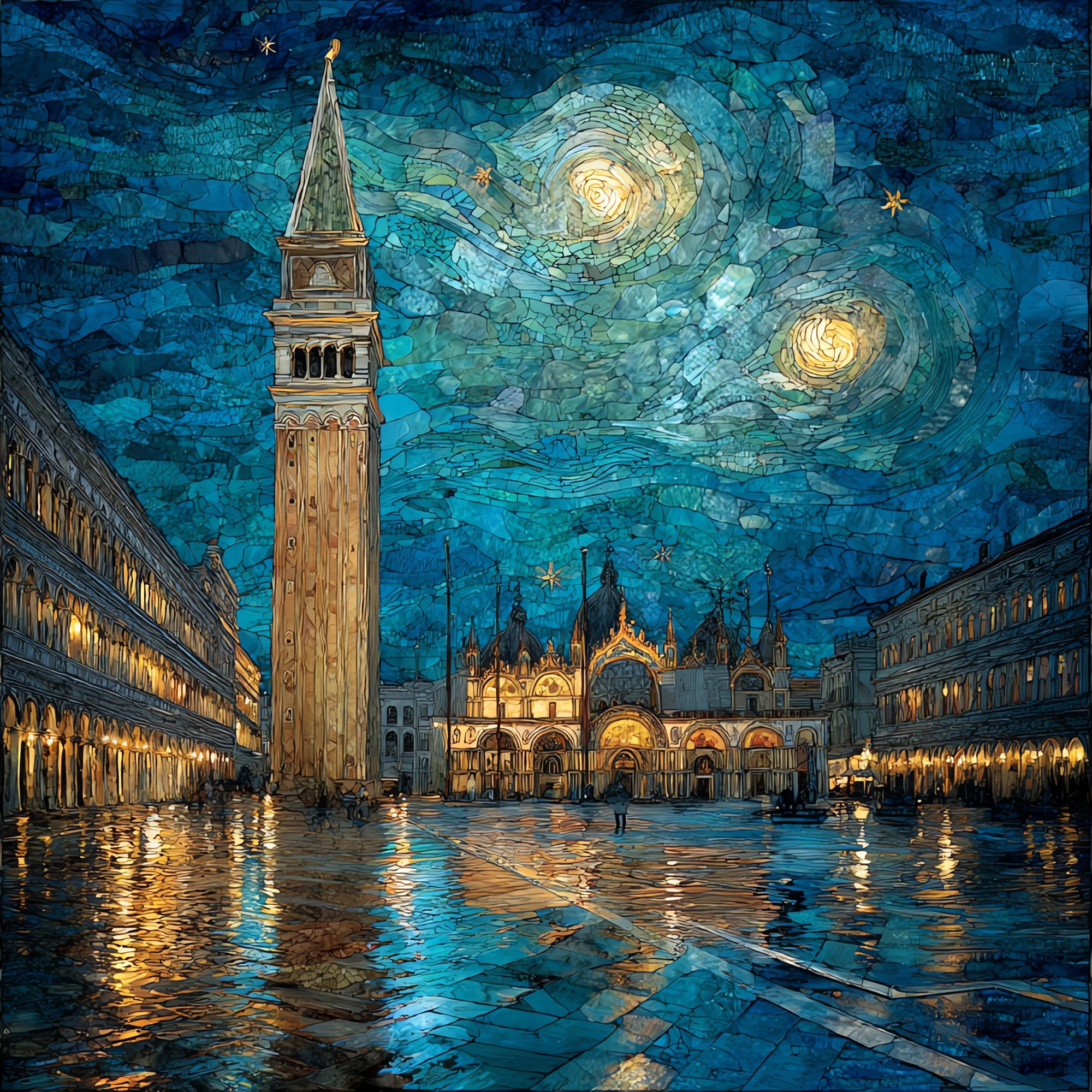
St Mark's Square
— the square the tide turns to mirror.
Not only on a wall.
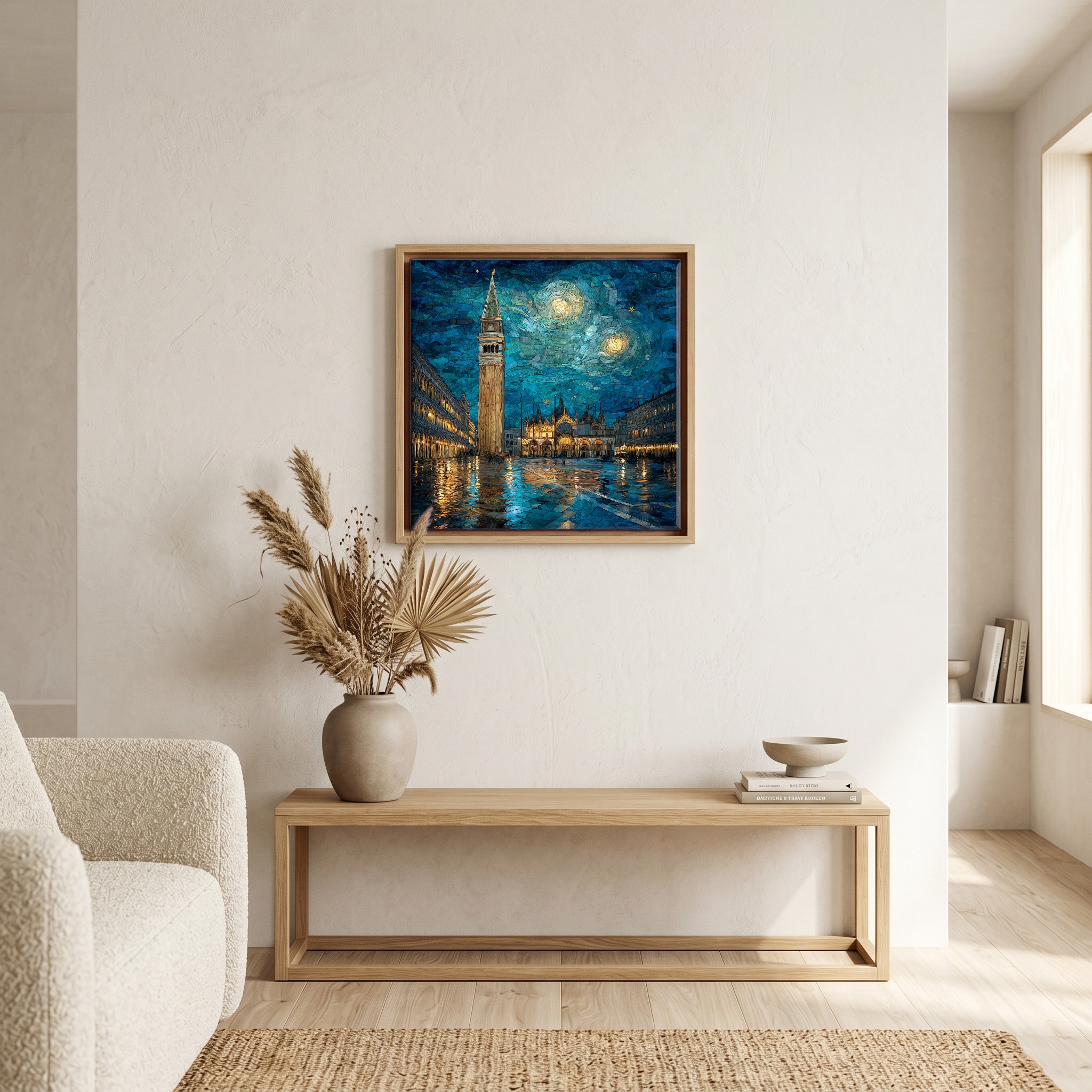
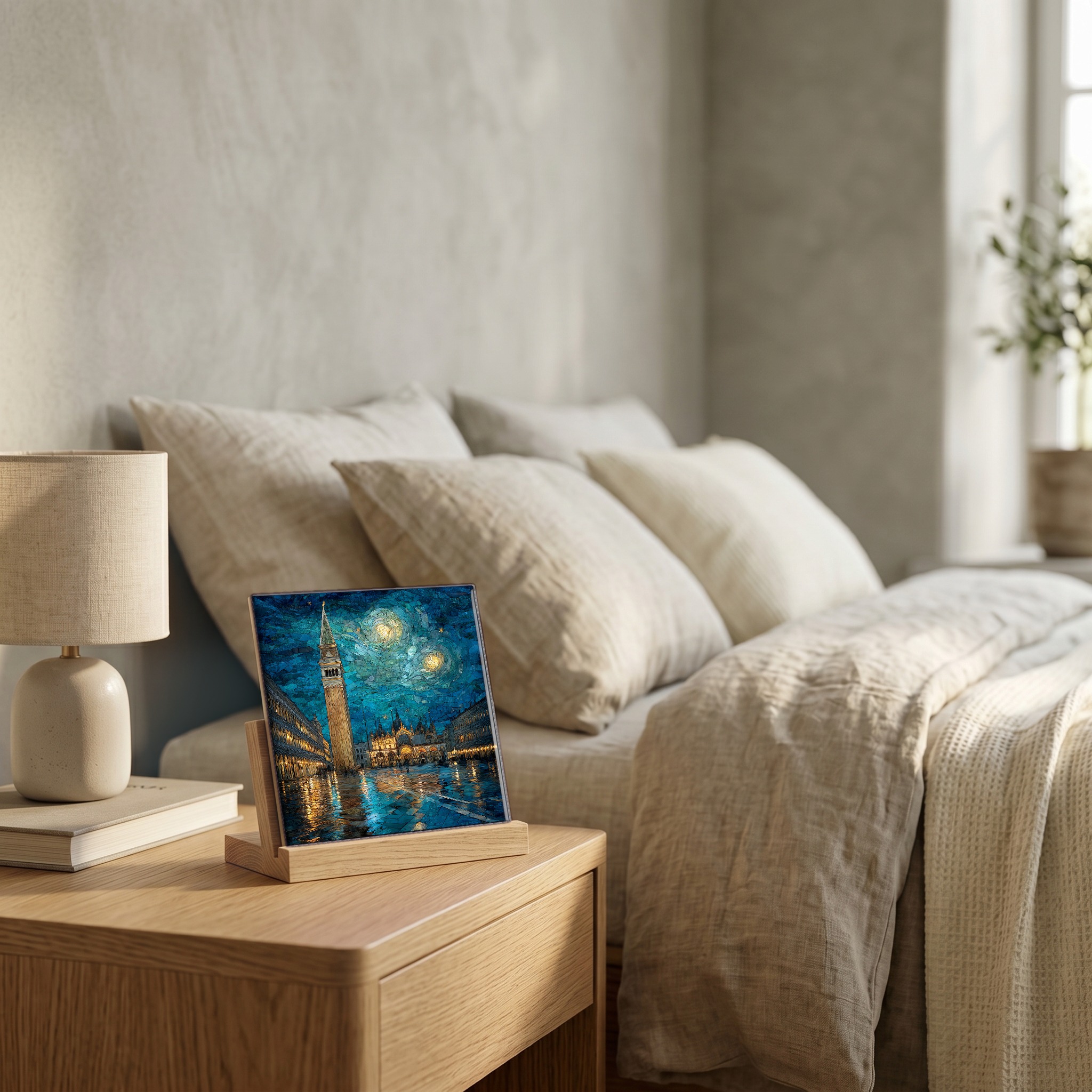
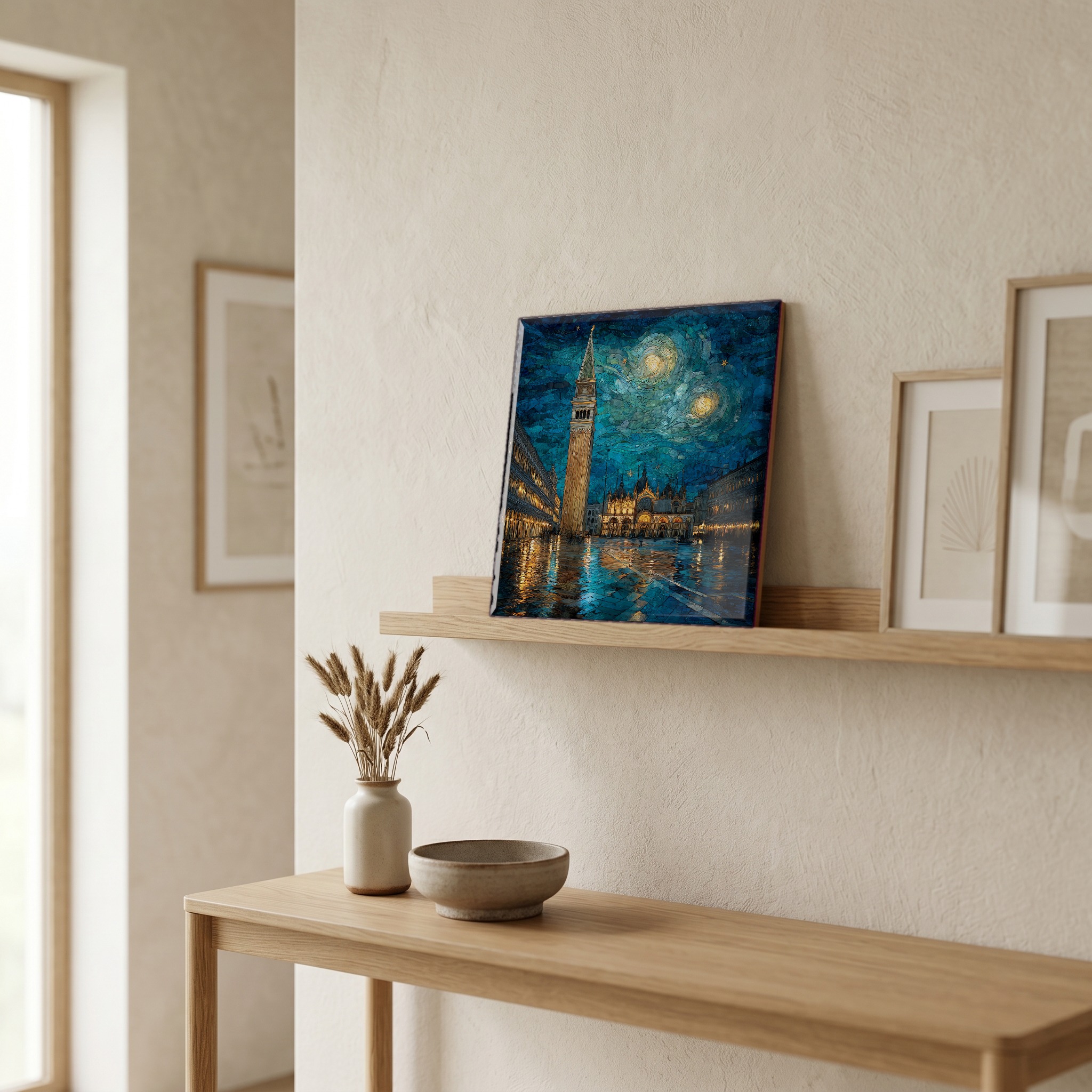
“The largest piazza in Venice opens to the lagoon between the basilica and the Campanile, the only space in the city the locals call piazza and not campo. Pigeons rise on a schedule. A few times a year the tides come up through the drains and the marble floor turns to mirror for an hour or two. Caffè Florian has poured coffee here since 1720, the orchestra plays through the evening at the same hour it always has. The gold mosaics on the basilica's facade catch first light before the day crowds arrive.
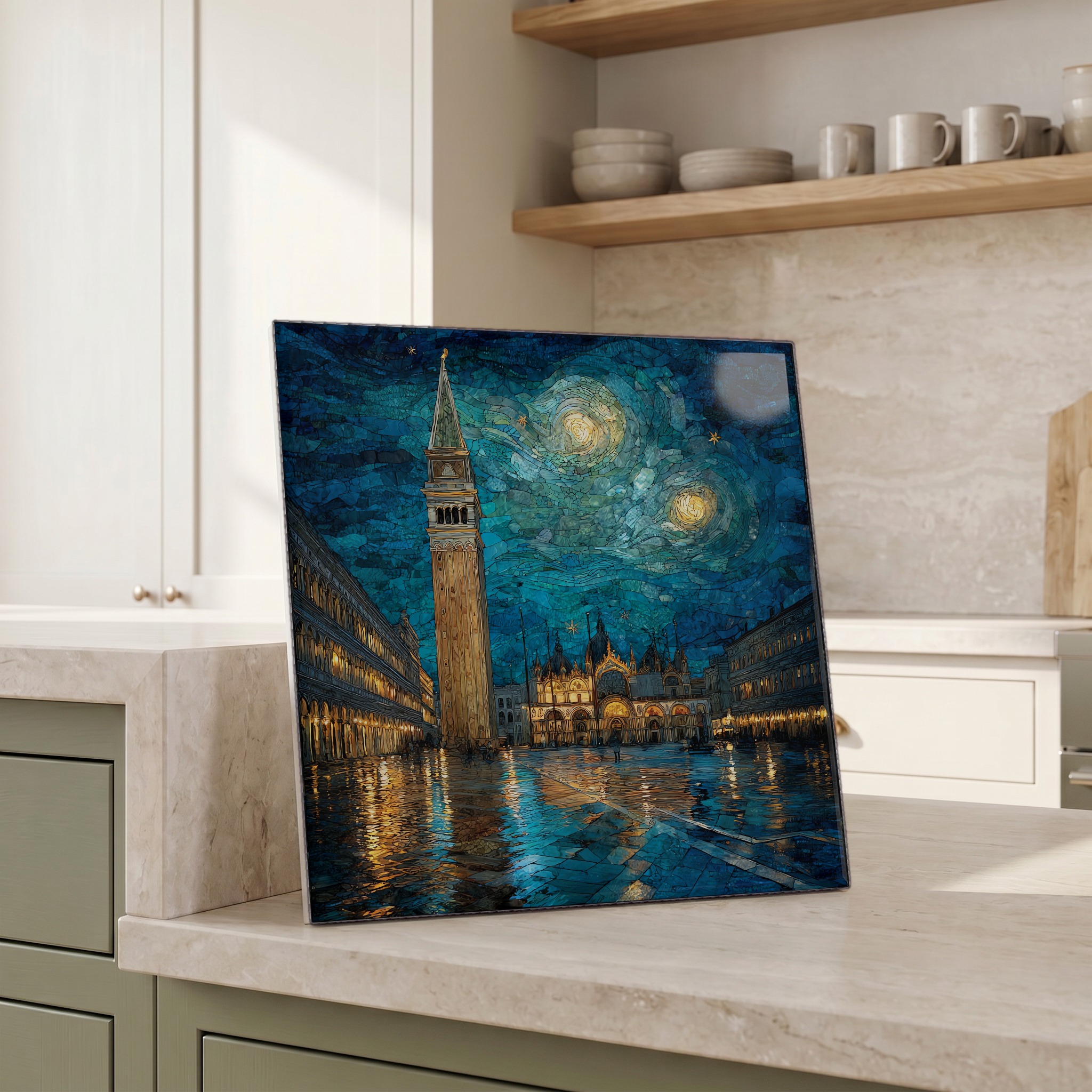
St Mark's Square, on ceramic.
Each tile is finished by hand in our Knoxville studio. Artwork is slowly infused into the ceramic surface under high heat and pressure, and rests beneath a thin glossy finish. The colour lives in the surface, not on top of it.
Pick any four 4-inch tiles — National Parks you've been to, a Smokies set, the four seasons of one place. $ for a set of , cork-backed, ready to live on the table.
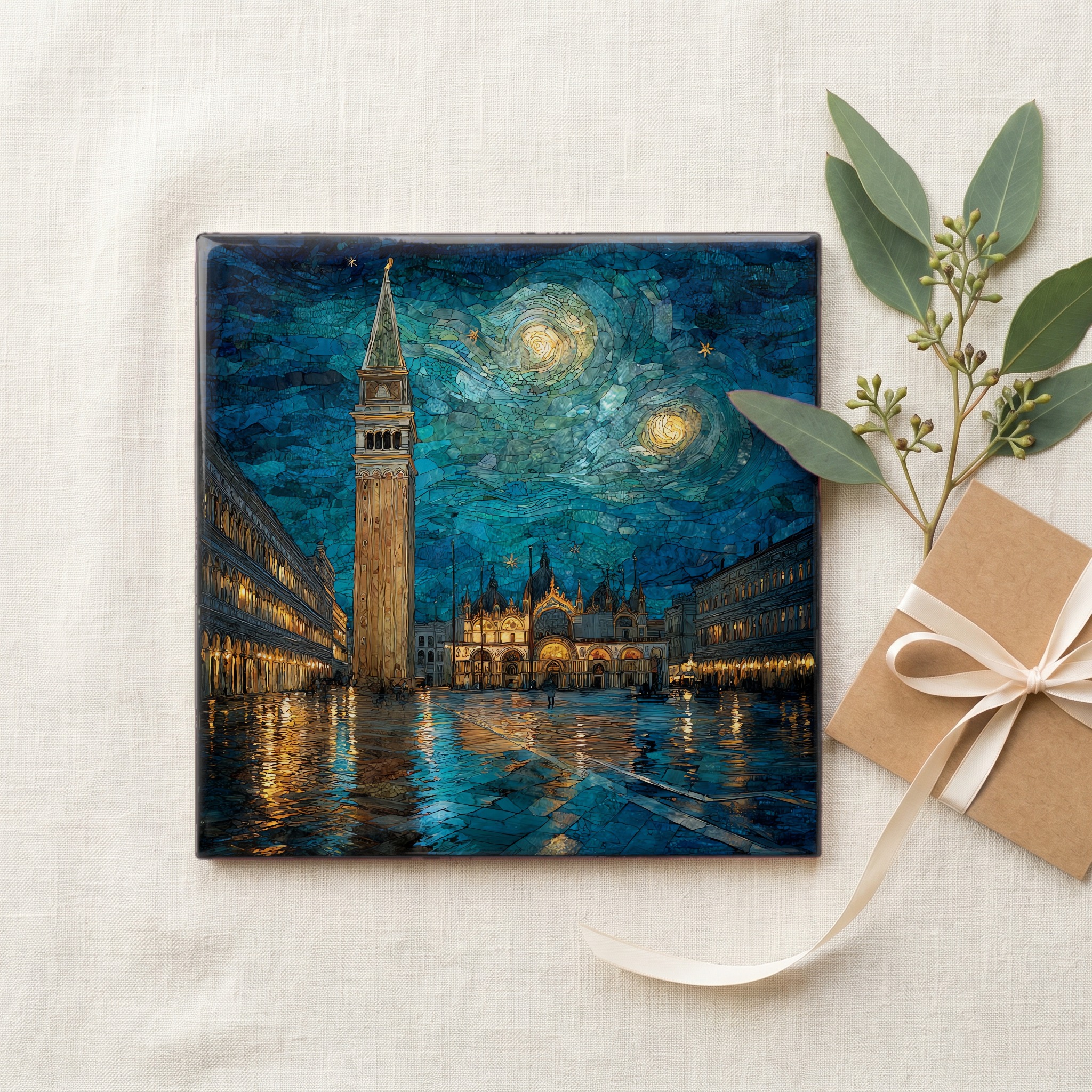
Each tile ships in a kraft box, tied with cream ribbon, with a handwritten note from the studio if you'd like to add one.
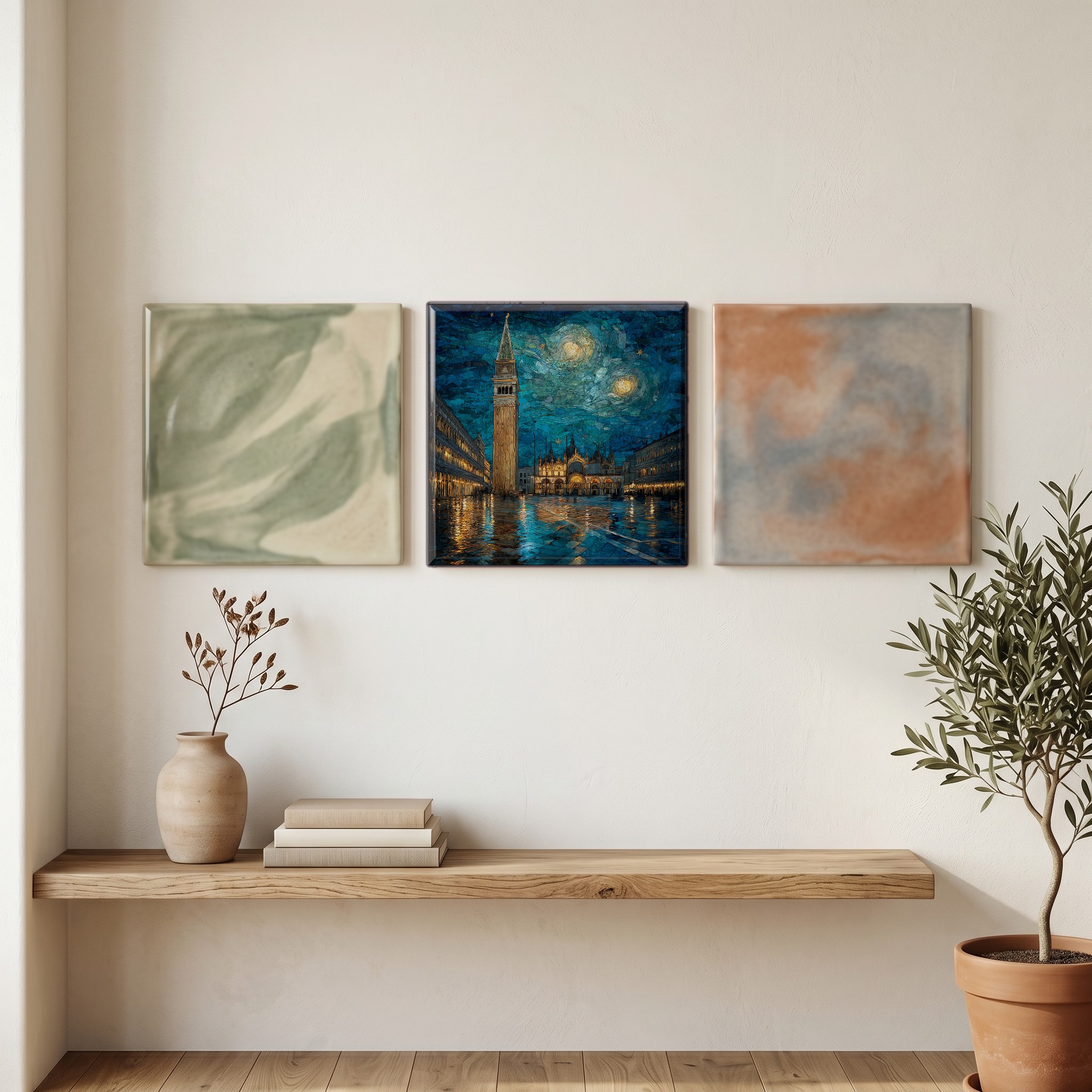
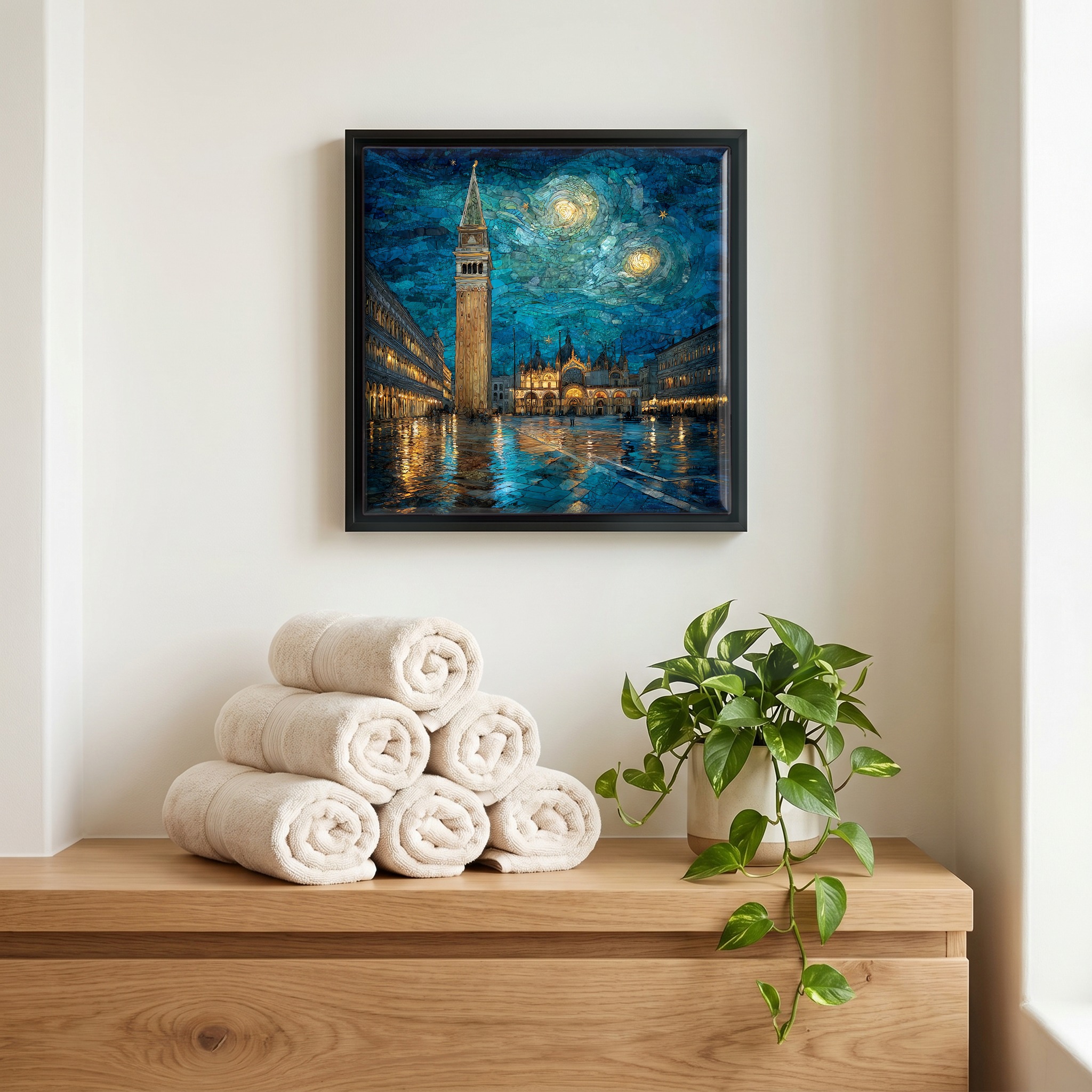
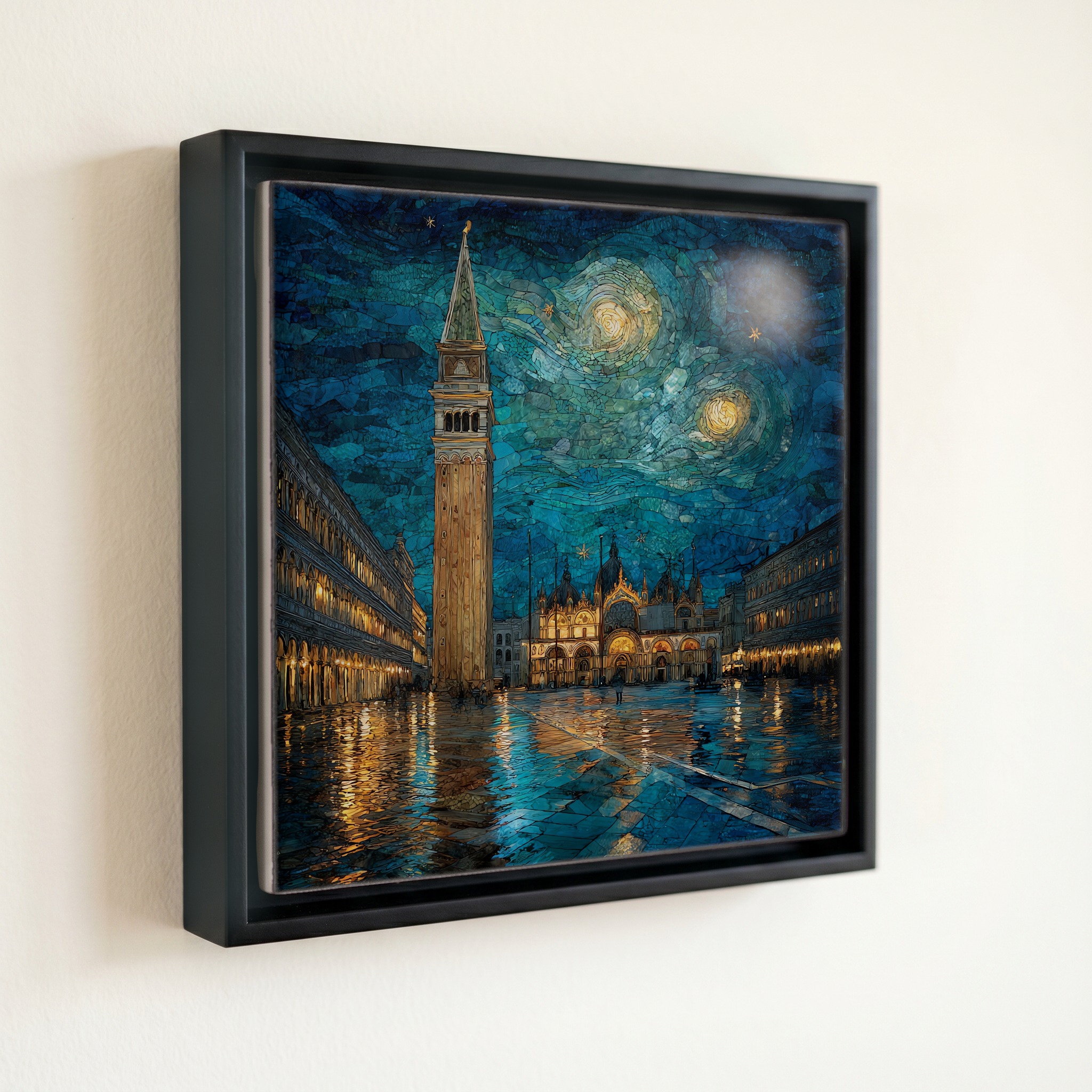
Three or five different vistas, hung together — a chapter of places you've been, or want to go.
The place, in three passes.
Piazza San Marco occupies the eastern edge of the sestiere of San Marco, on the main island of Venice in Italy's Veneto region. The square is roughly 175 metres long and 82 metres wide at its eastern end, framed by the Basilica di San Marco on the east, the Procuratie Vecchie on the north, and the Procuratie Nuove on the south. The Campanile rises 98.6 metres at the southwest corner, rebuilt in 1912 a decade after the original collapsed without warning. The square sits roughly a metre above sea level, the lowest open ground in the city. Venice and its lagoon have been a UNESCO World Heritage Site since 1987.
The Basilica di San Marco was begun in 1063 and consecrated in 1094 on the site of two earlier churches; its five-domed plan follows the Byzantine model of the Church of the Holy Apostles in Constantinople. The interior carries more than 8,000 square metres of gold-ground mosaic, much of it laid across four centuries. The four bronze horses above the central portal arrived from Constantinople in 1204 as spoil from the Fourth Crusade. The Torre dell'Orologio, on the north side of the square, has marked the hour since 1499. Underfoot the pavement is patterned Istrian limestone, replaced in panels as the lagoon tide wears each section down.
The square is the busiest point in Venice and crowded between mid-morning and dusk through spring and autumn. The dawn hour before the first vaporetto crowds and the cruise tender arrivals is the quietest window. Acqua alta is the tidal flooding that pushes lagoon water up through the pavement drains. The square sits roughly a metre above sea level, the lowest open ground in the city. Since the MOSE barrier system began coordinated operation in 2020, the number of flood events has dropped sharply. Caffè Florian, on the south side under the Procuratie Nuove, has served coffee continuously since 1720.