Wender·Vista
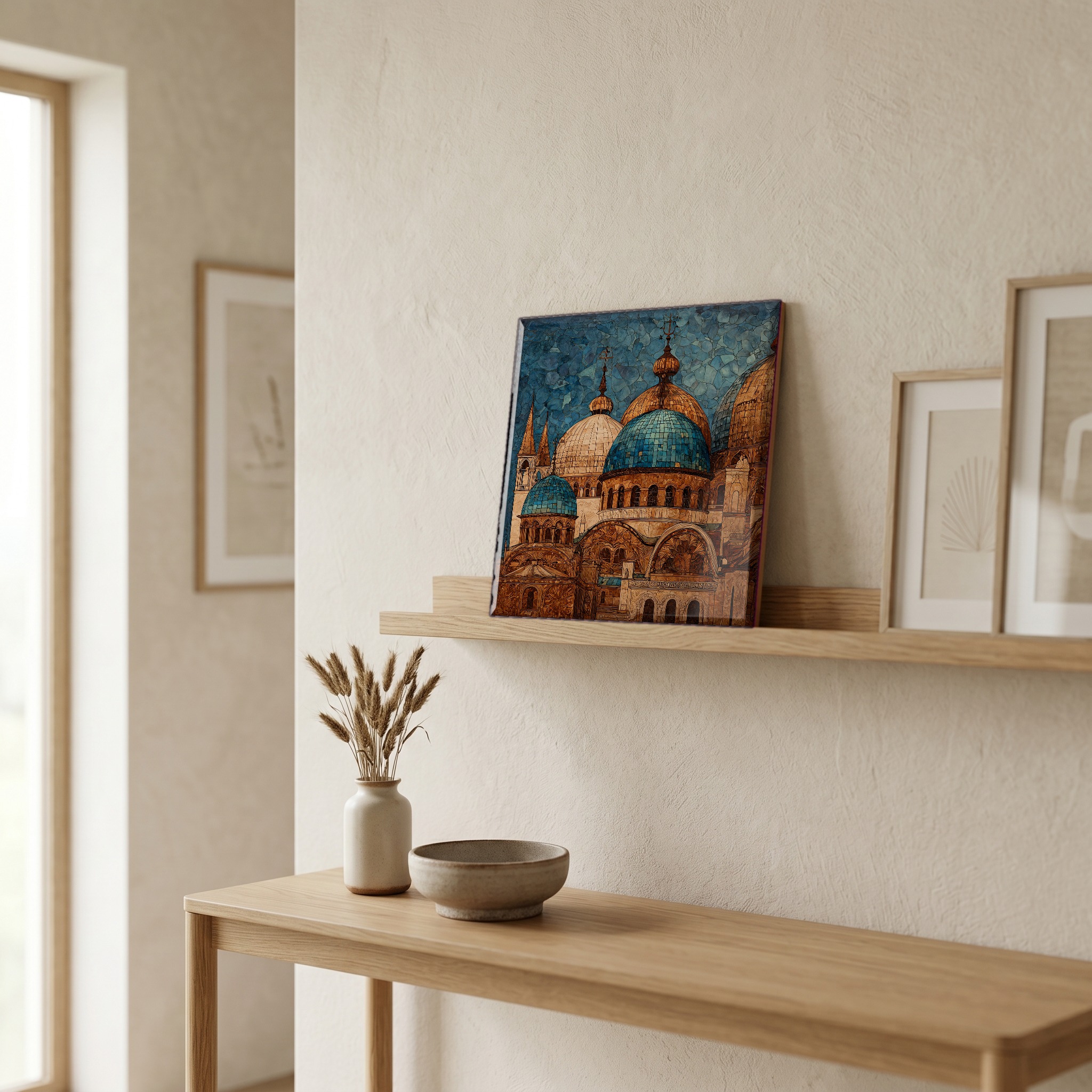
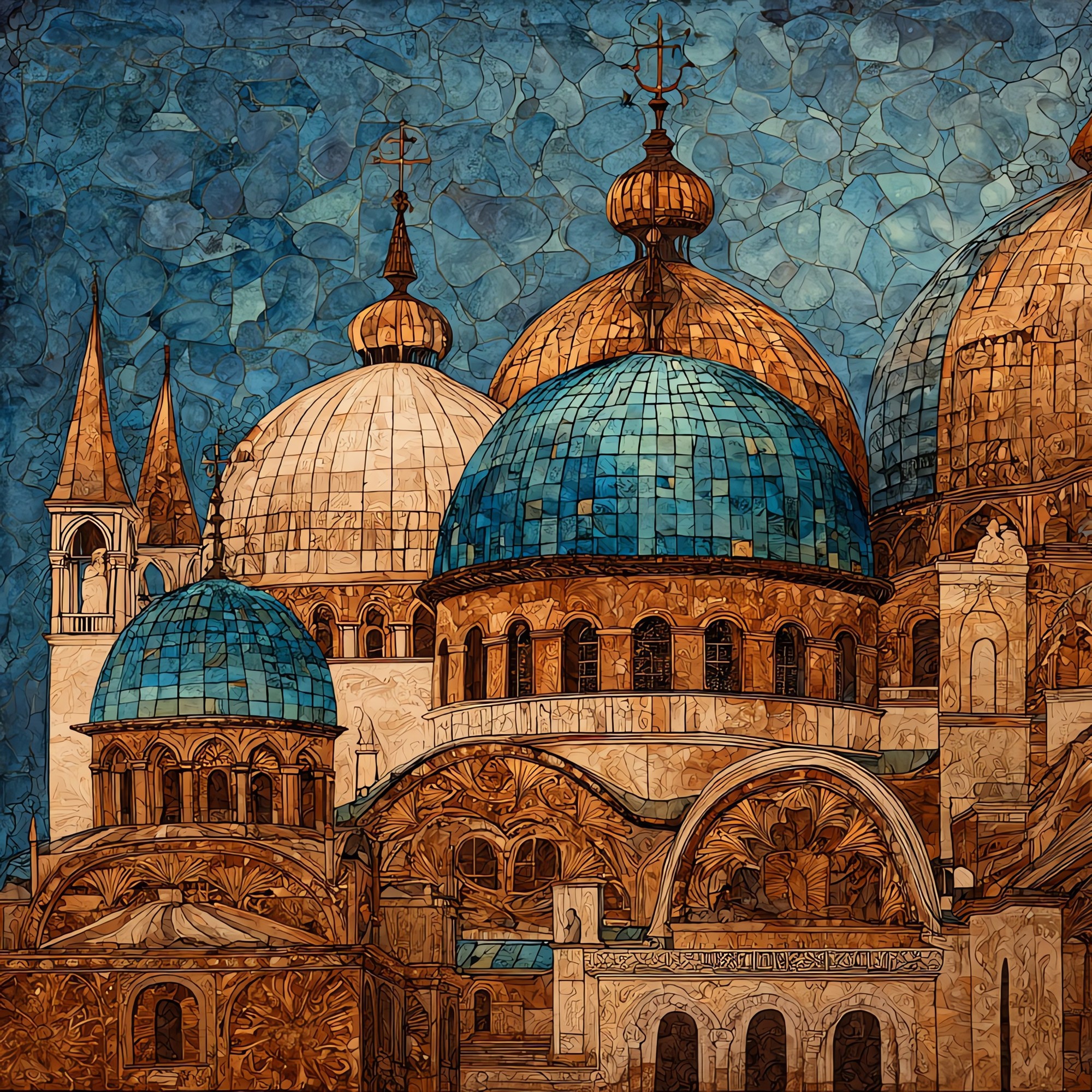
St. Mark's Basilica
shown on ceramic, 12-inch tileItaly
in Venice, at the head of Piazza San Marco

St. Mark's Basilica

the gold the lagoon-light keeps finding.

Where it lives

Not only on a wall.

A small tile on the nightstand catching the morning. A larger one above the fire. Yours, wherever you spend the slow hours.
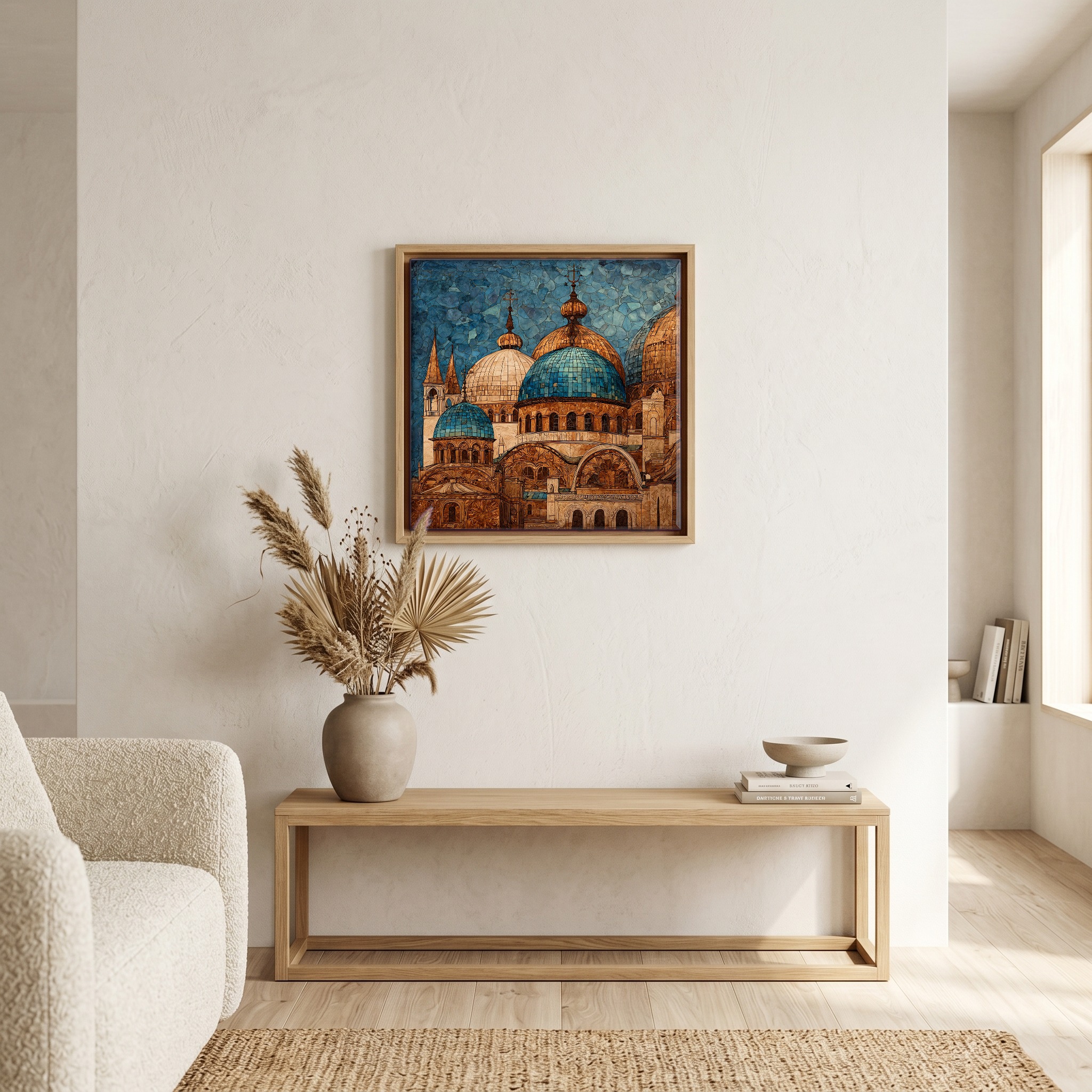
Above the bench, in a warm oak surround.
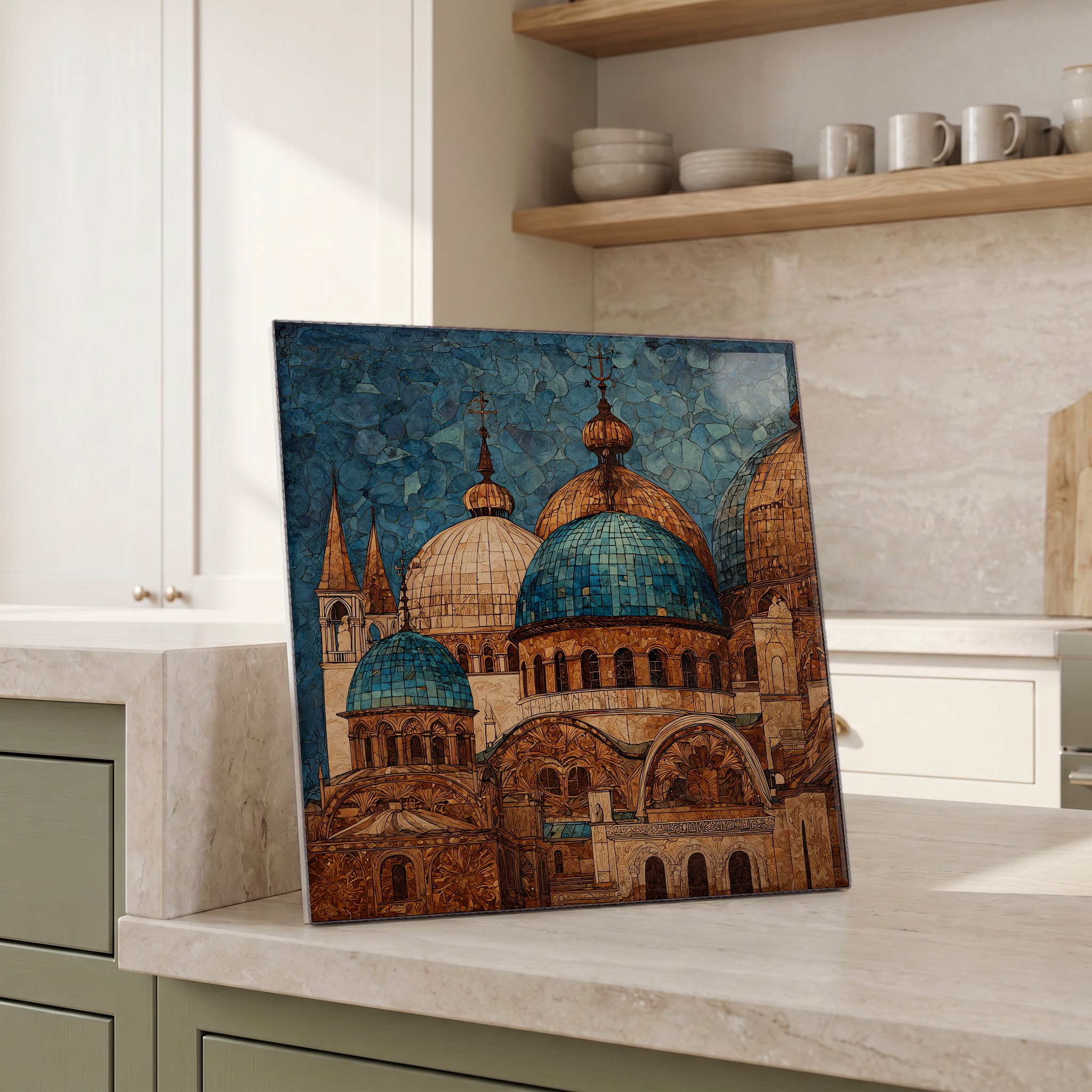
Beside the kettle, propped on the counter.
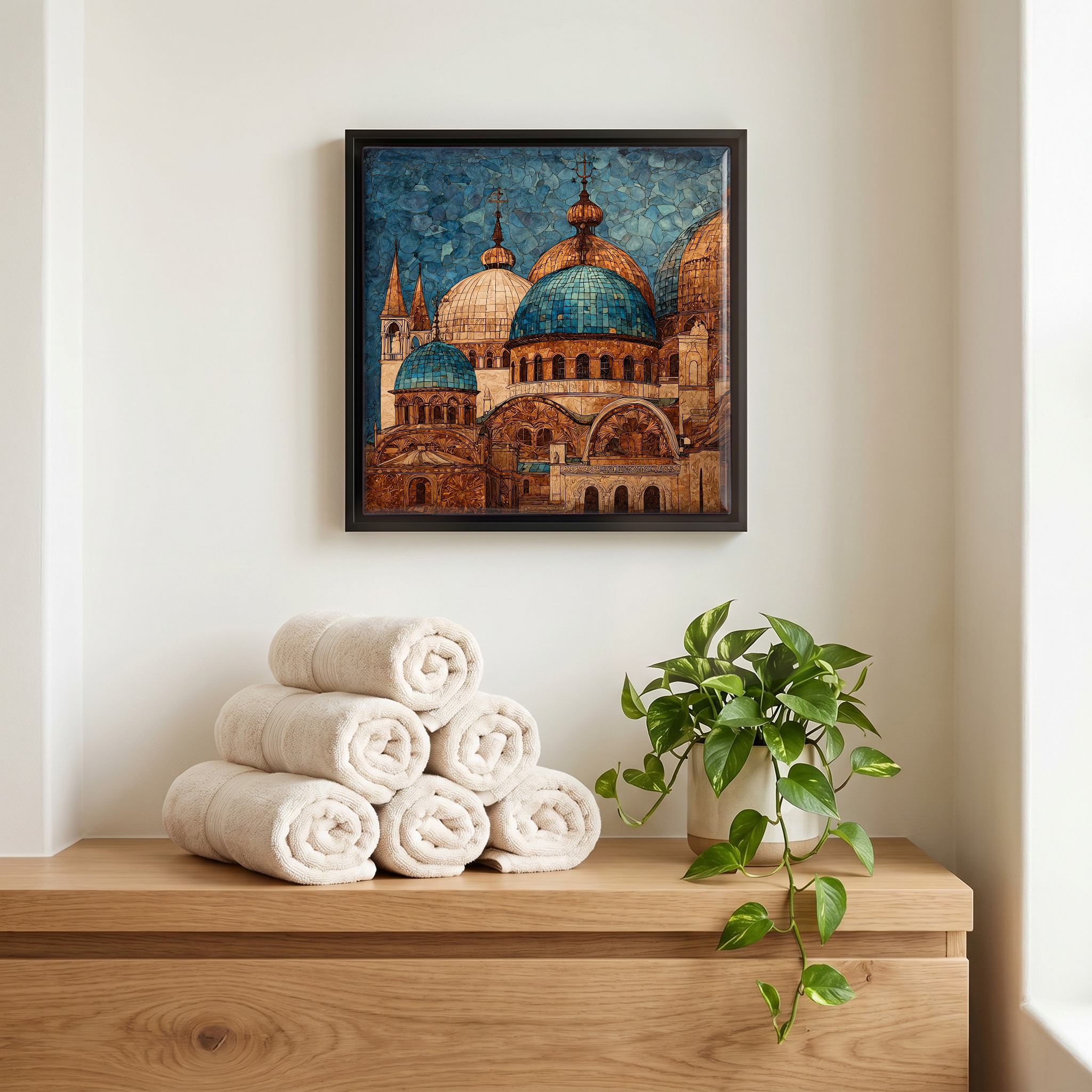
Above the linens, in a slim black surround.
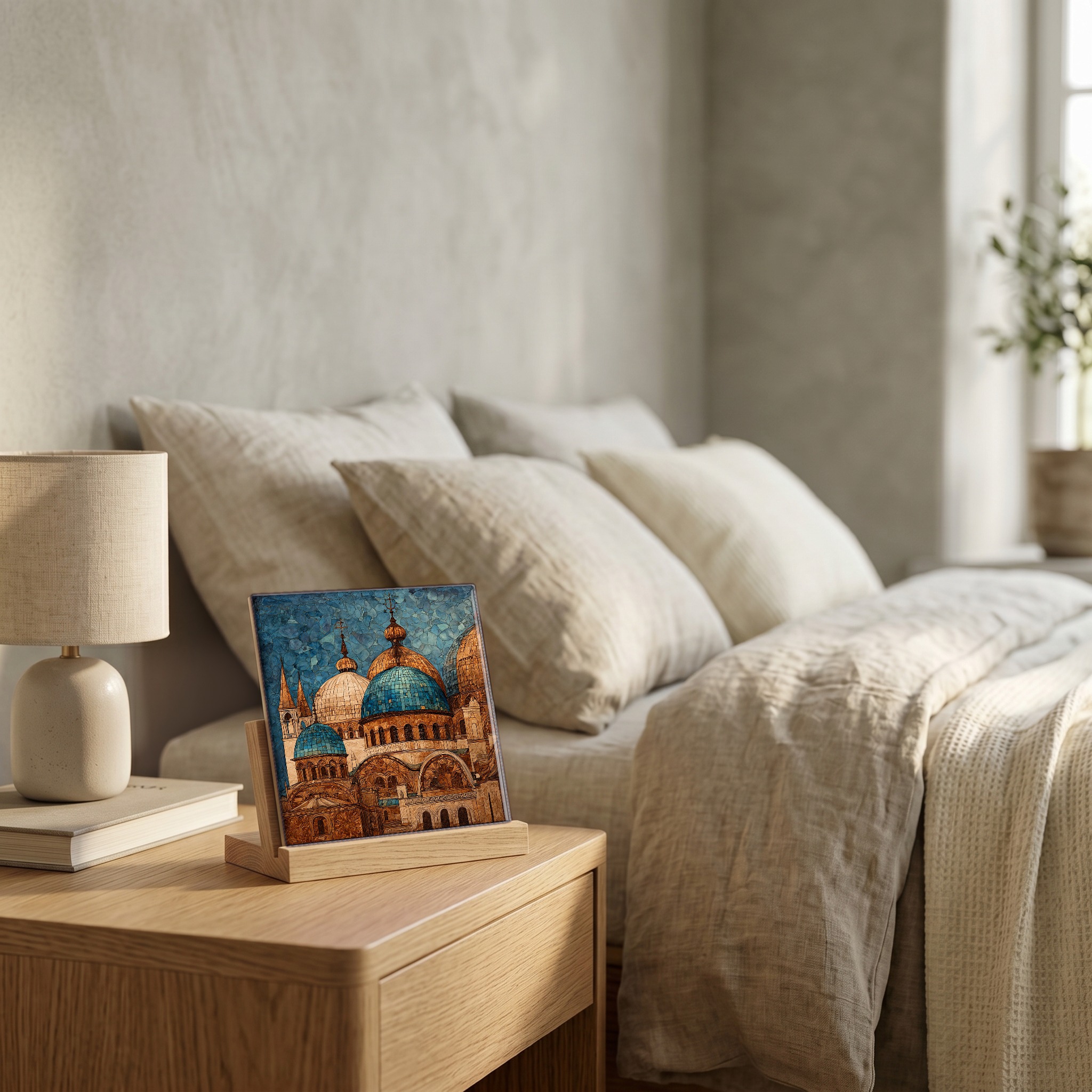
On the nightstand, on a light oak stand.
On a picture ledge, where the light comes in.
a note from the studio

At the head of Piazza San Marco, where Venice meets its lagoon. The church was begun in 1063 and consecrated in 1094, raised on the spot where two Venetian merchants had laid the relics of St Mark the Evangelist, smuggled out of Alexandria in 828. The Greek-cross plan, the five domes, the bronze horses on the upper loggia: most of it was brought home from Constantinople, often by force. Inside, more than 8,000 square metres of mosaic, set against gold-leaf backings that catch every kind of light. The morning sun off the lagoon, the candle in a side chapel, the slow swing of a lamp on a chain. The Venetians call it the Chiesa d'Oro, the Church of Gold.
from the studio
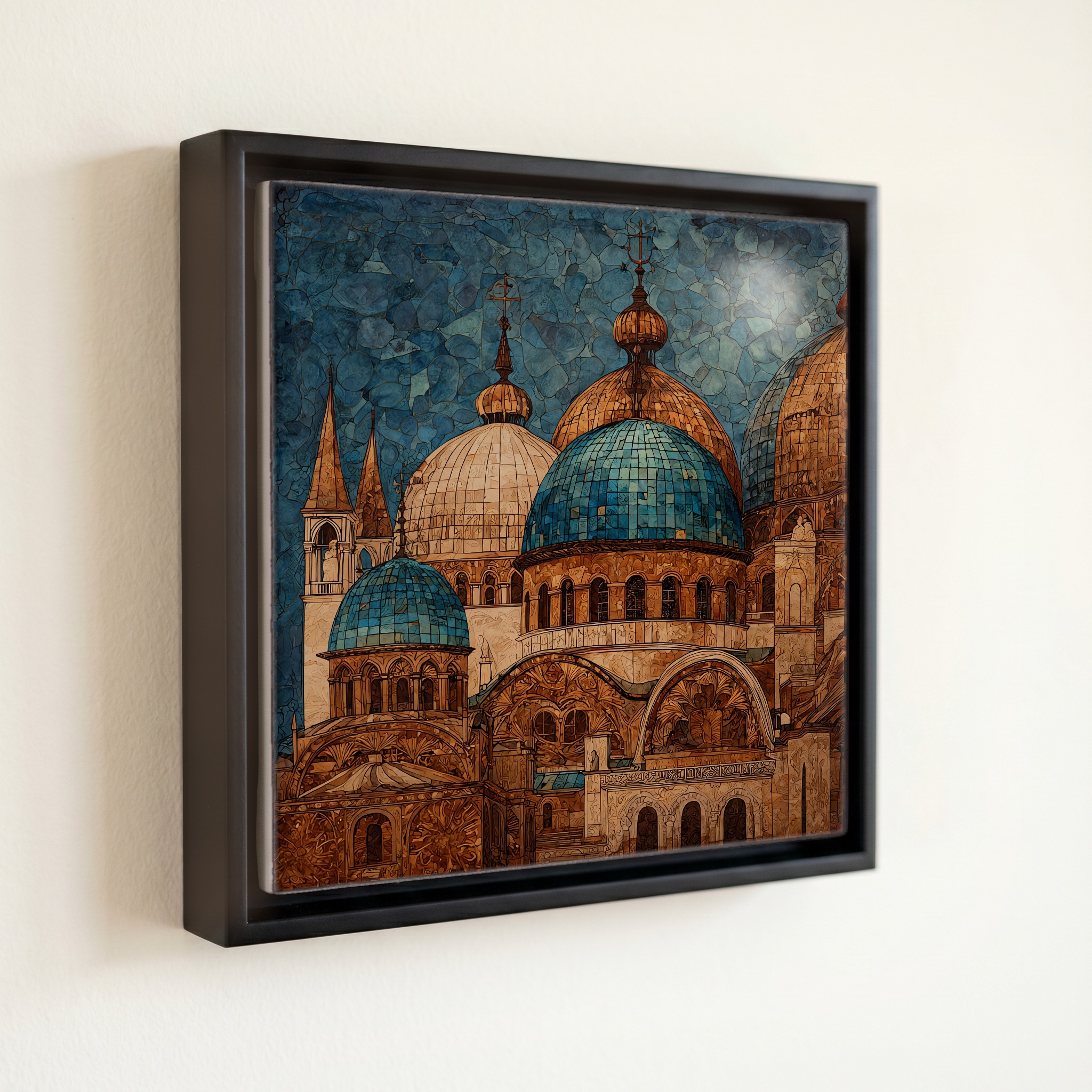
shown in a slim black floating frame · 6 × 6 in
— bring it home

St. Mark's Basilica, on ceramic.

Each tile is finished by hand in our Knoxville studio. Artwork is slowly infused into the ceramic surface under high heat and pressure, and rests beneath a thin glossy finish. The colour lives in the surface, not on top of it.

What kind of piece?
One tile — square or rectangle.
How big?
the popular one — counter, shelf, nightstand
6 × 6 in · 15 cm · 1.6 lb
Surface finish
A clear glossy finish — the artwork reads as if under resin. Ideal for show-pieces and framed wall art.
How it sits
A hidden cleat — sits ¼″ proud of the wall.
$58
Hand-finished and shipped from our studio at the foot of the Smokies. On your wall in about ten days.
size
6 × 6 in
15 cm
weighs
1.6 lb
solid in the hand
surface
ceramic, hand-finished
art rests beneath a thin glossy finish
from
Knoxville, TN
our family studio, at the foot of the Smokies
— start a Coaster Set

Pick any four 4-inch tiles — National Parks you've been to, a Smokies set, the four seasons of one place. $ for a set of , cork-backed, ready to live on the table.
comes gift-ready
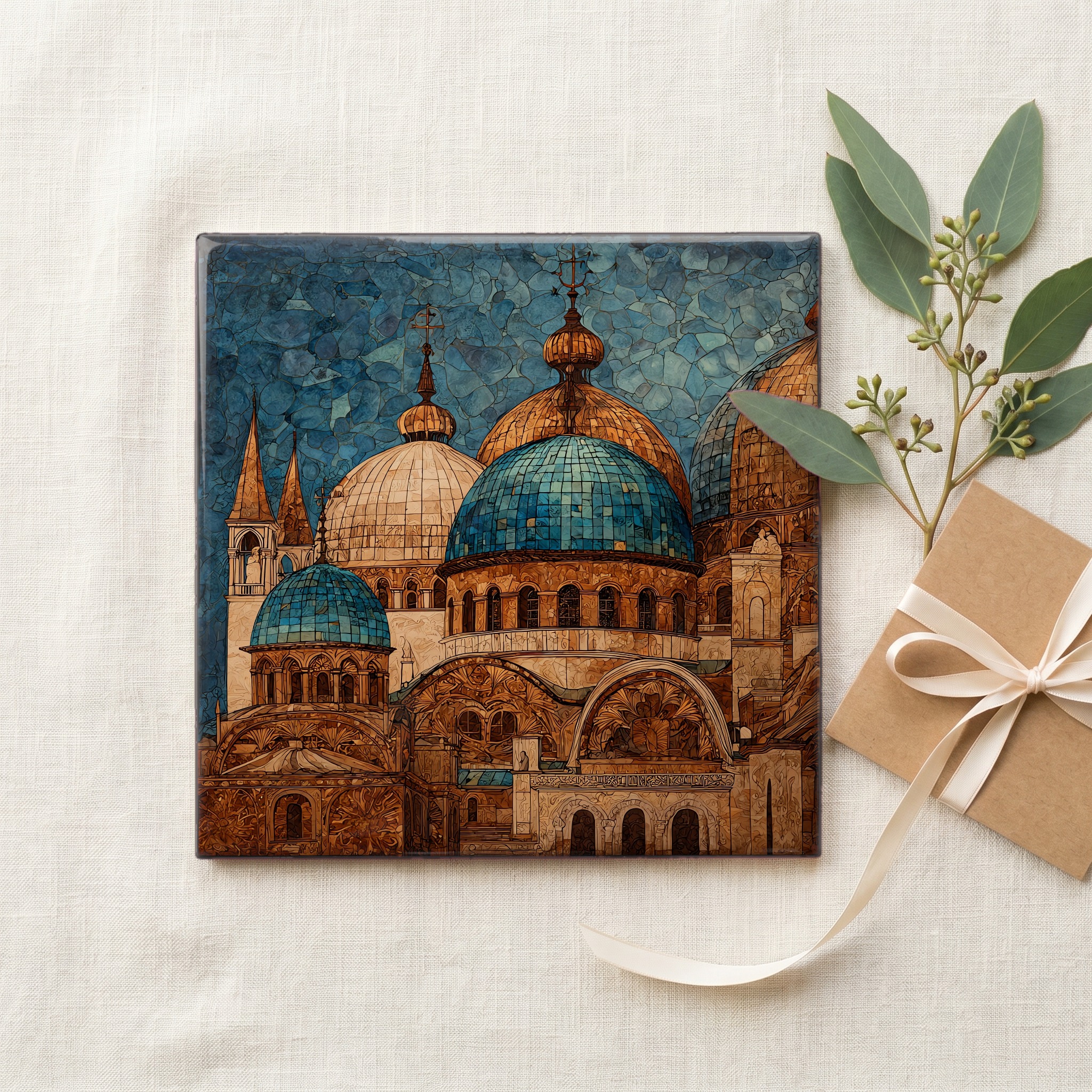
comes gift-ready

Each tile ships in a kraft box, tied with cream ribbon, with a handwritten note from the studio if you'd like to add one.
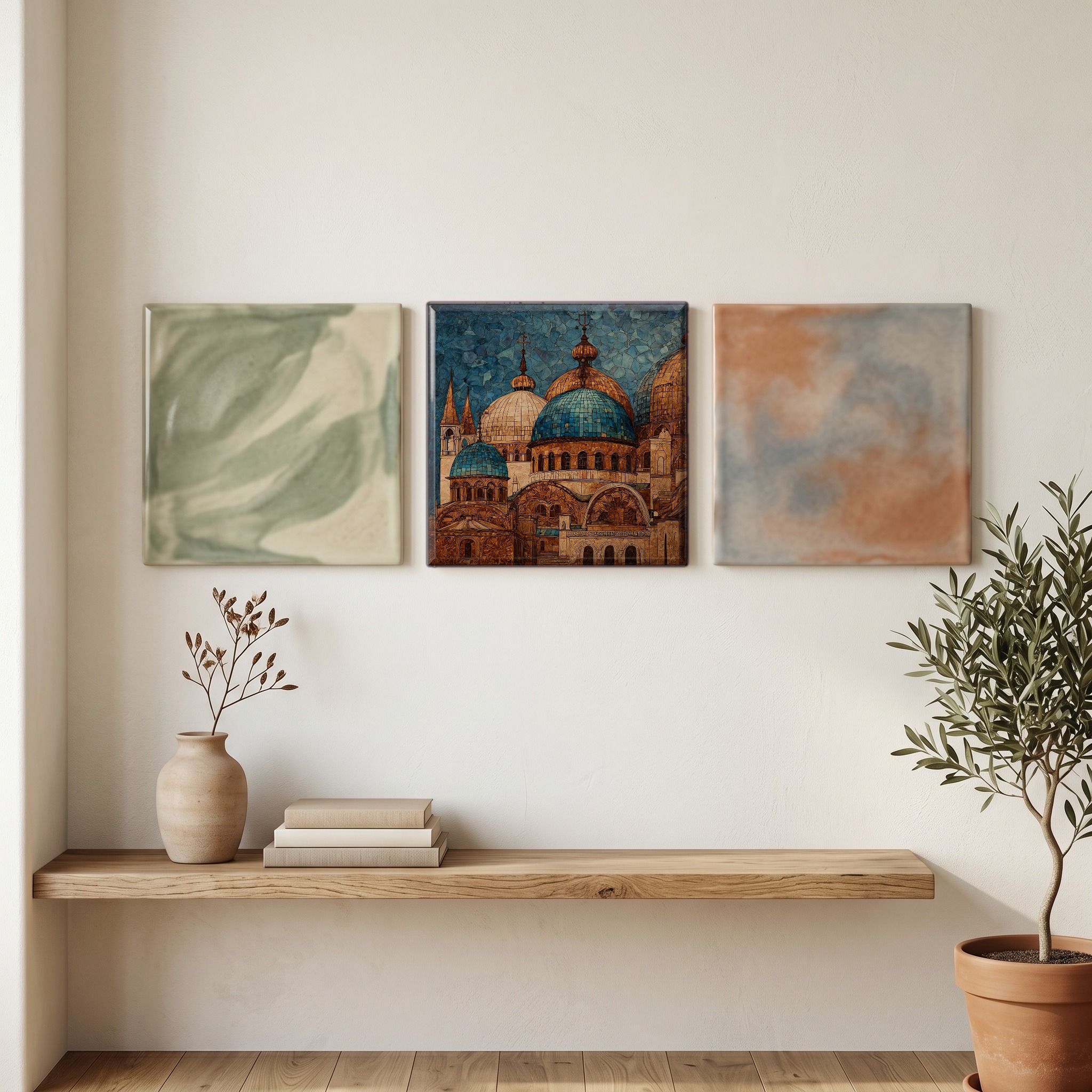
or build a grouping
or build a grouping

Three or five different vistas, hung together — a chapter of places you've been, or want to go.

about St. Mark's Basilica

The place, in three passes.

A little of what's known, in case you fall down the rabbit hole — or want to go see it yourself.
the place

St Mark's Basilica is the cathedral of the Patriarch of Venice and the principal church on Piazza San Marco, at the eastern edge of the sestiere of San Marco on the main island of Venice. The current building was begun in 1063 and consecrated in 1094, the third church on the site; the first was raised in 828 to hold the relics of St Mark the Evangelist, brought to Venice from Alexandria by two merchants and smuggled past Muslim customs officers under a layer of pork. Until 1807 the basilica was the private chapel of the Doge of Venice rather than a parish church, which is why its south flank meets the Piazzetta and connects directly to the Doge's Palace. Venice and its lagoon have been a UNESCO World Heritage Site since 1987.

the stone

The plan, the five domes, and much of the marble facing were drawn from a Byzantine model: the lost Church of the Holy Apostles in Constantinople, after which the basilica was deliberately patterned. From the Fourth Crusade in 1204, Venice carried home the spoils of that same city, including the four gilt-bronze horses now on the upper loggia, the porphyry tetrarchs set at the south-west corner of the facade, and the Byzantine enamels later worked into the Pala d'Oro behind the high altar. The horses on the facade today are bronze replicas, cast in 1979; the originals are kept indoors in the Museo di San Marco upstairs. The interior holds more than 8,000 square metres of mosaic, laid across four centuries from the 11th onward, with later panels restored after fires and floods.

the visit

The basilica is open to visitors most days from 9:30 AM, closing in the late afternoon, with shorter hours on Sundays and feast days. A small admission fee of about three euros was introduced in 2023 to help fund conservation work; entry to the nave was free for centuries before that. The Pala d'Oro behind the high altar, the Treasury, and the upper Loggia of the Horses each carry separate tickets. The dress code is observed: shoulders and knees covered, hats off, no large bags inside. The line at the main door can run an hour in summer; a reserved-entry ticket through the Procuratoria di San Marco bypasses it. Photography inside the nave is restricted.

where
Italy · Venice, Veneto
elevation
1 m · 3 ft
position
45.4345° N · 12.3397° E
the neighborhood

What's nearby.

A handful of named places within an hour's walk or short drive. Some we've already painted; some we will.
at the lake
Piazza San Marco
public square
at the lake
Doge's Palace
ducal palace
at the lake
Bridge of Sighs
limestone footbridge
1 km SW
Santa Maria della Salute
Baroque basilica
1 km S
San Giorgio Maggiore
island church
1 km NW
Rialto Bridge
Grand Canal bridge
2 km NE
Murano
glassmaking island
N
St. Mark's Basilica
Piazza San Marco
Doge's Palace
Bridge of Sighs
Santa Maria della Salute
San Giorgio Maggiore
Rialto Bridge
Murano
common questions

What people ask.

A few questions we get about St. Mark's Basilica — and about bringing the piece home.
about the place

St Mark's Basilica stands at the eastern end of Piazza San Marco in Venice, in Italy's Veneto region. Its main facade faces west across the square; its south flank meets the Doge's Palace and the Piazzetta opening to the lagoon. It has been the cathedral of the Patriarch of Venice since 1807.

The basilica's interior holds more than 8,000 square metres of mosaic, set against gold-leaf backings that catch and throw the light. The Venetians have long called it the Chiesa d'Oro, the Church of Gold. The earliest mosaics date to the 11th century; later panels were laid and restored across the centuries that followed.

Italo-Byzantine. The basilica is built to a Greek-cross plan with five domes, deliberately patterned on the Church of the Holy Apostles in Constantinople. Gothic and Renaissance work was added to the upper facade and the loggia in the later medieval centuries, but the structure beneath is the 11th-century Byzantine model.

No. The horses on the upper loggia today are bronze replicas cast in 1979. The originals were carried home from the Hippodrome of Constantinople after the Fourth Crusade in 1204 and are now kept indoors in the Museo di San Marco above the church, out of the salt air and the lagoon damp.

A small admission fee of about three euros was introduced in 2023 to help fund conservation work; entry to the nave was free for centuries before that. The Pala d'Oro behind the high altar, the Treasury, and the upper Loggia of the Horses each carry separate tickets through the Procuratoria di San Marco.

The current basilica was begun in 1063 and consecrated in 1094, the third church on the site. The first was built in 828 to hold the relics of St Mark the Evangelist, smuggled from Alexandria by two Venetian merchants. That building burned in 976, and its replacement was then expanded and rebuilt to the present Greek-cross plan.

The narthex and the lower nave sit at the lowest point in central Venice and have flooded regularly during the acqua alta of autumn and winter. Since 2020 the MOSE barrier system at the lagoon mouth has reduced the worst tides, though the basilica still takes water in a hard year.

about the piece in your home

It has been a meaningful gift for many of our customers with Venetian roots. San Marco is the symbol of Venice and the centre of Venetian civic memory. For a friend who grew up in the Veneto, lived a season in Venice, or honeymooned there, a Small or Medium with a handwritten note from the studio carries well.

The piece carries deep golds, lagoon blues, and ink-dark contours. It sits well in Old World Maximalist rooms, traditional Italianate interiors, and the warmer end of European-eclectic. It also reads as the focal point of a quieter library or Mountain-modern room where the gold gives the wall its temperature.

It is. The Old-World revival running through 2025 and 2026 has put gilded surfaces, ecclesiastical imagery, and Italian travel anchors back on living-room walls. San Marco is the most recognised Venetian interior in the world, and our Voynich rendering carries the gold mosaics and the lagoon palette in a single frame.

Above a standard sofa, a single Large reads as a window into the basilica from across the room. A 4-tile Mural fills a generous wall above a longer sofa. Above a console, a Medium sits in proportion. A 9-tile Mural is the right scale for a dining room or a tall entry wall.

Yes. Specify the Dura Satin finish for soft sheen and scratch resistance, or the Matte finish for no sheen at all. Both are suited to backsplashes, showers, and vertical bathroom installations. The Glossy finish is reserved for framed wall pieces in dry rooms where the high sheen does the work.

A soft microfibre cloth and clean water handle ordinary dust and fingerprints. The colour is slowly infused into the ceramic surface under high heat and pressure and rests beneath a thin glossy finish, so the image will not scuff or fade with normal cleaning. Avoid abrasive pads and bleach-based sprays.

Yes. Reid Wender is the curator and the eye behind every piece in the WenderVista atlas. The work is made in our family studio in Knoxville, Tennessee, slowly infused into the ceramic surface under high heat and pressure, and hand-finished. The studio does not license or resell.

if this one stayed with you

A few you might also love.

Hand-picked by the eye that found Sorapis. Same air, same kind of quiet.
— a collection

The Italian Dolomites,
painted slow.

The valleys between Cortina and Val Gardena, the tarns you walk an hour to see, the towers that turn the colour of a banked fire just before dark. Wander the collection by valley, by season, or follow the path Reid walked.

Tre Cime
Braies
Misurina
Sorapis
Cinque Torri
Sassolungo
Marmolada