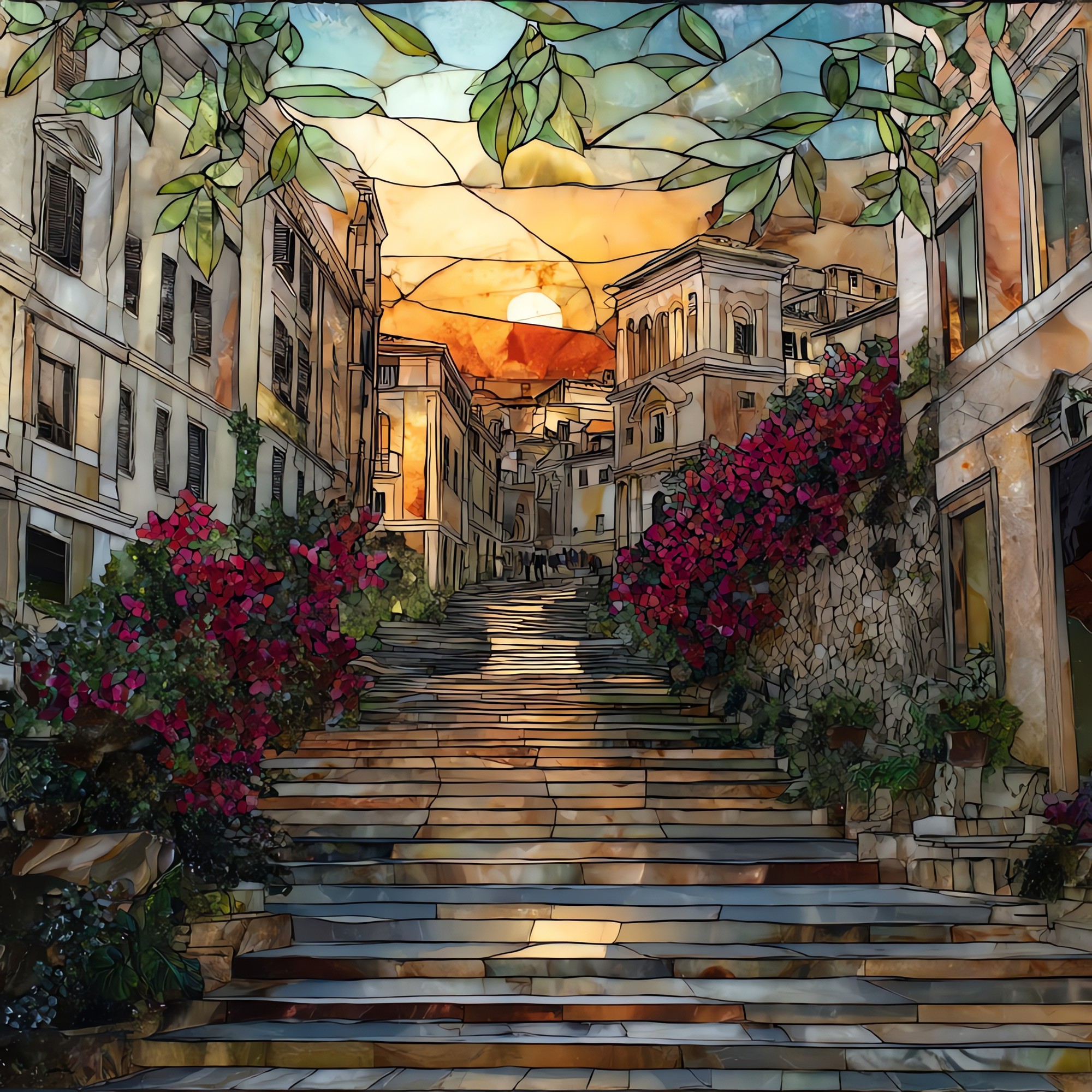
Spanish Steps
— — the morning the azaleas come back.
Not only on a wall.
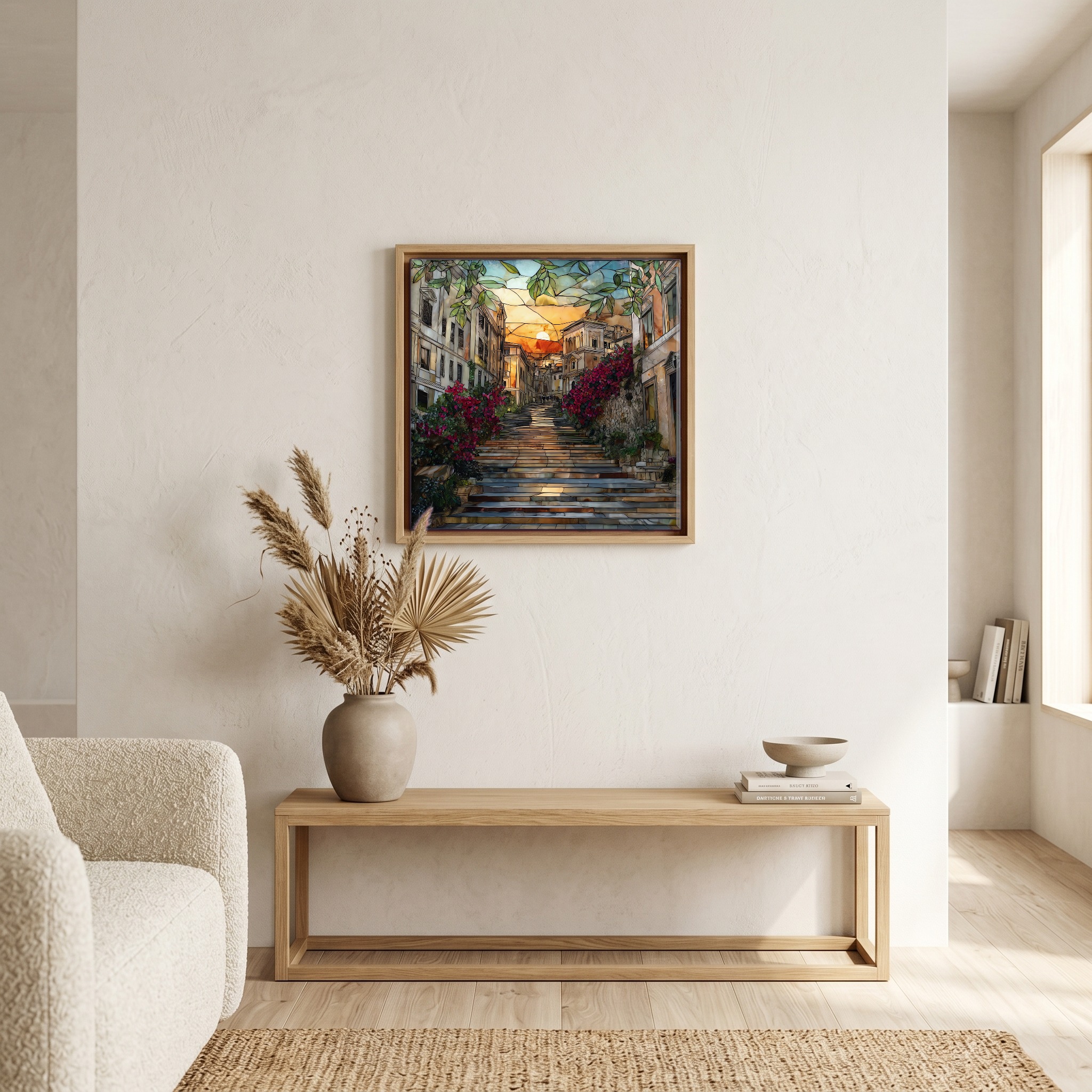
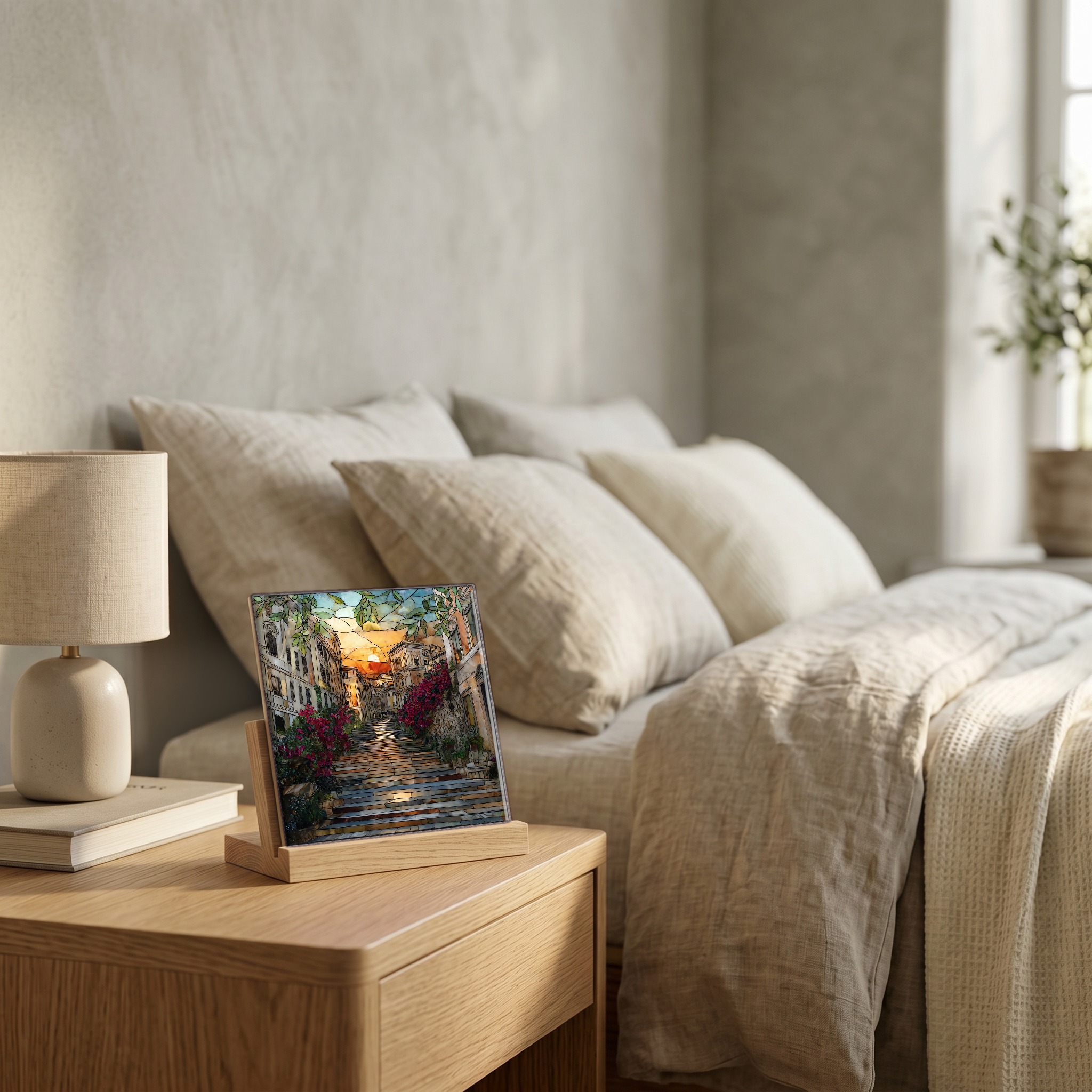
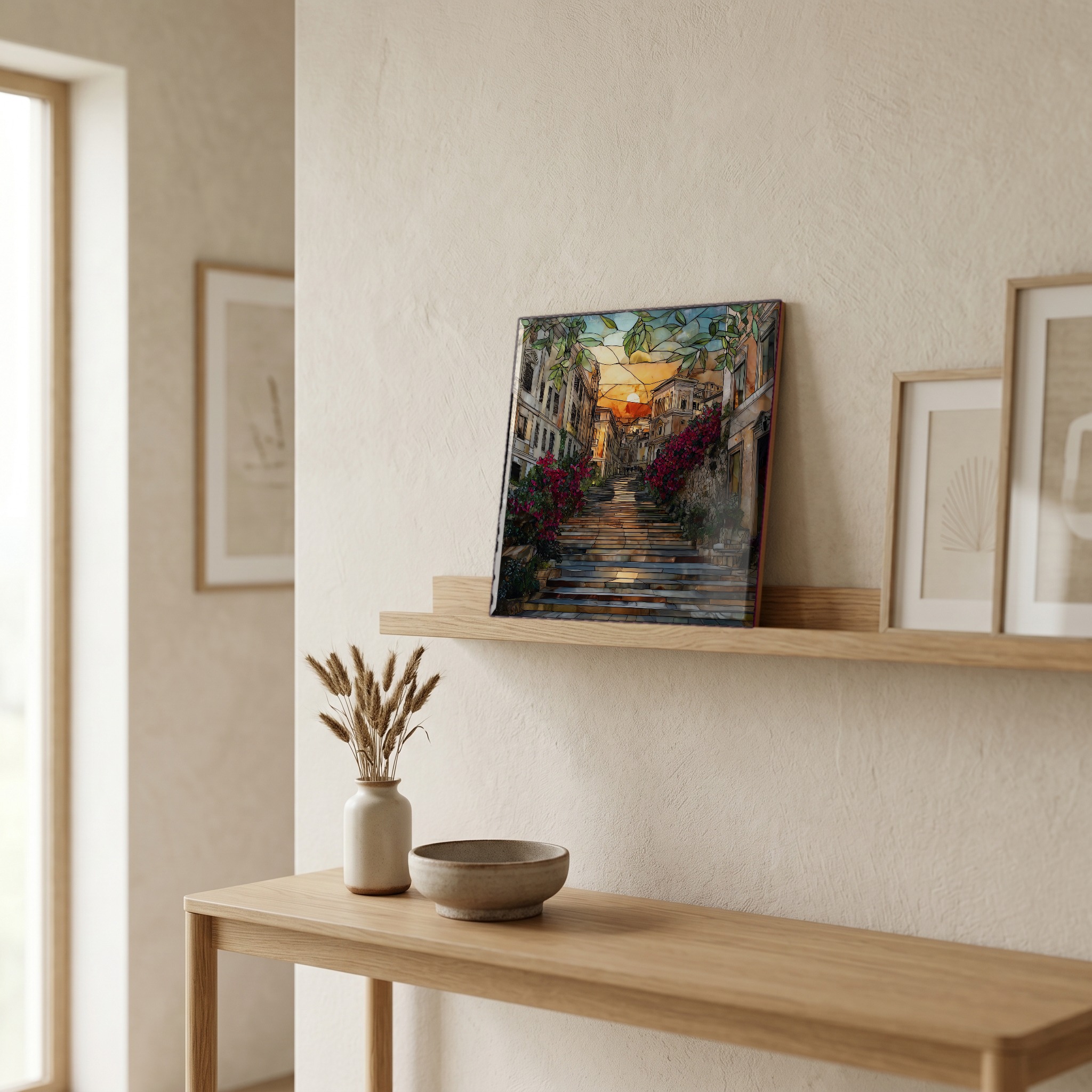
“One hundred thirty-five steps of travertine between the Piazza di Spagna and the church of Trinità dei Monti. A French diplomat left the money. A Roman architect, Francesco de Sanctis, drew the curves that make the climb feel like a wave breaking uphill. In April the city brings hundreds of azaleas and arranges them down the landings, pink against the pale stone. The crowd gathers from late morning on; before eight the steps are nearly empty, and the light slides down from the church the way water would. John Keats died in the small house at the right of the bottom step, in 1821. The building still has his window.
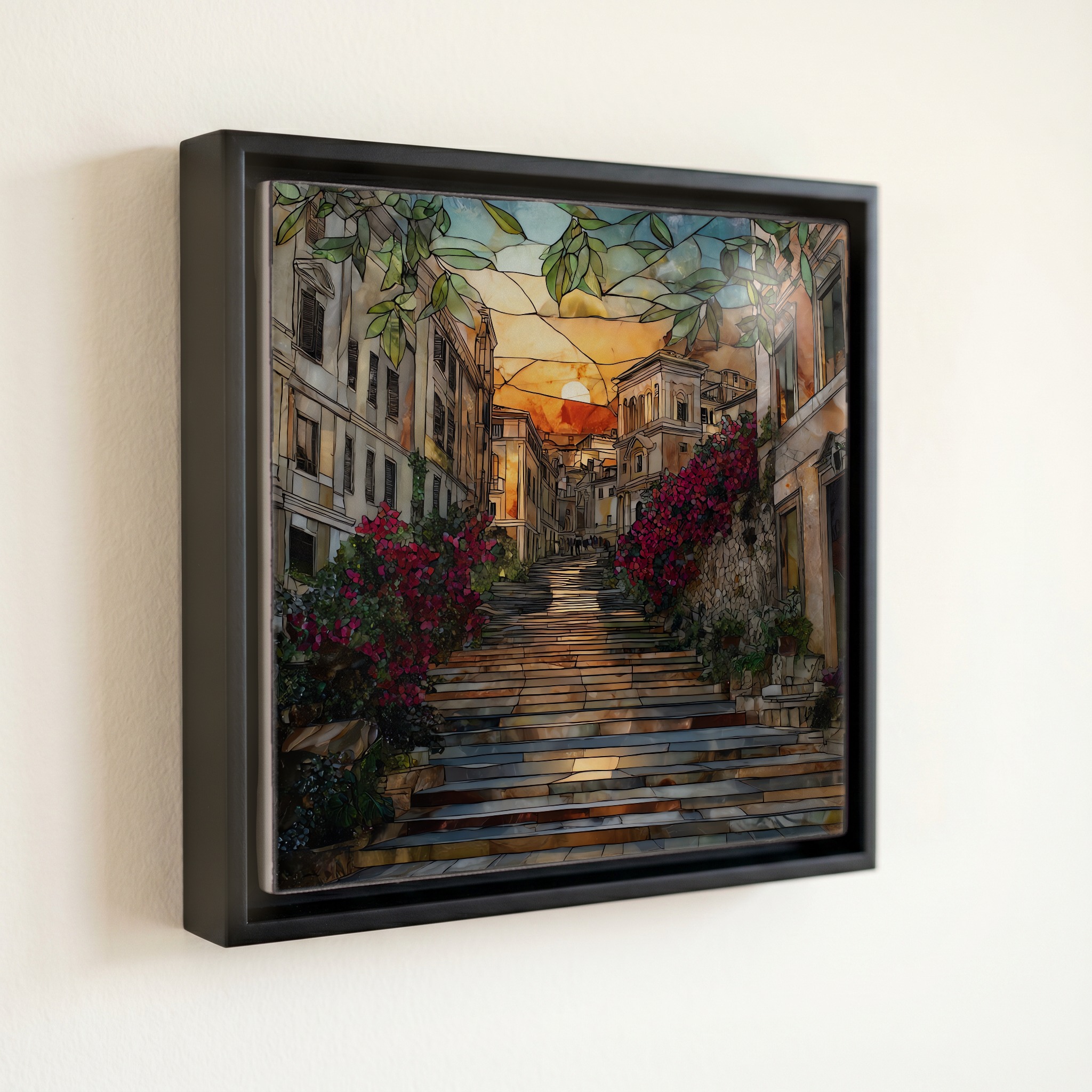
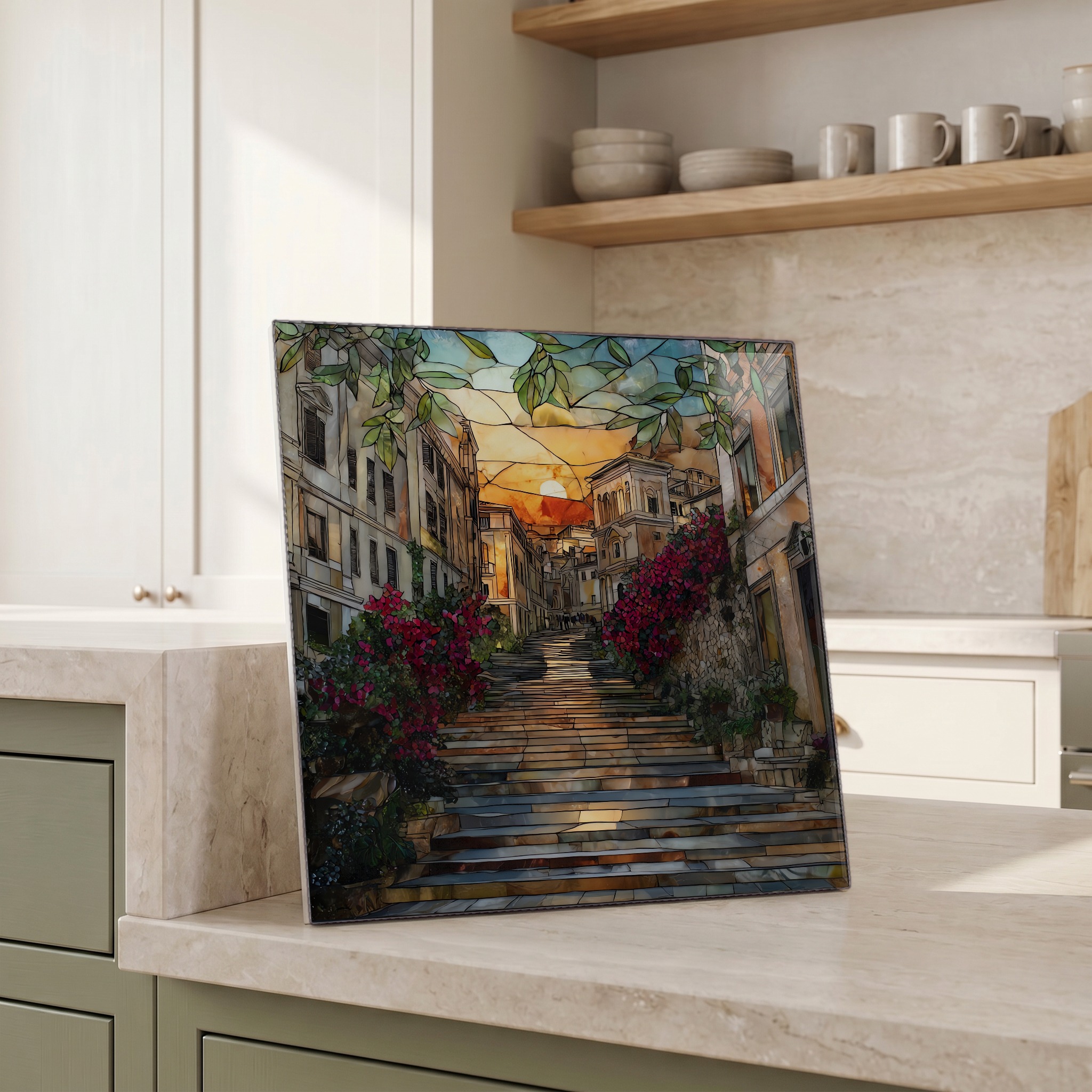
Spanish Steps, on ceramic.
Each tile is finished by hand in our Knoxville studio. Artwork is slowly infused into the ceramic surface under high heat and pressure, and rests beneath a thin glossy finish. The colour lives in the surface, not on top of it.
Pick any four 4-inch tiles — National Parks you've been to, a Smokies set, the four seasons of one place. $ for a set of , cork-backed, ready to live on the table.
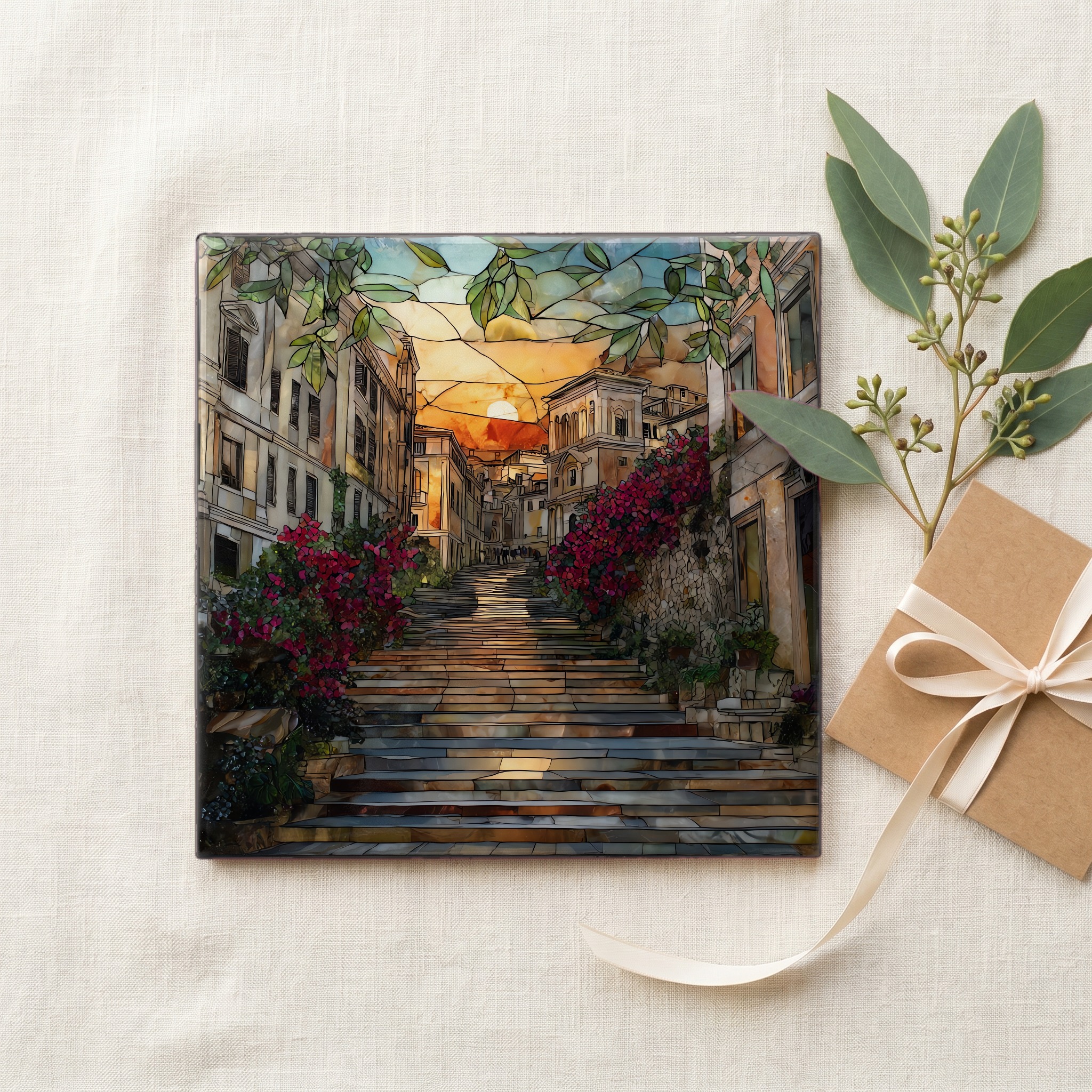
Each tile ships in a kraft box, tied with cream ribbon, with a handwritten note from the studio if you'd like to add one.
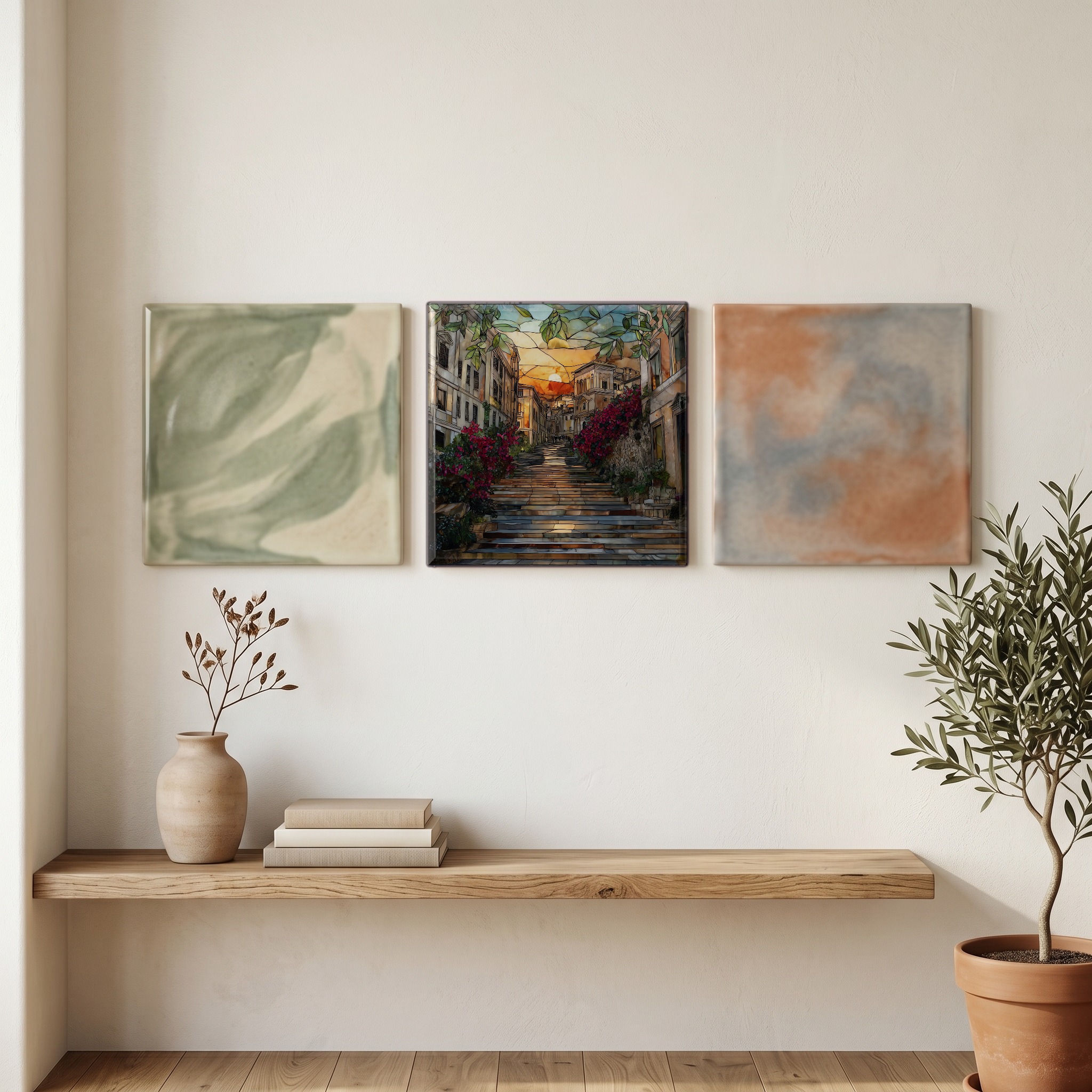
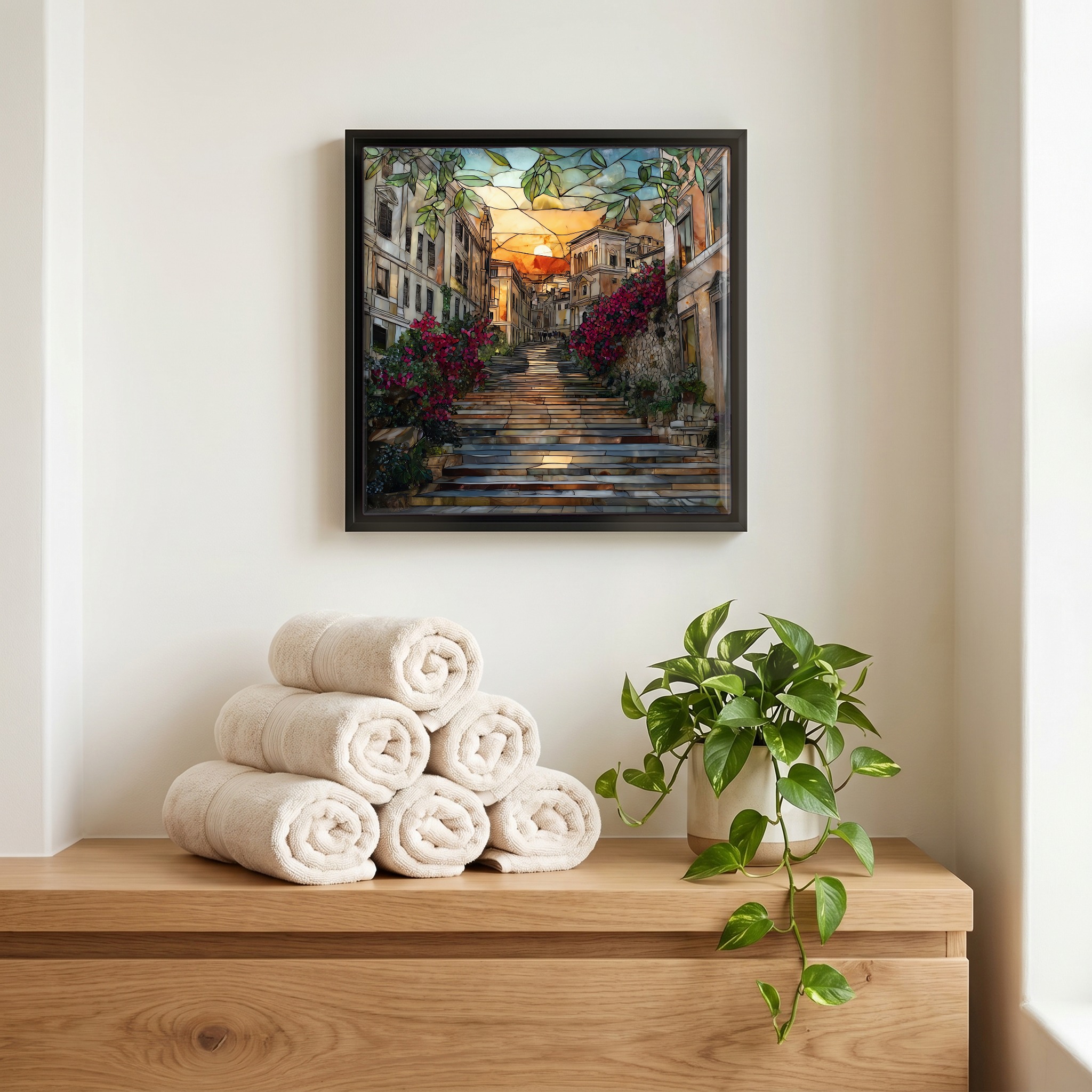
Three or five different vistas, hung together — a chapter of places you've been, or want to go.
The place, in three passes.
The Spanish Steps, in Italian Scalinata di Trinità dei Monti, are a monumental staircase of 135 travertine steps in the Campo Marzio district of central Rome, linking the Piazza di Spagna below with the church of Trinità dei Monti above. The staircase was funded by a 1660 bequest from the French diplomat Étienne Gueffier and designed by the Roman architect Francesco de Sanctis, who won an open competition in 1717; construction ran from 1723 to 1725 under Pope Innocent XIII. The English Romantic poet John Keats died in 1821 in lodgings at the foot of the steps, now the Keats-Shelley Memorial House. The Spagna stop on Metro Line A opens directly into the piazza.
The 135 travertine steps spread and gather in three landings shaped in Baroque style to soften the climb into something that reads as a single curving form rather than a flight of stairs. Francesco de Sanctis drew the staircase in 1717 to mediate between the Spanish embassy that gave the piazza its name and the French church of Trinità dei Monti at the top; the design quietly resolved a long diplomatic argument over who would own the connection between the two. Travertine is the same warm pale limestone the Romans used in the Colosseum, quarried at Tivoli, and it weathers to the cream-grey colour the staircase shows in early morning light.
Access to the steps is free, every day, with no ticket. Since 2019 sitting, eating, or drinking on the steps has been prohibited by Rome's municipal authority, with fines from €250 for sitting and higher for stains or damage. The most photographed moment is the spring azalea display, when the Sovrintendenza Capitolina arranges roughly six hundred potted azaleas down the landings; the bloom usually runs from mid-April into early May. The closest public transit is the Spagna station on Metro Line A. Crowds thin sharply before eight in the morning and after the last summer light, which arrives around nine in June.