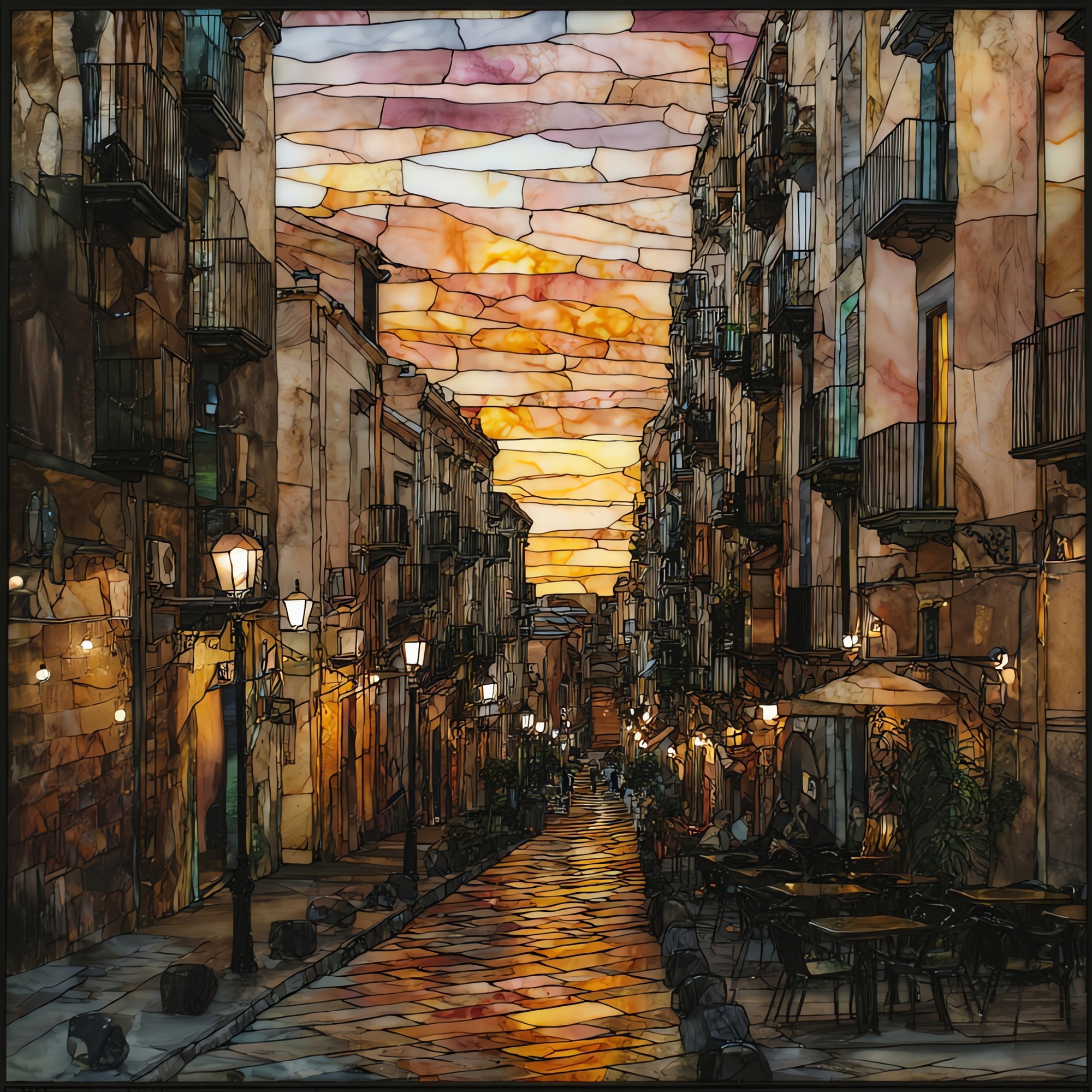
Spaccanapoli
— laundry, stone, and the long shade.
Not only on a wall.
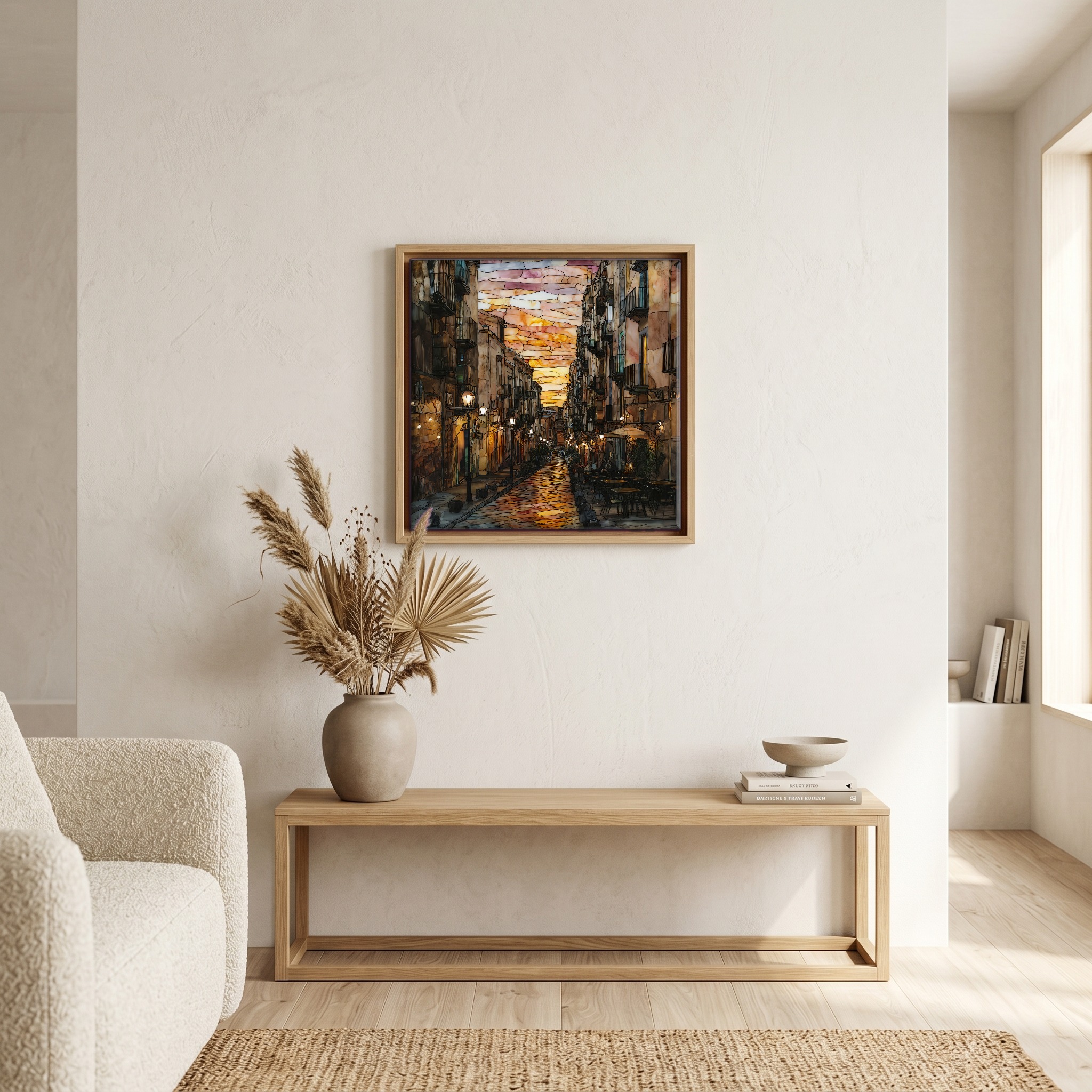
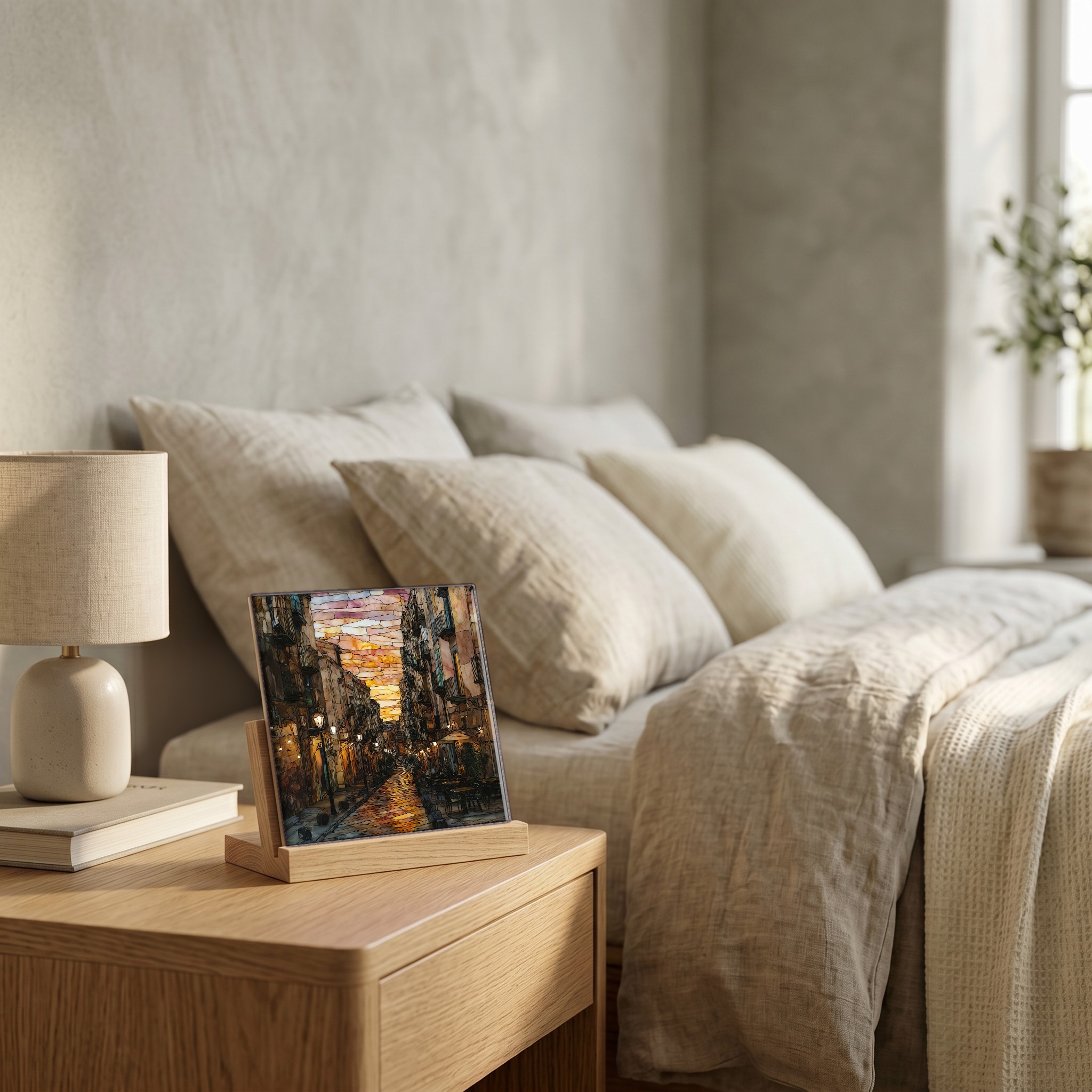
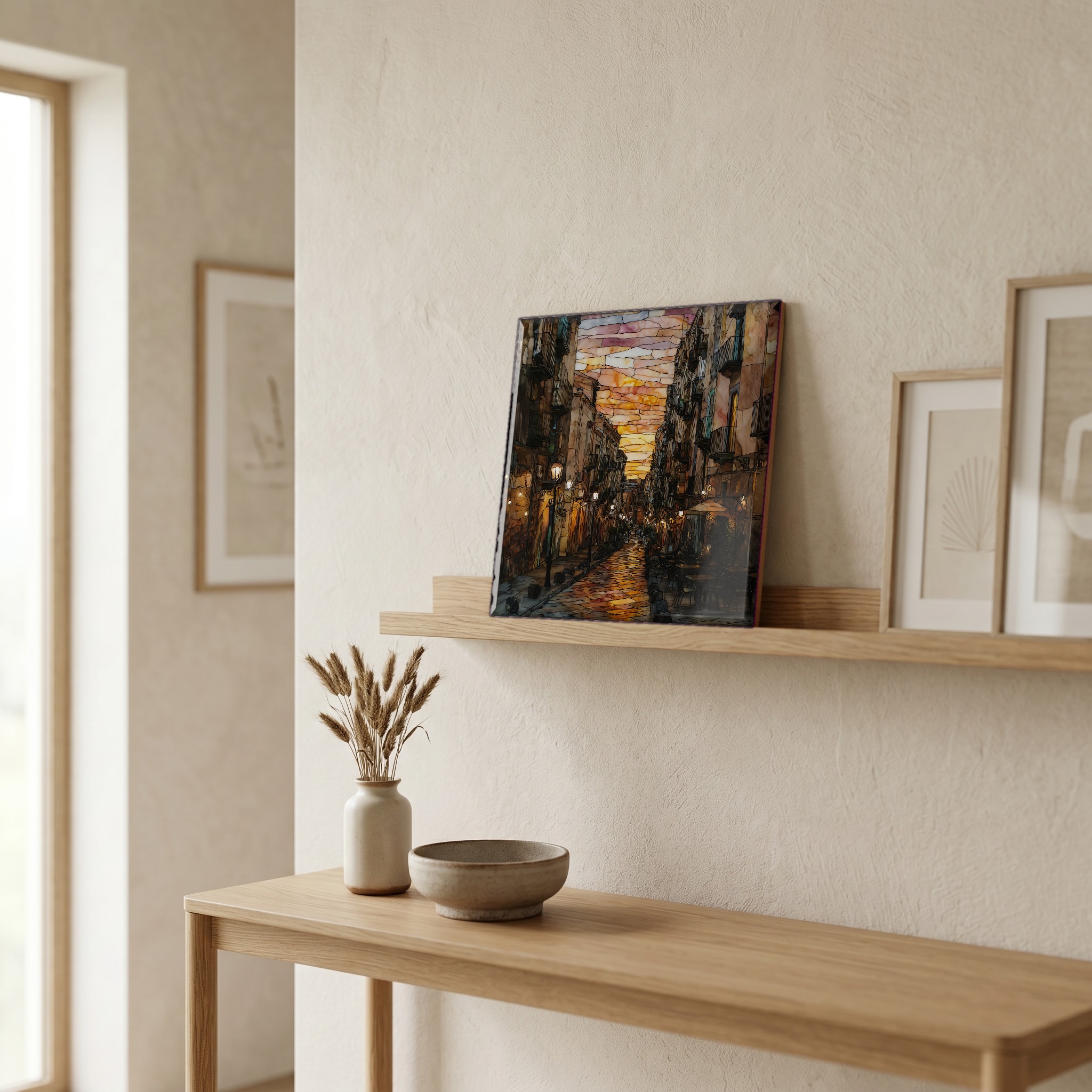
“The straight line through the old Greek grid of Naples, two thousand five hundred years of the same cut. From the Certosa di San Martino, on the Vomero hill above, the cut is visible: a narrow shadow running east to west, splitting the historic centre. Down inside it, the street changes names four or five times in two kilometres and never bends. Gesù Nuovo, Santa Chiara, San Domenico, Sansevero. Laundry strung between balconies. The presepi workshops on San Gregorio Armeno open off it. The city built itself around it and has never quite let it go.
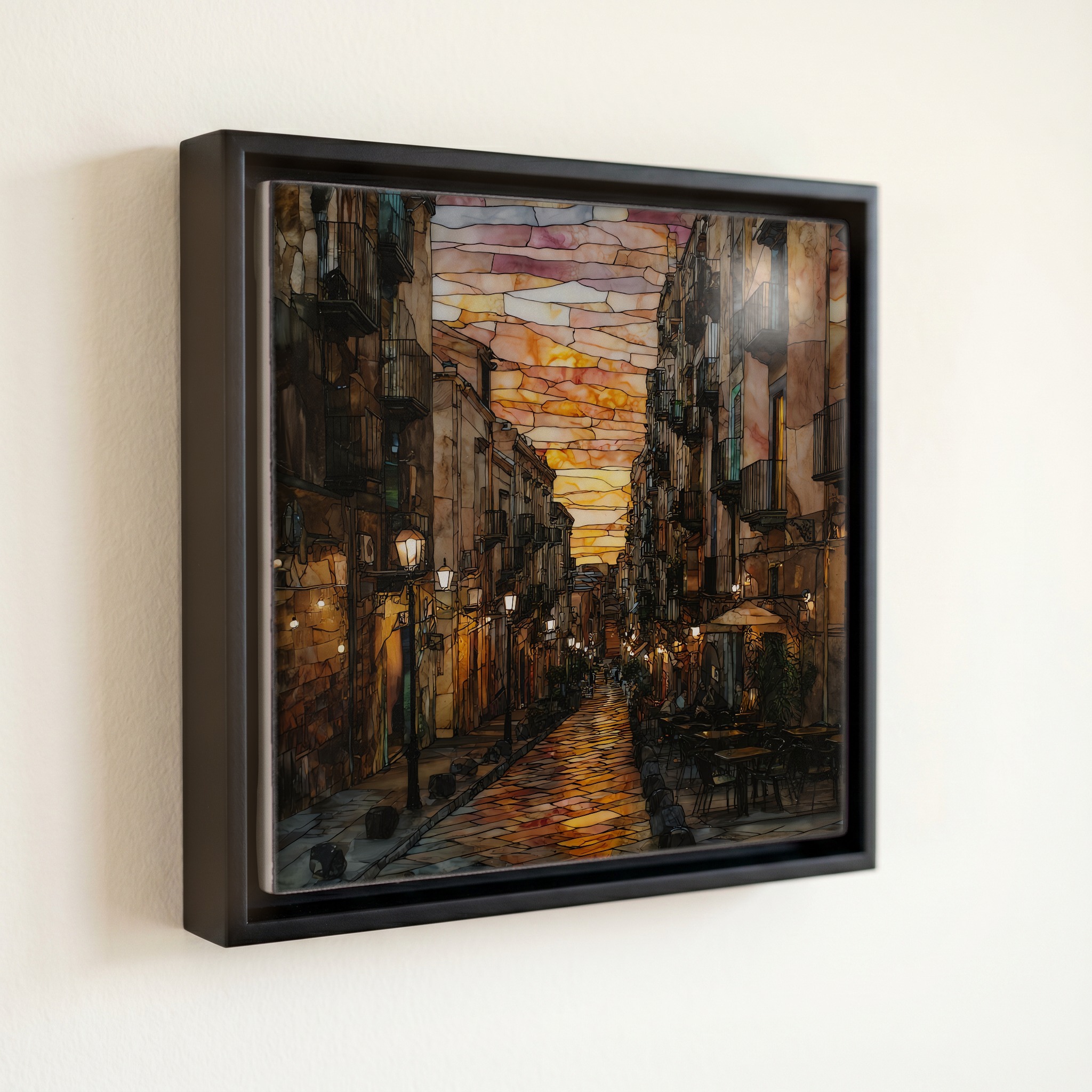
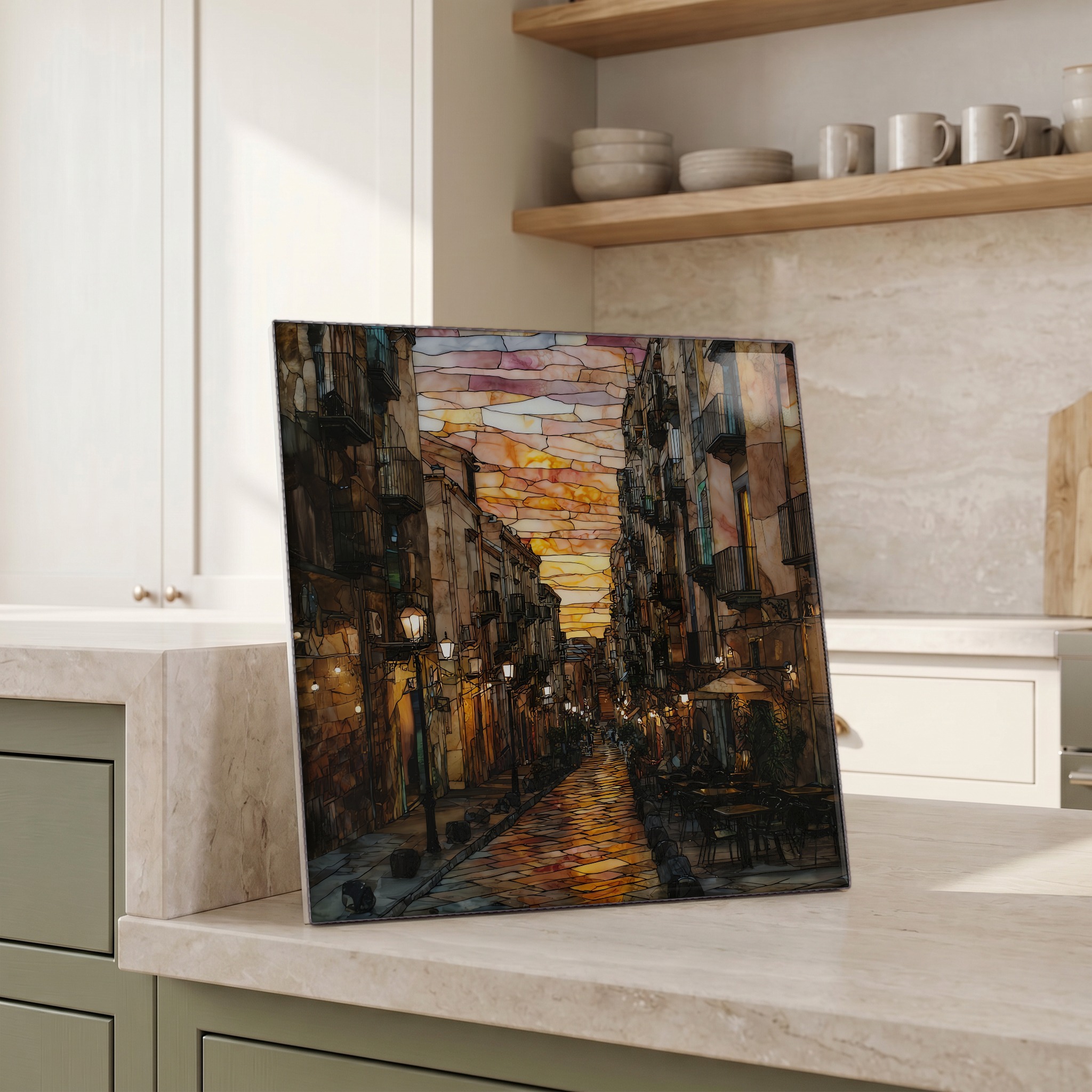
Spaccanapoli, on ceramic.
Each tile is finished by hand in our Knoxville studio. Artwork is slowly infused into the ceramic surface under high heat and pressure, and rests beneath a thin glossy finish. The colour lives in the surface, not on top of it.
Pick any four 4-inch tiles — National Parks you've been to, a Smokies set, the four seasons of one place. $ for a set of , cork-backed, ready to live on the table.
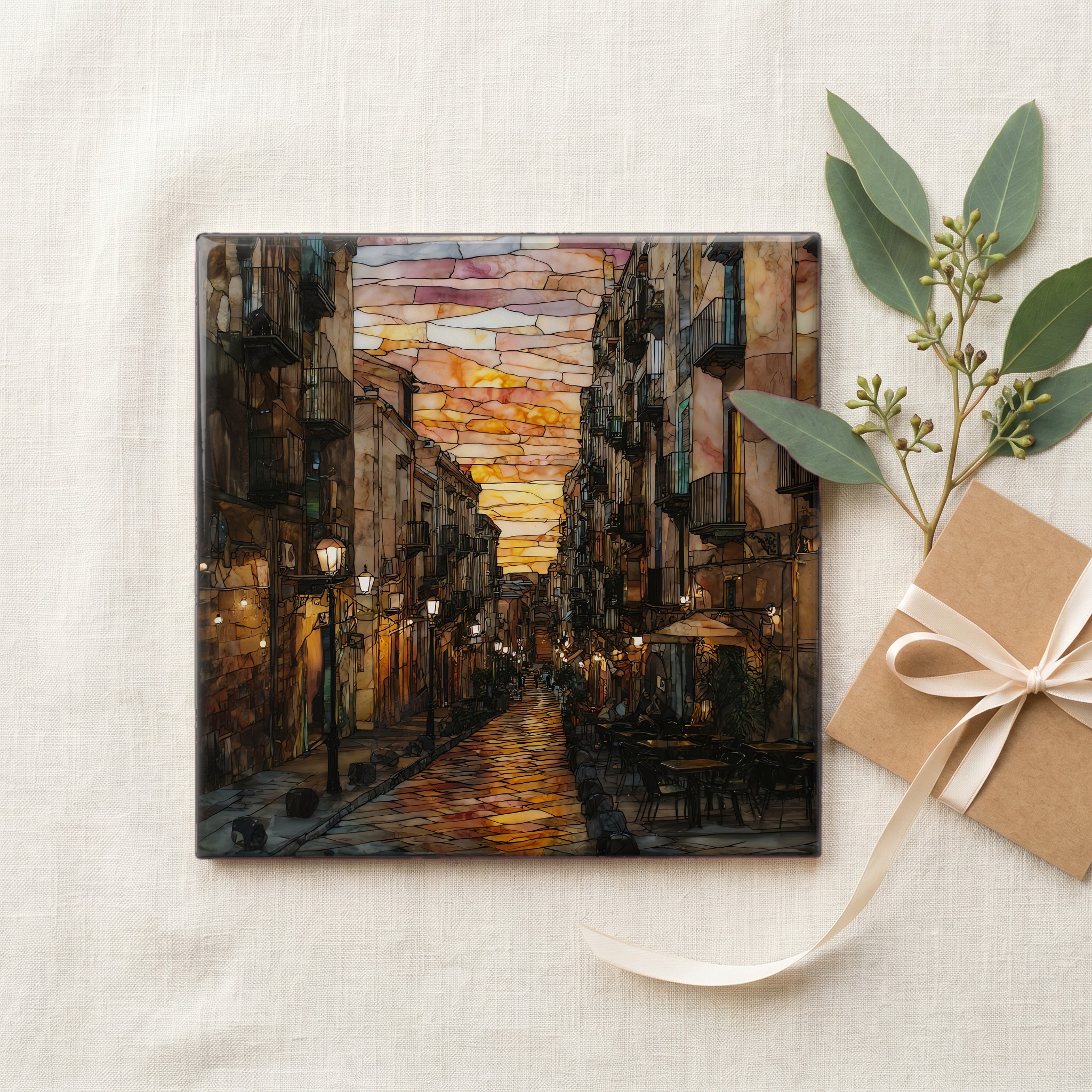
Each tile ships in a kraft box, tied with cream ribbon, with a handwritten note from the studio if you'd like to add one.
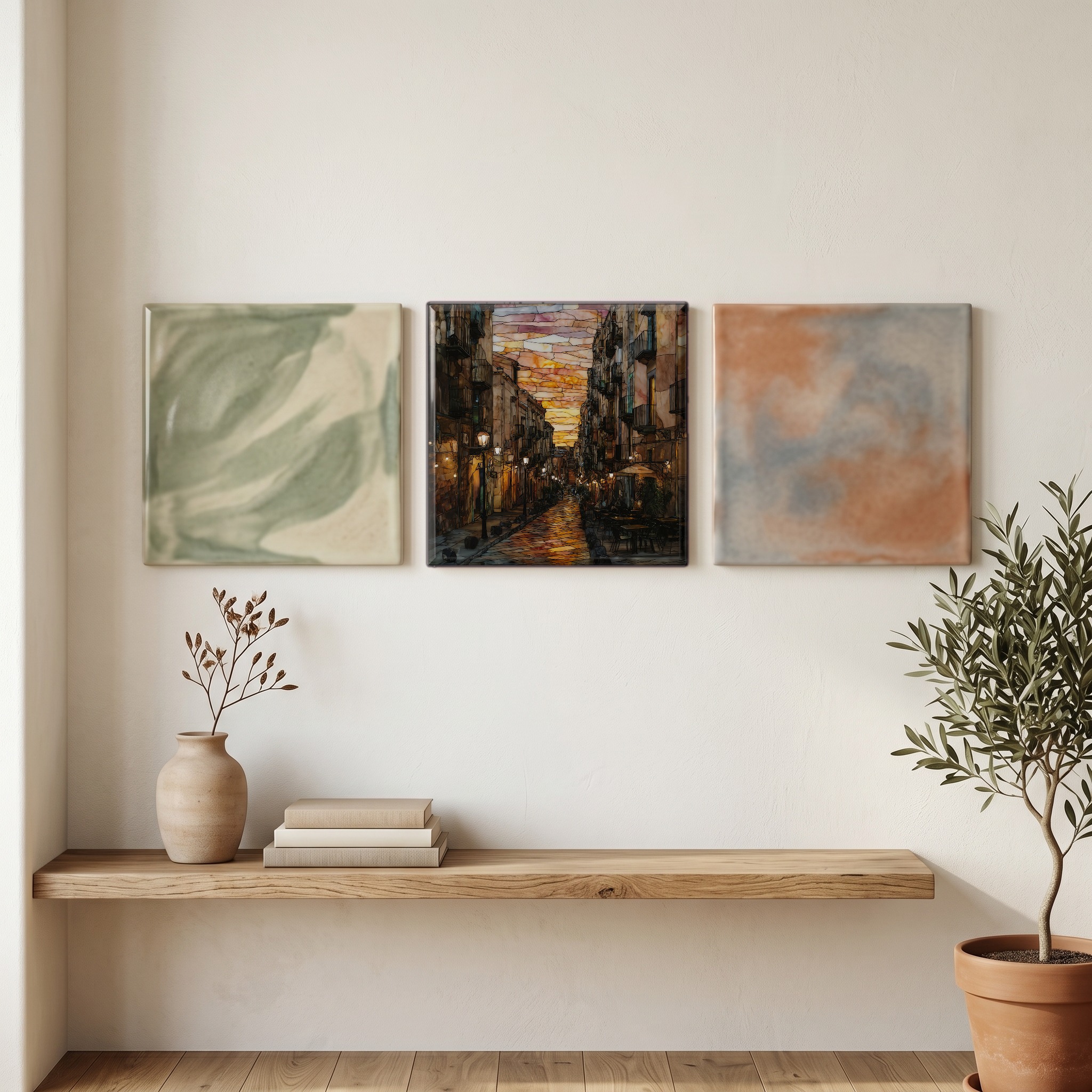
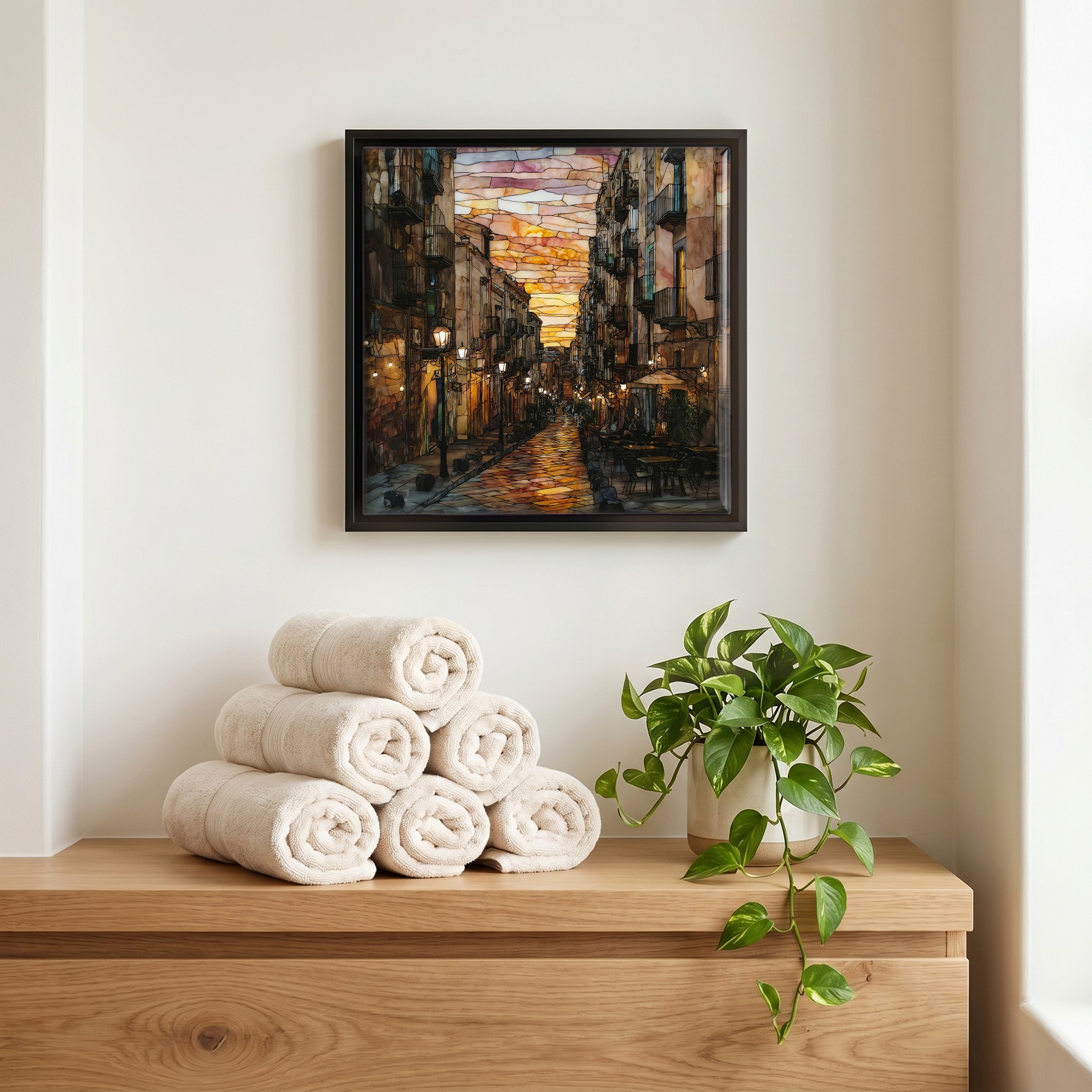
Three or five different vistas, hung together — a chapter of places you've been, or want to go.
The place, in three passes.
Spaccanapoli is the popular name for the long, straight street that runs east to west through the historic centre of Naples, in the Campania region of southern Italy. It traces the line of the decumanus inferior of Greco-Roman Neapolis, one of three parallel decumani laid down when the Greek city was rebuilt on a grid around the fifth century BC. Today, the street officially carries four or five different names along roughly two kilometres (Via Pasquale Scura, Via Benedetto Croce, Via San Biagio dei Librai, Via Vicaria Vecchia), but every Neapolitan calls the whole length Spaccanapoli, 'Naples splitter'. The historic centre, of which the street is a defining axis, was inscribed as a UNESCO World Heritage Site in 1995.
Within those two kilometres are some of the densest concentrations of southern-Italian architecture and sculpture anywhere in Europe. The façade of Gesù Nuovo, at the street's western end, is a wall of pyramidal piperno blocks the Jesuits inherited from a fifteenth-century palace when they consecrated the church in 1601. A few steps east, the basilica of Santa Chiara, founded in 1310 by Robert of Anjou, hides a majolica cloister redesigned by Domenico Antonio Vaccaro in 1742, with vine-and-flower tiles painted by Donato and Giuseppe Massa. Further on, the Cappella Sansevero, just off the street, holds Giuseppe Sanmartino's 'Veiled Christ', a marble sculpture under a marble veil completed in 1753.
Walking the length of Spaccanapoli costs nothing and takes about half an hour, end to end, when traffic is light. Most of the major sights along the way, including Gesù Nuovo and the Duomo di San Gennaro on the parallel street, are free to enter during church hours. The two ticketed stops are the Chiostro di Santa Chiara, the majolica cloister, open most days for a small admission, and the Cappella Sansevero, which sells timed-entry tickets for the Sanmartino chamber and recommends booking ahead, especially in summer. Pickpockets work the densest stretches.