
Sorrento
— a town of lemons above a bay that holds Vesuvius.
Not only on a wall.

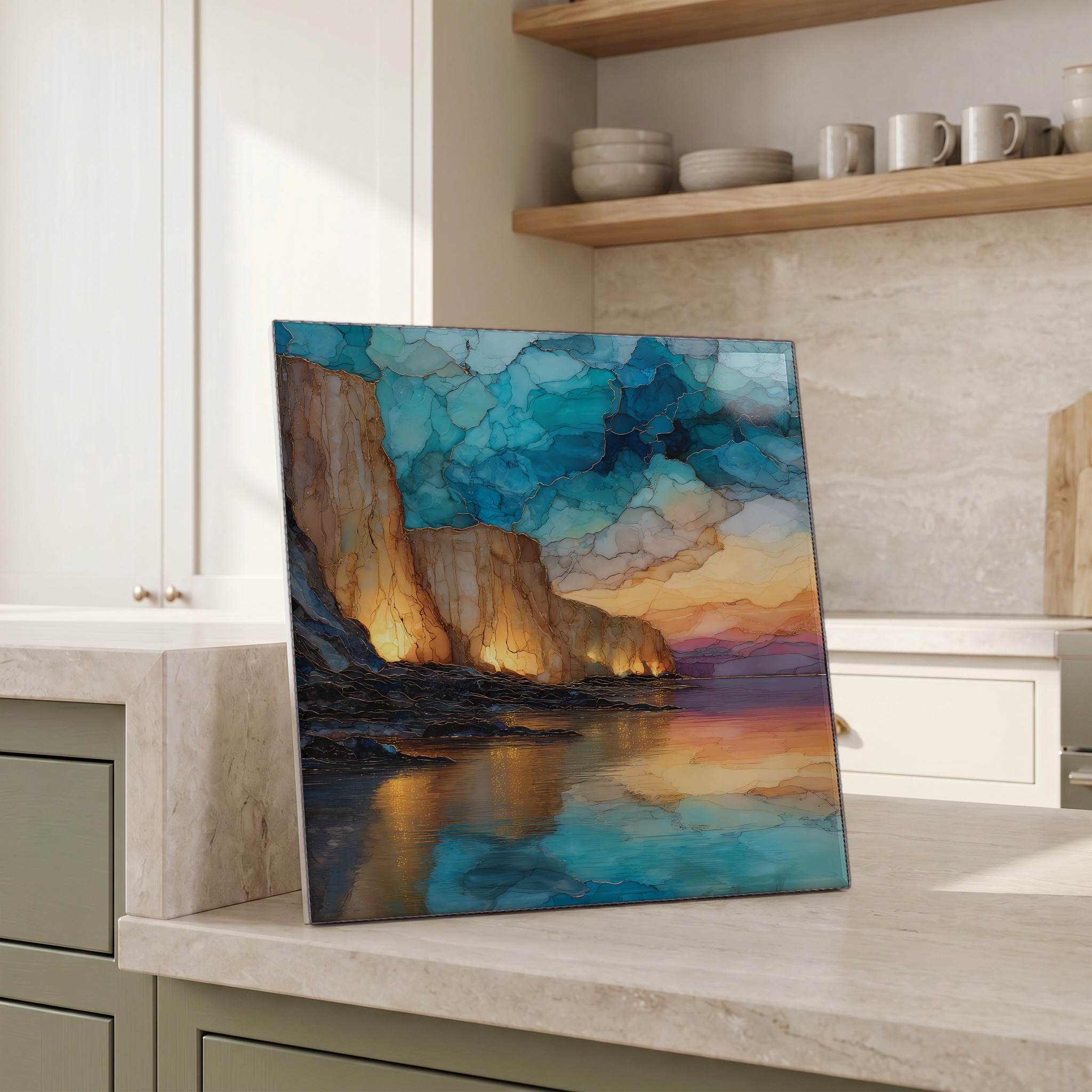


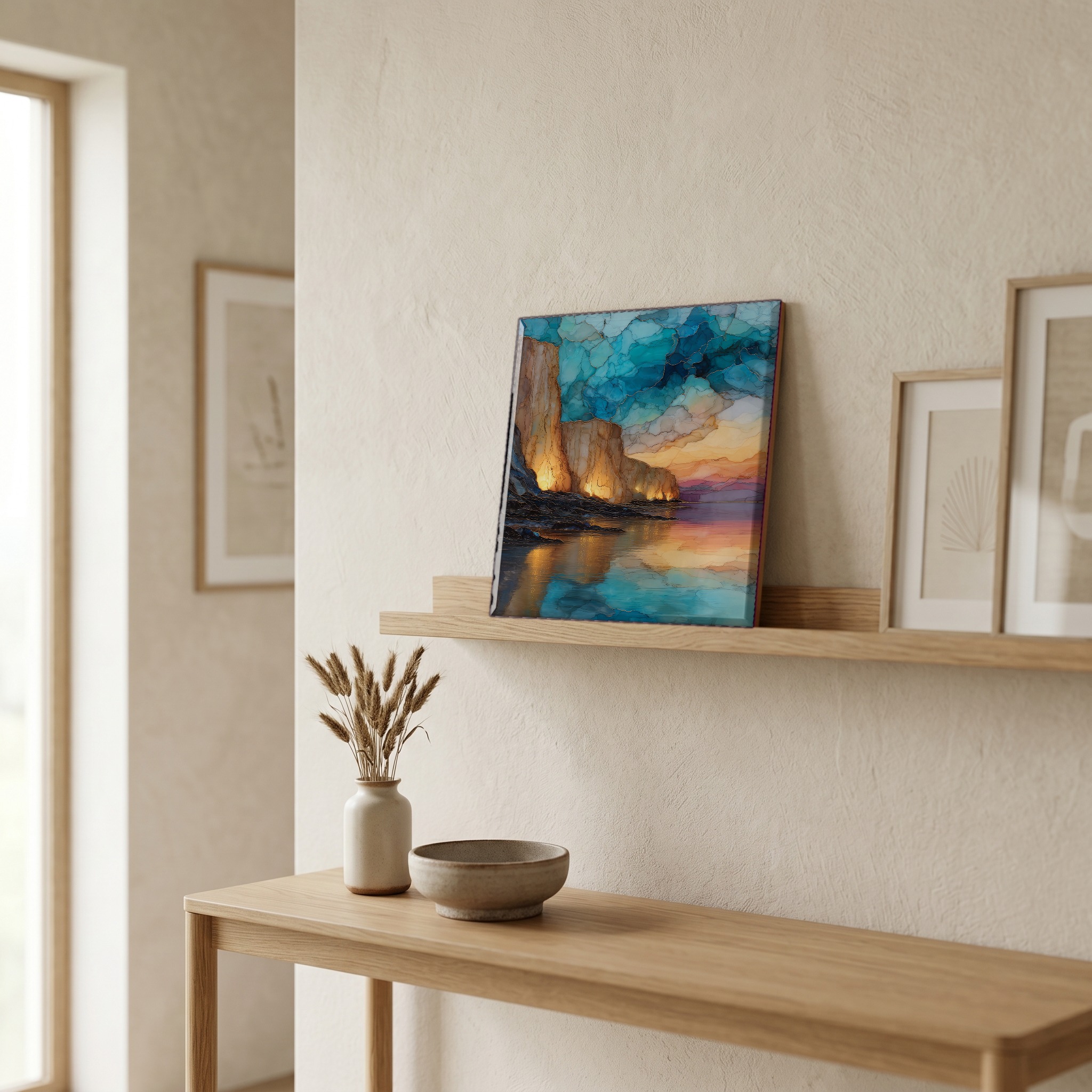
“A clifftop town on the Sorrentine Peninsula, looking across the Bay of Naples to Vesuvius. Sfusato lemons grow on terraced groves above the sea, an IGP-protected fruit, thick-skinned, used for limoncello and the local pasta al limone. From Marina Grande the fishermen still bring in anchovies before the morning ferries arrive from Capri. The light off the tuff cliffs in late afternoon goes the colour of a yolk. Most of the day-trippers leave on the last ferry, and the town quiets.

Sorrento, on ceramic.
Each tile is finished by hand in our Knoxville studio. Artwork is slowly infused into the ceramic surface under high heat and pressure, and rests beneath a thin glossy finish. The colour lives in the surface, not on top of it.
Pick any four 4-inch tiles — National Parks you've been to, a Smokies set, the four seasons of one place. $ for a set of , cork-backed, ready to live on the table.

Each tile ships in a kraft box, tied with cream ribbon, with a handwritten note from the studio if you'd like to add one.
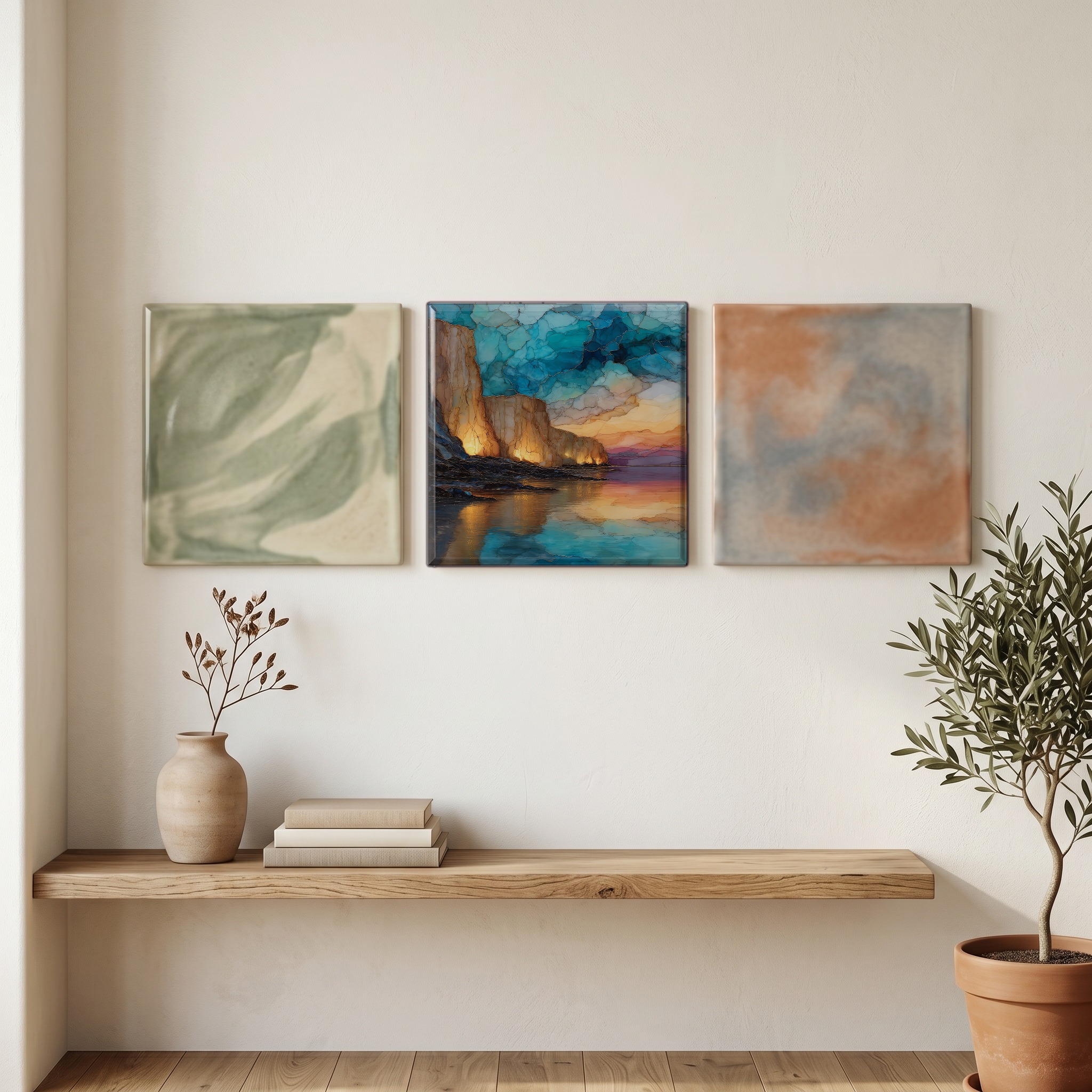
Three or five different vistas, hung together — a chapter of places you've been, or want to go.
The place, in three passes.
Sorrento sits on a tuff cliff about fifty metres above the Tyrrhenian Sea, on the north side of the Sorrentine Peninsula in the Campania region of southern Italy. The town faces north across the Bay of Naples to Mount Vesuvius and the island of Procida. It is not on the Amalfi Coast, which lies on the peninsula's south side, but it is the usual point of arrival for travellers heading there. The historical centre still follows the Roman grid of Surrentum, the ancient settlement that Strabo describes in his Geography. The commune's population is roughly 16,500, and the wider commune contains the Marina Grande fishing harbour below the cliffs and the adjoining village of Sant'Agnello.
The Sorrentine lemon, the sfusato, has held IGP protection since 2000 under the name Limone di Sorrento. The fruit is large, oblong, and unusually thick-skinned, with an aromatic oil-rich peel grown on the terraced limoneti above the sea. The groves stretch the length of the peninsula, from Vico Equense to Massa Lubrense, most still worked by family producers. The lemons go into limoncello, into pasta al limone, into the wedge of granita served at Marina Grande in summer. The pergolas that shade the trees are built from chestnut poles and woven reeds, called pagliarelle, a technique unchanged for generations.
Sorrento is reached most easily by the Circumvesuviana commuter line from Napoli Centrale, a roughly seventy-minute ride along the bay that stops at Herculaneum and Pompeii on the way. Ferries run from the port below the town to Capri, Ischia, Positano, and Amalfi, frequent in summer and reduced in winter. The town is busiest from late June through August; April through May and September through October hold the best balance of weather, open hours, and breathing room. The historical centre is walkable in an afternoon, and the descent from Piazza Tasso to Marina Grande takes about fifteen minutes downhill on the cliff steps, longer on the way back up.