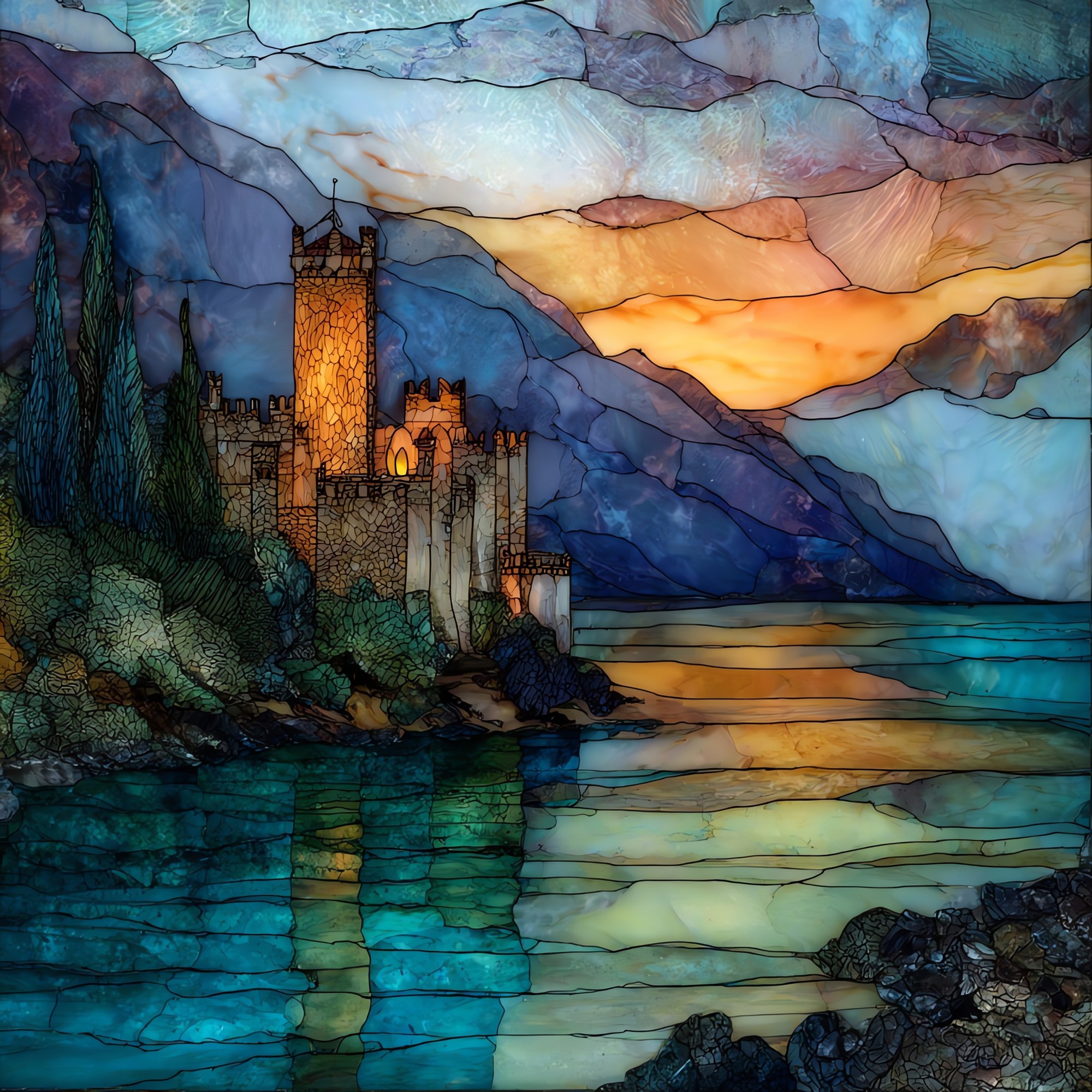
Sirmione Lake Garda
— a town the lake holds on three sides.
Not only on a wall.
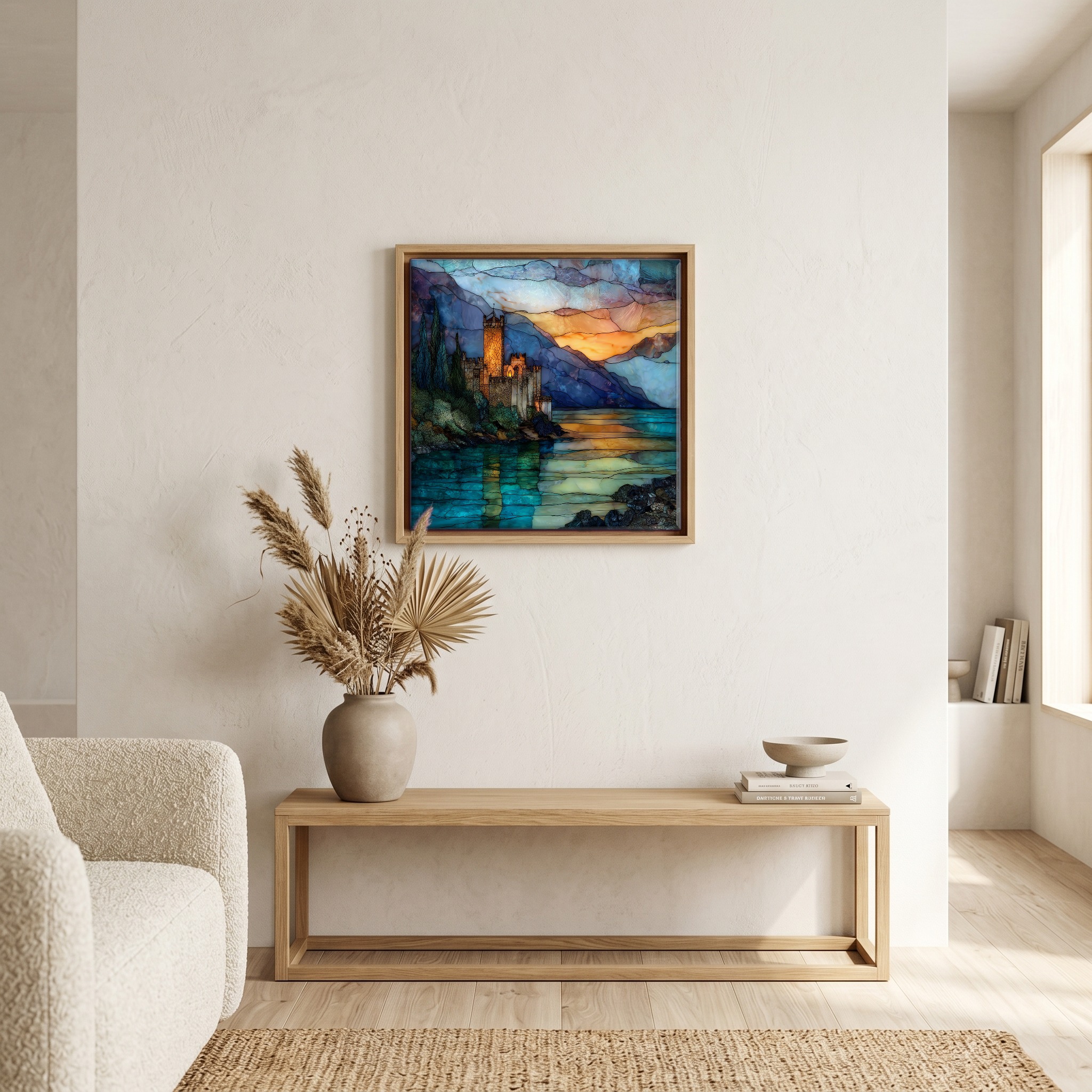
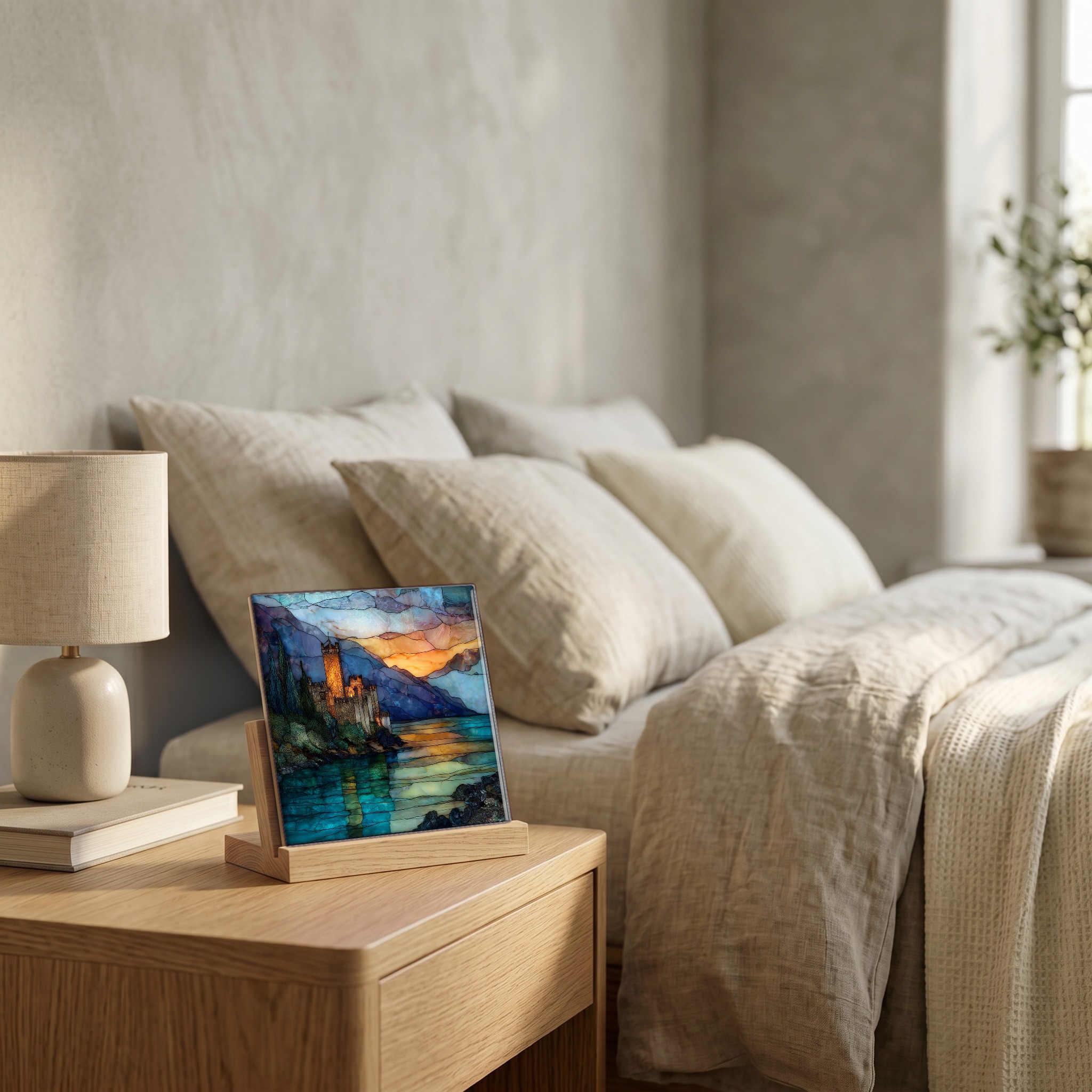
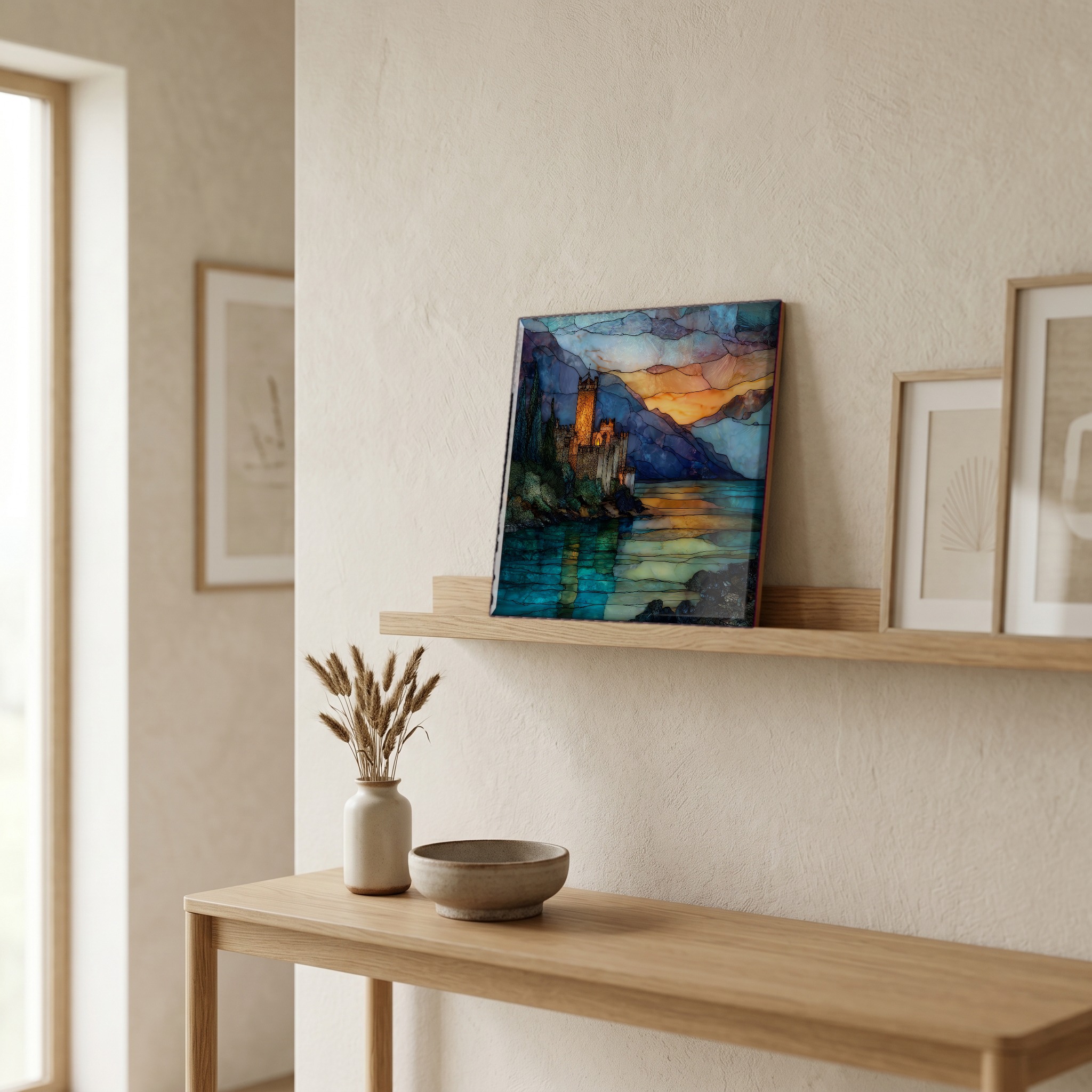
“A medieval town at the end of a four-kilometre spit of land reaching into Lake Garda. The Scaliger Castle still has water in its moat, one of the few lake fortresses left in Italy. Past the castle gate the streets narrow to old paving and open at the tip, where Roman ruins called the Grotte di Catullo sit above the water. Catullus called this place the eye of all peninsulas. The water around the rocks runs the pale blue-green of Garda, clear straight down to the limestone.
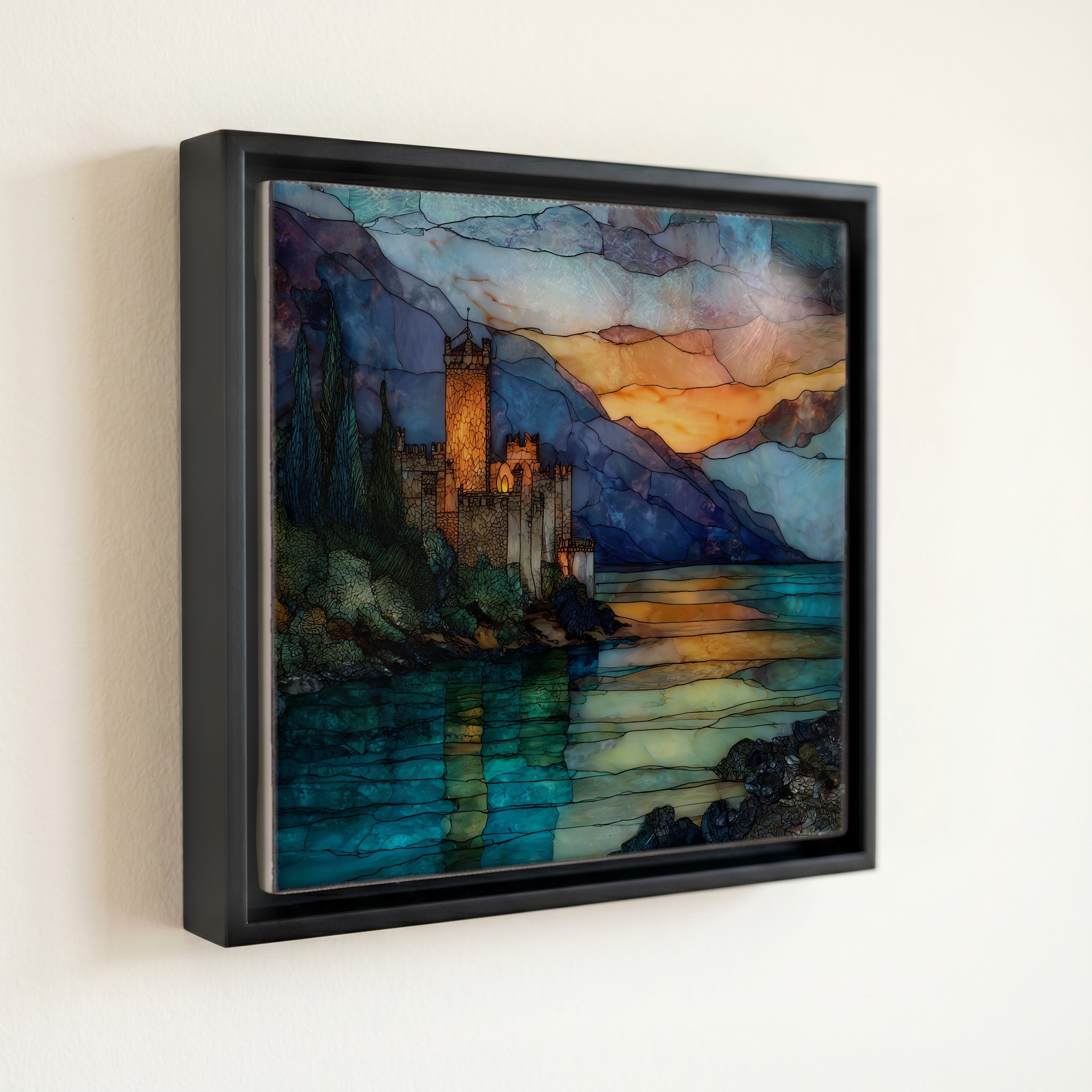
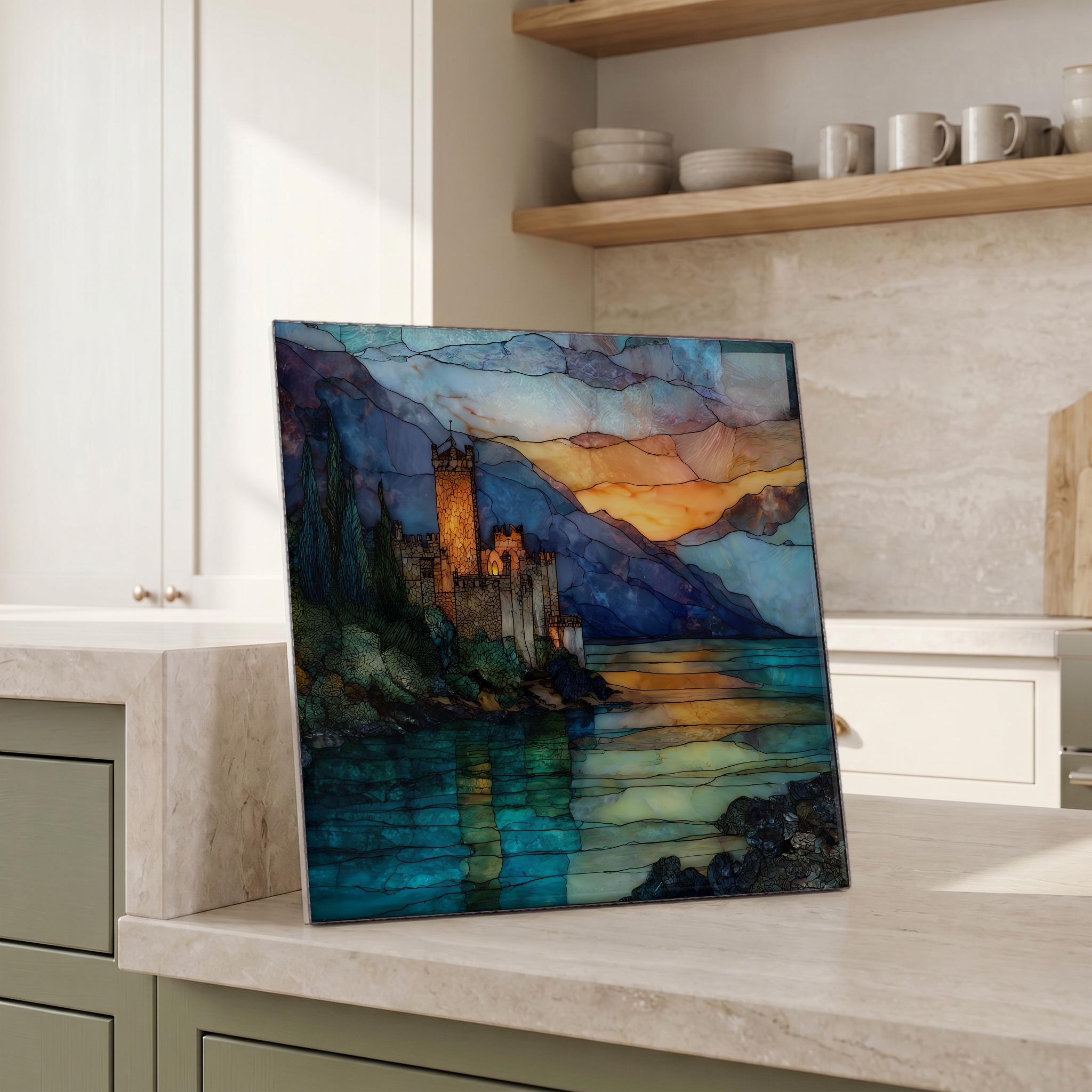
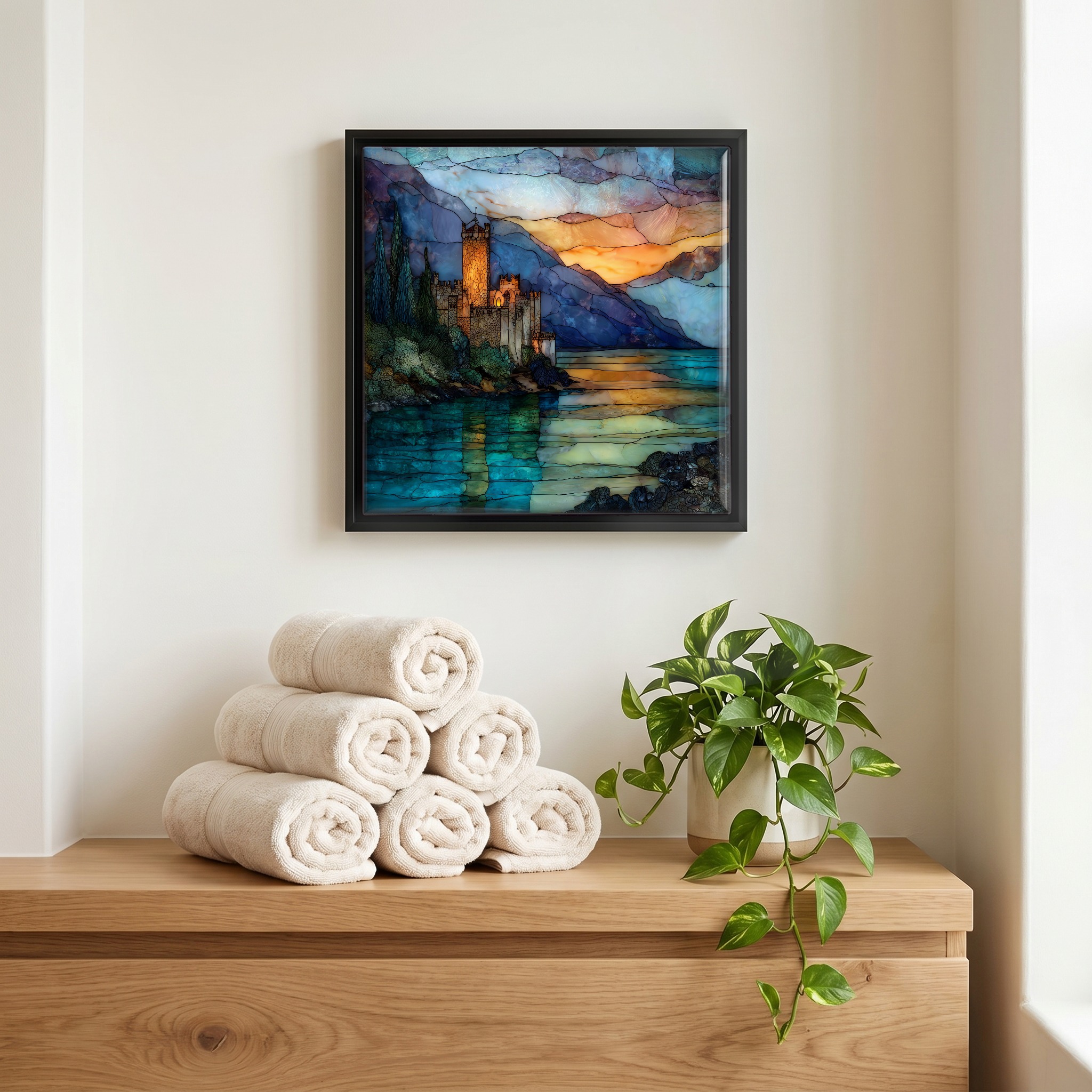
Sirmione Lake Garda, on ceramic.
Each tile is finished by hand in our Knoxville studio. Artwork is slowly infused into the ceramic surface under high heat and pressure, and rests beneath a thin glossy finish. The colour lives in the surface, not on top of it.
Pick any four 4-inch tiles — National Parks you've been to, a Smokies set, the four seasons of one place. $ for a set of , cork-backed, ready to live on the table.
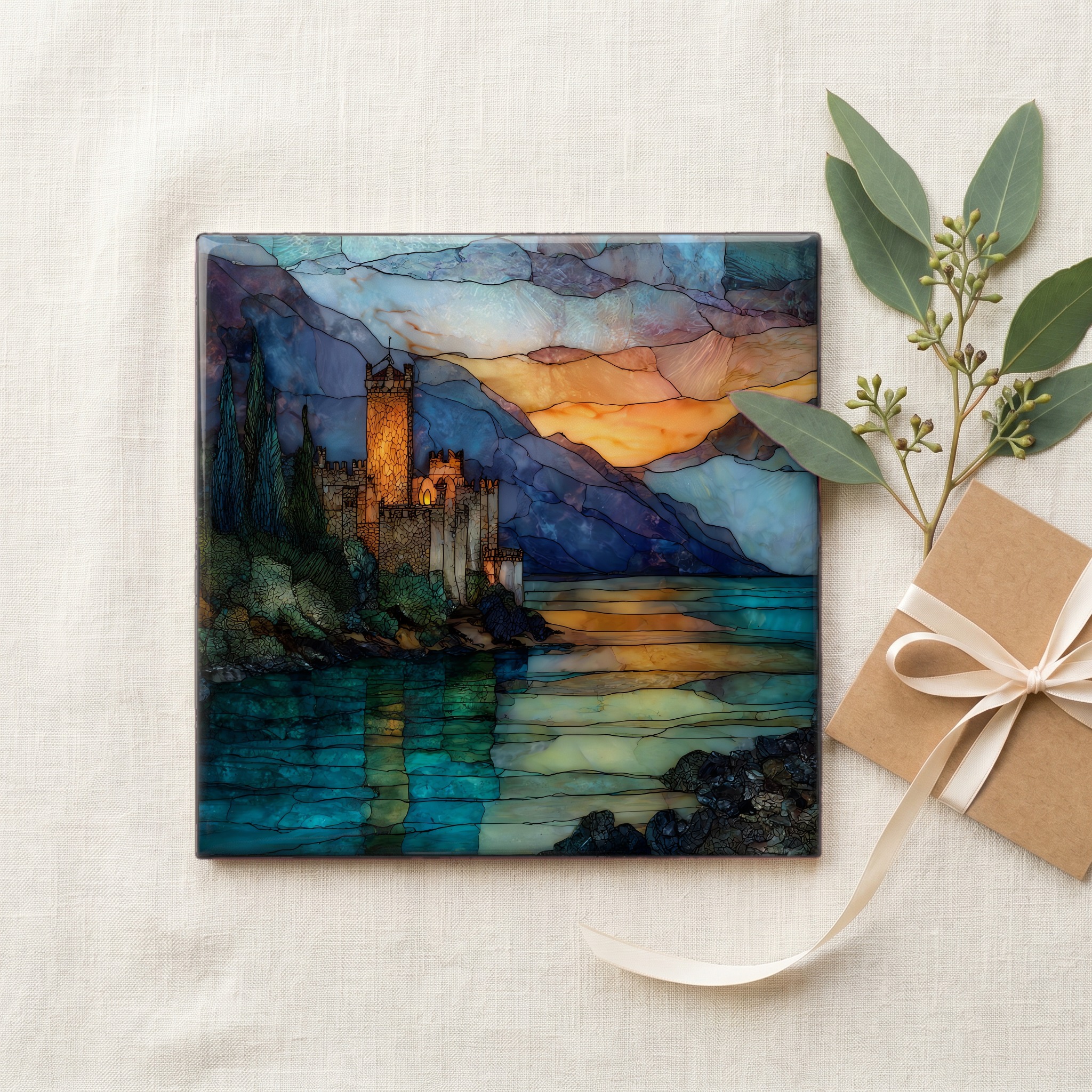
Each tile ships in a kraft box, tied with cream ribbon, with a handwritten note from the studio if you'd like to add one.
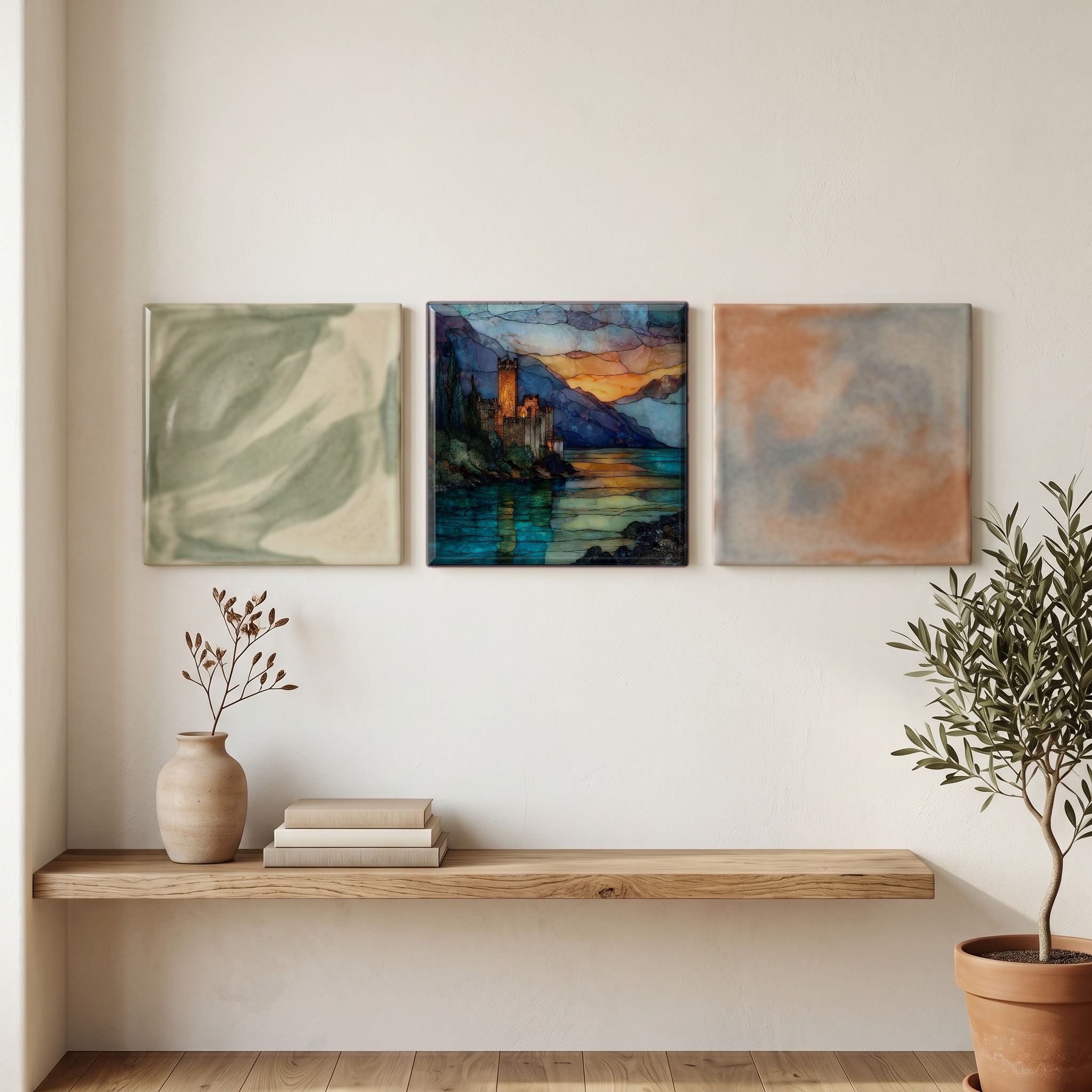
Three or five different vistas, hung together — a chapter of places you've been, or want to go.
The place, in three passes.
Sirmione sits at the south end of Lake Garda, the largest lake in Italy at 370 square kilometres, on a narrow peninsula in the Province of Brescia. The town extends some four kilometres north from the lake's southern shore, terminating in a knot of medieval streets and Roman ruins. The historic centre is reached by a single bridge through the gate of the Castello Scaligero, the 13th-century fortress that still controls access to the peninsula's tip. Sirmione lies within the Lombardy region, roughly halfway between Milan and Venice. Olives have been cultivated on the lake shores since Roman times, with the Garda basin marking one of the northernmost reaches of olive cultivation in Europe.
The Castello Scaligero was built in the second half of the 13th century by the della Scala family of Verona, who held the territory through the 13th and 14th centuries. The fortress is one of a small group of European castles built directly into open water, with a still-functioning moat fed by Lake Garda. At the peninsula's tip stand the Grotte di Catullo, the remains of a Roman residential complex from between the late 1st century BCE and the early 1st century CE, covering some two hectares above the lake. Although the site bears the poet's name, archaeologists believe the villa post-dates Catullus by at least a generation.
The water around Sirmione runs a translucent blue-green, a result of Lake Garda's limestone bedrock and the lake's depth and clarity. The lake is fed from the north by the Sarca River and drained at the south by the Mincio, with a mean depth above 130 metres and a maximum of 346 metres in its northern basin. Around the peninsula the water shallows over pale limestone, producing the colour visible in old engravings of the town. The same clarity made the Boiola thermal spring, surfacing offshore at the tip of the peninsula, valuable to bathers since Roman times.