Wender·Vista
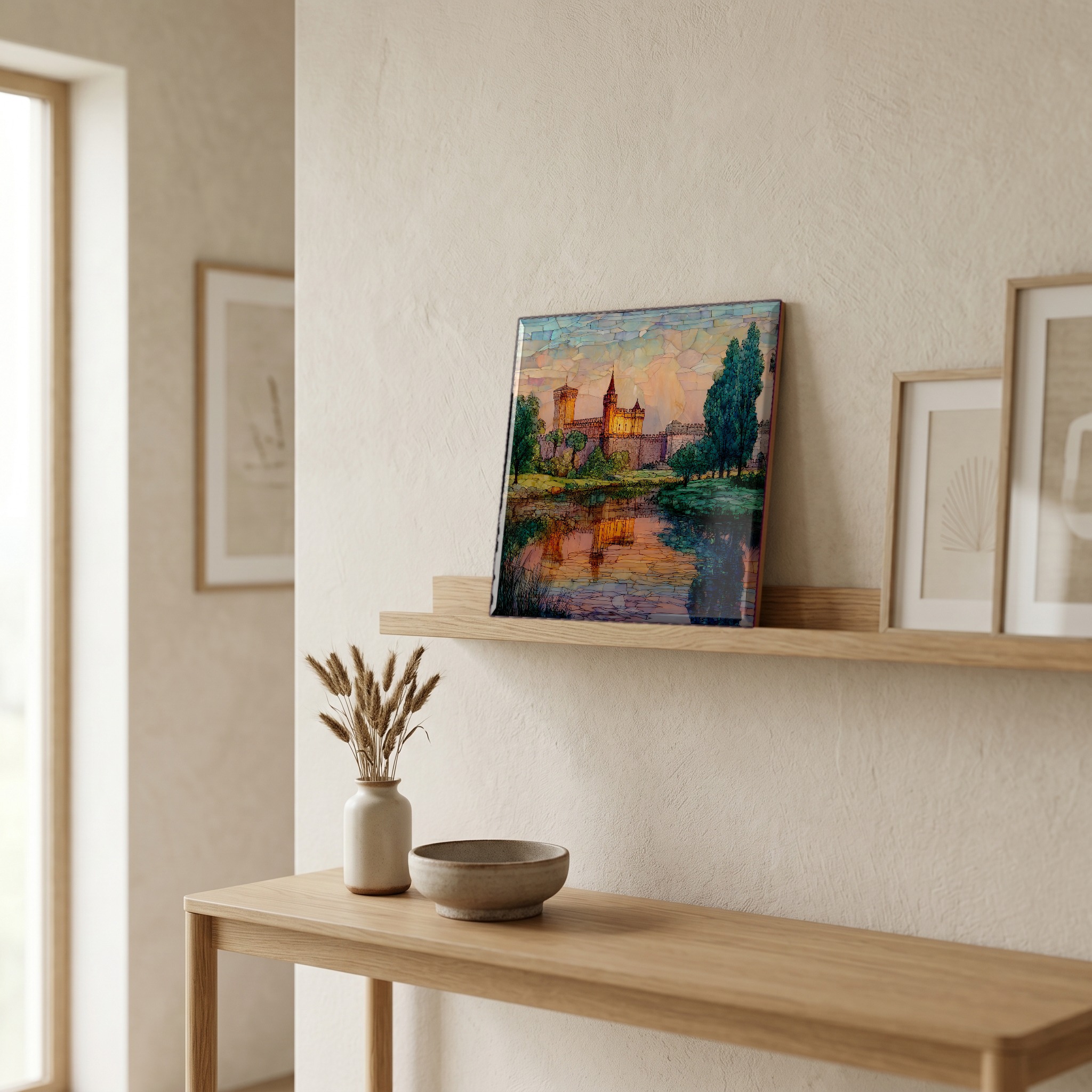
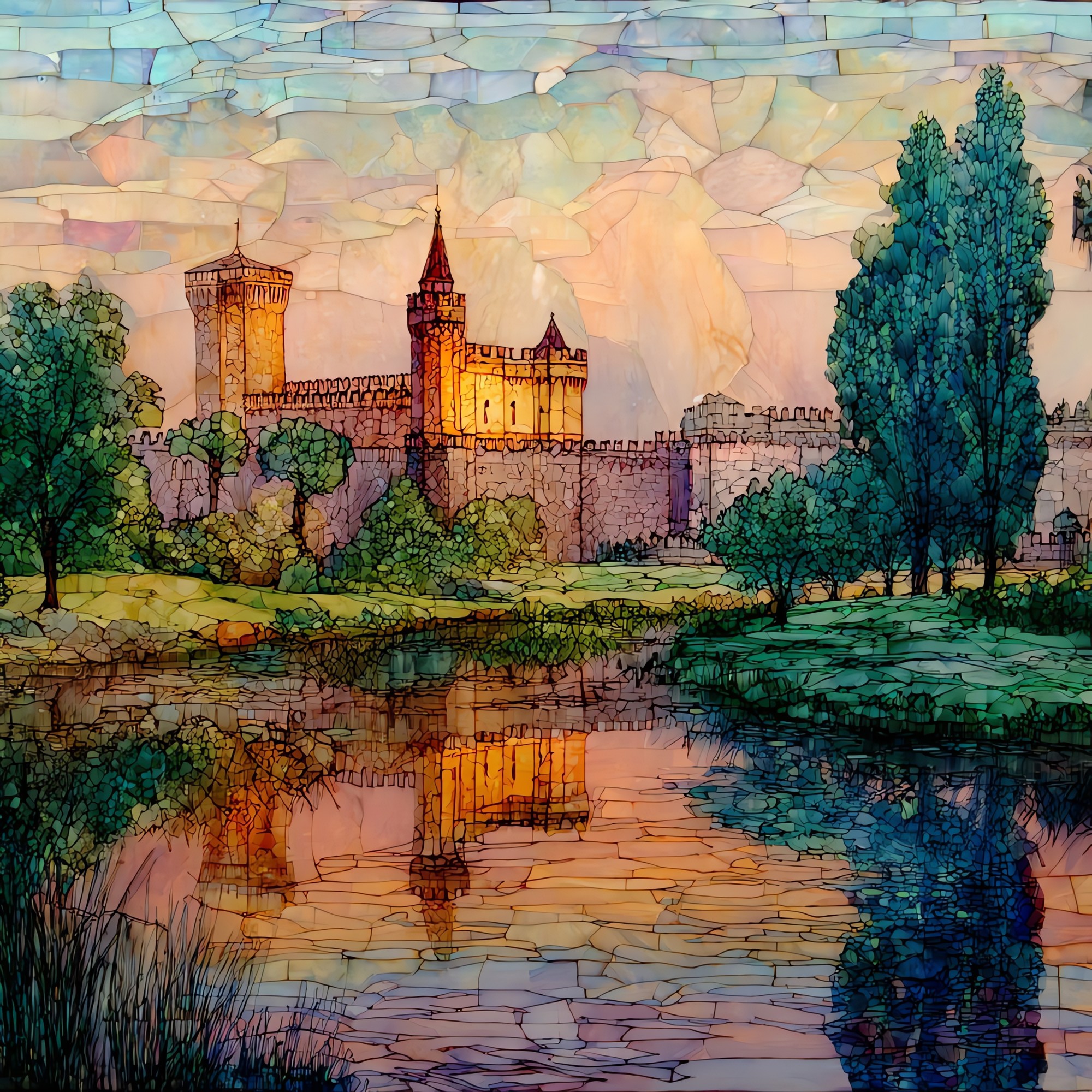
Sforza Castle
shown on ceramic, 12-inch tileItaly
in central Milan, between the Duomo and Parco Sempione

Sforza Castle

— the red brick the dukes left standing.

Where it lives

Not only on a wall.

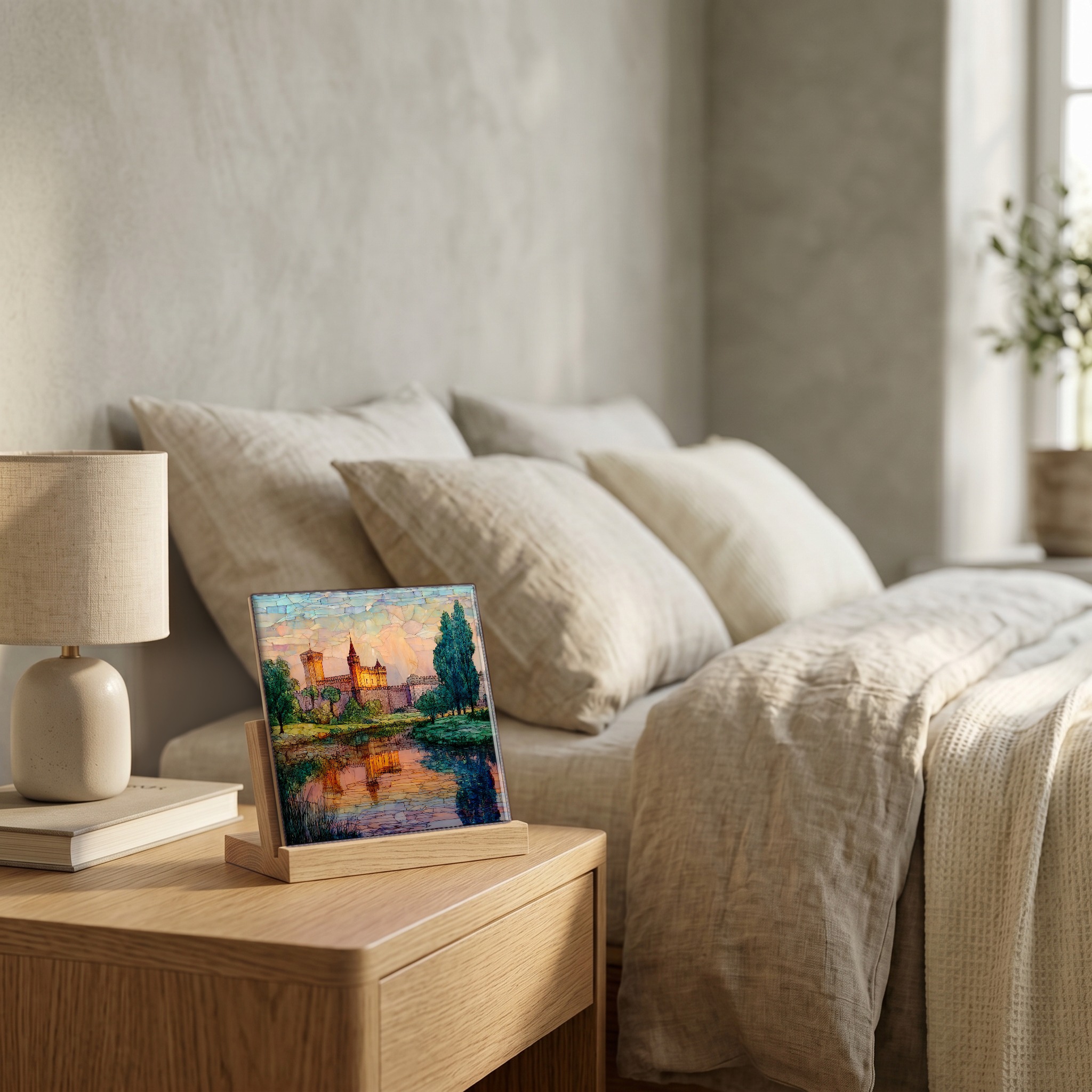
A small tile on the nightstand catching the morning. A larger one above the fire. Yours, wherever you spend the slow hours.
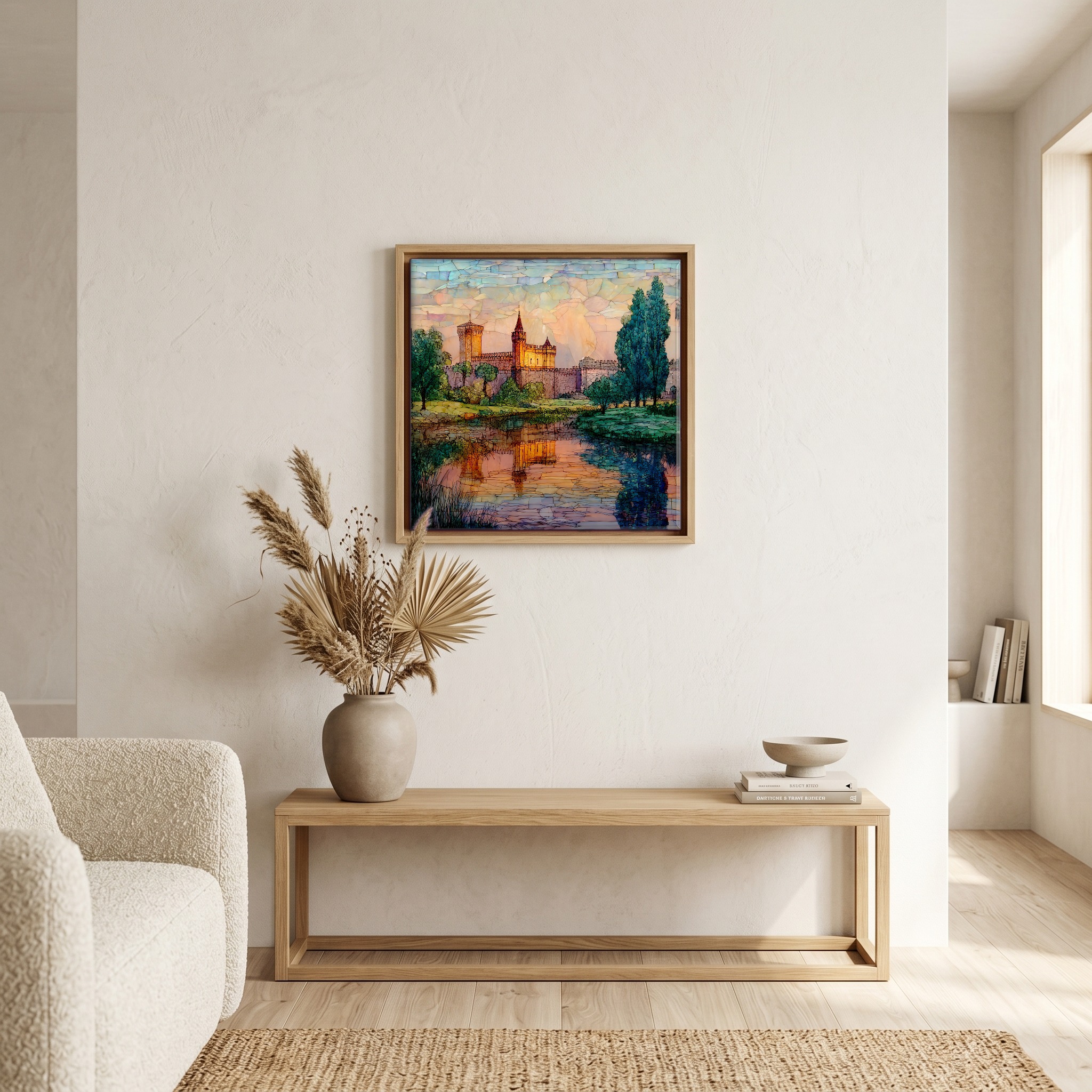
Above the bench, in a warm oak surround.
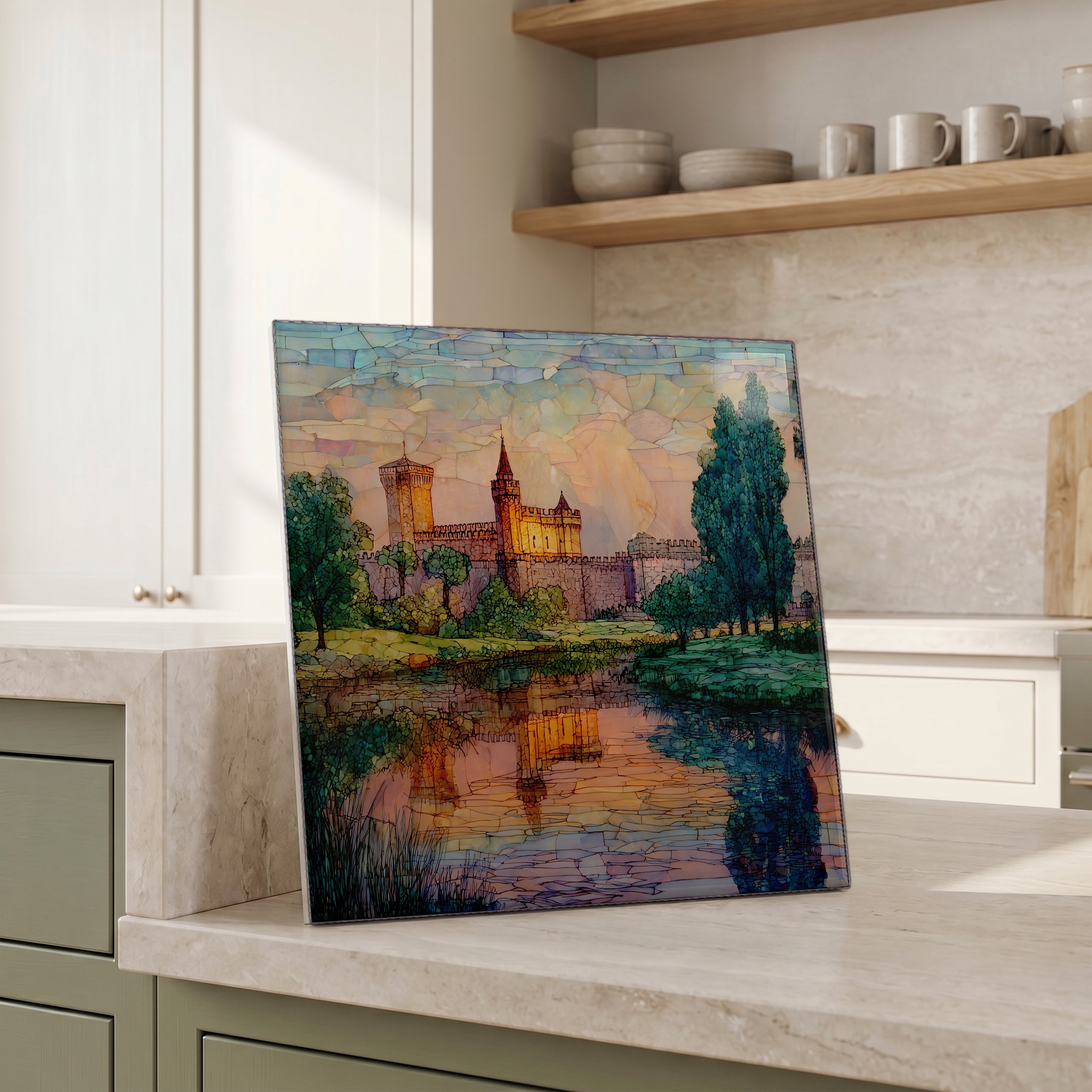
Beside the kettle, propped on the counter.
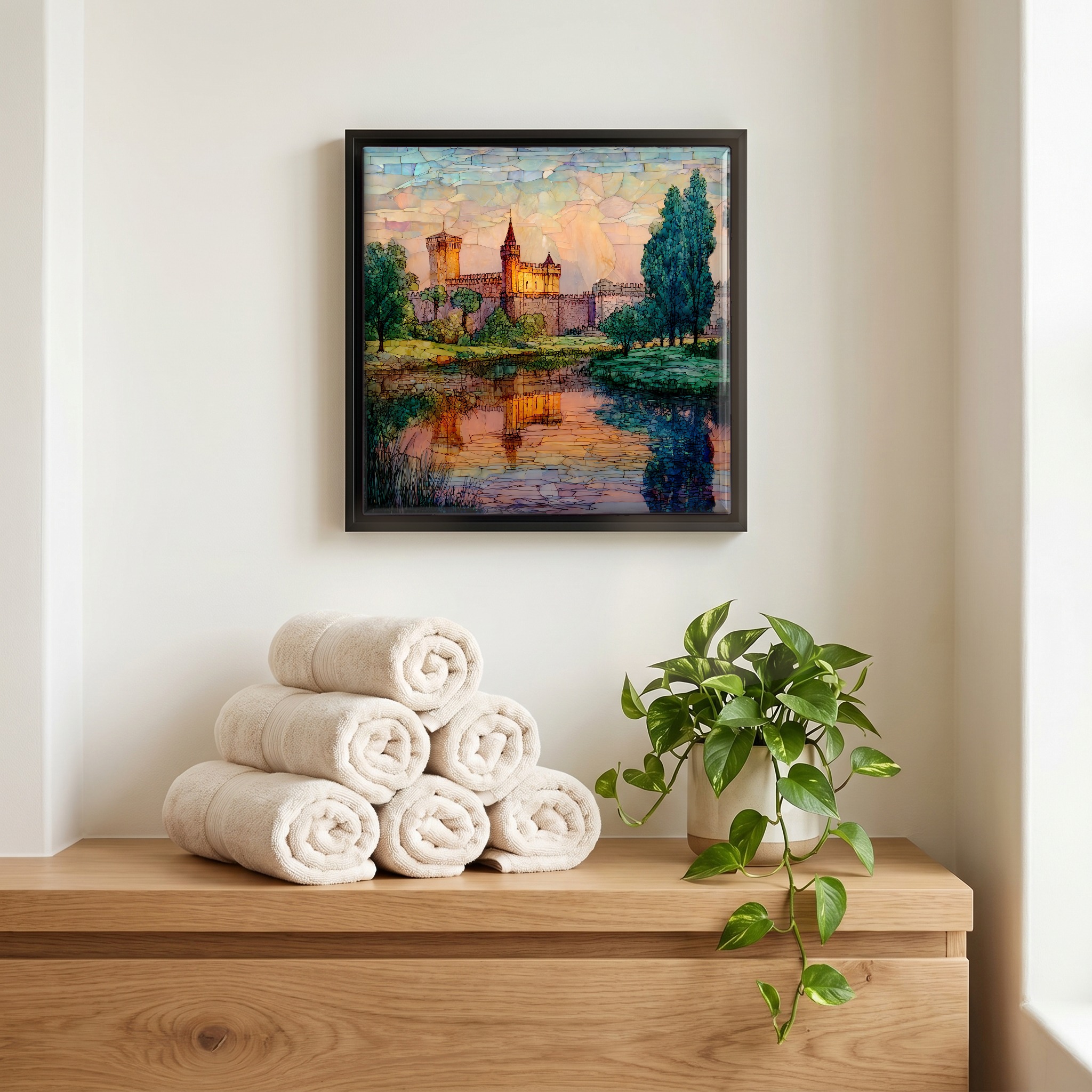
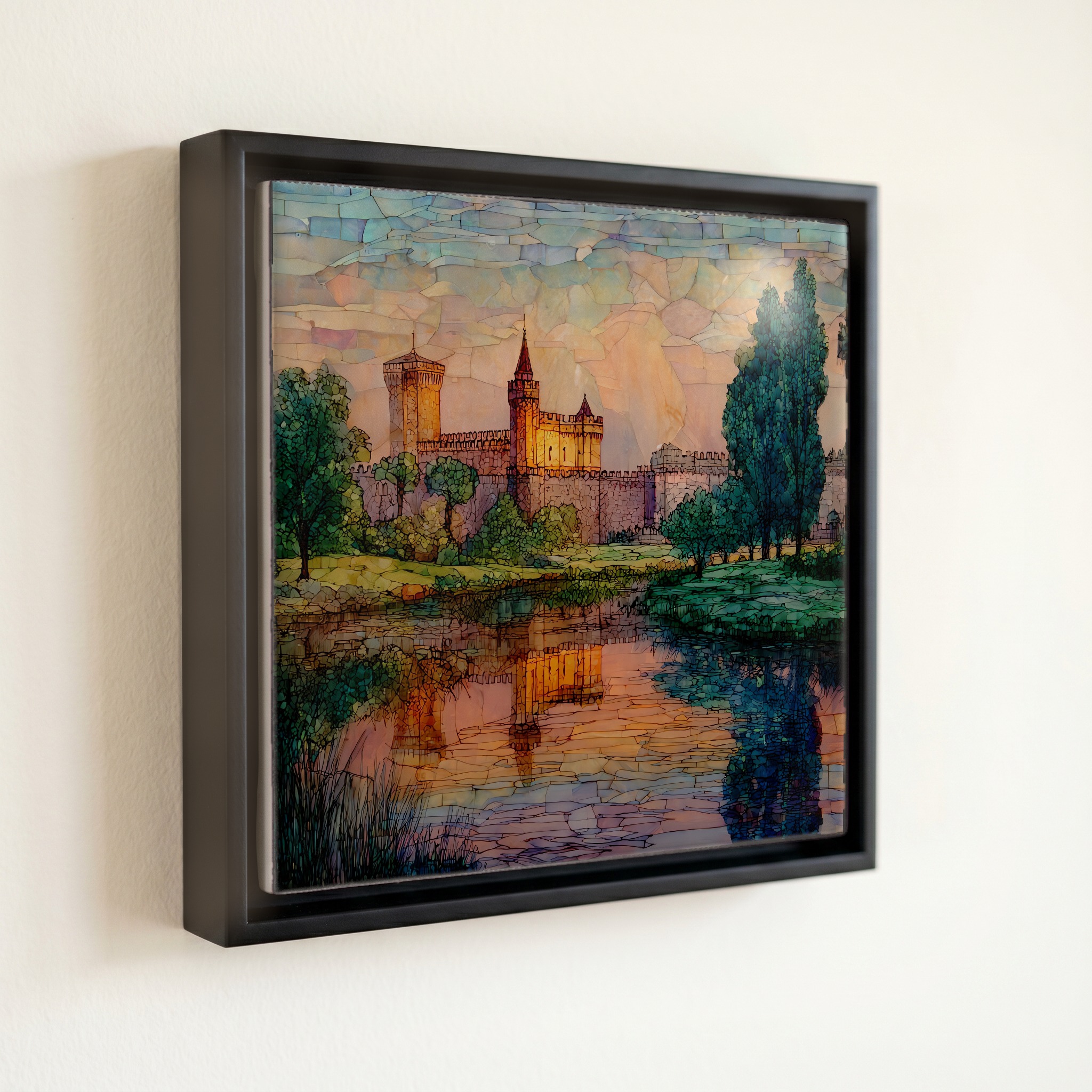
Above the linens, in a slim black surround.
On the nightstand, on a light oak stand.
On a picture ledge, where the light comes in.
a note from the studio

The fortress at the western edge of Milan's old centre, between the Duomo and Parco Sempione. Built by Francesco Sforza in the mid 1400s on the foundations of an older Visconti castle, and rebuilt enough times since that the brick reads as one continuous wall. The central Filarete Tower watches the long axis through the park to the Arco della Pace at its far end. Inside the courtyards now: museums, a Michelangelo Pietà left unfinished at his death. Office workers cut through it on the way to lunch. The Duomo gets the cameras; the castle gets the afternoons.
from the studio
shown in a slim black floating frame · 6 × 6 in
— bring it home

Sforza Castle, on ceramic.

Each tile is finished by hand in our Knoxville studio. Artwork is slowly infused into the ceramic surface under high heat and pressure, and rests beneath a thin glossy finish. The colour lives in the surface, not on top of it.

What kind of piece?
One tile — square or rectangle.
How big?
the popular one — counter, shelf, nightstand
6 × 6 in · 15 cm · 1.6 lb
Surface finish
A clear glossy finish — the artwork reads as if under resin. Ideal for show-pieces and framed wall art.
How it sits
A hidden cleat — sits ¼″ proud of the wall.
$58
Hand-finished and shipped from our studio at the foot of the Smokies. On your wall in about ten days.
size
6 × 6 in
15 cm
weighs
1.6 lb
solid in the hand
surface
ceramic, hand-finished
art rests beneath a thin glossy finish
from
Knoxville, TN
our family studio, at the foot of the Smokies
— start a Coaster Set

Pick any four 4-inch tiles — National Parks you've been to, a Smokies set, the four seasons of one place. $ for a set of , cork-backed, ready to live on the table.
comes gift-ready
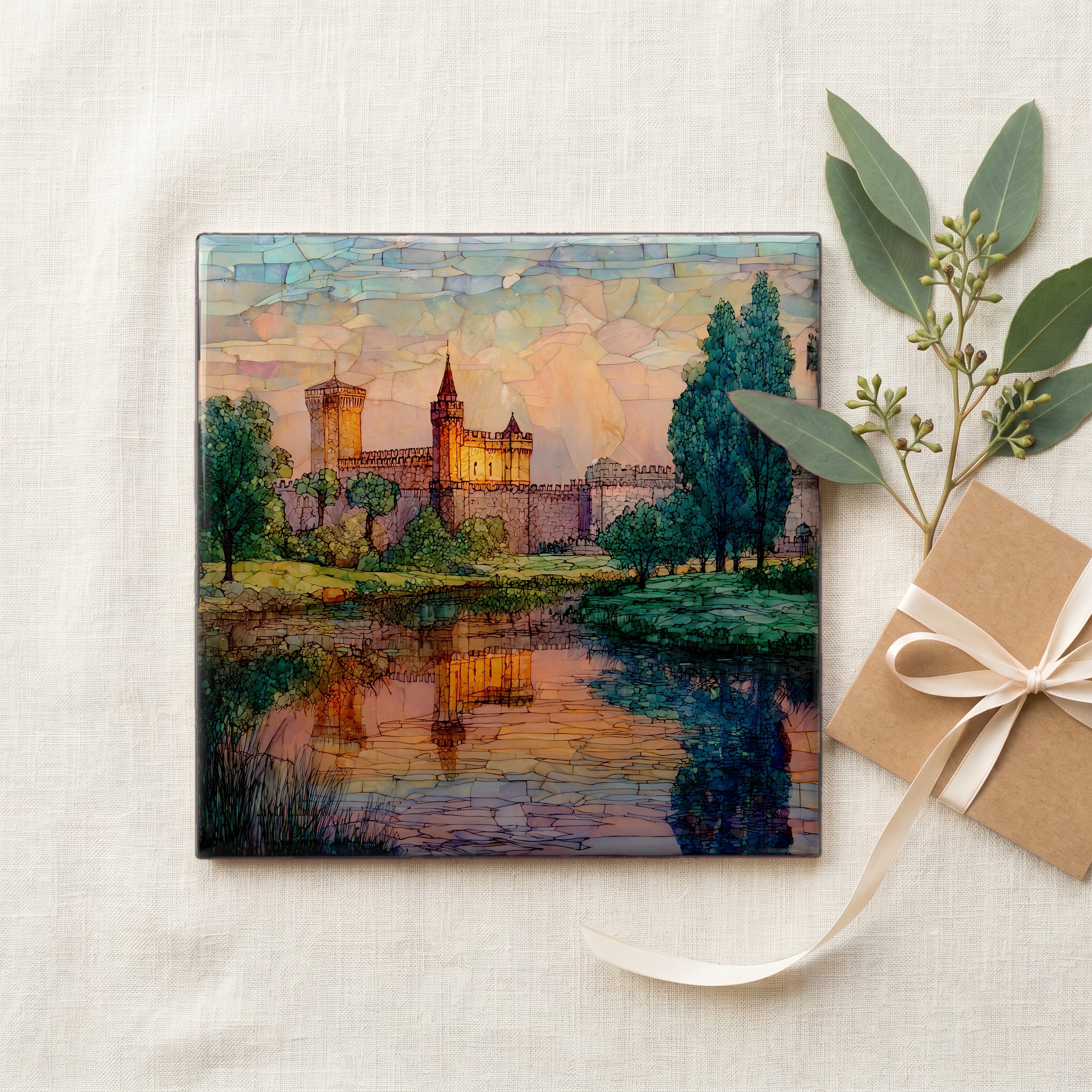
comes gift-ready

Each tile ships in a kraft box, tied with cream ribbon, with a handwritten note from the studio if you'd like to add one.
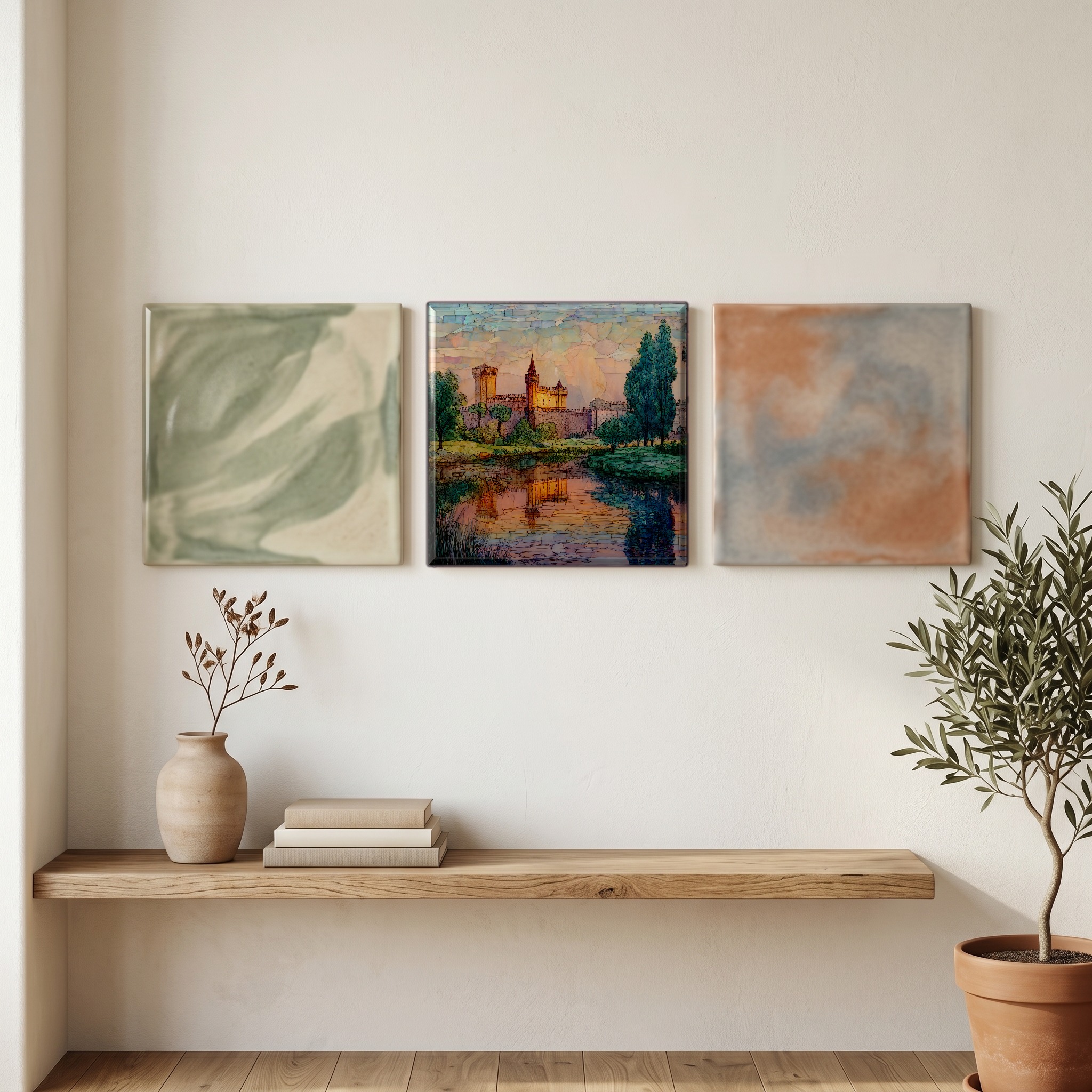
or build a grouping
or build a grouping

Three or five different vistas, hung together — a chapter of places you've been, or want to go.

about Sforza Castle

The place, in three passes.

A little of what's known, in case you fall down the rabbit hole — or want to go see it yourself.
the place

Sforza Castle stands at the western edge of Milan's historic centre, between the Duomo a kilometre to the east and Parco Sempione opening out behind it to the northwest. Francesco Sforza, the condottiero who became Duke of Milan in 1450, ordered its construction the same year on the site of a 14th-century Visconti fortress. His son Galeazzo Maria and grandson Ludovico il Moro extended it through the 1480s, drawing on Leonardo da Vinci and Donato Bramante for decoration and fortification. The plan is roughly square, around 200 metres on a side, with four corner towers and the central Filarete Tower over the main gate.

the stone

The defining material is Lombard red brick, the warm clay-brown that runs through much of Milan's older fabric. The Filarete Tower at the centre, rebuilt by Luca Beltrami between 1900 and 1905 from surviving drawings after the original was destroyed in a 1521 gunpowder explosion, rises about 70 metres above the main gate. Two round artillery towers flank the front corners, their lower-slung profile shaped to absorb cannon fire; the rear corners are square. Inside the inner Corte Ducale the brick gives way to Candoglia marble around the doorways, the same pale pink-veined stone the Visconti and Sforza patrons used for the Duomo.

the visit

The castle is open daily for the courtyards, ramparts, and moat path, with no ticket required; people walk through it as the natural route from Via Dante to Parco Sempione. The museums inside, run by the Comune di Milano, share a single combined ticket and are closed on Mondays. The system includes the Museum of Ancient Art with Michelangelo's Rondanini Pietà, the Pinacoteca, the Museum of Musical Instruments, the Egyptian Museum, and the Achille Bertarelli Print Collection. The Sala delle Asse, with its mulberry-canopy ceiling painted by Leonardo da Vinci around 1498, has been under long-running restoration with limited access. Metro Line 1 stops at Cairoli Castello.

where
Italy · Milan, Lombardy
position
45.4706° N · 9.1795° E
the neighborhood

What's nearby.

A handful of named places within an hour's walk or short drive. Some we've already painted; some we will.
at the lake
Parco Sempione
central park
1 km NW
Arco della Pace
triumphal arch
1 km SW
Santa Maria delle Grazie
convent church
1 km E
Pinacoteca di Brera
art museum
1 km E
La Scala
opera house· on a tile
1 km E
Galleria Vittorio Emanuele II
shopping arcade· on a tile
1 km E
Duomo di Milano
Gothic cathedral
2 km S
Navigli
canal district· on a tile
N
Sforza Castle
Parco Sempione
Arco della Pace
Santa Maria delle Grazie
Pinacoteca di Brera
La Scala
Galleria Vittorio Emanuele II
Duomo di Milano
common questions

What people ask.

A few questions we get about Sforza Castle — and about bringing the piece home.
about the place

Sforza Castle stands at the western edge of Milan's historic centre, where Via Dante meets Piazza Castello. The Duomo is a kilometre to the east; Parco Sempione opens directly behind the castle's northern walls. Metro Line 1 stops at Cairoli Castello, one stop from Duomo.

Francesco Sforza, condottiero and Duke of Milan, began construction in 1450 on the foundations of a 14th-century Visconti fortress. His son Galeazzo Maria and grandson Ludovico il Moro extended it through the 1480s, drawing on Leonardo da Vinci and Donato Bramante for decoration and fortification.

The central Filarete Tower was destroyed in 1521 when a gunpowder magazine inside it exploded. The architect Luca Beltrami rebuilt it between 1900 and 1905 from surviving drawings by Filarete, the 15th-century architect after whom the tower is named.

The castle houses Milan's civic museum system, run by the Comune di Milano: the Museum of Ancient Art with Michelangelo's Rondanini Pietà, the Pinacoteca, the Museum of Musical Instruments, the Egyptian Museum, the Prehistoric Collection, and the Achille Bertarelli Print Collection. They share a single combined ticket.

Yes. The Sala delle Asse on the ground floor carries a ceiling fresco by Leonardo, painted around 1498, of an interwoven canopy of mulberry branches and golden cord. The room has been under long-running restoration; access is by timed entry when it is open.

Michelangelo's last sculpture, left unfinished at his death in February 1564. The piece, the Virgin supporting the body of Christ, is carved from a single block of marble and forms the centrepiece of the Museum of Ancient Art, displayed in a dedicated room designed by the BBPR architects in 1956.

Parco Sempione, Milan's largest central park at around 38 hectares, opens directly behind the castle's north walls. It was laid out in the late 1880s on the former Sforza parade ground and ends at the Arco della Pace, a Napoleonic-era triumphal arch designed by Luigi Cagnola.

about the piece in your home

It has been a meaningful gift for many of our customers with Milanese roots, or who studied or lived in central Milan. The castle is a daily landmark in the city, the cut-through to Parco Sempione, the long view down Via Dante. A Coaster or Small with a handwritten studio note carries well.

The palette runs from warm Lombard brick-red through honey and pale Candoglia marble, a grounded, warm range. It sits well in Italianate maximalist rooms, library-warm studies with leather and walnut, and warm-modern European interiors. It is less suited to cool Scandinavian or all-white minimalist schemes.

Yes. Warm-toned European and library-style interiors have come back strongly in the last two years, with terracotta, oxblood, and walnut in rotation against deep green and brass. The castle's red-brick-and-marble palette ties cleanly to those rooms without feeling thematically forced.

For a console or sideboard, a single Large reads cleanly from across the room. For a longer wall above a sofa, a four-tile Mural lets the towers and the central gate each settle into their own panel. A nine-tile Mural becomes the centrepiece of a dining wall.

Yes. Order the Dura Satin or Matte finish for bathrooms, showers, and backsplashes; both are scratch-resistant and stand up to steam, splash, and household cleaners. The Glossy finish is reserved for framed wall pieces and dry rooms.

A soft microfibre cloth with warm water is enough for everyday cleaning. For kitchen or bathroom installations, mild household cleaners are safe on the Dura Satin and Matte finishes. The colour lives in the ceramic surface, not on top of it, so it will not lift.

Yes. Every WenderVista piece is painted and finished in our Knoxville studio. Reid Wender chooses the place, develops the visual, and signs off on every tile before it ships. We do not license images and do not carry stock art.

if this one stayed with you

A few you might also love.

Hand-picked by the eye that found Sorapis. Same air, same kind of quiet.
— a collection

The Italian Dolomites,
painted slow.

The valleys between Cortina and Val Gardena, the tarns you walk an hour to see, the towers that turn the colour of a banked fire just before dark. Wander the collection by valley, by season, or follow the path Reid walked.

Tre Cime
Braies
Misurina
Sorapis
Cinque Torri
Sassolungo
Marmolada