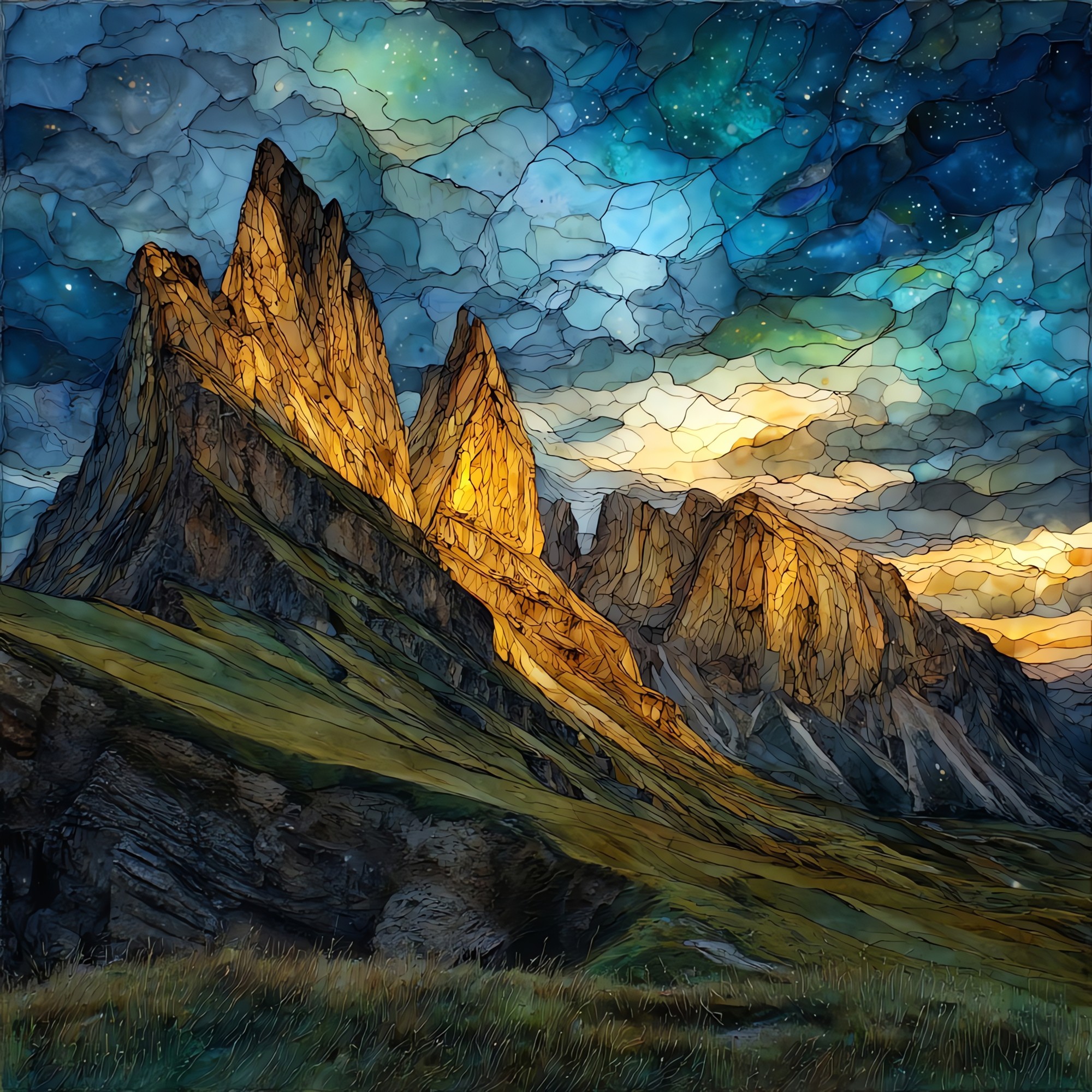
Seceda Ridge
— — the meadow that ends at a wall of stone.
Not only on a wall.
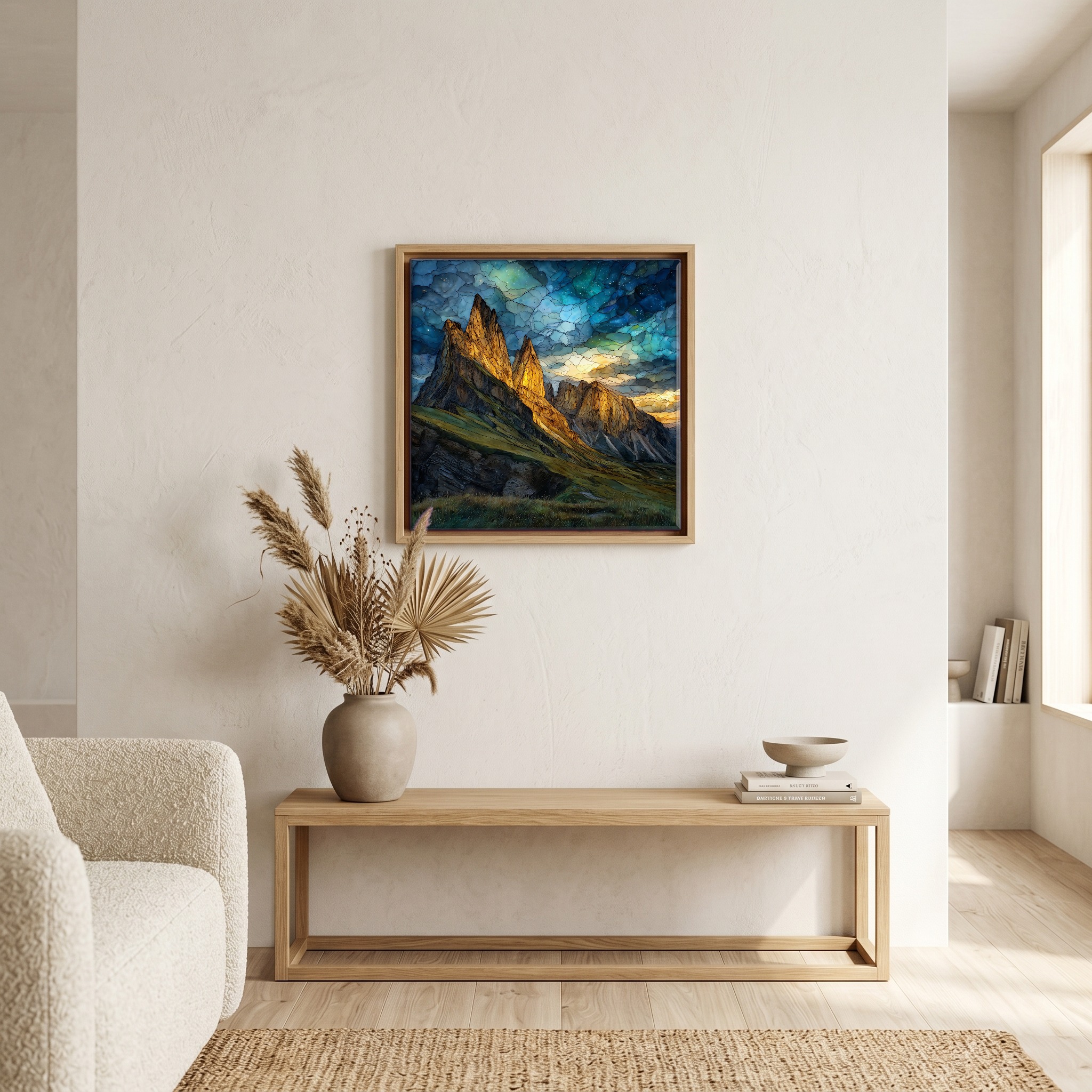
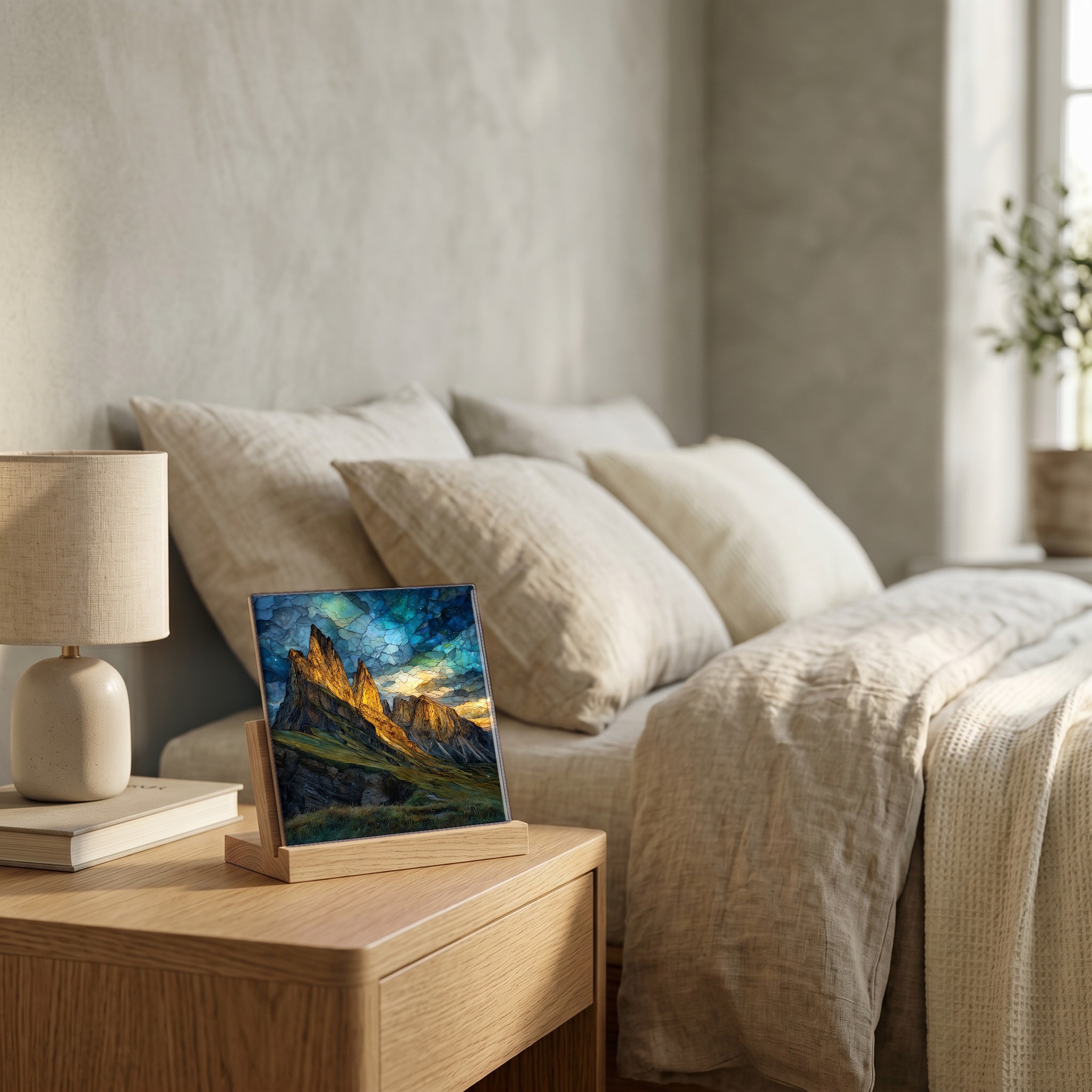
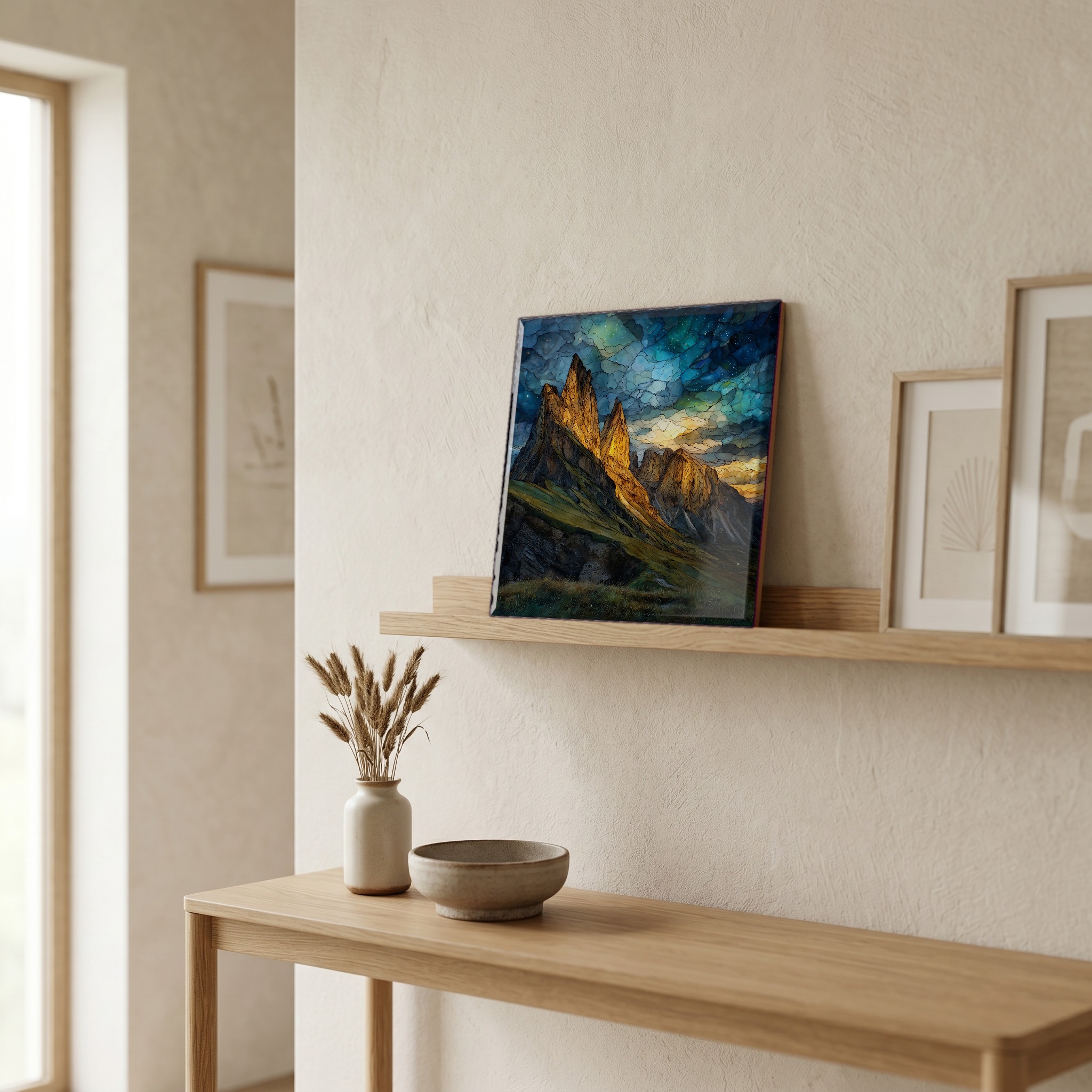
“A long grass ridge above Ortisei that tips, without warning, into the vertical limestone of the Geisler peaks. The cable car from town climbs in about fifteen minutes; most photographers walk the final ten and stop at the saddle. The contrast is the picture: a soft pasture on one side, a sheer drop on the other, the boundary roughly a metre wide. Locals in Val Gardena have grazed cattle on these alpine pastures for centuries; the meadow keeps its colour into late September. The crowd thins after the last gondola down.
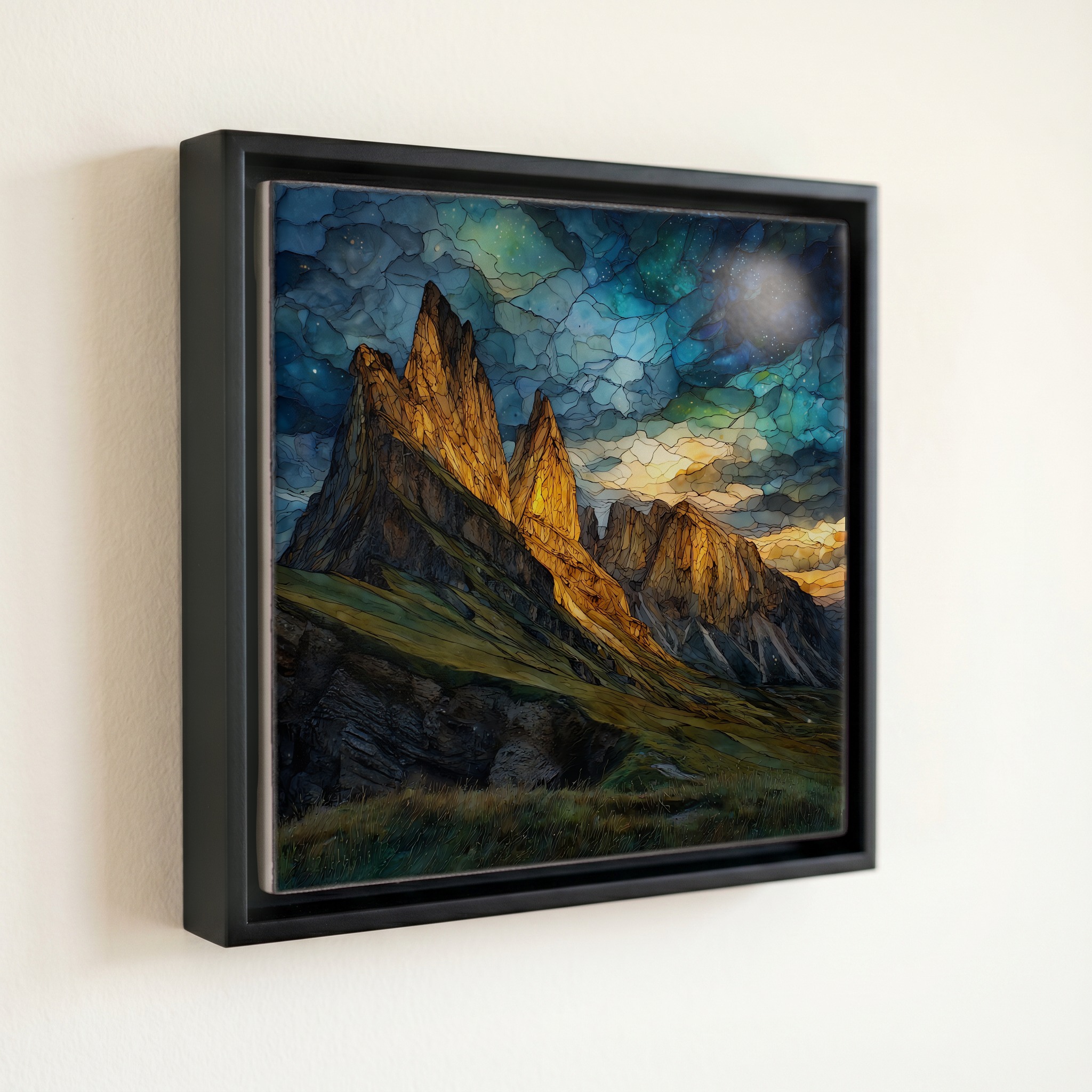
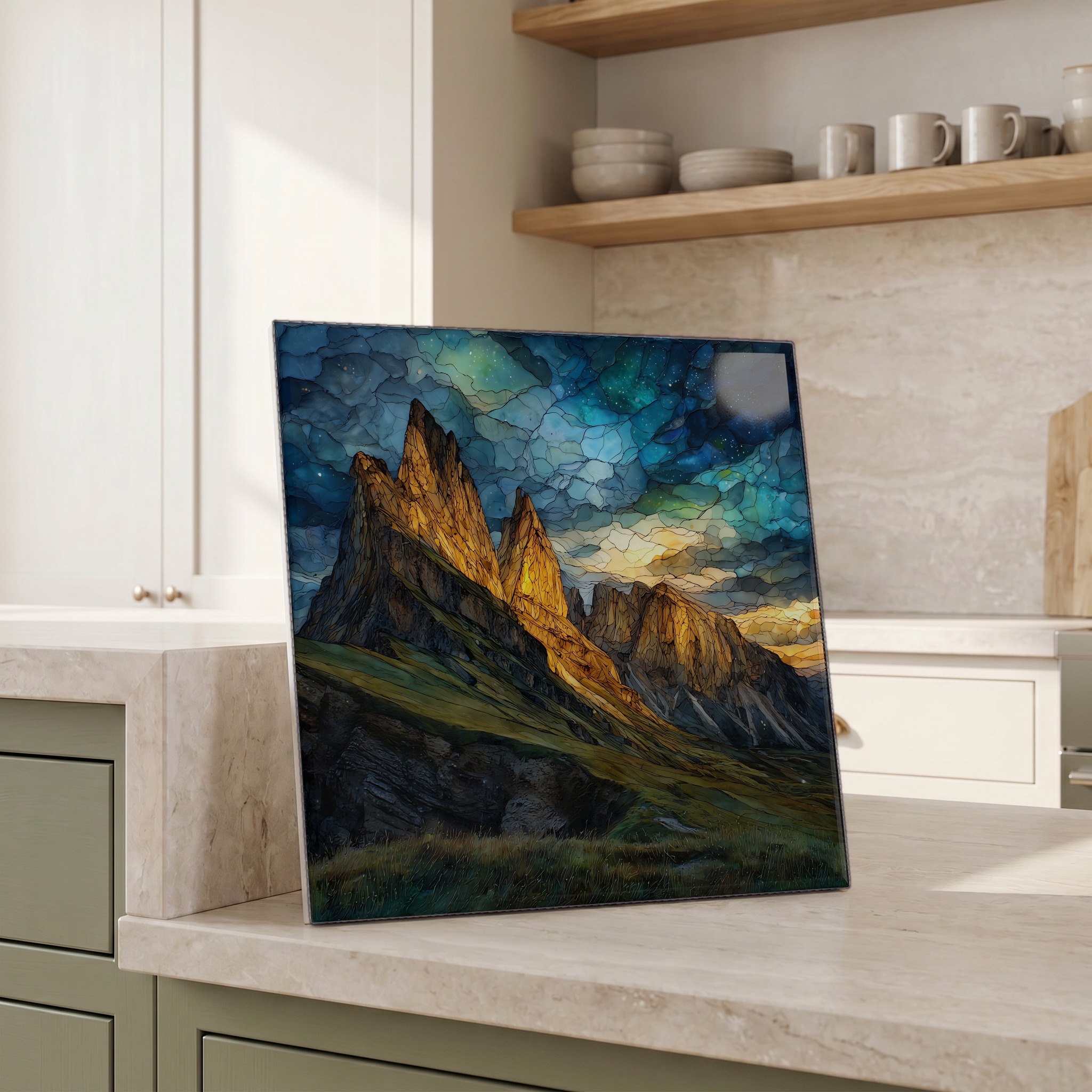
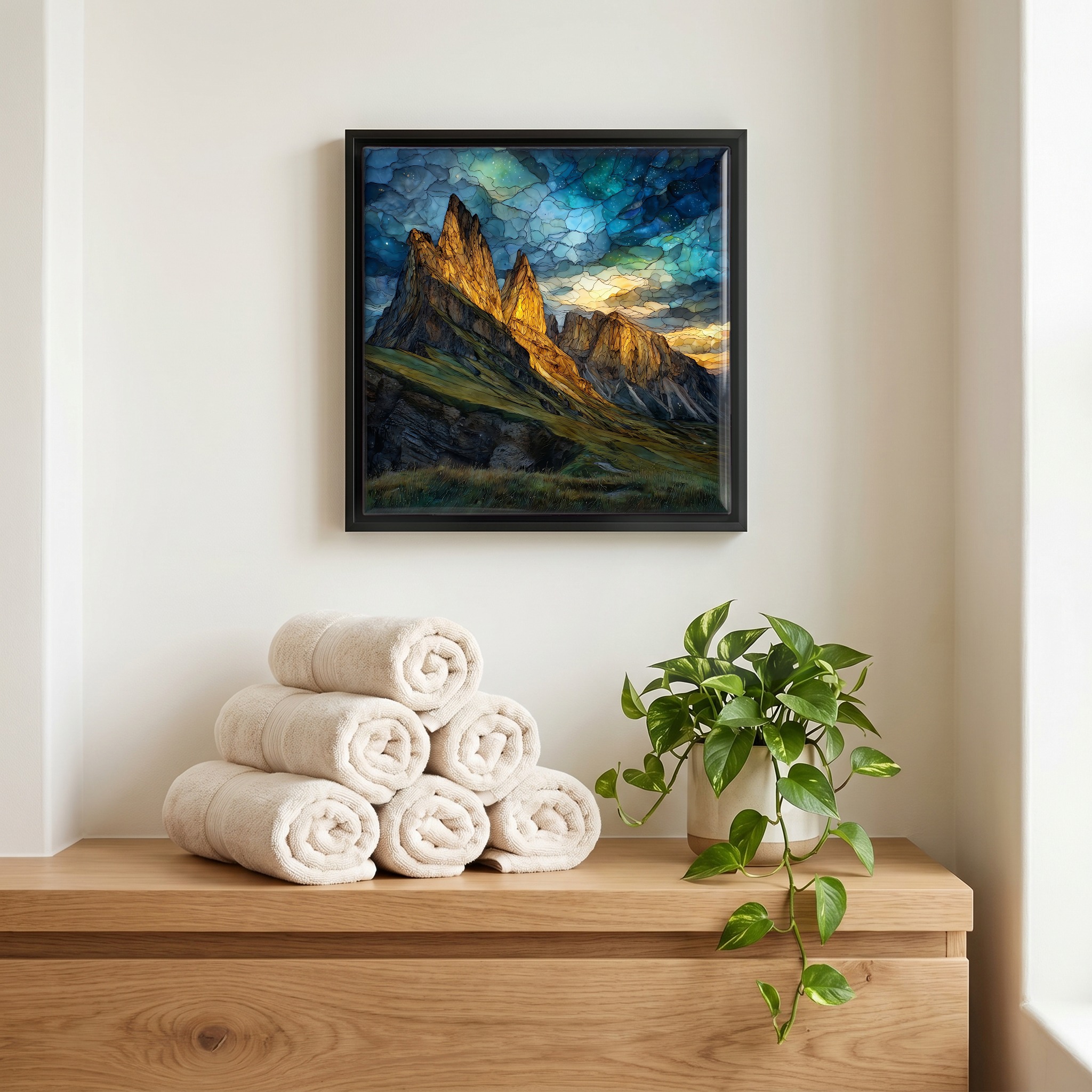
Seceda Ridge, on ceramic.
Each tile is finished by hand in our Knoxville studio. Artwork is slowly infused into the ceramic surface under high heat and pressure, and rests beneath a thin glossy finish. The colour lives in the surface, not on top of it.
Pick any four 4-inch tiles — National Parks you've been to, a Smokies set, the four seasons of one place. $ for a set of , cork-backed, ready to live on the table.
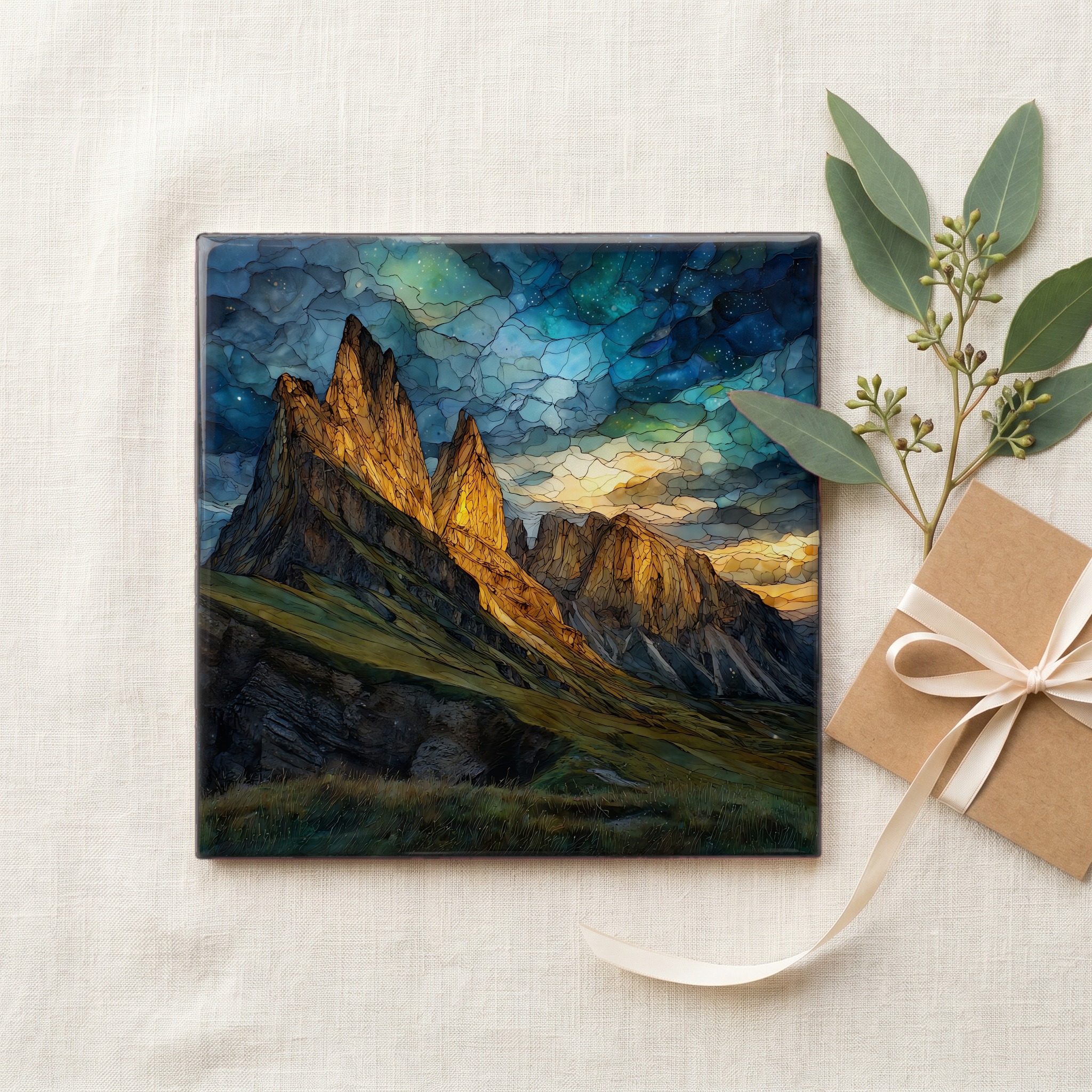
Each tile ships in a kraft box, tied with cream ribbon, with a handwritten note from the studio if you'd like to add one.
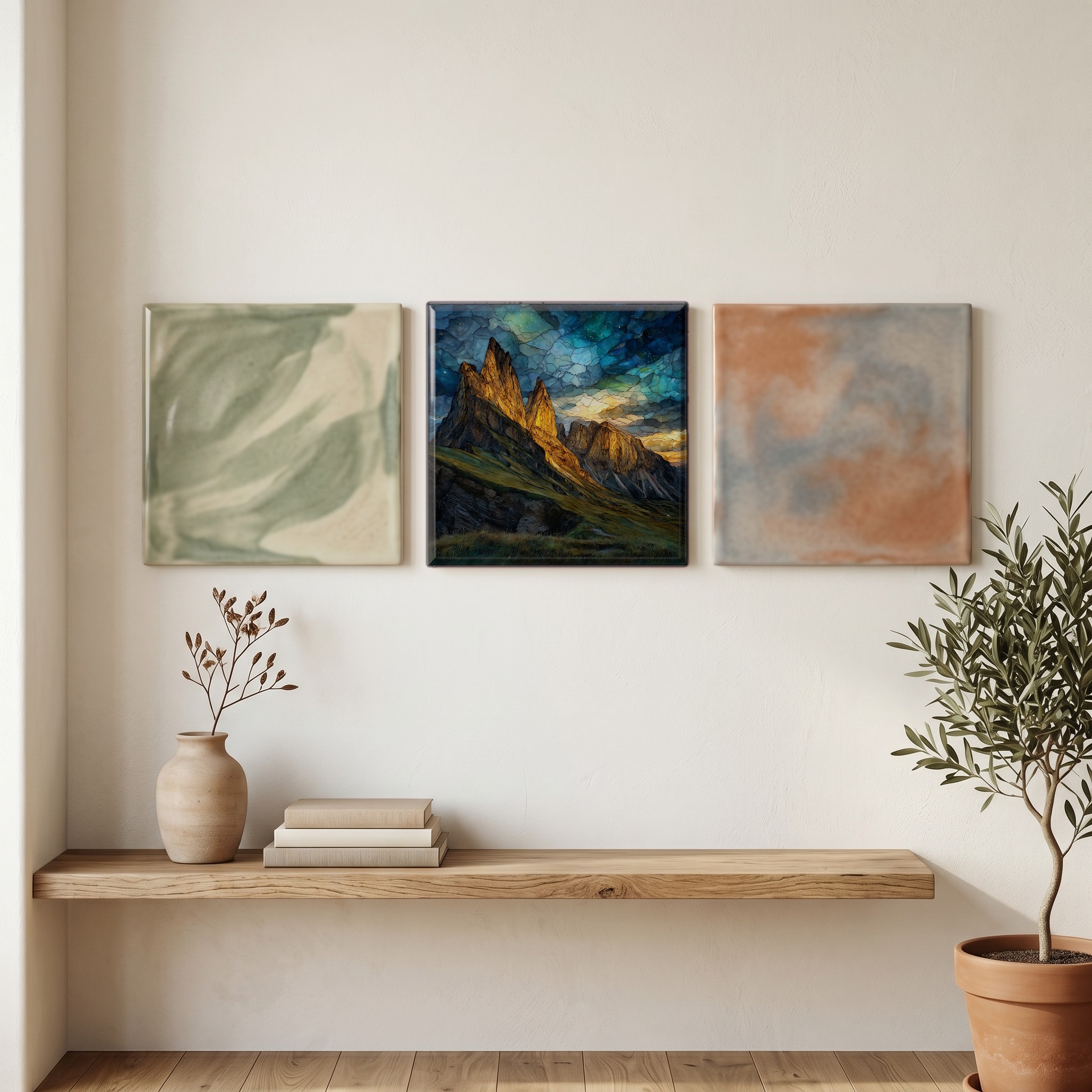
Three or five different vistas, hung together — a chapter of places you've been, or want to go.
The place, in three passes.
Seceda is a high alpine ridge above Ortisei in Val Gardena, in the autonomous province of Bolzano in South Tyrol, the German and Ladin-speaking north of Italy. The summit reaches 2,519 metres on the southern flank of the Odle, the Geisler group, inside the Puez-Odle Nature Park, a regional protected area of about 10,700 hectares of dolomite uplands. The ridge sits within the Dolomites UNESCO World Heritage Site, inscribed in 2009 as a serial property covering nine separate mountain groups in northeastern Italy. Most visitors arrive on the Seceda cable car from Ortisei, a two-stage ride of around fifteen minutes; strong walkers climb up from Santa Cristina in about four hours.
The Geisler peaks behind the ridge include Sass Rigais and Furchetta, both rising to 3,025 metres. They are made of dolomite, the magnesium-bearing carbonate rock named in 1791 for the French geologist Déodat de Dolomieu, which weathers into pale vertical walls and saw-tooth crests. The same rock built the Tre Cime to the east, the Sassolungo group to the south, and the Brenta further west. On Seceda the southern meadow flank slopes gently down toward Val Gardena, while the north face drops several hundred metres in raw vertical stone. Geologists read the cliff as the visible edge of the slow Alpine collision that lifted these old reefs out of an ancient sea.
The Seceda cable car runs in two stages from Ortisei, climbing first by gondola to Furnes and then by aerial tram to the upper station near 2,500 metres. The lift operates from late May through late October in summer, then again as a ski lift from early December through Easter as part of the Dolomiti Superski circuit. The most-photographed viewpoint is a ten-minute walk south-east from the upper station, on the spur looking across to the Geisler saddle. Sunset photographers usually arrive about ninety minutes before the last gondola; the ridge holds the warm light for roughly twenty minutes after the valley falls into shadow.