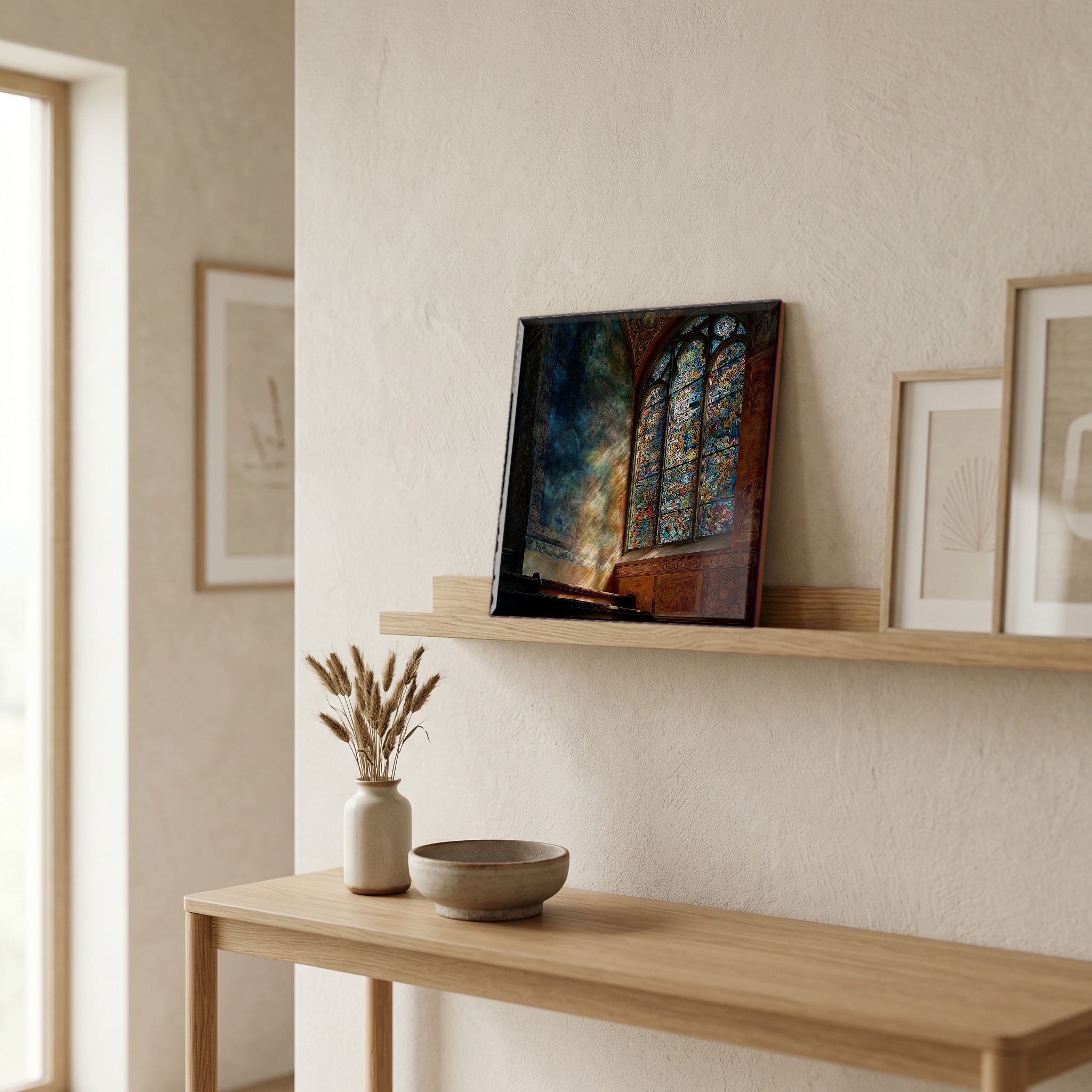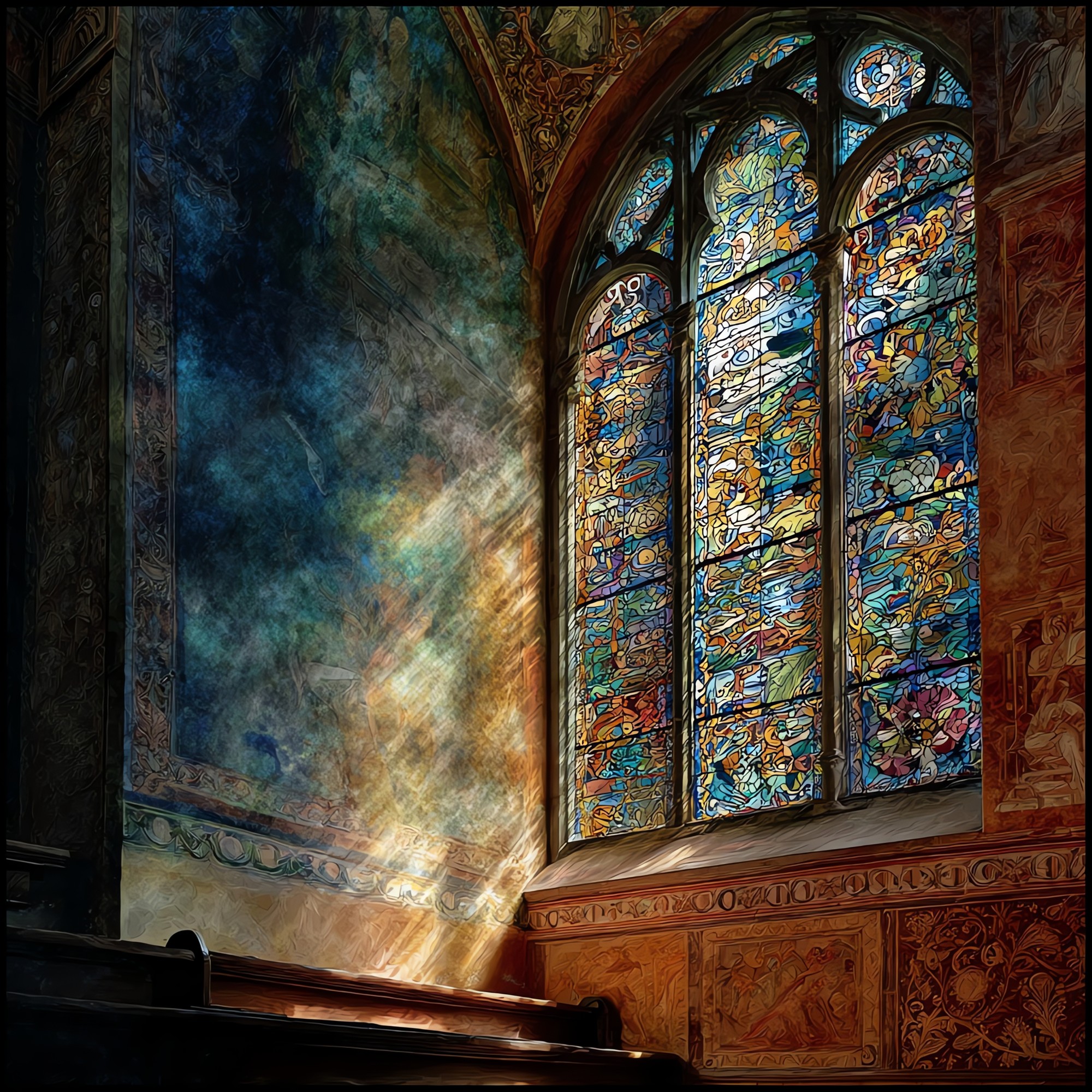
Wender·Vista
Scrovegni Chapel
shown on ceramic, 12-inch tileItaly
in Padua, half an hour west of Venice

Scrovegni Chapel

a chapel where the sky is the ceiling.

Where it lives

Not only on a wall.

A small tile on the nightstand catching the morning. A larger one above the fire. Yours, wherever you spend the slow hours.
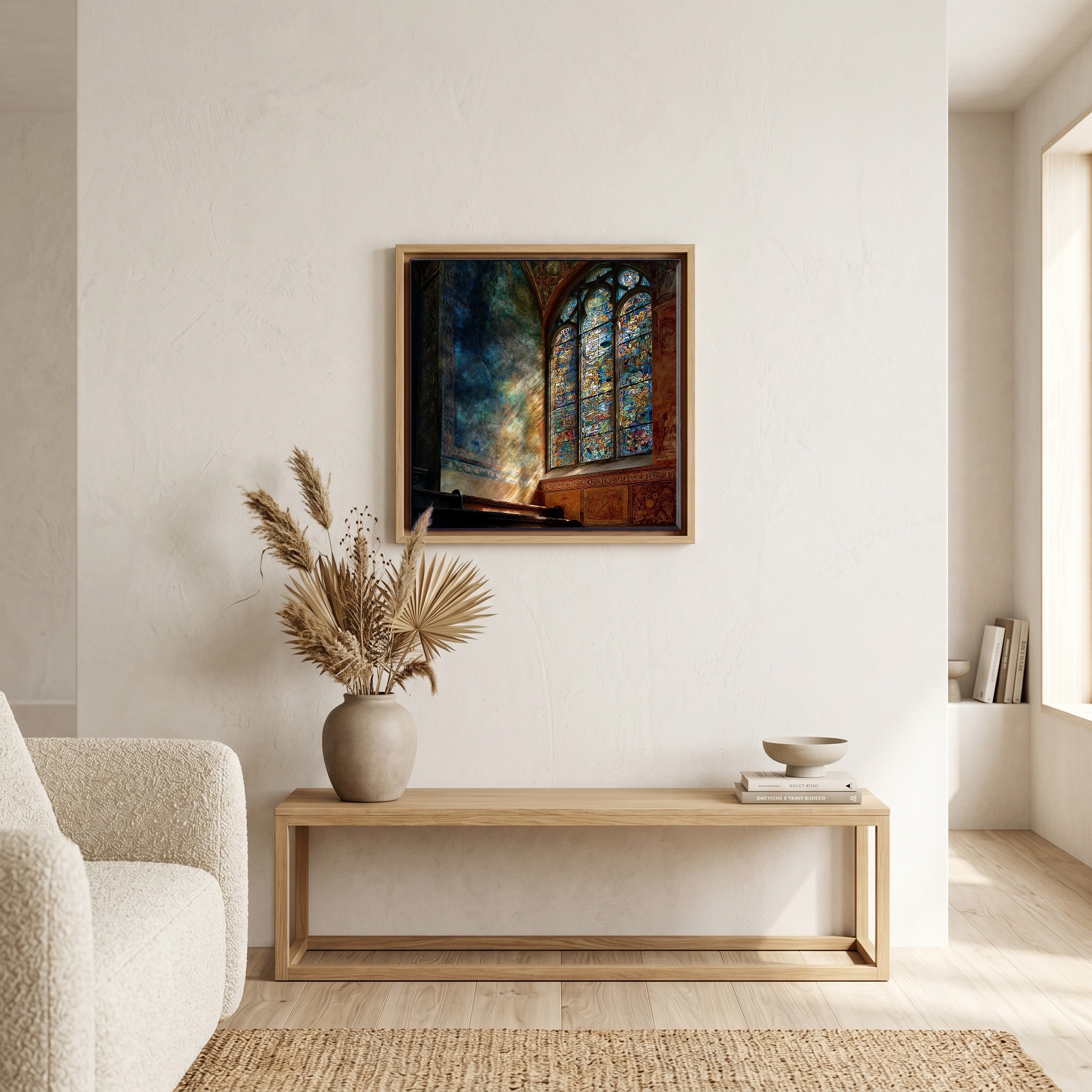
Above the bench, in a warm oak surround.
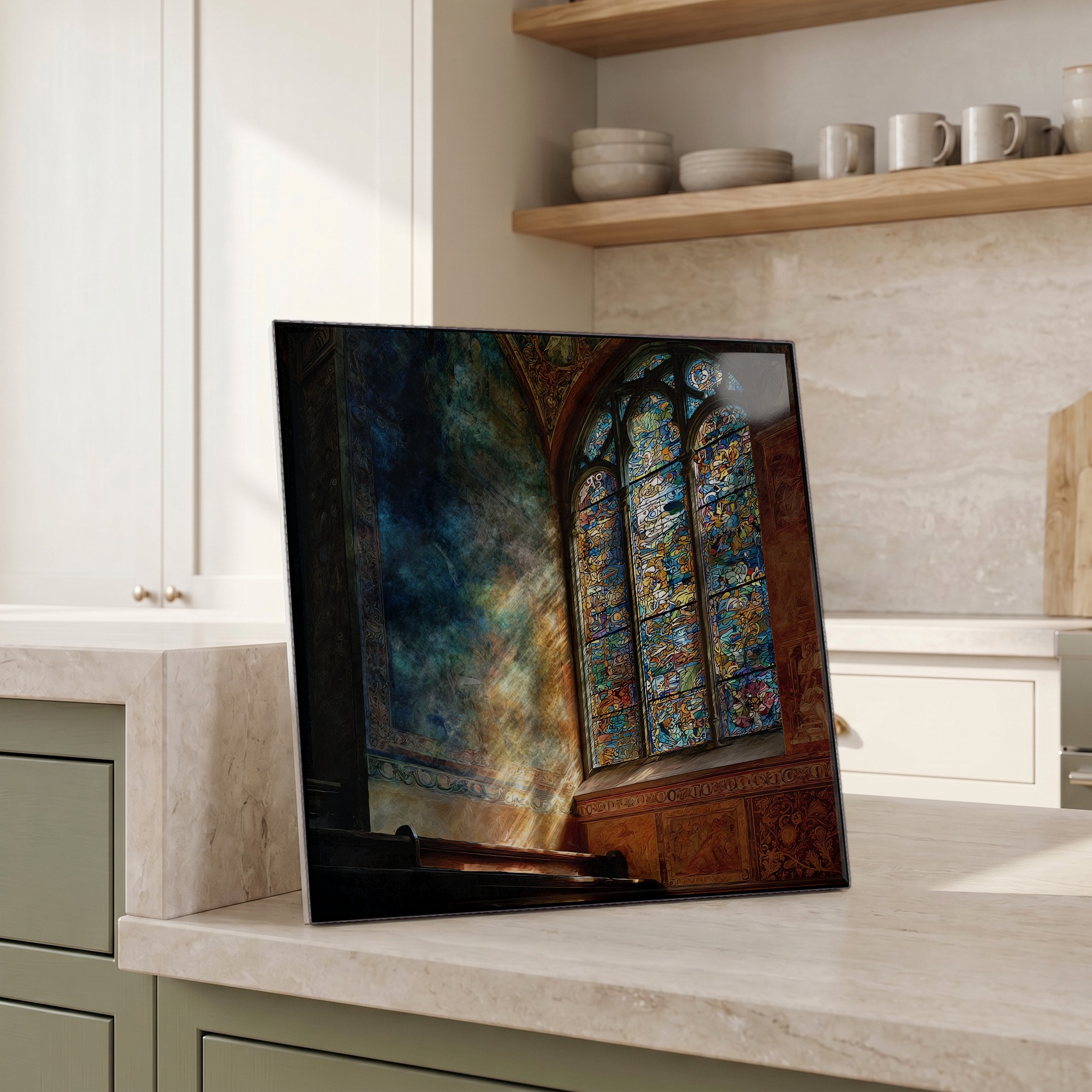
Beside the kettle, propped on the counter.
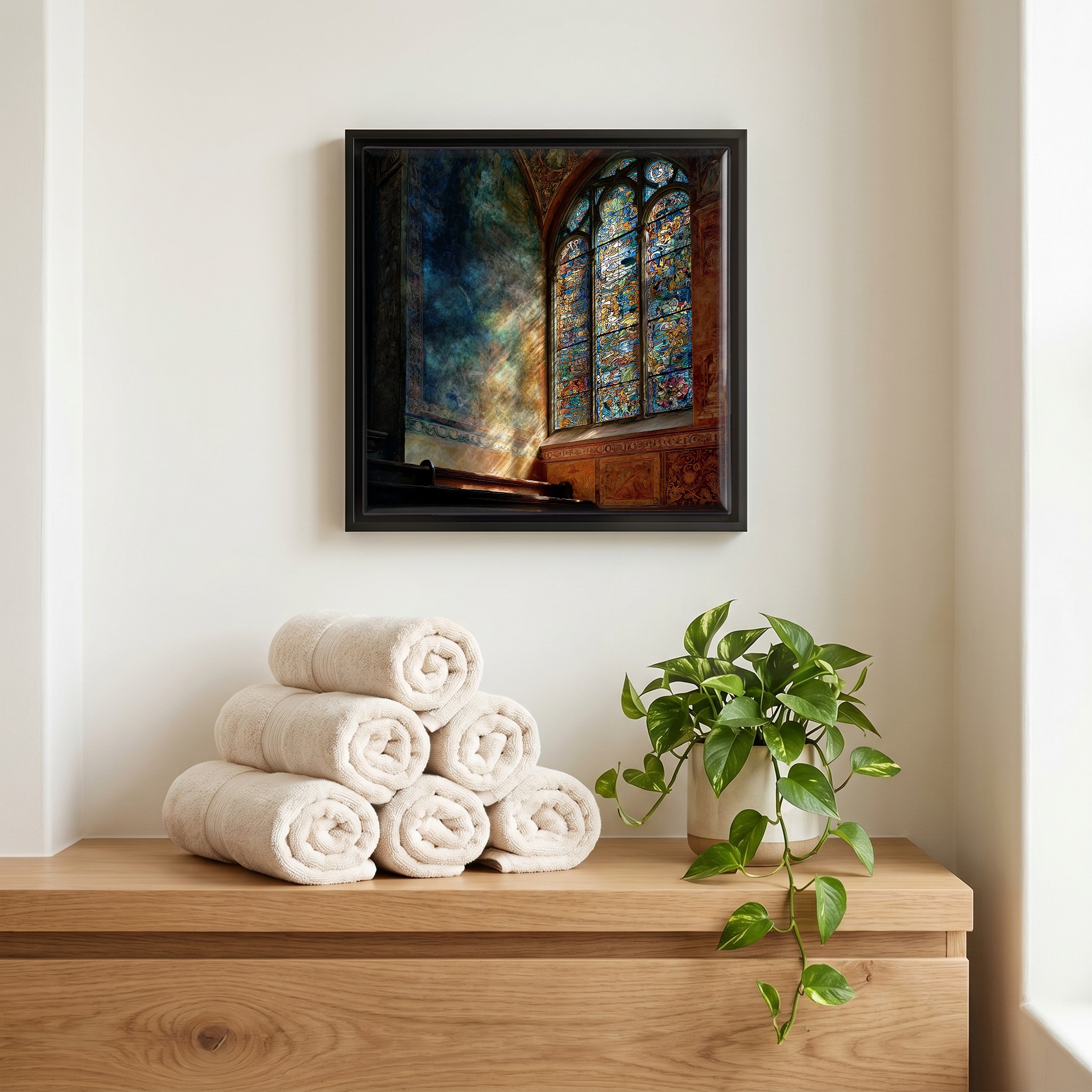
Above the linens, in a slim black surround.
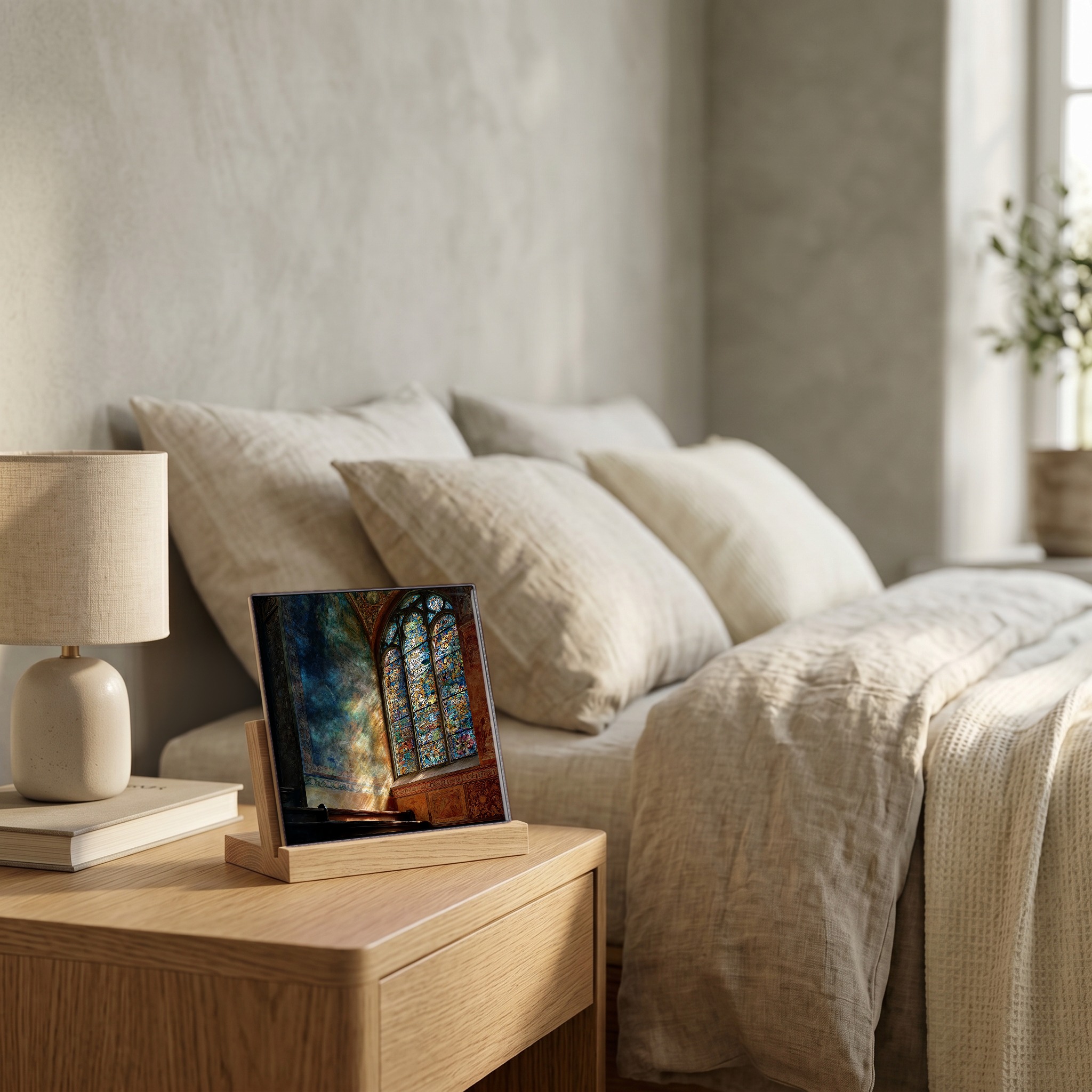
On the nightstand, on a light oak stand.
On a picture ledge, where the light comes in.
a note from the studio

A small brick chapel in Padua, half an hour by train west of Venice. Giotto painted the interior between 1303 and 1305, on commission from a Paduan banker named Enrico Scrovegni. Thirty-eight scenes from the lives of Joachim, Anna, Mary, and Christ run around the walls, set under a deep ultramarine vault scattered with gold stars. The whole room is the painting. Visitors are admitted twenty-five at a time, after a quarter-hour wait in a climatized airlock that holds the humidity steady so the fresco does not move. The slot inside is fifteen minutes. People tend to come out of it quiet.
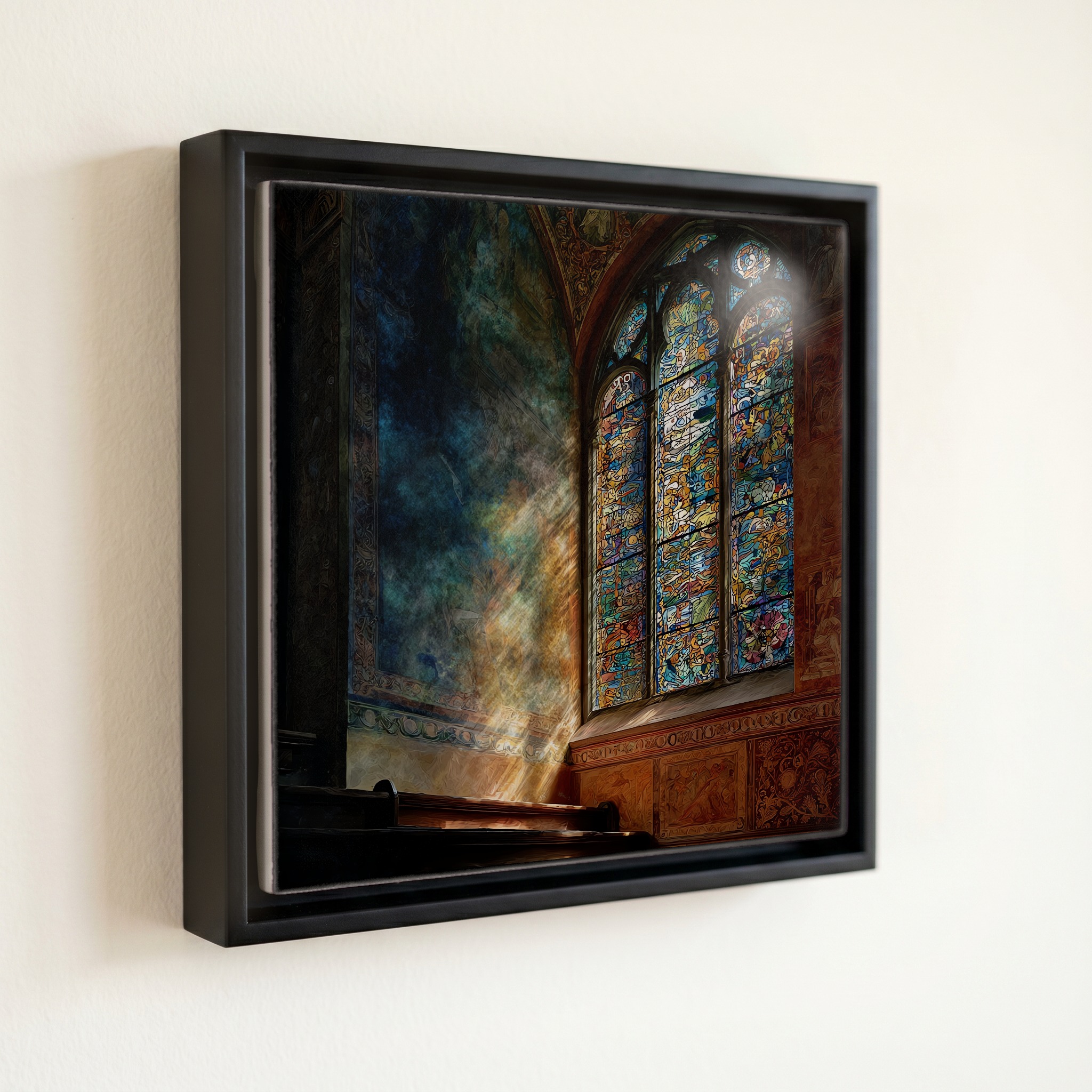
from the studio
shown in a slim black floating frame · 6 × 6 in
— bring it home

Scrovegni Chapel, on ceramic.

Each tile is finished by hand in our Knoxville studio. Artwork is slowly infused into the ceramic surface under high heat and pressure, and rests beneath a thin glossy finish. The colour lives in the surface, not on top of it.

What kind of piece?
One tile — square or rectangle.
How big?
the popular one — counter, shelf, nightstand
6 × 6 in · 15 cm · 1.6 lb
Surface finish
A clear glossy finish — the artwork reads as if under resin. Ideal for show-pieces and framed wall art.
How it sits
A hidden cleat — sits ¼″ proud of the wall.
$58
Hand-finished and shipped from our studio at the foot of the Smokies. On your wall in about ten days.
size
6 × 6 in
15 cm
weighs
1.6 lb
solid in the hand
surface
ceramic, hand-finished
art rests beneath a thin glossy finish
from
Knoxville, TN
our family studio, at the foot of the Smokies
— start a Coaster Set

Pick any four 4-inch tiles — National Parks you've been to, a Smokies set, the four seasons of one place. $ for a set of , cork-backed, ready to live on the table.
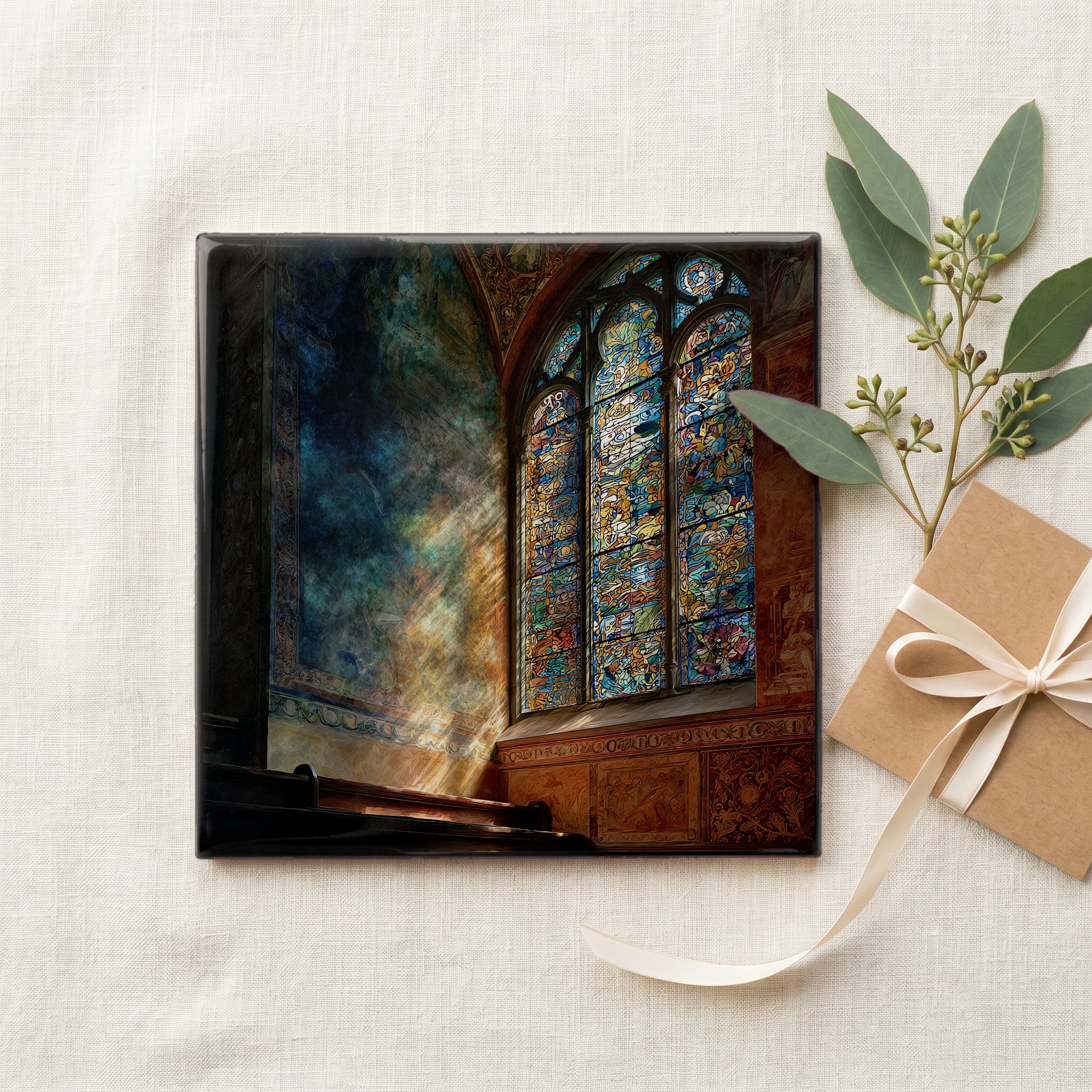
comes gift-ready
comes gift-ready

Each tile ships in a kraft box, tied with cream ribbon, with a handwritten note from the studio if you'd like to add one.
or build a grouping
or build a grouping

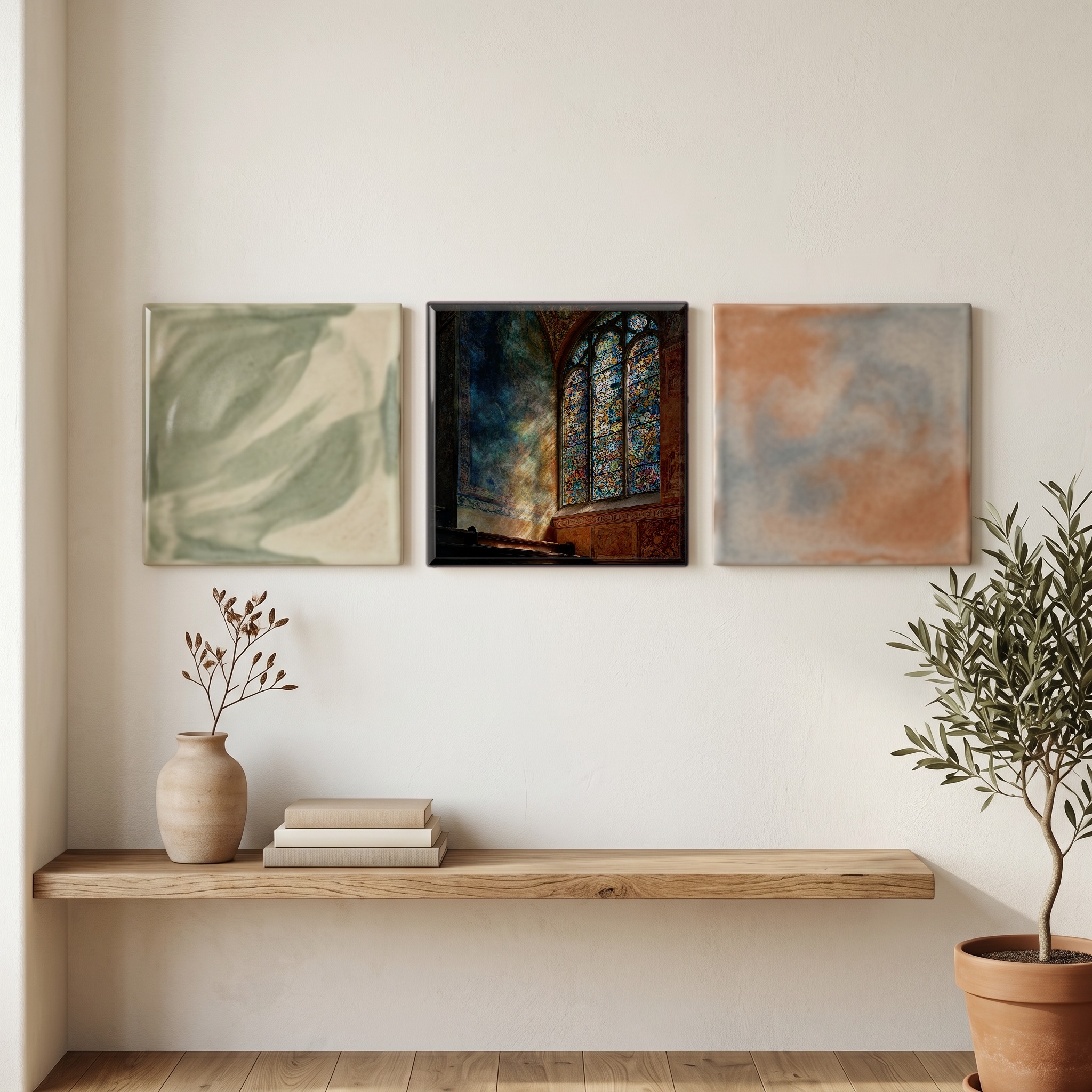
Three or five different vistas, hung together — a chapter of places you've been, or want to go.

about Scrovegni Chapel

The place, in three passes.

A little of what's known, in case you fall down the rabbit hole — or want to go see it yourself.
the place

The Scrovegni Chapel stands inside the Musei Civici Eremitani complex in central Padua, on the Veneto plain about thirty-five kilometres west of Venice and a ten-minute walk from Padova railway station. The Paduan banker Enrico Scrovegni bought the land in 1300, on the site of the ruined Roman arena that still gives the building its other name, the Arena Chapel. He raised the small brick oratory beside his family palace and had it consecrated to Santa Maria della Carità in 1305. Today the chapel sits in a green archaeological park bounded by the Eremitani church and the old Roman walls of the city.

the colour

The vault is the part everyone remembers: a deep starry blue painted in ultramarine ground from lapis lazuli, the most expensive pigment of the Middle Ages and the only true blue available to Giotto in 1305. The stone came overland from the Sar-e Sang mines in what is now Afghanistan, by weight worth more than gold. Giotto carried the same ultramarine across the background of all thirty-eight narrative panels, so the chapel reads as one continuous blue room with gold stars overhead. The colour has dimmed where nineteenth-century restorers worked, but in the upper register the lapis still holds its original saturation.

— informed by Smarthistory, Wikipedia
the visit

Entry is timed, capped, and booked in advance. Visitors are admitted in groups of twenty-five for a fifteen-minute slot inside the chapel, after a mandatory fifteen-minute wait in a climatized airlock that stabilises temperature and humidity before the inner door opens. The system protects the frescoes from the breath of the room, which would otherwise raise the humidity and lift the painted surface. Tickets go through the Musei Civici di Padova; same-day availability is rare in summer and over Christmas. Standard admission also covers the adjoining Eremitani civic art museum and the archaeological collection in the same complex.

where
Italy · Padua, Veneto
elevation
12 m · 39 ft
position
45.4119° N · 11.8795° E
the neighborhood

What's nearby.

A handful of named places within an hour's walk or short drive. Some we've already painted; some we will.
0.1 km S
Church of the Eremitani
church
0.9 km S
Palazzo della Ragione
medieval hall
1.1 km SW
Padua Cathedral and Baptistery
cathedral
1.6 km S
Basilica of Saint Anthony of Padua
basilica
1.8 km S
Prato della Valle
piazza
2 km S
Orto Botanico di Padova
botanical garden
N
Scrovegni Chapel
Church of the Eremitani
Palazzo della Ragione
Padua Cathedral and Baptistery
Basilica of Saint Anthony of Padua
Prato della Valle
Orto Botanico di Padova
common questions

What people ask.

A few questions we get about Scrovegni Chapel — and about bringing the piece home.
about the place

The Scrovegni Chapel stands in central Padua, in the Veneto region of northern Italy, inside the Musei Civici Eremitani complex. It is roughly a ten-minute walk from Padova railway station, and Padua is about thirty-five minutes by regional train west of Venice.

Giotto di Bondone painted the interior frescoes between 1303 and 1305, on commission from the Paduan banker Enrico Scrovegni. The cycle covers all four walls and the vault, with thirty-eight narrative scenes from the lives of Joachim, Anna, the Virgin Mary, and Christ.

The vault is painted in ultramarine, ground from lapis lazuli mined in what is now Afghanistan and the most expensive pigment available in 1305. By weight the stone was worth more than gold. Giotto carried the same blue through the background of every narrative scene.

The chapel was built on the site of a Roman arena, the remains of which are still visible in the surrounding park. Enrico Scrovegni purchased the land in 1300 and raised the small brick oratory beside his family palace. Both names, Scrovegni and Arena, are still in use.

Yes. Entry is timed and capped at twenty-five visitors per fifteen-minute slot, with a mandatory fifteen-minute wait in a climatized airlock beforehand. Same-day tickets are rarely available in summer or over Christmas. Bookings go through the Musei Civici di Padova.

Yes. UNESCO inscribed it in 2021 as the central monument of Padova Urbs picta, a serial listing covering eight buildings in Padua that together preserve the most complete cycle of fourteenth-century fresco painting in Italy.

The Lamentation, on the lower north wall, is the most often-cited single panel: the Virgin Mary cradling the dead body of Christ, surrounded by mourning angels and figures. Giotto's use of weight, gesture, and emotion in the scene is considered a turning point in Western painting.

about the piece in your home

It has been a meaningful gift for our customers with ties to Padua or a love of early Renaissance painting. The Scrovegni is the chapel where Giotto changed Western painting, and the city's quietest landmark. A Small or Medium with a handwritten note from the studio carries well.

The piece runs to deep ultramarine and gold, the colours of the vault and the haloes. It sits well in jewel-tone Maximalist rooms, in Old-World Traditional studies and libraries with darker woods, and against a warm neutral wall where the blue can do the work.

Yes. Saturated jewel-tone walls in navy, oxblood, and ultramarine have moved back into current interior work, and medieval and early Renaissance imagery reads as both old and new in that setting. A Medium of the chapel pairs cleanly with that look.

Above a sofa or a long console, a single Large holds the wall on its own. For a wider span, a four-tile Mural reads as one composition; a nine-tile Mural becomes the focal point of the room. Above a narrow console, the Medium is the usual choice.

Yes. For a bathroom, shower, or kitchen backsplash, choose the Dura Satin or Matte finish, both scratch-resistant and made for vertical, damp settings. The Glossy finish is better kept to framed wall pieces away from direct splashing.

Wipe it with a soft microfibre cloth and a little water. The colour is slowly infused into the ceramic surface under high heat and pressure and lives beneath a thin finish, so it needs no polish and no special cleaner.

Yes. Every WenderVista piece is original to Wender Studios, our family studio in Knoxville, Tennessee. We paint and hand-finish each one in-house, with no outside licensing, so the Scrovegni Chapel image is ours alone.

if this one stayed with you

A few you might also love.

Hand-picked by the eye that found Sorapis. Same air, same kind of quiet.
— a collection

The Italian Dolomites,
painted slow.

The valleys between Cortina and Val Gardena, the tarns you walk an hour to see, the towers that turn the colour of a banked fire just before dark. Wander the collection by valley, by season, or follow the path Reid walked.

Tre Cime
Braies
Misurina
Sorapis
Cinque Torri
Sassolungo
Marmolada