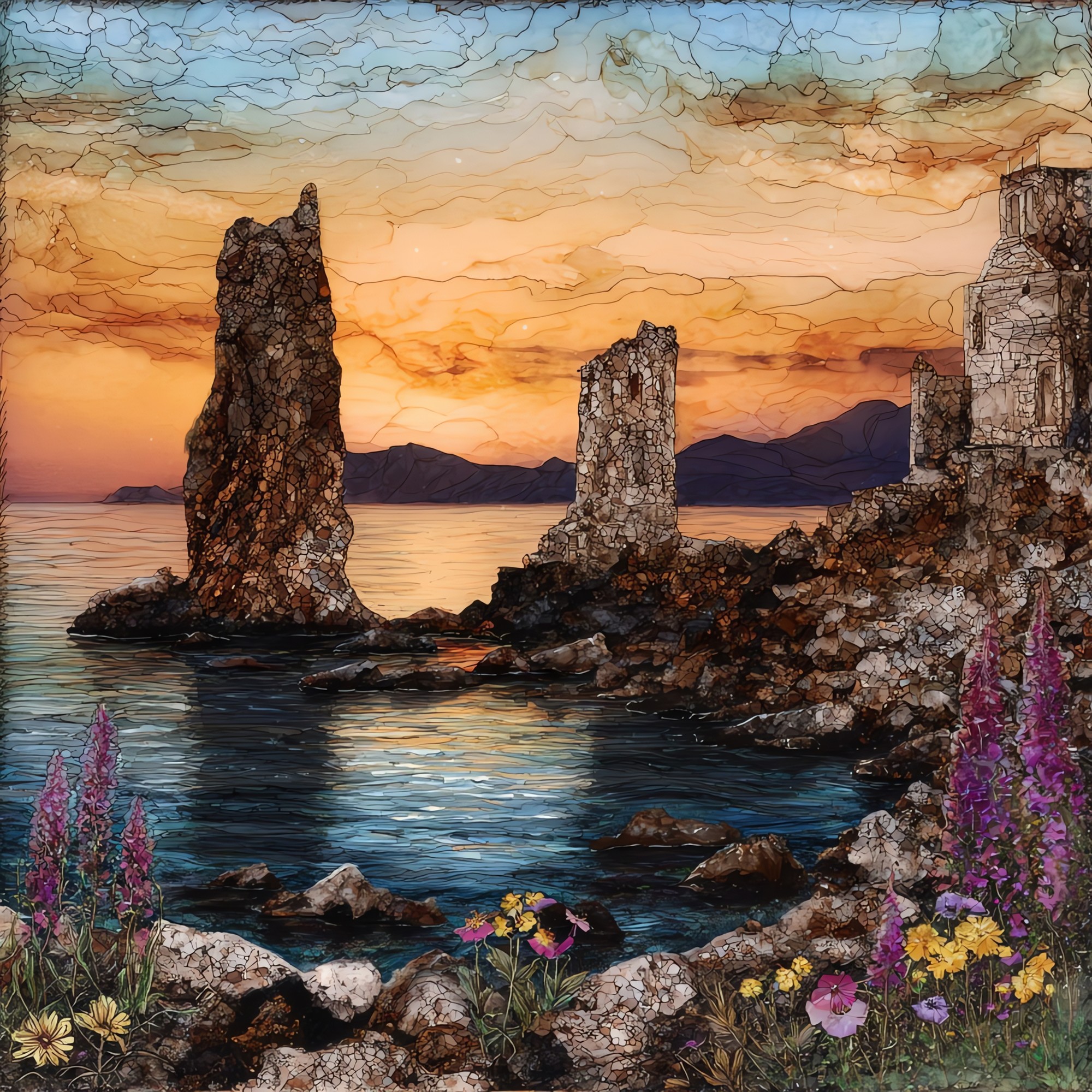
Scopello
— — two stones the bay still keeps.
Not only on a wall.
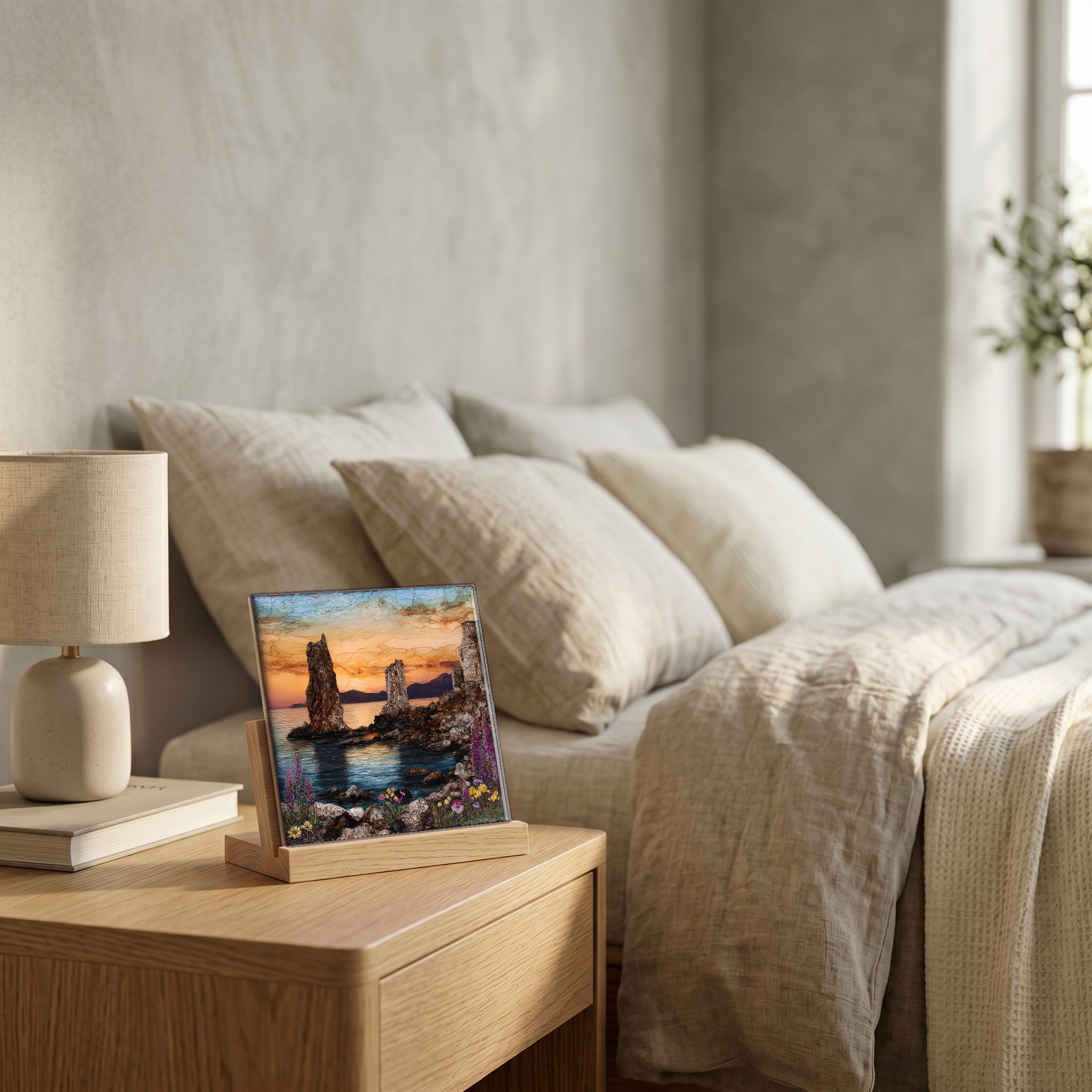
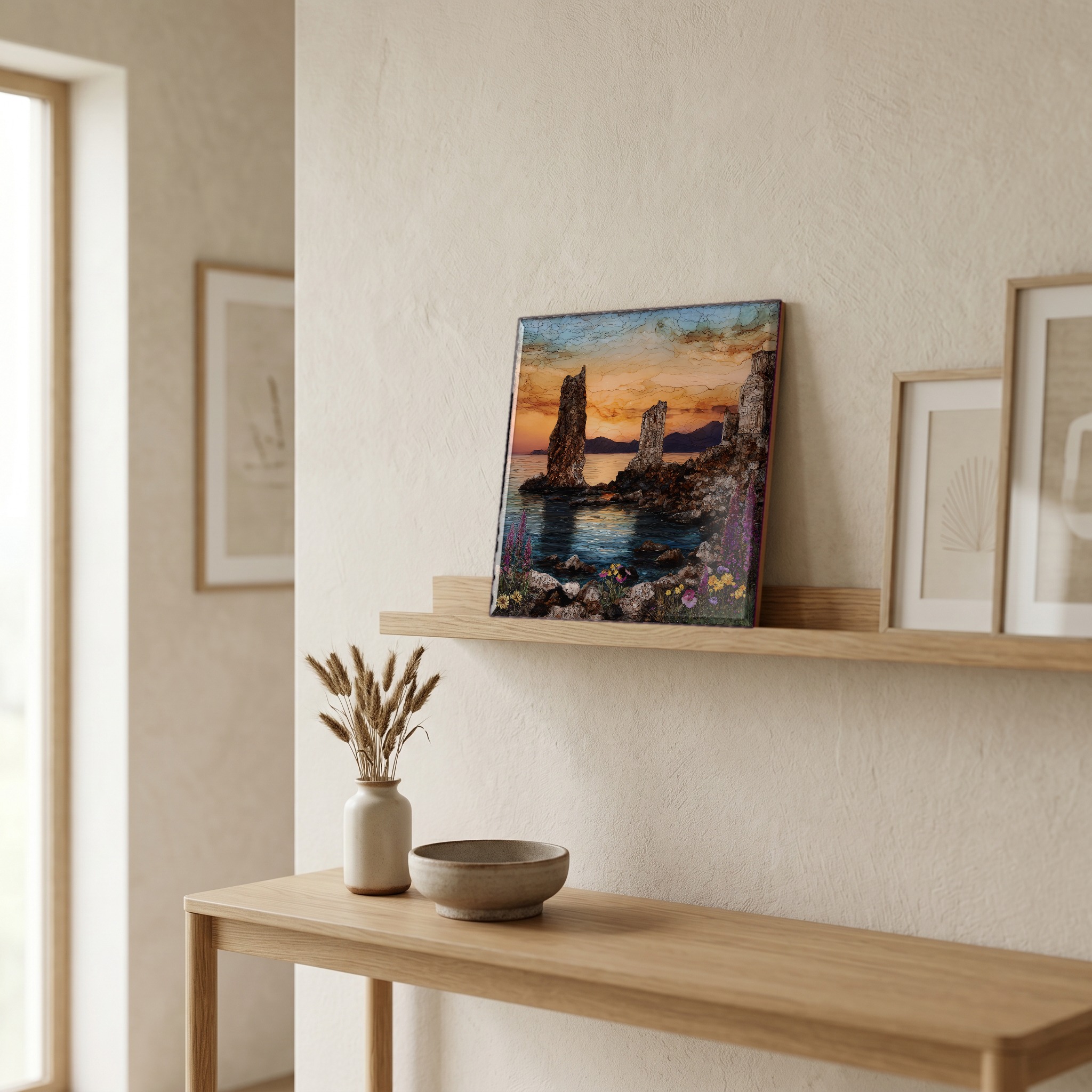
“A small village above a cove on Sicily's northwest coast, at the south gate of the Riserva dello Zingaro. The faraglioni, two limestone sea stacks, anchor a tiny harbour where a tonnara processed bluefin tuna from at least the 13th century until 1984. The baglio at the centre of the village was first built during Arab rule, then rebuilt across the Norman, Spanish, and Bourbon centuries. Eighty people live here. The bakery on the piazza sells pane cunzato, warm bread split and dressed with anchovy, tomato, oregano, and pecorino, eaten on the wall above the sea. Late in the afternoon the limestone reads soft pink, the colour of stone that has been warm for a long time.
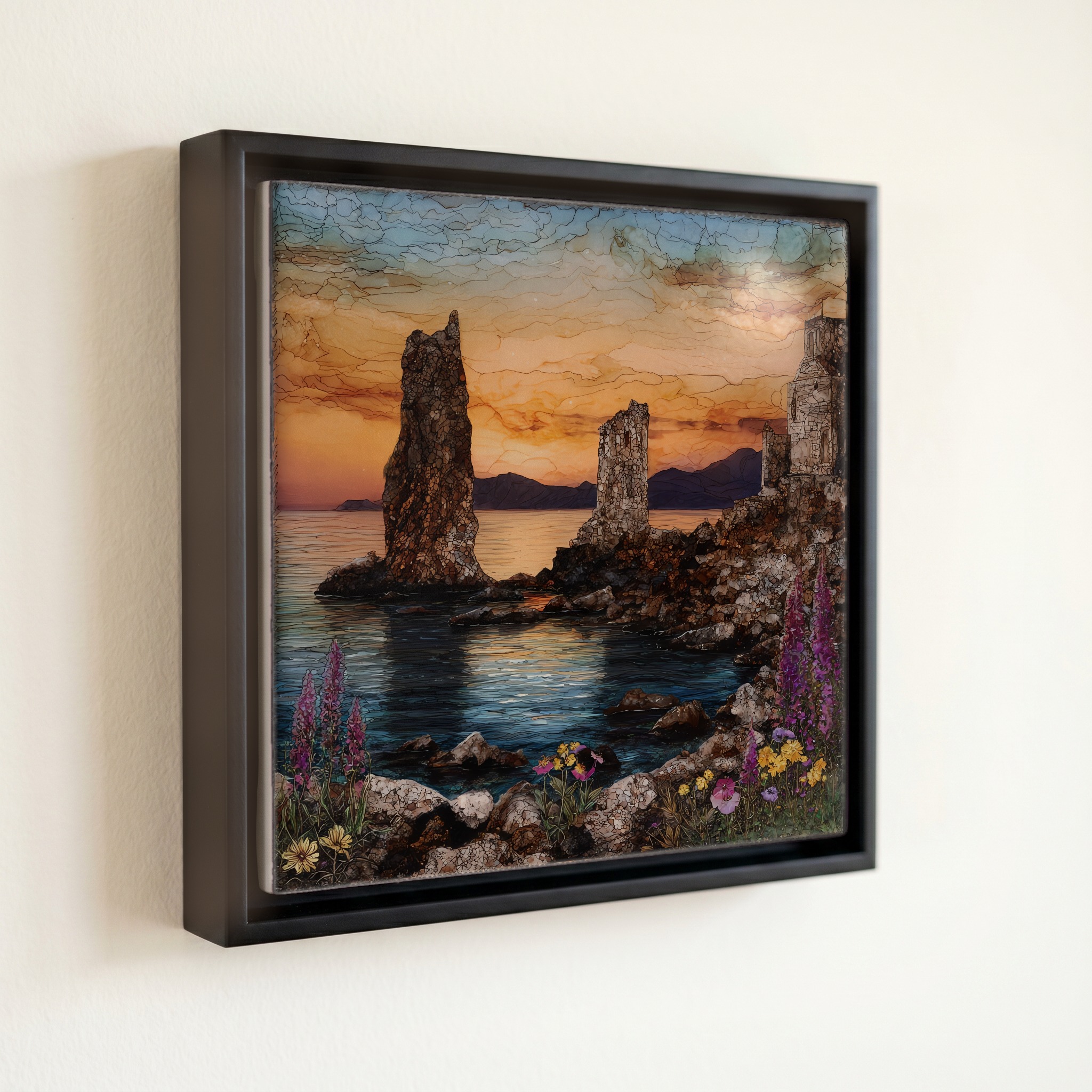
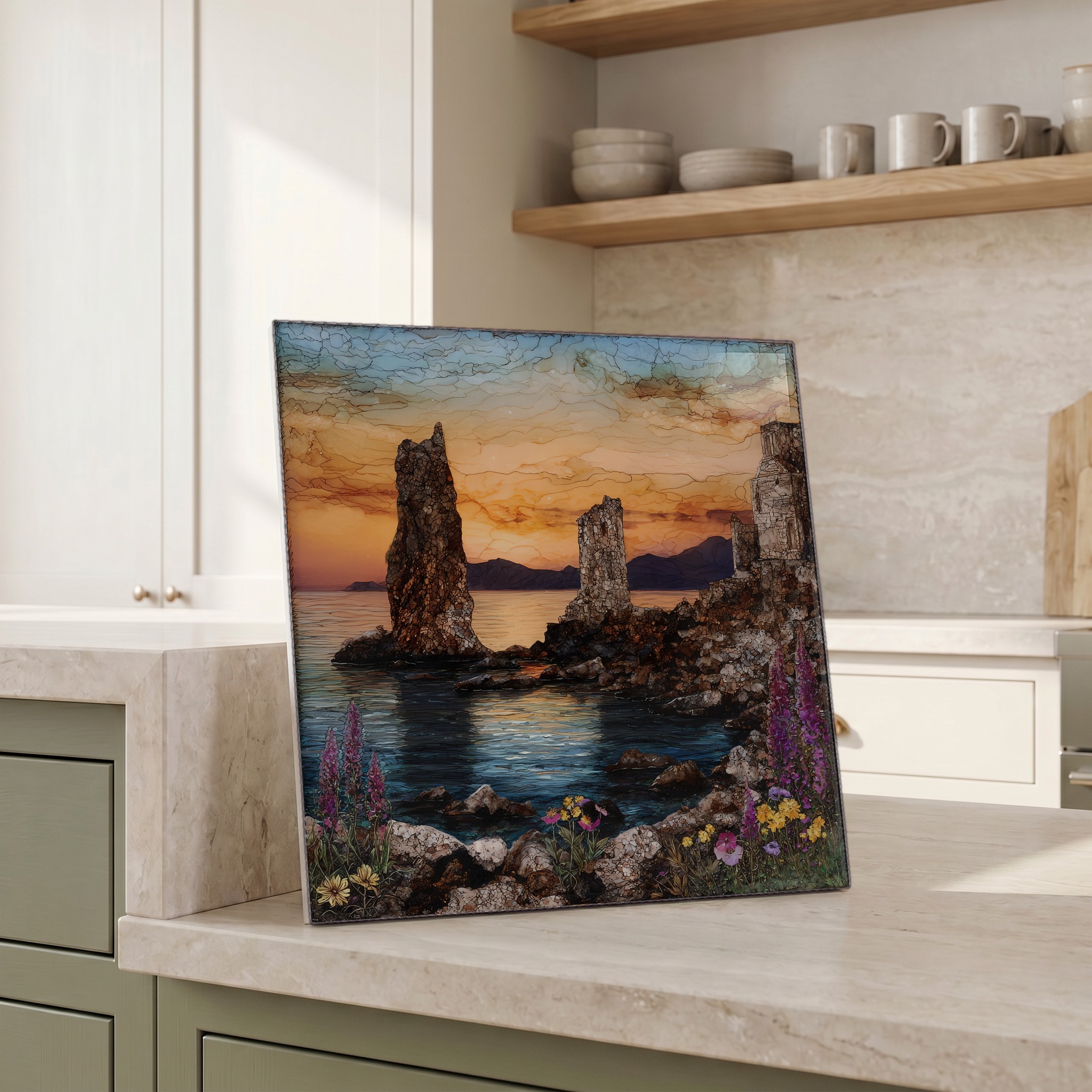
Scopello, on ceramic.
Each tile is finished by hand in our Knoxville studio. Artwork is slowly infused into the ceramic surface under high heat and pressure, and rests beneath a thin glossy finish. The colour lives in the surface, not on top of it.
Pick any four 4-inch tiles — National Parks you've been to, a Smokies set, the four seasons of one place. $ for a set of , cork-backed, ready to live on the table.
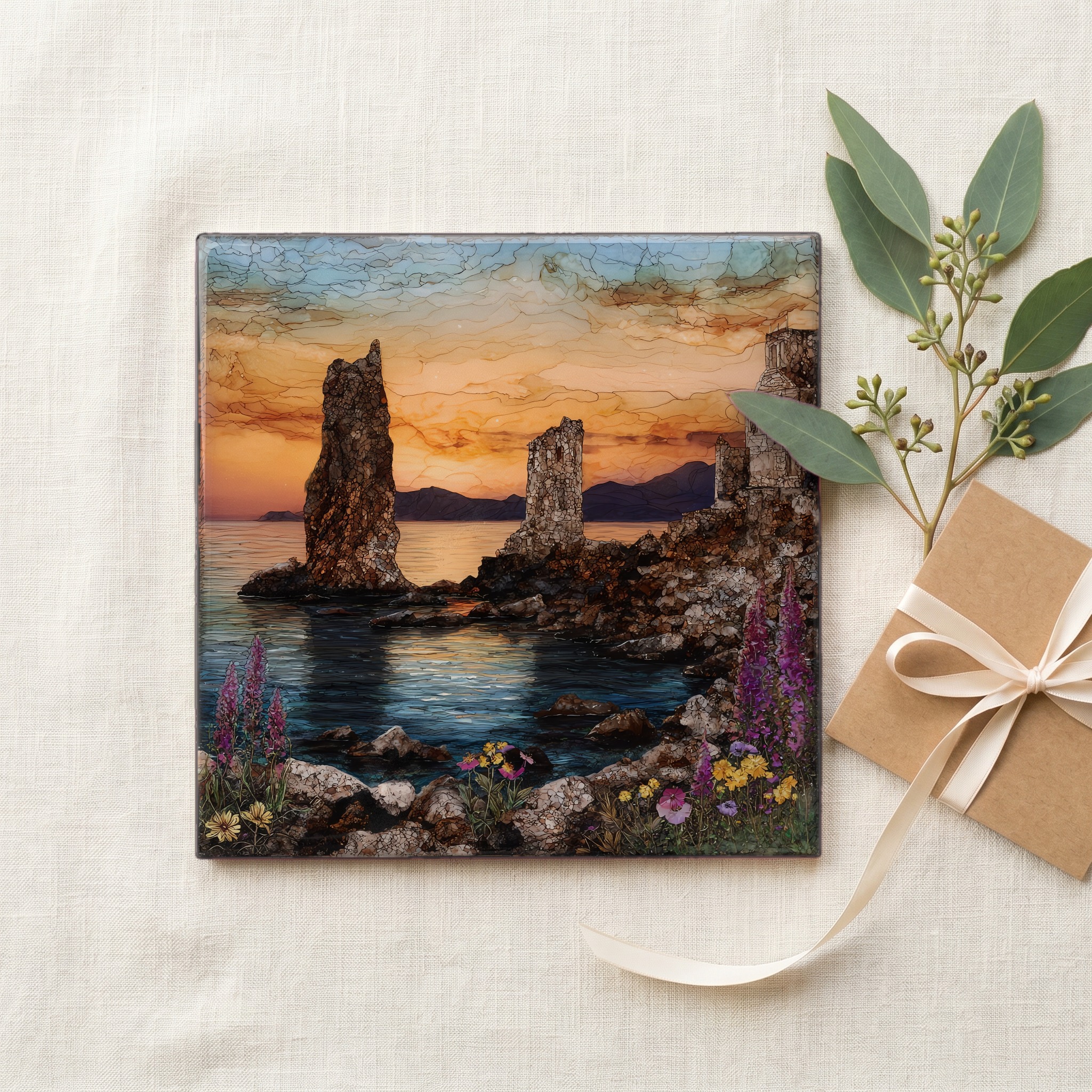
Each tile ships in a kraft box, tied with cream ribbon, with a handwritten note from the studio if you'd like to add one.
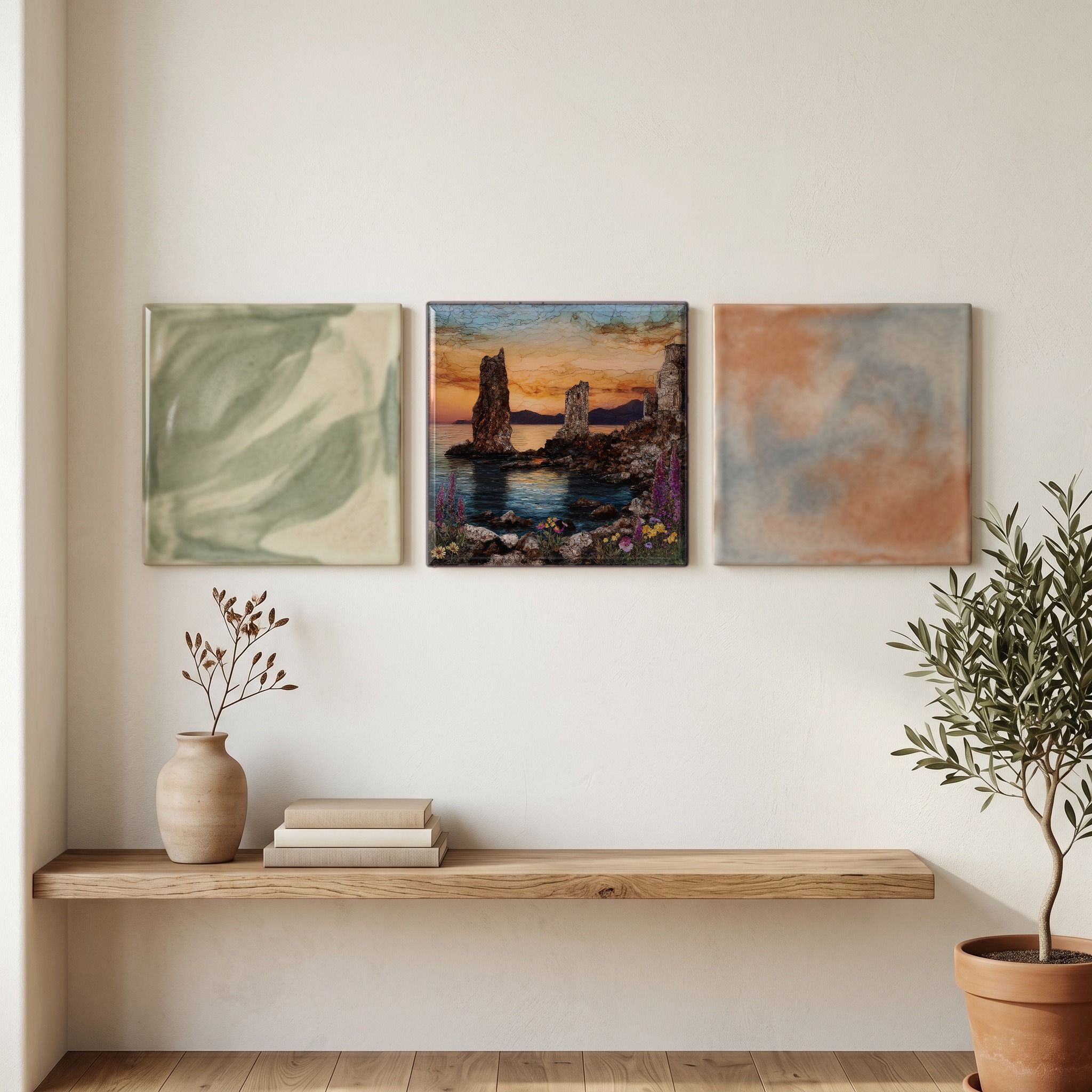
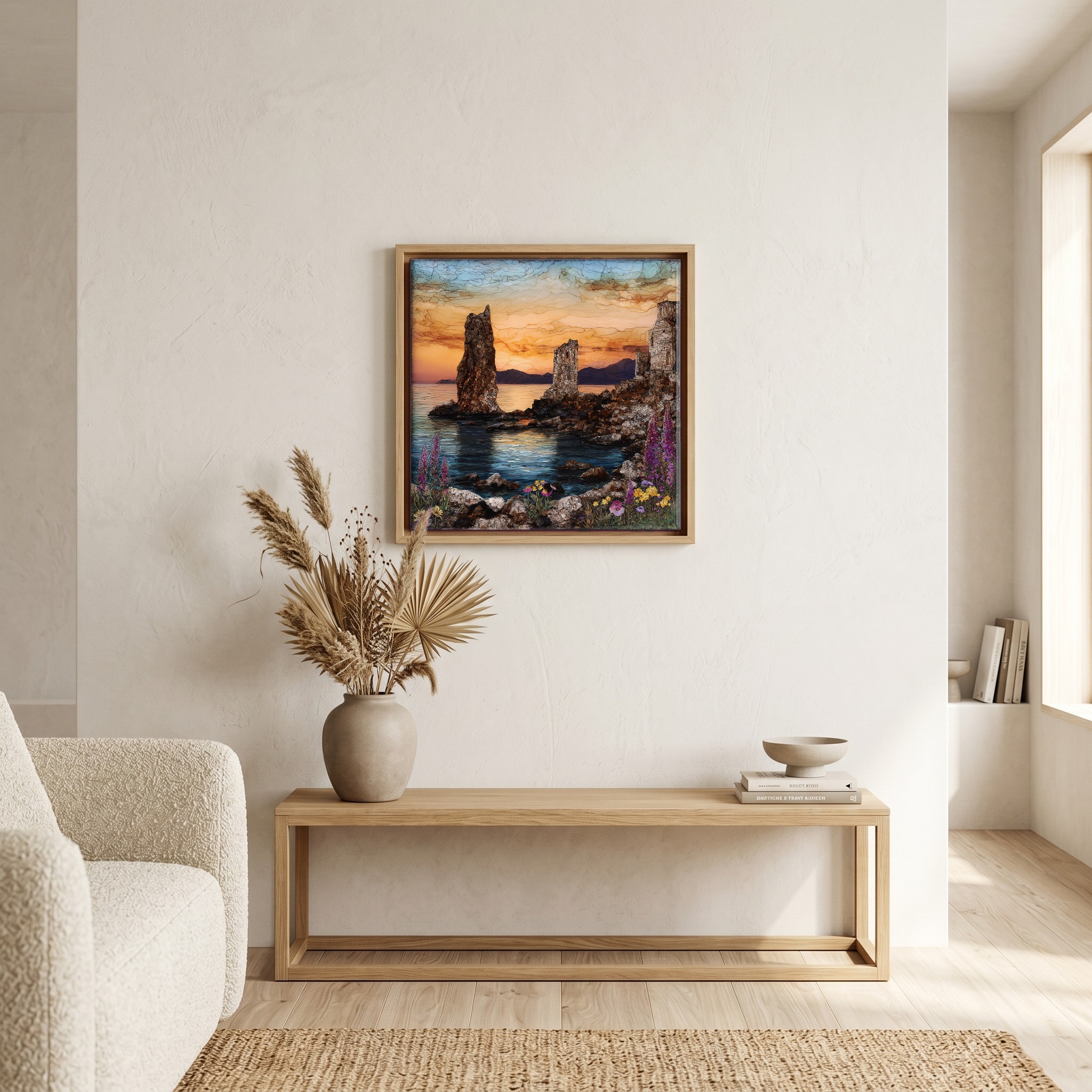
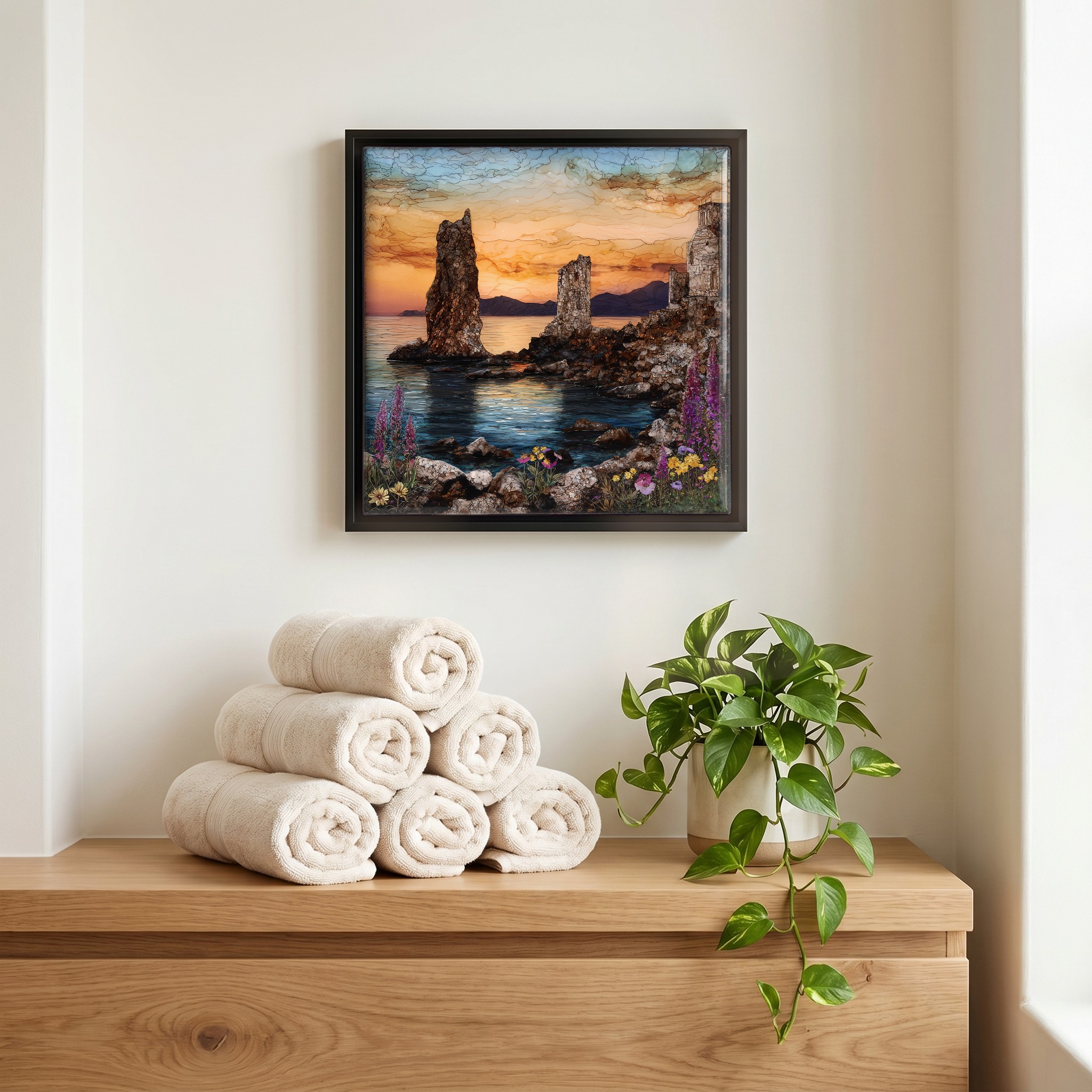
Three or five different vistas, hung together — a chapter of places you've been, or want to go.
The place, in three passes.
Scopello is a small frazione of Castellammare del Golfo, in the province of Trapani on Sicily's northwest coast. Roughly 60 kilometres west of Palermo, it sits about 106 metres above a cove on the Gulf of Castellammare, framed to the north by the Riserva Naturale dello Zingaro, Sicily's first nature reserve, established in 1981 to halt a coast road that would have paved the shore. The village centres on a single piazza and a baglio, the fortified courtyard farmhouse first built during Arab rule and reworked across the Norman, Spanish, and Bourbon centuries. Eighty people live here. A short road drops from the piazza past the old tonnara to the water.
The two faraglioni rising from the cove are stacks of Mesozoic limestone, the same dolomitic carbonate that underlies the Madonie range further inland. The taller stack carries the ruin of a small watchtower from the era when this stretch of coast watched for Saracen raiders. At the head of the cove, the Tonnara di Scopello processed the bluefin that follow the coast each spring on the way to spawn, operating from at least the 13th century until its last catch in 1984. The baglio above, with its iron-bound gate, central well, and walls a metre thick, was the working centre of the estate that owned the tonnara. The stone holds the day's heat well past sunset; by dusk the cove reads pink.
The best months are April through June and September into October. Warm water, long light, manageable crowds. July and August bring Italian school holidays and parking that fills before nine in the morning at the cove and at the Zingaro's south gate. The Riserva dello Zingaro caps daily admissions; its coastal trail runs seven kilometres from the Scopello entrance to the San Vito Lo Capo gate and takes most walkers four hours one way. The tonnara museum opens seasonally, generally Easter through October. Pane cunzato, the village's split-loaf sandwich of tomato, anchovy, oregano, and pecorino, is reliably available from the bakery on the piazza through the warm months; in midwinter much of the village closes and the cove belongs to the cormorants.