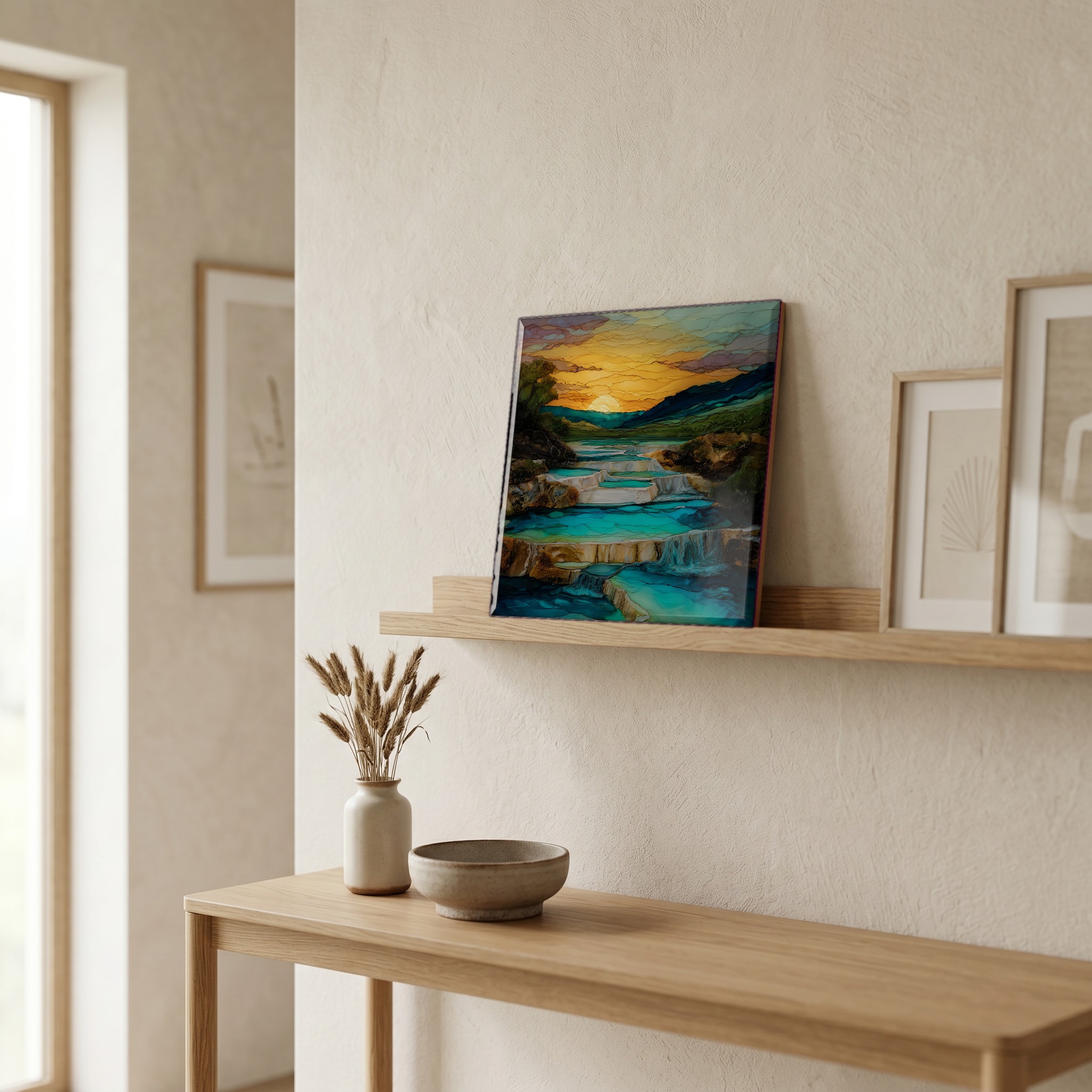
Wender·Vista
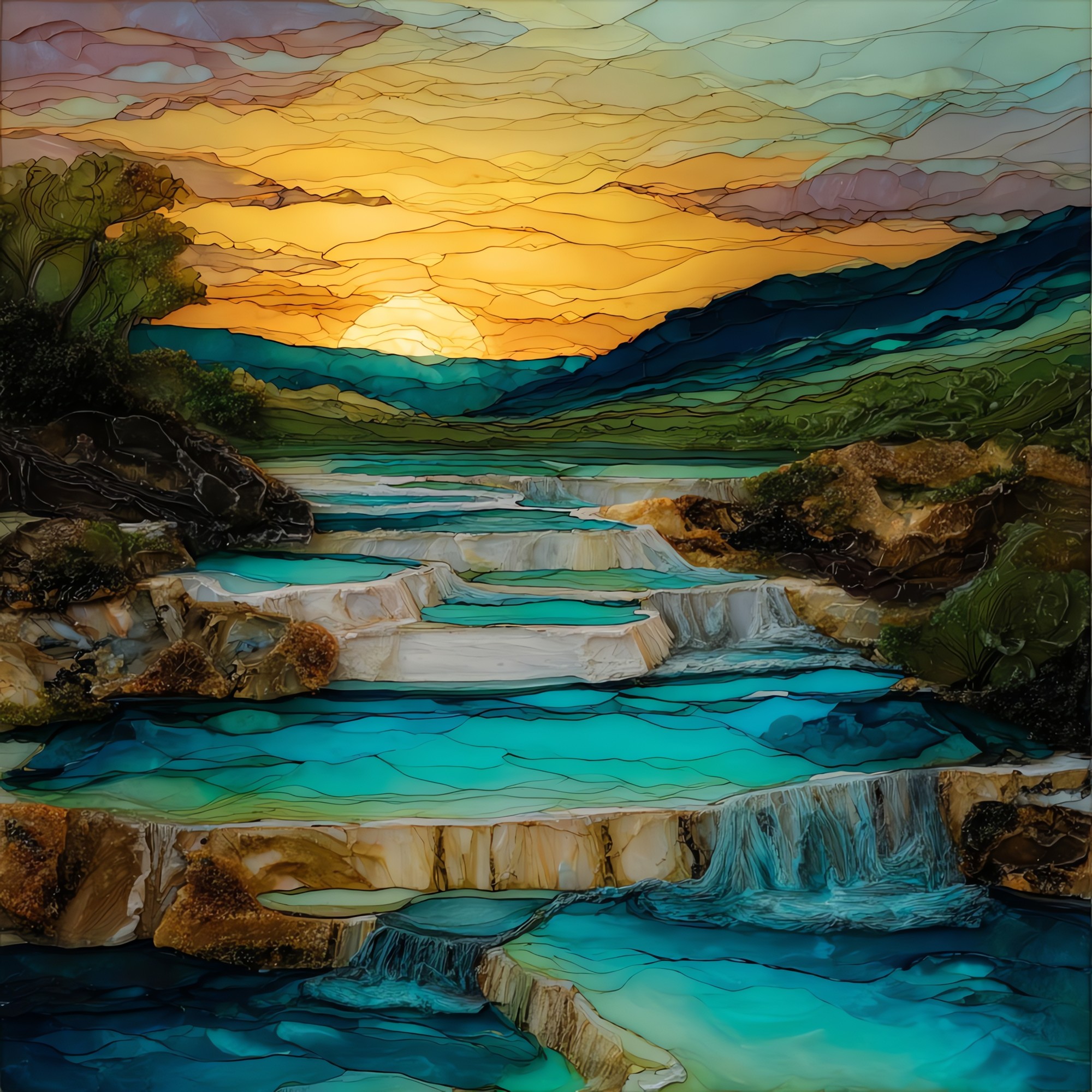
Saturnia Hot Springs
shown on ceramic, 12-inch tileItaly
in southern Tuscany, in the Maremma hills below the village

Saturnia Hot Springs

— warm water on white stone, all winter.

Where it lives

Not only on a wall.

A small tile on the nightstand catching the morning. A larger one above the fire. Yours, wherever you spend the slow hours.
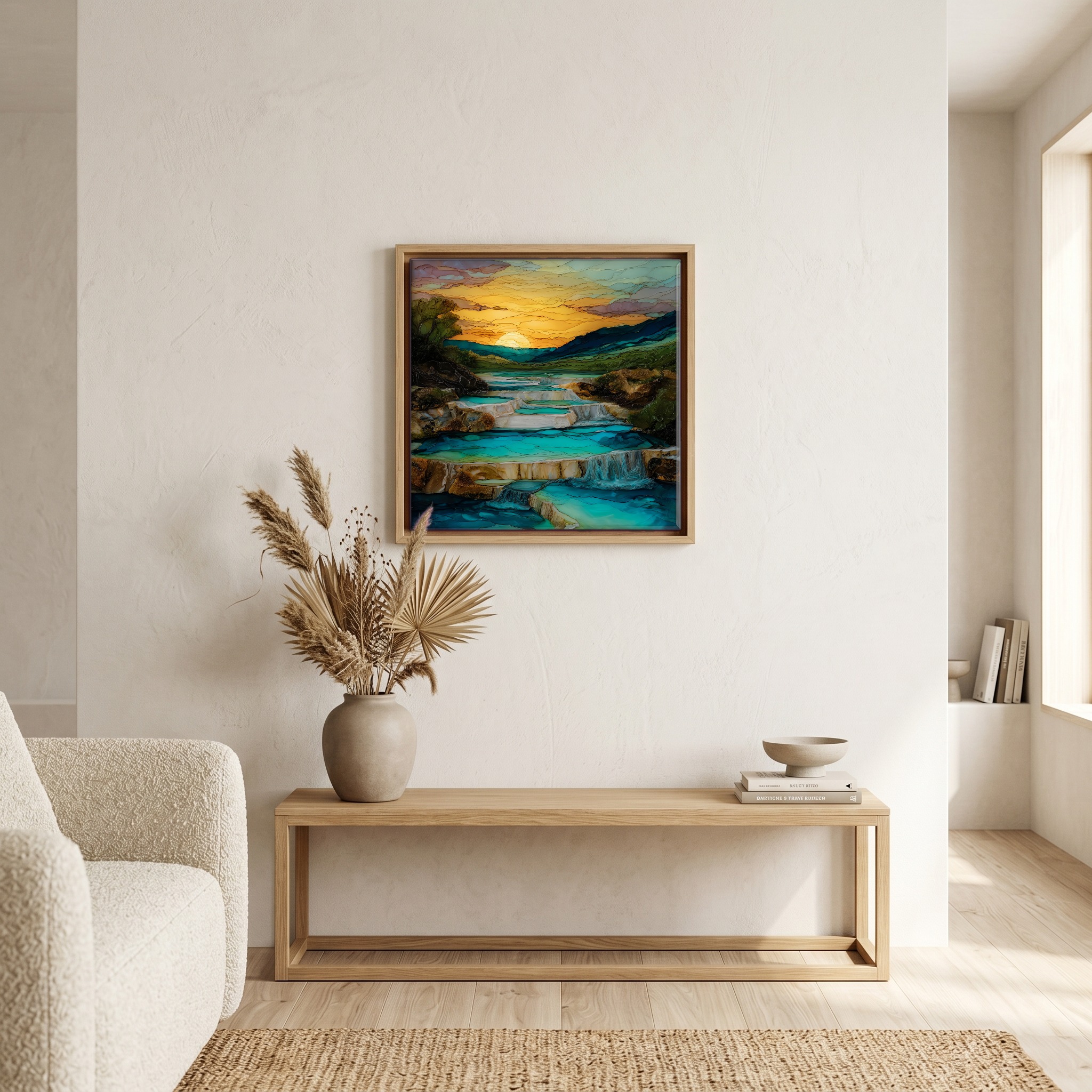
Above the bench, in a warm oak surround.
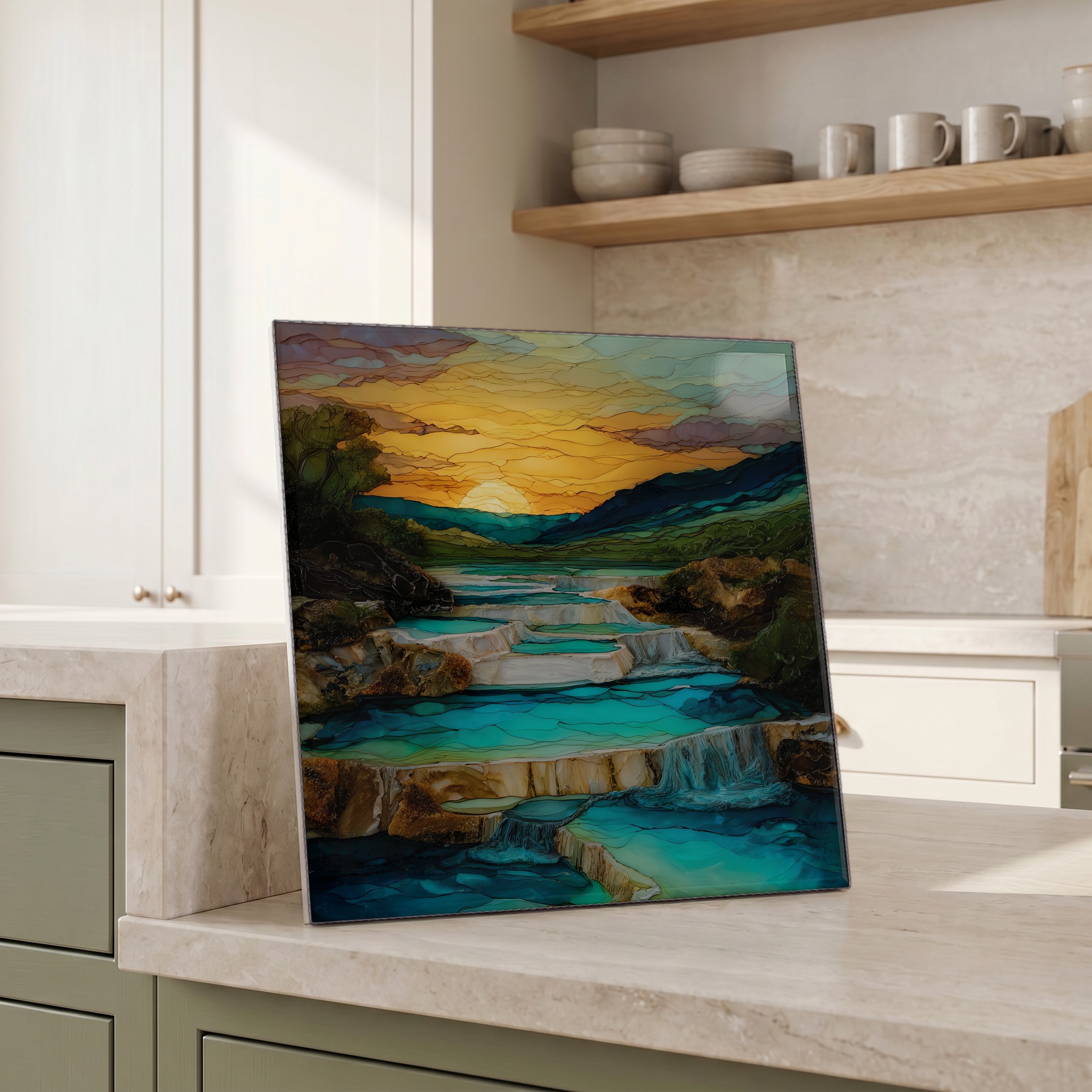
Beside the kettle, propped on the counter.
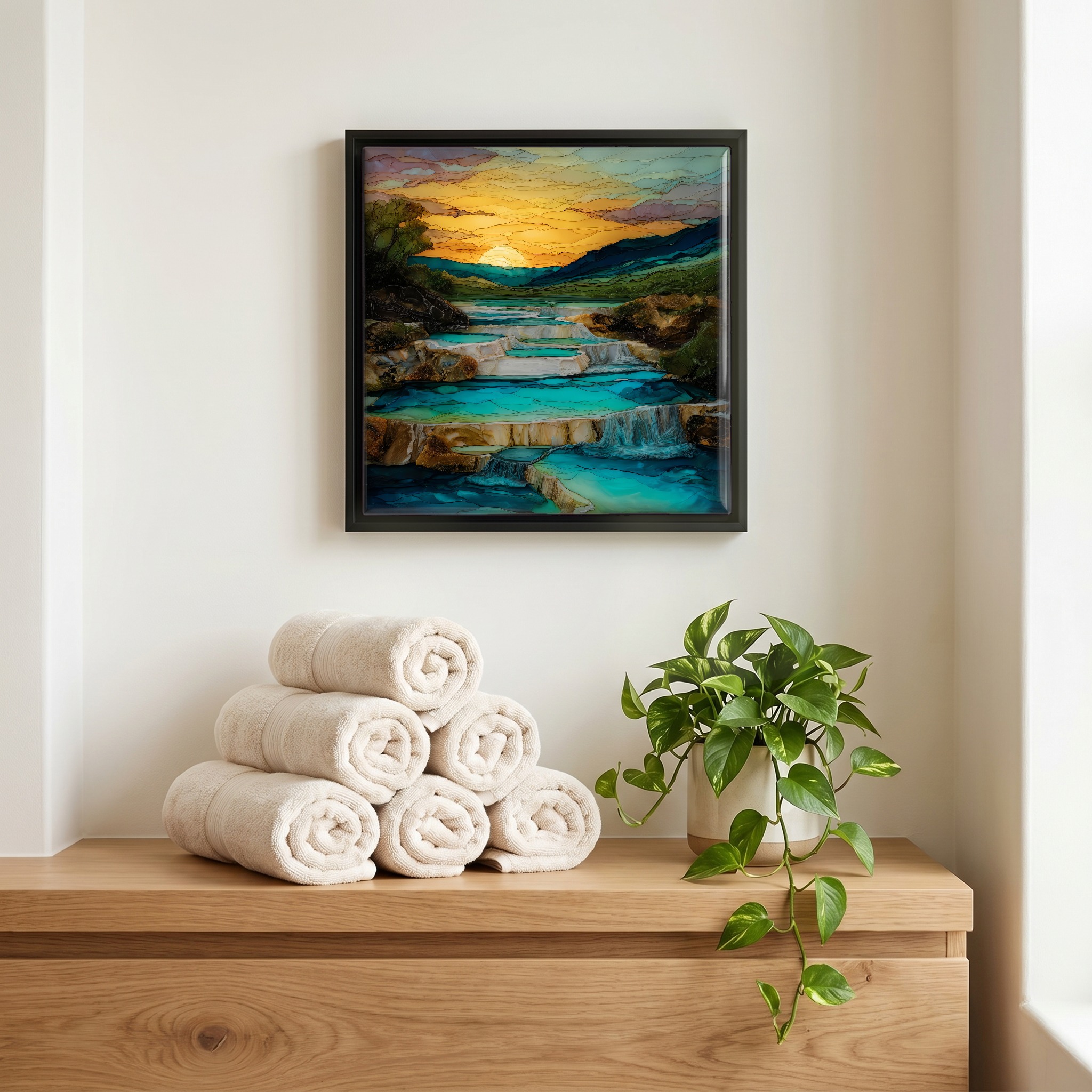
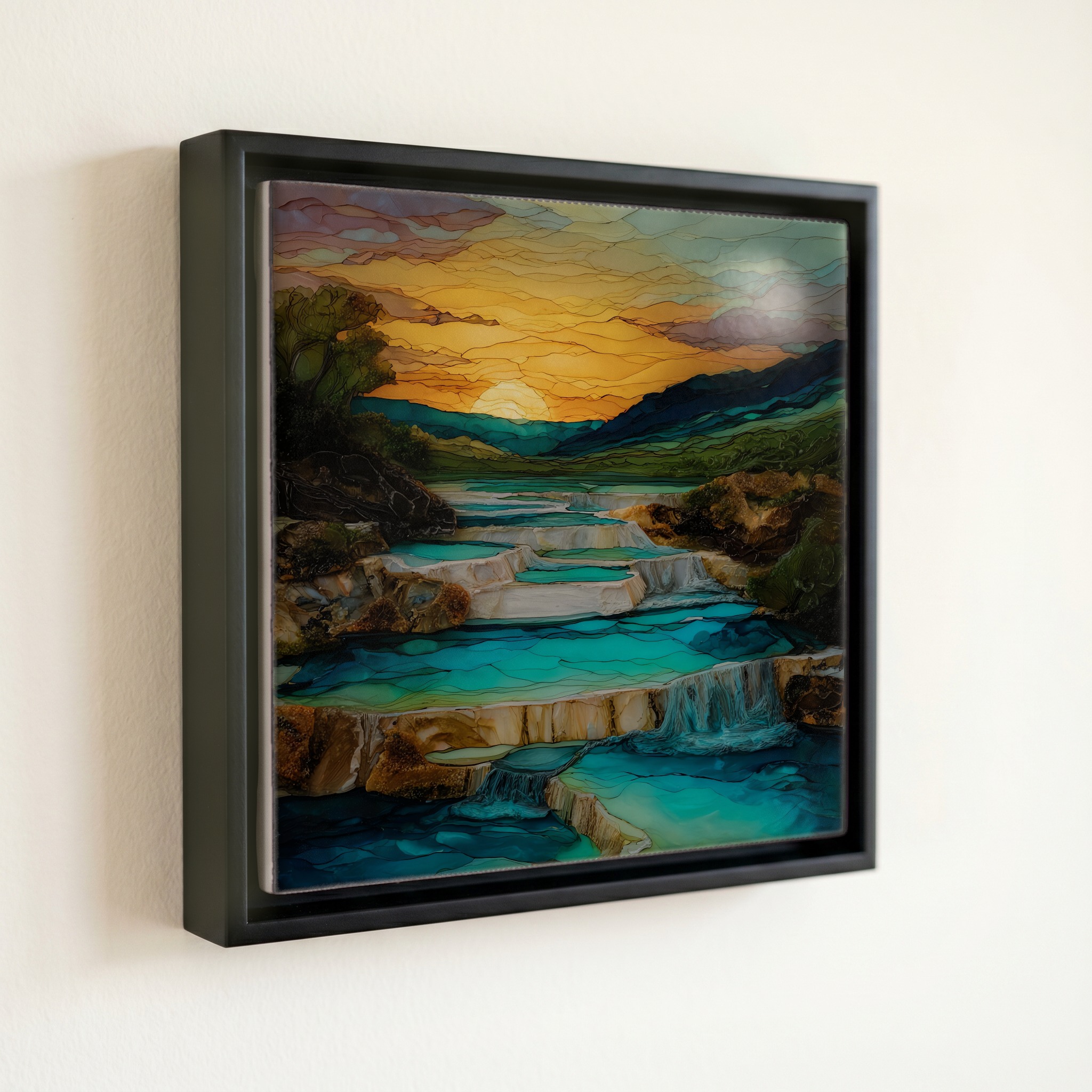
Above the linens, in a slim black surround.
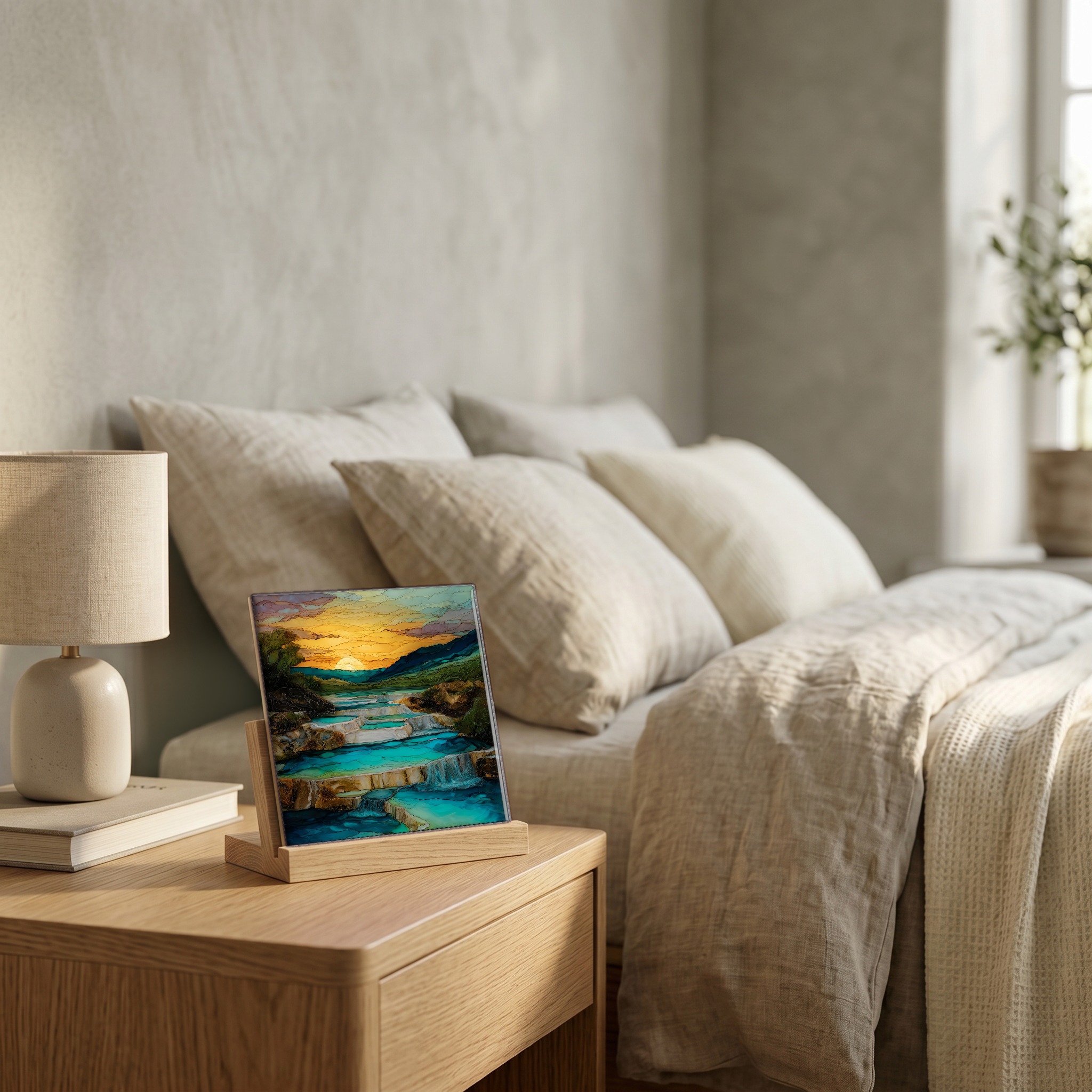
On the nightstand, on a light oak stand.
On a picture ledge, where the light comes in.
a note from the studio

Cascate del Mulino, just below the village of Saturnia in southern Tuscany. Sulfur water surfaces here at about 37.5°C and cascades over travertine terraces the colour of bone, the same temperature in February as in August. Romans bathed in it. Etruscans before them. There is no gate, no ticket, no closing time. Early light catches the steam coming off the pools before the day's visitors arrive. The smell takes some getting used to. Locals say you only really feel the cold when you climb out.
from the studio
shown in a slim black floating frame · 6 × 6 in
— bring it home

Saturnia Hot Springs, on ceramic.

Each tile is finished by hand in our Knoxville studio. Artwork is slowly infused into the ceramic surface under high heat and pressure, and rests beneath a thin glossy finish. The colour lives in the surface, not on top of it.

What kind of piece?
One tile — square or rectangle.
How big?
the popular one — counter, shelf, nightstand
6 × 6 in · 15 cm · 1.6 lb
Surface finish
A clear glossy finish — the artwork reads as if under resin. Ideal for show-pieces and framed wall art.
How it sits
A hidden cleat — sits ¼″ proud of the wall.
$58
Hand-finished and shipped from our studio at the foot of the Smokies. On your wall in about ten days.
size
6 × 6 in
15 cm
weighs
1.6 lb
solid in the hand
surface
ceramic, hand-finished
art rests beneath a thin glossy finish
from
Knoxville, TN
our family studio, at the foot of the Smokies
— start a Coaster Set

Pick any four 4-inch tiles — National Parks you've been to, a Smokies set, the four seasons of one place. $ for a set of , cork-backed, ready to live on the table.
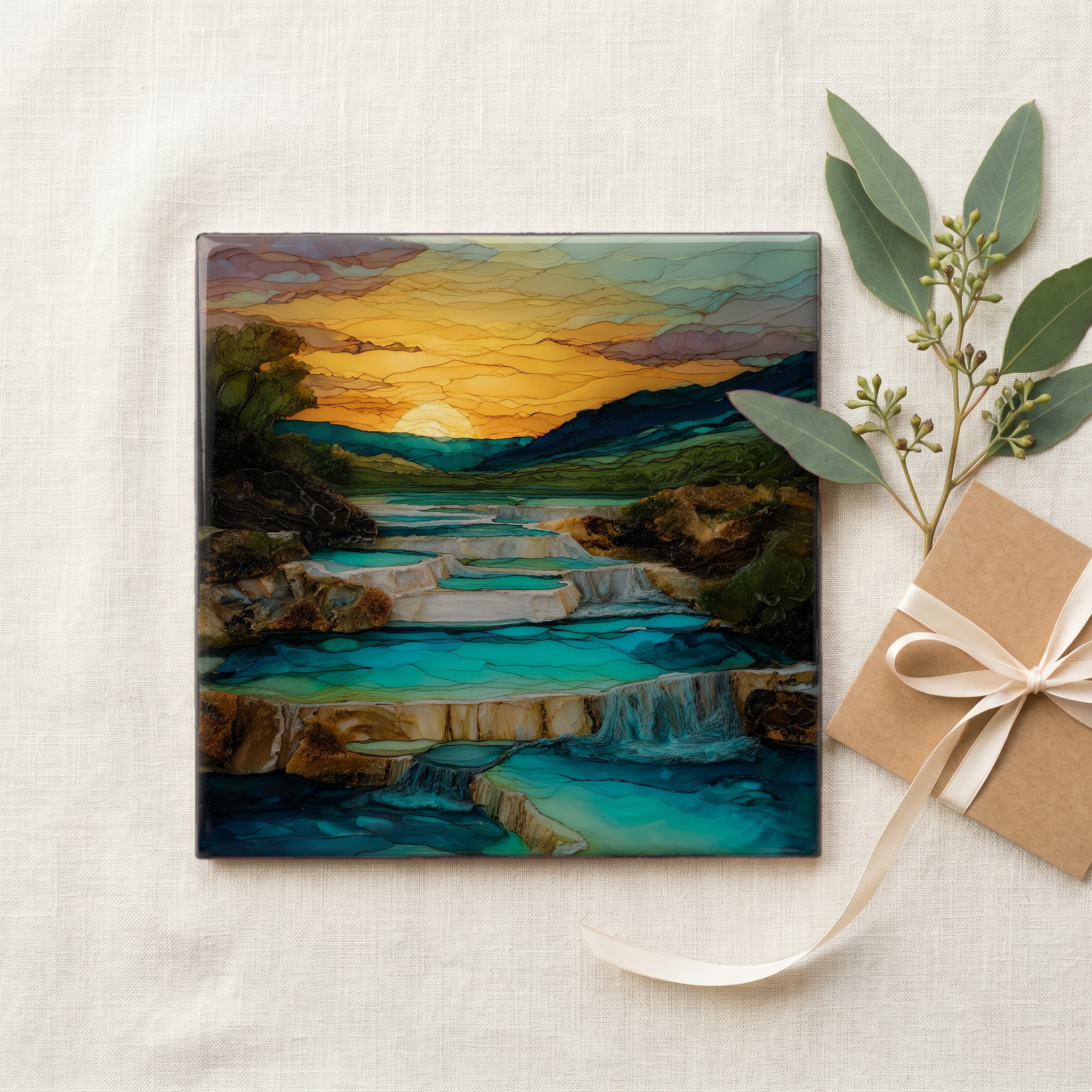
comes gift-ready
comes gift-ready

Each tile ships in a kraft box, tied with cream ribbon, with a handwritten note from the studio if you'd like to add one.
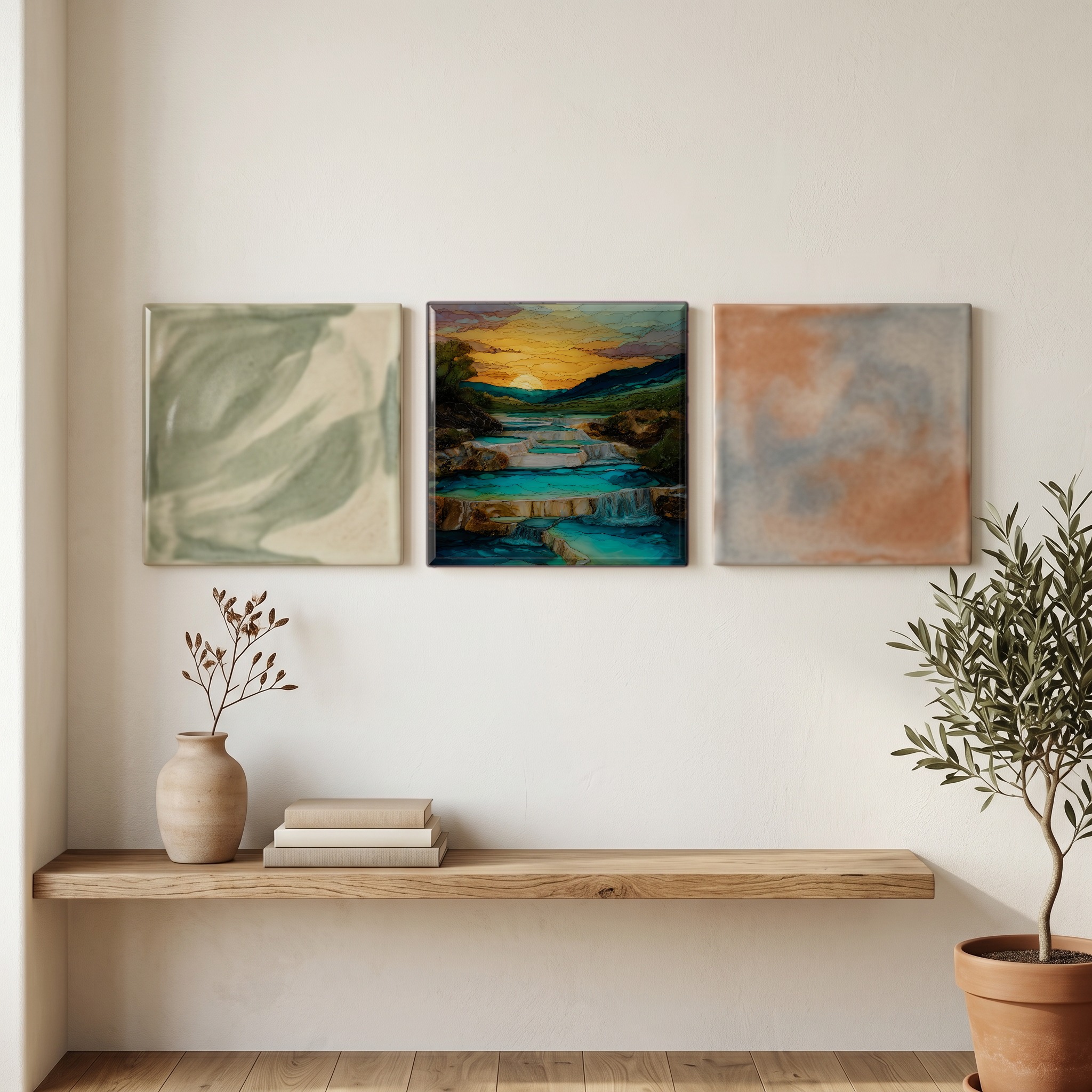
or build a grouping
or build a grouping

Three or five different vistas, hung together — a chapter of places you've been, or want to go.

about Saturnia Hot Springs

The place, in three passes.

A little of what's known, in case you fall down the rabbit hole — or want to go see it yourself.
the place

Saturnia sits in southern Tuscany's Maremma region, a frazione of the comune of Manciano in the Province of Grosseto, roughly 150 kilometres north of Rome and 50 kilometres inland from the Tyrrhenian coast¹. The free-access thermal pools, called Cascate del Mulino, lie about three kilometres downhill from the medieval village, where a stream of hot water exits the ground at roughly 800 litres per second and falls over a series of travertine terraces². The aquifer originates on the slopes of Mount Amiata, an extinct volcano forty kilometres to the north, whose deep groundwater rises here after a long underground journey that cools it to bathing temperature.

the water

The water surfaces at a steady 37.5°C and has done so since well before the first century, when the Romans inherited the springs from the Etruscans and continued to bathe here under the empire¹. The chemistry is bicarbonate-sulfate with dissolved hydrogen sulfide, which accounts for the sulfurous smell. The white travertine the pools sit on is calcium carbonate, laid down by the cooling water a thin layer at a time, shaping the terraces over millennia². Dissolved minerals tint the pools a soft blue-white. Regulars warn that silver jewellery tarnishes within an afternoon and that swimsuits keep the smell through several washes, so most bathers travel with a set kept just for the falls.

the visit

The Cascate del Mulino are free, open, and posted with no hours. Bathers arrive at dawn, in the middle of the day, and through the night¹. A gravel car park sits beside the falls, with a fifty-metre walk to the water. The pools are shallow and the constant flow keeps each terrace clean. The smell of sulfur is part of the place; the Maremma countryside around it is fragrant with broom and oak. Separately, the Terme di Saturnia resort, about a kilometre off, offers indoor pools, treatments, and rooms for visitors who want the same waters with quiet, shoulder room, and a closing time².

where
Italy · Manciano, Province of Grosseto
position
42.6485° N · 11.5111° E
the neighborhood

What's nearby.

A handful of named places within an hour's walk or short drive. Some we've already painted; some we will.
25 km SE
Pitigliano
tufa hill town
20 km E
Sovana
Etruscan necropolis village
30 km E
Sorano
medieval tufa town
40 km N
Monte Amiata
extinct volcano
50 km W
Maremma Regional Park
coastal nature reserve
N
Saturnia Hot Springs
Pitigliano
Sovana
Sorano
Monte Amiata
Maremma Regional Park
common questions

What people ask.

A few questions we get about Saturnia Hot Springs — and about bringing the piece home.
about the place

Saturnia is a village in southern Tuscany's Maremma region, part of the Province of Grosseto and the comune of Manciano. The free hot springs, called Cascate del Mulino, sit about three kilometres downhill from the village, roughly 150 kilometres north of Rome.

Rain falls on Mount Amiata, an extinct volcano forty kilometres to the north, then travels through deep limestone aquifers warmed by the residual geothermal gradient before rising at Saturnia at a steady 37.5°C. The temperature does not vary with the season.

Yes. The Cascate del Mulino are open to the public with no gate, no ticket, and no posted hours. The separate Terme di Saturnia resort, a kilometre away, is a paid spa with its own pools, hotel, and treatments fed by the same source.

Early morning and late evening are the quietest hours. The water sits at 37.5°C in every season, so winter bathing is part of the local tradition. The air is cold but the pools are warm. Midsummer days bring large crowds and limited parking.

The mineral water carries dissolved hydrogen sulfide, which gives the springs their characteristic eggy smell. The same sulfur content is part of what Roman and Italian traditions associated with the water's therapeutic reputation. The smell rinses off skin easily but holds in swimsuits for several washes.

The Etruscans bathed at Saturnia in the centuries before Rome; the Romans inherited the site and tied it into the via Clodia road network. Continuous use since puts the documented bathing history at over two thousand years.

They are different places that share the same water source. The Cascate del Mulino are the free travertine pools at the foot of the village. The Terme di Saturnia is a private resort and hotel about a kilometre uphill, with indoor and outdoor pools fed by the same thermal spring.

about the piece in your home

It carries well as a memory piece for people who know the Maremma. The pale travertine and warm blue-white water are recognisable to anyone who has stood in the pools. A Small or Medium with a handwritten studio note suits a kitchen counter, a bedside, or a guest bath wall.

The palette of pale travertine cream, soft sulfur green, and warm blue-white sits comfortably in Tuscan villa, Mediterranean modern, and earth-tone minimalist rooms. It pairs well with warm woods, terracotta floors, linen, and matte-finished plaster walls.

Current Mediterranean and warm-minimalist directions favour quiet earth tones, organic shapes, and stone surfaces. The Saturnia tile reads as part of that family: low chroma, warm whites, no hard geometric lines. It carries the look without becoming costume Tuscany.

Above a standard three-seat sofa or a long console, a single Large is the simplest answer. A four-tile Mural reads as one larger panel and works above a longer console. A nine-tile Mural carries an open wall above a sectional or a dining sideboard.

Yes. For showers, backsplashes, or any humid or splash-prone wall, order the Dura Satin or Matte finish. Both are scratch-resistant and made for vertical installation. The Glossy finish is for framed wall art in dry rooms.

A soft microfibre cloth and water is enough for routine cleaning. For kitchen or bath surfaces, a mild dish soap will lift cooking oil or soap scum. Avoid abrasive pads and acidic cleaners on the surface.

Yes. Every WenderVista piece is original to the studio, curated by Reid Wender, and produced under one roof in Knoxville, Tennessee. The colour is slowly infused into the ceramic surface under high heat and pressure, beneath a thin glossy or satin finish.

if this one stayed with you

A few you might also love.

Hand-picked by the eye that found Sorapis. Same air, same kind of quiet.
— a collection

The Italian Dolomites,
painted slow.

The valleys between Cortina and Val Gardena, the tarns you walk an hour to see, the towers that turn the colour of a banked fire just before dark. Wander the collection by valley, by season, or follow the path Reid walked.

Tre Cime
Braies
Misurina
Sorapis
Cinque Torri
Sassolungo
Marmolada