Wender·Vista
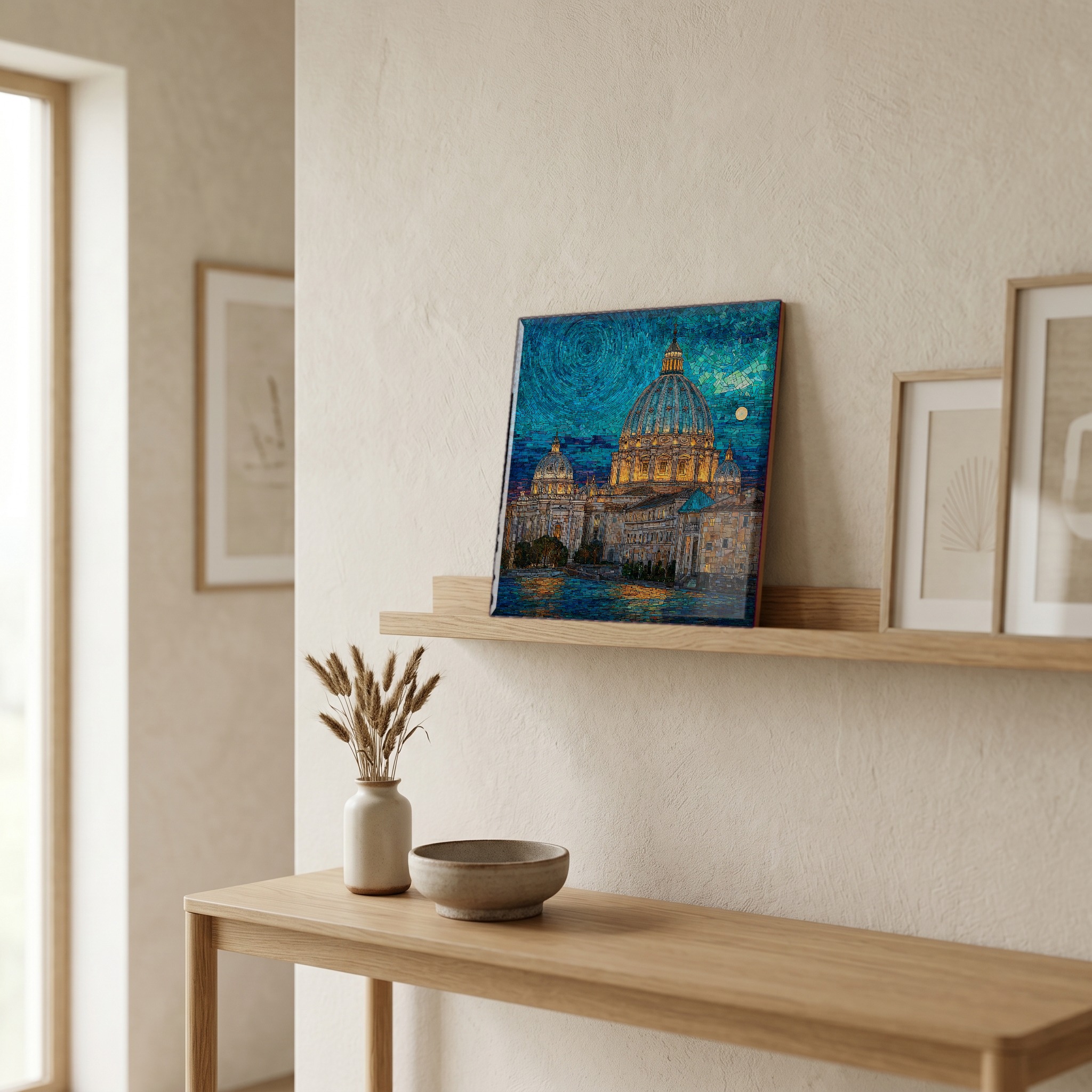
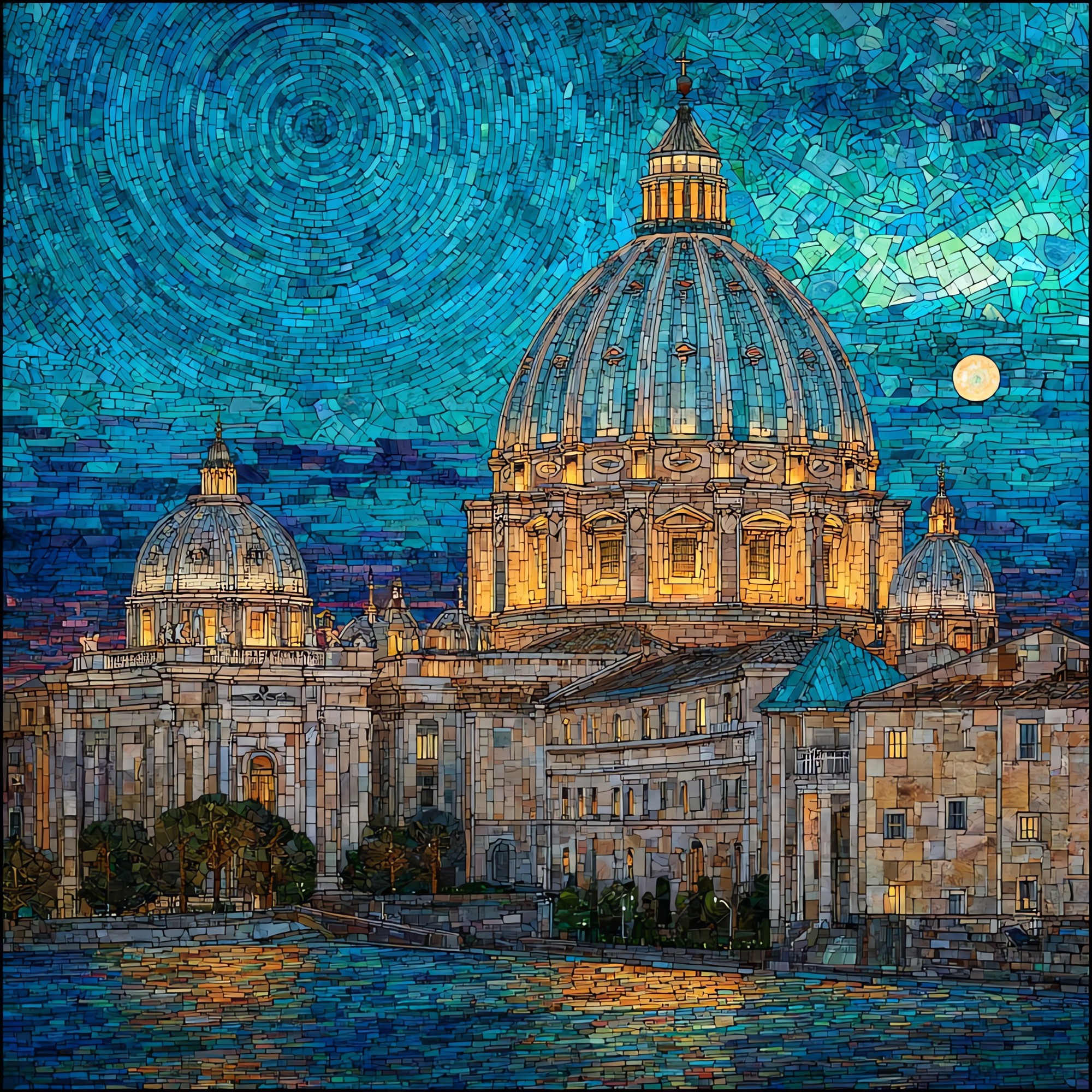
Santa Maria Maggiore
shown on ceramic, 12-inch tileItaly
on the Esquiline Hill, above Roma Termini

Santa Maria Maggiore

a Roman August that remembers snow.

Where it lives

Not only on a wall.

A small tile on the nightstand catching the morning. A larger one above the fire. Yours, wherever you spend the slow hours.
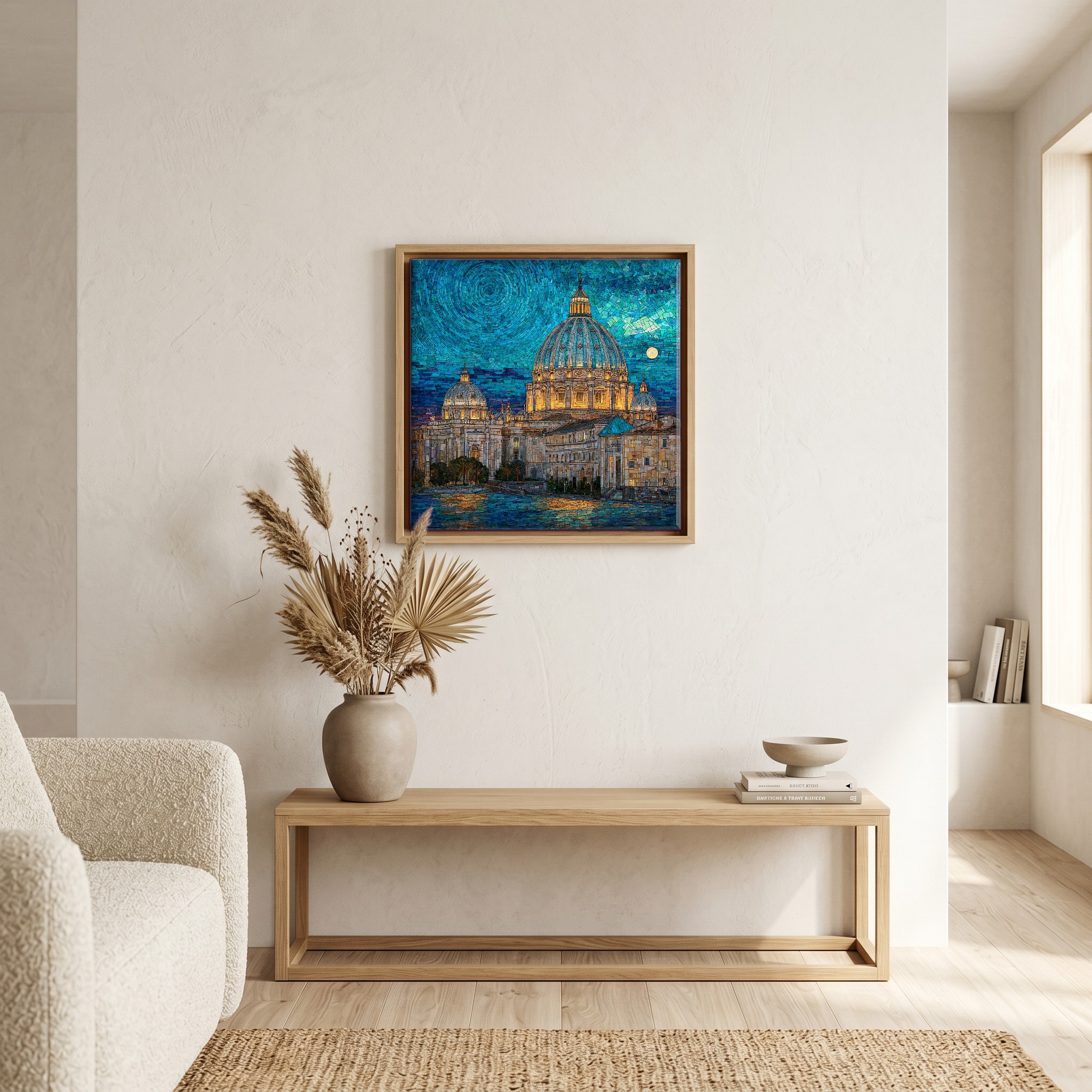
Above the bench, in a warm oak surround.
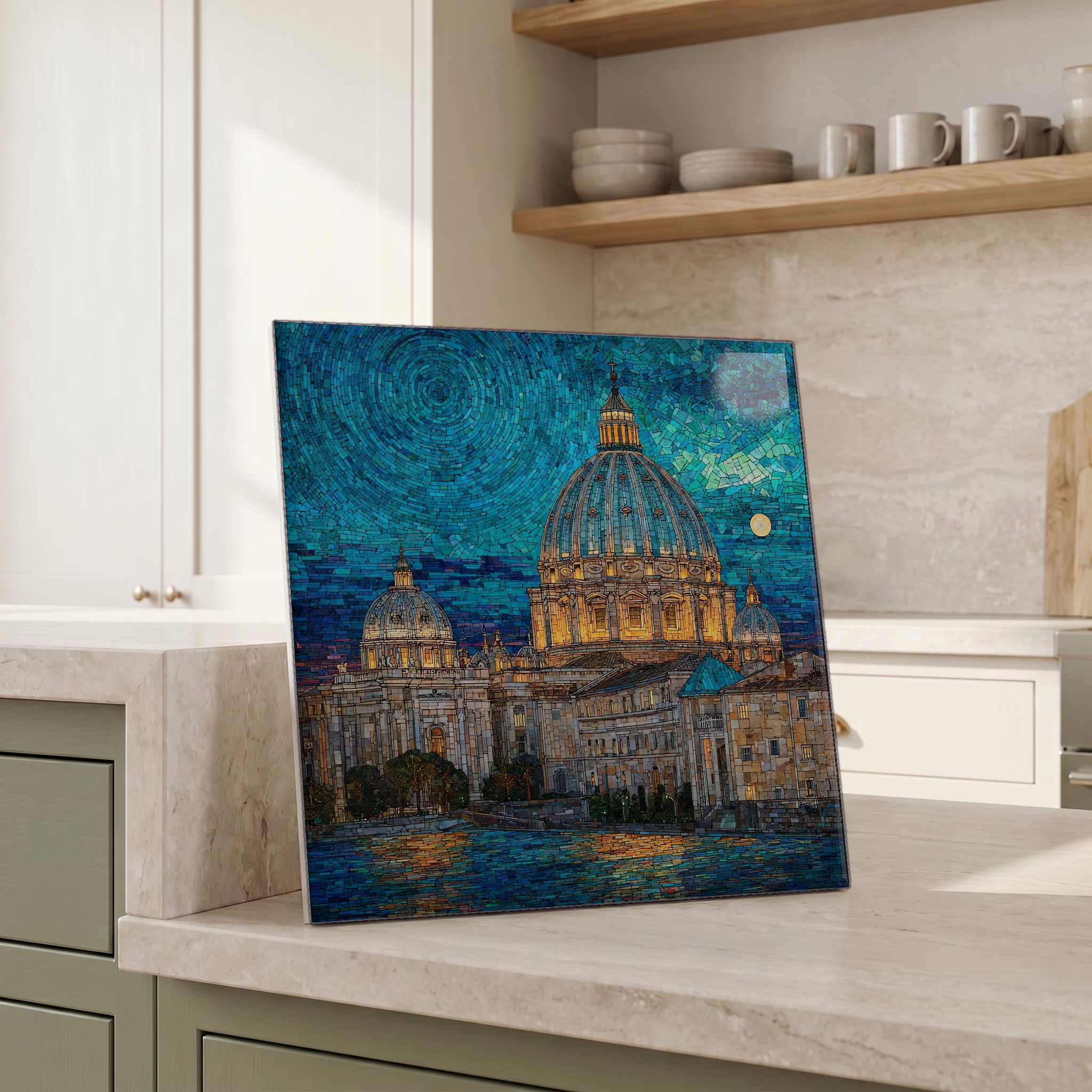
Beside the kettle, propped on the counter.
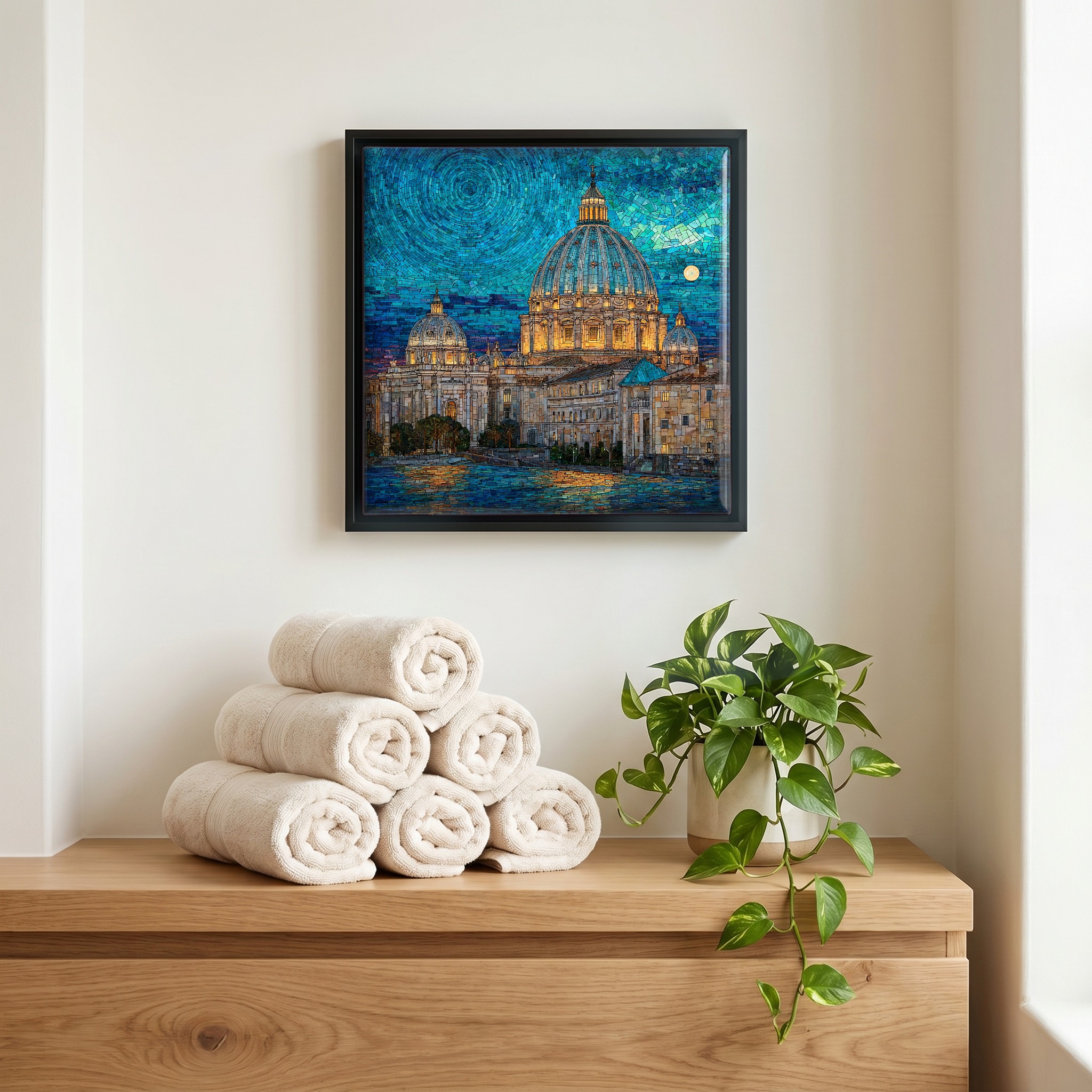
Above the linens, in a slim black surround.
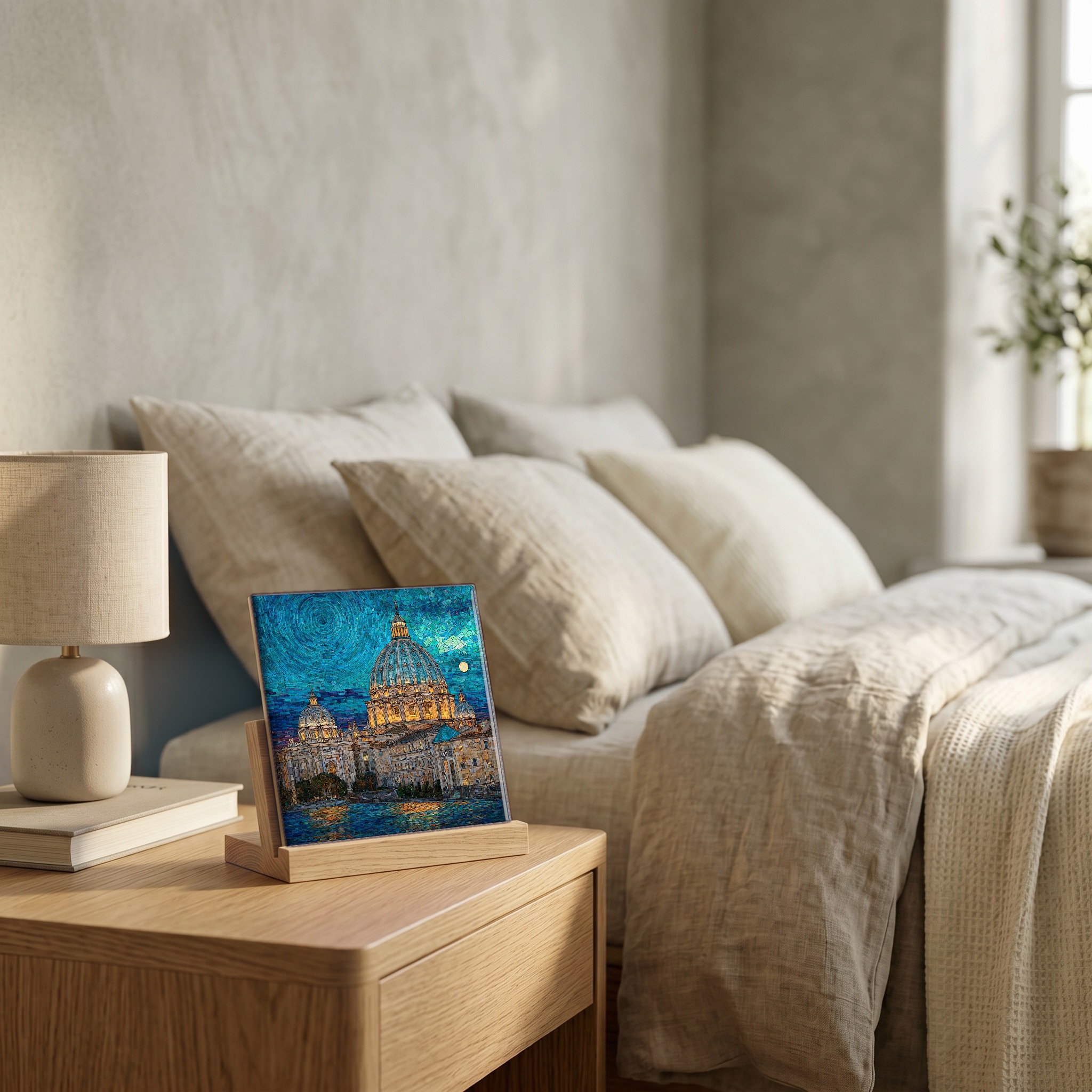
On the nightstand, on a light oak stand.
On a picture ledge, where the light comes in.
a note from the studio

The largest Marian basilica in Rome. The bell tower is the tallest in the city, seventy-five metres of Romanesque brick that survived the medieval centuries when most of Rome did not. Inside, the mosaics on the nave walls and the triumphal arch are older than almost anything else still in use: fifth century, gold tesserae catching the light from the clerestory windows. The Cosmatesque floor has been walked since the twelfth century. The coffered ceiling above it was reportedly gilded with the first gold brought back from the Americas. Pope Francis is buried here.
from the studio
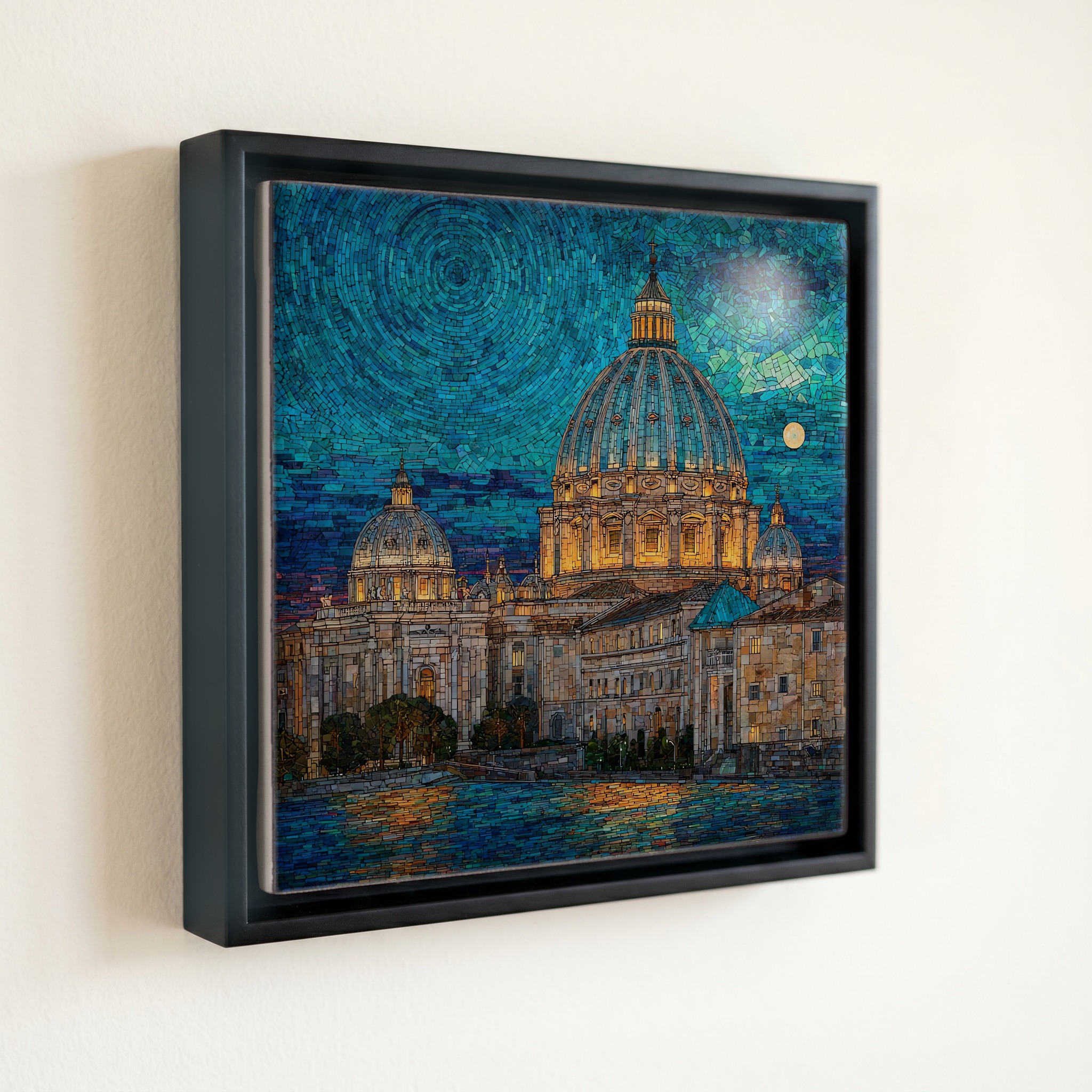
shown in a slim black floating frame · 6 × 6 in
— bring it home

Santa Maria Maggiore, on ceramic.

Each tile is finished by hand in our Knoxville studio. Artwork is slowly infused into the ceramic surface under high heat and pressure, and rests beneath a thin glossy finish. The colour lives in the surface, not on top of it.

What kind of piece?
One tile — square or rectangle.
How big?
the popular one — counter, shelf, nightstand
6 × 6 in · 15 cm · 1.6 lb
Surface finish
A clear glossy finish — the artwork reads as if under resin. Ideal for show-pieces and framed wall art.
How it sits
A hidden cleat — sits ¼″ proud of the wall.
$58
Hand-finished and shipped from our studio at the foot of the Smokies. On your wall in about ten days.
size
6 × 6 in
15 cm
weighs
1.6 lb
solid in the hand
surface
ceramic, hand-finished
art rests beneath a thin glossy finish
from
Knoxville, TN
our family studio, at the foot of the Smokies
— start a Coaster Set

Pick any four 4-inch tiles — National Parks you've been to, a Smokies set, the four seasons of one place. $ for a set of , cork-backed, ready to live on the table.
comes gift-ready
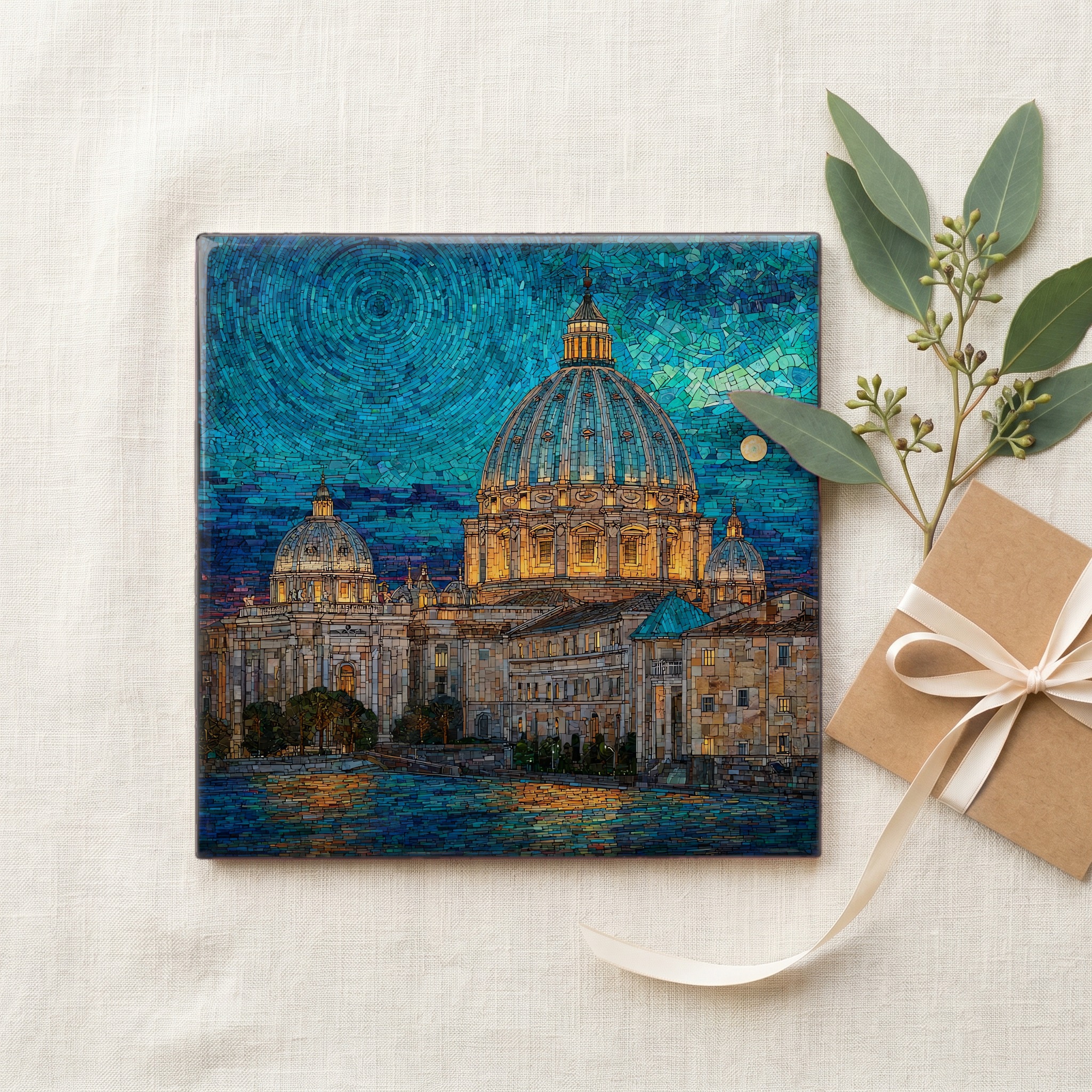
comes gift-ready

Each tile ships in a kraft box, tied with cream ribbon, with a handwritten note from the studio if you'd like to add one.
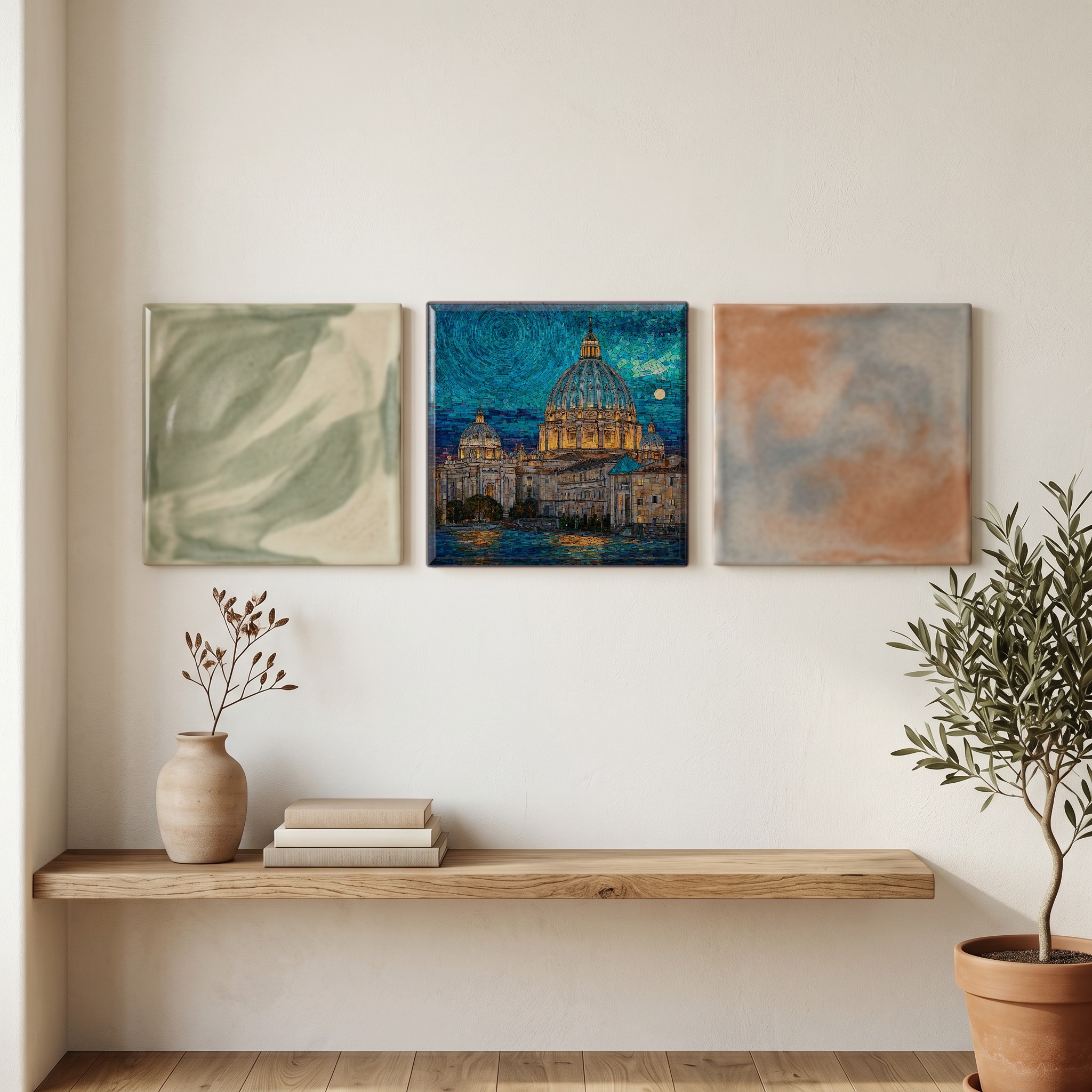
or build a grouping
or build a grouping

Three or five different vistas, hung together — a chapter of places you've been, or want to go.

about Santa Maria Maggiore

The place, in three passes.

A little of what's known, in case you fall down the rabbit hole — or want to go see it yourself.
the place

Santa Maria Maggiore stands on the summit of the Esquiline Hill, the largest of the seven hills of Rome. It is one of the four papal major basilicas, together with St. Peter's, St. John Lateran, and St. Paul Outside the Walls, and the only one whose original fifth-century structure has survived largely intact. Pope Sixtus III dedicated it between 432 and 440, soon after the Council of Ephesus affirmed the title Theotokos. Two ancient monuments mark its squares: a fluted Corinthian column from the Basilica of Maxentius, moved here in 1614, and an Egyptian obelisk behind the apse brought from the Mausoleum of Augustus. The basilica is a five-minute walk from Roma Termini.

the stone

The basilica reads as a layered timeline in stone. The bell tower, completed in 1377 and rising to roughly seventy-five metres, is the tallest in Rome. The nave preserves thirty-six fluted Ionic columns from the original fifth-century building. Above them run the mosaic cycles of the Old Testament and the triumphal arch, some of the earliest narrative Christian mosaics still in their setting. The floor is Cosmatesque, laid in the twelfth century by the Cosmati workshops who reused porphyry and serpentine from imperial Rome. The coffered ceiling, designed by Giuliano da Sangallo in the late fifteenth century, was reportedly gilded with gold sent by Ferdinand and Isabella from the first shipments returning from the Americas.

the visit

Entry to the basilica is free. It is open daily, roughly seven in the morning to seven in the evening, with the Borghese Chapel and the Sistine Chapel (the burial chapel built by Sixtus V, not the one in the Vatican) accessible on the same hours. Shoulders and knees must be covered. The Salus Populi Romani, a Byzantine Marian icon to which Pope Francis was particularly devoted, is enshrined in the Borghese Chapel; Francis was interred in a tomb near that chapel on 26 April 2025. The museum and loggia, with the thirteenth-century facade mosaics by Filippo Rusuti, require a small ticket.

where
Italy · Rome, Lazio
position
41.8975° N · 12.4986° E
the neighborhood

What's nearby.

A handful of named places within an hour's walk or short drive. Some we've already painted; some we will.
0.5 km S
San Pietro in Vincoli
church
0.5 km E
Roma Termini
rail station
1.1 km W
Trevi Fountain
baroque fountain
1.1 km SE
The Colosseum
Roman amphitheatre
1.4 km SW
Roman Forum
ancient ruins
1.5 km SE
St. John Lateran
papal basilica
N
Santa Maria Maggiore
San Pietro in Vincoli
Roma Termini
Trevi Fountain
The Colosseum
Roman Forum
St. John Lateran
common questions

What people ask.

A few questions we get about Santa Maria Maggiore — and about bringing the piece home.
about the place

Santa Maria Maggiore stands on the summit of the Esquiline Hill in Rome, about a five-minute walk west of Roma Termini, the city's main rail station. The address is Piazza di Santa Maria Maggiore 42. The closest Metro stops are Termini and Cavour.

Pope Sixtus III dedicated the present basilica between 432 and 440 AD, shortly after the Council of Ephesus in 431. It is the only one of Rome's four papal major basilicas whose original fifth-century walls and nave have survived largely intact.

The fifth-century mosaic cycles on the nave walls and the triumphal arch are the oldest in any Roman basilica still in their original setting. The bell tower, finished in 1377, is the tallest in Rome at roughly seventy-five metres. The Salus Populi Romani icon is enshrined in the Borghese Chapel.

Yes. Pope Francis was interred at Santa Maria Maggiore on 26 April 2025, near the Borghese Chapel that holds the Salus Populi Romani icon. He had requested burial there because of his lifelong devotion to that Marian icon.

The Romanesque campanile rises to roughly seventy-five metres and was completed in 1377. It is the tallest medieval bell tower in Rome and one of the most prominent verticals on the Esquiline skyline.

The four papal major basilicas of Rome are Santa Maria Maggiore, St. Peter's in the Vatican, St. John Lateran, and St. Paul Outside the Walls. They hold a status reserved historically for the Pope's own use and contain a papal altar at which only the Pope or his delegate celebrates the principal Mass.

The coffered ceiling, designed by Giuliano da Sangallo in the late fifteenth century, was reportedly gilded with gold sent by Ferdinand and Isabella of Spain from the first shipments returning from the Americas. The gift was made to Pope Alexander VI around the turn of the sixteenth century.

about the piece in your home

Yes. Santa Maria Maggiore is one of the four papal basilicas and a place locals know by sight from the bell tower above the Esquiline. A Small or Medium with a handwritten note from the studio carries well for someone Roman or recently back from the city.

The piece carries gold, deep cobalt, and warm parchment tones from the basilica's mosaics and gilded ceiling, so it sits well in classical-revival rooms, Italian-modern interiors, and warm jewel-tone maximalist spaces. It is less suited to cool Scandinavian or strict minimalist palettes.

Yes. The 2025-26 design press has noted a return to warm classical palettes and gilded references after several seasons of cool grey neutrals. A piece anchored in mosaic gold and Roman umber sits comfortably inside that shift.

Above a standard three-seat sofa or a six-foot console, a single Large reads well as a focal point. For a more architectural treatment, a four-tile Mural carries the basilica's verticality; a nine-tile Mural suits a hallway or a stairwell wall.

Yes, in the Dura Satin or Matte finish. The colour is slowly infused into the ceramic surface under high heat and pressure, so steam, splashes, and daily wiping do not affect it. The Glossy finish is best reserved for framed wall pieces.

A microfibre cloth and plain water. For stubborn marks, a drop of mild dish soap in warm water. No abrasive scrubs, no bleach, no ammonia cleaners. The colour lives in the surface, so the cloth picks up nothing.

Yes. Every piece in WenderVista is made in the family studio in Knoxville, Tennessee. We do not license, reprint, or resell other artists' work. Reid Wender chose this place and the visual treatment is his.

if this one stayed with you

A few you might also love.

Hand-picked by the eye that found Sorapis. Same air, same kind of quiet.
— a collection

The Italian Dolomites,
painted slow.

The valleys between Cortina and Val Gardena, the tarns you walk an hour to see, the towers that turn the colour of a banked fire just before dark. Wander the collection by valley, by season, or follow the path Reid walked.

Tre Cime
Braies
Misurina
Sorapis
Cinque Torri
Sassolungo
Marmolada