Wender·Vista
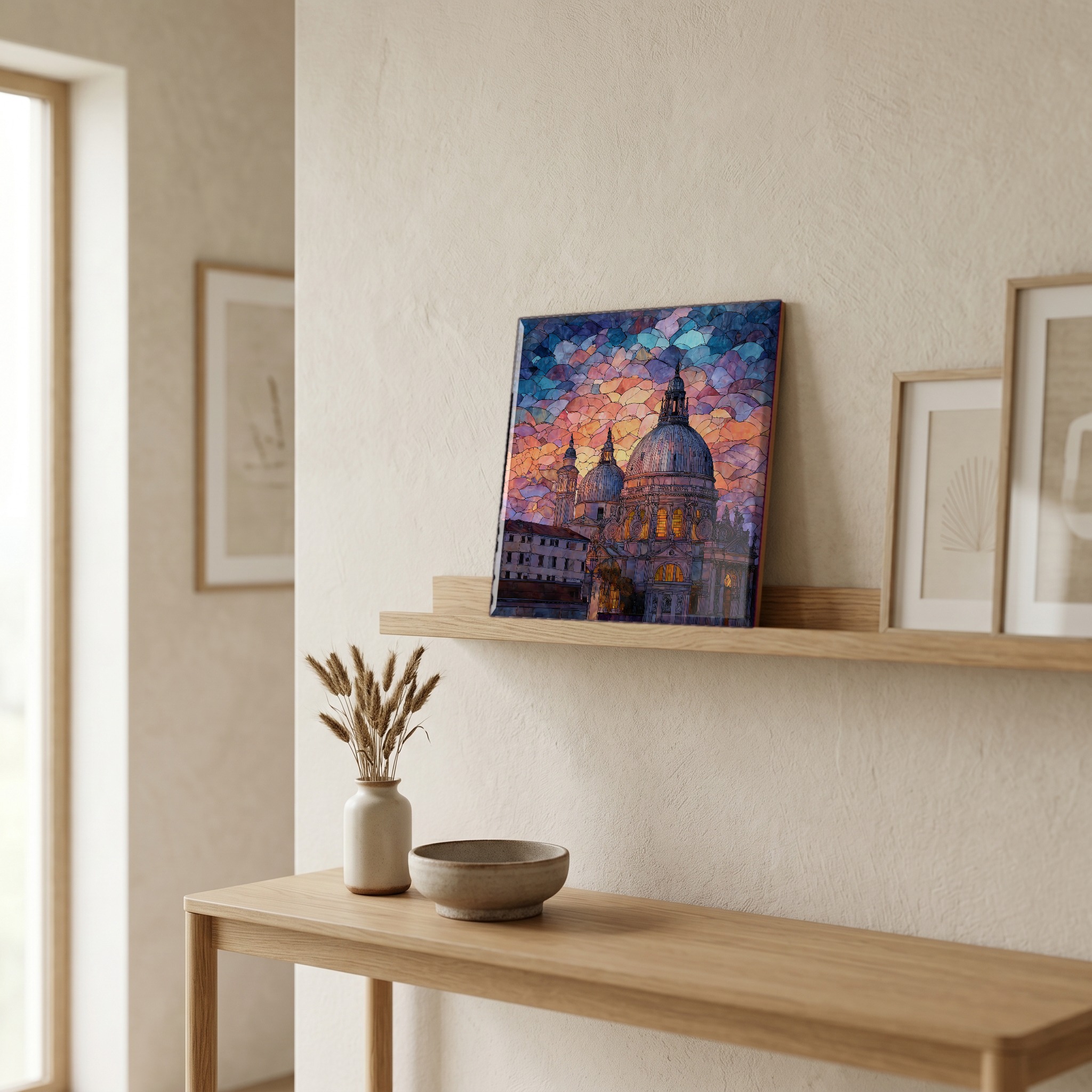
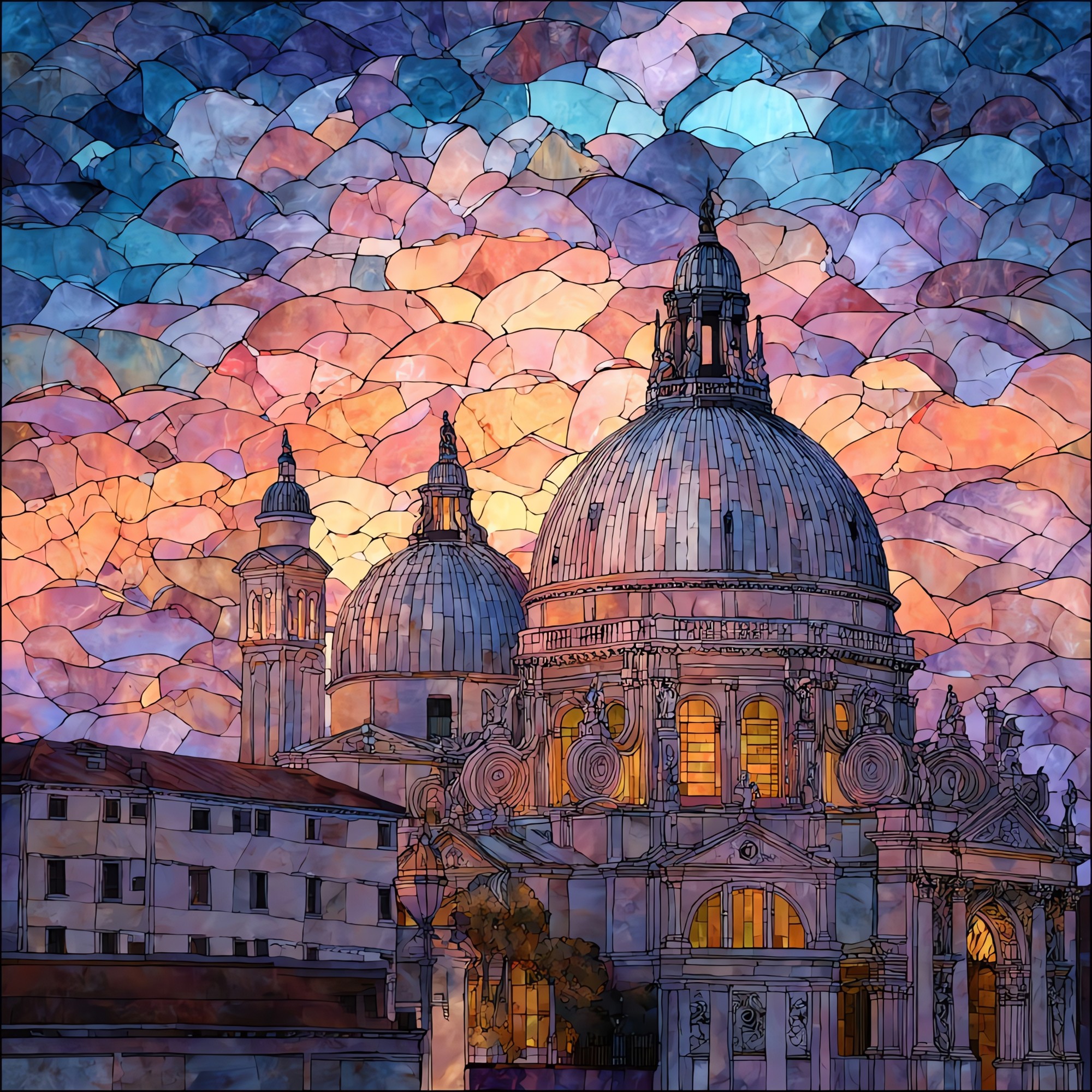
Santa Maria della Salute
shown on ceramic, 12-inch tileItaly
at the mouth of the Grand Canal, across from San Marco

Santa Maria della Salute

a vow the city kept in white stone.

Where it lives

Not only on a wall.

A small tile on the nightstand catching the morning. A larger one above the fire. Yours, wherever you spend the slow hours.
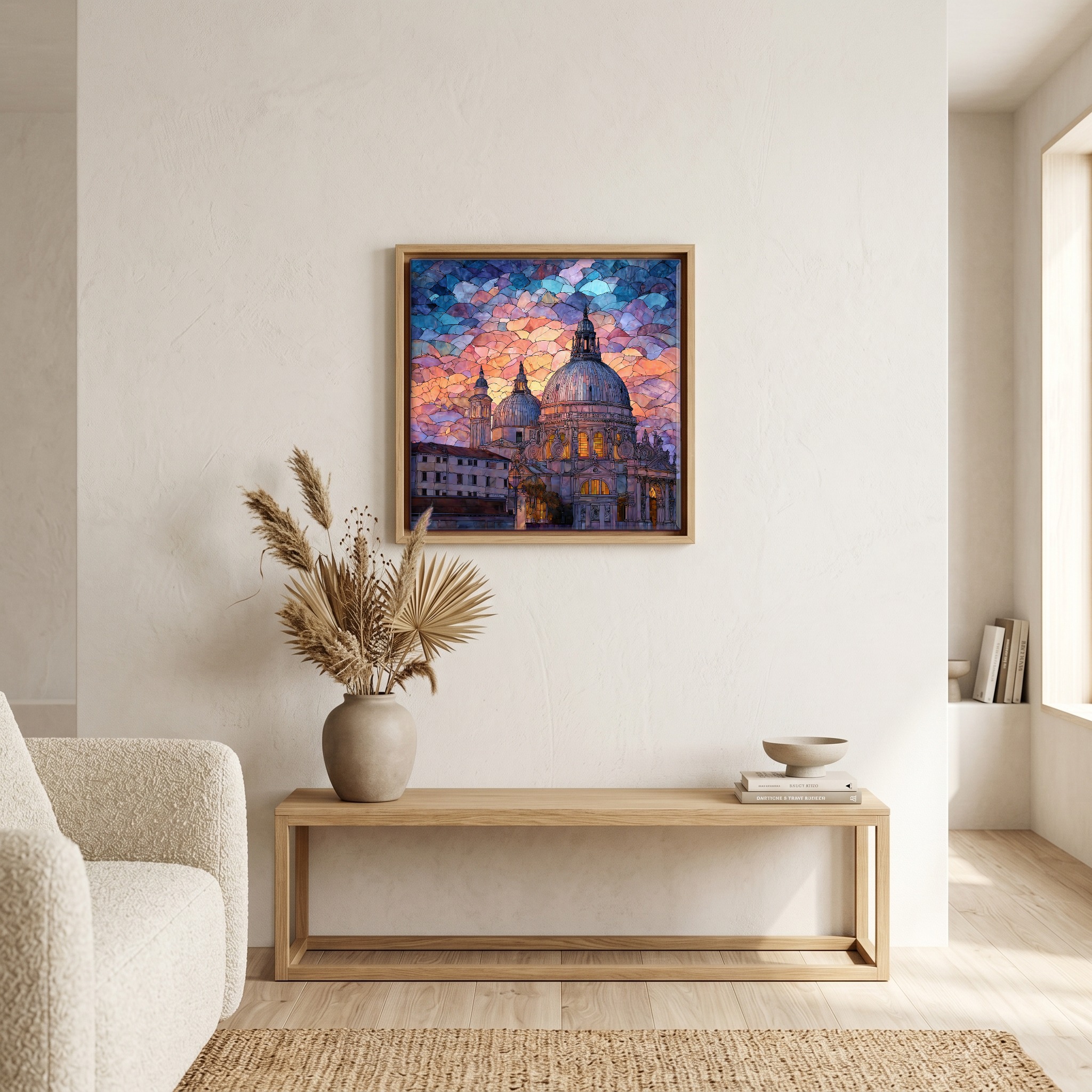
Above the bench, in a warm oak surround.
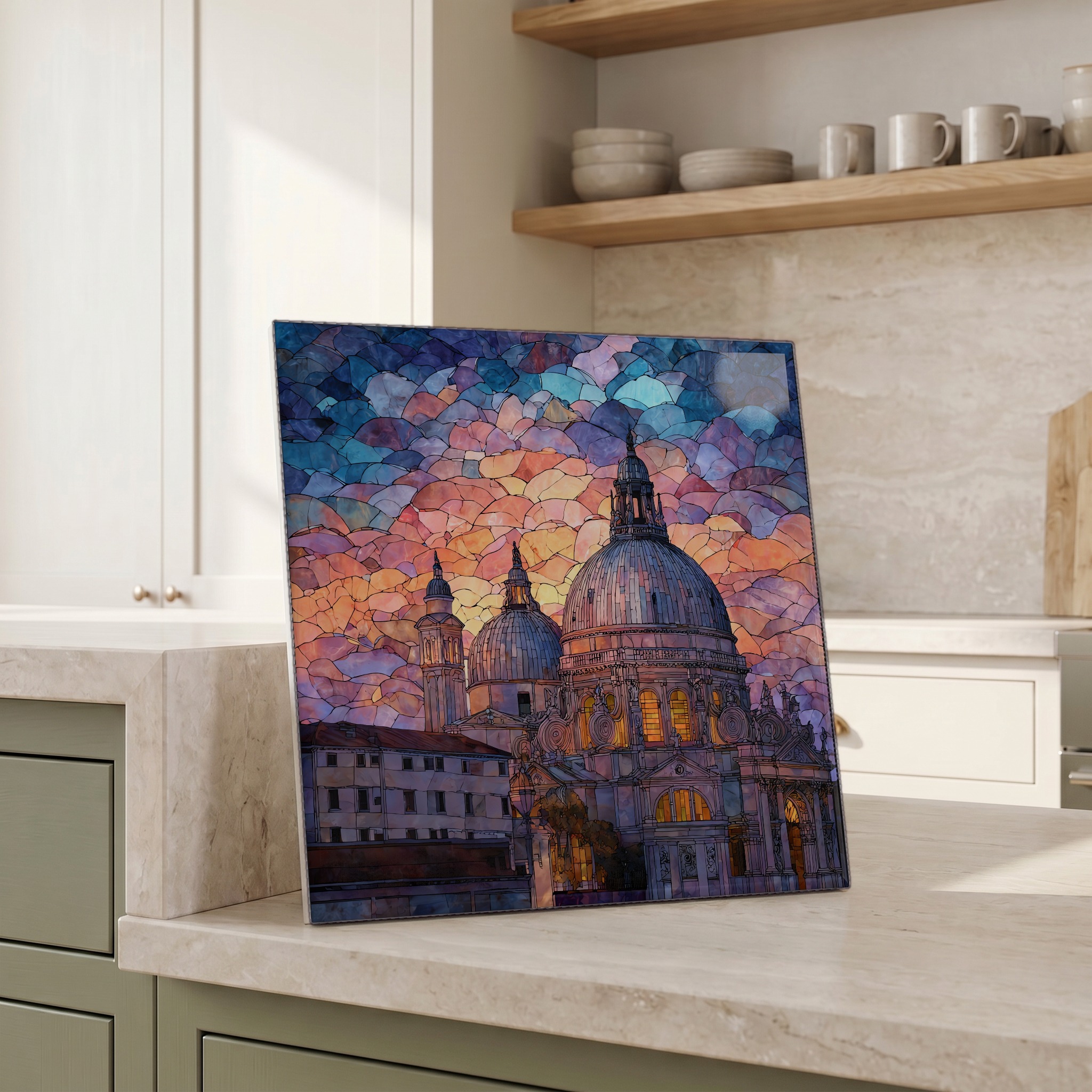
Beside the kettle, propped on the counter.
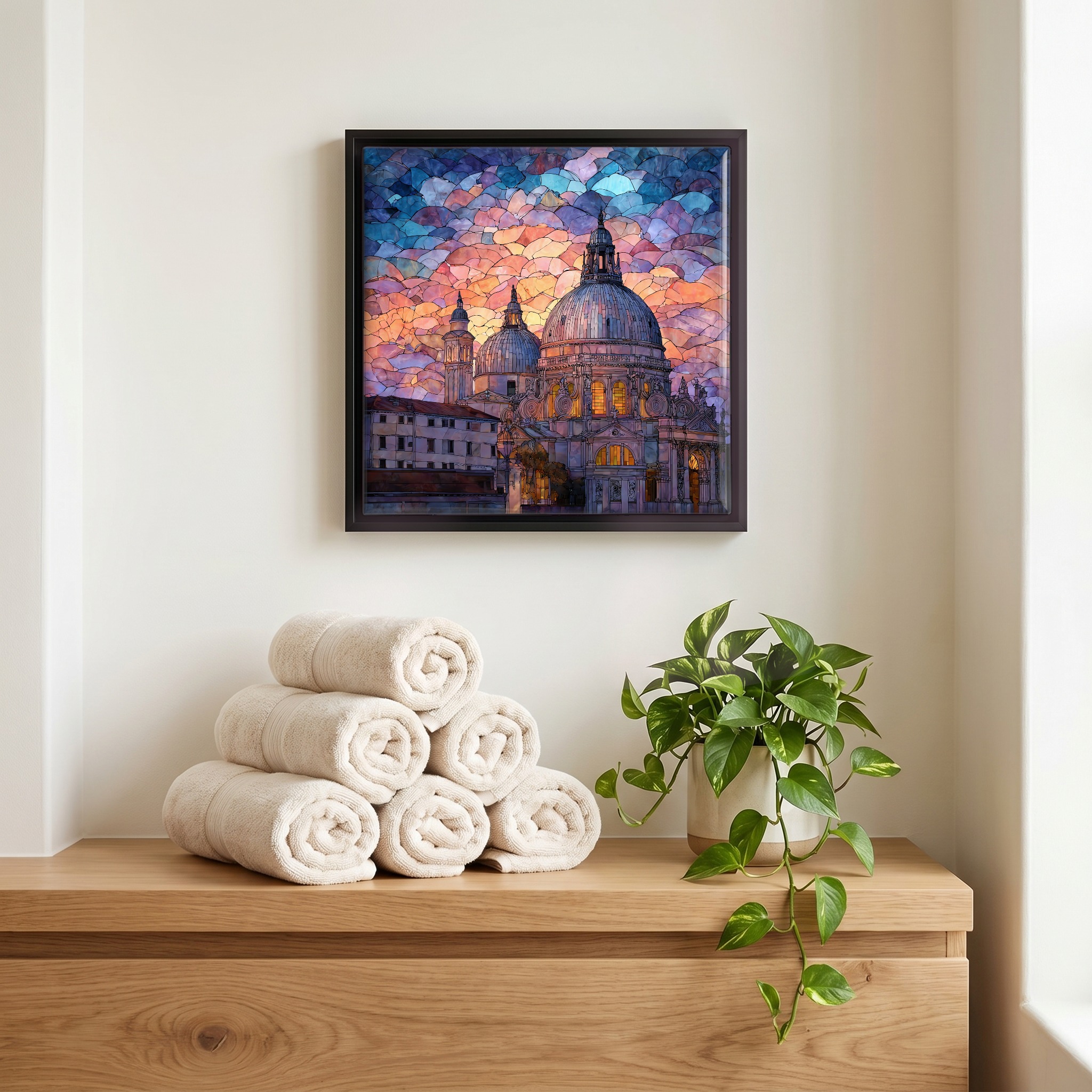
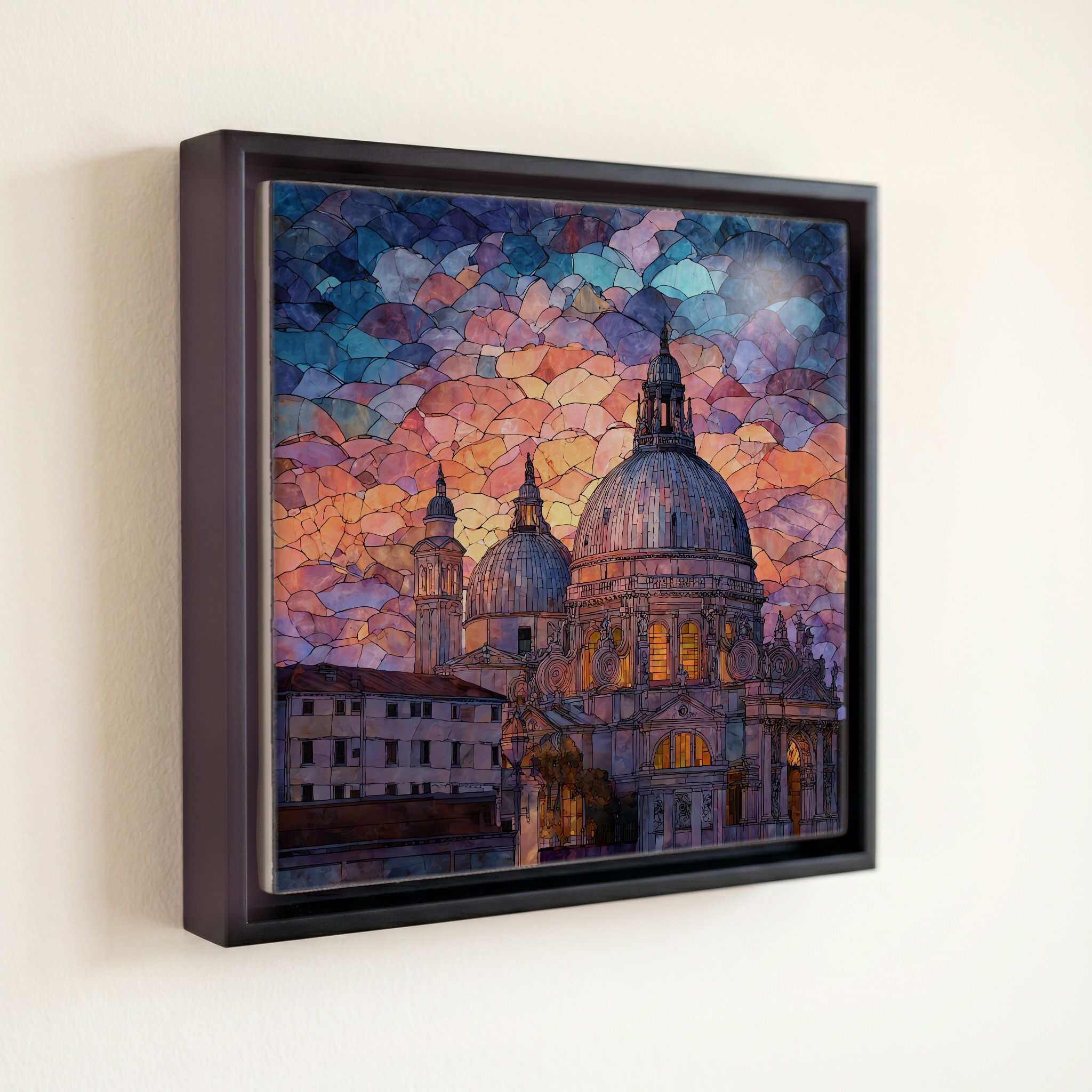
Above the linens, in a slim black surround.
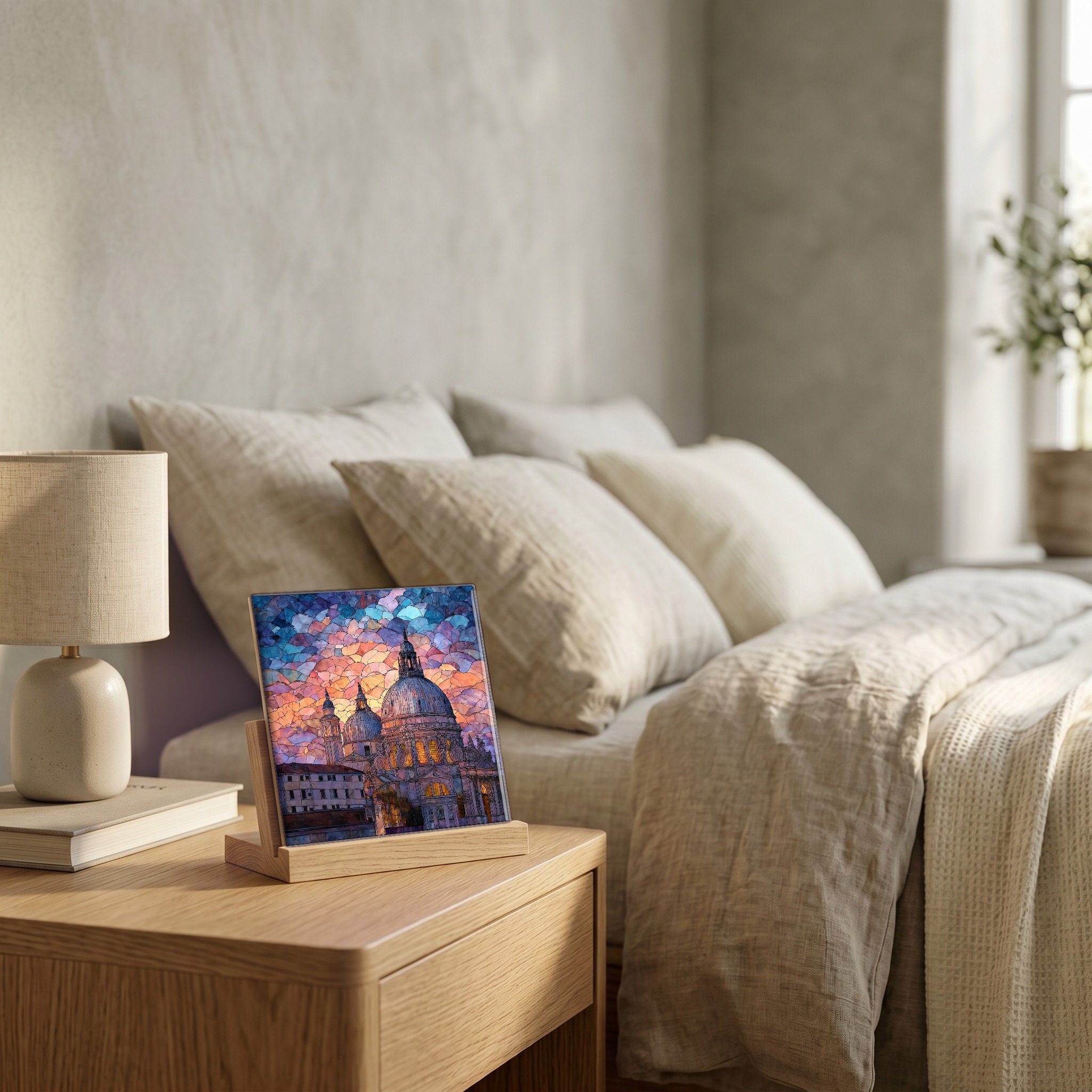
On the nightstand, on a light oak stand.
On a picture ledge, where the light comes in.
a note from the studio

At the mouth of the Grand Canal, where the water opens into the basin, the white dome closes the view from San Marco. The Senate vowed the church in 1630, the year a plague took roughly a third of Venice. Longhena drew the design in his thirties; the city spent fifty years building it on more than a million wooden piles driven into the lagoon mud. Every November 21st a pontoon bridge is laid across the Grand Canal and Venetians walk to it to light a candle. The white burns particularly hard against a winter sky.
from the studio
shown in a slim black floating frame · 6 × 6 in
— bring it home

Santa Maria della Salute, on ceramic.

Each tile is finished by hand in our Knoxville studio. Artwork is slowly infused into the ceramic surface under high heat and pressure, and rests beneath a thin glossy finish. The colour lives in the surface, not on top of it.

What kind of piece?
One tile — square or rectangle.
How big?
the popular one — counter, shelf, nightstand
6 × 6 in · 15 cm · 1.6 lb
Surface finish
A clear glossy finish — the artwork reads as if under resin. Ideal for show-pieces and framed wall art.
How it sits
A hidden cleat — sits ¼″ proud of the wall.
$58
Hand-finished and shipped from our studio at the foot of the Smokies. On your wall in about ten days.
size
6 × 6 in
15 cm
weighs
1.6 lb
solid in the hand
surface
ceramic, hand-finished
art rests beneath a thin glossy finish
from
Knoxville, TN
our family studio, at the foot of the Smokies
— start a Coaster Set

Pick any four 4-inch tiles — National Parks you've been to, a Smokies set, the four seasons of one place. $ for a set of , cork-backed, ready to live on the table.
comes gift-ready
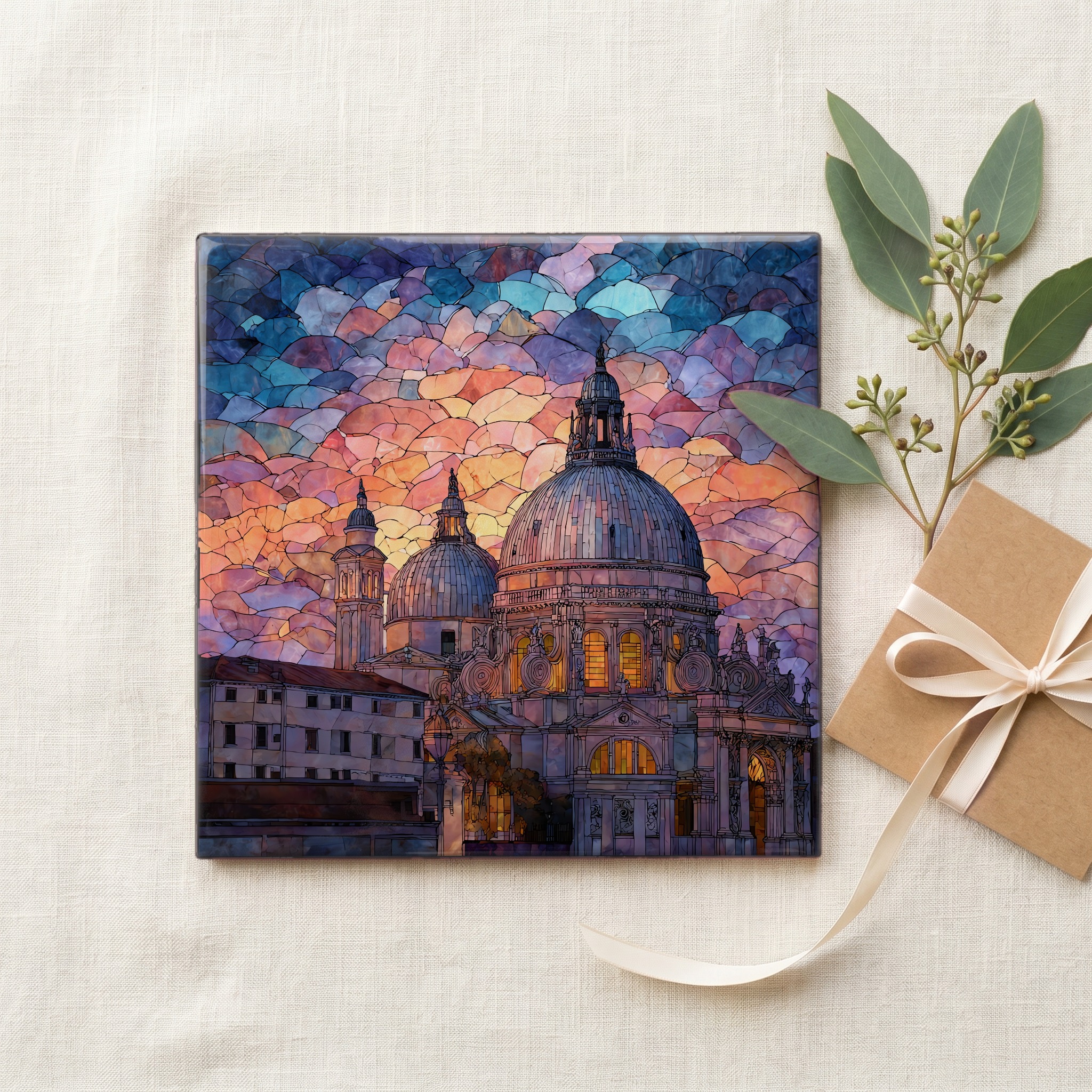
comes gift-ready

Each tile ships in a kraft box, tied with cream ribbon, with a handwritten note from the studio if you'd like to add one.
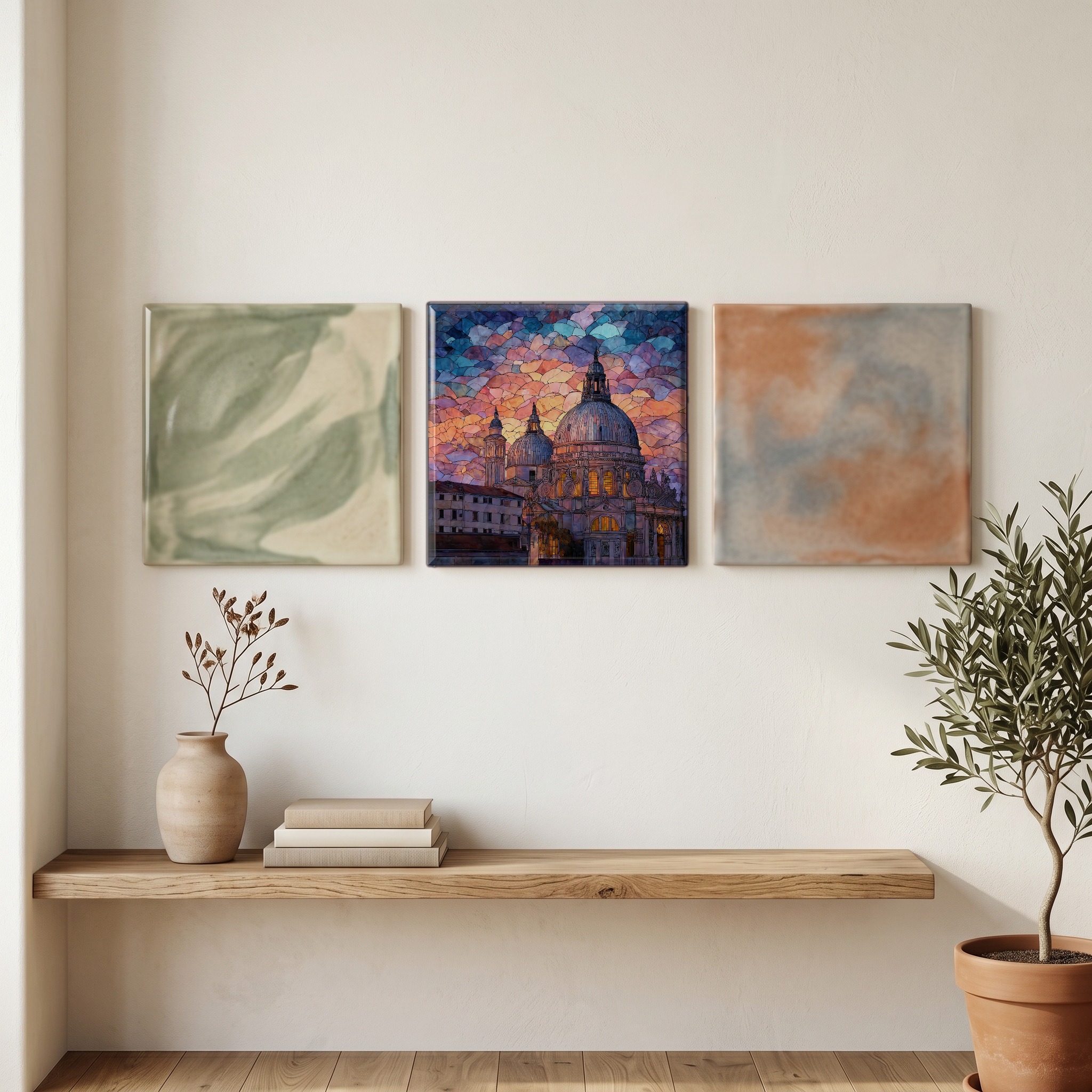
or build a grouping
or build a grouping

Three or five different vistas, hung together — a chapter of places you've been, or want to go.

about Santa Maria della Salute

The place, in three passes.

A little of what's known, in case you fall down the rabbit hole — or want to go see it yourself.
the place

Santa Maria della Salute stands at the eastern tip of Dorsoduro, one of Venice's six historic sestieri, where the Grand Canal opens into the Bacino di San Marco. The basilica is the visual close of every photograph taken from Piazza San Marco across the water. It sits on a foundation of more than 1,100,000 wooden piles driven into the soft lagoon mud. Venice has solved this engineering problem at every site since the city was founded on the lagoon. Vaporetto Line 1 stops at Salute, directly at the basilica's steps. The Punta della Dogana, the old customs house at the very tip, sits a hundred metres east.

the stone

Baldassare Longhena won the 1631 design competition in his early thirties and spent the next fifty years bringing his drawing into stone. The plan is octagonal: eight walls supporting a vast central dome of white Istrian limestone, the same dense, weather-resistant stone Venice has used for waterline construction since the medieval period. The dome reads white against the lagoon sky, brighter than the church behind it. Massive scroll-shaped buttresses anchor the dome to the octagonal walls and give Salute its silhouette. Inside, the sacristy holds three Titian ceiling paintings and Tintoretto's Wedding at Cana. Longhena died in 1682, a year after the church was finished, and did not live to see the 1687 consecration.

the year

The Festa della Madonna della Salute falls on November 21st, the anniversary of Venice's votive promise. The Senate made the vow on October 22nd, 1630, when plague had taken roughly a third of the city, about 46,000 people. The promise was that if Venice survived, the city would build a church to the Virgin and process to it every year on this date. Venetians have kept the appointment for nearly four centuries. A temporary pontoon bridge is laid across the Grand Canal from Campo Santa Maria del Giglio, and people cross on foot, carrying candles. Families light a candle for someone they love. The pastry shops sell castradina, a salted-mutton soup eaten only this week, in remembrance of the food convoys that reached the city during the plague.

where
Italy · Venice, Veneto
position
45.4306° N · 12.3350° E
the neighborhood

What's nearby.

A handful of named places within an hour's walk or short drive. Some we've already painted; some we will.
0.1 km E
Punta della Dogana
Venetian customs house
0.5 km NE
Piazza San Marco
Venice's main square
0.6 km NE
Basilica di San Marco
Byzantine basilica
0.5 km W
Peggy Guggenheim Collection
modern art museum
0.7 km W
Accademia Bridge
Grand Canal bridge
N
Santa Maria della Salute
Punta della Dogana
Piazza San Marco
Basilica di San Marco
Peggy Guggenheim Collection
Accademia Bridge
common questions

What people ask.

A few questions we get about Santa Maria della Salute — and about bringing the piece home.
about the place

The Venetian Senate vowed the church in October 1630 during a plague that killed roughly a third of the city. Baldassare Longhena's design won the 1631 competition and construction took fifty years. The basilica was finished in 1681 and consecrated in 1687.

Salute means health and salvation in Italian. The full name, Santa Maria della Salute, translates as Saint Mary of Health. The basilica was built as a votive offering to the Virgin Mary for delivering Venice from the 1630 plague.

A Venetian feast held every November 21st marking the city's deliverance from the 1630 plague. A temporary pontoon bridge is laid across the Grand Canal, and Venetians walk to the basilica to light a candle. Pastry shops serve castradina, a salted-mutton soup eaten only this week.

Baldassare Longhena, a Venetian architect who won the 1631 design competition in his early thirties. The basilica is considered his masterpiece. Longhena died in 1682, a year after construction finished but five years before the church was formally consecrated.

The church rests on more than 1,100,000 wooden piles driven into the soft lagoon mud at the tip of Dorsoduro. This is the same engineering Venice has used for centuries: long timber piles sunk through silt to firmer clay below, then a stone platform laid on top.

The sacristy holds three ceiling paintings by Titian (Cain and Abel, Sacrifice of Isaac, David and Goliath) and Tintoretto's Wedding at Cana. The high altar carries a Byzantine icon of the Madonna brought from Crete in 1670 by Francesco Morosini.

Vaporetto Line 1 stops at Salute, on the Grand Canal side of the basilica. From Piazza San Marco the church is a short ride across the water, or a longer walk through Dorsoduro by way of the Accademia Bridge. Entry to the main basilica is free; the sacristy has a small admission.

about the piece in your home

It has been a meaningful gift for many of our customers with Venetian connections. Salute is one of the city's most beloved silhouettes, fixed in the daily view from San Marco and walked to every November for the Festa. A Keepsake or Small with a handwritten note from the studio carries well.

The white-stone subject and the deep stained-glass colour palette suit Italian-modern, Coastal-Mediterranean, and Jewel-tone Maximalist interiors. It also reads well in a quieter traditional room with dark wood and warm lamp-light. The piece holds attention without competing for it.

Yes. Italian-modern and Italianate-revival rooms have been pulling back toward saturated colour, hand-finished surface, and recognisable place. This piece carries all three. A Medium above a console or a Large above a sofa anchors the room without needing a second piece.

Above a standard three-seat sofa, a single Large reads at the right scale. For a console table, a Medium is the usual choice. For a larger statement above a long sectional or a stairwell wall, a 4-tile or 9-tile Mural carries the dome at its full presence.

Yes. The Dura Satin or Matte finish is the right choice for vertical installations in damp rooms; both are scratch-resistant, soft-sheen, and steam-tolerant. The Glossy finish is more often used for framed wall pieces in living rooms and bedrooms where direct splash is not a concern.

A soft microfibre cloth and warm water are all the tile needs. Avoid abrasive pads and harsh kitchen sprays. The colour lives in the ceramic surface and stays put, but the thin gloss above it is what gives the piece its depth, so treat the surface gently.

Yes. Every WenderVista piece is original to our studio, made by Reid Wender's eye and hand-finished in our Knoxville workshop. We do not license images and we do not sell stock prints. Each tile is a piece of the place, made one at a time.

if this one stayed with you

A few you might also love.

Hand-picked by the eye that found Sorapis. Same air, same kind of quiet.
— a collection

The Italian Dolomites,
painted slow.

The valleys between Cortina and Val Gardena, the tarns you walk an hour to see, the towers that turn the colour of a banked fire just before dark. Wander the collection by valley, by season, or follow the path Reid walked.

Tre Cime
Braies
Misurina
Sorapis
Cinque Torri
Sassolungo
Marmolada