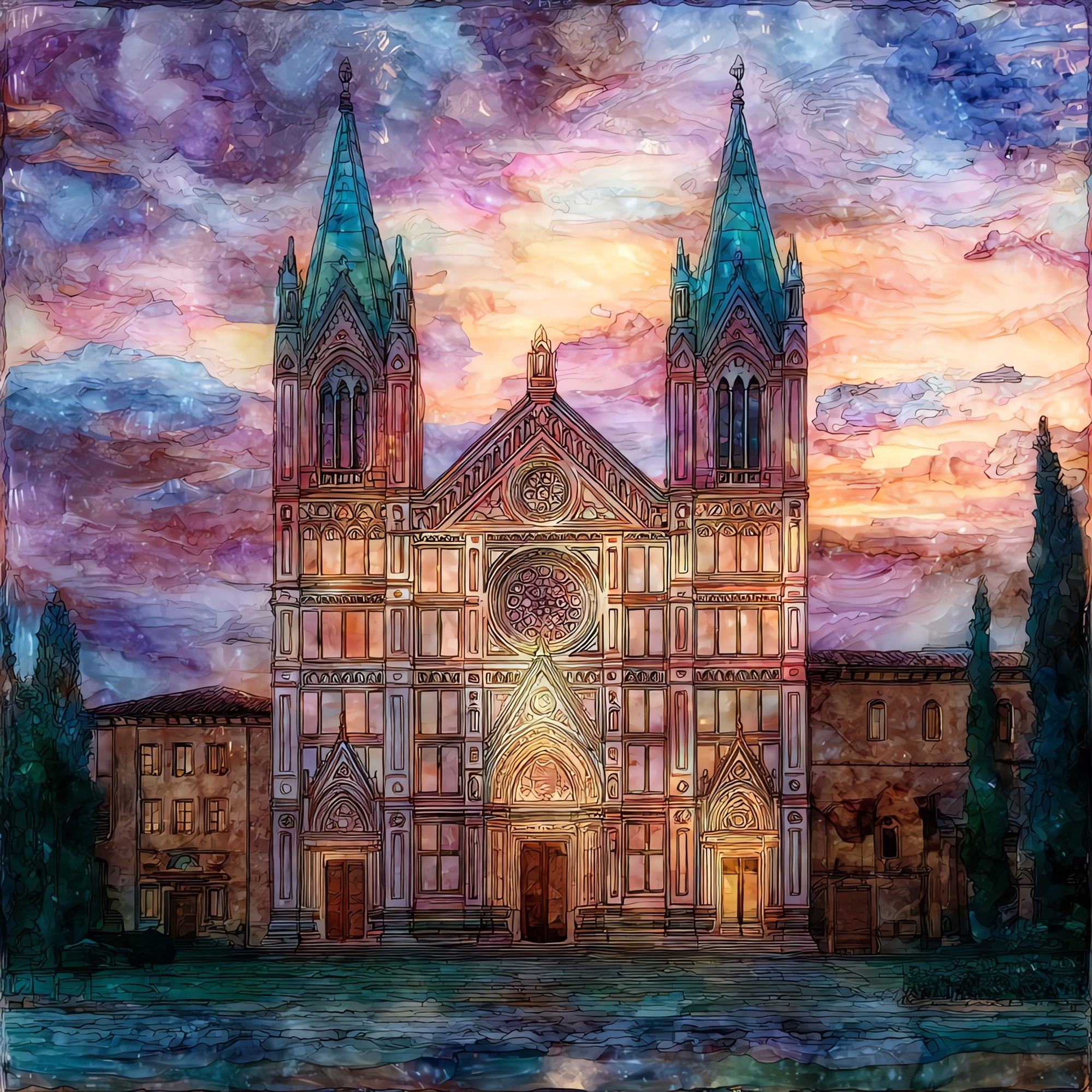
Santa Croce Basilica
— where Galileo lies beside Michelangelo.
Not only on a wall.
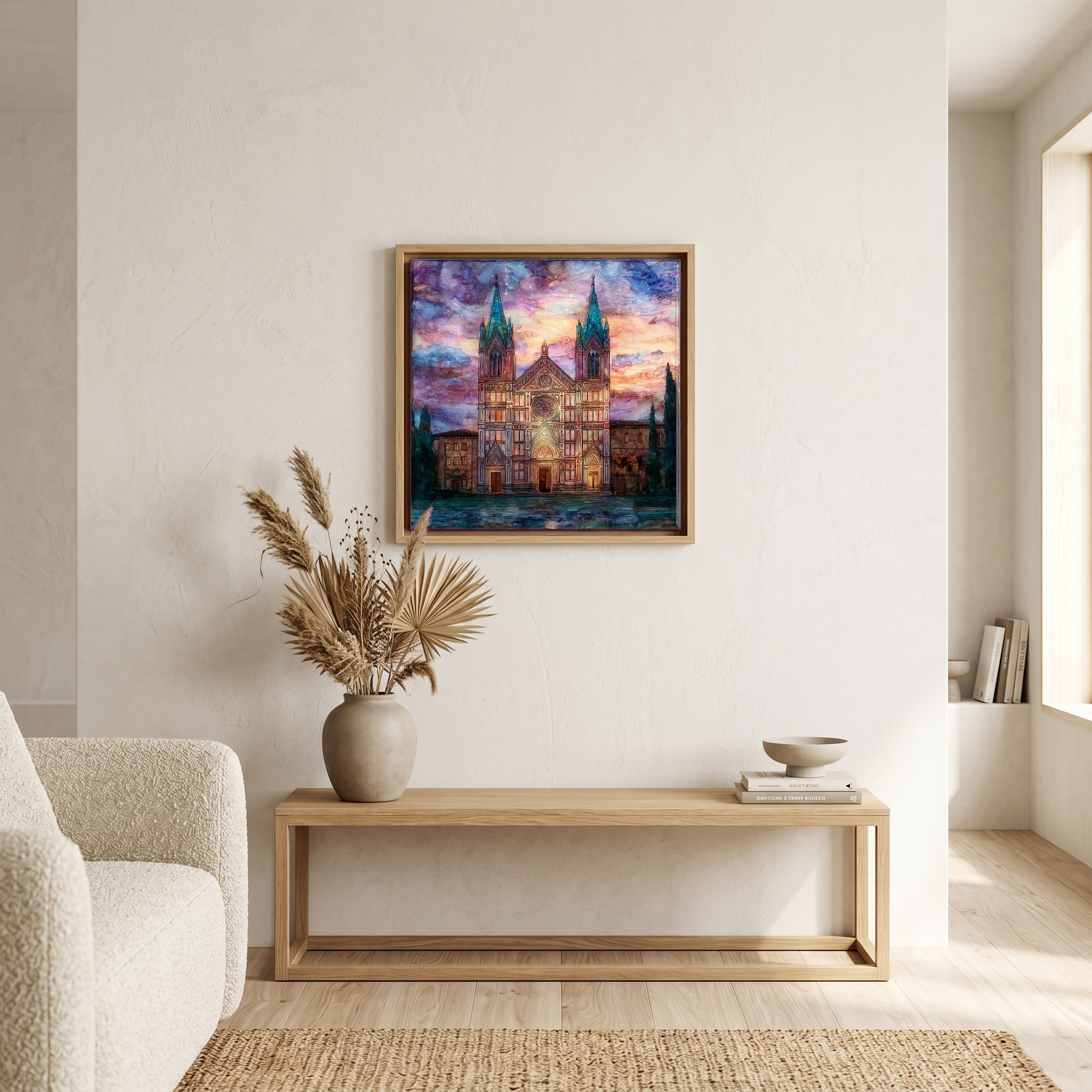
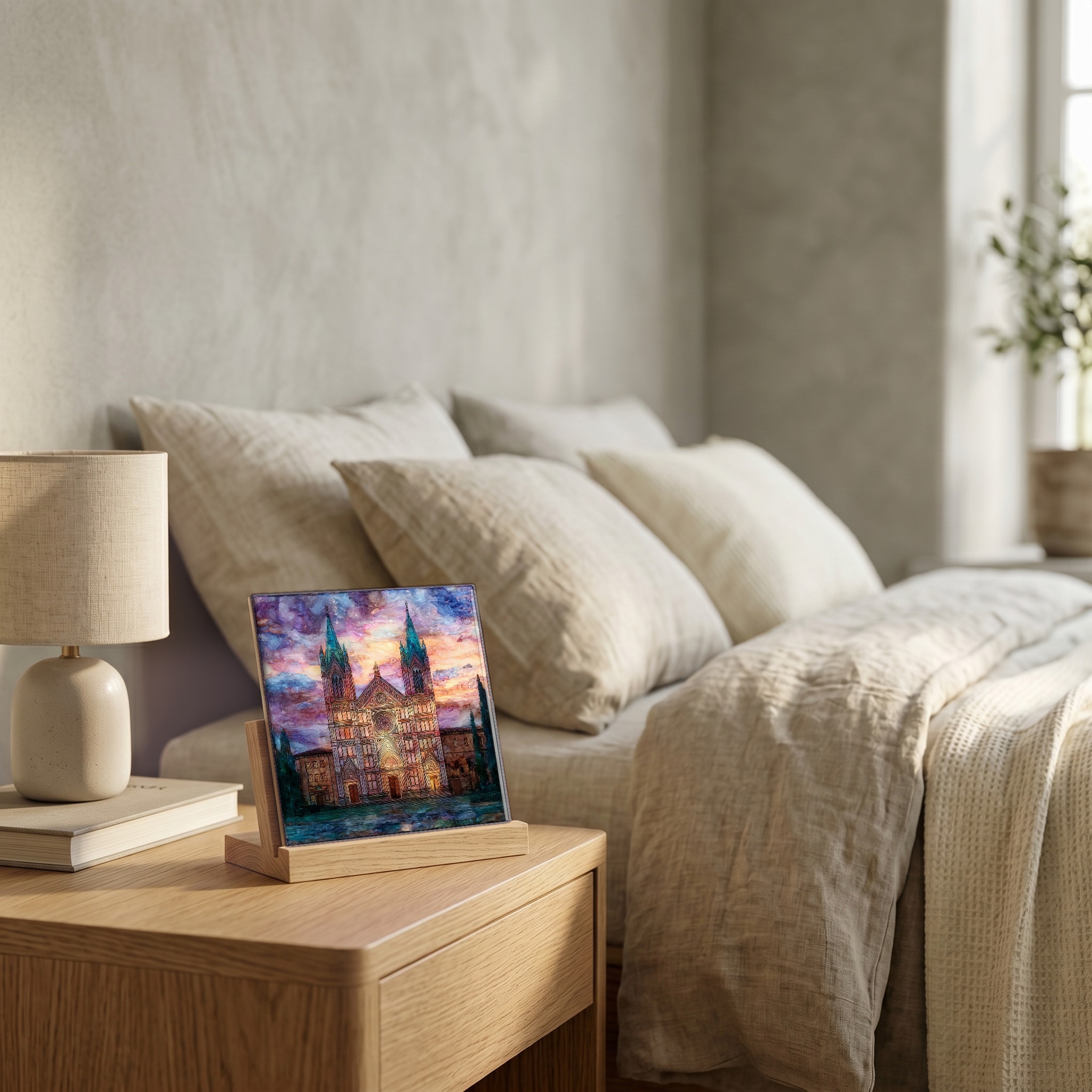
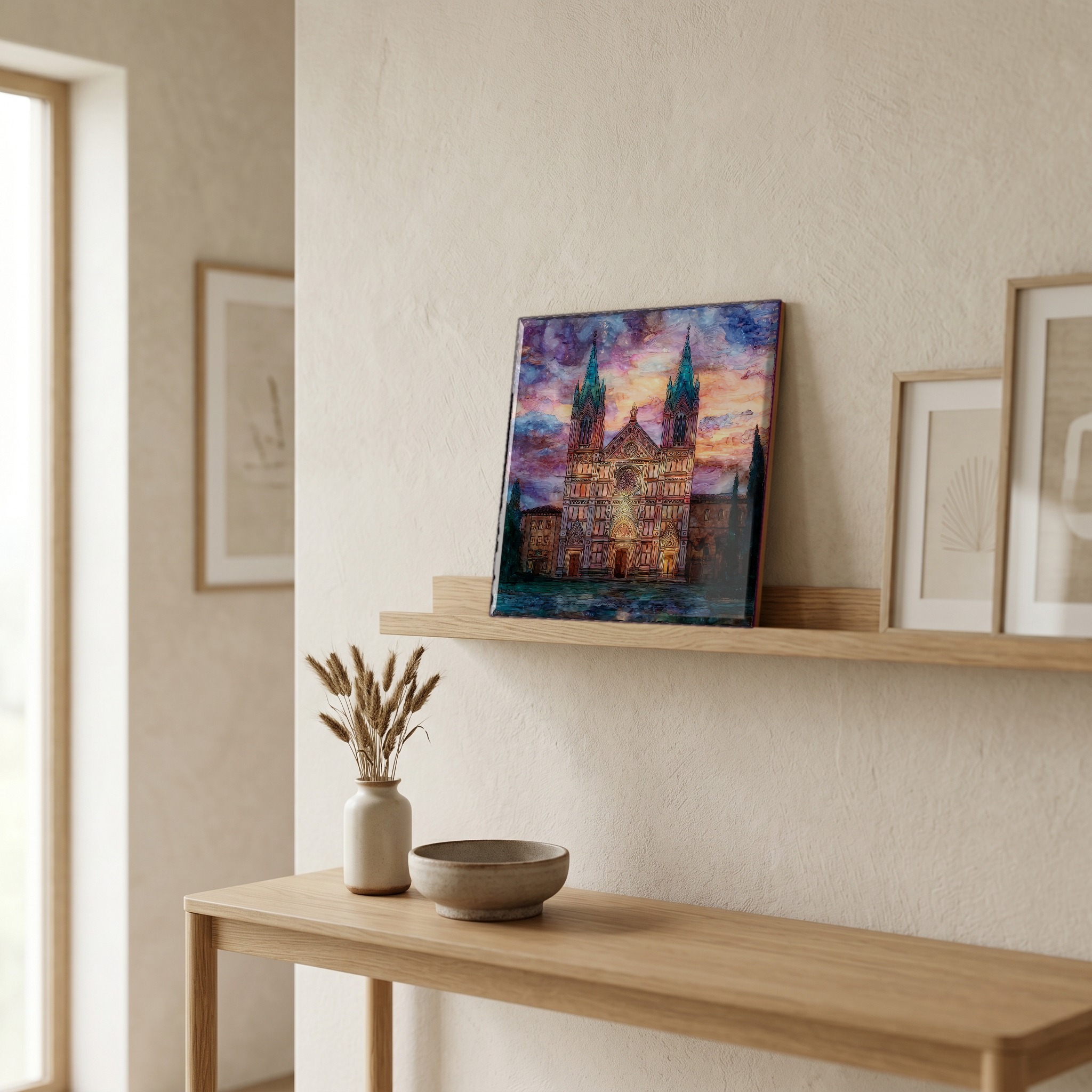
“The principal Franciscan church in Florence, at the eastern edge of the old city above the Arno. Inside, the floor is paved with the slabs of much of Italy: Galileo, Michelangelo, Machiavelli, Rossini, and a cenotaph for Dante in the south aisle. The walls still carry Giotto's faded frescoes in the Bardi and Peruzzi chapels. The neo-Gothic facade, banded in white, green, and pink Tuscan marble, was finished in 1863 by Niccolò Matas, who set a Star of David above the portal as his signature. In November 1966 the Arno rose almost five metres up the nave, and Cimabue's Crucifix in the refectory has not been the same since.
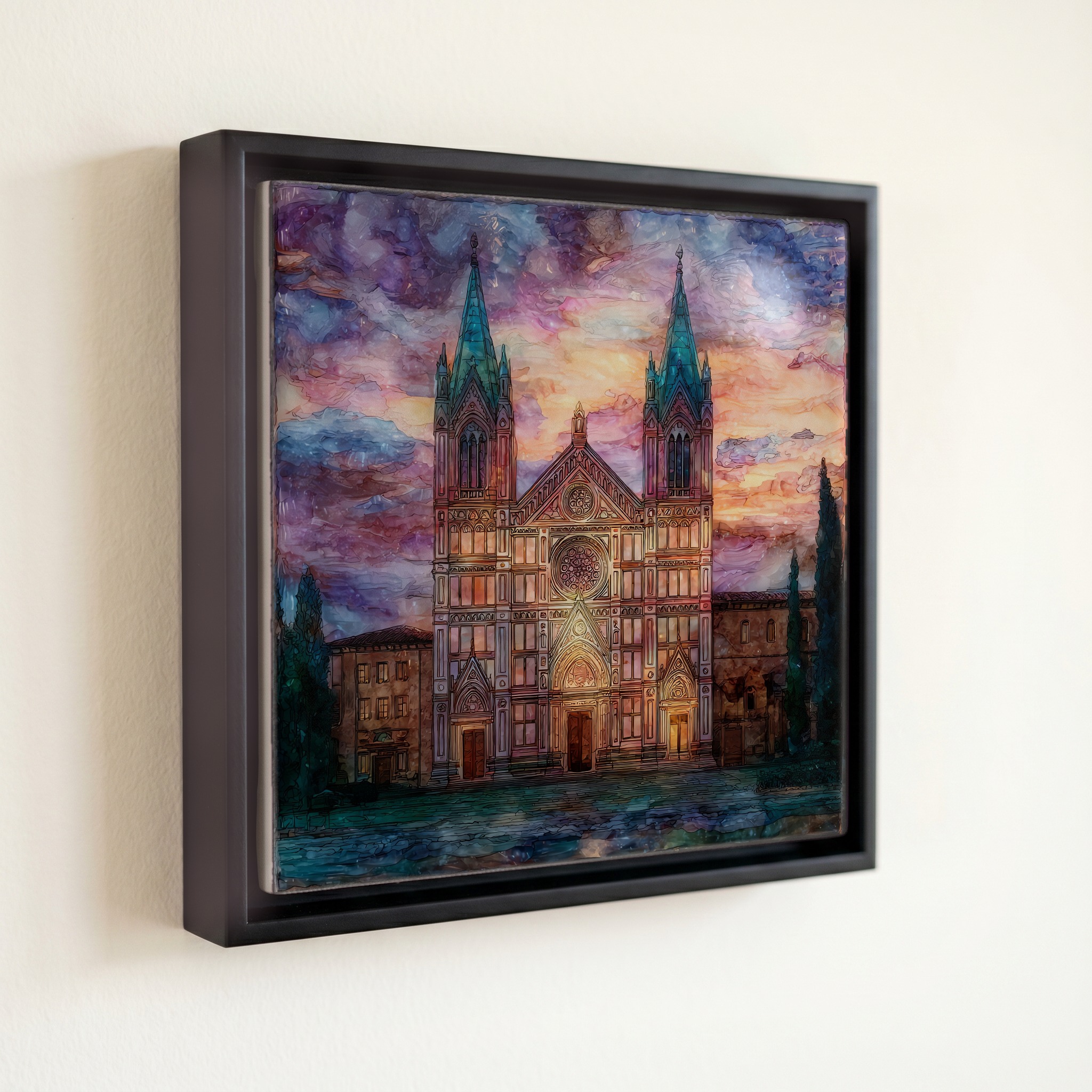
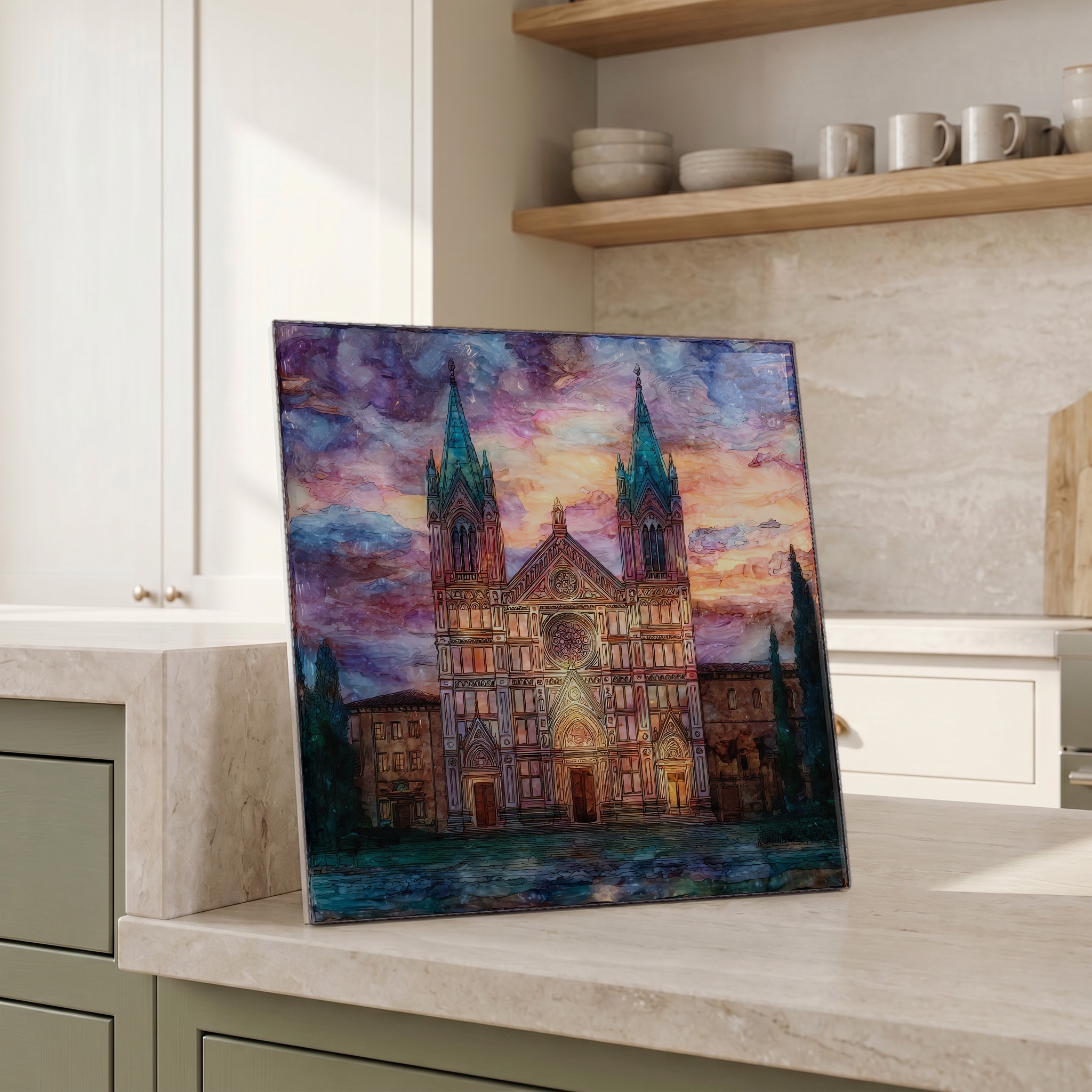
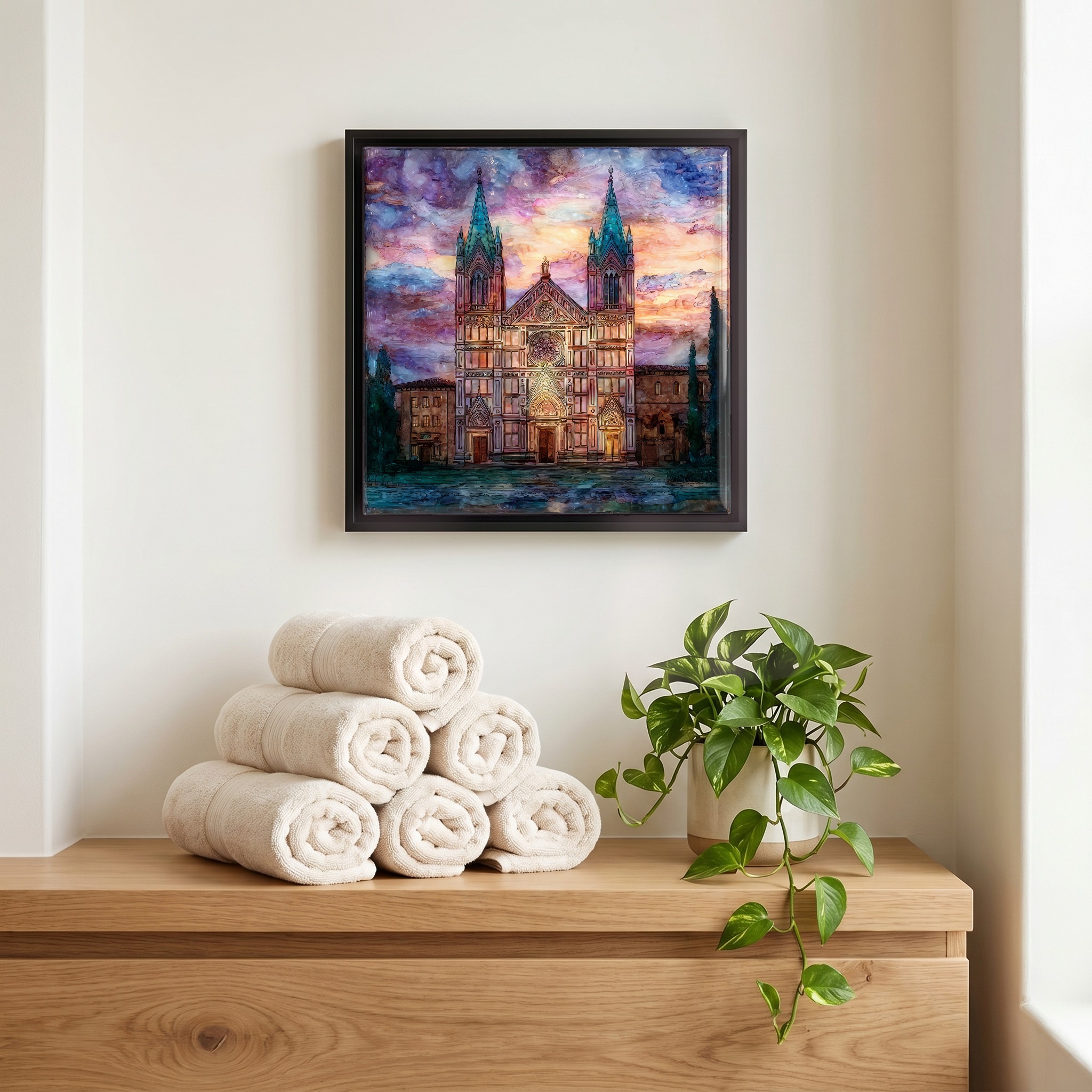
Santa Croce Basilica, on ceramic.
Each tile is finished by hand in our Knoxville studio. Artwork is slowly infused into the ceramic surface under high heat and pressure, and rests beneath a thin glossy finish. The colour lives in the surface, not on top of it.
Pick any four 4-inch tiles — National Parks you've been to, a Smokies set, the four seasons of one place. $ for a set of , cork-backed, ready to live on the table.
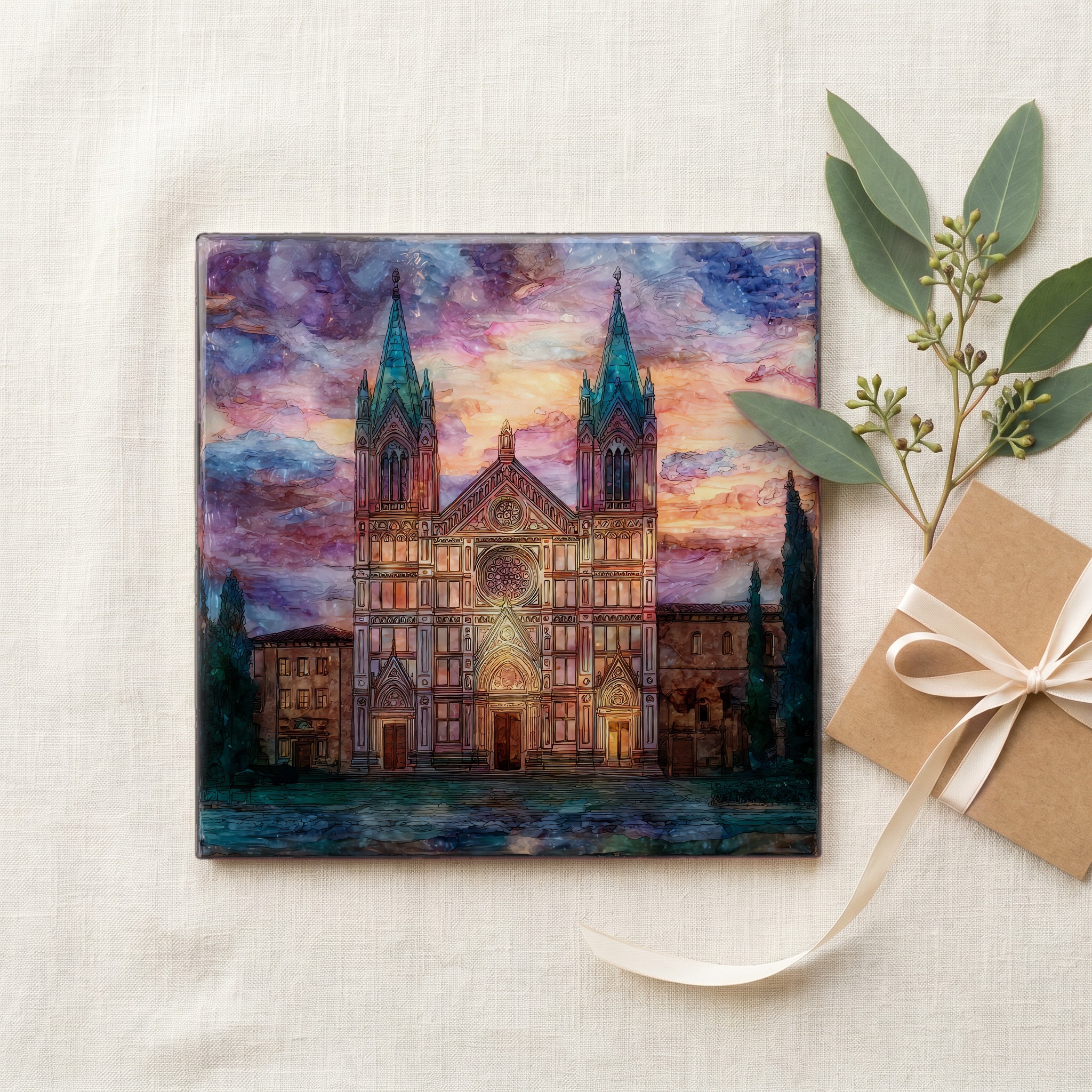
Each tile ships in a kraft box, tied with cream ribbon, with a handwritten note from the studio if you'd like to add one.
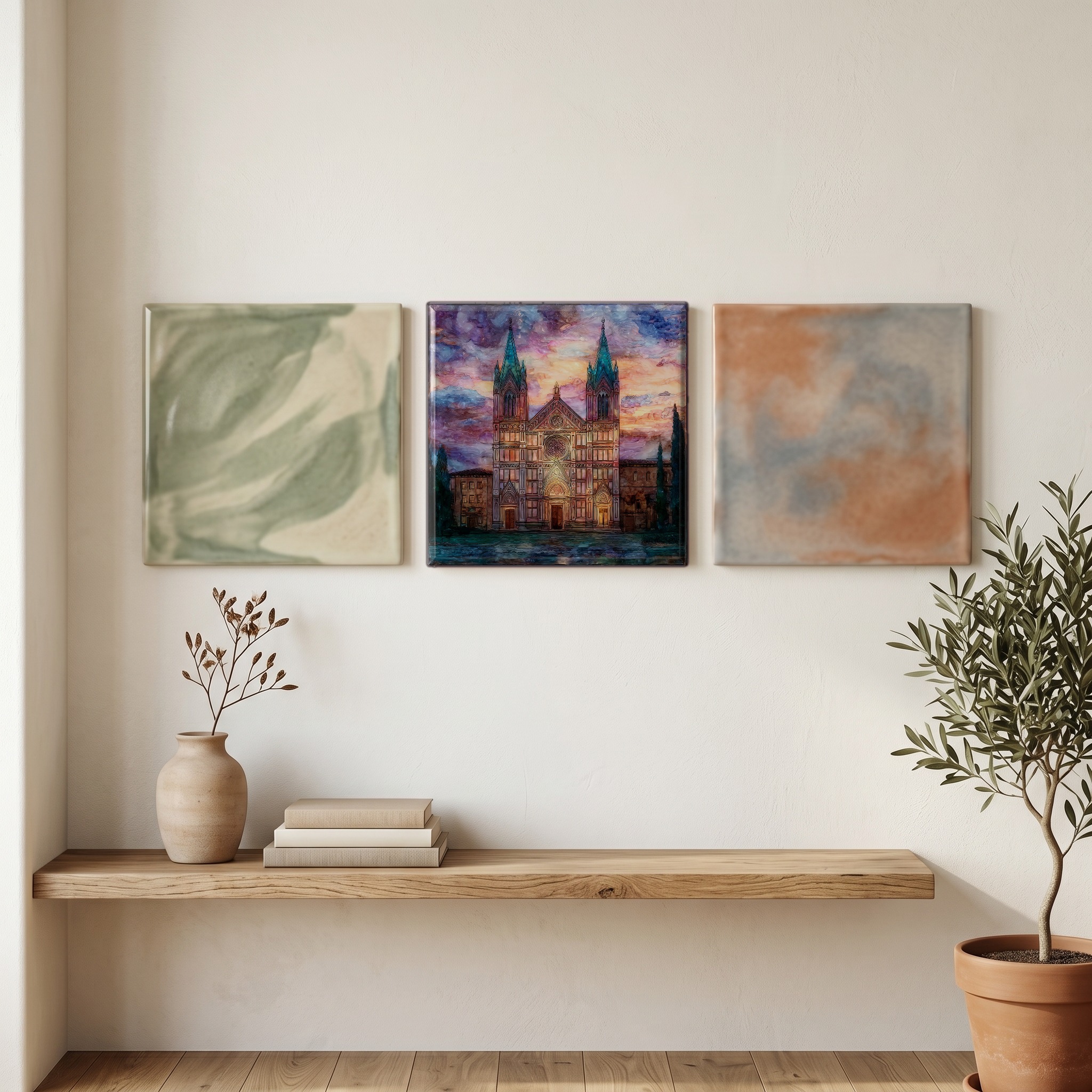
Three or five different vistas, hung together — a chapter of places you've been, or want to go.
The place, in three passes.
The principal Franciscan basilica of Florence, on the eastern side of the historic centre near the Arno, in the Piazza Santa Croce. Construction began in 1294, traditionally attributed to the architect Arnolfo di Cambio, on the site of an earlier Franciscan chapel given to the order by the people of the city. The church was consecrated in 1442. Its plan is an Egyptian T-shape with sixteen chapels opening off the transepts; the nave reaches roughly 115 metres in length, the longest of any Franciscan church in the world. Across the centuries it became the chosen burial place of Italy's great minds, and is still served by Franciscan friars under the Opera di Santa Croce.
The neo-Gothic facade is the work of Niccolò Matas, a Jewish architect from Ancona who designed it between 1857 and 1863 in a polychrome marble reading of Tuscan Gothic. Three vertical bands of white Carrara, green Prato serpentine, and pink Maremma marble climb to a rose window, with a Star of David set in the tympanum above the central portal: Matas's signature on a church he was not permitted to be buried inside. He rests under the threshold instead. The campanile rose in 1842. Inside, the Bardi and Peruzzi chapels carry fresco cycles by Giotto from the 1320s, and the Pazzi Chapel in the first cloister was begun around 1442 to a design by Filippo Brunelleschi, one of the touchstone works of the early Renaissance.
Entry to the basilica complex requires a ticket, with reduced or free admission for residents, worshippers, and children; the site is administered by the diocese-overseen Opera di Santa Croce. The standard visitor circuit covers the church, the museum in the former refectory, the Pazzi Chapel, and the two cloisters. Cimabue's monumental wooden Crucifix, damaged in the November 1966 flood of the Arno that left a high-water mark on the cloister walls, remains on permanent view in the refectory. The Piazza Santa Croce in front of the basilica still hosts the Calcio Storico Fiorentino each June, a Renaissance-rules football match played in sixteenth-century costume; for most of the year the square fills with leather workshops and cafés.