Wender·Vista
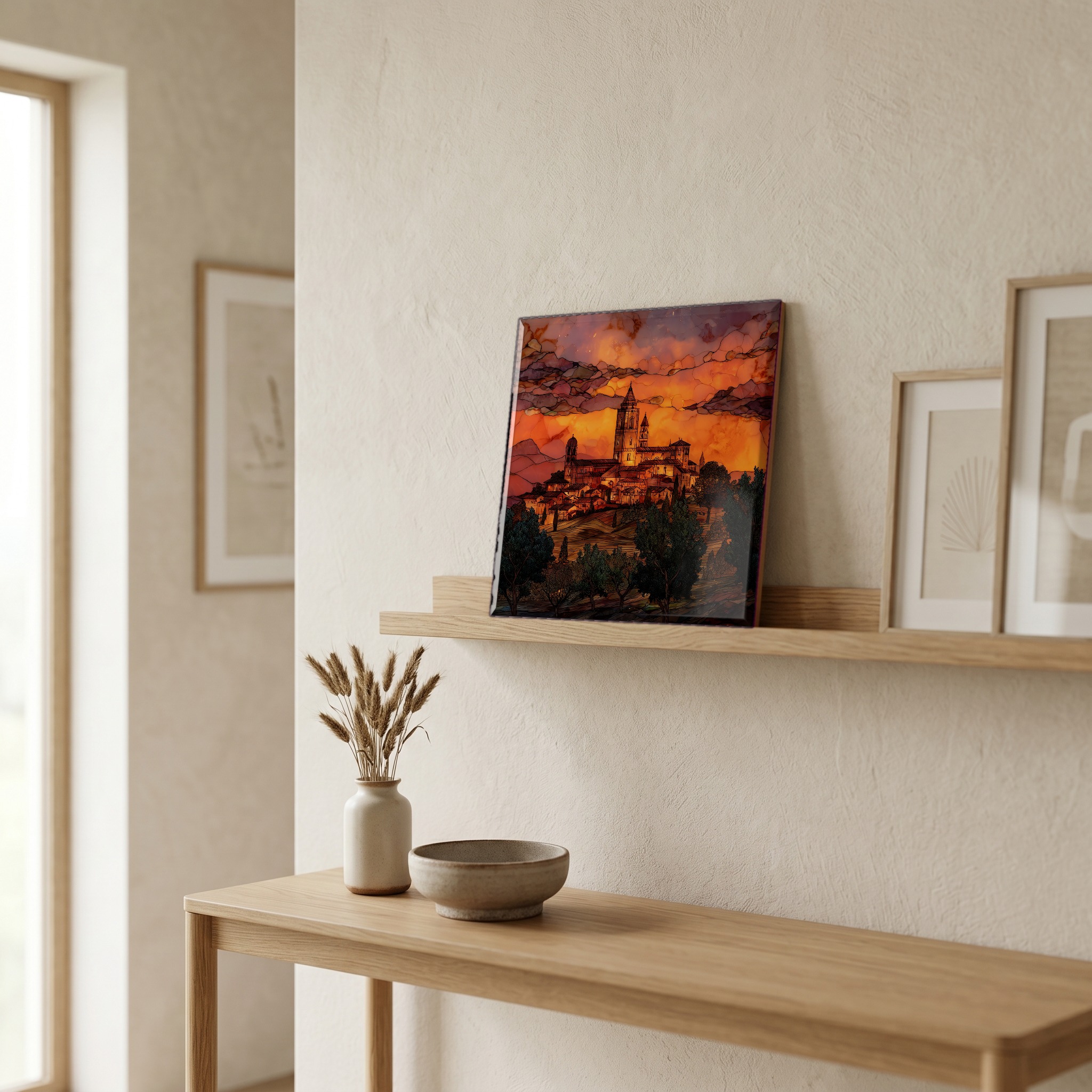
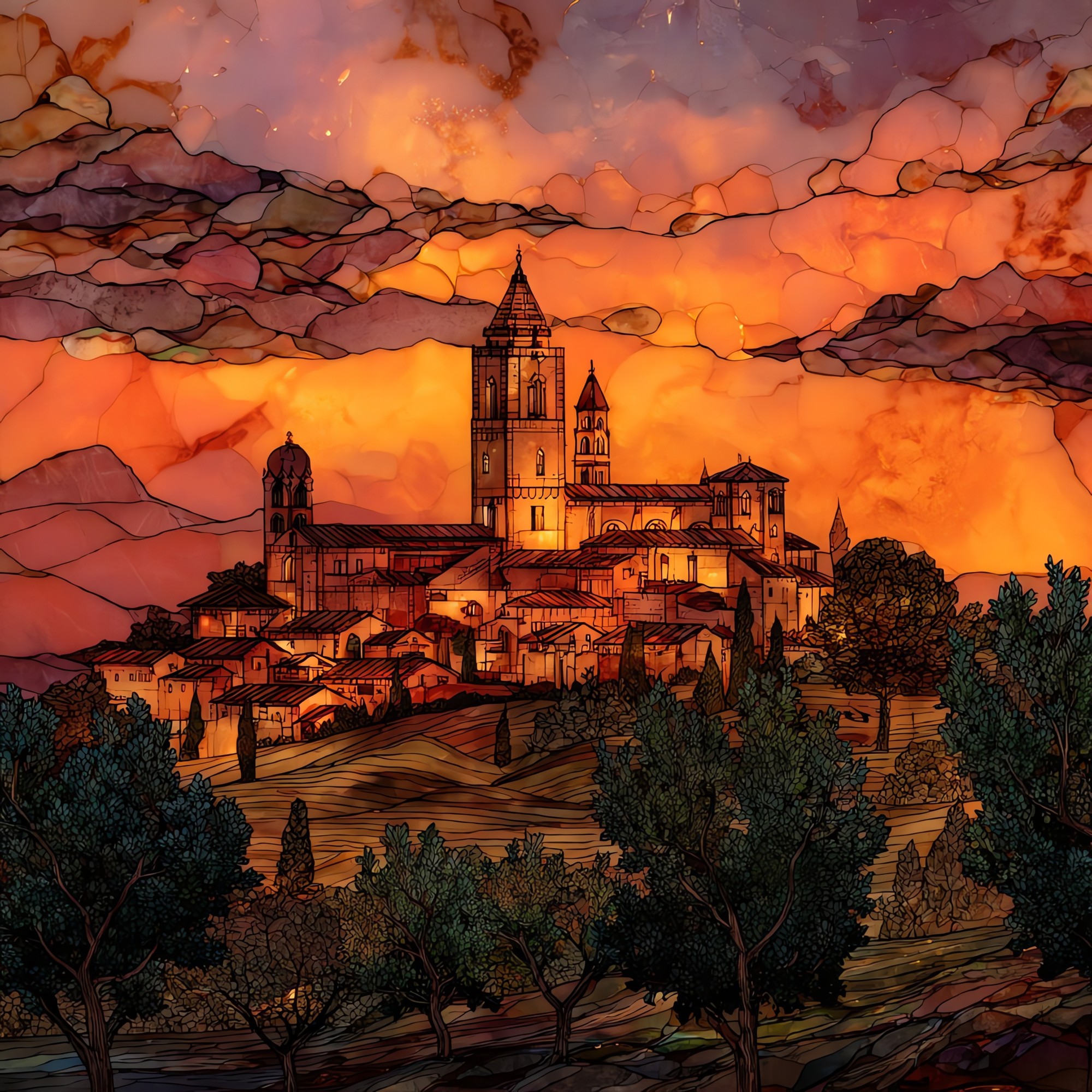
San Miniato al Monte
shown on ceramic, 12-inch tileItaly
on the hill above the Arno in Florence

San Miniato al Monte

the chant rising as Florence goes dark.

Where it lives

Not only on a wall.

A small tile on the nightstand catching the morning. A larger one above the fire. Yours, wherever you spend the slow hours.
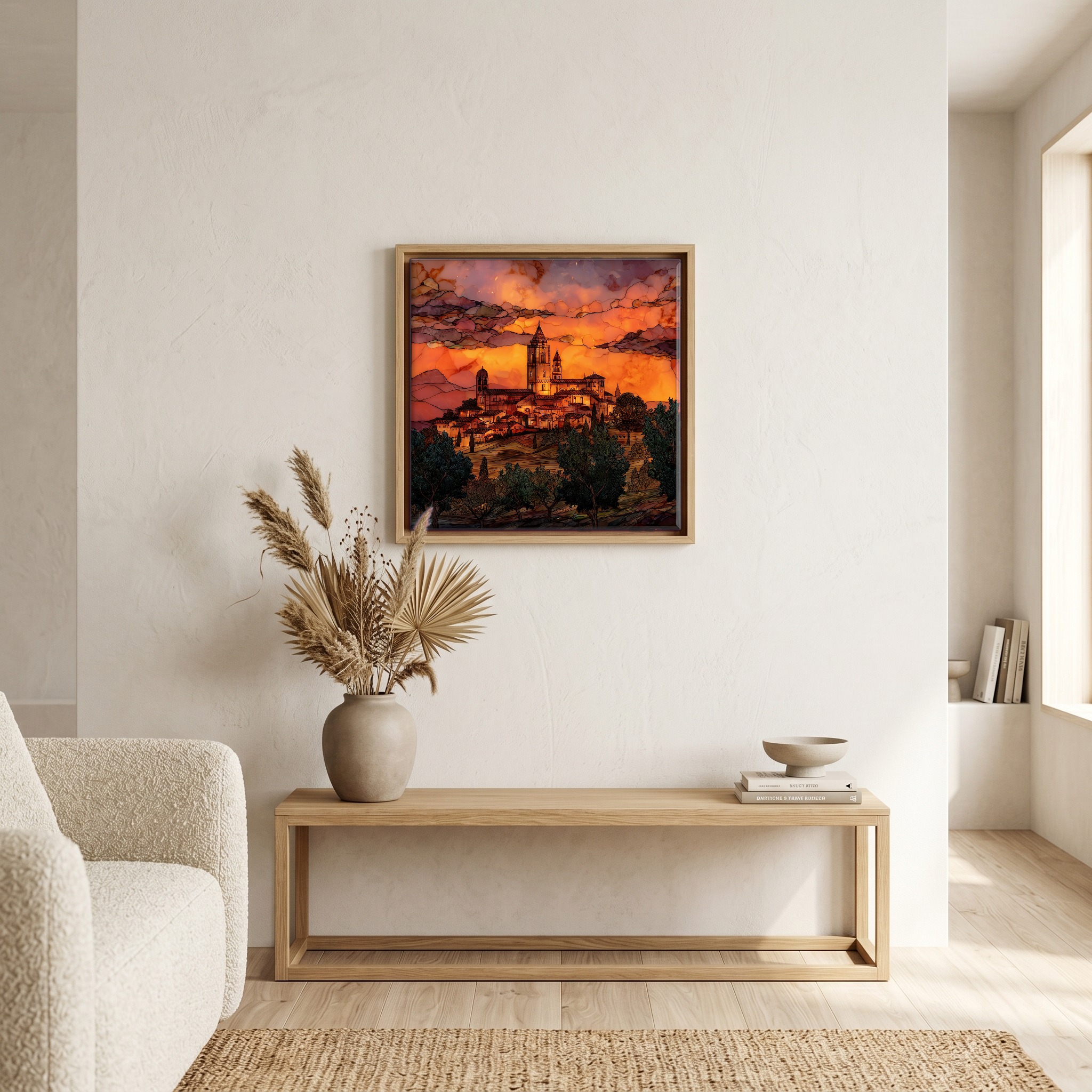
Above the bench, in a warm oak surround.
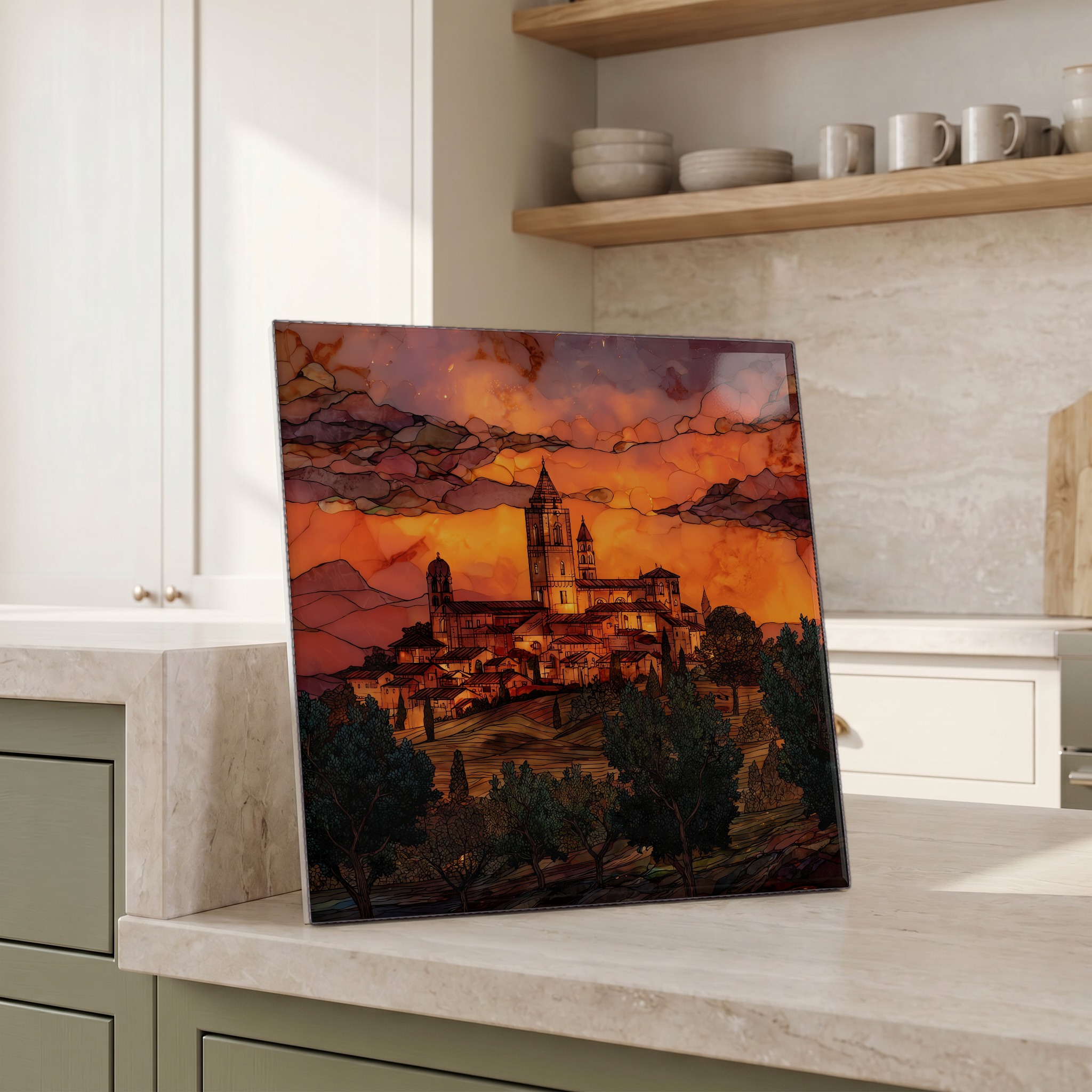
Beside the kettle, propped on the counter.
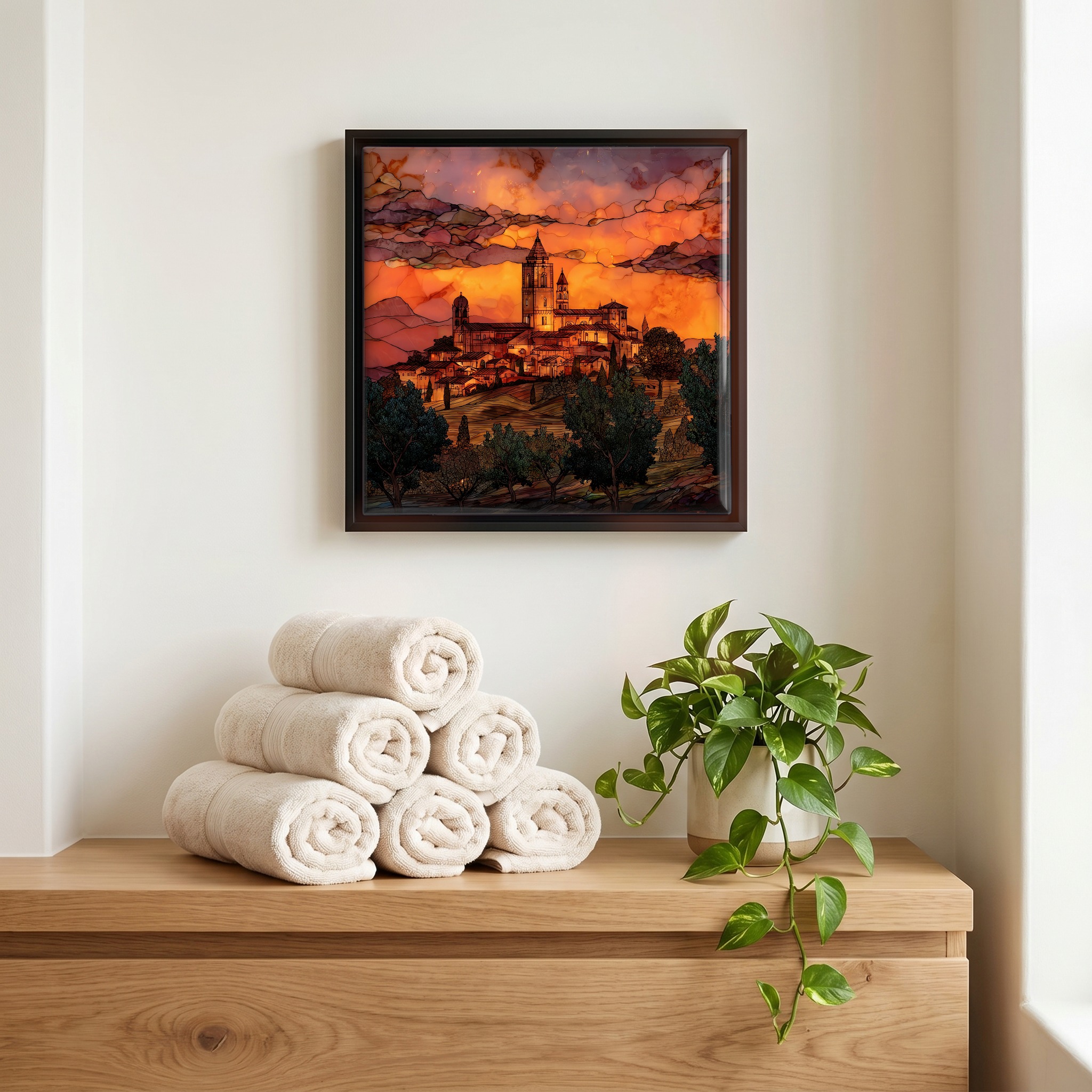
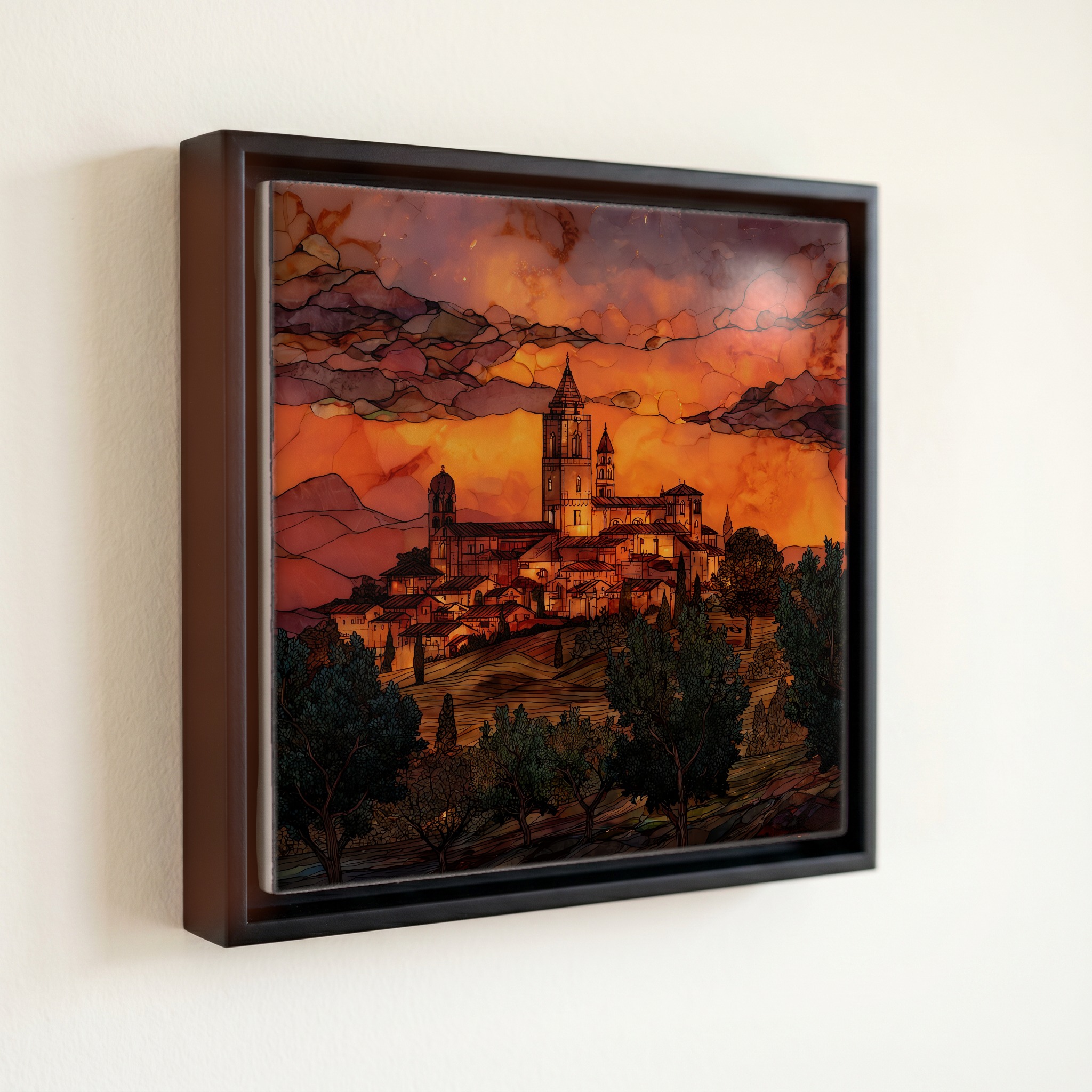
Above the linens, in a slim black surround.
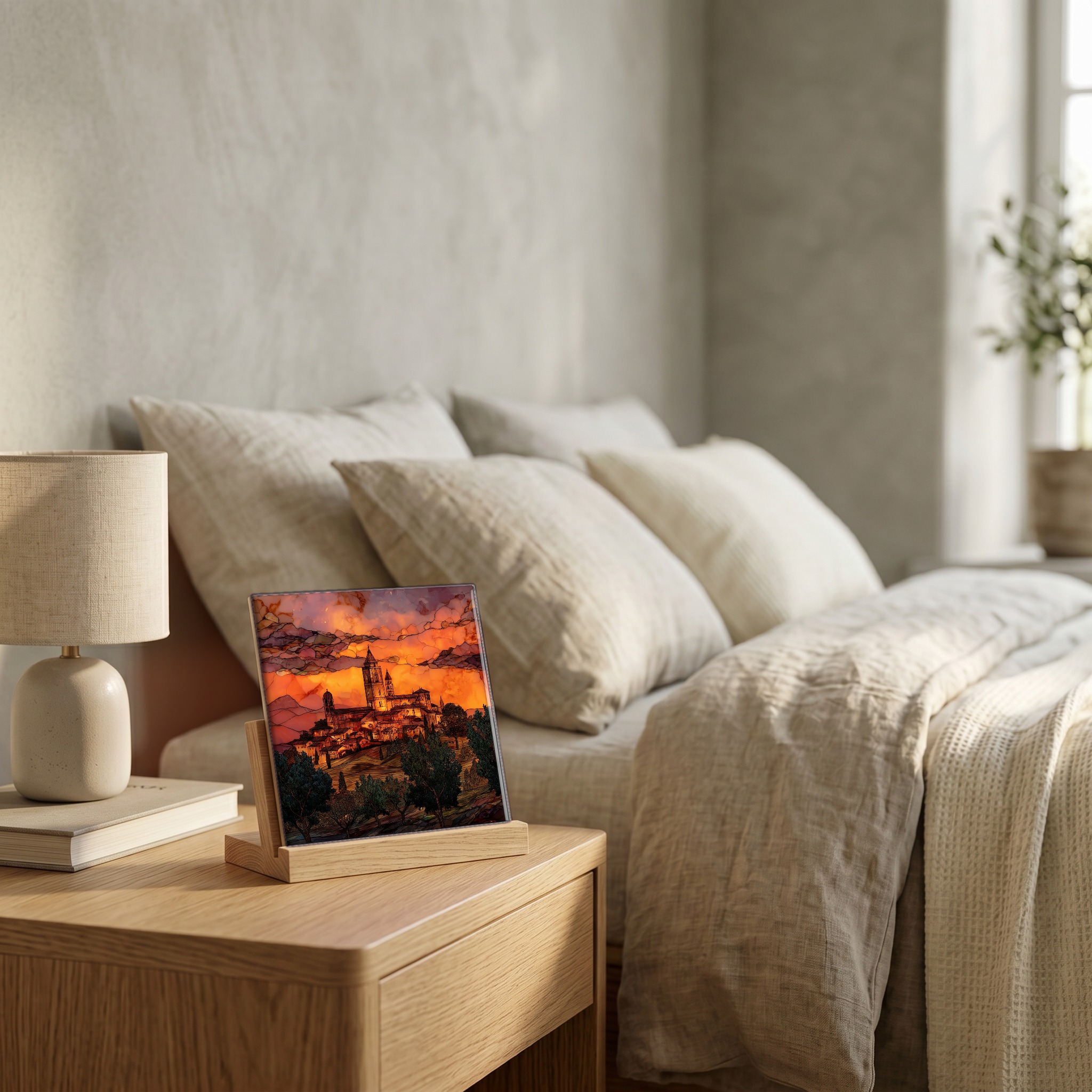
On the nightstand, on a light oak stand.
On a picture ledge, where the light comes in.
a note from the studio

The church above Florence. Green and white marble, geometric panels worked by Tuscan masons a thousand years ago, older than the Duomo by two centuries. Benedictine Olivetan monks still sing Gregorian chant in the late afternoon. Walk up from the river, or climb the long stairs from the Piazzale Michelangelo. Most people come for the view of the city. Many stay for the chant.
from the studio
shown in a slim black floating frame · 6 × 6 in
— bring it home

San Miniato al Monte, on ceramic.

Each tile is finished by hand in our Knoxville studio. Artwork is slowly infused into the ceramic surface under high heat and pressure, and rests beneath a thin glossy finish. The colour lives in the surface, not on top of it.

What kind of piece?
One tile — square or rectangle.
How big?
the popular one — counter, shelf, nightstand
6 × 6 in · 15 cm · 1.6 lb
Surface finish
A clear glossy finish — the artwork reads as if under resin. Ideal for show-pieces and framed wall art.
How it sits
A hidden cleat — sits ¼″ proud of the wall.
$58
Hand-finished and shipped from our studio at the foot of the Smokies. On your wall in about ten days.
size
6 × 6 in
15 cm
weighs
1.6 lb
solid in the hand
surface
ceramic, hand-finished
art rests beneath a thin glossy finish
from
Knoxville, TN
our family studio, at the foot of the Smokies
— start a Coaster Set

Pick any four 4-inch tiles — National Parks you've been to, a Smokies set, the four seasons of one place. $ for a set of , cork-backed, ready to live on the table.
comes gift-ready
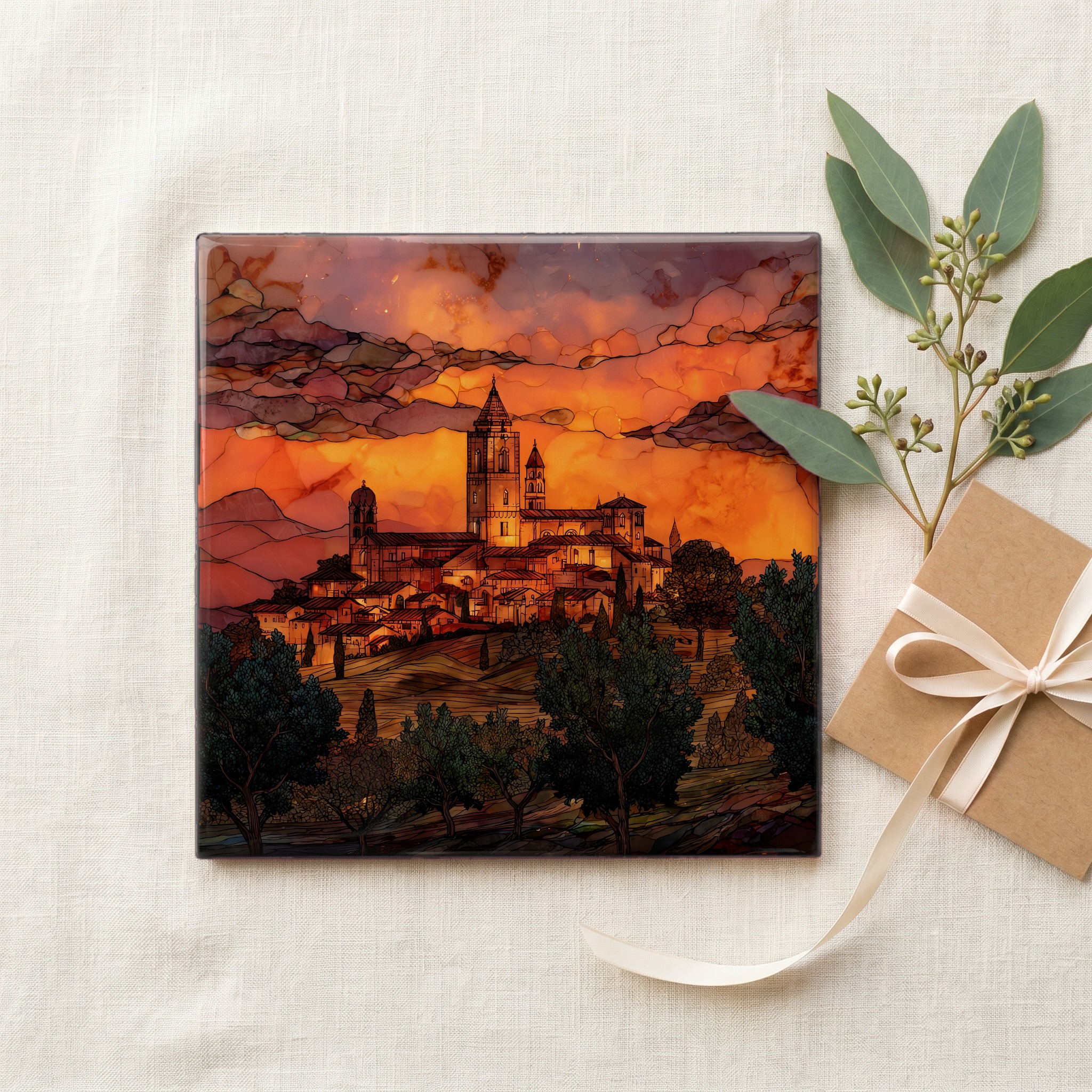
comes gift-ready

Each tile ships in a kraft box, tied with cream ribbon, with a handwritten note from the studio if you'd like to add one.
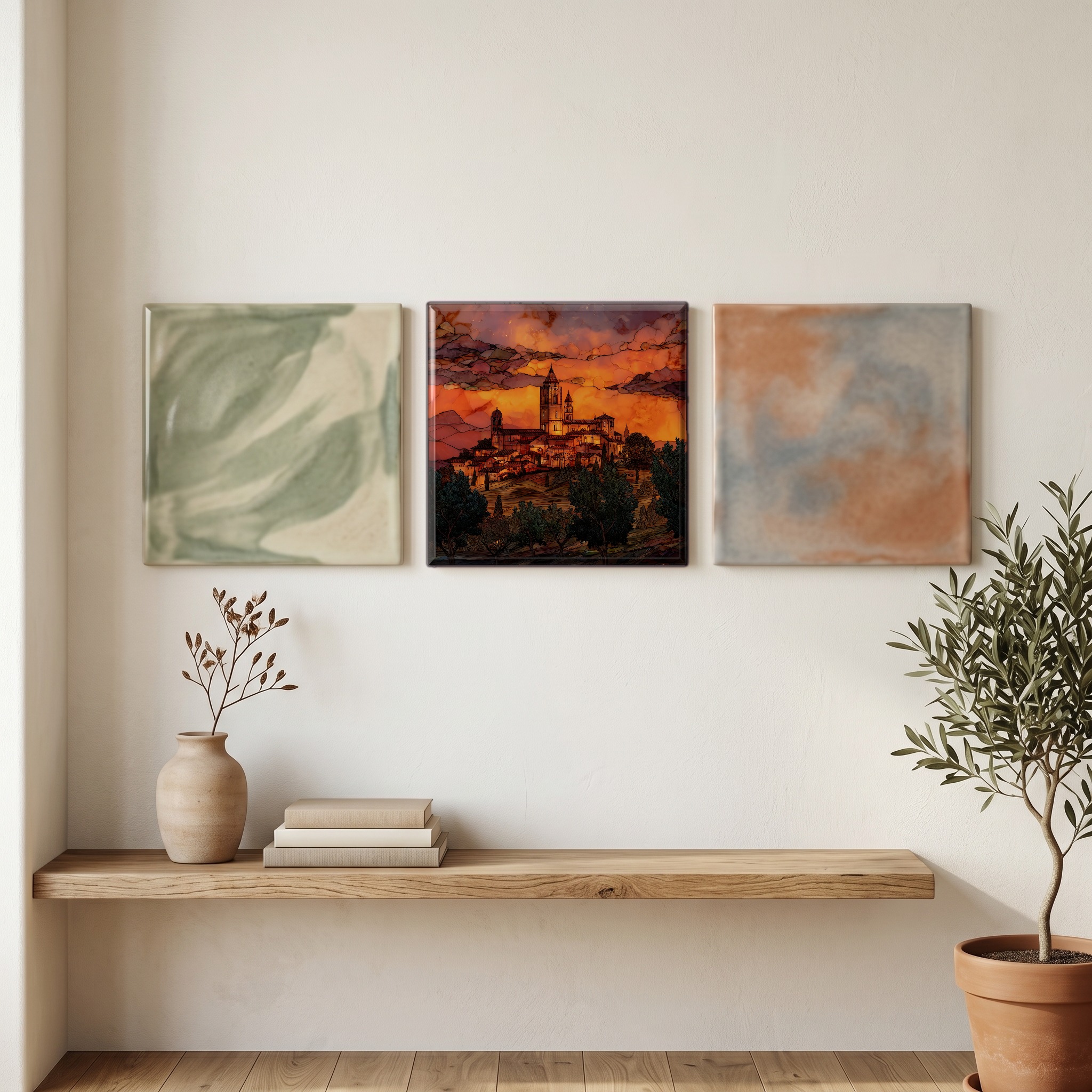
or build a grouping
or build a grouping

Three or five different vistas, hung together — a chapter of places you've been, or want to go.

about San Miniato al Monte

The place, in three passes.

A little of what's known, in case you fall down the rabbit hole — or want to go see it yourself.
the place

San Miniato al Monte sits on the hill above the Arno in Florence, at roughly 115 meters above sea level, one of the highest points in the historic centre. The basilica is reached by the long stone staircase that climbs from the Piazzale Michelangelo, or by the road from the Porta San Miniato. It is named for Saint Minias, an Armenian merchant or Roman soldier said to be Florence's first Christian martyr, executed around 250 CE under the emperor Decius. Construction of the present basilica began in 1013 under bishop Alibrand, on the site of an earlier shrine. The basilica and its monastery have stood on this hill ever since.

— informed by Wikipedia
the stone

The façade is the founding work of what art historians call the Florentine Proto-Renaissance: bands and geometric panels of white Carrara marble inlaid with dark green serpentine from Monte Ferrato near Prato. The lower register dates to the mid-11th century; the upper façade and its golden Byzantine mosaic of Christ between the Virgin and Saint Minias were completed by about 1260. From 1288 the Arte di Calimala, the wool merchants' guild that ran the cloth trade of medieval Florence, took on maintenance of the basilica and set the bronze eagle on the gable as their emblem, a bale of wool in its talons. The same green-and-white geometry would echo through the Baptistery and, two centuries later, the Duomo.

— informed by Wikipedia
the visit

The basilica is open daily and admission is free. The Benedictine Olivetan community that has lived here since 1373 sings Gregorian chant during the late-afternoon Mass; the chant is the reason many visitors come back. The walk up from the river is steep but short: the Rampe and the long staircase from Piazzale Michelangelo climb in about ten minutes, and city buses 12 and 13 run from the centre. The monks keep a small shop selling honey, herbal liqueurs, and soaps made on the property. The view across Florence is widest from the terrace just below the façade, especially in the hour before sunset.

where
Italy · Florence, Tuscany
elevation
115 m · 377 ft
position
43.7264° N · 11.2661° E
the neighborhood

What's nearby.

A handful of named places within an hour's walk or short drive. Some we've already painted; some we will.
0.3 km W
Piazzale Michelangelo
viewpoint terrace
0.4 km W
Giardino delle Rose
rose garden
1.5 km NW
Florence Cathedral (Duomo)
cathedral
1.1 km NW
Ponte Vecchio
medieval bridge
1.2 km W
Boboli Gardens
Renaissance garden
0.9 km NW
Forte di Belvedere
fortress
N
San Miniato al Monte
Piazzale Michelangelo
Giardino delle Rose
Florence Cathedral (Duomo)
Ponte Vecchio
Boboli Gardens
Forte di Belvedere
common questions

What people ask.

A few questions we get about San Miniato al Monte — and about bringing the piece home.
about the place

It stands on the hill above the Arno in Florence, just above the Piazzale Michelangelo, at roughly 115 meters above sea level. The basilica is reached by a long stone staircase from the piazzale, by the road from Porta San Miniato, or by city buses 12 and 13 from the centre.

Saint Minias is traditionally remembered as Florence's first Christian martyr, an Armenian prince or Roman soldier executed on this hillside around 250 CE under the emperor Decius. He is said to have carried his head up the hill to the site where the basilica now stands.

The present church was begun in 1013 under bishop Alibrand on the site of an older shrine. The green-and-white marble façade was finished by the mid-13th century. The basilica is among the oldest standing churches in Tuscany.

The geometric inlay uses white Carrara marble and dark green serpentine from Monte Ferrato near Prato. The pattern of bands, panels, and inscribed circles is the founding example of what art historians call the Florentine Proto-Renaissance and echoes through the Baptistery and the Duomo of Florence.

The bronze eagle holds a bale of wool in its talons, the emblem of the Arte di Calimala, the medieval wool merchants' guild that took on maintenance of the basilica in 1288 and funded its repairs for centuries.

The Benedictine Olivetan community that has lived at San Miniato since 1373 sings Gregorian chant during the late-afternoon Mass each day. The chant is open to visitors and is one of the oldest continuous musical traditions in Florence.

Yes. The Cimitero delle Porte Sante, the monumental cemetery built into the old fortifications around the basilica in 1854, holds the graves of Carlo Collodi (author of Pinocchio), Giovanni Spadolini, and many of Florence's 19th- and 20th-century artists and writers.

about the piece in your home

It's been a meaningful gift for many customers with ties to the city. San Miniato is one of the most beloved places in Florence; locals walk up at sunset, and many were married or baptised here. A Small or Medium with a handwritten note from the studio carries well.

The piece sits comfortably in Italian-modern, classical, and warm-minimalist rooms. The deep greens and creams of the artwork echo the basilica's marble inlay, and the gold notes pick up traditional Tuscan palettes. It also works in a quieter sacred-art arrangement with other architectural vistas in the WenderVista catalog.

Yes. Warm-traditional and modern-classical interiors are returning to architectural art with deep, hand-rendered colour. The greens, golds, and ivories in this piece work with travertine, walnut, and aged brass, and pair well with other ceramic art tiles in the WenderVista collection.

Above a sofa, the single Large (24 inches square) holds the wall well. Above a console or a hallway, the 4-tile Mural (32 inches square) sits naturally. For a long entry wall, the 9-tile Mural (48 inches square) takes the place of a single statement painting.

Yes. For steamy or splash-prone rooms, choose the Dura Satin or Matte finish rather than Glossy. The colour is slowly infused into the ceramic surface under high heat and pressure, so it does not fade with moisture, heat, or daily cleaning.

A soft microfibre cloth and warm water is enough for daily care. For the Dura Satin or Matte finish in a kitchen or bathroom, a mild non-abrasive cleaner is fine. No solvents, no scouring pads, no abrasive sponges.

Yes. Every WenderVista piece is original to Wender Studios in Knoxville, Tennessee. There is no licensing and no other studio sells this artwork. Each tile is hand-finished in-house before it ships.

if this one stayed with you

A few you might also love.

Hand-picked by the eye that found Sorapis. Same air, same kind of quiet.
— a collection

The Italian Dolomites,
painted slow.

The valleys between Cortina and Val Gardena, the tarns you walk an hour to see, the towers that turn the colour of a banked fire just before dark. Wander the collection by valley, by season, or follow the path Reid walked.

Tre Cime
Braies
Misurina
Sorapis
Cinque Torri
Sassolungo
Marmolada