Wender·Vista
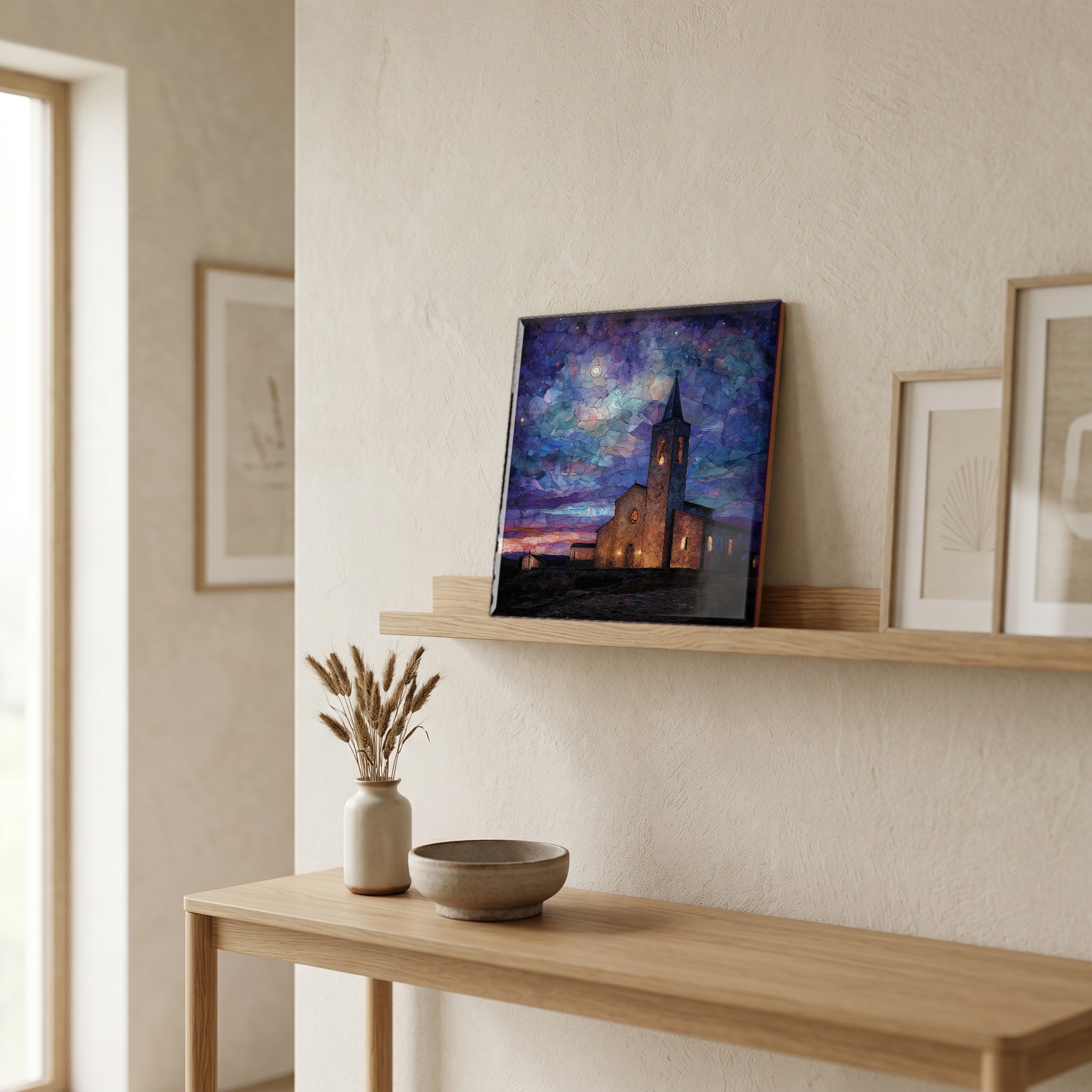
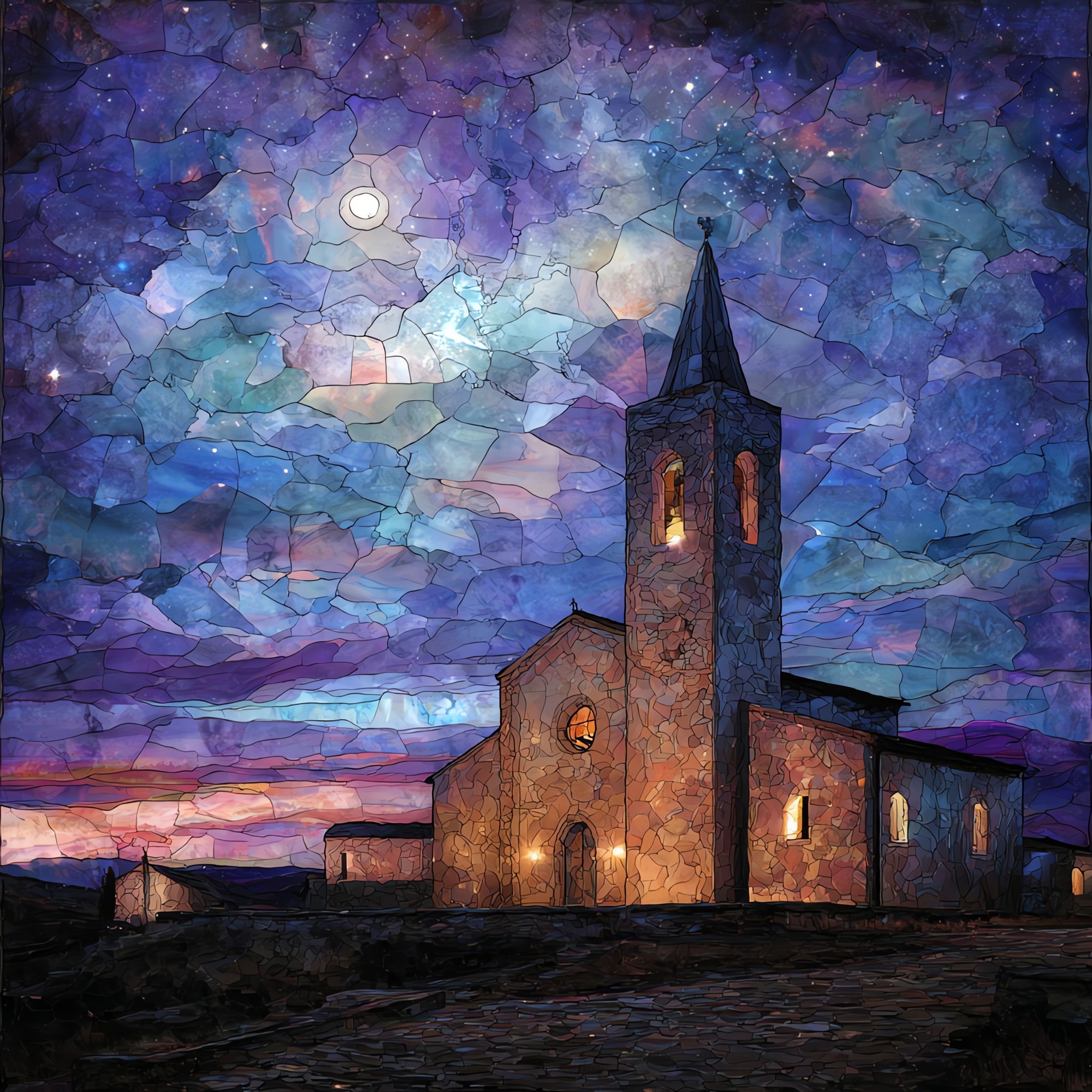
San Giovanni Rotondo
shown on ceramic, 12-inch tileItaly
in the Gargano of northern Puglia

San Giovanni Rotondo

a still hill town the world keeps coming to.

Where it lives

Not only on a wall.

A small tile on the nightstand catching the morning. A larger one above the fire. Yours, wherever you spend the slow hours.
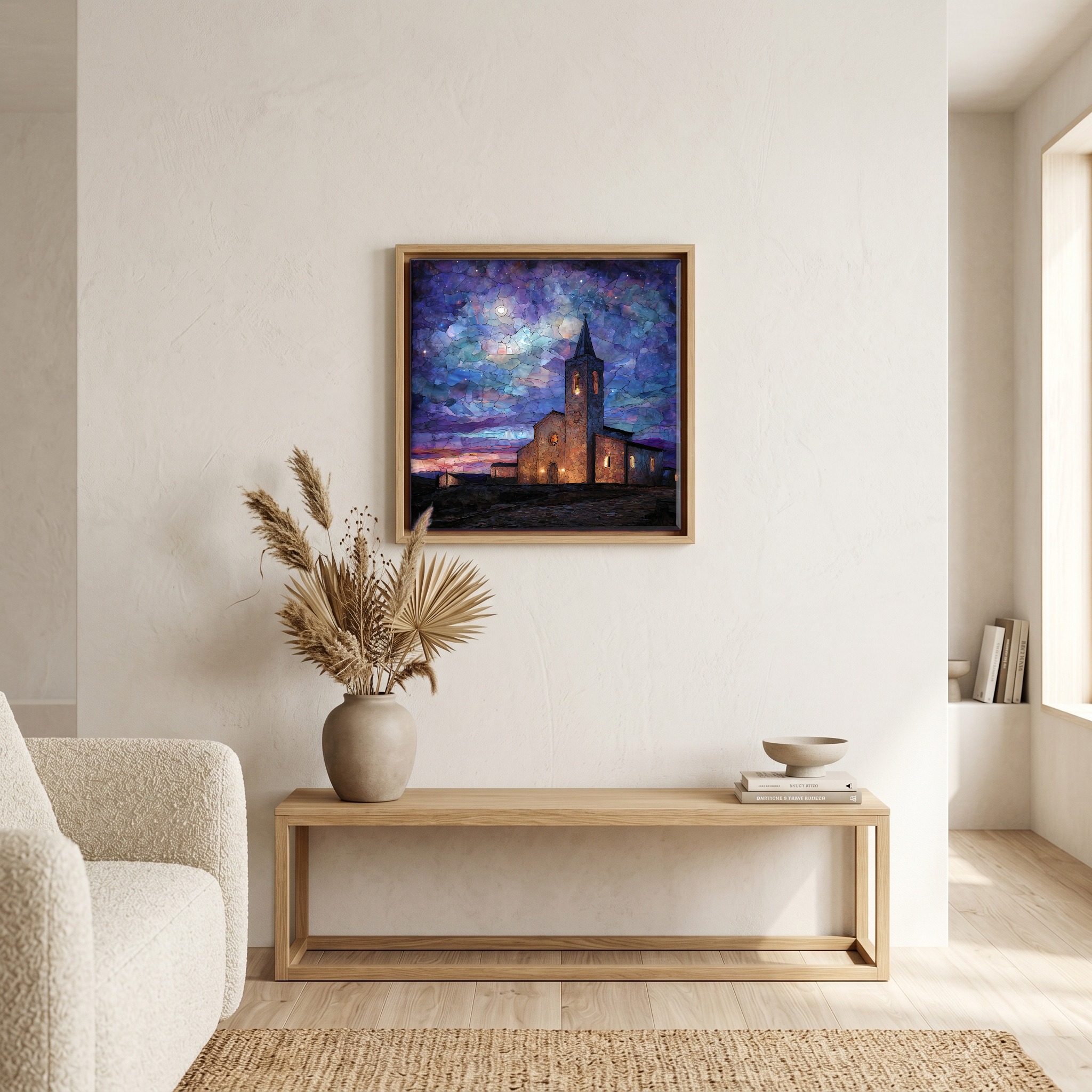
Above the bench, in a warm oak surround.
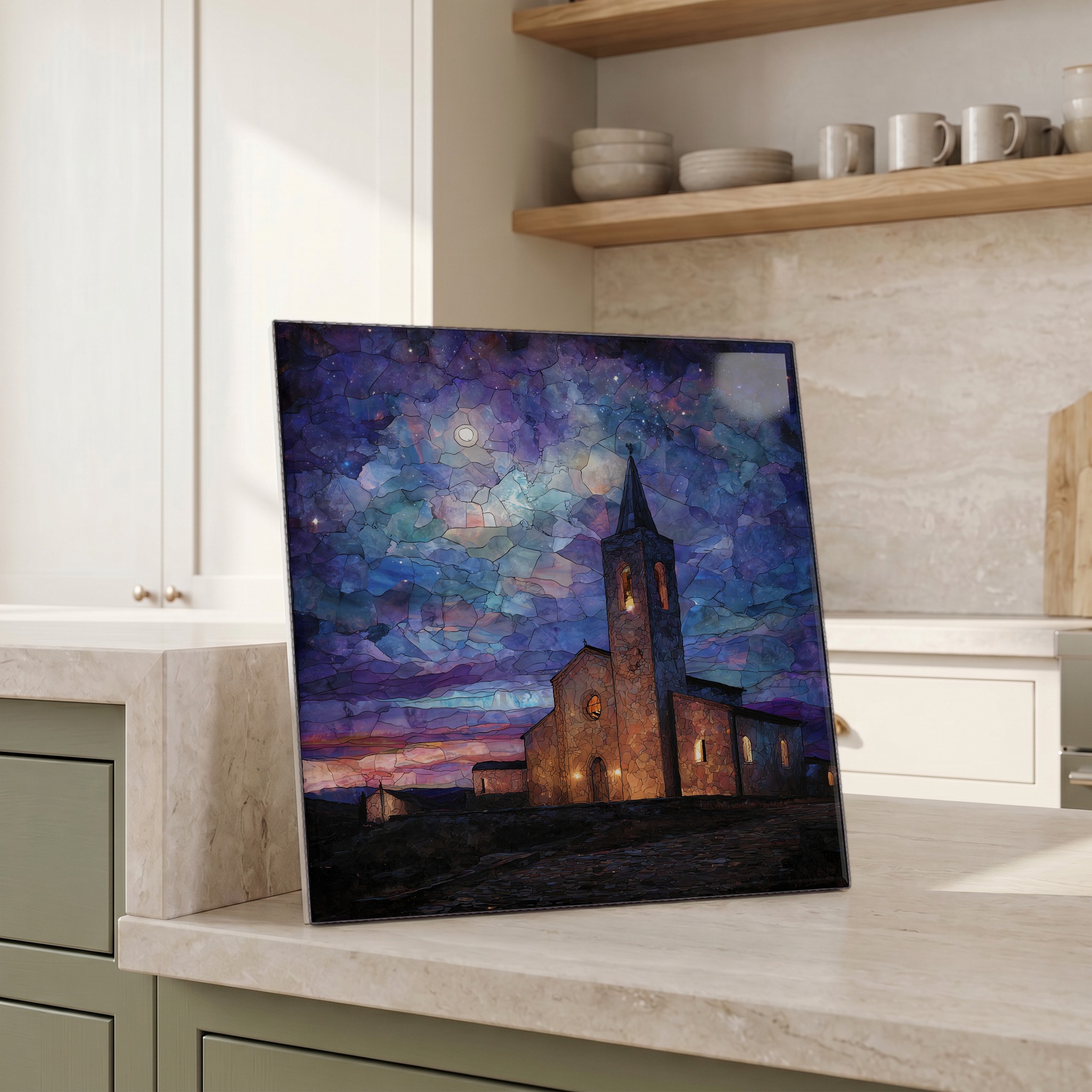
Beside the kettle, propped on the counter.
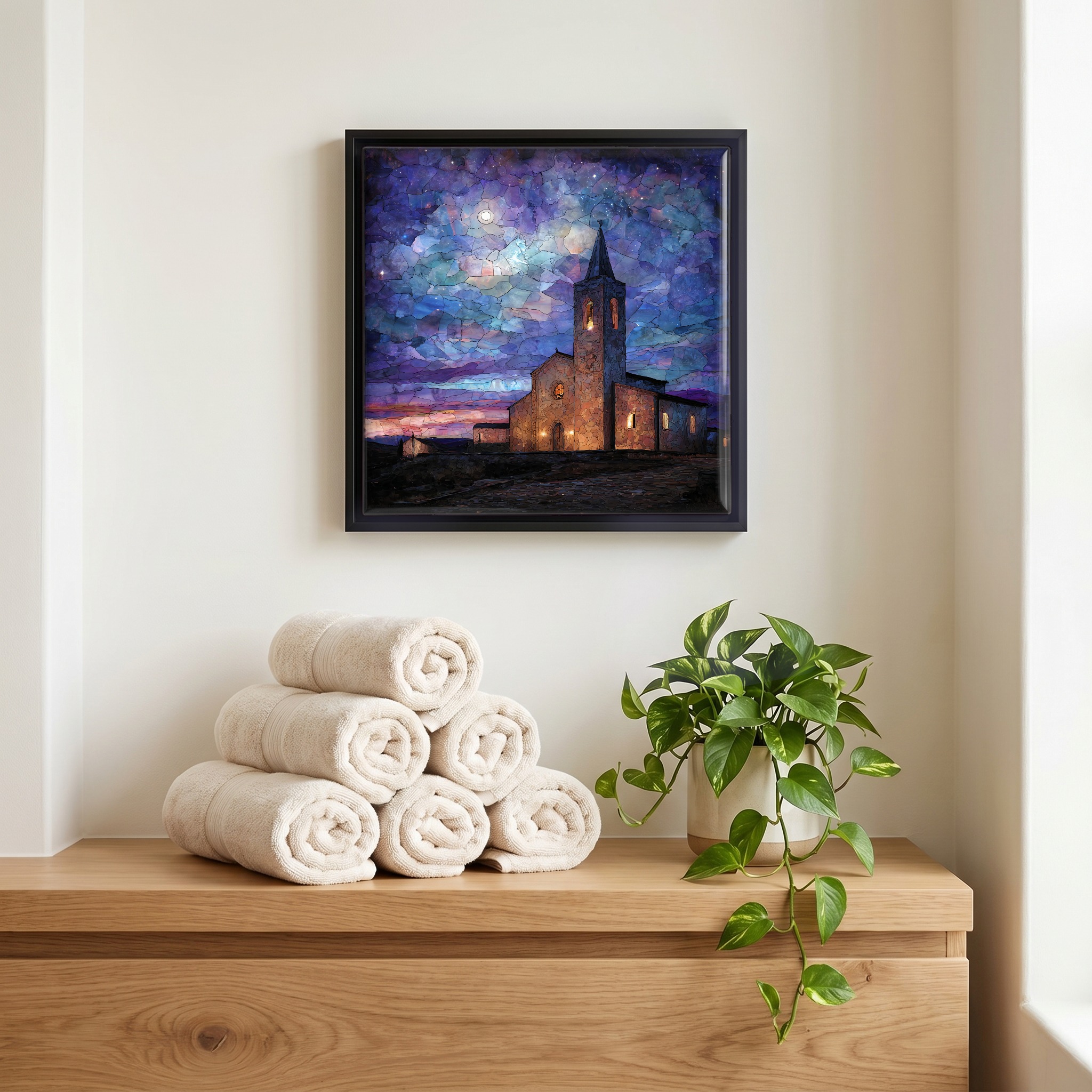
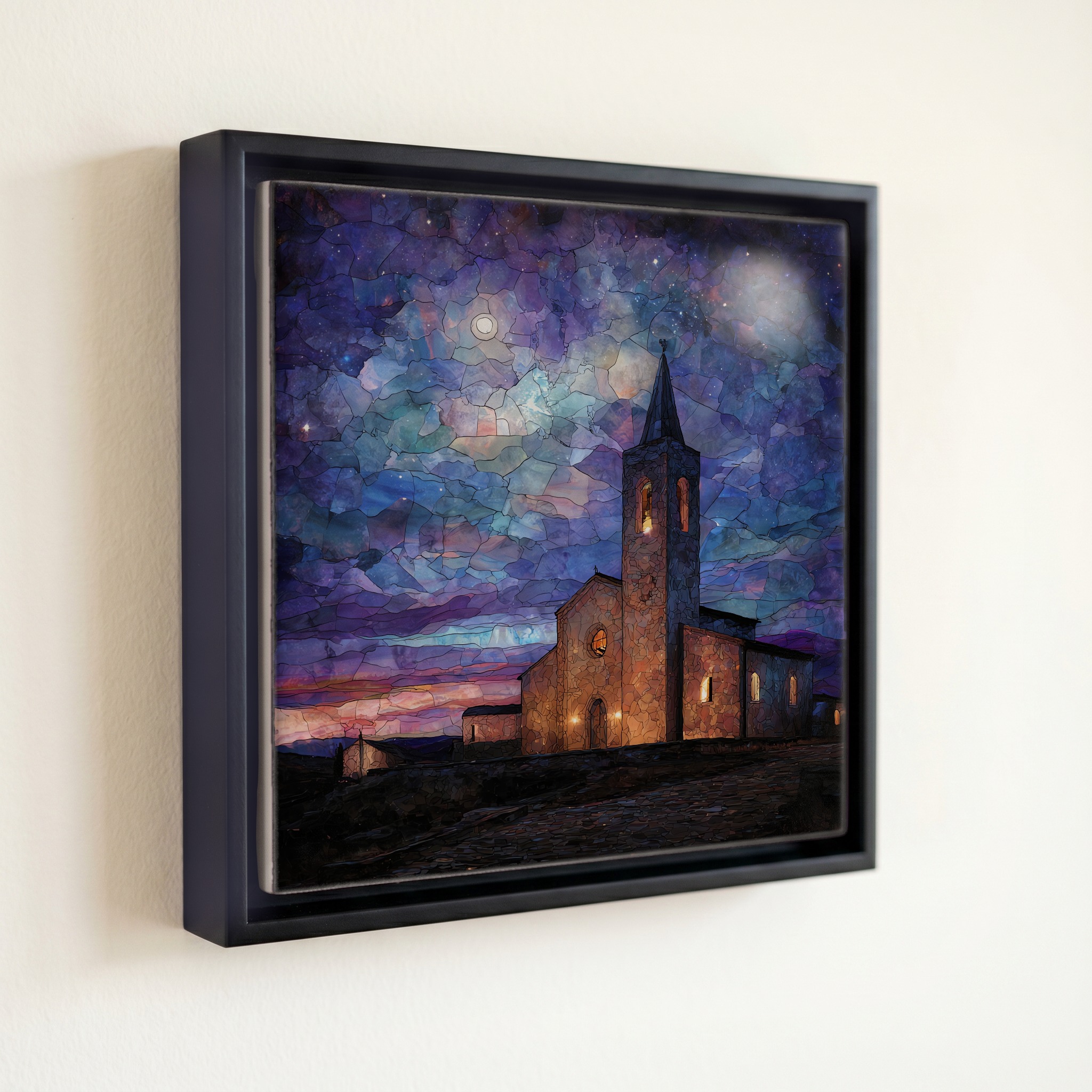
Above the linens, in a slim black surround.
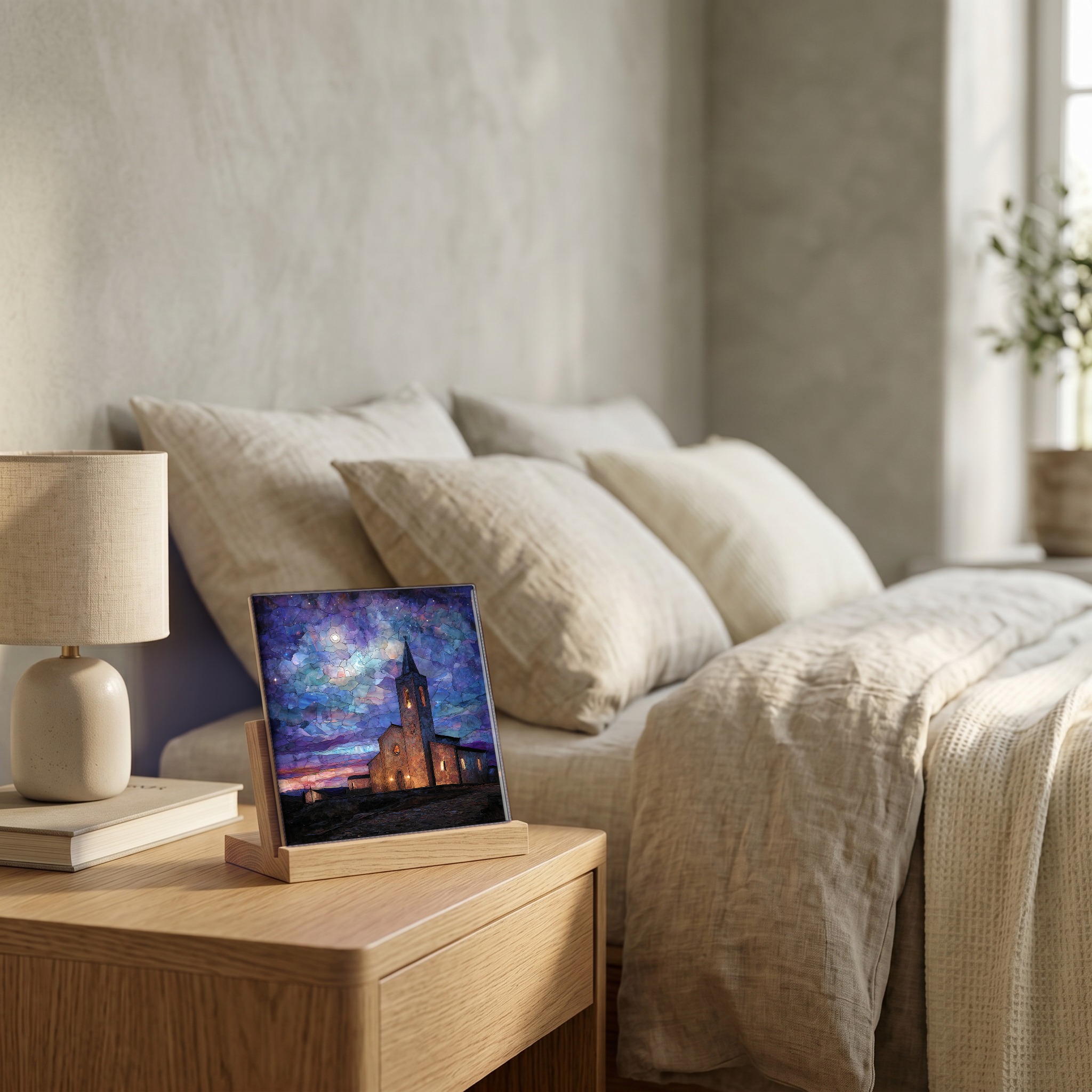
On the nightstand, on a light oak stand.
On a picture ledge, where the light comes in.
a note from the studio

A small town on the Gargano spur, four hours east of Rome and a long way from anywhere coastal Italians think of when they think of Puglia. People come for Padre Pio, the Capuchin friar who lived in the convent here from 1916 until his death in 1968. They come for the church Renzo Piano built around his tomb, a long stone arc that opens onto a piazza for thirty thousand. Most days a line forms before dawn and stays until the doors close. The hill above the town is olive and limestone, the southern slope of the Gargano massif. Few places hold a crowd this quietly.
from the studio
shown in a slim black floating frame · 6 × 6 in
— bring it home

San Giovanni Rotondo, on ceramic.

Each tile is finished by hand in our Knoxville studio. Artwork is slowly infused into the ceramic surface under high heat and pressure, and rests beneath a thin glossy finish. The colour lives in the surface, not on top of it.

What kind of piece?
One tile — square or rectangle.
How big?
the popular one — counter, shelf, nightstand
6 × 6 in · 15 cm · 1.6 lb
Surface finish
A clear glossy finish — the artwork reads as if under resin. Ideal for show-pieces and framed wall art.
How it sits
A hidden cleat — sits ¼″ proud of the wall.
$58
Hand-finished and shipped from our studio at the foot of the Smokies. On your wall in about ten days.
size
6 × 6 in
15 cm
weighs
1.6 lb
solid in the hand
surface
ceramic, hand-finished
art rests beneath a thin glossy finish
from
Knoxville, TN
our family studio, at the foot of the Smokies
— start a Coaster Set

Pick any four 4-inch tiles — National Parks you've been to, a Smokies set, the four seasons of one place. $ for a set of , cork-backed, ready to live on the table.
comes gift-ready
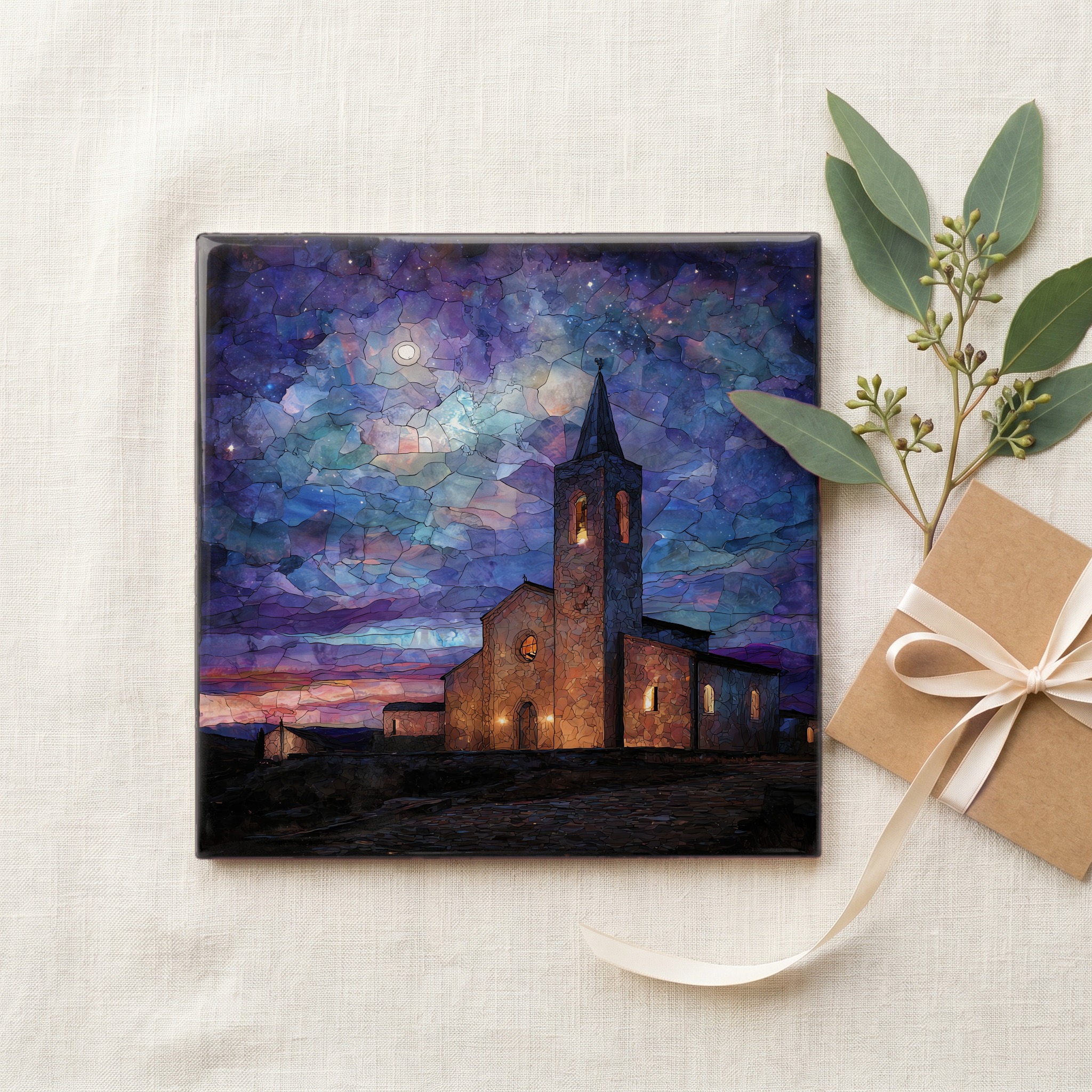
comes gift-ready

Each tile ships in a kraft box, tied with cream ribbon, with a handwritten note from the studio if you'd like to add one.
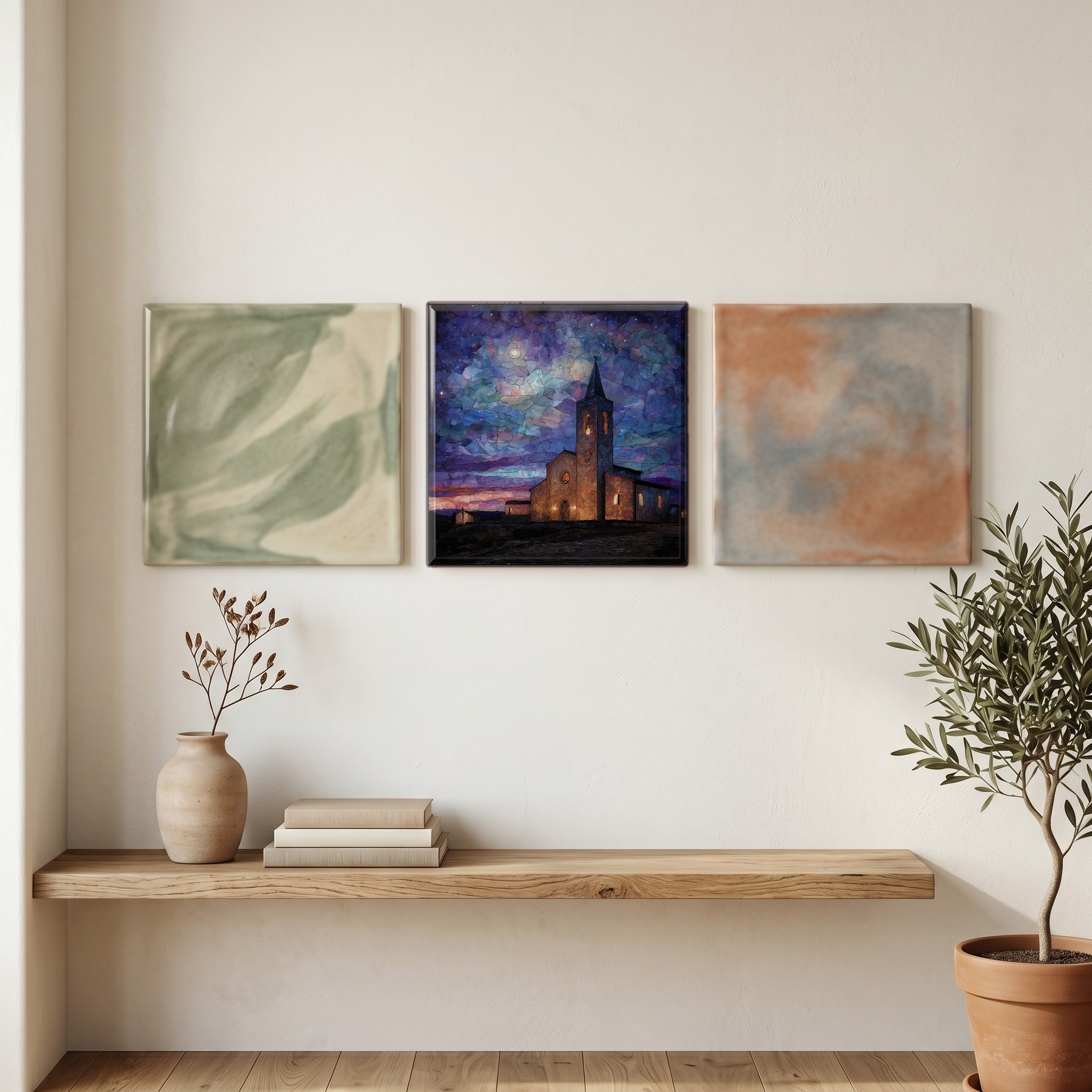
or build a grouping
or build a grouping

Three or five different vistas, hung together — a chapter of places you've been, or want to go.

about San Giovanni Rotondo

The place, in three passes.

A little of what's known, in case you fall down the rabbit hole — or want to go see it yourself.
the place

San Giovanni Rotondo is a town of about 26,000 in the Province of Foggia, on the southern slope of the Gargano massif in Puglia (Apulia), the spur of the Italian peninsula. It sits at around 557 metres on a limestone plateau above the coastal plain that runs down to Manfredonia and the Adriatic. The Gargano National Park surrounds it on three sides. The town's modern identity is shaped by the Capuchin friar Padre Pio (Francesco Forgione, 1887-1968), who lived at the convent of Santa Maria delle Grazie from 1916 until his death and was canonised by John Paul II in 2002. Today the Sanctuary of Saint Pio is among the most-visited Catholic pilgrimage sites in the world.

the stone

The Gargano massif is limestone, a hard pale stone that the town has used for centuries and that Renzo Piano chose for the new pilgrimage church beside the old convent. Completed in 2004, the church of San Pio da Pietrelcina is built around twenty-two radial arches of Apricena stone quarried thirty kilometres west of the town. The largest spans fifty metres without a column. The interior holds around 6,500 seated; the sloping piazza outside holds tens of thousands more for the major feast days. Below the main church, in a lower church opened in 2010 to receive Padre Pio's body from the old sanctuary, lies his tomb. The old convent church of Santa Maria delle Grazie still stands beside it, smaller, sixteenth-century, and largely unchanged.

the visit

The sanctuary complex sits at the western edge of town. The old convent church of Santa Maria delle Grazie, the Capuchin friary, and the Renzo Piano pilgrimage church share one piazza; admission to all three is free. The pilgrimage church holds Mass in Italian several times a day; the lower church, where Padre Pio's tomb lies, is open from early morning to evening with a midday closure. Most pilgrims also visit the preserved cell where Padre Pio lived and prayed, inside the friary. The largest crowds gather on his feast day, 23 September, and on weekends in summer. The town has a regional bus link from Foggia, the provincial capital about 40 kilometres south-west, and from San Severo on the Bologna-Lecce rail line.

where
Italy · Foggia, Puglia
elevation
557 m · 1,827 ft
position
41.7064° N · 15.7299° E
the neighborhood

What's nearby.

A handful of named places within an hour's walk or short drive. Some we've already painted; some we will.
15 km E
Monte Sant'Angelo
UNESCO pilgrimage shrine
8 km W
San Marco in Lamis
Franciscan friary town
25 km SE
Manfredonia
Adriatic port city
40 km SW
Foggia
provincial capital
50 km E
Vieste
Gargano coast town
30 km N
Lago di Varano
coastal lagoon
N
San Giovanni Rotondo
Monte Sant'Angelo
San Marco in Lamis
Manfredonia
Foggia
Vieste
Lago di Varano
common questions

What people ask.

A few questions we get about San Giovanni Rotondo — and about bringing the piece home.
about the place

It's the long-time home of Saint Pio of Pietrelcina (Padre Pio), the Capuchin friar who lived at the convent of Santa Maria delle Grazie from 1916 until his death in 1968. Pilgrims come to pray at his tomb in the modern pilgrimage church beside the old convent.

In the Province of Foggia in Puglia (Apulia), southern Italy. The town sits at about 557 metres on the southern slope of the Gargano massif, the limestone promontory that forms the spur of the Italian peninsula on the Adriatic.

The Italian architect Renzo Piano designed the church of San Pio da Pietrelcina, completed in 2004. It is built around twenty-two radial arches of Apricena stone, the largest spanning fifty metres without a column. The interior seats about 6,500.

Pope John Paul II canonised Padre Pio on 16 June 2002, in St Peter's Square in Rome. He had been beatified in 1999. Padre Pio's feast day is 23 September, the date of his death in 1968.

Yes. The original sixteenth-century church of Santa Maria delle Grazie and the Capuchin friary remain open beside the newer pilgrimage church. They share one piazza and are part of the same Sanctuary of Saint Pio complex.

Spring and early autumn are mildest. The largest crowds come on Padre Pio's feast day, 23 September, and on weekends in summer. Mid-week mornings outside the feast period are the quietest.

The 'House for the Relief of Suffering' is the hospital Padre Pio founded in San Giovanni Rotondo in 1956. It is one of the largest hospitals in southern Italy and operates as a research institute of the Vatican.

about the piece in your home

It often is. Many of our customers buy this piece for a family member or friend whose pilgrimage to Padre Pio's tomb is a settled part of their faith life. A Coaster with a handwritten note travels well as a smaller gift; a Medium or Large reads as a meaningful keepsake at home.

The stained-glass palette of deep oxidised greens and ambers around a pale stone arc sits well in spaces that hold weight: warm minimalist, Mediterranean-modern, and the slightly more saturated Italianate-traditional. The piece carries on dark wood or pale plaster equally; it overpowers high-gloss white.

Yes. Mediterranean-modern keeps gaining ground in the design press: warm clay tones, pale plaster, hand-finished surfaces, a single hero piece of colour. A ceramic tile of a Puglian hill town in our palette is the kind of object that anchors the room rather than decorating it.

For a standard sofa, a single Large hangs well above the centre and reads from across the room. For a longer sectional or a wide console, a four-tile Mural opens the wall without dominating it; a nine-tile Mural is the right scale for a tall foyer or a stairwell.

Yes, in the Dura Satin or Matte finish. The colour is slowly infused into the ceramic surface under high heat and pressure beneath a thin protective layer, so steam, splatter, and regular cleaning don't lift it. The Glossy finish is reserved for dry walls and framed display.

Yes. Every WenderVista piece is original work by Reid Wender, hand-finished in our Knoxville studio. We do not license third-party art and we do not reprint stock imagery. Each tile carries the studio mark on the back.

Microfibre cloth and water. For tiles installed in a kitchen or shower, a mild non-abrasive household cleaner is also fine. Avoid acid-based descalers and any scouring pad. The colour lives in the surface, so normal cleaning does not affect it.

if this one stayed with you

A few you might also love.

Hand-picked by the eye that found Sorapis. Same air, same kind of quiet.
— a collection

The Italian Dolomites,
painted slow.

The valleys between Cortina and Val Gardena, the tarns you walk an hour to see, the towers that turn the colour of a banked fire just before dark. Wander the collection by valley, by season, or follow the path Reid walked.

Tre Cime
Braies
Misurina
Sorapis
Cinque Torri
Sassolungo
Marmolada