Wender·Vista
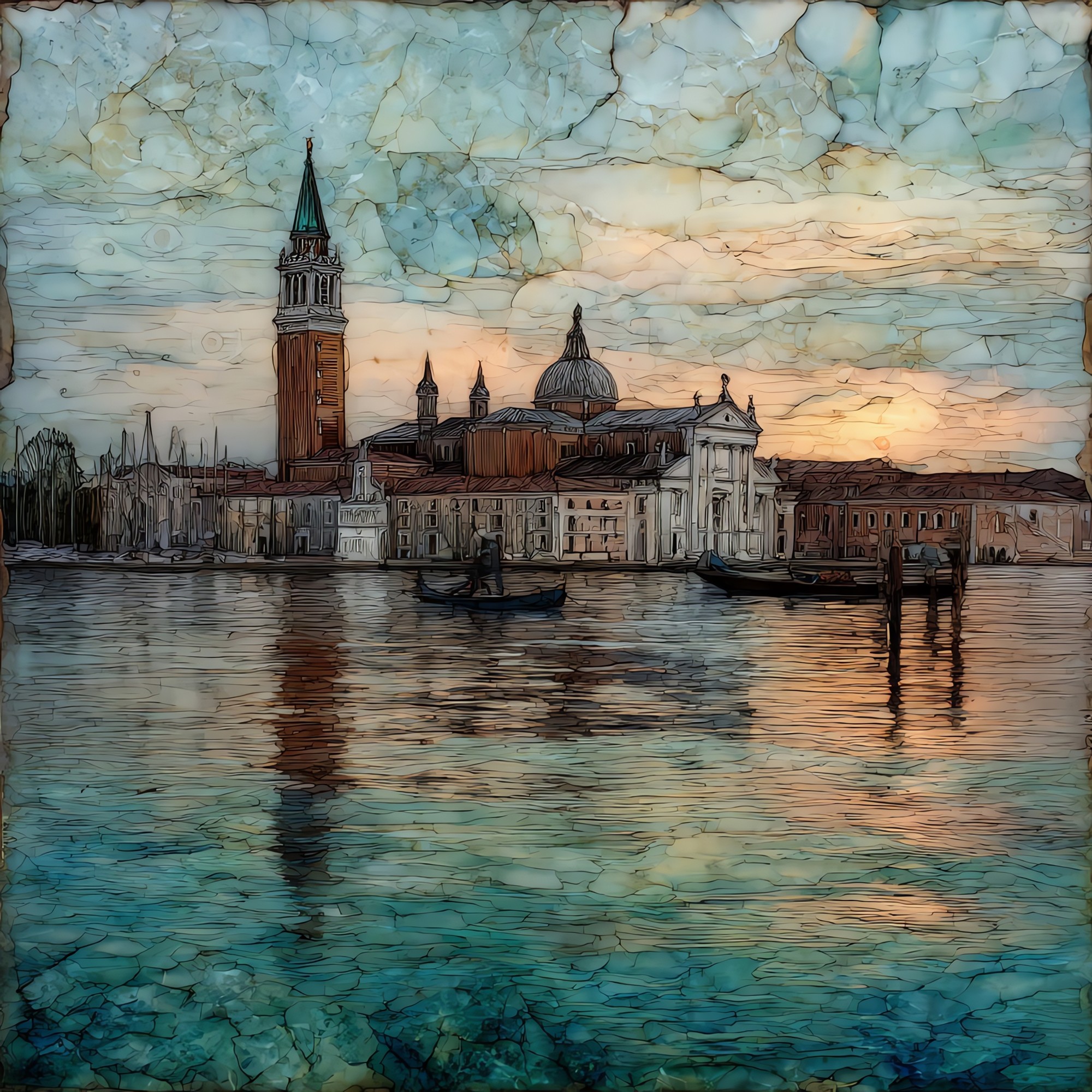
San Giorgio Maggiore
shown on ceramic, 12-inch tileItaly
on its own island across the basin from Piazza San Marco

San Giorgio Maggiore

the morning catches the white before St. Mark's.

Where it lives

Not only on a wall.

A small tile on the nightstand catching the morning. A larger one above the fire. Yours, wherever you spend the slow hours.
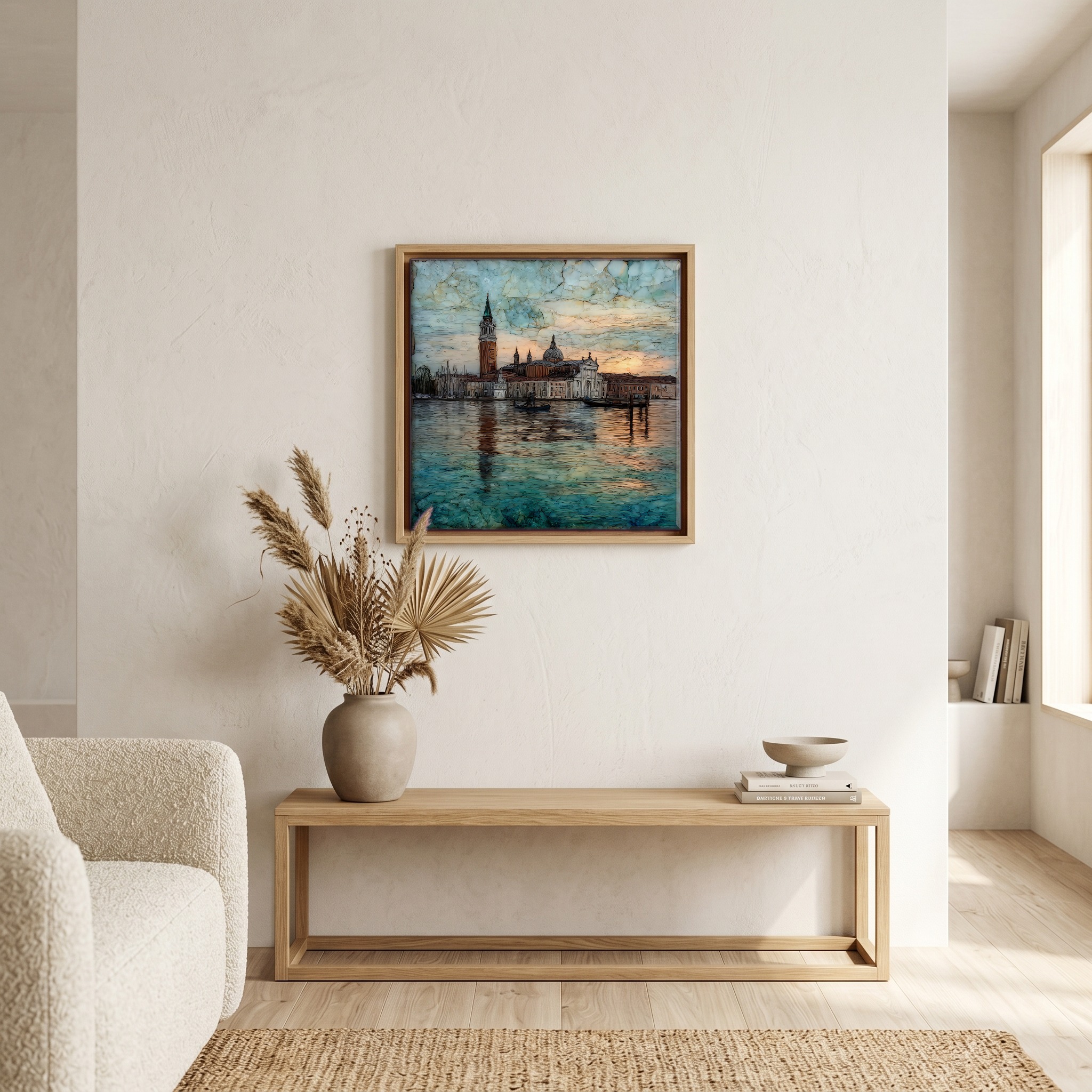
Above the bench, in a warm oak surround.
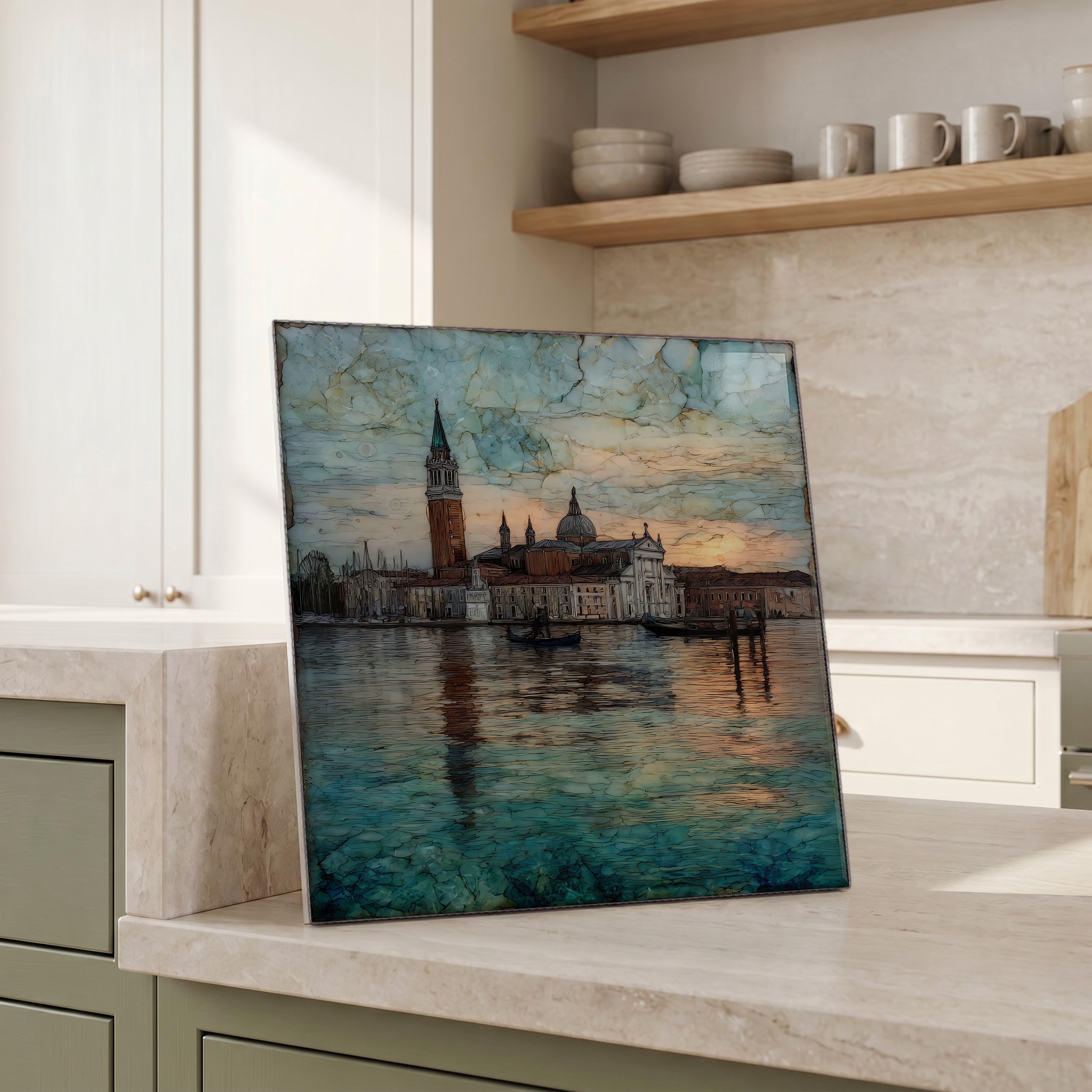
Beside the kettle, propped on the counter.
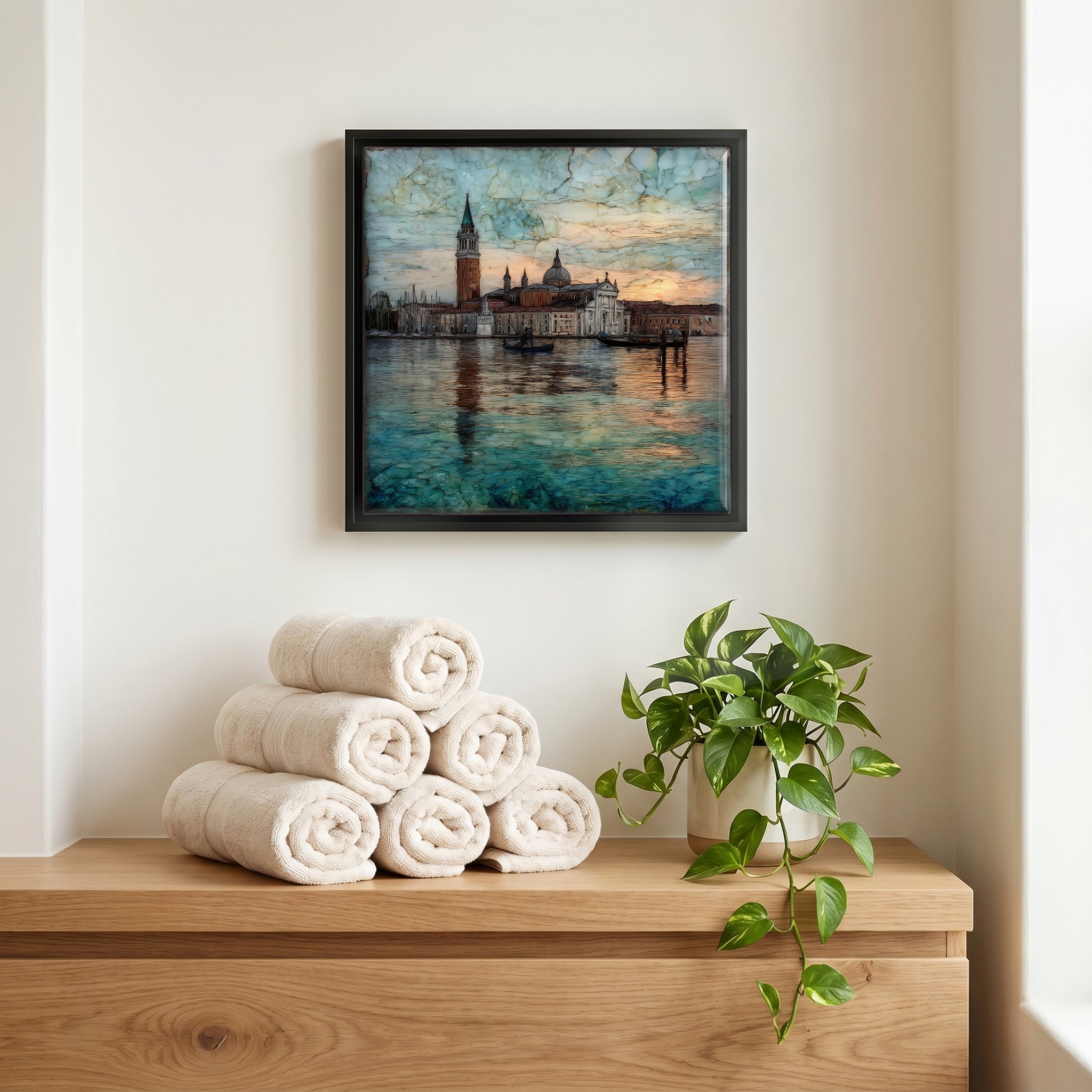
Above the linens, in a slim black surround.
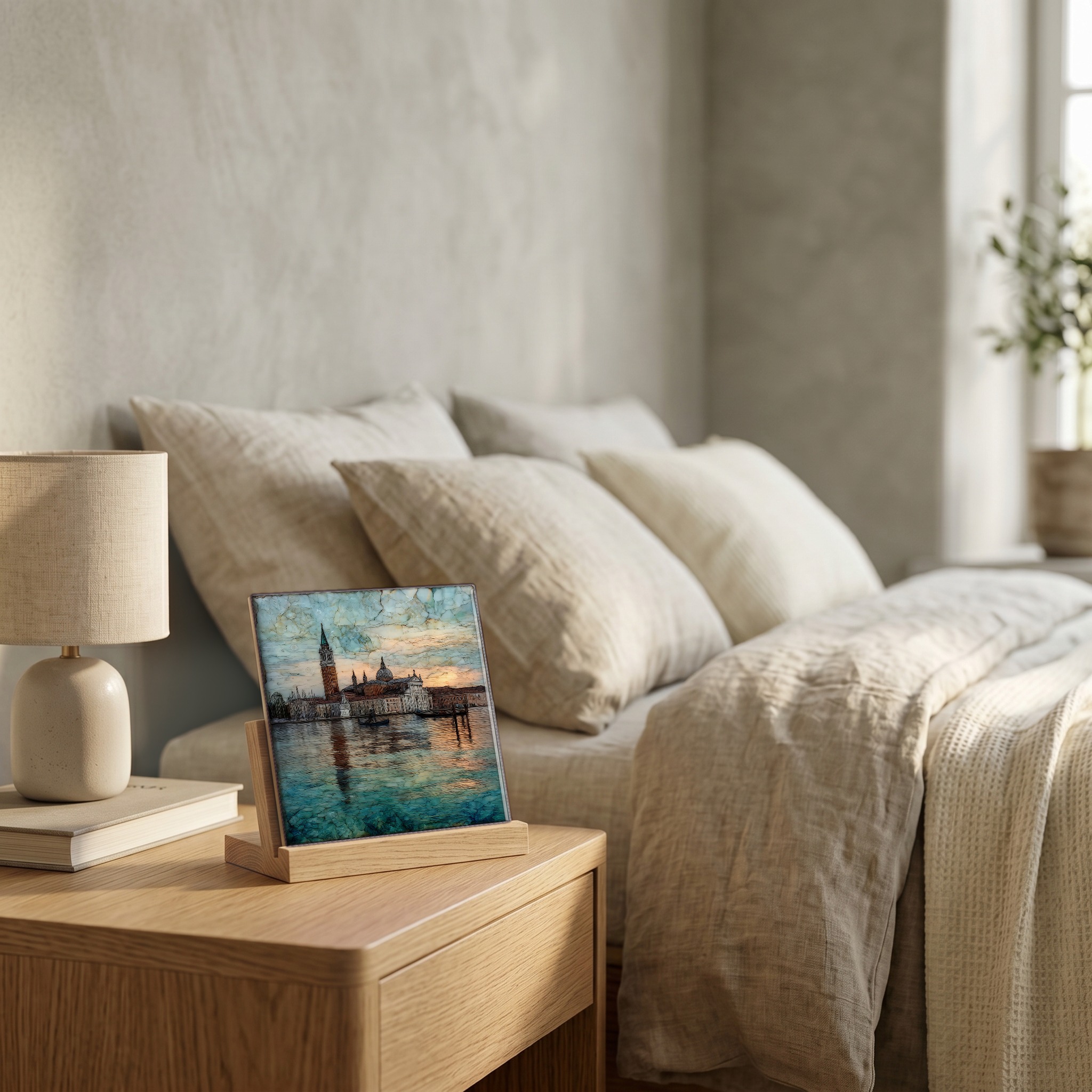
On the nightstand, on a light oak stand.
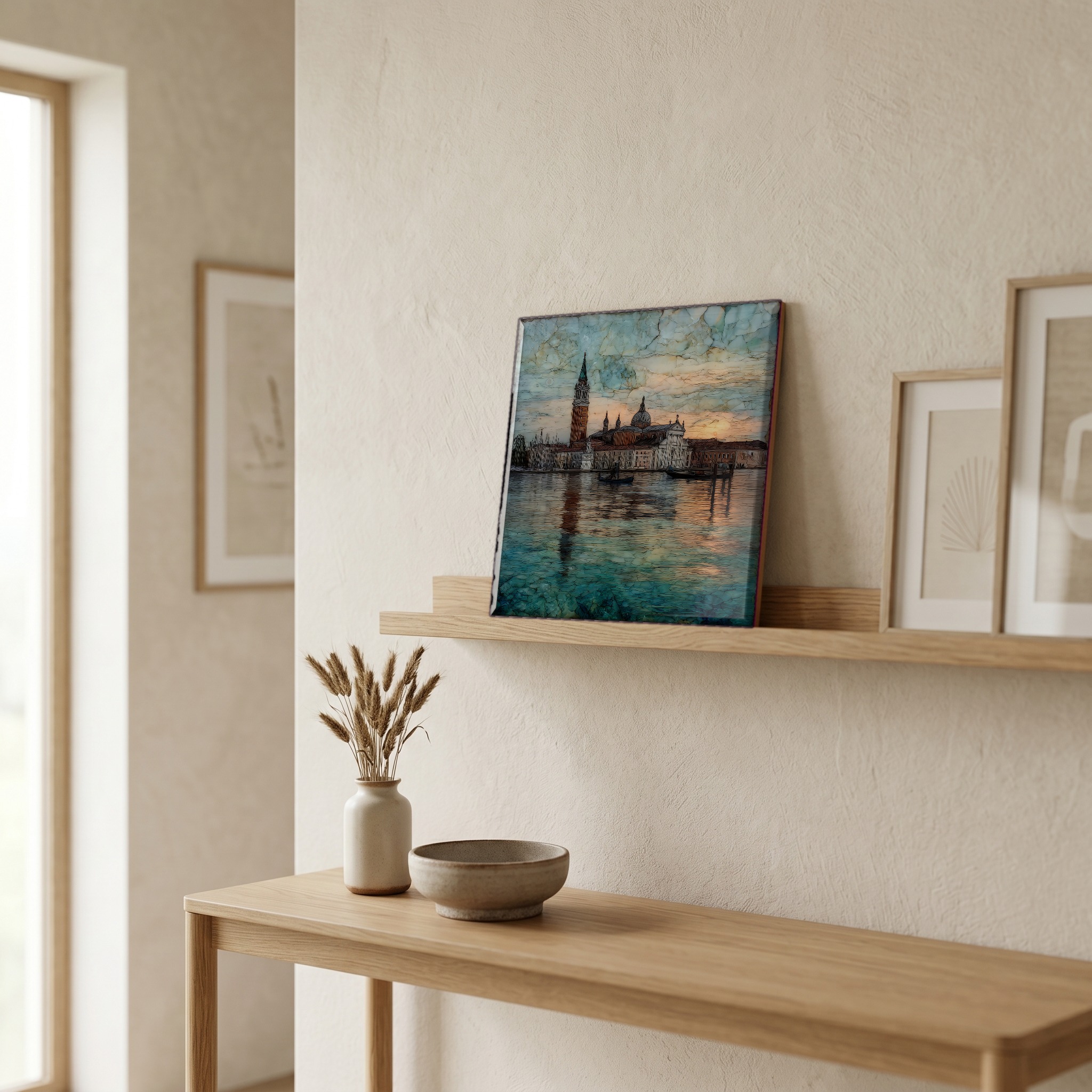
On a picture ledge, where the light comes in.
a note from the studio

This is the church Palladio designed across the basin from Piazza San Marco. The view from the Riva degli Schiavoni is the one Canaletto painted, then Turner, then Monet, who stayed through the autumn of 1908 and painted it in every light. The façade reads white from the water and golden in the late sun. The campanile is the better climb than the one on the other side of the basin; the line is shorter, the view straighter back across to St. Mark's, and the gondoliers below look small enough to forget.
from the studio
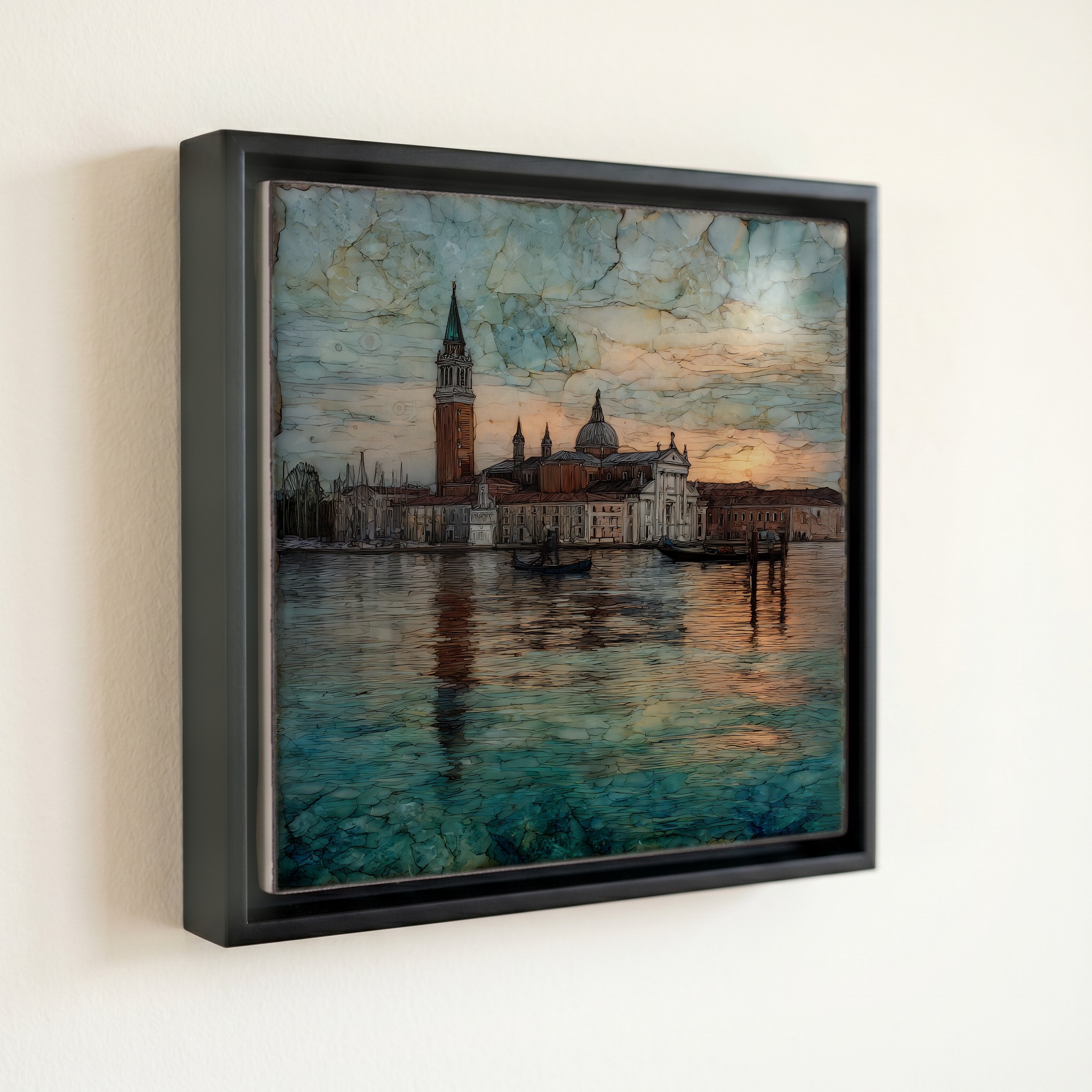
shown in a slim black floating frame · 6 × 6 in
— bring it home

San Giorgio Maggiore, on ceramic.

Each tile is finished by hand in our Knoxville studio. Artwork is slowly infused into the ceramic surface under high heat and pressure, and rests beneath a thin glossy finish. The colour lives in the surface, not on top of it.

What kind of piece?
One tile — square or rectangle.
How big?
the popular one — counter, shelf, nightstand
6 × 6 in · 15 cm · 1.6 lb
Surface finish
A clear glossy finish — the artwork reads as if under resin. Ideal for show-pieces and framed wall art.
How it sits
A hidden cleat — sits ¼″ proud of the wall.
$58
Hand-finished and shipped from our studio at the foot of the Smokies. On your wall in about ten days.
size
6 × 6 in
15 cm
weighs
1.6 lb
solid in the hand
surface
ceramic, hand-finished
art rests beneath a thin glossy finish
from
Knoxville, TN
our family studio, at the foot of the Smokies
— start a Coaster Set

Pick any four 4-inch tiles — National Parks you've been to, a Smokies set, the four seasons of one place. $ for a set of , cork-backed, ready to live on the table.
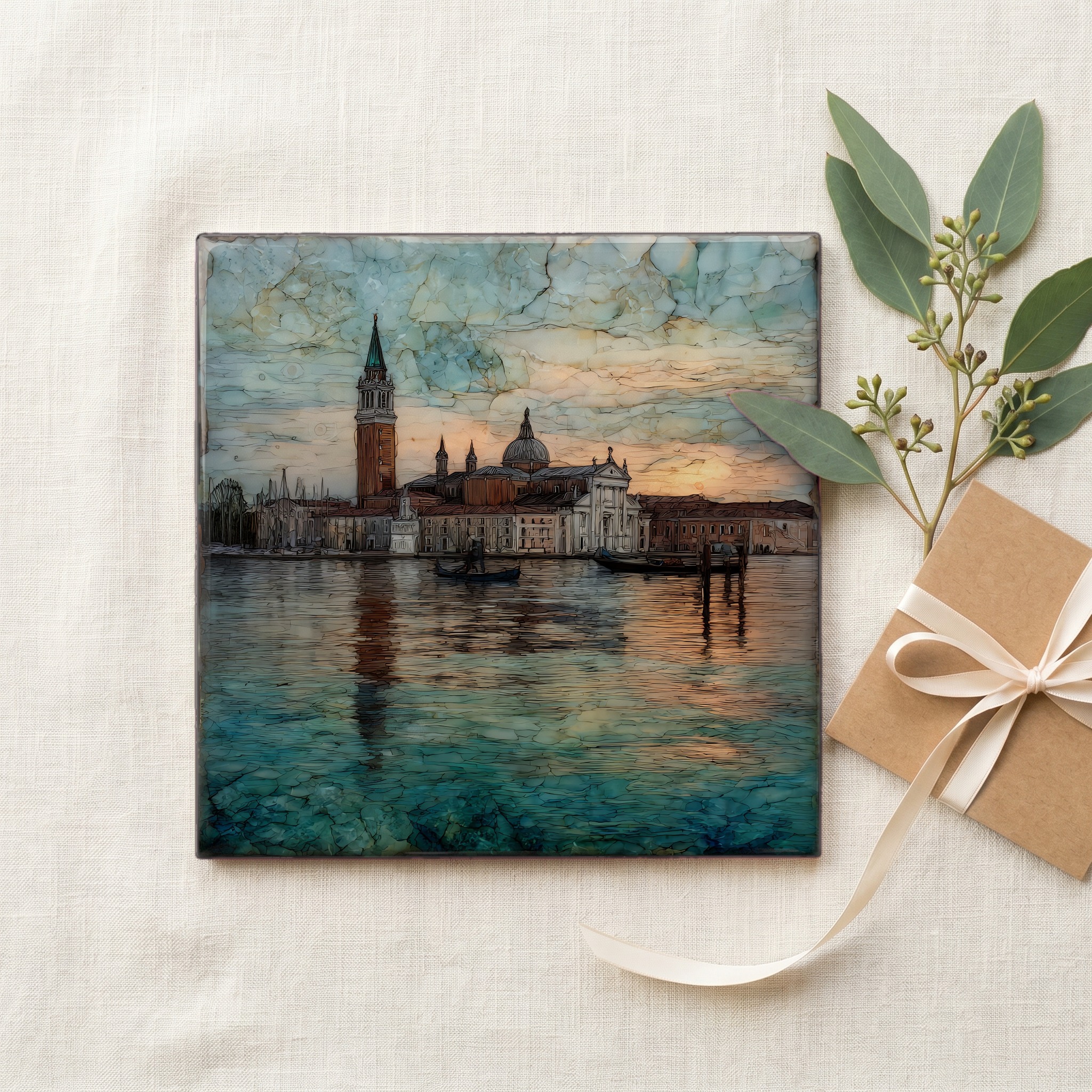
comes gift-ready
comes gift-ready

Each tile ships in a kraft box, tied with cream ribbon, with a handwritten note from the studio if you'd like to add one.
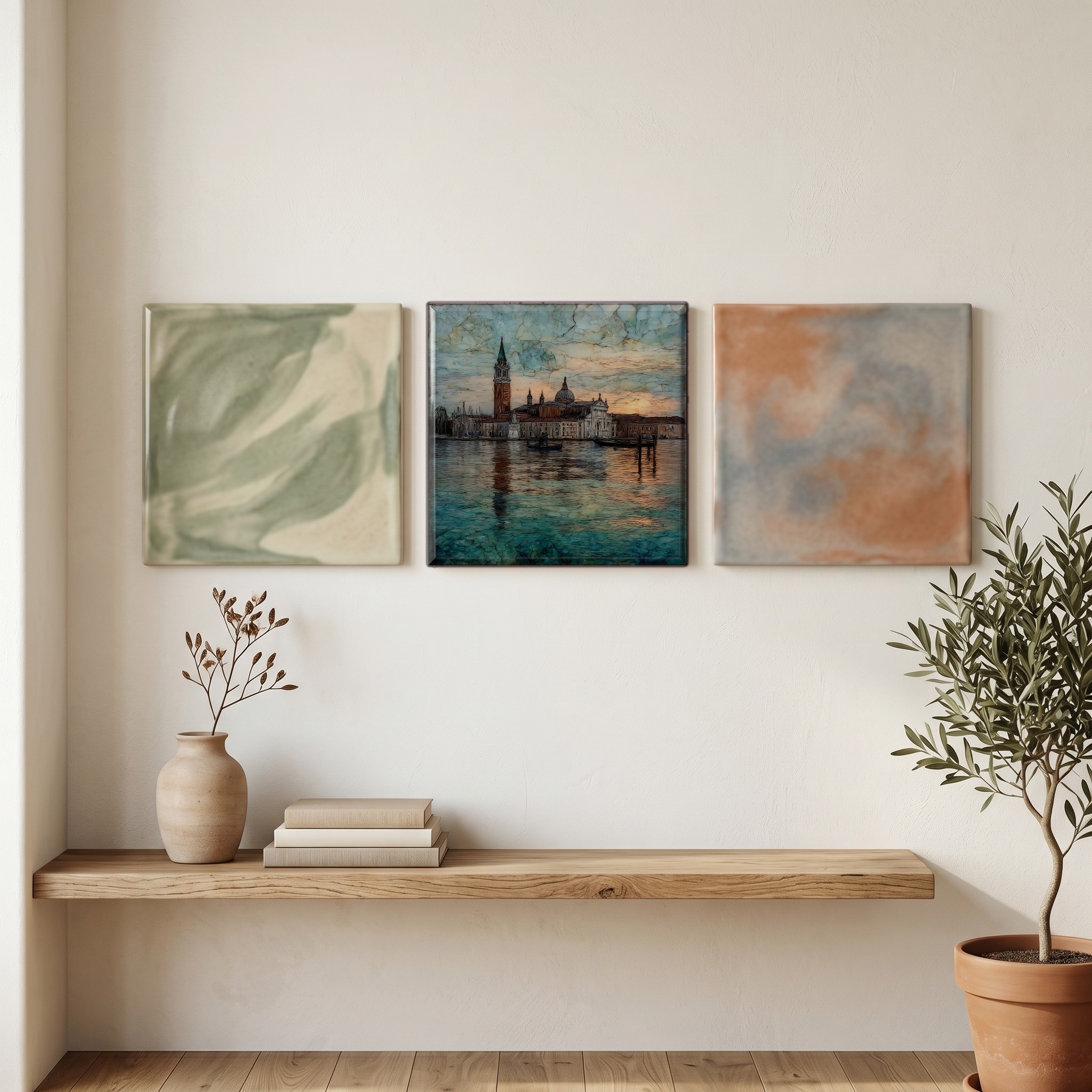
or build a grouping
or build a grouping

Three or five different vistas, hung together — a chapter of places you've been, or want to go.

about San Giorgio Maggiore

The place, in three passes.

A little of what's known, in case you fall down the rabbit hole — or want to go see it yourself.
the place

San Giorgio Maggiore is a small island in the Venetian Lagoon, across the Bacino di San Marco from the Doge's Palace and Piazza San Marco. The island is part of the city of Venice, in the Veneto region of Italy. Vaporetto line 2 runs from San Zaccaria to the San Giorgio stop in about three minutes. The Basilica di San Giorgio Maggiore was designed by Andrea Palladio beginning in 1566, with the façade completed by Vincenzo Scamozzi by 1610. The bell tower, rebuilt in 1791 after the original collapsed in 1774, stands about 75 metres tall and is climbed by elevator. The Fondazione Giorgio Cini, established in 1951, occupies the former Benedictine monastery and runs a research library, two cloisters, and an open-air theatre.

the stone

The Basilica di San Giorgio Maggiore is one of Andrea Palladio's last great works and a textbook example of Italian Renaissance architecture. Palladio solved an old problem here: how to apply a classical temple front, designed for a single rectangle, to the cross-section of a Christian church with a tall nave and lower side aisles. His solution was two interlocking pediments, a wide low one for the aisles and a tall narrow one for the nave, fronted by four Composite columns on high plinths. The façade is faced in Istrian stone, a pale white limestone quarried from the Istrian peninsula across the Adriatic, the same stone that lines the steps of half of Venice.

— informed by Wikipedia, Britannica
the light

The face of the basilica reads differently at every hour, which is why Claude Monet stayed in Venice during the autumn of 1908 and painted a series of canvases on this single view. The white Istrian limestone catches direct morning sun from across the basin and shifts cool blue-grey in the haze of late afternoon. The most-photographed angle is from the Riva degli Schiavoni, the long quay in front of the Doge's Palace, about 400 metres of open water away. From the top of the campanile the light moves the other direction, sweeping across the red roofs of Venice toward the Adriatic.

— informed by Wikipedia, Wikipedia
where
Italy · Venice, Veneto
position
45.4297° N · 12.3434° E
the neighborhood

What's nearby.

A handful of named places within an hour's walk or short drive. Some we've already painted; some we will.
0.4 km NW
Piazza San Marco
city square· on a tile
0.4 km NW
Doge's Palace
palace· on a tile
0.5 km NW
Bridge of Sighs
bridge· on a tile
0.4 km W
Giudecca
island
1 km NW
Grand Canal
waterway· on a tile
1.5 km NW
Rialto Bridge
bridge· on a tile
1.7 km NW
Frari Basilica
Gothic church· on a tile
3 km NE
Murano
island· on a tile
N
San Giorgio Maggiore
Piazza San Marco
Doge's Palace
Bridge of Sighs
Giudecca
Grand Canal
Rialto Bridge
Frari Basilica
common questions

What people ask.

A few questions we get about San Giorgio Maggiore — and about bringing the piece home.
about the place

San Giorgio Maggiore is a small island in the Venetian Lagoon, across the Bacino di San Marco from Piazza San Marco. It sits in the city of Venice, Italy, and is reached in about three minutes by Vaporetto line 2 from San Zaccaria.

Andrea Palladio designed the Basilica di San Giorgio Maggiore beginning in 1566. He died in 1580 with the façade unfinished; Vincenzo Scamozzi completed it by 1610. It is considered one of the high-water marks of Italian Renaissance architecture and is studied in architecture programmes around the world.

Yes. The campanile is about 75 metres tall and is climbed by elevator, not stairs. The view back across the basin to St. Mark's Square is the cleanest panorama of central Venice. The bell tower is open most days for a small fee.

Claude Monet painted a series of canvases of the basilica during his stay in Venice in the autumn of 1908. He worked from across the basin in different light. Earlier, Canaletto and J. M. W. Turner both painted the same view, which made the angle one of the most reproduced in Western art.

Yes. Two late paintings by Tintoretto hang in the chancel: The Last Supper and The Fall of Manna, both completed in 1594, the year of his death. They were painted specifically for this church and have never left it.

The Fondazione Giorgio Cini is a cultural foundation established in 1951 by Vittorio Cini in memory of his son. It occupies the former Benedictine monastery on the island and runs a research library, two Renaissance cloisters, and an open-air theatre. Parts of it are open for guided visits.

Early morning catches the sun directly on the façade and avoids the cruise-ship crowds at St. Mark's across the water. Late afternoon turns the marble warm. Vaporetto line 2 runs every few minutes, and the basilica is open most of the day with a short midday closure.

about the piece in your home

It has been a meaningful gift for many of our customers with ties to the city. Of all the views in Venice, San Giorgio Maggiore is the one most associated with the lagoon itself rather than the canals. A Coaster or Small with a handwritten note from the studio carries well.

The piece reads well in Italian-modern interiors, classical-traditional rooms with antique woods, and coastal-modern palettes that lean toward stone and sea. The white-and-blue colour register sits comfortably against off-white walls, lime-washed plaster, or a soft blue panelled wall.

Yes. Coastal-modern leans toward natural stone, lime-washed walls, and ocean light; the white Istrian-limestone façade against lagoon water lands inside that palette. A single Large above a console or sideboard reads as architecture rather than postcard, which is what coastal-modern wants.

Above a console table, a single Large holds the space comfortably. Above a sofa, a 4-tile Mural is the usual recommendation; for a long sectional or a tall wall, a 9-tile Mural carries the room. A Triptych is a softer alternative when the wall is narrower.

Yes. For bathrooms, showers, and kitchen backsplashes, choose the Dura Satin or Matte finish; both are scratch-resistant and handle steam well. The Glossy finish is meant for show-pieces and framed wall art and is not recommended for vertical wet installations.

A soft microfibre cloth and water are enough. The colour lives in the ceramic surface beneath a thin protective finish, so it will not scratch off or fade with normal cleaning. Skip abrasive pads, citrus or ammonia-based cleaners, and steel wool.

Yes. Every piece in the WenderVista atlas is by Reid Wender, the curator and eye of the studio, and is only available from Wender Studios. Nothing is licensed in, and nothing is licensed out. The tiles are hand-finished in Knoxville, Tennessee.

if this one stayed with you

A few you might also love.

Hand-picked by the eye that found Sorapis. Same air, same kind of quiet.
— a collection

The Italian Dolomites,
painted slow.

The valleys between Cortina and Val Gardena, the tarns you walk an hour to see, the towers that turn the colour of a banked fire just before dark. Wander the collection by valley, by season, or follow the path Reid walked.

Tre Cime
Braies
Misurina
Sorapis
Cinque Torri
Sassolungo
Marmolada