Wender·Vista
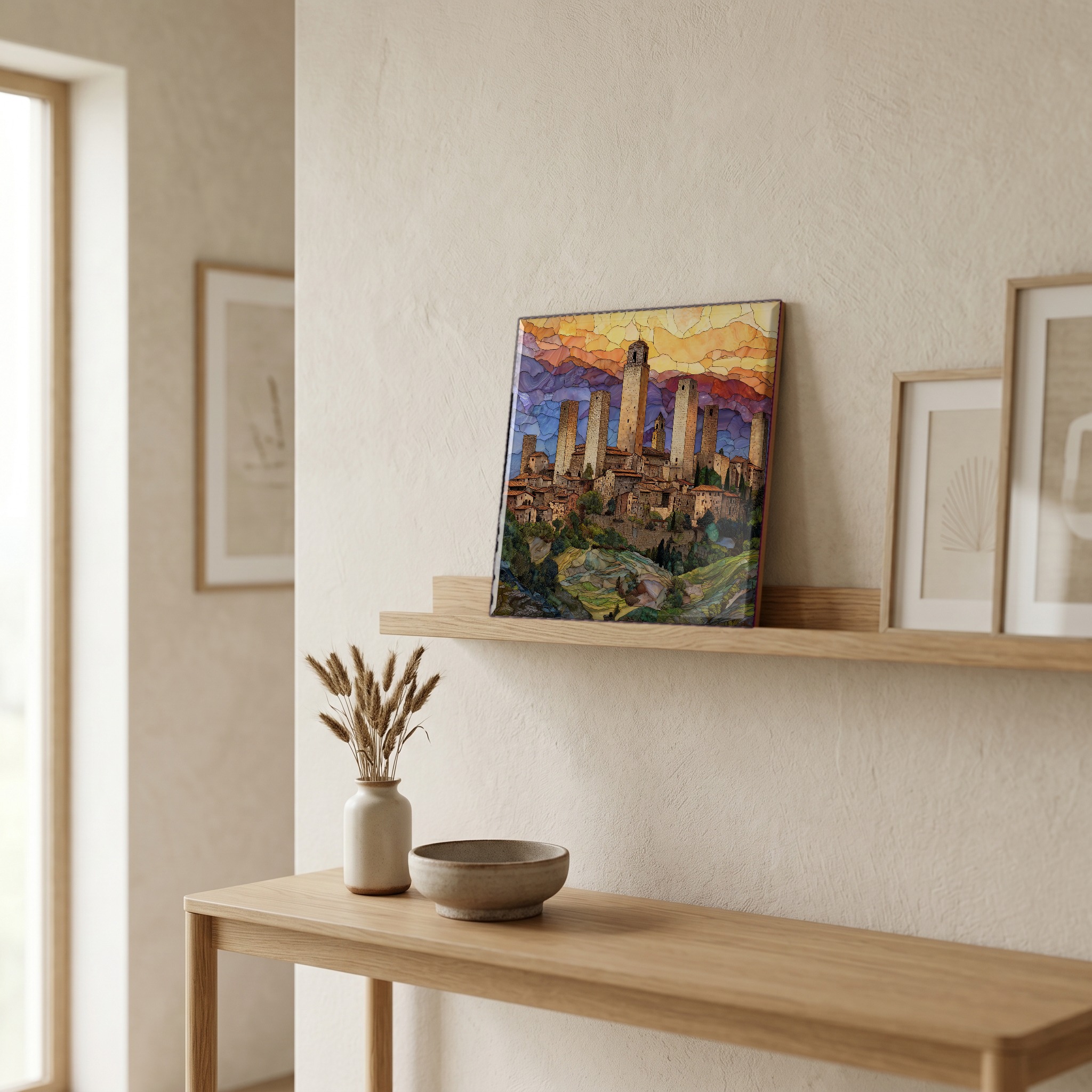
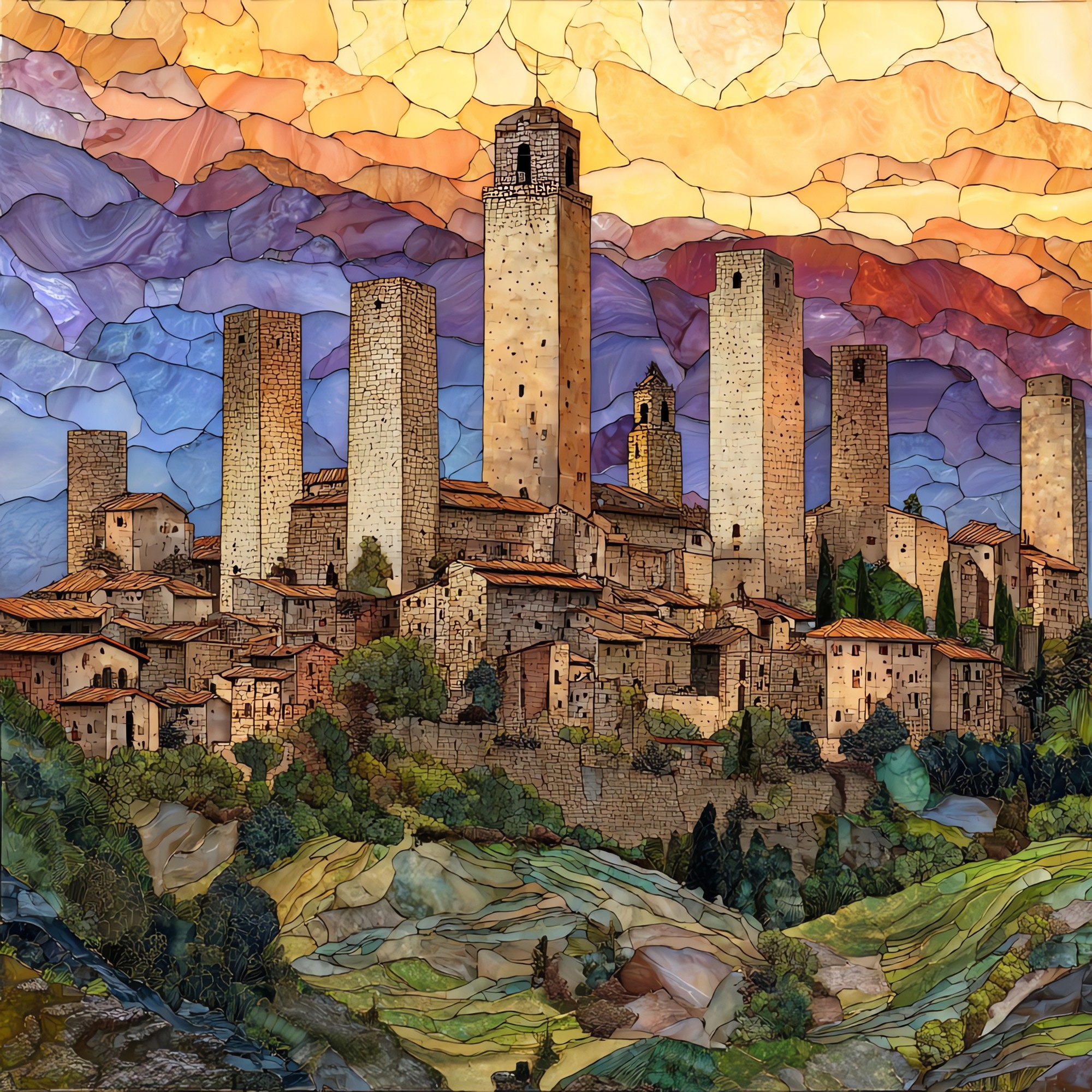
San Gimignano
shown on ceramic, 12-inch tileItaly
above the Val d'Elsa, between Florence and Siena

San Gimignano

the towers that outlived their century.

Where it lives

Not only on a wall.

A small tile on the nightstand catching the morning. A larger one above the fire. Yours, wherever you spend the slow hours.
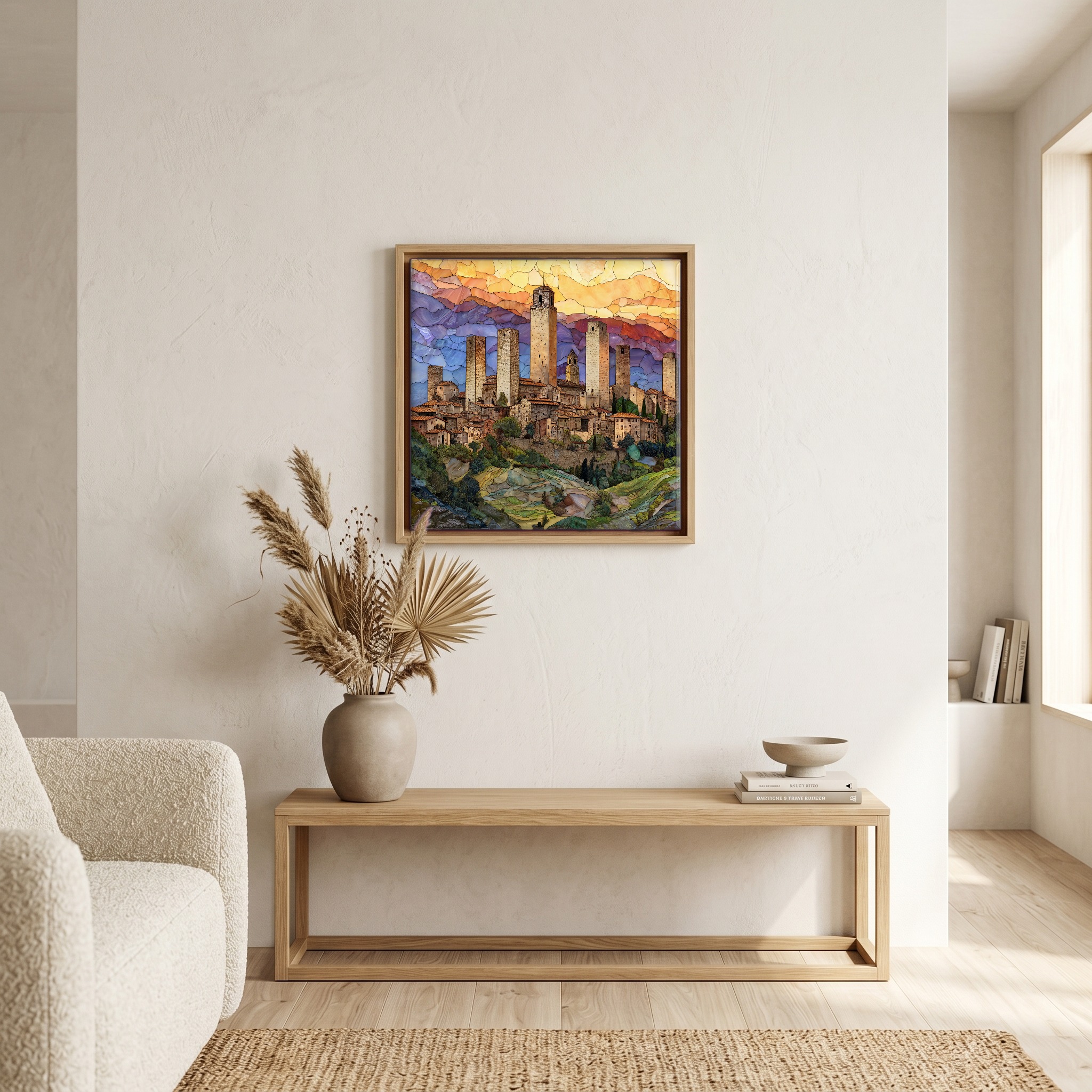
Above the bench, in a warm oak surround.
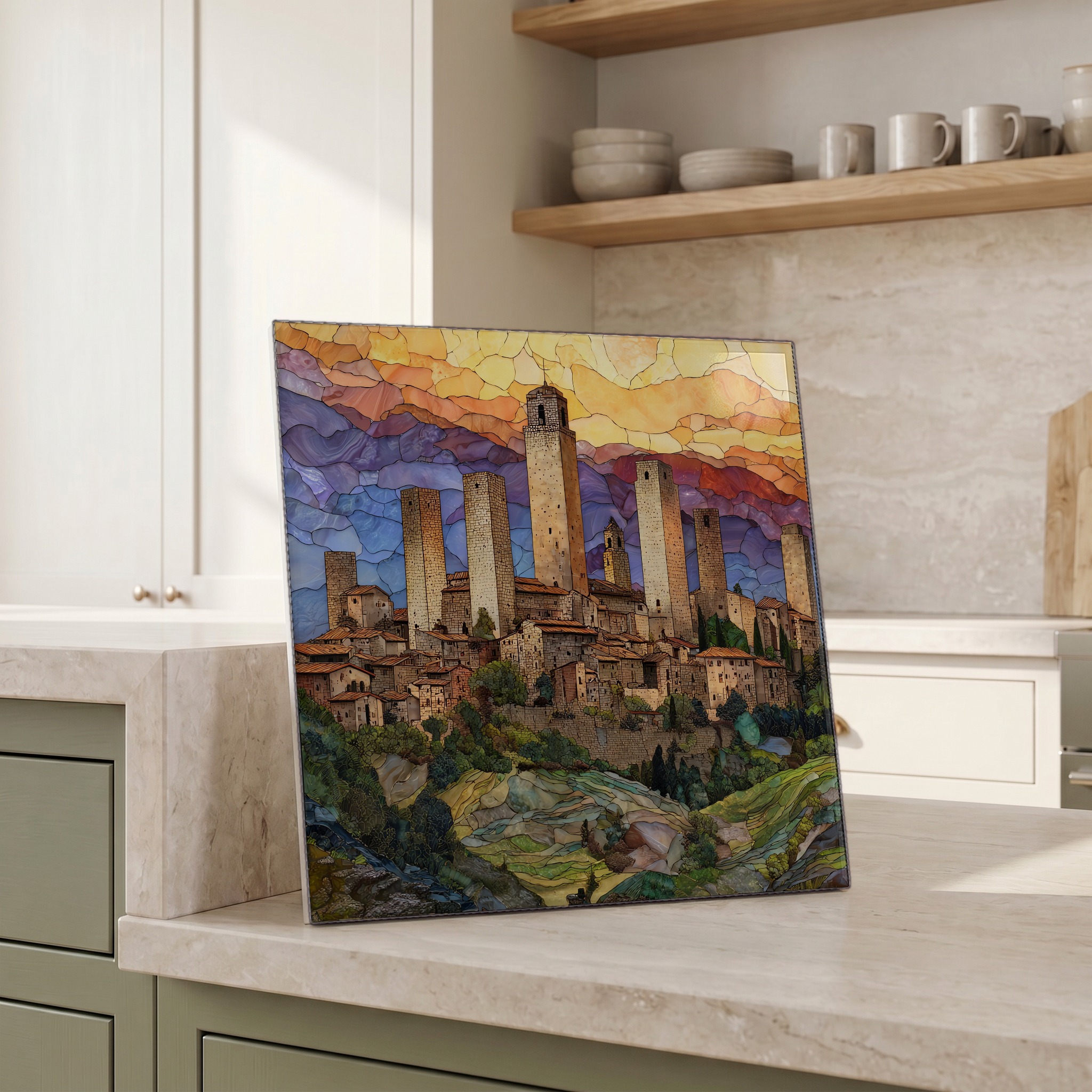
Beside the kettle, propped on the counter.
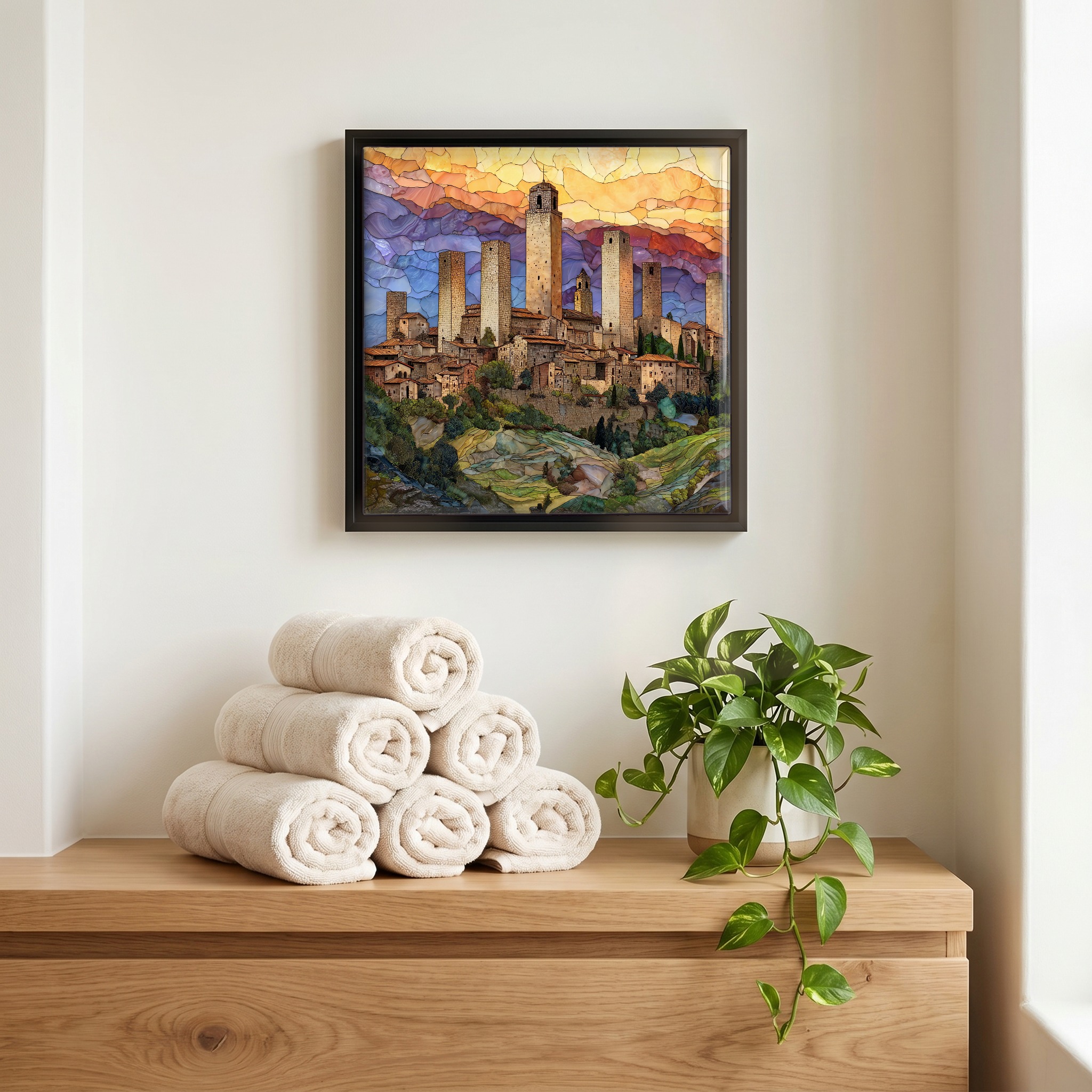
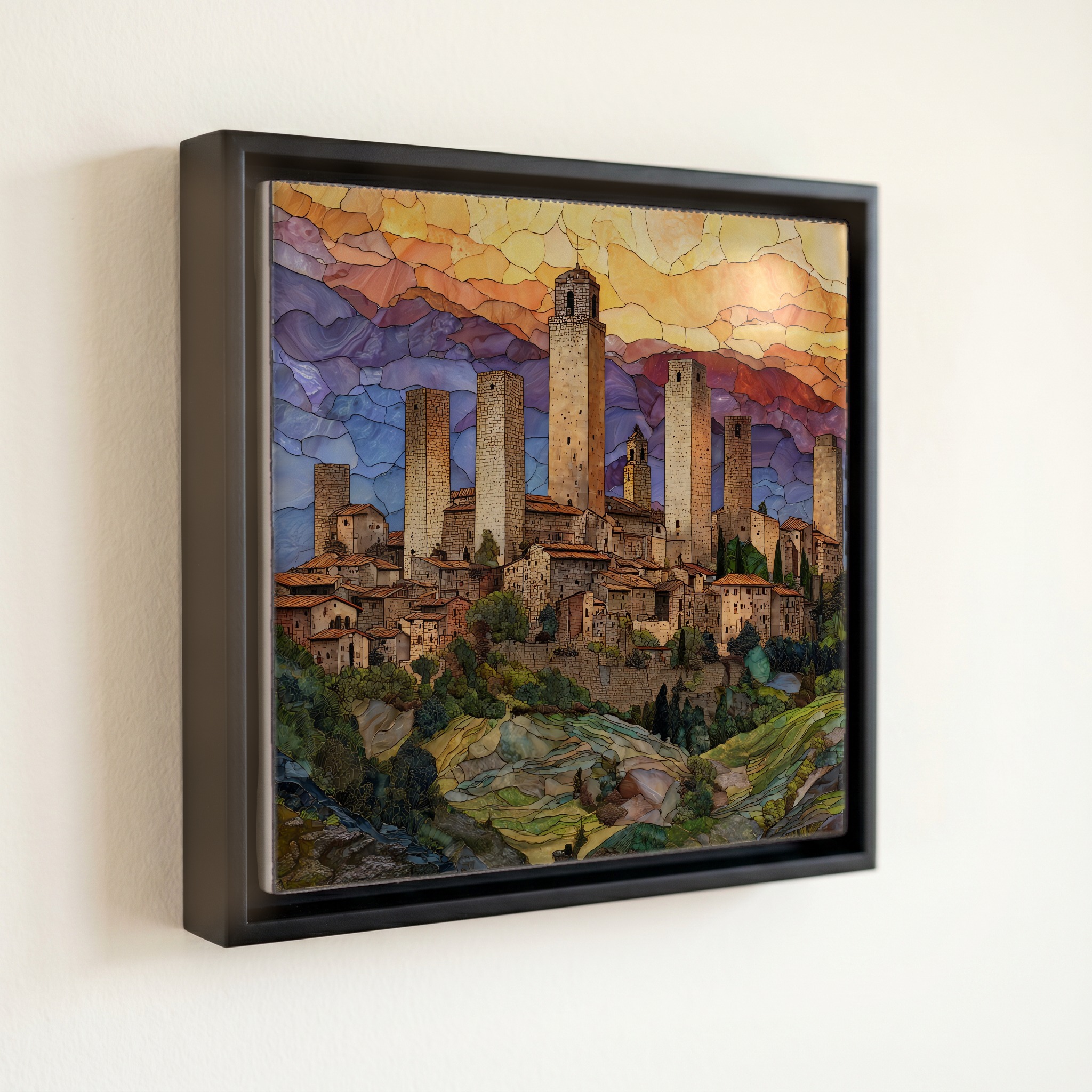
Above the linens, in a slim black surround.
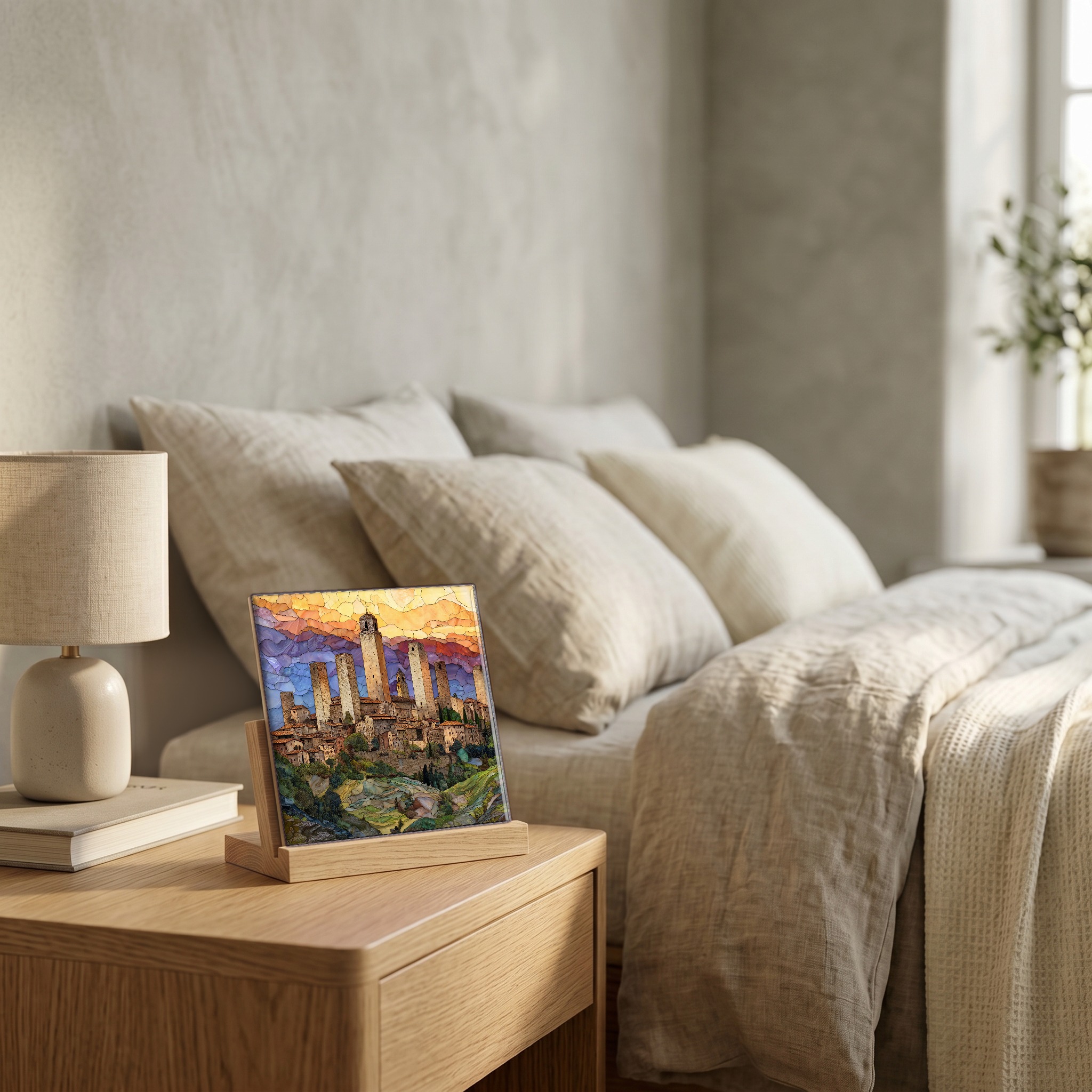
On the nightstand, on a light oak stand.
On a picture ledge, where the light comes in.
a note from the studio

Fourteen stone towers above the Val d'Elsa, surrounded by vineyards that make Vernaccia, Italy's first DOC white wine. The skyline reads as medieval Manhattan to most visitors who arrive from the Siena road, a silhouette that should have fallen and didn't. The town held seventy-two towers in 1300; what's left has held its place for seven centuries. UNESCO inscribed the historic centre in 1990. The afternoon light moves slowly across the stone, the way light only moves in places that have stopped changing. People come on day trips from Florence. The towers wait.
from the studio
shown in a slim black floating frame · 6 × 6 in
— bring it home

San Gimignano, on ceramic.

Each tile is finished by hand in our Knoxville studio. Artwork is slowly infused into the ceramic surface under high heat and pressure, and rests beneath a thin glossy finish. The colour lives in the surface, not on top of it.

What kind of piece?
One tile — square or rectangle.
How big?
the popular one — counter, shelf, nightstand
6 × 6 in · 15 cm · 1.6 lb
Surface finish
A clear glossy finish — the artwork reads as if under resin. Ideal for show-pieces and framed wall art.
How it sits
A hidden cleat — sits ¼″ proud of the wall.
$58
Hand-finished and shipped from our studio at the foot of the Smokies. On your wall in about ten days.
size
6 × 6 in
15 cm
weighs
1.6 lb
solid in the hand
surface
ceramic, hand-finished
art rests beneath a thin glossy finish
from
Knoxville, TN
our family studio, at the foot of the Smokies
— start a Coaster Set

Pick any four 4-inch tiles — National Parks you've been to, a Smokies set, the four seasons of one place. $ for a set of , cork-backed, ready to live on the table.
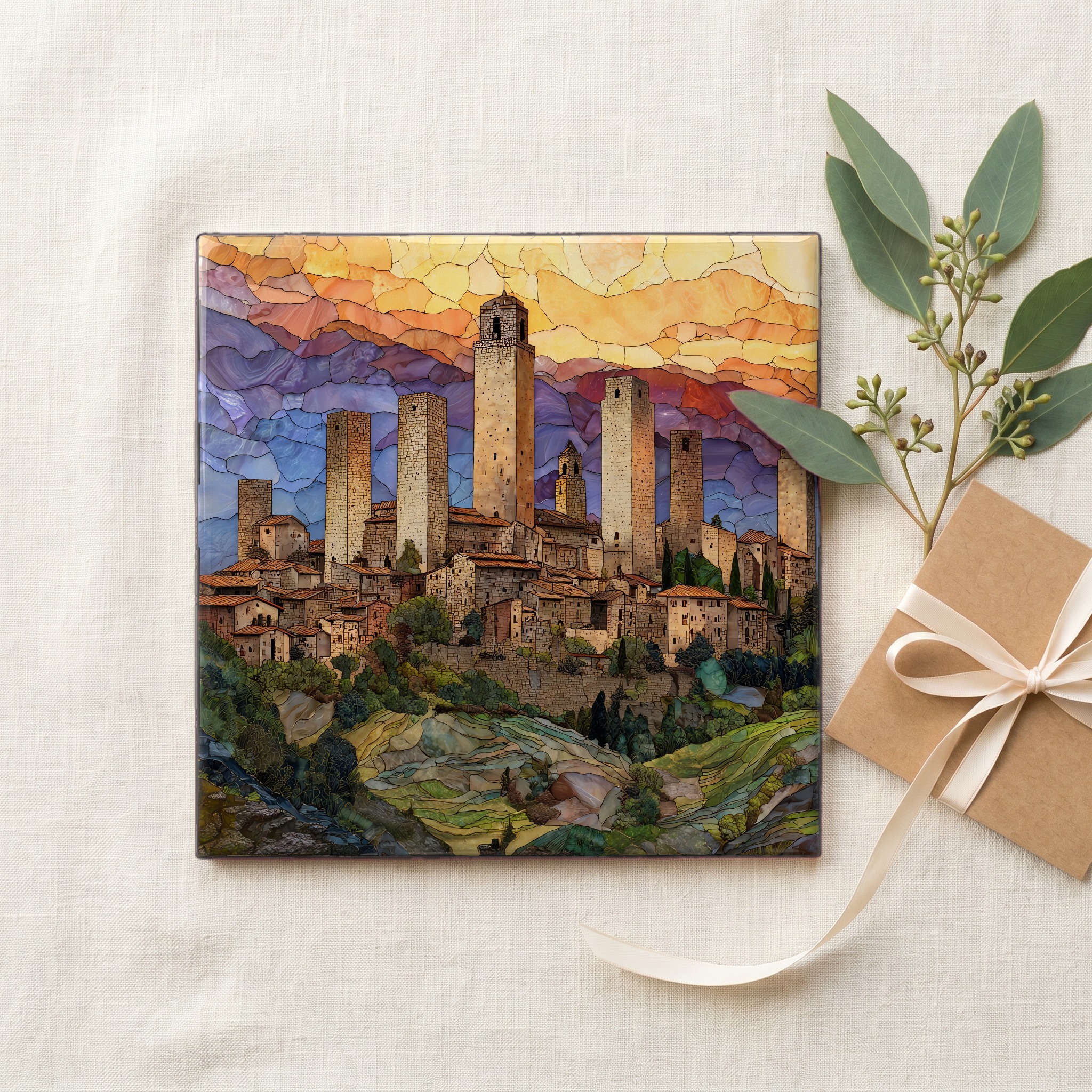
comes gift-ready
comes gift-ready

Each tile ships in a kraft box, tied with cream ribbon, with a handwritten note from the studio if you'd like to add one.
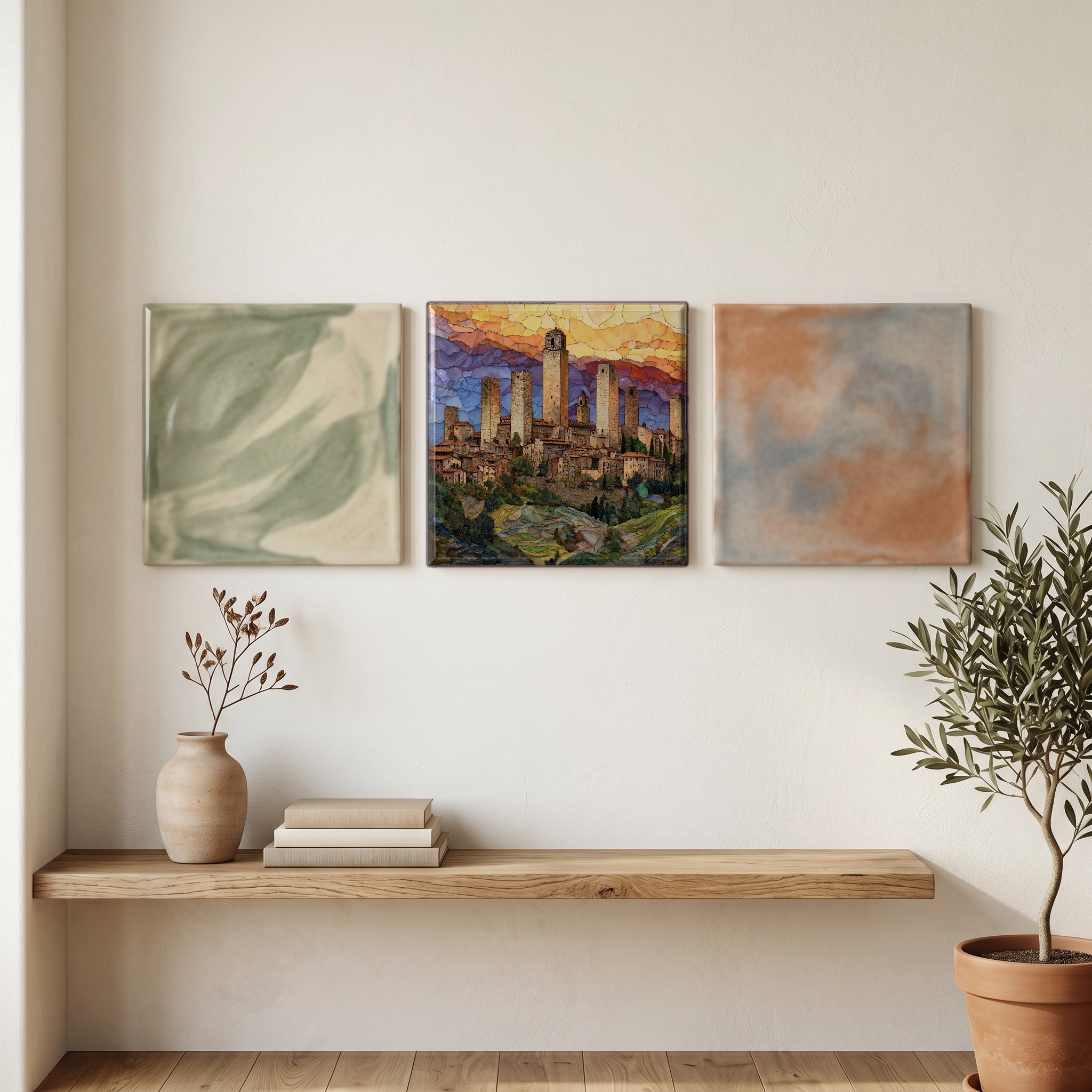
or build a grouping
or build a grouping

Three or five different vistas, hung together — a chapter of places you've been, or want to go.

about San Gimignano

The place, in three passes.

A little of what's known, in case you fall down the rabbit hole — or want to go see it yourself.
the place

San Gimignano sits on a hilltop in the Val d'Elsa, in the Province of Siena, about 56 km south of Florence and 38 km northwest of Siena. The historic centre rises to roughly 324 metres above sea level, on a ridge that once controlled the medieval pilgrim road, the Via Francigena, between Canterbury and Rome. The town's wealth was built on that traffic: saffron, banking, and the patrician families who taxed the pilgrims as they passed. UNESCO inscribed the historic centre in 1990 as a Cultural World Heritage Site, citing the surviving tower-houses and the intact medieval street plan. The nearest train station is Poggibonsi-San Gimignano, eleven kilometres east, with a connecting bus.

the stone

At the height of San Gimignano's wealth around 1300, the town held seventy-two tower-houses. Fourteen remain. The towers were built by rival patrician families as private fortresses and visible signs of wealth, each family raising its tower higher than the next, until municipal law forbade any private tower from exceeding the Palazzo Comunale's. Torre Grossa, completed in 1311, stands 54 metres and remains the tallest. The Black Death of 1348 killed roughly half the population and ended the building competition; the town fell under Florentine rule in 1353 and never recovered its medieval prominence. The stone is the colour of bone and honey in the afternoon sun.

the visit

San Gimignano is reached from Florence by car in about an hour, or by train from Florence Santa Maria Novella to Poggibonsi-San Gimignano, eleven kilometres east, then a connecting SITA bus. The town is small enough to walk in a half day; the Collegiata di Santa Maria Assunta holds the most important fresco cycles, by Bartolo di Fredi and Domenico Ghirlandaio. Climb Torre Grossa for the view back across the towers and the Tuscan countryside. The town fills with day-trippers between mid-morning and late afternoon, then empties again at dusk. Most coach traffic comes from Florence and Siena; the quieter hours are before ten and after six. Saffron is the local crop; Vernaccia is the local wine.

— informed by Wikipedia
where
Italy · Province of Siena, Tuscany
elevation
324 m · 1,063 ft
position
43.4675° N · 11.0431° E
the neighborhood

What's nearby.

A handful of named places within an hour's walk or short drive. Some we've already painted; some we will.
15 km N
Certaldo
medieval hill town
15 km SE
Colle di Val d'Elsa
medieval town
11 km E
Poggibonsi
market town
22 km S
Monteriggioni
walled medieval village
28 km SW
Volterra
Etruscan hill town
N
San Gimignano
Certaldo
Colle di Val d'Elsa
Poggibonsi
Monteriggioni
Volterra
common questions

What people ask.

A few questions we get about San Gimignano — and about bringing the piece home.
about the place

San Gimignano sits on a hilltop in the Val d'Elsa, in the Province of Siena, about 56 km south of Florence and 38 km northwest of Siena. The historic centre stands at roughly 324 metres above sea level and has been a UNESCO World Heritage Site since 1990.

The surviving fourteen tower-houses were built by rival patrician families between roughly 1150 and 1300 as private fortresses and visible signs of wealth. At the town's medieval peak, seventy-two towers stood on the hill. The Black Death of 1348 ended the competition.

Seventy-two tower-houses stood in San Gimignano around 1300, at the height of its wealth as a stop on the Via Francigena pilgrim road. Fourteen survive today. The tallest, Torre Grossa, was completed in 1311 and stands 54 metres above the Piazza del Duomo.

Vernaccia di San Gimignano, the first Italian wine to receive DOC status in 1966, is the local white made from the Vernaccia grape grown in the surrounding vineyards. The town is also known for saffron, cultivated here since the medieval period, and for the fresco cycles inside the Collegiata di Santa Maria Assunta.

Late spring and early autumn are the gentlest months. The town fills with coach day-trippers between mid-morning and late afternoon, so arriving before ten or staying past six lets you walk the lanes quietly. The Vernaccia harvest runs in September, and saffron is harvested in late October.

By car, San Gimignano is about an hour south of Florence on the Firenze-Siena superstrada. By train, take the line from Florence Santa Maria Novella to Poggibonsi-San Gimignano, eleven kilometres east, then connect by SITA bus. Most visitors arrive from Florence or Siena as a day trip.

The Black Death of 1348 killed roughly half the population and ended the medieval building boom. In 1353 the town surrendered to Florence and never regained its standing as a Via Francigena waystation. The medieval street plan and the tower-houses survived in large part because the town was too poor to rebuild over them.

about the piece in your home

It has been a meaningful gift for customers with a connection to Tuscany: a honeymoon in Florence, a cooking week in Siena, a wine trip through Chianti. San Gimignano is one of the silhouettes people remember from a Tuscan trip. A Small with a handwritten note from the studio carries well.

The stained-glass treatment leans warm and saturated, the stone-and-sky palette reading well in Tuscan-modern, Old-World traditional, and jewel-tone Maximalist rooms. It also holds the wall as a single statement piece in a more neutral space, where the colour gives the room its anchor.

Yes. Warm Mediterranean and Tuscan-modern palettes have come back strongly in the last two cycles, especially in kitchens and dining rooms where the terracotta-to-honey range reads as both rustic and considered. The San Gimignano tile sits naturally in that range without leaning kitsch.

A single Large reads cleanly above a console or a smaller sofa. Above a standard three-seat sofa, the 4-tile Mural carries the wall; for a longer wall or a dining-room statement, the 9-tile Mural is the right call. The Medium suits a hallway or a stair landing.

Yes, with the right finish. Order the Dura Satin or Matte version for any installation where steam, splashes, or scrubbing are likely: bathrooms, kitchens, showers. The Glossy finish is for framed wall pieces in dry rooms. The colour lives in the ceramic surface and will not fade.

A soft microfibre cloth and warm water. No abrasives, no bleach. The colour is slowly infused into the ceramic surface under high heat and pressure, so it does not sit on top to be scrubbed off. A coaster or trivet at a kitchen station will live a long life with no special care.

Yes. Every WenderVista piece is original studio work by Reid Wender, hand-finished in the Knoxville workshop. The stained-glass visual language is exclusive to the studio. Nothing is licensed, nothing is stock. Each tile carries the studio mark on the back.

if this one stayed with you

A few you might also love.

Hand-picked by the eye that found Sorapis. Same air, same kind of quiet.
— a collection

The Italian Dolomites,
painted slow.

The valleys between Cortina and Val Gardena, the tarns you walk an hour to see, the towers that turn the colour of a banked fire just before dark. Wander the collection by valley, by season, or follow the path Reid walked.

Tre Cime
Braies
Misurina
Sorapis
Cinque Torri
Sassolungo
Marmolada