Wender·Vista
Sacro Speco Subiaco
shown on ceramic, 12-inch tileItaly
above the Aniene, east of Rome

Sacro Speco Subiaco

a monastery the cliff agreed to hold.

Where it lives

Not only on a wall.

A small tile on the nightstand catching the morning. A larger one above the fire. Yours, wherever you spend the slow hours.
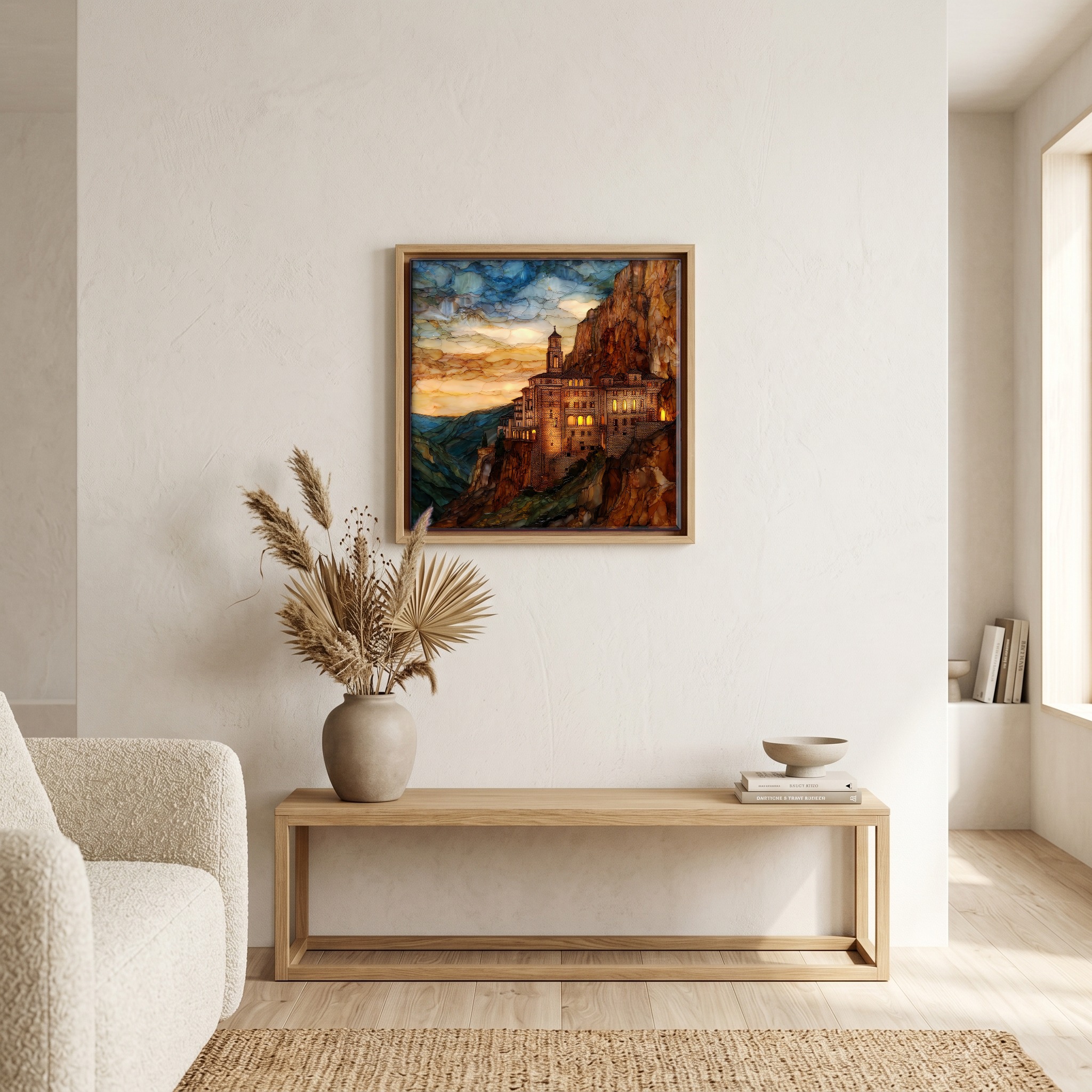
Above the bench, in a warm oak surround.
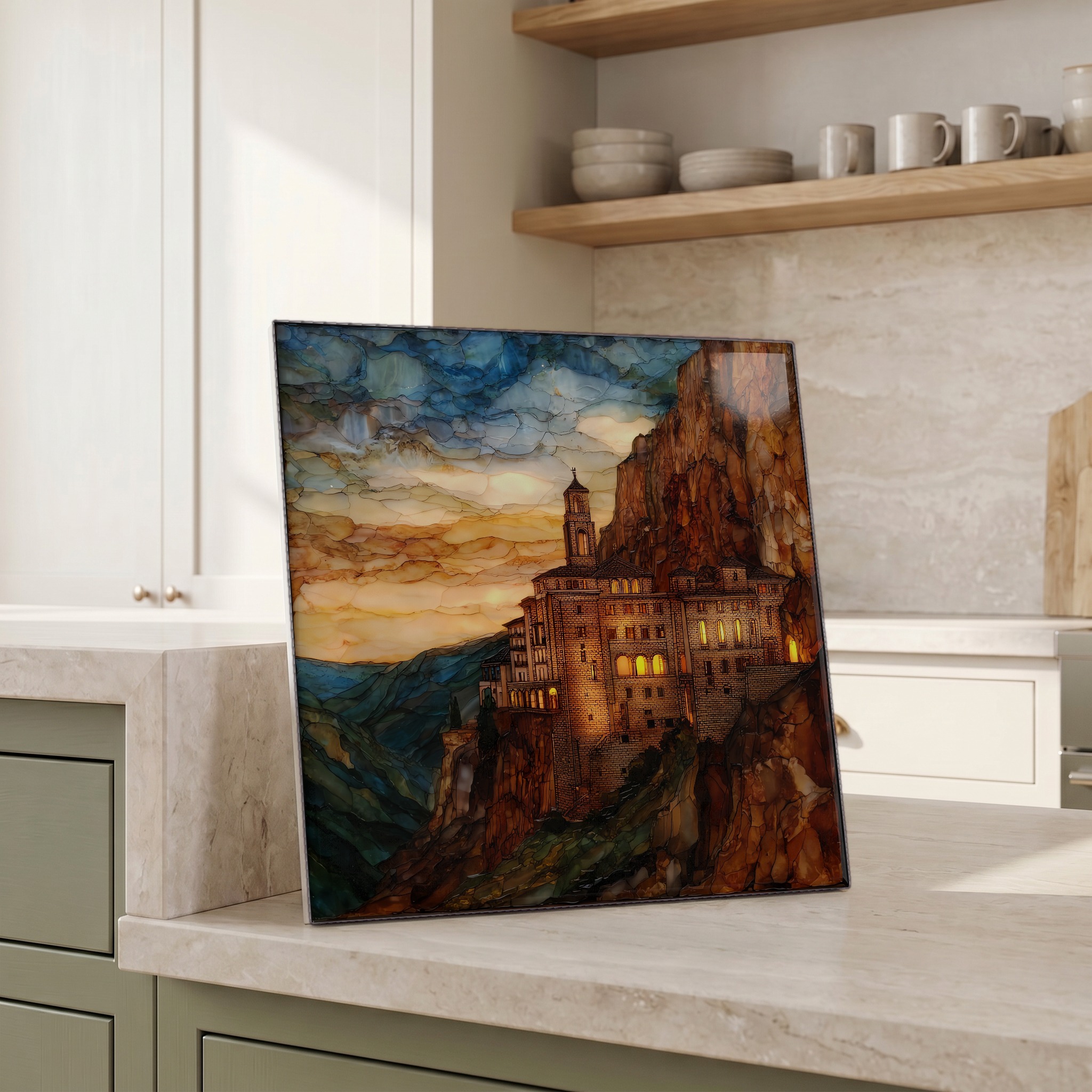
Beside the kettle, propped on the counter.
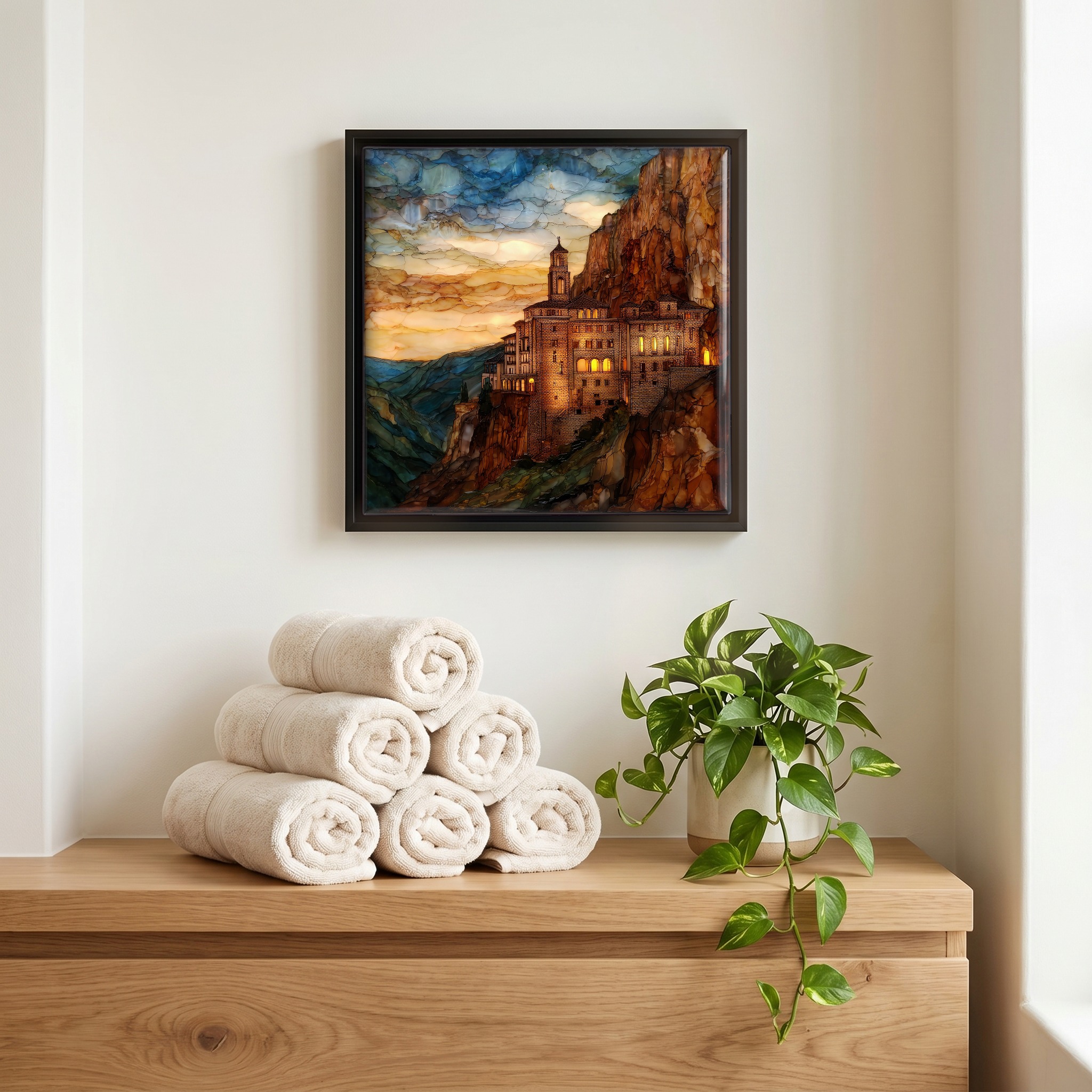
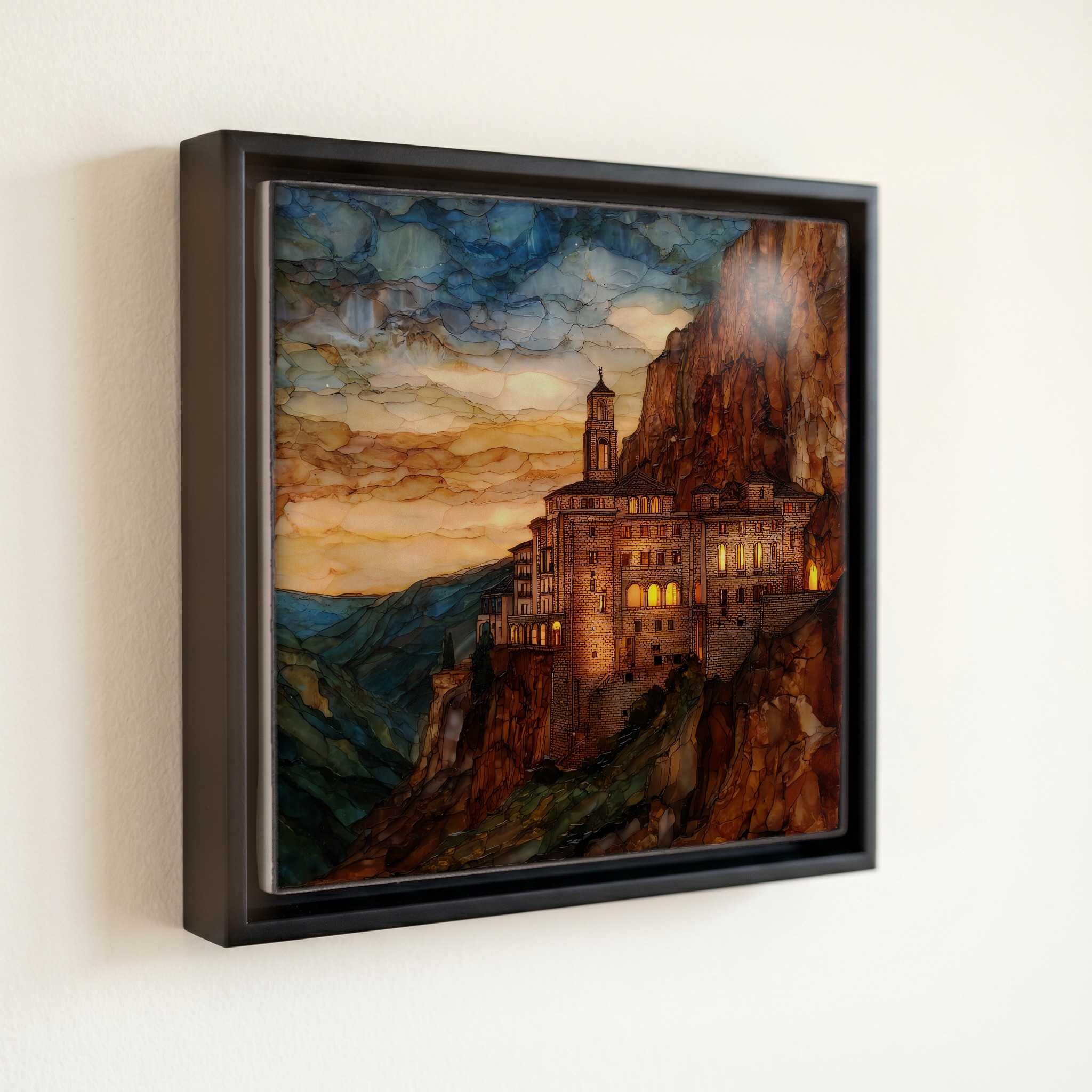
Above the linens, in a slim black surround.
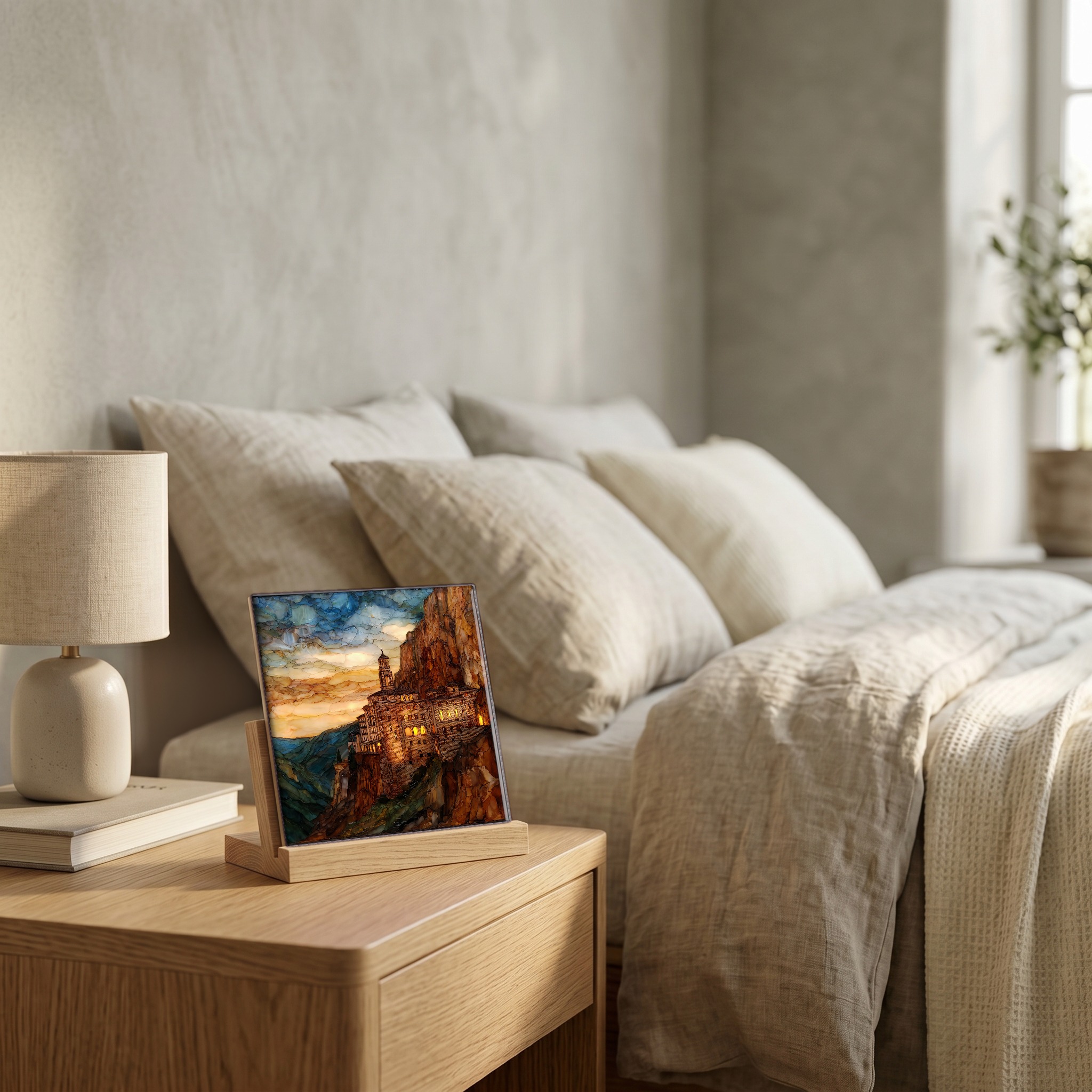
On the nightstand, on a light oak stand.
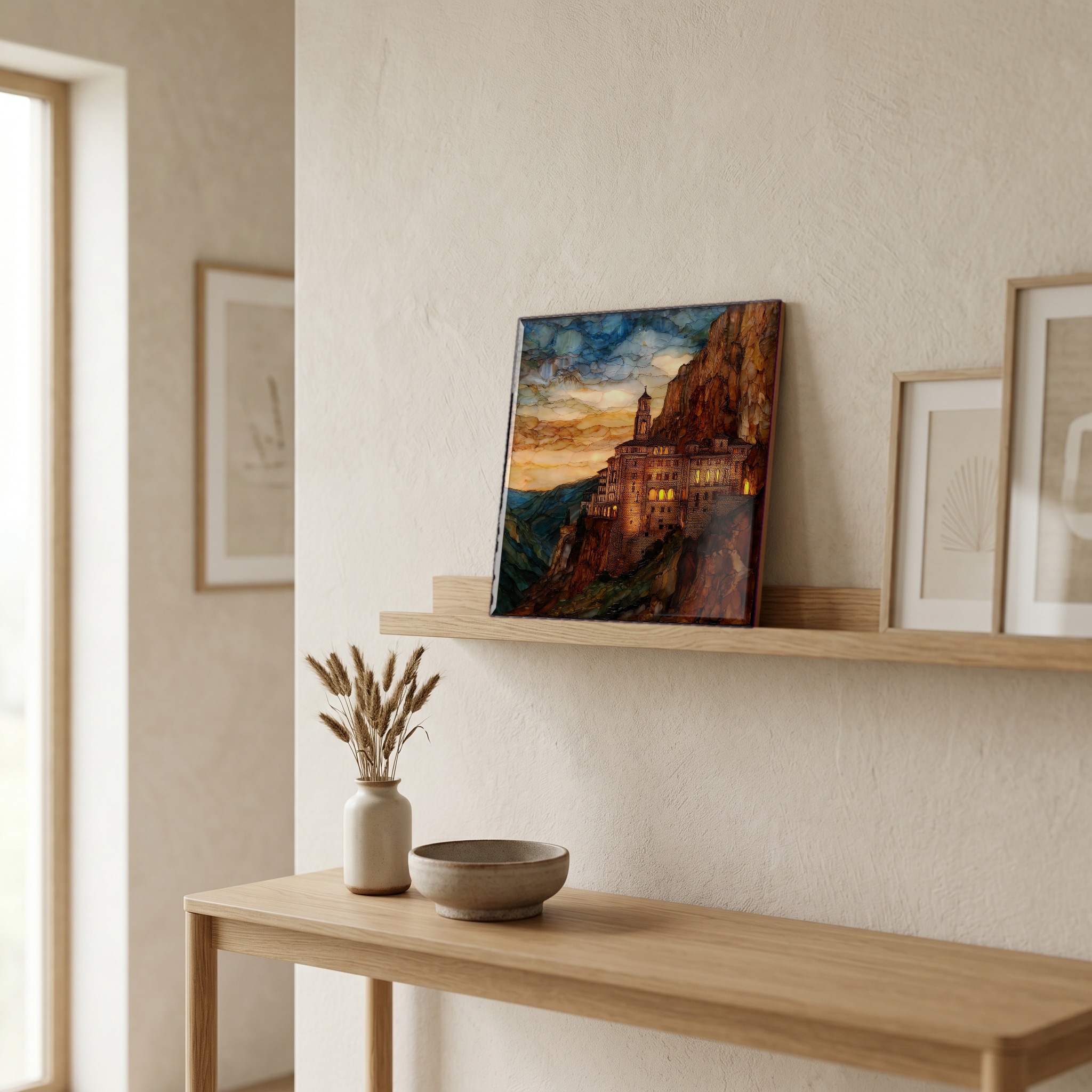
On a picture ledge, where the light comes in.
a note from the studio

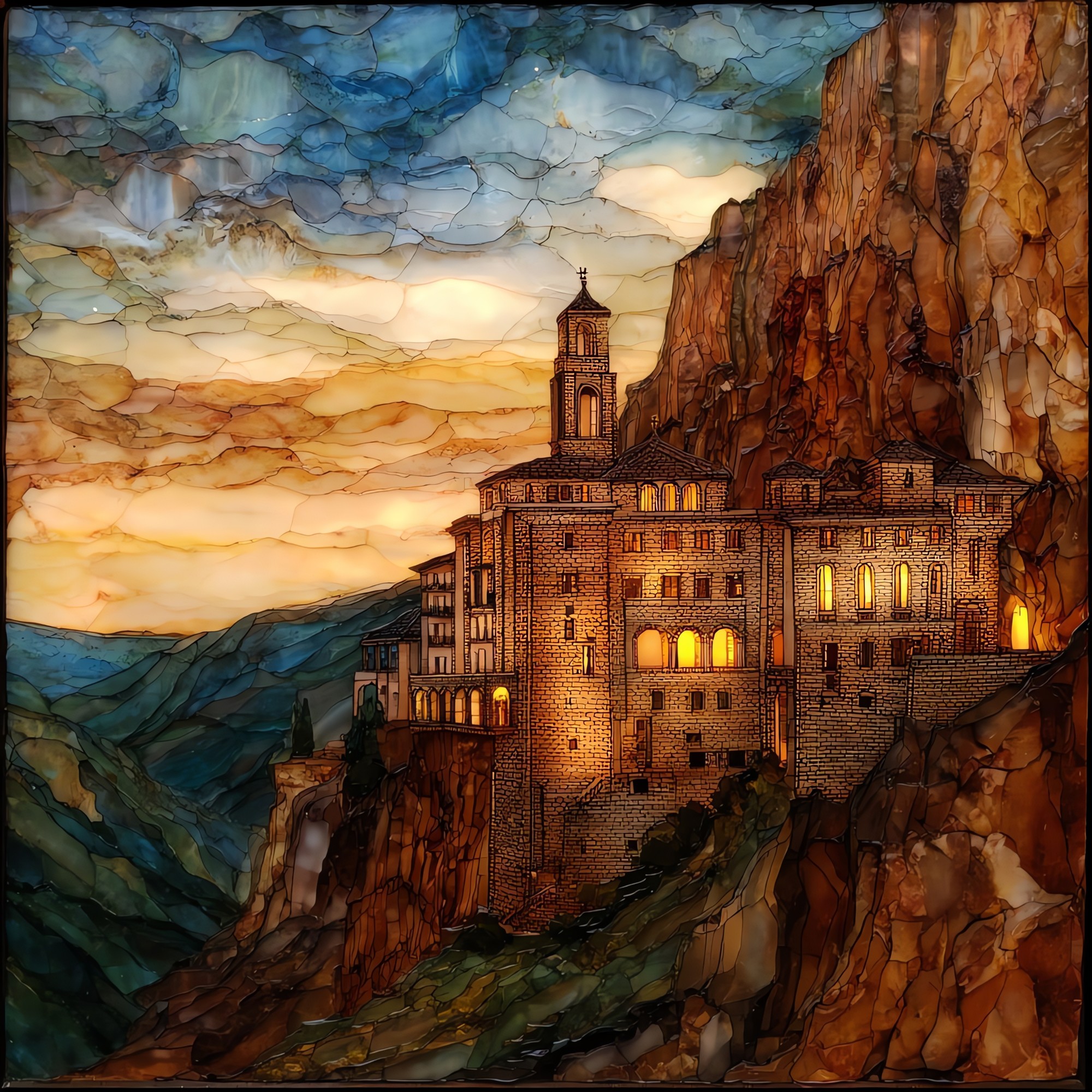
Nine small chapels stacked on the cliff above Subiaco, where Benedict of Nursia lived three years as a hermit around the year 500. Inside, frescoes by Roman, Sienese, and Umbrian masters have layered the walls over three hundred years. One small panel holds the earliest known portrait of Francis of Assisi, painted not long after he visited in 1223. The cliff faces north; the cave stays cool through August. Petrarch called it the threshold of paradise. The path from the parking still climbs through pine.
from the studio
shown in a slim black floating frame · 6 × 6 in
— bring it home

Sacro Speco Subiaco, on ceramic.

Each tile is finished by hand in our Knoxville studio. Artwork is slowly infused into the ceramic surface under high heat and pressure, and rests beneath a thin glossy finish. The colour lives in the surface, not on top of it.

What kind of piece?
One tile — square or rectangle.
How big?
the popular one — counter, shelf, nightstand
6 × 6 in · 15 cm · 1.6 lb
Surface finish
A clear glossy finish — the artwork reads as if under resin. Ideal for show-pieces and framed wall art.
How it sits
A hidden cleat — sits ¼″ proud of the wall.
$58
Hand-finished and shipped from our studio at the foot of the Smokies. On your wall in about ten days.
size
6 × 6 in
15 cm
weighs
1.6 lb
solid in the hand
surface
ceramic, hand-finished
art rests beneath a thin glossy finish
from
Knoxville, TN
our family studio, at the foot of the Smokies
— start a Coaster Set

Pick any four 4-inch tiles — National Parks you've been to, a Smokies set, the four seasons of one place. $ for a set of , cork-backed, ready to live on the table.
comes gift-ready
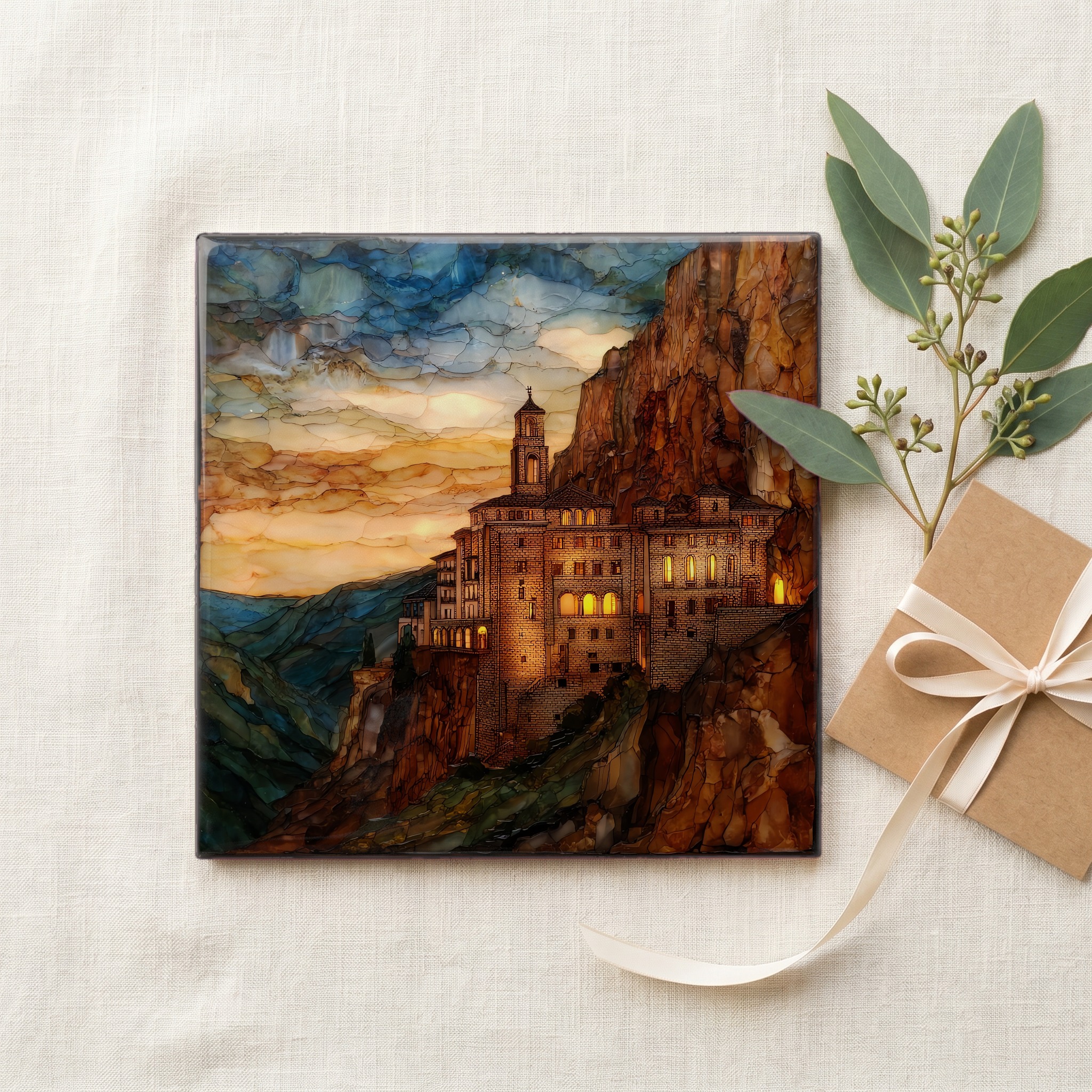
comes gift-ready

Each tile ships in a kraft box, tied with cream ribbon, with a handwritten note from the studio if you'd like to add one.
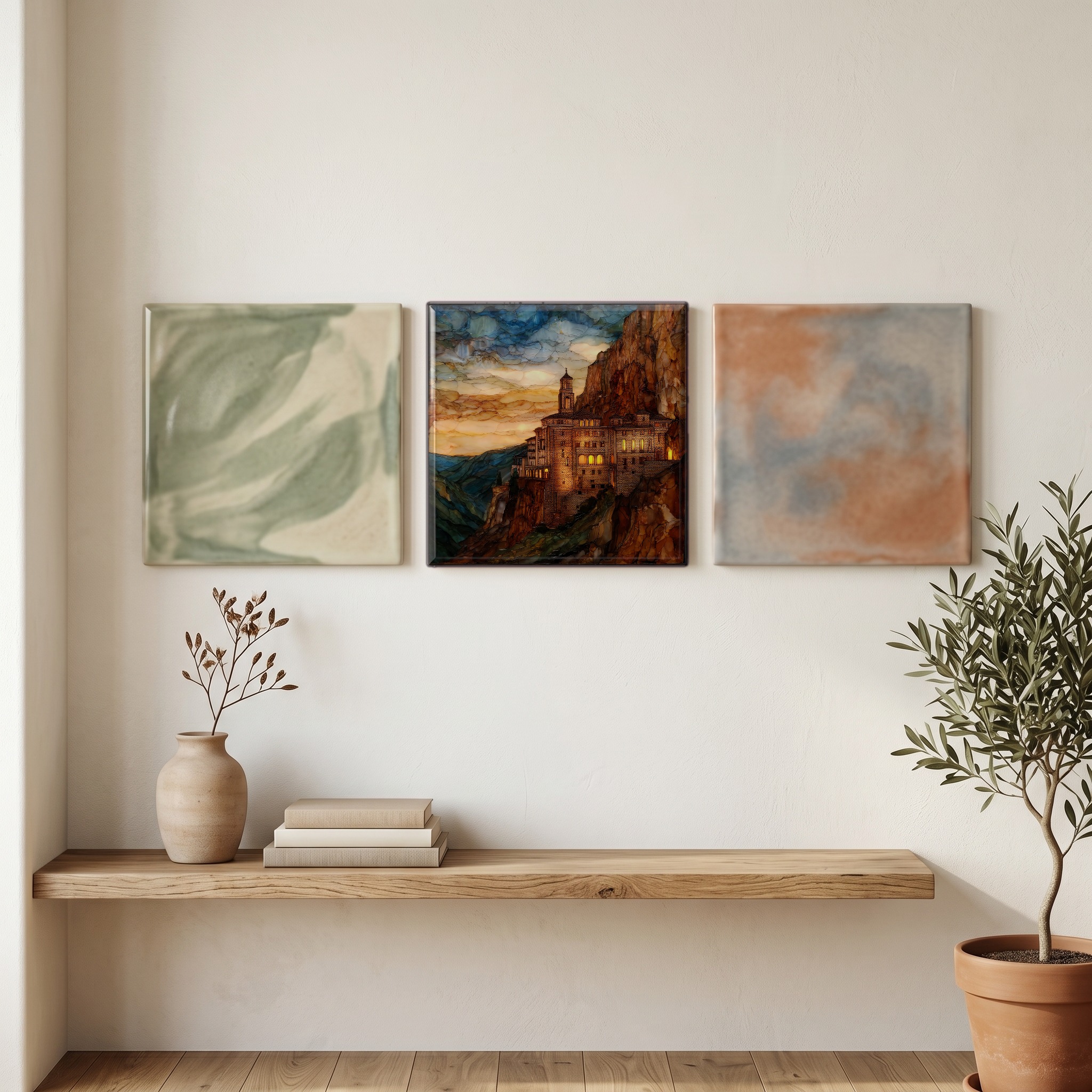
or build a grouping
or build a grouping

Three or five different vistas, hung together — a chapter of places you've been, or want to go.

about Sacro Speco Subiaco

The place, in three passes.

A little of what's known, in case you fall down the rabbit hole — or want to go see it yourself.
the place

Sacro Speco sits on the cliff face of Monte Taleo, above the town of Subiaco in the Aniene valley, roughly 70 kilometres east of Rome. The monastery is built into the rock in nine stacked levels, anchored to the cave where Benedict of Nursia spent three years as a hermit beginning around 500 AD. A short walk below stands Santa Scolastica, the older companion monastery of the same order. Subiaco lies within the foothills of the Monti Simbruini Regional Park, a 30,000-hectare protected area of beech forest and Apennine ridge. The road from Rome is the SS 5 Tiburtina, then a climb up from the town.

the stone

The monastery holds one of the most important fresco cycles of medieval central Italy. The upper church carries Roman-school work by Magister Conxolus from the late 1200s; the lower chapels carry frescoes attributed to a Sienese workshop of the early 1300s. The Chapel of San Gregorio holds the earliest known portrait of Francis of Assisi, painted not long after his 1223 visit. Because the chapels are carved into north-facing rock, the pigments have stayed remarkably cool and dry for seven centuries. The whole structure clings to Monte Taleo on stone arches and timber buttresses set into the cliff.

the visit

The monastery is open to visitors most days of the year, free of charge, with a Benedictine community still in residence. Guided tours through the upper and lower churches run multiple times daily; the lowest level, including the cave itself, is the climax of the visit. From Subiaco the access is a one-kilometre walk up through pine and holm oak, or by car to a small parking above the monastery. The site is most active during the summer pilgrimage season; quieter mornings in spring and late autumn are the best chance to see the lower chapels without a crowd.

where
Italy · Subiaco, Metropolitan City of Rome
position
41.9243° N · 13.1175° E
the neighborhood

What's nearby.

A handful of named places within an hour's walk or short drive. Some we've already painted; some we will.
1 km SW
Santa Scolastica
Benedictine monastery
2 km W
Subiaco
hill town
1 km W
Aniene River
river
3 km E
Monti Simbruini Regional Park
regional park
40 km W
Villa d'Este
Renaissance garden
N
Sacro Speco Subiaco
Santa Scolastica
Subiaco
Aniene River
Monti Simbruini Regional Park
Villa d'Este
common questions

What people ask.

A few questions we get about Sacro Speco Subiaco — and about bringing the piece home.
about the place

Sacro Speco is in Subiaco, Lazio, about 70 kilometres east of Rome in the Aniene valley. The monastery is carved into the cliff face of Monte Taleo, above the town and the foothills of the Monti Simbruini.

Benedict of Nursia, the father of Western monasticism, lived three years as a hermit in the cave at Subiaco around the year 500. The Rule he later wrote at Monte Cassino shaped Western religious life for fifteen hundred years; this cave is where his vocation began.

The structure grew over centuries around the cave where Benedict lived, with each generation adding a chapel or staircase rather than building outward. The result is nine levels stacked vertically against Monte Taleo, anchored on stone arches and held by the rock itself.

The walls hold one of the most important fresco cycles in central Italy. The upper church carries Roman-school work by Magister Conxolus from the late 1200s; the lower chapels carry a Sienese cycle from the early 1300s. The Chapel of San Gregorio holds the earliest known portrait of Francis of Assisi, painted around 1223.

Yes. The fresco in the Chapel of San Gregorio is generally accepted as the oldest surviving portrait of Francis of Assisi, painted within a few years of his 1223 visit to Subiaco. It shows him without the stigmata and without a halo, consistent with a portrait made before his canonisation in 1228.

From Rome the drive is roughly an hour and a half east on the SS 5 Tiburtina, then a climb up from the town of Subiaco. A short walk through pine and holm oak leads from the parking to the monastery gate. Public bus service from Rome runs through Subiaco daily.

about the piece in your home

It carries well for that. Sacro Speco is the cave where the Benedictine tradition begins, which makes the tile meaningful for someone who follows the Rule, has spent retreat time at a Benedictine house, or simply loves the spirituality. A Keepsake with a handwritten note from the studio sits well on a desk or shelf.

The deep stone tones and saturated chapel reds carry into Tuscan Traditional, Old World Italian, and warm Sacred-Minimal interiors. It also reads cleanly against plaster walls in a study or library. The colour is warm enough for a wood-panelled room and quiet enough for a white-walled one.

Yes. The current move toward warm, hand-touched, layered interiors, sometimes called Slow Italian or Quiet Romantic, sits naturally with this kind of medieval-cliff iconography. It pairs well with linen, oak, and unpainted plaster, and reads as collected rather than themed.

Above a standard sofa or long console, the single Large tile holds the wall on its own. For a wider statement, a four-tile Mural arranged two by two or a nine-tile Mural arranged three by three carries a longer wall. The Mural is the most common request for above-sofa installations.

Yes. For wet rooms or backsplashes, the Dura Satin or Matte finish is the right choice; both are scratch-resistant and handle steam and direct water. The Glossy finish is meant for framed wall pieces and dry rooms.

A microfibre cloth and water is enough for everyday dust and fingerprints. On a backsplash or kitchen install, the same routine handles oil and food residue. The colour lives in the surface, so cleaning does not lift or fade it.

Yes. Every WenderVista piece is original to the studio in Knoxville, Tennessee, made under Reid Wender's eye. We don't license the artwork to other shops and we don't sell stock printables; the tile you receive comes from our one room.

if this one stayed with you

A few you might also love.

Hand-picked by the eye that found Sorapis. Same air, same kind of quiet.
— a collection

The Italian Dolomites,
painted slow.

The valleys between Cortina and Val Gardena, the tarns you walk an hour to see, the towers that turn the colour of a banked fire just before dark. Wander the collection by valley, by season, or follow the path Reid walked.

Tre Cime
Braies
Misurina
Sorapis
Cinque Torri
Sassolungo
Marmolada