Wender·Vista
Sacra di San Michele
shown on ceramic, 12-inch tileItaly
above the Susa Valley, west of Turin

Sacra di San Michele

— a thousand years of stone, above the valley fog.

Where it lives

Not only on a wall.

A small tile on the nightstand catching the morning. A larger one above the fire. Yours, wherever you spend the slow hours.
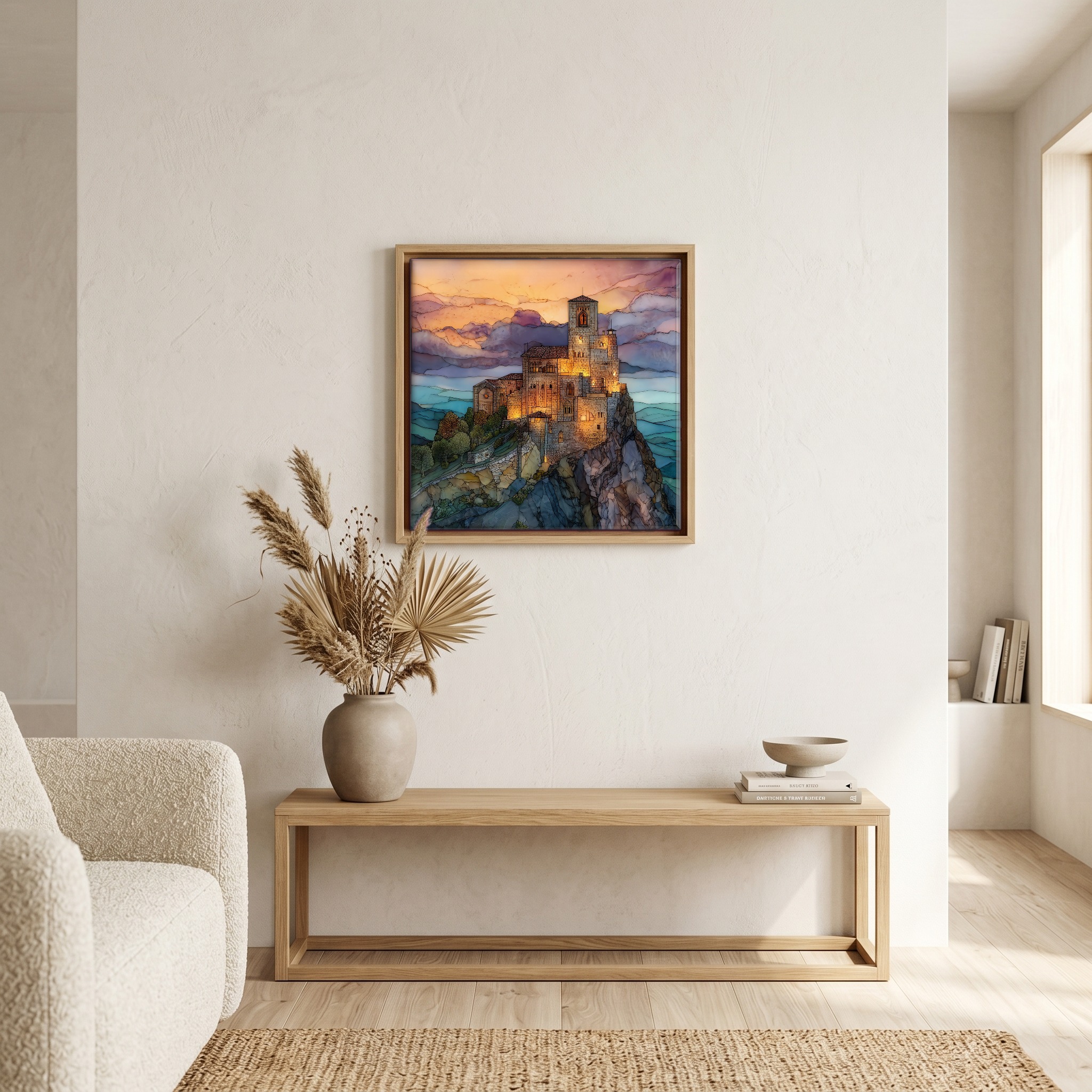
Above the bench, in a warm oak surround.
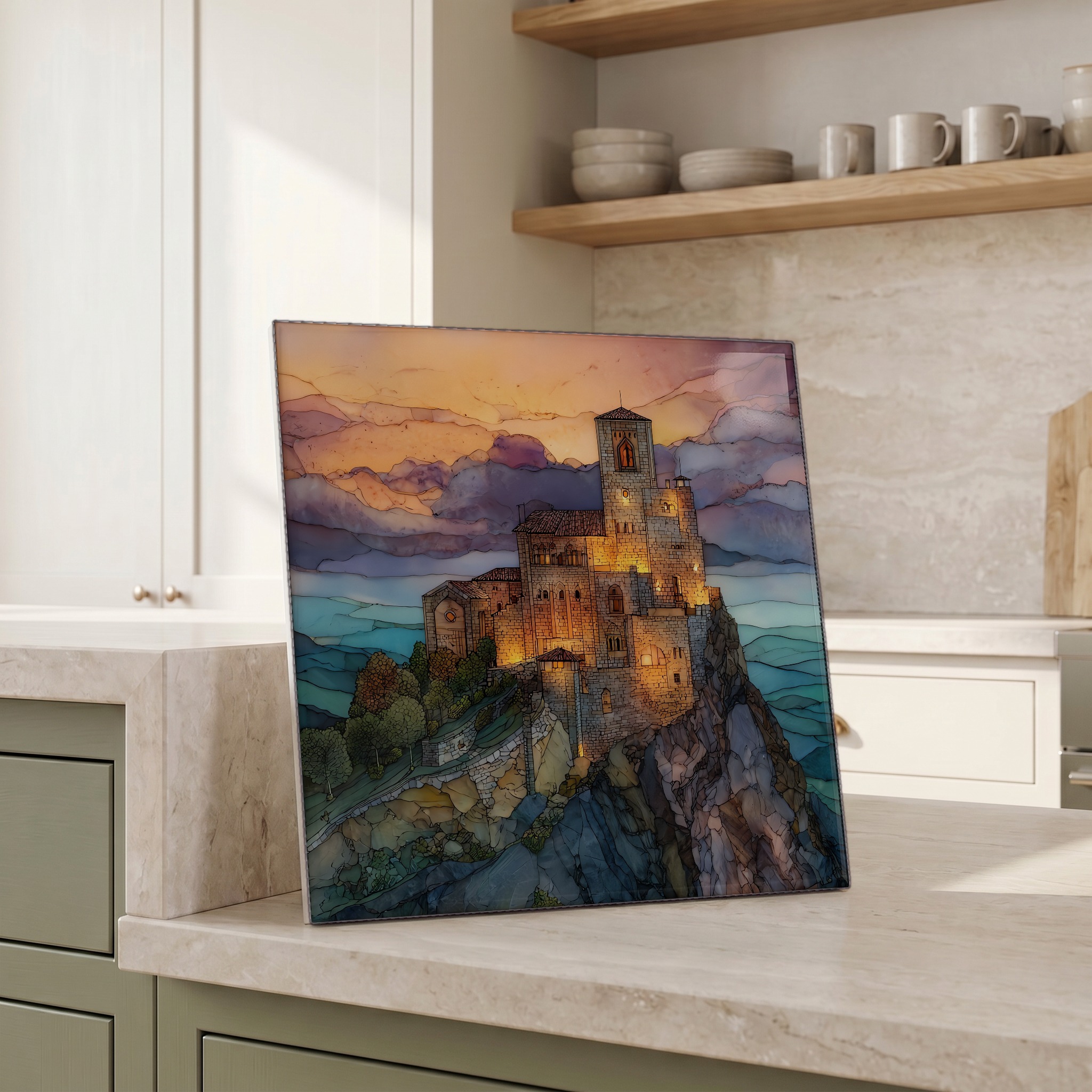
Beside the kettle, propped on the counter.
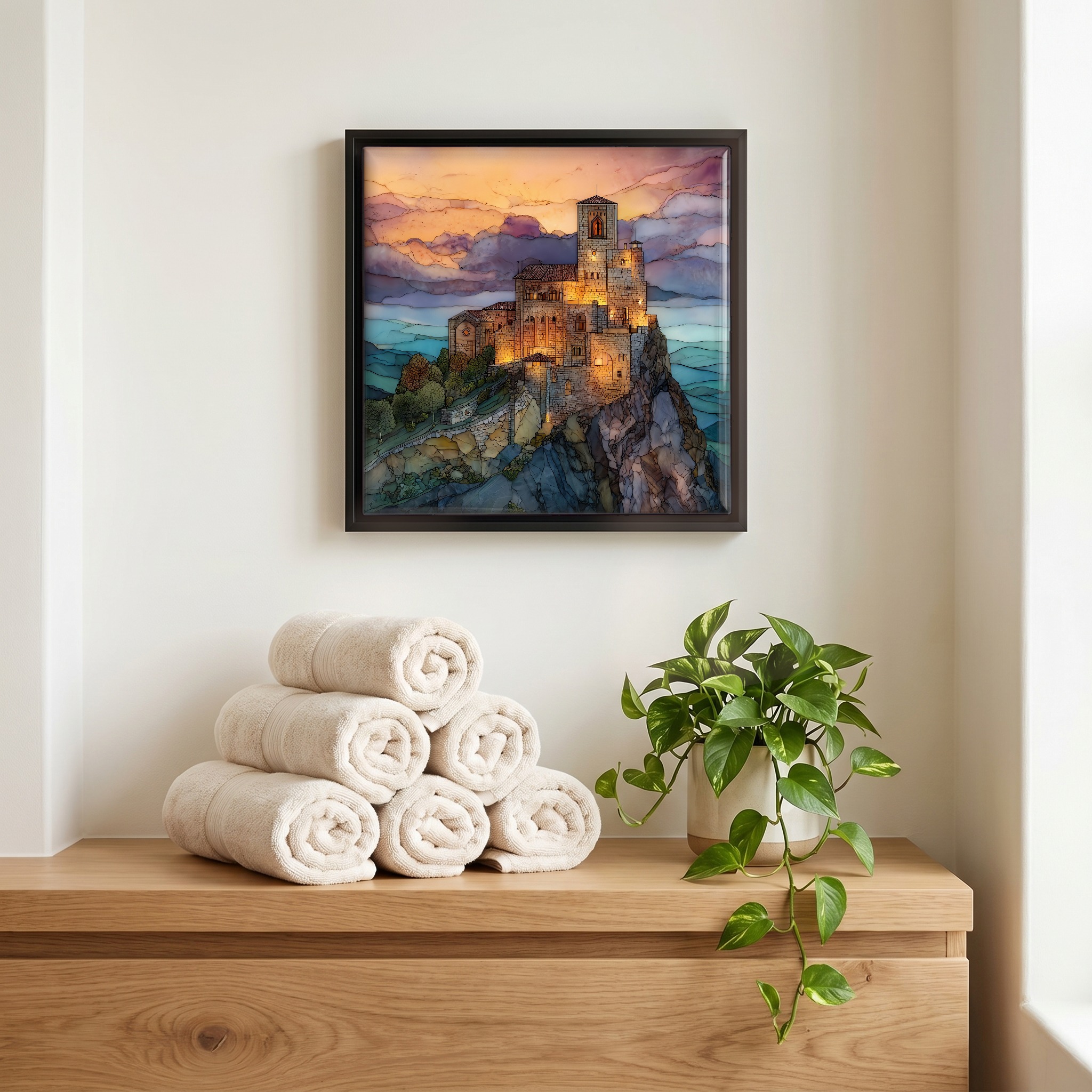
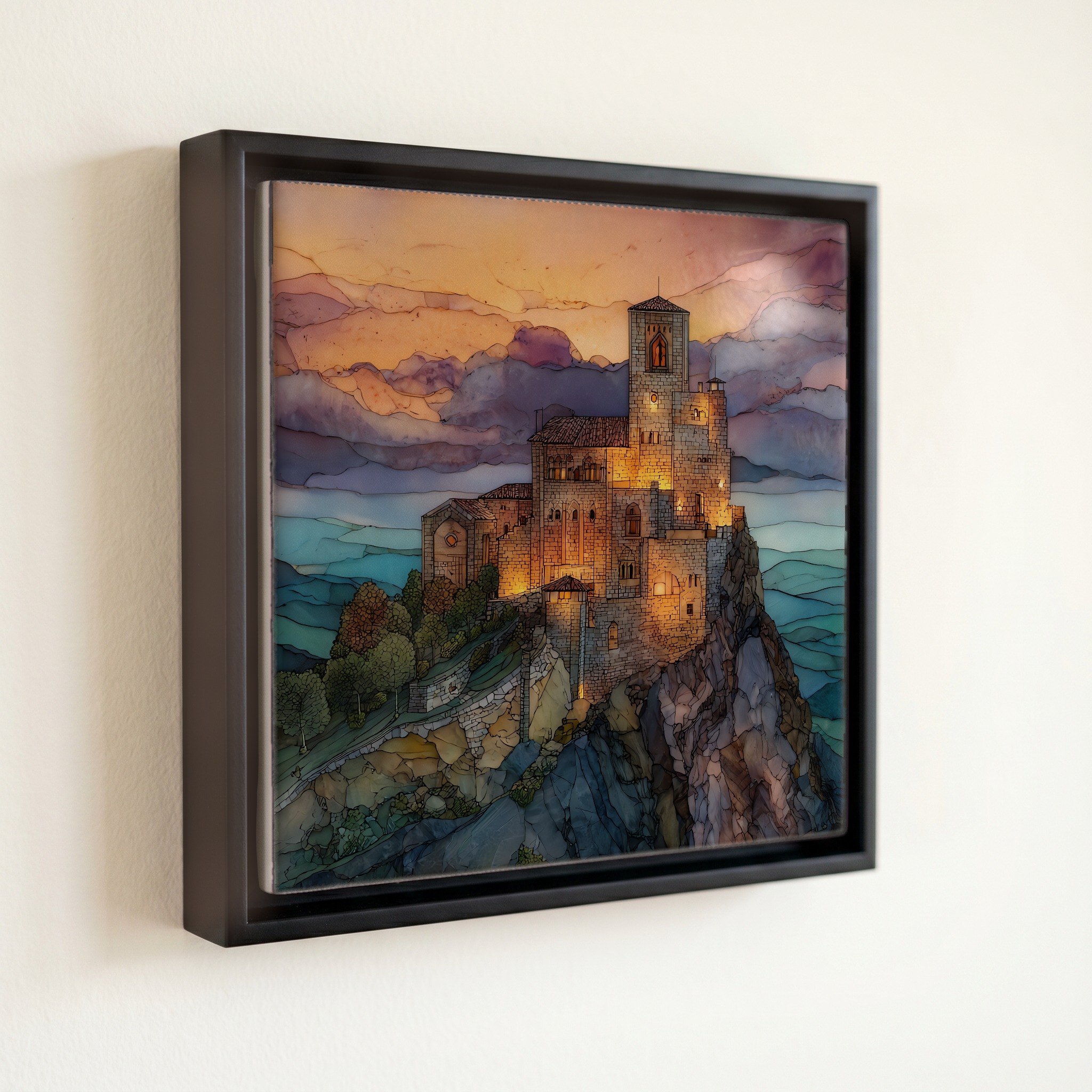
Above the linens, in a slim black surround.
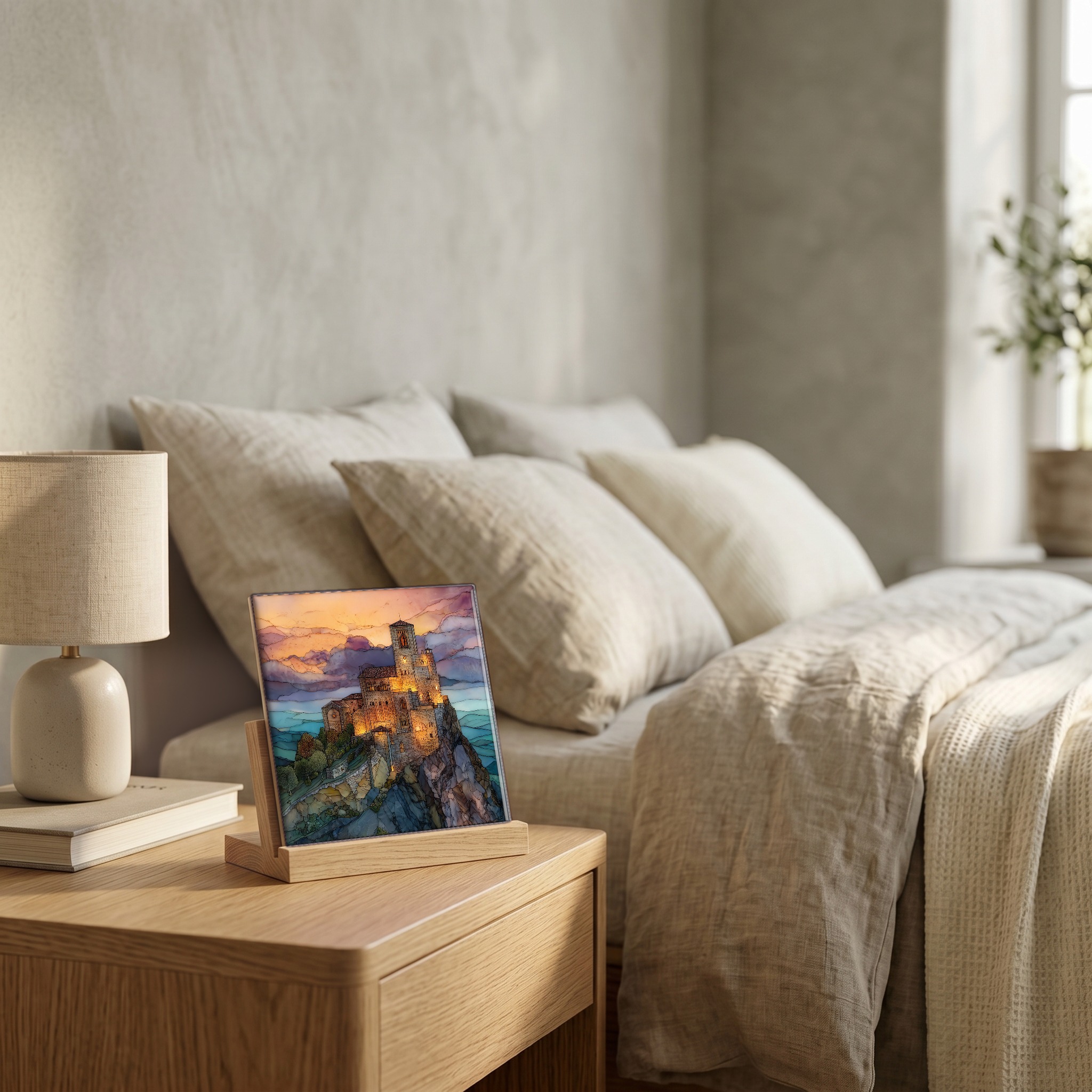
On the nightstand, on a light oak stand.
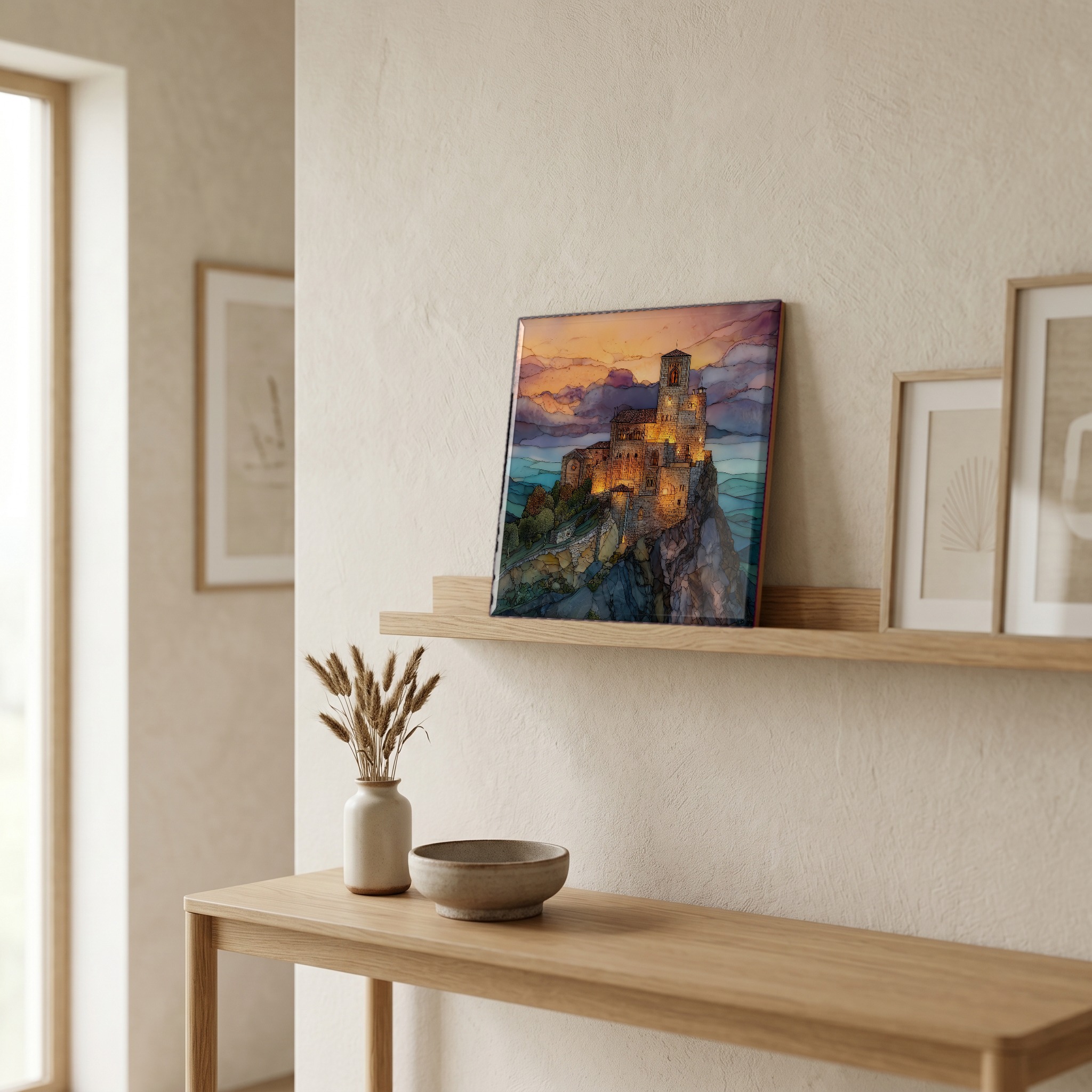
On a picture ledge, where the light comes in.
a note from the studio

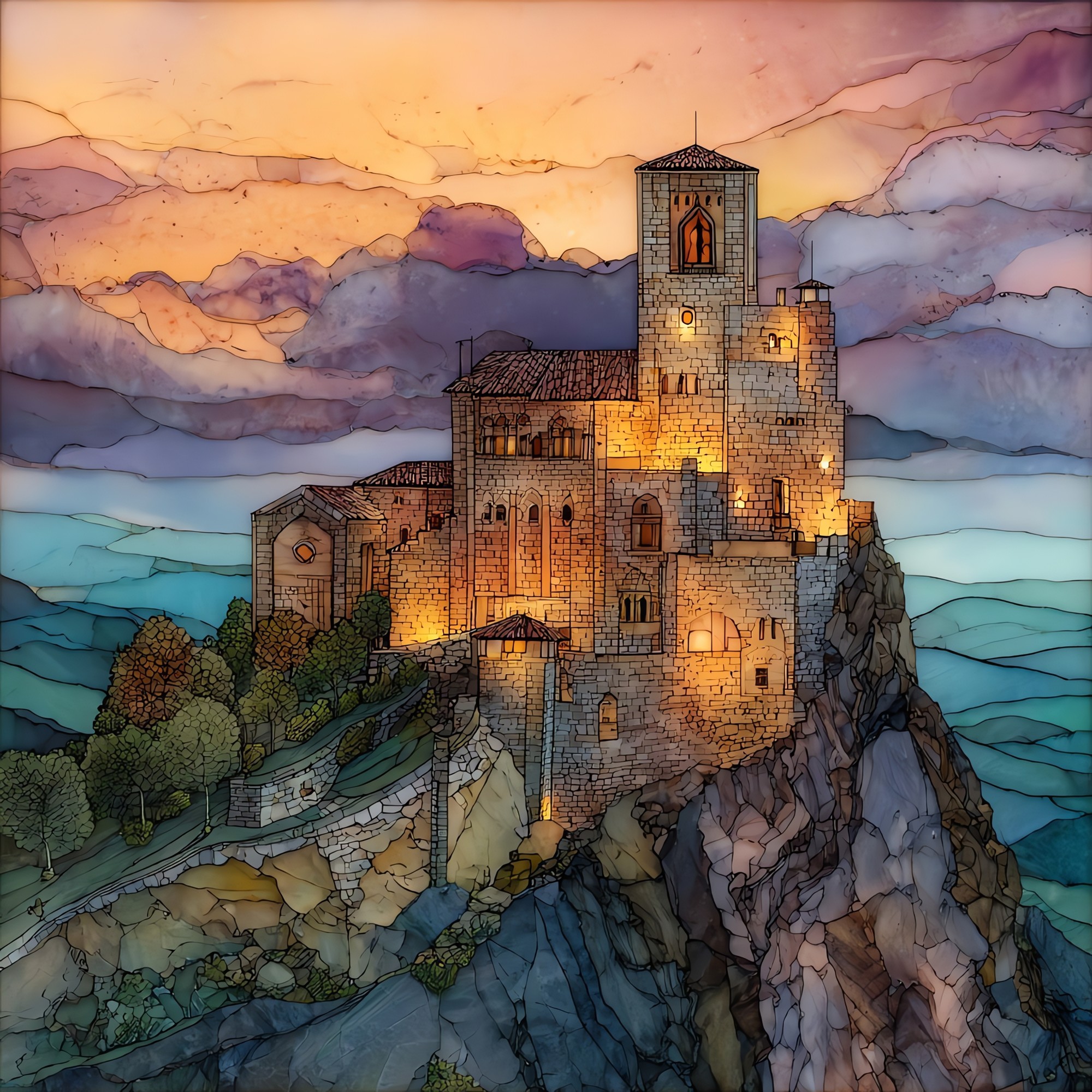
A Romanesque abbey on the summit of Mount Pirchiriano, west of Turin. The stone of the building and the stone of the mountain read as one. The lower wall rises straight from the cliff face, and the upper wall completes it. It sits on the old pilgrim road between Mont-Saint-Michel in Normandy and Monte Sant'Angelo on the Gargano, a line of San Michele sanctuaries that runs the length of Europe. Often the cloud comes up the valley and stops about where the church begins. From below, the eye cannot quite tell where the mountain ends and the building begins.
from the studio
shown in a slim black floating frame · 6 × 6 in
— bring it home

Sacra di San Michele, on ceramic.

Each tile is finished by hand in our Knoxville studio. Artwork is slowly infused into the ceramic surface under high heat and pressure, and rests beneath a thin glossy finish. The colour lives in the surface, not on top of it.

What kind of piece?
One tile — square or rectangle.
How big?
the popular one — counter, shelf, nightstand
6 × 6 in · 15 cm · 1.6 lb
Surface finish
A clear glossy finish — the artwork reads as if under resin. Ideal for show-pieces and framed wall art.
How it sits
A hidden cleat — sits ¼″ proud of the wall.
$58
Hand-finished and shipped from our studio at the foot of the Smokies. On your wall in about ten days.
size
6 × 6 in
15 cm
weighs
1.6 lb
solid in the hand
surface
ceramic, hand-finished
art rests beneath a thin glossy finish
from
Knoxville, TN
our family studio, at the foot of the Smokies
— start a Coaster Set

Pick any four 4-inch tiles — National Parks you've been to, a Smokies set, the four seasons of one place. $ for a set of , cork-backed, ready to live on the table.
comes gift-ready
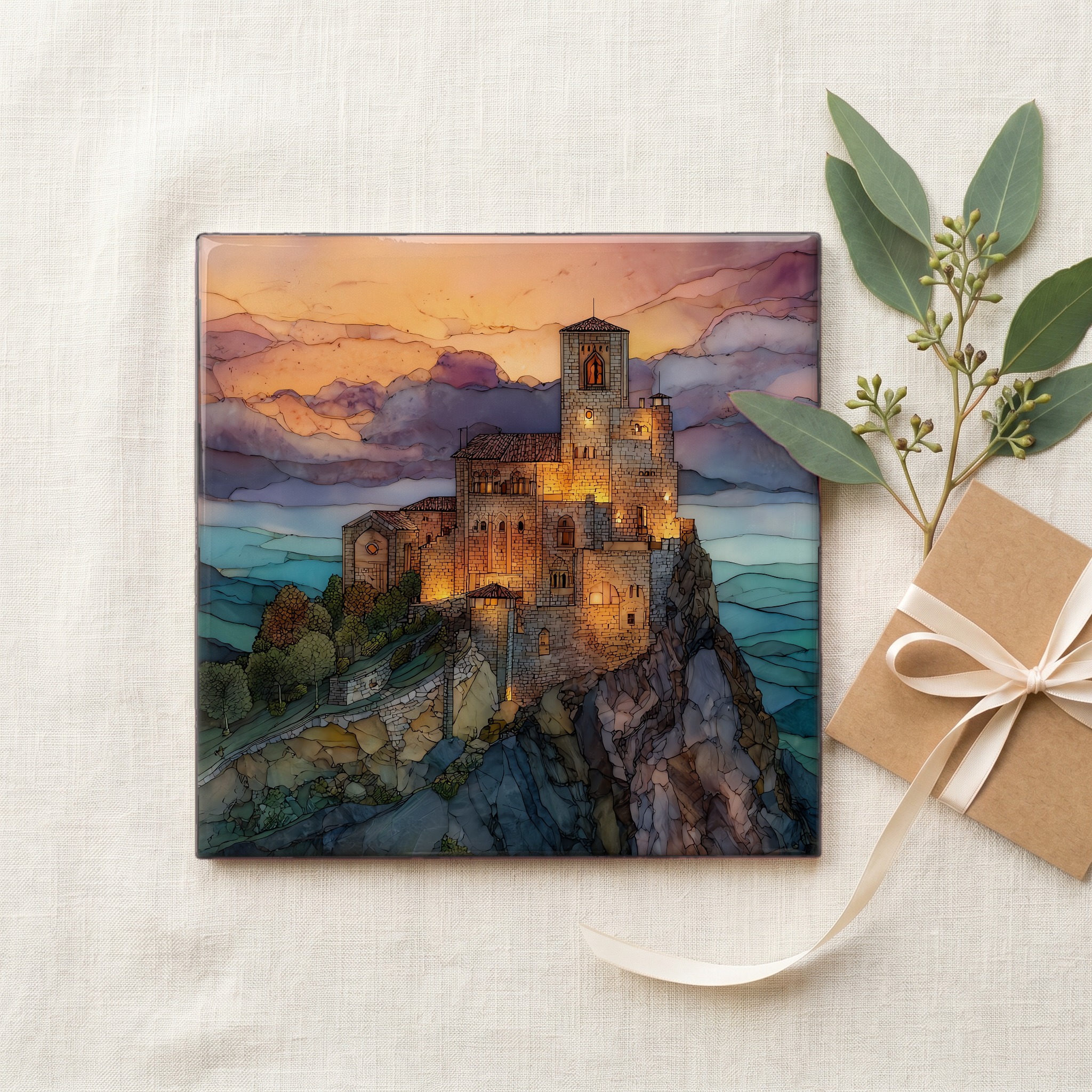
comes gift-ready

Each tile ships in a kraft box, tied with cream ribbon, with a handwritten note from the studio if you'd like to add one.
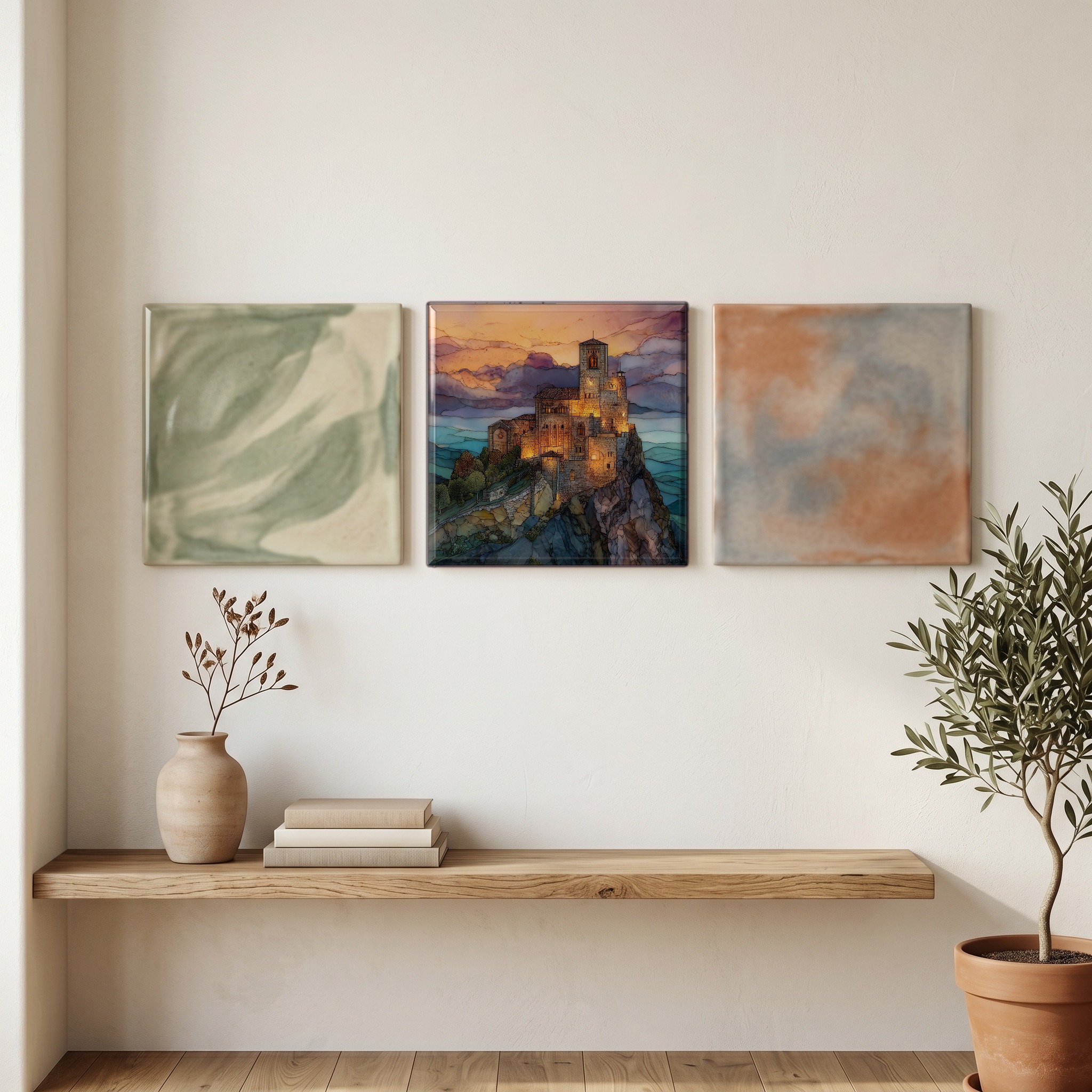
or build a grouping
or build a grouping

Three or five different vistas, hung together — a chapter of places you've been, or want to go.

about Sacra di San Michele

The place, in three passes.

A little of what's known, in case you fall down the rabbit hole — or want to go see it yourself.
the place

The abbey stands on the summit of Mount Pirchiriano at 962 metres, above the town of Sant'Ambrogio di Torino in the Susa Valley, about forty kilometres west of Turin. Founded between 983 and 987 by Hugh of Montboissier, a nobleman from the Auvergne, it became the mother house of a wide Benedictine network across France, Italy, and Spain. The complex is reached on foot from the village below or by a road that climbs to a small car park beneath the entrance. In 1994 the regional government of Piedmont named the Sacra the official symbol of the region. The Italian writer Umberto Eco has said the abbey was one of the inspirations for The Name of the Rose.

the stone

The oldest stone in the complex is the eleventh-century Scalone dei Morti, the Stairway of the Dead, cut straight into the rock of Pirchiriano and rising beneath a single long vault. At its head stands the Portale dello Zodiaco, a Romanesque doorway carved by Master Nicholaus around 1130, whose columns trace the signs of the zodiac and the figures of the constellations. The church above, consecrated in the twelfth century, was completed in stages through the fifteenth. The lower courses of the wall are not built on the mountain so much as continued from it. Masonry and bedrock join without a seam at the base of the cliff.

— informed by Wikipedia
the visit

The Sacra stands 962 metres above sea level on Mount Pirchiriano. The historic footpath from Sant'Ambrogio di Torino climbs through chestnut woods in roughly an hour and a half. By car the approach is from the A32 motorway out of Turin, about an hour away, to a small parking area at Mortera, a ten-minute walk below the entrance. The visit climbs through the Scalone dei Morti to the upper church and the terrace that looks east down the Susa Valley. Opening hours run from morning through mid-afternoon, with longer hours in summer. The Cammino di San Michele, the long pilgrim path that links the abbey to its sister sanctuaries, passes through the courtyard.

where
Italy · Sant'Ambrogio di Torino, Piedmont
elevation
962 m · 3,156 ft
position
45.0975° N · 7.3431° E
the neighborhood

What's nearby.

A handful of named places within an hour's walk or short drive. Some we've already painted; some we will.
7 km E
Laghi di Avigliana
lake nature park
15 km E
Castello di Rivoli
castle and contemporary art museum
30 km W
Susa
Roman valley town
40 km E
Turin
city
N
Sacra di San Michele
Laghi di Avigliana
Castello di Rivoli
Susa
Turin
common questions

What people ask.

A few questions we get about Sacra di San Michele — and about bringing the piece home.
about the place

The abbey stands on the summit of Mount Pirchiriano at 962 metres, above the Susa Valley about forty kilometres west of Turin in Piedmont, northern Italy. The closest village in the valley below is Sant'Ambrogio di Torino.

The first foundation dates to between 983 and 987, when Hugh of Montboissier, a nobleman from the Auvergne, built a chapel near the summit. The Romanesque church and the great Scalone dei Morti were completed across the twelfth century, with later additions through the fifteenth.

In 1994 the regional government of Piedmont declared the Sacra the official symbol of the region by law. The decision recognised the abbey's role in Piedmontese history and its visibility along the Susa Valley, the historic route between France and Italy.

The Italian writer Umberto Eco has said the Sacra was one of several Benedictine monasteries that shaped the imagined setting of his 1980 novel The Name of the Rose. The abbey's steep stair, library, and cliffside silhouette stood behind the fictional one.

By car the common approach is the A32 motorway from Turin to the Avigliana exit, then up to a parking area at Mortera, a ten-minute walk below the entrance. On foot, the historic pilgrim path climbs from Sant'Ambrogio di Torino in roughly ninety minutes.

The Scalone dei Morti is the eleventh-century stone stair that climbs through the lower rock of the abbey to the Portale dello Zodiaco and the upper church. Its name comes from the burial niches once visible along its walls.

Both sanctuaries belong to a chain of San Michele Arcangelo sites that runs across Europe, sometimes called the Linea Sacra di San Michele. The Sacra sits roughly midway between Mont-Saint-Michel in Normandy and Monte Sant'Angelo on the Gargano in southern Italy.

about the piece in your home

The Sacra is a beloved landmark of Piedmont, and people from Turin or the valley below recognise the silhouette on the skyline from a long way off. A Small or Medium with a handwritten note from the studio carries well for a homecoming or an anniversary.

The tile reads warm and graphic, with gold, terracotta, and stone-grey tones set against deep evening blues. It sits well in Mountain-modern interiors, in monastic-minimal rooms with linen and oak, and in Jewel-tone Maximalist walls where it can hold its own beside heavier framed work.

The current stone-and-linen palette favours these darker, earth-anchored pieces, and the abbey's silhouette gives the room a single vertical anchor without dominating it. A Medium above a console or a Large above a fireplace both work well.

A single Large at twenty inches by twenty inches reads cleanly above a console table. Above a standard sofa, a 4-tile Mural fills the wall comfortably. For a tall feature wall, a 9-tile Mural carries the full scale of the abbey above the valley.

Yes, with the Dura Satin or Matte finish. Both are scratch-resistant and tolerate steam, water, and daily wiping. The Glossy finish is for framed wall pieces and dry rooms; for any installation that meets moisture, ask the studio to substitute Dura Satin at the order stage.

A soft microfibre cloth and warm water are enough for any of the three finishes. The colour is slowly infused into the ceramic surface under high heat and pressure beneath a thin protective layer, so it will not lift with normal household cleaning.

Yes. Every WenderVista piece is original to the studio in Knoxville, Tennessee, drawn under Reid Wender's eye in our stained-glass and alcohol-ink visual language. No licensing, no third-party stock, no syndication. Each tile carries the studio's mark on the reverse.

if this one stayed with you

A few you might also love.

Hand-picked by the eye that found Sorapis. Same air, same kind of quiet.
— a collection

The Italian Dolomites,
painted slow.

The valleys between Cortina and Val Gardena, the tarns you walk an hour to see, the towers that turn the colour of a banked fire just before dark. Wander the collection by valley, by season, or follow the path Reid walked.

Tre Cime
Braies
Misurina
Sorapis
Cinque Torri
Sassolungo
Marmolada