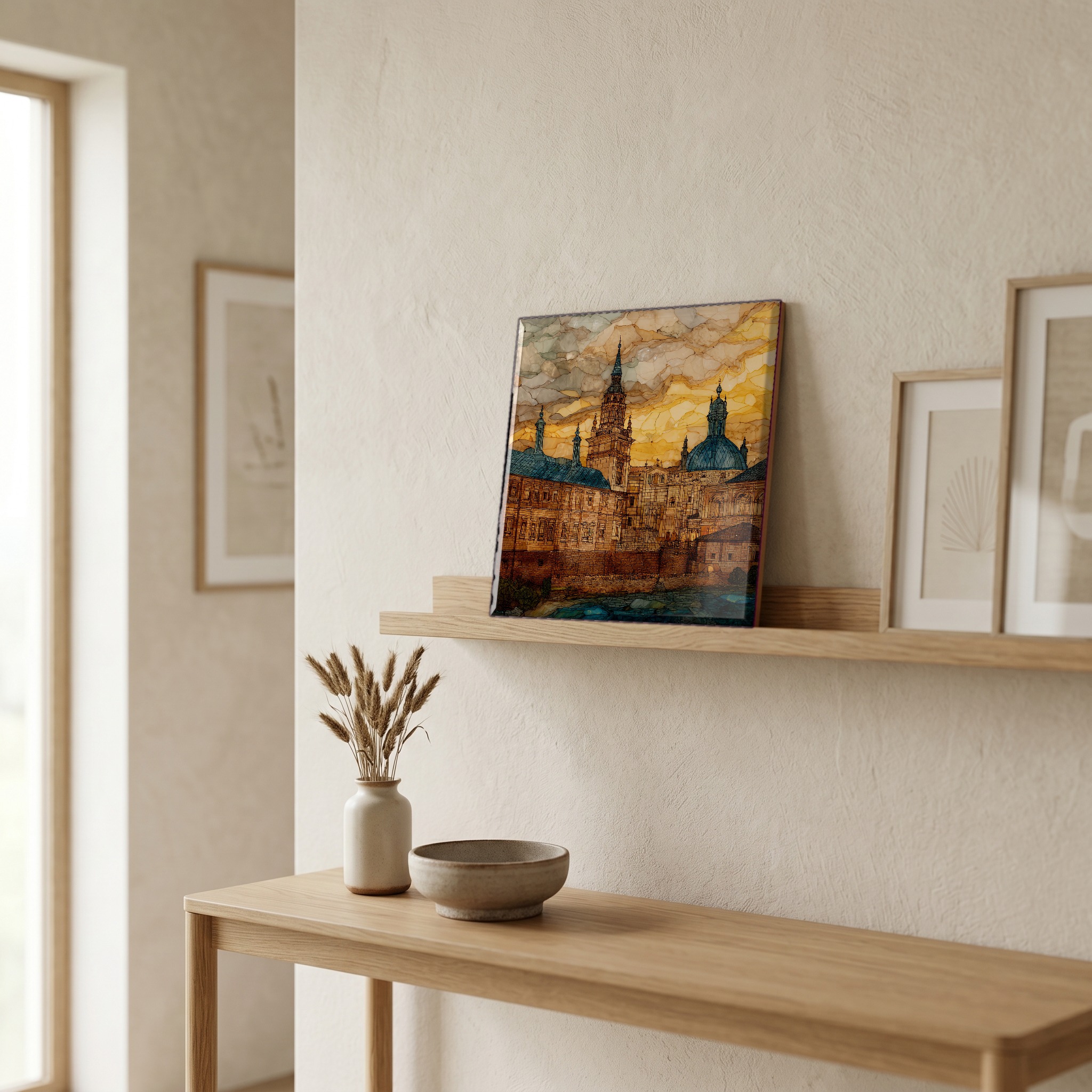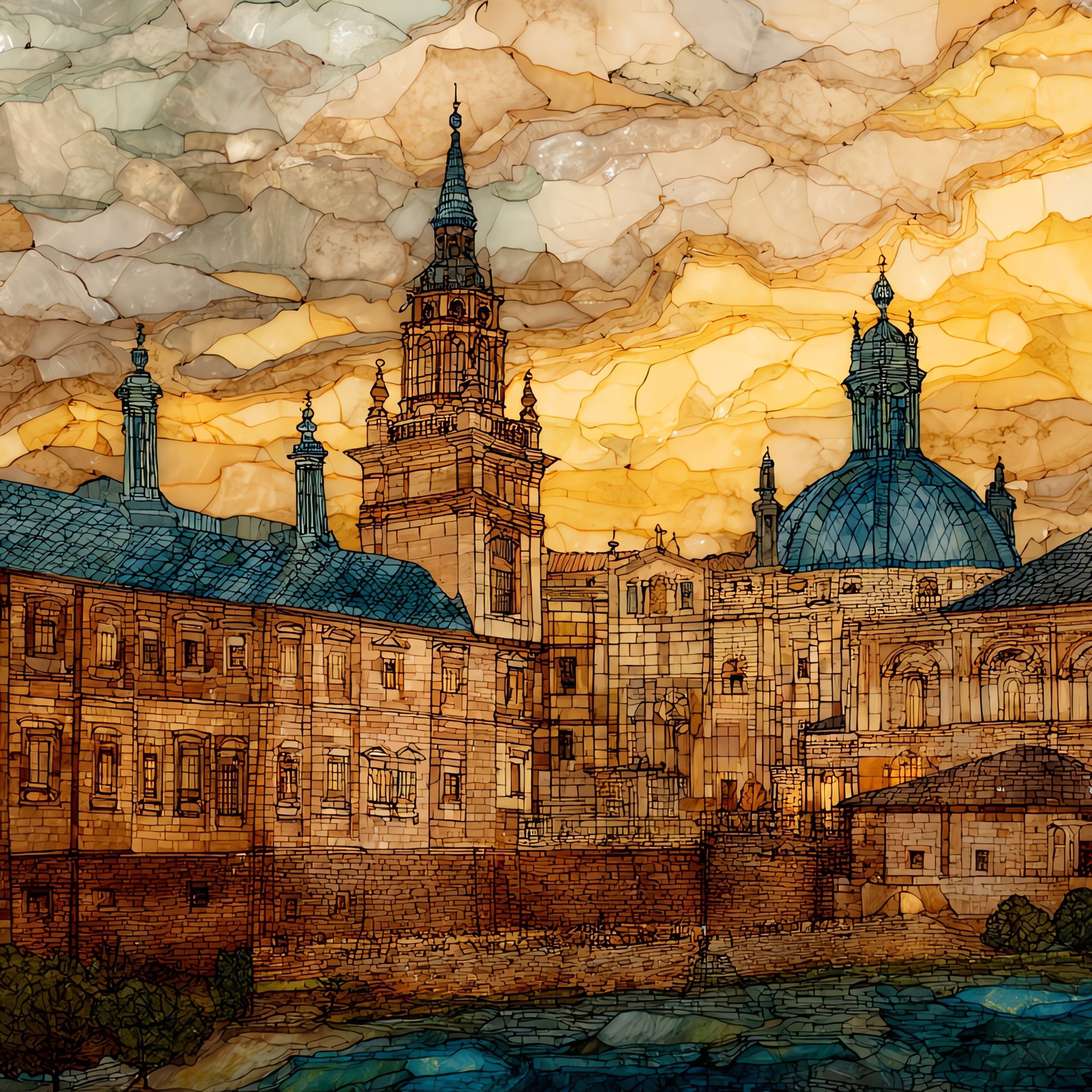
Wender·Vista
Royal Palace of Turin
shown on ceramic, 12-inch tileItaly
on Piazza Castello, in the old centre of Turin

Royal Palace of Turin

the gilded rooms a kingdom left behind.

Where it lives

Not only on a wall.

A small tile on the nightstand catching the morning. A larger one above the fire. Yours, wherever you spend the slow hours.
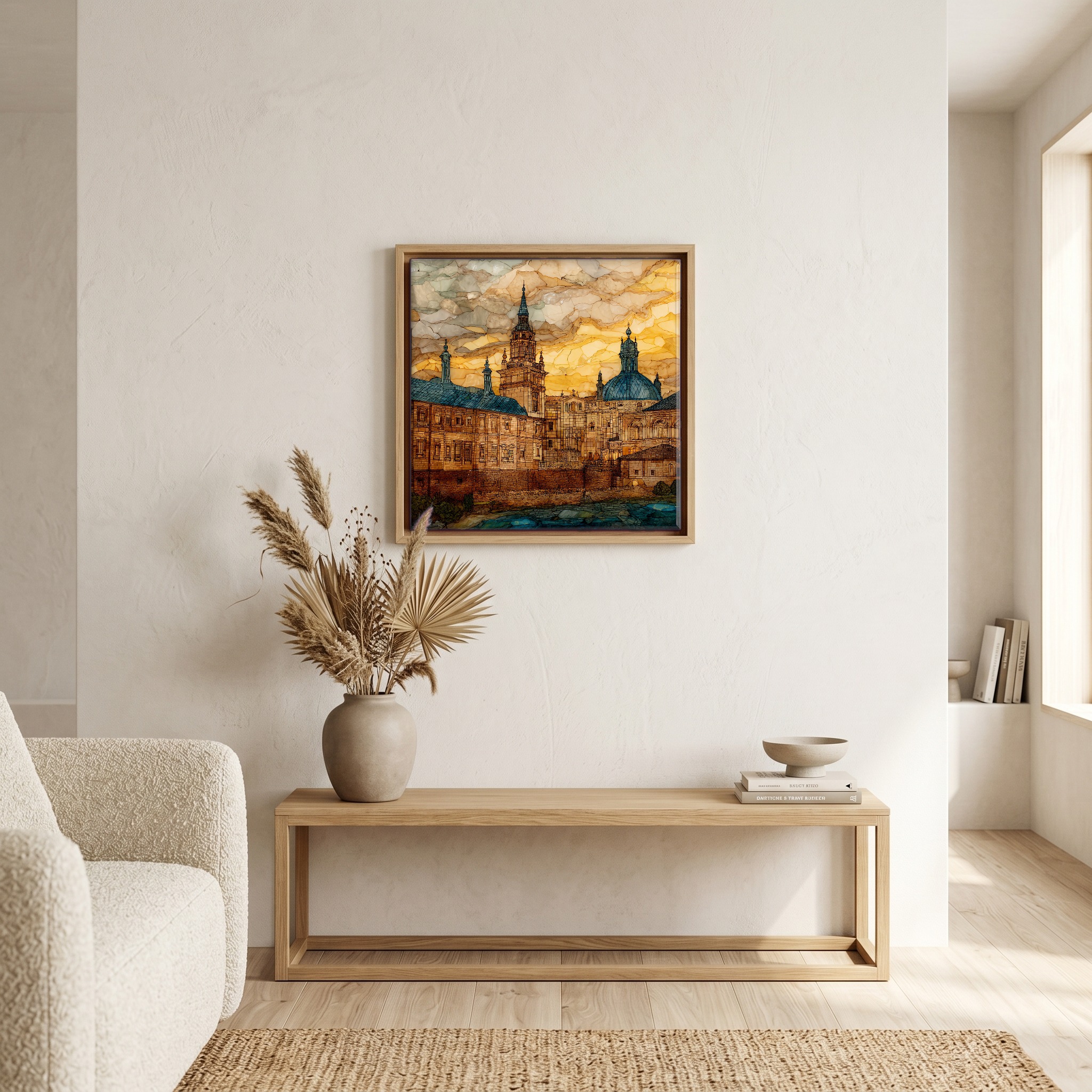
Above the bench, in a warm oak surround.
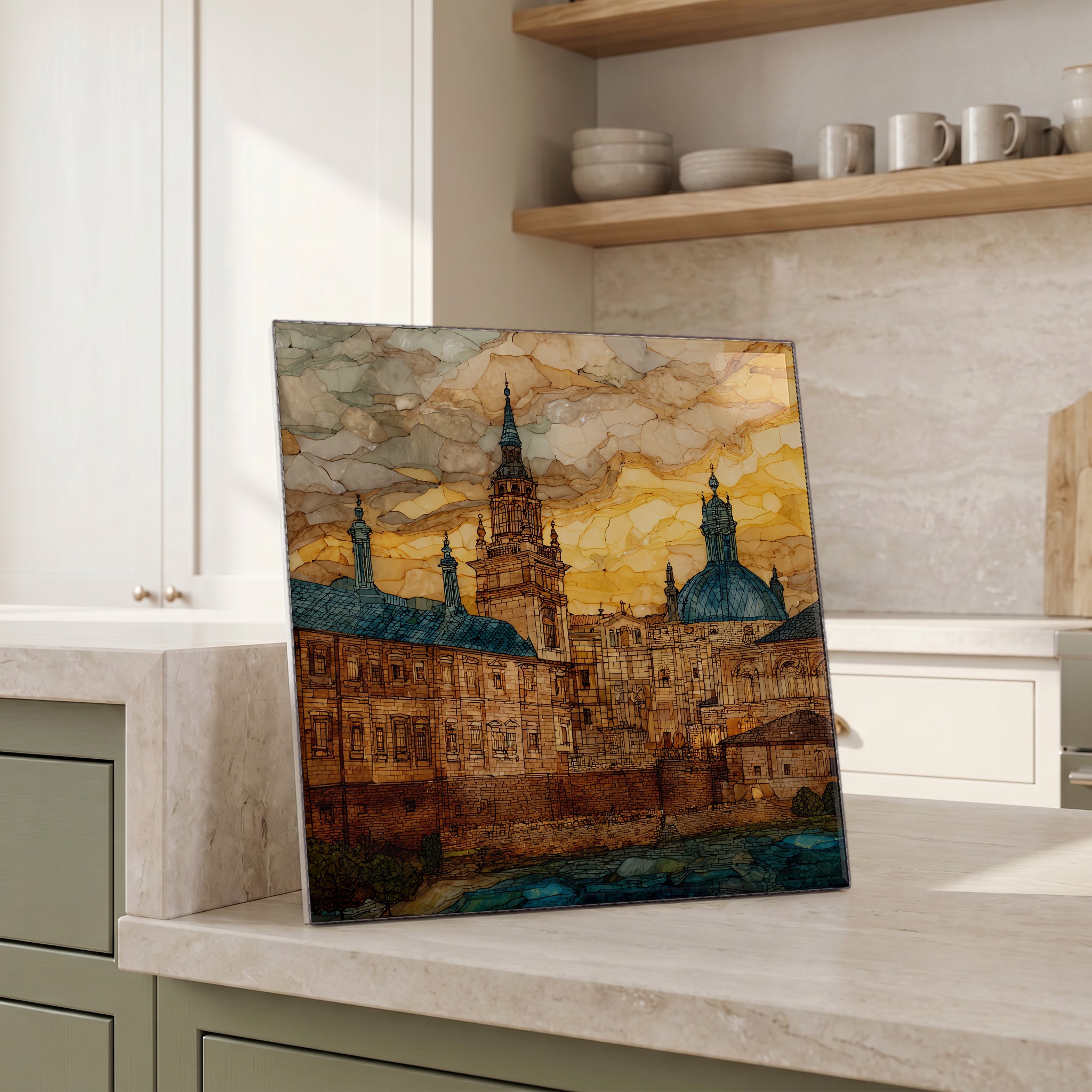
Beside the kettle, propped on the counter.
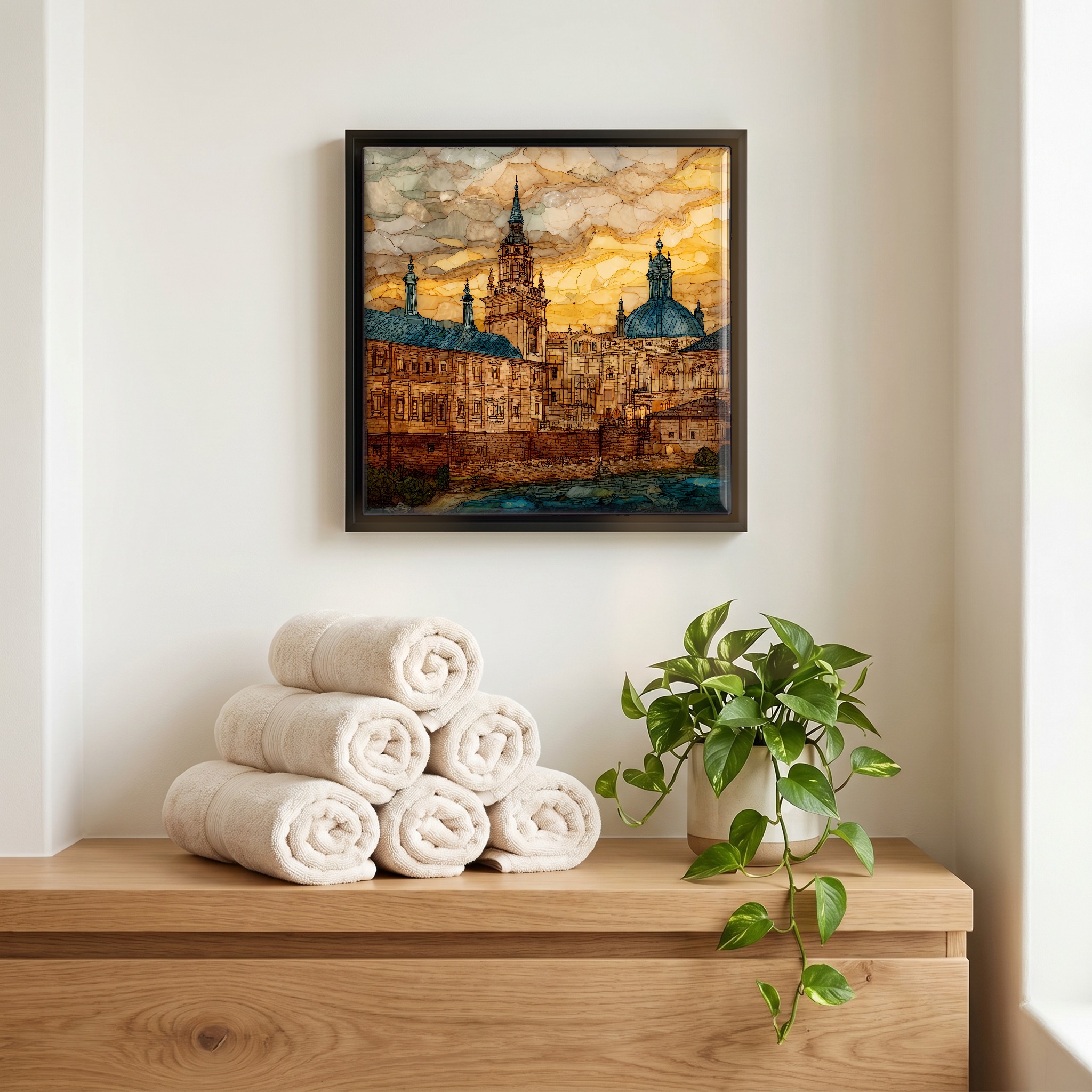
Above the linens, in a slim black surround.
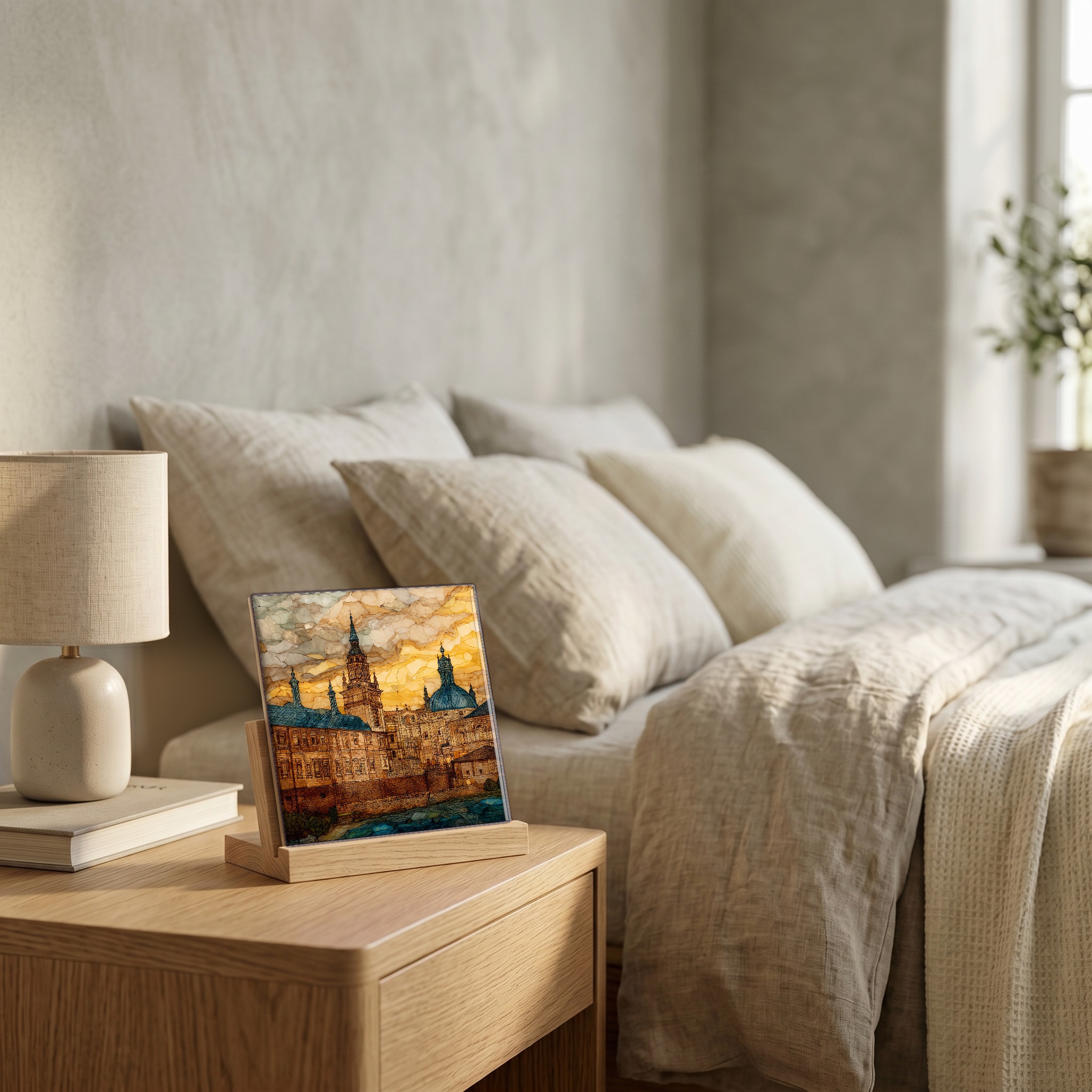
On the nightstand, on a light oak stand.
On a picture ledge, where the light comes in.
a note from the studio

The Savoy seat at the top of Piazza Castello, with the iron gates and the Dioscuri above them. The dynasty held it for three centuries before the capital moved south and the rooms became a museum. Inside: Juvarra's Scissor Staircase, the throne room kept under lamplight, the Royal Library where Leonardo's red-chalk self-portrait sits in a vault that opens only on special occasions. Behind the palace, the gardens André Le Nôtre drew up for the dukes in 1697.
from the studio
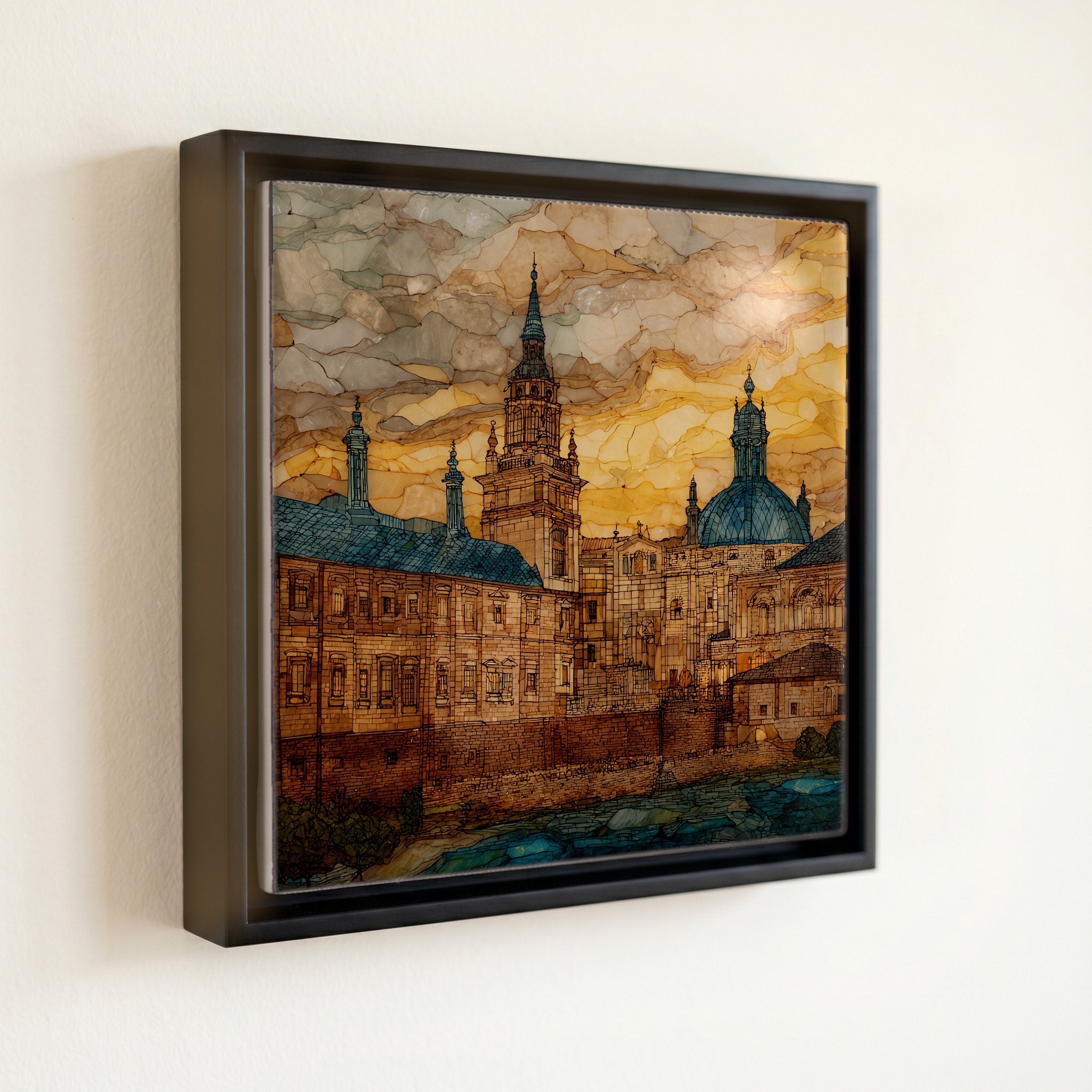
shown in a slim black floating frame · 6 × 6 in
— bring it home

Royal Palace of Turin, on ceramic.

Each tile is finished by hand in our Knoxville studio. Artwork is slowly infused into the ceramic surface under high heat and pressure, and rests beneath a thin glossy finish. The colour lives in the surface, not on top of it.

What kind of piece?
One tile — square or rectangle.
How big?
the popular one — counter, shelf, nightstand
6 × 6 in · 15 cm · 1.6 lb
Surface finish
A clear glossy finish — the artwork reads as if under resin. Ideal for show-pieces and framed wall art.
How it sits
A hidden cleat — sits ¼″ proud of the wall.
$58
Hand-finished and shipped from our studio at the foot of the Smokies. On your wall in about ten days.
size
6 × 6 in
15 cm
weighs
1.6 lb
solid in the hand
surface
ceramic, hand-finished
art rests beneath a thin glossy finish
from
Knoxville, TN
our family studio, at the foot of the Smokies
— start a Coaster Set

Pick any four 4-inch tiles — National Parks you've been to, a Smokies set, the four seasons of one place. $ for a set of , cork-backed, ready to live on the table.
comes gift-ready
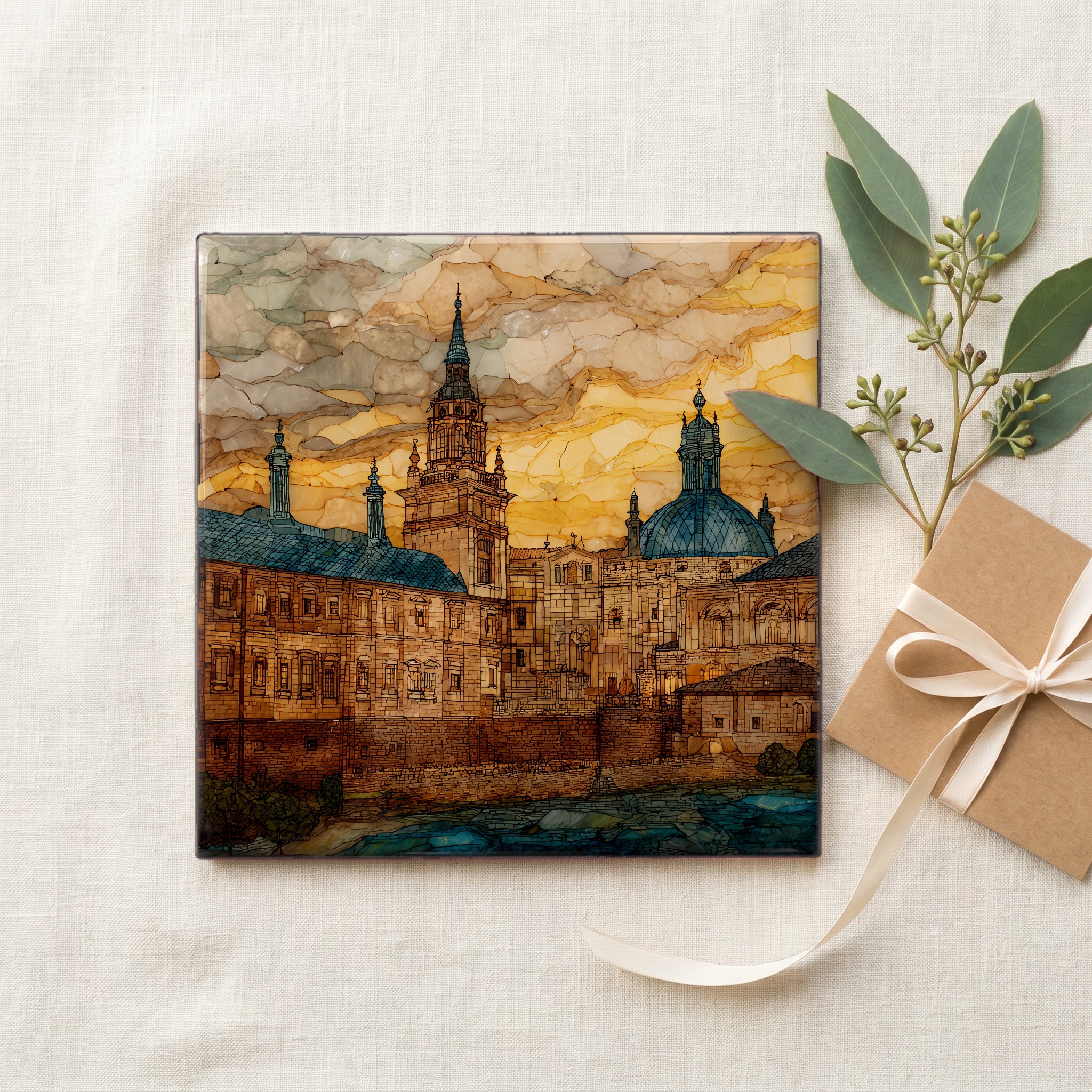
comes gift-ready

Each tile ships in a kraft box, tied with cream ribbon, with a handwritten note from the studio if you'd like to add one.
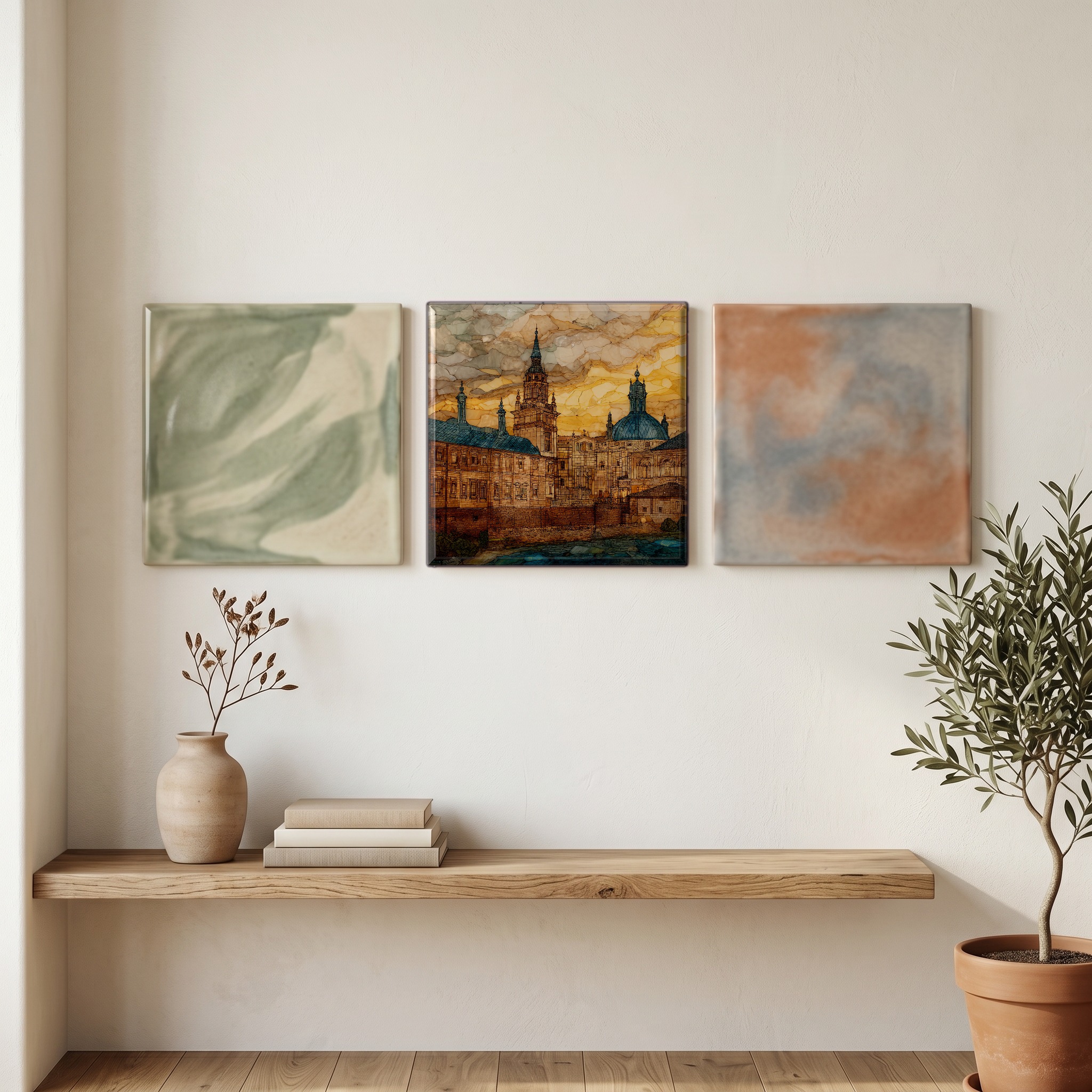
or build a grouping
or build a grouping

Three or five different vistas, hung together — a chapter of places you've been, or want to go.

about Royal Palace of Turin

The place, in three passes.

A little of what's known, in case you fall down the rabbit hole — or want to go see it yourself.
the place

The Royal Palace of Turin sits at the head of Piazza Castello in the historic centre of the city, at the northwest corner of what was once the Roman castrum of Augusta Taurinorum. The Savoys moved their capital here from Chambéry in 1563, and the palace became the formal royal residence in 1660 under Carlo Emanuele II. The complex was first designed by Ascanio Vitozzi and successively expanded by Amedeo di Castellamonte and Filippo Juvarra. It was inscribed on the UNESCO World Heritage List in 1997 as the lead site of the Residences of the Royal House of Savoy, and today forms the core of the Musei Reali alongside the Royal Armoury, the Royal Library, the Sabauda Gallery, and the Archaeological Museum.

the stone

The facade was built in the 1640s to designs by Amedeo di Castellamonte, restrained and almost civic in proportion against the baroque excess of the interior. Behind the iron gates of 1846, designed by Pelagio Palagi with Abbondio Sangiorgio's bronze Dioscuri above them, the rooms open into Filippo Juvarra's Scissor Staircase of 1720, a double helix that climbs without a visible support. The Chapel of the Holy Shroud, attached to the palace's east flank, is Guarino Guarini's stacked-arch dome of 1694, returned to the public in 2018 after a twenty-one-year closure that followed the 1997 fire.

the visit

The Musei Reali complex is open Tuesday through Sunday, generally 9:00 to 19:00, with last admission at 18:00 and full closure on Mondays. A single Musei Reali ticket covers the Royal Palace, the Royal Armoury, the Sabauda Gallery, the Royal Library, and the Archaeological Museum, with free admission on the first Sunday of each month under Italy's Domenica al Museo programme for state museums. The Royal Gardens, laid out in 1697 to drawings by André Le Nôtre, are open separately and free of charge from spring through autumn. The Chapel of the Holy Shroud has been included with palace admission since its 2018 reopening.

where
Italy · Turin, Piedmont
elevation
239 m · 784 ft
position
45.0736° N · 7.6861° E
the neighborhood

What's nearby.

A handful of named places within an hour's walk or short drive. Some we've already painted; some we will.
0.1 km SW
Palazzo Madama
Savoy castle and museum
0.2 km W
Turin Cathedral
Renaissance cathedral
0.5 km SW
Museo Egizio
Egyptology museum
0.5 km S
Piazza San Carlo
baroque square
0.7 km SE
Mole Antonelliana
nineteenth-century landmark
6 km E
Basilica of Superga
Savoy basilica on a hill
10 km NW
Reggia di Venaria Reale
Savoy royal palace and gardens
12 km SW
Palazzina di Stupinigi
Savoy hunting lodge
N
Royal Palace of Turin
Palazzo Madama
Turin Cathedral
Museo Egizio
Piazza San Carlo
Mole Antonelliana
Basilica of Superga
Reggia di Venaria Reale
common questions

What people ask.

A few questions we get about Royal Palace of Turin — and about bringing the piece home.
about the place

The Royal Palace of Turin stands at the head of Piazza Castello in central Turin, in Italy's Piedmont region. It was the principal residence of the House of Savoy from 1660 until 1865, when the Italian capital moved from Turin to Florence.

The original plan is by Ascanio Vitozzi, with the main facade built to designs by Amedeo di Castellamonte in the 1640s. Filippo Juvarra added the celebrated Scissor Staircase in the 1720s, and Pelagio Palagi designed the iron gates and Dioscuri statues in 1846.

Yes. It was inscribed on the UNESCO World Heritage List in 1997 as the lead site of the Residences of the Royal House of Savoy, a serial nomination that covers twenty-two Savoy palaces and hunting lodges in and around Turin.

The Shroud itself is kept in Turin Cathedral, in a chapel built between 1668 and 1694 by Guarino Guarini and physically attached to the Royal Palace. The chapel reopened to the public in 2018 after a twenty-one-year restoration following the 1997 fire. The Shroud is rarely on public display.

The Musei Reali is the museum complex that has unified the Royal Palace since 2014. It brings the Royal Apartments together with the Royal Armoury, the Royal Library, the Sabauda Gallery, the Archaeological Museum, and the Royal Gardens under a single administration and a single ticket.

The Biblioteca Reale holds about 200,000 volumes and the most famous self-portrait of Leonardo da Vinci, drawn in red chalk around 1512. The drawing is fragile and shown publicly only on rare occasions; a high-quality facsimile is normally on view in its place.

Spring and early autumn give the gentlest weather for walking the Royal Gardens. The palace and museums are open Tuesday through Sunday; afternoons are quieter than late mornings, when school groups and cruise excursions tend to arrive together.

about the piece in your home

The Royal Palace is one of the most recognised buildings in Piedmont and the symbolic seat of the dynasty that unified Italy. A Small or Medium with a handwritten note from the studio carries well; for a milestone gift, the Large reads as the formal portrait of the place.

The tile suits Italianate Maximalist rooms, traditional libraries panelled in walnut or oak, and grand-tour-inspired interiors. The deep stained-glass palette also holds against Jewel-tone Maximalism and against quieter Old-World Neutral schemes, where it becomes the single saturated note on the wall.

The grand-tour and Italian-villa looks have been the dominant traditional direction in interiors for several seasons, with Piedmontese and Tuscan references particularly visible. The Royal Palace sits squarely in that vocabulary while staying specific to one place rather than generic.

A single Large fills the wall above a standard sofa or a long console. A four-tile Mural is the cleanest answer above a sectional or a fireplace; a nine-tile Mural is the dining-room or stairwell wall, planned around the wall's measurements rather than the furniture's.

Yes, in the Dura Satin or Matte finish. The colour is slowly infused into the ceramic surface under high heat and pressure, so it does not fade with steam, splash, or daily cleaning. The Glossy finish is best reserved for dry walls in living rooms or studies.

A soft microfibre cloth and warm water is enough for most rooms. For a Dura Satin or Matte tile in a kitchen or bath, a drop of mild dish soap on the cloth lifts cooking grease and soap film without dulling the surface. Avoid abrasive sponges and ammonia.

Yes. Every WenderVista painting is original to the studio, painted in our distinctive stained-glass and alcohol-ink visual language and hand-finished here in Knoxville. We do not license out, syndicate, or reproduce work from other artists.

if this one stayed with you

A few you might also love.

Hand-picked by the eye that found Sorapis. Same air, same kind of quiet.
— a collection

The Italian Dolomites,
painted slow.

The valleys between Cortina and Val Gardena, the tarns you walk an hour to see, the towers that turn the colour of a banked fire just before dark. Wander the collection by valley, by season, or follow the path Reid walked.

Tre Cime
Braies
Misurina
Sorapis
Cinque Torri
Sassolungo
Marmolada