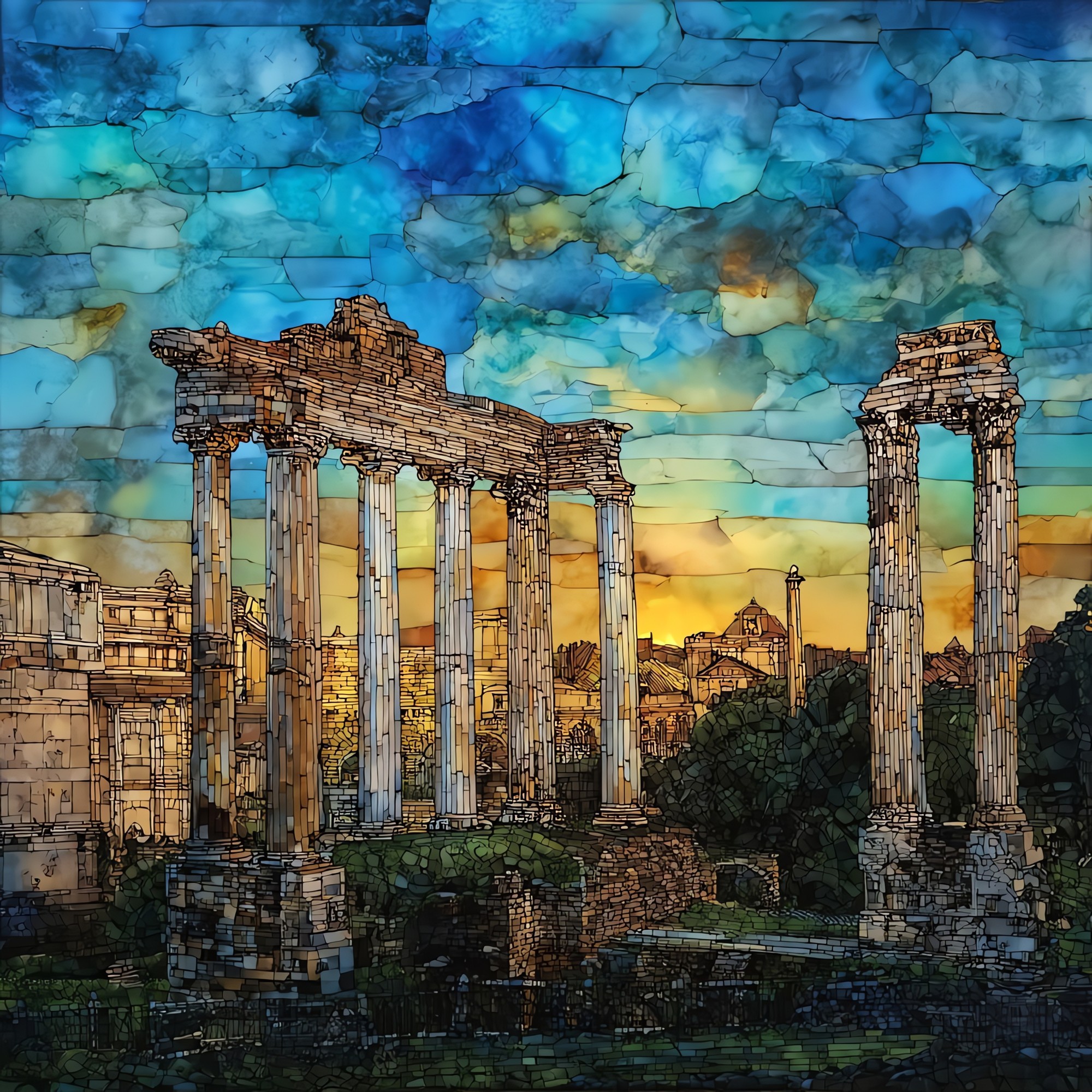
Roman Forum
— the floor of an empire, open to the sky.
Not only on a wall.
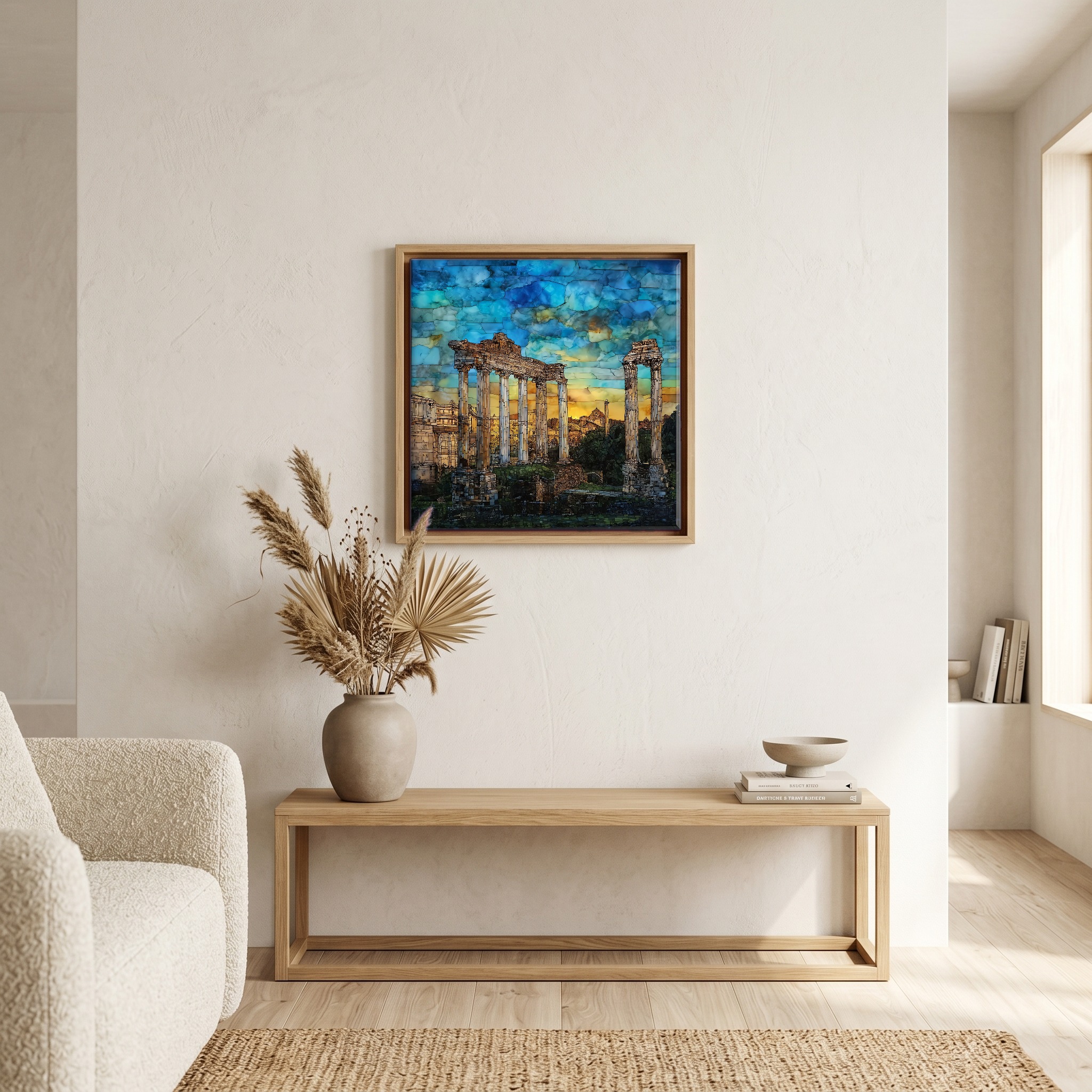
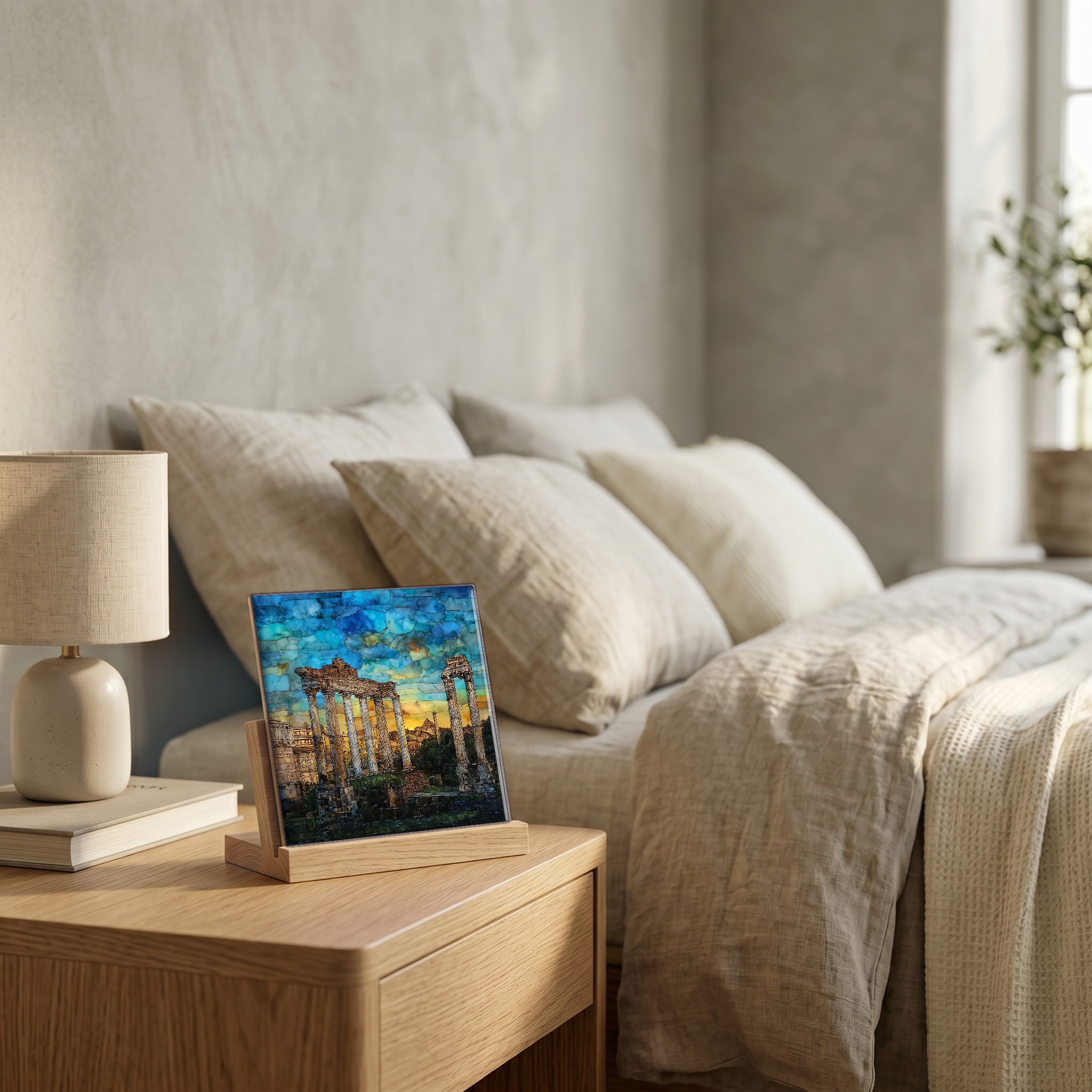
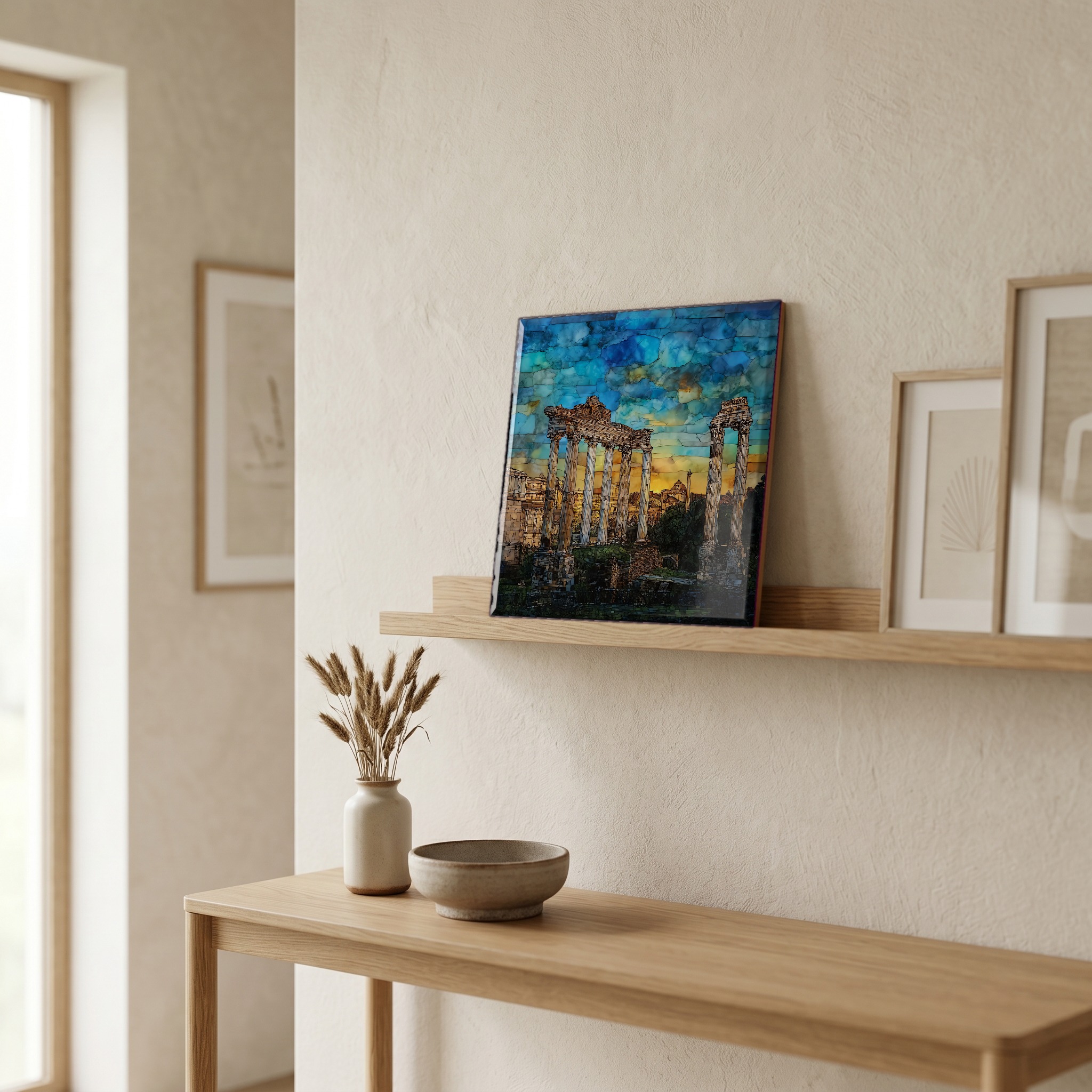
“The valley below the Capitoline Hill, the floor of Rome the empire walked on. Marble bases without their columns, columns without their roofs, weeds in the cracks of the paving. The Arch of Septimius Severus still stands at the western end, the Arch of Titus at the eastern. Best in late afternoon when the travertine takes the light and turns warm. Locals walk the rim of it on their way home. Cats sleep on the broken pediments. A working ruin, in the middle of a working city.
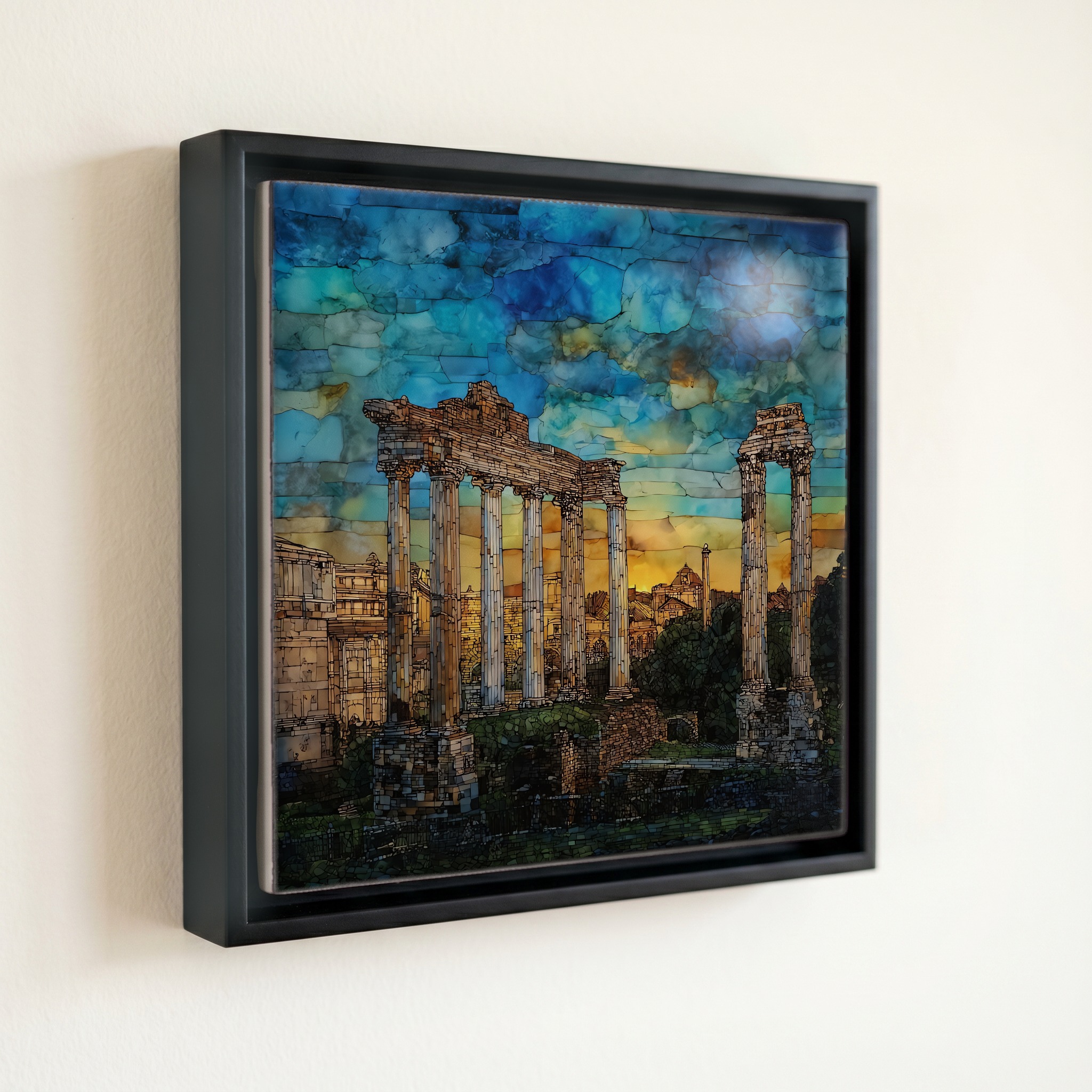
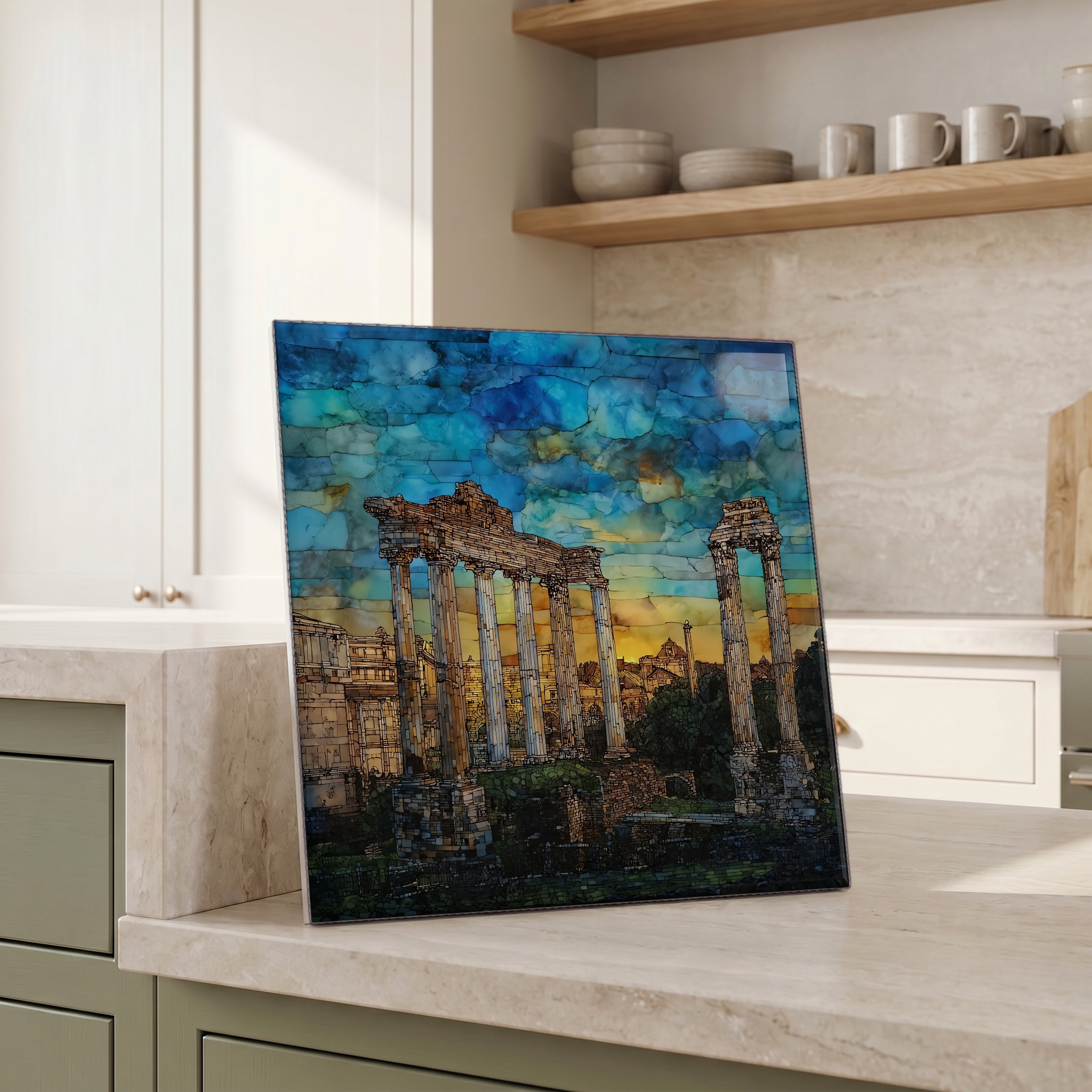
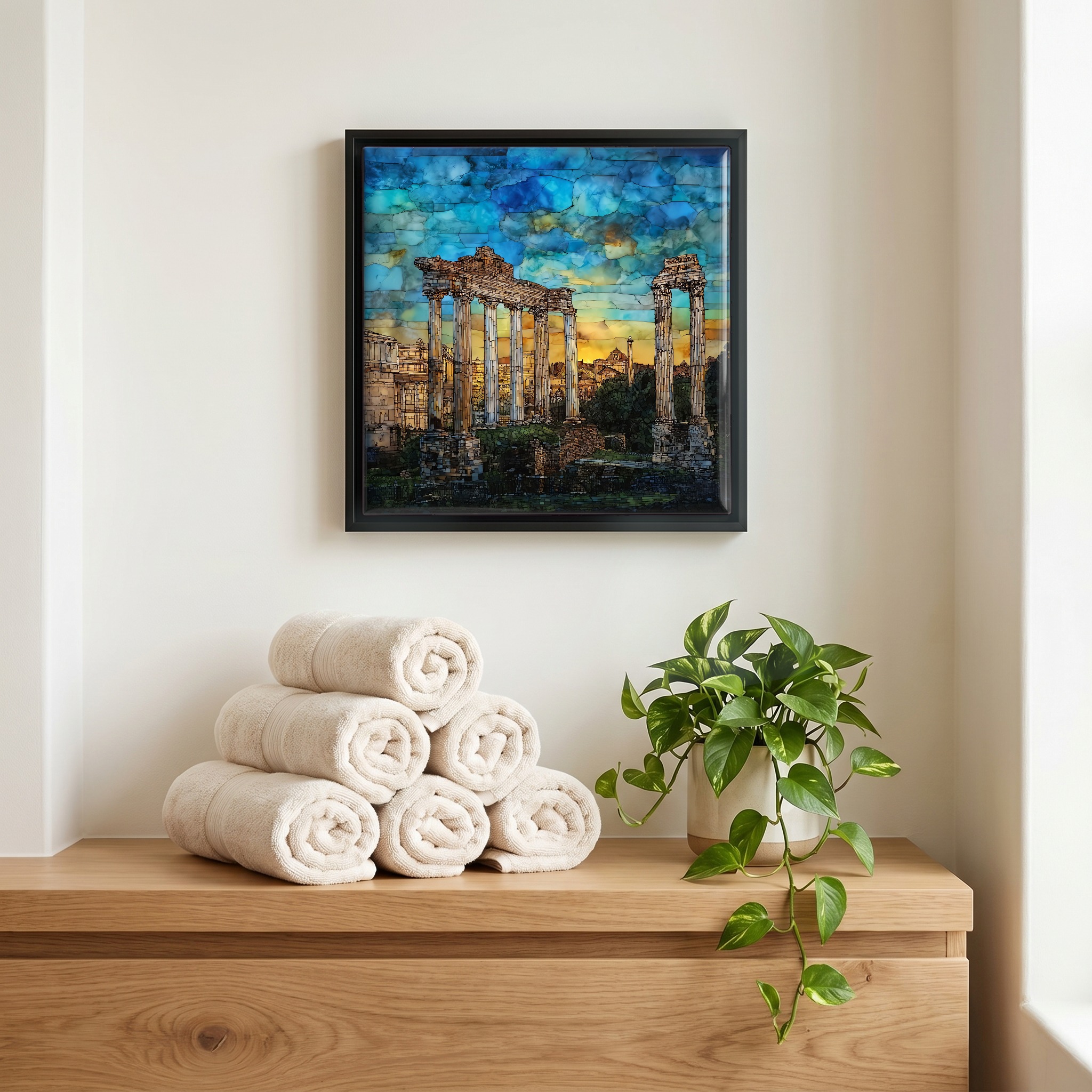
Roman Forum, on ceramic.
Each tile is finished by hand in our Knoxville studio. Artwork is slowly infused into the ceramic surface under high heat and pressure, and rests beneath a thin glossy finish. The colour lives in the surface, not on top of it.
Pick any four 4-inch tiles — National Parks you've been to, a Smokies set, the four seasons of one place. $ for a set of , cork-backed, ready to live on the table.
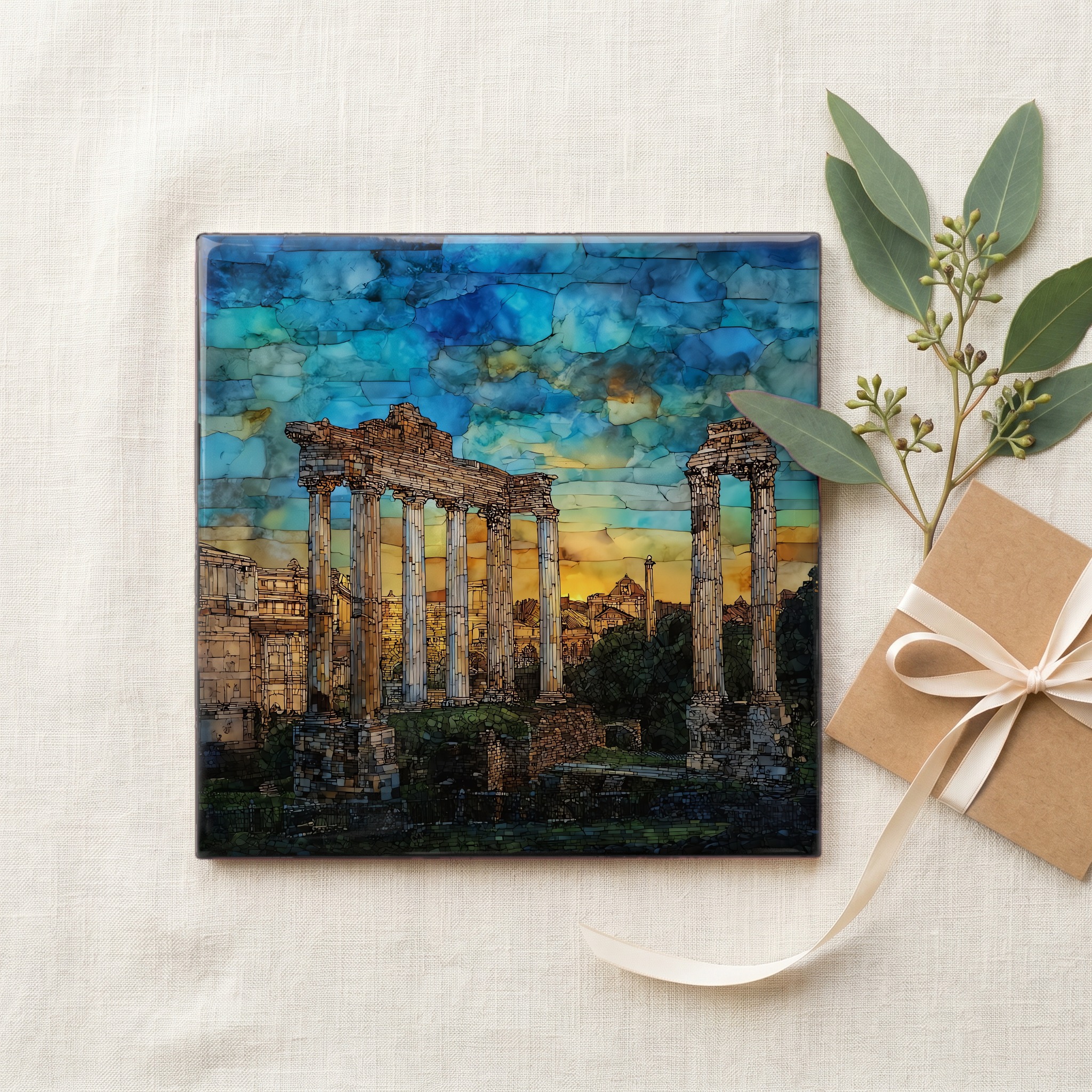
Each tile ships in a kraft box, tied with cream ribbon, with a handwritten note from the studio if you'd like to add one.
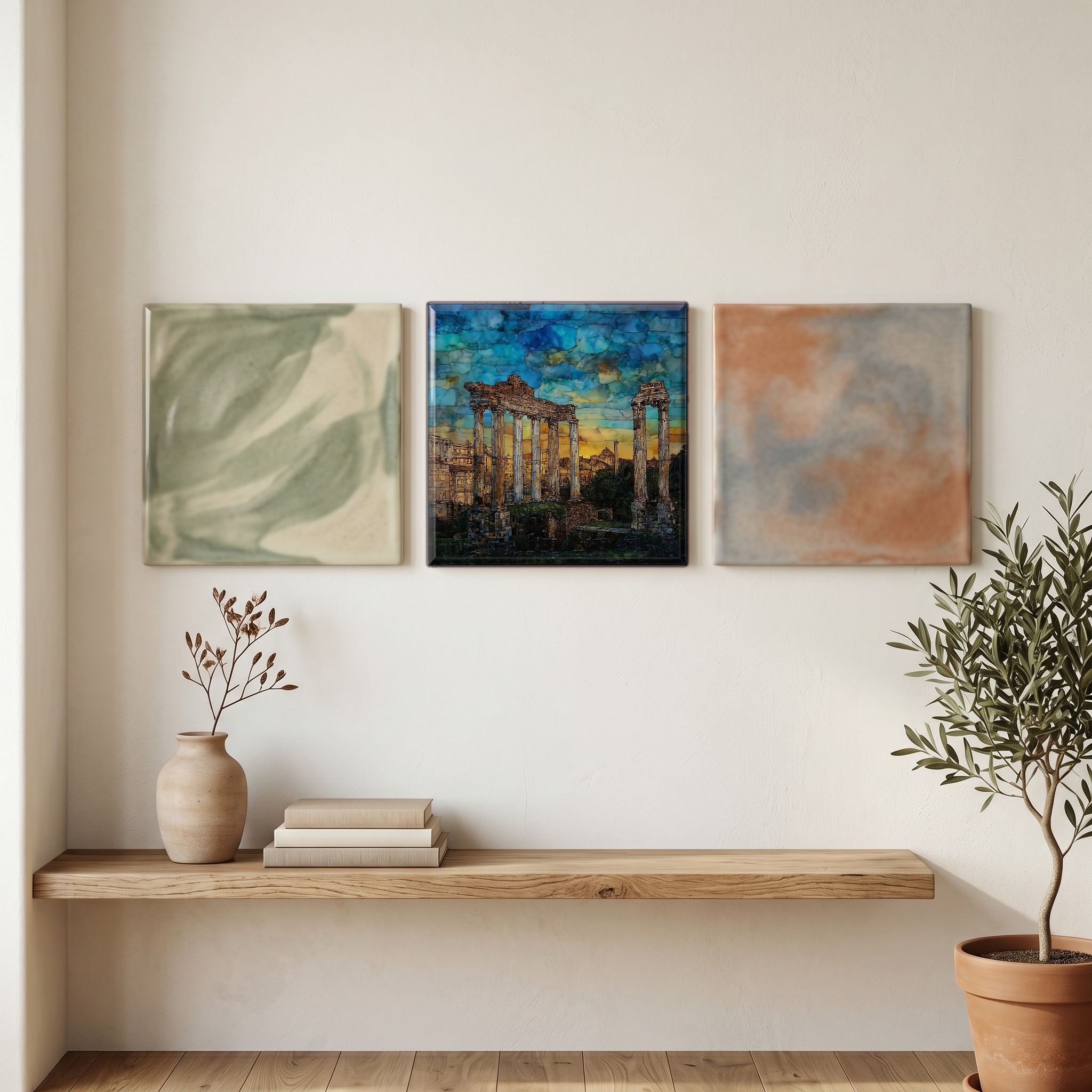
Three or five different vistas, hung together — a chapter of places you've been, or want to go.
The place, in three passes.
The Roman Forum sits in the valley between the Capitoline and Palatine hills, the civic centre of ancient Rome for roughly a thousand years from the 7th century BC. The site began as marshland drained by the Cloaca Maxima, the ancient sewer that still runs from the Forum to the Tiber, and grew into the senate house, law courts, temples, and triumphal route of the Republic and Empire. Today it lies within the Parco archeologico del Colosseo, the archaeological park that also holds the Colosseum and the Palatine Hill. The Forum is part of the UNESCO Historic Centre of Rome, inscribed in 1980.
The Forum's surviving structures are built from three Roman building stones: travertine, the warm cream limestone from the quarries at Tivoli east of the city; tuff, the soft volcanic rock cut from the hills around Rome; and marble, imported from Carrara and from the eastern provinces of the empire. The Arch of Septimius Severus, raised in AD 203, still carries most of its travertine and marble facing. The eight surviving columns of the Temple of Saturn, dating in their present form to the late fourth century, stand on the original podium first laid in 497 BC. Brick and reused stone fill the gaps where five hundred years of medieval Romans took marble for new churches.
The Forum is reached from Via dei Fori Imperiali, a few minutes' walk from the Colosseo stop on Metro Line B. The Parco archeologico del Colosseo sells a combined ticket covering the Forum, the Palatine Hill, and the Colosseum. Opening is 09:00; the closing hour tracks sunset, varying from mid-afternoon in deep winter to early evening in midsummer. Late afternoon, in the last two hours before closing, is when the travertine warms and the crowds thin. The first Sunday of each month from October through March is free admission, under Italian Ministry of Culture policy.