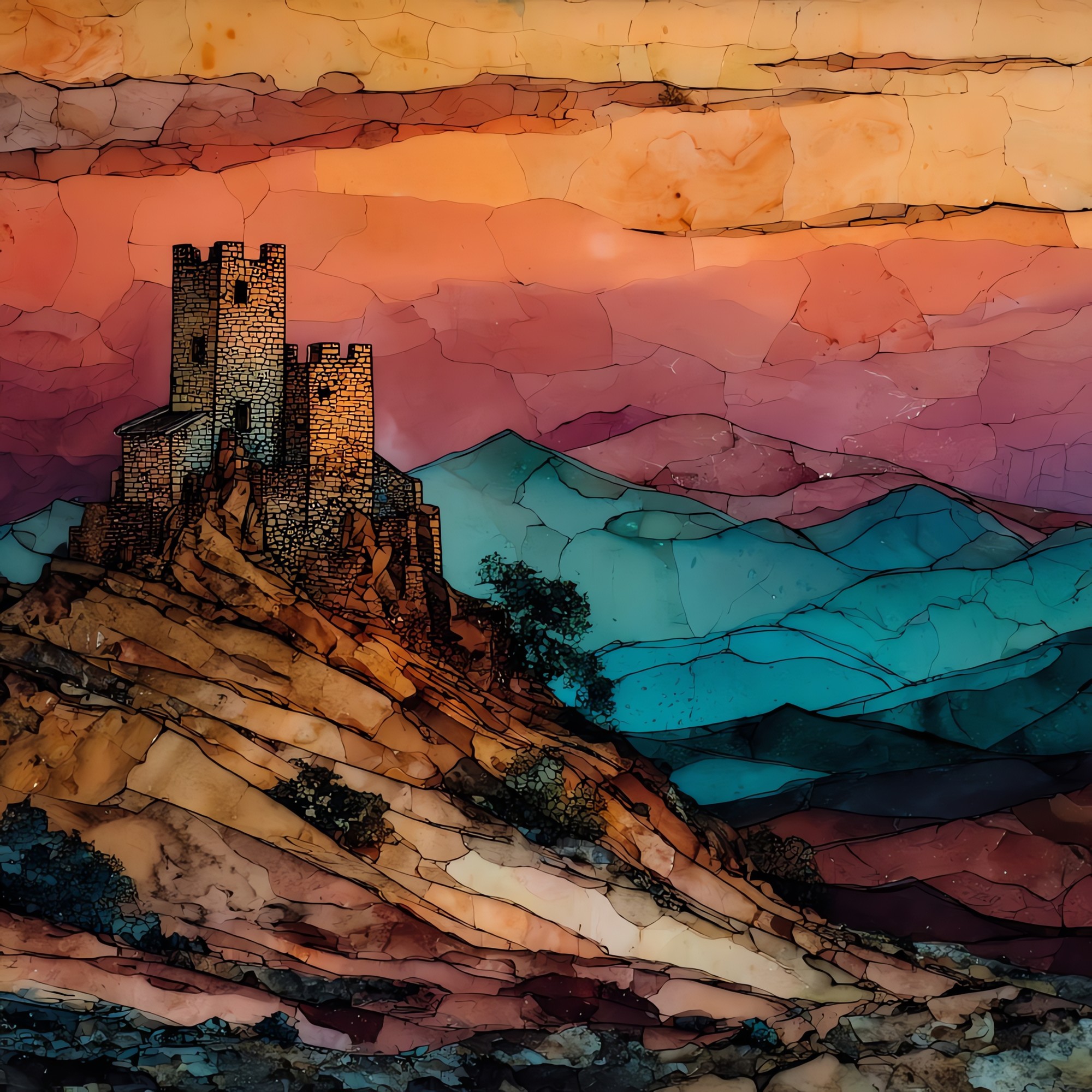
Rocca Calascio
— stone the evening light won't let go of.
Not only on a wall.
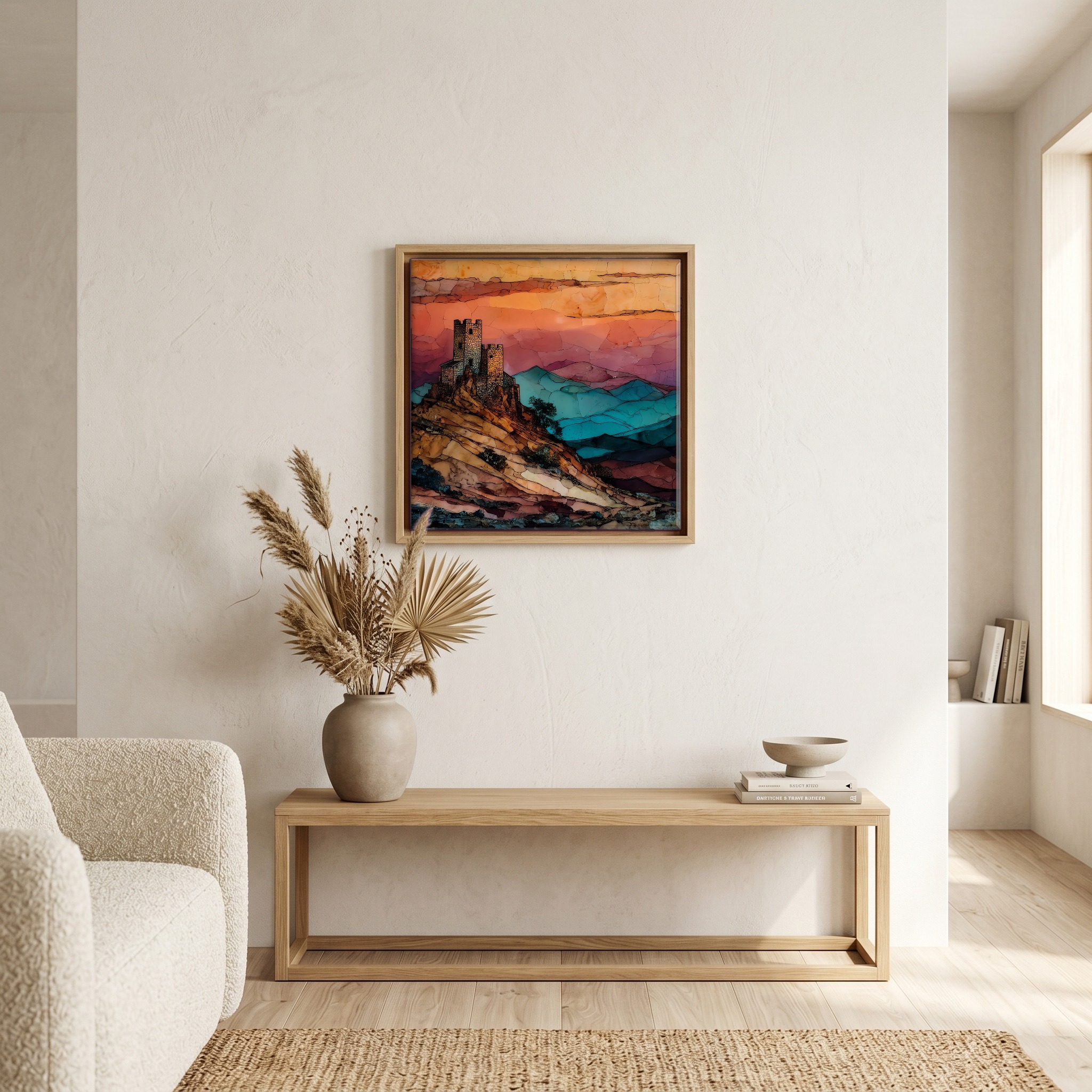
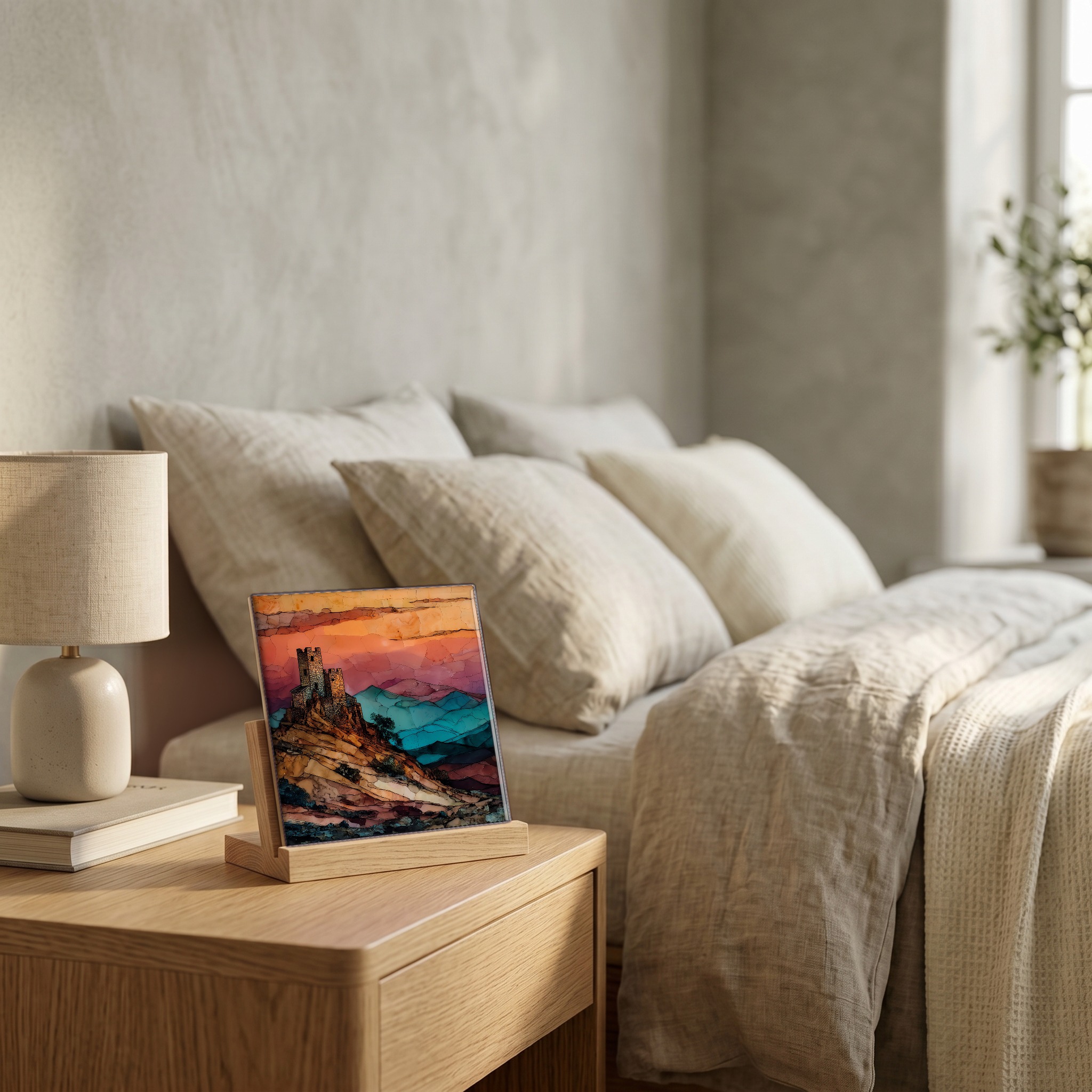
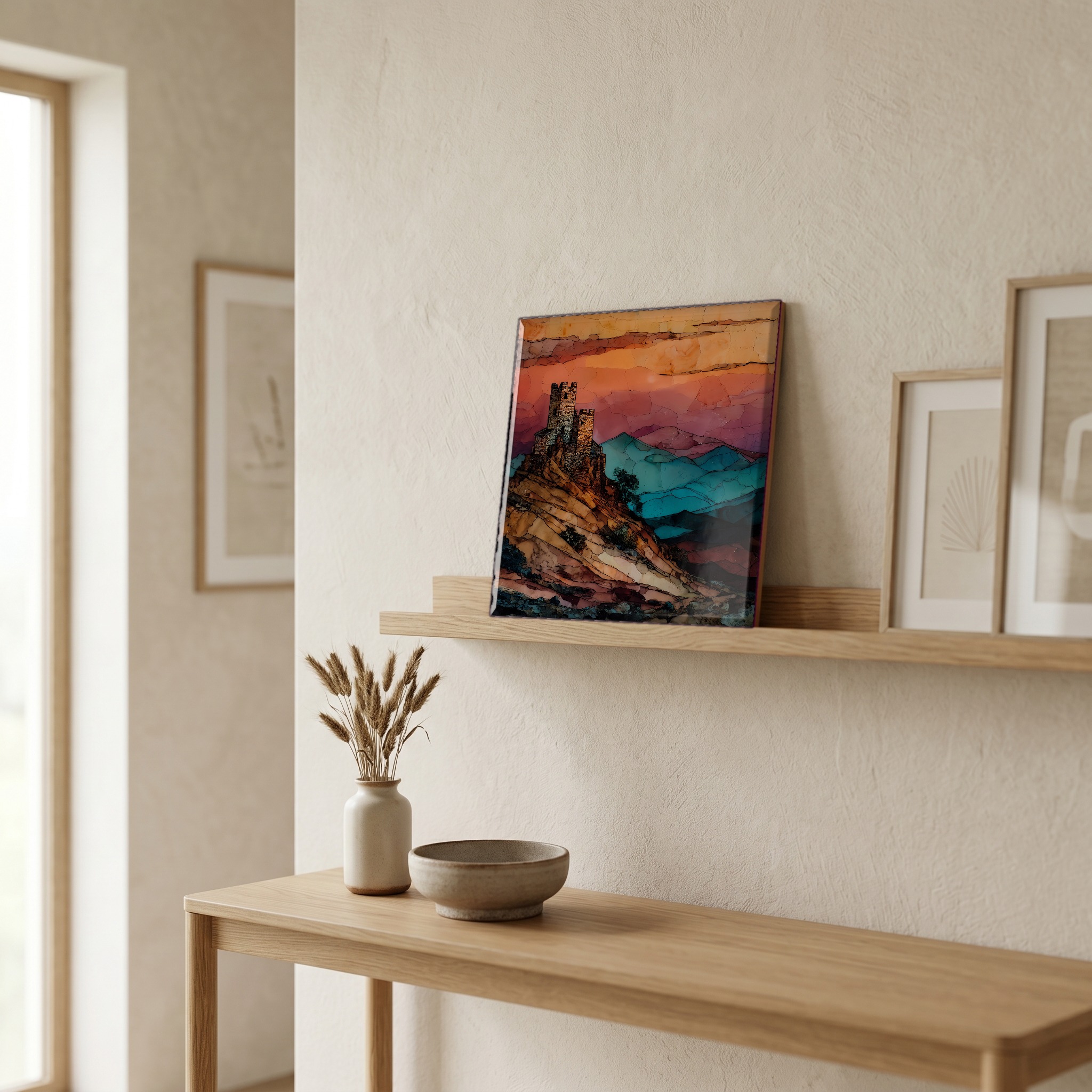
“The highest fortress in the Apennines, alone on a bare ridge in Abruzzo with the Navelli plain falling away on every side. The watchtower went up in the tenth century; the four round towers came three hundred years later, and a 1461 earthquake took most of the rest. What's left is stone the colour of the mountain, and a small octagonal church a little way down the path toward Santo Stefano di Sessanio. The road ends below; the last stretch is on foot. By late afternoon the light comes in low and the wind does most of the talking.
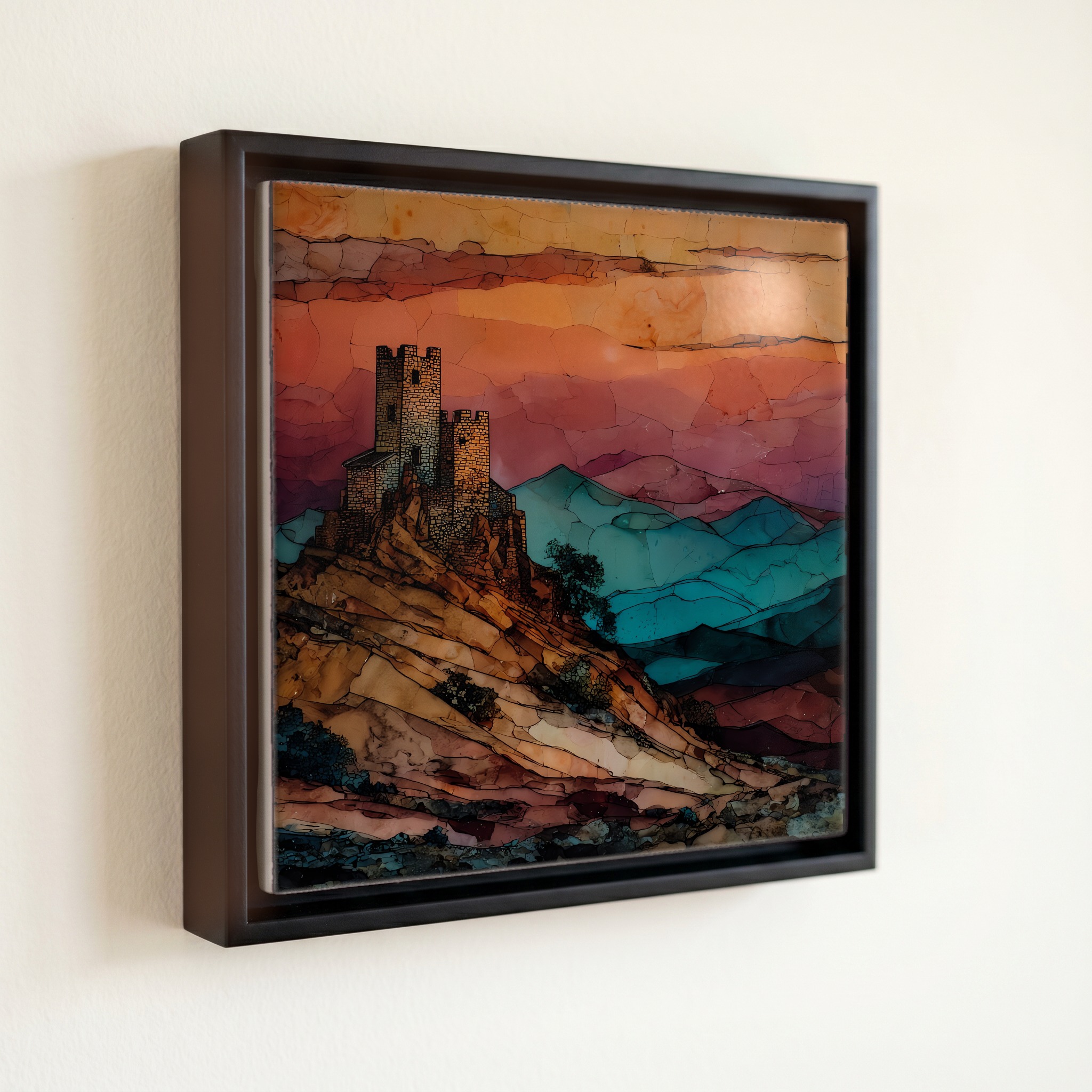
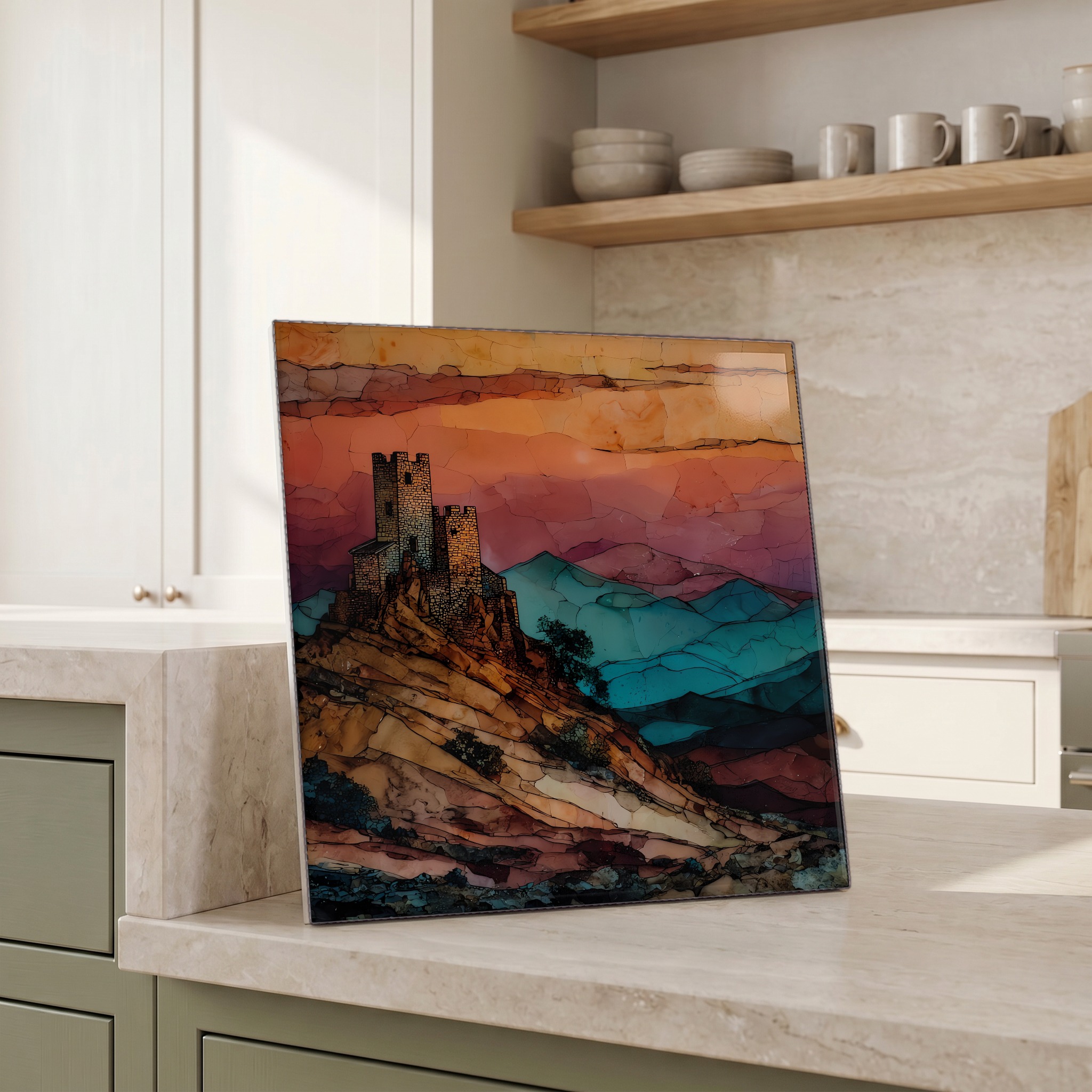
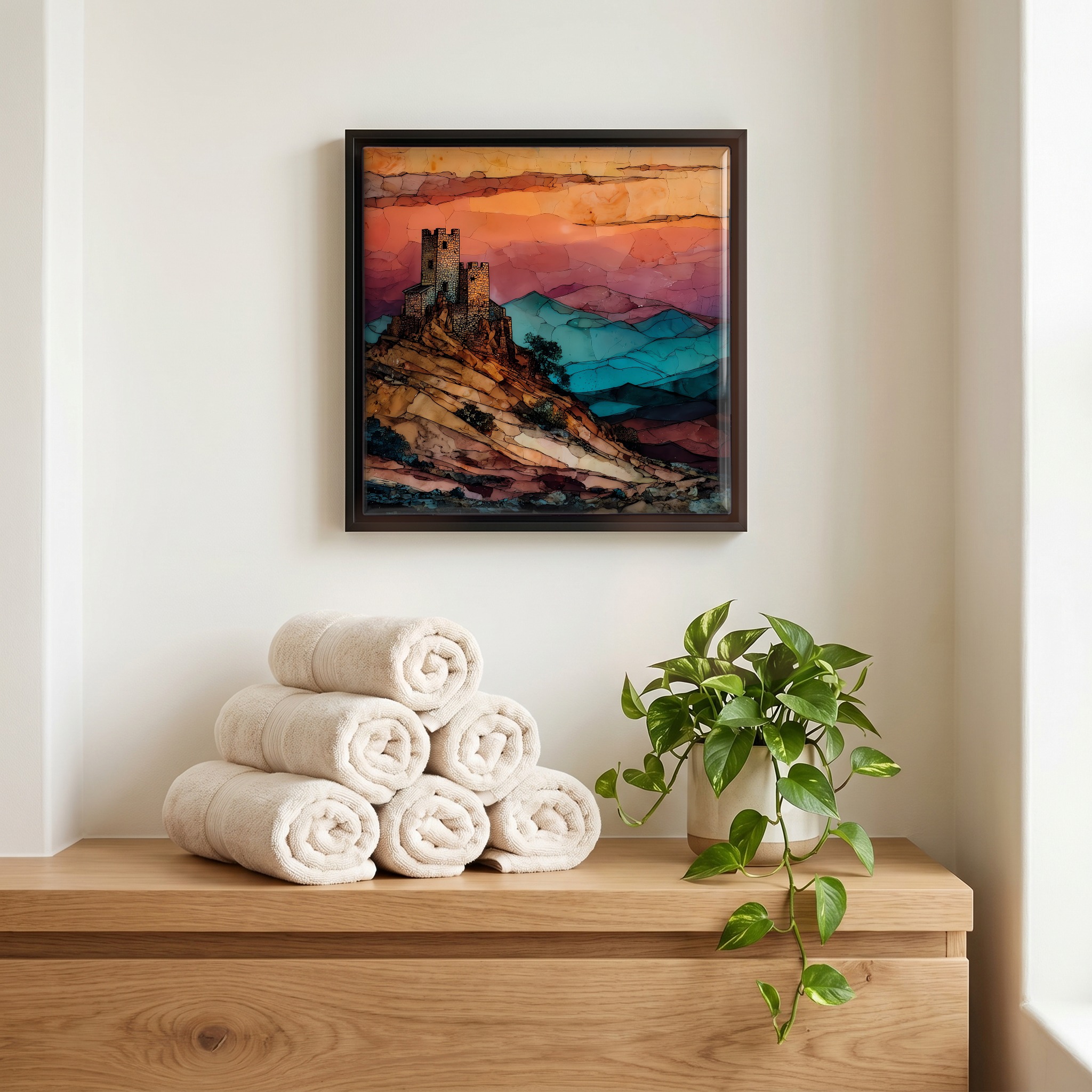
Rocca Calascio, on ceramic.
Each tile is finished by hand in our Knoxville studio. Artwork is slowly infused into the ceramic surface under high heat and pressure, and rests beneath a thin glossy finish. The colour lives in the surface, not on top of it.
Pick any four 4-inch tiles — National Parks you've been to, a Smokies set, the four seasons of one place. $ for a set of , cork-backed, ready to live on the table.
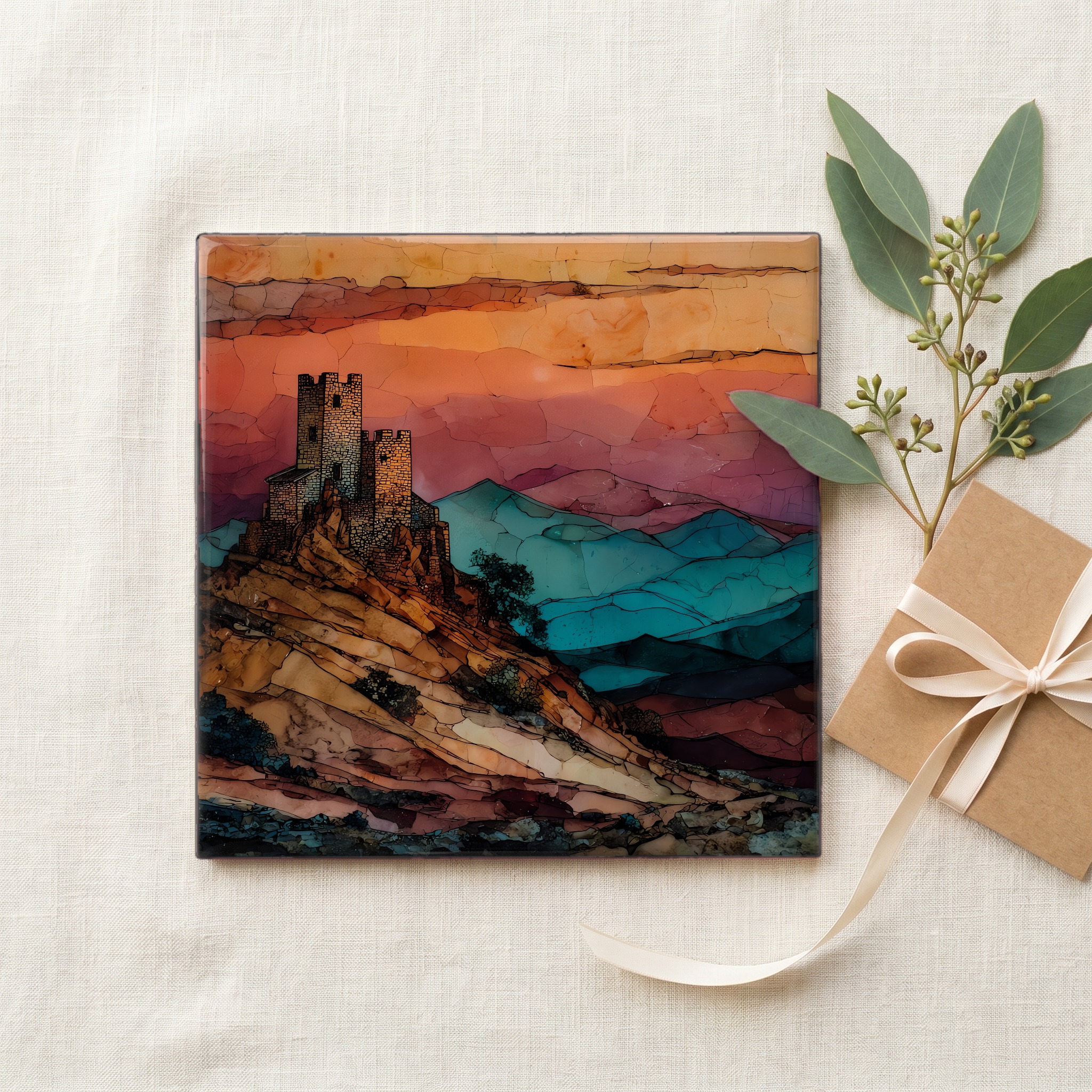
Each tile ships in a kraft box, tied with cream ribbon, with a handwritten note from the studio if you'd like to add one.
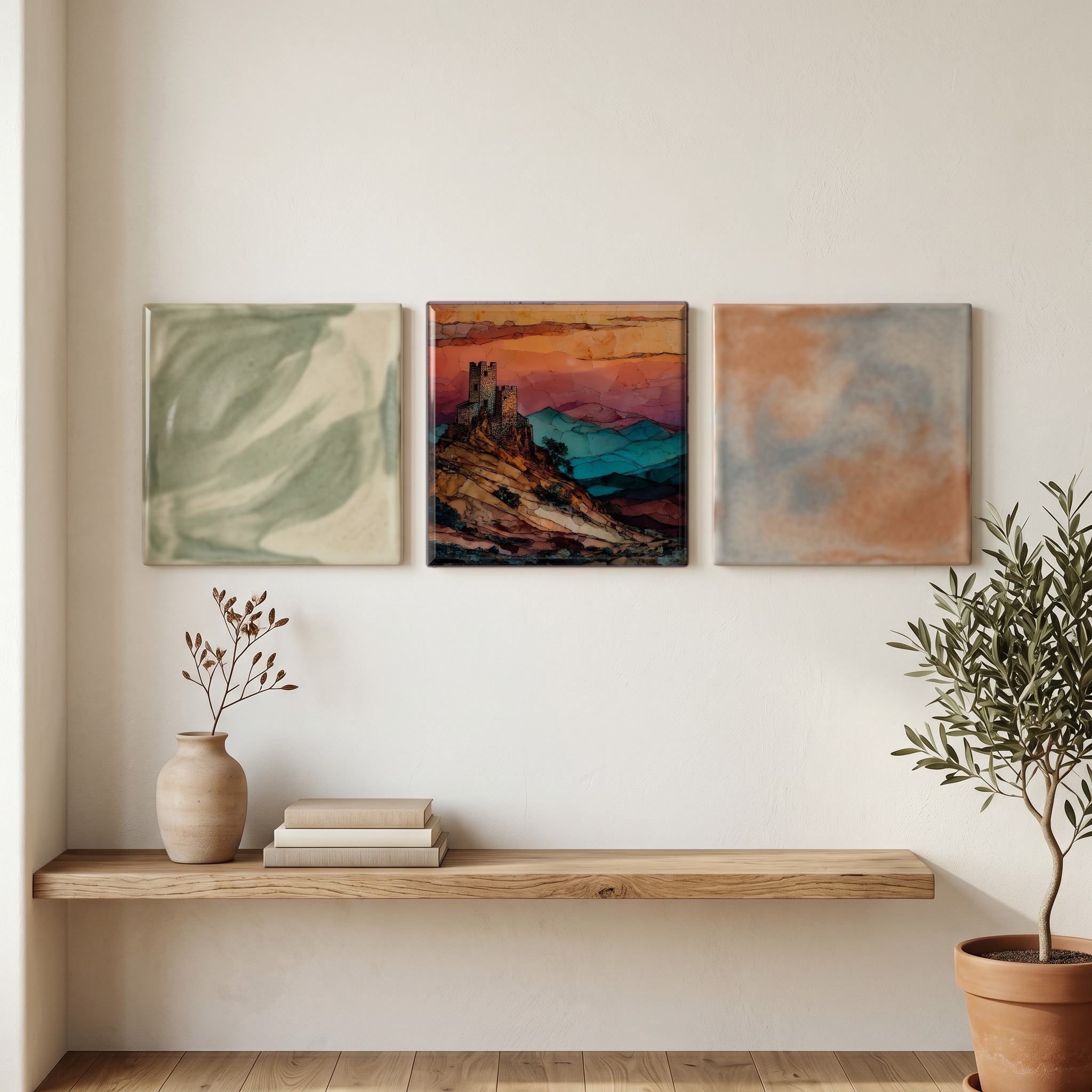
Three or five different vistas, hung together — a chapter of places you've been, or want to go.
The place, in three passes.
Rocca Calascio stands at about 1,460 metres in the comune of Calascio, in the Province of L'Aquila, Abruzzo, which makes it the highest fortress in the Apennines. It sits inside the Gran Sasso e Monti della Laga National Park, on a limestone spur above the Plain of Navelli and the Tirino valley, with the Campo Imperatore plateau opening north toward the Gran Sasso massif. The nearest village is Santo Stefano di Sessanio, a medieval hill town joined to the fortress by a marked footpath; the regional capital, L'Aquila, lies to the west. A road climbs most of the way, and the final approach to the walls is on foot.
The oldest part is a square watchtower raised in the tenth century to read signals across the valley. In the thirteenth century a walled court with four cylindrical corner towers was built around it. A powerful earthquake in November 1461 brought down much of the structure; the Piccolomini family rebuilt and enlarged it afterward, and the small garrison town below slowly emptied over the following centuries. The walls are pale local stone and mortar, made for soldiers rather than lords, so there is no palace within, only the shell. A short way down the slope stands Santa Maria della Pietà, an octagonal church under an eight-segmented dome, raised between the sixteenth and seventeenth centuries.
With nothing built nearby and the plain dropping away on every side, the fortress catches light from a long way off, and late in the day the limestone turns warm against a darkening sky. That openness is why filmmakers keep returning. The ruin closes Richard Donner's Ladyhawke (1985); it stands in for medieval Italy in The Name of the Rose (1986), with Sean Connery; and it appears in The American (2010), with George Clooney moving through the empty streets of the borgo below. The same low afternoon light the camera wants is the reason photographers climb the last stretch on foot, and the reason the walls read differently from one hour to the next.