Wender·Vista
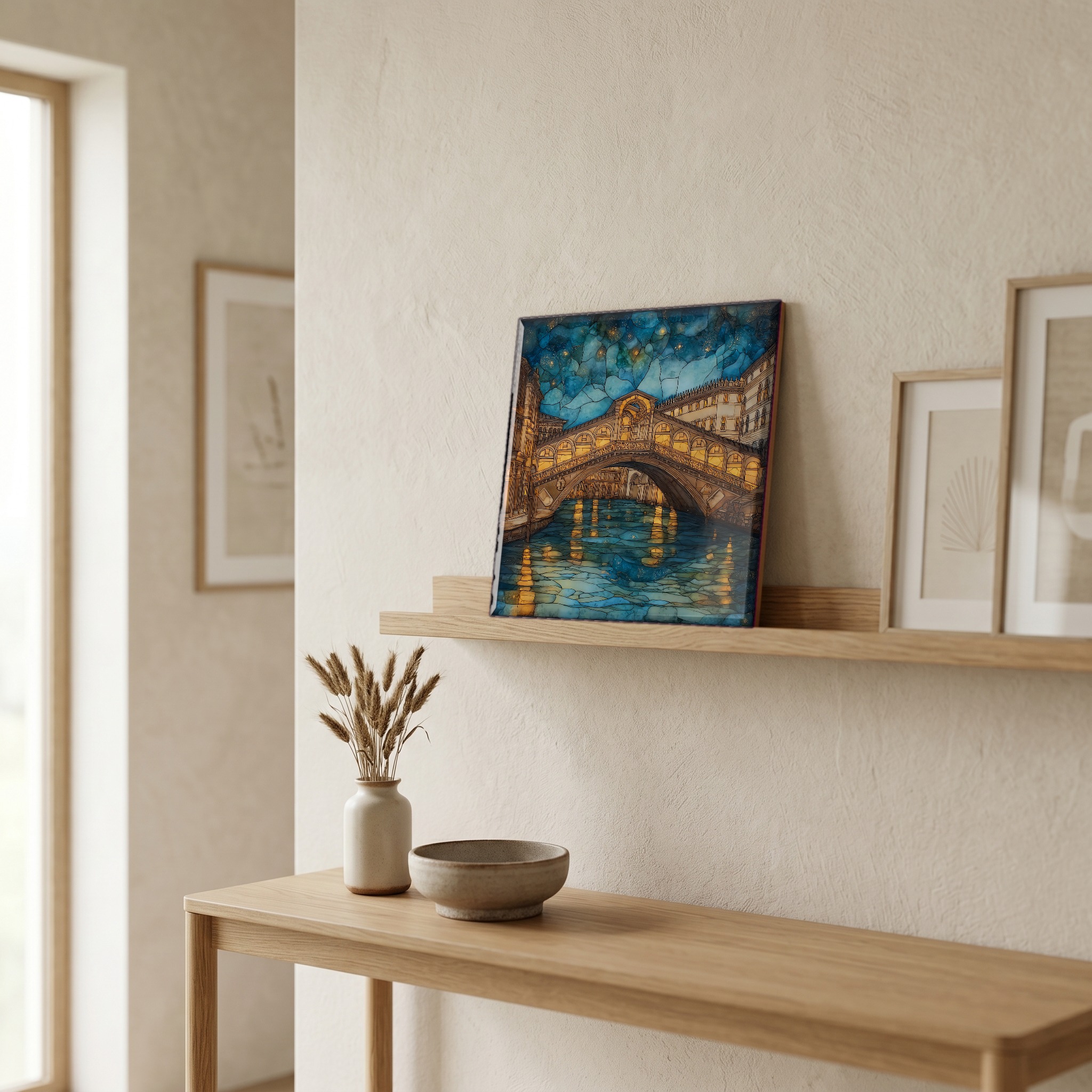
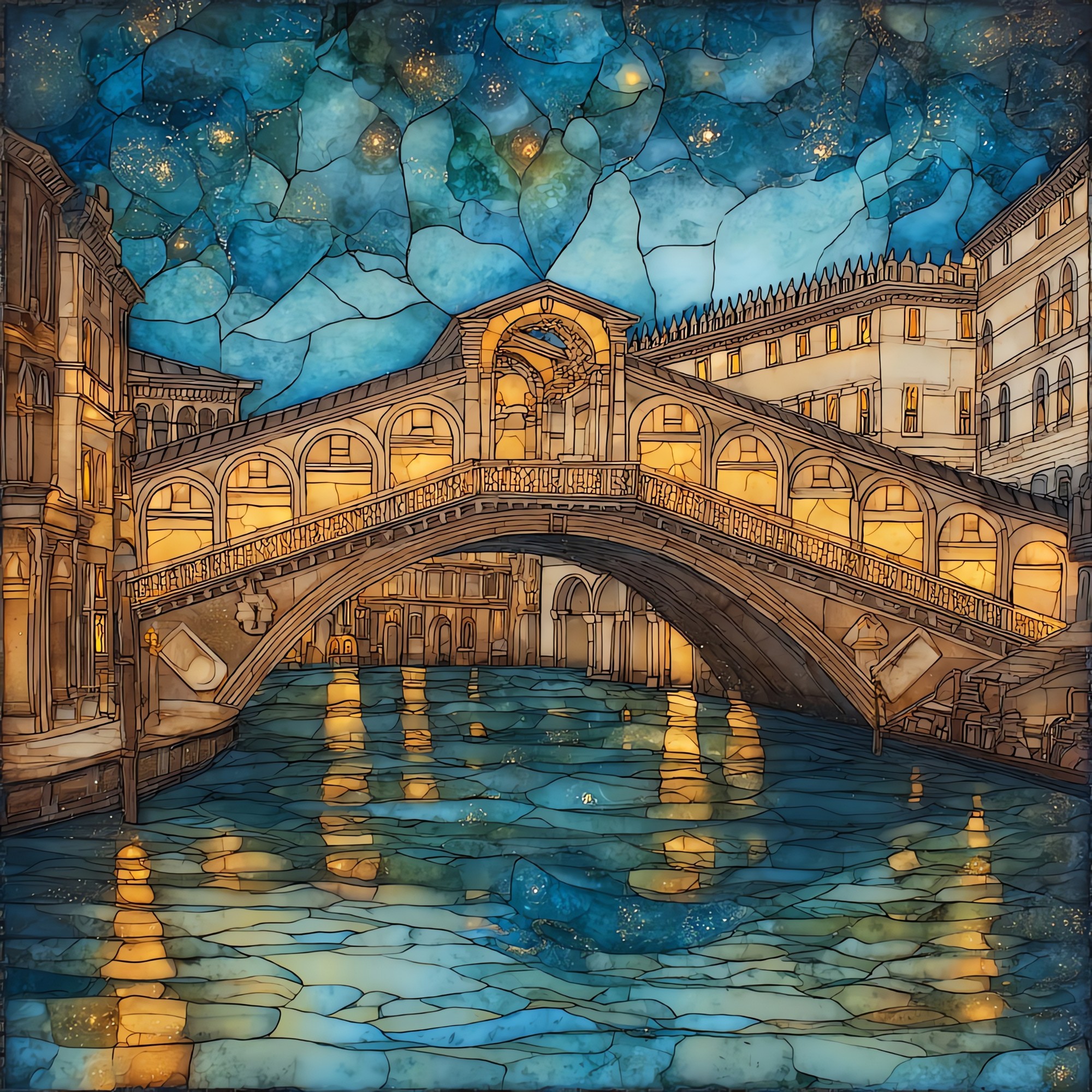
Rialto Bridge
shown on ceramic, 12-inch tileItaly
across the Grand Canal, in old Venice

Rialto Bridge

one white arch, and the whole canal beneath it.

Where it lives

Not only on a wall.

A small tile on the nightstand catching the morning. A larger one above the fire. Yours, wherever you spend the slow hours.
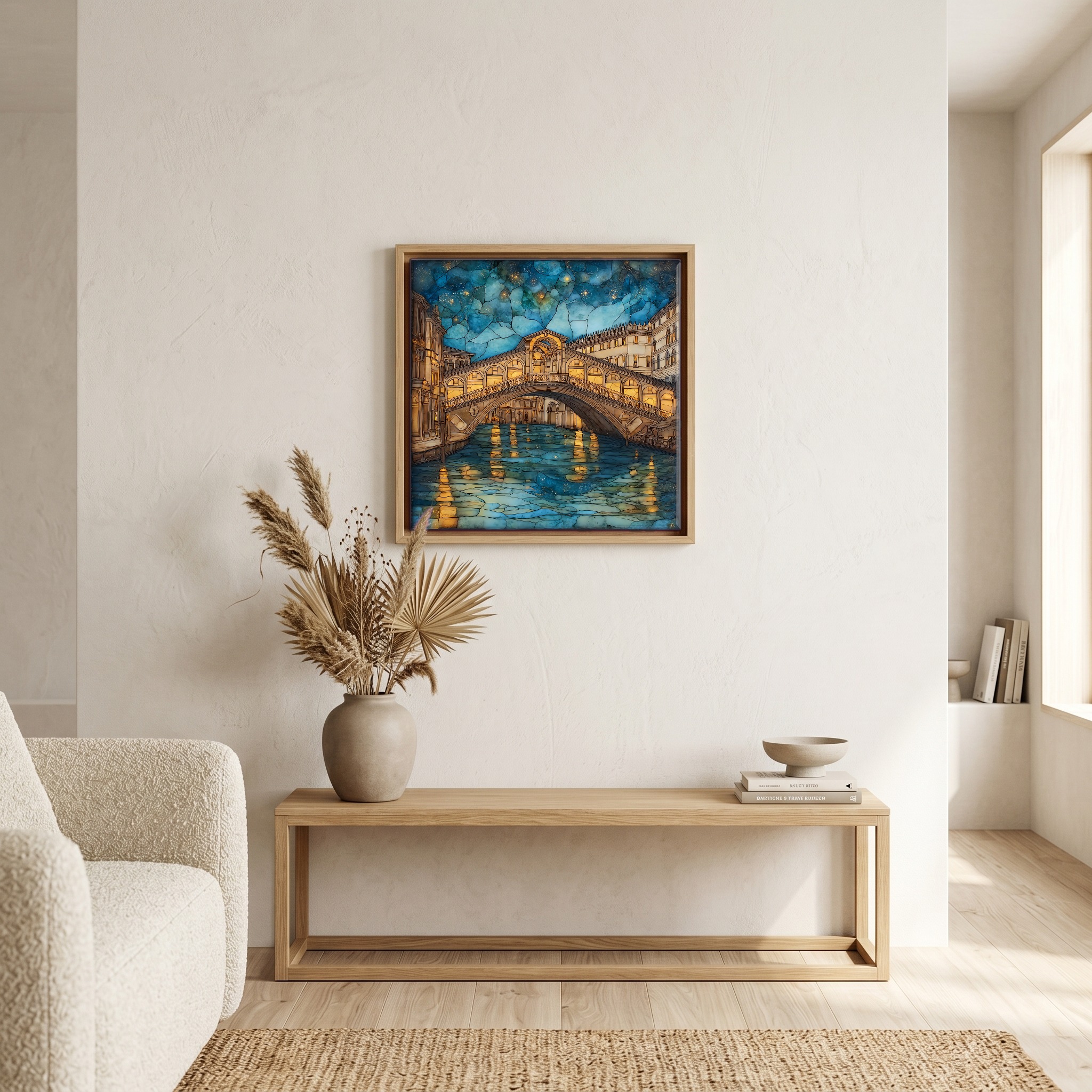
Above the bench, in a warm oak surround.
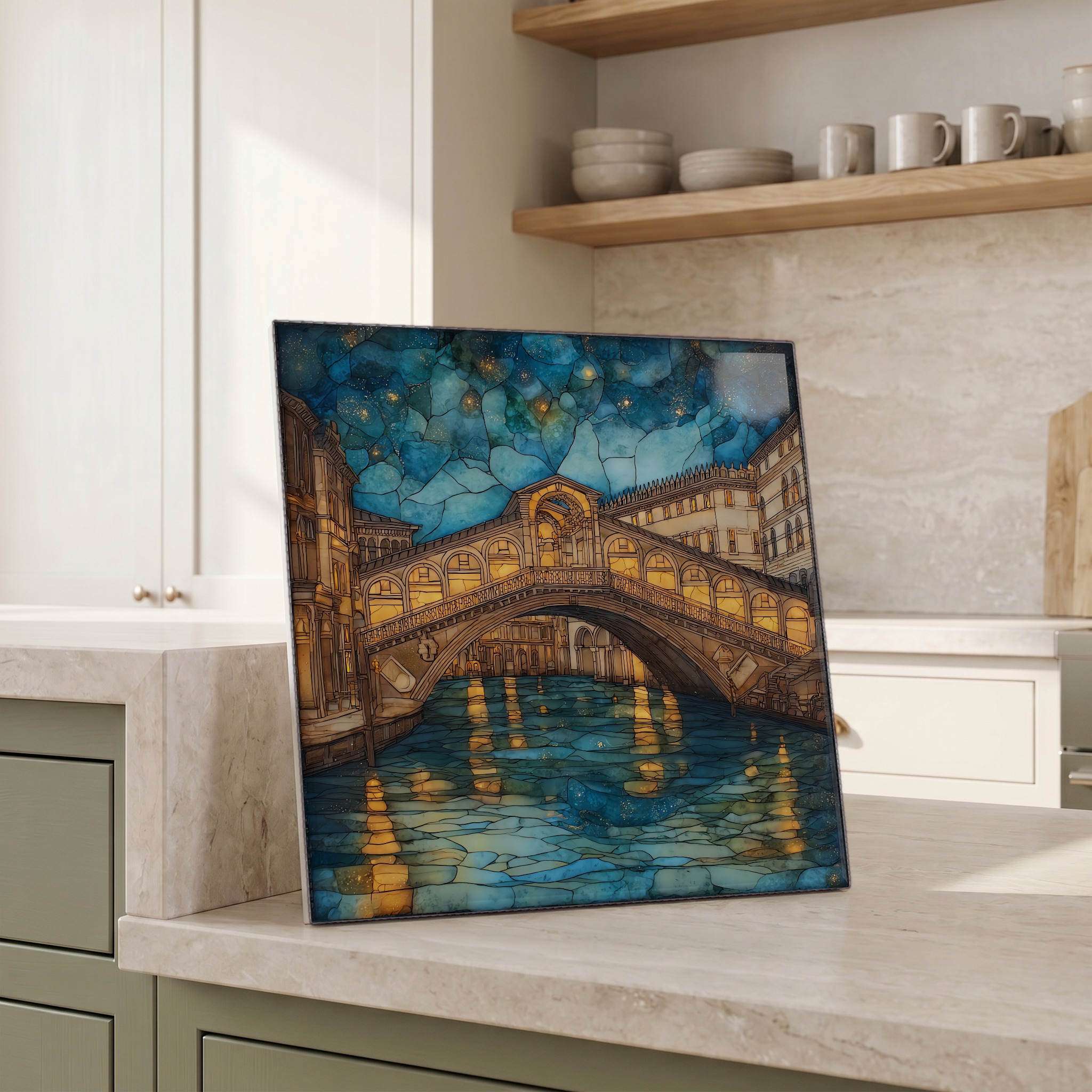
Beside the kettle, propped on the counter.
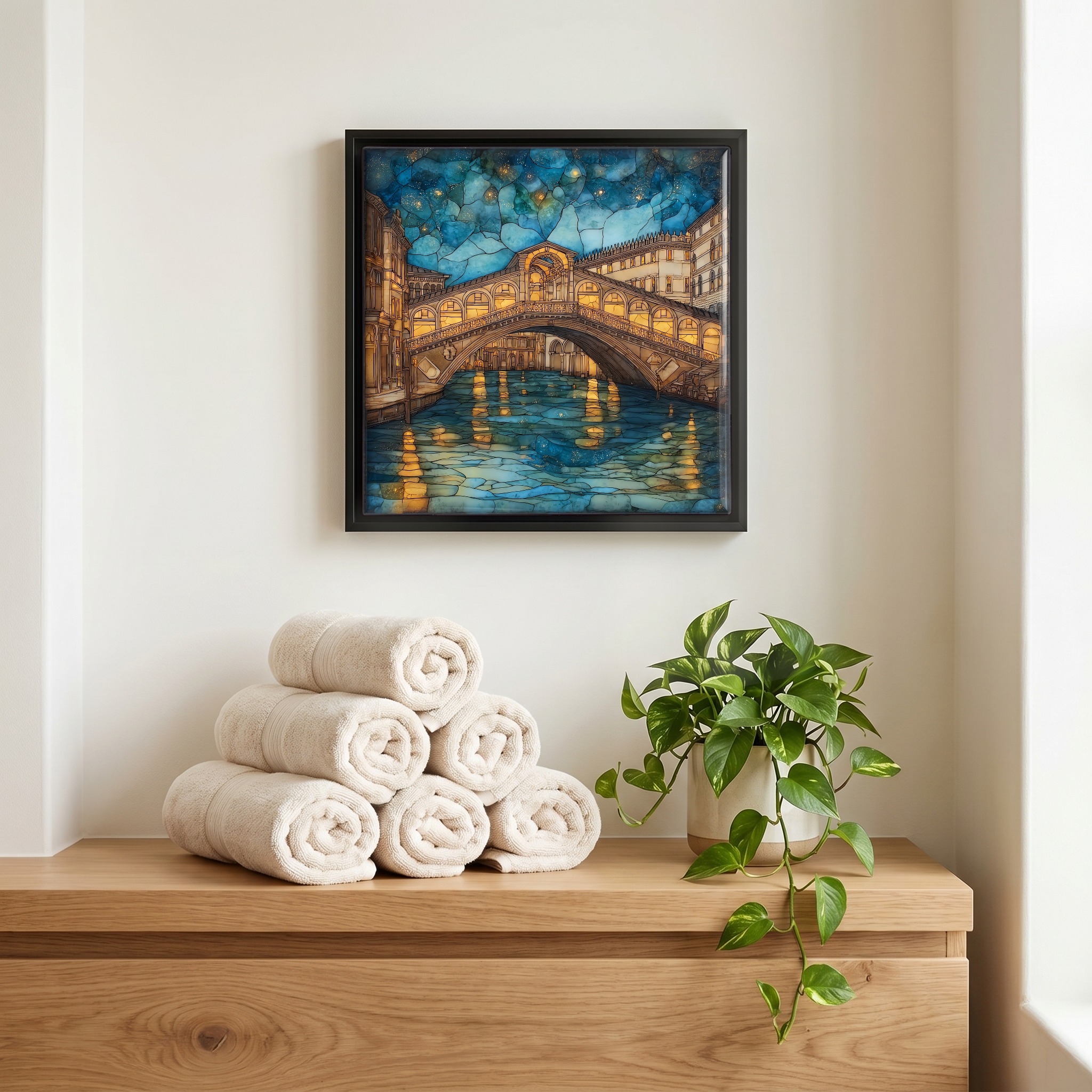
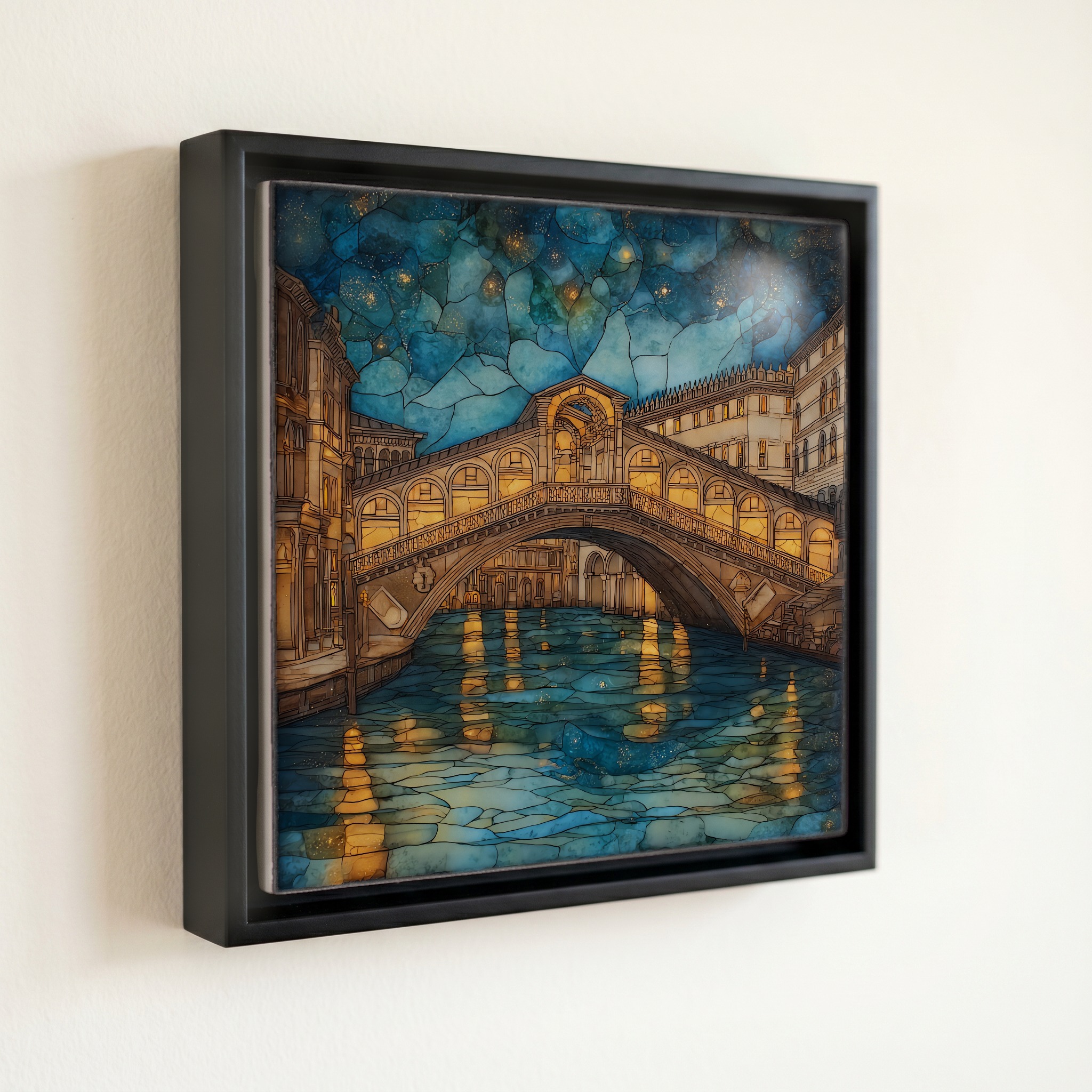
Above the linens, in a slim black surround.
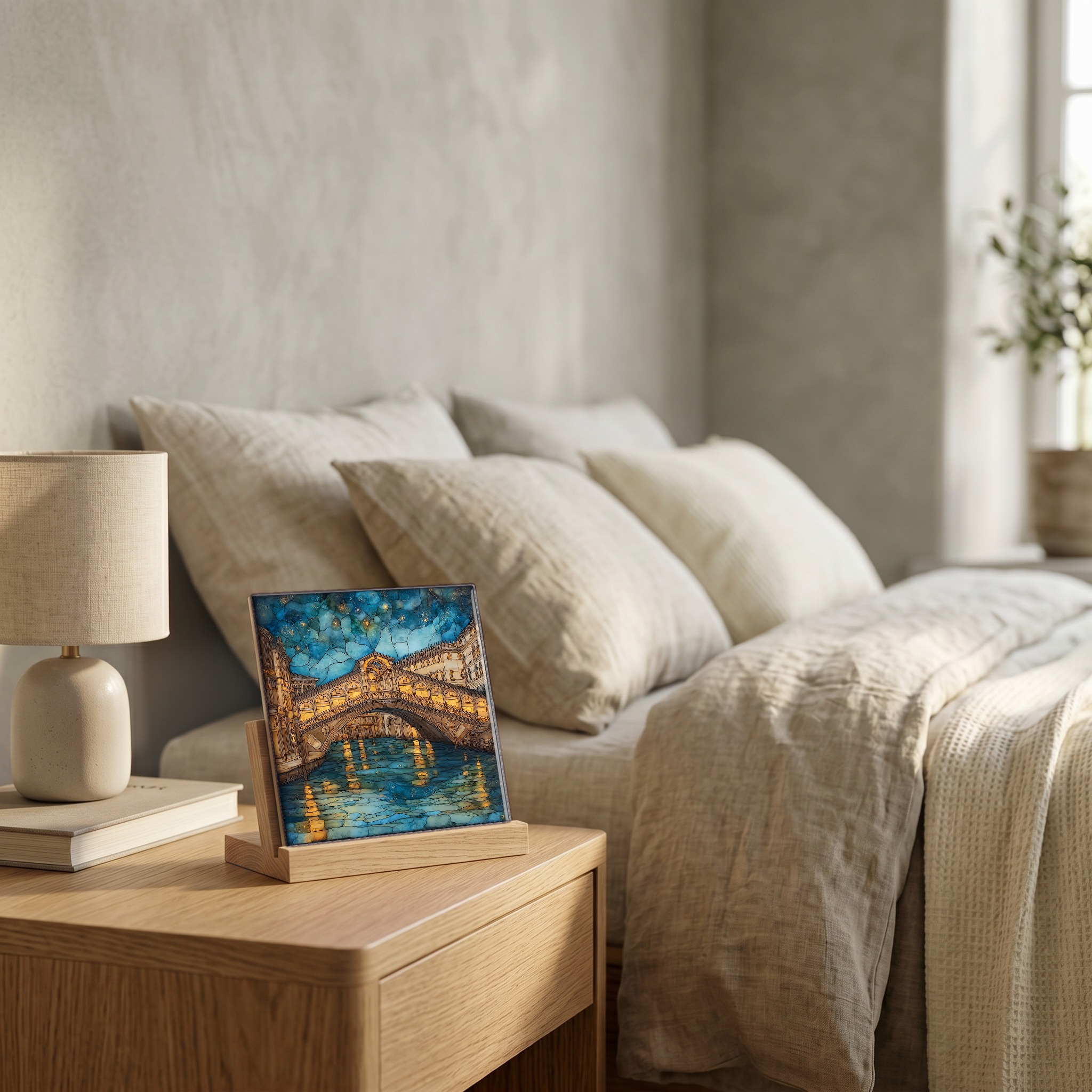
On the nightstand, on a light oak stand.
On a picture ledge, where the light comes in.
a note from the studio

The oldest of the four bridges over the Grand Canal, and for more than 250 years the only one. Antonio da Ponte set a single arch of pale Istrian stone across the water in 1591, two ramps of shops climbing to a portico at the crown. People have crossed it every day since. Early, before the market on the San Polo side fills, the stone holds a soft light and the canal underneath goes quiet between boats. Then the vaporetti start, and the bridge belongs to everyone again.
from the studio
shown in a slim black floating frame · 6 × 6 in
— bring it home

Rialto Bridge, on ceramic.

Each tile is finished by hand in our Knoxville studio. Artwork is slowly infused into the ceramic surface under high heat and pressure, and rests beneath a thin glossy finish. The colour lives in the surface, not on top of it.

What kind of piece?
One tile — square or rectangle.
How big?
the popular one — counter, shelf, nightstand
6 × 6 in · 15 cm · 1.6 lb
Surface finish
A clear glossy finish — the artwork reads as if under resin. Ideal for show-pieces and framed wall art.
How it sits
A hidden cleat — sits ¼″ proud of the wall.
$58
Hand-finished and shipped from our studio at the foot of the Smokies. On your wall in about ten days.
size
6 × 6 in
15 cm
weighs
1.6 lb
solid in the hand
surface
ceramic, hand-finished
art rests beneath a thin glossy finish
from
Knoxville, TN
our family studio, at the foot of the Smokies
— start a Coaster Set

Pick any four 4-inch tiles — National Parks you've been to, a Smokies set, the four seasons of one place. $ for a set of , cork-backed, ready to live on the table.
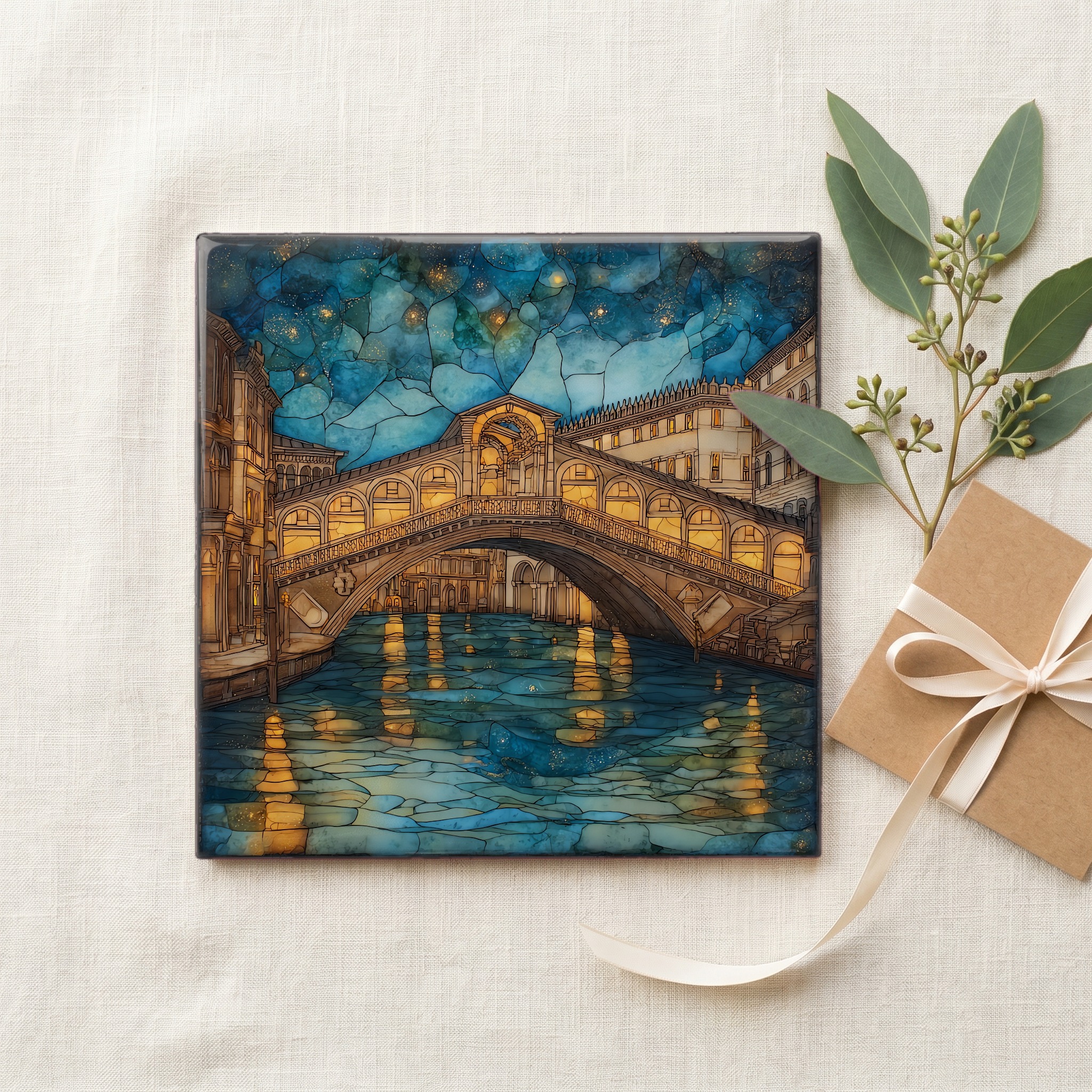
comes gift-ready
comes gift-ready

Each tile ships in a kraft box, tied with cream ribbon, with a handwritten note from the studio if you'd like to add one.
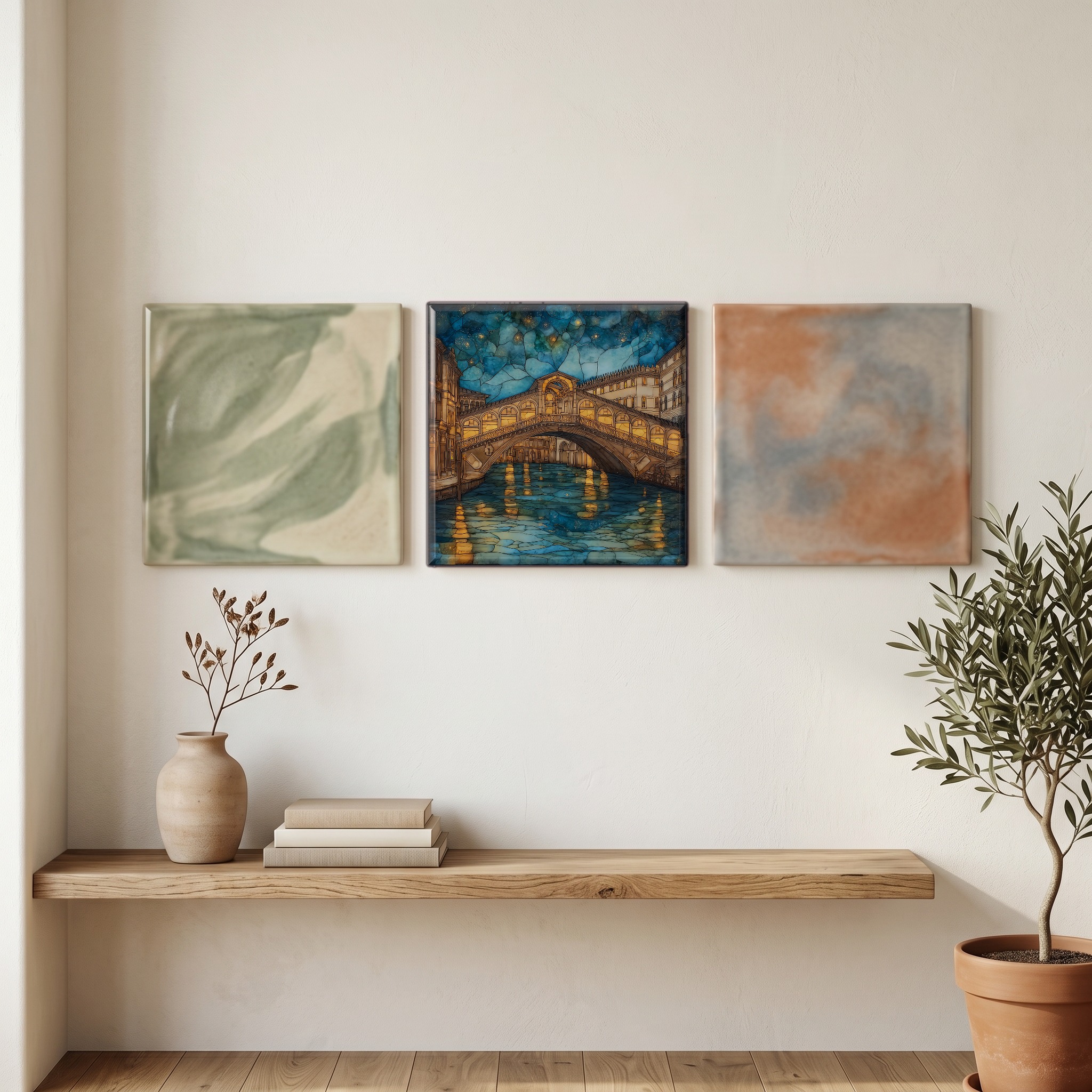
or build a grouping
or build a grouping

Three or five different vistas, hung together — a chapter of places you've been, or want to go.

about Rialto Bridge

The place, in three passes.

A little of what's known, in case you fall down the rabbit hole — or want to go see it yourself.
the place

The Rialto Bridge crosses the Grand Canal at its narrowest point in central Venice, linking the San Marco and San Polo districts. It is the oldest of the four bridges over the canal and, until the 19th century, the only one. A pontoon crossing called the Ponte della Moneta stood on the site from 1181, built under Nicolò Barattieri; a wooden bridge replaced it in 1255 and collapsed more than once before the city committed to stone in the 1580s. The present bridge rises in a single arch of nearly 32 metres, about 7.3 metres above the water and 22.9 metres wide, with covered ramps of shops climbing to a portico at the crown.

— informed by Wikipedia, Britannica
the stone

The bridge is built of Istrian stone, the dense pale limestone quarried across the Adriatic in present-day Croatia that Venice used throughout the city for its resistance to salt water. Antonio da Ponte won the commission in a public competition held in 1587, his design chosen over proposals from better-known architects, among them Andrea Palladio, and the bridge went up between 1588 and 1591. Its single arch carries no support in the middle; the entire load runs to the two abutments, which were sunk into the canal bed on some twelve thousand timber piles. Many at the time doubted so flat and unsupported a span would stand. Da Ponte was helped by his nephew Antonio Contin, who would later design the Bridge of Sighs.

— informed by Wikipedia, Britannica
the visit

The bridge is open at any hour and free to cross, carrying foot traffic only; the climb to the portico at the crown gives one of the clearest views down the Grand Canal. On the San Polo bank it lands at the Rialto Market, where the fish and produce stalls have traded since the Republic's early centuries and still open in the morning, roughly Tuesday through Saturday, closing by early afternoon. The two covered arcades on the bridge hold about two dozen small shops, today mostly jewellery and souvenirs, a use that reaches back to its completion in 1591. Crowds run heaviest from late morning on; the quiet hour is just after sunrise, before the first vaporetti and the market traffic.

— informed by Britannica, Venice Tourism
where
Italy · Venice, Veneto
position
45.4380° N · 12.3360° E
the neighborhood

What's nearby.

A handful of named places within an hour's walk or short drive. Some we've already painted; some we will.
0.1 km W
Rialto Market
produce and fish market
0.1 km E
Fondaco dei Tedeschi
historic trading house
0.2 km W
San Giacomo di Rialto
church
0.5 km NW
Ca' d'Oro
Gothic palace
0.5 km SE
Piazza San Marco
public square
0.5 km SE
Bridge of Sighs
bridge
N
Rialto Bridge
Rialto Market
Fondaco dei Tedeschi
San Giacomo di Rialto
Ca' d'Oro
Piazza San Marco
Bridge of Sighs
common questions

What people ask.

A few questions we get about Rialto Bridge — and about bringing the piece home.
about the place

The Rialto Bridge crosses the Grand Canal at its narrowest point in central Venice, linking the San Marco and San Polo districts. It is the oldest of the four bridges over the canal and stands beside the Rialto Market on the San Polo bank.

Antonio da Ponte designed the stone bridge, built between 1588 and 1591 after his design won a public competition in 1587. His nephew Antonio Contin assisted and went on to design the Bridge of Sighs.

The bridge is built of Istrian stone, a dense pale limestone quarried across the Adriatic in present-day Croatia and prized in Venice for resisting salt water. Its single arch spans nearly 32 metres, about 7.3 metres above the canal.

Its single arch carries no support in the middle; the full weight runs to the abutments, sunk into the canal bed on some twelve thousand timber piles. Many at the time doubted so flat and unsupported a span could stand for long.

A pontoon crossing called the Ponte della Moneta stood here from 1181, built under Nicolò Barattieri. A wooden bridge replaced it in 1255 and collapsed more than once before Venice committed to the present stone span in the 1580s.

Yes. Two covered arcades along the ramps hold about two dozen small shops, today mostly jewellery and souvenirs. Shops have stood on the bridge since it was completed in 1591, and a market has traded at Rialto far longer.

Just after sunrise is quietest, before the first vaporetti and the Rialto Market crowds. The market on the San Polo bank trades mornings, roughly Tuesday through Saturday; foot traffic on the bridge peaks from late morning through the afternoon.

about the piece in your home

It carries well for anyone with a tie to Venice: a honeymoon, a season abroad, a family line back to the Veneto. The Rialto Bridge is among the first images people keep of the city. A Keepsake or Small with a note from the studio travels nicely.

The piece runs to pale stone, green canal water and jewel-toned light, so it sits well in Jewel-tone Maximalist, Old-World European and warm Transitional rooms. Against a dark or plaster wall, the white arch holds the eye. The Large anchors a wall on its own.

The look fits the current return to Old-World and grand-millennial interiors: layered, antique-leaning, unafraid of colour. The stained-glass treatment of the white stone reads as collected and lived-with rather than anything that looks new.

Above a console or nightstand, a single Large holds the wall on its own. Above a sofa, step up to a 4-tile Mural; for a wide feature wall or a stairwell, a 9-tile Mural carries the distance. A Medium suits a narrower space.

Yes. For a backsplash, shower, or any damp or steamy spot, choose the Dura Satin or Matte finish, which is scratch-resistant and reads softly. The Glossy finish is best kept to dry walls and framed pieces.

A soft microfibre cloth with a little water is all it needs. The colour is slowly infused into the ceramic surface under high heat and pressure and lives beneath a thin glossy finish, so it will not lift or fade with normal cleaning. Skip abrasive pads.

Yes. Every WenderVista piece is made in one studio in Knoxville, Tennessee, by Reid Wender, with no outside licensing or stock imagery. The Rialto Bridge is rendered in the studio's own stained-glass visual language.

if this one stayed with you

A few you might also love.

Hand-picked by the eye that found Sorapis. Same air, same kind of quiet.
— a collection

The Italian Dolomites,
painted slow.

The valleys between Cortina and Val Gardena, the tarns you walk an hour to see, the towers that turn the colour of a banked fire just before dark. Wander the collection by valley, by season, or follow the path Reid walked.

Tre Cime
Braies
Misurina
Sorapis
Cinque Torri
Sassolungo
Marmolada