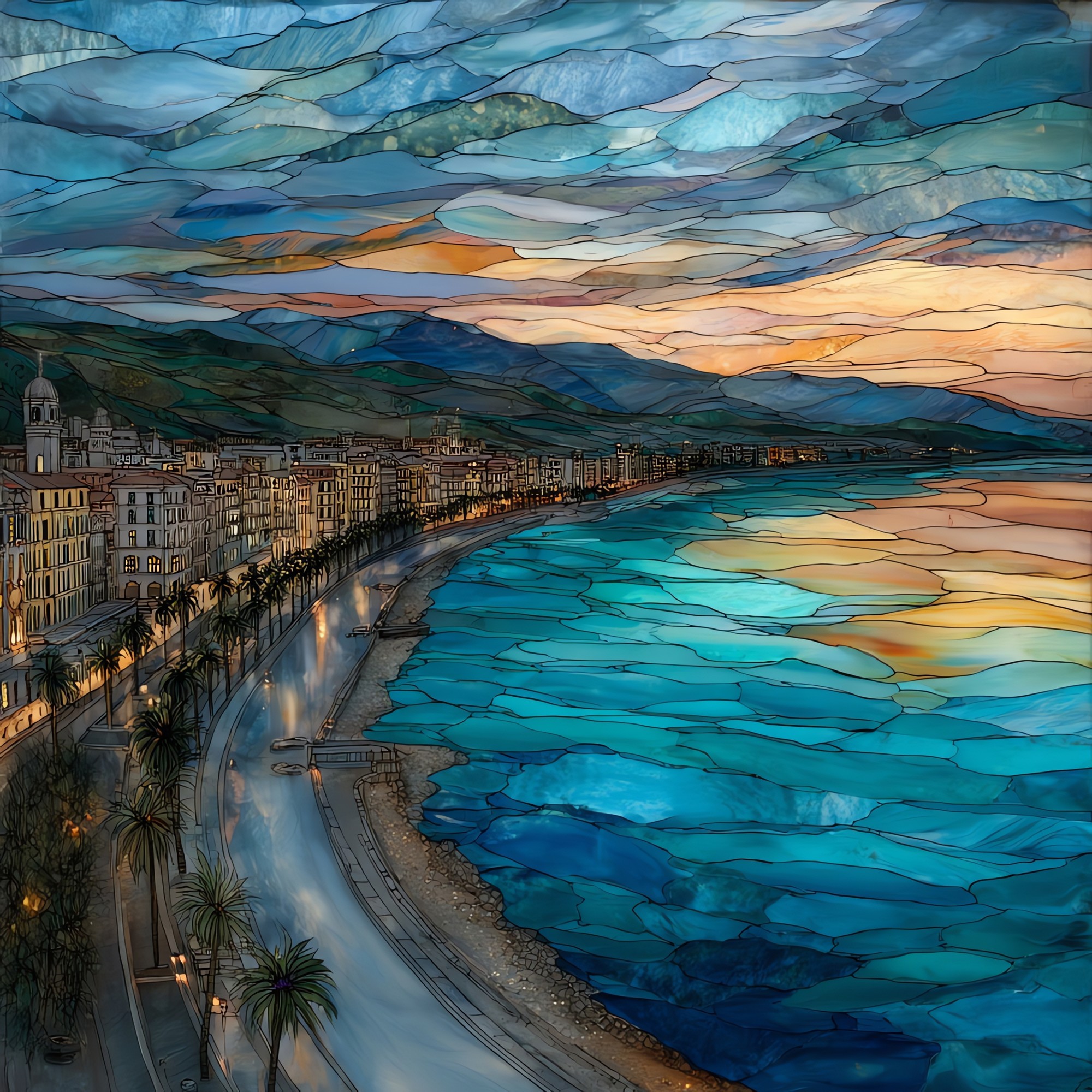
Reggio Calabria Seafront
— where Italy stops to watch Sicily.
Not only on a wall.
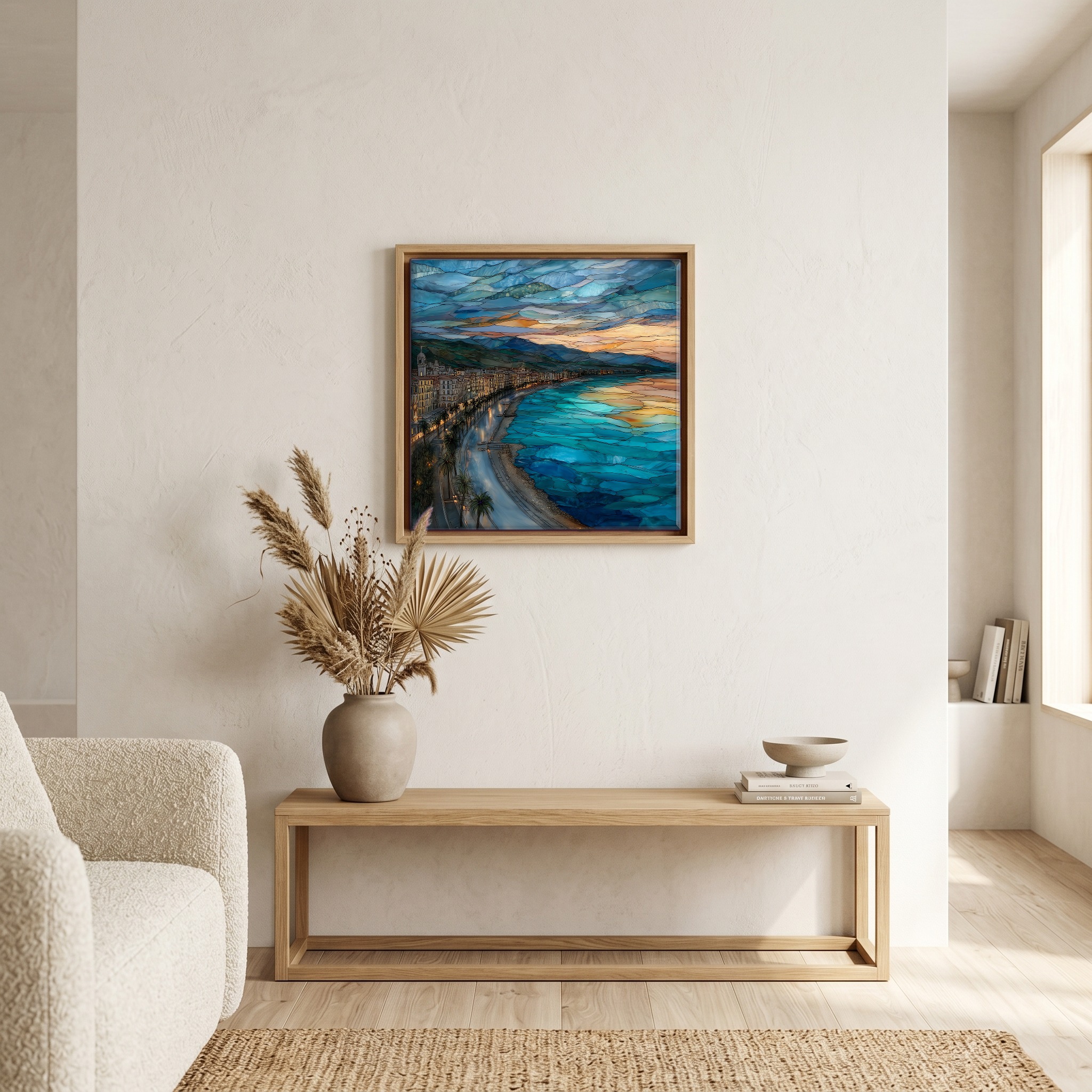
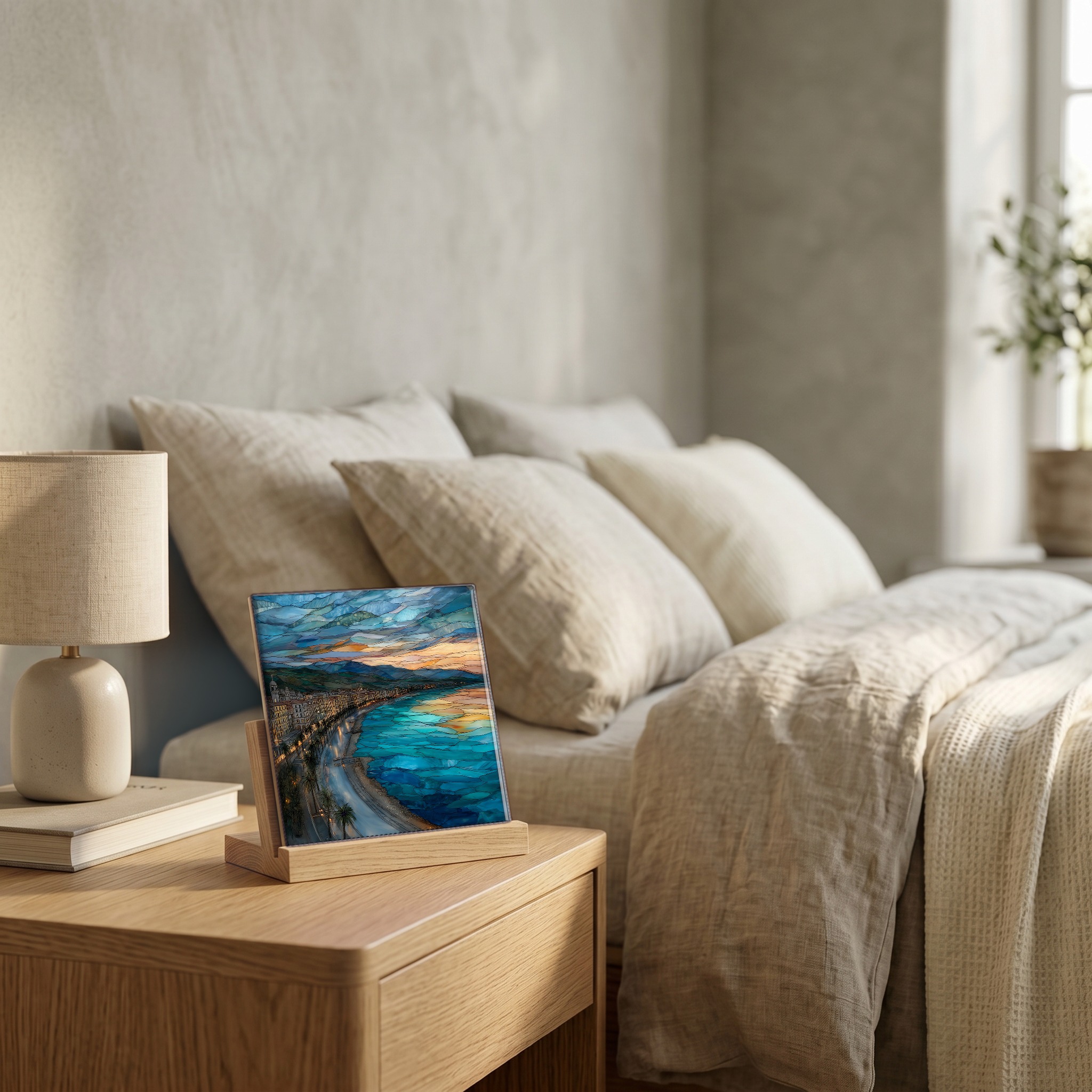
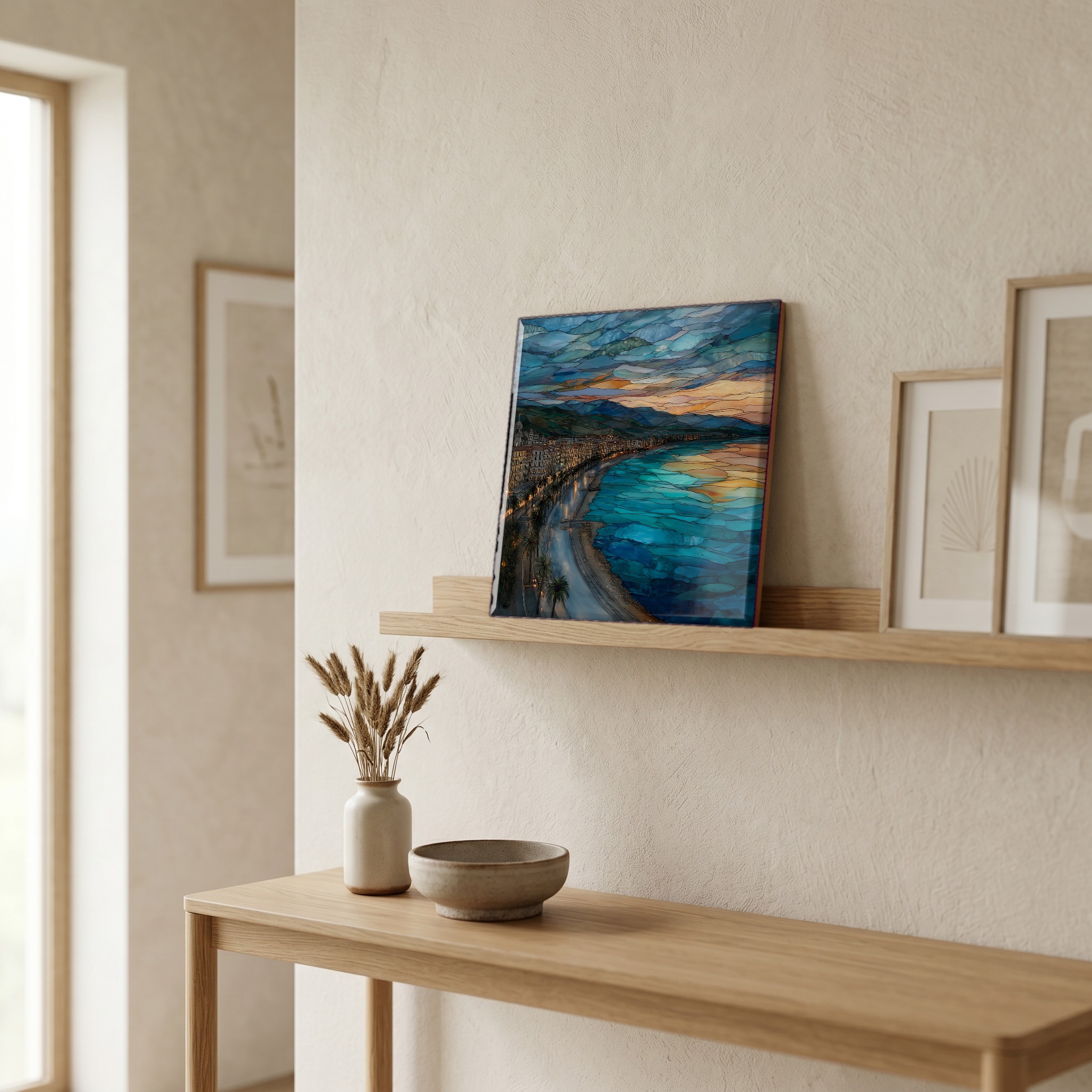
“A mile and a half of promenade along the Strait of Messina, where Sicily sits close enough to read and Mount Etna steams across the water on clear days. Gabriele D'Annunzio called it the most beautiful kilometer in Italy, and the line has stuck. Liberty-era villas line the inland side; ancient Greek walls show through where the modern city was peeled back. The sea is the show. On the right summer mornings, the Fata Morgana lifts Sicily off the water and makes the island look closer than it is.
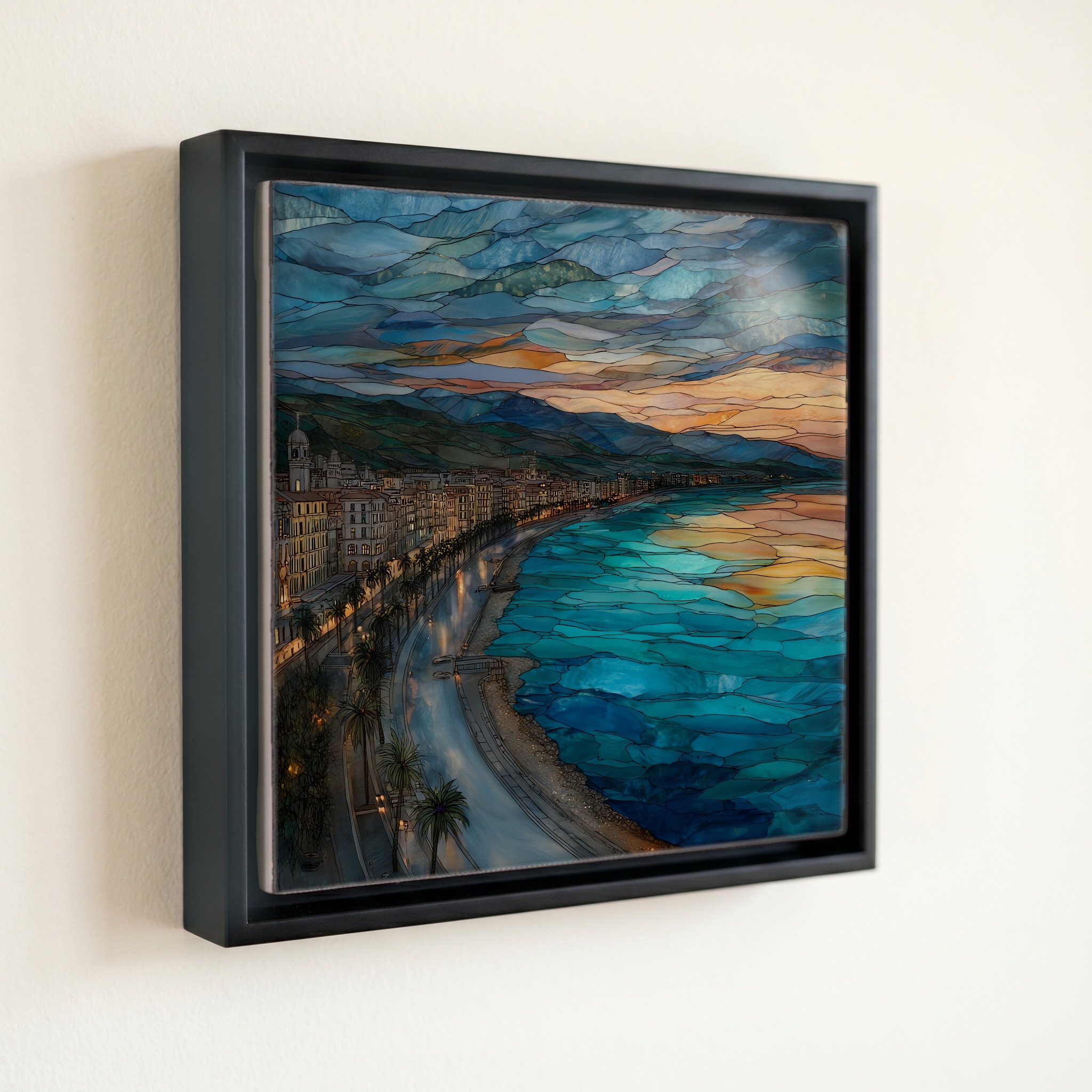
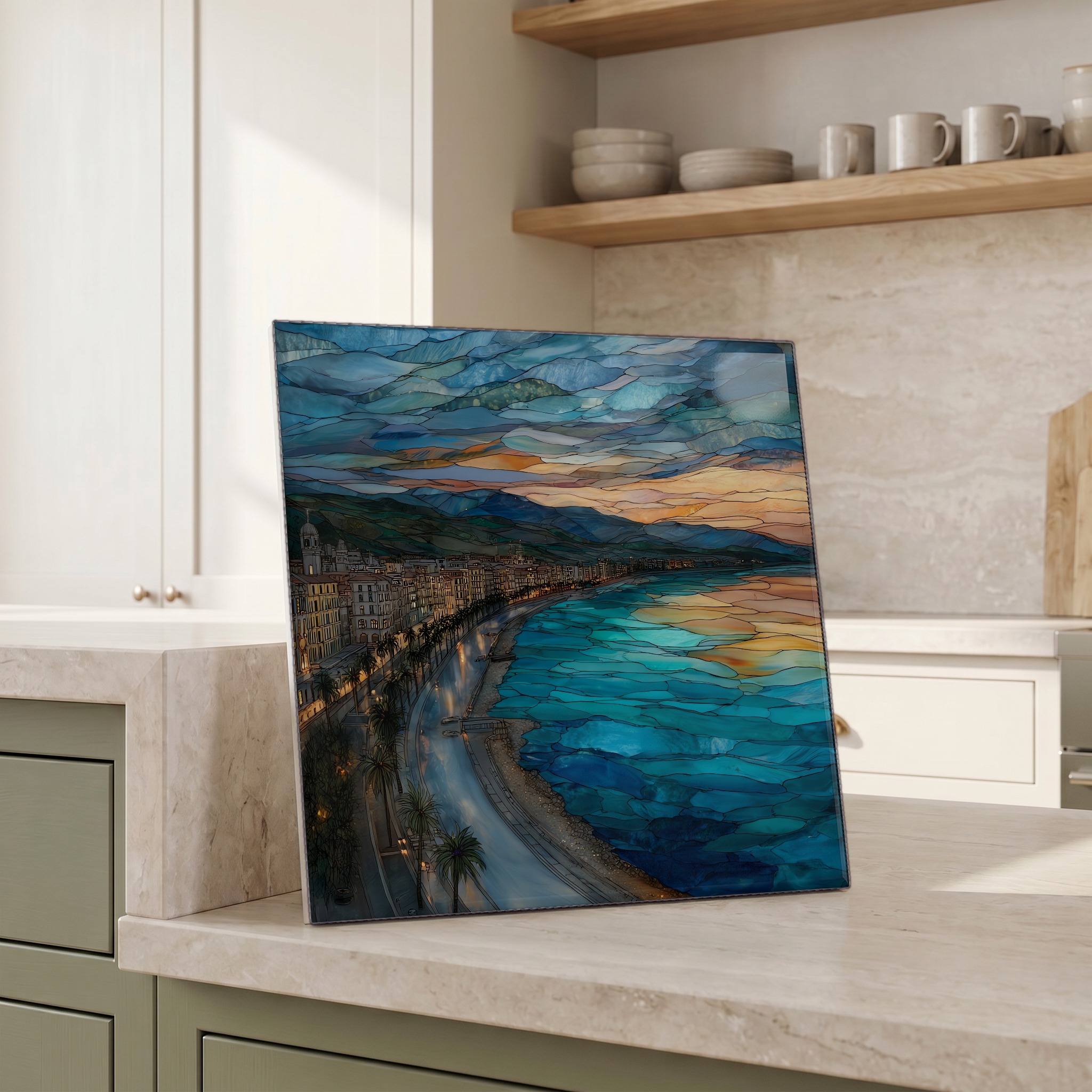
Reggio Calabria Seafront, on ceramic.
Each tile is finished by hand in our Knoxville studio. Artwork is slowly infused into the ceramic surface under high heat and pressure, and rests beneath a thin glossy finish. The colour lives in the surface, not on top of it.
Pick any four 4-inch tiles — National Parks you've been to, a Smokies set, the four seasons of one place. $ for a set of , cork-backed, ready to live on the table.
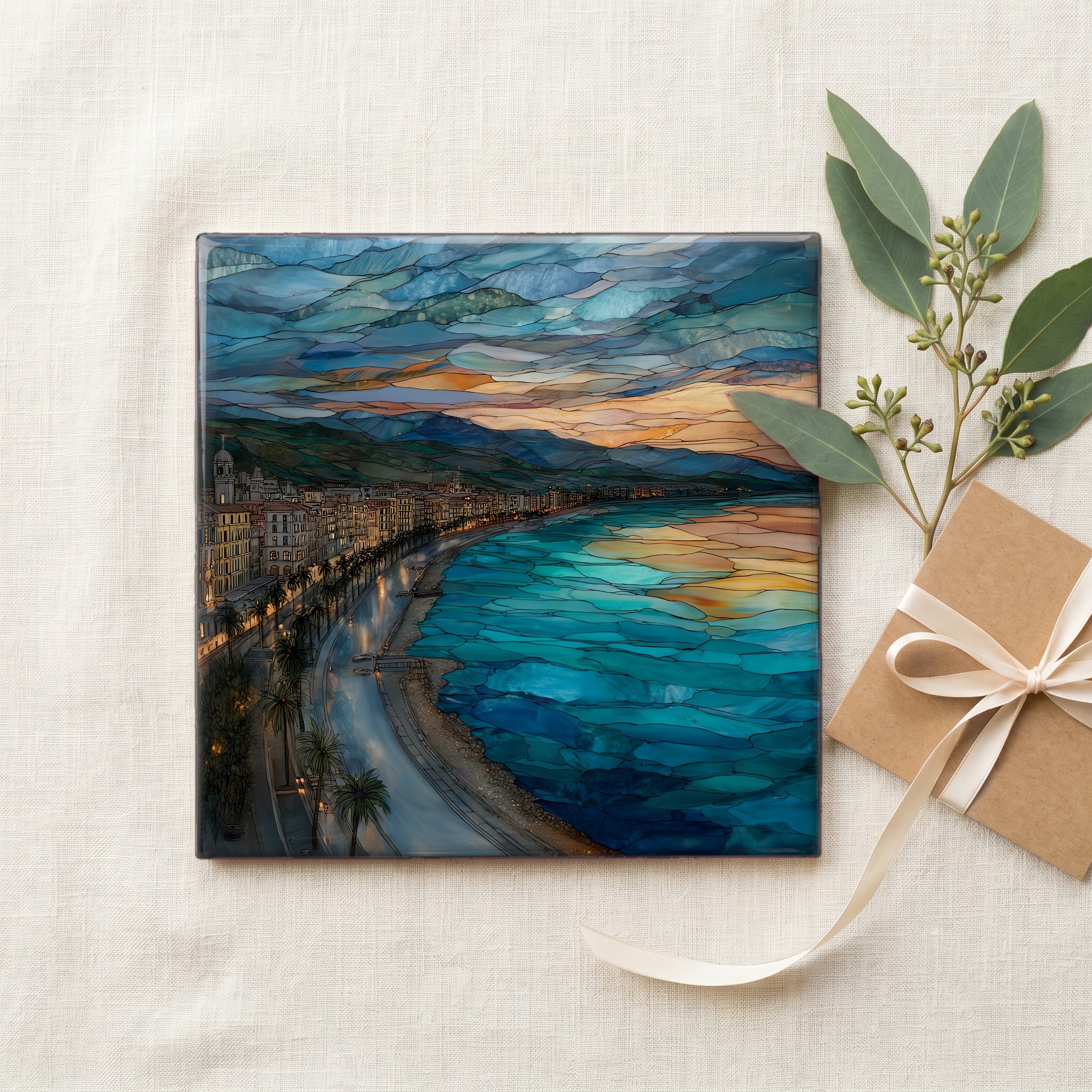
Each tile ships in a kraft box, tied with cream ribbon, with a handwritten note from the studio if you'd like to add one.
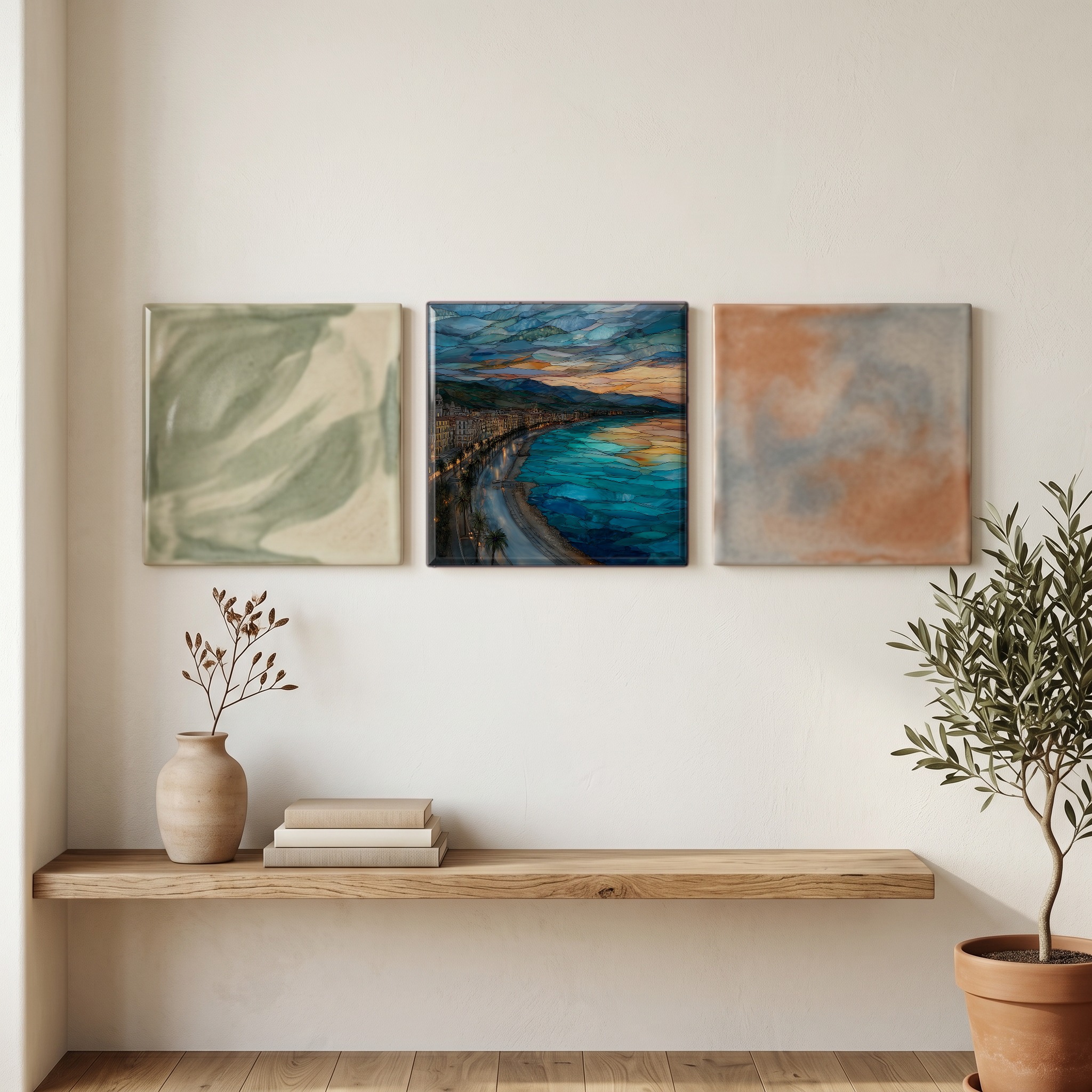
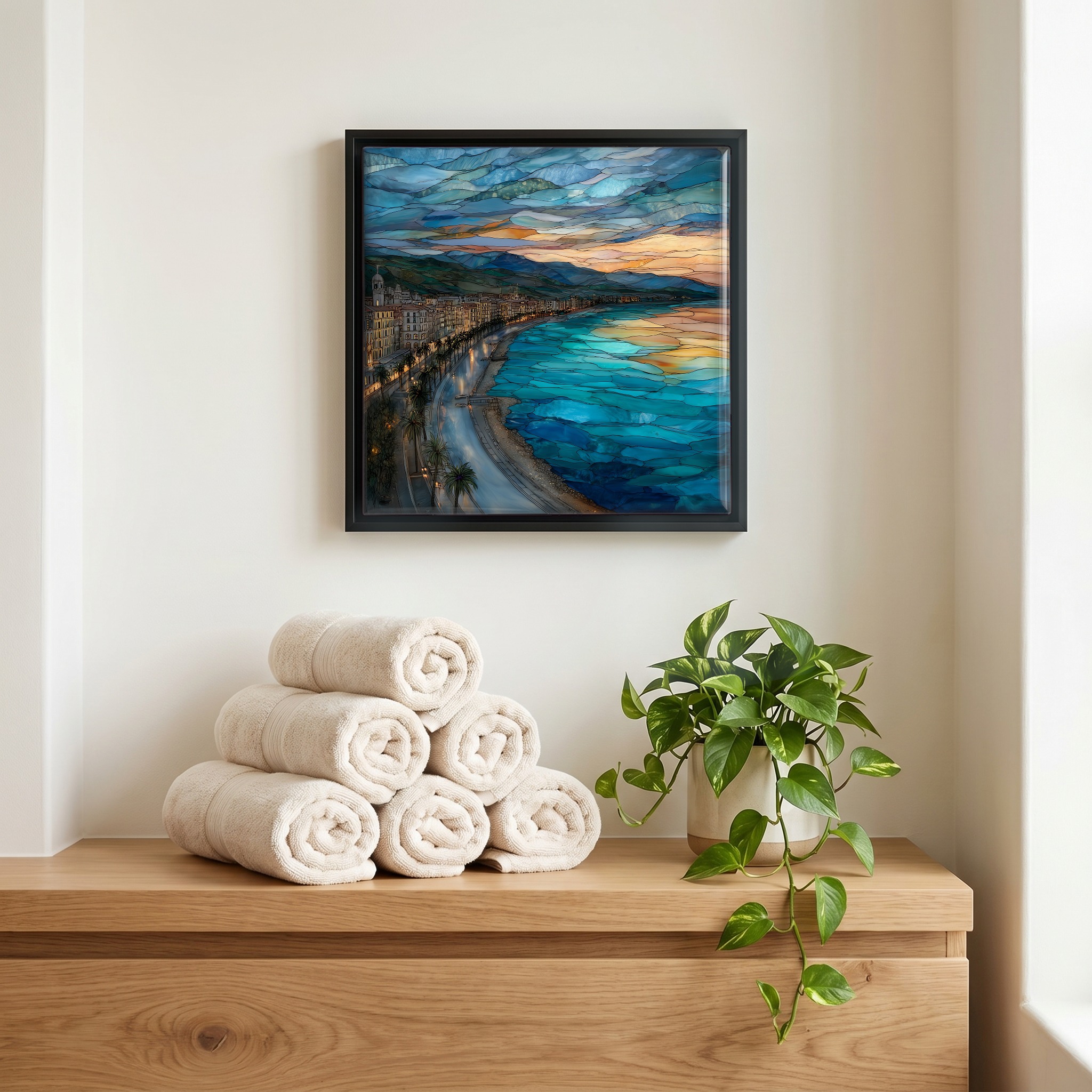
Three or five different vistas, hung together — a chapter of places you've been, or want to go.
The place, in three passes.
Lungomare Falcomatà is a promenade running roughly 1.7 kilometers along the Strait of Messina in Reggio Calabria, the regional capital of Calabria at the southern tip of the Italian peninsula. The seafront is named for Italo Falcomatà, the mayor who oversaw its late-twentieth-century redesign and died in office in 2001. Inland, the city sits on a narrow shelf below the Aspromonte massif; across the strait, the Sicilian port of Messina lies less than ten kilometers away. The city was rebuilt after the 1908 earthquake levelled both Reggio and Messina, which gives the inland edge of the promenade its predominantly early-twentieth-century character.
The Strait of Messina is one of the most concentrated stretches of water in the Mediterranean, narrowing to about 3.1 kilometers at its tightest crossing between Punta Pezzo and Capo Peloro a few kilometers north of the seafront. Tides from the Tyrrhenian and Ionian seas meet here twice a day, producing the contrary currents that ancient sailors named Scylla and Charybdis. On clear afternoons Mount Etna shows above the water across the strait on Sicily, with snow on its shoulders and steam at the summit. The strait is also the home of the Fata Morgana, a superior mirage that lifts and stretches the Sicilian coast above the surface; recorded sightings here go back to medieval times.
Sections of the original Greek fortifications, the mura greche, are exposed in the embankment along the lower promenade, the remains of walls built when the city was the Greek colony of Rhegion, founded around 730 BC by settlers from Chalcis. The inland edge of the seafront is lined with Liberty-style villas, Italy's strand of Art Nouveau, most of them built in the rebuilding after the 1908 earthquake. The Museo Archeologico Nazionale stands a short block in from the water and houses the Riace Bronzes: two life-size Greek warriors cast in the fifth century BC and pulled from the seabed off Riace Marina in 1972. The promenade carries that whole layered chronology in a single walkable line.