
Predazzo Ski Jump in Summer
— — the tower waiting on November.
Not only on a wall.

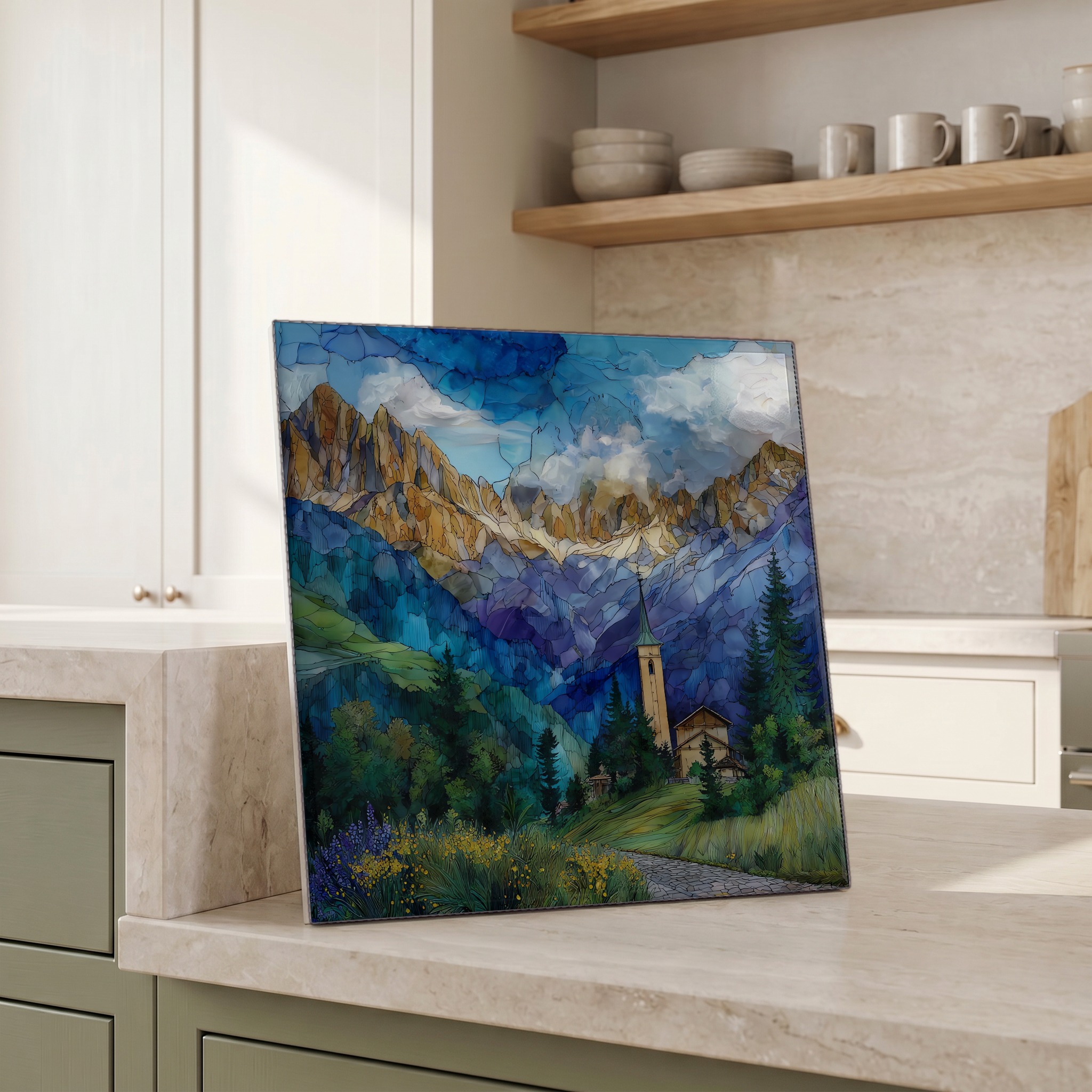



“The Trampolino Giuseppe Dal Ben sits on a south-facing slope above Predazzo in the Val di Fiemme. In winter it is an Olympic venue. The 2026 Milano-Cortina Games used it in February. In summer the snow is gone and the inrun is a long green slat of plastic mat, the way it has been since porcelain summer-jump surfaces were perfected in the 1990s. The towers stand in the meadow like a slow stair, larch and spruce behind. The Lagorai sit on one side, the Latemar on the other. Athletes still train through July and August on the FIS Grand Prix circuit, but on the days nobody jumps the slope reads as quiet engineering, the season folded away until November.
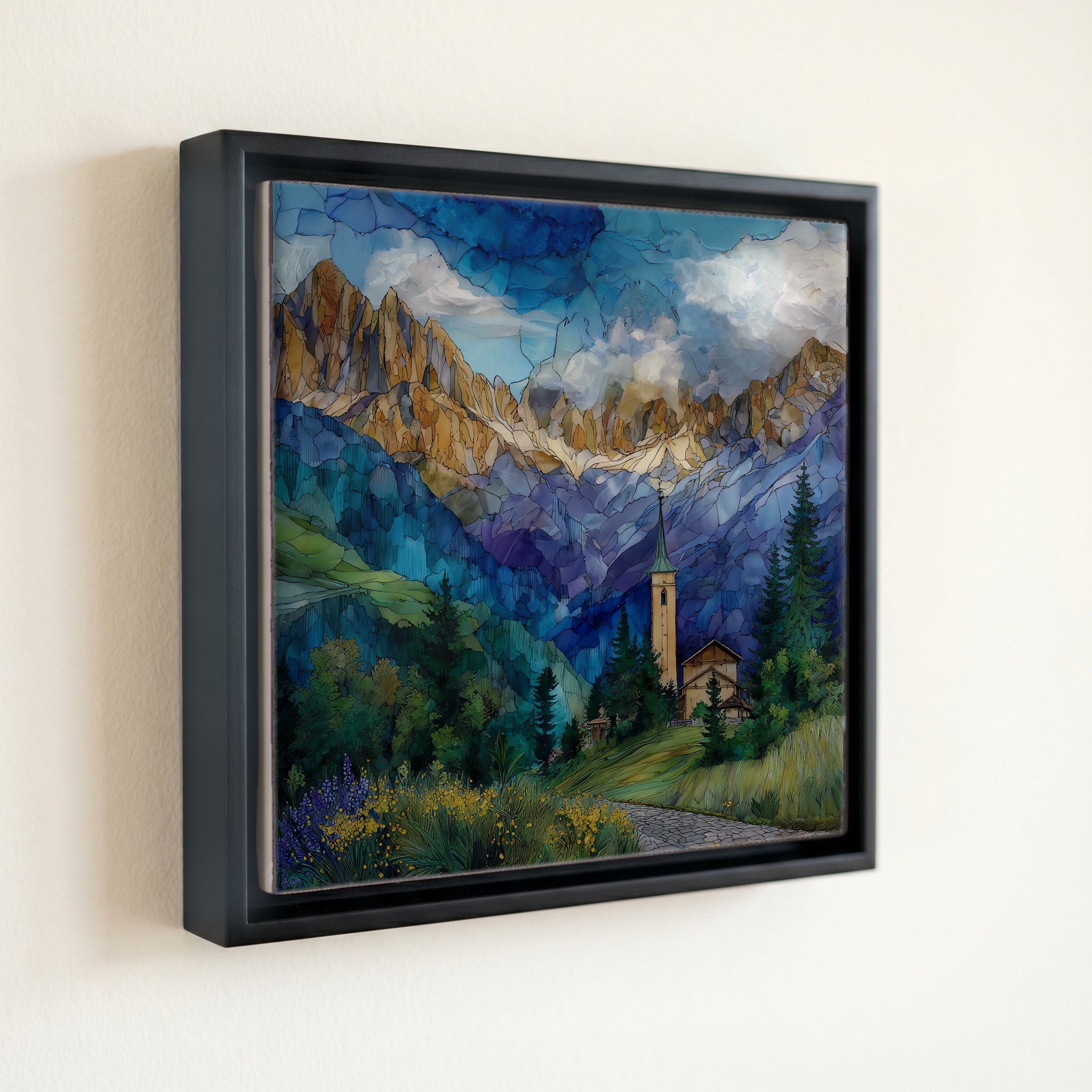
Predazzo Ski Jump in Summer, on ceramic.
Each tile is finished by hand in our Knoxville studio. Artwork is slowly infused into the ceramic surface under high heat and pressure, and rests beneath a thin glossy finish. The colour lives in the surface, not on top of it.
Pick any four 4-inch tiles — National Parks you've been to, a Smokies set, the four seasons of one place. $ for a set of , cork-backed, ready to live on the table.

Each tile ships in a kraft box, tied with cream ribbon, with a handwritten note from the studio if you'd like to add one.

Three or five different vistas, hung together — a chapter of places you've been, or want to go.
The place, in three passes.
Predazzo sits in the Val di Fiemme, on the Avisio river, in the autonomous province of Trento at roughly 1,018 metres above sea level. The ski jump complex stands on a south-facing slope above the town; it carries two hills, a normal hill and a larger one. Trento is about ninety minutes south by road, and the nearest international airport is Verona, two and a half hours away. The venue is part of the Val di Fiemme Nordic cluster that includes the Lago di Tesero cross-country stadium six kilometres downvalley. Together they hosted the Nordic events of the 1991 and 2013 FIS Nordic World Ski Championships and the ski jumping and Nordic combined events of the 2026 Milano-Cortina Winter Olympic Games.
The jumps are open to the public outside competition days. A chairlift carries visitors to the judges' tower at the top of the large hill, where the run looks straight down past the take-off table to the meadow below. In summer the inrun is covered with porcelain ceramic tracks and the landing slope with plastic mat, the same surface used on the FIS Grand Prix summer circuit since the 1990s. Athletes train through July and August; visitors can usually watch from the spectator bowl with no ticket. The town of Tesero is a six-kilometre walk on the Avisio cycle path, and the Cermis cable car at Cavalese climbs to a viewing terrace at 2,229 metres.
The Predazzo jumps follow a competitive calendar that runs nearly twelve months. The winter World Cup season takes the hill from December through March. After a brief spring closure, the porcelain inrun is reinstalled and the FIS Summer Grand Prix circuit arrives in July and August, with competitive ski jumping on plastic mat judged by the same rules as the snow season. The hill stays open to summer hikers and chairlift visitors between training blocks. Snow returns to the landing slope by mid-November in most years, and the first World Cup events typically follow within a fortnight.