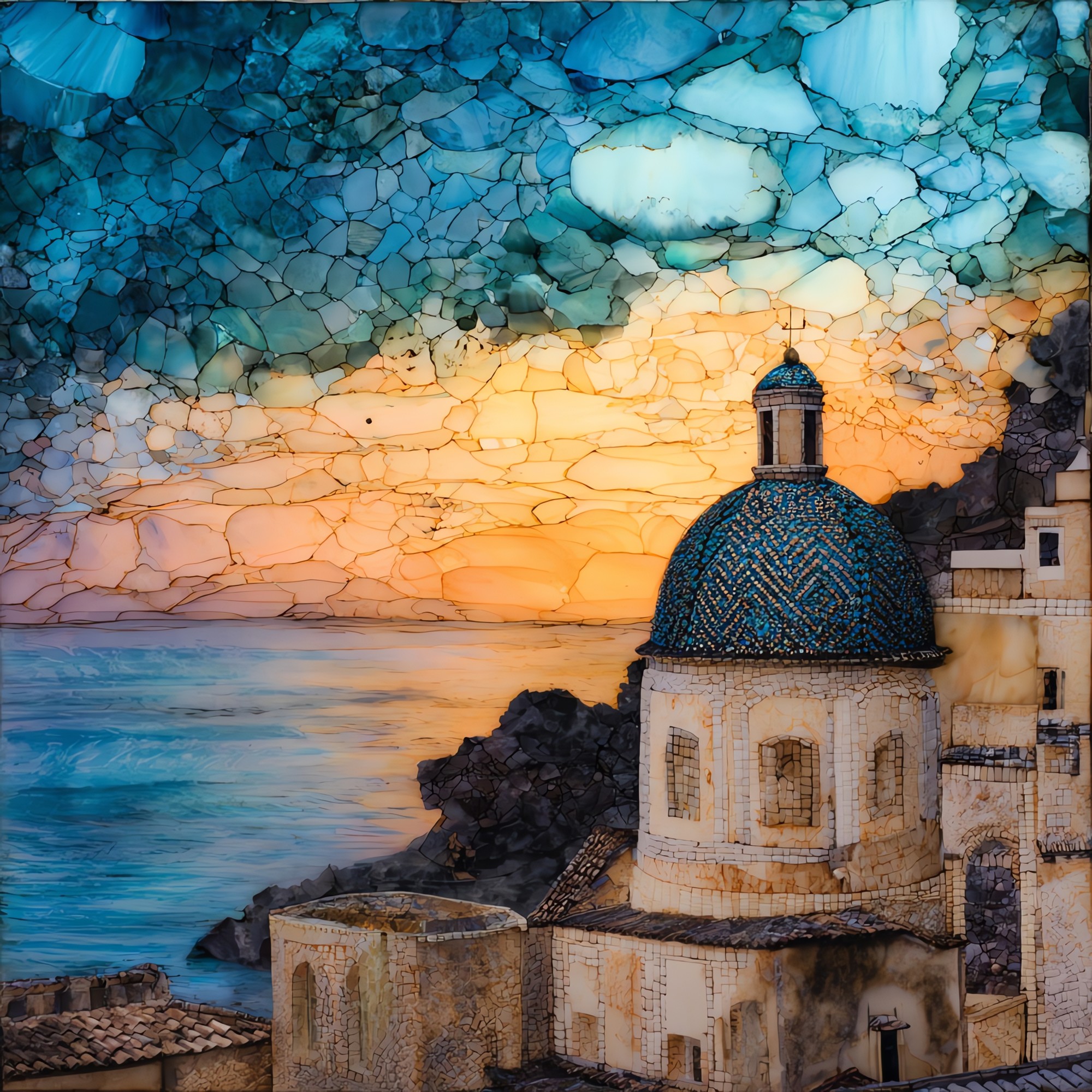
Praiano
— — where the coast holds the last of the sun.
Not only on a wall.
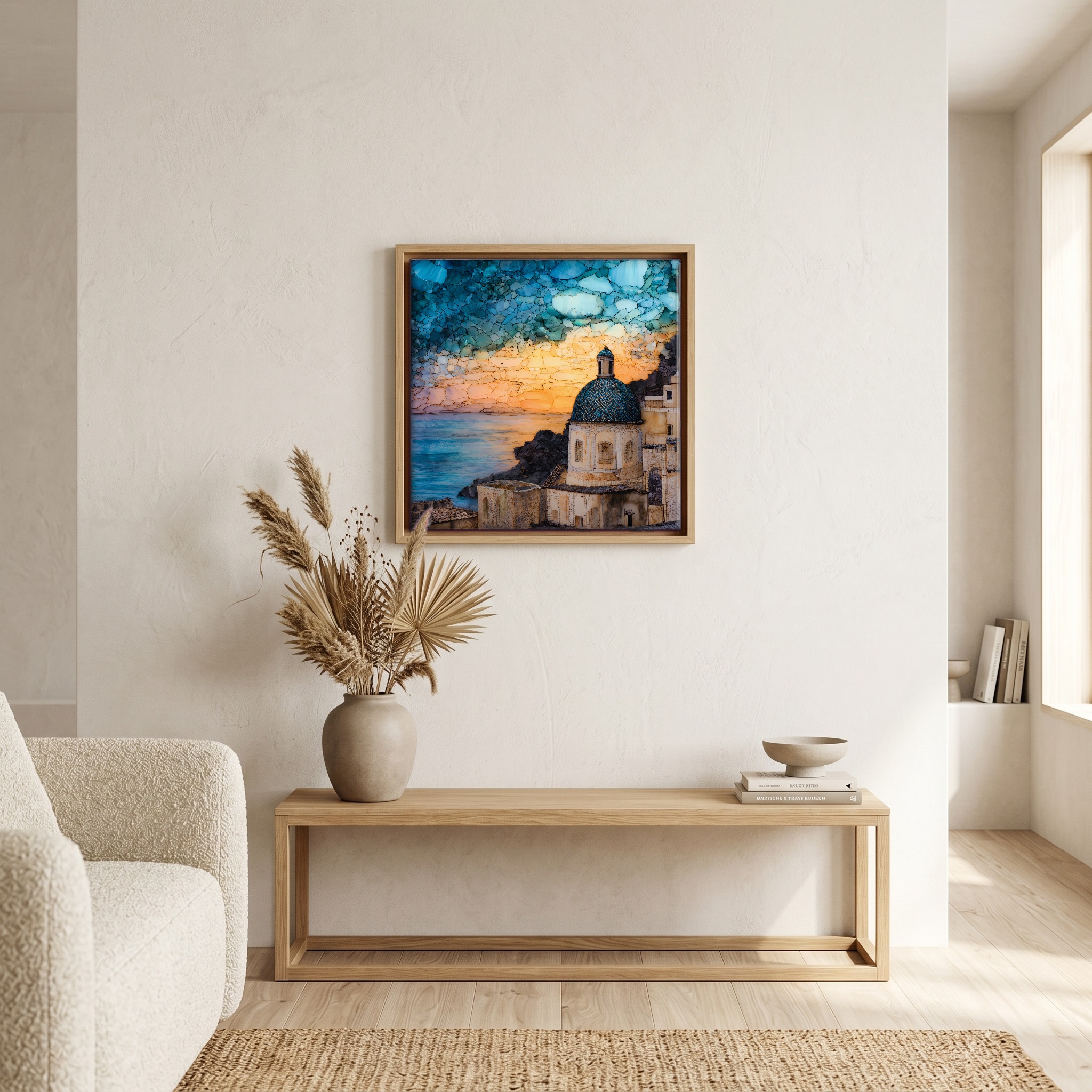
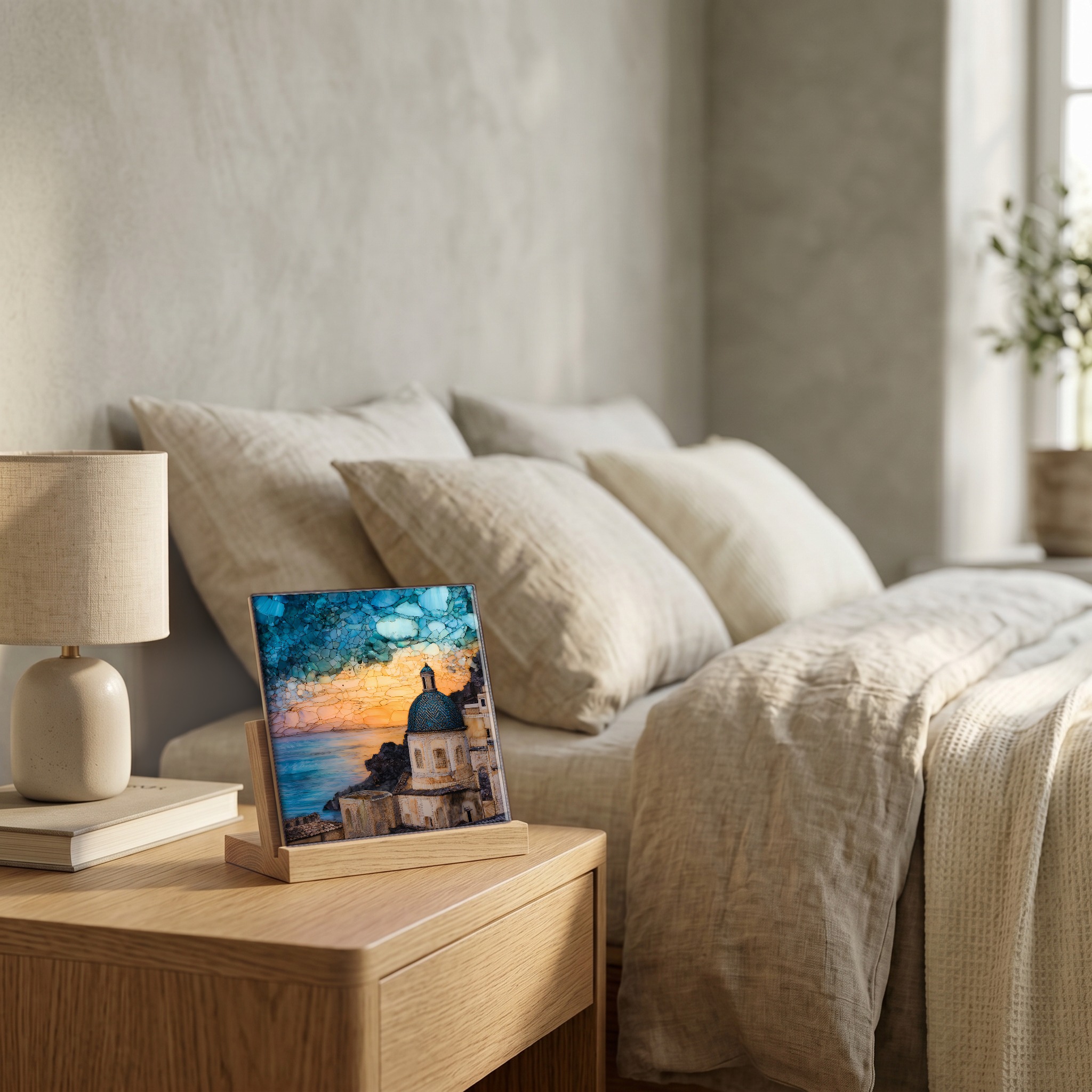
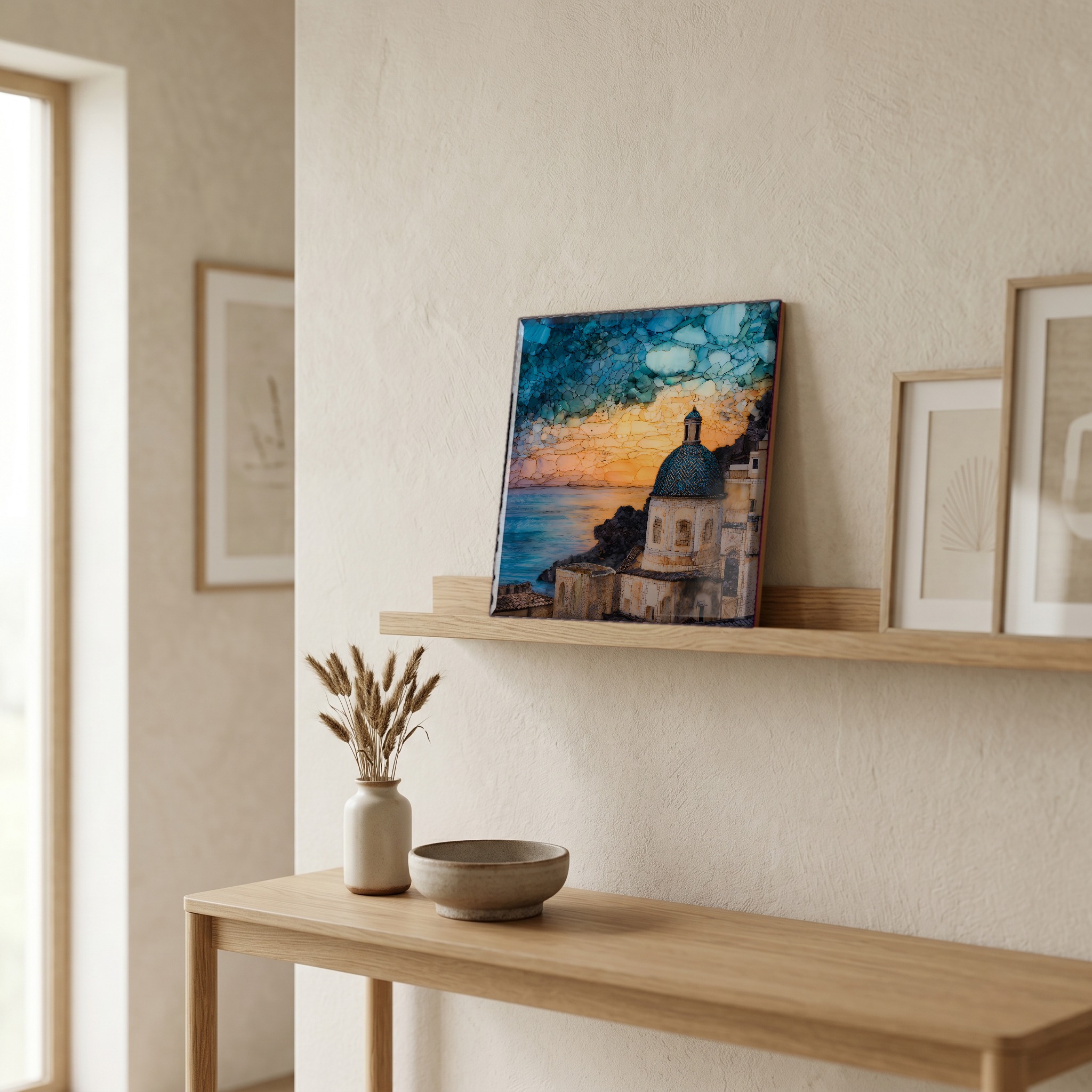
“Most of the Amalfi Coast turns its back to the afternoon. Praiano is the exception. It faces west, so when Positano and Amalfi have gone into shadow, the light is still here: on the tiled dome of San Gennaro, on the steps down to Marina di Praia, on the water off Gavitella, where the locals stay until the sun is gone. People come to the other towns for the morning. They come to Praiano for the last hour of the day, and they don't say much while it happens.
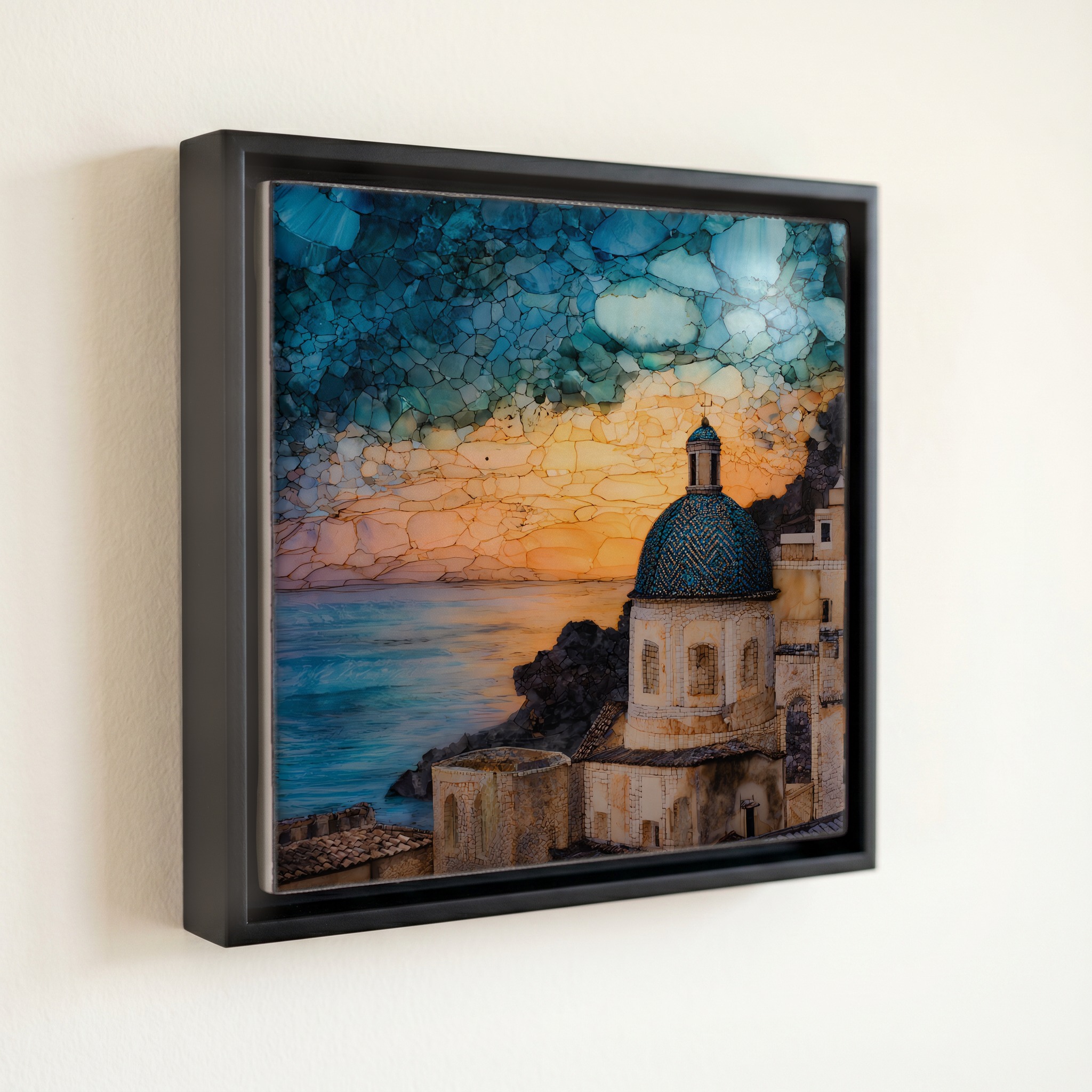
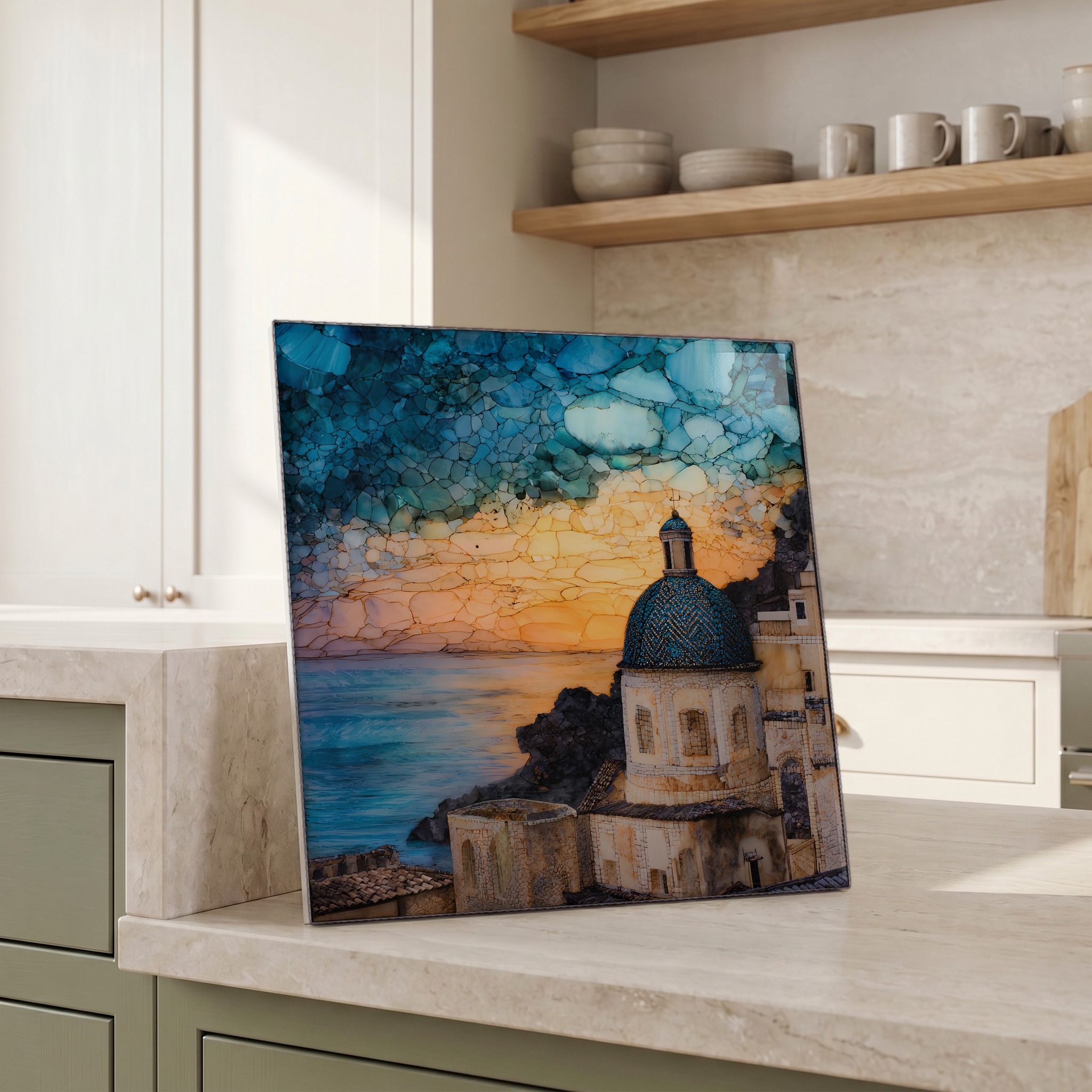
Praiano, on ceramic.
Each tile is finished by hand in our Knoxville studio. Artwork is slowly infused into the ceramic surface under high heat and pressure, and rests beneath a thin glossy finish. The colour lives in the surface, not on top of it.
Pick any four 4-inch tiles — National Parks you've been to, a Smokies set, the four seasons of one place. $ for a set of , cork-backed, ready to live on the table.
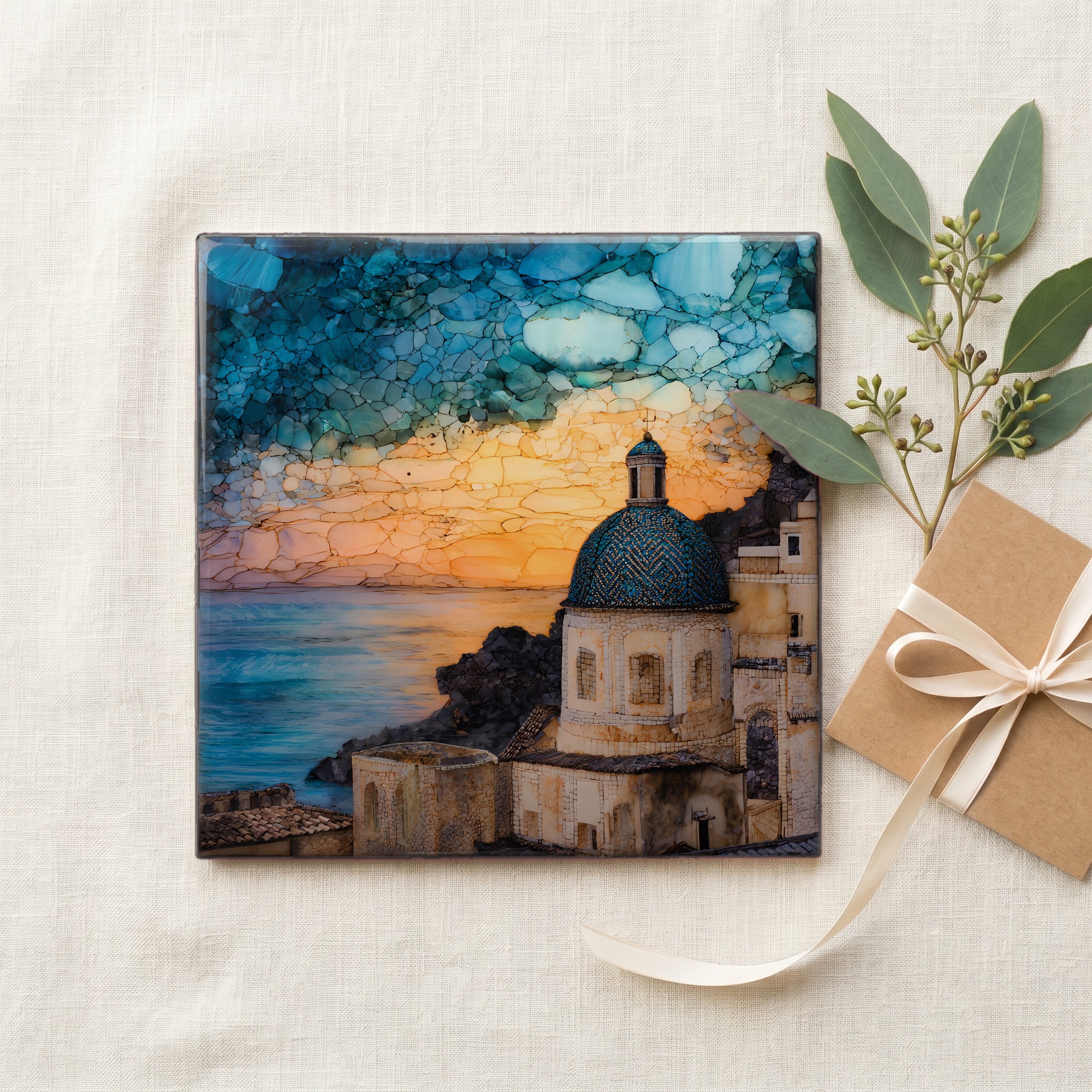
Each tile ships in a kraft box, tied with cream ribbon, with a handwritten note from the studio if you'd like to add one.
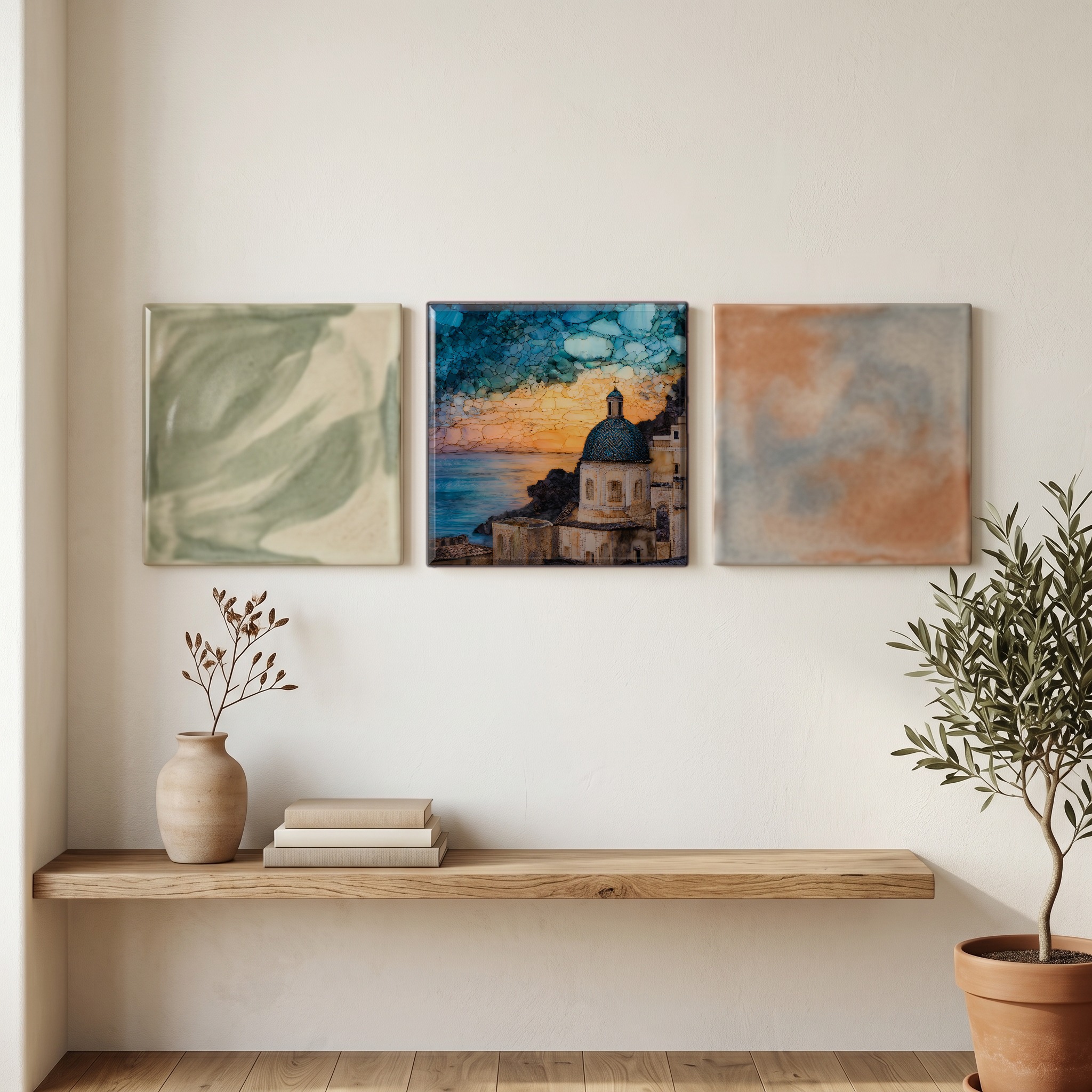
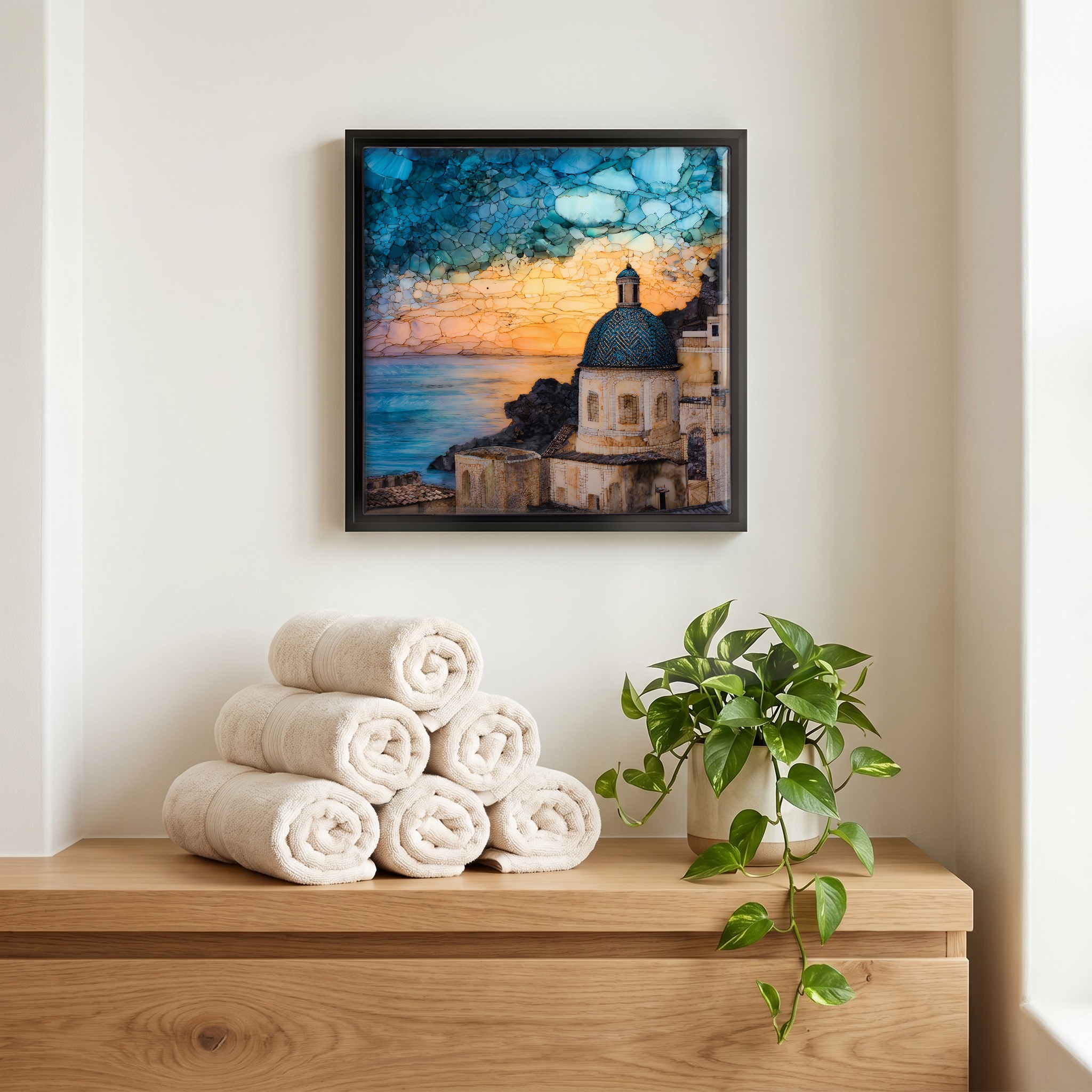
Three or five different vistas, hung together — a chapter of places you've been, or want to go.
The place, in three passes.
Praiano is a village of about 2,000 people on the Amalfi Coast, in the province of Salerno in Campania, set on terraced cliffs between Positano and Amalfi. It covers roughly two square kilometres and rises from the water toward Monte Sant'Angelo a Tre Pizzi, the ridge that reaches 1,444 metres behind the coast. The single road, the SS163 Amalfitana, threads through the town; below it, a long staircase drops to the cove at Marina di Praia. The coast here, including Praiano's Vettica Maggiore quarter, has been a UNESCO World Heritage Site since 1997. A thousand years ago the village was a summer retreat for the doges of the maritime Duchy of Amalfi.
Praiano faces west, which on this coast is unusual. Most of the Amalfi towns sit in coves that lose the sun by mid-afternoon; Praiano's terraces and the beach at Gavitella hold it. In high summer the sun stays on the water here until close to half past eight in the evening, later than almost anywhere else on the coast, which is why the town fills in the last hours of the day rather than the first. The light arrives gold off the sea and works slowly up the cliff, across the majolica dome of San Gennaro, until it goes.
The colour of Praiano is partly ceramic. The parish church of San Gennaro, in the Vettica Maggiore quarter, carries an oval dome covered in multicoloured majolica, white and blue rhomboid tiles on eight gold-coloured ribs, set so high it can be read from the coast road below. The smaller church of San Giovanni Battista holds a maiolica tiled floor. Each August, from the first to the fourth, the town lights the Luminaria di San Domenico: roughly three thousand candles, arranged in patterns by the local Ragazzi della Luminaria, are lit at half past nine, and Piazza San Gennaro is covered with about two thousand more across its ceramic paving. The custom dates to the seventeenth century.