Wender·Vista
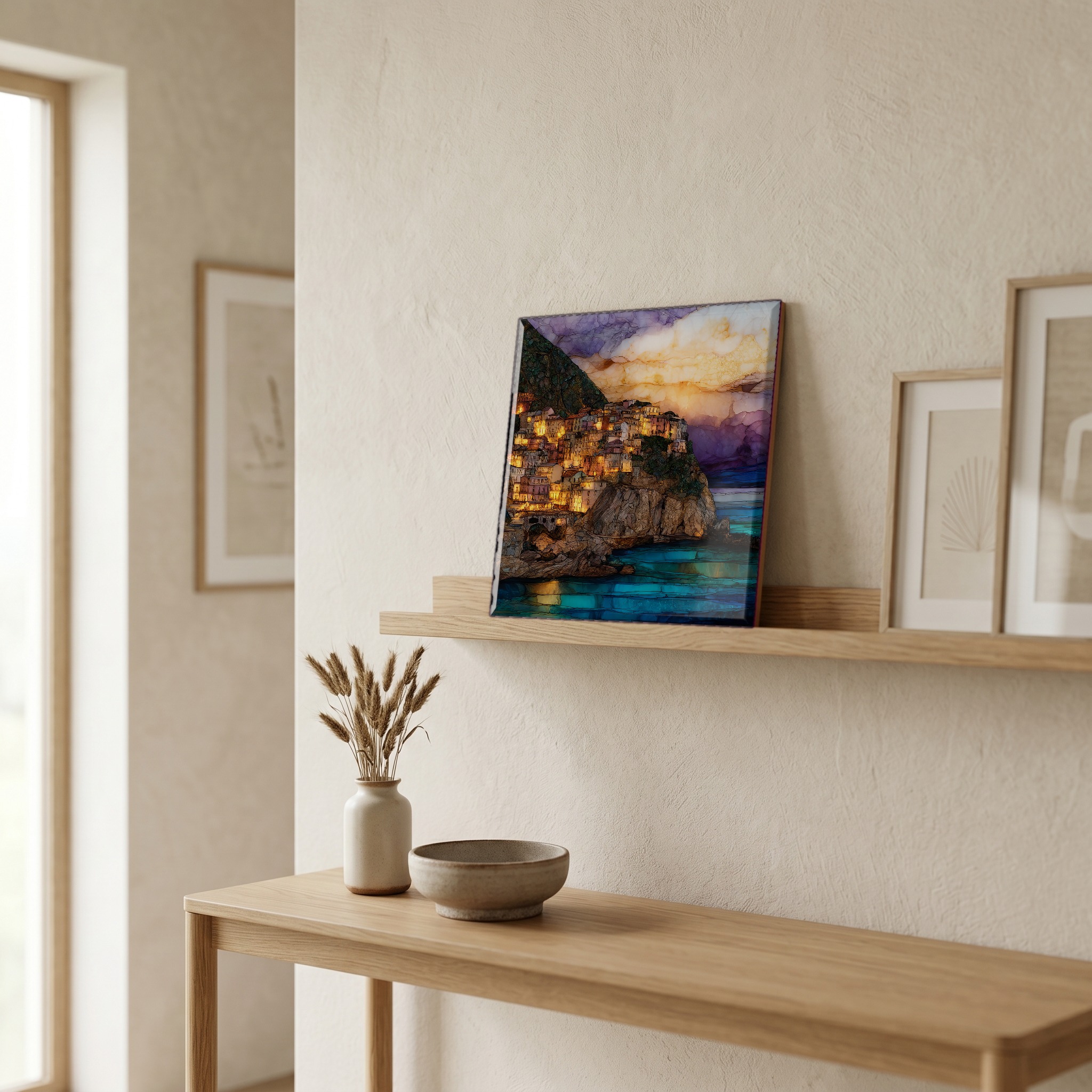
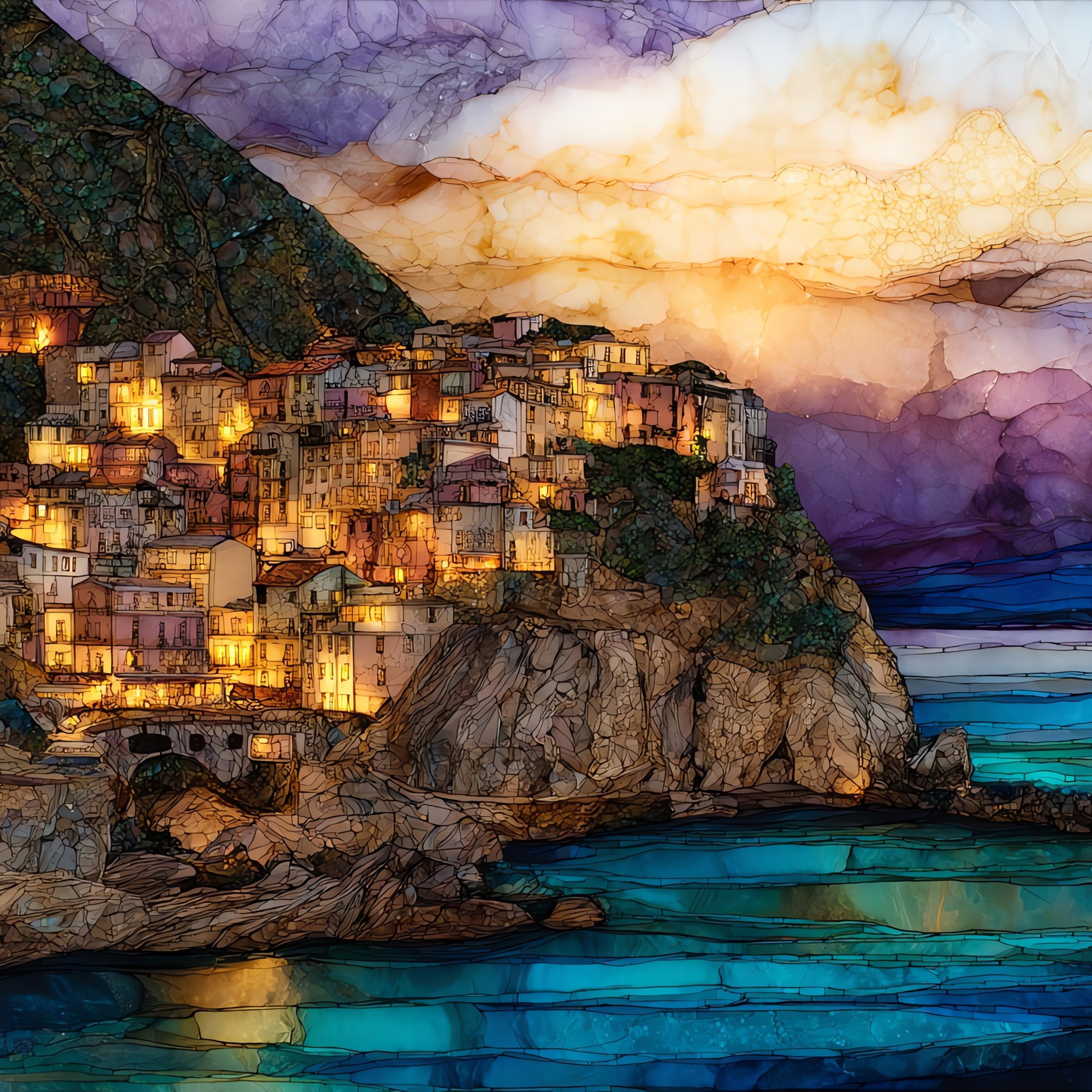
Positano
shown on ceramic, 12-inch tileItaly
on the Amalfi Coast, south of Naples

Positano

a cliff the colour of fruit, just before dusk.

Where it lives

Not only on a wall.

A small tile on the nightstand catching the morning. A larger one above the fire. Yours, wherever you spend the slow hours.
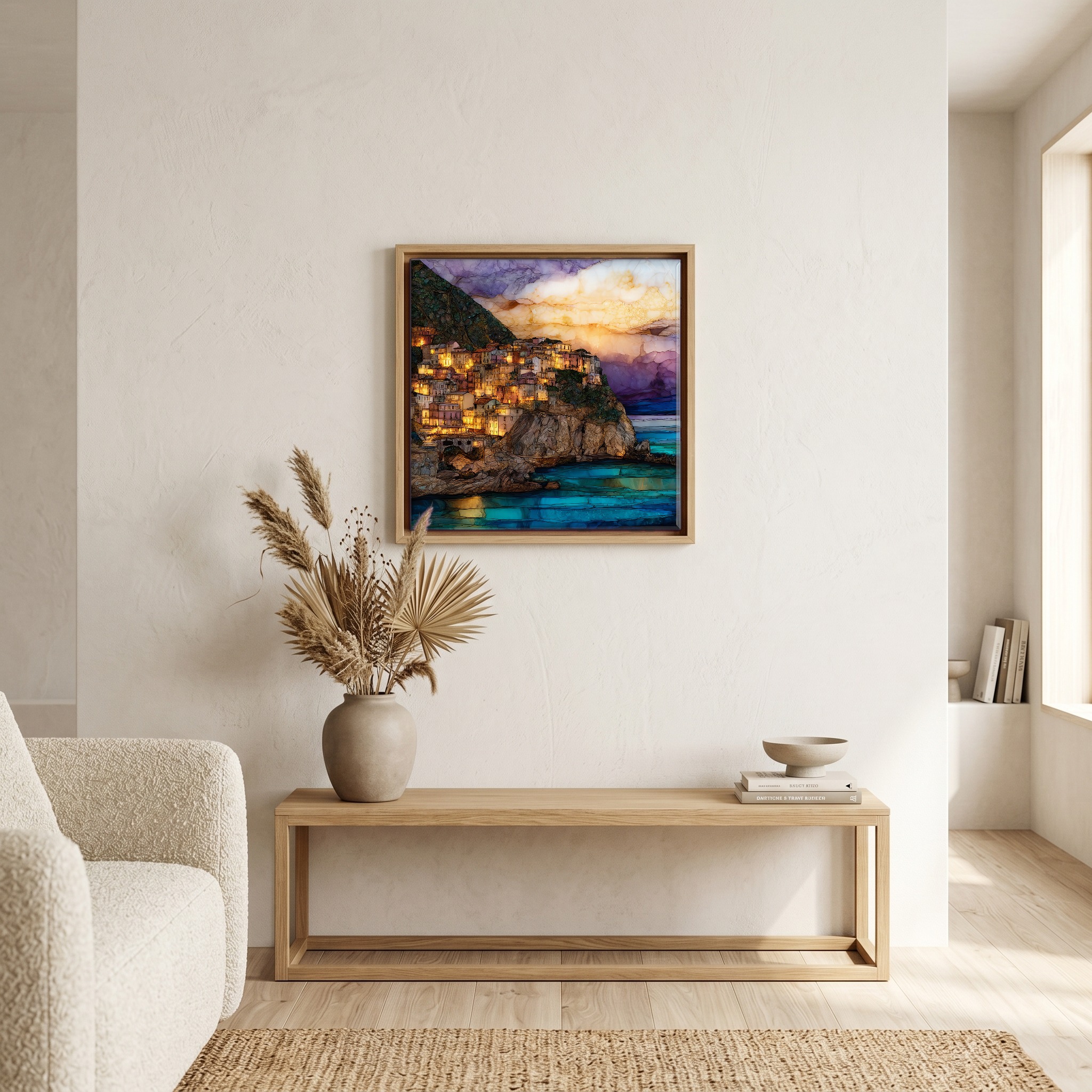
Above the bench, in a warm oak surround.
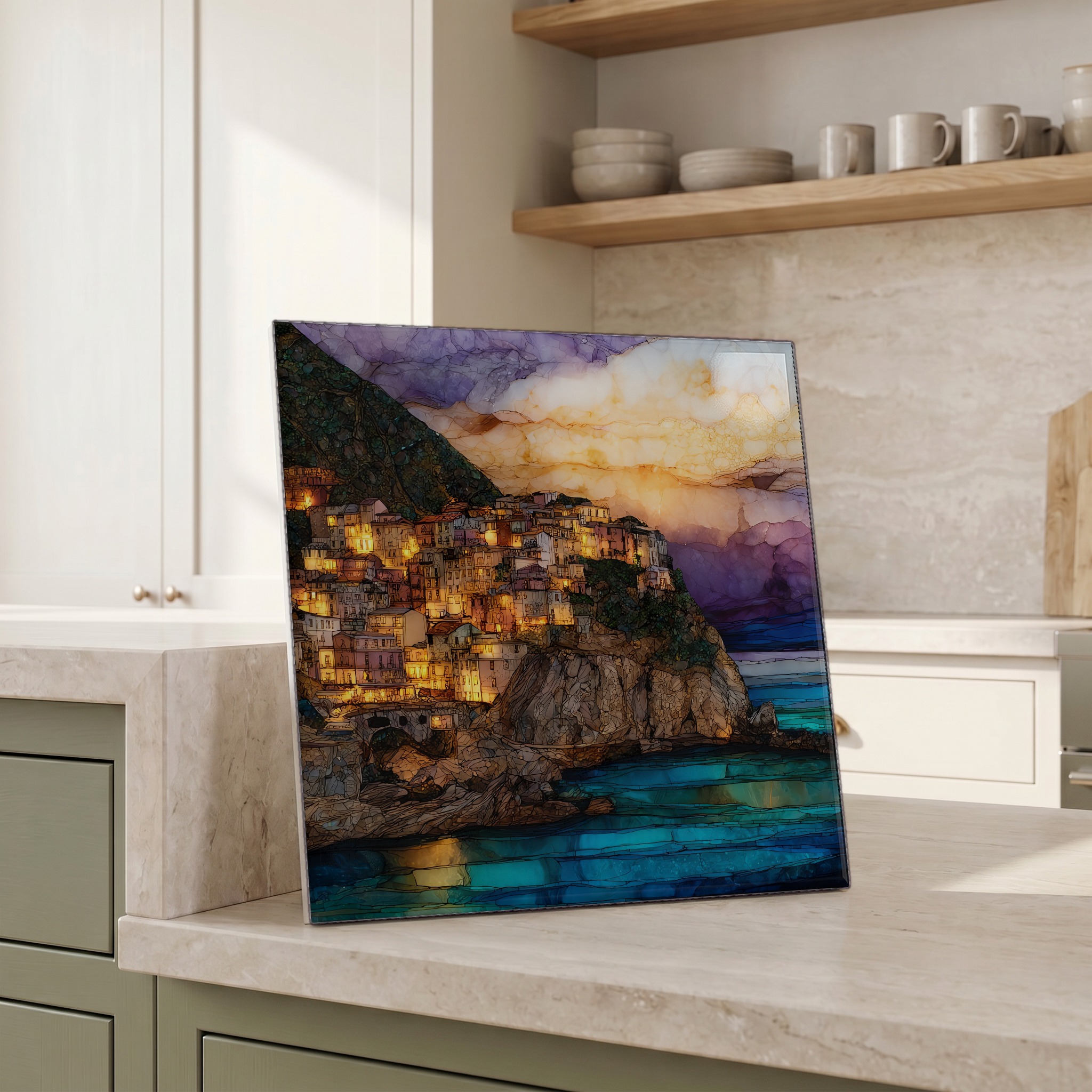
Beside the kettle, propped on the counter.
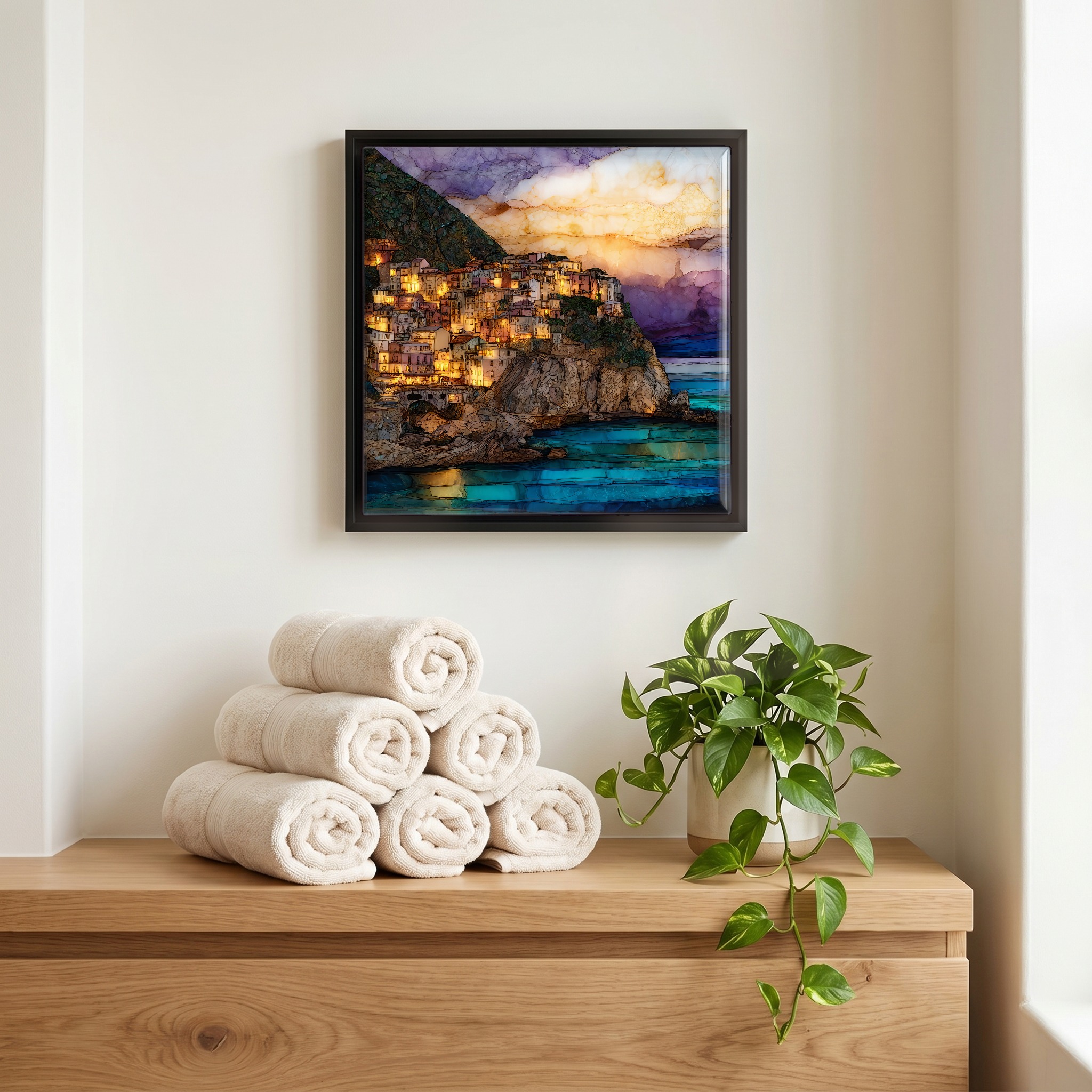
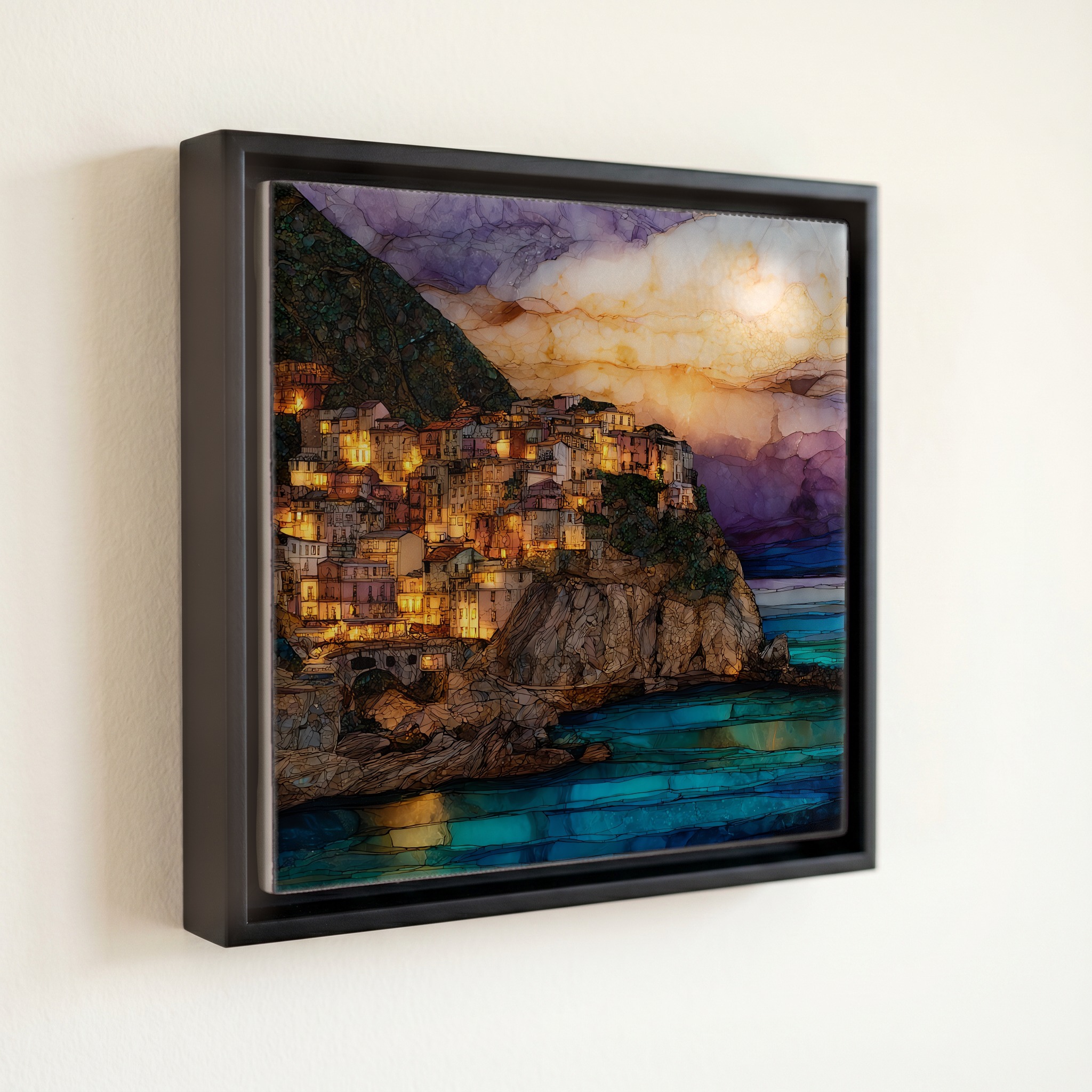
Above the linens, in a slim black surround.
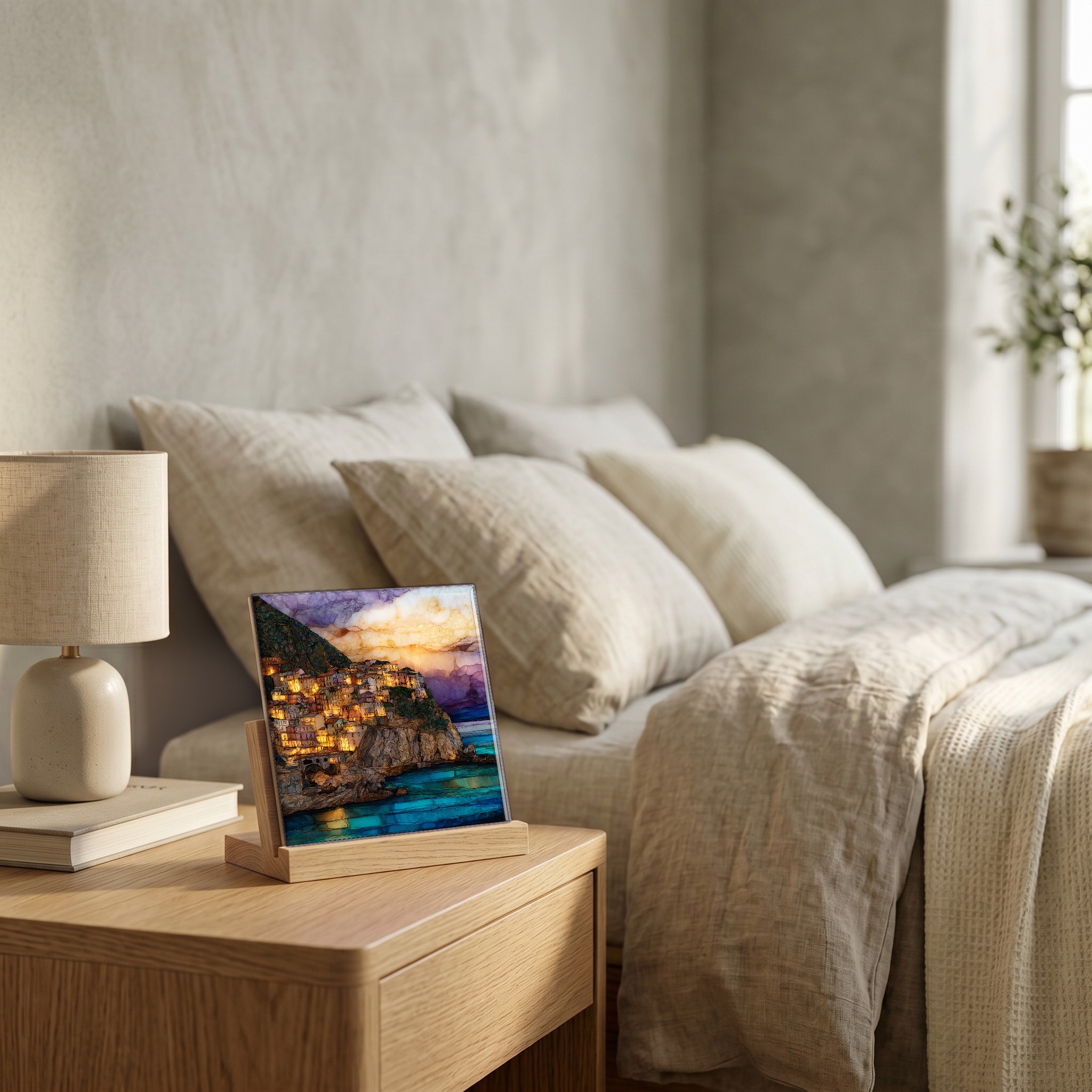
On the nightstand, on a light oak stand.
On a picture ledge, where the light comes in.
a note from the studio

A cliffside village on the Amalfi Coast, south of Naples, where pastel houses fall in tiers to the sea. The majolica dome of Santa Maria Assunta holds the centre, its green and yellow tile catching the light over Marina Grande's grey-sand beach. Lemon groves climb the terraces above. John Steinbeck wrote in 1953 that Positano 'bites deep,' that it becomes real after you've left. Most visitors arrive by ferry from Sorrento or Salerno; the coastal road is narrow enough that buses pass each other slowly. The light at six in the evening turns every face of the cliff the colour of a peach.
from the studio
shown in a slim black floating frame · 6 × 6 in
— bring it home

Positano, on ceramic.

Each tile is finished by hand in our Knoxville studio. Artwork is slowly infused into the ceramic surface under high heat and pressure, and rests beneath a thin glossy finish. The colour lives in the surface, not on top of it.

What kind of piece?
One tile — square or rectangle.
How big?
the popular one — counter, shelf, nightstand
6 × 6 in · 15 cm · 1.6 lb
Surface finish
A clear glossy finish — the artwork reads as if under resin. Ideal for show-pieces and framed wall art.
How it sits
A hidden cleat — sits ¼″ proud of the wall.
$58
Hand-finished and shipped from our studio at the foot of the Smokies. On your wall in about ten days.
size
6 × 6 in
15 cm
weighs
1.6 lb
solid in the hand
surface
ceramic, hand-finished
art rests beneath a thin glossy finish
from
Knoxville, TN
our family studio, at the foot of the Smokies
— start a Coaster Set

Pick any four 4-inch tiles — National Parks you've been to, a Smokies set, the four seasons of one place. $ for a set of , cork-backed, ready to live on the table.
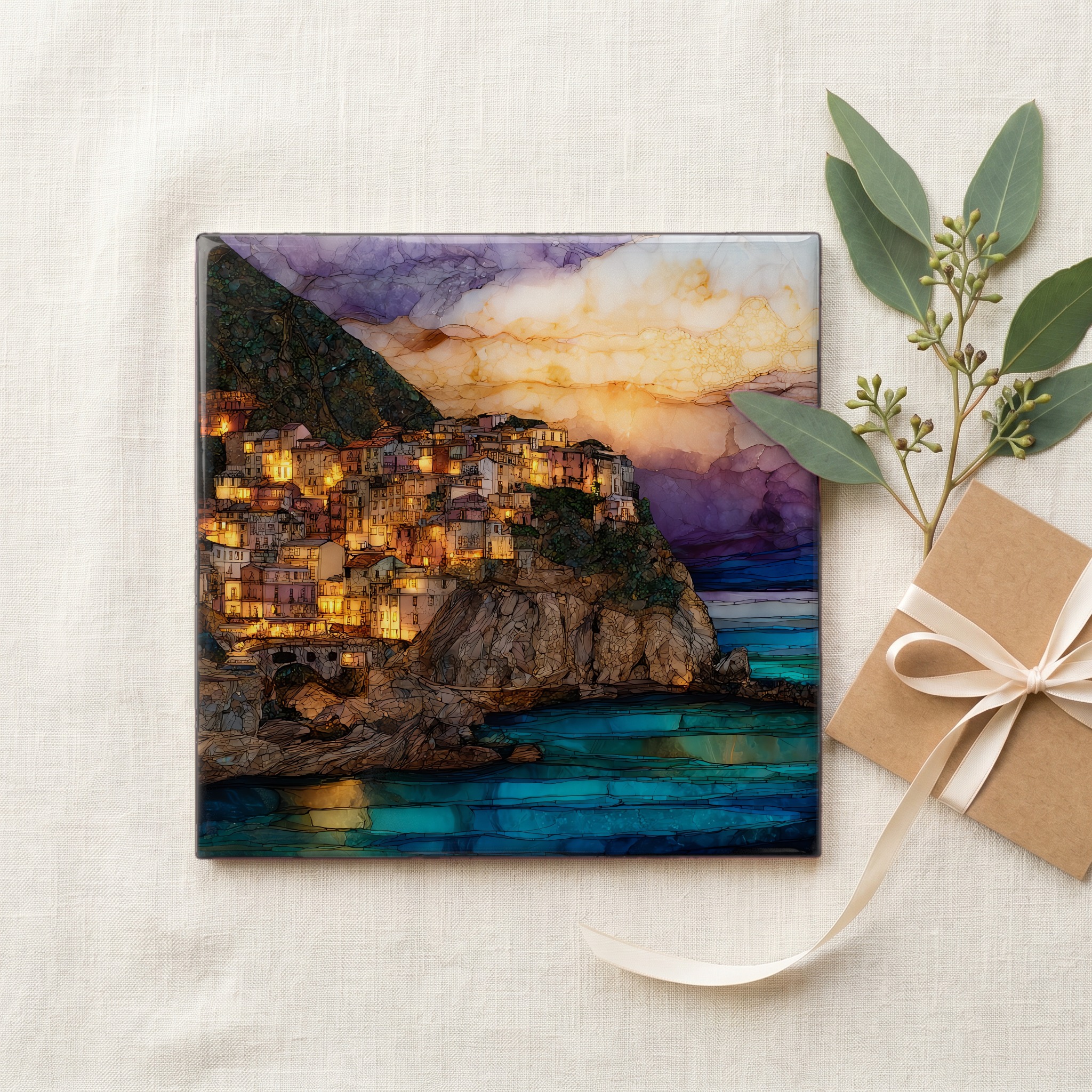
comes gift-ready
comes gift-ready

Each tile ships in a kraft box, tied with cream ribbon, with a handwritten note from the studio if you'd like to add one.
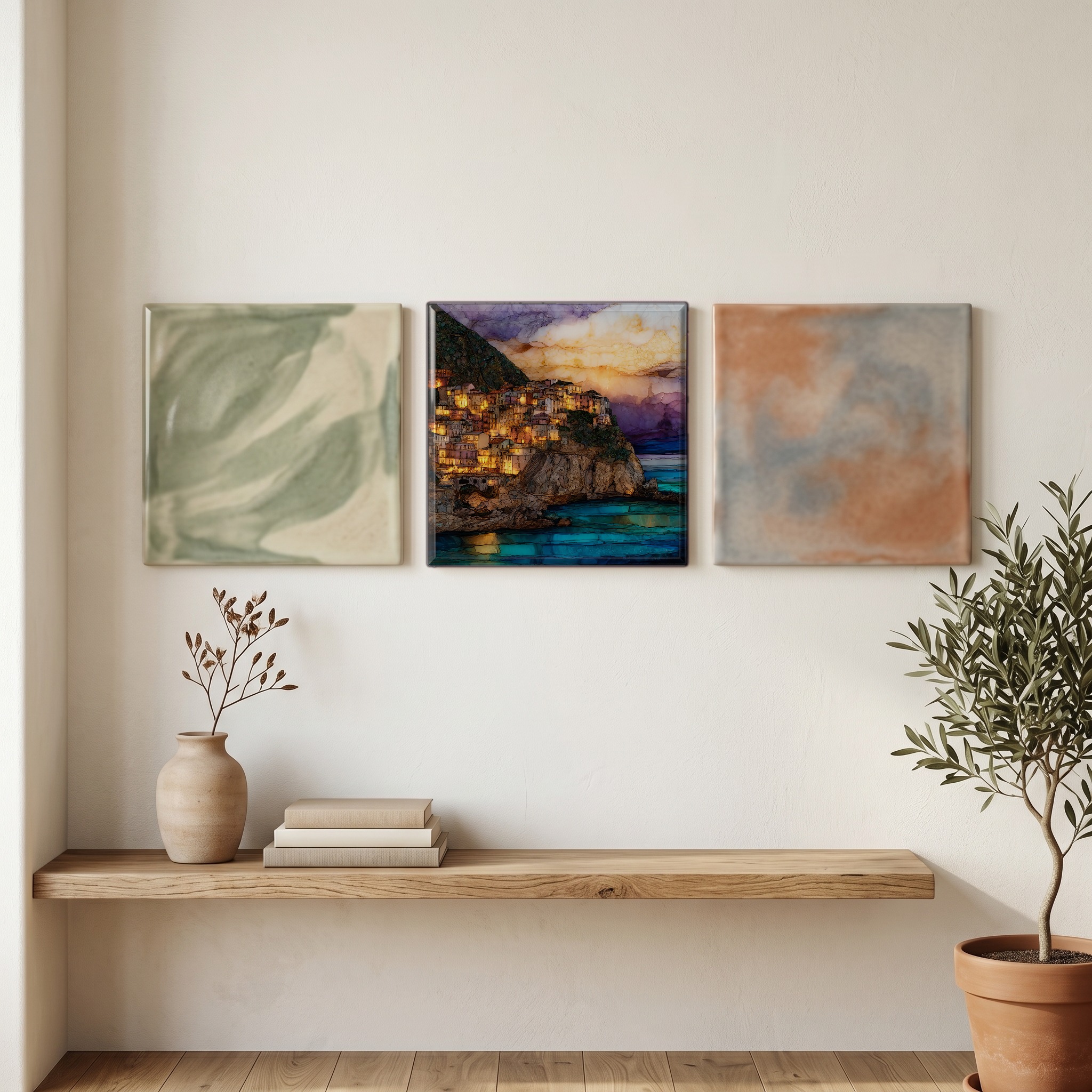
or build a grouping
or build a grouping

Three or five different vistas, hung together — a chapter of places you've been, or want to go.

about Positano

The place, in three passes.

A little of what's known, in case you fall down the rabbit hole — or want to go see it yourself.
the place

Positano sits on the Amalfi Coast in the Campania region of southern Italy, roughly 60 kilometres south of Naples and 16 kilometres west of Amalfi town. The village is built vertically into a steep cliff above a small bay, with a population of about 3,800. It is part of the UNESCO World Heritage area inscribed in 1997 covering the Amalfi Coast (Costiera Amalfitana). The single coastal road, the SS163 or Amalfi Drive completed in the 1850s, threads above the town; most visitors arrive by ferry from Sorrento, Amalfi, or Salerno during the April-to-October season. The cliffside hike known as the Sentiero degli Dei (the Path of the Gods) ends above Positano at the village of Nocelle.

the colour

The colour reads as a layered wash because Positano was built up by households painting individually over centuries, working in peach, ochre, rose, terracotta, cream, and occasional jade against the green of lemon-grove terraces and the limestone grey of the Lattari cliffs. At the centre, the majolica dome of Santa Maria Assunta holds a geometric pattern of tile in green, yellow, and blue; the church took its current form in the 18th century above a much older parish. The Byzantine icon inside, the Madonna di Positano, gave the town its name by tradition: sailors heard the icon say posa ('put me down') and built her a chapel. The light at evening lifts every facade by one tone.

the visit

The shoulder seasons, May to early June and September to October, give Positano its best light and thinnest crowds; the August window draws ferries and coaches from the entire Bay of Naples and the village runs to capacity. Ferry routes from Sorrento, Amalfi, Capri, and Salerno operate April through October via Travelmar and Alicost; in winter most boats stop. The SS163 above the town is two lanes wide for much of its length and clogs in peak season; the SITA bus service runs the coast from Sorrento and Amalfi when the road is open. The Sentiero degli Dei from Bomerano to Nocelle, the high-line approach to the village, takes about three hours over roughly seven kilometres.

where
Italy · Province of Salerno, Campania
position
40.6280° N · 14.4850° E
the neighborhood

What's nearby.

A handful of named places within an hour's walk or short drive. Some we've already painted; some we will.
5 km ESE
Praiano
Amalfi Coast village
16 km E
Amalfi
cathedral town
20 km ENE
Ravello
hilltop town
17 km WNW
Sorrento
cliff town
14 km SW
Capri
island
N
Positano
Praiano
Amalfi
Ravello
Sorrento
Capri
common questions

What people ask.

A few questions we get about Positano — and about bringing the piece home.
about the place

Positano is a cliffside village on the Amalfi Coast in southern Italy's Campania region, about 60 kilometres south of Naples and 16 kilometres west of Amalfi. It sits on the south face of the Sorrentine Peninsula, between Sorrento and Salerno, within the 1997 UNESCO World Heritage area covering the Costiera Amalfitana.

Positano grew vertically over centuries, with each household painting its facade independently in peach, ochre, rose, terracotta, jade, and cream. The cumulative effect is a layered cliff face that reads as a single palette from the sea. The custom predates any tourism-era preservation rule.

Santa Maria Assunta, the parish church above Marina Grande beach. Its majolica dome carries a geometric pattern of tile in green, yellow, and blue, and took its current form in the 18th century. Inside is a 13th-century Byzantine icon known as the Madonna di Positano.

May to early June and September to October give the best balance of light, weather, and crowd. July and August are the hot, packed months. From November to March many hotels, ferries, and lemon-grove restaurants close; the village is quiet and the SS163 carries all the traffic.

Most visitors arrive by ferry from Sorrento, Salerno, Amalfi, or Capri during the April-to-October season; Travelmar and Alicost run the main routes. The SS163 coastal road, completed in the 1850s, threads above the village and is served by SITA buses from Sorrento and Amalfi.

The Sentiero degli Dei is a cliffside hiking trail that runs from Bomerano above Agerola to the hamlet of Nocelle above Positano, covering roughly seven kilometres in about three hours. It traces the high terraces of the Lattari mountains with a long view of the coast.

By local tradition the name comes from the Latin posa ('put down'). Sailors carrying a Byzantine icon of the Madonna heard a voice from the cargo asking to be put down at the beach, and the village built a chapel where the icon was set. The icon is still in Santa Maria Assunta.

about the piece in your home

It's been a meaningful gift for many of our customers with a connection to Positano or the wider Amalfi Coast. The piece carries the pastel cliff face and the majolica dome of Santa Maria Assunta, landmarks that a returning visitor recognises immediately. A Small or Medium with a handwritten note from the studio carries well.

The pastel palette and stained-glass colour structure read well in coastal-modern interiors, Mediterranean-revival rooms, and warm Maximalist spaces. The piece holds its own beside terracotta, raw linen, and unpolished travertine. It also works as a single bright anchor in a quieter Minimalist room.

Coastal-modern as a style has moved away from the cool blue-and-white seaside palette toward warmer Mediterranean tones: terracotta, ochre, sun-faded pink, sea-glass green. Positano sits squarely in that shift. The piece works in a 2026 coastal-modern room without reading dated in five years.

A single Large is the standard above a console; above a sofa, a 4-tile Mural or a 9-tile Mural carries the wall at scale. The 9-tile Mural lets the cliff face break across the grid, with the dome anchoring one of the centre tiles.

Yes. For damp rooms and splash zones, order the piece in Dura Satin or Matte rather than Glossy; both finishes are scratch-resistant and won't fingerprint. The Coaster Set is a small everyday way to put Positano on a kitchen counter.

A soft microfibre cloth with water is enough for routine cleaning. For tougher marks on a Dura Satin or Matte tile, a small amount of mild dish soap is safe. Avoid abrasive pads and ammonia-based cleaners on the Glossy finish.

Yes. Every WenderVista piece is original to our studio in Knoxville, Tennessee. Reid Wender selects the place and finishes the artwork in our visual language; nothing is licensed and there is no second source. Each tile is hand-finished in-house before shipping.

if this one stayed with you

A few you might also love.

Hand-picked by the eye that found Sorapis. Same air, same kind of quiet.
— a collection

The Italian Dolomites,
painted slow.

The valleys between Cortina and Val Gardena, the tarns you walk an hour to see, the towers that turn the colour of a banked fire just before dark. Wander the collection by valley, by season, or follow the path Reid walked.

Tre Cime
Braies
Misurina
Sorapis
Cinque Torri
Sassolungo
Marmolada