Wender·Vista
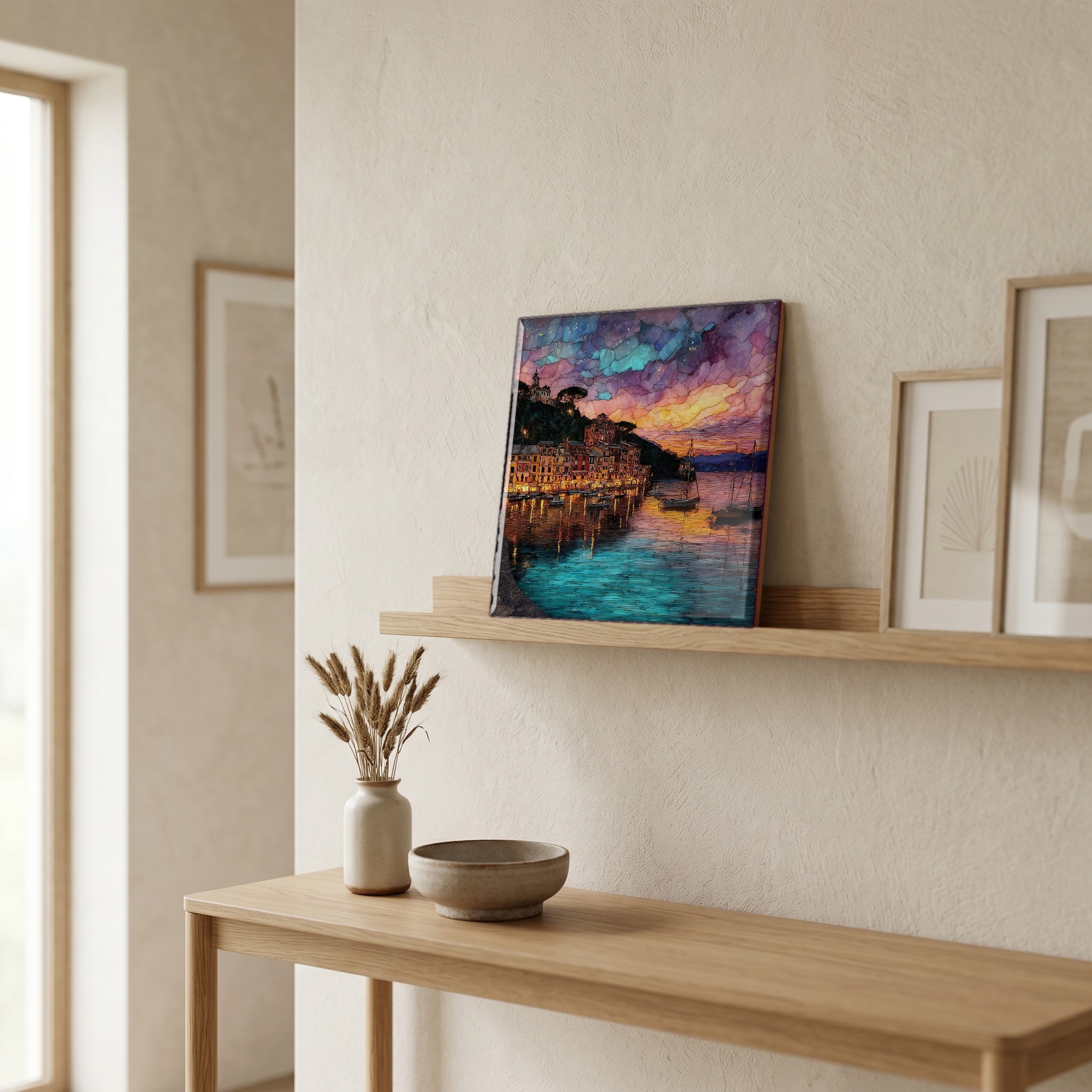
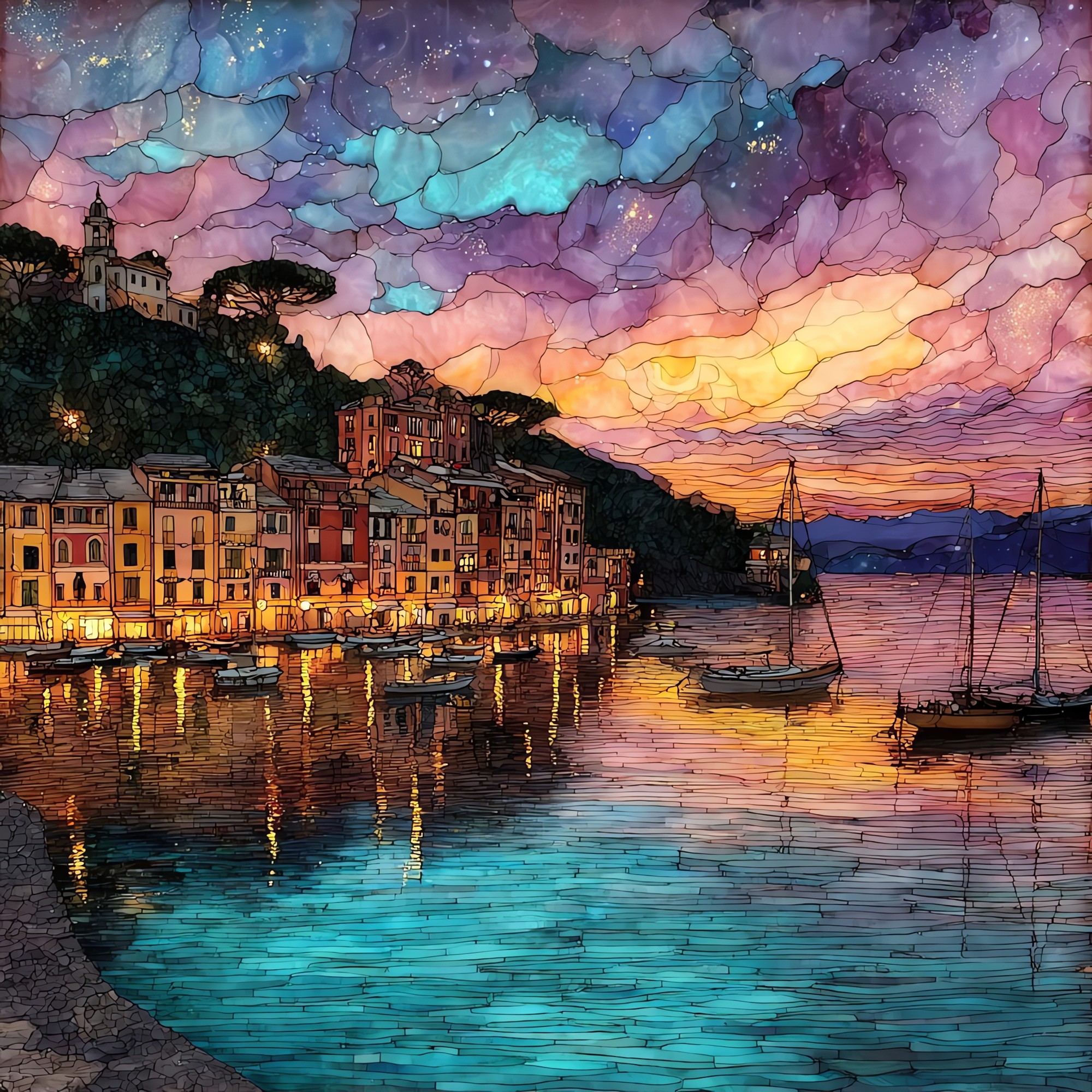
Portofino
shown on ceramic, 12-inch tileItaly
on the Ligurian coast, east of Genoa

Portofino

— a half-ring of painted houses around water holding still.

Where it lives

Not only on a wall.

A small tile on the nightstand catching the morning. A larger one above the fire. Yours, wherever you spend the slow hours.
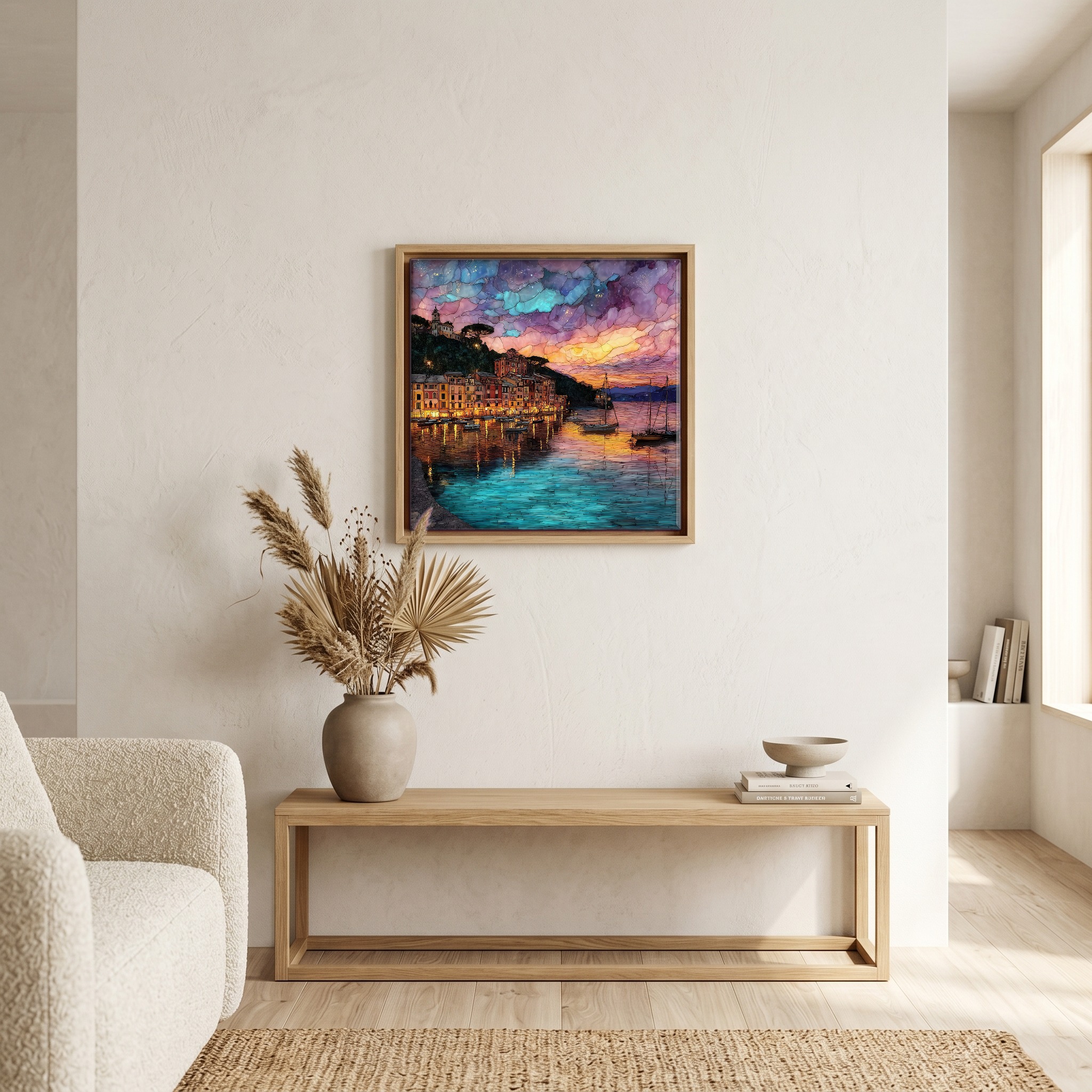
Above the bench, in a warm oak surround.
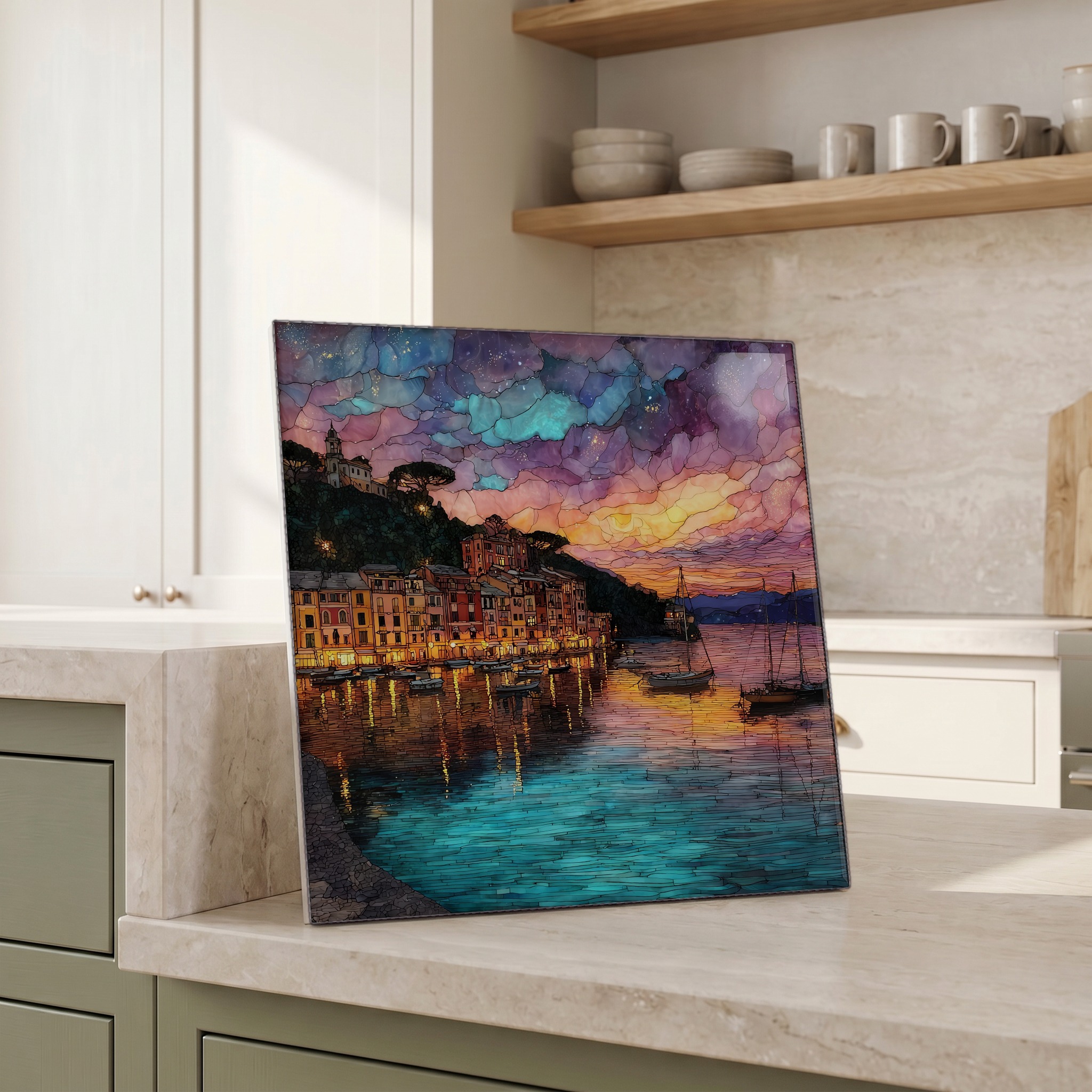
Beside the kettle, propped on the counter.
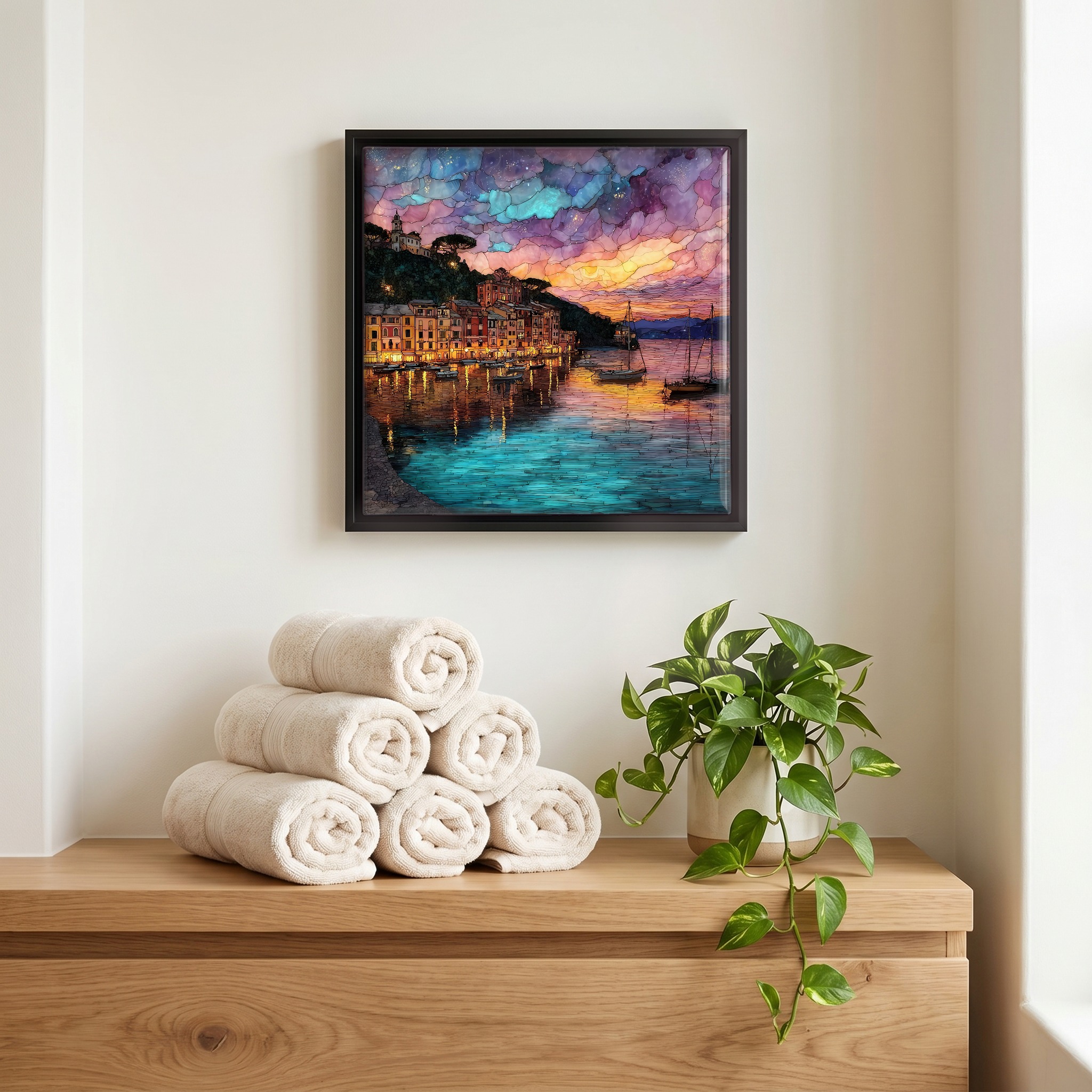
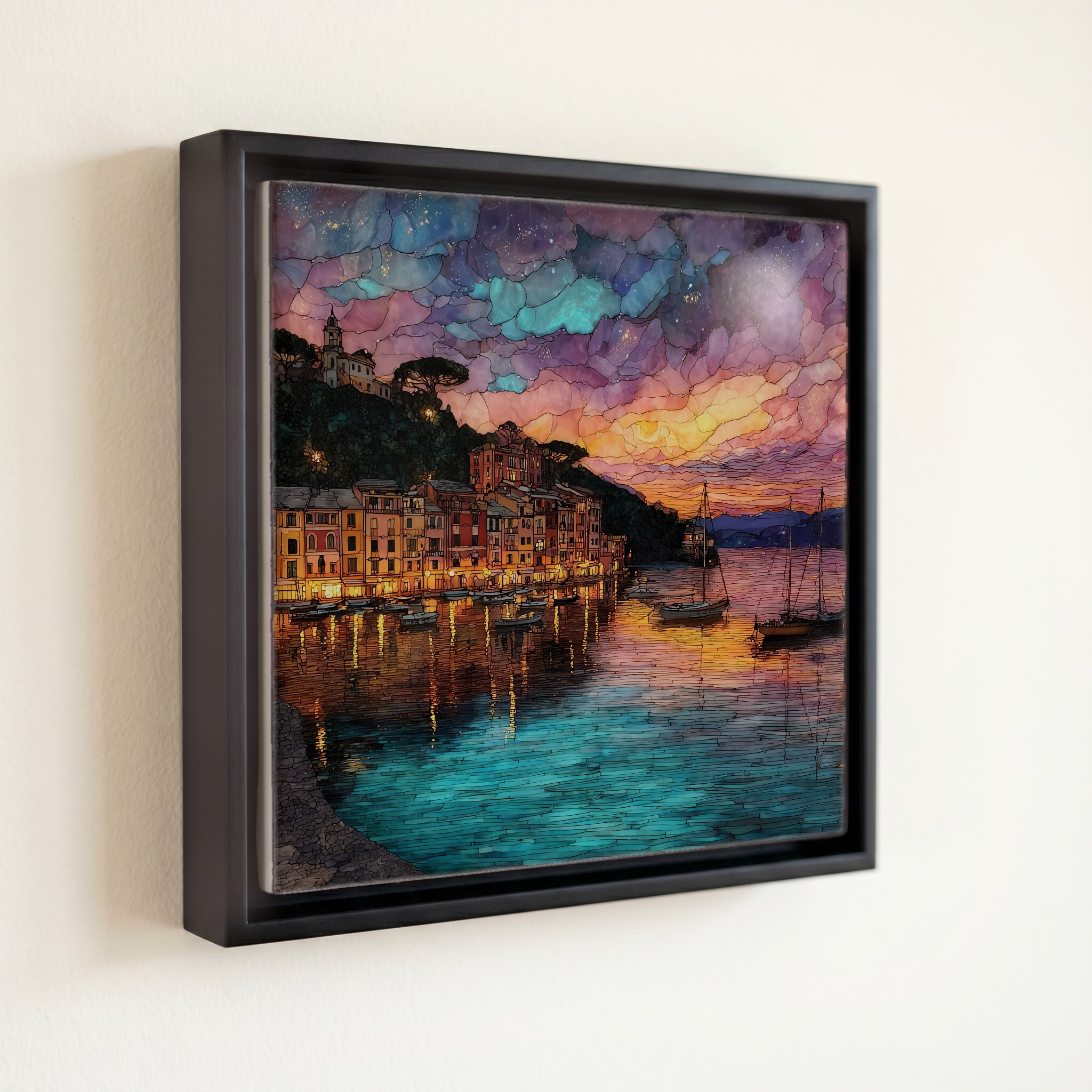
Above the linens, in a slim black surround.
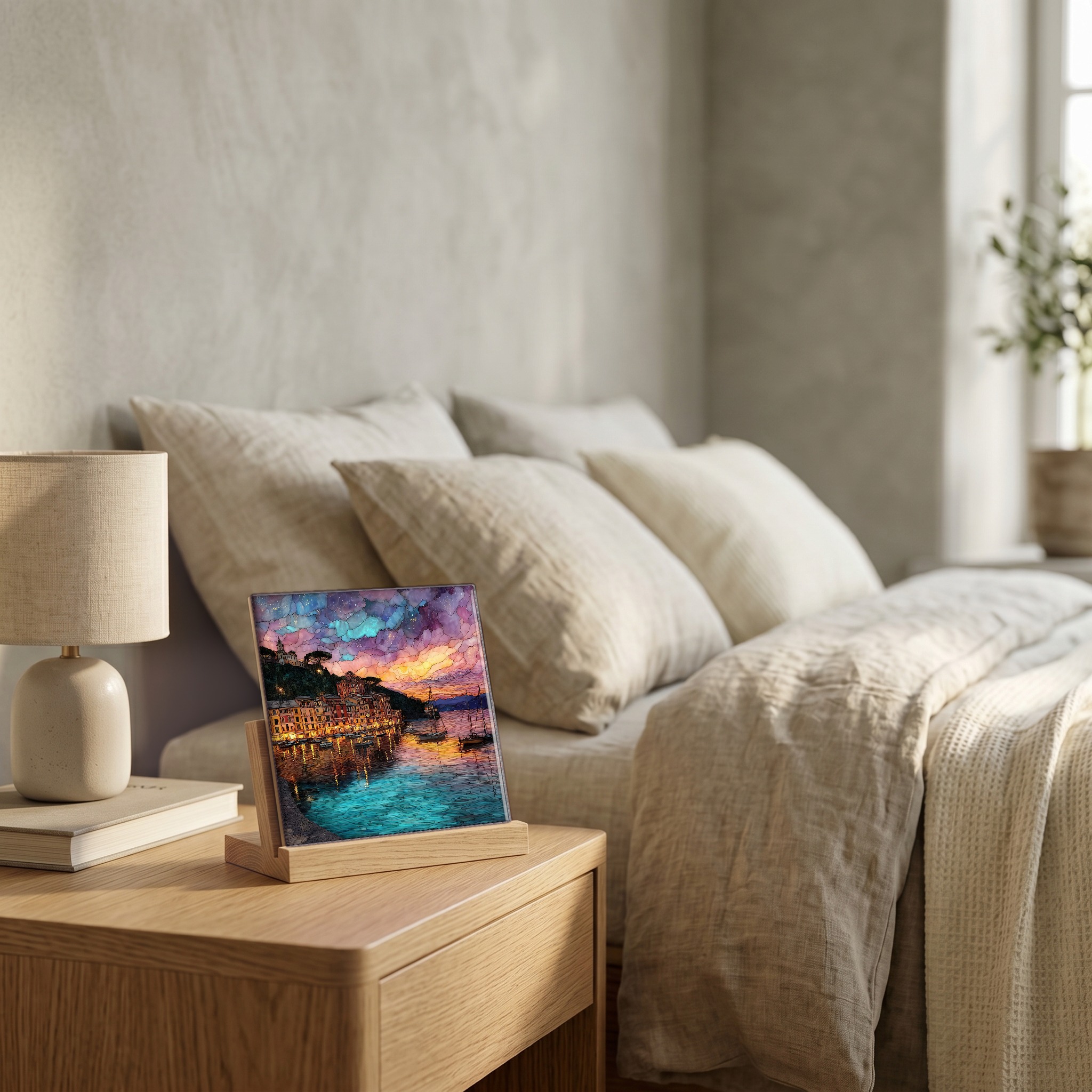
On the nightstand, on a light oak stand.
On a picture ledge, where the light comes in.
a note from the studio

A small harbour on its own promontory east of Genoa, where the Ligurian hills come down to a half-ring of houses in ochre, apricot, and faded red. Pliny called it Portus Delphini, the port of the dolphin. For centuries it was a fishing village of a few hundred people; then, late in the nineteenth century, the British arrived by cart from Santa Margherita Ligure and never quite left. The piazzetta opens straight onto the water and the boats. Above it, the church of San Giorgio and the old fort hold the headland. The harbour faces east, so the colour comes up first thing, before the day's boats have moved.
from the studio
shown in a slim black floating frame · 6 × 6 in
— bring it home

Portofino, on ceramic.

Each tile is finished by hand in our Knoxville studio. Artwork is slowly infused into the ceramic surface under high heat and pressure, and rests beneath a thin glossy finish. The colour lives in the surface, not on top of it.

What kind of piece?
One tile — square or rectangle.
How big?
the popular one — counter, shelf, nightstand
6 × 6 in · 15 cm · 1.6 lb
Surface finish
A clear glossy finish — the artwork reads as if under resin. Ideal for show-pieces and framed wall art.
How it sits
A hidden cleat — sits ¼″ proud of the wall.
$58
Hand-finished and shipped from our studio at the foot of the Smokies. On your wall in about ten days.
size
6 × 6 in
15 cm
weighs
1.6 lb
solid in the hand
surface
ceramic, hand-finished
art rests beneath a thin glossy finish
from
Knoxville, TN
our family studio, at the foot of the Smokies
— start a Coaster Set

Pick any four 4-inch tiles — National Parks you've been to, a Smokies set, the four seasons of one place. $ for a set of , cork-backed, ready to live on the table.
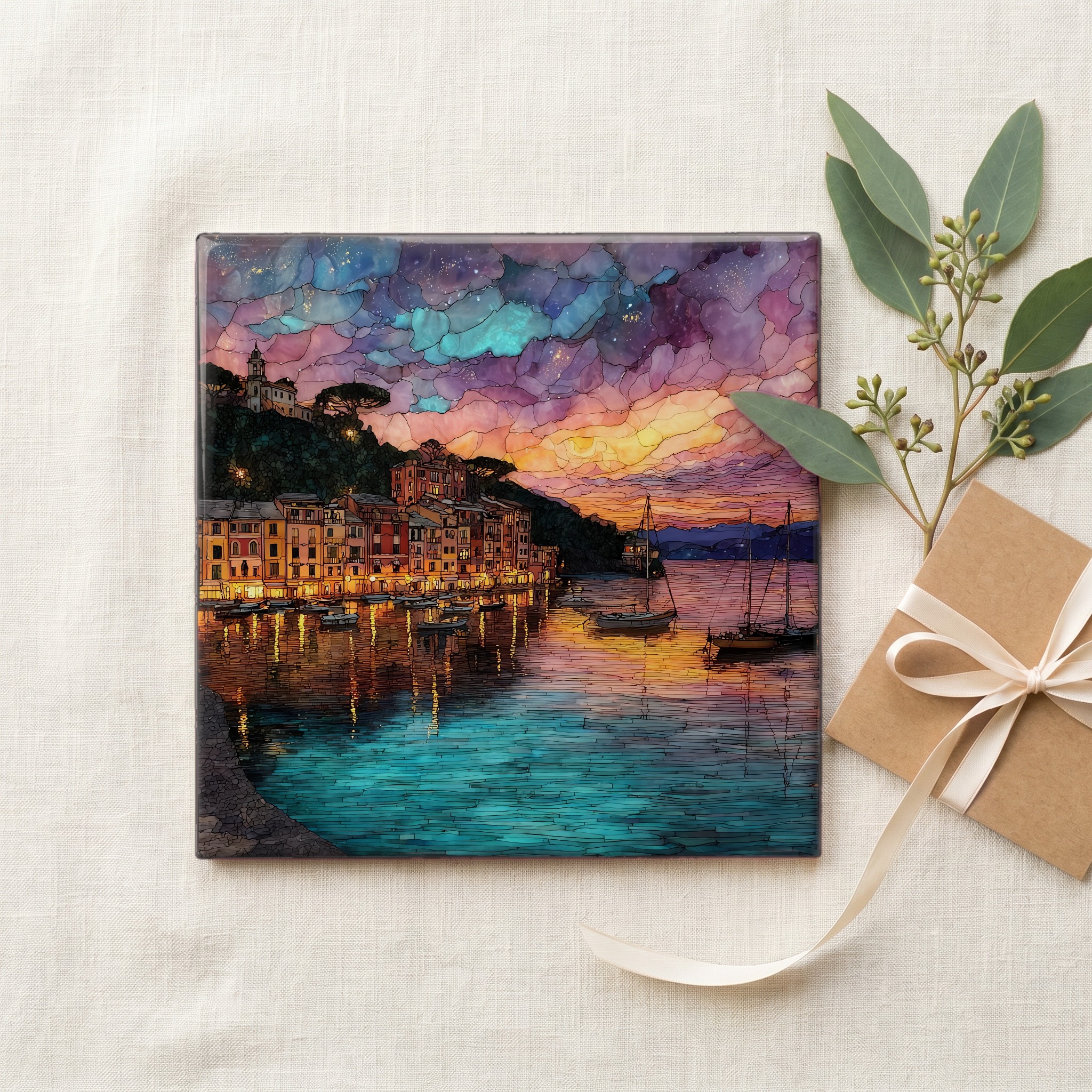
comes gift-ready
comes gift-ready

Each tile ships in a kraft box, tied with cream ribbon, with a handwritten note from the studio if you'd like to add one.
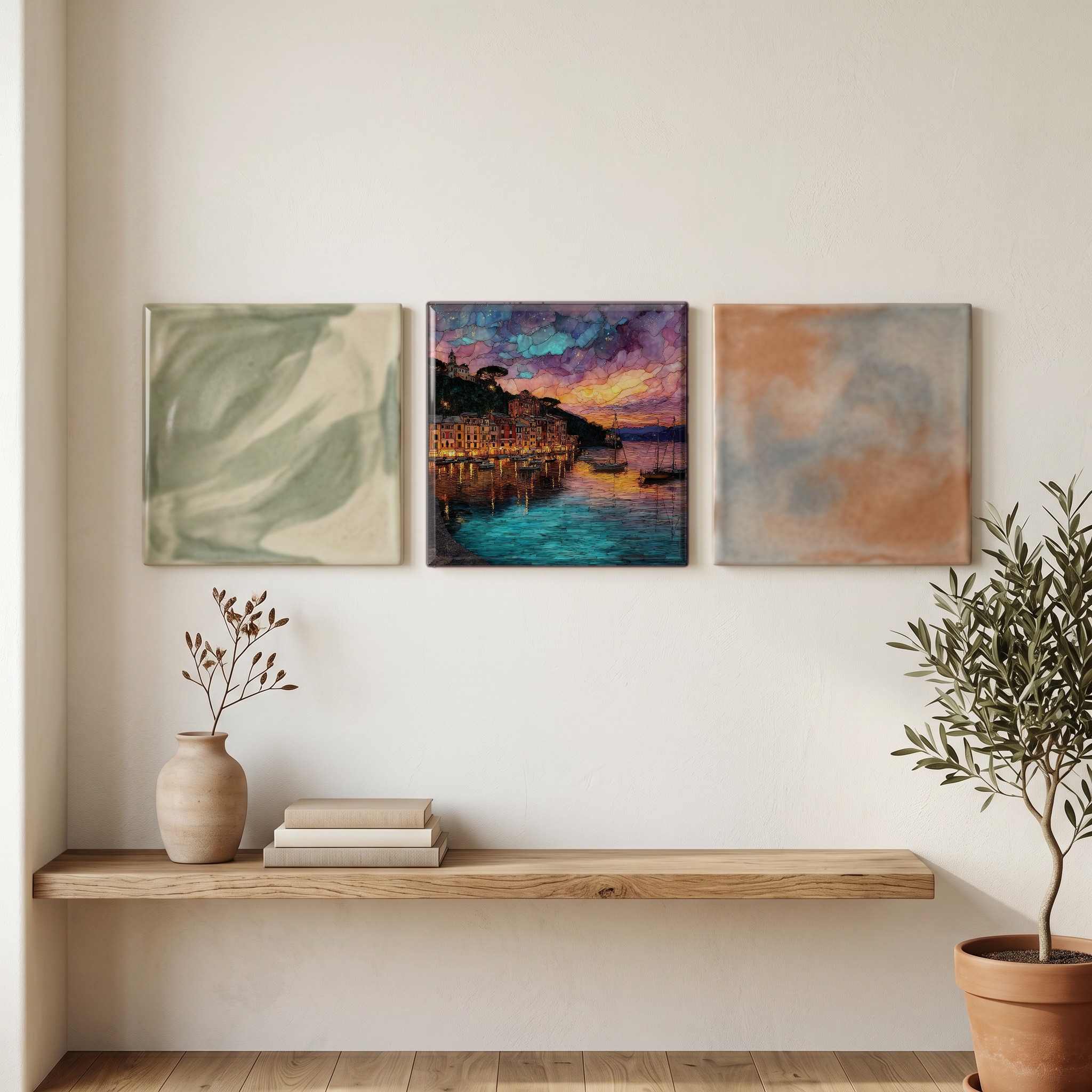
or build a grouping
or build a grouping

Three or five different vistas, hung together — a chapter of places you've been, or want to go.

about Portofino

The place, in three passes.

A little of what's known, in case you fall down the rabbit hole — or want to go see it yourself.
the place

Portofino is a comune of fewer than five hundred residents in the Metropolitan City of Genoa, on the eastern flank of a wooded promontory that separates the Gulf of Tigullio from the Gulf Paradiso. The village clusters around a small natural harbour roughly thirty-six kilometres east of Genoa. The whole headland is protected as the Parco Naturale Regionale di Portofino, threaded with footpaths that link Portofino to Santa Margherita Ligure and, over the ridge, to Camogli. There is no railway into the village; most visitors come by the coast road or by ferry from Santa Margherita Ligure and Rapallo, as the British aristocracy first did by horse and cart in the late nineteenth century.

— informed by Wikipedia, Parco di Portofino
the stone

Above the harbour stands Castello Brown, a fortified house the Republic of Genoa first raised as the Castello di San Giorgio to guard the port, on a site used for defence since Roman times. The fort saw action across centuries of Mediterranean conflict, holding off the Genoese admiral Aitone D'Oria in 1330, a Venetian fleet in 1431, and a British squadron in 1814. It took its present name from Montague Yeats-Brown, the British consul at Genoa who bought it in 1867. Higher on the headland, the church of San Giorgio keeps relics said to be the saint's; first built in 1154, it was destroyed four times in war and rebuilt each time, most recently after bombing in the Second World War.

the water

Portofino's harbour opens onto the Gulf of Tigullio, and the clearest water on the promontory lies just around the headland, in the cove of San Fruttuoso, reachable only on foot or by boat. There, below a Romanesque abbey founded in the eighth century, a bronze figure called the Cristo degli Abissi stands on the seabed at a depth of about seventeen metres. It was lowered in 1954 in memory of Dario Gonzatti, the first Italian to dive with scuba gear, who died in these waters in 1947. Divers and snorkellers reach it from the surface; from the abbey beach the statue is invisible, a presence the water keeps to itself. The sea off the promontory is now a protected marine area.

where
Italy · Genoa, Liguria
within
Parco Naturale Regionale di Portofino
elevation
0 m · 0 ft
position
44.3036° N · 9.2097° E
the neighborhood

What's nearby.

A handful of named places within an hour's walk or short drive. Some we've already painted; some we will.
2 km N
Paraggi
beach cove
at the lake
Castello Brown
harbour-side castle museum
1 km S
Faro di Portofino
promontory lighthouse
4 km W
San Fruttuoso
abbey and dive bay
5 km N
Santa Margherita Ligure
Riviera resort town
8 km NW
Camogli
fishing village
8 km NE
Rapallo
Riviera resort town
36 km NW
Genoa
port city
N
Portofino
Paraggi
Castello Brown
Faro di Portofino
San Fruttuoso
Santa Margherita Ligure
Camogli
Rapallo
common questions

What people ask.

A few questions we get about Portofino — and about bringing the piece home.
about the place

Portofino is a small harbour village in the Metropolitan City of Genoa, on the eastern side of the Portofino promontory on the Italian Riviera. It lies about thirty-six kilometres east of Genoa and a few kilometres south of the resort town of Santa Margherita Ligure.

Portofino is known for its small horseshoe harbour ringed by ochre and apricot houses, and for the wealthy visitors it has drawn since the late nineteenth century, when British and Northern European travellers arrived by cart from Santa Margherita Ligure. The piazzetta, the square at the water, is its centre.

Castello Brown is a fortified house museum above the harbour, built by the Republic of Genoa as the Castello di San Giorgio to guard the port. It withstood sieges in 1330, 1431, and 1814, and took its present name from Montague Yeats-Brown, the British consul who bought it in 1867.

The Cristo degli Abissi is a bronze statue on the seabed of the San Fruttuoso bay, just around the promontory from Portofino, at a depth of about seventeen metres. It was placed there in 1954 in memory of Dario Gonzatti, the first Italian to dive with scuba gear.

Portofino has no railway station. Most visitors arrive by the coast road from Santa Margherita Ligure, by ferry across the Gulf of Tigullio from Santa Margherita Ligure and Rapallo, or on foot through the Parco Naturale Regionale di Portofino, which covers the whole promontory.

Late spring and early autumn, roughly May to June and September, give the warmest light and the calmest harbour without the height of summer crowds. July and August are busy and hot. The Mediterranean climate keeps winters mild but quiet, with many businesses closed.

Portofino has no real sand beach. Swimmers use the rocks and small platforms around the harbour and headland. The nearest proper swimming coves are at Paraggi, between Portofino and Santa Margherita Ligure, and in the bay of San Fruttuoso, reachable only by boat or on foot.

about the piece in your home

It has been a meaningful gift for travellers who spent time on the Riviera and for people with Ligurian roots. The painted harbour and the green promontory read as Portofino at a glance. A Small or Medium with a handwritten note from the studio carries well.

The warm ochre, apricot, and sea-green palette settles into Mediterranean-modern and Coastal-modern rooms with cream walls, natural linen, and pale wood. It also lifts a Jewel-tone Maximalist wall by echoing colours already present in a rug or a velvet chair.

Yes. Mediterranean-modern leans on weathered colour, terracotta, and faded pastel, which is the palette of the Portofino harbour. The piece reads as specific to the place rather than themed, which is what designers in this category tend to want.

Above a standard three-seat sofa or a long console, a single Large holds the wall on its own. For a wider statement, a four-tile Mural reads as a window onto the harbour, and a nine-tile Mural carries an open-plan focal wall.

Yes. For a bathroom, kitchen, or any surface exposed to steam or splashes, choose the Dura Satin or Matte finish rather than the Glossy. The colour lives in the ceramic surface, so humidity, sunlight, and repeated cleaning do not fade it.

A microfibre cloth and warm water are enough. The colour is slowly infused into the ceramic surface under high heat and pressure, beneath a thin glossy finish, so there is no painted layer to lift. Avoid abrasive pads, bleach, and acidic cleaners.

Yes. The Portofino piece is part of WenderVista, Wender Studios' line of place portraits, painted in the studio's own visual language and finished in Knoxville, Tennessee. We do not license, resell, or print other artists' work.

if this one stayed with you

A few you might also love.

Hand-picked by the eye that found Sorapis. Same air, same kind of quiet.
— a collection

The Italian Dolomites,
painted slow.

The valleys between Cortina and Val Gardena, the tarns you walk an hour to see, the towers that turn the colour of a banked fire just before dark. Wander the collection by valley, by season, or follow the path Reid walked.

Tre Cime
Braies
Misurina
Sorapis
Cinque Torri
Sassolungo
Marmolada