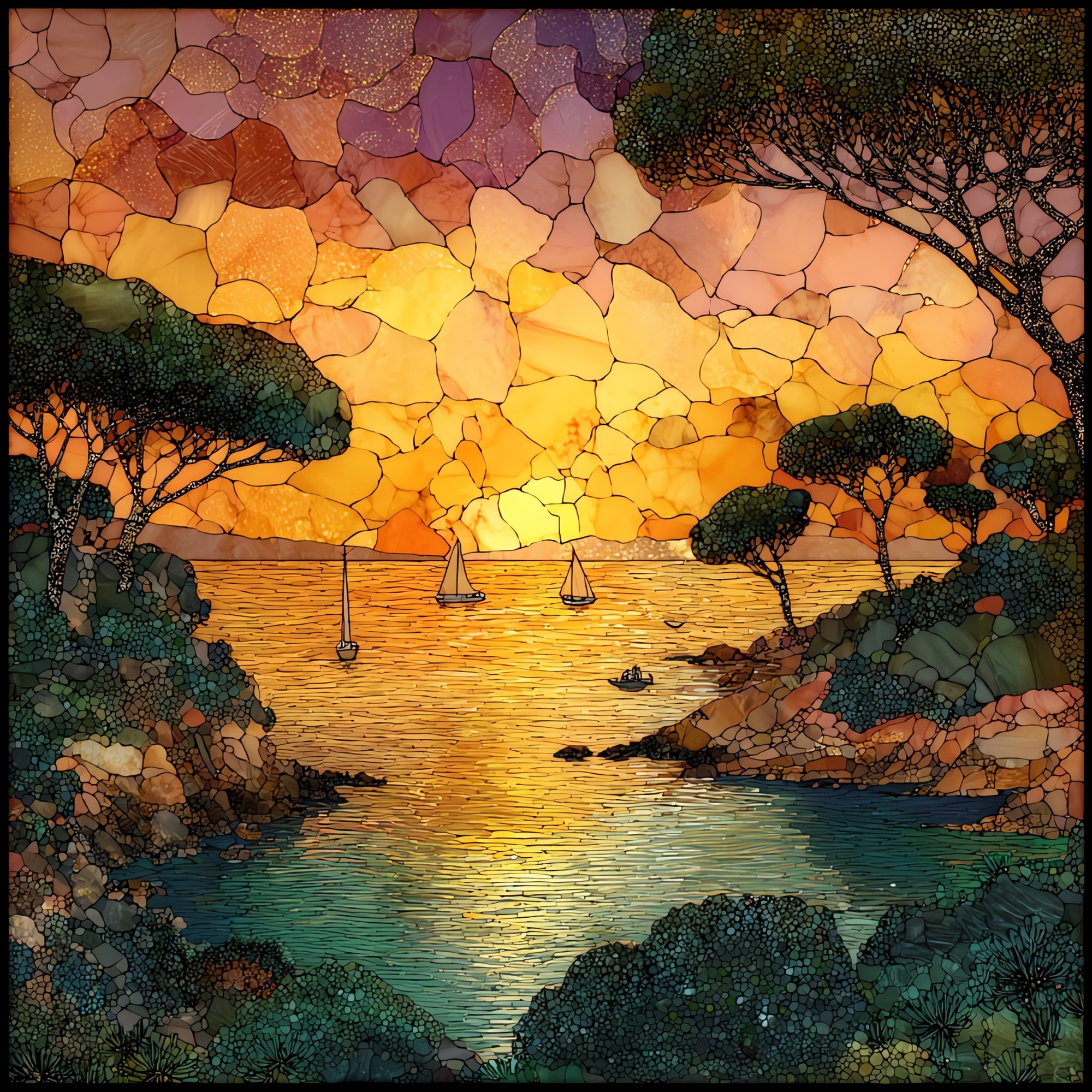
Porto Cervo
— — a coast that named a colour.
Not only on a wall.
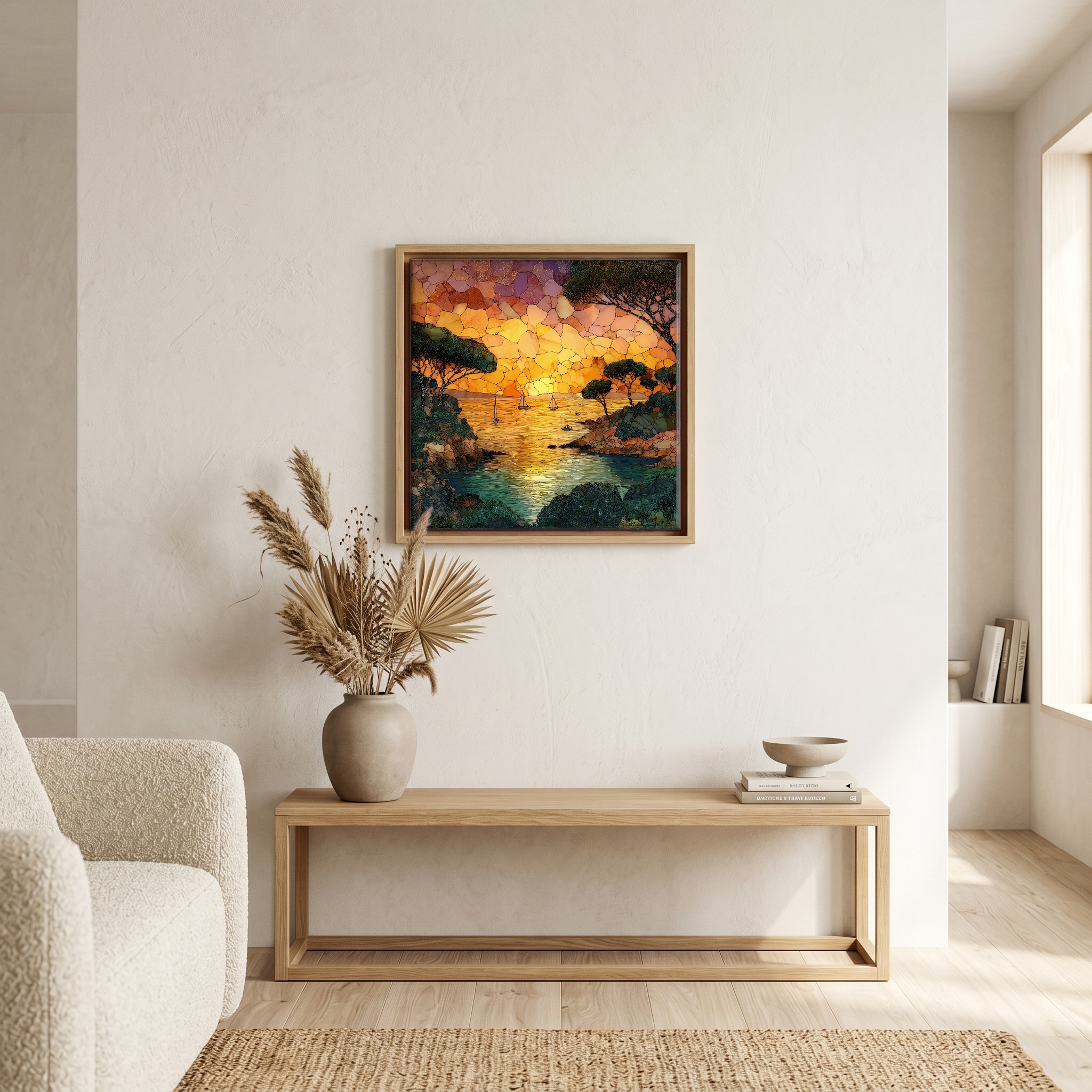
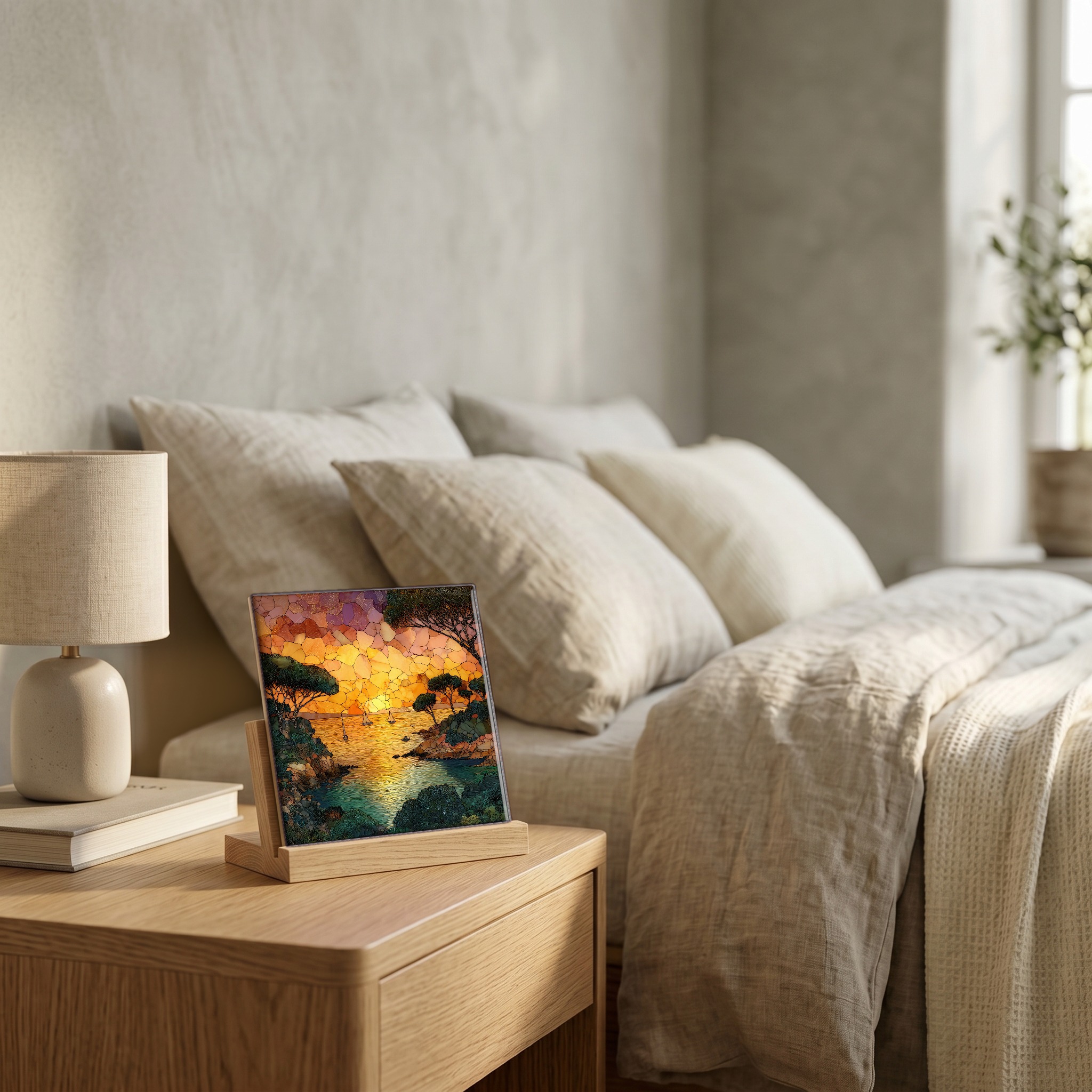
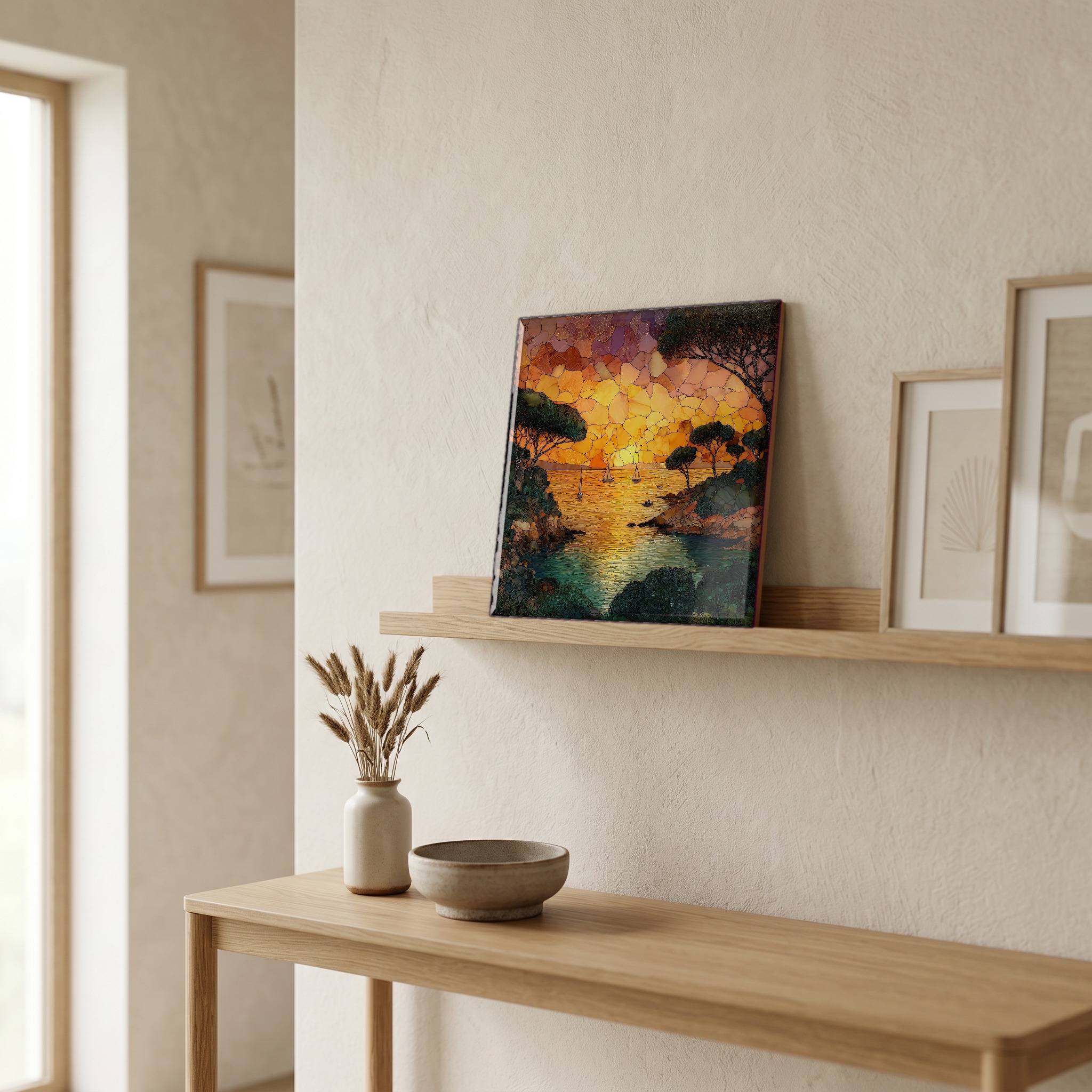
“A planned village on the northeast coast of Sardinia, built into the rose granite from 1962. The water is the green the Costa Smeralda was named for. Yachts arrive in summer; by late October the harbour empties. The architecture curves into the stone the way the stone curves into the sea, all rounded stucco and shaded courtyards designed to look as if the wind had shaped them. Stella Maris on the hill watches the boats come in. Nobody photographs the church when the light is right, late afternoon, the granite holding a little of the heat.
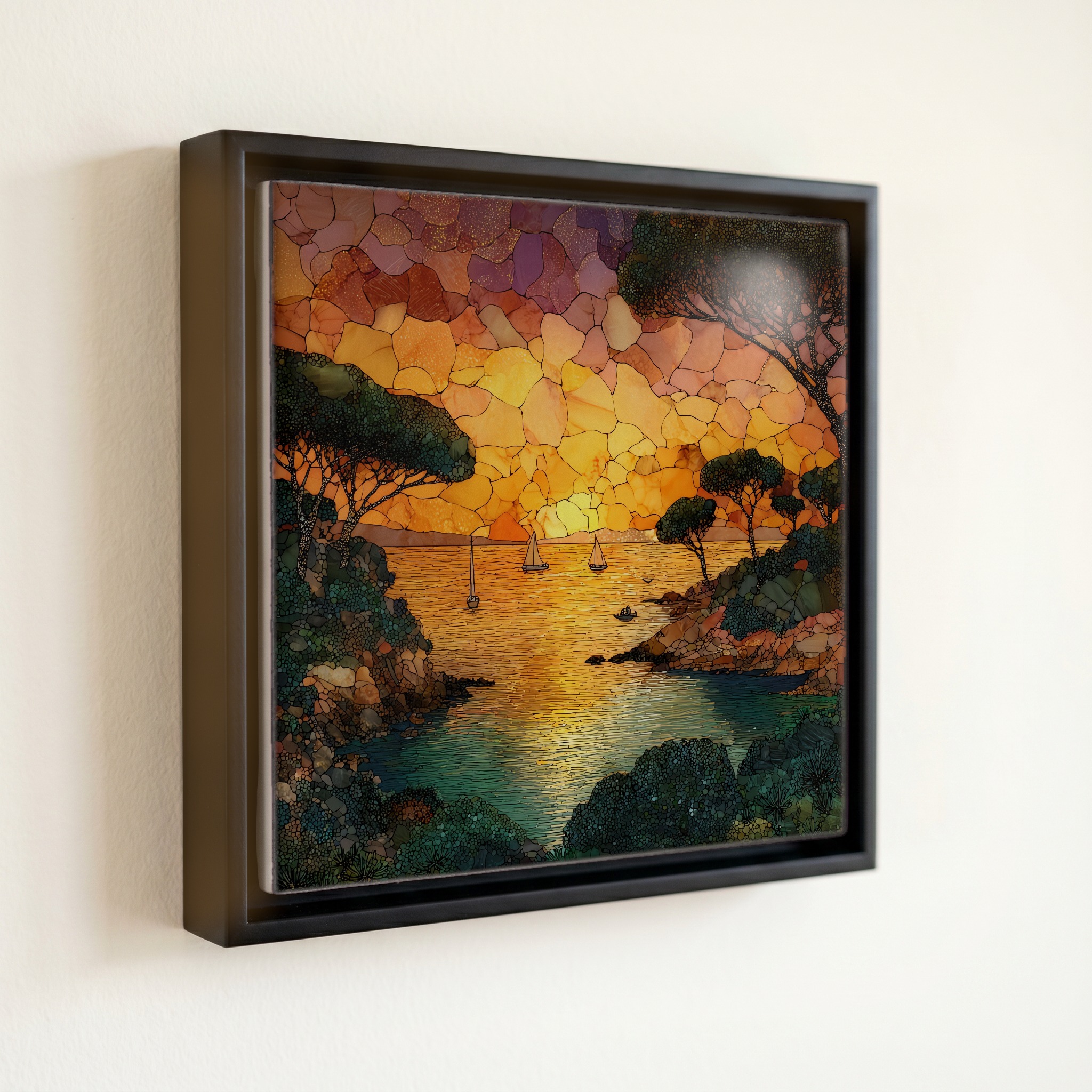
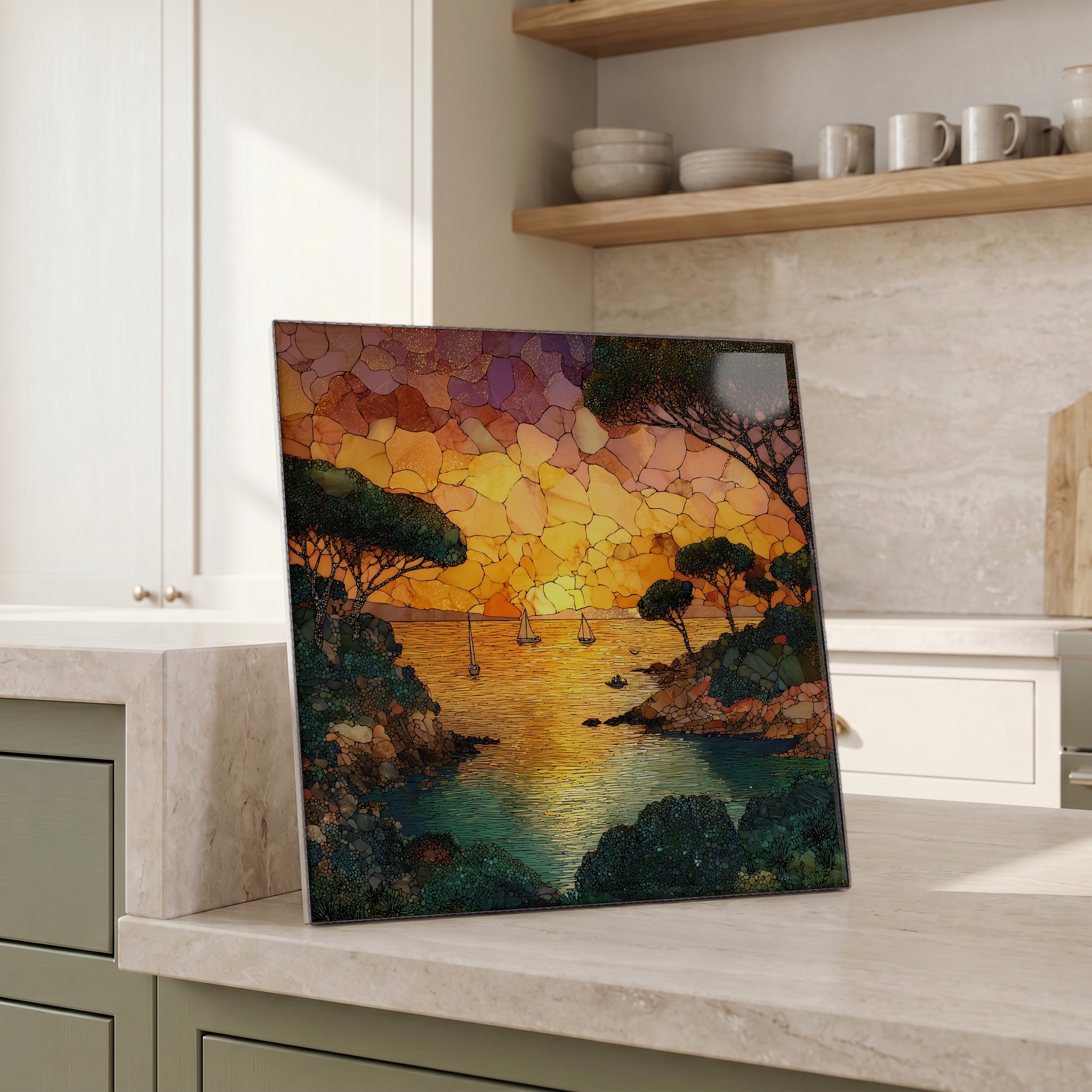
Porto Cervo, on ceramic.
Each tile is finished by hand in our Knoxville studio. Artwork is slowly infused into the ceramic surface under high heat and pressure, and rests beneath a thin glossy finish. The colour lives in the surface, not on top of it.
Pick any four 4-inch tiles — National Parks you've been to, a Smokies set, the four seasons of one place. $ for a set of , cork-backed, ready to live on the table.
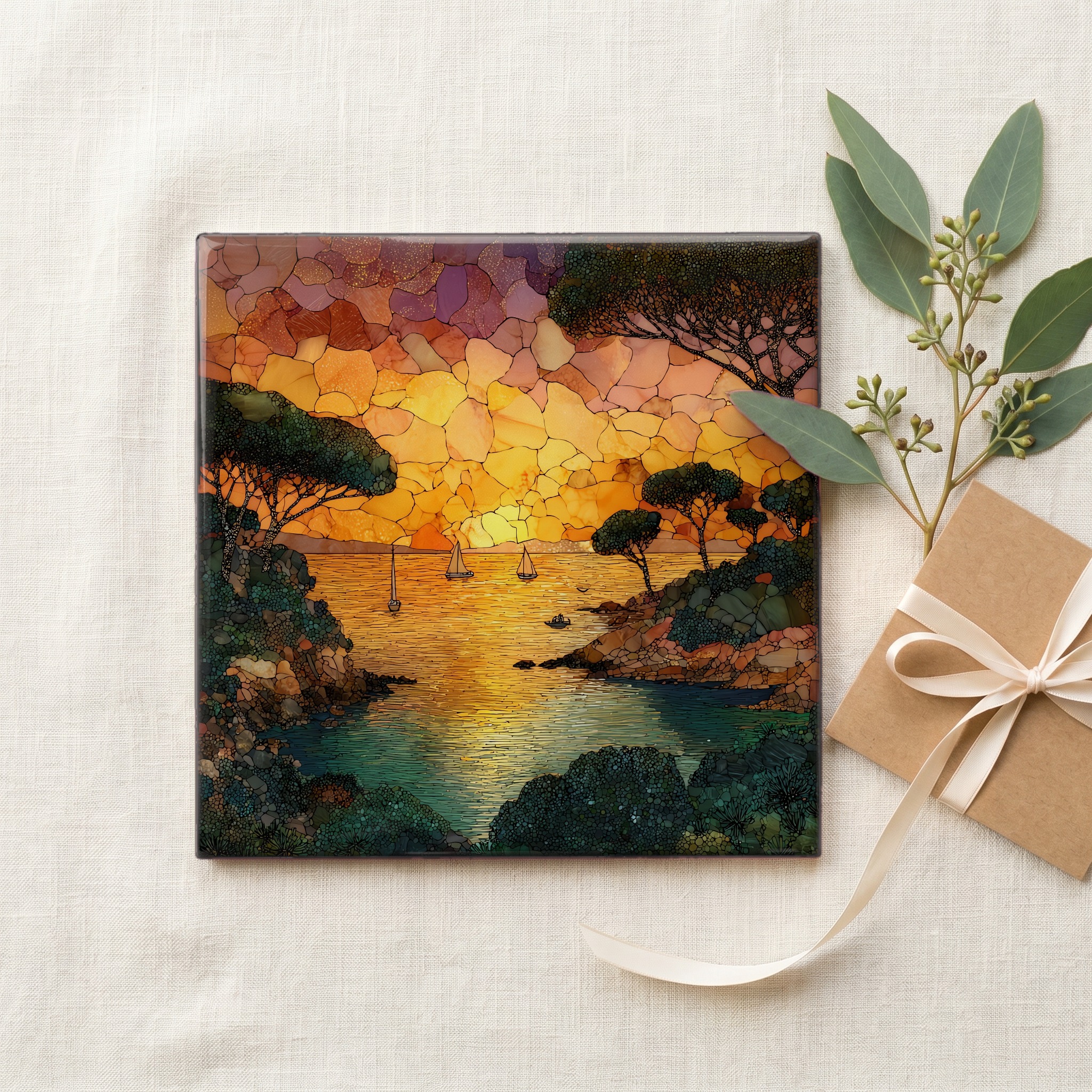
Each tile ships in a kraft box, tied with cream ribbon, with a handwritten note from the studio if you'd like to add one.
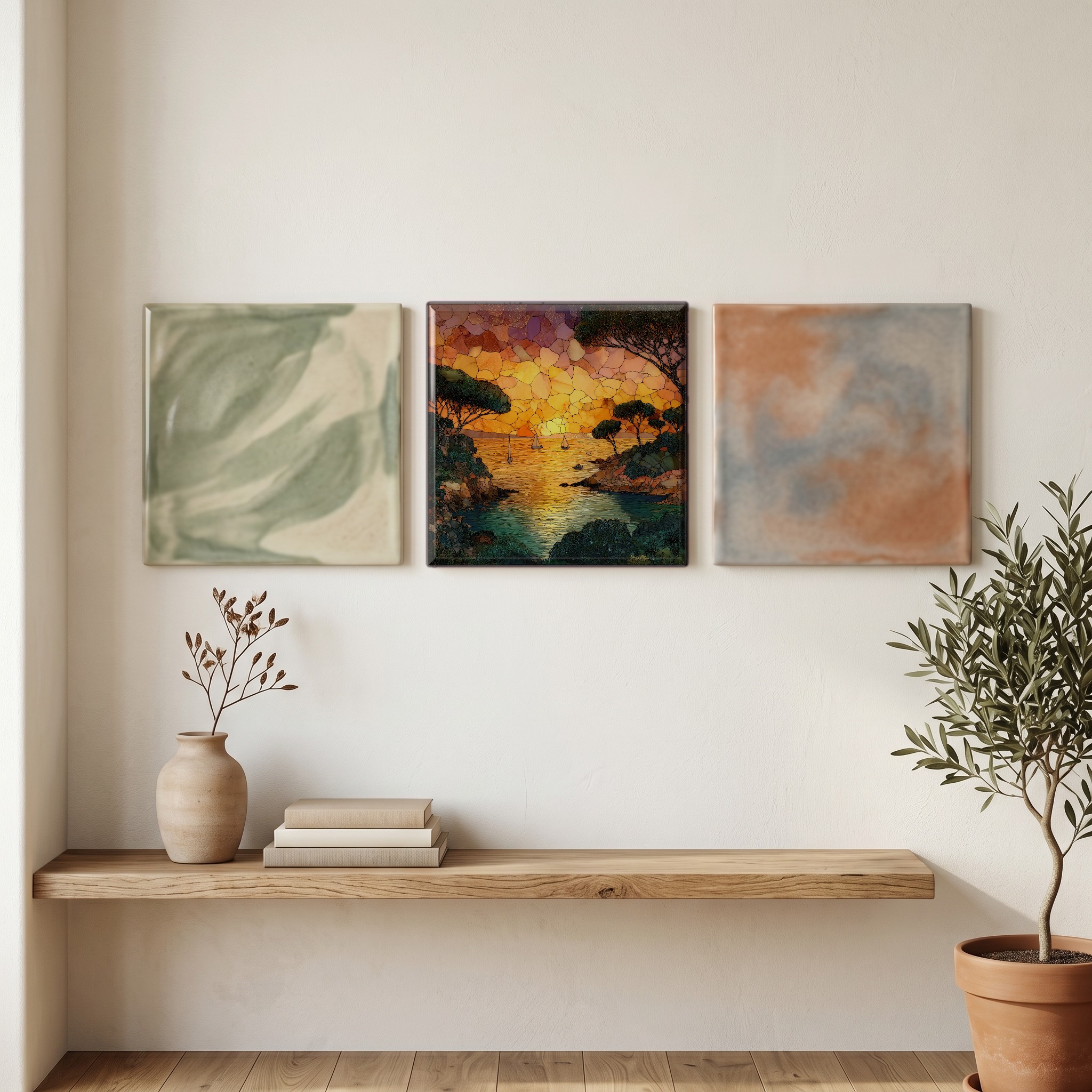
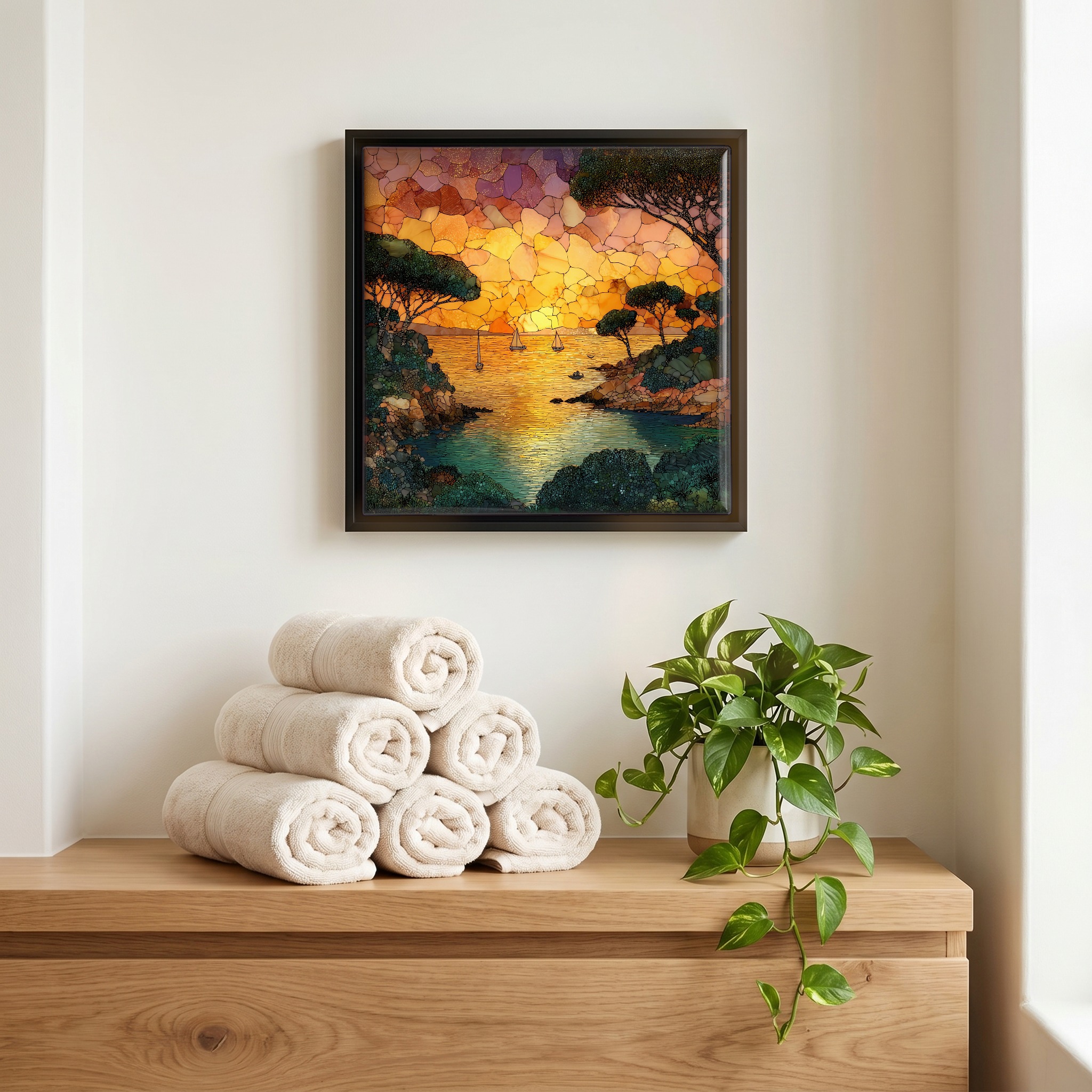
Three or five different vistas, hung together — a chapter of places you've been, or want to go.
The place, in three passes.
Porto Cervo sits on the northeast coast of Sardinia, in the Province of Sassari, on a granite headland along the Costa Smeralda. The village was planned in 1962 by a consortium led by Prince Karim Aga Khan IV, who bought the coastline and commissioned a small group of architects: Jacques Couëlle, Luigi Vietti, and Michele Busiri Vici. They designed buildings that read as if they had grown out of the stone, all curved stucco and weathered courtyards. The village is reached by car from Olbia, about thirty kilometres south, or by yacht into Porto Vecchio and the Marina Nuova. The wider Costa Smeralda runs roughly twenty kilometres along the granite headlands of northeast Sardinia.
The water at Porto Cervo runs from clear turquoise in the shallows over white granite sand to a deep emerald where Posidonia oceanica seagrass meadows hold the seafloor. The contrast gives the coast its name: Costa Smeralda, the emerald coast. The Gallura granite is low in silt and clay, which keeps the inshore water visually clearer than along most Italian coastlines. The colour is strongest in late spring and early summer; by August the water is warmer, calmer, and slightly less saturated. The Posidonia meadows off the coast are a protected habitat under Italian law and the European Union Habitats Directive.
The granite of the Gallura, the northeast tip of Sardinia where Porto Cervo sits, dates to the Hercynian orogeny roughly 280 million years ago. Wind and salt have weathered it into rounded forms that look more sculpted than broken, in a soft rose-grey that warms to pink in the late afternoon. Couëlle, Vietti, and Busiri Vici took the stone as a brief: the early Costa Smeralda buildings have curved walls, asymmetric windows, and roofs that sit low against the rock. Stella Maris, the village church above the harbour, was designed by Busiri Vici and consecrated in 1968. The stone the village is built from is the stone the coast is made of.