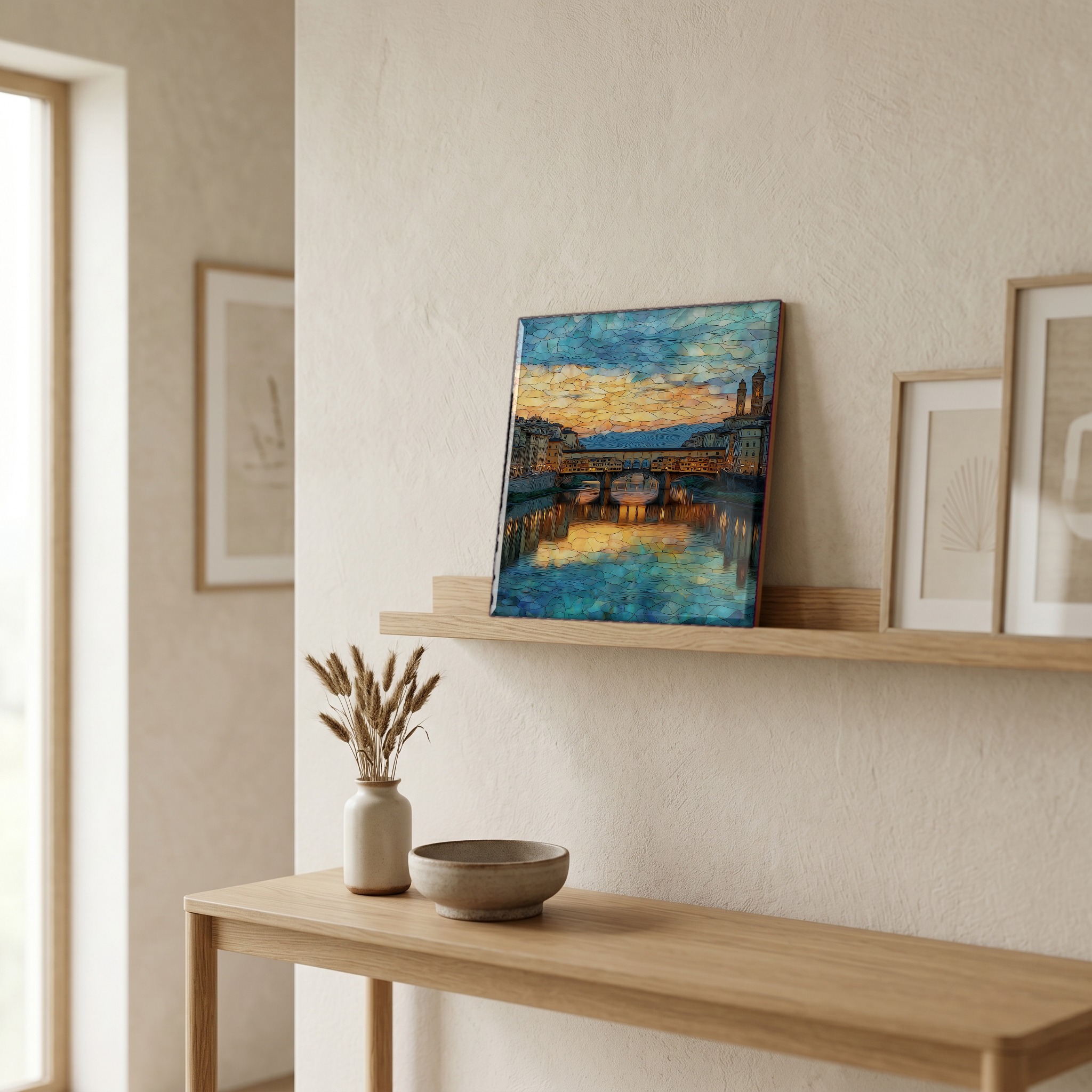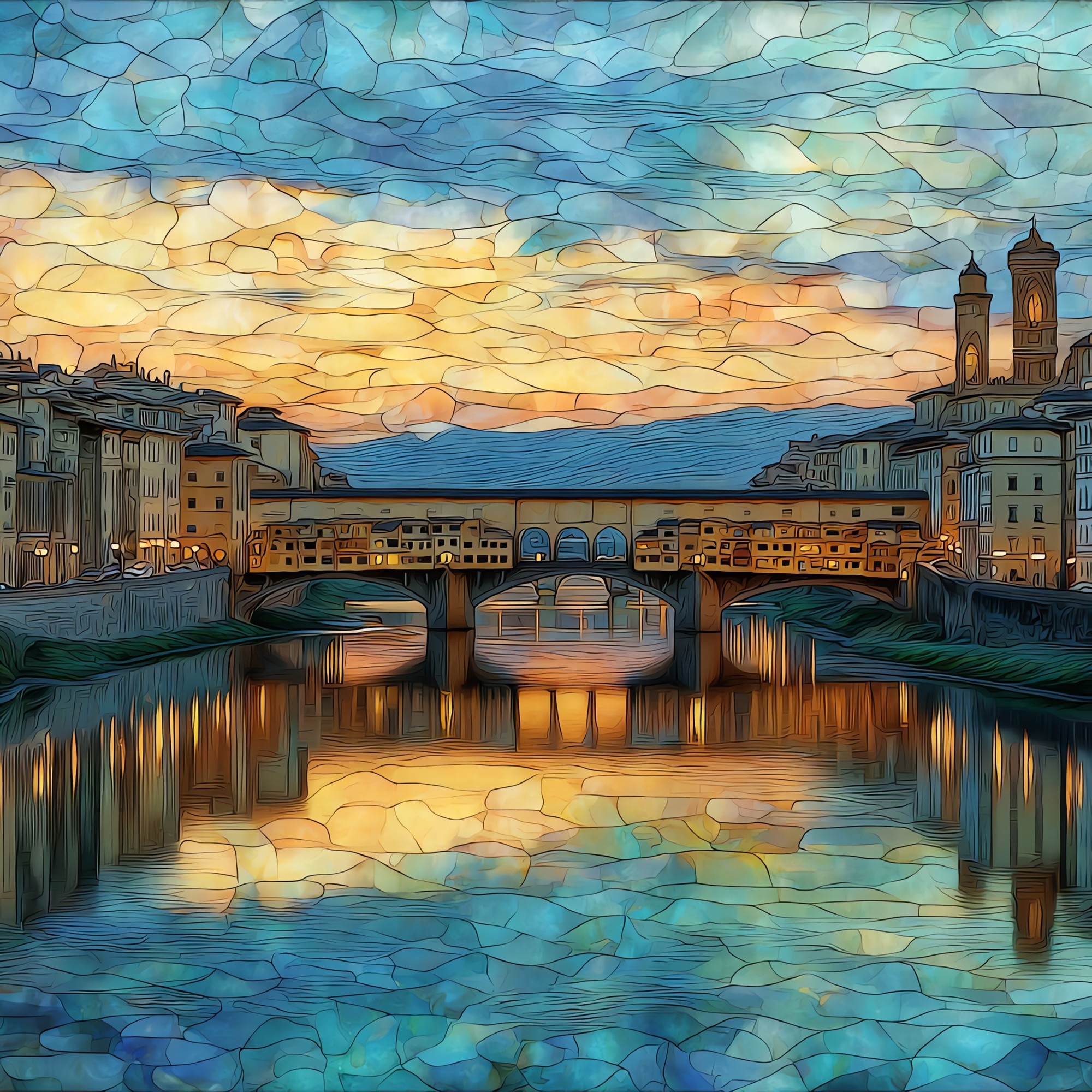
Wender·Vista
Ponte Vecchio
shown on ceramic, 12-inch tileItaly
across the Arno, in old Florence

Ponte Vecchio

the river under a street of gold.

Where it lives

Not only on a wall.

A small tile on the nightstand catching the morning. A larger one above the fire. Yours, wherever you spend the slow hours.
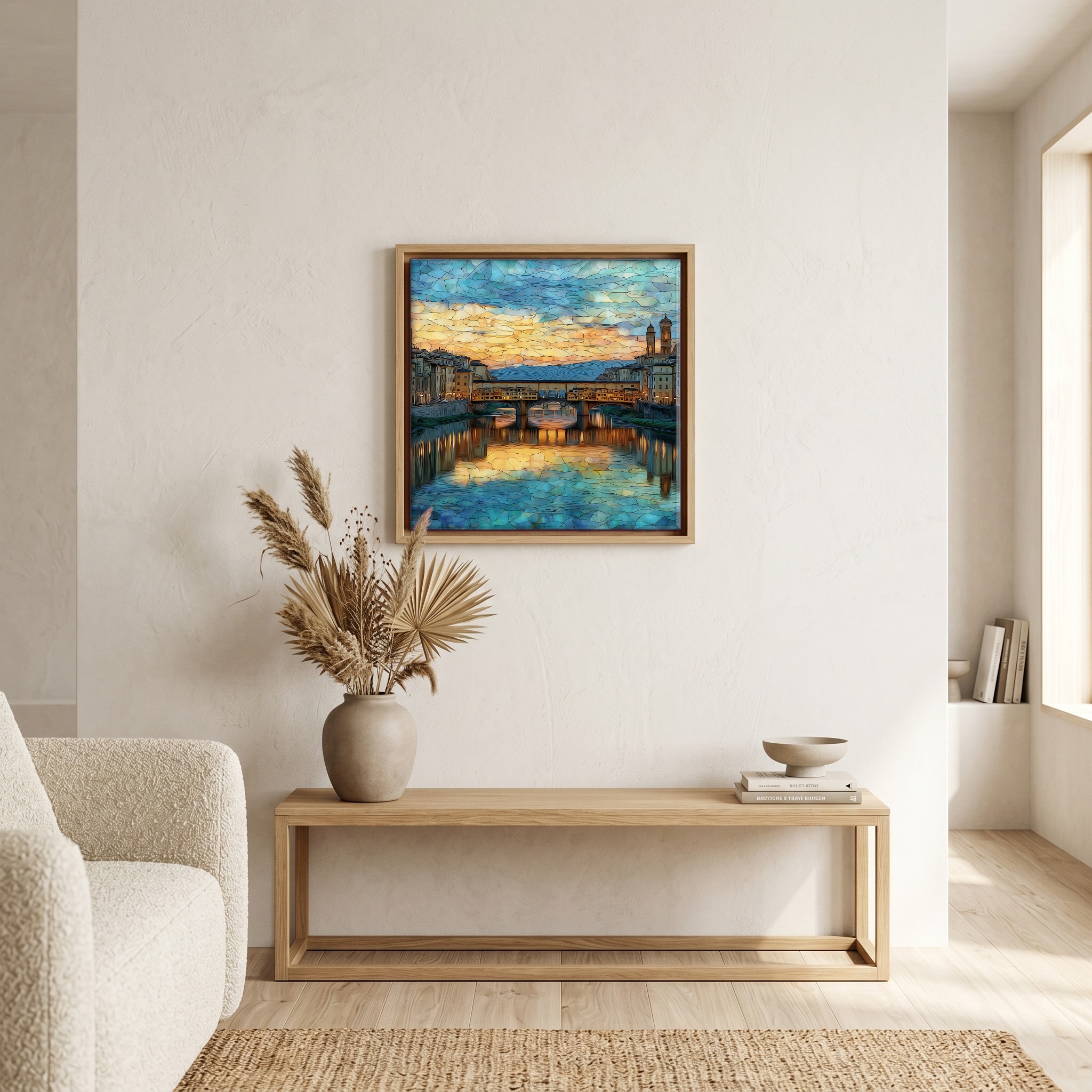
Above the bench, in a warm oak surround.
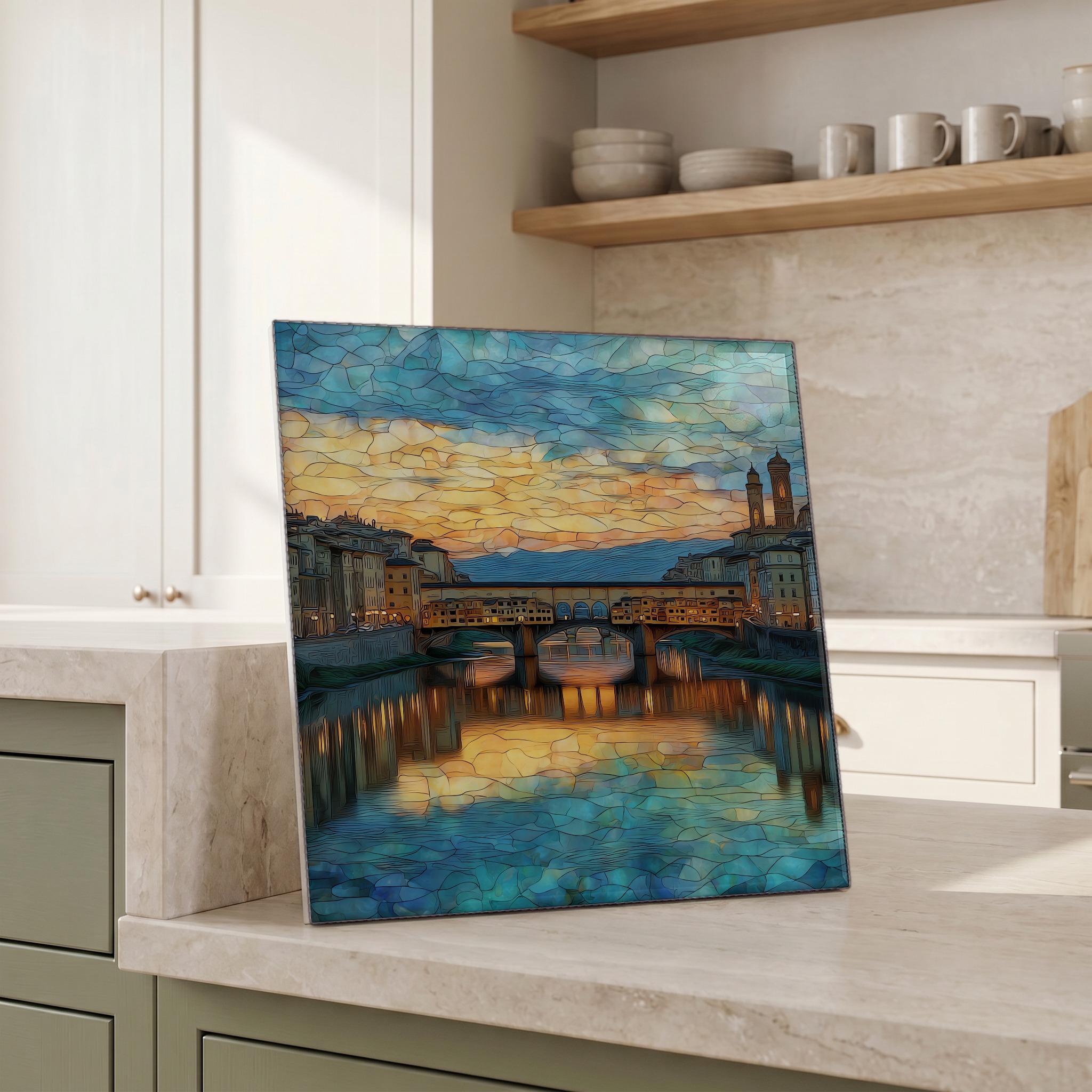
Beside the kettle, propped on the counter.
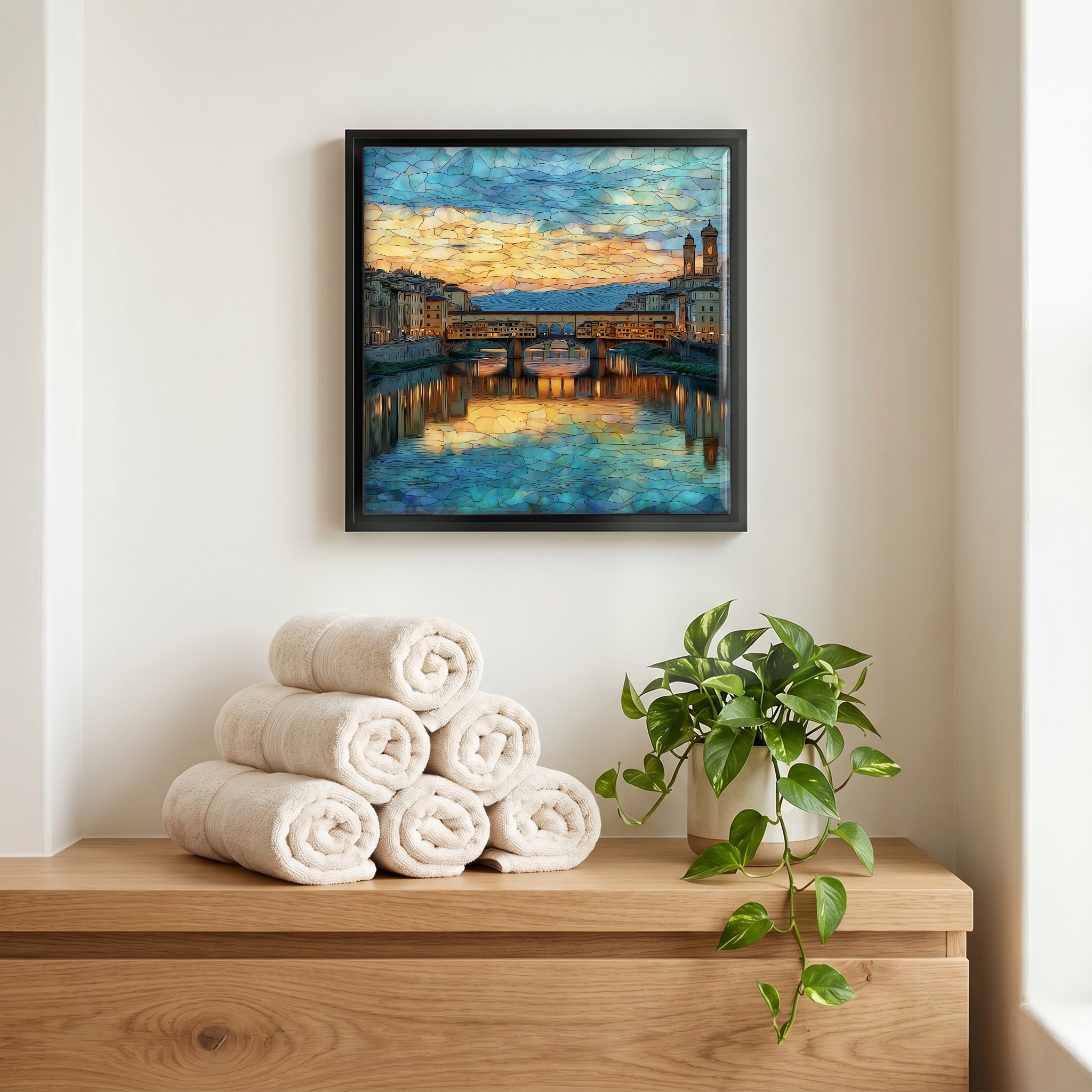
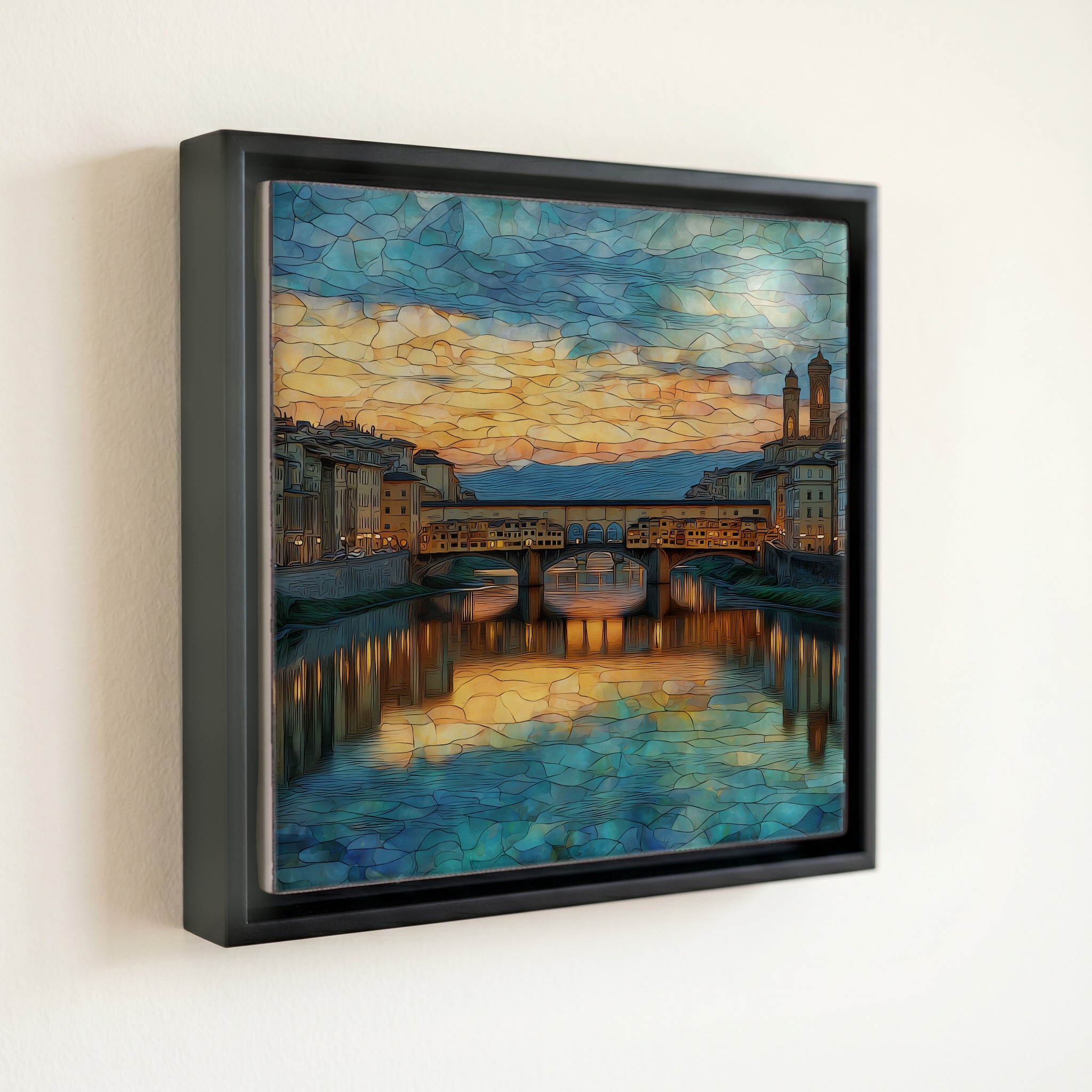
Above the linens, in a slim black surround.
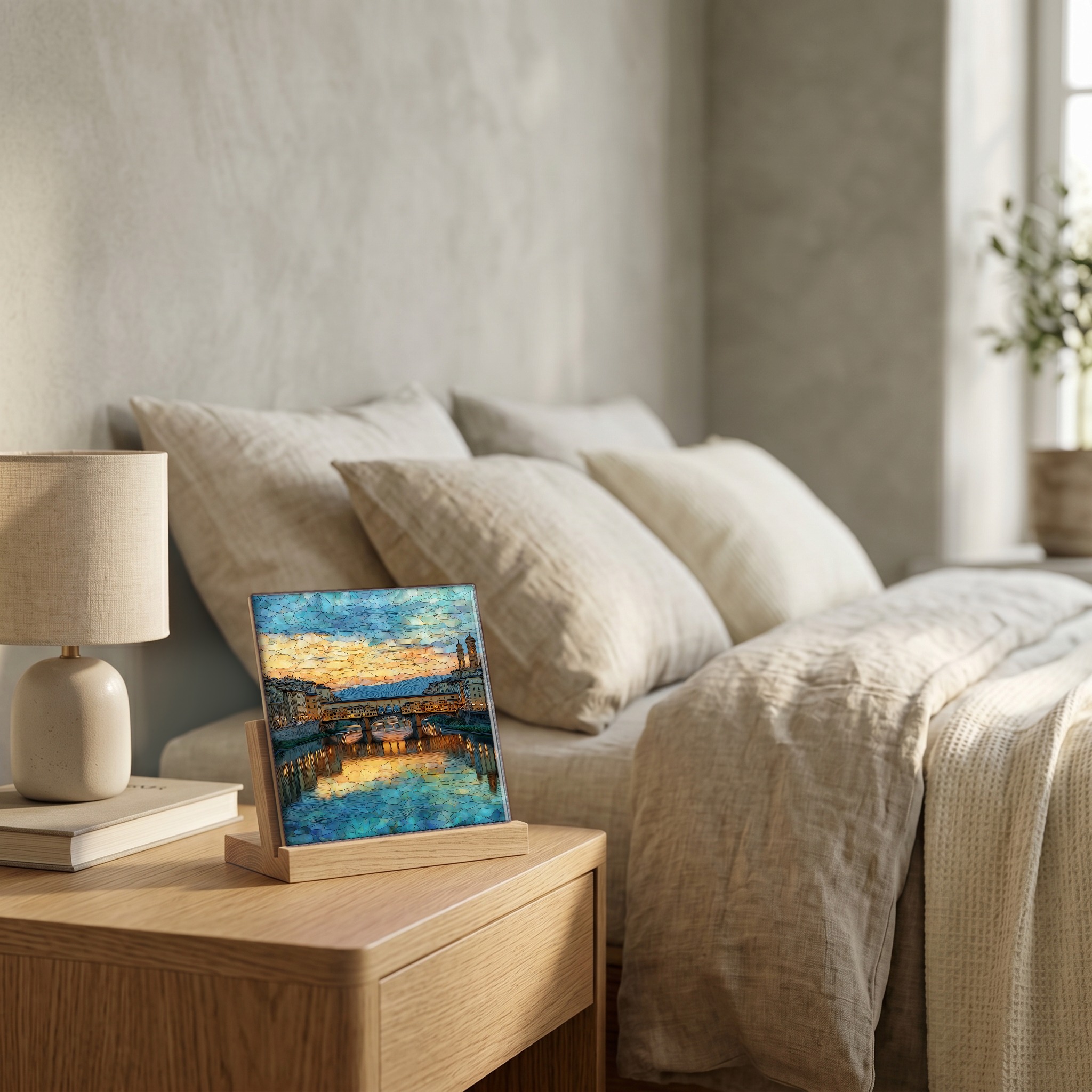
On the nightstand, on a light oak stand.
On a picture ledge, where the light comes in.
a note from the studio

The oldest bridge in Florence, and the one the war left standing. When the German army pulled back in August 1944 it mined every bridge over the Arno but this one. It crosses the river where the water runs narrowest, lined both sides with goldsmiths' windows the way it has been since 1593, when the Medici cleared out the butchers and the tanners. Above the shops runs the Vasari Corridor, the private passage the dukes used to cross the city unseen. Late in the day the gold catches the river light, and the bridge seems to hold it.
from the studio
shown in a slim black floating frame · 6 × 6 in
— bring it home

Ponte Vecchio, on ceramic.

Each tile is finished by hand in our Knoxville studio. Artwork is slowly infused into the ceramic surface under high heat and pressure, and rests beneath a thin glossy finish. The colour lives in the surface, not on top of it.

What kind of piece?
One tile — square or rectangle.
How big?
the popular one — counter, shelf, nightstand
6 × 6 in · 15 cm · 1.6 lb
Surface finish
A clear glossy finish — the artwork reads as if under resin. Ideal for show-pieces and framed wall art.
How it sits
A hidden cleat — sits ¼″ proud of the wall.
$58
Hand-finished and shipped from our studio at the foot of the Smokies. On your wall in about ten days.
size
6 × 6 in
15 cm
weighs
1.6 lb
solid in the hand
surface
ceramic, hand-finished
art rests beneath a thin glossy finish
from
Knoxville, TN
our family studio, at the foot of the Smokies
— start a Coaster Set

Pick any four 4-inch tiles — National Parks you've been to, a Smokies set, the four seasons of one place. $ for a set of , cork-backed, ready to live on the table.
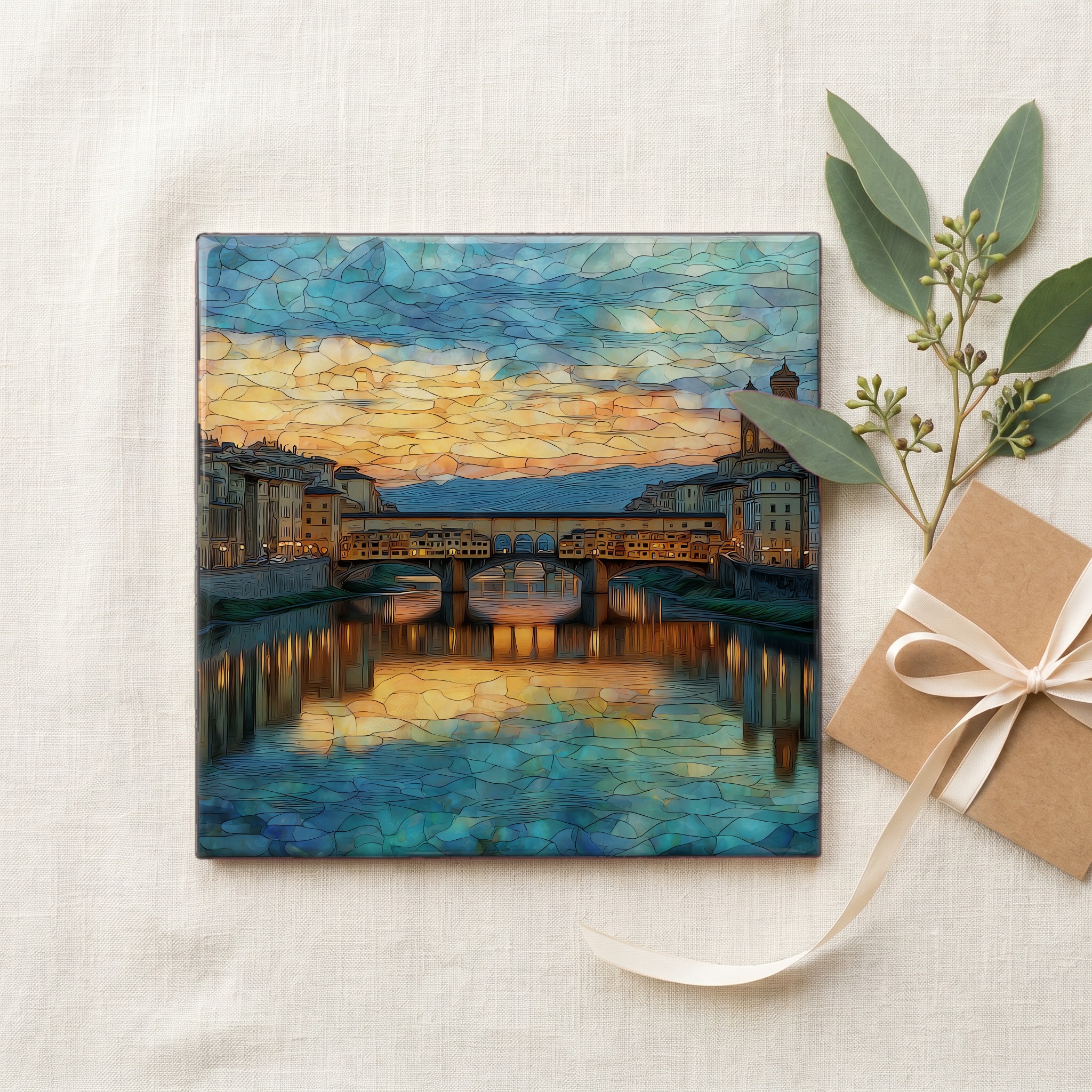
comes gift-ready
comes gift-ready

Each tile ships in a kraft box, tied with cream ribbon, with a handwritten note from the studio if you'd like to add one.
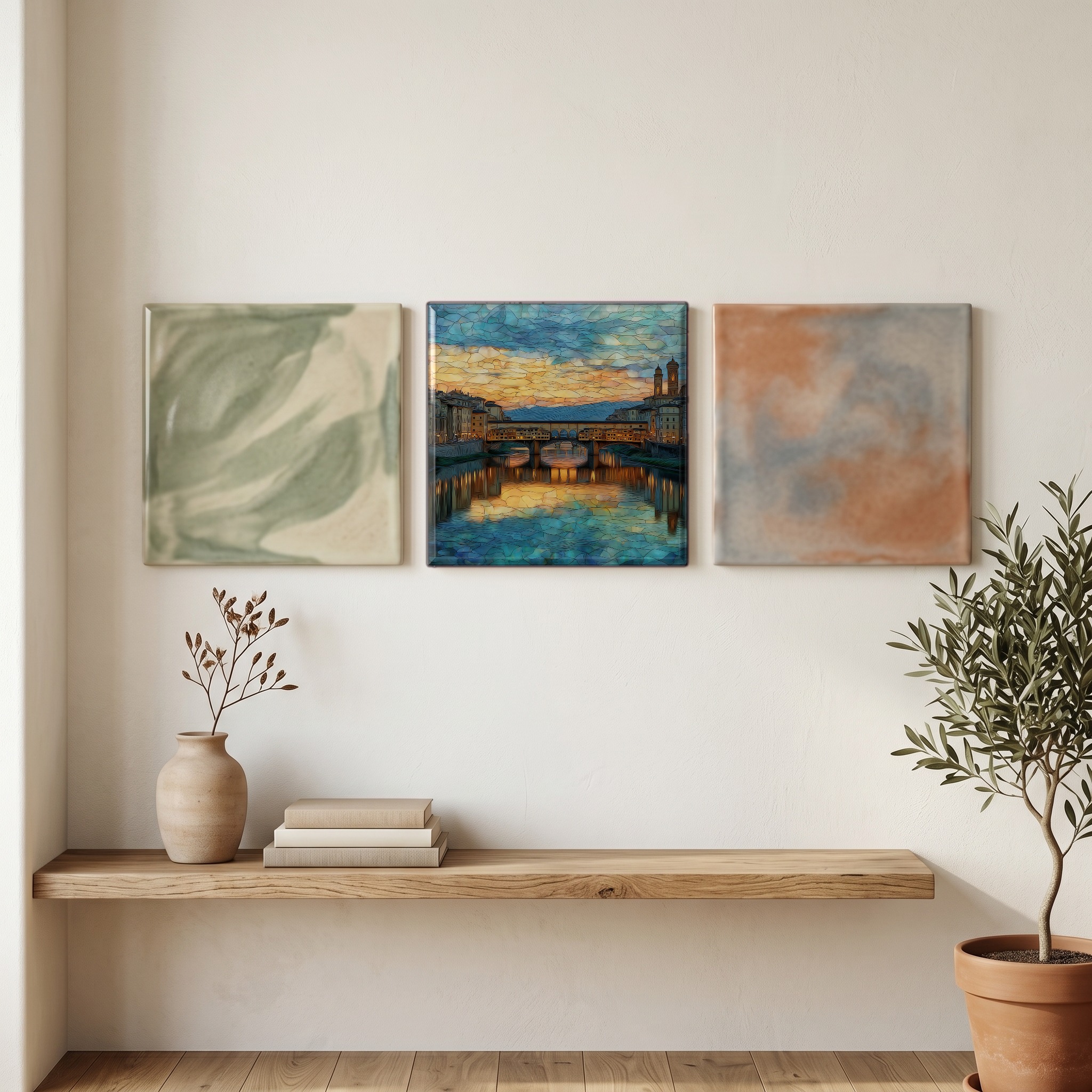
or build a grouping
or build a grouping

Three or five different vistas, hung together — a chapter of places you've been, or want to go.

about Ponte Vecchio

The place, in three passes.

A little of what's known, in case you fall down the rabbit hole — or want to go see it yourself.
the place

Ponte Vecchio crosses the Arno at the river's narrowest point in central Florence, the capital of Tuscany, linking Via Por Santa Maria on the north bank with Via de' Guicciardini on the south. It is the oldest of the city's bridges; the Romans first spanned the river here, and the present structure dates to 1345, raised after a flood swept away the previous crossing in 1333. The bridge sits inside the Historic Centre of Florence, inscribed as a UNESCO World Heritage Site in 1982, a few minutes' walk south of the Uffizi and the Piazza della Signoria. It carries foot traffic only, open at any hour and free to cross.

— informed by Wikipedia, Visit Tuscany
the stone

The bridge is built as three low segmental stone arches, the central span reaching about 30 metres and the two flanking arches about 27 metres each, a flatter profile than the round Roman arch and ambitious for its day. Shops have lined both sides since the medieval period; in 1593 Grand Duke Ferdinando I de' Medici ordered the butchers and tanners out and reserved the shopfronts for goldsmiths and jewellers, a rule the bridge still keeps. Above the eastern row runs the Vasari Corridor, the raised passage Giorgio Vasari built in 1565 for Cosimo I de' Medici so the family could move between the Palazzo Vecchio and the Palazzo Pitti without touching the street.

the water

The Arno has shaped the bridge as much as the masons did. A flood carried off the earlier crossing in 1333, and the 1345 rebuild was set on wide, flat arches that let high water pass beneath rather than pile against it. On 4 November 1966 the river rose close to six metres in the worst flood in four centuries, tearing through the shops and washing gold into the current, yet the medieval arches held and the bridge stood. It is also the one bridge the war spared: when the German army withdrew on 4 August 1944 it mined every other span across the Arno in Florence and left Ponte Vecchio standing.

— informed by Wikipedia
where
Italy · Florence, Tuscany
position
43.7680° N · 11.2531° E
the neighborhood

What's nearby.

A handful of named places within an hour's walk or short drive. Some we've already painted; some we will.
0.2 km NE
Uffizi Gallery
art museum
0.3 km NE
Palazzo Vecchio
town hall
0.35 km NE
Piazza della Signoria
public square
0.4 km SW
Palazzo Pitti
palace
0.6 km SW
Boboli Gardens
historic garden
0.7 km N
Florence Cathedral
cathedral
N
Ponte Vecchio
Uffizi Gallery
Palazzo Vecchio
Piazza della Signoria
Palazzo Pitti
Boboli Gardens
Florence Cathedral
common questions

What people ask.

A few questions we get about Ponte Vecchio — and about bringing the piece home.
about the place

The Ponte Vecchio crosses the Arno at its narrowest point in the centre of Florence, Tuscany, linking Via Por Santa Maria with Via de' Guicciardini. It stands a few minutes south of the Uffizi Gallery, inside the UNESCO-listed historic centre.

In 1593 Grand Duke Ferdinando I de' Medici ordered the butchers, fishmongers and tanners off the bridge and reserved the shops for goldsmiths and jewellers, partly to end the smell rising into the Vasari Corridor above. The rule still holds today.

The current bridge dates to 1345, built after a flood destroyed the earlier crossing in 1333. A bridge has stood at this spot since Roman times, which makes Ponte Vecchio the oldest bridge in Florence.

The Vasari Corridor is an elevated private passage Giorgio Vasari built in 1565 for Duke Cosimo I de' Medici. It runs above the eastern shops, connecting the Palazzo Vecchio with the Palazzo Pitti so the family could cross the city unseen.

Yes. It was the only bridge in Florence the German army did not destroy when it withdrew on 4 August 1944. Every other span over the Arno was mined; the buildings at each end of Ponte Vecchio were wrecked and later rebuilt.

Yes. On 4 November 1966 the Arno rose close to six metres and tore through the shops, sweeping gold into the river, but the medieval arches held. The bridge stood while much of central Florence was under water.

Ponte Vecchio is Italian for Old Bridge, the name it earned as the oldest river crossing in Florence. Its three flat stone arches span the Arno, the central arch reaching about 30 metres.

about the piece in your home

It has been a meaningful gift for customers with ties to Florence. The Ponte Vecchio is the image people carry home from the city, and many couples first crossed it together. A Small or Medium with a handwritten note from the studio carries well.

The piece runs warm and jewel-toned, the gold of the shops set against the river. It sits naturally in Italian-traditional, jewel-tone maximalist and warm transitional rooms. The Large holds a wall on its own; a Coaster Set echoes the colour on a table.

Yes. The shift toward warm metals, deep jewel tones and old-world European references suits this piece, which leans into amber, garnet and gold. It reads as collected rather than matched, in step with the move away from cool grey minimalism.

Above a sofa, a single Large anchors the wall, or a four-tile Mural fills a wider span. Over a console, a Medium or a Small sits in better proportion. For a stairwell or a long hall, a nine-tile Mural carries the scene.

Yes. Ordered in the Dura Satin or Matte finish, the tile is scratch-resistant and stands up to steam and splashes, so it works as a backsplash accent or on a bathroom wall. The glossy finish is better kept to drier display walls.

A soft microfibre cloth with a little water is all it needs. The colour is slowly infused into the ceramic surface under high heat and pressure and lives in the surface beneath a thin glossy finish, so it will not lift or fade with normal cleaning.

Yes. Every WenderVista piece is made in one studio in Knoxville, Tennessee, by Reid Wender, with no outside licensing. The Ponte Vecchio tile is part of our atlas of places, hand-finished in-house.

if this one stayed with you

A few you might also love.

Hand-picked by the eye that found Sorapis. Same air, same kind of quiet.
— a collection

The Italian Dolomites,
painted slow.

The valleys between Cortina and Val Gardena, the tarns you walk an hour to see, the towers that turn the colour of a banked fire just before dark. Wander the collection by valley, by season, or follow the path Reid walked.

Tre Cime
Braies
Misurina
Sorapis
Cinque Torri
Sassolungo
Marmolada