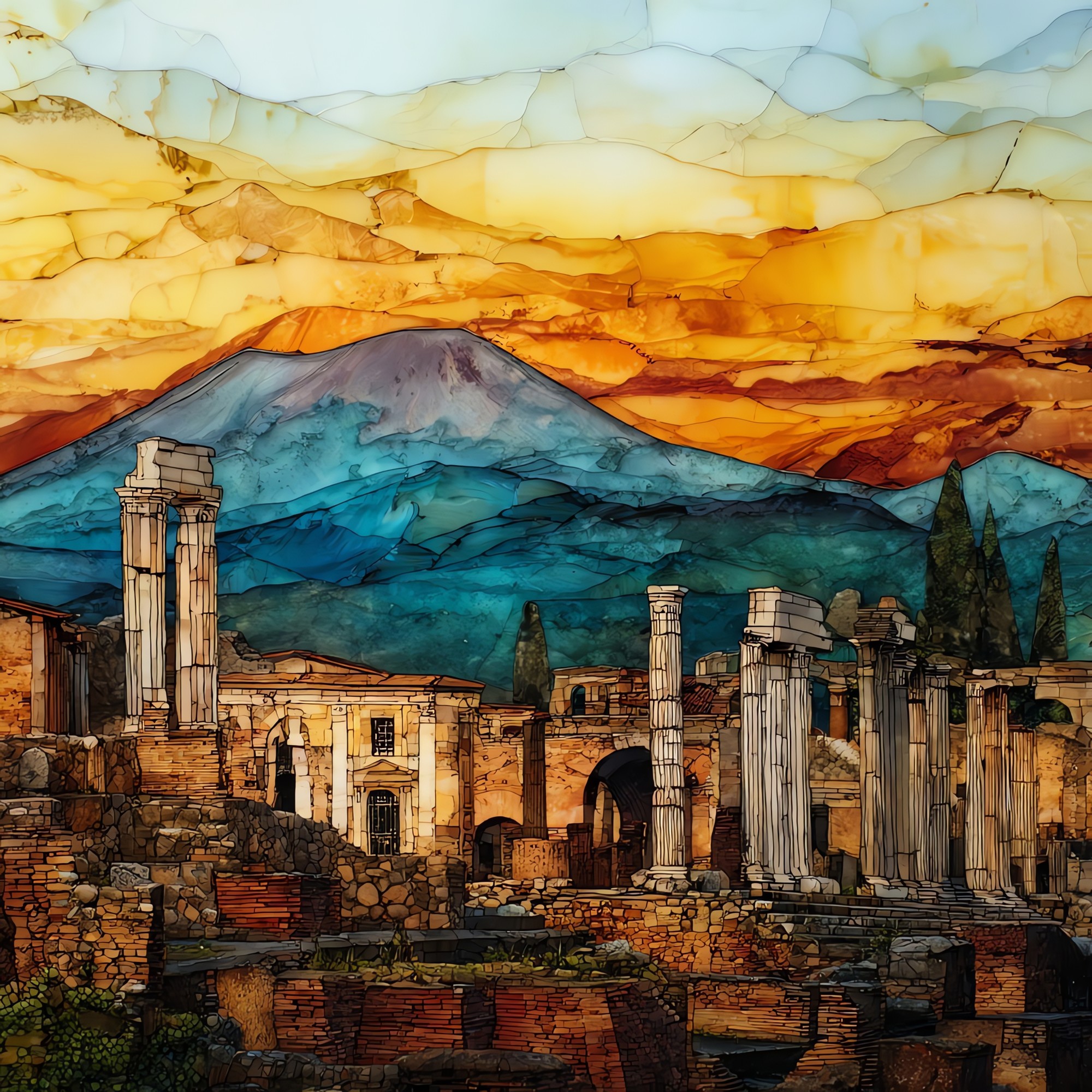
Pompeii Forum
— still open to the sky, still facing the mountain.
Not only on a wall.
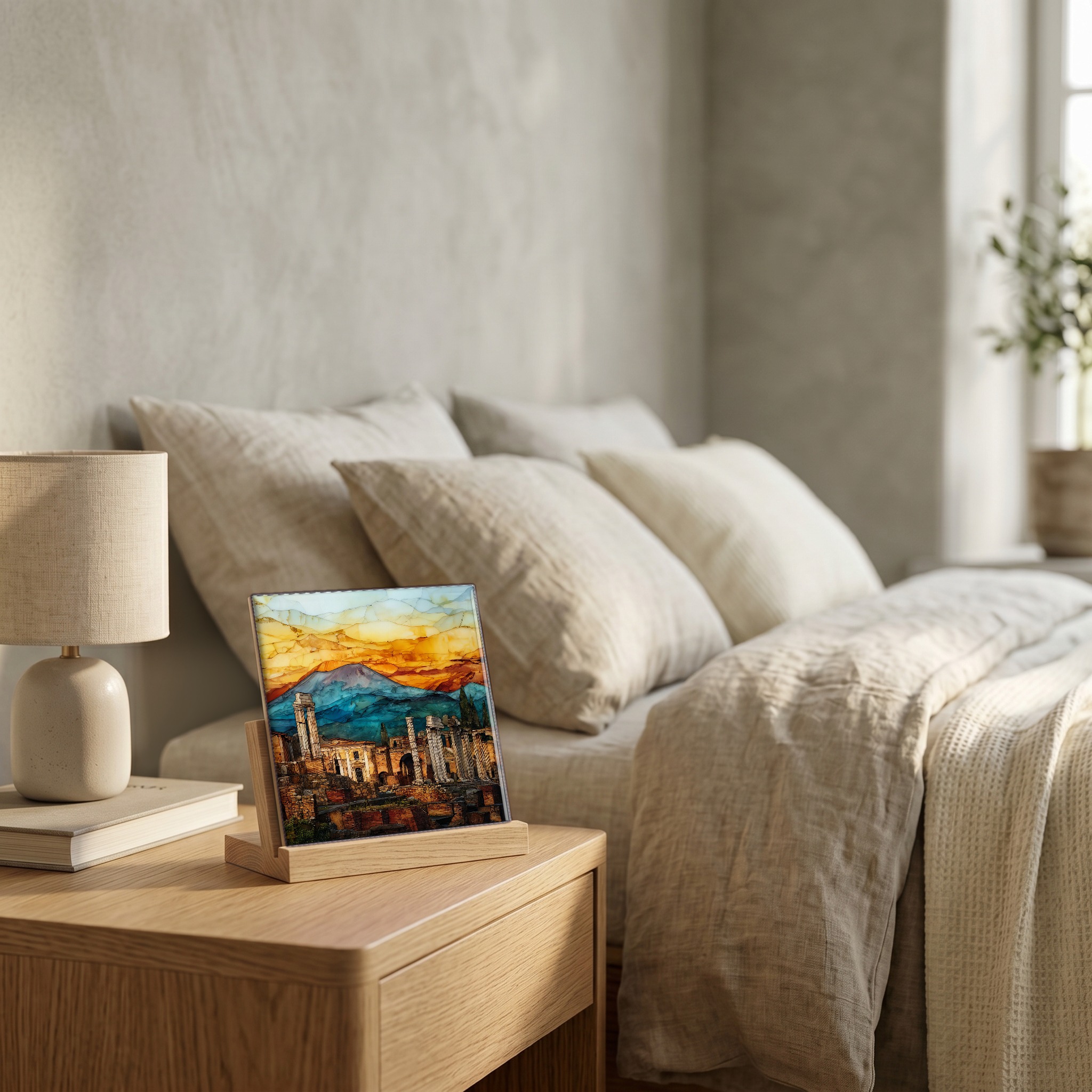
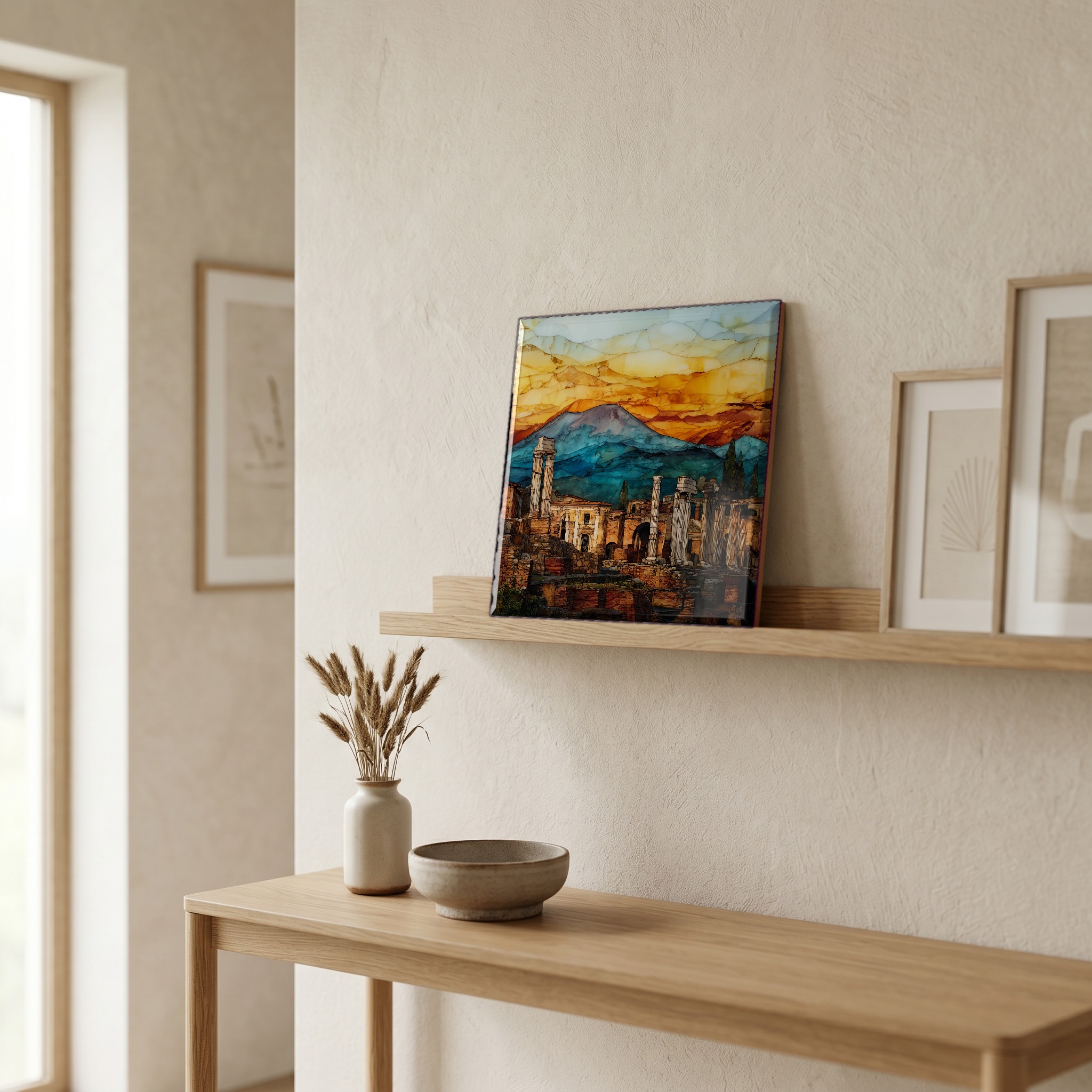
“The public square at the centre of a Roman town that stopped on a single morning in 79. A long rectangle of paving, ringed by the stumps of a colonnade, with the Temple of Jupiter closing the north end and Vesuvius rising straight behind it on the same axis. It is the view every photograph of Pompeii comes home with, and it was built that way on purpose, centuries before the mountain made it famous. People come up the slope from the Porta Marina gate, reach the open square, and tend to go quiet.
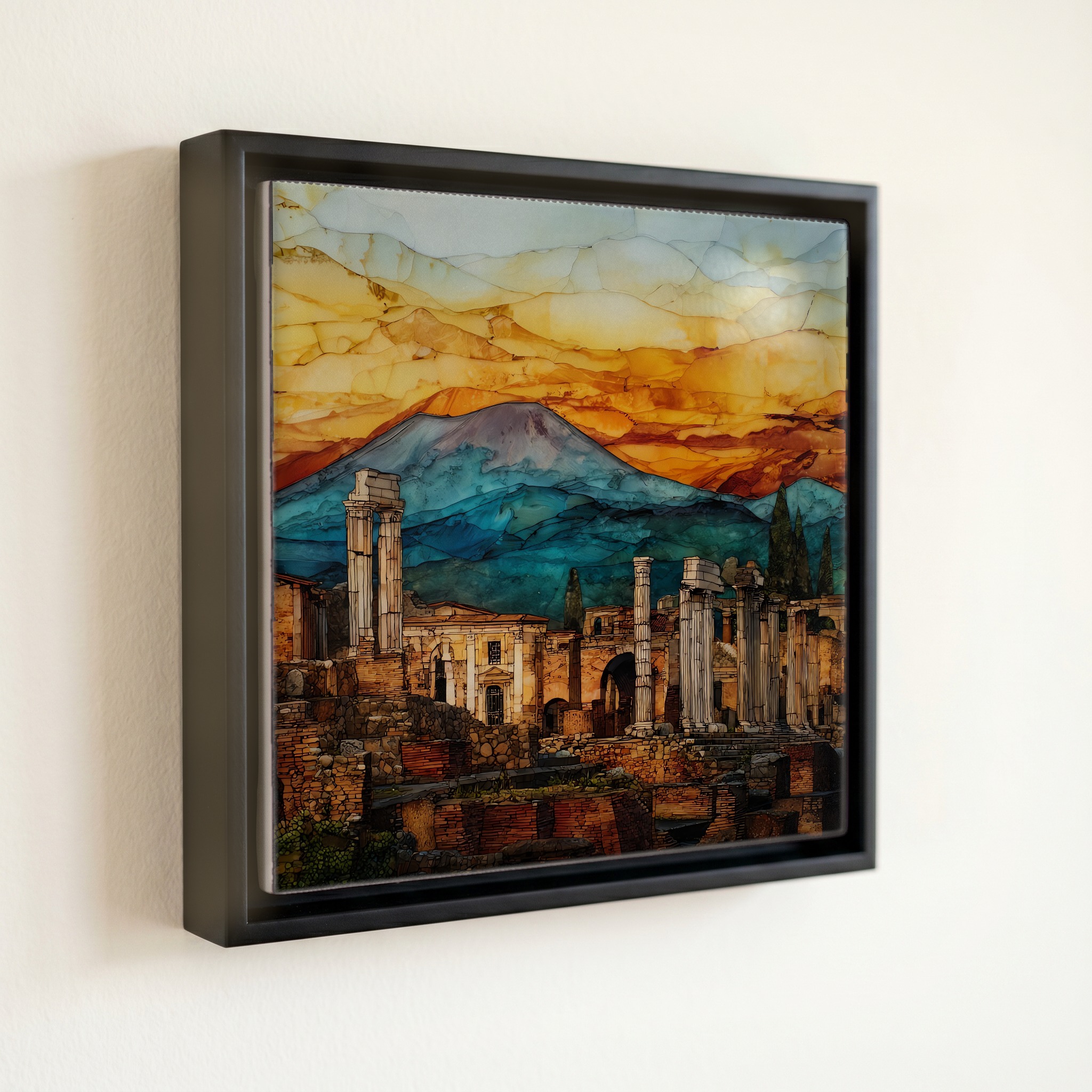
Pompeii Forum, on ceramic.
Each tile is finished by hand in our Knoxville studio. Artwork is slowly infused into the ceramic surface under high heat and pressure, and rests beneath a thin glossy finish. The colour lives in the surface, not on top of it.
Pick any four 4-inch tiles — National Parks you've been to, a Smokies set, the four seasons of one place. $ for a set of , cork-backed, ready to live on the table.
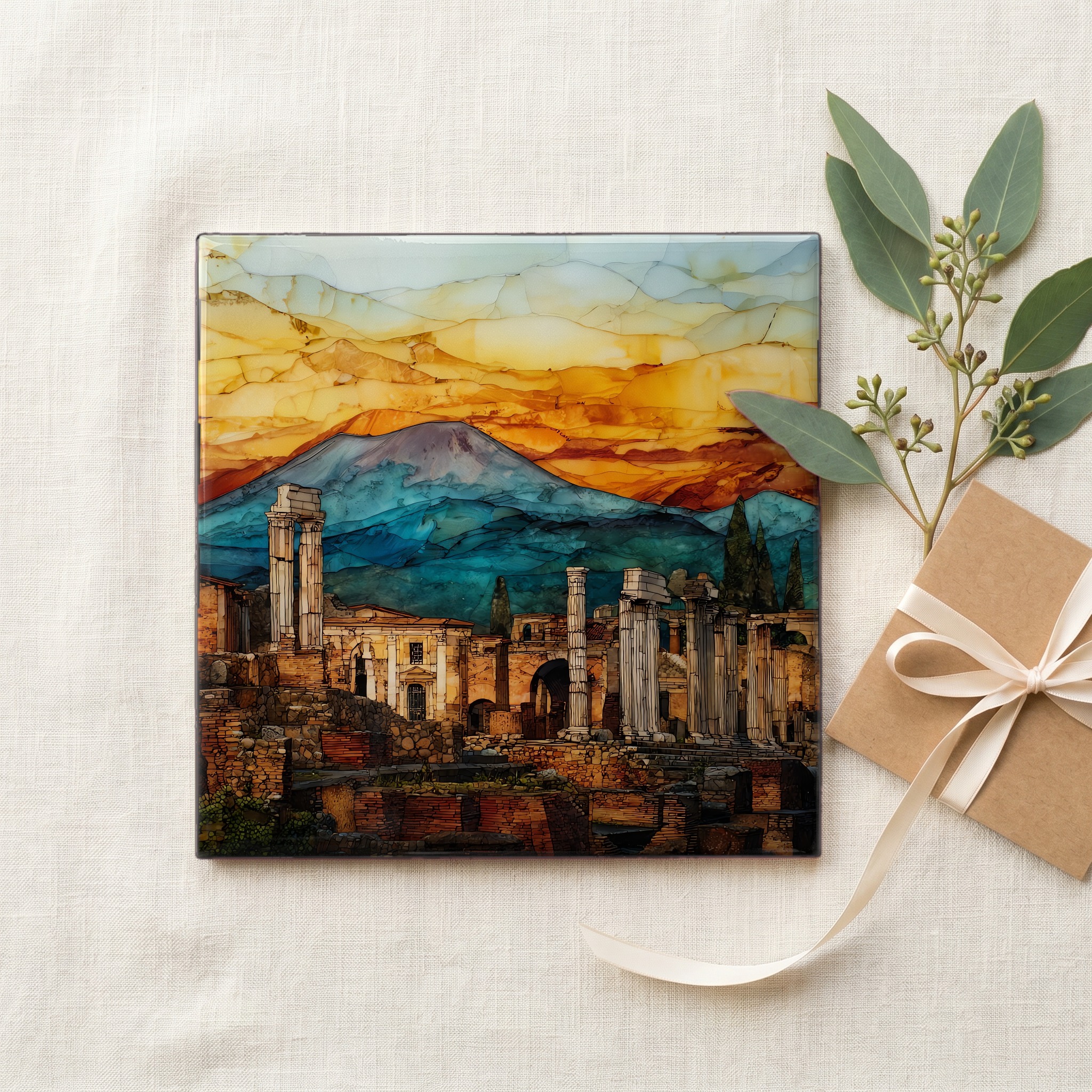
Each tile ships in a kraft box, tied with cream ribbon, with a handwritten note from the studio if you'd like to add one.
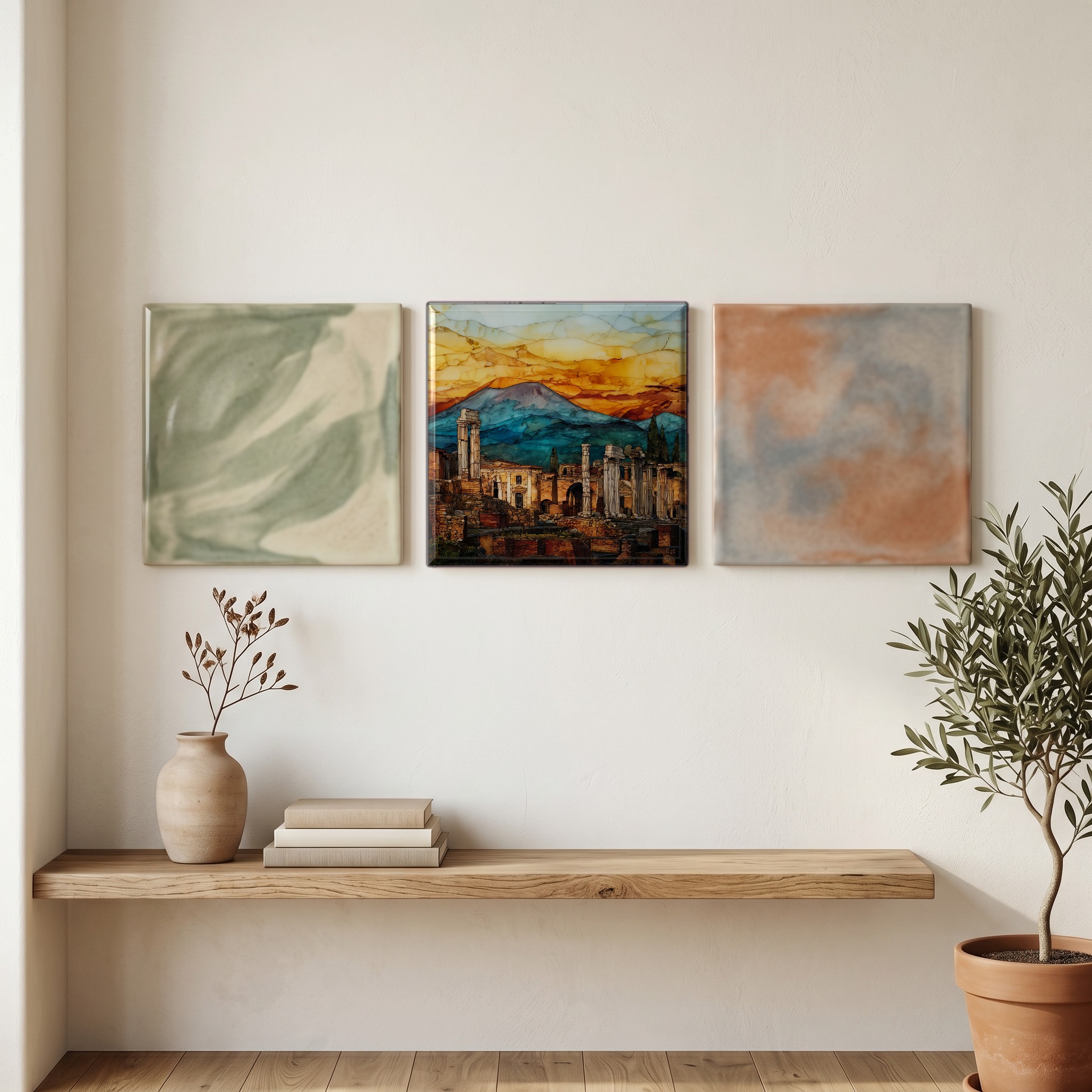
Three or five different vistas, hung together — a chapter of places you've been, or want to go.
The place, in three passes.
The Forum is the civic and religious centre of Pompeii, the Roman town on the Bay of Naples buried by the eruption of Vesuvius in 79 AD, about 24 kilometres south of the city of Naples in the Campania region. The square is a long rectangle, roughly 157 by 38 metres, paved in stone and ringed on three sides by a two-tiered colonnade. It sits inside the Pompeii Archaeological Park, reached most directly through the Porta Marina gate beside the Pompei Scavi – Villa dei Misteri station on the Circumvesuviana line. From the open paving the ground rises north toward the Temple of Jupiter, with Vesuvius a little under ten kilometres away in a straight line.
The Forum took its rectangular form in the 2nd century BC, when the older market square was rebuilt in pale tufa stone with a colonnade of two orders, Doric below and Ionic above. After the Social War, the Roman general Sulla captured Pompeii in 89 BC and refounded it as a colony in 80 BC, and under the emperor Augustus the portico was extended and faced in white limestone. What stands now is mostly footings, column stumps and the high podium of the Temple of Jupiter at the north end, its stair still set on the central axis of the square. The people who sheltered here were among the last the ash reached.
The Forum lies a few minutes' walk inside the Porta Marina entrance, the gate closest to the Pompei Scavi – Villa dei Misteri station, with two further entrances at Piazza Anfiteatro and Piazza Esedra. The Archaeological Park opens daily except 1 January, 1 May and 25 December, generally from 9:00 to 19:00 between April and October and to 17:00 in winter, with last admission 90 minutes before closing. The standard Pompeii Express ticket is 18 euro; entry is free for visitors under 18, and citizens of the European Union aged 18 to 25 pay a reduced 2 euro. From 2 March 2026 the park's official ticketing runs through vivaticket.