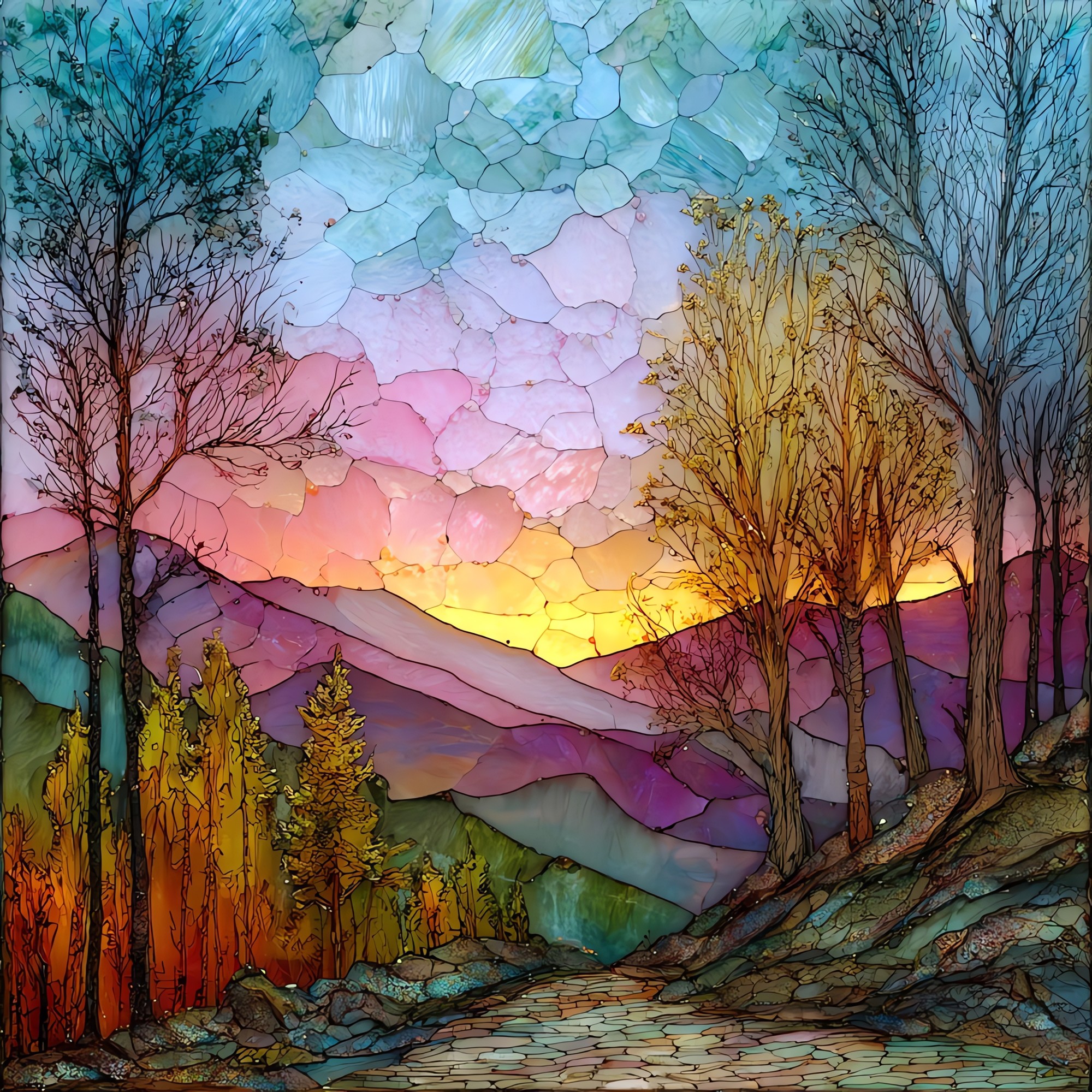
Pollino National Park
— — a pine that has held the ridge for twelve hundred years.
Not only on a wall.





“The largest national park in Italy, drawn around the Pollino massif where Basilicata and Calabria meet. The thing the photographers come for is the Loricato pine, Pinus heldreichii, the silver-barked relict that grows where almost nothing else does, two thousand metres up on the ridges of Serra di Crispo and Serra delle Ciavole. One of them, named Italus, has been carbon-dated past 1,230 years, the oldest scientifically aged tree in Europe. The villages on the shoulders of the park, San Paolo Albanese among them, still speak Arbëreshë, the language Albanian refugees brought across the Adriatic in the fifteenth century.
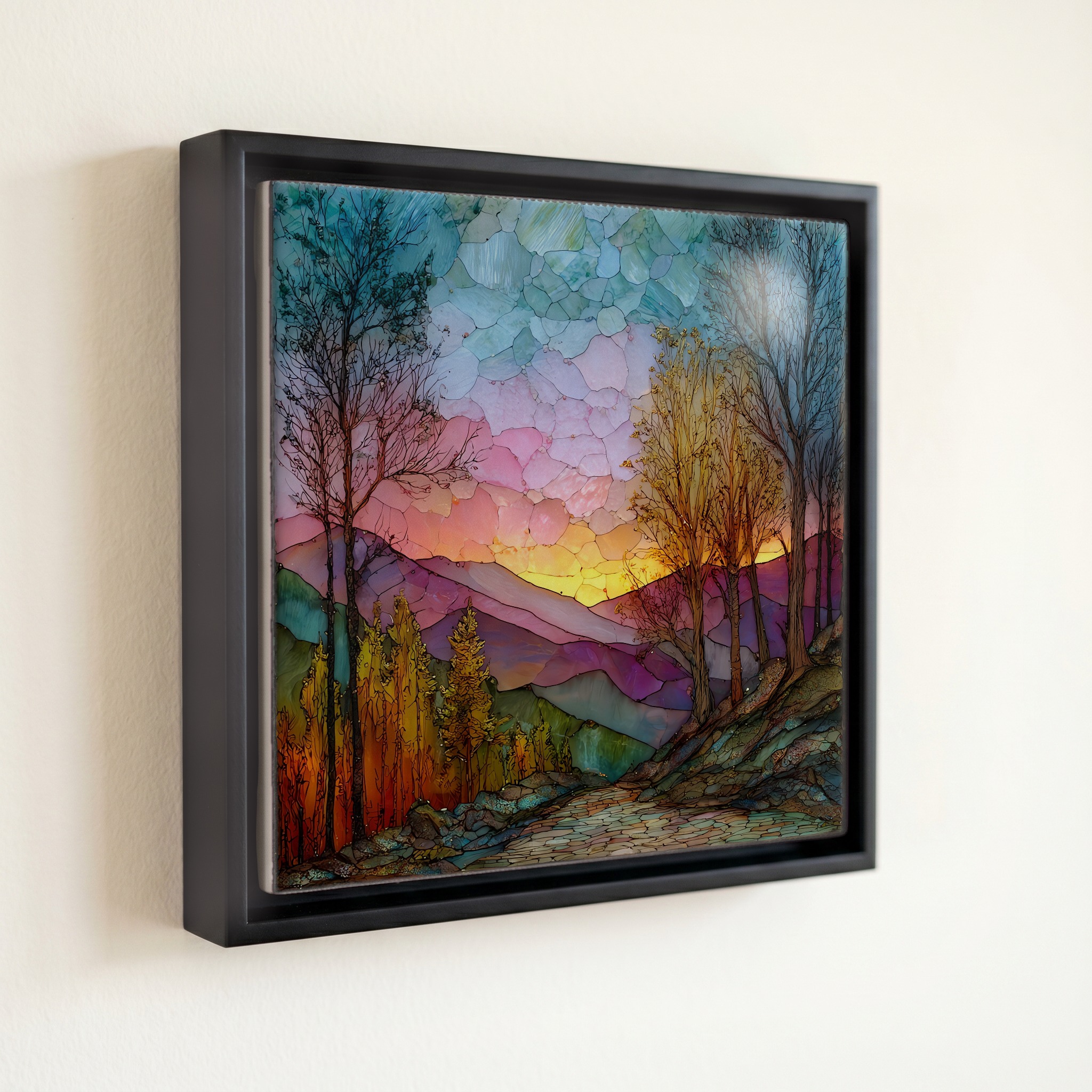
Pollino National Park, on ceramic.
Each tile is finished by hand in our Knoxville studio. Artwork is slowly infused into the ceramic surface under high heat and pressure, and rests beneath a thin glossy finish. The colour lives in the surface, not on top of it.
Pick any four 4-inch tiles — National Parks you've been to, a Smokies set, the four seasons of one place. $ for a set of , cork-backed, ready to live on the table.

Each tile ships in a kraft box, tied with cream ribbon, with a handwritten note from the studio if you'd like to add one.

Three or five different vistas, hung together — a chapter of places you've been, or want to go.
The place, in three passes.
Pollino National Park is the largest national park in Italy, covering roughly 1,925 square kilometres of the southern Apennines and bridging two regions: Basilicata to the north and Calabria to the south. The park was created by decree in 1988 and brought under state administration in 1993. Its highest summit is Serra Dolcedorme at 2,267 metres, with Monte Pollino at 2,248 metres and Serra del Prete at 2,181 metres anchoring the central massif. Six provinces feed into the park's territory. The principal gateway towns are Rotonda and San Severino Lucano on the Lucanian flank and Morano Calabro and Civita on the Calabrian side.
The Loricato pine, Pinus heldreichii, is the symbol of the park. It grows along the upper tree line above 1,700 metres on dolomitic limestone where soil barely exists, and its bark splits into the armoured scale-pattern that gives the species its Italian name. In 2018 a team led by Gianluca Piovesan at the University of Tuscia carbon-dated a single tree on the slopes of Serra delle Ciavole, known as Italus, to more than 1,230 years, making it the oldest scientifically aged living tree in Europe. The grove around it is small. The wind comes off the massif almost without obstruction.
Trailheads cluster around Rotonda in Basilicata and Morano Calabro in Calabria; the latter sits on the SS19 below the Pollino's southern flank. The Gole del Raganello cuts through the eastern side of the park near the Arbëreshë village of Civita. The canyon claimed ten lives in an August 2018 flash flood, and entry is now restricted to licensed guides. The classic hike to the Italus pine begins at Colle dell'Impiso and follows the Piano di Pollino loop, around six hours round-trip in summer. Snow closes the high routes from December through April. The park's Arbëreshë comuni still hold annual costume festivals every spring.