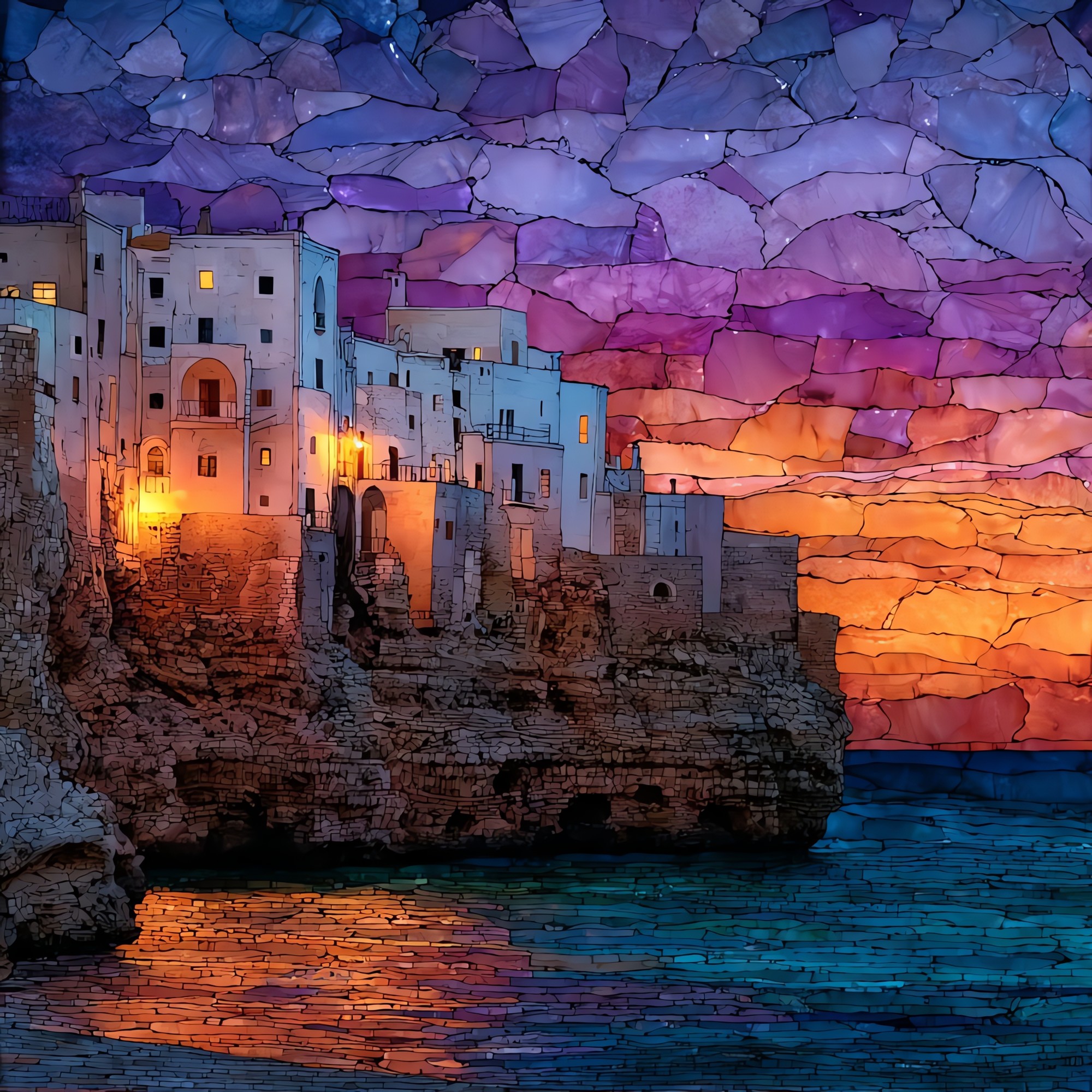
Polignano a Mare
— — white houses at the exact edge of the blue.
Not only on a wall.
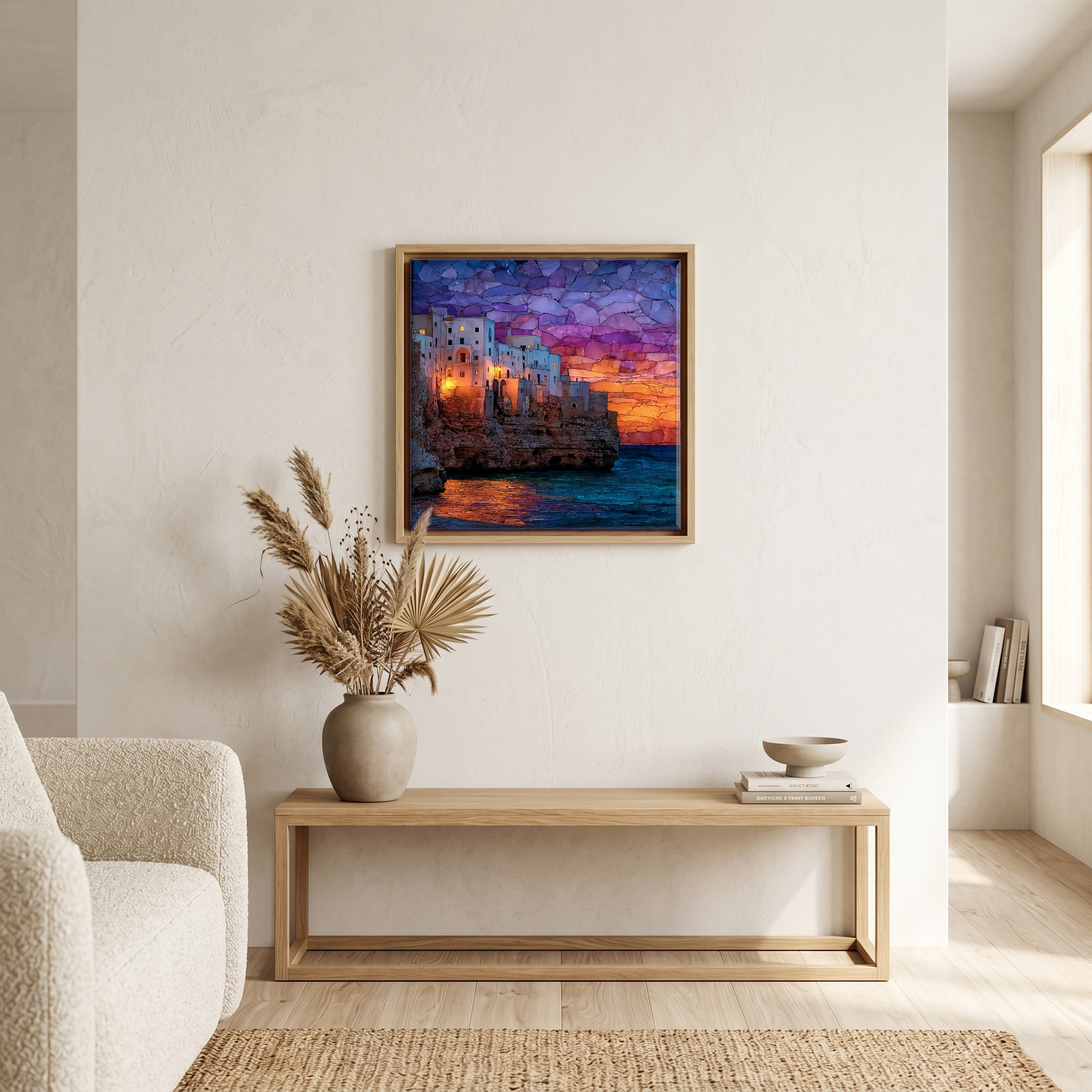
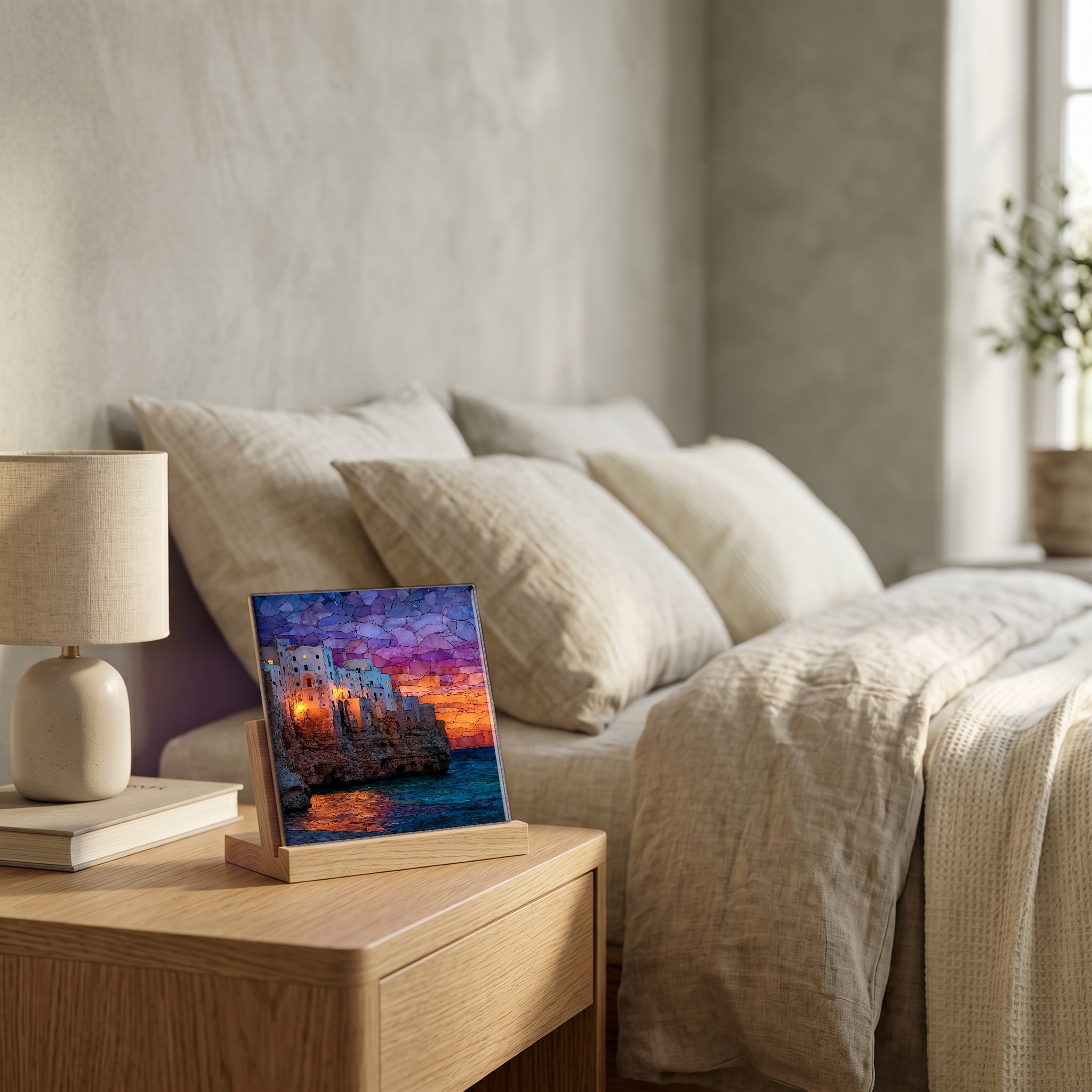
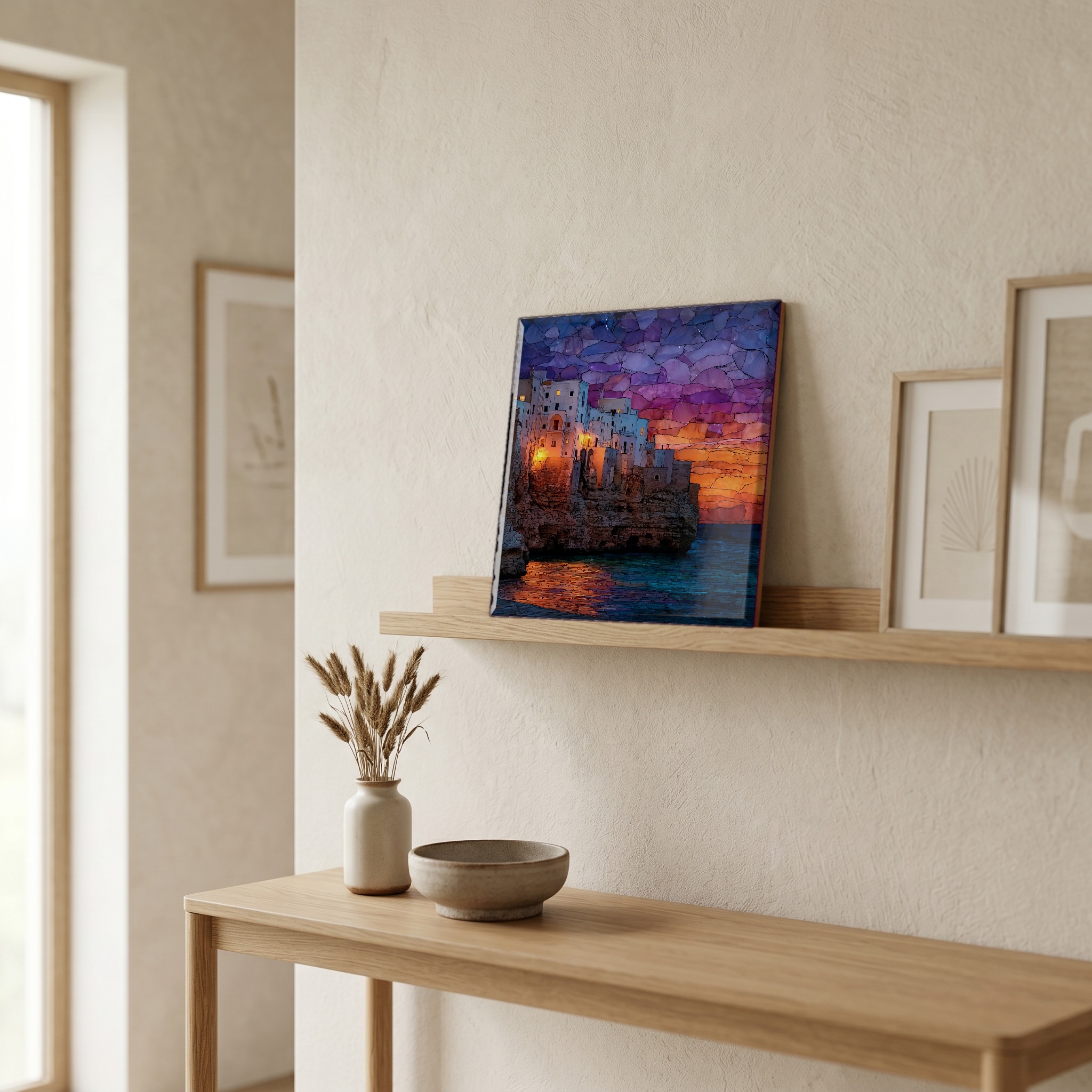
“A white town built to the very edge of the limestone, where the streets stop and the Adriatic begins, twenty-odd metres straight down. Between two cliffs sits a small pebble cove, Lama Monachile, an old bridge crossing above it, and most evenings a crowd gathers to watch the swimmers and the cliff divers. This is the town that gave Italy “Volare.” Domenico Modugno was born on these streets, and his statue still stands on the seafront with its arms thrown wide. People come for the photograph and stay for the way the light moves on the stone.
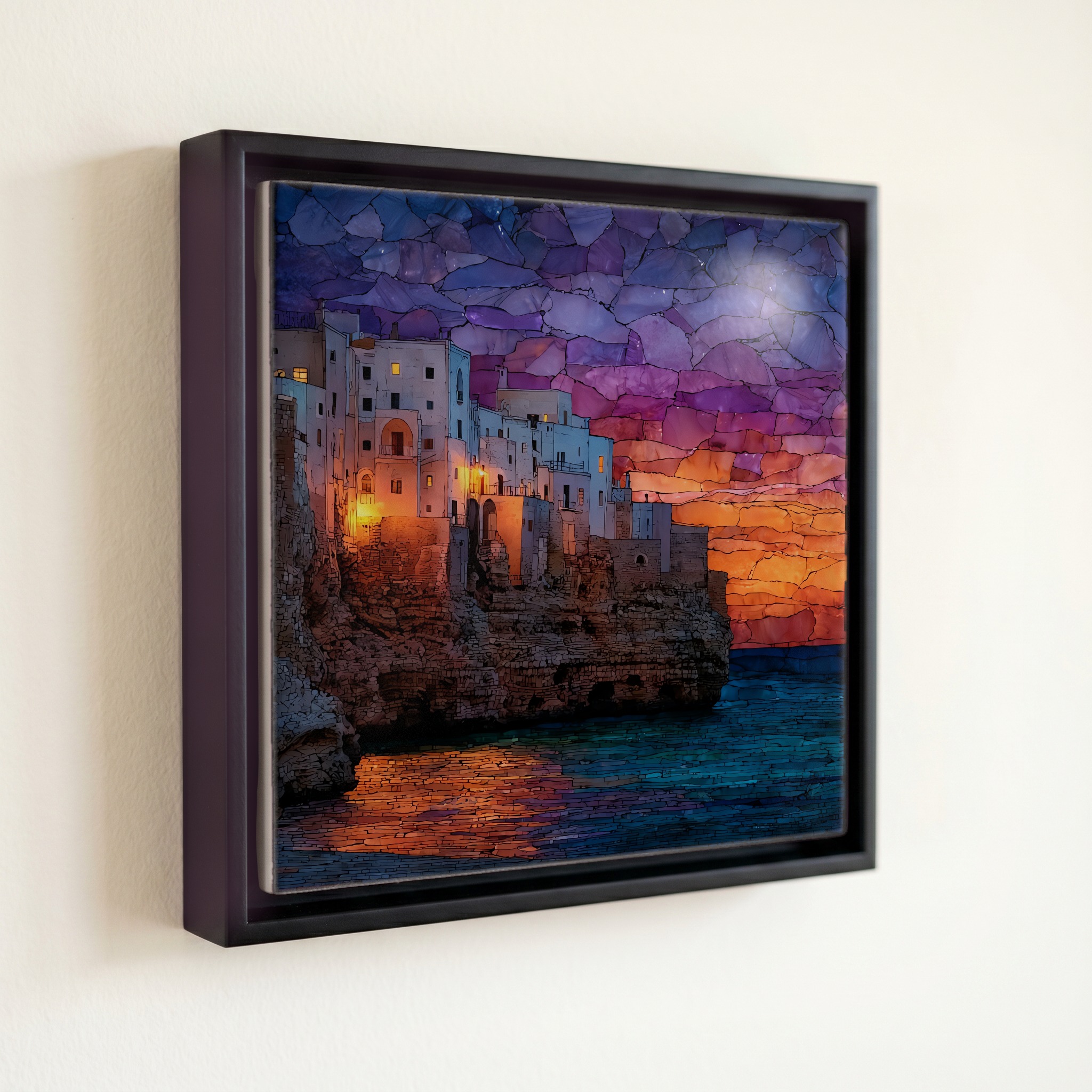
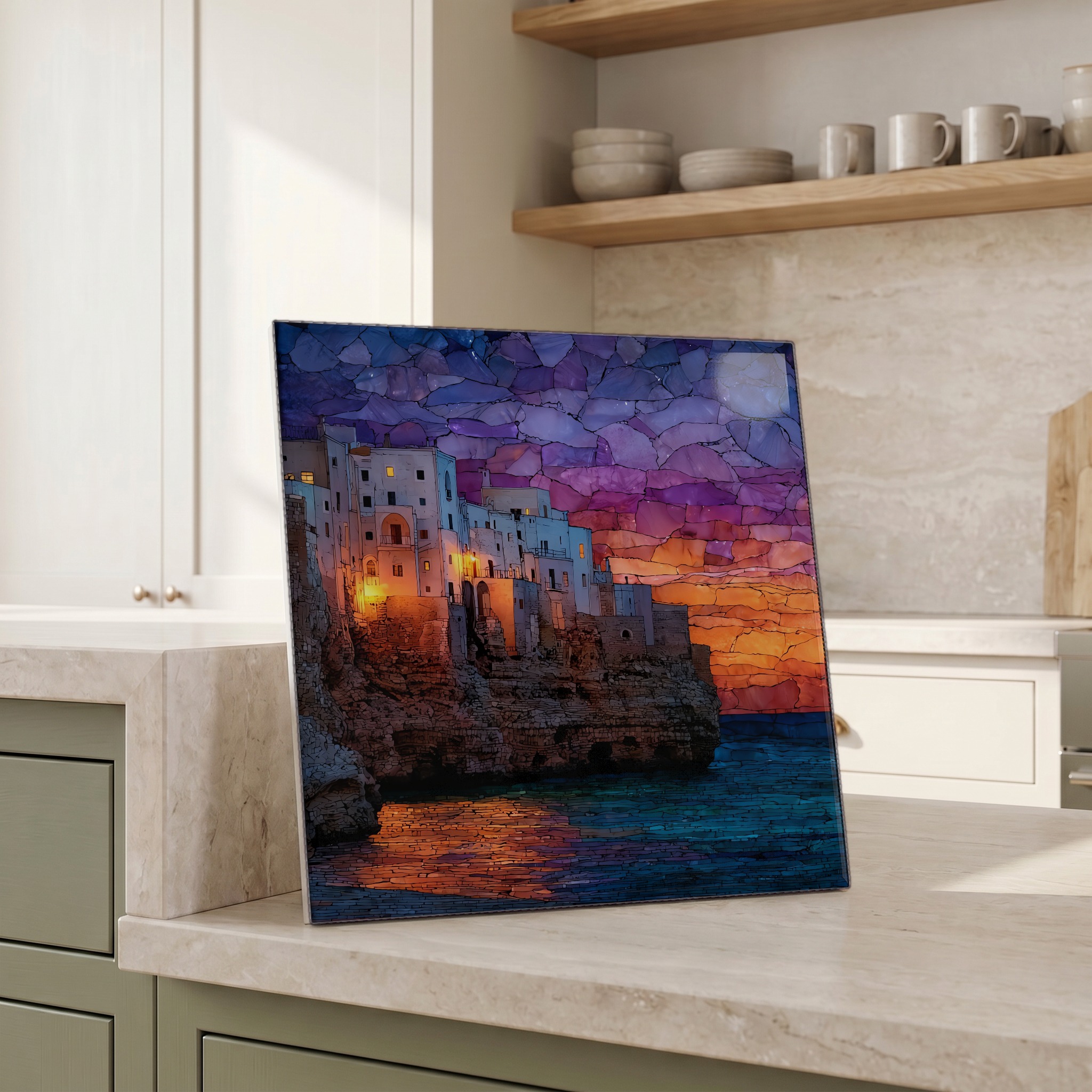
Polignano a Mare, on ceramic.
Each tile is finished by hand in our Knoxville studio. Artwork is slowly infused into the ceramic surface under high heat and pressure, and rests beneath a thin glossy finish. The colour lives in the surface, not on top of it.
Pick any four 4-inch tiles — National Parks you've been to, a Smokies set, the four seasons of one place. $ for a set of , cork-backed, ready to live on the table.
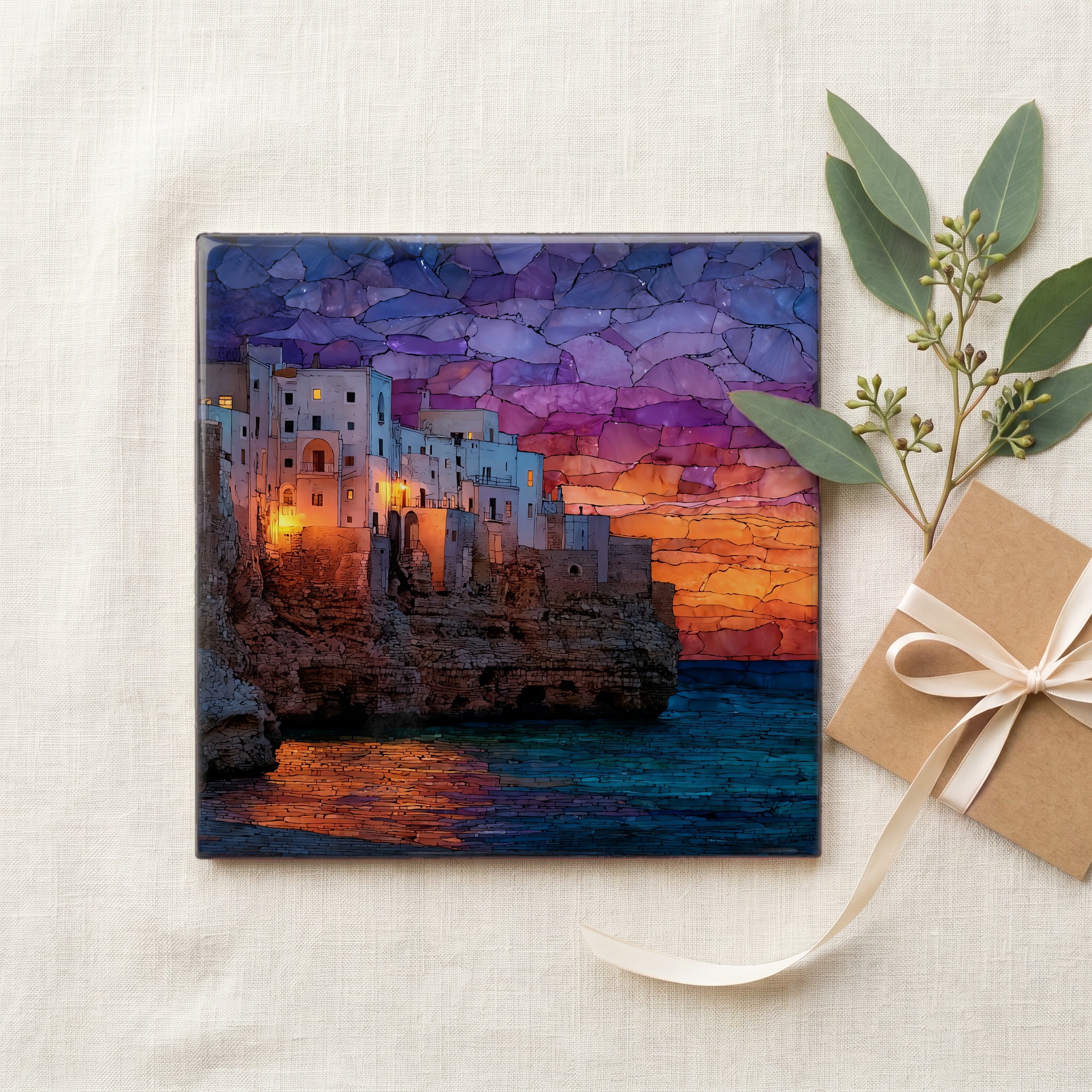
Each tile ships in a kraft box, tied with cream ribbon, with a handwritten note from the studio if you'd like to add one.
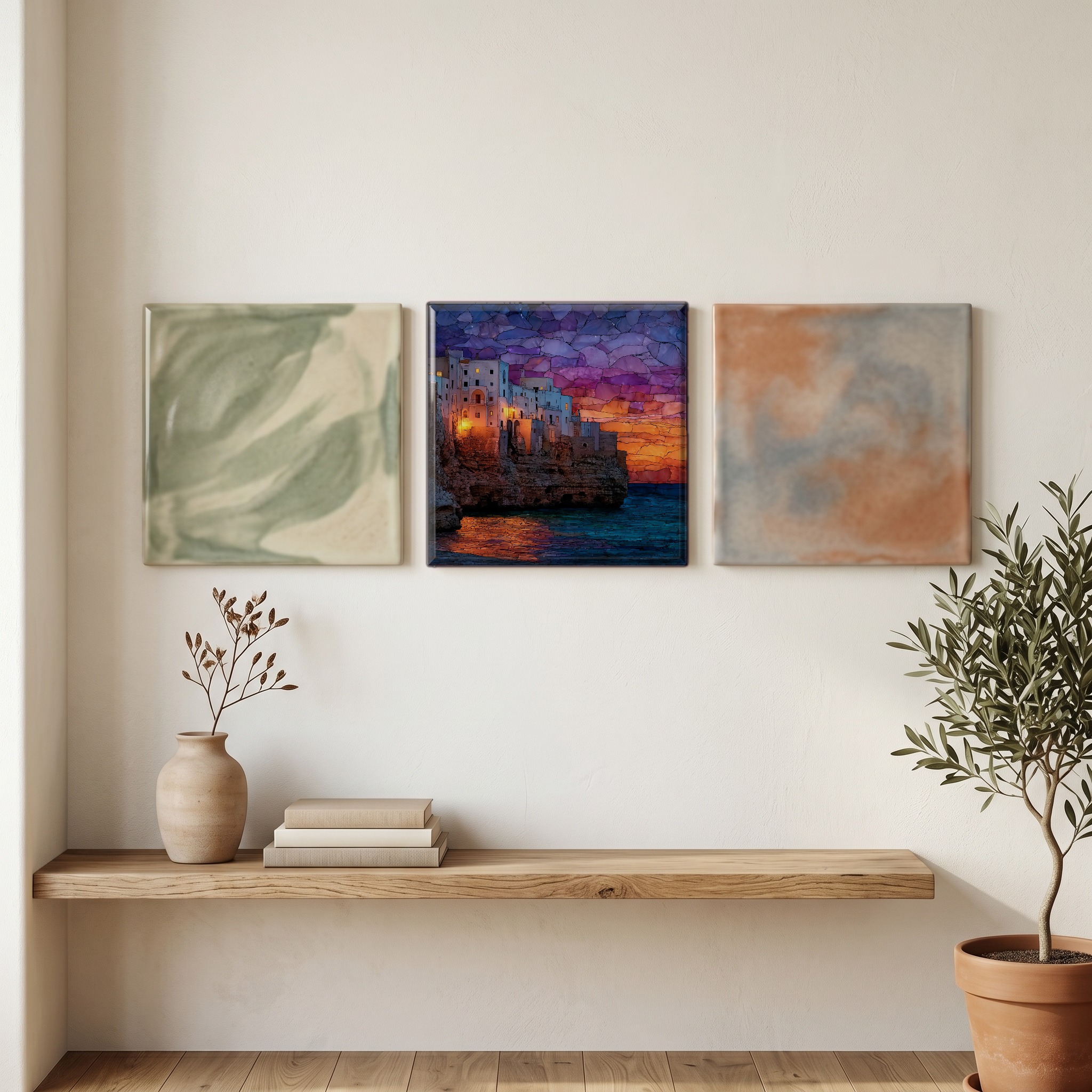
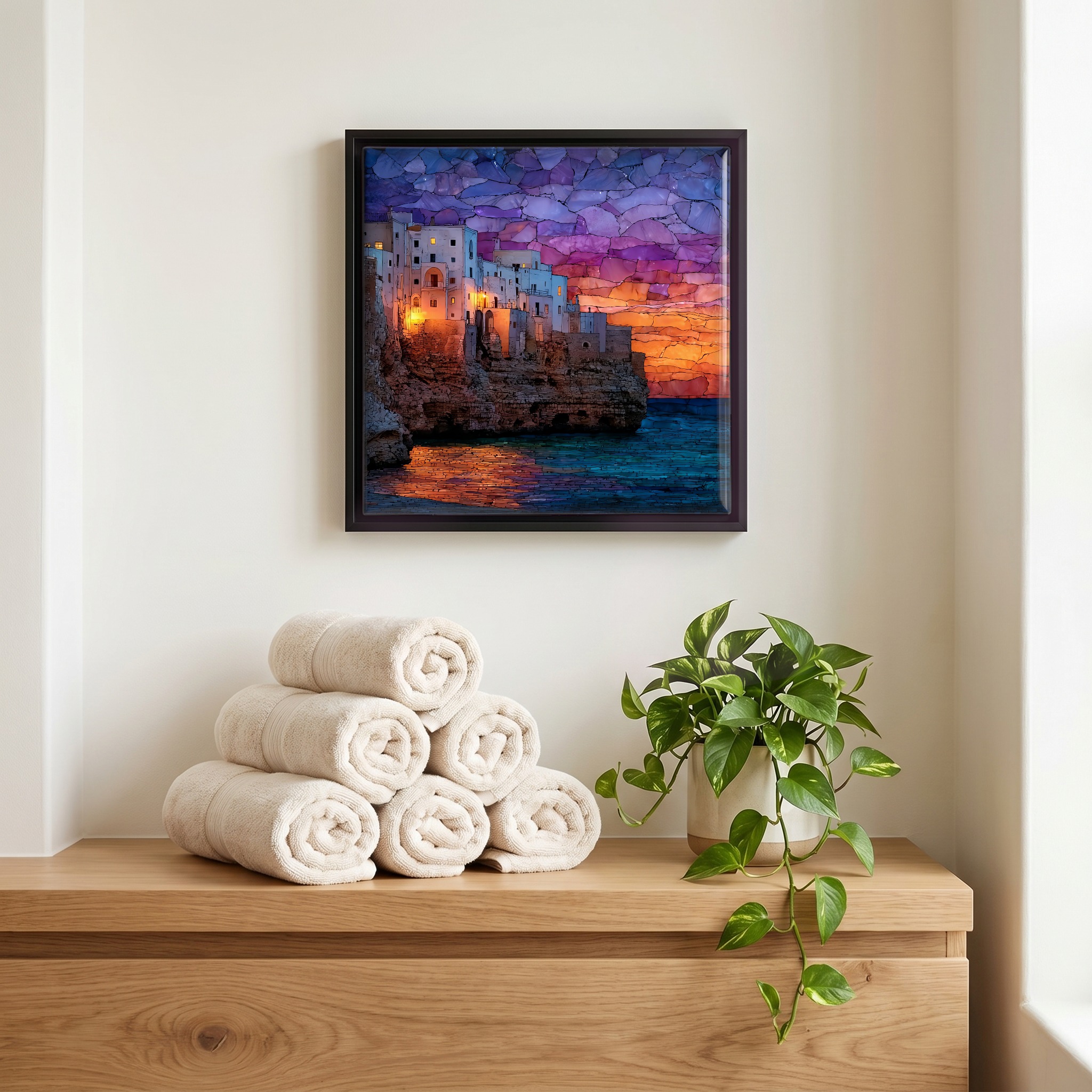
Three or five different vistas, hung together — a chapter of places you've been, or want to go.
The place, in three passes.
Polignano a Mare is a town of about 17,500 people in the Metropolitan City of Bari, in Apulia, the region that forms the heel of southern Italy. Its old centre stands on a limestone headland roughly 24 metres above the Adriatic Sea, about 30 kilometres south-east of the city of Bari. The site has been settled since prehistoric times and is thought to sit on the ancient Greek settlement of Neapolis. Under Rome it became a stop on the Via Traiana, the road the emperor Trajan completed around 110 AD to link Benevento with the port of Brindisi. The bridge over the Lama Monachile ravine, rebuilt by the Bourbons in the 1830s, still rests on those Roman foundations.
The whole town reads as two materials: pale local limestone and whitewashed houses, set directly on a cliff that falls roughly 20 metres to the water. The historic centre is a knot of narrow lanes, arches and small balconies, built tight against the Adriatic wind. Below it, the bridge over Lama Monachile spans a dry ravine that once carried the Via Traiana, its lower courses cut from amber-coloured tufa and resting on Roman foundations. The same soft stone is worked through with sea caves along the base of the cliffs; one of them holds the Grotta Palazzese, a dining room set inside the cave mouth above the sea.
The water at Polignano is the clear, deep blue of the southern Adriatic, shading to green over the pale stone shallows. The town's one real beach is Cala Porto, the pebble cove at the foot of Lama Monachile, hemmed by cliffs and reached by a stair from the bridge. Small boats run out from here to the sea caves the swell has cut into the rock over millennia. Each summer the cliffs become a sports venue: the Red Bull Cliff Diving World Series sends athletes off a platform about 27 metres high into the cove, one of the few stops on that circuit set inside a living town rather than open coast.