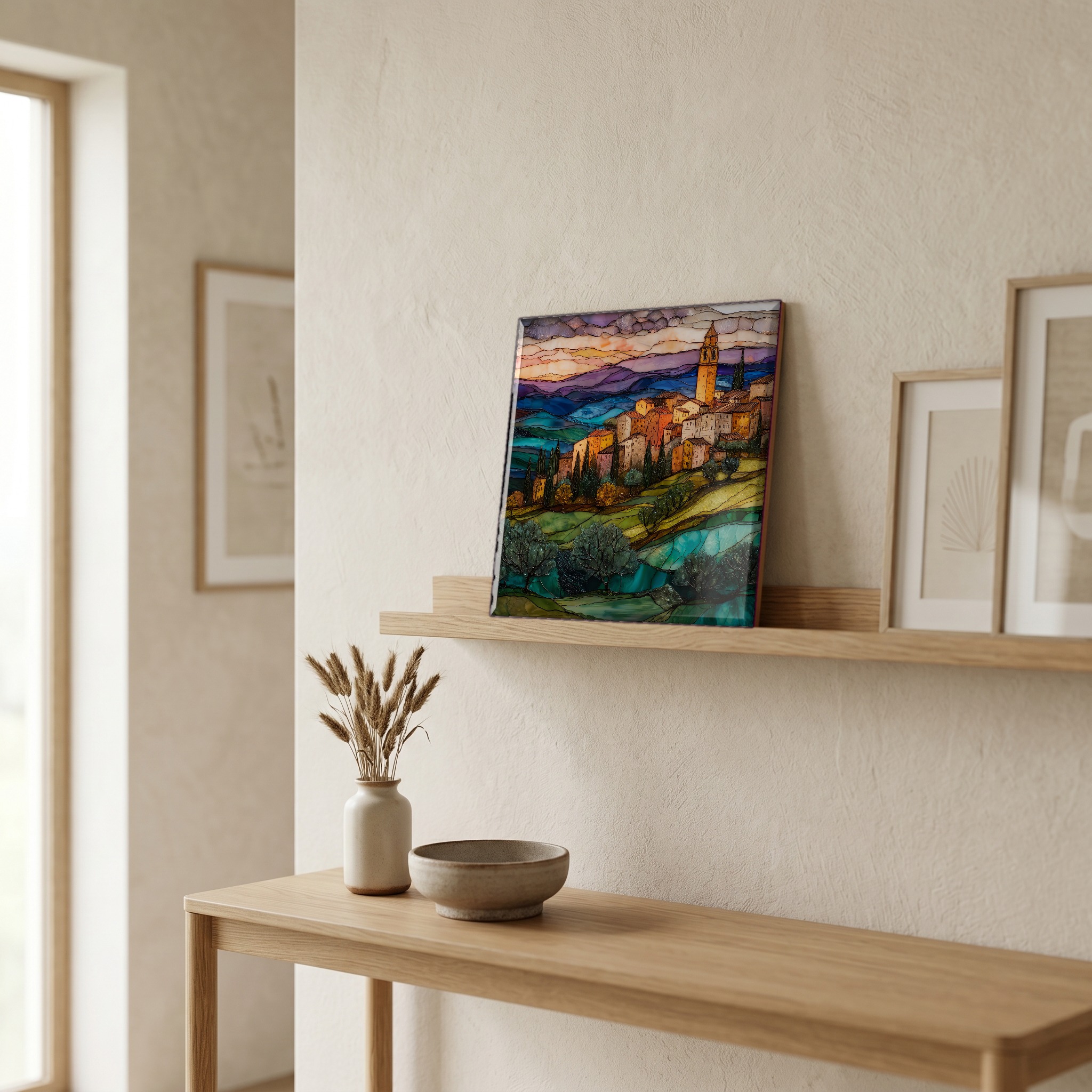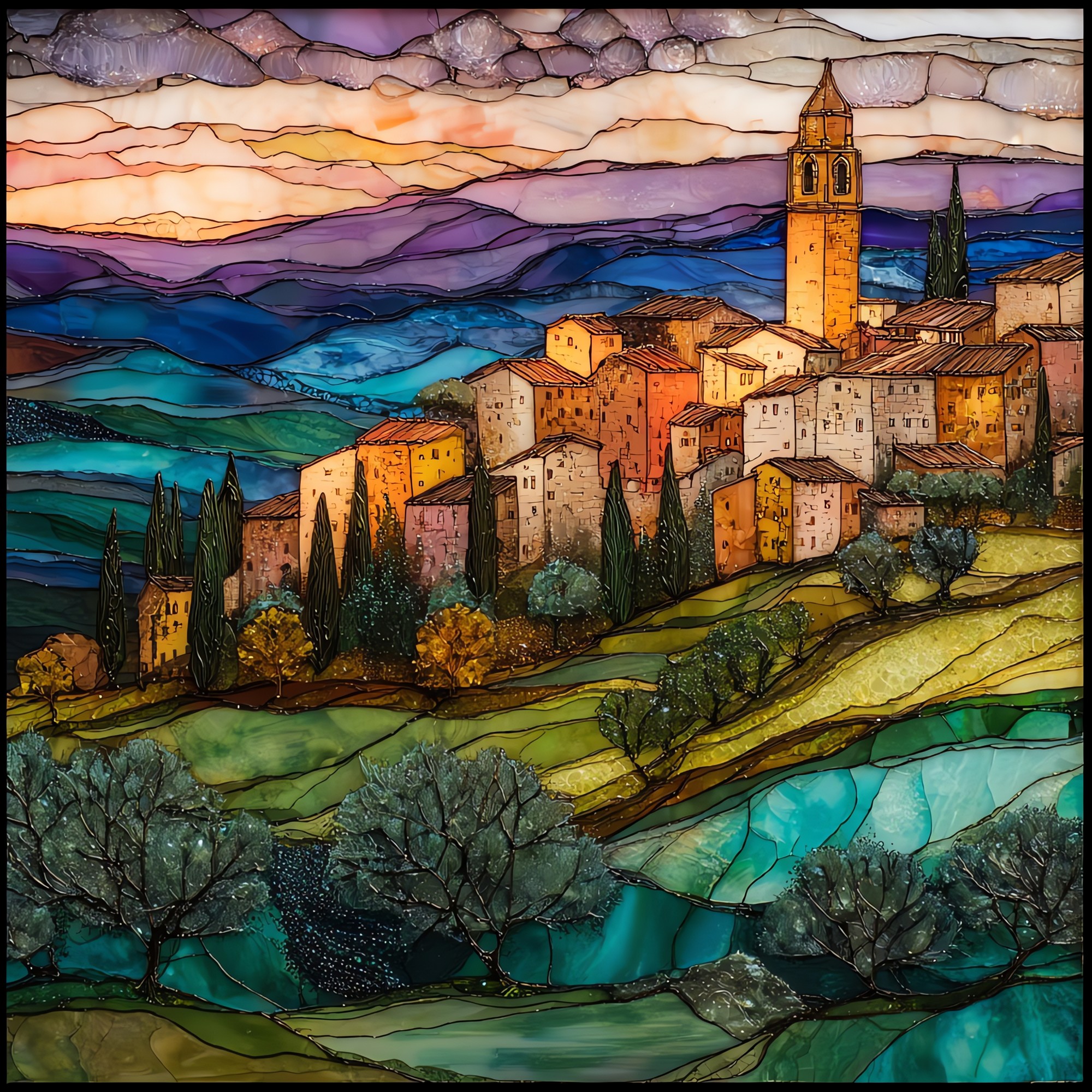
Wender·Vista
Pienza
shown on ceramic, 12-inch tileItaly
on a ridge above the Val d'Orcia, in southern Tuscany

Pienza

a whole town, drawn once and built at once.

Where it lives

Not only on a wall.

A small tile on the nightstand catching the morning. A larger one above the fire. Yours, wherever you spend the slow hours.
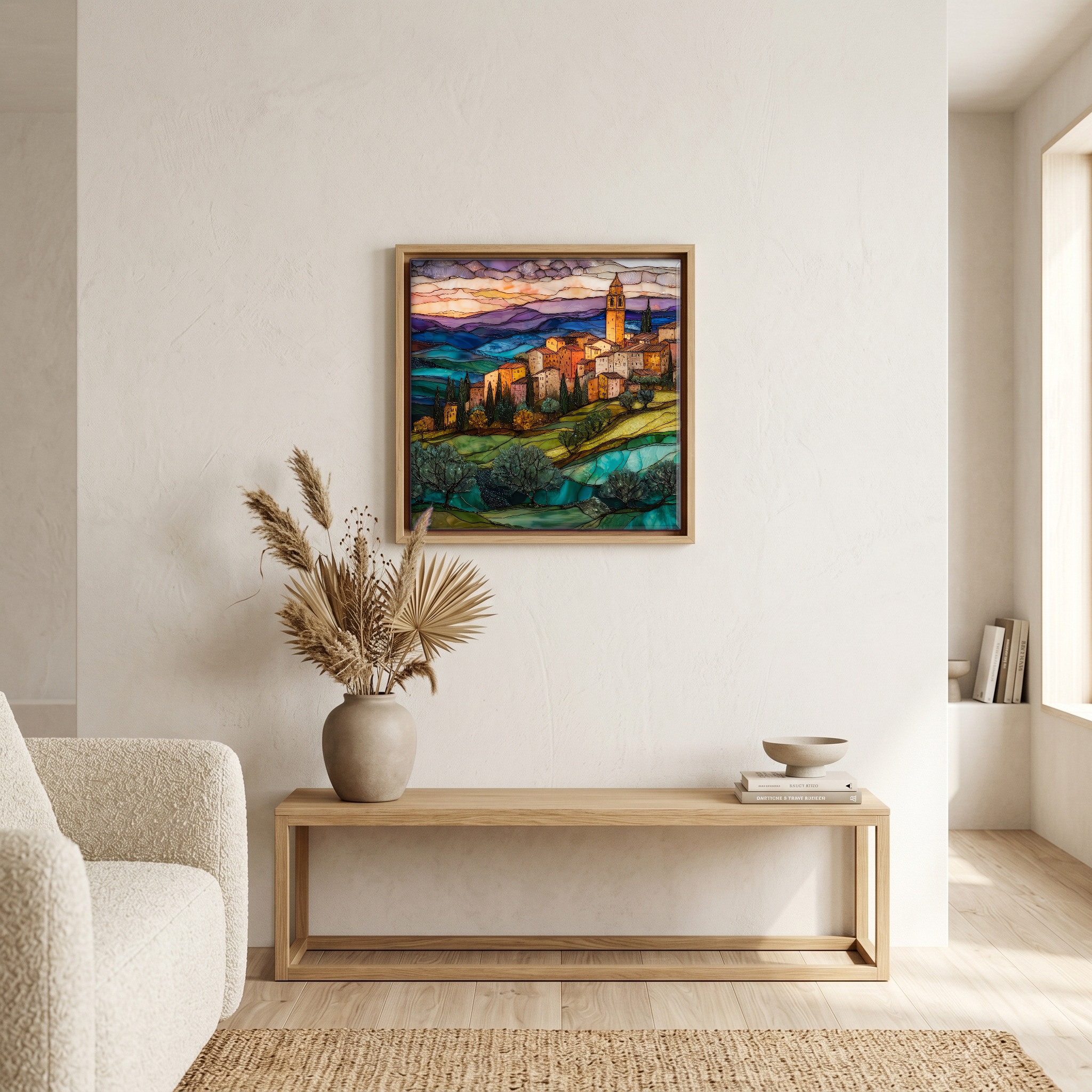
Above the bench, in a warm oak surround.
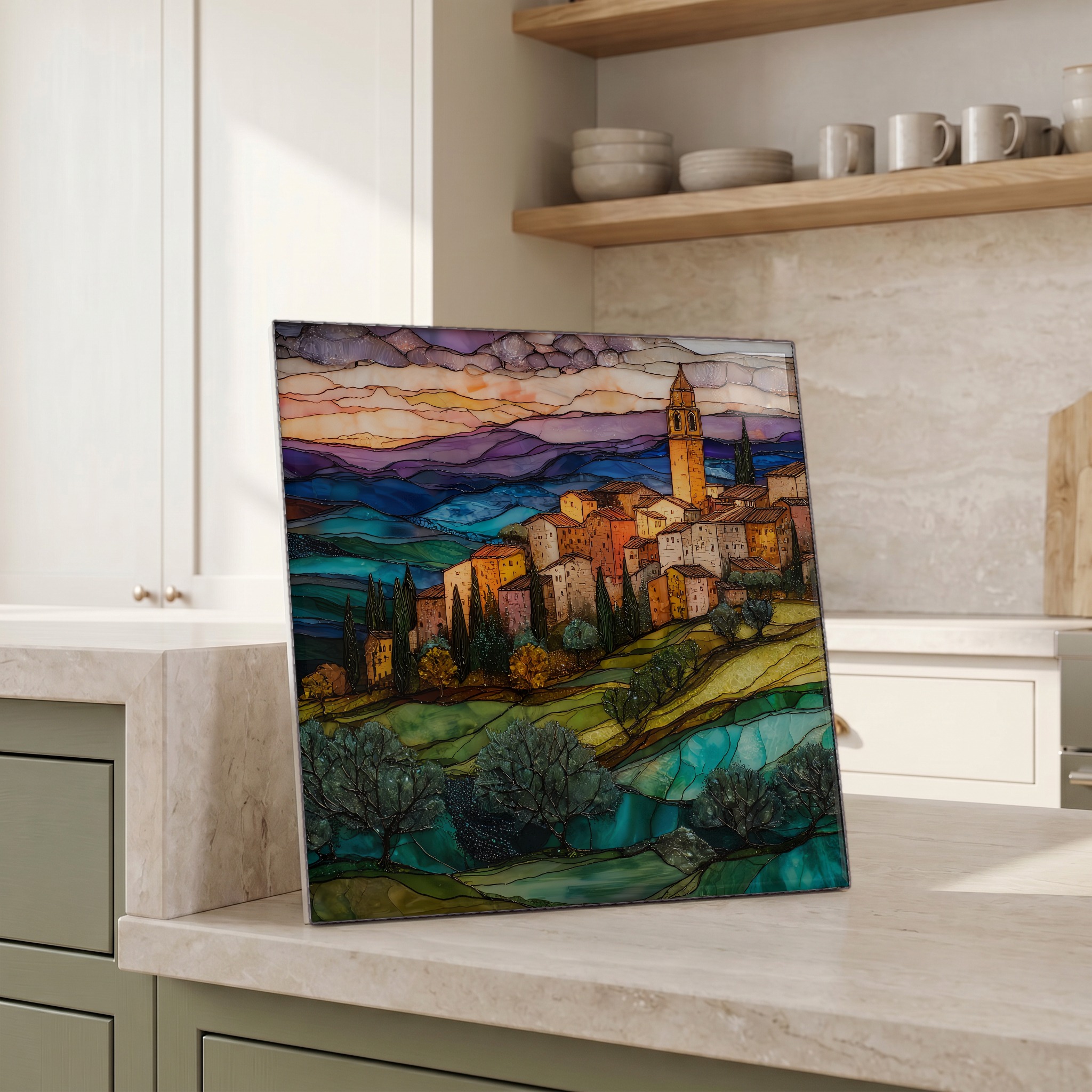
Beside the kettle, propped on the counter.
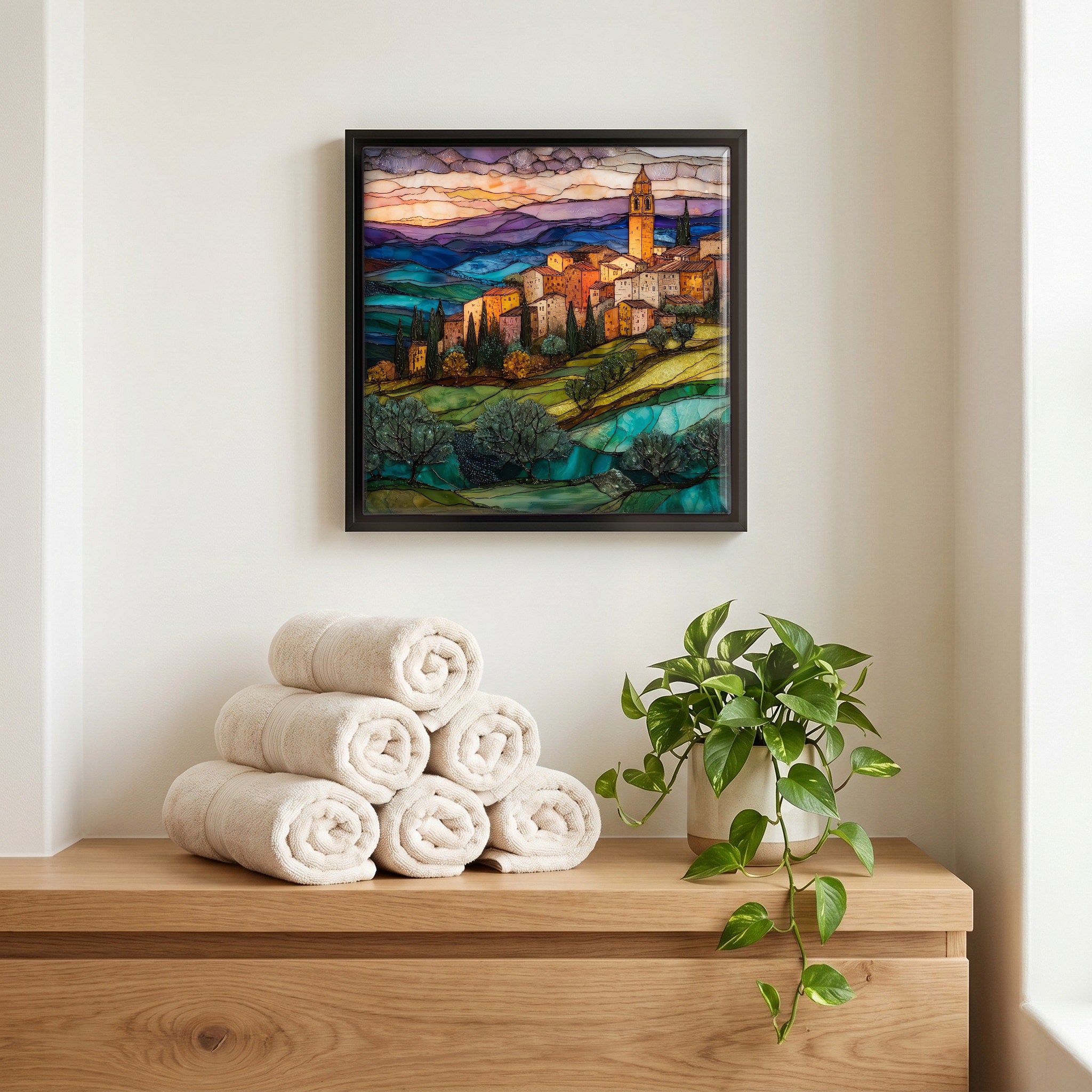
Above the linens, in a slim black surround.
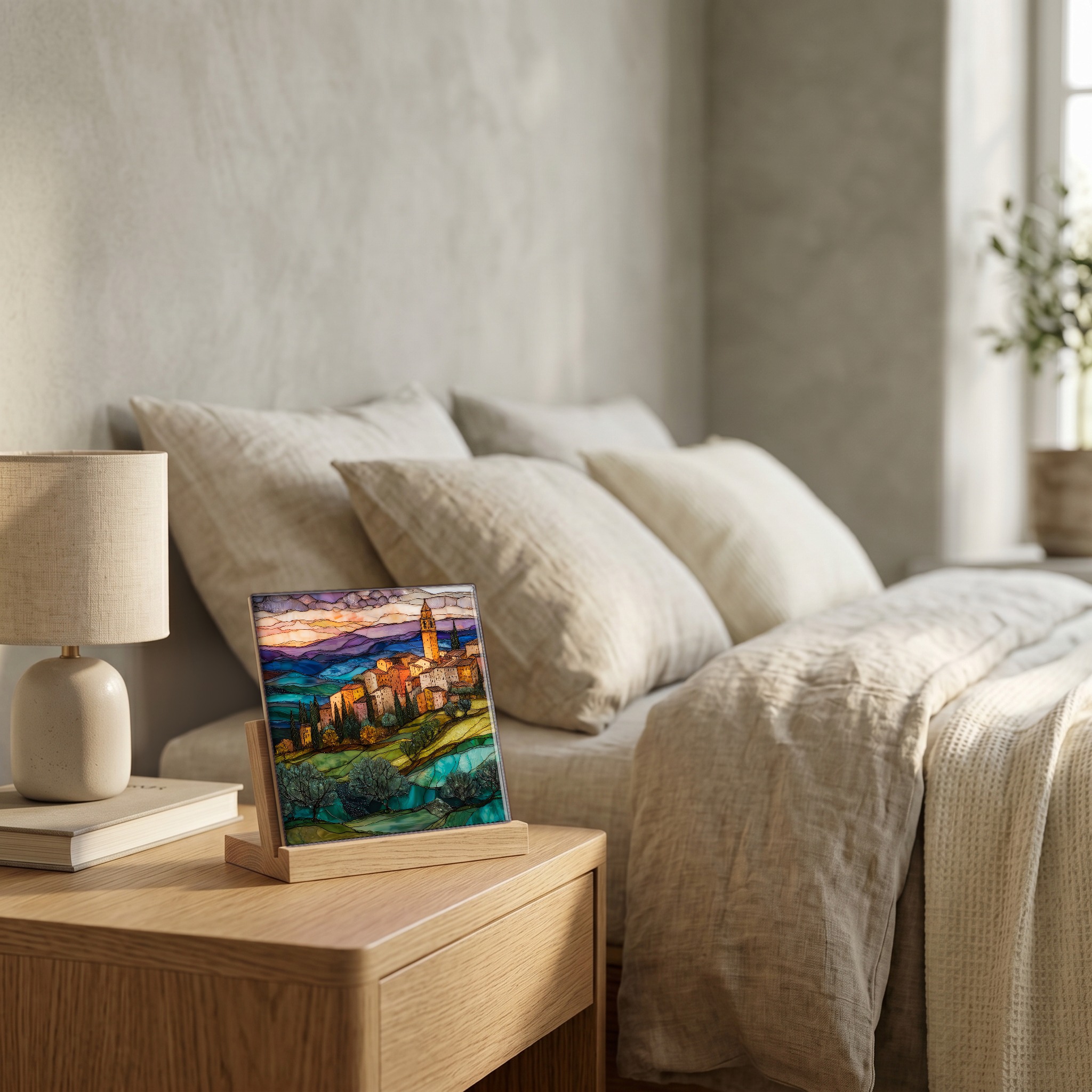
On the nightstand, on a light oak stand.
On a picture ledge, where the light comes in.
a note from the studio

A pope was born here when it was still a village called Corsignano. He came back as Pius II, hired an architect, and in three years turned it into the town he thought a town should be: one square, one church, one palace, the valley left to do the rest. The pecorino is still aged in cellars cut into the same stone. Late in the day the travertine goes the colour of the cheese, and the Val d'Orcia behind it softens into the view every other Tuscan postcard is trying to be.
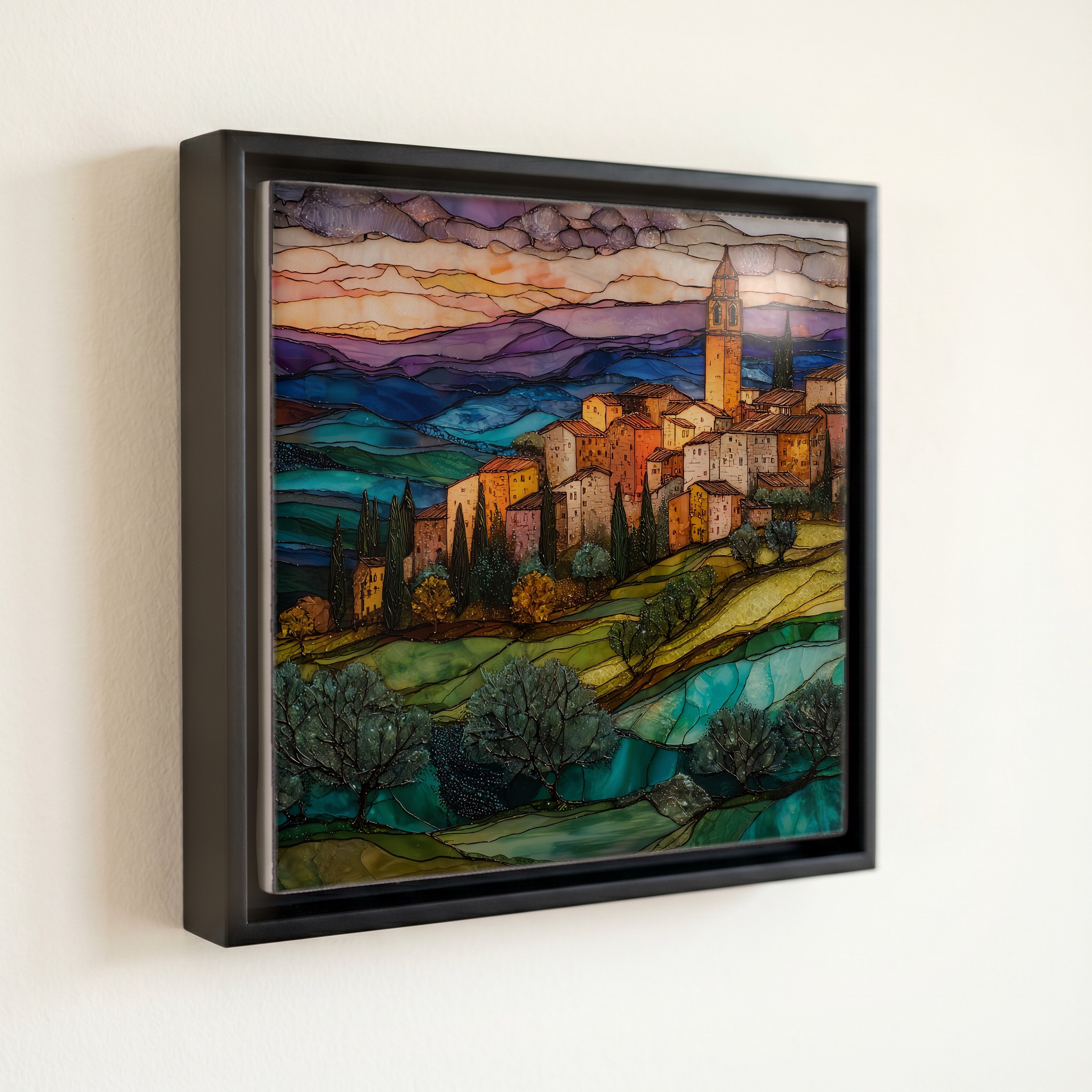
from the studio
shown in a slim black floating frame · 6 × 6 in
— bring it home

Pienza, on ceramic.

Each tile is finished by hand in our Knoxville studio. Artwork is slowly infused into the ceramic surface under high heat and pressure, and rests beneath a thin glossy finish. The colour lives in the surface, not on top of it.

What kind of piece?
One tile — square or rectangle.
How big?
the popular one — counter, shelf, nightstand
6 × 6 in · 15 cm · 1.6 lb
Surface finish
A clear glossy finish — the artwork reads as if under resin. Ideal for show-pieces and framed wall art.
How it sits
A hidden cleat — sits ¼″ proud of the wall.
$58
Hand-finished and shipped from our studio at the foot of the Smokies. On your wall in about ten days.
size
6 × 6 in
15 cm
weighs
1.6 lb
solid in the hand
surface
ceramic, hand-finished
art rests beneath a thin glossy finish
from
Knoxville, TN
our family studio, at the foot of the Smokies
— start a Coaster Set

Pick any four 4-inch tiles — National Parks you've been to, a Smokies set, the four seasons of one place. $ for a set of , cork-backed, ready to live on the table.
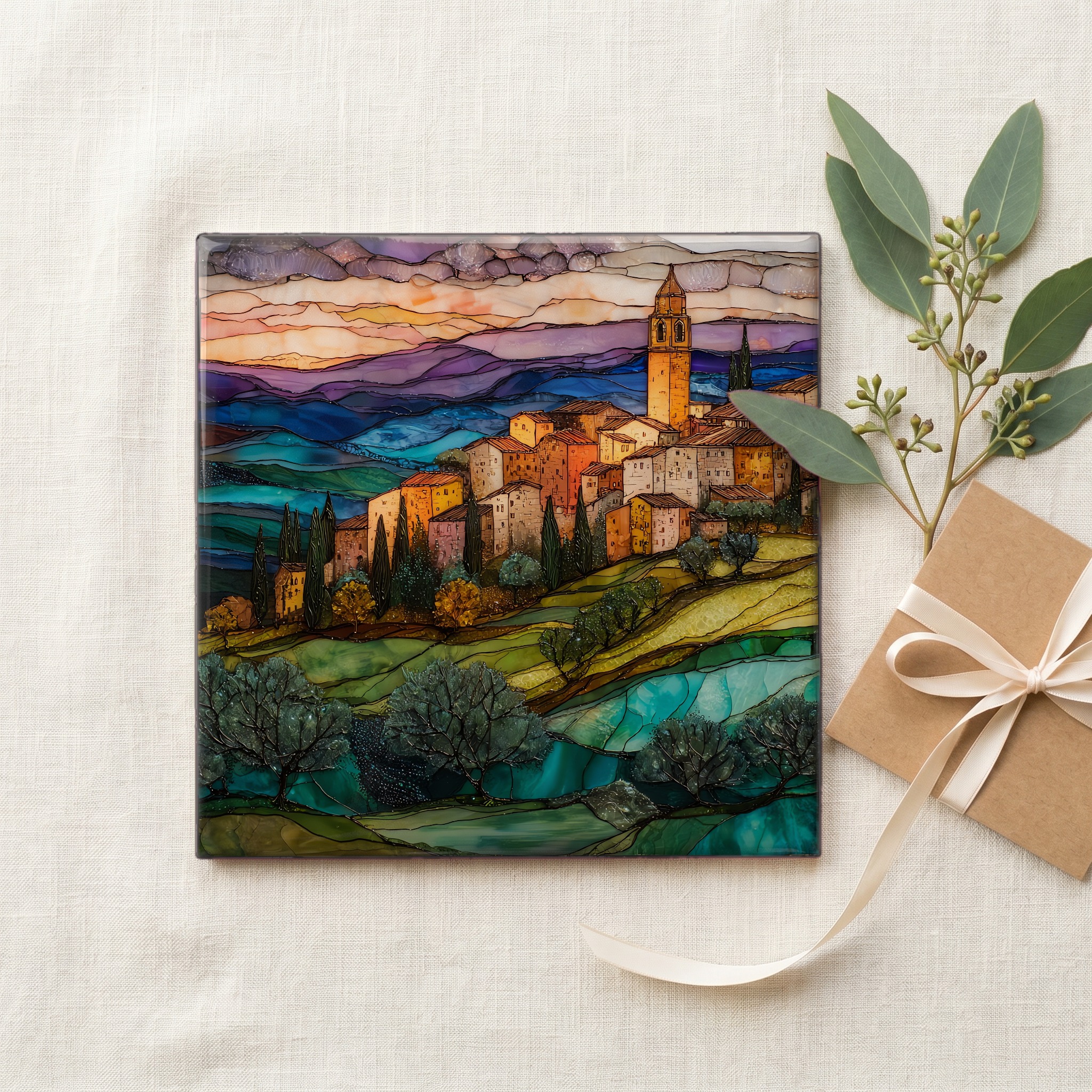
comes gift-ready
comes gift-ready

Each tile ships in a kraft box, tied with cream ribbon, with a handwritten note from the studio if you'd like to add one.
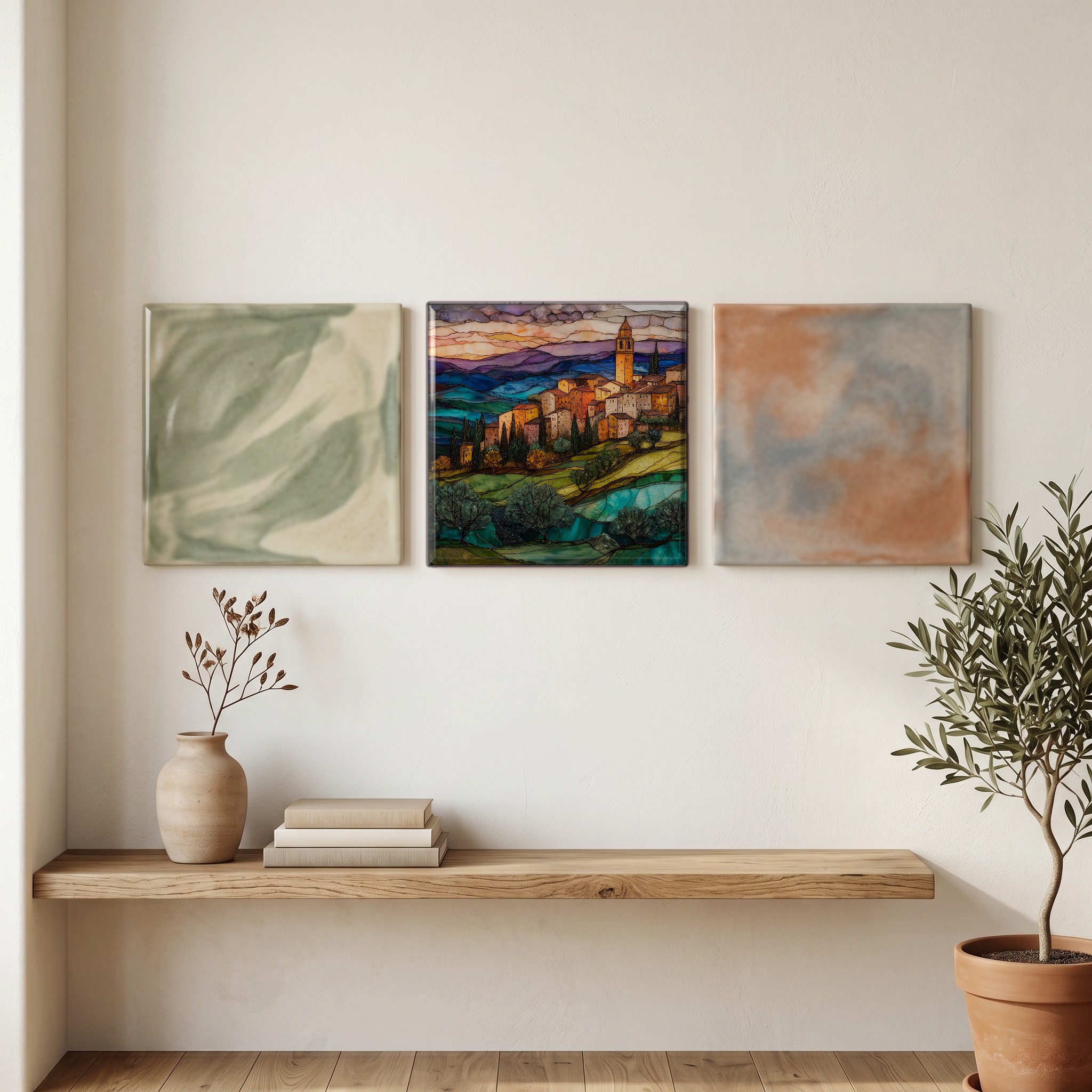
or build a grouping
or build a grouping

Three or five different vistas, hung together — a chapter of places you've been, or want to go.

about Pienza

The place, in three passes.

A little of what's known, in case you fall down the rabbit hole — or want to go see it yourself.
the place

Pienza sits on a travertine ridge at about 491 metres in the Val d'Orcia, in the province of Siena, southern Tuscany. Until 1459 it was a farming village called Corsignano, the birthplace of Enea Silvio Piccolomini. Elected Pope Pius II in 1458, he commissioned the architect Bernardo Rossellino to rebuild his home town as an ideal Renaissance city, and the core was finished by 1462. The plan follows the humanist principles of Leon Battista Alberti: a single trapezoidal square, Piazza Pio II, holding the cathedral, the Palazzo Piccolomini, and the town hall in deliberate balance. UNESCO inscribed the historic centre as a World Heritage Site in 1996.

the stone

The town is built almost entirely from local travertine, the warm honey-grey stone that turns Pienza gold in late light. Its centrepiece is the Cathedral of Santa Maria Assunta, built by Rossellino as a Hallenkirche, a hall church whose three naves rise to equal height, flooding the interior with the kind of light Pius II had admired in churches in Germany and Austria. The cathedral was a problem from the start: it stands at the edge of the ridge over unstable clay, and the apse has been slowly subsiding toward the valley for more than five centuries, leaving cracks the town has fought ever since. Pius II forbade any alteration to his church on pain of excommunication.

— informed by Wikipedia
the light

Pienza was laid out to look at the view as much as to be looked at. Pius II set his palace, the Palazzo Piccolomini, with a three-storey loggia and a hanging garden facing south over the Val d'Orcia toward Monte Amiata, the extinct volcano that closes the skyline to the south. The valley below is the source image of Tuscany: ploughed clay hills, solitary cypresses, and the small chapel of Vitaleta on its own rise to the west. That light has pulled filmmakers for decades; the valley's wheat fields stood in for the afterlife in Ridley Scott's Gladiator. The whole Val d'Orcia became a UNESCO World Heritage landscape in 2004.

where
Italy · Province of Siena, Tuscany
within
Val d'Orcia
elevation
491 m · 1,611 ft
position
43.0786° N · 11.6789° E
the neighborhood

What's nearby.

A handful of named places within an hour's walk or short drive. Some we've already painted; some we will.
5 km W
Cappella di Vitaleta
chapel
10 km W
San Quirico d'Orcia
medieval town
11 km E
Montepulciano
hill town
14 km SW
Bagno Vignoni
thermal village
25 km W
Montalcino
hill town
N
Pienza
Cappella di Vitaleta
San Quirico d'Orcia
Montepulciano
Bagno Vignoni
Montalcino
common questions

What people ask.

A few questions we get about Pienza — and about bringing the piece home.
about the place

Pienza is a small town in the Val d'Orcia, in the province of Siena in southern Tuscany, Italy. It sits on a travertine ridge at about 491 metres, roughly halfway between San Quirico d'Orcia and Montepulciano.

In 1459 Pope Pius II hired the architect Bernardo Rossellino to rebuild his birth village, Corsignano, following Leon Battista Alberti's humanist principles. Finished by 1462, it is the first deliberately planned Renaissance town, arranged around the trapezoidal Piazza Pio II.

Enea Silvio Piccolomini was a humanist scholar, poet, and diplomat, born in Corsignano in 1405 and elected Pope Pius II in 1458. He rebuilt his home village into Pienza, the city of Pius, between 1459 and 1462.

The Cathedral of Santa Maria Assunta stands at the edge of the ridge on unstable clay, and its apse has been slowly subsiding toward the Val d'Orcia since it was built in the 1460s. Visible cracks run through the rear of the nave.

Pecorino di Pienza, a sheep's-milk cheese aged in local cellars, some of it under straw or ash. The surrounding Val d'Orcia, a UNESCO World Heritage landscape since 2004, is the classic Tuscan scenery of clay hills and solitary cypress trees.

Late spring and early autumn bring the clearest light over the Val d'Orcia and mild days for walking the historic centre. The town's pecorino fair, the Fiera del Cacio, fills Piazza Pio II in early September.

When Pius II's town was laid out, four short lanes off the main street were given names: Via dell'Amore (love), Via del Bacio (kiss), Via della Fortuna (fortune), and Via Buia (the dark street). They remain a favourite walk.

about the piece in your home

It carries well for anyone with a tie to this corner of Tuscany. Pienza and the Val d'Orcia are where many people first fell for Italy. A Small or Medium with a note from the studio suits an anniversary; a Keepsake travels easily.

The warm travertine golds and deep jewel tones sit well in Tuscan and Old-World interiors, in warm minimalist rooms, and against terracotta or olive walls. It also holds its own as a single bright note in a more neutral, modern space.

Yes. The current warm-Mediterranean and Tuscan-revival palettes lean on exactly these honeyed stone and ochre tones. The stained-glass colour gives an earthy scheme a focal point without the expected framed-photo look.

Above a console, a single Large reads well. Over a sofa or a bed, step up to a four-tile Mural; for a large wall or a stairwell, a nine-tile Mural holds the space. Smaller rooms do best with a Medium.

Yes. Ask for the Dura Satin or Matte finish rather than Glossy; both are scratch-resistant and made for steam and splashes, so they suit a backsplash, a shower wall, or the space above a kitchen counter.

A soft microfibre cloth and plain water are all it needs. The colour is slowly infused into the ceramic surface under high heat and pressure and lives in the surface itself, so it will not fade or lift with normal cleaning.

Yes. Every WenderVista piece is created in-house by Reid Wender and produced by our studio in Knoxville, Tennessee. The art is not licensed from anyone else, and each place is rendered in our own stained-glass and ink visual language.

if this one stayed with you

A few you might also love.

Hand-picked by the eye that found Sorapis. Same air, same kind of quiet.
— a collection

The Italian Dolomites,
painted slow.

The valleys between Cortina and Val Gardena, the tarns you walk an hour to see, the towers that turn the colour of a banked fire just before dark. Wander the collection by valley, by season, or follow the path Reid walked.

Tre Cime
Braies
Misurina
Sorapis
Cinque Torri
Sassolungo
Marmolada